Preparation is the key to success in any interview. In this post, we’ll explore crucial Plastic Properties and Processing interview questions and equip you with strategies to craft impactful answers. Whether you’re a beginner or a pro, these tips will elevate your preparation.
Questions Asked in Plastic Properties and Processing Interview
Q 1. Explain the difference between thermoplastic and thermosetting polymers.
The key difference between thermoplastics and thermosets lies in their response to heat. Think of it like this: thermoplastics are like Play-Doh – you can repeatedly heat them, mold them, and cool them down without fundamentally altering their structure. Thermosets, on the other hand, are like an egg – once they’ve been heated and cured (set), they undergo an irreversible chemical change, becoming permanently hard and unable to be re-melted.
- Thermoplastics: These polymers soften when heated and harden when cooled, allowing for repeated molding cycles. Examples include polyethylene (PE), polypropylene (PP), polyvinyl chloride (PVC), and polystyrene (PS). They are generally recyclable.
- Thermosets: These polymers undergo an irreversible chemical change upon curing, forming a rigid, cross-linked network. Examples include epoxy resins, polyester resins, and phenolic resins. They are generally not recyclable because the cross-links prevent re-melting.
In practical terms, this means thermoplastics are suitable for applications requiring repeated shaping or recycling, while thermosets are preferred for high-strength, high-temperature applications where dimensional stability is crucial, such as in automotive parts or construction materials.
Q 2. Describe the injection molding process, including its stages and key parameters.
Injection molding is a high-volume manufacturing process that produces complex shapes with high precision. Imagine a hypodermic needle injecting molten plastic into a precisely-engineered mold. That’s essentially what injection molding is.
- Stages:
- Clamping: The mold halves are firmly clamped together.
- Injection: Molten plastic is injected into the mold cavity under high pressure.
- Cooling: The molten plastic cools and solidifies within the mold.
- Ejection: The mold opens, and the solidified part is ejected.
- Key Parameters:
- Melt Temperature: Too low, and the plastic won’t flow properly; too high, and it can degrade.
- Injection Pressure: Ensures the plastic fills the mold cavity completely.
- Mold Temperature: Influences cooling time and part quality.
- Clamping Force: Prevents mold opening during injection.
- Cycle Time: Total time to produce one part.
Proper control of these parameters is crucial for producing parts with consistent quality, minimizing defects, and maximizing production efficiency. For example, insufficient injection pressure might lead to incomplete filling of the mold, resulting in thin areas and weakened parts. Conversely, excessive melt temperature could cause degradation, affecting the mechanical properties of the final product.
Q 3. What are the common types of plastic resins and their applications?
The world of plastic resins is vast, but some common types include:
- Polyethylene (PE): Used in films, bottles, packaging, and pipes. Low-density polyethylene (LDPE) is flexible, while high-density polyethylene (HDPE) is more rigid.
- Polypropylene (PP): Found in containers, fibers, and automotive parts. Known for its toughness and resistance to chemicals.
- Polyvinyl Chloride (PVC): Used in pipes, window frames, and flooring. It’s durable and relatively inexpensive.
- Polystyrene (PS): Used in disposable cups, food containers, and insulation. It’s lightweight and easily molded.
- Acrylonitrile Butadiene Styrene (ABS): A tough, impact-resistant plastic used in electronics, automotive parts, and toys.
- Polycarbonate (PC): High-strength, transparent plastic often used in safety glasses, lenses, and medical devices.
The choice of resin depends heavily on the desired properties of the final product and the processing method used. For instance, HDPE’s rigidity makes it suitable for milk jugs, whereas LDPE’s flexibility is ideal for plastic bags.
Q 4. Explain the concept of melt flow index (MFI) and its significance.
The Melt Flow Index (MFI) is a measure of the ease with which a thermoplastic polymer melts and flows. Think of it as a measure of the plastic’s ‘liquidity’ when molten. It’s determined by measuring the amount of molten plastic that extrudes through a calibrated die under specified conditions of temperature and pressure.
A higher MFI indicates a lower molecular weight polymer that flows more easily. A lower MFI suggests a higher molecular weight polymer that flows less readily. This is significant because MFI directly relates to the processability of the polymer. For example, a polymer with a high MFI might be suitable for injection molding that requires fast filling of the mold, while one with a low MFI would be better suited for applications where higher strength and stiffness are needed, even though it might require longer processing times.
MFI is crucial for quality control, as it helps determine if the polymer is suitable for a specific processing technique and ensures consistency in the properties of the final product. Variations in MFI can signal inconsistencies in the polymer’s molecular weight distribution or the presence of impurities.
Q 5. How do you determine the appropriate processing temperature for a given polymer?
Determining the appropriate processing temperature for a polymer is critical to avoid degradation and ensure optimal performance. This is often a delicate balance.
Several factors influence this choice:
- Polymer Type: Each polymer has a specific melting point and a processing temperature range. This information is typically found in the polymer’s data sheet.
- Molecular Weight: Higher molecular weight polymers generally require higher processing temperatures.
- Processing Method: Injection molding might require a slightly higher temperature than extrusion.
- Additives: The presence of certain additives can affect the polymer’s processing temperature.
The process typically involves consulting the polymer’s data sheet, conducting small-scale trials at various temperatures, and analyzing the results. Rheological testing (measuring the flow behavior of molten polymers) can also help determine the optimal processing temperature range. Careful monitoring of the melt temperature during processing is essential to ensure consistency and prevent overheating or degradation. Incorrect temperature can lead to defects such as burning, poor flow, and reduced mechanical strength.
Q 6. What are the different types of plastic additives and their functions?
Plastic additives are incorporated into polymers to enhance their properties or improve their processability. They act like secret ingredients that tailor the final product to specific needs.
- Fillers: Enhance mechanical properties, reduce cost (e.g., talc, calcium carbonate).
- Plasticizers: Increase flexibility and reduce brittleness (e.g., phthalates, citrates).
- Stabilizers: Protect against degradation from heat, light, or oxygen (e.g., antioxidants, UV stabilizers).
- Colorants: Provide color and aesthetics (e.g., pigments, dyes).
- Flame Retardants: Reduce flammability (e.g., halogens, phosphates).
- Lubricants: Reduce friction during processing, improving flow (e.g., fatty acids, waxes).
The selection of additives depends on the specific application requirements. For example, a food-grade container might require specific stabilizers and colorants, while an automotive part might benefit from flame retardants and impact modifiers. The concentration of each additive is carefully controlled to achieve the desired properties without compromising other aspects of the material’s performance.
Q 7. Describe the various extrusion processes and their applications.
Extrusion is a continuous process where molten plastic is forced through a die to create a continuous profile. Think of squeezing toothpaste from a tube – it’s a similar principle.
- Types of Extrusion Processes:
- Film Extrusion: Creates thin plastic films for packaging (e.g., plastic bags, shrink wrap).
- Sheet Extrusion: Produces flat sheets of plastic used in various applications (e.g., signage, thermoforming).
- Pipe Extrusion: Manufactures plastic pipes for various purposes (e.g., water pipes, conduits).
- Profile Extrusion: Creates complex shapes with customized cross-sections (e.g., window frames, trims).
- Co-extrusion: Combines different polymers in a single extrusion process to create multi-layered materials with unique properties (e.g., barrier films).
The choice of extrusion process depends on the desired final product shape and properties. For example, film extrusion requires careful control of the die gap to achieve the desired film thickness, while profile extrusion necessitates precise die design to create complex geometries. These processes are widely used across various industries for producing long lengths or continuous sheets of plastic products with excellent dimensional accuracy.
Q 8. Explain the concept of shrinkage in injection molding and how to minimize it.
Shrinkage in injection molding refers to the reduction in dimensions of a plastic part after it cools and solidifies from its molten state. This occurs because the polymer chains pack more tightly as they cool, resulting in a smaller final size than the mold cavity dimensions. Think of it like baking a cake – the batter expands during baking, but shrinks slightly as it cools.
Minimizing shrinkage requires a multi-pronged approach:
- Careful Material Selection: Polymers with lower shrinkage rates should be chosen. The material datasheet will specify shrinkage values. For example, some grades of polycarbonate exhibit less shrinkage than ABS.
- Precise Mold Temperature Control: Maintaining a consistent mold temperature minimizes uneven cooling and thus reduces warping and non-uniform shrinkage. Too cold a mold leads to higher shrinkage, while too hot can cause sink marks.
- Optimized Injection Parameters: Factors like melt temperature, injection pressure, and holding pressure affect the packing density of the polymer. Higher melt temperatures generally lead to higher shrinkage, whereas higher injection pressure can compact the material more tightly, reducing shrinkage.
- Mold Design: A well-designed mold incorporates features such as adequate venting to prevent trapped air, which can create voids and affect shrinkage. Careful consideration of wall thickness is crucial; uniform wall thickness minimizes uneven cooling and shrinkage.
- Post-Molding Processes: In some cases, secondary operations like annealing (a heat treatment) can help alleviate residual stresses and reduce dimensional instability.
For instance, in manufacturing a precise fitting part, even a small amount of shrinkage can render the part unusable. Precise control over all these parameters is essential to meet dimensional tolerances.
Q 9. How do you identify and troubleshoot common defects in injection molded parts?
Troubleshooting injection molding defects requires a systematic approach. Begin by visually inspecting the part, noting the location and type of defect. Common defects include:
- Short Shots: The plastic doesn’t fill the mold completely. Check injection pressure, melt temperature, and gate size.
- Sink Marks: Depressions on the surface, often caused by internal stresses due to uneven cooling. Increase melt temperature, optimize part design (uniform wall thickness), or use thicker sections.
- Warpage: Distortion of the part, typically caused by uneven cooling. Improve mold temperature control, optimize part geometry (symmetrical design), or use a different material.
- Flash: Excess plastic squeezed out between the mold halves. Tighten the mold clamping force or adjust the mold design.
- Weld Lines: Visible lines where two flows of melt meet. Optimise gate locations to minimize flow length and reduce velocity differences.
- Burn Marks: Discoloration or degradation of the plastic near the gate caused by excessive heat. Reduce melt temperature or adjust the residence time in the barrel.
Once the defect is identified, analyzing process parameters (melt temperature, injection pressure, mold temperature, cooling time, etc.) and the mold design is key. Often, iterative adjustments are needed until the defect is resolved. Statistical Process Control (SPC) charts can be instrumental in tracking trends and proactively preventing defects.
Q 10. Explain the importance of material selection in plastics processing.
Material selection is paramount in plastics processing. The choice of material directly impacts the final part’s properties, processability, cost, and environmental impact. Factors to consider include:
- Mechanical Properties: Tensile strength, flexural strength, impact resistance, hardness, and elasticity determine the part’s ability to withstand mechanical stresses.
- Thermal Properties: Melting point, heat deflection temperature, and thermal conductivity influence the part’s behavior under varying temperatures and dictate processing conditions.
- Chemical Resistance: Resistance to chemicals, solvents, and UV radiation is critical for parts exposed to harsh environments.
- Cost: Different polymers have widely varying costs, affecting overall product economics.
- Processing Characteristics: Melt flow index (MFI), viscosity, and tendency to degrade during processing influence the selection of processing techniques and equipment.
- Environmental Impact: Consider the recyclability and biodegradability of the material. Sustainable alternatives such as bioplastics are gaining popularity.
For example, choosing ABS for a durable automotive part might be appropriate due to its impact resistance and ease of processing. However, if chemical resistance is crucial, a different material such as polypropylene or polyethylene might be preferable. Careful consideration of these factors ensures that the selected material meets all requirements for the intended application.
Q 11. What are the different types of plastic testing methods?
A wide range of testing methods assess various properties of plastics. These methods can be broadly categorized as:
- Mechanical Testing: Tensile testing (determining strength and elongation), flexural testing (measuring bending strength), impact testing (assessing resistance to impact), hardness testing (measuring resistance to indentation).
- Thermal Testing: Differential Scanning Calorimetry (DSC) (analyzing melting and crystallization behavior), Thermogravimetric Analysis (TGA) (determining thermal stability and decomposition), and Heat Deflection Temperature (HDT) tests.
- Rheological Testing: Measuring the flow behavior of molten polymers using techniques like capillary rheometry (determining viscosity as a function of shear rate and temperature).
- Chemical Testing: Assessing resistance to chemicals and solvents, often involving exposure tests under controlled conditions.
- Optical Testing: Measuring properties like transparency, haze, and gloss.
- Dimensional Stability Testing: Measuring shrinkage and warpage under various conditions.
The choice of testing methods depends on the specific requirements and intended application of the plastic. Often, a combination of tests is employed to obtain a comprehensive understanding of material characteristics.
Q 12. How do you measure and control the viscosity of molten polymers?
Viscosity of molten polymers is a crucial parameter in plastics processing, significantly influencing flow behavior and part quality. It’s measured using rheometers, instruments that apply controlled shear stress or shear rate to the molten polymer and measure the resulting shear rate or shear stress.
Measurement Techniques:
- Capillary Rheometry: The molten polymer is forced through a capillary die, and the pressure drop and flow rate are measured to determine viscosity.
- Rotational Rheometry: The polymer is sheared between two rotating surfaces, allowing for measurement of viscosity under various shear conditions.
Controlling Viscosity: Viscosity is mainly controlled by:
- Temperature: Increasing the temperature generally reduces viscosity, making the polymer more flowable. Precise temperature control is essential using heaters and temperature sensors in the extruder.
- Polymer Grade: Different polymer grades possess inherent differences in viscosity. Careful material selection is critical.
- Additives: Additives such as plasticizers can reduce viscosity, making processing easier.
Maintaining consistent viscosity throughout the processing is vital for obtaining consistent part quality. Monitoring the melt viscosity using online sensors in the injection molding machine allows for real-time adjustments to processing parameters.
Q 13. Describe the role of mold design in the injection molding process.
Mold design plays a pivotal role in the injection molding process, directly influencing part quality, cycle time, and cost. Key considerations include:
- Part Geometry: The mold must accurately reflect the part’s dimensions and features, including undercuts, ribs, and draft angles. Uneven wall thicknesses should be avoided to minimize shrinkage and warping.
- Gate Design: The gate, where the molten plastic enters the mold cavity, significantly impacts flow behavior and part quality. Proper gate design ensures complete filling without causing defects like weld lines or short shots.
- Cooling System: Efficient cooling channels within the mold are critical for achieving consistent cooling rates and minimizing cycle time. Improper cooling can lead to warping or sink marks.
- Ejection System: Ejection pins and mechanisms ensure the molded part is easily removed from the mold without damage.
- Venting System: Proper venting prevents trapped air from causing voids or surface defects. Air vents allow air to escape during injection.
- Material Selection: The mold material should possess high wear resistance, thermal stability, and corrosion resistance depending on the plastic being processed.
For example, a poorly designed gate can lead to short shots or weld lines, rendering the part defective. Similarly, an inadequate cooling system can result in long cycle times and part warping. Careful mold design minimizes defects, improves efficiency, and lowers overall costs.
Q 14. What are the safety precautions associated with plastics processing?
Plastics processing involves various hazards that demand stringent safety precautions. Key safety considerations include:
- Hot Surfaces and Molten Plastics: Molten polymers are extremely hot and can cause severe burns. Protective clothing, including gloves, safety glasses, and heat-resistant aprons, is essential. Adequate machine guarding prevents accidental contact with hot surfaces.
- Moving Machinery: Injection molding machines, extruders, and other equipment have moving parts that pose risks of injury. Lockout/Tagout procedures must be implemented before maintenance or repairs. Proper training is vital for safe operation of machinery.
- Ejection Mechanisms: Ejection systems can cause injuries if improperly maintained or operated. Regular inspection and maintenance of ejection systems are essential.
- Chemical Hazards: Many additives and polymers can be hazardous. Appropriate Personal Protective Equipment (PPE), such as respirators and gloves, must be worn when handling chemicals. Adequate ventilation minimizes exposure to harmful vapors.
- Noise: Some equipment can produce high noise levels. Hearing protection is necessary in noisy environments.
- Fire Hazards: Plastics are flammable and require fire safety measures including fire extinguishers and emergency response plans.
Regular safety inspections and training programs, as well as adherence to safety protocols, are essential to minimize risks and ensure a safe working environment.
Q 15. Explain the principles of blow molding and its advantages.
Blow molding is a plastic processing technique used to create hollow plastic parts, like bottles and containers. It involves inflating a heated plastic tube (parison) inside a closed mold. The process begins with extrusion or injection molding of a hollow tube called a parison. This parison is then clamped between two halves of a mold. Compressed air is then injected into the parison, forcing it to expand and conform to the shape of the mold. Once cooled and solidified, the mold opens, releasing the finished product.
- Advantages:
- High production rates: Blow molding can produce large quantities of parts quickly and efficiently.
- Versatile shapes: It allows for the creation of complex shapes with varying wall thicknesses.
- Cost-effective: Generally less expensive than other methods for producing hollow parts, particularly for large-volume production.
- Lightweight parts: Produces strong yet lightweight products, saving material and transport costs.
- Suitable for various materials: Can be used with a wide range of thermoplastics, including polyethylene (PE), polypropylene (PP), and polyethylene terephthalate (PET).
For example, think about the millions of plastic water bottles produced daily – almost all are made using blow molding.
Career Expert Tips:
- Ace those interviews! Prepare effectively by reviewing the Top 50 Most Common Interview Questions on ResumeGemini.
- Navigate your job search with confidence! Explore a wide range of Career Tips on ResumeGemini. Learn about common challenges and recommendations to overcome them.
- Craft the perfect resume! Master the Art of Resume Writing with ResumeGemini’s guide. Showcase your unique qualifications and achievements effectively.
- Don’t miss out on holiday savings! Build your dream resume with ResumeGemini’s ATS optimized templates.
Q 16. Describe different types of plastic failure modes.
Plastic failure modes describe how a plastic part fails under stress. They can be broadly categorized into:
- Yielding: The plastic permanently deforms under stress, exceeding its elastic limit. Imagine bending a plastic ruler – if it doesn’t snap back to its original shape, it has yielded.
- Fracture: The plastic breaks or cracks under stress. This can be brittle fracture (sudden, clean break) or ductile fracture (gradual tearing).
- Creep: Slow, continuous deformation of the plastic under sustained stress. Think of a plastic bag slowly stretching over time under the weight of groceries.
- Fatigue: Failure due to repeated stress cycles, even if each cycle is below the yield strength. A plastic part subjected to vibration over a long period can fail due to fatigue.
- Environmental Stress Cracking: Cracking that occurs when a plastic is exposed to a combination of stress and a specific chemical environment. For instance, a plastic pipe subjected to stress while in contact with certain chemicals can crack prematurely.
- Stress Whitening: Visible whitening or clouding in a plastic part due to internal micro-cracking from stress. This is often a precursor to more serious failure modes.
Understanding these failure modes is crucial for selecting appropriate plastics and designing parts that can withstand expected stresses and environmental conditions.
Q 17. How do you handle and resolve quality control issues in a plastic manufacturing environment?
Quality control in plastic manufacturing is paramount. Issues are handled proactively and reactively through a multi-faceted approach:
- Preventive Measures: This includes rigorous incoming material inspection, regular maintenance of machinery, and operator training. Statistical Process Control (SPC) charts are used to monitor critical process parameters and identify potential deviations early on.
- In-Process Monitoring: Sampling and testing throughout the manufacturing process, checking dimensions, weight, and appearance against specifications. Automated vision systems are increasingly used for quick and accurate dimensional checks.
- Testing and Analysis: Destructive and non-destructive testing methods (e.g., tensile testing, impact testing) are applied to assess the mechanical properties of the finished product. Failure analysis is used to investigate root causes of defects.
- Corrective Actions: When defects are found, a root cause analysis is performed to identify the underlying problem. Corrective actions, such as machine adjustments, material replacement, or process improvements, are implemented to prevent recurrence.
- Documentation: Maintaining detailed records of all processes, materials, and testing results is crucial for traceability and continuous improvement. A well-documented quality management system is essential.
For example, if we find excessive warpage in an injection molded part, we might investigate mold temperature, injection pressure, or cooling time. Adjusting these parameters can often solve the problem.
Q 18. Explain the concept of cycle time in injection molding and factors affecting it.
Cycle time in injection molding refers to the time it takes to complete one cycle of the process – from injection to ejection of the finished part. Minimizing cycle time is crucial for increasing production efficiency and profitability.
- Factors Affecting Cycle Time:
- Mold Design: Complex molds with intricate details require longer cooling times.
- Mold Temperature: Lower mold temperatures necessitate longer cooling times.
- Material Properties: Materials with high melt viscosities or slow cooling rates lead to longer cycle times.
- Injection Pressure and Speed: Higher injection speeds can reduce the fill time, but excessive pressure may damage the mold.
- Clamping Force: Sufficient clamping force ensures proper mold closure and prevents flash, but excessive force isn’t necessary and adds to cycle time.
- Part Design: Thick sections take longer to cool than thin sections.
- Machine Capacity: A smaller injection molding machine may have limitations that increase cycle time.
Optimizing cycle time often involves a combination of adjustments. For example, optimizing gate design and runner system can reduce the fill time. Implementing mold cooling improvements can significantly shorten the cooling time.
Q 19. Discuss different methods for recycling plastics.
Plastic recycling involves processing used plastics to create new materials or products. Several methods exist:
- Mechanical Recycling: This involves physically processing the waste plastic to create new products. This can involve washing, shredding, melting, and re-extruding the plastic into pellets for further processing. PET bottles are often recycled this way.
- Chemical Recycling: This breaks down the plastic polymers into their basic building blocks, which can then be used to create new plastics or other chemicals. This is often used for plastics that are difficult to mechanically recycle.
- Energy Recovery: This involves burning plastic waste to generate energy, such as heat or electricity. This is a less preferred method due to its environmental impact, although it can be a valuable option for certain types of plastic waste that cannot be recycled easily.
- Biodegradation and Compostability: Some plastics are designed to degrade naturally under specific conditions (e.g., specific temperature, oxygen availability, and microbial activity), converting into biomass. This requires specific types of compostable plastics.
The choice of recycling method depends on the type of plastic, its condition, and the availability of recycling infrastructure.
Q 20. What are the environmental concerns related to plastic manufacturing and disposal?
Plastic manufacturing and disposal pose several environmental concerns:
- Greenhouse Gas Emissions: The production of many plastics is energy-intensive and releases greenhouse gases, contributing to climate change.
- Resource Depletion: Plastic production often relies on fossil fuels, a finite resource. The extraction and processing of these fuels have significant environmental impacts.
- Pollution: Plastic waste contaminates land, water, and air. Microplastics, resulting from the breakdown of larger plastic pieces, are increasingly a concern, potentially harming ecosystems and potentially entering the food chain.
- Waste Management Challenges: The disposal of plastic waste in landfills poses a major challenge due to its slow decomposition rate. Improper disposal leads to environmental pollution and habitat destruction.
- Ocean Pollution: Plastic waste accumulating in oceans poses a severe threat to marine life, damaging ecosystems and contributing to harmful algal blooms.
Addressing these concerns requires a multifaceted approach, including reducing plastic consumption, increasing recycling rates, developing biodegradable plastics, and improving waste management practices.
Q 21. Describe the role of automation in plastics processing.
Automation plays a crucial role in modern plastics processing, enhancing efficiency, quality, and safety. This includes:
- Robotic Systems: Robots are used for material handling, machine tending, and part removal, increasing production speed and consistency. They can work continuously and precisely, reducing human error.
- Automated Process Control: Sophisticated control systems monitor and regulate process parameters such as temperature, pressure, and injection speed, maintaining consistent product quality and reducing waste.
- Automated Inspection Systems: Vision systems and other automated inspection technologies detect defects quickly and accurately, ensuring high-quality output and minimizing waste.
- Data Acquisition and Analysis: Automated data acquisition systems collect real-time data on the manufacturing process, enabling the identification of trends, optimization opportunities, and proactive maintenance needs.
For instance, in an injection molding facility, robots can swiftly transfer parts from the mold to a conveyor system, significantly speeding up the production process. Automated inspection systems can identify even minor defects that might be missed by human inspectors.
Q 22. Explain the principles of rotational molding.
Rotational molding, also known as roto-molding, is a process used to create hollow plastic parts. Imagine spinning a bucket of paint – that’s the basic principle. A mold is filled with powdered plastic resin, then rotated simultaneously on two perpendicular axes while heated. The centrifugal force distributes the powder evenly across the mold’s inner surface. The heat melts the resin, causing it to fuse and form a uniform layer along the mold’s walls. After cooling, the mold is opened, and the finished part is removed.
This method is particularly useful for manufacturing large, hollow parts with complex shapes, often with uniform wall thickness. Think of kayaks, storage tanks, and playground equipment – these are all common applications where rotational molding excels. The process is relatively simple, requires less capital investment compared to injection molding for large parts, and can easily handle different materials including polyethylene (PE), polypropylene (PP), and other thermoplastics.
Q 23. Compare and contrast extrusion and injection molding.
Both extrusion and injection molding are widely used thermoplastic processing techniques, but they differ significantly in their mechanisms and the types of parts they produce.
- Extrusion: Imagine squeezing toothpaste from a tube. A heated plastic material is continuously fed into a screw extruder that melts and forces it through a die, creating a continuous profile. This is ideal for producing long, linear parts like pipes, films, and profiles. Extrusion is a continuous process, resulting in high production rates, however, the design flexibility is limited by the die design.
- Injection Molding: This process is analogous to filling a cake mold. Molten plastic is injected under high pressure into a closed mold. Once the plastic cools and solidifies, the mold opens, and the finished part is ejected. Injection molding allows for intricate designs, high precision, and mass production of complex parts. However, it typically requires a higher capital investment for molds and machinery.
In essence, extrusion creates continuous shapes, while injection molding creates discrete parts. The choice between these methods depends on the desired part geometry, production volume, and cost considerations.
Q 24. How would you determine the optimal processing conditions for a new polymer?
Determining optimal processing conditions for a new polymer requires a systematic approach involving experimentation and data analysis. It’s like finding the perfect recipe – you need to adjust several variables to achieve the desired result.
- Material Characterization: Begin by thoroughly characterizing the polymer’s properties – its melting point, viscosity, thermal stability, and degradation characteristics. These data provide a baseline for your process parameter settings.
- Experimental Design: Develop a structured experimental design, varying parameters such as melt temperature, screw speed (for extrusion), injection pressure (for injection molding), mold temperature, and cycle time. A statistically designed experiment (e.g., Design of Experiments or DOE) can significantly reduce the number of trials needed.
- Process Monitoring: Closely monitor the process using sensors and data acquisition systems. Measure parameters such as melt pressure, temperature profiles, and cycle times. This data allows you to correlate processing parameters with the final product properties.
- Property Evaluation: Assess the properties of the produced parts – tensile strength, impact resistance, dimensional stability, and surface finish. These measurements guide the optimization process.
- Iteration and Optimization: Based on the experimental results, iterate on the processing conditions until you achieve the desired part properties and process efficiency.
Software tools and simulations can significantly aid in this process. Remember, safety is paramount during this experimentation. Always follow the manufacturer’s guidelines for the polymer and the processing equipment.
Q 25. Explain the importance of proper material handling in plastics processing.
Proper material handling is crucial in plastics processing because the physical and chemical properties of polymers are sensitive to environmental factors. Improper handling can lead to degradation, contamination, and ultimately, defects in the final product.
- Protection from Moisture: Many polymers absorb moisture, which can affect their processing characteristics and final part properties. Proper storage in a dry environment is essential.
- Prevention of Contamination: Polymers can be easily contaminated by dust, dirt, or other foreign materials. Clean handling procedures and appropriate storage facilities are crucial to avoid contamination.
- Temperature Control: Extreme temperatures can affect polymer properties. Storage and transportation in controlled temperature environments are necessary for temperature-sensitive materials.
- UV Protection: Some polymers are sensitive to UV radiation, leading to degradation. Protection from sunlight during storage and transportation is important.
Imagine trying to bake a cake with spoiled ingredients – the outcome will be far from ideal. Similarly, using degraded or contaminated polymer results in poor quality parts. Careful material handling ensures consistent material properties and reliable processing, ultimately leading to high-quality products.
Q 26. What are the different types of polymer degradation?
Polymer degradation refers to the undesirable chemical and physical changes that occur in a polymer over time or during processing, leading to a reduction in its molecular weight and performance. Several types exist:
- Thermal Degradation: High temperatures can break down the polymer chains, leading to changes in molecular weight, color, and mechanical properties. This is often seen during processing if the melt temperature is too high or the residence time is too long.
- Oxidative Degradation: Exposure to oxygen can cause chain scission and crosslinking, leading to embrittlement and discoloration. This is often exacerbated by UV light and heat.
- Hydrolytic Degradation: Reaction with water can break down the polymer chains, especially in polymers sensitive to moisture, like polyesters and polyamides.
- Photodegradation: Exposure to UV radiation can cause chain scission and crosslinking, especially in polymers with chromophores. This results in changes in color, embrittlement, and loss of mechanical properties.
- Mechanical Degradation: High shear stresses during processing can cause chain scission, leading to a reduction in molecular weight. This is more prominent in processes involving high shear, like extrusion.
Understanding the various degradation mechanisms is crucial for selecting appropriate processing conditions and stabilizing additives to extend the lifetime and performance of plastic products.
Q 27. Describe the principles of thermoforming.
Thermoforming is a shaping process where a plastic sheet is heated to a pliable state and then formed to a specific shape using a mold. Think of blowing up a balloon and then pressing it into a mold – that captures the essence of the process.
The process typically involves heating a plastic sheet to its softening temperature, then clamping it in a frame. A mold is then brought into contact with the heated sheet, and either vacuum pressure or compressed air is used to form the sheet around the mold. After cooling, the formed part is ejected from the mold.
Thermoforming is widely used for creating a diverse range of products, from food packaging and medical devices to automotive parts and signage. Different thermoforming techniques exist, including vacuum forming, pressure forming, and drape forming, each suited to different part geometries and material properties.
Q 28. Discuss the impact of different processing parameters on the final product properties.
Processing parameters significantly influence the final product properties. It’s like baking a cake – altering the oven temperature, baking time, or ingredients dramatically changes the cake’s texture and taste. Similarly, changes in plastic processing parameters affect mechanical, physical, and aesthetic properties.
- Temperature: Too low a temperature can result in incomplete melting and weak parts, while too high a temperature can cause thermal degradation and discoloration.
- Pressure: Insufficient pressure during injection molding can lead to incomplete filling and poor surface finish, while excessive pressure can cause warping or damage.
- Shear Rate: High shear rates during extrusion can induce mechanical degradation, reducing molecular weight and potentially affecting the final product strength.
- Cooling Rate: A rapid cooling rate can introduce internal stresses and affect dimensional stability, whereas slower cooling might allow for stress relaxation but increase cycle time.
- Residence Time: Extended residence time at high temperatures can lead to thermal degradation.
Careful control and optimization of these parameters are crucial to obtain desired product properties, minimize defects, and ensure consistent product quality. Process monitoring and quality control are essential throughout the production cycle.
Key Topics to Learn for Plastic Properties and Processing Interview
- Polymer Chemistry Fundamentals: Understanding polymer types (thermoplastics, thermosets, elastomers), molecular weight, and its influence on material properties.
- Mechanical Properties: Tensile strength, yield strength, elongation, impact resistance, flexural modulus – and how these relate to processing techniques and end-use applications. Consider practical examples like designing a plastic bottle cap with sufficient impact resistance.
- Thermal Properties: Glass transition temperature (Tg), melting point (Tm), heat deflection temperature (HDT), thermal conductivity – and their impact on processing parameters like injection molding temperatures.
- Rheology: Understanding melt flow index (MFI), viscosity, and their importance in controlling the flow of molten plastic during processing.
- Processing Techniques: Detailed knowledge of injection molding, extrusion, blow molding, thermoforming, and their respective advantages and limitations. Be prepared to discuss process parameters and troubleshooting common issues.
- Material Selection: Ability to choose the appropriate plastic material based on required properties and processing method. Discuss factors influencing material selection, such as cost, recyclability, and regulatory compliance.
- Quality Control and Testing: Familiarity with standard testing methods for plastic materials, such as tensile testing, impact testing, and dimensional analysis. Discuss quality control measures during processing and how to identify and address defects.
- Additives and Fillers: Understanding the role of various additives (plasticizers, stabilizers, colorants) and fillers (glass fibers, talc) in modifying plastic properties and processing behavior.
- Sustainability and Recycling: Knowledge of different plastic recycling methods (mechanical, chemical) and the environmental impact of plastic production and disposal. Discuss sustainable practices in plastic processing.
- Problem-Solving in Processing: Ability to analyze and troubleshoot common processing problems, such as warping, shrinkage, and poor surface finish. Practice applying your theoretical knowledge to practical scenarios.
Next Steps
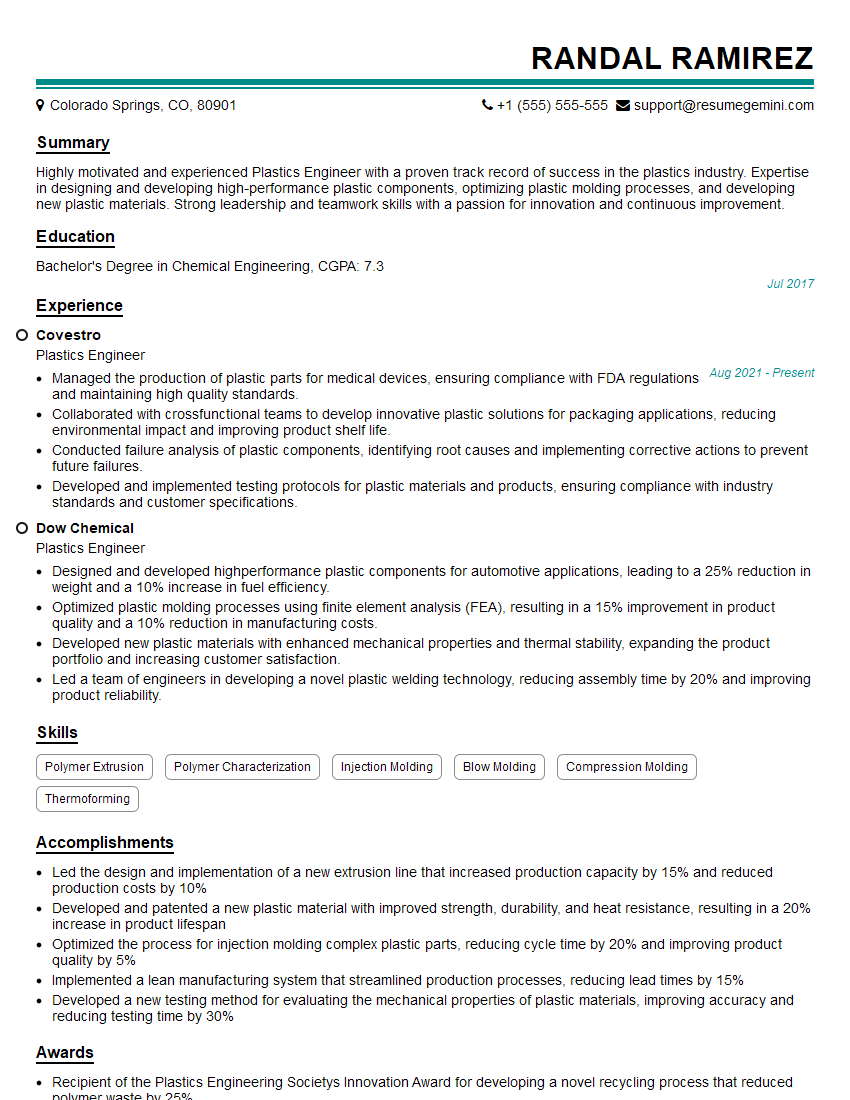
Mastering Plastic Properties and Processing is crucial for a successful career in the materials science and manufacturing industries. A deep understanding of these concepts will set you apart from other candidates and open doors to exciting opportunities. To maximize your job prospects, it’s vital to create an ATS-friendly resume that highlights your skills and experience effectively. ResumeGemini is a trusted resource that can help you build a professional and impactful resume tailored to the specific demands of the Plastic Properties and Processing field. Examples of resumes tailored to this sector are available to guide you. Invest time in crafting a compelling resume – it’s your first impression and a key to unlocking your career potential.
Explore more articles
Users Rating of Our Blogs
Share Your Experience
We value your feedback! Please rate our content and share your thoughts (optional).
What Readers Say About Our Blog
Very informative content, great job.
good