Unlock your full potential by mastering the most common Experience in Disaster Response Operations interview questions. This blog offers a deep dive into the critical topics, ensuring you’re not only prepared to answer but to excel. With these insights, you’ll approach your interview with clarity and confidence.
Questions Asked in Experience in Disaster Response Operations Interview
Q 1. Describe your experience in developing and implementing disaster response plans.
Developing and implementing disaster response plans requires a multifaceted approach, encompassing risk assessment, resource allocation, and community engagement. I’ve been involved in creating plans for various scenarios, from hurricanes and earthquakes to pandemics and technological disasters. My process typically starts with a thorough hazard vulnerability analysis, identifying potential threats and their likely impact on the community. This involves reviewing historical data, conducting site assessments, and engaging with stakeholders including local government, emergency services, and community leaders. The next step is developing detailed operational plans that outline roles and responsibilities, communication protocols, and resource mobilization strategies. These plans are then tested through tabletop exercises and simulations to identify weaknesses and refine procedures. For example, in developing a plan for a large-scale flood event, we mapped evacuation routes, pre-positioned emergency supplies, and established communication channels with neighboring communities to facilitate mutual aid.
Finally, the plan isn’t static; it’s regularly reviewed and updated based on lessons learned from past incidents, changes in community demographics, and advancements in technology. This iterative process ensures the plan remains relevant and effective in protecting the population.
Q 2. Explain your process for assessing the needs of a disaster-affected population.
Assessing the needs of a disaster-affected population is crucial for effective response. It’s not a one-size-fits-all approach; it requires a combination of rapid needs assessments and ongoing monitoring. I typically employ a multi-pronged strategy: First, rapid damage assessments provide an initial overview of the extent of destruction and the immediate needs – shelter, food, water, medical care. This often involves aerial surveys, ground teams, and leveraging technology like drones and satellite imagery. Second, community-based assessments involve engaging directly with affected populations through surveys, focus groups, and interviews to understand their specific needs and vulnerabilities. This helps identify vulnerable populations such as the elderly, disabled, or those with limited access to resources. Third, ongoing monitoring is key. Needs evolve over time, and what is a critical need in the immediate aftermath may be less so as the recovery progresses. For example, in the aftermath of a hurricane, the immediate need for shelter and food was paramount. However, as the situation stabilized, longer-term needs such as access to healthcare, financial assistance, and mental health support became increasingly important. Data from all these sources is analyzed to inform resource allocation and program implementation.
Q 3. How do you prioritize tasks and allocate resources during a crisis?
Prioritizing tasks and allocating resources during a crisis is a high-stakes balancing act that requires clear thinking and decisive action. I use a framework based on the principles of incident command systems (ICS) which is a standardized approach to managing emergencies. This involves establishing clear priorities based on the severity of the impact, the number of people affected, and the potential for further escalation. The process prioritizes life-saving efforts first – search and rescue, medical care, and providing immediate shelter. Resource allocation is guided by need and availability, using a tiered approach. Critical resources such as medical supplies, fuel, and communication equipment are prioritized. For example, during a wildfire, resources might be initially concentrated on evacuating threatened populations and deploying firefighting crews. Later, resources are shifted to providing shelter, food, and medical aid to those displaced. Transparency and accountability are vital in resource allocation to ensure fairness and efficiency. Regular monitoring and evaluation are also key in adjusting strategies as new information becomes available and the situation evolves.
Q 4. What are your strategies for effective communication during a disaster?
Effective communication is the backbone of any successful disaster response. It’s about delivering the right information to the right people at the right time. My strategy involves a multi-channel approach that incorporates different communication methods to ensure wide reach and redundancy. This includes using mass notification systems (like SMS alerts and social media) to reach the public, establishing dedicated communication channels for emergency responders, utilizing public information centers to provide updates, and leveraging community leaders and influencers to disseminate information. Clear, concise messaging is crucial, avoiding jargon and adapting to different audiences’ needs. For example, during a pandemic, communication involved relaying clear public health guidelines, providing updates on case numbers and hospital capacity, and addressing public concerns and misinformation. Active listening and feedback mechanisms are also crucial to understand information needs and adapt our communication strategy.
Q 5. Describe your experience with coordinating interagency response efforts.
Coordinating interagency response efforts demands strong leadership, collaborative spirit, and a deep understanding of each agency’s capabilities and limitations. My experience includes working with various agencies like FEMA, the Red Cross, local law enforcement, and healthcare providers. Effective coordination requires establishing clear lines of authority and communication, facilitating regular meetings and information sharing, and fostering a common understanding of goals and priorities. Utilizing standardized protocols and procedures like the National Incident Management System (NIMS) helps streamline operations and ensure interoperability. Building strong relationships with key personnel before a disaster occurs is essential. For example, during a major earthquake, coordinating efforts between search and rescue teams, medical personnel, and logistics providers required constant communication, shared situational awareness, and flexible problem-solving to ensure a unified and effective response.
Q 6. How do you ensure the safety and well-being of your team during a disaster?
Ensuring the safety and well-being of my team during a disaster is paramount. It’s not only a moral imperative but also essential for mission success. Our safety protocols begin with pre-disaster training that covers personal protective equipment (PPE), safety procedures, and emergency communication. During deployment, we prioritize situational awareness, maintaining regular check-ins, and adhering to strict safety protocols. We establish clear roles and responsibilities to ensure accountability. We provide access to mental health support and debriefing sessions both during and after deployment to address stress and trauma. Regular briefings keep the team informed about evolving risks and safety concerns. For example, during a hurricane response, we utilize safety equipment, establish safe zones, and maintain regular communication with the base of operations to ensure the team’s safety and well-being.
Q 7. What are the key elements of a successful post-disaster recovery plan?
A successful post-disaster recovery plan focuses on rebuilding lives and communities while mitigating future risks. Key elements include: Needs assessments to identify long-term needs, infrastructure restoration to rebuild essential services, economic recovery initiatives to support businesses and jobs, housing and relocation programs for displaced individuals, psychological support for trauma victims, and community rebuilding initiatives to foster social cohesion. Strengthening community resilience is also crucial, encompassing community preparedness programs, early warning systems, and risk reduction strategies. The plan should be flexible and adaptable to account for evolving needs and challenges. A transparent and participatory approach is key, involving the affected community in the recovery process. For instance, in the aftermath of a major earthquake, recovery efforts involved not only rebuilding infrastructure but also addressing long-term issues such as housing shortages, economic hardship, and access to mental health services, always engaging with the local population to ensure their needs were being addressed.
Q 8. Explain your experience with damage assessment and needs analysis.
Damage assessment and needs analysis are crucial first steps in any disaster response. It involves systematically evaluating the extent of damage caused by a disaster and identifying the immediate and long-term needs of the affected population. This process informs resource allocation and prioritization for effective relief efforts.
My experience includes leading teams in conducting rapid damage assessments using standardized methodologies like the Rapid Assessment and Prioritization of Needs (RAPN) approach. This involves visual inspections, surveys (both household and key informant), and the use of GIS mapping to pinpoint affected areas. For example, during the aftermath of Hurricane Maria in Puerto Rico, I led a team that utilized a combination of satellite imagery and on-the-ground assessments to map infrastructure damage and identify areas with limited access to essential services like water and healthcare. We then used this data to prioritize the distribution of aid, focusing on the communities with the most critical needs. This systematic approach ensured efficiency and fairness in resource allocation.
Needs analysis extends beyond infrastructure damage to include assessing the social and psychological impacts on the affected population. This involves understanding the specific needs of vulnerable groups such as children, the elderly, and people with disabilities. For instance, we incorporated qualitative data gathering, such as focus group discussions and interviews with community leaders to understand the specific needs of marginalized communities, helping to create a more inclusive and effective response.
Q 9. How do you manage logistical challenges during a large-scale disaster?
Managing logistics during large-scale disasters is akin to orchestrating a complex symphony. It requires meticulous planning, efficient coordination, and the ability to adapt to rapidly changing circumstances. Success hinges on proactive planning, robust communication networks, and a flexible approach.
- Pre-positioning resources: This involves strategically storing essential supplies like food, water, medical equipment, and shelter materials in advance of anticipated disasters. This significantly reduces response time and prevents bottlenecks during the immediate aftermath.
- Establishing efficient supply chains: Creating clear pathways for the flow of goods and services from points of origin to affected areas requires robust transportation networks. We often establish central distribution points and utilize various modes of transport, from trucks and helicopters to boats, depending on the geographical context and the type of disaster. For example, during a flood, boats may be the only effective means of transportation.
- Utilizing technology: Real-time tracking of resources and personnel using GPS and communication systems is critical. This allows for dynamic adjustment of response plans as conditions change. For instance, we use software to track the movement of aid supplies and personnel, ensuring efficient delivery and reducing potential delays.
- Collaborating with partners: Effective disaster response involves collaboration among various organizations, including government agencies, NGOs, and private sector partners. This collaborative approach leverages diverse resources and expertise to achieve common goals.
In the case of a major earthquake, I’ve utilized a combination of these strategies to ensure effective aid distribution and resource management. We established multiple distribution points based on accessibility and population density, and we coordinated with local authorities and volunteer groups to ensure aid reached the most vulnerable communities quickly and efficiently.
Q 10. Describe your experience with utilizing GIS and mapping technology in disaster response.
Geographic Information Systems (GIS) and mapping technologies are indispensable tools in disaster response, providing a powerful visual representation of the affected area and enabling data-driven decision-making. GIS allows us to integrate diverse data sets, such as population density maps, infrastructure data, and damage assessments, to create a comprehensive picture of the disaster’s impact.
My experience includes using GIS software like ArcGIS to map damaged infrastructure, identify vulnerable populations, and plan optimal routes for aid distribution. For example, following a wildfire, I used GIS to map the extent of the burn area, identify areas with damaged homes and critical infrastructure (such as hospitals and power grids), and overlay this data with population density maps to prioritize resource allocation for evacuation and relief efforts. We also used GIS to create interactive maps that were shared with response teams and decision-makers to enable real-time coordination and monitoring of the response efforts. This ensured transparency and informed better decision-making.
Moreover, remote sensing data, such as satellite imagery and aerial photography, integrated into GIS, is crucial in generating pre- and post-disaster maps that facilitate damage assessments, identifying areas that are hard to access, and guiding evacuation planning.
Q 11. What are your strategies for mitigating the psychological impact of disasters?
Disasters can have a profound and lasting psychological impact on survivors, first responders, and aid workers alike. Mitigating this impact requires a multifaceted approach incorporating psychological first aid, access to mental health services, and fostering a supportive environment.
- Psychological First Aid (PFA): PFA is an evidence-based approach providing immediate support to individuals in the aftermath of trauma. This involves listening, providing comfort, and connecting individuals with needed resources. I’ve trained numerous first responders in PFA techniques.
- Access to mental health services: Ensuring access to mental health professionals is crucial for providing ongoing support and treatment for individuals experiencing prolonged distress or PTSD. This might involve setting up mobile clinics and partnering with local mental health organizations.
- Community-based support: Creating opportunities for social interaction and community cohesion can significantly aid in the healing process. This can involve organizing community meetings, support groups, and recreational activities.
- Self-care for responders: It is vital that we emphasize the importance of self-care and stress management strategies for first responders and aid workers to prevent compassion fatigue and burnout. This includes providing access to counseling services and promoting healthy coping mechanisms.
Following a major disaster, I’ve coordinated the deployment of mental health professionals to provide immediate support and facilitate long-term care. We’ve also worked to establish community support networks and offer resources to aid in the emotional recovery of those affected.
Q 12. How do you handle conflict resolution within a disaster response team?
Conflict resolution is an inevitable part of disaster response. Diverse teams, conflicting priorities, and high-stress environments can lead to disagreements. Effective conflict resolution requires strong leadership, clear communication, and established protocols.
- Establish clear roles and responsibilities: Defining roles and responsibilities from the outset minimizes ambiguity and overlap, which can be a major source of conflict. A clear chain of command helps ensure effective decision-making.
- Promote open communication: Regular team meetings and open communication channels encourage the expression of concerns and facilitate collaborative problem-solving. Active listening and empathy are crucial for effective communication.
- Mediation and negotiation: When conflicts arise, utilizing mediation techniques or structured negotiation processes can help resolve disputes fairly and constructively. A neutral mediator can facilitate communication and help the parties find mutually acceptable solutions.
- Focus on shared goals: Reminding the team of their common objective – serving the affected population – can help overcome disagreements and foster collaboration. A shared sense of purpose unites the team towards a common goal.
During a large-scale disaster, I have successfully mediated conflicts by fostering open dialogue, clarifying roles, and emphasizing the shared goal of serving the community. I’ve also encouraged the use of collaborative problem-solving techniques to find mutually agreeable solutions.
Q 13. Explain your understanding of various hazard types and their unique response requirements.
Understanding various hazard types and their unique response requirements is fundamental to effective disaster management. Each hazard presents different challenges, requiring tailored strategies and resources.
- Natural Hazards: Earthquakes, hurricanes, floods, wildfires, and volcanic eruptions each have distinct characteristics, impacting infrastructure, population, and the environment differently. For instance, earthquake response requires rapid search and rescue efforts, while flood response focuses on evacuation and waterborne disease prevention.
- Technological Hazards: Industrial accidents, transportation disasters (e.g., train derailments, plane crashes), and nuclear incidents demand specialized response protocols and equipment. For example, a chemical spill requires specialized hazmat teams and containment strategies.
- Biological Hazards: Pandemics, disease outbreaks, and bioterrorism incidents require public health interventions, including quarantine, vaccination programs, and disease surveillance. These situations demand strong public health expertise and coordination.
My expertise spans various hazard types. For instance, I’ve worked on responses to both earthquakes and hurricane events. My approach always starts with a thorough hazard assessment to identify the specific risks and vulnerabilities and then develops a tailored response plan involving necessary resources and expertise. In earthquake response, swift search and rescue is paramount, while in hurricane scenarios, pre-evacuation planning and post-disaster disease control take center stage.
Q 14. How do you ensure accountability and transparency in disaster relief operations?
Accountability and transparency are cornerstones of ethical and effective disaster relief. They build trust with affected communities and ensure efficient use of resources. This requires careful documentation, clear communication, and robust monitoring mechanisms.
- Detailed record-keeping: Maintaining accurate records of all resources received, distributed, and utilized ensures accountability and allows for auditing. This includes maintaining a clear chain of custody for donated items.
- Transparent communication: Regular updates on relief efforts, progress, and challenges should be communicated to the affected community, donors, and stakeholders through various channels (e.g., press releases, community meetings, online platforms). This ensures information flow and builds trust.
- Independent monitoring and evaluation: Independent audits and evaluations are crucial for assessing the effectiveness of the response, identifying areas for improvement, and ensuring compliance with ethical standards. These assessments should be publicly available.
- Grievance mechanisms: Establishing mechanisms for addressing complaints and grievances from affected individuals is crucial. These mechanisms need to be readily accessible and transparent.
In my experience, we implement strict protocols for tracking donations and supplies, ensuring transparency through regular updates to the public, and conducting post-disaster assessments that are subject to external review. This commitment to accountability and transparency enhances trust and effectiveness.
Q 15. Describe your experience with working with diverse communities during a disaster.
Working with diverse communities during a disaster requires cultural sensitivity and understanding. Effective response hinges on recognizing that needs and communication styles vary significantly across different groups.
For example, during a hurricane relief effort in a predominantly Hispanic community, I ensured our communication materials were translated into Spanish and that our team included bilingual members who could build trust and rapport. We also considered cultural norms around food distribution and shelter arrangements, ensuring respect for family structures and traditional practices. In another instance, working with a refugee community post-earthquake, we prioritised culturally appropriate hygiene supplies and collaborated with community leaders to understand their immediate needs and concerns before deploying resources. This participatory approach ensured the aid was both effective and respectful.
- Key strategy: Active listening and community engagement are paramount. We don’t just provide aid, we collaborate on the solution.
- Practical application: Always include community representatives in planning and distribution of aid. Use multiple channels for communication, considering language barriers and literacy levels.
Career Expert Tips:
- Ace those interviews! Prepare effectively by reviewing the Top 50 Most Common Interview Questions on ResumeGemini.
- Navigate your job search with confidence! Explore a wide range of Career Tips on ResumeGemini. Learn about common challenges and recommendations to overcome them.
- Craft the perfect resume! Master the Art of Resume Writing with ResumeGemini’s guide. Showcase your unique qualifications and achievements effectively.
- Don’t miss out on holiday savings! Build your dream resume with ResumeGemini’s ATS optimized templates.
Q 16. How do you identify and address potential ethical dilemmas in disaster response?
Ethical dilemmas are inevitable in disaster response, often involving resource allocation, transparency, and fairness. Addressing them requires a proactive and transparent approach.
For example, deciding which injured people receive priority treatment during a mass casualty incident is a difficult ethical choice requiring adherence to established triage protocols, prioritizing the most life-threatening injuries. Maintaining transparency in the distribution of aid and documenting decision-making processes help mitigate potential biases and accusations of favoritism. Another example involves navigating conflicts of interest if an aid organization has ties to a specific community. We must always prioritize the needs of all affected populations, irrespective of personal connections.
- Key strategy: Establish clear ethical guidelines beforehand. Prioritize transparency and accountability through meticulous record-keeping.
- Practical application: Develop a robust ethical framework, which is agreed upon by all stakeholders. Regularly review actions against this framework.
Q 17. What are your strategies for engaging volunteers in disaster relief efforts?
Engaging volunteers effectively requires structured organization and clear communication. The first step is identifying the skills and experience of volunteers and matching them to specific tasks.
For example, in a flood relief operation, I organized volunteers into teams based on their capabilities: medical personnel, construction workers, logistics experts, etc. Before deployment, we provided comprehensive training on safety protocols, communication procedures, and specific tasks. We also created a system for feedback and recognition, keeping volunteers informed about their contributions. Regular team meetings and debriefing sessions helped build morale and maintain motivation, fostering a sense of shared purpose and accomplishment.
- Key strategy: Clear roles, structured training, and ongoing communication are crucial for effective volunteer management.
- Practical application: Create a volunteer handbook outlining procedures, expectations, and safety guidelines. Utilize volunteer management software to track hours, tasks, and certifications.
Q 18. Explain your experience with establishing and managing temporary shelters.
Establishing and managing temporary shelters involves coordinating numerous factors: location selection, resource allocation, and maintaining safety and hygiene.
In one instance, after a wildfire, I was responsible for setting up a temporary shelter in a school gymnasium. We considered factors like accessibility, proximity to essential services (water, sanitation, healthcare), and safety from potential hazards. The shelter was designed to provide basic necessities: bedding, food, water, sanitation facilities, and medical support. We also implemented a system for managing shelter capacity, registering residents, and addressing security concerns. Maintaining cleanliness and hygiene was crucial to prevent the spread of disease.
- Key strategy: Prioritize safety and hygiene. Maintain clear communication channels within the shelter.
- Practical application: Develop a comprehensive shelter plan, including location, staffing, logistics, and emergency procedures. Ensure regular health and sanitation checks.
Q 19. How do you ensure the effective distribution of relief supplies during a disaster?
Effective distribution of relief supplies requires meticulous planning, inventory management, and logistical coordination.
We often utilize a tiered approach, prioritizing immediate needs (food, water, medical supplies) while simultaneously distributing longer-term necessities (clothing, shelter materials). Establishing distribution points based on accessibility and population density is crucial. For example, we deployed mobile distribution teams to reach remote villages inaccessible by road, often using helicopters or four-wheel drives. Using a transparent inventory system and tracking distribution data help ensure accountability and avoid shortages. We regularly assessed community needs to adjust our distribution strategy accordingly.
- Key strategy: Prioritize needs, establish clear distribution points, and maintain accurate inventory.
- Practical application: Use GPS tracking for supply shipments. Establish communication channels with distribution points to monitor inventory levels and adapt to changing needs.
Q 20. Describe your experience with using technology to improve communication and coordination in disaster response.
Technology is a game-changer in disaster response, enhancing communication and coordination significantly.
For instance, during a large-scale earthquake, we used satellite phones and two-way radios to communicate across damaged infrastructure, providing real-time updates and coordinating rescue efforts. GIS (Geographic Information Systems) software was invaluable for mapping affected areas, tracking resource allocation, and identifying vulnerable populations. Social media platforms were used to disseminate information to the public, coordinate volunteer efforts, and receive critical information. We implemented a secure online database to track supplies, volunteers, and aid distribution records.
- Key strategy: Integrate various technological tools to enhance communication, coordination, and data management.
- Practical application: Utilize mapping software to plan response strategies. Establish secure communication channels for real-time updates.
Q 21. What is your familiarity with relevant disaster response legislation and regulations?
My familiarity with disaster response legislation and regulations is extensive. I understand the legal frameworks governing aid distribution, emergency declarations, and the rights of affected populations.
This includes knowledge of relevant international humanitarian law, national and local emergency management acts, and regulations related to health and safety standards in temporary shelters. I’m also familiar with data privacy regulations concerning sensitive information gathered during disaster response. Adherence to these regulations is critical for maintaining ethical standards and avoiding legal repercussions.
- Key strategy: Stay updated on changes to legislation and regulations. Ensure all operations comply with applicable laws.
- Practical application: Develop operational plans that fully consider all relevant legal frameworks. Consult with legal experts as needed.
Q 22. How do you measure the effectiveness of a disaster response operation?
Measuring the effectiveness of a disaster response operation is a multifaceted process requiring a blend of quantitative and qualitative assessments. We can’t simply rely on one metric; instead, we need a holistic approach.
- Lives Saved and Injuries Reduced: This is a primary indicator. We track the number of lives saved, injuries prevented, and the speed of medical assistance provided. For example, a successful operation would show a significant reduction in mortality rates compared to historical data for similar disasters.
- Infrastructure Protection: Assessing the damage prevented to critical infrastructure (hospitals, power grids, communication networks) is vital. We might compare the actual damage to projected damage based on pre-disaster vulnerability assessments.
- Timely Resource Allocation: Effective response hinges on getting resources (food, water, shelter, medical supplies) where they’re needed most, quickly. Tracking the speed and efficiency of resource delivery is crucial. For instance, measuring the time elapsed between the disaster declaration and the establishment of aid distribution centers is a key metric.
- Community Engagement and Satisfaction: We need to understand the community’s perception of the response. Surveys, focus groups, and feedback mechanisms help gauge satisfaction levels with aid distribution, communication efforts, and overall support.
- Long-Term Recovery Progress: Effective disaster response isn’t just about immediate relief; it’s also about setting the stage for long-term recovery. This includes tracking the progress of rebuilding homes, restoring livelihoods, and addressing psychological trauma.
Ultimately, effectiveness is measured by comparing pre- and post-disaster conditions against established targets and benchmarks, incorporating both hard data and qualitative feedback for a complete picture.
Q 23. Describe a challenging situation you faced during a disaster and how you overcame it.
During the aftermath of Hurricane Maria in Puerto Rico, I was part of a team tasked with establishing a temporary medical facility in a remote mountain community. The challenge was threefold: severely limited access due to landslides, a lack of reliable communication, and a dwindling supply of critical medicines.
To overcome this, we first leveraged satellite phones to coordinate with a larger team and request emergency supplies. Simultaneously, we organized local volunteers with all-terrain vehicles to establish a makeshift supply route, prioritizing urgent medical needs. We also employed a triage system to focus on the most critical cases, ensuring the limited medical resources were used effectively. We established a simple, but effective, communication system using radio frequency, and through this collaborative effort, we successfully delivered essential medical aid and stabilized the situation until more extensive support could arrive.
This situation highlighted the importance of adaptability, resourcefulness, and strong community engagement in overcoming logistical and communication hurdles during a disaster response.
Q 24. What are your strategies for ensuring the long-term recovery of a disaster-affected community?
Ensuring long-term recovery involves a multi-stage, community-centered approach that goes beyond immediate relief. My strategies focus on:
- Needs Assessment: A comprehensive assessment identifies both immediate needs (shelter, food) and long-term needs (rebuilding infrastructure, economic recovery, mental health support). This needs to involve participation from the affected community.
- Community-Based Planning: Recovery planning should be led by community members. This ensures that plans are tailored to local needs and priorities, fostering ownership and engagement.
- Infrastructure Reconstruction: Building back better is crucial. This involves using resilient infrastructure designs and incorporating disaster-resistant technologies to minimize future vulnerability.
- Economic Recovery: Supporting local businesses, providing job training, and promoting sustainable economic development are key aspects of long-term recovery.
- Mental Health Support: Disasters have a significant psychological impact. Providing access to mental health services is crucial for the well-being of the community.
- Capacity Building: Empowering communities through training and education to enhance disaster preparedness for future events.
Each of these strategies are interconnected and must be implemented in a holistic manner to achieve sustainable, long-term recovery.
Q 25. How do you stay updated on best practices and new technologies in disaster response?
Staying updated in the rapidly evolving field of disaster response requires a multi-pronged strategy:
- Professional Organizations: Active membership in organizations like the International Federation of Red Cross and Red Crescent Societies (IFRC) and the American Red Cross provides access to training, publications, and networking opportunities.
- Conferences and Workshops: Attending industry conferences and workshops allows for direct engagement with leading experts and the latest technologies.
- Peer-Reviewed Journals and Publications: Regular review of academic journals focusing on disaster management and emergency response provides evidence-based insights into best practices.
- Online Resources and Databases: Utilizing online platforms and databases, like FEMA’s website, for information on new technologies and response protocols.
- Networking: Maintaining a strong professional network within the disaster response community allows for informal knowledge sharing and access to insights on emerging trends and challenges.
Continuous learning is paramount; the field is dynamic and requires constant adaptation.
Q 26. What are your strengths and weaknesses as a disaster response professional?
My strengths include strong leadership skills, adaptability to challenging situations, and a commitment to collaborative teamwork. I’m proficient in logistics management and possess a strong understanding of disaster response protocols. I am also adept at communicating complex information effectively under pressure.
One area for improvement is delegation. While I am effective in managing multiple tasks, I sometimes struggle to fully delegate responsibilities, which can hinder efficiency. I am actively working to improve this aspect through targeted training and conscious effort.
Q 27. What are your salary expectations for this role?
My salary expectations for this role are in the range of [Insert Salary Range] annually, commensurate with my experience and the responsibilities of the position. I am open to discussing this further based on the complete compensation package.
Q 28. Why are you interested in this specific disaster response position?
I am highly interested in this specific disaster response position because [Company Name]’s commitment to [Mention company’s specific mission or value aligning with your own] aligns perfectly with my professional values. The opportunity to contribute to [Mention a specific project or aspect of the role that excites you] within a team renowned for its expertise is incredibly appealing. I believe my skills and experience would make a significant contribution to your team’s success.
Key Topics to Learn for Experience in Disaster Response Operations Interview
- Incident Command System (ICS): Understanding ICS principles, roles, and responsibilities is crucial. Consider practical application in scenarios like coordinating resources during a flood response.
- Needs Assessment & Resource Allocation: Learn how to effectively assess the immediate and long-term needs of a disaster-affected population and allocate resources efficiently. Explore case studies of successful and unsuccessful resource allocation strategies.
- Emergency Communication & Coordination: Mastering communication protocols, including utilizing various technologies and maintaining clear channels, is essential. Discuss how effective communication improves operational efficiency and reduces response time.
- Logistics & Supply Chain Management: Understand the challenges of managing the flow of supplies and personnel in a chaotic environment. Explore methods for optimizing logistics and minimizing bottlenecks.
- Search & Rescue Operations: Familiarize yourself with search and rescue techniques, safety protocols, and the importance of coordination with other agencies. Consider ethical dilemmas involved in such operations.
- Disaster Recovery & Long-term Planning: Explore strategies for post-disaster recovery, including community engagement, infrastructure rebuilding, and mental health support. Understand the importance of incorporating lessons learned into future planning.
- Ethical Considerations & Legal Frameworks: Be prepared to discuss ethical dilemmas faced during disaster response and the legal frameworks governing such operations. Consider issues of accountability and transparency.
Next Steps
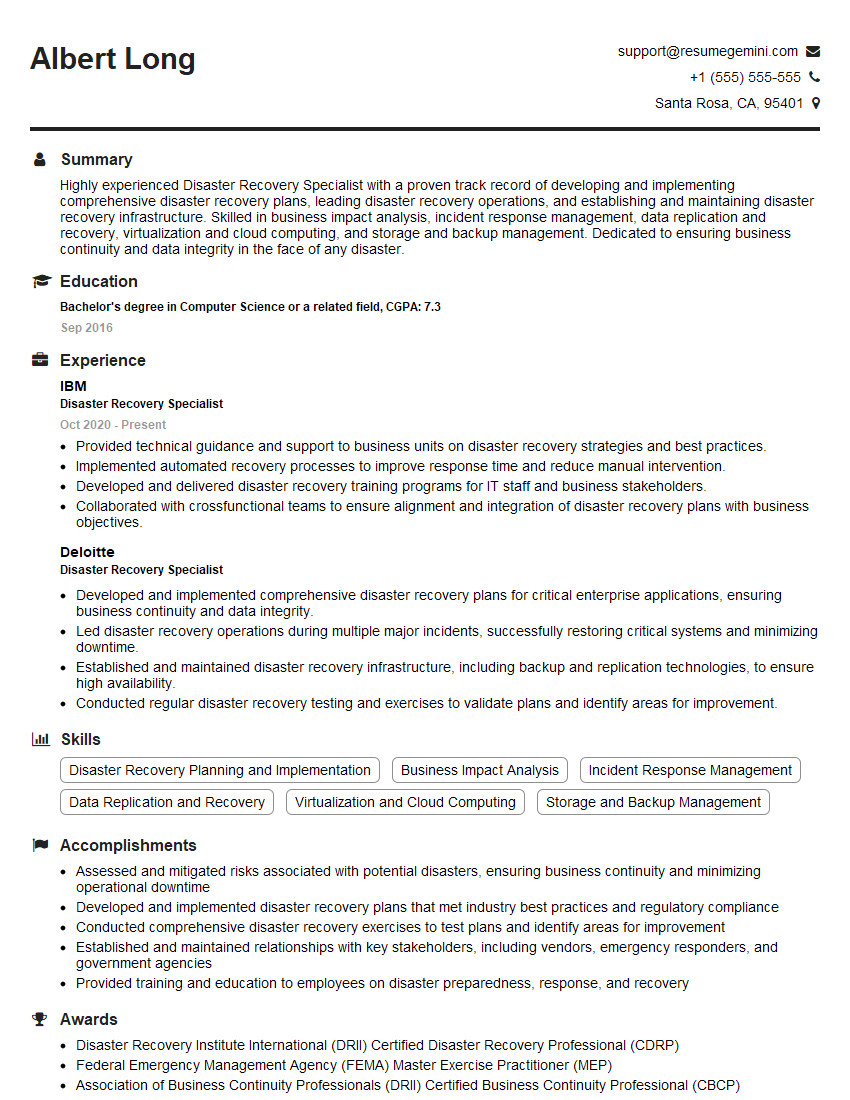
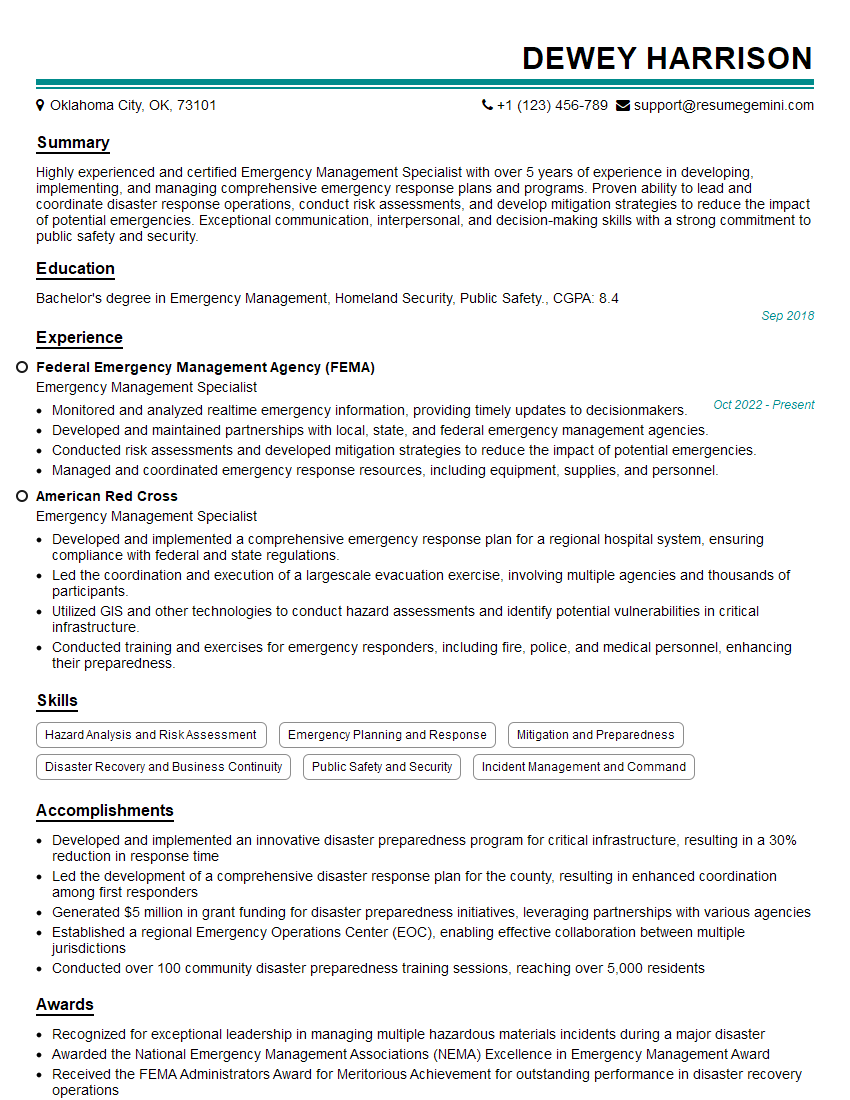
Mastering Experience in Disaster Response Operations opens doors to rewarding and impactful careers, allowing you to make a tangible difference in the lives of others. To maximize your job prospects, it’s essential to create an ATS-friendly resume that highlights your skills and experiences effectively. ResumeGemini can help you build a powerful and professional resume tailored to the specific requirements of disaster response roles. We provide examples of resumes specifically designed for individuals with Experience in Disaster Response Operations, showcasing how to present your skills and accomplishments in the best possible light. Take the next step towards your dream career – create a standout resume with ResumeGemini today.
Explore more articles
Users Rating of Our Blogs
Share Your Experience
We value your feedback! Please rate our content and share your thoughts (optional).
What Readers Say About Our Blog
Very informative content, great job.
good