Interviews are more than just a Q&A session—they’re a chance to prove your worth. This blog dives into essential Experience in diving and underwater operations interview questions and expert tips to help you align your answers with what hiring managers are looking for. Start preparing to shine!
Questions Asked in Experience in diving and underwater operations Interview
Q 1. Describe your experience with different diving techniques (e.g., scuba, surface supplied).
My diving experience encompasses a wide range of techniques, primarily focusing on SCUBA (Self-Contained Underwater Breathing Apparatus) and surface-supplied diving. SCUBA diving, with its portability and independence, is ideal for a variety of tasks, from recreational diving to shallow-water inspections. I’m proficient in both open-circuit and closed-circuit rebreather systems, understanding the nuances of gas management and safety procedures for each. Surface-supplied diving, on the other hand, offers extended bottom times and reduced gas consumption, making it crucial for deeper operations and underwater construction projects. I’ve worked extensively with surface-supplied systems, including the use of umbilicals for communication and gas delivery. A memorable experience involved using surface-supplied diving for an intricate pipeline inspection at a depth of 100ft, where the extended bottom time and constant communication with the surface team were crucial for efficient and safe operation.
- SCUBA: Proficient in open-circuit and closed-circuit rebreather systems.
- Surface-Supplied: Extensive experience with umbilical connections and gas management.
Q 2. Explain your understanding of decompression procedures and tables.
Decompression procedures are critical for preventing decompression sickness (‘the bends’), which occurs when dissolved inert gases, primarily nitrogen, form bubbles in the bloodstream upon ascent. Understanding decompression tables and software is paramount to safe diving. These tables, often based on algorithms that account for depth, dive time, and ascent rates, prescribe specific decompression stops at predetermined depths and durations to allow the body to safely eliminate dissolved gases. I’m familiar with various decompression tables, including those from NOAA and Bühlmann, and I also utilize sophisticated dive computers that calculate decompression profiles in real-time. I always prioritize conservative decompression strategies, especially in complex dives or those involving multiple repetitive dives. For example, during a recent deep wreck penetration dive, we meticulously followed a calculated decompression profile with additional safety stops based on our dive computer readings and our accumulated nitrogen load. We closely monitored each diver’s saturation levels and adjusted our ascent plan accordingly, ensuring everyone returned to the surface safely.
Q 3. What are the common hazards associated with underwater welding?
Underwater welding presents a unique set of hazards beyond typical diving risks. These include:
- Electrocution: The risk of electric shock is significantly increased in the conductive underwater environment. Proper insulation and grounding techniques are essential.
- Arc Flash: The intense heat and light from the welding arc can cause severe burns to the diver and nearby personnel.
- Toxicity: Welding fumes and gases can be trapped beneath the surface, leading to respiratory problems. Proper ventilation and gas monitoring are crucial.
- Reduced Visibility: Welding can further reduce already limited underwater visibility, creating additional navigational challenges.
- Fire Hazards: Welding can ignite flammable materials present in the underwater environment.
- Pressure Changes: The effect of pressure on welding materials and the equipment needs to be carefully considered
Mitigation strategies involve strict adherence to safety protocols, specialized equipment, and thorough risk assessments. We always utilize specialized underwater welding equipment designed for underwater applications, including appropriate shielding and safety measures. Regular equipment checks and diver training are fundamental to mitigating these risks.
Q 4. How do you maintain diving equipment and perform pre-dive checks?
Maintaining diving equipment and conducting pre-dive checks are non-negotiable aspects of safe diving practices. My routine includes a comprehensive inspection of all equipment before every dive, following a systematic checklist. This involves verifying the functionality of:
- BCD (Buoyancy Compensator): Checking inflation and deflation mechanisms, leak checks.
- Regulators: Testing the first and second stages for free breathing and proper air delivery.
- Dive Computer: Ensuring proper battery life, calibrations and correct settings for the dive profile.
- Oxygen Cylinder(s): Checking pressure levels, proper valve operation.
- Wetsuit or Drysuit: Checking for leaks, tears, and proper sealing.
- Underwater Lights and other communication/Navigation equipment: Checking battery power, functionality.
Beyond pre-dive checks, regular maintenance involves thorough cleaning and inspection of equipment, including o-ring replacements, lubrication of moving parts, and pressure testing of cylinders. Proactive maintenance prevents failures during dives, ensuring safety and efficiency.
Q 5. What are the limitations of underwater communication systems?
Underwater communication systems face several limitations due to the properties of water. Sound travels differently underwater compared to air, and distance significantly impacts communication clarity and range. Factors like water clarity, currents, ambient noise (marine life, boat traffic), and the type of communication system used all influence effectiveness.
- Limited Range: Acoustic signals attenuate rapidly with distance.
- Poor Clarity: Noise interference degrades message clarity.
- Directional Dependency: Communication is not omnidirectional; the orientation of the devices significantly affects signal strength.
- Technical issues: Equipment malfunctions can disrupt communication.
We often use a combination of methods, including underwater telephones, hand signals, and sometimes even writing on slates. Understanding these limitations and employing backup communication methods are crucial during underwater operations.
Q 6. Describe your experience with underwater navigation and orientation.
Underwater navigation and orientation rely on a combination of techniques and instruments. While compasses are useful, they can be affected by metallic objects and magnetic fields. I’m proficient in using a range of methods:
- Navigation with compass and depth gauge: Establishing and maintaining headings to reach designated locations.
- Visual cues: Referencing landmarks, natural features (e.g., reefs, underwater canyons), and artificial structures.
- Dive planning and reference lines: Utilizing pre-planned routes and deploying guide lines to prevent disorientation.
- Using equipment such as GPS and Sonar: Employing more advanced technology when the site conditions allow it.
During a recent survey of an underwater wreck site, I used a combination of compass bearings, visual referencing of the wreck’s features, and a pre-laid guideline to navigate the complex structure safely and efficiently while conducting detailed mapping.
Q 7. Explain your understanding of different types of diving suits and their applications.
Different diving suits offer varying levels of protection and thermal insulation, depending on the environment and depth of the dive. My experience includes the use of several types:
- Wetsuits: These allow water to enter, relying on the water’s insulation properties. Wetsuits are suitable for warmer waters and shallower dives.
- Drysuits: These provide a completely waterproof barrier, preventing water from entering. They are essential for cold-water diving and deeper operations, maintaining thermal protection and preventing hypothermia. Drysuits require specialized training and understanding of gas management.
- Exposure suits: These are lightweight protective suits for thermal protection and are used mostly for shallow water and warmer temperatures.
The selection of a diving suit is crucial and depends on factors such as water temperature, depth, dive duration, and the level of protection required. For example, during an Arctic research dive, I used a specialized drysuit with multiple layers of thermal undergarments to maintain body temperature in frigid waters.
Q 8. How do you manage emergency situations during a dive?
Emergency management during a dive is paramount. It relies on proactive planning, rigorous training, and immediate, decisive action. My approach is based on the ‘RAP’ method: Recognize, Assess, Proceed.
- Recognize: The first step is identifying the problem. This could range from equipment malfunction (e.g., a regulator free-flow) to a diver experiencing distress (e.g., rapid ascent, disoriented behavior) or environmental hazards (e.g., strong currents, sudden changes in visibility).
- Assess: Once the problem is identified, I swiftly assess its severity and impact on the dive. This includes considering the depth, location, remaining air supply, and the condition of all divers involved. I prioritize immediate threats to safety.
- Proceed: Based on the assessment, I execute the most appropriate emergency procedure. This might involve initiating an emergency ascent, deploying a safety sausage, activating a dive computer’s emergency functions, using a spare regulator, or contacting the surface support team using underwater communication devices. Communication is key – clear, concise signals and verbal communication (if feasible) prevent further confusion.
For example, during a dive where a diver experienced an equipment malfunction, I promptly assessed the situation, initiated a controlled emergency ascent, and ensured the diver’s safe return to the surface. Post-dive, we thoroughly debriefed the incident to identify contributing factors and prevent future occurrences.
Q 9. What are the signs and symptoms of decompression sickness?
Decompression sickness (DCS), also known as ‘the bends,’ occurs when dissolved inert gases, primarily nitrogen, form bubbles in the body’s tissues and blood during ascent from a dive. Symptoms vary widely depending on the severity and location of the bubbles. They can manifest immediately or hours after the dive.
- Early Symptoms: Joint pain (particularly in the shoulders, elbows, knees, or ankles), fatigue, headache, dizziness, itching, or skin rash.
- More Severe Symptoms: Shortness of breath, paralysis, chest pain, neurological symptoms (including altered mental status, visual disturbances, and loss of consciousness), and even death.
Think of it like shaking a soda bottle: as you come up from a depth, the pressure decreases, and the dissolved gases try to escape. If the ascent is too rapid, these gases form bubbles, causing the symptoms of DCS. Prompt treatment in a recompression chamber is crucial for serious cases. Prevention is key, achieved through adhering strictly to decompression procedures and dive tables.
Q 10. What are your experiences with underwater photography or videography?
I’ve extensively utilized underwater photography and videography for both personal enrichment and professional projects. My experience includes capturing stills and video footage of marine life, shipwrecks, and underwater structures for various purposes, including environmental monitoring, archaeological documentation, and educational resources.
I am proficient in using various underwater housings for cameras and lights, mastering techniques for shooting in low-light conditions, and maintaining equipment in a challenging aquatic environment. For instance, during a recent coral reef survey, I used a GoPro with a red filter to compensate for the absorption of red light at depth, achieving vibrant footage of the reef’s color palette. I’m also adept at editing and post-processing underwater footage to create high-quality presentations and documentary-style videos.
Q 11. Explain your knowledge of different types of underwater habitats and their functions.
Underwater habitats are structures designed to allow humans to live and work underwater for extended periods. They come in various forms, each designed for specific purposes and depths.
- Saturation Diving Habitats: These are large, complex structures designed for prolonged underwater stays, allowing divers to work at depth without repeated decompression. They provide living quarters, working areas, and life support systems.
- Undersea Research Stations: These facilities, like Aquarius Reef Base, serve as research platforms, allowing scientists to study marine ecosystems without the limitations of conventional diving.
- Submersibles: These are specialized vehicles that allow for exploration and work at greater depths than divers can reach, providing a protected environment from the crushing pressure of the deep ocean.
- Simple Underwater Shelters: Smaller and simpler structures, often used for short-term deployments for things like inspections or small-scale maintenance.
The functions of underwater habitats vary greatly, depending on the design and intended use. However, all focus on providing a safe and habitable environment for human occupation, offering protection from the aquatic environment, and facilitating diverse tasks such as scientific research, underwater construction, and maintenance.
Q 12. How do you assess environmental conditions before a dive?
Assessing environmental conditions before a dive is crucial for safety and mission success. My pre-dive assessment includes a thorough review of several factors:
- Weather conditions: Wind speed and direction, visibility, rainfall, wave height – these determine surface conditions and potential hazards.
- Water conditions: Current speed and direction, temperature, salinity, visibility (including potential for siltation) – these dictate dive planning and equipment selection.
- Dive site conditions: Depth, bottom topography, potential hazards (e.g., strong currents, sharp objects, entanglement hazards), marine life presence – this necessitates careful route planning and risk mitigation strategies.
- Tide and current information: Careful analysis of tidal charts and predictions helps determine the optimal dive timing to avoid strong currents and hazardous conditions.
For example, if I anticipate strong currents, I may adjust the dive plan to choose a different site or time, or I might select appropriate equipment, like a stronger reel, to manage the currents. Similarly, I might alter the dive duration or depth if the visibility is poor to avoid disorientation.
Q 13. Describe your experience with underwater inspection or survey techniques.
My experience in underwater inspection and survey techniques encompasses a broad range of methodologies and technologies. I am proficient in using various tools and techniques depending on the nature of the task and the environment.
- Visual Inspection: This includes thorough visual examination of structures or objects using underwater lighting and cameras to detect damage, corrosion, or other anomalies.
- Non-Destructive Testing (NDT): I’m trained in using NDT methods such as ultrasonic thickness gauging to assess the integrity of underwater structures without causing damage.
- Remotely Operated Vehicles (ROVs): I have significant experience operating ROVs equipped with cameras, sonar, and manipulators for detailed inspection and data collection in challenging or hazardous environments.
- Photogrammetry and 3D Modeling: I’ve used photogrammetry techniques to create detailed 3D models of underwater structures and objects based on overlapping photographs. This is particularly valuable for assessing damage and creating detailed records.
For instance, during a recent inspection of an offshore oil platform’s support legs, I employed ROVs equipped with high-definition cameras and sonar to thoroughly examine the structures for signs of corrosion and structural damage. The data obtained helped inform maintenance schedules and ensure operational safety.
Q 14. Explain your knowledge of underwater salvage and recovery methods.
Underwater salvage and recovery methods depend heavily on the nature of the object, its location, depth, and the surrounding environment. My experience includes a variety of techniques.
- Lifting Bags: These inflatable bags are used to provide buoyancy to lift relatively small and lightweight objects from the seabed.
- Grappling Hooks and Nets: Used to secure and retrieve objects that are too difficult to grasp directly.
- Underwater winches and cranes: Used for lifting heavier objects, often employed in conjunction with ROVs for precise positioning.
- Specialized diving equipment: Diving suits and equipment are used for manual recovery of items that can’t be lifted directly. This can include specialized tools for cutting, lifting, and stabilizing the object.
- Remotely Operated Vehicles (ROVs): These are invaluable for assessing the situation and maneuvering manipulators or specialized cutting tools to retrieve the object from complicated positions or depths.
For example, during a project to recover a sunken vessel, we used a combination of ROVs to assess the condition of the wreck and positioning lifting bags for a safe lift. We carefully planned for currents and tides and employed divers for tasks requiring precision and careful maneuvering.
Q 15. What are the legal and regulatory requirements for commercial diving in your region?
Commercial diving in my region, let’s say it’s the United States, is heavily regulated to ensure diver safety and environmental protection. The primary governing body is the Occupational Safety and Health Administration (OSHA), specifically their Subpart T – Commercial Diving. This outlines stringent requirements for training, equipment, medical evaluations, and dive procedures.
Specific regulations include:
- Certification Requirements: Divers must hold appropriate certifications from recognized organizations like the Association of Diving Contractors International (ADCI) or the Divers Alert Network (DAN). The level of certification depends on the complexity and depth of the dives undertaken.
- Dive Plans: Detailed dive plans are mandatory and must be reviewed and approved by a qualified supervisor before any dive commences. These plans encompass all aspects of the dive, from the diving procedure itself to emergency procedures and contingency plans.
- Equipment Standards: Equipment used must meet specific standards, undergo regular inspections and maintenance, and be properly tested. This includes scuba gear, diving bells, surface-supplied equipment, and any specialized tools used.
- Medical Standards: Divers undergo rigorous medical examinations to ensure their fitness for diving. This includes tests for cardiovascular health, lung capacity, and other relevant parameters. Regular medical checkups are also required.
- Environmental Considerations: Regulations also address the environmental impact of diving operations, especially pertaining to marine life and sensitive habitats. Disposal of waste materials and any potential pollution need to be carefully considered and followed accordingly.
Non-compliance with these regulations can result in significant penalties, including fines and suspension or revocation of operating licenses.
Career Expert Tips:
- Ace those interviews! Prepare effectively by reviewing the Top 50 Most Common Interview Questions on ResumeGemini.
- Navigate your job search with confidence! Explore a wide range of Career Tips on ResumeGemini. Learn about common challenges and recommendations to overcome them.
- Craft the perfect resume! Master the Art of Resume Writing with ResumeGemini’s guide. Showcase your unique qualifications and achievements effectively.
- Don’t miss out on holiday savings! Build your dream resume with ResumeGemini’s ATS optimized templates.
Q 16. What is your experience with working in a team environment during underwater operations?
Teamwork is paramount in underwater operations. It’s not just about safety; it’s about efficiency and accomplishing the task at hand. I’ve been involved in numerous projects where seamless teamwork was the key to success. For example, during a pipeline inspection, our team consisted of a dive supervisor, two divers, a tender, and a surface support crew.
The dive supervisor coordinated all activities, ensuring clear communication between all team members. The tenders monitored the divers’ air supply, depth, and overall condition. The surface support crew managed equipment and logistics. The divers executed the inspection, following pre-determined procedures and reporting findings to the supervisor. Open communication, trust, and mutual respect formed the foundation of our success. Clear roles and responsibilities, established before the operation began, were crucial in managing the task smoothly and safely.
Effective communication, particularly in high-pressure situations, is critical. We regularly use standardized hand signals underwater and clear, concise radio communication on the surface.
Q 17. How do you manage risks associated with working in confined spaces underwater?
Confined space diving presents unique challenges and increased risk. The primary concerns are limited space, poor visibility, potential for entanglement, and restricted escape routes. Risk management begins with meticulous pre-dive planning.
My approach involves:
- Thorough Risk Assessment: A detailed assessment identifies all potential hazards specific to the confined space, including the presence of hazardous materials, structural integrity, and ventilation conditions.
- Appropriate Equipment Selection: Using equipment optimized for confined spaces, including smaller, more maneuverable tools, and redundant safety systems.
- Emergency Procedures: Establishing clear emergency procedures, including communication protocols and escape plans, practiced rigorously during pre-dive briefings.
- Gas Monitoring: Continuous monitoring of oxygen levels, carbon dioxide levels, and other potentially hazardous gases within the confined space. This ensures diver safety and prevents accidents.
- Buddy System: Always working in a buddy system, where two divers enter the space together, providing mutual support and assistance if needed.
- Controlled Entry and Exit: Slow, deliberate movements are important during entry and exit to avoid dislodging sediment or striking objects within the confined space.
Each confined-space dive requires a tailored approach, with procedures adapted to the specifics of the environment. The key is proactive hazard identification and mitigation before the dive even begins.
Q 18. How do you handle equipment malfunctions during a dive?
Equipment malfunctions underwater can be critical, so thorough pre-dive checks and contingency plans are essential.
My procedure is as follows:
- Immediate Assessment: Quickly assess the nature and severity of the malfunction. Is it a minor issue or a life-threatening emergency?
- Initiate Emergency Procedures: If life-threatening, immediately signal my buddy and the surface support team using pre-arranged signals. Follow established emergency ascent procedures.
- Attempt Repairs (if safe): For less serious malfunctions, and only if it’s safe to do so, attempt repairs. This might involve switching to backup equipment or using readily available tools.
- Controlled Ascent: If a repair isn’t feasible, proceed with a controlled and safe ascent according to the pre-established plan. This may involve using an emergency ascent line or other pre-positioned equipment.
- Post-Dive Analysis: After surfacing, a thorough analysis of the malfunction is conducted, determining its root cause and implementing measures to prevent recurrence. This often involves equipment servicing and/or retraining to refine procedures.
Regular equipment maintenance and thorough training are crucial in minimizing the likelihood of equipment failure and maximizing the ability to respond efficiently and safely to malfunctions.
Q 19. Explain your experience with underwater cutting and burning techniques.
Underwater cutting and burning techniques require specialized training and adherence to strict safety protocols. The techniques vary depending on the material being cut or burned and the underwater environment.
I’m experienced in using:
- Underwater plasma arc cutting: This technique uses a high-temperature plasma arc to cut through various metals, even under challenging conditions, with excellent precision. Safety requires meticulous attention to the arc’s electrical aspects.
- Oxy-fuel cutting: This method involves using oxygen and fuel gases to create a high-temperature flame for cutting steel. It’s effective for many types of underwater cutting. This method requires careful gas management and maintaining appropriate pressures.
- Underwater burning: For specific purposes, such as preparing materials for welding or cutting less robust materials, underwater burning may be utilized.
Safety measures include selecting appropriate cutting equipment for the specific material and ensuring a sufficient supply of cutting gases and appropriate personal protective equipment. Environmental impact must also be considered, and any waste products carefully managed.
Q 20. Describe your experience with the operation and maintenance of ROVs (Remotely Operated Vehicles).
My experience with ROVs (Remotely Operated Vehicles) includes both operation and maintenance. I’ve worked with various ROV models, from small, lightweight units for inspection tasks to larger, more sophisticated systems capable of manipulating tools and performing complex underwater tasks.
Operational experience includes:
- Piloting and maneuvering ROVs: Successfully navigating ROVs through challenging underwater environments, including confined spaces, strong currents, and poor visibility conditions.
- Performing inspections and surveys: Using ROVs equipped with cameras, sonar, and other sensors to conduct thorough inspections of underwater structures and pipelines.
- Manipulating ROV tools: Operating manipulator arms and other tools attached to the ROV to perform tasks like collecting samples, installing equipment, or conducting repairs.
Maintenance experience includes:
- Regular servicing and inspections: Conducting routine maintenance to ensure the ROV’s optimal performance, including checking hydraulic systems, electrical components, and thrusters.
- Troubleshooting and repair: Diagnosing and resolving malfunctions, performing minor repairs, and coordinating more extensive repairs with specialized technicians.
- Understanding ROV systems: Having a solid understanding of ROV control systems, navigation, and sensor technologies, allowing for effective operation and maintenance.
ROV operation demands a high level of skill and precision, with a thorough understanding of the system’s capabilities and limitations.
Q 21. What is your experience with different types of underwater tools and equipment?
My experience encompasses a wide range of underwater tools and equipment. This includes:
- Diving equipment: Scuba sets, surface-supplied diving equipment (including helmets and diving suits), closed-circuit rebreathers, and various personal protective equipment (PPE) such as gloves, dry suits, and underwater communication systems.
- Cutting and welding tools: Plasma arc cutters, oxy-fuel torches, underwater welding equipment, and associated safety gear.
- Inspection and survey equipment: Cameras, sonar systems, underwater metal detectors, and various non-destructive testing (NDT) tools.
- Lifting and handling equipment: Underwater winches, lifting bags, and various specialized lifting tools for handling heavy objects.
- ROV systems and tools: Various types of remotely operated vehicles (ROVs) and their associated tools, including manipulator arms and sampling equipment.
Proficiency with these tools requires specialized training and hands-on experience, ensuring the safe and effective execution of underwater tasks. A key aspect of my expertise is knowing when to use which tool and how to maintain them correctly.
Q 22. Explain your understanding of hyperbaric chamber operation and treatment.
Hyperbaric chambers are pressure vessels used to treat diving-related illnesses like decompression sickness (‘the bends’) and arterial gas embolism. They work by recompressing the patient to a pressure similar to that experienced at depth, allowing dissolved inert gases (like nitrogen) to be gradually released into the bloodstream and exhaled, preventing the formation of bubbles that cause these conditions. Treatment involves carefully controlled increases and decreases in chamber pressure, often over several hours, administered by trained medical personnel. The process is monitored closely, with regular checks of the patient’s vital signs and gas levels. For example, during a recompression for decompression sickness, the chamber might be pressurized to several atmospheres, then the pressure is gradually decreased while the patient breathes pure oxygen or a special gas mixture to speed up the off-gassing process. The entire treatment protocol is carefully tailored to the individual case and is guided by established decompression tables and the patient’s response to treatment.
During operation, safety is paramount. Regular maintenance is crucial, including pressure testing and leak checks. Emergency protocols are in place to handle equipment malfunctions or patient emergencies. The chamber’s atmosphere is closely monitored to ensure proper gas mixtures and oxygen levels. Trained hyperbaric technicians are essential to operate and monitor the equipment and the patient’s condition throughout the treatment.
Q 23. How do you manage fatigue and stress during long or demanding dives?
Managing fatigue and stress during prolonged or challenging dives is critical for safety and performance. It’s not just about physical exertion; it’s also about the mental demands of working underwater. My approach involves several key strategies:
- Pre-dive preparation: Adequate sleep, proper nutrition, and hydration are essential. This includes avoiding alcohol and caffeine before a dive.
- Physical fitness: Maintaining good physical condition increases endurance and resilience to fatigue. Regular exercise, including specialized training for diving, is crucial.
- Proper planning and execution: Well-planned dives minimize unexpected issues and reduce stress. Detailed dive profiles and contingency plans address potential problems proactively.
- Teamwork and communication: Effective teamwork allows for workload sharing and mutual support. Open communication between divers ensures early identification of fatigue or stress.
- Regular breaks and decompression stops: Strategic rest periods and decompression stops during longer dives allow for the body to recover and reduce the risk of decompression sickness. These breaks also provide opportunities for hydration and a brief mental reset.
- Post-dive recovery: Adequate rest and rehydration after a dive are vital for recovery. This includes relaxation techniques to manage stress and fatigue.
For instance, during a week-long underwater survey project, we integrated short surface intervals throughout each day, allowing the team to rest, hydrate, and debrief. This ensured everyone remained alert and performed at their best throughout the operation.
Q 24. Describe your experience working with different types of diving gases.
My experience encompasses a range of diving gases, each with specific applications and associated risks. I’m proficient in using air, enriched air nitrox (EANx), trimix (a blend of oxygen, helium, and nitrogen), and pure oxygen.
- Air: The most common diving gas, suitable for relatively shallow dives. However, the high nitrogen content limits depth and dive duration due to increased risk of nitrogen narcosis and decompression sickness.
- EANx: By increasing the oxygen percentage, EANx reduces nitrogen partial pressure at depth, extending dive times and reducing the risk of narcosis. However, higher oxygen partial pressures increase the risk of oxygen toxicity. I’ve extensively used EANx for recreational and technical dives up to 40 meters.
- Trimix: Used for deep and technically demanding dives, trimix reduces both nitrogen narcosis and oxygen toxicity risks by using helium as a diluent. Proper gas planning, including the correct oxygen and helium percentages, is critical for safety. I have extensive experience using trimix in deep wreck penetration dives exceeding 60 meters.
- Pure Oxygen: Used in shallow dives and decompression stops, pure oxygen accelerates the removal of inert gases from the body. However, it is toxic at depth and should only be used under strictly controlled conditions. We use it in our decompression procedures strictly adhering to safety protocols.
Gas management, including calculating partial pressures, understanding gas toxicity limits, and proper cylinder handling and monitoring, is fundamental to my diving practice.
Q 25. What is your experience with different types of underwater lighting systems?
Underwater lighting systems vary considerably depending on the application, from simple diving torches to sophisticated video lighting setups. My experience includes working with various types:
- Handheld diving lights: Essential for navigation and close-up inspections, these vary in power and beam angle. I’ve used both incandescent and LED lights, appreciating the longer battery life and improved efficiency of LEDs.
- Video lights: These provide controlled illumination for underwater filming and photography. These lights are typically brighter and more focused, often with adjustable colour temperature and intensity. I’ve used several models, mastering their settings to achieve optimum image quality in varying water conditions.
- Remotely operated vehicle (ROV) lights: Used with ROVs to illuminate the working area, these lights are often high-intensity LEDs capable of penetrating significant water turbidity. I’ve worked extensively with ROV systems, appreciating the benefits of remotely controlled lighting for precise illumination in challenging environments.
- Underwater floodlights: Used for larger-scale illumination in areas like underwater construction or search operations, these lights are extremely powerful and provide widespread illumination.
Selecting the right lighting is crucial. Factors such as water clarity, required beam angle, and the distance to the subject must be considered. I’ve encountered situations where poor lighting significantly affected visibility and task completion, underscoring the importance of adequate illumination planning.
Q 26. How do you plan and execute complex underwater tasks?
Planning and executing complex underwater tasks requires meticulous preparation and a systematic approach. It’s not just about diving; it’s about project management underwater. My approach involves these steps:
- Thorough risk assessment: Identifying all potential hazards, including environmental conditions (currents, visibility, marine life), equipment malfunctions, and human factors.
- Detailed planning: Creating a comprehensive dive plan, including detailed dive profiles, contingency plans for various scenarios, communication procedures, and clear task assignments.
- Equipment selection and testing: Choosing the appropriate equipment for the task, ensuring it’s properly maintained and tested beforehand. Redundancy is key in critical systems.
- Pre-dive briefing: Conducting a thorough briefing with the dive team, outlining tasks, procedures, communication protocols, and emergency responses. This ensures everyone is aware of their roles and responsibilities.
- Execution and monitoring: Careful execution of the planned tasks, with continuous monitoring of environmental conditions, diver status, and equipment performance. Communication between team members is essential.
- Post-dive debriefing: Conducting a thorough debriefing after the dive to analyze performance, identify lessons learned, and make improvements for future operations.
For instance, while leading a team to recover a sunken vessel, we planned for multiple contingencies, including unexpected currents, equipment failures, and poor visibility. Our rigorous planning allowed us to complete the recovery safely and efficiently.
Q 27. Explain your experience with underwater project management.
My experience in underwater project management extends across diverse projects, from underwater surveys to pipeline inspections and salvage operations. Key aspects include:
- Budget management: Developing and adhering to a realistic budget considering all aspects of the project, from equipment costs to personnel and logistics.
- Scheduling and logistics: Creating a detailed schedule, coordinating resources, and managing logistics to ensure the project runs smoothly and within the set timeframe. This involves careful planning for transport, equipment deployment, and crew management.
- Team management: Leading and motivating a diverse team of divers, technicians, and support staff. Effective communication, conflict resolution, and ensuring team safety are crucial.
- Quality control: Implementing robust quality control measures to ensure accuracy and consistency in data collection or task completion. This often involves regular checks and documentation.
- Reporting and documentation: Maintaining accurate records of all aspects of the project, including dive logs, equipment maintenance records, and progress reports. This is crucial for accountability and future reference.
In a recent pipeline inspection project, my management of the team, scheduling, and resource allocation resulted in the project being completed ahead of schedule and under budget, with no safety incidents reported.
Q 28. What is your experience in using and maintaining diving support vessels?
My experience with diving support vessels spans various types, including workboats, dive boats, and specialized research vessels. My responsibilities have encompassed:
- Vessel selection: Choosing the appropriate vessel based on project requirements, considering factors like size, stability, deck space, and onboard equipment. I carefully consider the project’s location, water conditions, and the planned diving operations.
- Equipment operation and maintenance: Operating and maintaining diving equipment onboard, including compressors, gas blending systems, and winches. Regular checks and maintenance are key to ensuring safety and operational efficiency.
- Safety procedures: Ensuring compliance with safety regulations and implementing appropriate safety procedures onboard, including emergency response plans. This includes fire safety, personal safety, and marine safety procedures.
- Crew coordination: Coordinating the work of the vessel crew and dive team to ensure efficient and safe operation of the vessel and diving support activities.
- Navigation and communication: Assisting in navigation and communication with onshore support teams and other vessels. This includes using charts, GPS, and radio communication to coordinate movements and ensure efficient operations.
For example, during a deep-water survey, I worked closely with the vessel captain and crew to ensure optimal positioning of the vessel during our dive operations, maximizing efficiency and reducing the risks associated with challenging sea conditions.
Key Topics to Learn for Diving and Underwater Operations Interviews
- Diving Physiology and Safety: Understanding the effects of pressure on the human body, decompression sickness, and emergency procedures. Practical application: Describing your experience managing dive profiles to mitigate risk.
- Dive Equipment and its Maintenance: Familiarity with various diving equipment (SCUBA, surface supplied, etc.), their operation, and routine maintenance. Practical application: Explaining troubleshooting techniques for common equipment malfunctions.
- Underwater Navigation and Communication: Mastering underwater navigation techniques (compass, natural features) and effective communication methods (hand signals, underwater communication systems). Practical application: Detailing a challenging underwater navigation scenario you successfully overcame.
- Underwater Work Techniques: Proficiency in various underwater tasks, including underwater welding, cutting, inspection, and survey methods. Practical application: Describing your experience with specific underwater tools and techniques.
- Environmental Awareness and Regulations: Knowledge of marine environments, relevant environmental regulations (e.g., marine protected areas), and responsible diving practices. Practical application: Explaining your commitment to sustainable and environmentally conscious diving operations.
- Risk Assessment and Management: Ability to conduct thorough risk assessments for diving operations and implement appropriate mitigation strategies. Practical application: Describing your approach to identifying and mitigating potential hazards in a dive plan.
- Emergency Response and Procedures: Experience in responding to diving emergencies, including rescue techniques and first aid in underwater environments. Practical application: Outlining your role in a past diving emergency and the actions you took.
Next Steps
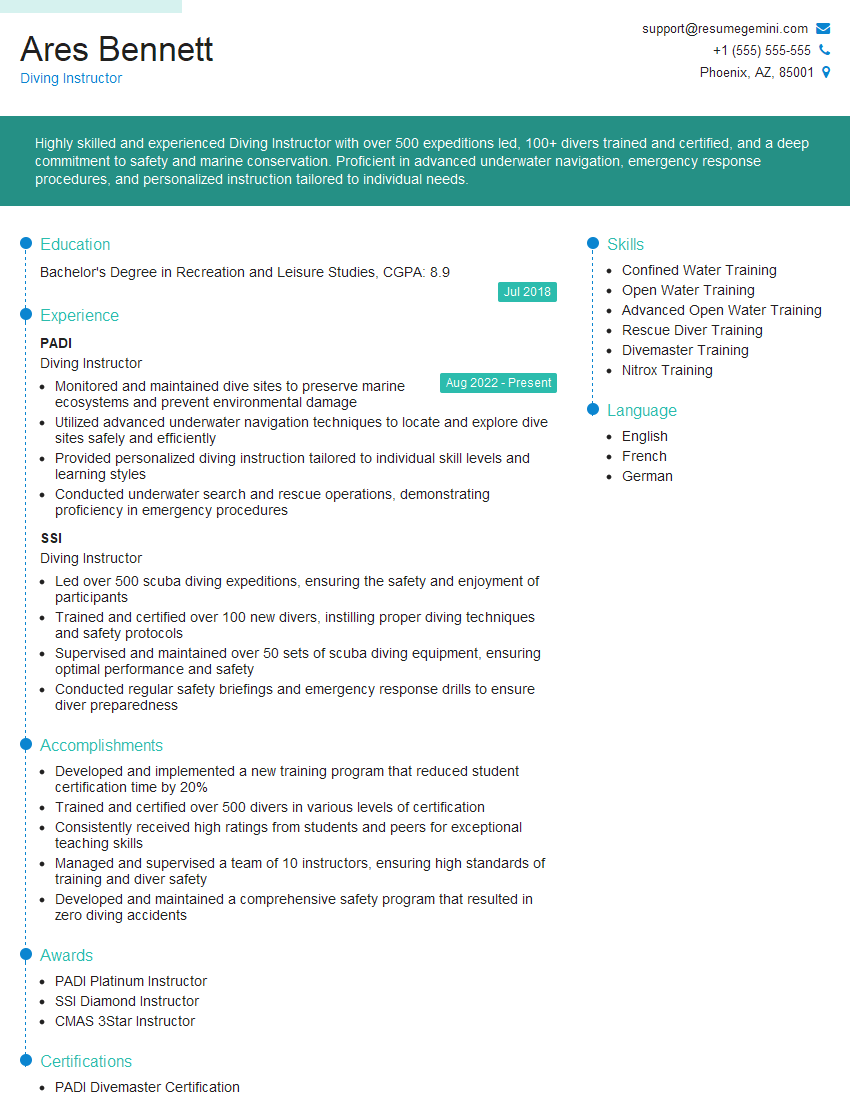
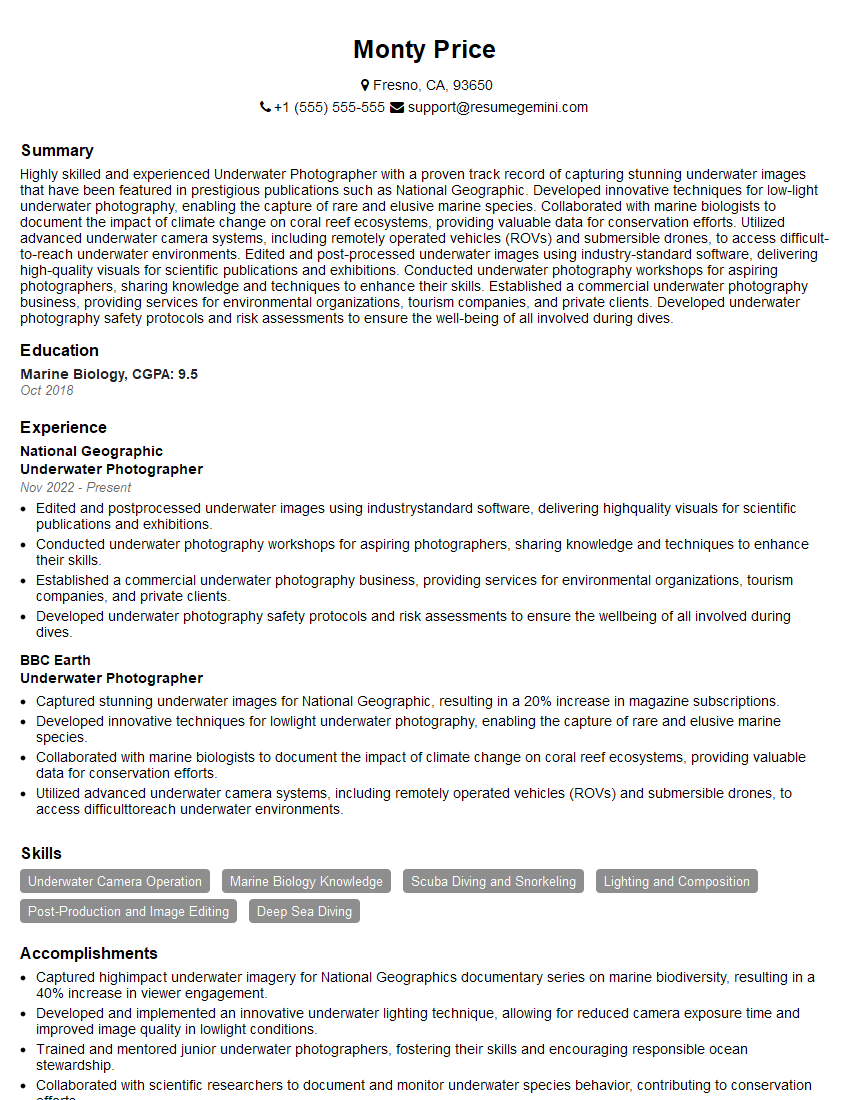
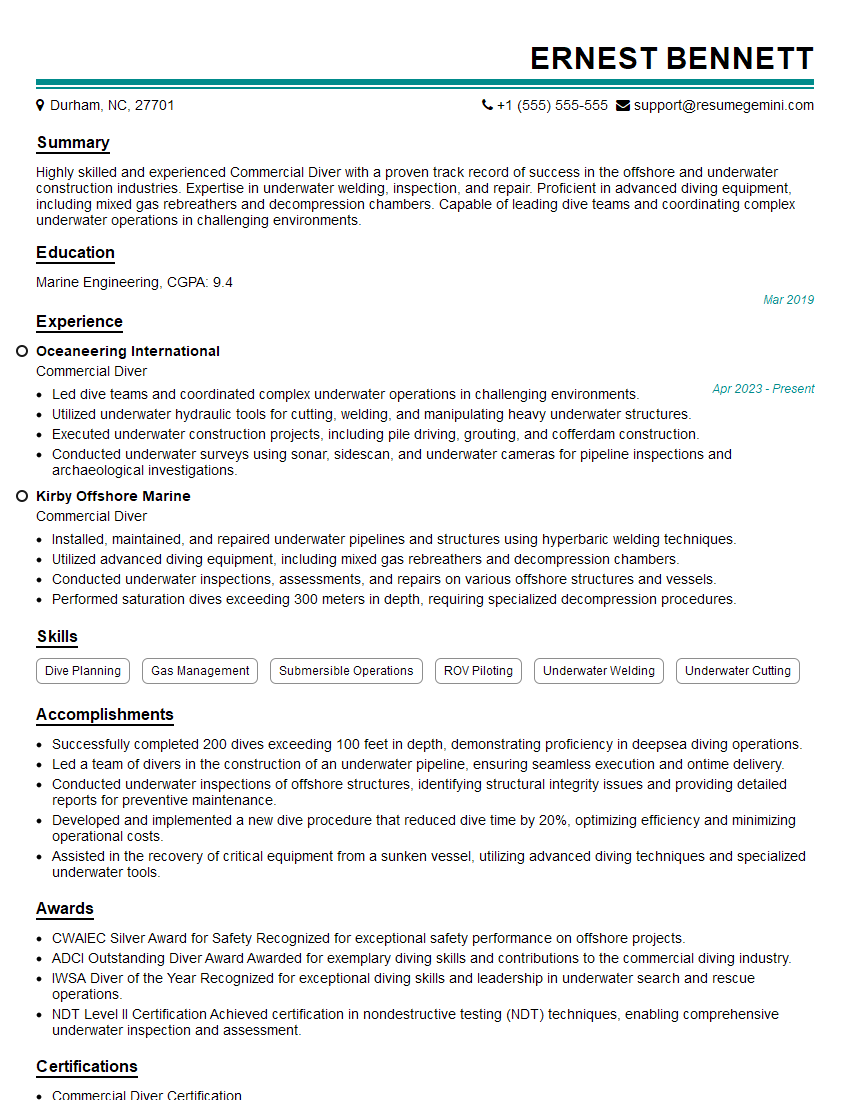
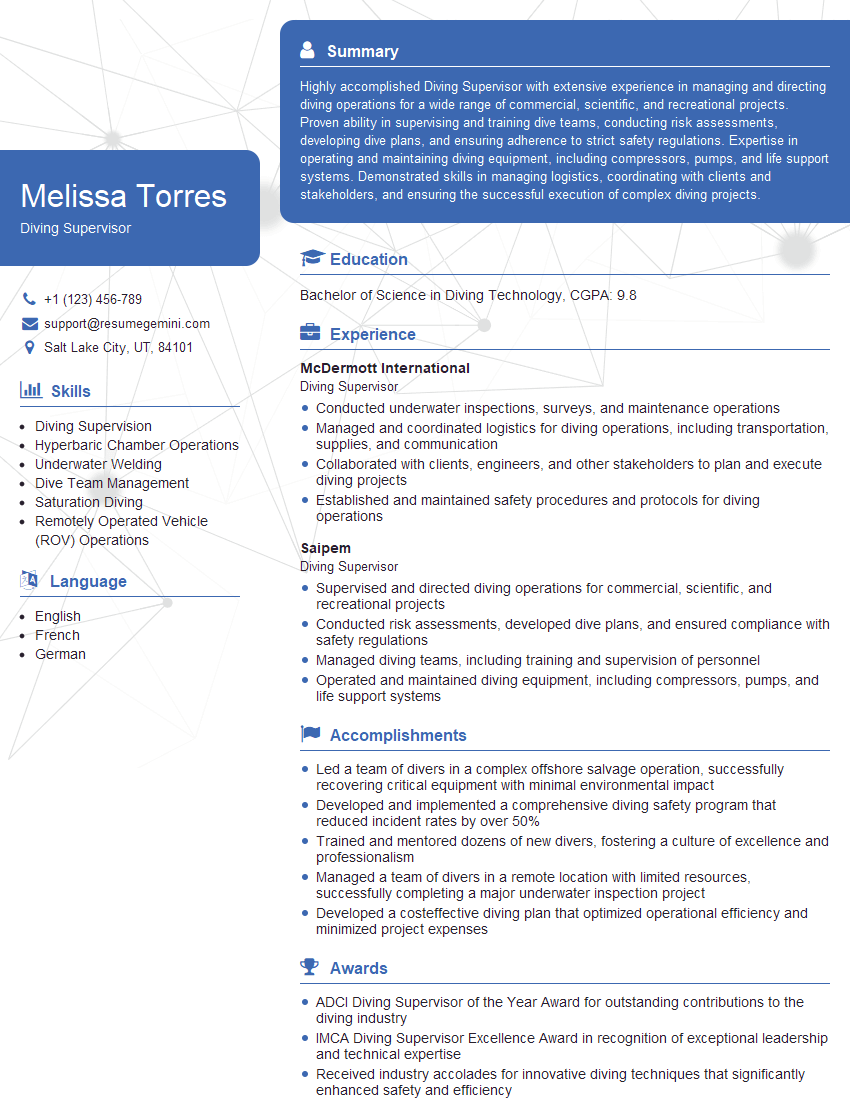
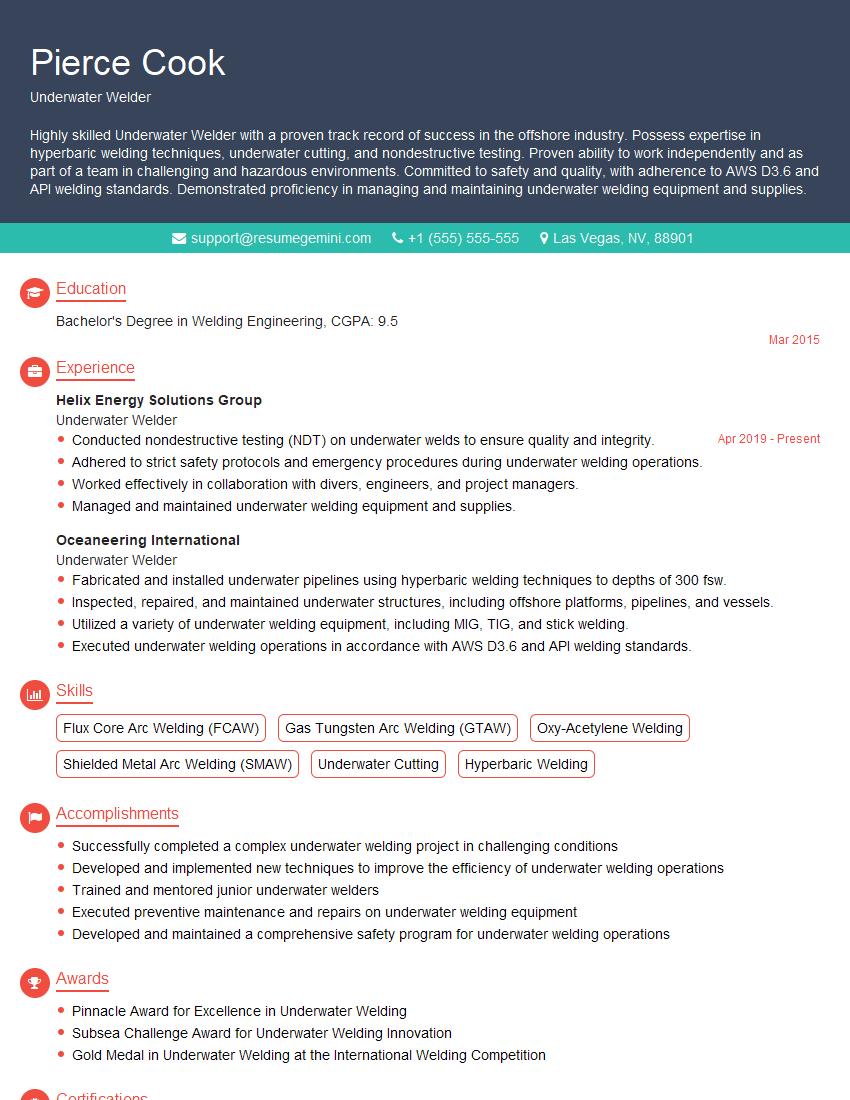
Mastering these key areas will significantly enhance your prospects in securing a rewarding career in diving and underwater operations. A strong resume is crucial for showcasing your skills and experience to potential employers. Crafting an ATS-friendly resume is vital to ensure your application gets noticed. ResumeGemini is a trusted resource to help you build a professional and impactful resume that highlights your unique qualifications. Examples of resumes tailored to diving and underwater operations experience are available to guide you through the process. Invest the time to build a resume that reflects your dedication and expertise – it’s your first impression!
Explore more articles
Users Rating of Our Blogs
Share Your Experience
We value your feedback! Please rate our content and share your thoughts (optional).
What Readers Say About Our Blog
Very informative content, great job.
good