Interviews are more than just a Q&A session—they’re a chance to prove your worth. This blog dives into essential Experience in energy-efficient construction interview questions and expert tips to help you align your answers with what hiring managers are looking for. Start preparing to shine!
Questions Asked in Experience in energy-efficient construction Interview
Q 1. Explain the principles of passive design in energy-efficient construction.
Passive design in energy-efficient construction focuses on minimizing energy consumption by strategically utilizing the natural environment. Think of it like dressing appropriately for the weather – you don’t need a furnace if you’re wearing a warm coat! Instead of relying heavily on mechanical systems, passive design employs building orientation, shape, materials, and landscaping to optimize natural heating, cooling, lighting, and ventilation.
- Building Orientation: Positioning the building to maximize solar gain in winter and minimize it in summer. For example, in the Northern Hemisphere, south-facing windows are excellent for passive solar heating.
- Shading: Using overhangs, trees, or other shading devices to prevent overheating during summer months. This reduces the load on air conditioning systems.
- Thermal Mass: Utilizing materials like concrete, brick, or stone that absorb and store heat during the day and release it slowly at night. This moderates temperature fluctuations throughout the day.
- Natural Ventilation: Designing the building to allow for natural airflow to cool the space, reducing the need for mechanical ventilation. This often involves strategically placed windows and vents.
- Insulation and Air Sealing: Minimizing air leakage through proper insulation and airtight construction reduces heating and cooling losses.
For instance, I worked on a project where we oriented a building to maximize southern exposure for passive solar gain and incorporated deep overhangs to shade windows during the summer. This reduced heating and cooling loads by approximately 30%, significantly lowering the overall energy consumption.
Q 2. Describe your experience with energy modeling software (e.g., EnergyPlus, eQUEST).
I have extensive experience using EnergyPlus and eQUEST for energy modeling. These software packages allow us to simulate a building’s energy performance before construction, providing valuable insights into its efficiency and identifying areas for improvement. EnergyPlus, in particular, offers a highly detailed and comprehensive simulation engine.
In my previous role, I used EnergyPlus to model various building designs, comparing different façade systems, HVAC configurations, and insulation levels. The results of these simulations guided design decisions, allowing us to optimize energy efficiency while meeting budget and performance requirements. For example, we were able to demonstrate a 25% reduction in energy consumption by switching to high-performance glazing and optimizing window placement based on the EnergyPlus simulation.
I’m proficient in inputting building geometry, material properties, HVAC system parameters, and occupancy schedules into the software. I’m also skilled in interpreting the output data, including energy consumption profiles, heating and cooling loads, and indoor environmental quality metrics. This allows for informed decision-making throughout the design process.
Q 3. How do you incorporate renewable energy sources into building designs?
Integrating renewable energy sources is crucial for achieving truly sustainable building designs. This often involves a combination of technologies tailored to the building’s specific needs and location.
- Photovoltaic (PV) Panels: Rooftop or building-integrated PV systems can generate electricity directly on-site, reducing reliance on the grid. The orientation and tilt of these panels are crucial for maximizing energy production.
- Solar Thermal Collectors: These systems use solar energy to heat water for domestic hot water or space heating, thus reducing the burden on conventional heating systems.
- Wind Turbines (Small-scale): In areas with sufficient wind resources, small-scale wind turbines can contribute to the building’s energy supply.
- Geothermal Heat Pumps: Utilizing the stable temperature of the earth to heat and cool the building, these systems offer high efficiency and reduced environmental impact.
A recent project involved designing a net-zero energy office building. We incorporated a substantial array of rooftop PV panels, along with highly efficient insulation and passive design strategies, to minimize energy consumption. This building is designed to generate as much energy as it consumes over the course of a year.
Q 4. What are the key components of a high-performance building envelope?
A high-performance building envelope is paramount for energy efficiency. It acts as the first line of defense against heat loss in winter and heat gain in summer. Key components include:
- High-performance insulation: This minimizes heat transfer through walls, roofs, and floors. Materials like spray foam, cellulose, and fiberglass are commonly used. The R-value (thermal resistance) should be maximized to achieve optimal performance.
- Airtight construction: Minimizing air leakage through the building envelope is crucial. This is achieved through careful detailing, use of air sealing tapes and sealants, and rigorous quality control during construction.
- High-performance windows and doors: Windows and doors should have low U-values (heat transfer coefficient) and high solar heat gain coefficient (SHGC) in cold climates, and vice versa in hot climates. Low-E coatings and multiple panes of glass significantly improve performance.
- Weather barriers: Protecting the building from moisture intrusion is critical. Properly installed weather barriers prevent water damage and maintain the integrity of the insulation.
Think of the building envelope as a thermos – the better insulated and sealed it is, the better it will keep the heat in during winter and out during summer.
Q 5. Explain the importance of building commissioning for energy efficiency.
Building commissioning is a crucial process that verifies that all building systems are installed, tested, and operating according to design specifications. It’s essentially a quality control process focused on energy efficiency and performance.
The commissioning process typically involves pre-design commissioning, design commissioning, construction commissioning, and post-occupancy commissioning. By systematically testing and verifying systems like HVAC, lighting, and building automation, commissioning ensures that the building performs as intended, maximizing its energy efficiency. This reduces energy waste, minimizes operational problems, and ultimately leads to lower operating costs.
Without commissioning, even the most energy-efficient building designs may not perform as expected due to installation errors or misconfigurations. Commissioning ensures that everything works as intended, from the smallest light switch to the largest HVAC system.
Q 6. Describe your experience with LEED certification.
I have extensive experience with LEED (Leadership in Energy and Environmental Design) certification. I’ve been involved in numerous projects that have achieved LEED certification at various levels, from LEED Silver to LEED Platinum.
My role has typically involved developing strategies to meet LEED prerequisites and credits related to energy efficiency, water conservation, sustainable materials, and indoor environmental quality. This includes documenting energy performance, selecting appropriate materials, and implementing sustainable building practices throughout the project lifecycle. Understanding the LEED rating system and how different design and construction strategies contribute to achieving certification is fundamental to my work.
Successfully pursuing LEED certification not only demonstrates a commitment to sustainability but also often leads to reduced operating costs, increased property value, and improved tenant satisfaction.
Q 7. What are some strategies for reducing energy consumption in HVAC systems?
Reducing energy consumption in HVAC systems is a major focus in energy-efficient construction. Strategies include:
- High-efficiency HVAC equipment: Selecting equipment with high SEER (Seasonal Energy Efficiency Ratio) ratings for air conditioners and high AFUE (Annual Fuel Utilization Efficiency) ratings for furnaces significantly reduces energy consumption.
- Variable-refrigerant-flow (VRF) systems: These systems provide precise temperature control in individual zones, eliminating energy waste from overcooling or overheating unoccupied spaces.
- Improved building envelope: Reducing heating and cooling loads through better insulation and air sealing minimizes the work required by the HVAC system.
- Demand-controlled ventilation (DCV): Adjusting ventilation rates based on occupancy and indoor air quality sensors reduces energy waste from over-ventilation.
- Smart thermostats and controls: Utilizing smart technology to optimize HVAC system operation based on occupancy schedules, weather conditions, and other factors can significantly reduce energy consumption.
- Regular maintenance: Ensuring proper maintenance and cleaning of HVAC equipment maintains peak efficiency and prevents premature failure.
For example, in one project, we integrated a VRF system with occupancy sensors, significantly reducing energy use in unoccupied areas and saving approximately 15% in HVAC energy consumption compared to traditional systems.
Q 8. How do you address thermal bridging in building design?
Thermal bridging occurs when heat flows through a building component more easily than through the surrounding materials, essentially creating a thermal shortcut. Think of it like a crack in a dam – it weakens the overall structure’s resistance to heat transfer. Addressing thermal bridging is crucial for maximizing energy efficiency.
Careful Material Selection: Using continuous insulation that minimizes gaps and breaks in the thermal envelope is paramount. For example, employing spray foam insulation in wall cavities reduces the chances of thermal bridging compared to using fiberglass batts.
Strategic Design: Minimizing the number of thermal bridges through design is crucial. This involves reducing the amount of metal or concrete studs or beams that run through the insulation layer, which are common areas of high heat transfer. Designing with thicker, continuous insulation can minimize their effect.
Detailing: Paying close attention to construction details is key. Proper sealing around windows and doors and using thermally broken window frames (frames designed with non-conductive material) significantly reduces heat loss through these common areas of bridging.
Thermal Break Materials: Utilizing materials specifically designed to break thermal bridges, such as thermally broken window frames made with polyamide strips, is essential. These materials drastically reduce the conductance of heat through the frame, improving overall thermal performance.
For instance, in a recent project, we opted for a structural insulated panel (SIP) system for the exterior walls. This eliminated the need for traditional framing and drastically reduced thermal bridging, leading to a considerable improvement in the building’s energy performance.
Q 9. What are the benefits and drawbacks of different insulation materials?
Various insulation materials offer different benefits and drawbacks. The best choice depends on factors such as cost, thermal performance, environmental impact, and ease of installation.
Fiberglass Batt/Roll: Widely used, relatively inexpensive, readily available, but can settle over time, potentially reducing its effectiveness.
Spray Foam: Excellent thermal performance, air-sealing properties, fills irregular cavities, but can be expensive, requires specialized equipment, and may contain volatile organic compounds (VOCs).
Cellulose: Made from recycled paper, good thermal performance, relatively inexpensive, but can be susceptible to moisture damage and requires careful installation.
Mineral Wool (Rock Wool/Slag Wool): Excellent thermal and fire resistance, durable, good sound insulation, but can be more expensive than fiberglass.
Rigid Foam Boards (Polyurethane, Polyisocyanurate, Extruded Polystyrene): High R-value (measure of thermal resistance), durable, easily installed, but can be less environmentally friendly depending on the type and can contribute to off-gassing of VOCs.
For example, in a project targeting a net-zero energy building, we chose spray foam insulation for its superior air-sealing properties and high R-value to minimize energy consumption.
Q 10. Explain your understanding of energy codes and standards (e.g., ASHRAE 90.1).
Energy codes and standards, such as ASHRAE 90.1, provide minimum requirements for the energy efficiency of buildings. These standards dictate performance levels for building envelopes, HVAC systems, lighting, and other energy-consuming components. Understanding and adhering to these codes is critical for designing and constructing energy-efficient buildings.
ASHRAE 90.1, for example, specifies requirements for insulation levels, window U-factors (heat transfer coefficient), lighting power densities, and HVAC system efficiencies. Meeting or exceeding these requirements often requires careful consideration of design strategies, material selection, and system integration.
Compliance with these codes isn’t merely about satisfying legal obligations; it’s about creating buildings that are environmentally responsible and economically sound, reducing operational costs and minimizing the building’s carbon footprint. We frequently use energy modeling software, such as EnergyPlus, to demonstrate compliance and explore design optimization.
Q 11. How do you evaluate the energy performance of a building?
Evaluating a building’s energy performance involves a multifaceted approach. It’s more than just looking at energy bills; it requires a thorough assessment using both simulation and real-world data.
Energy Modeling: Using software like EnergyPlus or eQuest, we simulate the building’s energy use under various climatic conditions and operational scenarios. This allows for evaluating the impact of design choices before construction, enabling optimization.
Building Audits: On-site audits, including blower door tests (to measure air leakage), infrared thermography (to detect thermal bridges), and detailed energy metering, provide real-world data on the building’s actual performance. These audits help identify areas for improvement.
Data Analysis: Examining utility bills, meter readings, and data collected during audits, we analyze energy consumption patterns. This identifies areas of high energy use, such as equipment, systems, and even occupant behaviors.
By combining these methods, we gain a comprehensive understanding of a building’s energy performance and identify opportunities for improvement – both for new and existing buildings.
Q 12. Describe your experience with life cycle assessment (LCA) in construction.
Life Cycle Assessment (LCA) is a crucial part of sustainable building design. It evaluates the environmental impacts of a building from its initial material extraction to its eventual demolition and disposal. This includes considering embodied carbon (the carbon emissions associated with material production and transportation), operational energy use, and the environmental impacts of waste generation.
In my experience, we use LCA software and databases to quantify the environmental footprint of different construction materials and systems. This allows for informed decision-making regarding material selection, optimizing the balance between embodied and operational carbon. For example, we might choose a material with a slightly higher embodied carbon if it has significantly better insulation properties leading to lower operational carbon over the building’s lifespan.
The results of an LCA inform sustainable design choices, allowing us to select materials and systems that minimize the overall environmental impact of the building. It’s an iterative process where we refine our design based on LCA findings, aiming for the most environmentally responsible outcome.
Q 13. What are some common energy-efficiency retrofits for existing buildings?
Retrofitting existing buildings for energy efficiency often involves a range of upgrades focused on improving the building envelope, HVAC systems, and lighting.
Insulation Upgrades: Adding insulation to attics, walls, and crawl spaces can drastically reduce heat loss in winter and heat gain in summer.
Window Replacement: Replacing old, inefficient windows with high-performance windows significantly reduces heat transfer.
Air Sealing: Sealing air leaks in walls, windows, and around ductwork minimizes drafts and improves HVAC system efficiency.
HVAC System Upgrades: Replacing old, inefficient HVAC equipment with high-efficiency systems (heat pumps, boilers, etc.) drastically reduces energy use.
Lighting Upgrades: Switching to energy-efficient LED lighting significantly reduces lighting energy consumption.
Smart Thermostats: Installing smart thermostats enables automated control of the HVAC system, optimizing energy use based on occupancy and weather conditions.
A recent retrofit project involved upgrading a multi-family building’s insulation, replacing the windows, and implementing a new high-efficiency HVAC system. The result was a significant reduction in energy consumption and improved comfort for the residents.
Q 14. How do you incorporate daylighting strategies into building design?
Daylighting strategies leverage natural light to reduce reliance on electric lighting, minimizing energy consumption and enhancing occupant well-being.
Optimized Window Placement and Sizing: Strategically placing windows to maximize natural light penetration is crucial. Window size and orientation should be carefully considered to balance daylighting with solar heat gain.
Light Shelves and Reflectors: Light shelves, which are horizontal surfaces above windows that reflect light deeper into the building, and light-colored interior finishes can help distribute daylight more effectively.
Atria and Light Wells: Atria and light wells are architectural features that allow natural light to penetrate deeper into the building’s interior, improving natural illumination in otherwise dark spaces.
Automated Light Controls: Integrating daylight sensors with lighting systems allows for automatic dimming or switching off of electric lights when sufficient daylight is available.
In a recent office building design, we incorporated light shelves and maximized window areas on the north side to maximize daylight while minimizing direct solar heat gain. This strategy significantly reduced the building’s electric lighting load and improved occupant satisfaction by creating a naturally lit workspace.
Q 15. Explain your understanding of building automation systems (BAS).
Building Automation Systems (BAS) are computerized systems that control and monitor a building’s various mechanical and electrical systems, such as HVAC (Heating, Ventilation, and Air Conditioning), lighting, security, and fire safety. Think of it as a central nervous system for the building. A BAS integrates these systems, allowing for centralized management and optimization. This not only improves energy efficiency but also enhances occupant comfort and safety.
For example, a BAS can automatically adjust the temperature in different zones of a building based on occupancy and time of day. It can also monitor energy consumption in real-time, identifying areas where energy is being wasted. Many modern BAS employ sophisticated algorithms and machine learning to predict energy needs and proactively optimize system performance. Imagine a large office building – a BAS can seamlessly control the lighting based on natural light levels, saving significant energy without affecting occupant comfort.
In my experience, effective BAS implementation requires careful planning, sensor placement, and system integration. It’s not just about installing the technology; it’s about understanding the building’s unique characteristics and developing a customized control strategy that aligns with the specific goals of energy efficiency and occupant comfort.
Career Expert Tips:
- Ace those interviews! Prepare effectively by reviewing the Top 50 Most Common Interview Questions on ResumeGemini.
- Navigate your job search with confidence! Explore a wide range of Career Tips on ResumeGemini. Learn about common challenges and recommendations to overcome them.
- Craft the perfect resume! Master the Art of Resume Writing with ResumeGemini’s guide. Showcase your unique qualifications and achievements effectively.
- Don’t miss out on holiday savings! Build your dream resume with ResumeGemini’s ATS optimized templates.
Q 16. How do you calculate a building’s carbon footprint?
Calculating a building’s carbon footprint involves assessing all greenhouse gas (GHG) emissions associated with its construction, operation, and eventual demolition. It’s a comprehensive process requiring a multi-faceted approach.
- Embodied Carbon: This considers emissions from the extraction, manufacturing, transport, and installation of building materials. This is a significant portion of a building’s total carbon footprint, particularly for buildings with high material content and long lifespans.
- Operational Carbon: This accounts for the emissions from energy consumption during the building’s operational life. This includes heating, cooling, ventilation, lighting, and the use of other building systems.
- Transportation: Emissions from transporting materials to the construction site and the ongoing transportation of occupants and goods must also be considered.
To calculate the total carbon footprint, one would typically use life cycle assessment (LCA) tools and methodologies. These tools allow for quantification of GHG emissions associated with each stage of the building’s life cycle. The result is expressed in terms of carbon dioxide equivalent (CO2e), which considers the global warming potential of various GHGs.
For instance, in a recent project, we used an LCA software to analyze the embodied carbon of several different material options for a new school building. This informed our material selection decisions and allowed us to significantly reduce the overall embodied carbon of the structure. This demonstrates how rigorous calculation is key to achieving ambitious sustainability goals.
Q 17. What are some strategies for reducing water consumption in buildings?
Reducing water consumption in buildings is crucial for environmental sustainability and cost savings. Strategies encompass both low-flow fixtures and smart water management systems.
- Low-Flow Fixtures: Installing low-flow toilets, showerheads, and faucets significantly reduces water usage without compromising functionality. These fixtures are readily available and provide quick, cost-effective gains.
- Water-Efficient Appliances: Using high-efficiency washing machines and dishwashers reduces water use during daily operations. Look for appliances with Energy Star ratings.
- Smart Irrigation Systems: For landscaping, smart irrigation systems that utilize soil moisture sensors and weather data optimize watering schedules, minimizing water waste. This reduces both water consumption and energy used for pumping water.
- Water Harvesting and Reuse: Collecting rainwater for non-potable uses like toilet flushing and irrigation reduces reliance on municipal water supplies. Greywater recycling systems, which reuse wastewater from showers and sinks for irrigation, can also be highly effective.
- Leak Detection and Repair: Regular inspections and prompt repairs of leaks can prevent significant water loss over time.
For example, in one of my projects, we integrated a rainwater harvesting system with greywater recycling for a multi-family residential building, resulting in a 40% reduction in potable water consumption compared to code requirements.
Q 18. Explain your experience with sustainable materials in construction.
My experience with sustainable materials in construction is extensive. I’ve worked with a wide range of materials, focusing on their environmental impact throughout their lifecycle. This includes material selection, sourcing, transportation, and disposal.
- Reclaimed and Recycled Materials: Using reclaimed wood, recycled steel, and other recycled materials minimizes the environmental impact associated with material production. This reduces demand for virgin materials, decreasing emissions and resource depletion.
- Locally Sourced Materials: Choosing materials sourced from nearby locations reduces transportation distances and associated emissions. This ‘reduce the miles’ approach is a fundamental aspect of sustainability.
- Bio-based Materials: Employing materials derived from renewable resources, such as bamboo, hempcrete, and straw bales, offers a lower carbon footprint compared to traditional materials like concrete and steel. These materials often have excellent thermal and acoustic properties, contributing to overall building performance.
- Rapidly Renewable Materials: Materials like bamboo and certain fast-growing woods offer the possibility of a sustainable building supply chain because of their rapid replenishment.
For example, I recently oversaw a project that incorporated cross-laminated timber (CLT) for the main structure. CLT boasts a lower embodied carbon footprint than concrete and offers exceptional strength and aesthetic appeal.
Q 19. Describe your understanding of embodied carbon.
Embodied carbon refers to the greenhouse gas emissions associated with the manufacturing, transportation, and installation of building materials. It’s a significant aspect of a building’s overall carbon footprint, often accounting for a large percentage of its total emissions over its lifetime. Unlike operational carbon, which is emitted during the building’s use, embodied carbon is ‘locked in’ at the construction stage.
Understanding embodied carbon is crucial for making informed material selection decisions. For example, choosing steel produced with renewable energy sources will have a lower embodied carbon compared to steel produced using fossil fuels. Similarly, locally sourced materials generally have a lower embodied carbon due to reduced transportation emissions. The choice of concrete mix design, for instance, can also drastically influence embodied carbon; using supplementary cementitious materials (SCMs) significantly lowers it.
In my work, we use various tools and databases to assess the embodied carbon of different materials. This allows us to compare options and make informed choices that minimize the building’s environmental impact. Reducing embodied carbon is a growing focus in the industry, as architects and builders recognize its significant contribution to overall climate change impact.
Q 20. How do you manage energy-efficient construction projects within budget and schedule?
Managing energy-efficient construction projects within budget and schedule requires meticulous planning, efficient coordination, and proactive problem-solving.
- Detailed Budgeting and Scheduling: A comprehensive budget must account for the increased initial costs associated with energy-efficient materials and technologies. A detailed schedule is crucial to ensure timely completion without compromising quality. Utilizing project management software helps track progress and identify potential delays.
- Value Engineering: This involves exploring alternative materials and construction methods to optimize cost-effectiveness while maintaining energy efficiency targets. It’s about finding the sweet spot between performance and affordability.
- Early Contractor Involvement: Engaging contractors early in the design phase allows for their expertise to be incorporated, potentially identifying cost-saving opportunities and avoiding design conflicts. This collaborative approach leads to improved efficiency and cost control.
- Performance-Based Specifications: Instead of specifying exact products, performance-based specifications allow contractors flexibility in choosing cost-effective materials that still meet energy efficiency goals. This fosters competition and innovation while maintaining quality standards.
- Rigorous Quality Control: Consistent quality control throughout the construction process ensures that energy-efficient systems are installed correctly and operate at optimal levels. This prevents costly rework and ensures long-term energy savings.
For instance, on a recent project, we employed a phased construction approach, which allowed us to manage cash flow effectively and minimize the risk of budget overruns. The phased approach also allowed for continuous monitoring and adjustment to the schedule based on the progress of each phase.
Q 21. What are the key performance indicators (KPIs) for energy-efficient buildings?
Key Performance Indicators (KPIs) for energy-efficient buildings provide quantifiable measures of success. These indicators monitor building performance and evaluate the effectiveness of energy efficiency strategies.
- Energy Use Intensity (EUI): This is a key metric representing the amount of energy consumed per square foot of building area per year. Lower EUI values indicate higher energy efficiency.
- Operational Carbon Emissions: This measures the greenhouse gas emissions associated with the building’s energy consumption. It’s often expressed in kilograms of CO2e per square meter per year.
- Water Use Intensity (WUI): This KPI measures water consumption per square foot of building area per year. Low WUI demonstrates water efficiency.
- Indoor Environmental Quality (IEQ): Although not strictly an energy KPI, IEQ is vital because energy efficiency often relates to indoor air quality and thermal comfort. Metrics like indoor air quality (IAQ) levels and occupant satisfaction surveys play an important role.
- Renewable Energy Generation: If renewable energy systems like solar panels are incorporated, the amount of energy generated on-site is a significant KPI.
By regularly monitoring these KPIs, we can assess the effectiveness of energy-efficient strategies, identify areas for improvement, and track progress towards sustainability goals. In my work, we use building management systems (BMS) to collect and analyze real-time data on these KPIs, ensuring transparency and continuous optimization.
Q 22. Describe your experience with energy audits and energy performance contracts.
Energy audits are systematic assessments of a building’s energy consumption, identifying areas for improvement. Energy performance contracts (EPCs) are financing mechanisms where an energy service company (ESCO) undertakes energy efficiency upgrades, and the building owner repays the ESCO through the energy savings achieved. My experience encompasses both aspects. I’ve led numerous energy audits, utilizing sophisticated software and on-site instrumentation to measure energy use, identify inefficiencies (e.g., inadequate insulation, outdated HVAC systems), and quantify potential savings. This involved detailed analysis of utility bills, building plans, and equipment specifications. Following the audit, I’ve developed detailed reports outlining improvement recommendations, including cost-benefit analyses. For EPC projects, I’ve worked closely with ESCOs and building owners to develop comprehensive proposals, secure financing, oversee the implementation of upgrades (e.g., LED lighting retrofits, HVAC upgrades, building envelope improvements), and monitor performance to ensure the guaranteed savings are realized. A recent project involved an EPC for a large office complex resulting in a 25% reduction in energy consumption and a significant return on investment for the building owner.
Q 23. How do you communicate complex technical information to non-technical stakeholders?
Communicating complex technical information effectively to non-technical stakeholders requires a clear, concise, and relatable approach. I avoid jargon and instead use analogies and visualizations to illustrate key concepts. For example, explaining heat transfer through a wall is simpler using the analogy of a leaky bucket instead of diving into complex thermal resistance values. I often utilize infographics, charts, and even short videos to present data in an easily digestible format. During presentations, I make sure to explain the ‘why’ behind technical solutions, emphasizing the tangible benefits—reduced energy costs, improved comfort, or environmental responsibility. For instance, when discussing the benefits of improved insulation, I highlight how it translates to lower energy bills and a more comfortable living environment, rather than focusing solely on R-values and thermal bridging.
Q 24. Explain your understanding of net-zero energy buildings.
A net-zero energy building produces as much renewable energy as it consumes over a year. This involves a holistic approach to energy efficiency, minimizing energy demand through passive and active strategies, and generating renewable energy on-site or through off-site renewable energy credits (RECs). Passive strategies focus on minimizing energy needs through building design—optimizing building orientation, maximizing natural light, utilizing high-performance insulation, and designing for natural ventilation. Active strategies utilize energy-efficient equipment like high-efficiency HVAC systems, smart building controls, and energy-efficient lighting. The renewable energy component is crucial, typically achieved through photovoltaic (PV) solar panels, wind turbines, or geothermal systems. It’s essential to understand that true net-zero requires careful accounting for all energy uses, including heating, cooling, lighting, plug loads, and even water heating. Achieving net-zero is a significant undertaking but offers substantial environmental and economic benefits.
Q 25. What are the challenges in implementing energy-efficient construction practices?
Implementing energy-efficient construction practices faces several challenges. Upfront costs are often significantly higher than conventional construction, posing a financial barrier for many projects. This is partially mitigated by the long-term cost savings, but upfront capital is still a hurdle. Another challenge is the lack of skilled labor proficient in installing and commissioning energy-efficient systems and materials. This necessitates extensive training and workforce development programs. Furthermore, building codes and regulations often lag behind technological advancements, creating a mismatch between best practices and regulatory requirements. Finally, ensuring the long-term performance of these systems requires careful attention to proper installation, maintenance, and operation. Poor workmanship during construction or inadequate maintenance can negate the intended energy savings.
Q 26. Describe your experience with different types of renewable energy systems.
My experience encompasses several types of renewable energy systems. I’ve worked on projects incorporating photovoltaic (PV) solar panels, which are the most prevalent technology in building-integrated renewables. I understand the various PV system designs, including rooftop-mounted and building-integrated PV systems. I’ve also been involved in projects utilizing solar thermal systems for domestic hot water heating. These systems capture solar radiation to heat water, thereby reducing reliance on conventional water heaters. My experience extends to smaller-scale wind turbines, particularly suitable for certain building contexts, although their applicability is often site-specific due to wind conditions. Finally, I have familiarity with geothermal energy systems, employing ground source heat pumps which provide efficient heating and cooling by leveraging stable ground temperatures. Each system has its own advantages and disadvantages, and selection depends on factors such as available space, climate, and project budget.
Q 27. How do you stay up-to-date on the latest advancements in energy-efficient construction?
Staying current in the rapidly evolving field of energy-efficient construction requires a multifaceted approach. I actively participate in professional organizations like ASHRAE (American Society of Heating, Refrigerating and Air-Conditioning Engineers) and USGBC (U.S. Green Building Council), attending conferences and workshops to learn about the latest technologies and best practices. I regularly review industry publications, journals, and online resources, including government agency reports and industry research. Moreover, I engage in continuous professional development through online courses and certifications to enhance my expertise in specific areas, like building energy modeling or commissioning. Networking with other professionals at conferences and industry events is also crucial, providing insights into emerging trends and solutions. The constant evolution necessitates continuous learning and adaptation.
Q 28. How do you ensure the long-term performance of energy-efficient building systems?
Ensuring the long-term performance of energy-efficient building systems requires a holistic approach spanning design, construction, and operation. Proper design and specification are fundamental, selecting high-quality, durable materials and components appropriate for the climate and intended use. Rigorous quality control during construction is essential to ensure proper installation and avoid workmanship errors that can compromise performance. Comprehensive commissioning is critical, verifying that all systems are operating as intended and meeting design specifications. A robust operations and maintenance (O&M) plan is essential. This includes regular inspections, preventative maintenance schedules, and prompt repair of any malfunctioning equipment. Implementing a building automation system (BAS) allows for monitoring and optimizing energy performance, proactively addressing potential issues. Finally, comprehensive documentation, including as-built drawings and operational manuals, assists in facilitating effective maintenance and future upgrades.
Key Topics to Learn for Energy-Efficient Construction Interviews
- Building Envelope Design: Understanding principles of thermal bridging, insulation types (R-values, U-values), air sealing techniques, and window selection for optimal energy performance.
- HVAC Systems & Energy Modeling: Knowledge of different HVAC systems (e.g., heat pumps, geothermal), their energy efficiency ratings (SEER, EER), and experience using energy modeling software (e.g., EnergyPlus, eQUEST) to simulate building performance.
- Sustainable Building Materials: Familiarity with environmentally friendly materials like recycled content materials, low-embodied carbon concrete, and sustainably harvested timber, and their impact on energy efficiency.
- Passive Design Strategies: Understanding and applying passive solar design, natural ventilation, and daylighting techniques to minimize reliance on mechanical systems.
- Energy Audits & Retrofits: Experience conducting energy audits, identifying energy waste areas, and proposing cost-effective retrofit solutions to improve building efficiency.
- Building Codes & Standards: Knowledge of relevant building codes and standards related to energy efficiency (e.g., LEED, ASHRAE), and their practical application in construction projects.
- Renewable Energy Integration: Understanding the integration of renewable energy sources (solar PV, wind, geothermal) into building designs and their impact on overall energy consumption.
- Problem-Solving & Case Studies: Ability to analyze energy-related challenges in construction projects, propose solutions, and discuss past experiences using a structured problem-solving approach. Be prepared to discuss specific projects and your contributions.
Next Steps
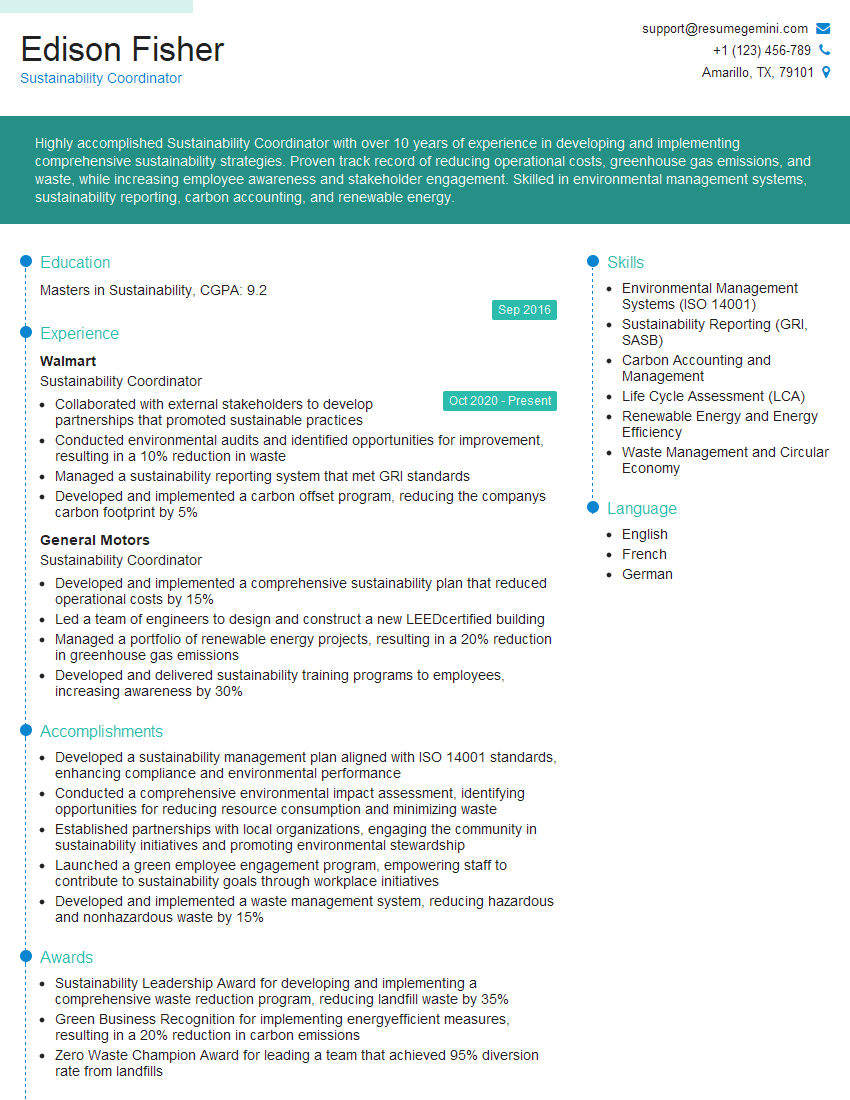
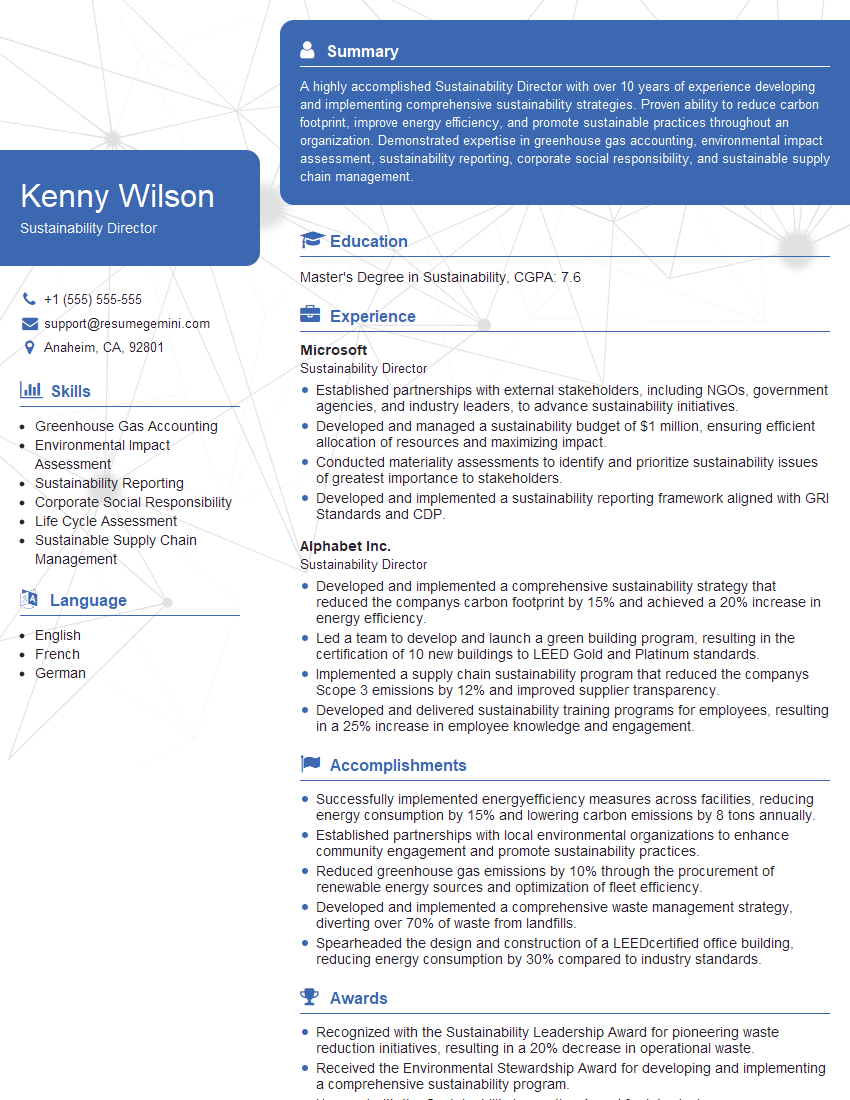
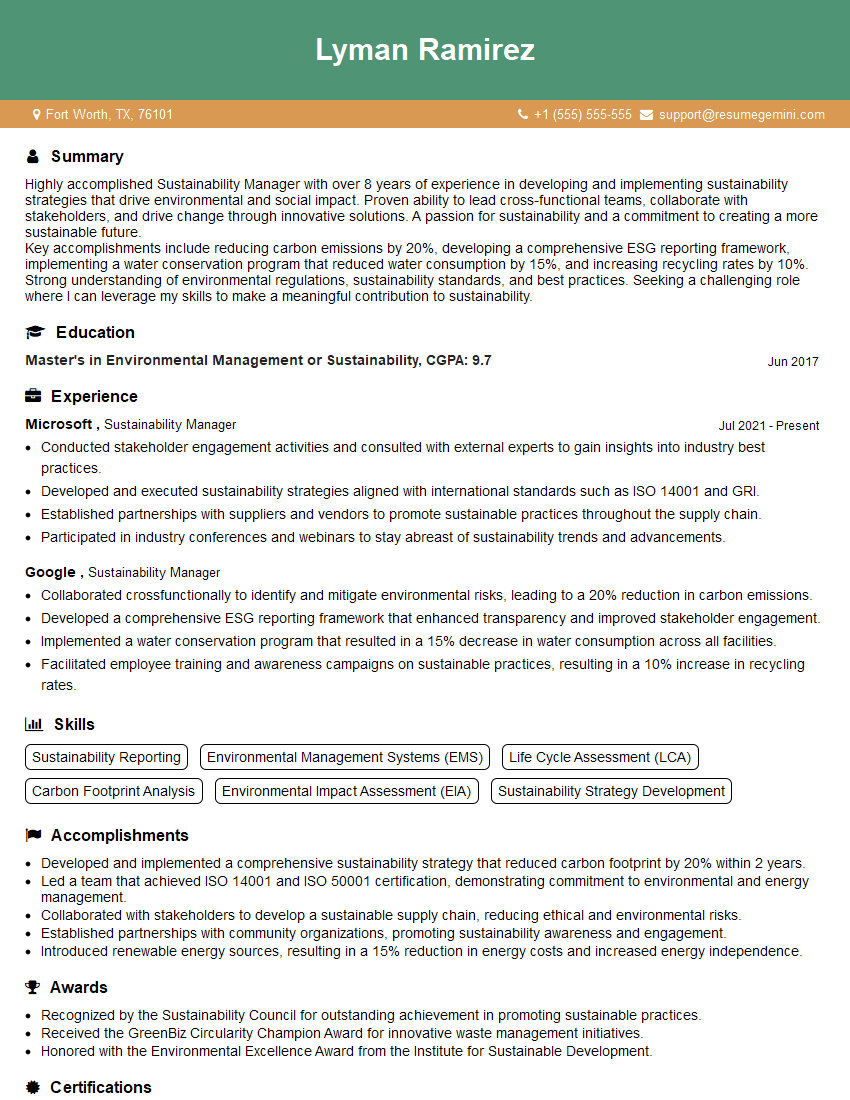
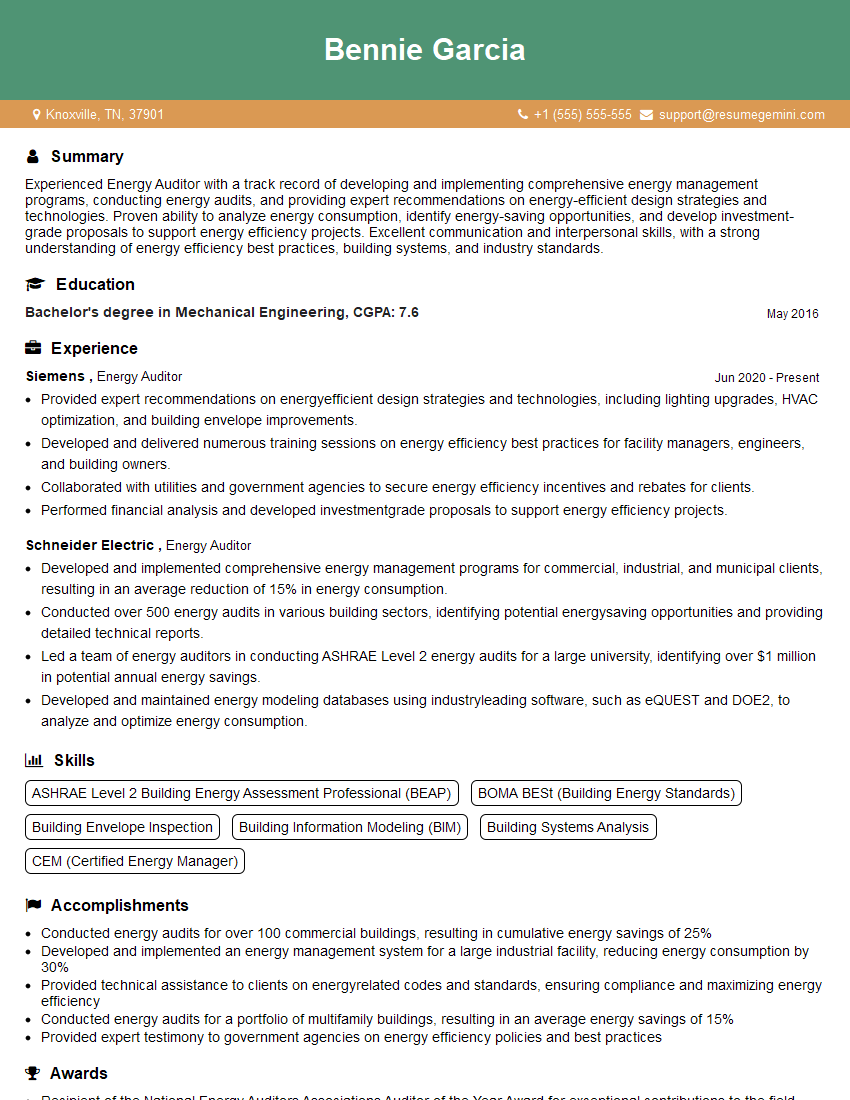
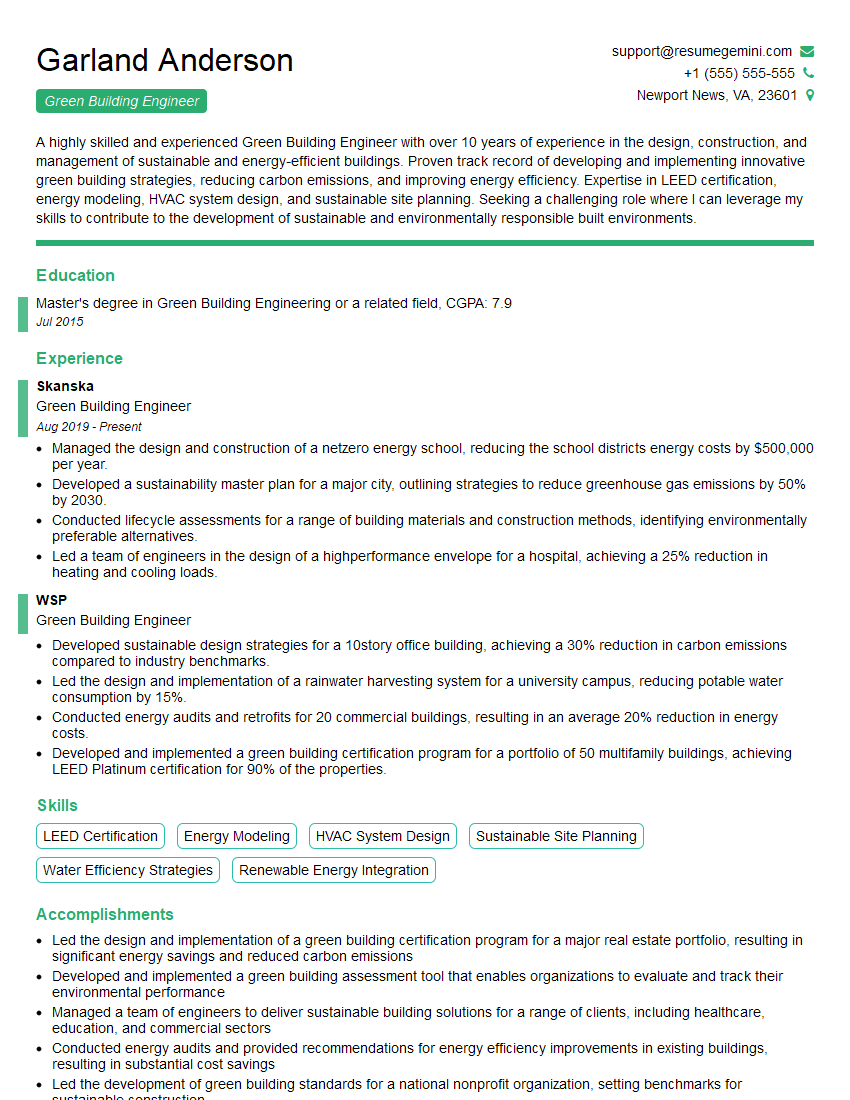
Mastering energy-efficient construction principles is crucial for career advancement in the growing green building sector. Demonstrating your expertise through a strong resume is key to securing interviews and landing your dream job. Crafting an ATS-friendly resume ensures your qualifications are effectively highlighted to hiring managers. ResumeGemini can significantly enhance your resume-building experience, ensuring your skills and experience shine. We offer examples of resumes tailored to energy-efficient construction experience to help guide you. Take the next step towards a successful career in sustainable construction.
Explore more articles
Users Rating of Our Blogs
Share Your Experience
We value your feedback! Please rate our content and share your thoughts (optional).
What Readers Say About Our Blog
Very informative content, great job.
good