Interviews are more than just a Q&A session—they’re a chance to prove your worth. This blog dives into essential Experience in following quality control procedures interview questions and expert tips to help you align your answers with what hiring managers are looking for. Start preparing to shine!
Questions Asked in Experience in following quality control procedures Interview
Q 1. Describe your experience implementing quality control procedures.
My experience implementing quality control procedures spans various projects across different industries. I’ve worked extensively in developing and executing QC plans, from initial design stages to final product release. This involved defining clear quality standards, selecting appropriate testing methodologies, and managing teams to ensure adherence to protocols. For instance, in a recent project involving the development of a new mobile application, I designed a comprehensive testing strategy that incorporated unit testing, integration testing, user acceptance testing (UAT), and performance testing. This multi-layered approach allowed us to identify and rectify defects early in the development cycle, ultimately saving significant time and resources. Another example involved implementing a robust quality control system for a manufacturing process, reducing defect rates by 15% within six months by focusing on process optimization and operator training.
In each scenario, I focused on a proactive, data-driven approach, leveraging metrics to track progress and identify areas for improvement. This included regularly reviewing QC reports, analyzing trends, and implementing corrective actions as needed. My expertise isn’t just in executing pre-defined procedures; it’s in designing effective QC systems tailored to specific project needs and continuously refining them based on performance data.
Q 2. Explain your understanding of ISO 9001 standards.
ISO 9001 is an internationally recognized standard that outlines requirements for a quality management system (QMS). It provides a framework for organizations to consistently meet customer and regulatory requirements, enhancing customer satisfaction and driving continuous improvement. The standard emphasizes a risk-based approach to quality management, requiring organizations to identify, analyze, and address potential risks that could impact the quality of their products or services.
My understanding of ISO 9001 extends beyond simply knowing the requirements; I have practical experience implementing and maintaining QMS compliant with the standard. This includes establishing documented procedures, conducting internal audits, managing corrective and preventive actions (CAPA), and ensuring that management reviews are conducted regularly. I’m familiar with the key clauses within the standard, including those related to context of the organization, leadership, planning, support, operation, performance evaluation, and improvement. I understand the importance of documentation and traceability in maintaining a compliant system, and I’m adept at working with cross-functional teams to achieve ISO 9001 certification and ongoing compliance.
Q 3. How do you identify and address quality control issues?
Identifying and addressing quality control issues is a systematic process that involves several key steps. First, I rely heavily on data. This includes regularly monitoring key performance indicators (KPIs) like defect rates, customer complaints, and process cycle times. Any deviation from established baselines triggers an investigation. For example, a sudden spike in customer returns would be immediately flagged.
- Data Analysis: Once an issue is identified, thorough data analysis helps pinpoint the root cause. This may involve reviewing production logs, inspection reports, and customer feedback.
- Root Cause Analysis (RCA): I use various RCA techniques, including the ‘5 Whys’ and fishbone diagrams, to drill down to the underlying cause of the problem. Let’s say we discover a higher-than-usual defect rate in a particular product component. Using the ‘5 Whys’ method, we might find the root cause is due to faulty raw materials from a specific supplier.
- Corrective Actions: Once the root cause is identified, corrective actions are implemented to prevent recurrence. This could include changes to the manufacturing process, supplier management, or employee training.
- Preventive Actions: Proactive measures are taken to prevent similar issues from arising in the future. This could involve implementing new quality checks, improving process controls, or updating quality standards.
The entire process is documented and tracked using a change management system. This ensures that the actions taken are effective and sustainable. Regular monitoring and review ensure that the corrective and preventive actions are yielding the desired results.
Q 4. What are some common quality control metrics you use?
The choice of quality control metrics depends on the specific context, but some common ones I use include:
- Defect Rate: The percentage of defective units produced.
- Yield Rate: The percentage of good units produced.
- Customer Complaint Rate: The number of customer complaints per unit sold.
- Process Capability Indices (Cpk and Ppk): Statistical measures that assess how well a process is meeting specifications.
- First Pass Yield: The percentage of units that pass the first inspection.
- Mean Time Between Failures (MTBF): The average time between failures for a product or system.
These metrics provide quantifiable data that can be used to track performance, identify trends, and measure the effectiveness of improvement initiatives. For example, consistently high defect rates may indicate a need for process adjustments or employee retraining. Conversely, improvements in customer satisfaction scores would validate the effectiveness of a customer service initiative. I regularly report on these metrics to stakeholders and use them to inform decision-making about resource allocation and process improvements.
Q 5. Describe your experience with root cause analysis.
Root cause analysis (RCA) is crucial for effective quality control. It’s a systematic approach to identifying the underlying cause of a problem, rather than just treating the symptoms. I have extensive experience using various RCA techniques, including:
- 5 Whys: A simple, iterative questioning technique where you repeatedly ask ‘why’ to uncover the root cause.
- Fishbone Diagram (Ishikawa Diagram): A visual tool used to brainstorm potential causes of a problem, categorized by factors like materials, methods, manpower, machinery, and measurement.
- Pareto Analysis: A technique that focuses on addressing the vital few issues contributing to the majority of problems.
For example, in a manufacturing environment, I’ve used the fishbone diagram to analyze the causes of product defects. This involved engaging a cross-functional team representing various aspects of the production process. By systematically exploring potential causes, we were able to identify the root cause as a faulty piece of equipment. The 5 Whys would be applied in a more linear fashion to a specific problem, whereas the Fishbone Diagram facilitates brainstorming to identify potential root causes and their contributing factors.
The key to successful RCA is to involve relevant stakeholders, thoroughly gather data, and carefully consider all potential causes before arriving at a conclusion. The outcome of RCA informs the development of effective corrective and preventive actions, preventing similar problems from occurring in the future.
Q 6. How do you document and track quality control data?
Documenting and tracking quality control data is essential for maintaining a robust QMS. I use a combination of methods depending on the project and organizational requirements. This often involves:
- Spreadsheet Software (e.g., Excel): For simple data collection and analysis, spreadsheets can be efficient. I use them to track key metrics, such as defect rates and customer complaints. Proper formatting and clear labeling are crucial for easy interpretation.
- Database Management Systems (e.g., SQL): For larger datasets and more complex analyses, database systems provide powerful tools for storing, retrieving, and analyzing data. Relational databases are particularly useful for tracking data across multiple departments and projects.
- Quality Management Software: Dedicated quality management software packages provide integrated solutions for managing quality control processes, including data collection, analysis, reporting, and CAPA management. These systems help streamline workflow and improve efficiency.
Regardless of the specific method used, it’s crucial that the system is comprehensive, readily accessible, and easy to use. Data should be organized in a consistent manner to facilitate analysis and reporting. Version control and appropriate access controls are also essential to ensure data integrity and confidentiality.
All data is carefully archived and maintained to support future audits and analysis. This ensures traceability and allows us to identify trends and potential issues over time.
Q 7. What is your experience with statistical process control (SPC)?
Statistical Process Control (SPC) is a powerful set of tools used to monitor and control processes to ensure they are operating within acceptable limits. My experience with SPC involves using control charts, such as X-bar and R charts, to monitor process parameters and identify potential sources of variation.
I’ve used SPC in various contexts, from manufacturing to software development. For instance, in a manufacturing setting, I used control charts to monitor the weight of a particular product component. By plotting the data over time, I could identify any shifts in the process mean or increases in process variability that could lead to defects. This allowed for early intervention and prevented large batches of non-conforming product from being produced. Similarly, in software development, we used SPC to track the number of defects found during testing phases. This provided a quantifiable measure of software quality and helped us to identify and address trends in defects.
I understand the principles of common and special cause variation and how to interpret control charts to distinguish between the two. My knowledge extends to the selection of appropriate control charts for various data types and the interpretation of control chart signals. This allows me to identify potential problems early, before they escalate, and implement corrective actions proactively.
Q 8. Explain your approach to continuous improvement in quality control.
My approach to continuous improvement in quality control centers around the Plan-Do-Check-Act (PDCA) cycle, also known as Deming’s cycle. It’s a continuous loop, not a linear process.
- Plan: We identify areas needing improvement, set measurable goals, and develop strategies. This involves analyzing data from various sources, including customer feedback, defect reports, and process performance metrics. For example, if we see a high rate of customer returns due to a specific component, we’d plan to investigate the root cause and implement corrective actions.
- Do: We implement the planned changes on a small scale, perhaps in a pilot program or a limited production run. This allows us to test the effectiveness of the changes with minimal disruption.
- Check: We monitor the results of the implemented changes, collecting data to assess their impact. We use statistical process control charts and other tools to track progress and identify any new issues.
- Act: Based on the results of the check phase, we either standardize the successful changes, make further adjustments, or abandon the changes altogether. This step is crucial for ensuring that improvements are sustainable and consistently applied.
Beyond PDCA, I leverage tools like root cause analysis (e.g., 5 Whys, fishbone diagrams) to understand the underlying reasons for quality issues and Six Sigma methodologies to reduce process variation and improve efficiency.
Q 9. How do you prioritize quality control tasks in a fast-paced environment?
Prioritizing quality control tasks in a fast-paced environment requires a structured approach. I use a risk-based prioritization matrix, considering both the likelihood and the impact of potential quality failures.
For instance, I’d prioritize tasks with a high likelihood of failure and a high impact on the product or process (e.g., a critical component with a high failure rate) over tasks with low likelihood and low impact (e.g., a minor aesthetic issue).
Furthermore, I utilize project management techniques, like Agile methodologies, to break down quality control into smaller, manageable tasks and track progress against deadlines. This allows for flexibility and adaptation to changing priorities while ensuring critical aspects are not neglected. Regular meetings and effective communication are vital in this process.
Q 10. Describe a time you had to deal with a significant quality control problem.
In a previous role, we experienced a significant increase in defects in a particular product line. Initial investigations revealed inconsistencies in the raw material supply. We initiated a thorough investigation using various quality control tools.
- We conducted a full-scale root cause analysis using the 5 Whys methodology, tracing the issue back to a change in the supplier for a key component.
- We implemented a more rigorous incoming inspection process, including enhanced testing and stricter acceptance criteria for the raw materials.
- We collaborated with the supplier to understand and rectify their manufacturing process, focusing on quality management systems and control charts.
- We implemented corrective actions, including retraining our staff on proper handling of the new materials.
Through this systematic approach, we were able to not only resolve the immediate defect issue but also significantly improve the robustness of our supply chain and improve overall quality.
Q 11. How do you ensure effective communication of quality control findings?
Effective communication of quality control findings is paramount. I employ a multi-faceted approach, combining various communication channels and methods to reach the right audience with the right message.
- Formal Reports: Detailed reports summarizing findings, including data analysis, root cause analysis, and recommended actions, are created and distributed to relevant stakeholders (e.g., management, engineering, production).
- Visual Dashboards: I utilize interactive dashboards to present key quality metrics in a clear and concise manner. This facilitates easy monitoring and identification of trends.
- Team Meetings: Regular meetings provide opportunities for face-to-face discussions, fostering collaboration and ensuring everyone understands the findings and action plans. This promotes a proactive culture around quality.
- Issue Tracking Systems: I ensure that all issues are logged in a centralized system for tracking and resolution. This enables transparency and accountability.
The key is to tailor the communication method to the audience and the nature of the finding. Clear, concise language, supported by data and visuals, is crucial for effective communication.
Q 12. What software or tools do you use for quality control?
My experience encompasses a variety of software and tools for quality control. These tools support different aspects of the QC process.
- Statistical Process Control (SPC) software: Mintab and JMP are commonly used for creating control charts (e.g., X-bar and R charts, p-charts), analyzing process capability, and identifying trends.
- Computer-Aided Design (CAD) software: AutoCAD and SolidWorks are used for design review and verification to catch potential quality issues early in the design process.
- Enterprise Resource Planning (ERP) systems: SAP and Oracle provide integrated platforms for managing quality data, tracking defects, and monitoring production processes.
- Defect tracking systems: Jira and similar tools are beneficial for managing defect reports, tracking resolutions, and analyzing defect trends.
The specific tools used are highly dependent on the context of the project and the industry.
Q 13. What is your experience with auditing quality control processes?
I have extensive experience in auditing quality control processes, both internal and external. This involves reviewing documentation, observing processes, and interviewing personnel to assess compliance with established standards and best practices.
My experience includes conducting audits against ISO 9001 standards, as well as specific industry standards relevant to the sectors I’ve worked in. I’m proficient in identifying areas of non-compliance, generating audit reports, and collaborating with management to implement corrective actions. A crucial aspect of my approach is to identify opportunities for continuous improvement beyond merely identifying failures.
For example, I’ve conducted audits that led to the identification of improved training methods for quality control inspectors, resulting in a demonstrable reduction in inspection errors.
Q 14. Describe your experience with quality control in a manufacturing setting.
My experience in quality control within a manufacturing setting involved working with various production lines, from assembly to packaging. My responsibilities included:
- Developing and implementing quality control plans: This entailed defining inspection procedures, acceptance criteria, and sampling plans, based on product specifications and industry standards.
- Monitoring key performance indicators (KPIs): I tracked metrics such as defect rates, process capability indices, and customer complaints to identify trends and areas for improvement.
- Conducting root cause analysis: Using tools such as Pareto charts and fishbone diagrams, I identified the root causes of quality problems and implemented corrective and preventive actions.
- Implementing process improvements: I actively participated in lean manufacturing initiatives, aiming to streamline processes and eliminate waste, ultimately improving efficiency and quality.
- Working with cross-functional teams: Collaboration with engineering, production, and procurement was crucial to address quality issues and ensure continuous improvement.
One specific example includes working on a production line where we implemented a new Statistical Process Control (SPC) system. This led to a significant reduction in the defect rate and improved overall product quality and consistency.
Q 15. How do you handle disagreements with other team members regarding quality issues?
Disagreements regarding quality are inevitable in team settings. My approach prioritizes collaborative problem-solving. I start by actively listening to all perspectives, ensuring everyone feels heard. We then objectively analyze the issue, referencing established quality standards and project requirements. If a consensus isn’t immediately reached, I facilitate a structured discussion, focusing on data and evidence rather than opinions. We might use a decision-making framework like a weighted scoring system to evaluate different options. Ultimately, the goal is to arrive at a solution that aligns with the overall quality objectives and maintains team cohesion. For example, in a previous project, a disagreement arose about the acceptance criteria for a software feature. By carefully examining the user stories and technical specifications, and using data from preliminary testing, we were able to identify a compromise that satisfied all parties involved.
Career Expert Tips:
- Ace those interviews! Prepare effectively by reviewing the Top 50 Most Common Interview Questions on ResumeGemini.
- Navigate your job search with confidence! Explore a wide range of Career Tips on ResumeGemini. Learn about common challenges and recommendations to overcome them.
- Craft the perfect resume! Master the Art of Resume Writing with ResumeGemini’s guide. Showcase your unique qualifications and achievements effectively.
- Don’t miss out on holiday savings! Build your dream resume with ResumeGemini’s ATS optimized templates.
Q 16. How familiar are you with different types of quality control charts?
I’m proficient in using various quality control charts, each tailored to different types of data and applications. For instance, I frequently utilize Control Charts (like Shewhart charts, X-bar and R charts, and p-charts) to monitor process stability and identify trends. These charts graphically represent data points over time, allowing us to quickly spot outliers and potential problems. Pareto charts are helpful for identifying the vital few causes of quality defects—they visually display the frequency of different defect types, allowing prioritization of improvement efforts. Histograms provide a visual representation of the distribution of a data set, enabling us to assess process capability and identify potential biases. My experience extends to using Scatter diagrams to explore relationships between different variables, potentially identifying root causes of quality issues. Choosing the appropriate chart depends on the specific data and the nature of the quality problem we’re trying to address.
Q 17. What is your experience with implementing new quality control procedures?
Implementing new quality control procedures requires a systematic approach. I begin by thoroughly understanding the current processes and identifying areas for improvement. This includes data collection and analysis to pinpoint weaknesses. Then, I research and select the most appropriate new procedures, considering factors like cost, feasibility, and impact on productivity. The next step involves clear communication and training for the team. A phased implementation allows for continuous monitoring and adjustment. For example, in a previous role, we transitioned from a purely manual inspection process to a computerized system. This involved training staff on the new software, establishing clear workflows, and regularly monitoring the data generated by the system to ensure accuracy and identify any glitches.
Q 18. How do you stay updated on best practices in quality control?
Staying current in quality control requires continuous learning. I actively participate in professional development opportunities, such as workshops and conferences focused on quality management. I regularly read industry publications and journals, such as Quality Progress and similar publications. Online resources like professional organizations’ websites are invaluable. I also engage with online communities and forums, participating in discussions and sharing knowledge with peers. Membership in professional organizations keeps me abreast of new standards and best practices. By consistently seeking out new information and best practices, I can ensure that my skills and knowledge remain relevant and up-to-date.
Q 19. How do you ensure quality control across different departments?
Ensuring quality control across different departments necessitates strong cross-functional collaboration and clearly defined processes. I establish consistent quality standards and metrics that apply to all departments. Regular meetings and cross-departmental communication ensure that everyone is aligned on these standards. Implementing a shared quality management system, perhaps using a platform that tracks metrics and facilitates collaboration, helps ensure transparency and accountability. Using standardized reporting and data collection methods allows for consistent monitoring across different areas. For instance, a cross-functional team might review customer satisfaction surveys to identify issues that impact multiple departments, prompting collaboration to resolve underlying causes.
Q 20. Describe your experience with quality control in a project management setting.
In project management, quality control is integrated throughout the project lifecycle. I use methodologies like Six Sigma or Lean to systematically identify and eliminate defects. I incorporate quality control checks into each phase of the project, ensuring alignment with the project scope and requirements. Regular progress reviews are crucial for early identification of potential issues and mitigation strategies. Metrics such as defect rates, adherence to timelines, and customer satisfaction are continuously monitored to ensure the project stays on track. For example, during a recent software development project, we utilized Agile methodologies, incorporating daily stand-ups and sprint reviews to address quality concerns proactively. This allowed for early detection of issues and prevented them from escalating into major problems.
Q 21. How do you measure the effectiveness of your quality control efforts?
Measuring the effectiveness of quality control efforts involves tracking key performance indicators (KPIs). These KPIs can include metrics such as defect rates, customer satisfaction scores, process cycle time, and cost of quality. Data analysis is crucial; I use statistical methods to interpret the data and identify trends. Benchmarks, comparing our performance to industry standards or past performance, provide context and demonstrate improvement. Regular reporting and visual dashboards make it easier to communicate results to stakeholders. A reduction in defect rates, increased customer satisfaction, or shorter cycle times are all indicators of successful quality control initiatives. For example, a successful implementation of a new quality control system might show a 50% reduction in defect rates over a six-month period, demonstrating a significant positive impact.
Q 22. How do you balance quality control with production efficiency?
Balancing quality control with production efficiency is a delicate act of optimization. It’s not about choosing one over the other, but finding the sweet spot where both thrive. Think of it like a tightrope walk – maintaining balance requires constant adjustment and vigilance.
My approach involves implementing proactive quality control measures throughout the production process, not just at the end. This includes:
- Preventive measures: Implementing robust design reviews, process validation, and supplier audits to minimize defects before they even arise. This reduces rework and scrap, boosting efficiency.
- Statistical Process Control (SPC): Using control charts and other statistical tools to monitor processes in real-time. Early detection of trends allows for timely adjustments, preventing larger problems down the line.
- Automation: Automating quality checks wherever feasible. This speeds up the process without compromising accuracy and frees up human resources for more complex tasks.
- Continuous Improvement (CI): Regularly reviewing processes to identify bottlenecks and areas for improvement. Lean methodologies like Kaizen are excellent tools for this, focusing on eliminating waste and optimizing workflows.
For example, in a previous role, we implemented automated optical inspection for printed circuit boards. This significantly reduced inspection time, increased accuracy, and freed up technicians to focus on more complex troubleshooting and process improvement initiatives.
Q 23. Describe a time you had to make a difficult decision regarding quality versus cost.
In a previous project involving the development of a new medical device, we faced a critical decision regarding a component. The initially chosen supplier offered a significantly cheaper option, but their quality control measures were less stringent than our preferred supplier. The cheaper component had a slightly higher failure rate based on their testing data.
The decision was difficult because choosing the more expensive option would impact the project budget. However, compromising on quality for a medical device, even slightly, was unacceptable. We opted for the higher-quality, albeit more expensive, component after carefully weighing the risks and presenting a detailed cost-benefit analysis that highlighted the potential long-term costs (recalls, legal liabilities, etc.) of using the inferior component.
While the initial cost was higher, the long-term impact of potential failures was avoided, and we maintained the required level of safety and quality.
Q 24. What is your experience with developing quality control training programs?
I have extensive experience developing and delivering quality control training programs. My approach is highly practical and tailored to the specific needs of the audience. I believe effective training should not just be theoretical but should involve hands-on exercises and real-world case studies.
My programs typically cover:
- Fundamental QC principles: Defining quality, understanding different quality standards (e.g., ISO 9001), and explaining the importance of quality control.
- Specific techniques: Training on practical techniques such as statistical process control, root cause analysis, and corrective action planning.
- Software and tools: Introducing employees to the relevant software and tools used in the QC process, including data analysis software and quality management systems.
- On-the-job training: Providing opportunities for hands-on learning and mentorship to ensure practical application of the knowledge gained.
For instance, I once developed a training program for a manufacturing plant that resulted in a 15% reduction in defects within three months of implementation. The program incorporated interactive workshops, simulations, and on-the-floor coaching sessions.
Q 25. How do you handle customer complaints related to quality issues?
Handling customer complaints related to quality issues requires a structured and empathetic approach. My process involves:
- Active Listening: Carefully listening to the customer’s complaint and acknowledging their frustration. Empathy is key.
- Information Gathering: Gathering detailed information about the issue, including the product details, date of purchase, and a description of the problem.
- Investigation: Thoroughly investigating the root cause of the problem, potentially involving the use of quality control data and involving other relevant departments.
- Resolution: Offering a prompt and appropriate resolution, which might involve a repair, replacement, refund, or a combination of these.
- Follow-up: Following up with the customer to ensure they are satisfied with the resolution and to gather feedback on the process.
Transparency is crucial. I believe in keeping customers informed throughout the investigation and resolution process. Even if a perfect outcome is not possible, a genuine effort towards resolving the problem and showing empathy can go a long way in retaining customer loyalty.
Q 26. How do you identify and mitigate risks to product quality?
Identifying and mitigating risks to product quality requires a proactive approach that combines risk assessment with ongoing monitoring and improvement. I utilize a risk-based approach that includes:
- Failure Mode and Effects Analysis (FMEA): Systematically identifying potential failure modes and their associated effects on the product. This helps prioritize mitigation efforts.
- Hazard Analysis and Critical Control Points (HACCP): (Applicable in food safety and similar industries) Identifying critical control points in the production process where hazards are most likely to occur. This ensures stringent monitoring at these key points.
- Regular Audits: Conducting internal and external audits to identify areas of vulnerability and to ensure compliance with quality standards.
- Supplier Management: Establishing robust procedures for selecting and managing suppliers to ensure the quality of incoming materials and components.
- Data Analysis: Analyzing quality control data to identify trends and patterns that may indicate potential risks.
For example, using FMEA in the development of a new software system allowed us to identify and mitigate potential security vulnerabilities early in the development cycle, avoiding costly rework and reputational damage.
Q 27. What is your approach to preventing quality control problems before they occur?
Preventing quality control problems before they occur is far more efficient and cost-effective than dealing with them after they arise. My preventive approach focuses on:
- Process Design: Designing robust processes that are inherently less prone to errors. This involves careful consideration of each step in the process and the potential points of failure.
- Employee Training: Providing comprehensive training to employees on quality control procedures and best practices.
- Supplier Qualification: Rigorous selection and ongoing monitoring of suppliers to ensure the quality of incoming materials.
- Regular Maintenance: Implementing a preventive maintenance program for equipment and machinery to minimize downtime and prevent defects.
- Continuous Improvement: Regularly reviewing processes and identifying areas for improvement to prevent recurring problems.
Proactive prevention is essentially about building a strong foundation of quality into the entire system, minimizing chances of failures.
Q 28. Describe your experience with using quality control data to make data-driven decisions.
I have extensive experience using quality control data to make data-driven decisions. This involves utilizing statistical methods and data analysis tools to gain actionable insights from collected data.
My approach involves:
- Data Collection: Implementing a robust data collection system that captures relevant quality metrics.
- Data Analysis: Using statistical methods, such as control charts and regression analysis, to identify trends, patterns, and anomalies in the data.
- Root Cause Analysis: Employing techniques such as the ‘5 Whys’ or Fishbone diagrams to identify the root causes of quality problems.
- Decision Making: Using the insights gained from data analysis to make informed decisions about process improvements, resource allocation, and corrective actions.
- Reporting: Generating clear and concise reports to communicate findings to stakeholders and to track progress over time.
For instance, by analyzing defect data from a manufacturing process, I identified a specific machine setting that was contributing to a significant portion of the defects. Adjusting this setting resulted in a 20% reduction in defects.
Key Topics to Learn for Experience in Following Quality Control Procedures Interview
- Understanding Quality Control Methodologies: Explore various quality control methodologies like Six Sigma, ISO 9000, and Lean manufacturing. Understand their core principles and practical applications in different industries.
- Implementing Quality Control Procedures: Learn how to effectively implement quality control procedures within a workflow. This includes defining quality standards, developing inspection plans, and using appropriate tools and techniques.
- Data Analysis and Interpretation: Master the skills of collecting, analyzing, and interpreting data to identify trends, deviations, and areas for improvement in quality control processes. This often involves using statistical process control (SPC) charts.
- Problem-solving and Root Cause Analysis: Develop your ability to identify, analyze, and resolve quality issues using root cause analysis techniques (e.g., 5 Whys, Fishbone diagrams). Practice articulating your problem-solving approach.
- Documentation and Reporting: Understand the importance of meticulous documentation and clear reporting of quality control findings. This includes creating comprehensive reports, maintaining records, and communicating effectively with stakeholders.
- Continuous Improvement Initiatives: Learn how quality control contributes to continuous improvement efforts. Discuss your experience with implementing Kaizen or other improvement methodologies.
- Quality Control Tools and Technologies: Familiarize yourself with common quality control tools and technologies, such as statistical software packages, inspection equipment, and quality management systems (QMS).
Next Steps
Mastering experience in following quality control procedures is crucial for career advancement in many fields, opening doors to leadership roles and higher earning potential. A strong resume is key to showcasing your skills and experience effectively. Creating an ATS-friendly resume significantly increases your chances of getting noticed by recruiters. ResumeGemini is a trusted resource to help you build a professional and impactful resume that highlights your qualifications. Examples of resumes tailored to experience in following quality control procedures are available to guide you through the process. Invest time in crafting a compelling resume—it’s your first impression on potential employers.
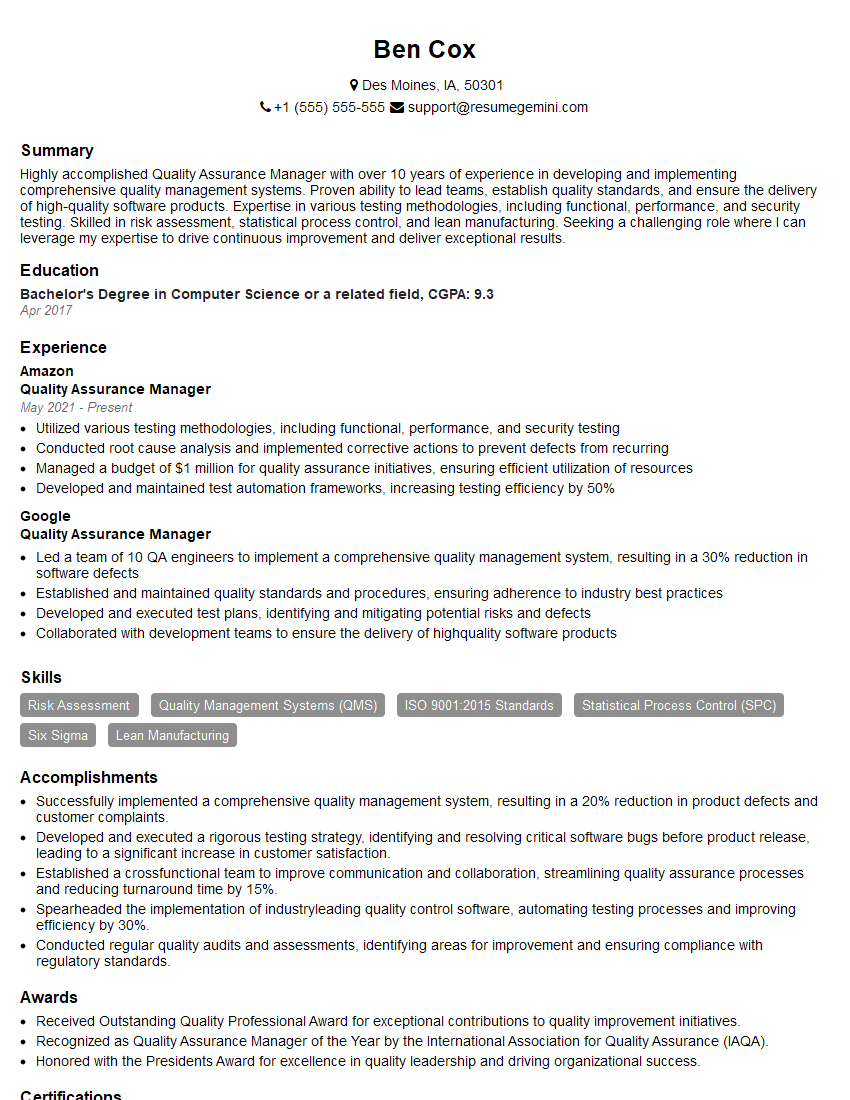
Quality Assurance Manager Resume Sample
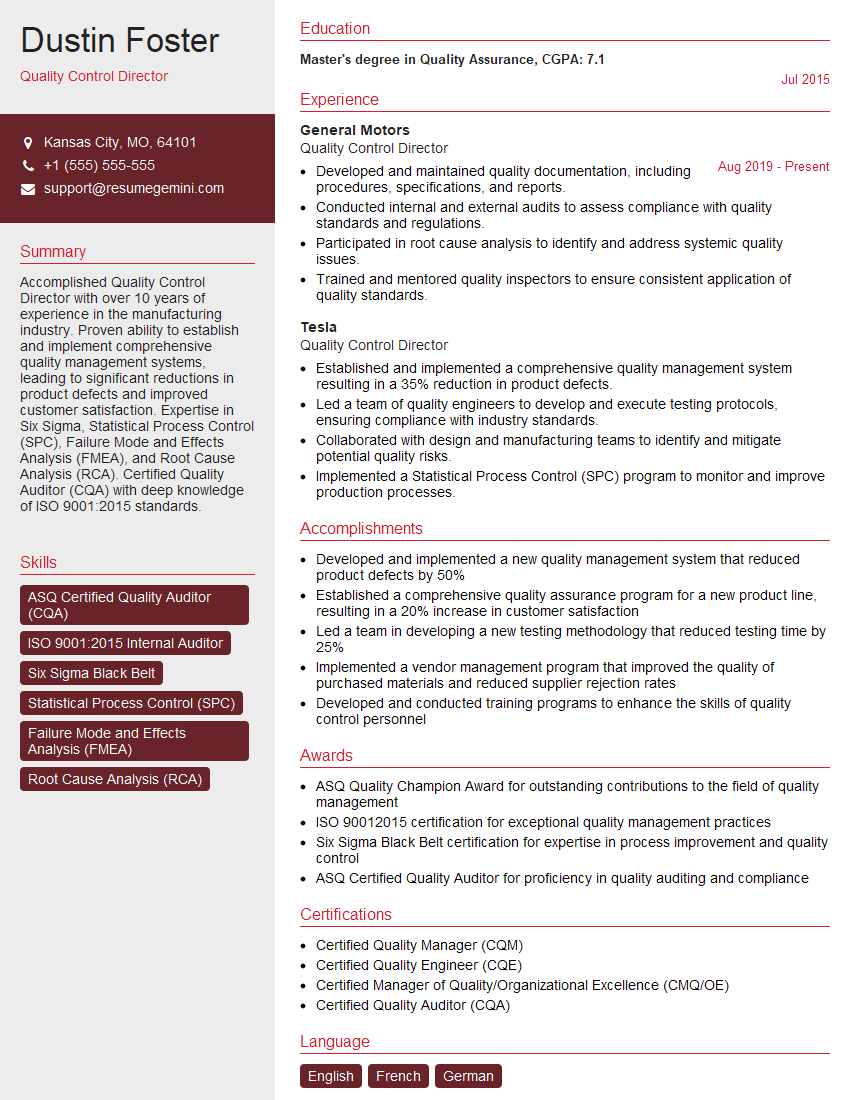
Quality Control Director Resume Sample
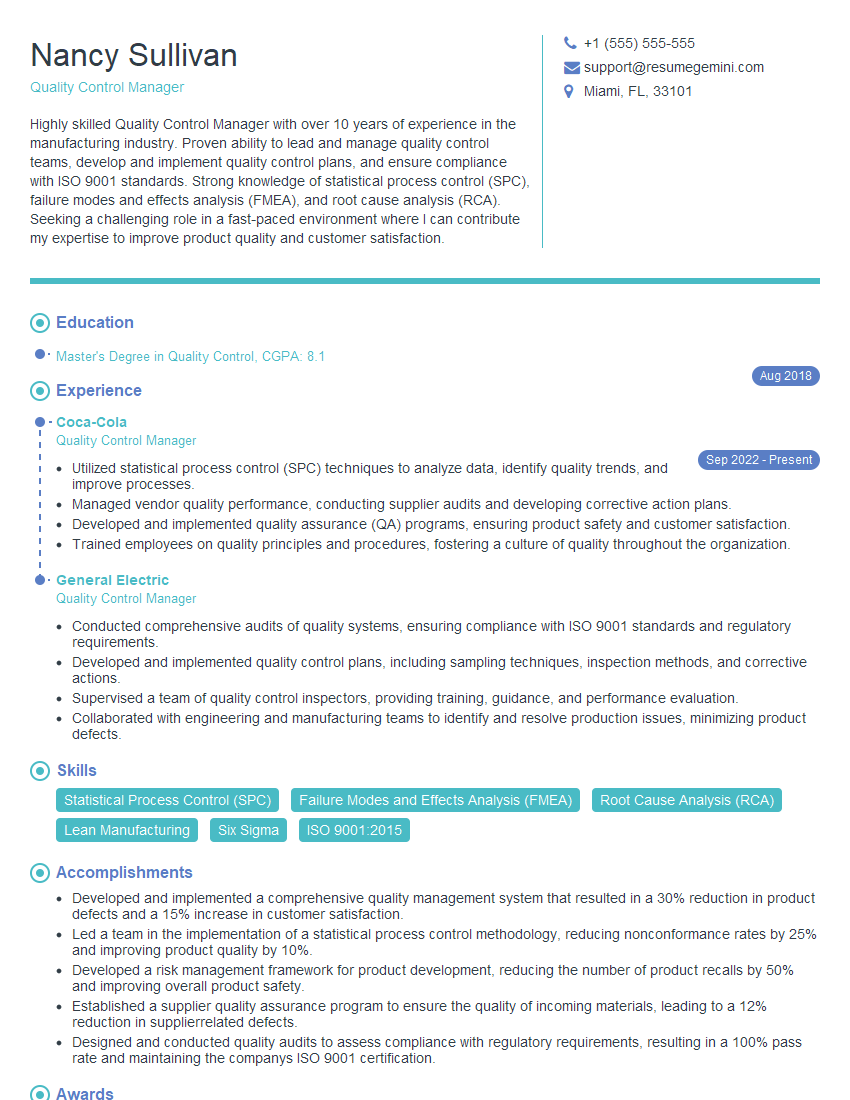
Quality Control Manager Resume Sample
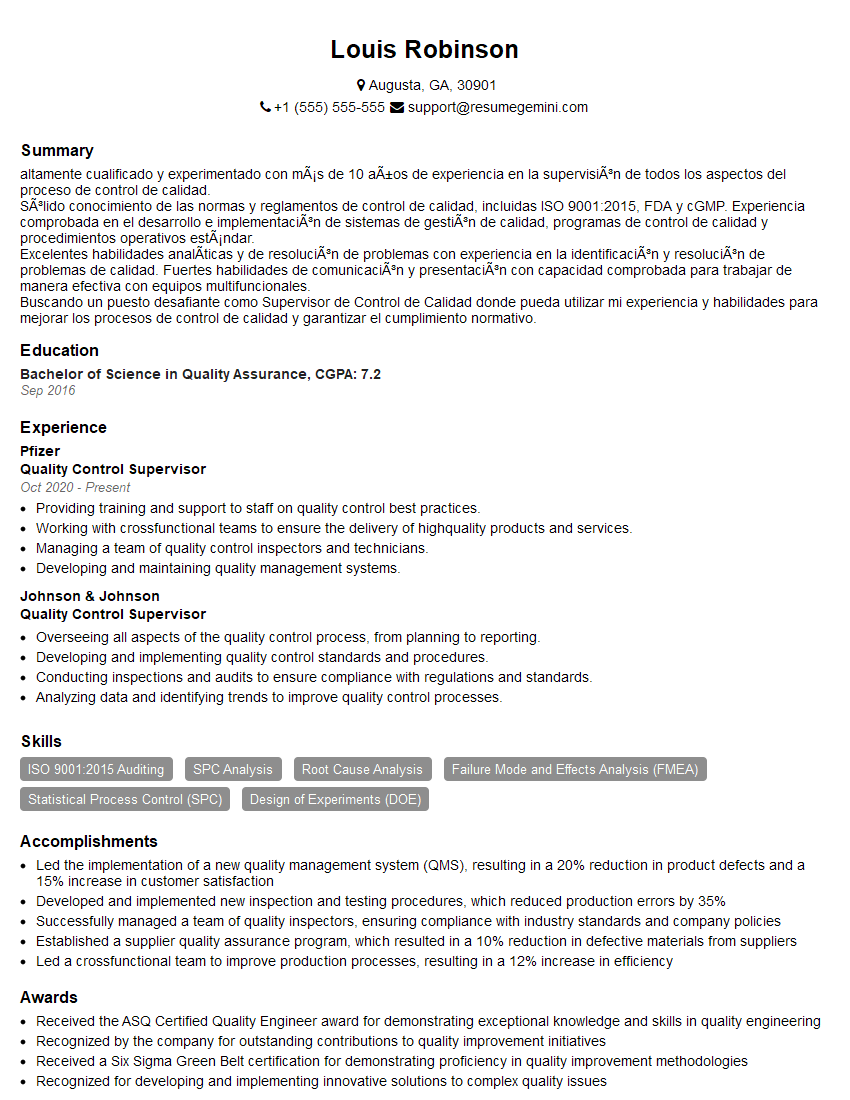
Quality Control Supervisor Resume Sample
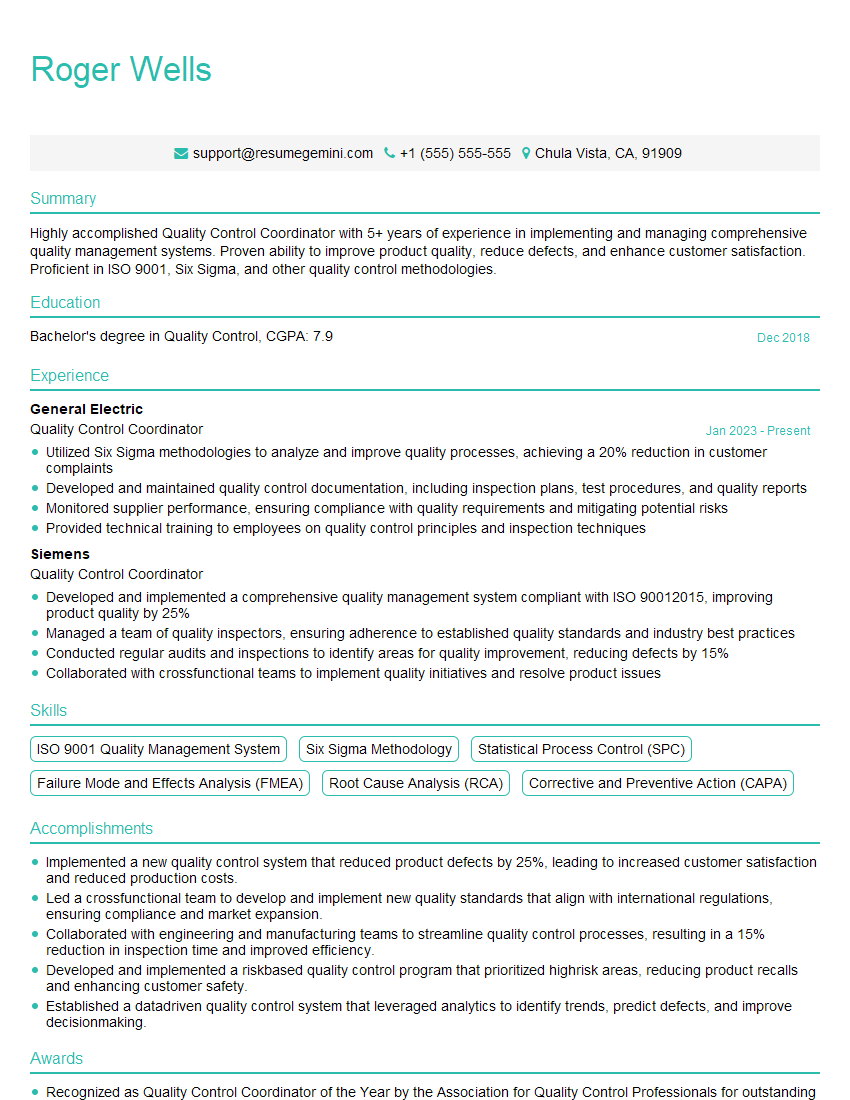
Quality Control Coordinator Resume Sample
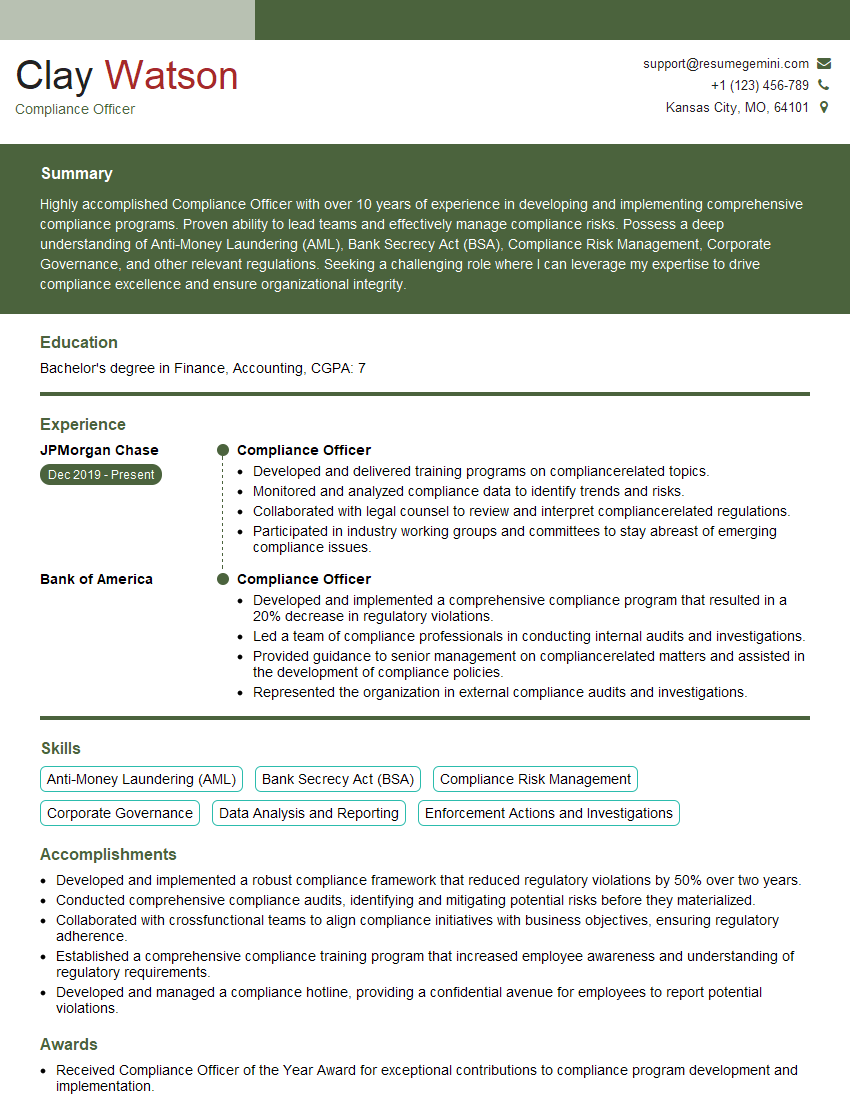
Compliance Officer Resume Sample
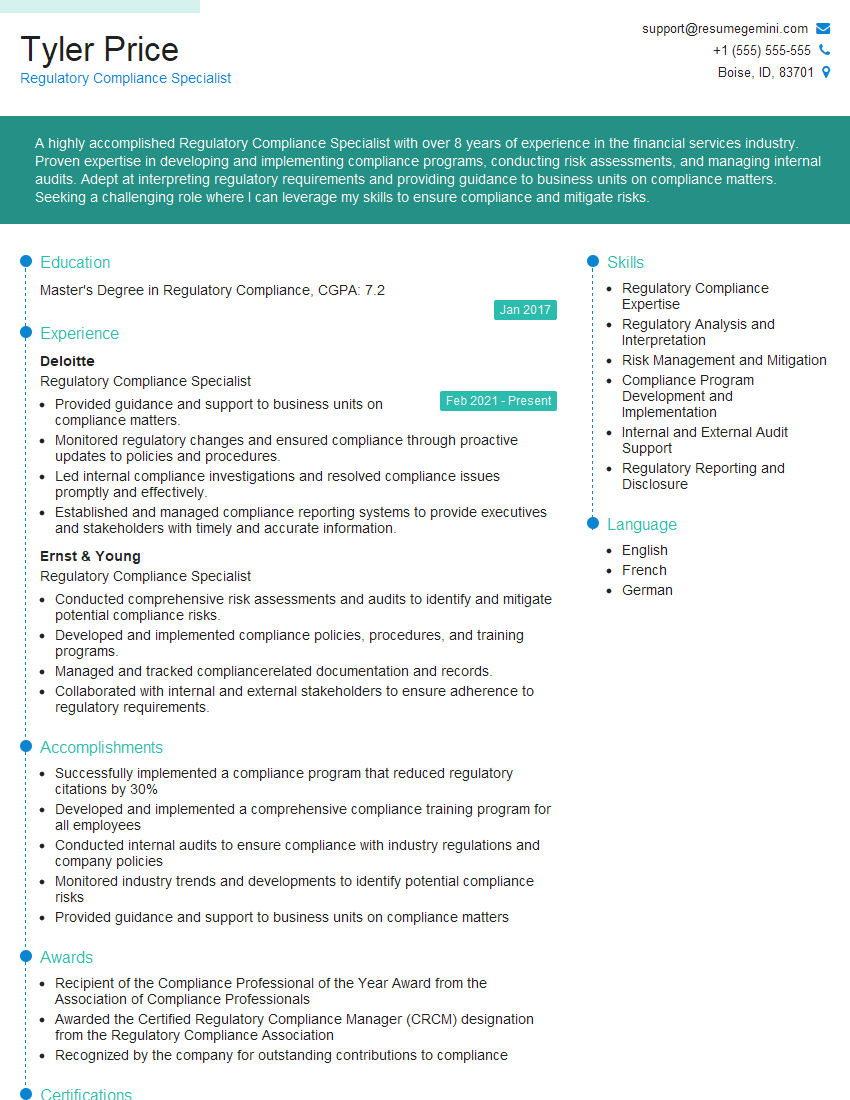
Regulatory Compliance Specialist Resume Sample
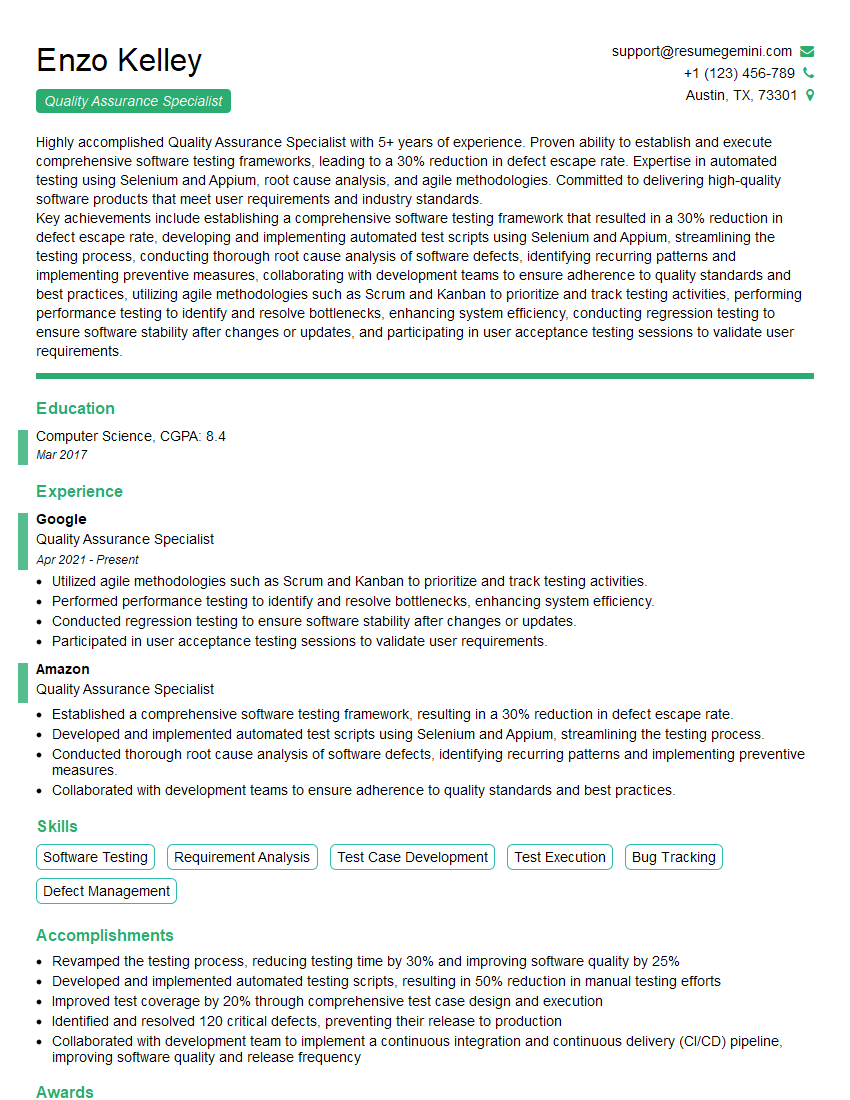
Quality Assurance Specialist Resume Sample
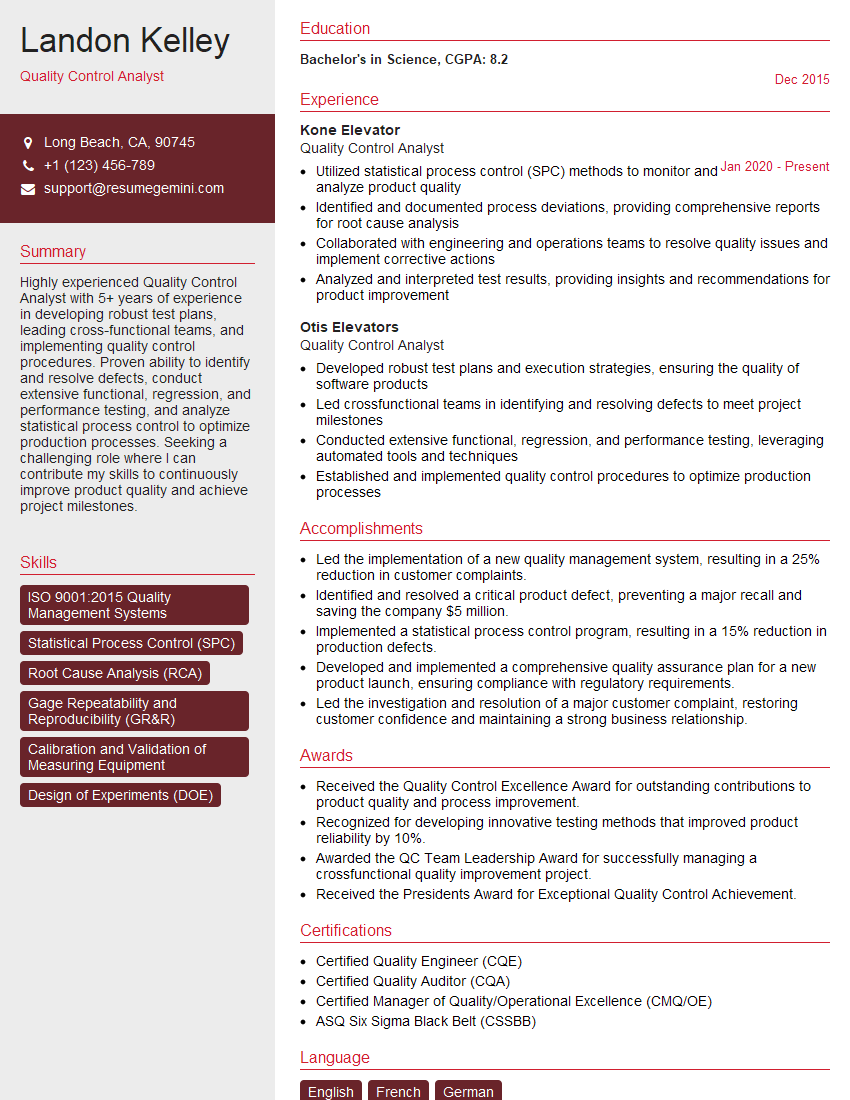
Quality Control Analyst Resume Sample
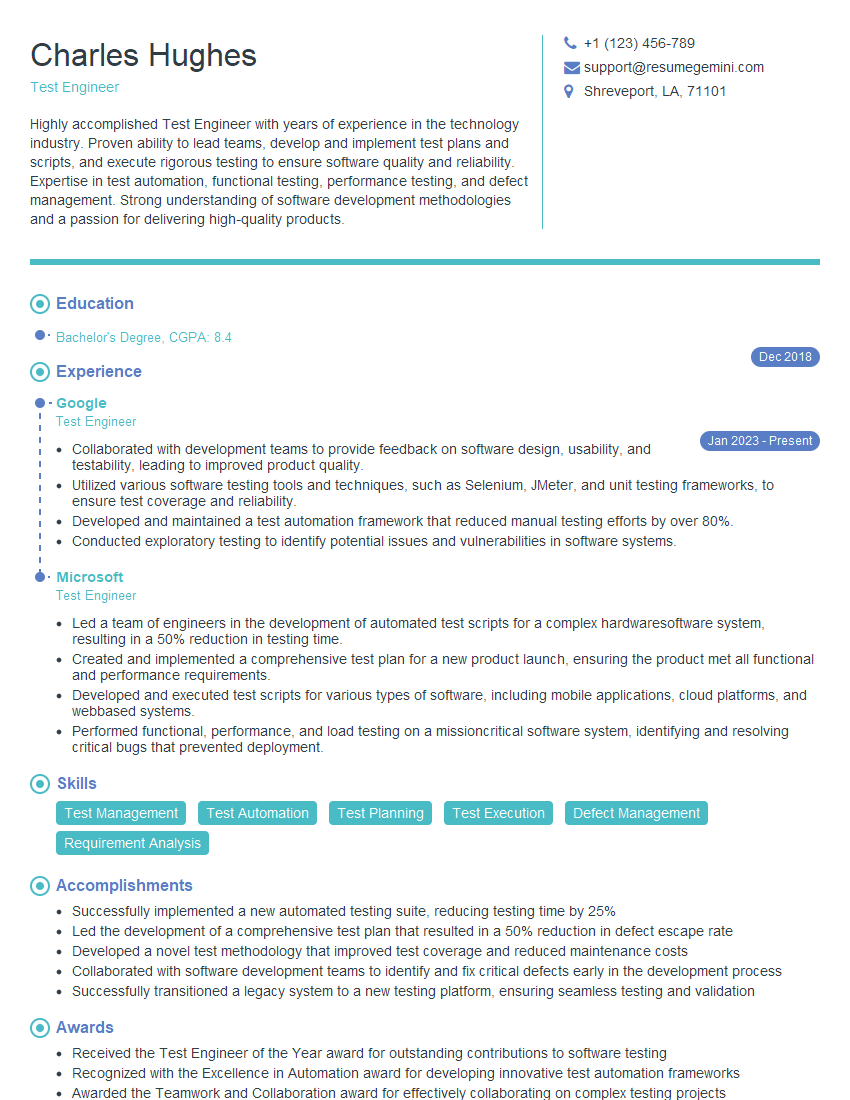
Test Engineer Resume Sample
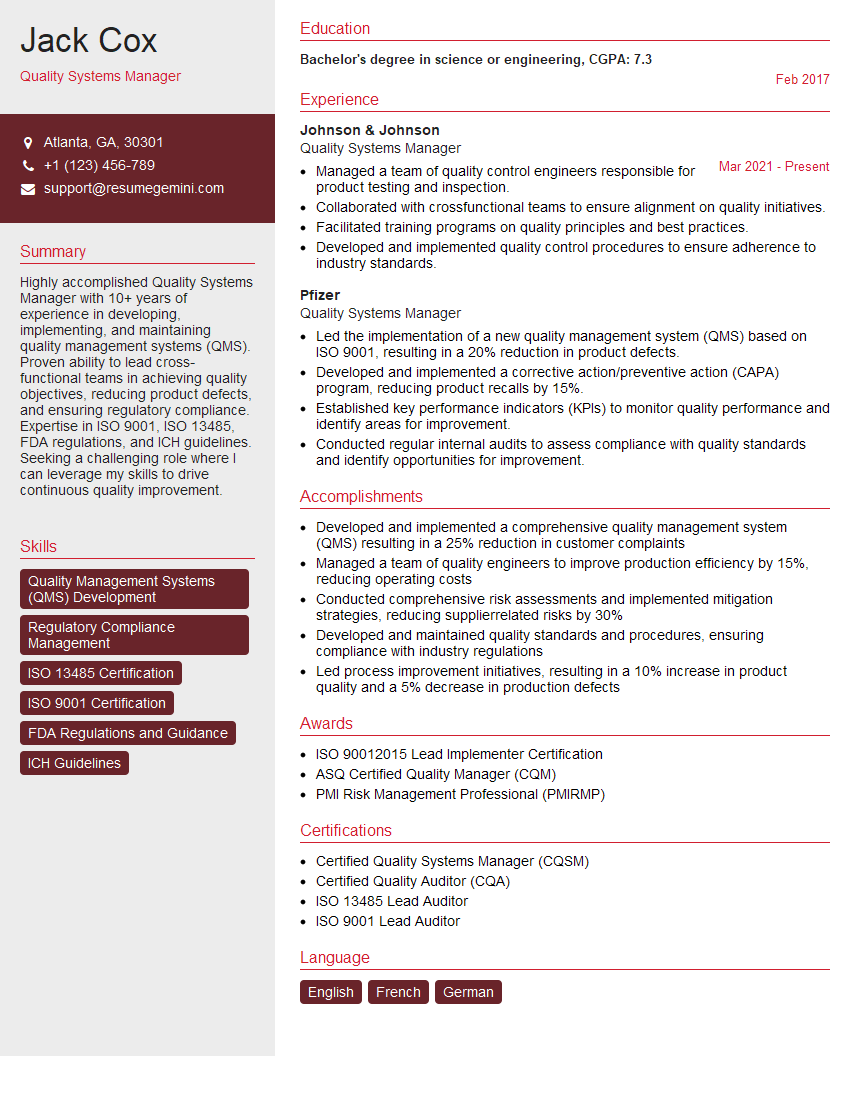
Quality Systems Manager Resume Sample
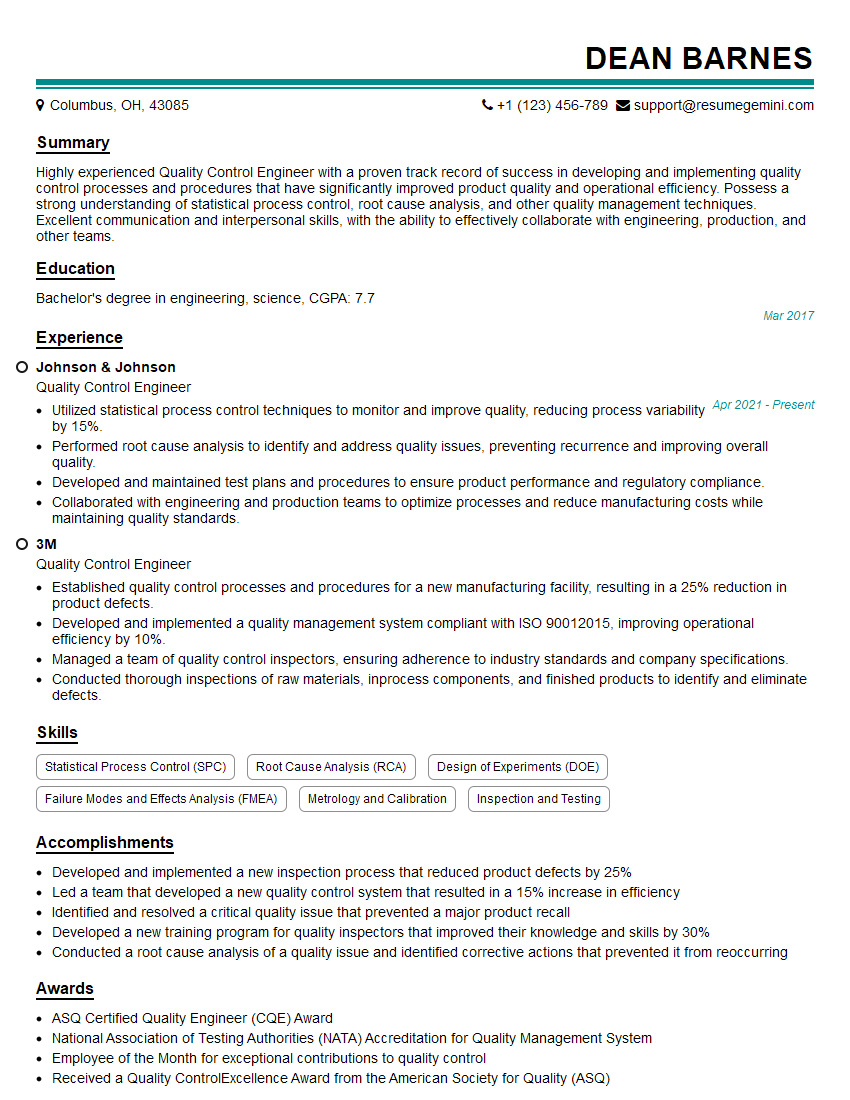
Quality Control Engineer Resume Sample
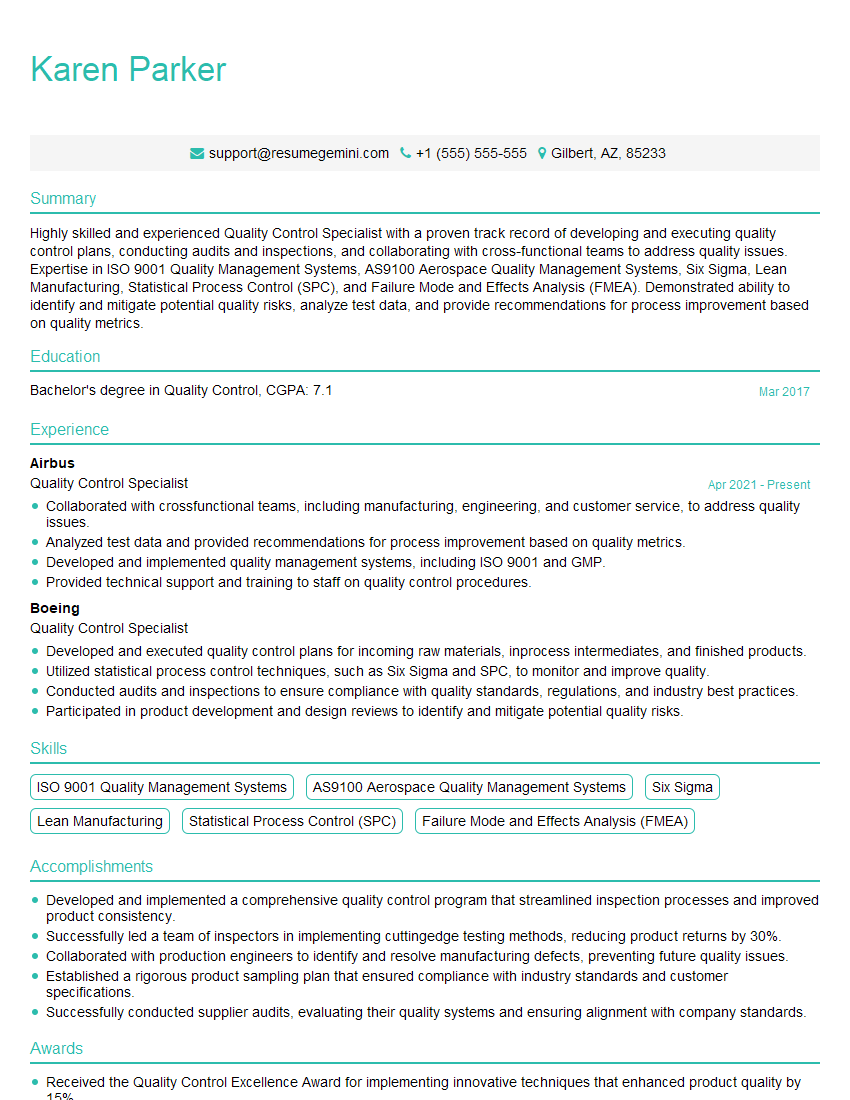
Quality Control Specialist Resume Sample
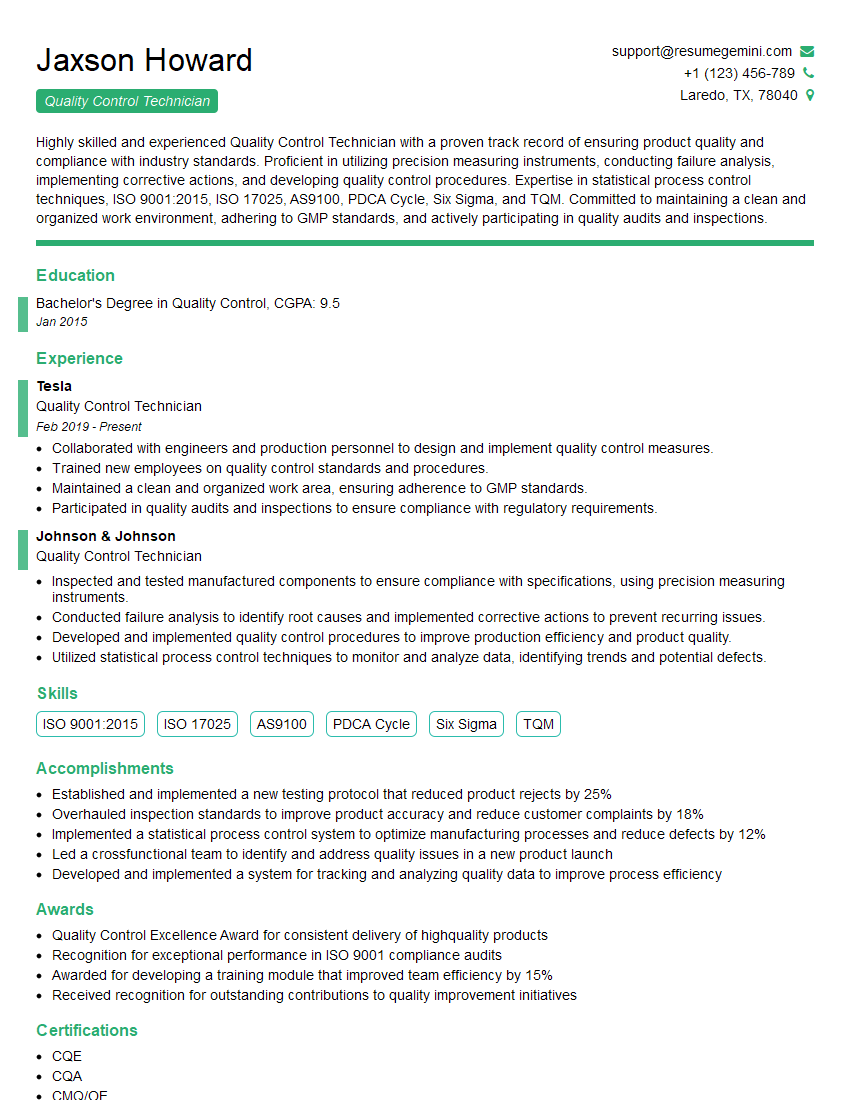
Quality Control Technician Resume Sample
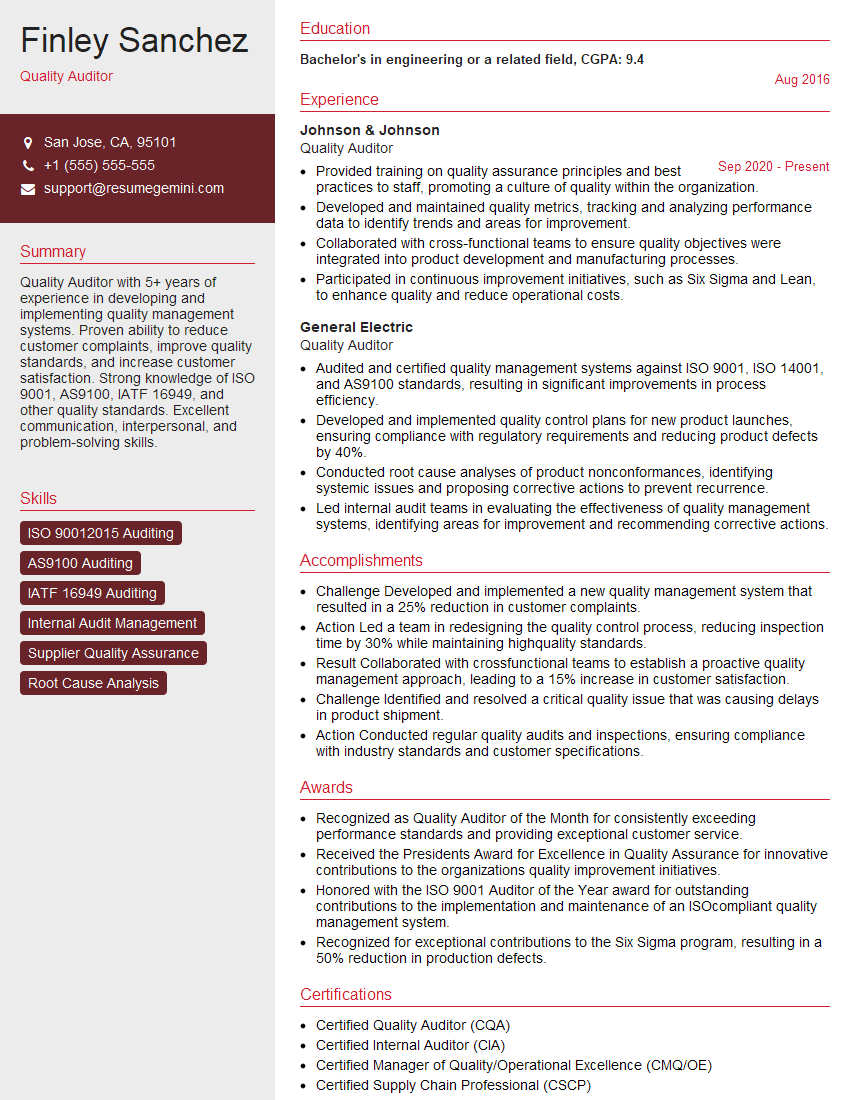
Quality Auditor Resume Sample
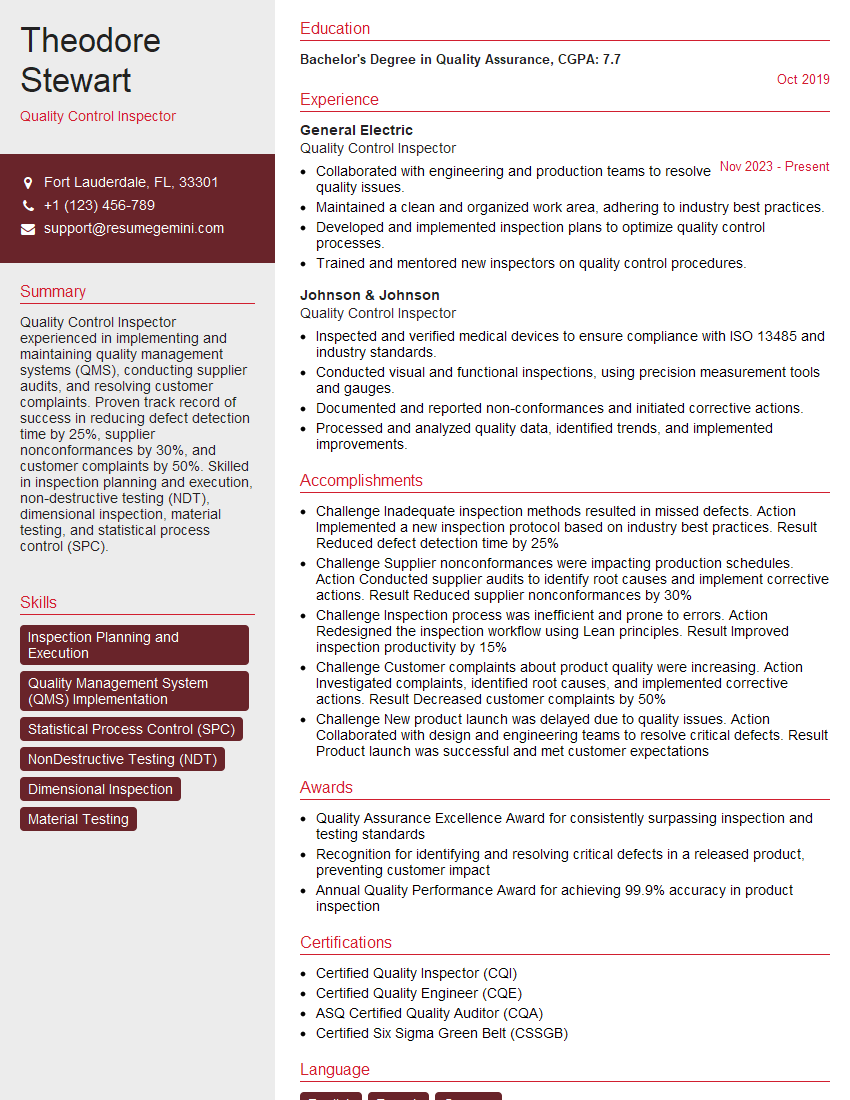
Quality Control Inspector Resume Sample
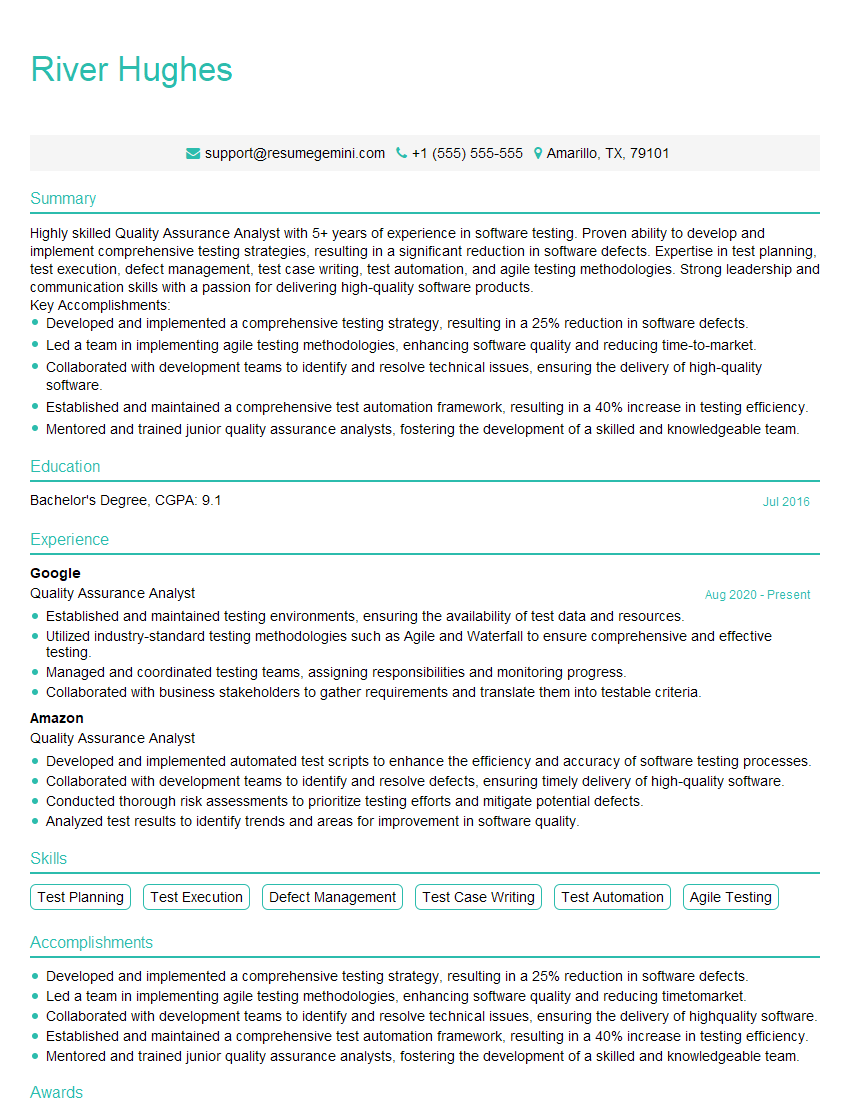
Quality Assurance Analyst Resume Sample
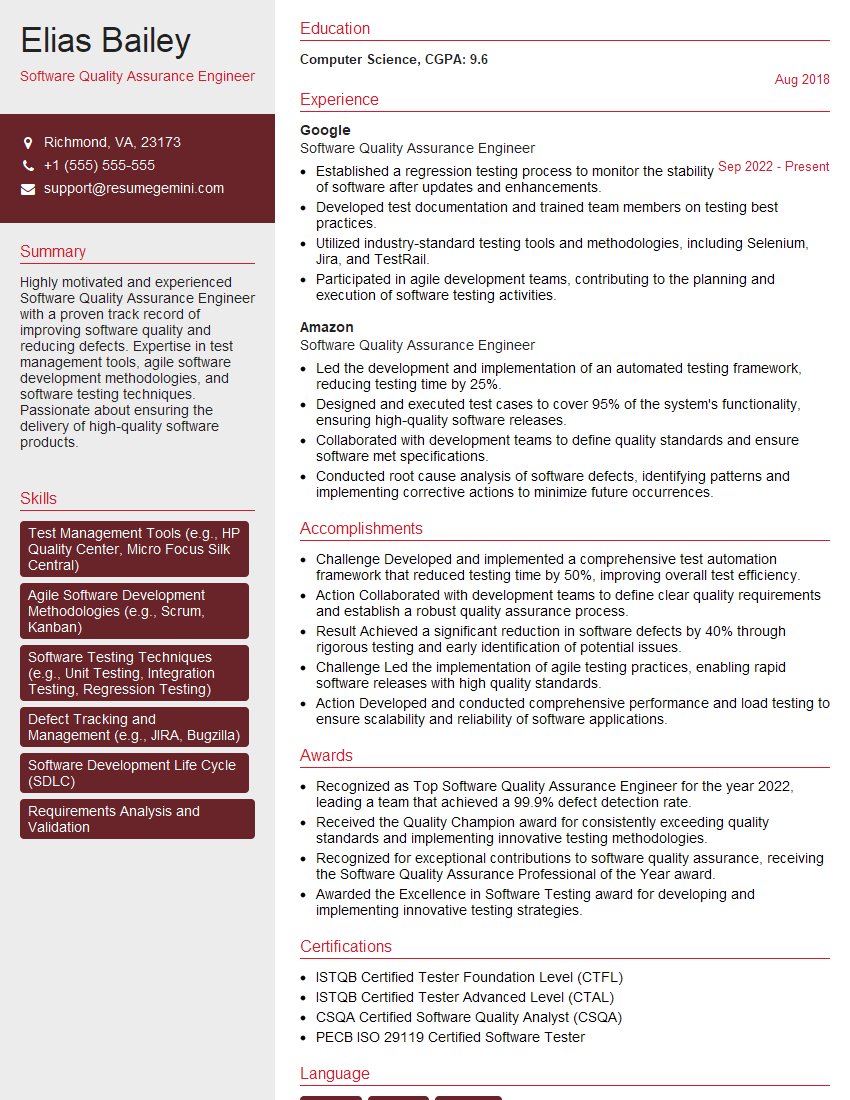
Software Quality Assurance Engineer Resume Sample
- Quality Assurance Manager
- Quality Control Director
- Quality Control Manager
- Quality Control Supervisor
- Quality Control Coordinator
- Compliance Officer
- Regulatory Compliance Specialist
- Quality Assurance Specialist
- Quality Control Analyst
- Test Engineer
- Quality Systems Manager
- Quality Control Engineer
- Quality Control Specialist
- Quality Control Technician
- Quality Auditor
- Quality Control Inspector
- Quality Assurance Analyst
- Software Quality Assurance Engineer
Explore more articles
Users Rating of Our Blogs
Share Your Experience
We value your feedback! Please rate our content and share your thoughts (optional).
What Readers Say About Our Blog
Very informative content, great job.
good