Every successful interview starts with knowing what to expect. In this blog, we’ll take you through the top Experience in Installing Mirrors in Residential and Commercial Settings interview questions, breaking them down with expert tips to help you deliver impactful answers. Step into your next interview fully prepared and ready to succeed.
Questions Asked in Experience in Installing Mirrors in Residential and Commercial Settings Interview
Q 1. Describe your experience with different types of mirror adhesives.
Selecting the right adhesive is crucial for a successful mirror installation. My experience encompasses a wide range of adhesives, each suited to specific needs and substrates. For lighter mirrors in residential settings, I often use strong construction adhesive, like Loctite PL Premium or similar high-strength, gap-filling options. These are easy to apply and provide a reliable bond. For larger, heavier mirrors, especially in commercial spaces, I prefer epoxy adhesives, specifically designed for mirror installation. These offer superior holding power and greater resistance to vibration and temperature fluctuations. I’ve also worked with silicone-based adhesives, which are good for smaller mirrors or applications where flexibility is needed, but they require more precise application and longer curing time. The choice depends on the mirror’s weight, the wall material (drywall, concrete, tile, etc.), and the overall environment. For instance, a bathroom mirror might need a moisture-resistant adhesive like a specific silicone formulation.
Q 2. What safety precautions do you take when installing large mirrors?
Safety is paramount when installing large mirrors. These are heavy and fragile; mishandling can lead to serious injury or property damage. My process always starts with a thorough risk assessment. I use appropriate Personal Protective Equipment (PPE), including safety glasses, gloves, and possibly a face shield, especially when cutting mirrors. I always work with a partner for larger mirrors, ensuring a secure grip during handling and placement. We use suction cups or specialized mirror lifters to minimize the risk of drops. Before installation, the wall is carefully inspected for structural integrity to ensure it can support the mirror’s weight. Additionally, I use safety straps or bracing to temporarily secure the mirror during the adhesive curing process, preventing it from sliding or falling.
Q 3. How do you measure and cut mirrors for custom installations?
Precise measurement is key for custom mirror installations. I always start with detailed measurements of the intended space using a high-quality measuring tape, double-checking for accuracy. For complex shapes, I may use a laser measurer for greater precision. I then transfer these measurements to the mirror, using a marker pen and a straight edge. Cutting mirrors requires specialized tools—a diamond-tipped glass cutter is essential. I score the glass carefully, applying even pressure along the cutting line. The score line is then snapped along a straight edge, using a specialized mirror cutter or applying gentle pressure to break the glass cleanly along the scored line. If intricate cuts are needed, I sometimes outsource the cutting to a glass shop equipped with specialized machinery. Post-cutting, the edges are carefully polished to remove any sharp edges, ensuring safety and a finished look.
Q 4. Explain your process for preparing a wall surface before mirror installation.
Proper wall preparation is critical for a secure and long-lasting mirror installation. This involves cleaning the surface thoroughly to remove dust, dirt, grease, or any loose material. I use a suitable cleaner, depending on the wall material—a simple solution of warm water and mild detergent is often sufficient for most surfaces. The surface should be completely dry before proceeding. Uneven walls need extra attention; significant irregularities may need to be addressed before installation, such as filling in gaps with joint compound and sanding it smooth for a flat mounting surface. Priming is also important, especially for porous surfaces like drywall, ensuring better adhesive bonding. I might use a primer specifically designed for the wall material and chosen adhesive, enhancing the bond strength and preventing the adhesive from being absorbed by the wall, which could weaken the hold.
Q 5. What are the common challenges in installing mirrors in commercial settings?
Commercial settings present unique challenges. Mirrors are often larger and heavier, demanding more robust installation methods. High traffic areas require impact-resistant adhesives and possibly additional safety measures, like shatterproof films. The need to meet building codes and safety regulations is paramount. In addition, coordinating installation around business hours and minimizing disruption to operations is a major concern. The variety of wall surfaces in commercial buildings—concrete, brick, drywall, metal studs—requires adaptability in adhesive selection and surface preparation techniques. Time constraints are usually tighter, necessitating careful planning and efficient execution.
Q 6. How do you handle uneven walls or surfaces during mirror installation?
Uneven walls require careful consideration. Minor irregularities can often be compensated for by using a flexible adhesive that can conform to the surface contour. However, for significant deviations, I might use shims—thin pieces of material—to create a level mounting surface. This requires careful placement of the shims to distribute the weight evenly and prevent pressure points that can cause cracking or breakage. For extremely uneven walls, I may recommend alternative mounting methods, like a custom-fabricated frame that can accommodate the wall’s imperfections. In this case, the frame acts as an intermediary, providing a level mounting plane for the mirror.
Q 7. What types of tools and equipment are essential for mirror installation?
The right tools make all the difference. My toolkit includes a measuring tape (preferably a laser measure for precision), a spirit level, a diamond-tipped glass cutter, a scoring tool, a glass cutter for breaking the glass, a putty knife for adhesive application, safety glasses, work gloves, a clean cloth, a suitable adhesive, shims (if needed), suction cups or a mirror lifter (for larger mirrors), and safety straps or bracing for securing mirrors during curing. For larger commercial jobs, additional equipment may be needed, including scaffolding, power tools for wall preparation, and potentially specialized glass cutting and polishing equipment.
Q 8. How do you ensure the alignment and levelness of installed mirrors?
Ensuring perfectly aligned and level mirrors is crucial for both aesthetics and safety. It’s not just about making it look good; a poorly aligned mirror can be a hazard. My process starts with careful measurement and marking of the installation area. I use a laser level to pinpoint the exact position for the mirror, ensuring it’s perfectly plumb (vertical) and level (horizontal). Then, I use shims – small, wedge-shaped pieces of wood or plastic – to make fine adjustments and compensate for any irregularities in the wall. These shims are placed between the mirror and the wall to provide a stable and level mounting surface. I then secure the mirror using appropriate fasteners, checking the levelness again before final tightening. Think of it like building a house – a solid foundation is essential. If the foundation (the wall) is uneven, using shims is like building up the foundation so your house (the mirror) stands straight.
For larger mirrors, I might use multiple laser level points and strategically placed shims to ensure complete levelness across the entire surface. A final check with a spirit level confirms the perfect alignment before the installation is complete.
Q 9. Describe your experience with installing mirrors in high-traffic areas.
Installing mirrors in high-traffic areas demands extra attention to safety and durability. I’ve worked in numerous shopping malls, restaurants, and gyms. In these settings, the key is to select robust mounting hardware capable of withstanding impact and vibrations. I often opt for heavy-duty adhesives and specialized fasteners designed for high-stress environments. For example, in a busy gym, I’d choose mirror backing and mounting hardware that could resist the constant vibrations from exercise equipment. Furthermore, I carefully consider the type of glass used. A stronger, laminated mirror is less likely to shatter into dangerous shards in the event of accidental impact, protecting patrons. It’s about choosing materials and techniques that can stand up to the wear and tear of constant use.
Q 10. How do you deal with damaged or cracked mirrors during installation?
Dealing with damaged mirrors is a critical aspect of the job, and safety is paramount. If a mirror arrives damaged, or if damage occurs during handling, it’s immediately discarded. I would never risk using a damaged mirror as it presents a significant safety hazard. I meticulously inspect all mirrors before installation, checking for cracks or chips. If any damage is detected, I immediately notify the client and arrange for a replacement. Safety is my top priority; a cracked mirror is simply unacceptable. I have strict protocols in place to deal with such incidents – documentation of the damage, photo evidence, immediate communication with the client, and prompt replacement.
Q 11. What is your experience with different types of mirror backing?
My experience encompasses various mirror backing types, each with its own advantages and disadvantages. Standard mirrors usually have a basic painted backing, suitable for most residential settings. However, for damp environments like bathrooms, I always recommend mirrors with a moisture-resistant backing to prevent corrosion and damage. For more demanding applications, I might use mirrors with a copper-free backing to prevent any potential staining or discoloration over time. In commercial settings, safety-backed mirrors with a special interlayer to hold the glass fragments together in case of breakage are a must. The choice of backing ultimately depends on the location and the required level of durability and moisture resistance.
Q 12. How do you ensure the longevity and durability of your mirror installations?
Ensuring longevity requires a multi-faceted approach. Firstly, selecting high-quality mirrors and mounting hardware is vital. I always use materials designed for the specific environment – corrosion-resistant materials in bathrooms, impact-resistant materials in high-traffic areas. Proper installation techniques, including the use of shims and appropriate fasteners, are critical. Finally, regular maintenance is crucial, especially in high-traffic or humid environments. This can involve cleaning with appropriate solutions to avoid damaging the surface and preventing corrosion. Think of it like car maintenance – regular checks and cleaning significantly extend the lifespan.
Q 13. Describe your experience with installing beveled or framed mirrors.
Installing beveled or framed mirrors adds a layer of complexity but also elevates the aesthetic appeal. Beveled mirrors require extra care during handling to avoid chipping the edges. I often use specialized tools and techniques to ensure precise alignment and a clean, professional finish. For framed mirrors, I pay careful attention to ensuring a proper seal between the frame and the mirror, preventing moisture ingress. This might involve using appropriate caulking or adhesive to provide a waterproof barrier. The installation of framed mirrors requires precise measurements and careful handling to prevent damage to the delicate frame. It’s more of an art form – combining precision with aesthetics.
Q 14. What is your approach to working safely at heights when installing mirrors?
Safety at heights is paramount. I never compromise on safety. For installations involving significant heights, I always use appropriate safety equipment, including harnesses, ropes, and scaffolding. I ensure all equipment is properly inspected and in good working order before starting work. I also follow all relevant safety regulations and guidelines. It’s not just about my safety – it’s about protecting the property and anyone else who might be nearby. Before I even begin, I always perform a thorough risk assessment, identifying potential hazards and implementing measures to mitigate those risks. This includes proper planning and utilizing fall protection systems.
Q 15. How do you manage multiple mirror installation projects simultaneously?
Managing multiple mirror installation projects simultaneously requires meticulous planning and organization. I utilize project management software to track deadlines, materials, and individual project statuses. This allows for a clear overview of each project’s progress. For instance, I might have three projects running concurrently: a large commercial installation in a hotel lobby, a smaller residential bathroom renovation, and a custom mirror design for a boutique. Each project gets assigned a specific team member or is broken down into manageable tasks, ensuring focused attention and avoiding overlaps. Effective communication among the team is crucial—daily briefings help identify and address potential roadblocks promptly, ensuring smooth and timely project completion for all.
- Project Management Software: I use tools that allow for task assignment, scheduling, and progress tracking.
- Team Communication: Daily briefings and transparent communication are key to identifying and resolving conflicts or delays.
- Prioritization: I prioritize projects based on deadlines and complexity, ensuring that urgent tasks are addressed first.
Career Expert Tips:
- Ace those interviews! Prepare effectively by reviewing the Top 50 Most Common Interview Questions on ResumeGemini.
- Navigate your job search with confidence! Explore a wide range of Career Tips on ResumeGemini. Learn about common challenges and recommendations to overcome them.
- Craft the perfect resume! Master the Art of Resume Writing with ResumeGemini’s guide. Showcase your unique qualifications and achievements effectively.
- Don’t miss out on holiday savings! Build your dream resume with ResumeGemini’s ATS optimized templates.
Q 16. How do you handle customer requests or changes during an installation?
Customer requests or changes are a normal part of the process. My approach is to be flexible and accommodating while maintaining realistic timelines and budgets. I begin by carefully listening to the customer’s concerns and clarifying their request. If the changes are minor, such as adjusting the mirror’s height or position by a few inches, I can usually accommodate them on-site with minimal disruption. For more substantial changes, I’ll provide a revised quote outlining any additional costs or time implications. Transparency is vital; I always keep the client informed about the potential impact of changes, helping them make informed decisions. I’ve had instances where a customer wanted to change the type of mirror after the initial installation plan. In this case, I carefully explain the implications of such a switch in terms of cost and installation time, offer alternatives, and work with them until we find the most suitable solution.
Q 17. What is your experience with installing mirrors in bathrooms and wet areas?
Bathrooms and wet areas require specific considerations for mirror installation. Moisture and humidity can damage standard mirrors if not properly sealed and installed. I have extensive experience using specialized adhesives and sealants designed for high-moisture environments. This ensures longevity and prevents issues such as corrosion or delamination. Before installing mirrors in such areas, I meticulously prepare the surface to ensure it is clean, dry, and free of any residue or imperfections. Furthermore, I prioritize selecting mirrors with water-resistant backing and consider ventilation to mitigate moisture build-up. I also always explain to the client the importance of regular cleaning and proper ventilation to prolong the life of the mirror. For example, in one project, we installed a custom-made mirrored medicine cabinet in a high-humidity bathroom, making sure that the back of the mirror was sealed against the cabinet’s interior to prevent moisture from getting behind the glass.
Q 18. Describe your familiarity with building codes and regulations related to mirror installation.
Familiarity with building codes and regulations is paramount. I am well-versed in local and national building codes related to mirror installation, including safety standards concerning shatterproof glass or the proper use of mounting hardware. These codes often dictate the type of mounting hardware required, the maximum allowable size for mirrors without additional bracing, and safety requirements for installations in public spaces. I routinely check local building codes before starting any project to ensure that the installation adheres to all regulations. For example, in commercial installations, I might need to ensure the mirror meets fire-rated requirements or adheres to specific safety regulations regarding impact resistance. I keep myself updated with the latest regulations by regularly reviewing the relevant building codes and attending industry seminars.
Q 19. How do you address potential issues with mirror reflection and glare?
Addressing mirror reflection and glare is crucial for optimal usability and aesthetics. The techniques used depend on the location and purpose of the mirror. For bathrooms, I might suggest frosted or etched mirrors to reduce glare and create a more subtle reflection. In living rooms or other areas where clear reflection is essential, strategically placed lighting can minimize glare. Using anti-glare coatings on the mirror can also significantly reduce reflections. Positioning the mirror in relation to light sources is another aspect I carefully consider. For instance, in a situation where direct sunlight often hit the mirror causing intense glare, I would recommend adjusting the mirror’s placement or adding blinds or curtains to mitigate the issue. The key is to consider the lighting conditions of each individual space.
Q 20. What is your preferred method for cleaning mirrors after installation?
After installation, I clean the mirrors using a simple, yet effective method. I start with a microfiber cloth to remove dust and debris. Then, I use a solution of distilled water and white vinegar (a safe and effective cleaner) sprayed onto the cloth, not directly onto the mirror, to avoid damaging the mirror or its sealant. This solution is then gently applied to the mirror’s surface and buffed to a streak-free shine. Avoid using abrasive cleaners or paper towels, as these can scratch the mirror’s surface. I always ensure that the mirror’s edges and the surrounding area are also cleaned, creating a polished and professional finish.
Q 21. What experience do you have with different types of mirror materials (e.g., acrylic, glass)?
I have extensive experience working with various mirror materials, including glass and acrylic. Glass mirrors provide superior clarity and reflection, making them ideal for most installations. However, acrylic mirrors are a lighter, more shatter-resistant alternative, particularly beneficial in areas where safety is a primary concern, like gyms or children’s play areas. Acrylic mirrors are also more resistant to breakage, making them a good choice for high-traffic areas. The selection of material depends on the client’s requirements, budget, and the specific application. Understanding the properties of each material allows me to recommend the most suitable option, ensuring both aesthetic appeal and durability. For example, for a dance studio, I would recommend acrylic mirrors given their shatter-resistant nature and superior safety profile. For a high-end residential bathroom, however, the superior clarity of glass might be prioritized.
Q 22. Have you ever worked with specialized mirror installations (e.g., one-way mirrors)?
Yes, I have extensive experience installing specialized mirrors, including one-way mirrors. These installations require a much higher degree of precision and attention to detail than standard mirror installations. The process involves careful consideration of the reflective and non-reflective surfaces, ensuring the proper level of transparency for the intended viewing angle, and meticulous sealing to maintain the integrity of the one-way effect. For example, I once worked on a project involving a security observation room where precise alignment and flawless installation of the one-way mirror were critical for the system’s functionality. We took extra precautions during the installation, using specialized adhesives and meticulously checking for any light leaks that could compromise the one-way viewing capabilities. This often involves working with specialized suppliers and manufacturers who can provide mirrors with precise specifications. Safety considerations are paramount, including the correct use of personal protective equipment to handle the fragile nature of these mirrors.
Q 23. Describe your experience troubleshooting mirror installation problems.
Troubleshooting mirror installations often involves identifying the root cause of issues such as cracking, uneven surfaces, or poor adhesion. For example, if a mirror is cracking, it could be due to improper support, inadequate adhesive, or underlying wall imperfections. My approach involves a systematic investigation, starting with a visual inspection to identify any obvious problems. I then use a combination of tools and techniques to diagnose the specific cause. This might involve checking the levelness of the surface, examining the adhesive application, or assessing the structural integrity of the wall. If the issue is related to the adhesive, I might need to carefully remove the mirror, clean the surface thoroughly, and reapply the adhesive using the correct methods. If the problem stems from the wall itself, I’ll explore solutions such as reinforcing the wall or adjusting the mounting method to provide better support for the mirror. Documentation and photography are crucial for recording the problem and the solution. Effective communication with clients is also paramount to ensure they understand the troubleshooting process and any related costs or timelines.
Q 24. What are some common mistakes to avoid when installing mirrors?
Several common mistakes can compromise the quality and longevity of a mirror installation. These include:
- Improper surface preparation: Failing to clean the surface thoroughly before applying adhesive can lead to poor adhesion and later detachment.
- Incorrect adhesive selection: Choosing the wrong adhesive for the substrate (wall material and mirror type) can result in weak bonds or damage to the surface.
- Uneven application of adhesive: Uneven adhesive distribution can cause stress on the mirror, leading to cracking.
- Insufficient support: Not providing enough support for large mirrors, especially on less stable walls, can cause them to crack or fall.
- Ignoring environmental factors: Neglecting the potential effects of temperature and humidity on adhesive performance is another common mistake.
Avoiding these mistakes requires meticulous planning, proper material selection, and careful execution of the installation process. Using a level and ensuring the wall is adequately supported before installation are always good practices.
Q 25. How do you ensure the structural integrity of the installed mirrors?
Ensuring structural integrity is crucial, especially for larger or heavier mirrors. This involves several key steps:
- Proper substrate assessment: Before installation, I carefully assess the wall’s integrity to ensure it can support the weight of the mirror. This may involve using stud finders and checking for any weaknesses in the wall structure.
- Appropriate mounting hardware: I select the appropriate mounting hardware (screws, anchors, etc.) based on the wall material and mirror weight to ensure secure and reliable attachment. Oversized screws or anchors are always better than undersized ones.
- Adequate support system: For larger mirrors, a support system might be necessary to distribute the weight evenly. This can involve using backer boards, cleats, or other reinforcement structures.
- Quality adhesive: High-quality construction adhesive, chosen for its suitability for the specific materials and environment, is essential for long-lasting adhesion. Following the manufacturer’s instructions regarding application and curing time is vital.
These practices ensure the mirror is firmly and safely attached, minimizing the risk of damage or accidental breakage.
Q 26. How do you maintain your tools and equipment?
Maintaining my tools and equipment is essential for ensuring the quality and safety of my work. I regularly clean and inspect my tools after each job, making sure they are free of debris and damage. I lubricate moving parts of tools as needed, and replace worn or damaged components promptly. Proper storage is also crucial; I store my tools in a clean, dry location to prevent rust and corrosion. Sharp tools, such as utility knives, are kept sharp to ensure clean cuts and minimize the risk of injury. This preventative maintenance ensures the longevity and efficiency of my equipment and helps avoid costly repairs or replacements. Safety equipment like safety glasses and gloves are regularly checked and replaced as necessary.
Q 27. Describe a time you had to adapt your approach to a challenging mirror installation.
I once encountered a challenging installation where we had to install a large, antique mirror in a historic building. The wall was made of old plaster and quite fragile. Initially, the plan was to use standard mounting techniques, but it became clear that this would risk damaging the wall. We adapted by developing a custom support system using lightweight yet strong aluminum framing that distributed the mirror’s weight evenly. We carefully reinforced the framing against the wall using specialized low-impact adhesives and minimal fasteners to avoid further damage to the historical plaster. This required creative problem-solving, meticulous planning, and a collaborative approach with the client and a structural engineer to ensure both the preservation of the building and the safe installation of the mirror. The successful completion of this project demonstrated my adaptability and resourcefulness in tackling unusual challenges.
Q 28. What are your salary expectations for this role?
My salary expectations for this role are in the range of [Insert Salary Range] per year. This is based on my experience, skill set, and the responsibilities of the position. I am open to discussing this further based on the specifics of the role and the company’s compensation structure. My primary focus is on finding a position where I can utilize my expertise and contribute to a successful team.
Key Topics to Learn for Experience in Installing Mirrors in Residential and Commercial Settings Interview
- Safety Procedures and Regulations: Understanding and adhering to all relevant safety protocols, including OSHA guidelines and proper use of personal protective equipment (PPE).
- Measuring and Planning: Accurately measuring spaces, selecting appropriate mirror sizes and types, and creating detailed installation plans to ensure a perfect fit and avoid costly mistakes.
- Surface Preparation: Knowing how to properly prepare different wall surfaces (drywall, plaster, tile, etc.) for mirror installation, including cleaning, patching, and ensuring a secure mounting surface.
- Mirror Handling and Installation Techniques: Mastering various installation methods (adhesive, mechanical fasteners), understanding the weight limitations of different materials, and employing safe handling techniques to prevent damage.
- Working with Different Mirror Types: Familiarity with various mirror types (framed, frameless, beveled, etc.) and their unique installation requirements.
- Troubleshooting and Problem-Solving: Diagnosing and resolving common installation issues such as uneven surfaces, cracked mirrors, and faulty adhesives.
- Tools and Equipment: Demonstrating proficiency in using relevant tools and equipment, including measuring tapes, levels, drills, adhesives, and specialized mirror installation tools.
- Residential vs. Commercial Applications: Understanding the differences in installation requirements and challenges between residential and commercial settings (e.g., scale of projects, building codes).
- Customer Service and Communication: Highlighting experience in effectively communicating with clients, addressing concerns, and ensuring customer satisfaction.
- Estimating and Budgeting: Ability to accurately estimate material costs and labor time for projects of varying sizes and complexities.
Next Steps
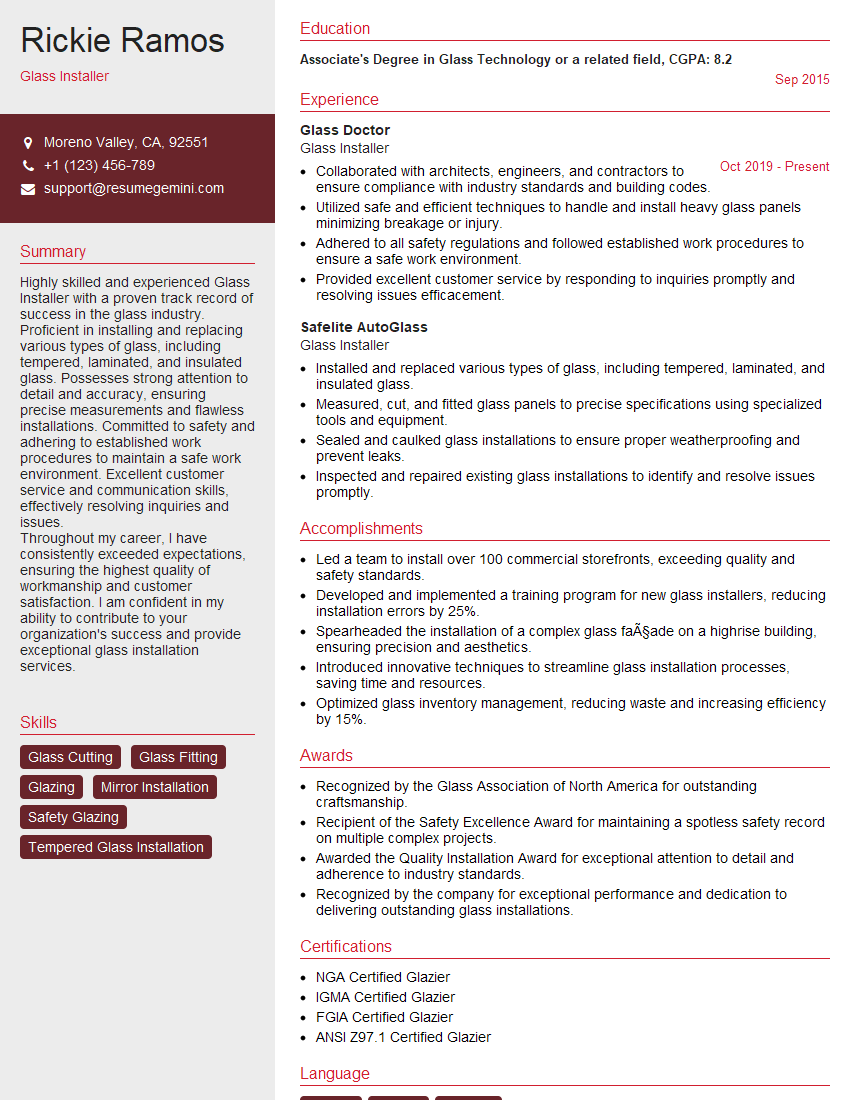
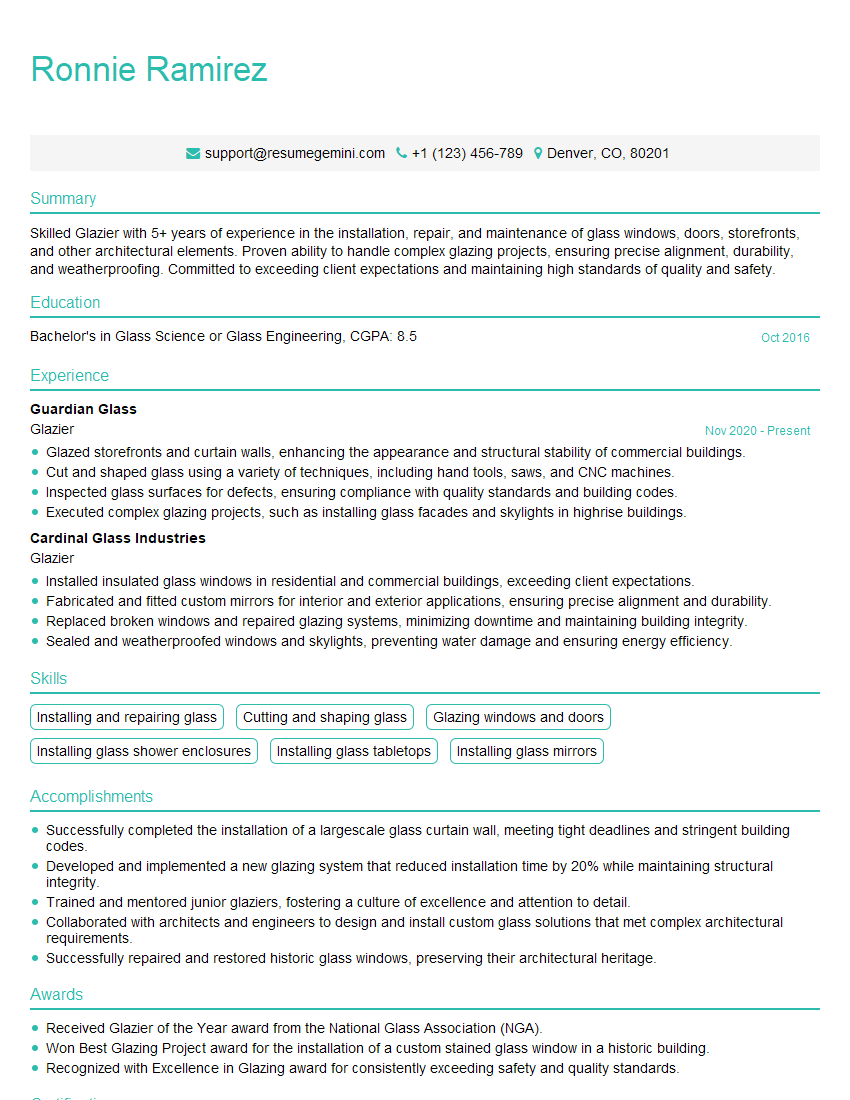
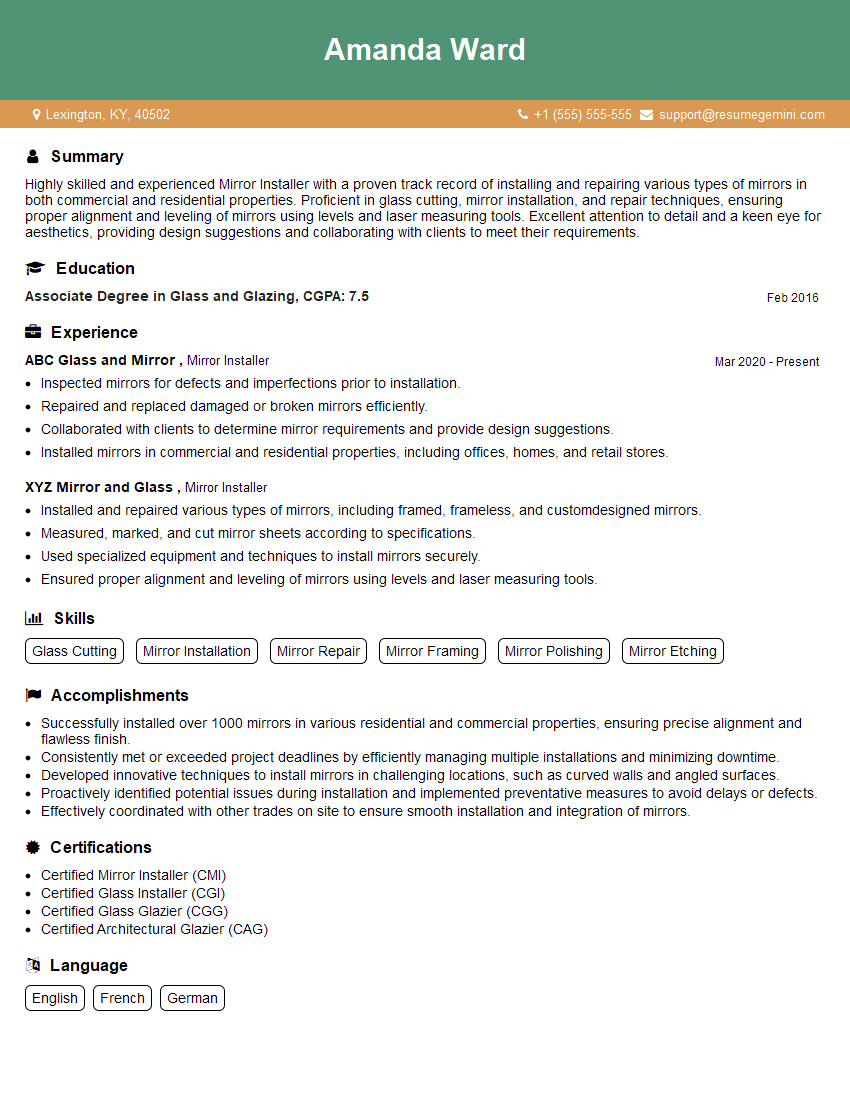
Mastering the skills and knowledge related to installing mirrors in residential and commercial settings is crucial for career advancement in the construction, renovation, or home improvement industries. A well-crafted resume is your key to unlocking opportunities. Creating an ATS-friendly resume increases your chances of getting noticed by potential employers. ResumeGemini is a trusted resource to help you build a professional and impactful resume. Examples of resumes tailored to experience in installing mirrors in residential and commercial settings are available to guide you.
Explore more articles
Users Rating of Our Blogs
Share Your Experience
We value your feedback! Please rate our content and share your thoughts (optional).
What Readers Say About Our Blog
Very informative content, great job.
good