Every successful interview starts with knowing what to expect. In this blog, we’ll take you through the top Land Navigation interview questions, breaking them down with expert tips to help you deliver impactful answers. Step into your next interview fully prepared and ready to succeed.
Questions Asked in Land Navigation Interview
Q 1. Describe the process of orienting a map using a compass.
Orienting a map means aligning it with the real world so that north on the map corresponds to north in the terrain. This is crucial for accurate navigation. To orient a map using a compass, you’ll need both your map and your compass.
- Find Magnetic North: Hold your compass level and allow the needle to settle, pointing towards magnetic north.
- Rotate the Map: Rotate the map until the map’s north arrow aligns perfectly with the compass needle’s north-seeking end. The map is now oriented.
- Verification: Identify a prominent feature on the map (like a road or river) and compare its position on the map to its position in the real world to double-check your orientation. If they don’t match, something’s off – re-check your steps.
Imagine you’re hiking and find a distinctive rock formation. If you’ve properly oriented your map, the rock formation on the map should match up with its location relative to you in the field. This constant verification is vital.
Q 2. Explain how to determine your location using resection.
Resection is a method for determining your location on a map by identifying at least two features visible in the terrain and using their bearings to pinpoint your position. It’s like solving a geometric puzzle.
- Identify Features: Select at least two (ideally three for accuracy) easily identifiable features on the map, visible in the terrain (e.g., peaks, intersections, buildings).
- Take Bearings: Using your compass, take a bearing (direction) to each feature.
- Plot Bearings on Map: On your oriented map, place the compass center on the map location of each feature and draw a line radiating outward in the direction of the bearing you measured. This line represents the back azimuth, which is 180 degrees opposite to the bearing you took. A back azimuth is the direction of your location from the feature you are sighting.
- Determine Location: The point where these lines intersect is your approximate location. Three or more lines increase accuracy and help to account for small errors in bearing measurement.
Think of it like using triangulation; the intersection of the lines creates a pinpoint location, as in surveying. The more features you use, the more precise your resection will be.
Q 3. How do you calculate pace count and its importance in land navigation?
Pace count is a method of measuring distance based on your stride length. Accurate pace counting is fundamental for estimating distance and time in land navigation, especially where no other measuring tools are available.
- Determine Your Pace Length: Walk a measured distance (e.g., 100 meters) at your normal walking pace. Count the number of paces you take. Divide the distance by the number of paces to determine your average pace length. For instance, if it takes 70 paces to walk 100 meters, your average pace length is approximately 1.43 meters.
- Count Your Paces: While navigating, consistently count your paces. A counter or pace beads can be helpful.
- Calculate Distance: To determine distance covered, multiply your pace count by your average pace length. If you’ve taken 200 paces, the estimated distance is 200 paces * 1.43 meters/pace ≈ 286 meters.
In a survival situation or when GPS isn’t available, reliable pace counting is critical for estimating your progress and determining how far you’ve travelled from a known point.
Q 4. What are the different types of maps and their applications in land navigation?
Various map types serve different purposes in land navigation.
- Topographic Maps: These show elevation changes using contour lines, providing a three-dimensional representation of the terrain. Essential for planning routes across challenging terrain.
- Planimetric Maps: These show only the horizontal positions of features, without elevation data. Useful for urban environments or large-scale planning where elevation is less critical.
- Road Maps: Focus on roads, towns, and other infrastructure. Used for route planning when traveling by vehicle.
- Nautical Charts: Designed for marine navigation, showing depths, shorelines, and navigational aids.
- Digital Maps (GPS): Electronic maps displayed on GPS devices offering real-time location, navigation aids, and route planning features.
The choice of map depends entirely on the mission; a topographic map is ideal for hiking, while a road map is sufficient for driving. Choosing the right map ensures accurate navigation for the specific environment.
Q 5. Explain the concept of grid coordinates and their use in determining location.
Grid coordinates are a system of referencing locations on a map using a grid system. They typically consist of two numbers representing the easting (east-west) and northing (north-south) coordinates of a point. This allows for precise location determination.
Most maps use Universal Transverse Mercator (UTM) or Military Grid Reference System (MGRS) coordinates. These systems divide the Earth into zones, allowing for accurate location referencing. A grid coordinate might look like 10S 678900 3456000 (MGRS). The first part indicates the zone and band, and the numbers specify the easting and northing coordinates in meters.
Grid coordinates are essential for precise communication of locations, especially in emergency situations. They leave no room for ambiguity unlike descriptions such as ‘near the big tree’.
Q 6. How do you use a compass to follow a bearing?
Following a bearing using a compass is straightforward once you have an oriented map and understand compass directions.
- Determine Bearing: On your oriented map, identify your current location and your target location. Using a protractor or compass rose, determine the bearing (direction) from your current location to your target.
- Set Compass: Set your compass to the determined bearing. Ensure the compass is level.
- Walk: Walk in the direction indicated by the compass needle’s north-seeking end, keeping the directional arrow aligned with the bearing. Maintain your pace and direction; avoid distractions.
- Recheck Regularly: Periodically recheck your position on the map and your compass bearing to correct for any deviations. Environmental factors can cause minor drifts.
Think of it as walking along a straight line guided by your compass needle, ensuring you are constantly moving in the correct direction towards your destination.
Q 7. What are the common errors associated with compass use, and how can they be avoided?
Several errors can affect compass accuracy. Understanding them helps in avoiding mistakes and ensuring reliable navigation.
- Magnetic Declination: The difference between true north (geographic north) and magnetic north (where the compass needle points) varies geographically. Failing to account for this can lead to significant errors. Use a declination diagram on your map to correct for this.
- Local Magnetic Interference: Metallic objects, power lines, and geological features can distort the compass needle’s reading. Move away from potential sources of interference before taking a reading.
- Incorrect Leveling: Holding the compass at an angle rather than level will result in inaccurate readings. Keep the compass level throughout the process.
- Incorrect Bearing Reading: Careless reading of the compass bezel can lead to errors. Practice reading your compass carefully and consistently.
- Human Error: Misinterpreting map directions, poor pace counting, and inadequate map orientation are among the most frequent human errors affecting land navigation accuracy.
The best way to avoid these errors is through rigorous training, thorough map preparation, and careful practice. Checking your work and using multiple methods for verifying your location is crucial.
Q 8. Describe the various methods for determining elevation using topographic maps.
Determining elevation on a topographic map relies primarily on contour lines. These lines connect points of equal elevation. The closer the lines are together, the steeper the slope; the farther apart, the gentler the slope. There are three main methods:
- Contour Line Reading: Simply read the elevation value printed on the contour lines. For example, if a line is labeled ‘1000 ft’, any point on that line is 1000 feet above sea level.
- Contour Interval: The difference in elevation between adjacent contour lines is the contour interval. This is usually indicated on the map’s legend. If the interval is 20 feet and you count five lines above a labeled line of 1000 ft, the elevation is 1000 + (5 * 20) = 1100 ft.
- Interpolation: When you need to find the elevation of a point that isn’t directly on a contour line, interpolation is used. Estimate the elevation based on the spacing of the contour lines around the point. For instance, if a point lies halfway between a 1000 ft line and a 1020 ft line, its elevation is approximately 1010 ft.
Imagine hiking a mountain. Closely spaced contour lines signal a challenging climb, while widely spaced ones indicate a gentler ascent. Understanding these methods allows accurate elevation estimations crucial for planning routes and assessing terrain difficulty.
Q 9. Explain how to use GPS effectively in land navigation, including limitations.
GPS (Global Positioning System) is a powerful tool for land navigation, providing latitude, longitude, and altitude. Effective use involves:
- Pre-trip Planning: Download maps and routes to your GPS device beforehand. This saves battery life and avoids issues with signal loss in remote areas.
- Understanding Accuracy: GPS accuracy varies. Expect errors of several meters, especially in challenging environments. Don’t rely solely on GPS; use it in conjunction with a map and compass.
- Regular Calibration: Ensure your GPS device receives a clear satellite signal. Allow ample time for initialization in the open. Periodically check accuracy against known locations.
- Battery Management: GPS devices are power-hungry. Monitor battery levels closely and carry spare batteries or a portable power bank.
- Waypoints and Tracks: Mark important points (waypoints) and record your route (tracks) for later reference or retracement.
Imagine you’re backpacking through a dense forest. While GPS can show your general location, a map and compass are necessary for accurate navigation amongst the trees, where the signal may be weak or intermittent. GPS is a valuable aid, but it’s not a replacement for traditional skills.
Q 10. What are the limitations of GPS in different environments?
GPS limitations vary considerably across different environments:
- Dense Canopy Cover (Forests): Tree cover significantly weakens or blocks GPS signals, leading to reduced accuracy and potential loss of signal altogether.
- Urban Canyons (Cities): Tall buildings reflect and block signals, resulting in inaccurate readings and frequent signal loss. Multipath errors (signals bouncing off buildings) are common.
- Deep Canyons and Valleys: Signals may be obstructed by surrounding terrain, leading to weakened or absent signals.
- Atmospheric Conditions: Heavy rain, snow, or fog can attenuate GPS signals, reducing accuracy or causing complete signal loss.
- Ionospheric Disturbances: Solar flares and other ionospheric events can temporarily degrade GPS signal quality.
Consider a search and rescue operation in a mountainous region. GPS might be helpful in identifying a general area, but the team will likely rely on a map, compass, and altimeter for precise navigation due to potential signal blockage from the mountains themselves.
Q 11. How do you plan a route using a map and compass, considering terrain and obstacles?
Route planning using a map and compass involves several steps:
- Identify the Destination: Locate your destination on the map and note its coordinates.
- Analyze Terrain: Study the map to identify terrain features like mountains, rivers, and valleys. Note any obstacles or potential hazards.
- Choose a Route: Select a route that avoids significant obstacles and takes into account terrain difficulty. Consider elevation changes and potential safety concerns.
- Establish Checkpoints: Identify several checkpoints along the route, using prominent features as references (e.g., a ridge, a bend in a river).
- Measure Bearings: Use the compass to measure the bearing (direction) to each checkpoint from your current location.
- Pace Counting or Distance Estimation: Estimate the distance between checkpoints, using pacing or map scaling. This is crucial for tracking progress.
- Follow the Route: Navigate to each checkpoint using the measured bearing and estimated distance. Regularly re-orient yourself using the map and compass.
Imagine planning a hike across a mountainous region. The route needs to account for steep ascents and descents, avoiding cliffs or potentially dangerous areas. Checkpoints might be prominent peaks or saddles, making progress tracking efficient.
Q 12. How do you identify and avoid navigational hazards?
Navigational hazards vary significantly depending on the environment. Identifying and avoiding them involves:
- Map Study: Carefully examine the map before setting out. Note any potential hazards, such as cliffs, swamps, deep rivers, or areas known for poor visibility.
- Terrain Awareness: During the journey, constantly scan the terrain for immediate threats, such as steep drop-offs, unstable ground, or hidden obstacles.
- Weather Monitoring: Check weather forecasts before you depart and be prepared to alter your plans if adverse weather conditions develop. This might include strong winds, heavy rain, or sudden changes in temperature.
- Environmental Awareness: Consider potential threats from wildlife, changing light conditions, and extreme temperatures.
For example, a river crossing might require assessing the water depth and current speed before proceeding. Similarly, navigation in a desert might involve planning routes that avoid exposure to the harsh sun and ensure adequate water supplies. Risk assessment is key to hazard avoidance.
Q 13. What are the different types of terrain features and how do they impact navigation?
Topographic maps depict various terrain features, each impacting navigation differently:
- Ridges: Elevated lines of land; good for following as they offer visibility and often easier travel.
- Valleys: Low-lying areas between ridges; can be difficult due to potential water hazards or dense vegetation.
- Streams and Rivers: Water bodies that can be used for navigation (if safe) but also present obstacles requiring careful crossing.
- Mountains and Hills: Significant elevation changes requiring careful route planning; challenging terrain.
- Swamps and Marshes: Soft, wet ground; difficult to traverse and may contain hidden hazards.
- Cliffs and Escarpments: Steep, often near-vertical rock faces; impassable unless using specialized equipment.
Imagine navigating a dense forest with many ravines. Understanding that valleys often contain watercourses and potential difficulties allows you to plan a route that avoids these areas, opting for higher ground. Terrain awareness is critical for safe and effective navigation.
Q 14. Explain the importance of maintaining situational awareness during land navigation.
Maintaining situational awareness is paramount in land navigation. It means continuously assessing your surroundings, your location, your progress, and any potential hazards. This involves:
- Regular Map and Compass Checks: Frequently reorient yourself using the map and compass, comparing your observed surroundings with the map features.
- Observation of Landmarks: Use prominent landmarks to confirm your position and progress along the planned route.
- Monitoring Progress: Regularly assess your progress against the planned schedule. Adjust the route as needed if delays occur or if conditions change.
- Awareness of Time and Resources: Keep track of time and resources (food, water, fuel, etc.). If necessary, adjust the plan to account for limitations.
- Environmental Changes: Be alert to changes in weather conditions, light levels, or terrain that might impact safety or navigation.
Imagine a long-distance hike. Situational awareness allows you to adjust the planned route when you encounter unexpected obstacles or realize you are falling behind schedule. It’s about being flexible and adaptable, ensuring safety and success.
Q 15. Describe your experience using different types of compasses.
My experience spans various compass types, from basic lensatic compasses to more advanced baseplate compasses with clinometers and sighting mirrors. Lensatic compasses are excellent for their simplicity and durability, perfect for quick bearings in straightforward terrain. I’ve relied on them extensively during wilderness expeditions, appreciating their lightweight nature and ease of use. Baseplate compasses, however, offer greater precision for more complex navigation tasks. The sighting mirror allows for accurate aiming at distant features, which is crucial when establishing precise bearings over long distances, particularly in challenging terrain. For example, during a recent survey project, the baseplate compass’s accuracy was vital in mapping a complex network of trails. I’ve also used Silva compasses known for their quality and reliability, highlighting the importance of selecting a compass tailored to the specific navigational challenges.
Career Expert Tips:
- Ace those interviews! Prepare effectively by reviewing the Top 50 Most Common Interview Questions on ResumeGemini.
- Navigate your job search with confidence! Explore a wide range of Career Tips on ResumeGemini. Learn about common challenges and recommendations to overcome them.
- Craft the perfect resume! Master the Art of Resume Writing with ResumeGemini’s guide. Showcase your unique qualifications and achievements effectively.
- Don’t miss out on holiday savings! Build your dream resume with ResumeGemini’s ATS optimized templates.
Q 16. How do you handle equipment malfunctions during navigation?
Equipment malfunction is a serious concern in land navigation, and preparedness is key. My approach involves multiple layers of redundancy. Firstly, I always carry at least two compasses – a primary and a backup. If my primary compass fails, I immediately switch to the backup. Beyond compasses, I rely on map and terrain association. If my compass is malfunctioning, I can still use prominent terrain features – a distinctive peak, a river bend, etc. – to orient myself on the map and estimate my location. Furthermore, I’m proficient in using celestial navigation techniques – using the sun or stars – as a last resort in case of complete equipment failure. For instance, during a challenging night navigation exercise, my compass malfunctioned, forcing me to rely on star navigation to successfully reach my destination. Finally, thorough pre-trip planning, including checking all equipment for proper function, minimizes the risk of such incidents.
Q 17. How do you use a map and compass in low-visibility conditions?
Navigating in low-visibility conditions necessitates a different approach, emphasizing careful planning and reliance on tactile map reading. Before setting out, I thoroughly study the map, identifying key terrain features and potential hazards. During navigation, I use my fingers to trace the map route, constantly comparing my progress with terrain details I can feel or hear—changes in elevation, the sound of a river, etc. A compass remains critical, even with reduced visibility, for maintaining direction. I regularly take bearings and compare them to my map, adjusting my course as needed. Using a highly luminous compass is also vital. In truly challenging conditions, like dense fog, I might prioritize staying put until conditions improve or seek shelter. For example, during a mountain rescue operation in thick fog, careful map reading combined with compass bearings, helped guide our team safely to the stranded individual.
Q 18. Explain the concept of declination and its impact on compass readings.
Declination is the angular difference between magnetic north (indicated by your compass) and true north (the geographic North Pole). This difference varies depending on your location on Earth. Failure to account for declination will result in significant errors in navigation, leading you off course. To correct for this, you must add or subtract the declination value, as indicated on your map, from your compass bearing. For instance, if the declination is 15° East, and your compass bearing is 30°, your true bearing is 15°. Ignoring declination could lead to significant errors in navigation, potentially leading to getting lost, especially over longer distances. Always check the declination diagram on your map for the correct value for your specific location.
Q 19. How do you determine your location using intersection?
Intersection is a method for determining your location using bearings to at least two identifiable features on your map. You take a compass bearing to each feature, then on your map, draw a line from each feature in the direction of the bearing you observed. The point where the lines intersect is your approximate location. For example, if I take a bearing to a prominent hill and a distinct river bend, I’ll plot these bearings on my map. Where these lines meet provides my estimated location. Accuracy improves with more features and bearings. This technique is particularly useful when there are few easily recognizable features around you. Remember to account for declination when taking and plotting bearings.
Q 20. Describe your experience using GPS mapping software.
My experience with GPS mapping software includes using various applications such as Gaia GPS, Avenza Maps, and others. These tools are invaluable for planning routes, recording tracks, and navigating in the field. I find Gaia GPS particularly helpful for its offline map capabilities, crucial for areas with limited or no cellular service. Avenza Maps excels in handling diverse map formats, making it versatile for a wide range of applications. I utilize these tools for pre-trip planning by downloading relevant maps, plotting routes, and marking waypoints. During navigation, they provide real-time location information, track recording for post-trip analysis, and aid in navigating complex terrain. For instance, during a recent backpacking trip, Gaia GPS helped me stay on course and navigate a challenging mountain pass in an area without cell service.
Q 21. What are the different types of GPS units and their advantages/disadvantages?
GPS units range from handheld devices to integrated systems within vehicles or smartphones. Handheld GPS units offer portability and are commonly used for hiking, backpacking, and other outdoor activities. Their advantages include battery life and ruggedness. However, they might lack the advanced mapping features of more sophisticated systems. Smartphone-based GPS solutions integrate easily with other apps but rely on battery power and cell service for certain functionalities. Automotive GPS systems are powerful but are not portable and lack the versatility of handheld units for off-road use. High-end mapping systems used in surveying provide exceptional accuracy and detailed mapping capabilities but are often expensive and require specialized knowledge. Choosing the right GPS unit depends entirely on the specific needs and the environment in which it will be used. The trade-off is typically between portability, ease of use, accuracy, and functionality.
Q 22. Explain the concept of back bearing and its use in navigation.
Back bearing is the direction of travel from a point, 180 degrees opposite to the forward bearing to that point. Imagine you’re standing at Point A looking towards Point B. Your forward bearing to Point B might be 30 degrees. Your back bearing from Point B would then be 210 degrees (30 + 180).
In navigation, back bearings are crucial for verification and error correction. If you’ve taken a bearing to a feature, moving to that feature and taking a back bearing back to your starting point should give you a reading 180 degrees opposite to your original bearing. Any significant difference suggests an error in either bearing measurement. This is especially valuable in situations with limited visibility or challenging terrain, allowing you to confirm you’re on the right track.
For example, if you are navigating through dense forest and lose visual contact with your intended destination, taking a back bearing from your current location can help you retrace your steps and reorient yourself.
Q 23. How do you interpret symbols and contours on a topographic map?
Topographic maps use a variety of symbols and contours to represent the three-dimensional landscape on a two-dimensional surface. Contours are lines connecting points of equal elevation. The closer the contour lines, the steeper the slope; widely spaced lines indicate a gentler slope.
- Contours: Closely spaced contours indicate a steep slope, while widely spaced contours indicate a gentle slope. Contour lines never cross each other. A closed contour loop represents a hill or depression, depending on whether the contour lines have higher values inside or outside the loop.
- Symbols: These represent various features, such as roads (often with indication of their type and quality), buildings (different shapes for different structures), water bodies (lakes, rivers), vegetation (forests, swamps), and elevation points. A legend always accompanies the map explaining these symbols.
Understanding these symbols and contours is critical for route planning and terrain analysis. For instance, identifying steep slopes can help you choose safer and more efficient routes, while recognizing water bodies and vegetation can help avoid obstacles and find potential campsites.
Q 24. What are the safety procedures you follow during land navigation?
Safety is paramount in land navigation. My safety procedures always include:
- Planning: Thorough route planning, including backup routes, considering weather conditions, and notifying someone of my plans and expected return time.
- Equipment Check: Ensuring all navigation equipment (map, compass, GPS, etc.) is functioning correctly and batteries are fully charged.
- Teamwork: If navigating as part of a team, constant communication and mutual support are essential.
- Terrain Awareness: Always be aware of your surroundings, potential hazards (e.g., cliffs, rivers, dense vegetation), and weather changes.
- Emergency Preparedness: Carrying appropriate first-aid supplies, emergency communication devices (satellite phone or personal locator beacon if in remote areas), extra food and water, and knowing how to build a shelter in case of emergency.
- Navigation Checks: Regularly checking my position against the map and compass to prevent getting lost.
I always follow the principle of leaving no trace and respecting the environment. In challenging conditions, I will prioritize safety over time, and it is better to adjust the plan than to take unnecessary risks.
Q 25. How do you calculate distance using a map’s scale?
Map scales represent the ratio between the distance on the map and the actual distance on the ground. It is usually expressed as a representative fraction (e.g., 1:50,000) or a verbal scale (e.g., ‘1 inch represents 50,000 inches’).
To calculate distance:
- Measure the distance on the map: Use a ruler or the map’s scale bar to accurately measure the distance between two points.
- Convert to the same unit: Ensure both the map measurement and the scale are in the same unit (inches, centimeters, etc.).
- Apply the scale: Multiply the map distance by the scale denominator. For a scale of 1:50,000, multiply the map distance by 50,000 to get the actual distance. If using verbal scale, adjust conversion accordingly.
- Convert units (if needed): Convert the result into desired units (e.g., kilometers, miles).
For example, if the distance on a map with a scale of 1:25,000 is 2 centimeters, the actual distance is 2 cm * 25,000 = 50,000 cm, or 500 meters (or 0.5 kilometers).
Q 26. Describe your experience in conducting land navigation training.
I’ve conducted extensive land navigation training for various groups, including military personnel, search and rescue teams, and outdoor enthusiasts. My approach involves a combination of classroom instruction and practical field exercises.
Classroom sessions cover map reading, compass use, GPS operations, route planning, and terrain association. Field exercises progressively increase in complexity, starting with basic compass courses and culminating in multi-day navigation challenges across varied terrain. I emphasize the importance of teamwork, risk assessment, and developing effective communication strategies. A key element is incorporating realistic scenarios, simulating challenges like low visibility, equipment failure, and unexpected terrain changes to build resilience and adaptability. I constantly evaluate trainees’ skills and offer customized feedback, ensuring they feel empowered and confident.
One memorable training exercise involved leading a group through a challenging mountainous area during heavy fog. It tested the trainees’ ability to rely on their compass and map skills, while also practicing safe procedures in adverse conditions. This experience highlighted the critical importance of meticulous planning, backup strategies and the value of clear communication within the team.
Q 27. How do you troubleshoot common GPS errors?
GPS errors can stem from various issues. My troubleshooting approach involves a systematic process:
- Check Satellite Signal: Ensure the GPS receiver has a clear view of the sky, free from obstructions (trees, buildings, etc.). A weak signal will lead to inaccurate readings.
- Check GPS Settings: Verify that the GPS is set to the correct coordinate system and datum. Incorrect settings can result in significant location errors.
- Check GPS Battery: Low battery power can cause the GPS to malfunction. Ensure the battery is sufficiently charged.
- Restart GPS: A simple restart often resolves minor software glitches.
- Check for Interference: Strong electromagnetic fields from power lines or radio equipment can interfere with the GPS signal. If possible, move to a location with less interference.
- Calibrate Compass: Some GPS devices have built-in compasses, which may need calibration if they provide inconsistent readings.
- Check for Firmware Updates: Ensure the GPS device has the latest firmware updates to address any known bugs or performance issues.
If the problem persists, try a different GPS device to eliminate the possibility of a faulty receiver. In areas with heavy canopy cover or deep canyons, GPS accuracy can be compromised, and reliance on alternative methods like map and compass becomes crucial.
Q 28. Explain how to create a route plan using digital mapping tools.
Digital mapping tools, such as ArcGIS, Google Earth, or specialized military mapping software, greatly assist in route planning. The process usually involves these steps:
- Define Start and End Points: Precisely locate the starting and ending points of the route using the map’s search function or by manually inputting coordinates.
- Identify Waypoints: Identify key points along the route (e.g., checkpoints, water sources, potential obstacles). These waypoints serve as navigational aids.
- Plot the Route: Draw the intended route on the digital map, connecting the waypoints. Consider terrain features (elevation, slopes, vegetation) and accessibility when plotting the route.
- Analyze Terrain: Digital maps often provide elevation profiles and 3D views that allow for a thorough analysis of the terrain along the proposed route. This step is crucial for identifying potential hazards and selecting the most suitable path.
- Measure Distance and Time: Digital mapping tools typically provide distance and estimated travel time calculations, allowing for realistic planning of the expedition.
- Export Route Data: The planned route can be exported in various formats (e.g., GPX, KML) for use with GPS devices.
Always verify the route plan using alternative navigation tools (map and compass) as a backup. Digital tools are incredibly useful, but they shouldn’t be the sole reliance for navigation in a remote location.
Key Topics to Learn for Land Navigation Interview
- Map Reading & Interpretation: Understanding map symbols, scales, contours, and their practical application in identifying terrain features and planning routes.
- Compass Use & Orientation: Mastering compass techniques including declination, bearing, and back-azimuth calculations for accurate navigation.
- GPS Navigation & Limitations: Understanding the strengths and weaknesses of GPS devices, troubleshooting common issues, and using GPS effectively in conjunction with map and compass.
- Terrain Association: Accurately identifying and correlating map features with real-world terrain observations to maintain accurate position.
- Route Planning & Execution: Developing efficient and safe routes considering terrain, obstacles, and environmental factors. Practicing route planning methodologies.
- Pace Count & Estimation: Accurately estimating distances and maintaining a consistent pace to improve navigational precision.
- Field Techniques & Procedures: Understanding and implementing various land navigation techniques, such as resection, intersection, and traversing.
- Error Recognition & Correction: Identifying and addressing potential navigation errors proactively and implementing corrective actions.
- Safety Procedures & Emergency Response: Prioritizing safety, understanding risk mitigation, and knowing emergency procedures in varied terrains and weather conditions.
Next Steps
Mastering Land Navigation is crucial for advancement in many fields demanding spatial awareness, problem-solving, and decision-making under pressure. A strong understanding of these skills significantly enhances your career prospects. To maximize your chances of securing your dream role, crafting an ATS-friendly resume is paramount. ResumeGemini can help you build a compelling resume that highlights your expertise in Land Navigation. We offer examples of resumes tailored specifically for Land Navigation roles to help guide your process. Take the next step toward a successful career by leveraging ResumeGemini’s resources today.
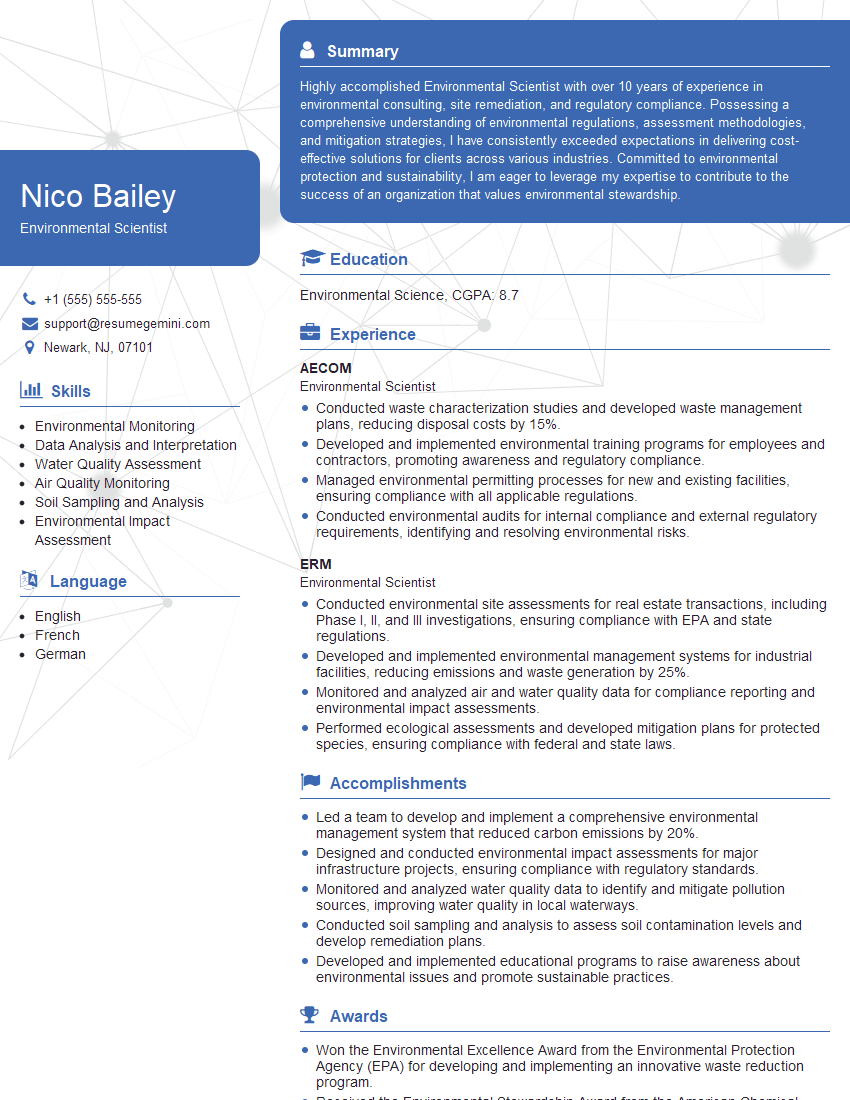
Environmental Scientist Resume Sample
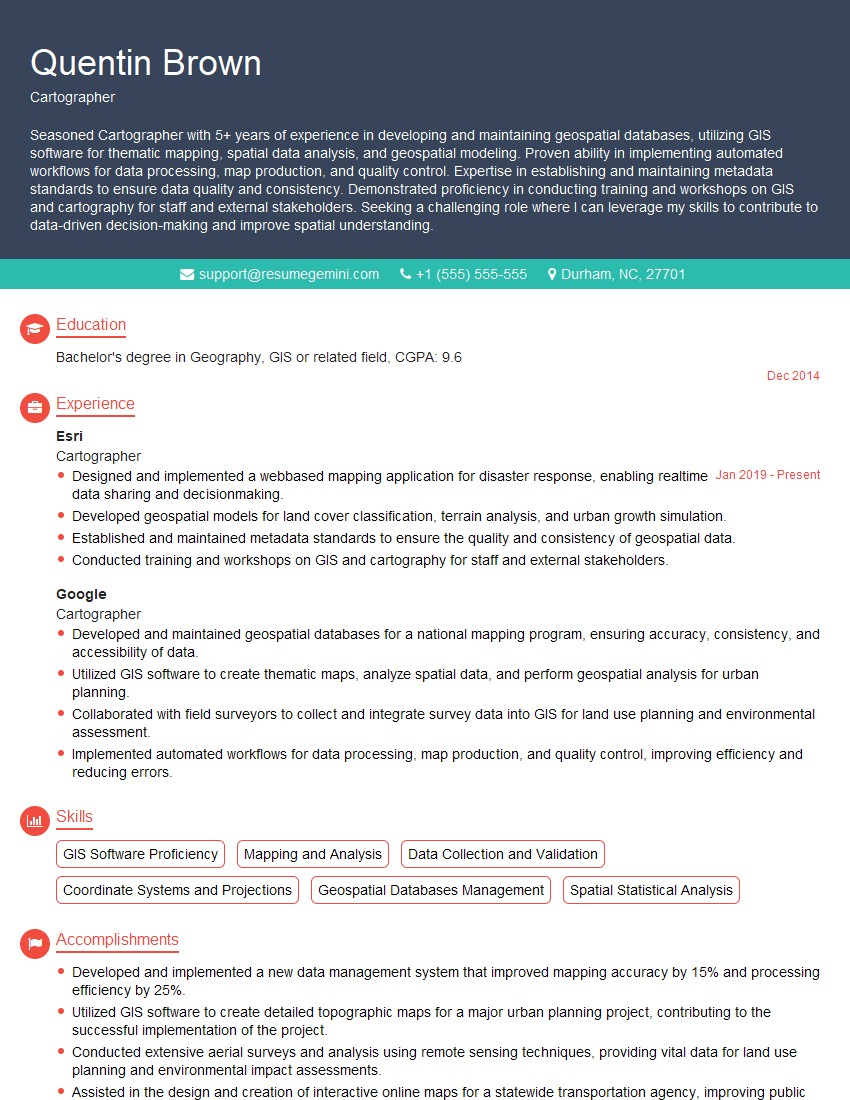
Cartographer Resume Sample
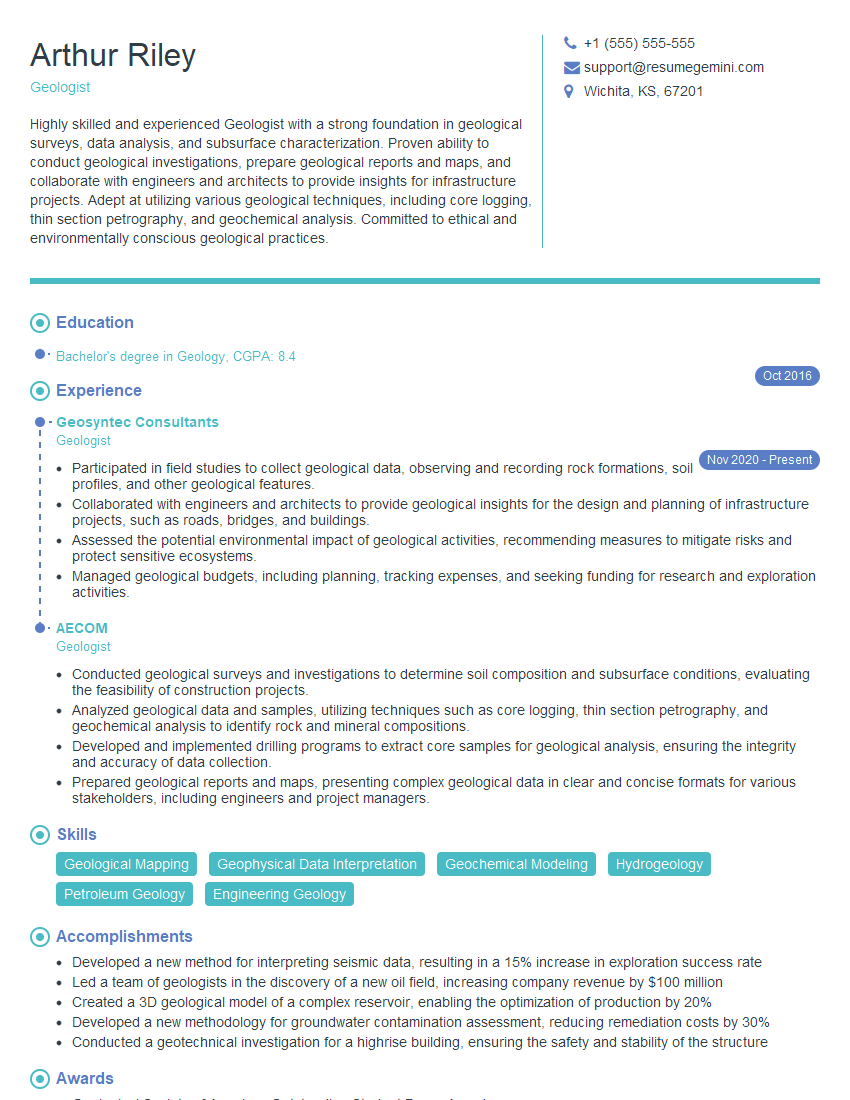
Geologist Resume Sample
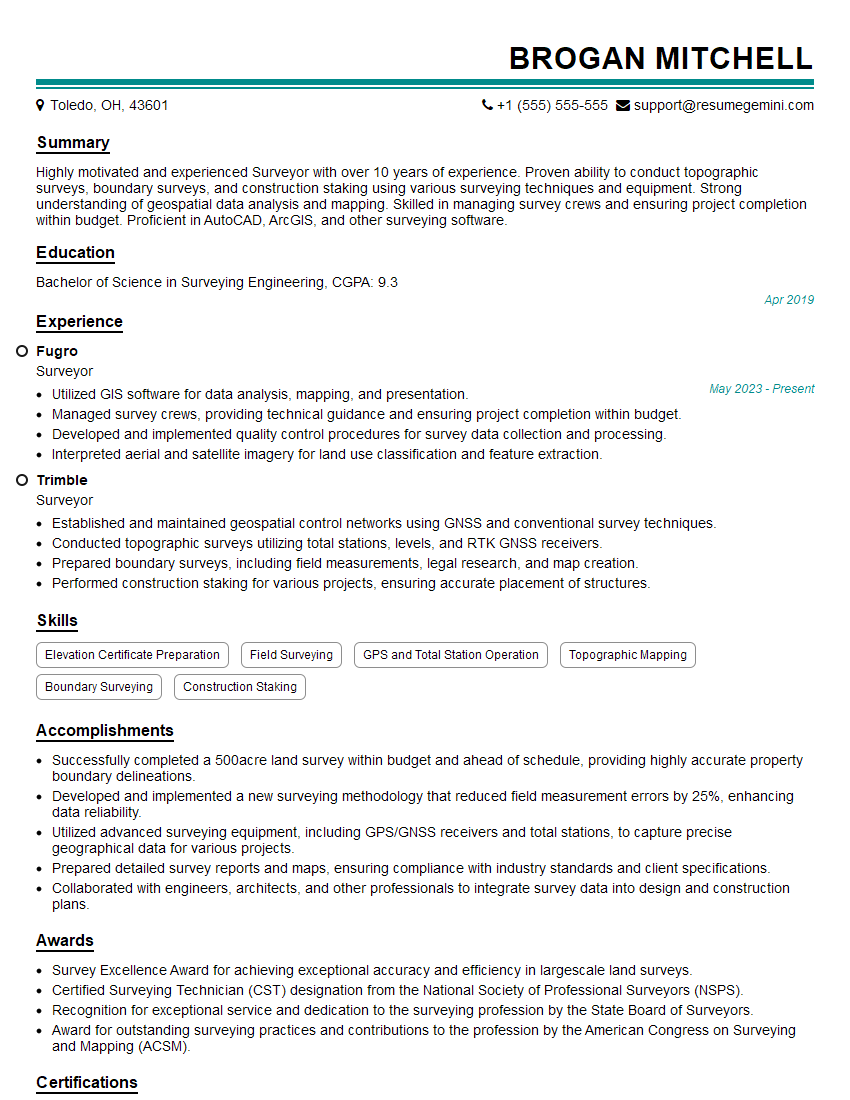
Surveyor Resume Sample
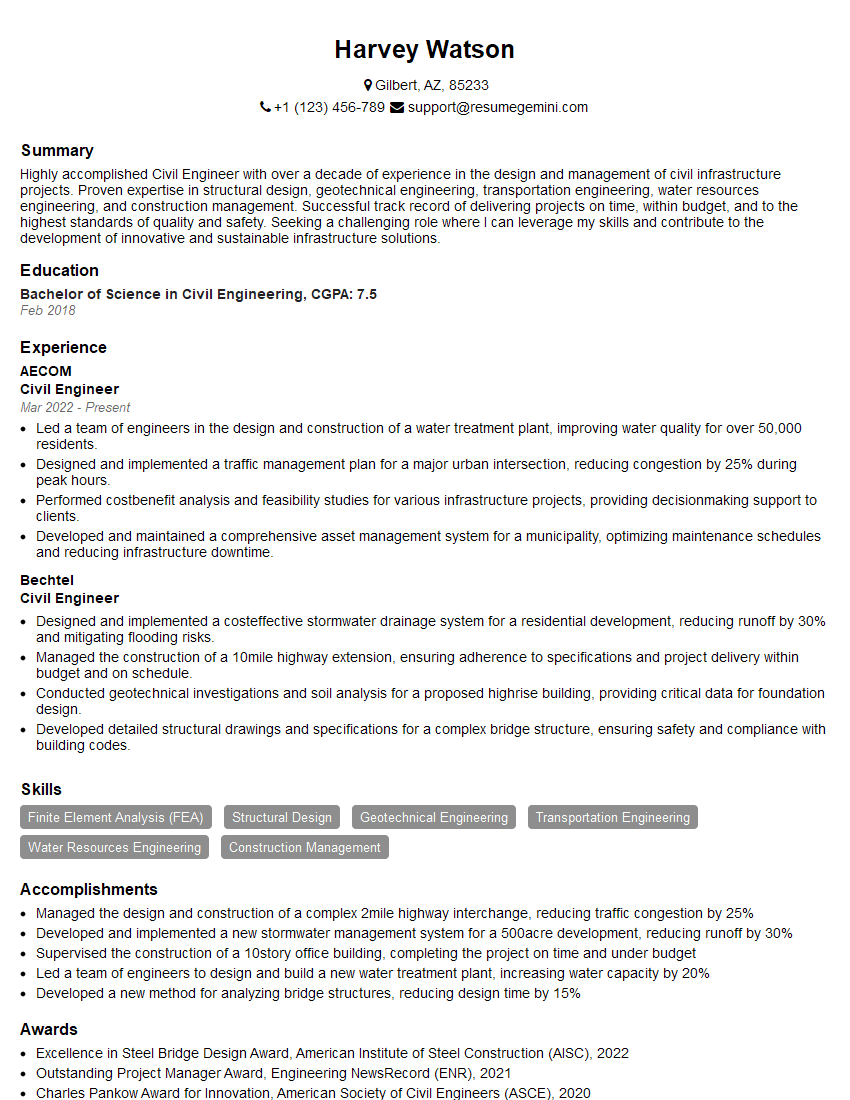
Civil Engineer Resume Sample
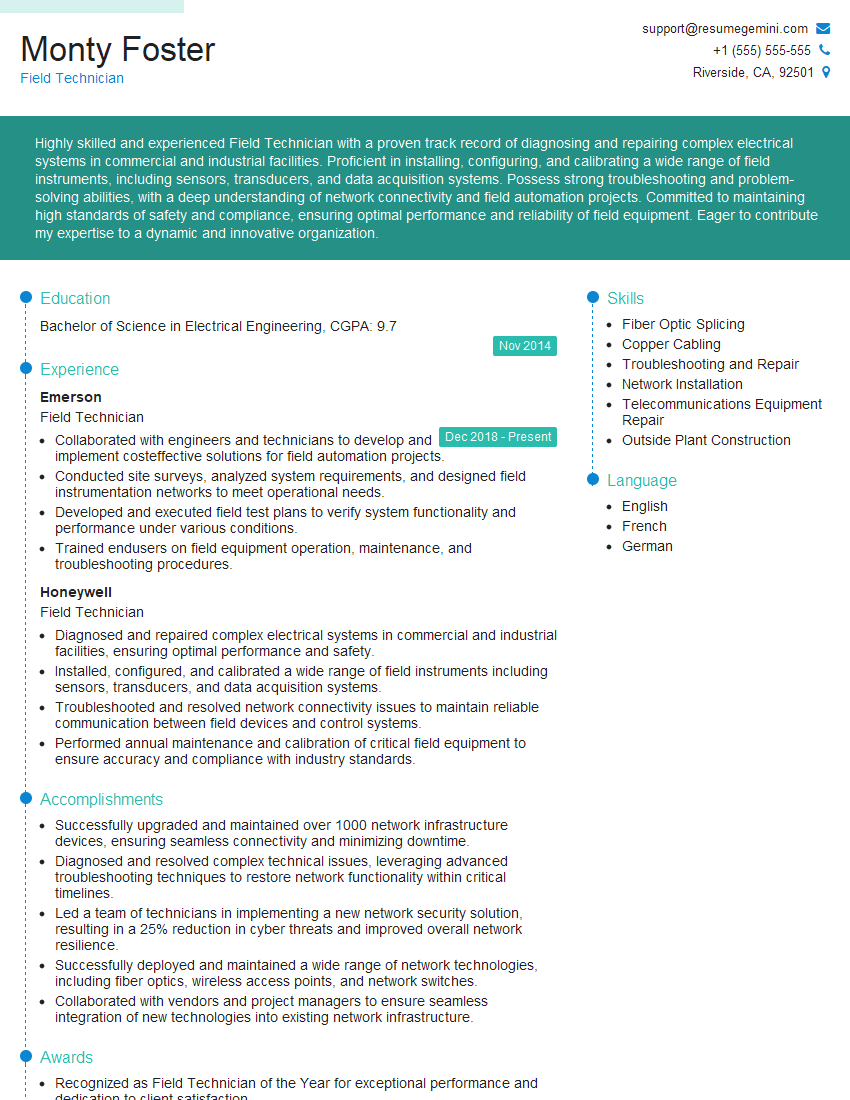
Field Technician Resume Sample
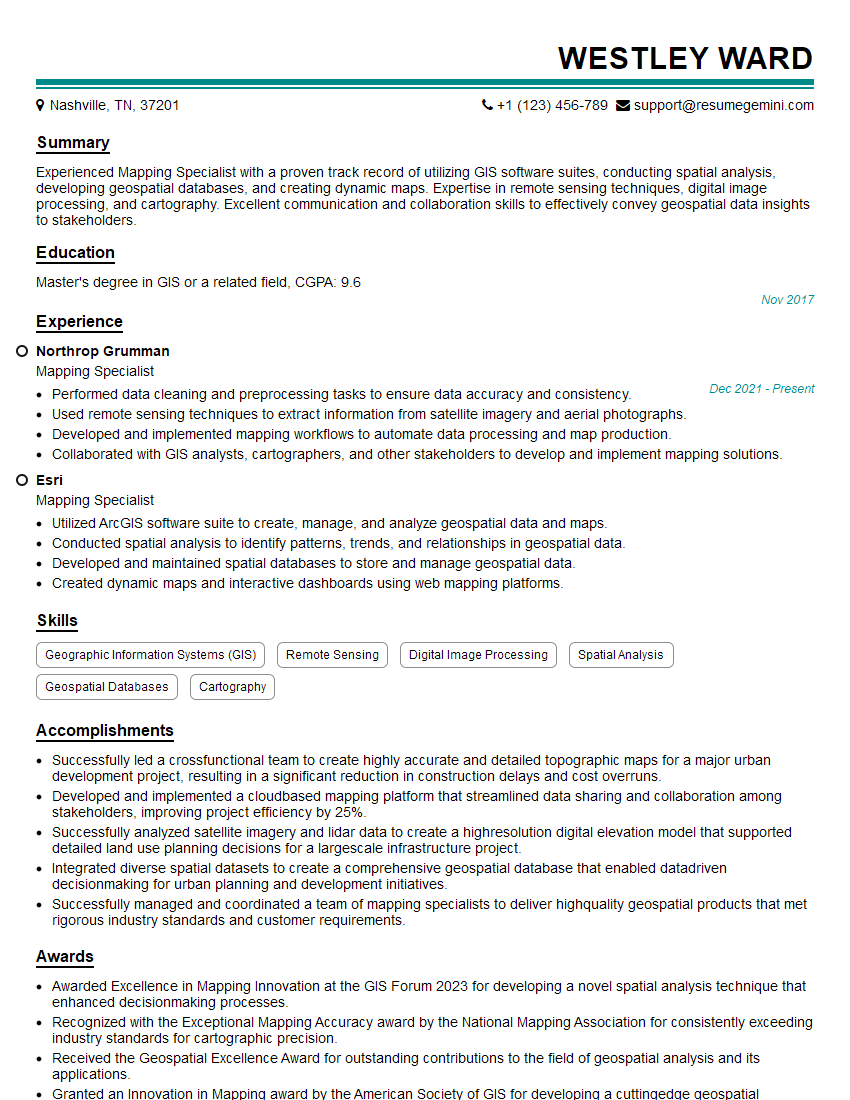
Mapping Specialist Resume Sample

Wildlife Biologist Resume Sample
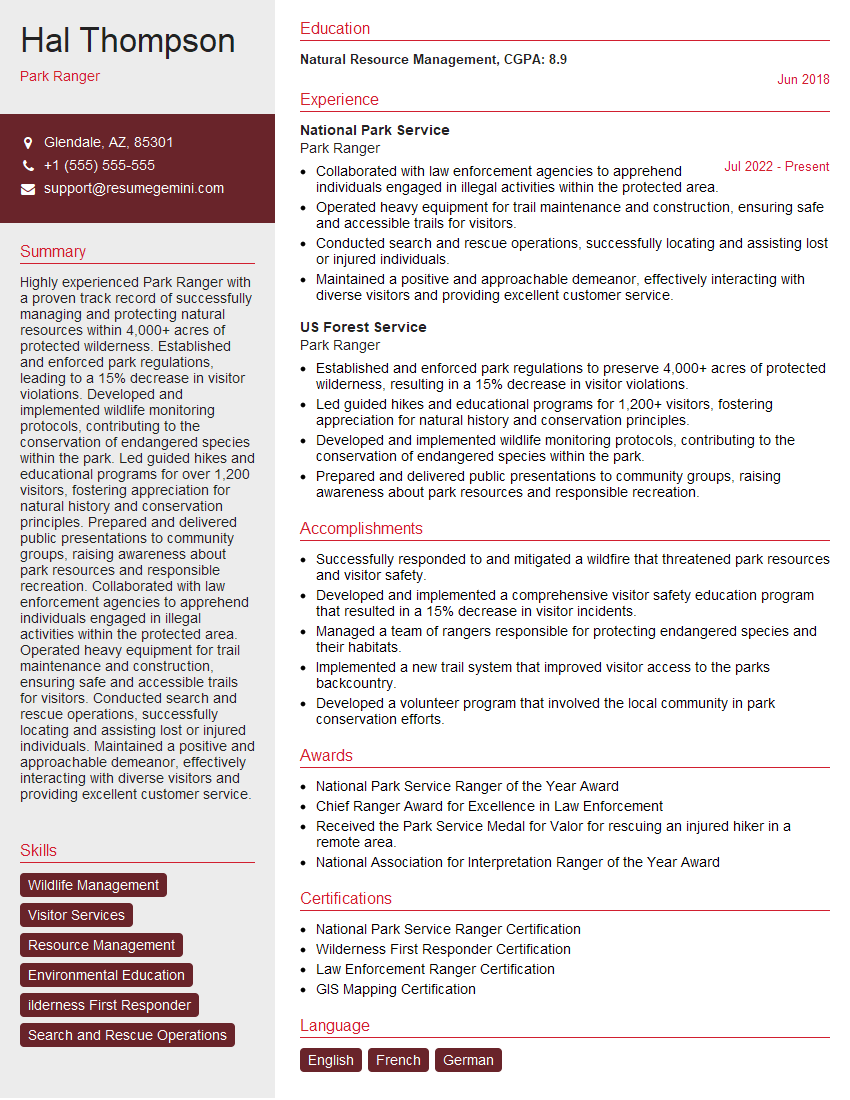
Park Ranger Resume Sample
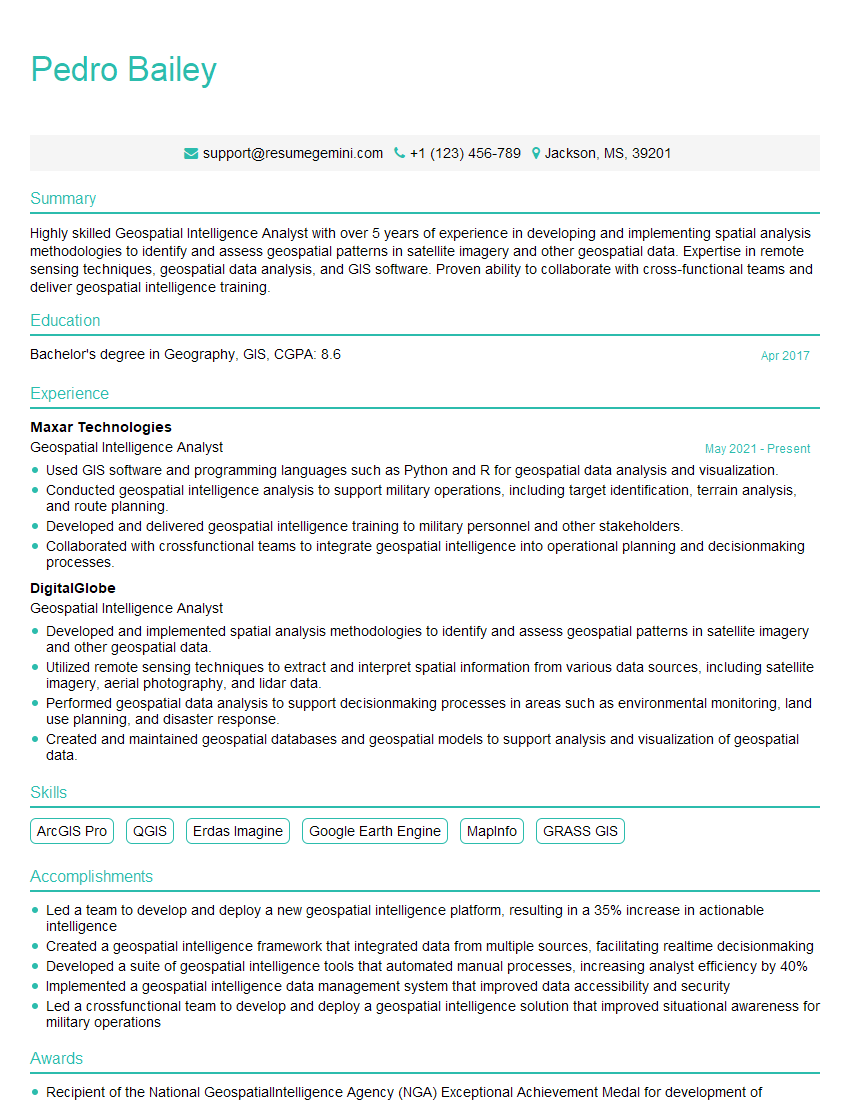
Geospatial Intelligence Analyst Resume Sample
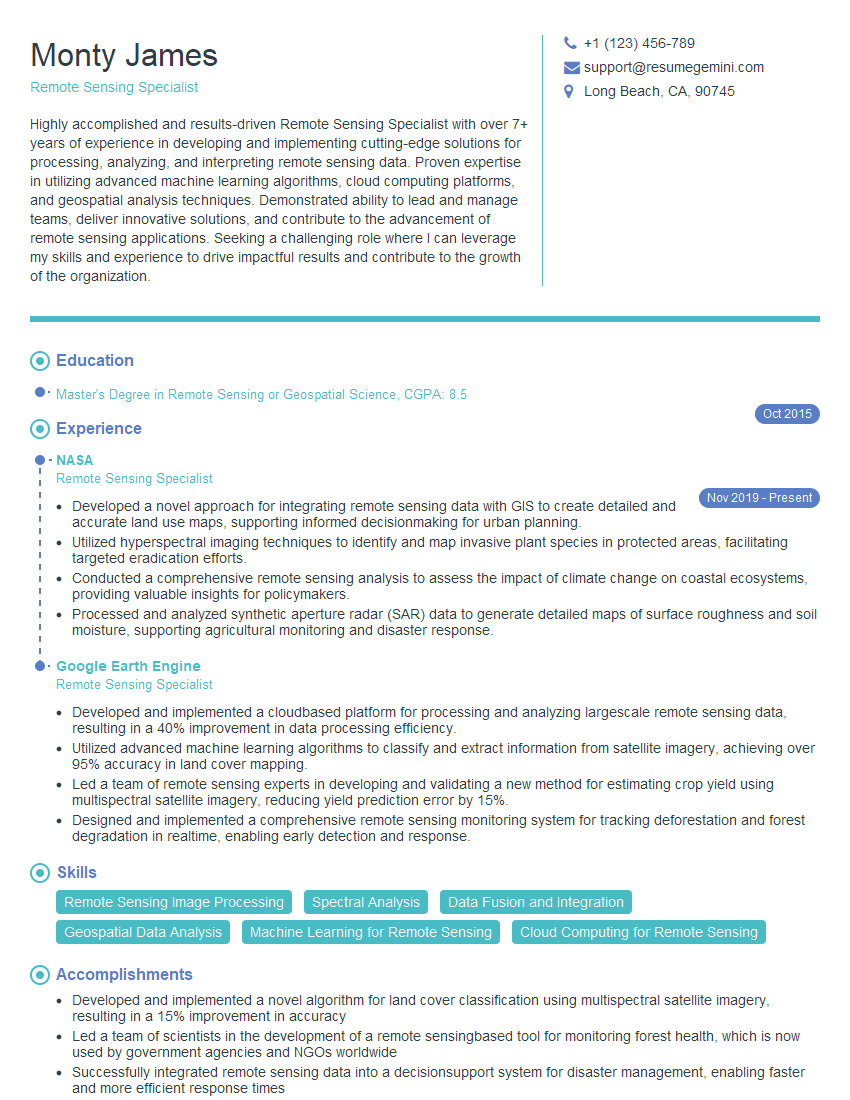
Remote Sensing Specialist Resume Sample
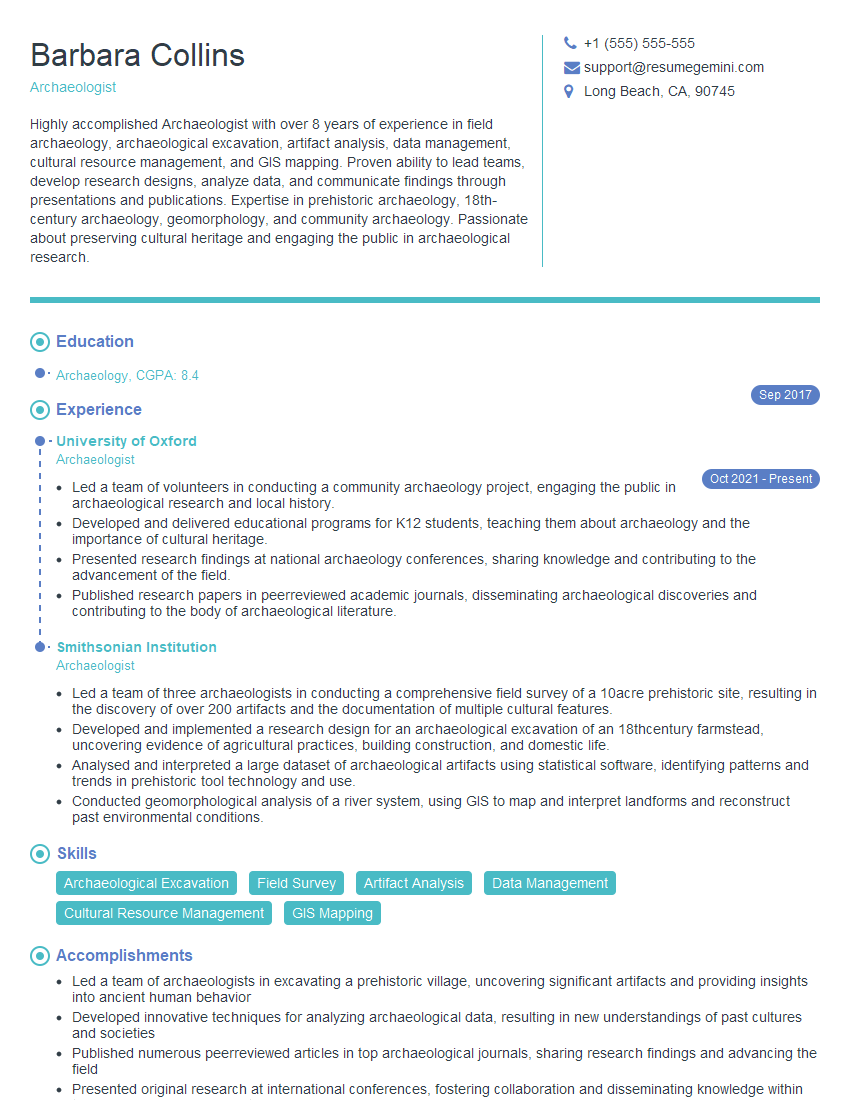
Archaeologist Resume Sample
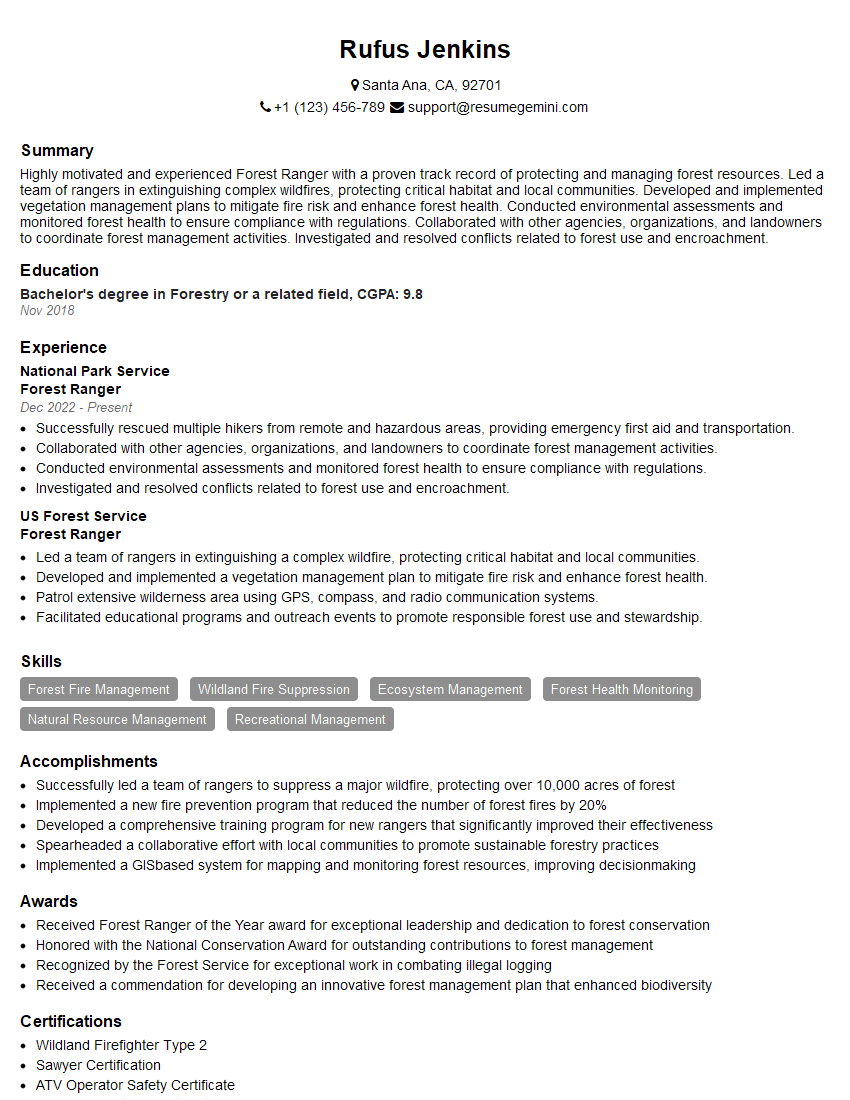
Forest Ranger Resume Sample
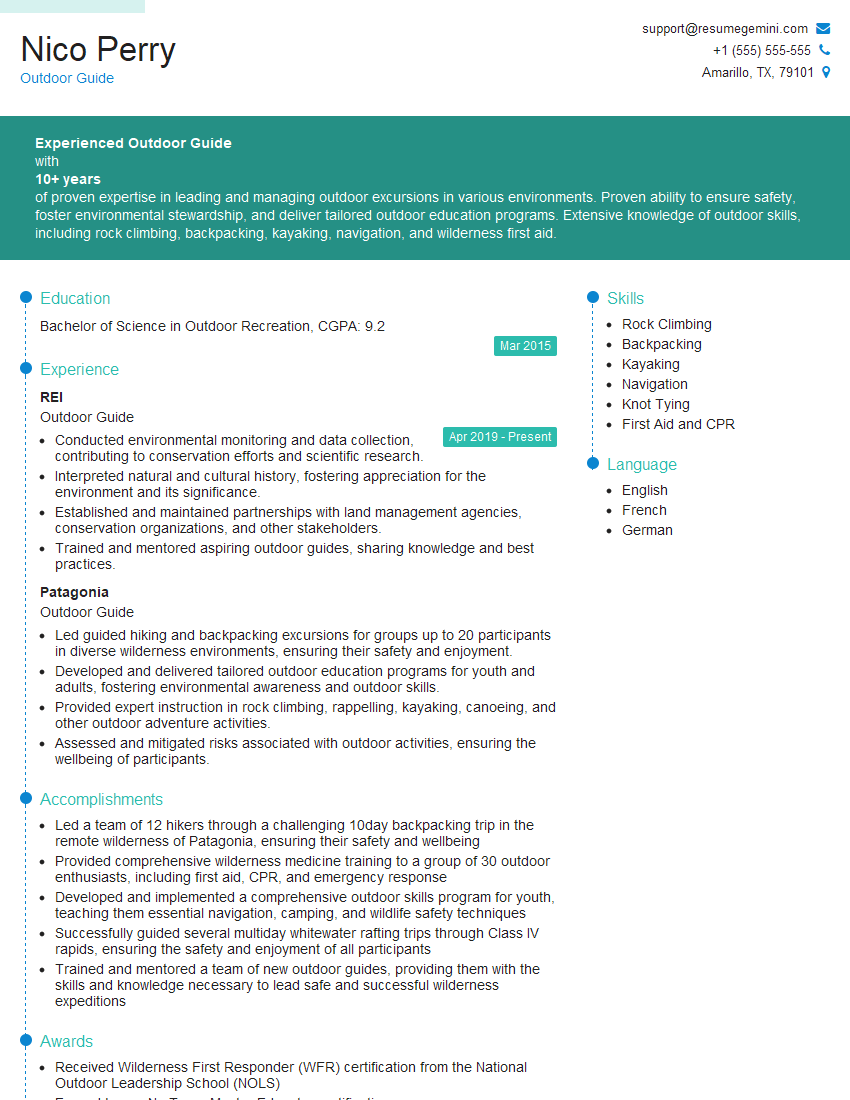
Outdoor Guide Resume Sample
Explore more articles
Users Rating of Our Blogs
Share Your Experience
We value your feedback! Please rate our content and share your thoughts (optional).
What Readers Say About Our Blog
Very informative content, great job.
good