Cracking a skill-specific interview, like one for Experience in working with a variety of materials, such as leather, fabric, and foam, requires understanding the nuances of the role. In this blog, we present the questions you’re most likely to encounter, along with insights into how to answer them effectively. Let’s ensure you’re ready to make a strong impression.
Questions Asked in Experience in working with a variety of materials, such as leather, fabric, and foam Interview
Q 1. What types of leather are best suited for upholstery?
Choosing the right leather for upholstery depends heavily on the intended use and desired aesthetic. Durability and longevity are key considerations. Full-grain leather is the top choice for its strength and natural beauty. It’s the strongest and most durable, offering excellent resistance to wear and tear. Think of a well-worn leather jacket – that’s the kind of resilience you want in upholstery. Top-grain leather is a more affordable option, but it’s less durable because the top layer has been sanded and corrected. It’s still suitable for many applications, but it won’t last as long as full-grain. Genuine leather is a more ambiguous term and may sometimes be thinner and less resilient. Finally, bonded leather is made from leather scraps, and although cheaper, it’s far less durable and not suitable for high-traffic areas.
For example, I once worked on a high-end sofa project; full-grain leather was the obvious choice due to its exceptional longevity and resistance to scratches and stains, ensuring the client received a product that would endure for years to come. Conversely, for a less-demanding application like a chair in a guest room, a carefully selected top-grain leather provided a balance of aesthetic appeal and cost-effectiveness.
Q 2. Describe the different types of stitching techniques used for leather goods.
Several stitching techniques are commonly employed in leather goods, each with its own advantages and aesthetic qualities. Saddle stitch, also known as a hand-stitched technique, is prized for its strength and durability, making it ideal for high-stress areas and heavy-duty items. Each stitch goes through both pieces of leather, creating a strong, nearly indestructible seam. Think of the durability of a well-made saddlebag—that’s the essence of a saddle stitch.
Machine stitching offers efficiency and consistency, particularly for mass production. It’s often used for straight seams and decorative elements. Various patterns and stitch densities can be achieved using different machine settings. Blind stitch is a technique where the stitch is nearly invisible, achieving a clean, sleek look, often favored in finer leather goods. Finally, decorative stitching serves a primarily aesthetic purpose; it adds visual interest and enhances the overall design of the product.
Q 3. How do you determine the appropriate gauge of needle for various fabrics?
Selecting the correct needle gauge is crucial for preventing broken needles, damaged fabric, and ensuring a clean stitch. The gauge number is inversely proportional to the needle’s diameter; a smaller gauge number indicates a thicker needle. Heavier fabrics, like denim or canvas, require thicker needles (lower gauge numbers), while lighter fabrics, such as silk or chiffon, necessitate finer needles (higher gauge numbers).
For example, a size 16 needle might be appropriate for light-weight cotton, while a size 9 or 11 needle would be more suitable for heavy upholstery fabric. I often refer to needle gauge charts provided by the thread and needle manufacturer, matching the gauge to both the fabric weight and the thread weight I’m using. Improper needle selection often leads to skipped stitches, needle breakage, or damage to the fabric’s fibers, ultimately impacting the quality of the finished product.
Q 4. Explain the process of cutting and shaping foam for upholstery.
Cutting and shaping foam for upholstery requires precision and the right tools. First, the foam is measured and marked according to the pattern or template. Electric knives or specialized foam cutters are often employed to create clean, accurate cuts. For intricate shapes or curves, hand tools like utility knives or specialized carving tools may be used.
After cutting, the foam may require further shaping. This might involve using a heat gun to soften the edges and make them more pliable, allowing for a smoother finish, or perhaps sanding to remove excess foam and create a more refined shape. This process often requires experience and a keen eye for detail to ensure the final foam piece perfectly fits the intended application, creating a comfortable and well-fitting piece of furniture.
Q 5. What are the common problems encountered when working with different fabric weights?
Working with varying fabric weights presents unique challenges. Heavier fabrics can be more difficult to sew, requiring stronger needles and more powerful machines, while lighter fabrics can be prone to stretching or puckering during sewing. The feeding of the fabric through the sewing machine also needs to be adjusted according to fabric weight. Heavy fabrics may require slower sewing speeds and possibly the use of walking foot, while lighter fabrics may require a lighter touch to prevent puckering.
For example, I once encountered significant difficulty in sewing a very heavy canvas onto a leather base; the machine struggled to feed the fabric consistently, leading to inconsistent stitching and skipped stitches. I solved the issue by employing a walking foot attachment, which evenly fed both layers of fabric, leading to a much better stitch quality. Conversely, delicate silks required a lighter touch and a reduced sewing speed to prevent damage and unwanted stretching.
Q 6. How do you prevent fabric from fraying during construction?
Preventing fabric fraying is essential for maintaining the integrity and appearance of the finished product. Several methods can be employed. Pre-washing the fabric removes loose fibers, reducing the likelihood of fraying. Using a serger or overlock stitch creates a strong, neat edge finish that effectively prevents unraveling. Zigzag stitching, using a standard sewing machine, offers a simpler alternative for sealing raw edges.
In addition, using fabric interfacing or fusible tape can provide additional reinforcement and stability, particularly for delicate or lightweight fabrics, and help to prevent fraying during the cutting and handling phases. Another helpful technique is using pinking shears which cut a zigzag edge that discourages fraying. The choice of method often depends on the fabric type, the project’s complexity, and the desired aesthetic outcome.
Q 7. Describe your experience with different types of adhesives for fabrics and foams.
My experience encompasses a wide range of adhesives, each suited to specific materials and applications. Contact cement is excellent for bonding leather to foam or other substrates, providing a strong, durable bond. However, it requires a precise application and a short open time. Hot melt adhesive is quick and efficient for many fabrics, but may not be suitable for all materials. It’s commonly used for attaching decorative elements, but it’s not as strong as contact cement.
Water-based adhesives are frequently utilized when working with delicate fabrics as they minimize the risk of damaging the fabric. They’re useful for tasks requiring flexibility and easy repositioning during the assembly phase. Choosing the right adhesive requires careful consideration of the materials being bonded, the required bond strength, and the overall project requirements. I always test an adhesive in an inconspicuous area before applying it to the entire project to ensure compatibility and achieve the desired results.
Q 8. What safety precautions do you take when operating industrial sewing machines?
Safety is paramount when working with industrial sewing machines. Before operating any machine, I always ensure that it’s properly maintained and that all safety guards are in place. This includes checking the needle, bobbin, and tension settings. I never operate the machine with loose clothing or jewelry that could get caught. Proper machine maintenance is crucial; I regularly clean and lubricate the machine according to the manufacturer’s instructions to prevent malfunctions. I also always use appropriate personal protective equipment (PPE), such as safety glasses to protect my eyes from flying debris and potentially sharp needles. Finally, I’m trained to recognize and respond appropriately to potential hazards. For example, if a needle breaks, I immediately shut down the machine and report the incident. I always follow the company’s established safety procedures, including regular maintenance checks and emergency protocols.
Q 9. How do you select the appropriate type of thread for different materials?
Thread selection is crucial for a high-quality finish and durability. The choice depends heavily on the material being sewn. For example, fine silk requires a delicate, thin thread like 60 weight polyester or silk thread to avoid damaging the fabric. Heavier materials like canvas or leather need a stronger thread, such as a heavier weight nylon or bonded polyester thread, usually in the range of 18-30 weight. Thread color is also important; I generally match the thread to the material’s color, or use a neutral color that won’t be overly noticeable. For upholstery fabrics, where durability is critical, I’d choose a high-tenacity thread that resists abrasion and tearing, such as a bonded nylon or polyester. Ultimately, the right thread will provide a strong, invisible seam that enhances the longevity of the product.
Q 10. Explain the process of pattern making for upholstered furniture.
Pattern making for upholstered furniture is a multi-step process requiring precision and attention to detail. It begins with taking accurate measurements of the frame or structure the upholstery will cover. These measurements then inform the creation of a flat pattern on paper or specialized CAD software. This pattern includes allowances for seams, fabric drape, and foam thickness. The next step is to test the pattern by cutting it out in a test material (like muslin) and fitting it to the furniture frame. Adjustments are made until a perfect fit is achieved. Once the pattern is refined, it’s then used to cut the actual upholstery fabric and any other layers (like foam or batting). Accuracy at each stage is vital; any errors in measurement or pattern drafting will result in an ill-fitting and unprofessional finished product. The process often requires experience in visualizing how the flat pattern will translate to the three-dimensional shape of the furniture.
Q 11. What are some common defects found in leather, and how do you identify them?
Leather defects can significantly impact the quality and value of a finished product. Common defects include scars (from injuries to the animal), grain cracks (small breaks in the surface), stretch marks (elongated lines), and insect bites. I identify these defects through careful visual inspection; using good lighting to examine the surface for inconsistencies. I look for variations in texture, color, and thickness. Experience allows for quick identification of subtle flaws; I can often spot minor imperfections that might be missed by an untrained eye. For instance, a scar might appear as a change in the grain pattern, while grain cracks manifest as fine lines in the leather. These inspections are critical for quality control, ensuring that only the highest-quality leather is selected for the more visible sections of a product, such as the exterior of a piece of furniture.
Q 12. How do you maintain the quality of leather throughout the manufacturing process?
Maintaining leather quality throughout the manufacturing process requires careful handling at every stage. From the initial inspection, we take precautions to avoid scratches and abrasions. We handle the leather gently, avoiding sharp folds or excessive pressure. During cutting and sewing, the use of sharp tools and proper stitching techniques helps prevent damage. The use of appropriate glues and finishes and controlled environmental conditions (temperature and humidity) are also critical. This is especially crucial during the drying process to ensure the leather maintains its structural integrity and doesn’t become brittle or cracked. Proper cleaning and conditioning after manufacturing is equally important to help the leather resist degradation. Careful attention to detail at every step ensures that the final product has the quality and appearance expected of high-end leather goods.
Q 13. What are the different types of foam and their applications?
Foam comes in various types, each suited for specific applications. Polyurethane foam is the most common type, available in different densities and firmness levels. High-density foam is used for supportive applications, such as seat cushions in furniture, while lower-density foam offers more comfort and cushioning. Memory foam, known for its ability to conform to body shape, is ideal for bedding and high-end furniture. Another common type is high resilience foam; which maintains its shape and offers superior support over time, ideal for applications demanding lasting durability. The choice of foam depends on factors such as the intended use, desired level of comfort and support, and the overall aesthetic of the finished product. For instance, high-density foam is essential for maintaining the structural integrity of a sofa, while softer, lower-density foam might be preferred in cushions for a more comfortable sitting experience.
Q 14. Describe your experience with various fabric finishing techniques.
My experience encompasses various fabric finishing techniques that enhance the look, feel, and performance of fabrics. I’m familiar with techniques like dyeing, printing (screen printing, digital printing), and coating (waterproofing, flame-retardant treatments). These processes can dramatically change the properties of a fabric, for instance, dyeing alters the color and creating patterns, while waterproofing provides additional protection against water damage. I’ve worked with different types of finishes, from simple washes to more complex techniques such as enzyme washes or stone washing. I understand the impact of each technique on the fabric’s texture and drape, allowing me to select the most appropriate finish for a given project. The chosen finish is often dictated by the design aesthetics and the intended use of the fabric.
Q 15. How do you measure and cut fabric accurately?
Accurate fabric measurement and cutting are crucial for a successful project. It begins with understanding your pattern and the fabric’s grain. Always pre-wash your fabric to account for shrinkage. Then, I use a combination of techniques:
Measuring Tools: I rely on accurate measuring tapes, rulers, and a clear, flat surface to prevent distortion. For intricate patterns, I use a flexible measuring tape and pin it to the fabric.
Pattern Placement: I carefully lay out the pattern pieces on the fabric, ensuring they’re aligned with the grain (the lengthwise direction of the fabric) to avoid distortion during wear or washing. I always check the pattern instructions for specific grain line directions.
Cutting Tools: Sharp fabric shears are essential for clean cuts. Dull shears cause fraying and inaccurate cuts. I prefer rotary cutters for larger pieces and straight shears for more intricate details.
Marking and Transferring Patterns: I use tailor’s chalk, tracing paper, or a dressmaker’s carbon paper to transfer markings accurately from the pattern onto the fabric.
Checking and Double-Checking: Before cutting, I thoroughly review the pattern placement, ensuring correct orientation and adequate seam allowances. I double-check measurements and alignment to minimize mistakes.
For example, when working with a bias-cut garment, precise cutting is paramount to achieving the desired drape. A slight error can dramatically impact the finished product’s aesthetic.
Career Expert Tips:
- Ace those interviews! Prepare effectively by reviewing the Top 50 Most Common Interview Questions on ResumeGemini.
- Navigate your job search with confidence! Explore a wide range of Career Tips on ResumeGemini. Learn about common challenges and recommendations to overcome them.
- Craft the perfect resume! Master the Art of Resume Writing with ResumeGemini’s guide. Showcase your unique qualifications and achievements effectively.
- Don’t miss out on holiday savings! Build your dream resume with ResumeGemini’s ATS optimized templates.
Q 16. Explain your experience using various hand tools for leather crafting.
My experience with leather crafting hand tools is extensive. I’m proficient in using a wide range of tools, each with its specific function. These include:
Stitching Tools: I’m comfortable using various stitching awls, needles (such as stitching needles and diamond needles), and specialized stitching groovers to create strong and even stitches. I understand the differences between saddle stitch and other leather stitching techniques and select the appropriate tools for each project.
Cutting Tools: I’m skilled at using various knives, from smaller detail knives for intricate cuts to larger knives for cutting larger pieces of leather. I know how to sharpen and maintain these tools to ensure precision and prevent tearing of the leather.
Shaping and Finishing Tools: I use mallets and various stamps to shape and imprint designs onto leather. I’m also familiar with the use of edging tools for professional finishing and various types of burnishing tools.
Measuring Tools: Accurate measurements are crucial in leather work. I utilize rulers, steel measuring tapes and calipers for precision.
For instance, when creating a custom leather wallet, the precise use of cutting and stitching tools is critical to ensuring a sleek, functional end product. Inaccurate cuts or stitches would lead to a poorly made wallet.
Q 17. How do you troubleshoot common problems with sewing machines?
Troubleshooting sewing machine problems is a key part of my experience. I approach it systematically, following these steps:
Identify the Problem: First, I pinpoint the issue. Is it skipping stitches, jamming, making loud noises, or something else?
Check the Obvious: Next, I look for simple fixes. Is the needle correctly inserted? Is the bobbin properly wound and placed? Is the thread properly threaded? Are there any obstructions in the bobbin case or feed dogs?
Tension Adjustment: Incorrect tension is a common problem. I adjust the upper and lower tension knobs following the machine’s manual for the specific fabric weight.
Needle Issues: A bent or dull needle is a frequent culprit. I replace the needle with a new one appropriate for the fabric type.
Cleaning and Maintenance: Regular cleaning of the machine is vital. I remove lint, dust, and broken threads from the bobbin area, feed dogs and shuttle race.
Advanced Troubleshooting: For more complex problems, such as timing issues or electrical faults, I consult the machine’s manual or seek professional repair.
For example, when my machine started skipping stitches, I systematically checked the tension, needle, bobbin, and thread before realizing a tiny piece of fabric was lodged in the feed dogs.
Q 18. Describe your experience working with different types of dyes for leather and fabric.
My experience encompasses a wide range of dyes for both leather and fabric. The approach varies significantly depending on the material and desired outcome:
Leather Dyes: I’ve worked with various types, including acrylic, oil-based, and water-based dyes. Oil-based dyes offer deep penetration and rich colors but require more time for drying. Water-based dyes are easier to clean up but may not penetrate as deeply. Acrylic dyes provide a good balance of penetration and ease of use.
Fabric Dyes: I have experience with fiber reactive dyes, acid dyes, and all-purpose dyes. Fiber reactive dyes bond permanently with cellulose fibers (like cotton and linen), while acid dyes are suitable for protein fibers (like wool and silk). All-purpose dyes are versatile but may not be as colorfast.
Dye Application Techniques: I’m familiar with various application methods, including brush application, spray application, dipping, and airbrushing, selecting the technique based on the dye type, material and desired effect.
Color Mixing and Matching: I have a solid understanding of color theory and can mix dyes to achieve specific shades and tones.
Dye Fixation: I understand the importance of proper dye fixation, using appropriate methods to ensure the color is permanent and resistant to fading and washing.
For example, when dyeing a leather jacket, I would choose an oil-based dye for deep color penetration and durability, while dyeing a cotton shirt would call for fiber-reactive dyes to ensure colorfastness.
Q 19. How do you calculate the amount of material needed for a given project?
Calculating material needs is a critical skill. It involves a multi-step process:
Pattern Measurements: I carefully review the pattern pieces and note their measurements, including seam allowances.
Fabric Width: I consider the width of the fabric I’ll be using, as this directly impacts yardage requirements. Many fabrics are 45 inches or 60 inches wide.
Layout Planning: I create a layout plan, sketching how the pattern pieces will fit onto the fabric to minimize waste. Efficient layout is crucial for reducing costs.
Calculations: I then calculate the total length of fabric needed based on the layout, adding extra for potential mistakes or adjustments. I often add 10-20% extra to be safe.
Additional Material: I also account for interfacing, lining, buttons, zippers, and any other embellishments.
For example, if I’m making a simple skirt with a 2-yard pattern requirement on a 45-inch wide fabric, I might add another half-yard for safety, bringing my total to 2.5 yards.
Q 20. What methods do you use to ensure the durability of a finished product?
Ensuring durability involves several key strategies:
Material Selection: Choosing high-quality, durable materials is fundamental. I research and select fabrics and leathers known for their strength and resistance to wear and tear. This might involve researching thread counts for fabrics or checking leather thickness and tannage.
Seams and Construction: Strong, well-constructed seams are essential. I reinforce seams where necessary, using appropriate stitching techniques and thread types. Reinforcing stress points is crucial in products that are subject to a lot of use. For example, I might use a bartack stitch at stress points like corners or around buttonholes.
Finishing Techniques: Proper finishing techniques help prevent fraying and increase durability. I use interfacing, seam binding, or other methods to provide structure and support, as needed. For leather, I might employ edge finishing techniques to prevent fraying.
Testing and Quality Control: I perform quality checks throughout the process and test the finished product for strength and durability before delivery.
For example, for a heavy-duty work bag, I would select a tough canvas and use reinforced stitching, possibly even adding rivets or additional reinforcement around stress points like the handles and base.
Q 21. How do you determine the correct tension settings for different fabrics on a sewing machine?
Correct tension settings are critical for professional-looking seams. Different fabrics require different settings:
Fabric Type: Lightweight fabrics, like silk or chiffon, need lower tension to prevent puckering. Heavyweight fabrics, like denim or canvas, require higher tension to create strong stitches.
Thread Type: The type of thread also influences tension. Thicker threads need higher tension, while finer threads require lower tension.
Machine Manual: The sewing machine manual usually provides guidance on adjusting the tension for different fabrics. The manual often also describes the type of needle and thread to use for various fabrics.
Test Seam: I always make a test seam on a scrap piece of the same fabric before starting the project. This allows me to fine-tune the tension settings to get the best results.
Adjustments: If the stitches are too loose, I increase the tension. If they are too tight, I decrease it. I usually make small incremental adjustments until I achieve a balanced, even stitch.
For instance, when sewing a delicate silk blouse, I’d use low tension and a fine needle, whereas a pair of heavy denim jeans would call for high tension and a heavy-duty needle.
Q 22. Describe your experience with different types of sewing machine attachments.
My experience with sewing machine attachments is extensive, encompassing a wide range of tools designed to enhance both efficiency and the quality of the finished product. I’m proficient with attachments like zipper feet, which ensure consistent zipper application; buttonhole feet for precise buttonholes in various fabrics; walking feet, crucial for even feed on multiple layers of thick materials like leather and upholstery fabric; and various types of presser feet for specialized stitches and seams.
For example, when working with multiple layers of heavy leather for a motorcycle jacket, a walking foot is absolutely necessary to prevent slippage and ensure uniform stitching. Similarly, a zipper foot allows for the clean installation of zippers, avoiding any unwanted puckering or unevenness, even in delicate fabrics like silk. I’ve also utilized blind hem feet for creating almost invisible hems on curtains or delicate dresses, and quilting feet for precise stitching on layered projects. My experience includes troubleshooting common attachment issues, such as needle breakage or improper feed, ensuring smooth operation.
Q 23. How do you handle complex patterns and designs?
Handling complex patterns and designs requires a methodical approach. I begin by carefully studying the pattern, identifying key components and their relationships. I then break down the project into smaller, manageable sections, focusing on one area at a time. This step-by-step approach minimizes errors and allows for meticulous attention to detail. I always pre-cut fabric according to pattern markings, using appropriate techniques for different materials – for example, sharp shears for precise cuts in leather and rotary cutters for fabric. Precision in cutting is key to achieving the desired results.
For instance, when constructing a tailored garment with intricate darts and seams, I’ll meticulously baste each section before final stitching, making any necessary adjustments to ensure proper fit and alignment. I utilize tools such as pattern weights and tracing wheels to keep fabric taut and prevent slippage. For particularly challenging designs, I may create a muslin mock-up to test the fit and refine the pattern before working with the final fabric. This prevents wasted materials and ensures a superior end product.
Q 24. What is your experience with different types of fabric finishes (e.g., water-resistant, flame-retardant)?
My experience includes working with a variety of fabric finishes designed to enhance performance and durability. I understand the properties and applications of water-resistant treatments, which repel water and protect the fabric from damage. I’ve worked with both topical treatments and fabrics inherently treated for water resistance, understanding the differences in their longevity and breathability. Flame-retardant finishes are another area of expertise, crucial in applications where fire safety is paramount, such as upholstery for public spaces or protective clothing.
For example, in creating outdoor furniture cushions, I would select water-resistant fabrics treated with a durable water repellent (DWR) coating to withstand exposure to the elements. Similarly, when crafting theatre curtains, flame-retardant fabrics are essential for safety. I’m aware of the importance of correctly following manufacturer instructions for application and care of these specialized finishes to maintain their effectiveness and prevent degradation.
Q 25. How do you address inconsistencies in material quality?
Inconsistencies in material quality are a common challenge, and my approach involves a multi-pronged strategy. First, thorough inspection of the materials before starting the project is crucial. This includes checking for variations in color, texture, thickness, and any defects. If inconsistencies are detected, I carefully plan the layout of the patterns to minimize their visibility in the finished product. For example, I might use the sections of fabric with minor imperfections for areas less visible in the final piece.
In cases where a significant variation in quality impacts the structural integrity of the project, I may need to adjust the construction techniques or use interfacing to compensate. For instance, if one piece of leather is noticeably thinner than another, I might add a layer of reinforcing material to ensure even strength and durability. Documenting these adjustments is crucial for quality control and for future projects using the same material.
Q 26. Explain your understanding of different stitching techniques for various materials.
My understanding of stitching techniques extends across various materials and project requirements. For leather, I utilize strong, durable stitches like saddle stitching, known for its resilience and aesthetic appeal. This technique involves using a specialized needle and thread to create a strong, secure seam that is highly resistant to wear and tear. For fabrics, I adapt the stitching technique to the fabric weight and desired finish. A fine, straight stitch is ideal for lighter fabrics like silk, while a stronger zigzag stitch is appropriate for heavier fabrics or areas needing extra reinforcement.
For foam, I often use techniques that allow for flexibility and durability. This may involve various types of joining methods depending on the foam density and the overall structure of the project. I’m also adept at decorative stitching, creating unique and visually appealing designs that complement the overall aesthetics of the piece. Understanding the impact of stitch length, tension, and needle type on the final result is vital for creating clean, professional-looking seams across diverse materials.
Q 27. How do you maintain cleanliness and organization in your workspace?
Maintaining a clean and organized workspace is paramount for efficiency and safety. My approach is based on a system of regular cleaning, dedicated storage, and well-defined work areas. I clean my sewing machine and surrounding area after each project, ensuring that all debris and thread scraps are removed. I maintain separate storage for different materials, tools, and patterns. This prevents clutter and allows for easy access to necessary items when needed.
For example, I store leather scraps separately from fabric scraps to prevent accidental damage or discoloration. Tools are kept in designated holders or containers, preventing them from getting lost or damaged. I also employ color-coded systems for organizing threads and patterns, making it easy to locate specific items when needed. This consistent approach ensures a safe and efficient workflow, preventing accidents and facilitating faster project completion.
Q 28. What methods do you employ for quality control during the production process?
Quality control is an integral part of my production process. I employ several methods to ensure that the finished product meets the highest standards. This begins with careful selection of materials and thorough inspection for defects. Throughout the construction process, I regularly check for alignment, stitch consistency, and overall accuracy according to the pattern. I use a variety of tools, including rulers, measuring tapes, and seam gauges, to ensure precision.
Once a project is completed, I perform a final quality check, examining it for any flaws or imperfections. This comprehensive inspection includes evaluating the strength of seams, the overall fit and finish, and the alignment of various components. If necessary, I’ll make minor adjustments before finalizing the piece. This rigorous approach ensures a high-quality final product that meets both my own standards and the expectations of clients. Maintaining detailed records, including any challenges encountered and adjustments made, also facilitates continuous improvement in my craftsmanship.
Key Topics to Learn for Experience in working with a variety of materials, such as leather, fabric, and foam Interview
- Material Properties: Understanding the unique characteristics of leather, fabric, and foam – including their strengths, weaknesses, durability, and reactions to different treatments (e.g., water, heat, adhesives).
- Tool & Equipment Knowledge: Familiarity with the tools and equipment used in working with each material (e.g., sewing machines, cutting tools, adhesives, finishing equipment). Describe your proficiency and experience with specific machinery.
- Fabrication Techniques: Demonstrating knowledge of various construction methods for each material (e.g., stitching, gluing, molding, layering). Highlight successful projects and problem-solving experiences.
- Quality Control & Inspection: Explain your processes for ensuring the quality of your work, including inspection techniques and addressing defects or inconsistencies in materials or construction.
- Safety Procedures: Detail your understanding and application of safety protocols when handling specific materials and operating relevant equipment.
- Material Selection & Sourcing: Discuss your experience in choosing appropriate materials based on project requirements, including considerations for cost, durability, and aesthetic appeal.
- Waste Management & Sustainability: Explain your awareness of sustainable practices in material handling and disposal, minimizing waste and environmental impact.
- Problem-Solving & Troubleshooting: Describe instances where you encountered challenges working with these materials and how you successfully resolved them. Quantify your successes whenever possible.
Next Steps
Mastering experience with diverse materials like leather, fabric, and foam is crucial for career advancement in many fields, opening doors to exciting opportunities and higher earning potential. A strong resume is your key to unlocking these prospects. Creating an ATS-friendly resume is essential for getting your application noticed by recruiters and hiring managers. ResumeGemini is a trusted resource to help you build a professional and impactful resume that showcases your skills and experience effectively. We provide examples of resumes tailored to highlight experience in working with a variety of materials, such as leather, fabric, and foam, to help you get started.
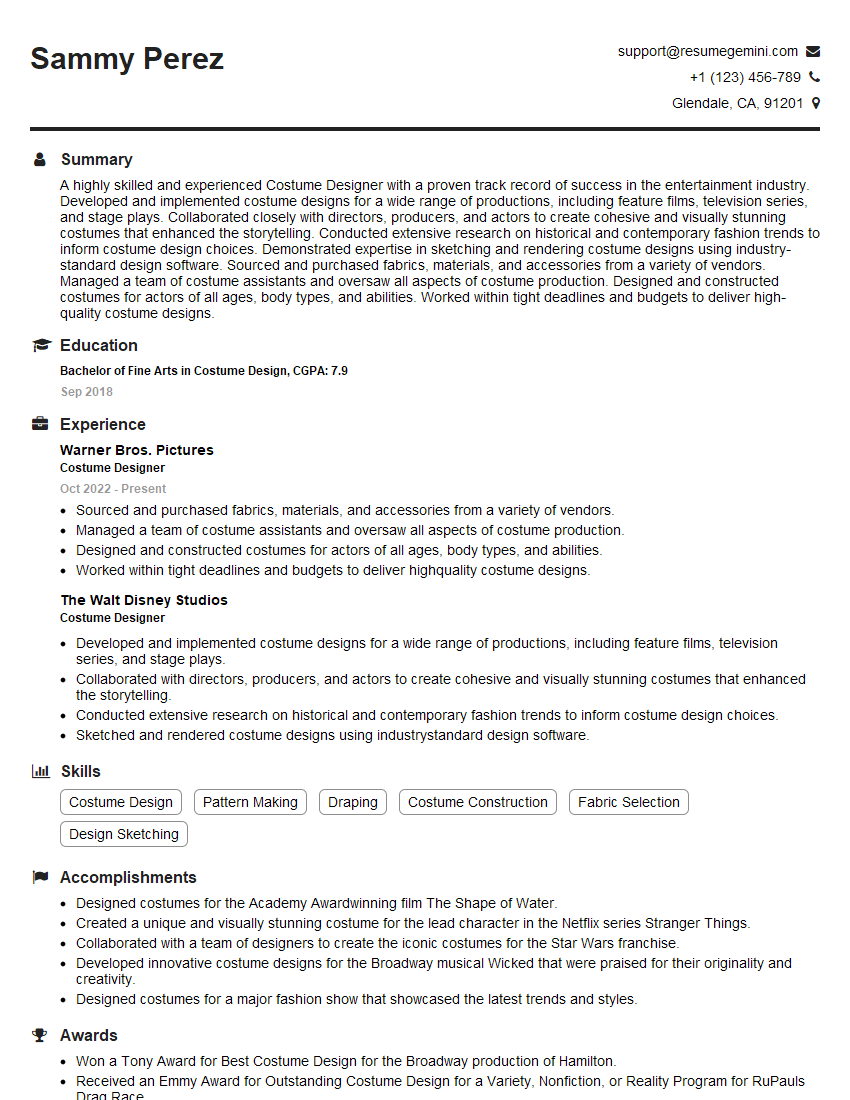
Costume Designer Resume Sample

Interior Decorator Resume Sample

Seamstress Resume Sample

Fabricator Resume Sample
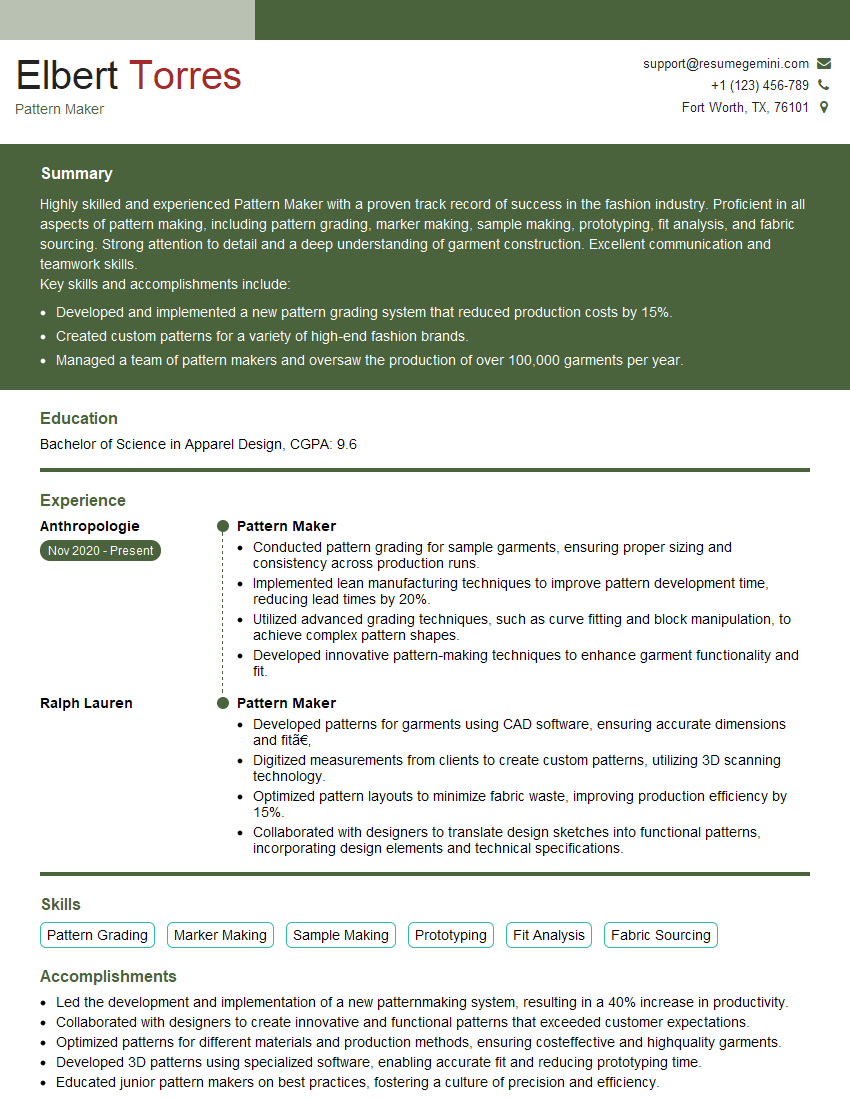
Pattern Maker Resume Sample
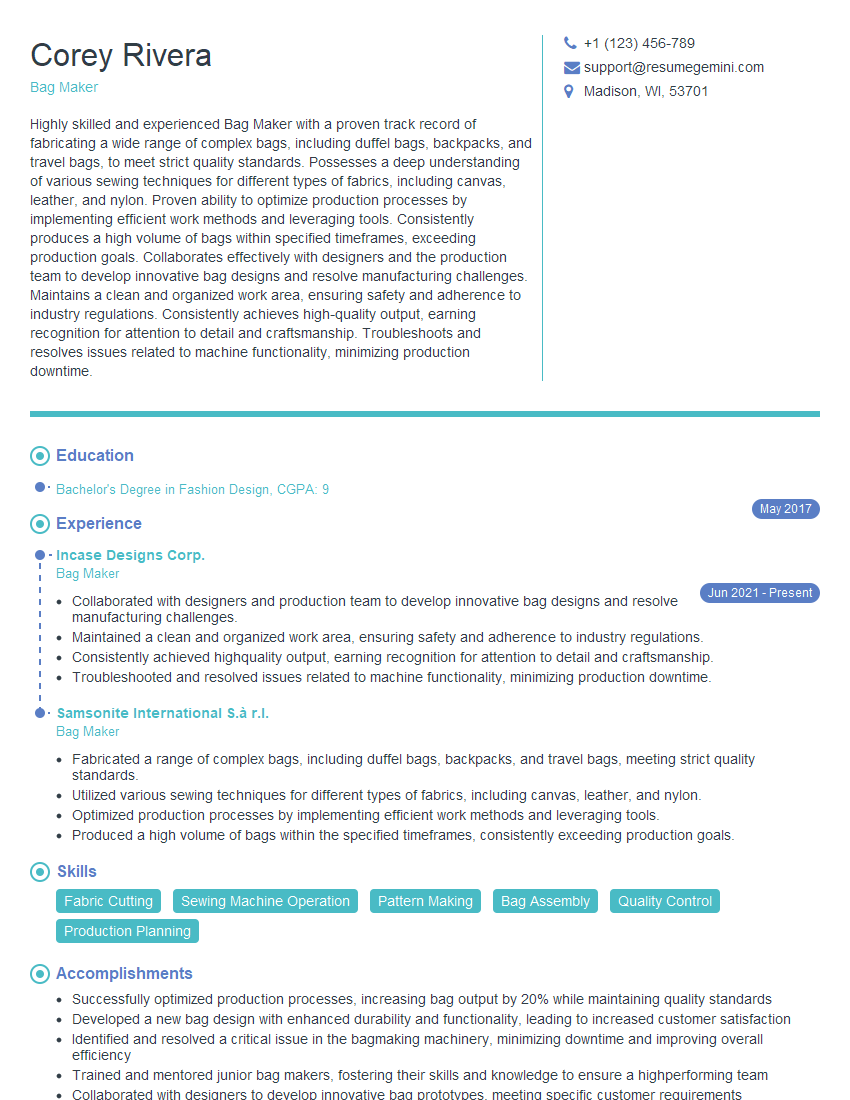
Bag Maker Resume Sample
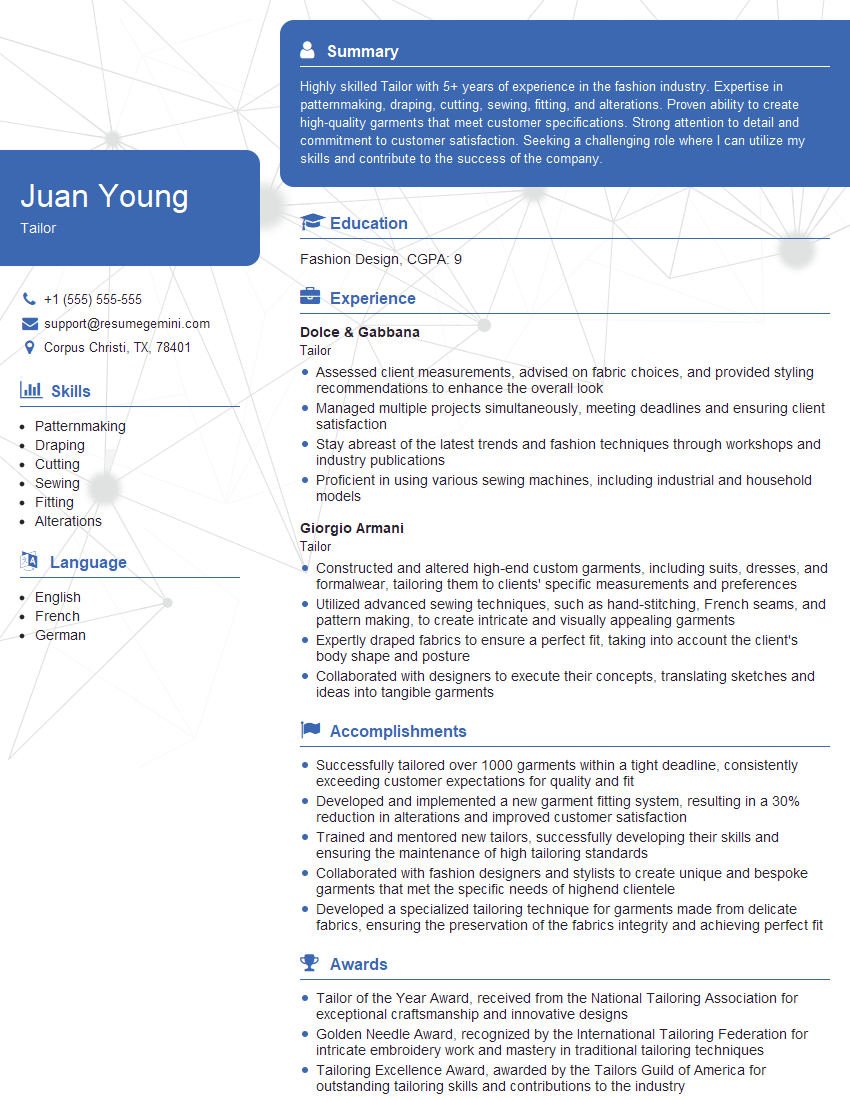
Tailor Resume Sample

Saddle Maker Resume Sample

Shoemaker Resume Sample

Furniture Upholsterer Resume Sample
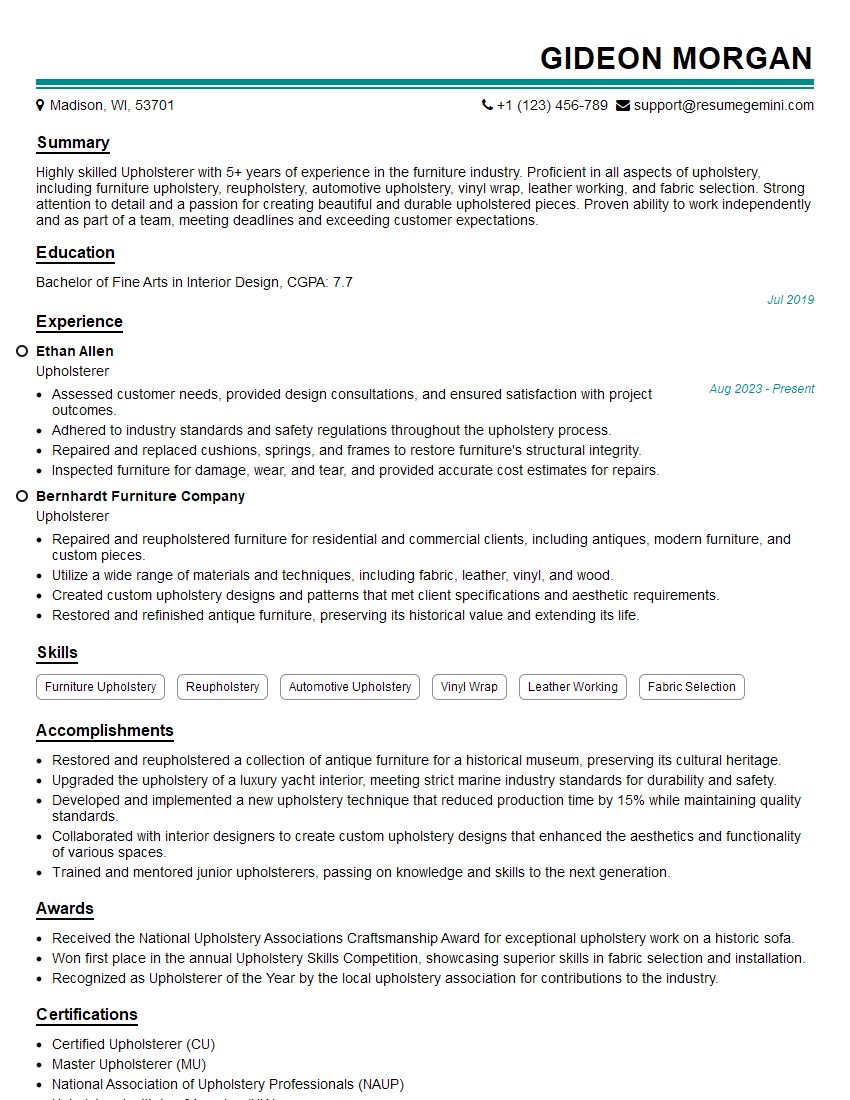
Upholsterer Resume Sample
Explore more articles
Users Rating of Our Blogs
Share Your Experience
We value your feedback! Please rate our content and share your thoughts (optional).
What Readers Say About Our Blog
Very informative content, great job.
good