The right preparation can turn an interview into an opportunity to showcase your expertise. This guide to Experience in working with a variety of producers, engineers, and musicians interview questions is your ultimate resource, providing key insights and tips to help you ace your responses and stand out as a top candidate.
Questions Asked in Experience in working with a variety of producers, engineers, and musicians Interview
Q 1. Describe your experience working with different DAWs (Digital Audio Workstations).
My experience spans a wide range of DAWs, including Pro Tools, Logic Pro X, Ableton Live, and Cubase. Each has its strengths and weaknesses, and my proficiency allows me to adapt quickly to any project’s specific requirements. For instance, Pro Tools excels in large-scale film scoring projects due to its robust session management and extensive plugin support, while Ableton Live shines in electronic music production because of its intuitive workflow and real-time manipulation capabilities. Logic Pro X provides a great balance between these two, offering versatility for various genres. Cubase, known for its powerful MIDI editing, is ideal for projects requiring intricate arrangements and orchestral work. My approach isn’t about mastering just one DAW, but understanding their core functionalities and choosing the right tool for the job. This flexibility allows me to collaborate efficiently with diverse teams, each often with its preferred workflow.
Q 2. Explain your process for troubleshooting technical issues in a recording session.
Troubleshooting during a recording session demands a systematic approach. My process begins with identifying the nature of the problem – is it audio-related, MIDI-related, or something else entirely? I then isolate the potential sources. For example, if there’s a crackling sound, I’d check for faulty cables, ground loops, or clipping in the signal chain. If the problem is MIDI-related, such as note dropout, I investigate latency issues, driver conflicts, or damaged MIDI cables. I leverage my knowledge of signal flow and troubleshooting techniques to systematically eliminate possibilities. Sometimes, this involves working backward through the signal chain, meticulously inspecting each component and connection. It’s about listening attentively to pinpoint the issue’s location, and I often involve the engineer and producer in the process to utilize their collective expertise. Documentation also plays a crucial role; I keep track of all attempted fixes and their results to aid in future problem-solving. A recent example involves tracking down a strange phasing issue; by slowly disconnecting equipment, it turned out a faulty XLR connector was introducing unwanted signal interference.
Q 3. How do you handle creative disagreements between producers and musicians?
Creative disagreements are inevitable in any collaborative environment. My approach involves fostering open communication and mutual respect. I facilitate discussions by creating a safe space where everyone feels comfortable voicing their opinions and perspectives. I encourage active listening, ensuring that each person feels heard and understood. My role often involves synthesizing different ideas, finding common ground, and suggesting alternative solutions that incorporate elements from each perspective. For instance, if a producer wants a heavier drum sound but the musician prefers a more subtle approach, I might suggest trying different drum samples, processing techniques, or even experimenting with a hybrid approach that blends both ideas. Compromise and collaboration are key. The ultimate goal is a creative product everyone is proud of, not to impose a singular vision. Often, the most exciting breakthroughs come from unexpected compromises and blending contrasting styles.
Q 4. Describe your experience with various microphone techniques and choices.
My experience encompasses a broad range of microphone techniques and choices. The selection depends heavily on the instrument being recorded and the desired sound. For vocals, I might use a large-diaphragm condenser microphone like a Neumann U 87 for its warmth and detail, or a dynamic microphone like a Shure SM7B for its ability to handle high sound pressure levels and reduce background noise. For acoustic guitar, I’d often employ a pair of small-diaphragm condenser microphones for a more natural stereo image. For drums, I use a combination of dynamic and condenser microphones depending on the specific requirements for each drum. I understand the importance of microphone placement and polar patterns, experimenting with techniques like close miking, distant miking, and stereo techniques (like XY or ORTF). I also have extensive experience using ribbon microphones, their unique character adding a vintage feel to the sound. Ultimately, microphone choice is about capturing the essence of an instrument or voice, and that often involves experimenting to find what works best in the context of the specific song and recording environment.
Q 5. What is your experience with different mixing consoles and their functionalities?
I’ve worked extensively with various mixing consoles, from classic analog boards like Neve and API consoles to modern digital consoles like SSL and Avid. Analog consoles provide a warm and rich sound through their unique circuitry and transformers. Their hands-on nature facilitates intuitive workflow. Digital consoles offer greater flexibility through recall capabilities, extensive routing options, and plugin integration. They’re often more cost-effective and easier to maintain. My experience allows me to leverage the strengths of each type. For instance, I might prefer an analog console for tracking drums to capture the dynamic energy of the performance while using a digital console for mixing because of its precision and flexibility. Understanding the functionalities of each console, including equalization, compression, and dynamics processing, allows me to achieve a desired sonic outcome. The choice often depends on the budget, the specific needs of the project, and the overall aesthetic the team is striving for.
Q 6. How do you ensure efficient workflow in a busy studio environment?
Maintaining efficient workflow in a busy studio relies on meticulous planning and organization. This starts with clear communication and well-defined roles for each team member. I advocate for creating detailed session plans, including schedules and clearly defined objectives. This prevents wasted time and ensures everyone is on the same page. Proactive maintenance of equipment also plays a significant role in avoiding downtime. I make sure all equipment is calibrated and functioning correctly before sessions begin. We have established protocols for session backups and file management, minimizing the risk of data loss. Effective time management is crucial; I track progress regularly and adjust the schedule as needed to meet deadlines. Employing efficient digital tools and workflows further enhances efficiency. Automation and templating, for example, can greatly speed up certain tasks. Finally, a positive and supportive team environment is critical to keep morale high and maintain productivity even during pressure situations.
Q 7. Explain your approach to setting up and managing studio sessions.
Setting up and managing studio sessions involves a multi-faceted approach. It begins with pre-production planning – understanding the project’s scope, the desired sound, and the technical requirements. This includes preparing the studio, testing equipment, and ensuring all necessary plugins and samples are readily accessible. During the session, clear communication is paramount, keeping everyone informed about the progress and addressing any arising issues promptly. I utilize various tools and techniques for session management, from creating detailed session sheets to implementing cloud-based collaboration platforms. Following a session, a rigorous archiving and backup process ensures that all data is securely stored. A systematized method for labeling, cataloging and backing up files is crucial for long term asset management. By combining a well-organized and pre-planned process with clear communication during the recording, I aim to create a productive and creative environment for all involved.
Q 8. Describe your experience working with various musical genres and styles.
My experience spans a wide range of musical genres, from classical and jazz to rock, pop, electronic, and hip-hop. I’ve worked with artists who prioritize intricate orchestral arrangements, others focused on raw, visceral energy, and still others experimenting with cutting-edge electronic soundscapes. This diversity has honed my adaptability and broadened my understanding of the nuances inherent in each style. For example, working on a classical recording demanded meticulous attention to detail and a deep understanding of acoustic properties, while a hip-hop project emphasized rhythmic precision and the creative use of sampling and effects. This variety has allowed me to develop a comprehensive toolkit of skills and techniques applicable across genres.
- Classical: Focus on precise timing, dynamic control, and accurate microphone placement to capture the subtle intricacies of instrumental performances.
- Jazz: Emphasis on capturing the spontaneity and improvisation, often requiring quick thinking and adaptability during recording sessions.
- Electronic: Deep understanding of synthesizers, samplers, and digital audio workstations (DAWs), with a focus on sound design and manipulating virtual instruments.
Q 9. How do you adapt your approach to working with different personalities and musical styles?
Adapting to different personalities and styles is crucial. My approach involves active listening and building rapport. I start by understanding the artist’s vision and translating that into a collaborative workflow. For introverted artists, I might prioritize a quiet, focused recording environment with minimal interruptions. With extroverted artists, a more collaborative, energetic atmosphere might be more conducive to creativity. I tailor my communication style to each individual, ensuring I provide clear direction while remaining flexible and open to their ideas. For example, with a perfectionist musician, I might spend extra time on pre-production and provide detailed feedback throughout the process, while with a more spontaneous artist, I might prioritize capturing the energy of their performance over strict adherence to a pre-planned arrangement.
Musically, I adapt by researching the genre and familiarizing myself with common techniques and production styles. Whether it’s understanding the specific requirements of a bluegrass banjo recording or the intricacies of a complex electronic soundscape, preparation is key to a successful collaboration.
Q 10. What software and hardware are you proficient with in audio production?
My software proficiency includes Pro Tools, Logic Pro X, Ableton Live, and Reaper. I am also comfortable with various plugins including Waves plugins, Universal Audio plugins, and FabFilter plugins. I am experienced in using outboard hardware including various microphones (Neumann, AKG, Shure), preamps (API, Neve, Universal Audio), compressors (1176, LA-2A, DBX), equalizers (Pultec, API), and reverbs (Lexicon, EMT). This combination of software and hardware expertise allows me to work effectively in a variety of settings, from a fully equipped professional studio to a smaller, more project-based environment.
Q 11. Explain your understanding of signal flow in a recording studio.
Understanding signal flow is fundamental to audio production. It refers to the path an audio signal takes from its source to the final output. In a recording studio, this typically starts with the instrument or voice, then passes through a microphone, preamplifier, analog-to-digital converter (ADC), digital audio workstation (DAW), effects processors (EQ, compression, reverb, etc.), and finally to a digital-to-analog converter (DAC) and studio monitors or other output devices.
For instance, a vocal recording might follow this path: Microphone → Preamp → ADC → DAW → EQ Plugin → Compressor Plugin → Reverb Plugin → DAC → Studio Monitors. A clear understanding of this process allows for efficient troubleshooting and the creation of a high-quality recording.
Q 12. How familiar are you with various audio effects processing techniques?
I’m highly familiar with a wide range of audio effects processing techniques. This includes equalization (EQ) to shape the frequency balance, compression to control dynamics, reverb and delay to add spatial depth, and many more specialized effects. For example, I use EQ to enhance the clarity of vocals by boosting high frequencies and cutting muddiness in the low-midrange. Compression is used to even out the volume levels of a performance, ensuring a consistent loudness. Reverb can add a sense of space and atmosphere, while delay creates rhythmic echoes. Beyond these basics, I also utilize more advanced techniques like saturation, distortion, phasing, flanging, and many others, tailored to the specific needs of each project and musical style. I understand the subtle interplay between different effects and how they can be used creatively to shape the overall sonic character of a track. I always prioritize the musicality of the effect rather than merely applying it mechanically.
Q 13. Describe your approach to quality control during recording, mixing, and mastering.
Quality control is an iterative process throughout the entire production. During recording, I pay close attention to microphone placement, gain staging, and overall signal quality to prevent noise and distortion. Mixing involves careful balancing of individual tracks, using EQ, compression, and other effects to create a cohesive and well-defined mix. Finally, mastering involves optimizing the overall loudness, frequency balance, and dynamic range to prepare the final product for distribution on various platforms. My quality control process always includes regular listening checks in various environments (nearfield monitors, headphones, car stereo) to ensure consistency and identify potential issues. I also frequently employ spectrum analyzers and other metering tools to objectively assess the quality of the recording, mix, and master.
Q 14. How do you effectively communicate technical information to non-technical individuals?
Communicating technical information to non-technical individuals requires clear, concise language and relatable analogies. I avoid technical jargon whenever possible, opting instead for simple explanations and visual aids. For example, instead of explaining gain staging with decibels, I might describe it as adjusting the volume of the microphone to avoid clipping or distortion. To explain EQ, I might use the analogy of a graphic equalizer on a home stereo system. Active listening and patience are key, ensuring that the other person understands the concepts before moving on to more complex topics. I also frequently use visual demonstrations, showing the effects of various processing techniques in real-time, making the process more intuitive and engaging.
Q 15. What experience do you have with remote collaboration and online audio production?
Remote collaboration is now integral to music production. My experience spans several years, utilizing platforms like Zoom, Source Connect, and various cloud-based DAWs (Digital Audio Workstations) for seamless audio sharing and real-time interaction. I’ve worked with producers, engineers, and musicians across continents, successfully completing projects involving recording, mixing, and mastering remotely. For example, I recently collaborated on a project where the vocalist was in London, the drummer in Los Angeles, and I was in New York, utilizing Source Connect for low-latency audio transmission ensuring a cohesive, high-quality final product. This involved careful planning of session times considering time zones and reliable internet connections. We also used online collaboration tools like Google Drive to share session files and project briefs to ensure every team member was on the same page.
I am proficient in handling various online audio production workflows, including file transfer protocols like FTP and cloud storage solutions like Dropbox and Google Drive for managing large audio files efficiently. I am also adept at troubleshooting connectivity issues and ensuring audio quality remains optimal during remote sessions.
Career Expert Tips:
- Ace those interviews! Prepare effectively by reviewing the Top 50 Most Common Interview Questions on ResumeGemini.
- Navigate your job search with confidence! Explore a wide range of Career Tips on ResumeGemini. Learn about common challenges and recommendations to overcome them.
- Craft the perfect resume! Master the Art of Resume Writing with ResumeGemini’s guide. Showcase your unique qualifications and achievements effectively.
- Don’t miss out on holiday savings! Build your dream resume with ResumeGemini’s ATS optimized templates.
Q 16. Explain your understanding of copyright and licensing in the music industry.
Copyright and licensing are crucial aspects of the music industry. Copyright protects the original musical work (composition and lyrics) and sound recording. A songwriter owns the copyright to their composition, and the record label or artist usually owns the copyright to the sound recording. Licensing allows others to use copyrighted material under specific terms and conditions. There are various types of licenses, including mechanical licenses (for reproducing a song), synchronization licenses (for using a song in a video), and master use licenses (for using a sound recording). Understanding these licenses is paramount for legal and ethical practices.
For instance, if a film producer wants to use a song in their movie, they need to secure both a synchronization license from the copyright holder of the composition and a master use license from the copyright holder of the sound recording. Failure to obtain the correct licenses can lead to hefty fines and legal action. I have extensive experience negotiating licenses and ensuring all necessary permissions are obtained before any usage of copyrighted material in projects.
Q 17. Describe your process for budgeting and managing expenses for a music production project.
Budgeting and expense management are essential for successful music production. My process begins with a detailed breakdown of all anticipated costs, including studio rental, musician fees, engineer fees, equipment rental, mixing and mastering costs, marketing and distribution expenses, and any unforeseen contingencies (typically allocating 10-15% for these). I then create a spreadsheet or utilize project management software to track expenses meticulously against the allocated budget.
For example, a recent project involved a detailed budget outlining costs for each stage, from pre-production to final release. This allowed for transparent financial management and regular progress reviews to ensure we stayed within budget. I also involve the client in the budgeting process, ensuring they understand each cost element and agree to the final budget before commencement of the project. Regular reports are generated, and any deviations from the planned budget are promptly discussed and addressed.
Q 18. How do you prioritize tasks and manage deadlines in a high-pressure studio setting?
Prioritizing tasks and managing deadlines in a high-pressure environment requires a structured approach. I use project management methodologies like Kanban or Agile to visualize workflows, identify critical paths, and allocate resources efficiently. Tasks are prioritized based on urgency and importance, considering dependencies and potential roadblocks.
For example, in a recent project with a tight deadline, I used a Kanban board to track progress on recording, mixing, and mastering tasks. This allowed for real-time monitoring of progress and immediate identification of any delays. Daily stand-up meetings with the team helped to address potential issues proactively. I also utilize time management techniques like the Pomodoro Technique to maintain focus and ensure efficient task completion.
Q 19. Explain your approach to problem-solving when unexpected technical issues arise.
Unexpected technical issues are inevitable in music production. My approach to problem-solving involves a systematic process: First, I identify the problem accurately. This often involves checking cables, drivers, software configurations, and hardware functionalities. Second, I try to reproduce the issue consistently to isolate the root cause. Third, I consult documentation, online resources, or experienced colleagues for potential solutions. Fourth, if needed, I implement a temporary workaround to minimize downtime before finding a permanent solution.
For instance, if a plugin crashes repeatedly during a mixing session, I might try reinstalling the plugin, updating the DAW, or switching to an alternative plugin as a temporary fix. I maintain a detailed log of all technical issues encountered, including the solution implemented, for future reference. My aim is to ensure minimal disruption to the project timeline.
Q 20. Describe your experience with studio maintenance and equipment upkeep.
Studio maintenance and equipment upkeep are crucial for ensuring smooth and reliable operation. My experience includes regular cleaning and maintenance of audio interfaces, microphones, monitors, and other studio equipment. I conduct routine checks on cables, ensuring connections are secure and free from damage. I also perform regular software updates and backups of all session data to prevent data loss.
I adhere to a preventative maintenance schedule, including calibration of studio monitors and regular servicing of equipment as recommended by manufacturers. This proactive approach minimizes downtime and extends the lifespan of the equipment. A well-maintained studio ensures high-quality audio production and avoids costly repairs or replacements in the long run.
Q 21. How do you contribute to a positive and collaborative studio environment?
Contributing to a positive and collaborative studio environment is paramount for productive teamwork. I foster open communication, encouraging team members to share ideas and feedback freely. I actively listen to the concerns and suggestions of others, valuing their input and expertise. I strive to create a respectful and inclusive atmosphere where every member feels comfortable contributing to the project.
For example, I regularly conduct team meetings to discuss progress, address concerns, and celebrate achievements. I ensure everyone understands their roles and responsibilities, and I actively help team members when they face challenges. I believe that a positive and collaborative atmosphere enhances creativity, improves team morale, and ultimately leads to higher quality work.
Q 22. What experience do you have with live sound reinforcement or monitoring?
My experience in live sound reinforcement and monitoring spans over a decade, encompassing a wide range of venues from intimate clubs to large-scale festivals. I’ve worked with diverse artists, from solo acoustic acts to full-blown orchestras. My responsibilities have included system design, setup, sound checks, mixing FOH (front-of-house) and monitors, troubleshooting technical issues during performances, and ensuring optimal audio quality for both the audience and performers. For example, at a recent outdoor festival, I had to strategically position speakers to combat wind interference and ensure even sound coverage across a vast area. This involved careful consideration of speaker placement, EQ adjustments, and delay settings to overcome the challenges of the open-air environment. Another instance involved quickly diagnosing and fixing a feedback issue during a critical performance by identifying the frequency causing the problem and adjusting the gain accordingly. Successful live sound relies heavily on quick thinking, problem-solving, and a deep understanding of acoustics and signal flow.
Q 23. Describe your experience in working with diverse teams within the music industry.
Collaboration is at the heart of music production, and I’ve had the pleasure of working with incredibly diverse teams. My experience includes working with producers who have highly specific artistic visions, engineers with varying approaches to mixing and mastering, and musicians with diverse musical styles and technical proficiency levels. For instance, I once collaborated on a project with a producer who favoured a very organic, vintage approach to sound, while the engineer was deeply passionate about using the latest digital technologies. My role was to bridge the gap between their differing methods and ensure that the final product reflected the producer’s vision while leveraging the engineer’s technical expertise. Successfully navigating these creative differences often involves excellent communication, active listening, and a willingness to compromise and find creative solutions that benefit the overall project. Ultimately, the success of any project rests on understanding and respecting every team member’s expertise and contributing perspectives.
Q 24. How do you stay up-to-date with the latest technologies and trends in audio production?
The audio landscape is constantly evolving, so staying current is crucial. I subscribe to several industry publications, attend workshops and conferences (like AES conventions), and actively participate in online communities and forums. I regularly explore new software and hardware releases, experimenting with plugins and DAWs to expand my skillset and keep abreast of technological advancements. I find that hands-on experience is invaluable, so I dedicate time to personal projects to test new techniques and workflows. Furthermore, I engage with industry blogs and podcasts to gain insight into the latest trends and best practices. For example, the recent advancements in immersive audio technologies like Dolby Atmos are influencing how we approach recording and mixing, and I’m actively learning how to integrate these into my workflow. Continual learning is not just a professional necessity but a source of ongoing inspiration and creative exploration.
Q 25. Describe your understanding of acoustics and room treatment in a studio setting.
Acoustics and room treatment are fundamental to achieving high-quality audio recordings. My understanding encompasses the principles of sound absorption, reflection, diffusion, and isolation. In a studio environment, proper room treatment minimizes unwanted reflections and resonances, leading to clearer, more natural-sounding recordings. This includes using acoustic panels to absorb high-frequency reflections, bass traps to control low-frequency resonances, and diffusers to scatter sound waves, preventing standing waves and improving the overall acoustic balance of the room. For example, the placement of bass traps in the corners of a studio is crucial to absorb low-frequency energy that can build up and muddle the sound. Similarly, the strategic positioning of absorption panels can help control reflections that might color the sound of instruments. Understanding the room’s acoustic characteristics – through techniques like room mode analysis – is crucial for effective treatment, resulting in a controlled and accurate recording environment.
Q 26. How do you approach feedback from producers, engineers, or musicians?
I approach feedback as an opportunity for growth and improvement. I always listen carefully to the feedback received from producers, engineers, or musicians, making sure I understand their perspective completely. I view constructive criticism not as a personal attack, but as valuable guidance. I ask clarifying questions to ensure I understand the intent and context of their feedback. Once I fully grasp their concerns, I work diligently to incorporate the feedback into my process, or explain why a specific suggestion may not be suitable for the project. For example, if a producer asks for more warmth in a mix, I may use EQ to boost specific frequencies, explore the use of different compression techniques, or add saturation plugins. Open communication and respectful collaboration are key to turning feedback into a positive experience that enhances the final product. It’s about building a collaborative environment where everyone feels comfortable sharing ideas and critiques.
Q 27. Explain your experience with different audio file formats and their applications.
My experience encompasses a broad range of audio file formats, each with its own strengths and applications. Common formats I work with include WAV (for high-quality, uncompressed audio), AIFF (another uncompressed format often used on Mac systems), MP3 (a widely used compressed format suitable for streaming and distribution), and FLAC (a lossless compressed format that balances file size and audio quality). The choice of format depends heavily on the project’s requirements. For example, WAV is ideal for recording and mixing, ensuring the highest audio fidelity during the production process, while MP3 might be chosen for delivering the final product to a streaming platform due to its smaller file size. FLAC serves well for archiving high-quality audio where compression is needed without sacrificing audio quality. A deep understanding of these formats and their properties is critical for selecting the best option for each stage of the audio workflow, balancing audio fidelity and practicality.
Q 28. Describe your process for archiving and managing audio files.
Archiving and managing audio files requires a systematic approach to prevent loss or damage and ensure easy retrieval. My process involves a multi-layered strategy. First, I create a clear and consistent file-naming convention, using metadata to organize files based on project, date, and track information. I utilize a robust backup system employing multiple storage locations – both on-site and off-site cloud storage – to safeguard against hardware failure or disaster. I also regularly check the integrity of my backups to ensure they are functioning correctly. I use a Digital Asset Management (DAM) system which allows me to search, retrieve and manage files effectively, facilitating easy collaboration and file sharing amongst team members. Furthermore, I maintain detailed project logs which document all changes and versions of the files. This diligent approach ensures that my audio archives remain organized, accessible, and secure for years to come. Having a comprehensive system prevents chaos and saves significant time and frustration in the long run.
Key Topics to Learn for Experience in working with a variety of producers, engineers, and musicians Interview
- Understanding Creative Roles: Differentiate the roles and responsibilities of producers, engineers, and musicians within a project. Understand their individual contributions and how they interact.
- Collaborative Communication: Describe your approach to effective communication in a team environment, including strategies for resolving creative differences and managing diverse personalities.
- Technical Proficiency & Workflow: Discuss your familiarity with relevant technologies (DAWs, recording equipment, etc.) and your ability to adapt to different workflows and project requirements.
- Problem-Solving in a Creative Context: Provide examples of how you’ve overcome technical challenges, managed time constraints, or addressed creative disagreements within a collaborative setting.
- Project Management & Organization: Explain your approach to organizing and tracking projects, including managing deadlines, budgets (if applicable), and resources.
- Adaptability and Learning Agility: Showcase your ability to quickly learn new techniques, technologies, and adapt to the unique styles and preferences of different artists and producers.
- Respecting Creative Vision: Demonstrate your understanding of the importance of respecting the artistic vision of musicians and producers while offering constructive feedback and support.
Next Steps
Mastering your experience in collaborating with producers, engineers, and musicians significantly enhances your career prospects within the music industry and related fields. It demonstrates essential soft skills like communication and teamwork, alongside technical expertise. Creating an ATS-friendly resume is crucial for maximizing your job search success. To help you build a compelling and effective resume that highlights these key skills, we recommend using ResumeGemini. ResumeGemini provides the tools and resources to craft a professional document, and we offer examples of resumes tailored specifically to showcase experience in working with a variety of producers, engineers, and musicians. This will allow you to confidently present your skills and experience to potential employers.
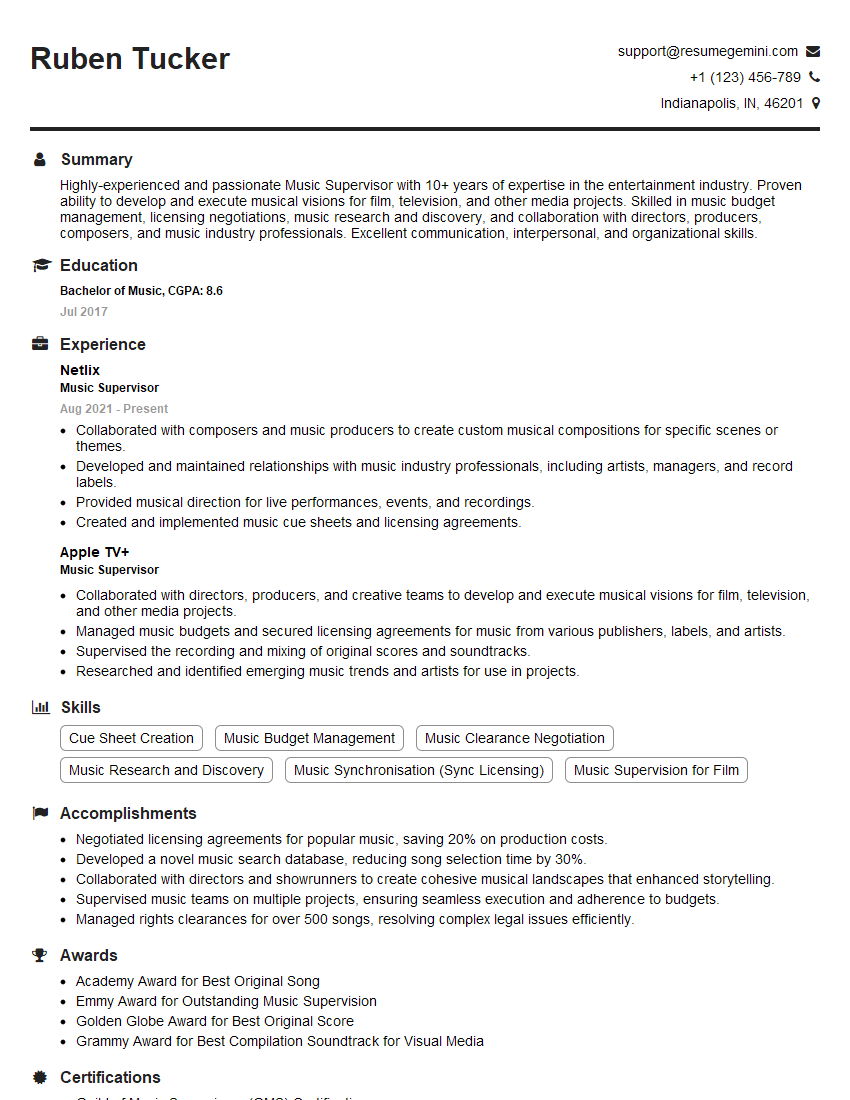
Music Supervisor Resume Sample
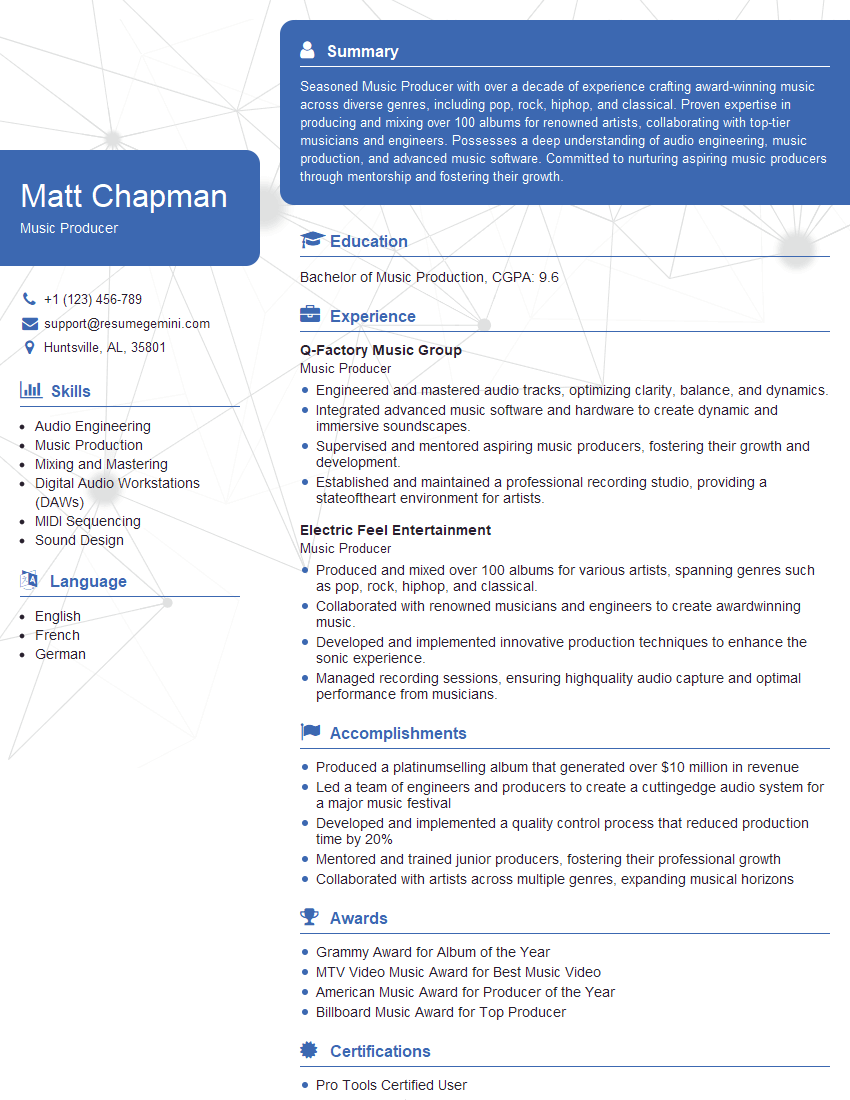
Music Producer Resume Sample
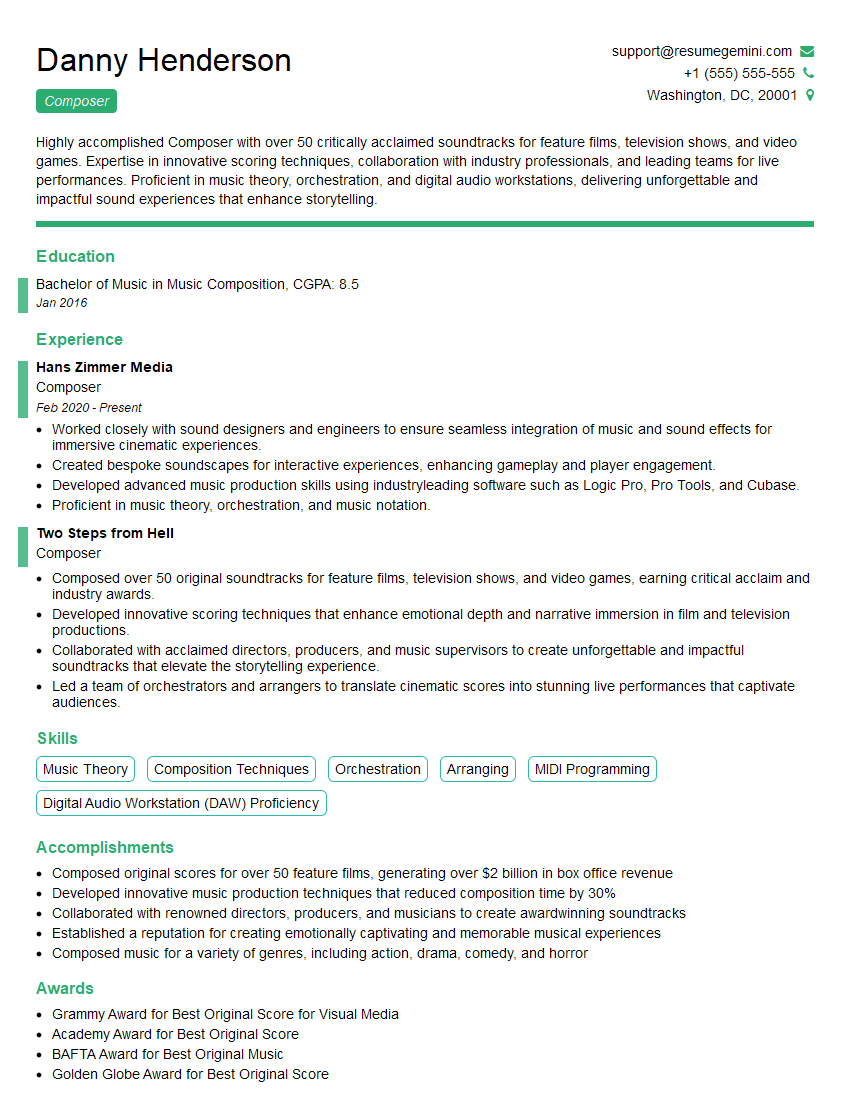
Composer Resume Sample
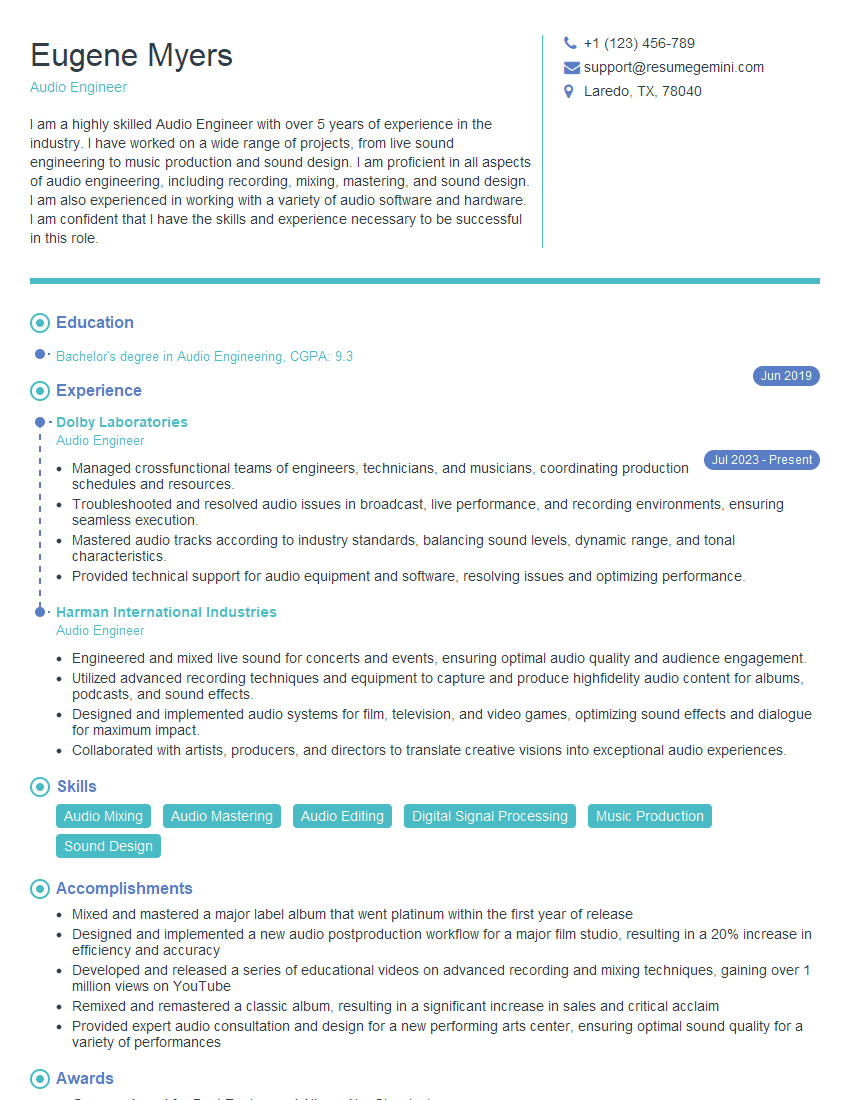
Audio Engineer Resume Sample
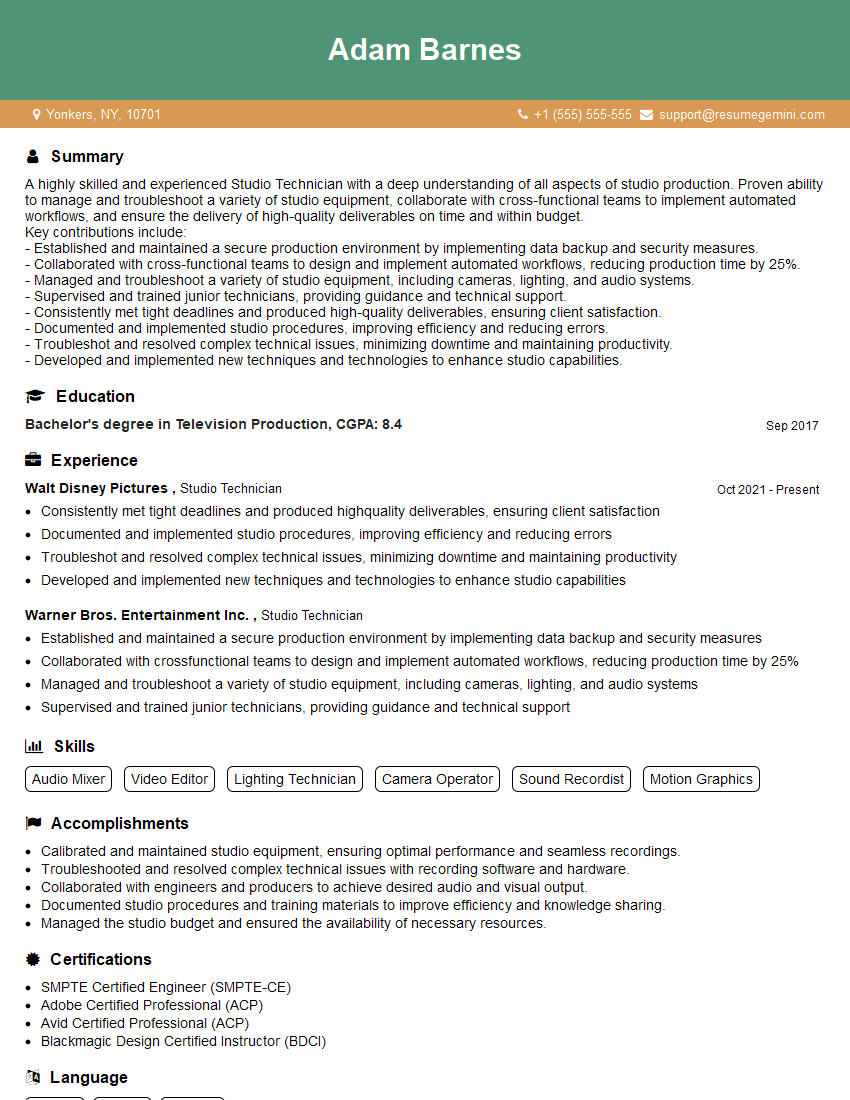
Studio Technician Resume Sample
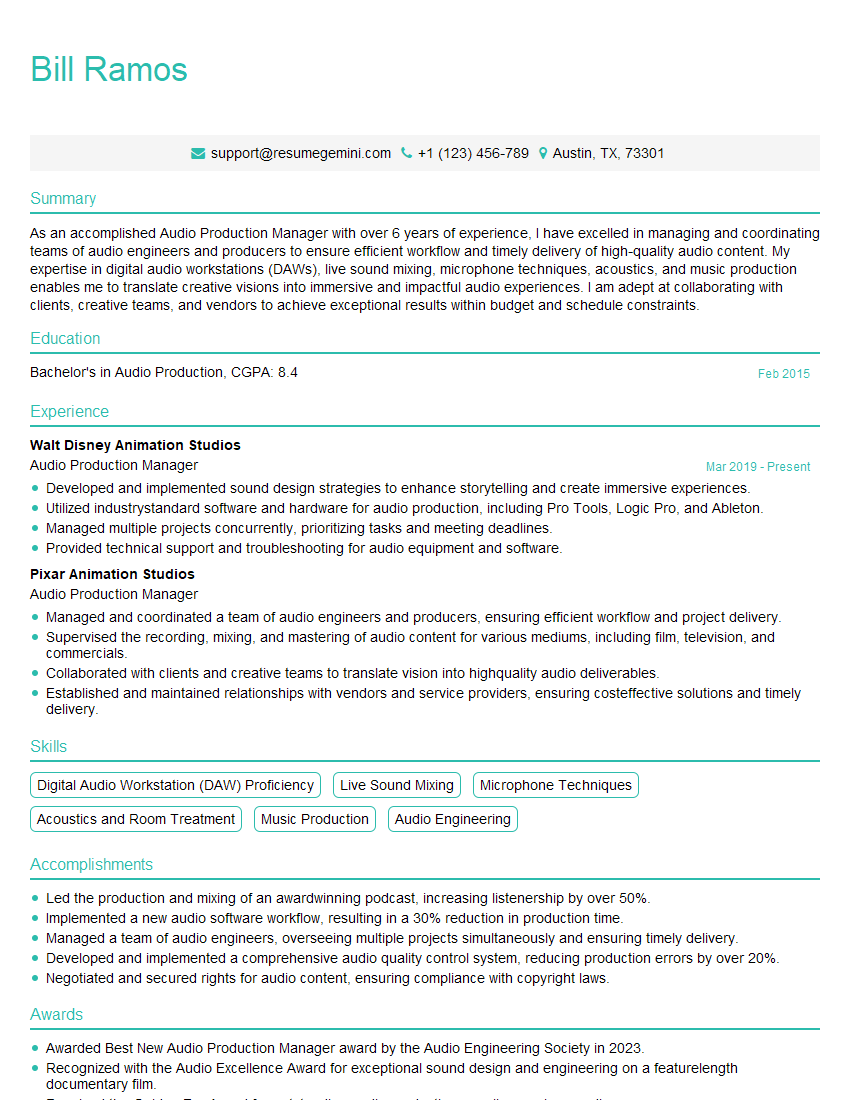
Audio Production Manager Resume Sample
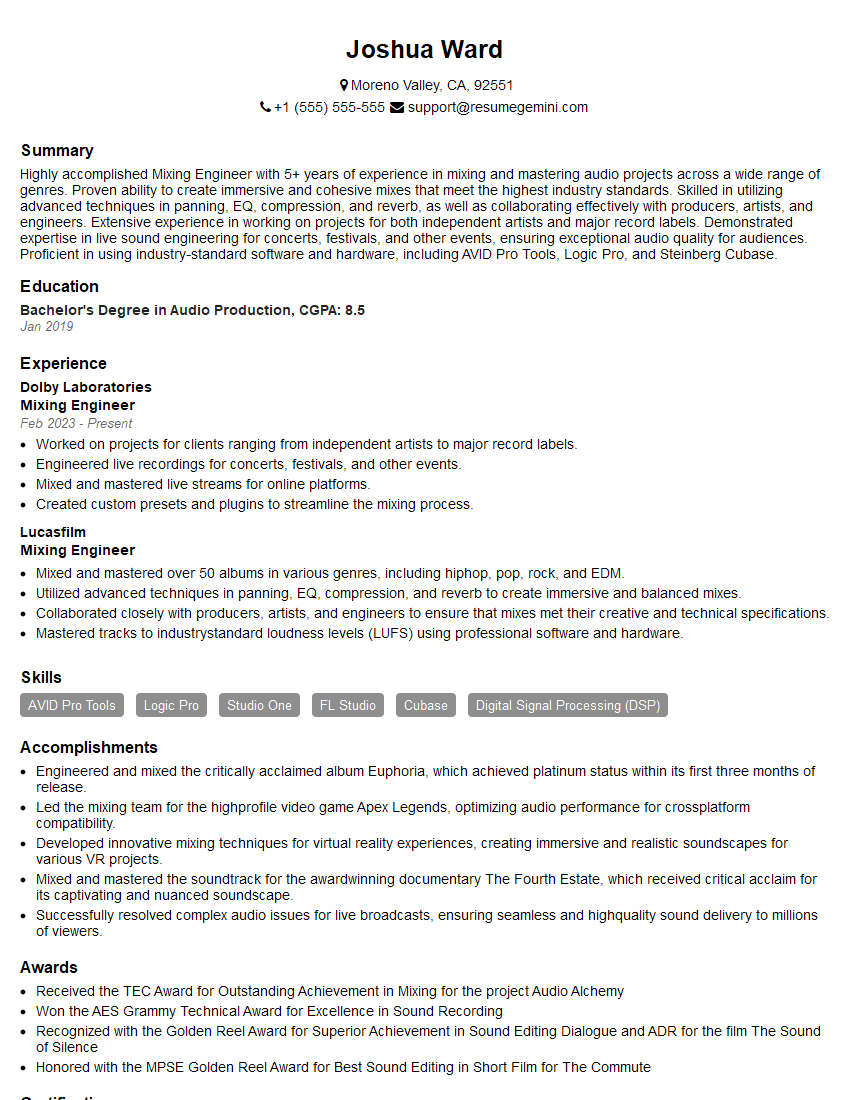
Mixing Engineer Resume Sample
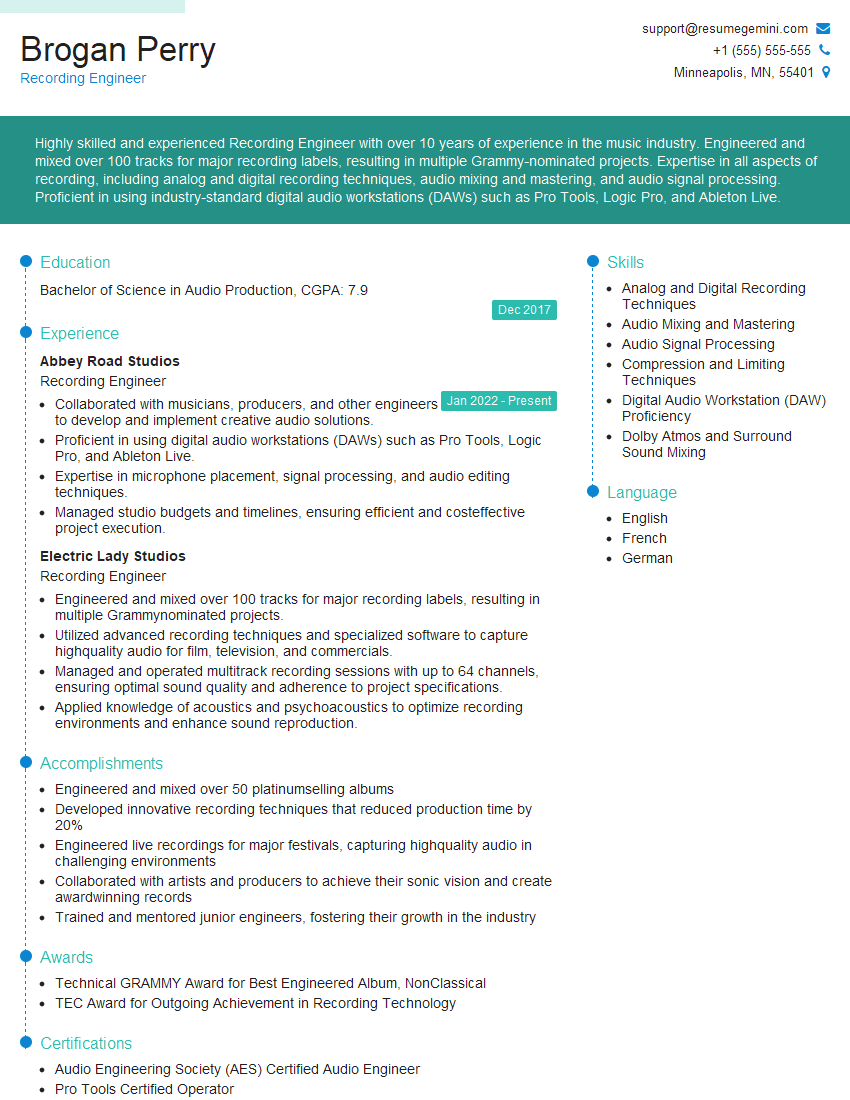
Recording Engineer Resume Sample
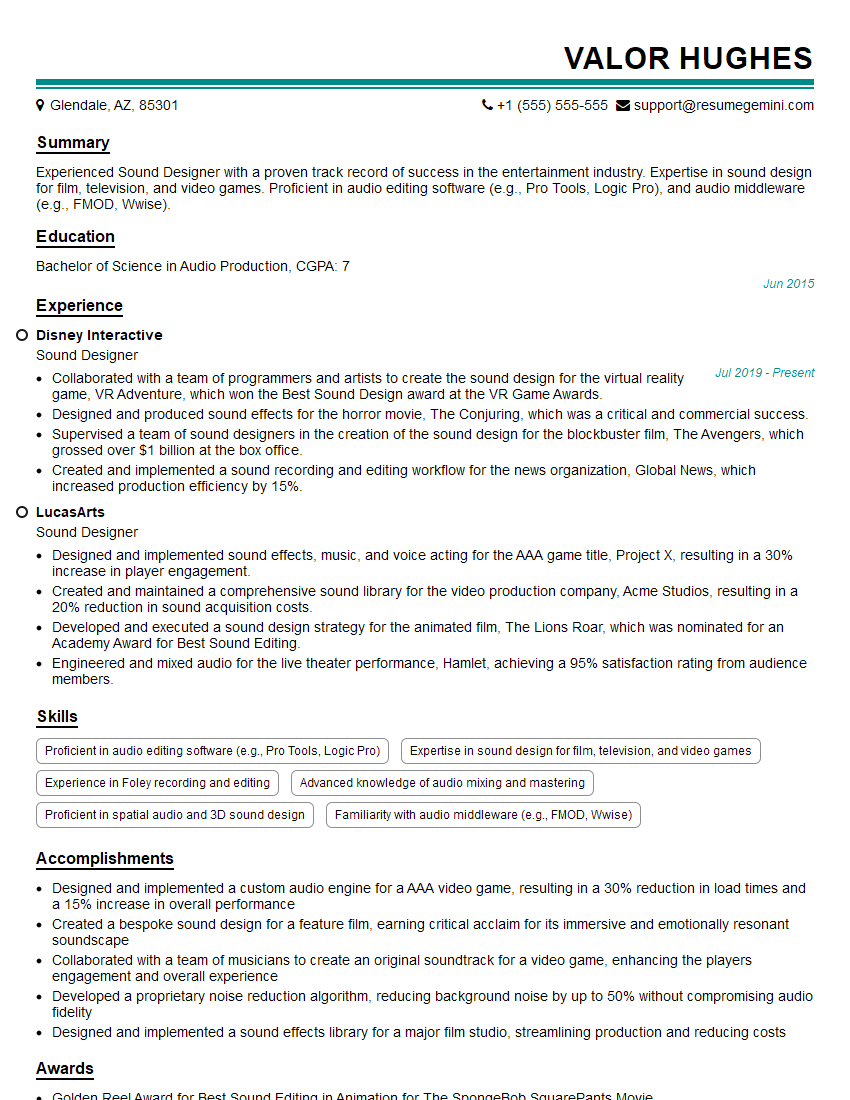
Sound Designer Resume Sample
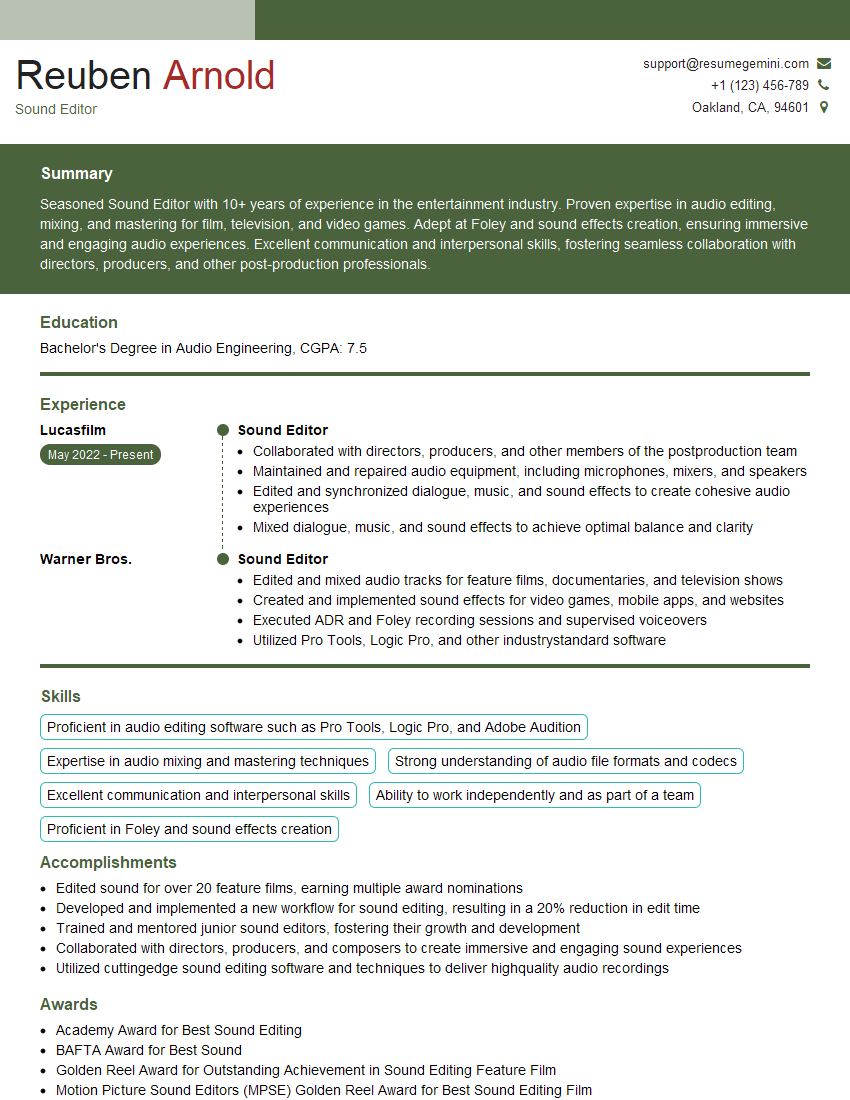
Sound Editor Resume Sample
Explore more articles
Users Rating of Our Blogs
Share Your Experience
We value your feedback! Please rate our content and share your thoughts (optional).
What Readers Say About Our Blog
Very informative content, great job.
good