Unlock your full potential by mastering the most common Experience in working with publishers and composers interview questions. This blog offers a deep dive into the critical topics, ensuring you’re not only prepared to answer but to excel. With these insights, you’ll approach your interview with clarity and confidence.
Questions Asked in Experience in working with publishers and composers Interview
Q 1. Explain the difference between mechanical and performance royalties.
Mechanical and performance royalties are two distinct types of royalties earned by songwriters and composers for the use of their music. Think of it like this: performance royalties are for when your song is played, while mechanical royalties are for when your song is reproduced.
Mechanical Royalties: These are paid to songwriters and composers when their music is reproduced in physical formats (like CDs or vinyl) or digital formats (like downloads or streaming). They cover the right to make and distribute copies of the musical work. The rate is typically set by law (e.g., in the US, the statutory rate is determined by the Copyright Royalty Board). For example, if a record label presses 10,000 CDs of an album containing your song, they owe you mechanical royalties per copy.
Performance Royalties: These are paid when a musical work is publicly performed, whether live (concerts, radio broadcasts) or through a digital service (streaming platforms like Spotify, Pandora). These royalties are collected and distributed by performing rights organizations (PROs) like ASCAP, BMI, and SESAC. The payment is based on factors like the song’s popularity and how frequently it’s played. A radio station playing your song numerous times throughout the day would trigger performance royalty payments.
The key difference lies in the type of use: reproduction versus performance. Often, an artist will receive both types of royalties for a single song, depending on how it’s used.
Q 2. Describe your experience negotiating music licensing agreements.
Negotiating music licensing agreements requires a keen understanding of copyright law, market value, and the specific needs of both the publisher and the licensee. My experience involves a structured approach:
- Understanding the Scope: Clearly defining the intended use of the music (film, TV, advertising, video games, etc.) is paramount. Each use has different licensing requirements and potential royalty rates.
- Market Research: I research comparable licenses to establish a fair market value for the musical work. This includes analyzing similar projects and the fees paid in those situations. Knowing the previous licensing history of the song is also crucial.
- Negotiation Strategy: I develop a clear negotiation strategy, balancing the composer’s interests with the licensee’s budget. This often involves exploring various payment structures (e.g., upfront fees, royalties based on sales/revenue, revenue shares). I am skilled at identifying creative solutions that satisfy both parties.
- Legal Review: I ensure all agreements are reviewed by legal counsel to guarantee they are legally sound and protect the rights of all parties involved. This includes carefully scrutinizing the terms of use, duration, and termination clauses.
For instance, in one negotiation, I secured a higher-than-expected royalty rate for a composer by demonstrating the unique qualities and potential market success of their music, using their previous track record as leverage.
Q 3. How do you track and manage composer royalties?
Tracking and managing composer royalties requires meticulous record-keeping and efficient systems. My approach incorporates:
- Dedicated Software: I utilize specialized royalty management software to track all income streams, expenses, and payments owed to composers. This software automates many tasks, significantly reducing the risk of errors.
- Detailed Statements: I regularly prepare comprehensive royalty statements for each composer, clearly showing the source of income, applicable deductions (e.g., PRO deductions), and net amount due. Transparency is key in maintaining positive relationships.
- Regular Reconciliation: I reconcile statements with income reports from PROs and licensees to ensure accuracy and identify any discrepancies promptly. Regular audits help prevent miscalculations and disputes.
- Secure Payment System: I use a secure payment system to ensure timely and accurate disbursement of royalties to composers. I maintain detailed records of all payments, including transaction IDs and confirmation numbers.
The software typically integrates with relevant PROs (ASCAP, BMI, SESAC) and mechanical licensing organizations (like the Harry Fox Agency), streamlining the royalty tracking and reporting process.
Q 4. What strategies do you use to identify and secure new musical talent?
Identifying and securing new musical talent is an ongoing process involving active scouting and networking within the music industry. My strategies include:
- Attending Industry Events: Regularly attending music festivals, conferences, and showcases allows for firsthand exposure to emerging artists and songwriters.
- Online Platforms: Actively monitoring online music platforms (SoundCloud, Bandcamp, YouTube) and social media to discover new talent with unique styles and potential.
- Collaborations with Music Schools: Building relationships with music schools and conservatories provides access to a pool of talented young musicians.
- Networking: Maintaining active relationships with other music professionals (A&R representatives, producers, managers) expands the reach for identifying promising artists.
- A&R Representatives: Working closely with A&R representatives (artists and repertoire) is crucial as they specialize in identifying and signing new talent, often possessing a wider network.
A recent success story involved discovering a talented singer-songwriter through a relatively unknown online platform. Their unique sound resonated with our target audience, leading to a successful publishing agreement.
Q 5. How do you handle disputes regarding copyright ownership?
Handling copyright disputes requires a methodical approach that prioritizes diplomacy and, if necessary, legal action. My strategy focuses on:
- Documentation Review: Thoroughly review all relevant documentation, including contracts, registration certificates, and communication records, to establish a clear understanding of copyright ownership.
- Mediation: Attempting mediation to resolve the dispute amicably is often the most efficient and cost-effective approach. A neutral third party can help facilitate a compromise.
- Legal Counsel: If mediation fails, I consult with experienced entertainment lawyers to assess the legal options and pursue the appropriate course of action.
- Legal Action: Filing a lawsuit or counter-suit is a last resort but necessary when all other options have been exhausted. This requires a robust case based on sound legal and factual evidence.
Transparency and clear communication are crucial throughout the dispute resolution process to maintain productive relationships, even after the dispute concludes.
Q 6. Explain your understanding of different music publishing agreements (e.g., co-publishing, administration).
Music publishing agreements define the relationship between a music publisher (who owns or administers publishing rights) and a songwriter or composer. Different agreements address different needs:
- Exclusive Publishing Agreement: This is the most common type, granting the publisher exclusive rights to administer and exploit the musical work for a specific period. The publisher typically advances funds to the writer and receives a percentage of the royalties earned.
- Co-Publishing Agreement: This involves a songwriter sharing publishing rights with a publisher, typically splitting the royalties and administrative responsibilities. This is common when a songwriter needs additional resources or expertise.
- Administration Agreement: The publisher only administers the copyrights without owning any portion of them. This option is commonly chosen when a songwriter already owns their publishing rights but wants assistance with administration and licensing.
- Sub-Publishing Agreement: This agreement allows a publisher to license a song or a catalog of songs in a specific territory (e.g., a foreign market). The original publisher maintains ownership and receives a portion of the royalties earned.
Each agreement is unique and requires a careful understanding of its terms. It’s essential to have a lawyer review any publishing agreement before signing.
Q 7. How familiar are you with the Harry Fox Agency (HFA) or similar licensing organizations?
I am very familiar with the Harry Fox Agency (HFA) and similar licensing organizations. The HFA is a crucial intermediary for mechanical licensing in the United States, acting as a clearinghouse for mechanical licenses. They manage the complexities of securing licenses from publishers on behalf of users, ensuring compliance with copyright laws. My experience includes:
- Using the HFA Database: I regularly utilize the HFA’s database to identify copyright holders and obtain necessary licenses for various uses. This saves a considerable amount of time and effort compared to contacting publishers individually.
- Understanding HFA Reporting: I understand how to interpret the HFA’s royalty reports, ensuring accurate payment to rights holders.
- Compliance with HFA Regulations: I adhere to all HFA regulations and guidelines to maintain compliance and prevent any legal issues.
- Similar Organizations: My understanding extends to other similar organizations internationally, recognizing the regional variations in licensing practices.
In essence, the HFA and similar organizations are vital tools for efficient and legally sound music licensing. They simplify a complex process and minimize the risk of copyright infringement.
Q 8. Describe your experience with digital music distribution and licensing.
Digital music distribution and licensing is the backbone of modern music commerce. It involves getting music onto various digital platforms like Spotify, Apple Music, Amazon Music, and others, while simultaneously managing the rights and permissions related to its use. My experience encompasses the entire process, from onboarding composers and publishers to negotiating distribution deals, collecting metadata, monitoring performance, and ultimately, ensuring artists and rights holders receive their fair share of royalties.
For instance, I’ve worked with several independent artists and labels to distribute their music globally through major digital service providers (DSPs) using platforms like DistroKid, TuneCore, and CD Baby. These platforms handle the technical aspects of uploading, metadata management, and sales reporting, allowing me to focus on the strategic aspects of marketing and licensing.
Beyond simple distribution, I have extensive experience negotiating licenses with DSPs which vary significantly in their royalty rates and payment terms. This involves understanding the nuances of different licensing models, such as mechanical licenses (for physical copies and downloads) and streaming licenses (for on-demand access). It’s vital to secure the most advantageous terms while ensuring that rights are properly protected and administered.
Q 9. How do you ensure accurate royalty reporting and payments?
Accurate royalty reporting and payments are critical for maintaining trust with composers and publishers. My approach focuses on a multi-layered system involving meticulous record-keeping, regular reconciliation, and transparent communication.
- Detailed Tracking: We use dedicated software to track all aspects of a song’s usage, including streams, downloads, sales, and any other forms of exploitation. This data is meticulously documented, along with the relevant licensing agreements.
- Regular Reconciliation: Statements from DSPs and other licensing partners are rigorously checked against our internal records. Any discrepancies are investigated promptly, ensuring that no royalties are lost or misallocated.
- Transparent Communication: Composers and publishers receive regular, detailed royalty statements explaining how their earnings were calculated. We maintain open communication channels to address any questions or concerns promptly.
- Automated Systems: Where possible, we leverage automated systems to streamline the reporting process, reducing the risk of human error and ensuring faster payments.
For example, if a discrepancy is identified between our records and a DSP’s statement, we will initiate a thorough audit, engaging directly with the DSP to resolve the issue. This proactive approach builds trust and minimizes disputes.
Q 10. What are some common challenges in music publishing and how do you address them?
The music publishing industry presents several challenges, many stemming from the complexities of copyright law and the rapidly evolving digital landscape.
- Copyright Infringement: Identifying and addressing copyright infringement across various online platforms is a constant battle. We use a combination of proactive monitoring tools and legal action to protect our clients’ rights.
- Metadata Errors: Inaccurate metadata (information about a song) can lead to lost royalties. We implement rigorous quality control checks to ensure the accuracy of all metadata submitted to DSPs and other licensees.
- Negotiating Fair Licensing Agreements: Securing favorable licensing agreements that fairly compensate composers and publishers for their work requires strong negotiation skills and a deep understanding of market dynamics.
- Collecting Royalties from Multiple Sources: Tracking and collecting royalties from a multitude of sources, including different DSPs, performing rights organizations (PROs), and sync licensing deals, can be a logistical challenge. We use specialized software and experienced personnel to manage this complexity.
To address these challenges, we employ proactive strategies, including investing in copyright monitoring technologies and establishing strong relationships with PROs and licensing agents. We also prioritize transparent communication with our clients, keeping them informed every step of the way.
Q 11. How do you build and maintain strong relationships with composers?
Building and maintaining strong relationships with composers is fundamental to success in music publishing. It’s based on mutual trust, respect, and open communication.
- Regular Communication: We maintain regular contact with composers, providing updates on their works’ performance and any relevant industry news.
- Transparency: We are completely transparent about our processes, fees, and the status of their royalties.
- Collaborative Approach: We strive to work collaboratively with composers, respecting their creative vision and offering strategic guidance when needed.
- Personalized Service: We treat each composer individually, adapting our approach to suit their specific needs and preferences.
For instance, I always make time to discuss a composer’s career goals and provide personalized advice on things like marketing their work or seeking out new opportunities. This goes beyond simple administrative tasks; it’s about building a genuine partnership.
Q 12. Explain your experience with music synchronization licensing (sync licensing).
Music synchronization licensing (sync licensing) involves securing permission for the use of music in visual media, such as films, television shows, commercials, and video games. My experience in this area encompasses negotiating licenses, managing clearances, and ensuring proper royalty payments.
The process typically starts with identifying potential sync opportunities. This could involve actively pitching music to production companies or responding to requests from music supervisors. Once a potential match is found, we negotiate the license agreement, which details the terms of use, the scope of the license (territories, duration), and the royalty payment structure. These agreements are often complex, requiring a thorough understanding of copyright law and industry best practices. Careful attention is also paid to securing appropriate mechanical and performance rights clearances.
For example, I recently secured a sync license for a client’s song in a major television commercial. This involved negotiating with the advertising agency, managing clearance of the underlying compositions and recordings, ensuring the master use license and securing the performance rights through the relevant PROs.
Q 13. How do you stay up-to-date on changes in music copyright law?
Staying abreast of changes in music copyright law is crucial. I achieve this through a multi-pronged approach:
- Professional Organizations: Membership in professional organizations, such as music industry associations, provides access to up-to-date information, legal updates, and networking opportunities.
- Legal Counsel: We work closely with experienced music lawyers who provide expert guidance on complex copyright issues.
- Industry Publications and News: Regular review of industry publications, journals, and online news sources ensures we remain informed about legislative developments and legal precedents.
- Continuing Education: Participation in relevant seminars and workshops helps keep my legal knowledge current and relevant to the evolving regulatory landscape.
For example, I regularly attend workshops and conferences focused on intellectual property law and digital rights management to ensure my knowledge remains current and to network with other professionals in the field.
Q 14. How do you evaluate the commercial potential of a musical work?
Evaluating the commercial potential of a musical work requires a holistic assessment, combining objective and subjective factors.
- Genre and Target Audience: Identifying the genre and target audience helps determine the potential market size and reach.
- Musical Quality and Originality: An assessment of the musical quality and originality is crucial, looking for unique elements that set the piece apart.
- Production Value: High-quality production significantly impacts the appeal of a musical work.
- Marketing and Promotion Potential: The potential for effective marketing and promotion plays a key role in maximizing commercial success.
- Artist’s Track Record: If the artist has a successful track record, this can significantly influence the work’s commercial potential.
For example, when assessing a song’s potential, I would consider factors like its radio play potential, its suitability for sync licensing in film or television, and its overall ‘catchiness’ – how likely it is to resonate with a broad audience.
Ultimately, evaluating commercial potential is a nuanced process involving both data analysis and intuitive judgment, guided by extensive experience and an in-depth understanding of the music industry landscape.
Q 15. Describe your experience with budget management in a music publishing context.
Budget management in music publishing involves meticulously tracking income and expenses related to acquiring and managing musical copyrights. This includes forecasting royalties based on historical data and projected usage, allocating funds for administrative costs, marketing and promotion of composer’s works, and legal fees. It’s like running a small business for each composer on your roster.
For example, I’ve worked on budgets where we allocated 20% for administrative overhead, 15% for marketing and promotion (including digital distribution and playlist pitching), 10% for legal fees related to copyright protection and contract negotiations, and the remainder for royalty payouts to composers. We use spreadsheet software like Excel and dedicated music publishing software to track all income streams (e.g., mechanical royalties from physical and digital sales, performance royalties, synchronization licenses for film and TV) and expenses. Regular budget reviews ensure we stay on track and adapt to changing market conditions.
A crucial aspect is forecasting. This involves analyzing historical data on royalty payments and projecting future income based on factors like the popularity of a composer’s works, licensing trends, and the success of our marketing efforts. This allows us to proactively manage cash flow and ensure we can pay composers promptly.
Career Expert Tips:
- Ace those interviews! Prepare effectively by reviewing the Top 50 Most Common Interview Questions on ResumeGemini.
- Navigate your job search with confidence! Explore a wide range of Career Tips on ResumeGemini. Learn about common challenges and recommendations to overcome them.
- Craft the perfect resume! Master the Art of Resume Writing with ResumeGemini’s guide. Showcase your unique qualifications and achievements effectively.
- Don’t miss out on holiday savings! Build your dream resume with ResumeGemini’s ATS optimized templates.
Q 16. How do you use data analytics to inform decision-making in music publishing?
Data analytics is indispensable in modern music publishing. We use data to understand which works are performing well, identify new licensing opportunities, and make informed decisions about marketing and promotion. Think of it as using a microscope to deeply examine the performance of our composers’ catalogs.
For instance, we analyze streaming data from platforms like Spotify and Apple Music to pinpoint trending tracks and identify genres gaining popularity. This informs our decisions on which compositions to pitch to potential licensees. We also use royalty reporting data to understand which licensing territories are most lucrative and which types of licenses (e.g., synchronization, mechanical) are generating the most income. This allows us to tailor our marketing strategies to maximize revenue and composer satisfaction.
We utilize analytics dashboards and reporting tools to visualize key performance indicators (KPIs) like royalty payments, streaming numbers, and licensing revenue. This allows for quick identification of trends and potential problems. For example, a sudden drop in streaming revenue for a particular composer might signal the need for renewed marketing efforts or exploring new licensing avenues.
Q 17. Explain your proficiency in relevant software (e.g., royalty tracking software).
My proficiency in music publishing software is a key part of my skillset. I am adept at using royalty tracking software such as [Name of specific software, e.g., SoundExchange’s reporting tools, or a proprietary system] to manage royalty accounts, generate reports, and reconcile payments.
These systems typically allow for automated tracking of royalties from various sources, ensuring accurate and timely payments to composers. I am also proficient in using database management systems (DBMS) for organizing composer information, contract details, and copyright registrations. I can generate custom reports using SQL queries for detailed analysis of revenue streams, licensing agreements, and other vital information. Moreover, I am proficient in using spreadsheet software (Excel, Google Sheets) for detailed budget management, royalty projections, and creating comprehensive financial reports.
My experience extends beyond the software itself to the understanding of data structures and the ability to interpret complex data sets to identify trends and inform decision-making. This is crucial for ensuring the accuracy and efficiency of royalty calculations and distribution.
Q 18. Describe your experience with legal processes related to music publishing.
Music publishing involves navigating a complex legal landscape. I have extensive experience with copyright law, contract negotiation, and intellectual property rights. This includes drafting and reviewing publishing agreements, licensing agreements, and work-for-hire contracts.
I understand the nuances of copyright registration, both domestically and internationally, and the importance of ensuring proper registration to protect composers’ rights. I have experience dealing with copyright infringement claims and have worked with legal counsel to resolve such disputes. This involves gathering evidence, communicating with relevant parties, and negotiating settlements. I am also knowledgeable about different types of licenses (e.g., mechanical, synchronization, performance), understanding the terms and conditions relevant to each. Familiarity with relevant international copyright treaties and conventions is essential. For example, I have experience working with the Berne Convention and the Rome Convention.
Q 19. How would you handle a situation where a composer disputes their royalty payments?
Addressing a composer’s royalty payment dispute requires a calm and professional approach. It’s crucial to maintain a strong working relationship based on trust and transparency. My first step would be to thoroughly review the composer’s statement and the corresponding royalty reports, cross-referencing with relevant data. It’s like being a detective, meticulously tracing the payments back to the source.
If discrepancies are found, I would investigate the cause, taking into account potential errors in data entry, accounting discrepancies, or delays from collecting agencies. I would clearly document the steps taken during the investigation. Transparent and open communication is key here. I would explain the process in detail to the composer, providing supporting documentation when necessary. If the discrepancy is due to an error on our part, I would immediately rectify the payment and sincerely apologize for the oversight. If the dispute persists, I would involve legal counsel, if necessary, to resolve the matter amicably or through appropriate legal channels, ensuring fairness and adhering to industry standards.
Q 20. Describe your experience with pitching musical works to potential licensees.
Pitching musical works requires understanding the target audience and the specific needs of potential licensees. It is more than just sending an email; it’s about building relationships. I start by carefully researching potential licensees, understanding their style, target demographic, and past projects.
My approach is tailored to each licensee. For example, when pitching to a film production company, I would highlight the emotional impact and stylistic suitability of a piece. For a commercial, I would emphasize the catchiness and memorability of the music. I create compelling pitch packages that include high-quality audio samples, composer biographies, and licensing details. Following up is crucial, ensuring my materials have been received and addressing any questions or concerns the licensee might have. Building strong relationships with potential licensees through networking and industry events is also essential for long-term success.
I use various platforms to market our music, such as online music libraries, networking events, and direct outreach to relevant contacts. Tailoring the pitch to the specific needs of the licensee significantly increases the chances of securing a license.
Q 21. How do you protect the intellectual property rights of composers?
Protecting the intellectual property rights of composers is paramount. This starts with proper copyright registration in the appropriate territories. I work closely with composers to ensure their works are properly registered with organizations like the Copyright Office and relevant performing rights organizations (PROs).
We implement strategies to prevent unauthorized use of their music, which includes monitoring online platforms and taking action against instances of copyright infringement. This may involve issuing cease and desist letters or pursuing legal action. Our contracts with composers explicitly outline their rights and our obligations regarding copyright protection. We regularly review and update our contracts to keep them compliant with current laws and industry best practices. In addition, I educate our composers about their rights and responsibilities in managing their intellectual property. We encourage them to actively monitor their music’s usage and report any potential infringement. It’s a collaborative effort; protecting their work is vital to our shared success.
Q 22. What are the key performance indicators (KPIs) you track in music publishing?
In music publishing, we track a variety of Key Performance Indicators (KPIs) to measure success and guide strategic decisions. These KPIs fall broadly into categories focusing on financial performance, creative output, and operational efficiency.
- Financial KPIs: These include revenue generated (from streaming, physical sales, synchronization licensing, etc.), royalty payouts to composers and writers, operating costs, and profit margins. We analyze trends in revenue streams to understand market shifts and the effectiveness of our licensing strategies. For example, a sudden drop in streaming revenue from a specific territory might prompt us to investigate local licensing agreements or explore alternative digital distribution channels.
- Creative KPIs: We monitor the number of placements (e.g., film, television, advertising) secured for our composers’ works, the number of new compositions signed, and the overall growth of our catalog. These help assess the effectiveness of our A&R (artists and repertoire) team and the overall attractiveness of our catalog to potential licensees. A high number of placements suggests strong catalog appeal and effective marketing.
- Operational KPIs: These metrics look at things like the efficiency of our royalty processing, the speed of contract negotiation, and the overall customer satisfaction of both composers and licensees. Streamlining royalty processes, for instance, minimizes errors and improves relationships with our composers.
By regularly monitoring these KPIs and analyzing trends, we can identify areas for improvement, make data-driven decisions, and ultimately maximize revenue and growth for our composers and the company.
Q 23. How do you collaborate effectively with different departments (e.g., legal, marketing)?
Effective collaboration across different departments is crucial in music publishing. I achieve this through clear communication, proactive information sharing, and a collaborative mindset.
- Legal Department: Close collaboration is key to ensure that contracts are watertight and compliant with copyright laws. I regularly brief the legal team on new signings, licensing deals, and any potential legal challenges. For example, we jointly review contracts to minimize risks and ensure the composer’s rights are adequately protected.
- Marketing Department: I work with marketing to develop strategies that promote our composers and their music effectively. This involves providing the marketing team with valuable insights into each composer’s unique style and target audience to tailor marketing campaigns effectively. This might include data from streaming analytics or information about a composer’s fanbase.
- Finance Department: Regular communication with finance is essential to track revenue streams, manage royalty payments accurately, and analyze financial performance. Transparent financial reporting ensures accurate and timely payment to our composers and strengthens our relationships with them.
I utilize project management tools and regular meetings to ensure seamless communication and coordinated effort across all departments. This collaborative approach fosters a unified company vision, maximizing the success of our composers and the publishing company itself.
Q 24. Explain your experience with international music publishing regulations.
Navigating international music publishing regulations requires a deep understanding of copyright laws, performance rights organizations (PROs), and collecting societies in different territories. My experience spans several key regions.
I’ve handled international copyright registrations, ensuring our composers’ works are protected globally. This involves working with local legal counsel and understanding the nuances of different copyright laws. For example, the duration of copyright protection can vary significantly across countries.
I have extensive experience coordinating royalty collection with PROs worldwide, negotiating reciprocal agreements to ensure our composers receive their fair share of royalties from international performances and broadcasts. Understanding the different systems and reporting requirements is paramount. For example, some territories have stricter reporting requirements or longer processing times compared to others.
My experience with international music publishing regulations involves a significant amount of attention to detail, strong relationships with local counsel and PROs, and a commitment to staying abreast of evolving legal frameworks in different territories. Adaptability and proactive risk management are essential in this area.
Q 25. How do you manage the expectations of composers regarding their career development?
Managing composer expectations regarding career development requires open communication, realistic goal-setting, and a long-term perspective. It’s a partnership built on trust and mutual understanding.
I regularly meet with composers to discuss their career aspirations, assess their progress, and jointly strategize ways to achieve their goals. This involves analyzing their catalog’s performance, identifying opportunities for growth, and discussing realistic timelines and expectations. For instance, building a successful career in music takes time and effort; I always present a grounded view.
I leverage data-driven insights to illustrate their progress and identify areas for improvement. For example, showcasing an increase in streaming numbers or successful placements in prestigious projects helps reinforce their progress and maintain their motivation.
I provide consistent feedback, constructive criticism, and guidance in areas such as networking, marketing, and professional development. This proactive approach strengthens relationships, builds trust, and ensures a collaborative approach to achieving both the composer’s and the company’s goals.
Q 26. How would you approach building a new music publishing catalog?
Building a new music publishing catalog requires a multi-faceted approach focused on A&R (artists and repertoire), strategic acquisitions, and meticulous catalog management.
A&R: The core of building a catalog lies in actively seeking out and signing talented composers whose musical styles complement our existing catalog or fill identified gaps in the market. This includes attending showcases, collaborating with music schools, and actively networking within the music industry. A strong A&R team is crucial for identifying the next generation of musical talent.
Strategic Acquisitions: Acquiring existing catalogs from smaller publishers or independent artists can significantly expand the size and diversity of our catalog quickly. This often involves market research to identify catalogs that align with our business strategy and offer potential for significant growth.
Catalog Management: Once a catalog is built, effective management is critical for maintaining its value. This includes ensuring proper copyright registration, accurate royalty tracking, and efficient administration of licenses. A robust database and efficient workflow are essential for ensuring the successful operation of the catalog.
By combining these three aspects, with a strong understanding of market trends and a keen ear for emerging talent, we can build a diverse, commercially viable, and long-lasting music publishing catalog that generates significant revenue and ensures the success of our composers.
Q 27. Describe your experience with digital rights management (DRM) in music publishing.
Digital Rights Management (DRM) plays a crucial role in protecting our composers’ intellectual property in the digital music landscape. While the emphasis has shifted from restrictive DRM to more flexible usage rights management, it remains a critical area.
I have experience working with various digital platforms and distributors, negotiating agreements that ensure appropriate usage rights are granted while also protecting our composers’ works from unauthorized copying or distribution. This involves understanding the specific DRM technologies employed by each platform, including their strengths and limitations.
We ensure that contracts with digital service providers (DSPs) contain clauses that address the proper handling of DRM and the reporting of usage data. Accurate usage data is critical for accurate royalty calculations and payment to composers.
My approach focuses on a balance between protecting our composers’ rights and facilitating the accessibility of their music for listeners. The goal is to leverage digital technologies to enhance the reach of our composers’ music while ensuring that they receive their fair compensation for their creative work. Staying updated on the latest DRM technologies and industry best practices is essential in this constantly evolving space.
Key Topics to Learn for Experience in working with publishers and composers Interview
- Understanding Copyright and Licensing Agreements: Learn the nuances of different types of publishing agreements, including mechanical, synchronization, and print licenses. Understand the implications of each for both publishers and composers.
- Negotiation and Contract Review: Develop your skills in analyzing contracts, identifying key clauses, and negotiating favorable terms for both parties. Practice identifying potential conflicts and solutions.
- Royalties and Revenue Streams: Gain a thorough understanding of how royalties are calculated and distributed, including different royalty structures and reporting methods. Be prepared to discuss strategies for maximizing revenue.
- Communication and Collaboration: Explore effective communication strategies for working with diverse personalities and teams. Discuss how you build rapport and navigate potential disagreements.
- Project Management and Workflow: Outline your experience managing multiple projects simultaneously, meeting deadlines, and tracking progress. Showcase your ability to organize and prioritize tasks effectively.
- Digital Rights Management (DRM): Understand the role of DRM in protecting intellectual property and how it impacts the distribution and licensing of musical works in the digital landscape.
- Industry Standards and Best Practices: Familiarize yourself with common industry practices, such as metadata standards, reporting procedures, and ethical considerations.
- Problem-Solving and Conflict Resolution: Develop examples demonstrating your ability to identify and resolve conflicts that might arise during collaborations between publishers and composers.
Next Steps
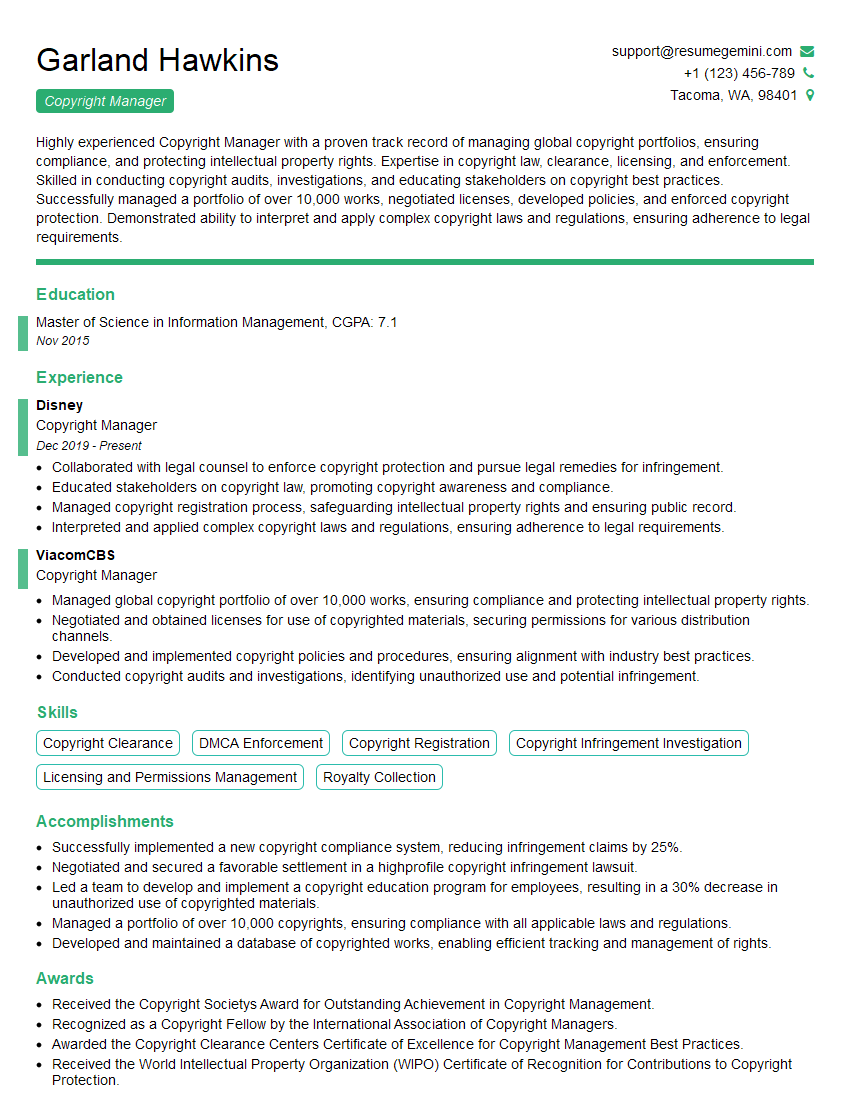
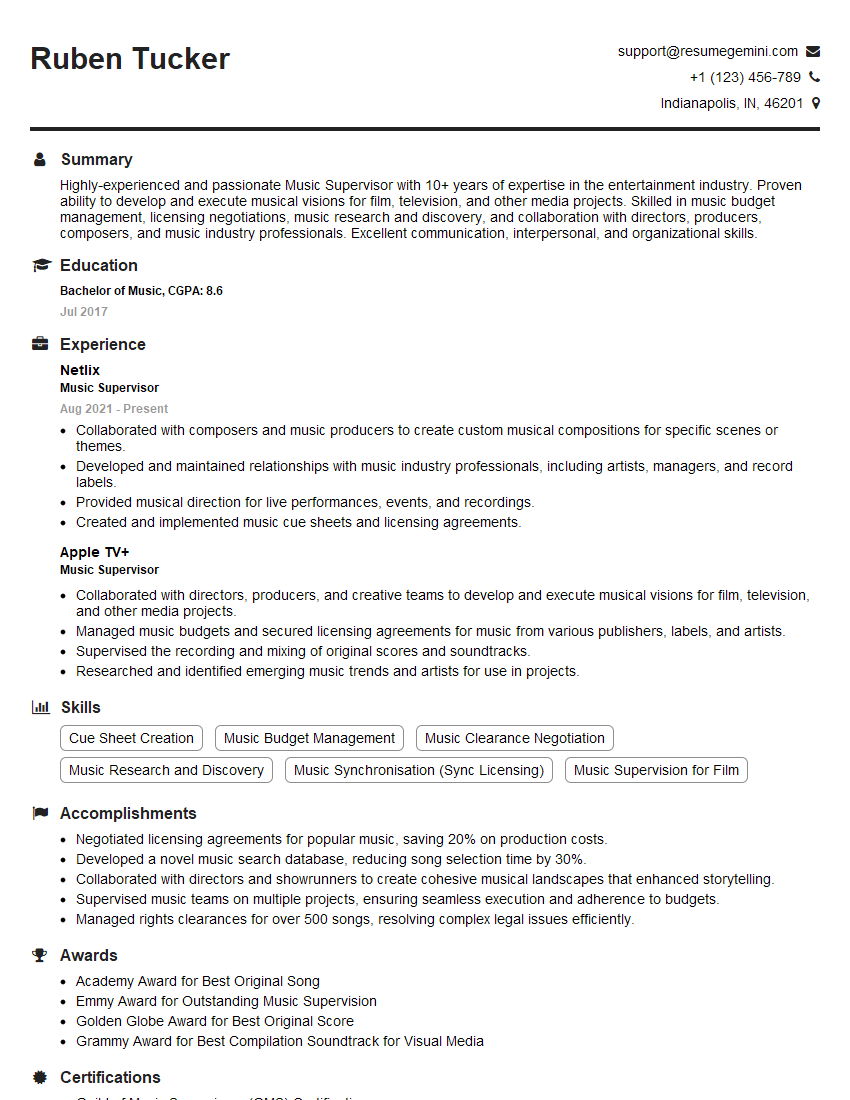
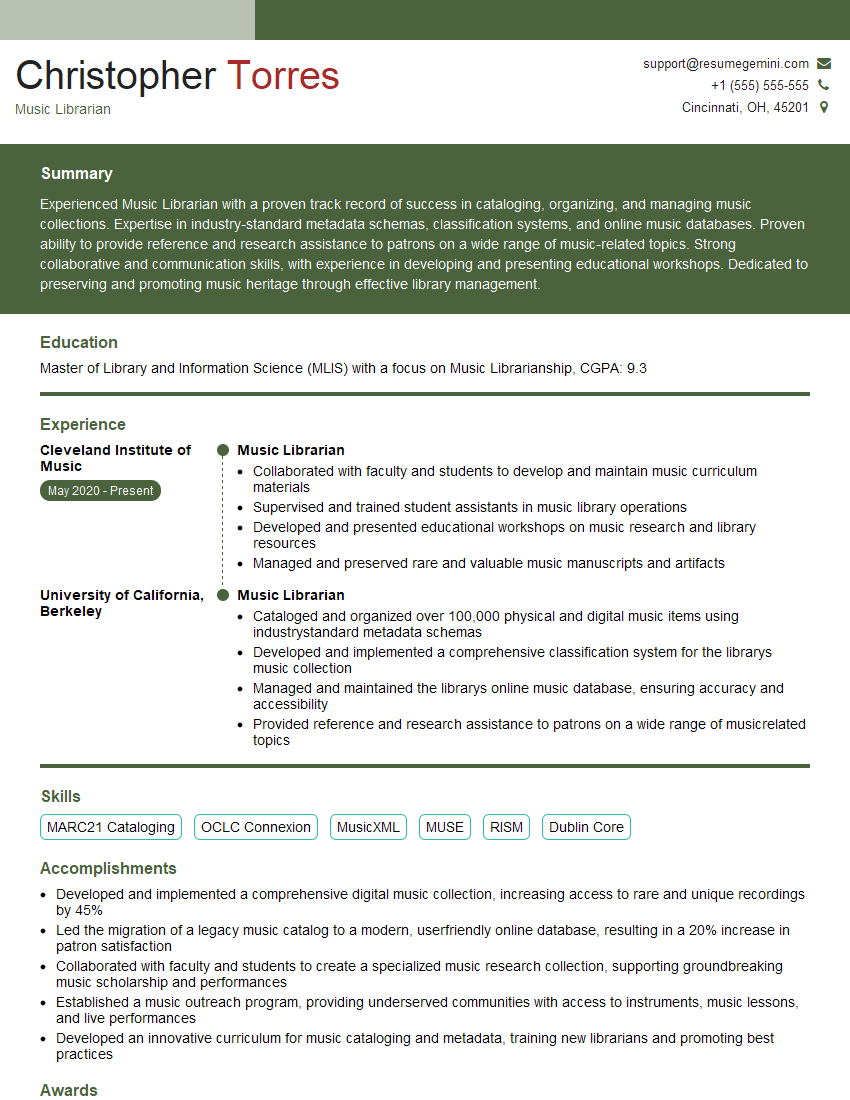
Mastering the complexities of working with publishers and composers is crucial for career advancement in the music industry. A strong understanding of these areas will significantly enhance your marketability and open doors to exciting opportunities. To maximize your job prospects, creating an ATS-friendly resume is essential. ResumeGemini is a trusted resource to help you build a compelling and effective resume that highlights your relevant skills and experience. We provide examples of resumes tailored to highlight experience in working with publishers and composers, so you can craft a document that showcases your unique qualifications. Take advantage of these resources to present yourself as the ideal candidate.
Explore more articles
Users Rating of Our Blogs
Share Your Experience
We value your feedback! Please rate our content and share your thoughts (optional).
What Readers Say About Our Blog
Very informative content, great job.
good