Preparation is the key to success in any interview. In this post, we’ll explore crucial Experience in writing songs for different audiences, including children, adults, and international audiences interview questions and equip you with strategies to craft impactful answers. Whether you’re a beginner or a pro, these tips will elevate your preparation.
Questions Asked in Experience in writing songs for different audiences, including children, adults, and international audiences Interview
Q 1. Describe your songwriting process for children’s music.
My songwriting process for children’s music prioritizes simplicity, repetition, and engagement. It starts with a strong, memorable melody – something catchy and easy for little ones to sing along to. Think of the repetitive nature of nursery rhymes; that’s key. Then, I craft lyrics that are relatable to their world: animals, playtime, everyday experiences, and simple emotions. I often use rhyming schemes and alliteration to enhance memorability and make the songs fun to listen to. I also incorporate actions or movements into the lyrics, encouraging participation and active listening. For example, a song about a bouncing ball might have lyrics that explicitly encourage children to bounce along. I always test my songs on my target audience – children – to get feedback on what resonates and what needs adjustment.
I also consider the musical arrangement carefully. Children respond well to bright, upbeat tempos and instrumentation that feels cheerful and playful. The use of simple, repetitive musical phrases mirrors the lyrical approach. Ultimately, the goal is to create something enjoyable and educational without being condescending.
Q 2. How do you adapt your songwriting style for different age groups?
Adapting my songwriting for different age groups involves a nuanced approach to lyrical complexity, musical sophistication, and thematic depth. For preschoolers, simplicity reigns supreme: short sentences, repetitive phrases, basic vocabulary, and cheerful melodies. As the age group increases, so does the complexity. For elementary school-aged children, I introduce slightly more complex sentence structures, richer vocabulary, and more elaborate musical arrangements. The themes can become more nuanced, touching upon friendship, social interactions, and broader emotions. Teenagers, finally, demand a greater depth. My lyrics explore more complex relationships, social issues, and personal growth. Musically, I explore more sophisticated harmonies and varied tempos. Essentially, it’s about mirroring the cognitive and emotional development of the age group while retaining the elements that make music engaging and enjoyable.
Q 3. Explain your experience writing songs for adult audiences.
Writing for adult audiences allows for a greater depth of exploration in both lyrical content and musical style. I can delve into complex emotions, mature themes, and intricate storytelling. Unlike children’s music which focuses on simple joy, adult music can explore melancholy, longing, heartbreak, and the full spectrum of human experience. The melodies can be more intricate, the harmonies richer, and the instrumental arrangements more complex. I often use metaphors and symbolism to add layers of meaning, inviting listeners to interpret the song on a deeper level. My process often involves focusing on a strong narrative, or a poignant emotional moment, building the lyrics and music around that core idea. For example, I recently wrote a song based on the feeling of bittersweet nostalgia for a lost relationship, exploring complex emotions beyond simple heartbreak.
Q 4. How do you ensure your adult songs resonate emotionally?
Emotional resonance in adult songs comes from authenticity and relatability. I achieve this by drawing upon my own experiences and observations of the human condition. I strive to capture the universality of emotions like love, loss, joy, and sorrow in a way that feels genuine and relatable to the listener. Specific techniques include using vivid imagery, relatable situations, and honest emotional expression. I also pay close attention to the melody and harmony to convey the desired emotion. A melancholic melody can powerfully communicate sadness, while a soaring melody can evoke feelings of hope and joy. Ultimately, the goal is to create a connection between the listener and the song’s emotional core, leaving them feeling understood and seen. It is about hitting that specific emotional nerve with accuracy.
Q 5. What strategies do you employ when writing songs for international markets?
Writing for international markets requires careful consideration of language, cultural context, and musical preferences. I often collaborate with local musicians and translators to ensure the song resonates authentically with the target audience. For instance, I might adapt the lyrics to reflect specific cultural references or idioms that would be meaningful in that region. The musical arrangement also plays a crucial role. I might incorporate elements of traditional music from the target culture, or adjust the instrumentation to better suit the local taste. Thorough market research is key: understanding the existing musical landscape, popular genres, and prevalent cultural themes is crucial for creating a song that feels both authentic and appealing to a new audience. This requires sensitivity and respect for diverse musical traditions.
Q 6. How do you consider cultural nuances in your international songwriting?
Cultural nuances are paramount in international songwriting. I spend time researching the history, traditions, and social norms of the target culture. I avoid using metaphors or references that might be misunderstood or offensive. For example, colors, numbers, and symbols often carry different meanings across cultures. I engage in extensive consultations with local collaborators to ensure that the song’s message is culturally appropriate and sensitive. I also pay close attention to musical styles – what instruments are commonly used, what rhythms and melodies resonate with local audiences. Ignoring these could result in a song that feels out of place or even jarring to the listeners. Respect and collaboration are key to avoiding missteps and creating work that resonates truthfully.
Q 7. Describe a time you had to overcome a creative block in songwriting.
I once experienced a severe creative block while working on a song for a children’s album. The theme was supposed to be about friendship, but I couldn’t seem to find the right melody or lyrics. I felt frustrated and stuck. To overcome this, I decided to step away from the project entirely for a few days. I engaged in activities unrelated to songwriting: I went for long walks, listened to different genres of music, and spent time with friends and family. This helped to clear my head and refocus my energy. When I returned to the project, I approached it with a fresh perspective. I started by brainstorming themes related to friendship from a child’s perspective, rather than trying to force a pre-conceived notion. Instead of focusing on the lyrics first, I started with experimenting with different musical styles, searching for a melody that felt playful and engaging. This change in approach eventually led to a breakthrough, and I completed the song successfully. The key was to change my mindset and approach the creative process from a different angle.
Q 8. How do you handle feedback on your song lyrics?
Feedback is crucial for refining my songwriting. I approach it as a collaborative process, not a judgment. I actively seek diverse perspectives – from children testing out children’s songs to adult focus groups for adult material, and even cultural consultants for international projects. I categorize feedback into constructive criticism (suggestions for improvement) and personal preferences (opinions that don’t necessarily need implementation). For constructive criticism, I analyze whether the feedback aligns with the song’s intended purpose and audience. For example, if a child finds a lyric confusing, I might simplify it. If an adult finds a song lacking emotional depth, I might add more nuanced imagery or explore a different melodic approach. Ultimately, I use feedback as a guide, making choices based on whether the changes enhance the song’s overall impact.
I keep a detailed log of all feedback received, noting the source and type of feedback. This helps me identify recurring themes or patterns that might indicate broader issues needing attention. I also value the feedback that challenges my assumptions and pushes me to be more creative.
Q 9. How do you collaborate effectively with other musicians?
Effective collaboration hinges on open communication and mutual respect. I begin by clearly defining roles and expectations. This might involve outlining each musician’s contributions (e.g., melody, lyrics, instrumentation, production) and timelines. I believe in fostering a safe environment where everyone feels comfortable sharing ideas and expressing concerns. For example, when working with a composer, I’ll share my lyrical ideas early on and discuss how the melody and harmony can best support those ideas. Similarly, when working with a musician who has a specific instrumentation expertise, I will incorporate their suggestions where it makes sense.
I also prioritize active listening and incorporating diverse viewpoints into the creative process. This might involve shared writing sessions, virtual jam sessions, or using collaborative platforms to share and review progress. I’ve found that constructive feedback, even when it challenges my initial vision, usually strengthens the final product. Regular check-ins and transparent communication ensure everyone stays aligned and avoid unnecessary misunderstandings.
Q 10. What software or tools do you use for music composition?
My songwriting process is largely digital, and I use a variety of software depending on the stage of the project. For initial songwriting and lyric creation, I rely on simple text editors or even pen and paper for free-flowing ideas. Then I move to Digital Audio Workstations (DAWs) like Logic Pro X or Ableton Live. These DAWs allow me to create and arrange musical compositions, incorporate instruments (both virtual and recorded), edit audio, and mix my songs. For notation, I use Sibelius or Finale to create professional scores, particularly for orchestral or choral pieces. For international projects, I might also use translation software and language resources to ensure accuracy and cultural sensitivity in lyrics.
Beyond DAWs, I employ audio editing software like Audacity for more precise audio manipulations and sound design. I also use various plugins for virtual instruments, effects, and mastering, depending on the style of music I’m creating. I’ve found that the best software isn’t always the most expensive, it’s the one that best fits my workflow and the specific demands of the project.
Q 11. How do you ensure your music is legally compliant (copyright, etc.)?
Legal compliance is paramount. I ensure copyright protection by registering my compositions with relevant organizations like the Performing Rights Organizations (PROs) in the countries where the music will be used. This secures my rights to perform, reproduce, and distribute my music. Before using any samples or pre-existing melodies, I meticulously research usage rights to avoid potential infringement. I clearly outline licensing agreements with collaborators, ensuring appropriate credit and royalty distribution. For international projects, I navigate copyright laws in different countries to ensure complete compliance with local regulations.
I also carefully review contracts with publishers, distributors, and other parties involved in the music’s commercialization. I always consult with legal professionals when needed, particularly for complex licensing agreements or international distributions. Transparency and clear documentation are essential to protect my intellectual property rights.
Q 12. Explain your experience with music publishing and distribution.
My experience with music publishing and distribution has evolved significantly over the years. Initially, I relied on independent distribution platforms like Bandcamp and SoundCloud to reach a wider audience. This provided valuable experience in direct-to-consumer sales and digital marketing. However, as my work gained more traction, I explored partnerships with established music publishers. They offer a broader network for licensing my songs, facilitating placements in film, television, advertising, and other media.
Distribution is handled through a combination of independent avenues and label partnerships, depending on the project. Digital distribution platforms like Spotify, Apple Music, Amazon Music, and YouTube Music play a huge role. I carefully analyze different platforms to understand their reach and audience demographics to optimize distribution strategies for each song and target audience. I regularly monitor performance metrics to adapt my strategies accordingly. The key is finding a balance between reaching a broad audience and maintaining artistic control.
Q 13. How do you manage your time when working on multiple songwriting projects?
Managing multiple songwriting projects requires a structured approach. I use project management tools to track tasks, deadlines, and collaborators for each project. I prioritize projects based on urgency and contractual obligations. I allocate specific time blocks for each project, ensuring focused work sessions that maximize productivity. For example, I might dedicate mornings to lyric writing and afternoons to composition and arrangement.
I find it beneficial to break down large projects into smaller, manageable tasks. This prevents feeling overwhelmed and allows for tracking of progress, providing a sense of accomplishment as each task is completed. Regular self-assessment helps in identifying bottlenecks and making necessary adjustments to my workflow. Delegating tasks where possible is also crucial, particularly collaborating with other musicians or engineers. Maintaining a healthy work-life balance is crucial too, to prevent burnout and maintain creativity.
Q 14. Describe your understanding of music theory and its application in songwriting.
A strong understanding of music theory is foundational to my songwriting. It’s not about rigid rules, but rather a toolkit for creating effective and emotionally resonant music. I apply concepts like harmony, melody, rhythm, and form to craft songs that are structurally sound and engaging. For example, understanding chord progressions helps me create melodic lines that complement the harmonic structure, and understanding rhythm enables me to create grooves and beats that drive the song forward.
Knowing different musical scales and modes influences the emotional character of my songs. A minor key might evoke sadness while a major key might convey joy. Furthermore, understanding musical form helps me create structure in my songs with verses, choruses, bridges and outros, ensuring a dynamic and satisfying listening experience. My knowledge of music theory allows me to write songs in a variety of styles, and adapt to different needs of various projects, and audiences. This theoretical knowledge gives me a solid framework to experiment with and push creative boundaries in my songwriting.
Q 15. How familiar are you with different musical genres and styles?
My familiarity with musical genres and styles is extensive. I’ve worked across a broad spectrum, from children’s lullabies and playful pop tunes to adult contemporary ballads and even international folk-influenced compositions. I understand the nuances of rhythm, melody, and harmony within each genre, adapting my songwriting techniques to suit the specific emotional impact and target audience. For instance, a children’s song needs simple, repetitive melodies and clear lyrics, contrasting sharply with the more complex harmonies and lyrical depth often found in adult contemporary music. Similarly, international collaborations demand an understanding of cultural context and musical traditions, requiring sensitivity to instrumentation and lyrical themes to avoid misinterpretations.
- Children’s Music: Think simple rhymes, catchy melodies, and themes about animals, friendship, or everyday life.
- Adult Contemporary: This style often features introspective lyrics, complex chord progressions, and emotionally resonant melodies.
- International Music: This could involve incorporating traditional instruments, rhythms, and languages from a specific culture, requiring extensive research and collaboration.
Career Expert Tips:
- Ace those interviews! Prepare effectively by reviewing the Top 50 Most Common Interview Questions on ResumeGemini.
- Navigate your job search with confidence! Explore a wide range of Career Tips on ResumeGemini. Learn about common challenges and recommendations to overcome them.
- Craft the perfect resume! Master the Art of Resume Writing with ResumeGemini’s guide. Showcase your unique qualifications and achievements effectively.
- Don’t miss out on holiday savings! Build your dream resume with ResumeGemini’s ATS optimized templates.
Q 16. How do you market and promote your music?
Marketing and promoting my music involves a multi-faceted approach, leveraging both traditional and digital strategies. I utilize social media platforms like Instagram, Facebook, and TikTok to engage directly with my audience, sharing snippets of songs, behind-the-scenes content, and interacting with comments. I also collaborate with influencers and bloggers relevant to my target demographic. Building an email list allows for direct communication about new releases and events. I’ve found that strategically partnering with music blogs, podcasts, and online radio stations significantly increases my reach. In addition to digital strategies, I attend music festivals and industry events to network and connect with potential collaborators and fans. For international audiences, targeted advertising on relevant platforms in different languages is crucial. Finally, strong press releases and consistent updates to my website keep my presence relevant and up-to-date.
Q 17. How do you measure the success of your songwriting efforts?
Measuring the success of my songwriting is a multi-dimensional process. It’s not solely about chart positions or sales, though those are certainly indicators. I assess success through a combination of factors:
- Streaming Numbers & Sales: This provides a quantitative measure of audience engagement.
- Social Media Engagement: Likes, comments, shares, and follower growth reflect the resonance of my music.
- Live Performance Feedback: Direct audience response (applause, singing along) gives immediate feedback.
- Licensing and Sync Deals: Securing placements in films, TV shows, or commercials demonstrates the broad appeal of my work.
- Critical Acclaim: Reviews and awards from reputable sources can validate my artistic achievements.
It’s important to remember that ‘success’ can be subjective and defined differently depending on personal goals. My ultimate aim is to create music that connects with people on an emotional level.
Q 18. Explain your experience working with vocalists and musicians.
Collaborating with vocalists and musicians is a cornerstone of my songwriting process. I believe in fostering a collaborative environment where everyone feels comfortable contributing their unique talents. I carefully select collaborators whose styles and personalities complement my own. Before a session, I’ll share detailed briefs outlining the song’s mood, melody, and lyrical themes. During recording, I encourage open communication and experimentation, valuing their input and creative ideas. It’s essential to be adaptable and to allow space for improvisation and spontaneous moments of brilliance. I’ve found that mutual respect and a shared creative vision are key to successful collaborations. One memorable experience involved working with a young vocalist who brought a fresh, unexpected interpretation to a song, resulting in a truly unique and powerful performance.
Q 19. Describe your approach to recording and producing your songs.
My recording and production approach prioritizes capturing the emotional essence of the song. I often start with acoustic demos to establish a strong foundation for the arrangement. I work closely with a skilled engineer to ensure that the recording process preserves the natural dynamics and nuances of the performance. In the mixing and mastering stages, I pay close attention to sonic detail, aiming for a polished but natural sound that avoids over-processing. I use a combination of analog and digital equipment, selecting the tools that best suit each song’s individual needs. For international projects, I pay extra attention to maintaining the cultural integrity of the music, ensuring that the production techniques reflect the style and traditions of the specific region.
Q 20. What are your strengths and weaknesses as a songwriter?
My strengths lie in crafting emotionally resonant melodies and lyrics that connect with a wide range of audiences. I’m also proficient in adapting my style to various genres and working effectively within collaborative environments. However, my weakness can sometimes be over-perfectionism. I strive for excellence but occasionally need to remind myself that ‘good enough’ is sometimes sufficient, to avoid getting bogged down in unnecessary details. I am actively working on time management skills to balance the creative process with the practical demands of deadlines.
Q 21. How do you handle constructive criticism of your work?
I view constructive criticism as invaluable to my growth as a songwriter. I approach feedback with an open mind, seeking to understand the perspective offered. I separate subjective opinions from objective observations, focusing on actionable insights. I ask clarifying questions to fully grasp the feedback’s intent. I don’t take criticism personally; instead, I view it as an opportunity for improvement. I make notes, consider the suggestions carefully, and revise my work accordingly. Sometimes, I may choose not to implement all suggestions, but I always evaluate them thoughtfully. This process has significantly enhanced my ability to refine my songs and create more impactful music.
Q 22. What are your future goals as a songwriter?
My future goals as a songwriter are multifaceted. I aim to continue expanding my reach into diverse international markets, crafting songs that resonate with audiences across cultures and languages. This involves exploring new musical styles and collaborations to enrich my creative palette. Beyond geographical expansion, I’m passionate about developing musical projects that promote social awareness and positive change, using music as a powerful tool for education and advocacy. Ultimately, I aspire to leave a lasting impact on the world through my songwriting, contributing meaningfully to the cultural landscape.
Specifically, I plan to collaborate with more children’s authors to create musical theatre pieces, and explore the possibilities of interactive musical experiences designed for digital platforms.
Q 23. Describe your experience with live music performances.
My experience with live music performances spans a wide range of settings, from intimate coffee house gigs to large-scale festivals and international tours. I’ve performed solo, as part of a band, and with full orchestras. Each experience has provided invaluable lessons in stage presence, audience engagement, and adaptability. Performing for children requires a particularly energetic and interactive approach, often incorporating games and movement into the performance. For adult audiences, the focus shifts to creating a more emotionally resonant experience, tailoring the delivery to match the mood and atmosphere of the venue.
For example, a recent performance at a children’s festival involved incorporating audience participation through call-and-response songs and simple dance moves. In contrast, a performance at a jazz club demanded a more nuanced approach, focusing on the subtleties of the music and the emotional connection with the listeners.
Q 24. How do you adapt your songs for different performance settings?
Adapting songs for different performance settings is crucial for maximizing their impact. The key is understanding the context and tailoring the arrangement and delivery accordingly. A song played in a small, intimate venue might require a stripped-down acoustic arrangement, while a larger venue might necessitate a fuller, amplified sound with additional instrumentation. The tempo and dynamics also need adjustments based on the audience and the atmosphere. For example, a lively pop song played at a children’s event would call for a more upbeat tempo and energetic delivery compared to a slower, more introspective rendition in a quiet concert hall. I always consider the acoustics of the space and adjust my vocal projection and instrumentation accordingly.
Q 25. How do you incorporate audience feedback into your songwriting?
Audience feedback is invaluable in refining my songwriting. I actively seek feedback through various channels, including post-performance surveys, social media engagement, and direct interactions with audience members. This feedback informs my understanding of what resonates with different audiences, what aspects of my songs are successful, and where improvements can be made. For example, if audience members frequently mention a particular line or chorus as their favourite, it reinforces the effectiveness of that element and helps me build on that success in future songs. Conversely, negative feedback, while sometimes difficult to hear, helps pinpoint areas needing refinement, be it lyrical content, melody, or overall structure. I view feedback not as criticism, but as a guide for improvement.
Q 26. How do you balance creativity with commercial viability in your songwriting?
Balancing creativity with commercial viability is a constant challenge, but a crucial one for any songwriter. My approach is to find the sweet spot between artistic integrity and market appeal. I strive to write songs that are both creatively fulfilling for me and engaging for the target audience. This means understanding current trends and listener preferences without compromising my artistic vision. For example, I might experiment with incorporating popular musical elements into my compositions to increase their appeal, while still retaining a unique and personal style. Finding this balance often involves careful experimentation and willingness to take calculated risks.
Q 27. How familiar are you with different music notation systems?
I’m proficient in standard Western music notation, including staff notation and tablature. I understand the principles of rhythm, melody, harmony, and form, and can readily translate musical ideas between different notation systems. Furthermore, my understanding extends beyond Western notation; I have familiarity with some aspects of Eastern musical notation systems, crucial when collaborating with musicians from different cultural backgrounds. This knowledge aids significantly in transcribing and arranging music from various sources and effectively communicating musical ideas across different cultural contexts.
Q 28. What is your experience with using music to tell stories?
Using music to tell stories is a core aspect of my songwriting. I believe music has a unique ability to evoke emotions and create vivid imagery, making it an ideal medium for storytelling. I approach songwriting as a narrative art form, carefully crafting lyrics and melodies to convey a compelling story. My process often involves creating a detailed story outline before writing the music, ensuring a cohesive and engaging narrative arc. This could be a simple children’s story with a clear beginning, middle, and end, or a more complex narrative exploring nuanced themes and emotions. I always pay close attention to the pacing and dynamics of the music to mirror the emotional progression of the story, creating a holistic and immersive experience for the listener.
Key Topics to Learn for Experience in writing songs for different audiences, including children, adults, and international audiences Interview
- Understanding Your Audience: Analyzing the age, cultural background, and musical preferences of different demographics to tailor your songwriting approach. This includes understanding developmental stages in children and cultural nuances in international audiences.
- Lyrical Adaptation: Crafting lyrics appropriate for each audience. This means simplifying language for children, using sophisticated vocabulary for adults, and employing culturally sensitive themes and language for international markets.
- Musical Style and Instrumentation: Selecting musical styles and instrumentation that resonate with the target audience. For example, using upbeat tempos and simple melodies for children, more complex arrangements for adults, and incorporating traditional instruments for international audiences.
- Storytelling and Theme Development: Creating compelling narratives and themes that connect with each audience. Children’s songs often focus on simple, relatable stories, while adult songs can explore more complex emotional themes. International audiences might appreciate songs reflecting their cultural heritage or universal themes.
- Collaboration and Feedback: Discussing the importance of collaboration with musicians, producers, and other professionals to refine your songs and ensure they resonate with the target audience. Highlighting the process of receiving and incorporating feedback effectively.
- Copyright and Licensing: Understanding the legal aspects of songwriting, including copyright protection and licensing for different platforms and uses. This is particularly important when working with international audiences and diverse media.
- Marketing and Promotion: Developing strategies for promoting your music to different audiences. This could involve utilizing social media, targeted advertising, and collaborations with relevant organizations.
Next Steps
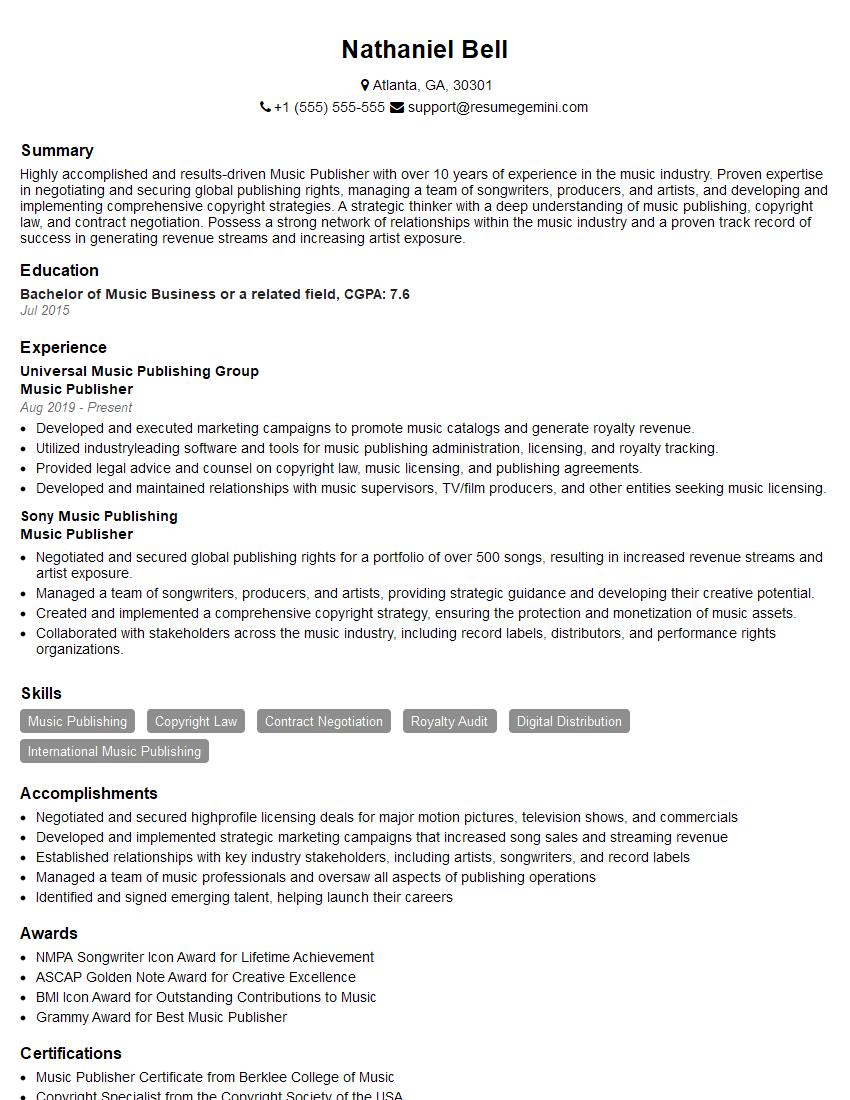
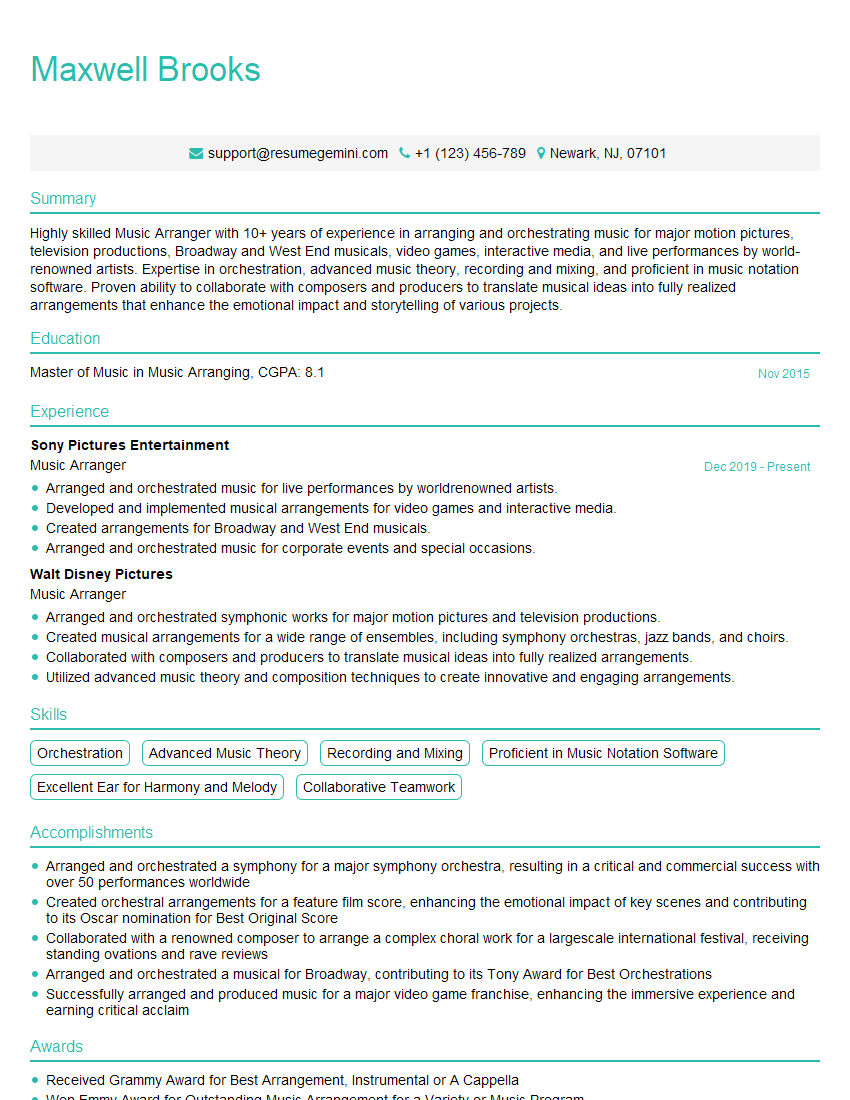
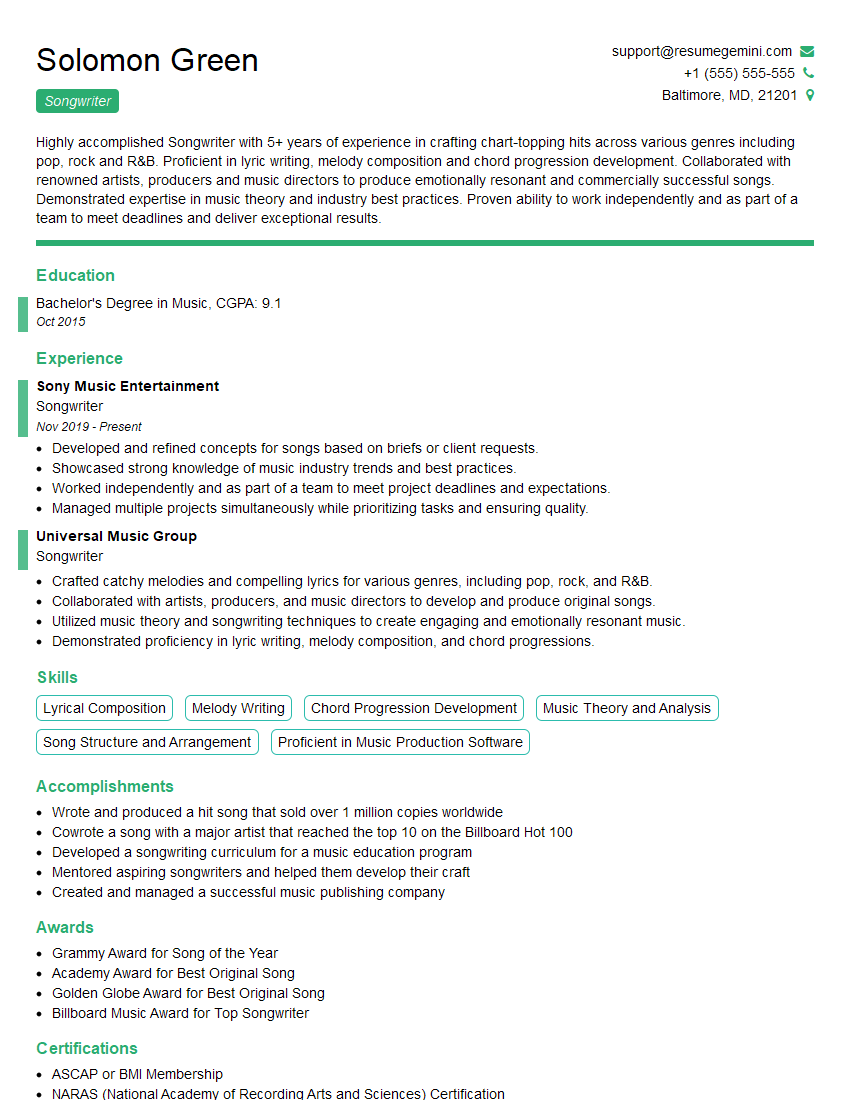
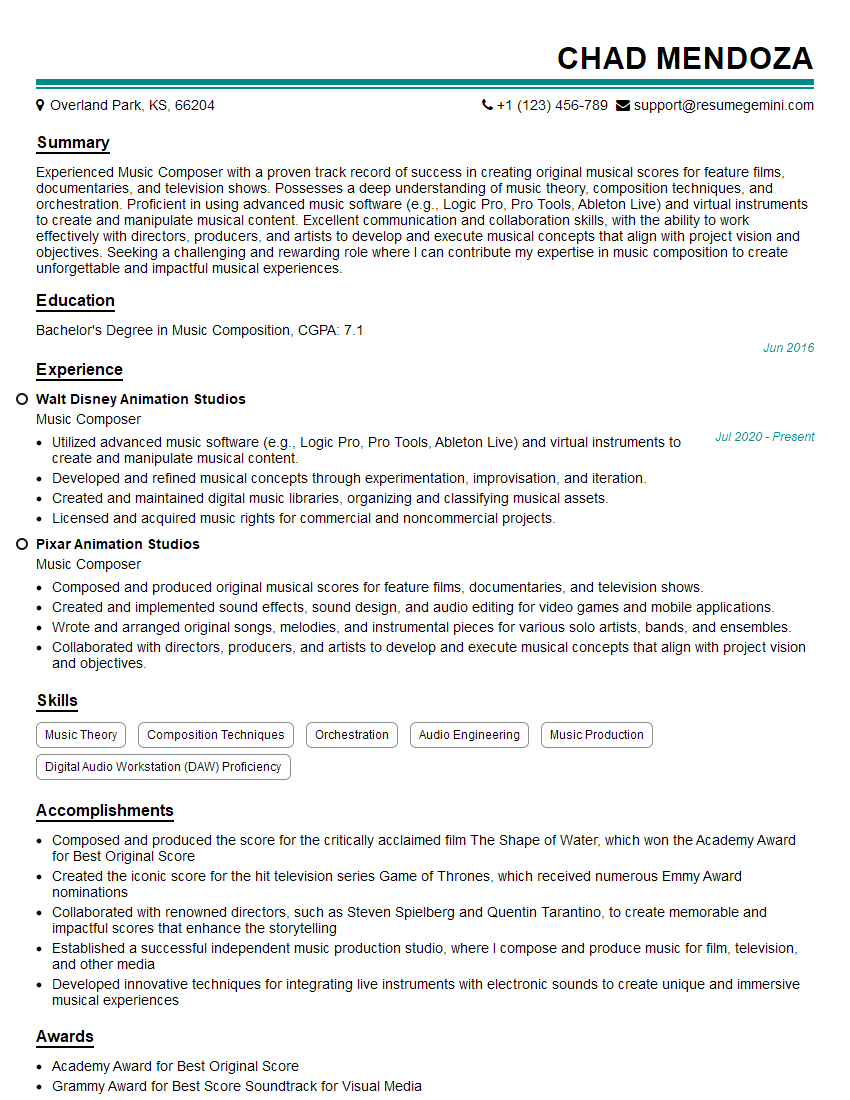
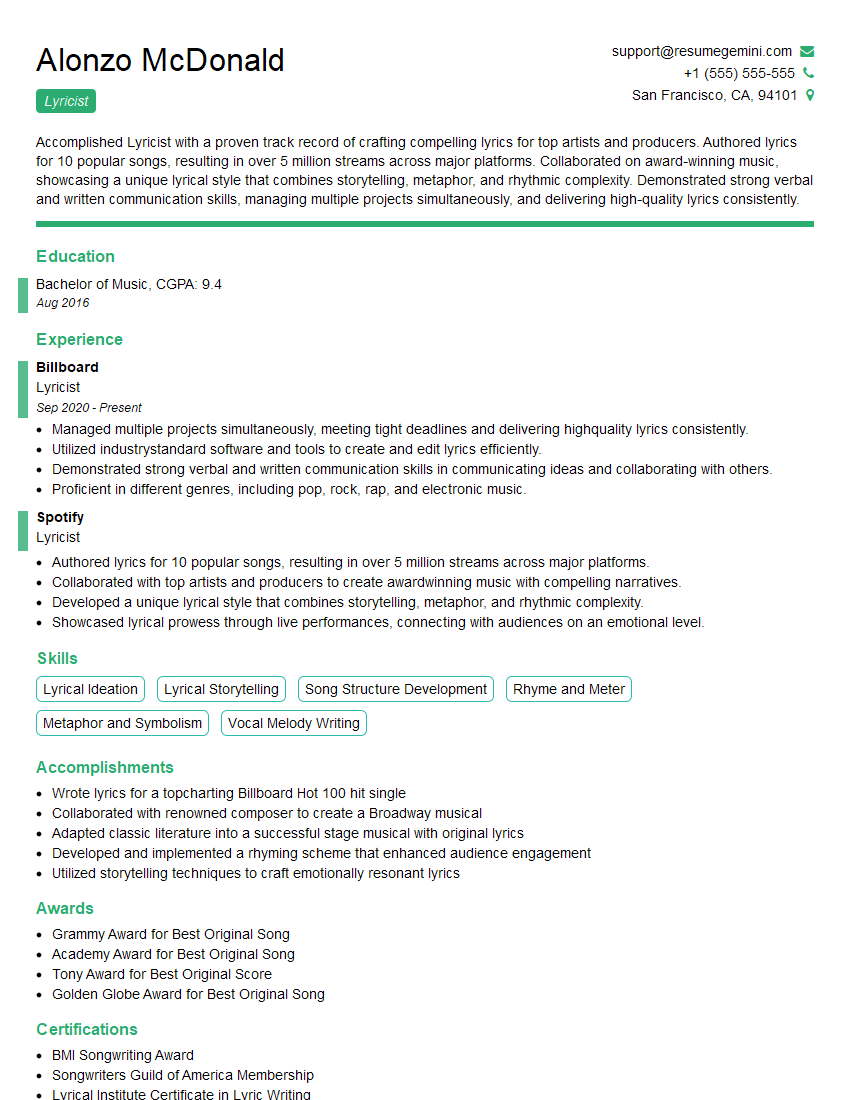
Mastering the art of songwriting for diverse audiences significantly enhances your career prospects, opening doors to a wider range of opportunities in the music industry. An ATS-friendly resume is crucial for showcasing your skills and experience effectively to potential employers. ResumeGemini is a trusted resource to help you build a compelling and impactful resume that highlights your unique abilities. Examples of resumes tailored to showcasing experience in writing songs for different audiences are available to guide you. Invest time in crafting a strong resume – it’s your first impression in the job search process.
Explore more articles
Users Rating of Our Blogs
Share Your Experience
We value your feedback! Please rate our content and share your thoughts (optional).
What Readers Say About Our Blog
Very informative content, great job.
good