Unlock your full potential by mastering the most common Experience using rigging and climbing techniques interview questions. This blog offers a deep dive into the critical topics, ensuring you’re not only prepared to answer but to excel. With these insights, you’ll approach your interview with clarity and confidence.
Questions Asked in Experience using rigging and climbing techniques Interview
Q 1. Explain the different types of ropes used in rigging and their applications.
Rope selection is critical in rigging and climbing. The wrong rope can lead to catastrophic failure. Different ropes are designed for different purposes, based on their strength, stretch, and resistance to abrasion.
- Static Rope: Minimal stretch, used where precise positioning is crucial, such as in rescue operations or supporting heavy loads. Think of it like a strong, stiff cable. Its low elasticity means it’s excellent for keeping loads stable but less forgiving in dynamic situations.
- Dynamic Rope: Designed to stretch significantly when subjected to impact forces. This helps to absorb shock and reduce the force transmitted to the climber or load. This is the standard rope used in rock climbing and many industrial applications involving falls.
- Nylon Rope: Extremely strong and durable, often used in heavy lifting and rigging. It’s known for its high tensile strength and ability to withstand significant loads. However, it can suffer from abrasion damage and UV degradation over time.
- Polyester Rope: Offers a good balance of strength and stretch. It’s less prone to abrasion than nylon but might not be as strong for the same diameter. It’s frequently seen in applications requiring a degree of flexibility.
- Synthetic Fiber Ropes (e.g., Spectra, Dyneema): Extremely high-strength-to-weight ratio, commonly used in specialized applications like sailing or where weight is a primary concern. However, they can be more expensive and vulnerable to cutting damage.
For example, I once worked on a project involving a very delicate antique clock tower restoration. We opted for static ropes to ensure the precision needed when carefully lowering and installing the clock’s mechanisms without risk of sudden movement. In contrast, I use dynamic ropes for rescue simulations to ensure our team can safely handle a sudden fall.
Q 2. Describe the proper methods for inspecting and maintaining rigging equipment.
Rigging equipment inspection and maintenance are paramount for safety. A thorough inspection should be conducted before every use and regularly throughout a project.
- Visual Inspection: Check for any signs of wear and tear, fraying, cuts, abrasions, or damage to the rope sheath or core. Look for any discoloration, stiffness, or unusual smells that could indicate internal damage.
- Load Testing (where applicable): Certain equipment, such as slings, shackles, and other hardware, might require periodic load testing to ensure they meet their rated capacity. This should be done by a qualified professional.
- Documentation: Keep detailed records of inspections, noting any issues found and the corrective actions taken. This documentation is crucial for tracking the equipment’s history and identifying potential problems early on.
- Storage: Proper storage is essential to extend the lifespan of rigging equipment. Keep ropes away from direct sunlight, sharp objects, chemicals, and extreme temperatures. Store equipment in a dry, clean environment.
I always use a systematic checklist during my inspections. Ignoring even a minor imperfection can have severe consequences. Remember, a quick visual check is just the starting point. A thorough inspection often involves feeling the rope for any irregularities.
Q 3. What are the key safety regulations and standards you follow when working at heights?
Safety is my top priority. I always adhere to relevant regulations and standards, which vary depending on the location and type of work. These generally include:
- OSHA (Occupational Safety and Health Administration) regulations (US): These provide comprehensive guidelines for fall protection, hazard communication, and personal protective equipment (PPE).
- ANSI (American National Standards Institute) standards: ANSI publishes standards for many aspects of rigging and climbing, including safe working loads and proper equipment usage.
- Local and national regulations: Specific regulations might exist at the state, provincial, or national level, so it’s crucial to research and comply with those as well.
- Permit-to-Work systems: In many high-risk environments, a permit-to-work system is implemented to control access and ensure that all necessary safety measures are in place before work commences.
- Fall Protection Systems: This includes using harnesses, lanyards, and appropriate anchorage points to mitigate the risk of falls from heights.
For example, I always ensure that each member of my team is wearing appropriate PPE, including helmets, safety harnesses, and gloves. I conduct thorough risk assessments and implement all necessary safety measures to minimize any potential dangers.
Q 4. How do you calculate safe working loads for rigging equipment?
Calculating safe working loads (SWL) is fundamental to preventing accidents. The SWL is the maximum load a piece of rigging equipment can safely support. It’s typically found on the equipment’s label or in the manufacturer’s specifications. The calculation considers various factors:
- Manufacturer’s Rated Capacity: This is the starting point. Never exceed this value.
- Safety Factor: A safety factor is applied to account for unforeseen circumstances, material degradation, and potential misuse. Common safety factors range from 5:1 to 10:1 depending on the application and regulations.
- Angle of Pull: When the load isn’t lifted straight up, the effective load increases. This requires complex calculations or the use of appropriate tables/software to account for the angle’s impact on SWL.
- Environmental Factors: Temperature, humidity, and chemical exposure can affect the strength of the equipment.
For instance, if a sling has a rated capacity of 10,000 lbs and we use a safety factor of 5:1, the SWL is 2,000 lbs. Any load exceeding this limit could result in a dangerous failure.
Q 5. Explain the different types of knots used in rigging and their appropriate uses.
Knots are the backbone of rigging. Knowing which knot to use and how to tie it properly is critical for safety. Here are a few examples:
- Bowline: Forms a strong, reliable loop that doesn’t slip. Ideal for attaching a rope to an object or creating a loop for a harness.
- Clove Hitch: A quick and easy knot for attaching a rope to a ring or post. It’s simple but should always be backed up with another knot for security in crucial situations.
- Figure Eight Knot: A stopper knot that prevents a rope from running through a system; commonly used as a backup on climbing harnesses.
- Prusik Knot: A friction knot used for ascending or descending ropes. It grips the rope tightly but can be easily loosened.
Each knot has its strengths and limitations. A clove hitch might be suitable for a temporary attachment, but I would never rely on it alone for a critical lift. I always double-check my knots and make sure they’re tied correctly according to the specific application.
Q 6. Describe your experience with different types of anchors and their limitations.
Anchors are the foundation of any rigging system. A secure anchor is crucial for safety. Several types of anchors exist, each with its own advantages and limitations:
- Steel Anchors (e.g., eyebolts, shackles): Strong and reliable, but susceptible to corrosion. Their capacity is often clearly marked.
- Wooden Anchors: Can be used in specific situations, but their strength varies widely depending on the type and condition of the wood. Careful assessment of the wood’s integrity is vital.
- Rock Anchors (e.g., bolts, natural features): Used in climbing and mountaineering, careful assessment is required to determine their load-bearing capacity. Rock anchors’ reliability depends on the quality of the rock and the proper placement of the anchor.
- Structural Anchors: Anchors incorporated into buildings or other structures – beams, columns, etc. These require a thorough understanding of structural integrity.
For example, when working on a building facade, I would use steel anchors appropriately embedded in the structure. I would never trust a hastily chosen bolt in a weakened wall section.
Q 7. How do you assess and mitigate risks associated with rigging and climbing operations?
Risk assessment is a continuous process. It begins before any rigging operation and continues throughout. I use a systematic approach:
- Identify Hazards: List all potential hazards, including environmental conditions, equipment failures, and human errors.
- Assess Risks: Evaluate the likelihood and severity of each hazard. This often involves using a risk matrix to categorize risks by level of concern.
- Develop Control Measures: Implement control measures to mitigate the identified risks. This includes selecting the right equipment, using proper techniques, implementing safety procedures, and providing appropriate training to the team.
- Monitor and Review: Continuously monitor the situation during the operation. Adjust the control measures as needed and conduct a post-operation review to identify areas for improvement.
A simple example: If we’re working near power lines, we would meticulously map their location, maintain a safe distance, and coordinate with the power company to ensure they’re de-energized if necessary. Our risk assessment would highlight the critical nature of this hazard, necessitating stringent precautions.
Q 8. What are the procedures for emergency rescue in high-angle situations?
Emergency rescue in high-angle situations demands swift, decisive action and a thorough understanding of rescue techniques. The first priority is always the safety of the rescuer. Procedures typically involve a series of steps:
- Assessment: Quickly assess the situation, the victim’s condition, and the environment. This includes identifying the location, the nature of the injury, the stability of the victim and the surrounding terrain, and available equipment.
- Communication: Establish clear communication with the victim and the ground crew. This may involve using radios or hand signals, depending on the situation.
- Access: Safely access the victim. This often requires ascending or descending using ropes and specialized equipment. The route chosen must prioritize both the victim’s and the rescuer’s safety.
- Stabilization: Once reached, stabilize the victim, ensuring they are secured and their injuries are not worsened. This may involve creating an anchor point and attaching the victim to a secure system.
- Extraction: Carefully extract the victim from the hazardous environment. Techniques will vary depending on the location, injuries, and available equipment. Common methods include rope systems for lowering or hauling, or specialized rescue devices.
- Post-Rescue Care: Once extracted, provide appropriate first aid and prepare for transport to medical care.
For instance, during a rescue operation on a rock face where a climber suffered a leg injury, we assessed the location, secured the climber using a rope system, and then utilized a three-person belay system for a controlled descent. Clear communication was maintained throughout the process.
Q 9. Explain your understanding of fall protection systems and their components.
Fall protection systems are critical for preventing injuries in high-risk environments. They consist of several interconnected components designed to arrest a fall and minimize its impact. These components usually include:
- Anchor Point: A strong, fixed point that can withstand the forces of a fall. This could be a structural element, a purpose-built anchor, or a properly placed rock.
- Connectors: These connect the anchor point to the rest of the system, using carabiners, shackles, or other strong links. Redundancy is crucial here – never rely on a single point of connection.
- Harness: Worn by the worker to distribute the forces of a fall. Harnesses must be properly fitted and regularly inspected.
- Lanyard or Self-Retracting Lifeline (SRL): Connects the harness to the anchor point, absorbing the energy of a fall. Lanyards limit the fall distance, while SRLs automatically retract and prevent excessive fall distance.
- Shock Absorber: Part of the lanyard or SRL, designed to dissipate energy during a fall and reduce impact forces on the worker.
Imagine working on a skyscraper: your harness is connected to a secure anchor point via a SRL. If you fall, the SRL stops your descent, preventing a potentially fatal impact. Regular inspection of every component is paramount.
Q 10. Describe your experience with various types of lifting and hoisting equipment.
My experience encompasses a wide range of lifting and hoisting equipment, including:
- Chain Hoists: Reliable and versatile for lifting moderate weights. I’m familiar with their load-rating capabilities and safe operating procedures, including regular lubrication and inspection.
- Come-Alongs: Hand-operated winches useful for pulling and tensioning. Understanding their mechanical advantage and limitations is vital to prevent overloading.
- Hydraulic Jacks: Essential for lifting heavy loads with precision. I’m proficient in selecting the appropriate jack based on load capacity and application.
- Overhead Cranes: Large-scale lifting systems for very heavy loads. Safety protocols for operation, including load capacity limits and communication with crane operators, are critical.
- Winches: Used for various applications, including lowering and raising loads and setting up rigging systems. I have experience with both manual and motorized winches, understanding their different capabilities and limitations.
For example, when erecting a large antenna, we utilized a combination of an overhead crane for the initial lifting and chain hoists for precise positioning.
Q 11. How do you communicate effectively with your team during a rigging operation?
Effective communication during rigging operations is non-negotiable. It forms the foundation of safety and efficiency. Our team uses a combination of methods:
- Pre-Job Briefing: A thorough discussion of the plan, potential hazards, and roles. This ensures everyone is on the same page.
- Clear Terminology: Using standardized hand signals and terminology, avoiding jargon unless fully explained.
- Dedicated Communication Channels: Using radios or designated communication personnel to maintain constant contact, especially in noisy environments.
- Visual Confirmation: Always confirming actions visually before proceeding, especially during critical stages like lifting or lowering.
- Regular Check-Ins: Frequent communication to monitor progress, address concerns, and confirm that everyone understands and feels safe.
During one job, a miscommunication almost resulted in a load being dropped. We implemented a more structured communication system using hand signals and verbal confirmation before every critical operation, improving efficiency and safety significantly.
Q 12. What are the limitations of different types of climbing harnesses?
Different climbing harnesses have varying limitations, depending on their design and intended use:
- Full-Body Harnesses: While offering excellent protection, they can be bulky and restrictive, limiting movement and potentially causing discomfort during long periods of use.
- Sit Harnesses: More comfortable for prolonged seated work, but offer less protection than full-body harnesses, and are unsuitable for certain activities.
- Chest Harnesses: Used primarily for specialized work at height, limiting mobility further. They are not suitable for all tasks.
- Weight Limits: All harnesses have a maximum weight capacity. Exceeding this limit compromises safety.
- Wear and Tear: Harnesses degrade over time and use, potentially impacting their ability to protect the user. Regular inspection and replacement are crucial.
For example, a sit harness might be perfect for a rope access technician working on inspection, but unsuitable for rescue work where a full-body harness is necessary.
Q 13. Describe your experience with different types of ascenders and descenders.
My experience with ascenders and descenders includes a variety of models, each with specific applications and limitations:
- Ascenders (e.g., Petzl Ascender, CAMP Ascender): Used for ascending ropes. Their efficiency depends on rope diameter and technique. Different models offer varying levels of ease of use and jamming resistance.
- Descenders (e.g., Petzl I’D, ATC Guide): Used for controlled descending. Some are designed for single ropes, while others accommodate double or twin ropes. Understanding the proper braking techniques for each device is crucial for safety.
- Auto-locking devices: Offer increased safety by automatically locking when released from the rope.
- Manual braking devices: Provide greater control, but require careful attention to braking technique.
In one rescue operation, we utilized a Petzl I’D descender for a controlled descent of an injured climber, leveraging its efficiency and reliable braking capabilities. The choice of ascender and descender is always carefully considered based on the specifics of the job, rope type and the terrain.
Q 14. Explain the importance of pre-job planning in rigging and climbing operations.
Pre-job planning is paramount in rigging and climbing, forming the backbone of a successful and safe operation. It involves:
- Risk Assessment: Identifying potential hazards like weather conditions, equipment failures, and environmental factors. This assessment dictates the safety measures required.
- Equipment Selection: Choosing the appropriate equipment based on the tasks, the environment, and the load capacities. Redundancy is essential.
- Work Method Statement (WMS): A detailed plan outlining the step-by-step process, including the sequence of operations, roles and responsibilities, and communication protocols.
- Emergency Procedures: Developing clear contingency plans for various scenarios, including equipment failure, medical emergencies, and weather changes.
- Site Inspection: A thorough on-site inspection to identify unexpected hazards not accounted for in initial planning.
Thorough pre-job planning helped us avoid a potential accident during a bridge inspection. We anticipated strong winds, adjusted our rigging plan to incorporate additional safety measures, and communicated these changes effectively to our team. The result was a safe and efficient operation.
Q 15. How do you ensure the safe handling and storage of rigging equipment?
Safe handling and storage of rigging equipment is paramount to prevent accidents and ensure the longevity of the gear. It’s not just about storing things neatly; it’s about preserving their integrity and functionality.
- Regular Inspection: Every piece of equipment, from slings and shackles to ropes and harnesses, should be inspected before each use, looking for wear and tear, damage, or any signs of weakening. I always follow a checklist to ensure nothing is missed. For example, I’d check for fraying on ropes, cracks on shackles, and distortion in metal components.
- Proper Storage: Equipment should be stored in a dry, clean, and well-ventilated area away from extreme temperatures, direct sunlight, and corrosive chemicals. Slings and ropes should be coiled correctly to prevent kinks or damage. Metal components should be protected against rust and corrosion using appropriate lubricants or coatings. I always prefer designated storage areas clearly labeled for different types of equipment.
- Documentation: Maintaining detailed records of inspections, repairs, and any incidents involving the equipment is critical. This ensures traceability and helps identify potential issues early on. This documentation is crucial for audits and proves due diligence.
- Training: Rigging crew members must undergo thorough training on the proper handling, inspection, and storage procedures. This includes understanding the limitations of different types of equipment and recognizing signs of damage. A well-trained team is the best safety measure.
Think of it like this: If you treat your equipment like an extension of your body, you’ll be less likely to get hurt.
Career Expert Tips:
- Ace those interviews! Prepare effectively by reviewing the Top 50 Most Common Interview Questions on ResumeGemini.
- Navigate your job search with confidence! Explore a wide range of Career Tips on ResumeGemini. Learn about common challenges and recommendations to overcome them.
- Craft the perfect resume! Master the Art of Resume Writing with ResumeGemini’s guide. Showcase your unique qualifications and achievements effectively.
- Don’t miss out on holiday savings! Build your dream resume with ResumeGemini’s ATS optimized templates.
Q 16. Describe your experience with confined space rescue techniques.
Confined space rescue is a specialized area requiring advanced training and meticulous planning. I’ve participated in numerous rescue exercises and real-world scenarios, emphasizing the importance of teamwork and proper equipment usage.
- Atmospheric Monitoring: Before entering, we always test the atmosphere for oxygen levels, flammable gases, and toxic substances. This is critical to ensure the safety of both the rescuers and the victim.
- Equipment Selection: Appropriate equipment depends on the specific conditions of the confined space. This might include self-contained breathing apparatus (SCBA), specialized rescue harnesses and ropes, tripod systems, and retrieval devices.
- Rescue Techniques: Techniques vary depending on the victim’s location and condition. These can include rope rescue systems, mechanical advantage systems, and even the use of specialized retrieval devices for difficult situations. Communication with the victim and the surface team is vital throughout the entire process.
- Teamwork and Communication: Confined space rescues are never one-person operations. Effective communication and teamwork among all rescue personnel are crucial for a successful and safe outcome. We use clear communication protocols to minimize risk and maximize efficiency.
One memorable rescue involved a worker trapped in a narrow, flooded trench. Using a tripod system and a specialized rescue harness, we were able to safely extract him, demonstrating the importance of having the right tools and knowledge for unpredictable situations.
Q 17. How do you handle unexpected situations or equipment malfunctions during a rigging operation?
Unexpected situations are the nature of the beast in rigging. My approach involves a combination of preparedness, quick thinking, and a strong adherence to safety protocols.
- Risk Assessment: A thorough risk assessment before any operation helps identify potential hazards and develop contingency plans. This involves considering weather conditions, equipment limitations, and potential unforeseen challenges.
- Emergency Procedures: Having well-defined emergency procedures for various scenarios is crucial. The team needs to be familiar with these plans, and regular drills ensure everyone knows their role.
- Communication: Open and clear communication among the team is vital during emergencies. Having a designated communication system, whether it’s radio or hand signals, helps streamline response.
- Improvisation (within safety limits): Sometimes, we have to improvise within strict safety limitations. This requires a deep understanding of the equipment and the physics involved. I always prioritize safety above speed. If a situation is unsafe to proceed, we stop and reassess.
For instance, once a shackle malfunctioned mid-lift. We immediately implemented our emergency procedures, lowering the load slowly and safely. We then inspected the failed component, documented the incident, and replaced the damaged part before resuming operations. It’s all about controlled execution.
Q 18. What are the different types of fall arrest systems and their applications?
Fall arrest systems are critical for protecting workers from falls. They work by arresting a fall, minimizing the impact forces on the worker.
- Self-retracting lifelines (SRLs): These devices automatically retract the lifeline as the worker moves, keeping the lifeline taut and minimizing slack. They’re ideal for work at height where movement is required.
- Shock-absorbing lanyards: These lanyards are designed to stretch during a fall, reducing the impact force on the worker. They are often used in conjunction with anchor points and harnesses.
- Full-body harnesses: These harnesses distribute the forces of a fall across the body, preventing serious injury. They are always required when using fall arrest systems. The proper fit is crucial for optimal safety.
- Anchor points: These points provide a secure attachment point for the fall arrest system. They must be strong enough to withstand the forces of a fall. They need careful selection and inspection.
The choice of system depends on the specific work environment. For example, SRLs are perfect for technicians working on communication towers, while shock-absorbing lanyards might be better for workers on scaffolding. Proper training on each system is essential for effective and safe use.
Q 19. Explain your understanding of load distribution and its importance in rigging.
Load distribution is the art of evenly distributing the weight of a load across the rigging system to prevent overloading of any single component. Think of it as sharing the burden.
- Preventing Component Failure: Uneven load distribution can lead to overstress and potential failure of individual components like slings, ropes, or shackles, leading to accidents. Evenly distributing the load ensures that no single part bears excessive stress.
- Optimizing Rigging Efficiency: Proper load distribution allows for the use of smaller and lighter components, making the rigging system more efficient and easier to manage. It minimizes the need for heavy-duty equipment.
- Ensuring Stability: A well-distributed load leads to a more stable lift, reducing the risk of swaying, tipping, or other uncontrolled movements. This enhances the safety and predictability of the operation.
For example, when lifting a heavy object with multiple slings, ensuring that the slings are evenly spaced and connected to the load at appropriate points ensures an even weight distribution. Using multiple slings provides redundancy and minimizes the potential for single-point failure.
Q 20. How do you determine the appropriate rigging configuration for a specific task?
Determining the appropriate rigging configuration requires careful consideration of several factors. It’s not a one-size-fits-all approach.
- Load Characteristics: The weight, shape, size, and center of gravity of the load influence the rigging configuration. Heavy, awkwardly shaped loads require different approaches than smaller, evenly weighted ones.
- Lifting Environment: The surroundings, including available space, obstacles, and access points, dictate the best way to rig. A confined space demands different techniques than an open area.
- Equipment Availability: The type and capacity of available equipment, such as cranes, slings, and shackles, will also determine the feasibility of various configurations.
- Safety Regulations and Standards: Adherence to safety regulations and industry standards is paramount. The chosen configuration must meet all relevant safety requirements.
I always start by analyzing the specific task, sketching potential configurations, performing calculations to determine the forces on each component, and selecting the safest and most efficient option. This involves careful consideration of factors like the load’s weight, center of gravity, and potential for shifting during the lift. Each case is unique.
Q 21. Describe your experience with using different types of personal protective equipment (PPE).
Personal Protective Equipment (PPE) is essential for any rigging operation. I’ve extensive experience using various types depending on the task and environment.
- Hard Hats: Protection against falling objects is crucial. I ensure that my hard hat is always in good condition and properly fitted.
- Safety Harnesses: Fall protection is vital during work at height. I always choose a properly fitted harness that is compatible with the chosen fall arrest system.
- Gloves: Depending on the task, I’d use different types of gloves for protection against cuts, abrasions, or chemical exposure.
- Safety Glasses or Goggles: Eye protection is essential to prevent injury from flying debris, dust, or chemicals.
- Hearing Protection: In noisy environments, I always wear earplugs or earmuffs to prevent hearing damage.
- Respiratory Protection: In environments with dust or hazardous gases, I use appropriate respirators or SCBA.
Using PPE is not just about compliance; it’s about valuing your own safety and the safety of your team. Proper maintenance and regular inspection of all PPE are essential parts of our safety protocols.
Q 22. Explain your experience with creating and interpreting rigging plans.
Creating and interpreting rigging plans is fundamental to safe and efficient lifting operations. It involves meticulously assessing the load, the environment, and the available equipment to design a system that can handle the stresses involved. This includes calculating the forces acting on each component, selecting appropriate ropes, slings, shackles, and other hardware, and ensuring proper placement and securing of all elements.
My experience encompasses creating plans for a wide range of lifts, from relatively straightforward tasks like lifting materials on a construction site to complex projects involving the precise placement of heavy machinery or components in industrial settings. I use specialized software to model the load paths and stress calculations, ensuring each plan accounts for factors like wind load, friction, and the dynamic forces involved in the lift. Interpreting existing plans involves critically reviewing them for safety, feasibility, and compliance with industry standards, often identifying potential hazards and suggesting modifications for improvement.
For example, in one project involving the lifting of a large transformer, I meticulously analyzed the transformer’s weight distribution, the crane’s capacity, and the wind conditions to create a plan that included redundant safety systems and load monitoring devices. This ensured a smooth and safe operation, preventing potential damage to the equipment or injury to personnel.
Q 23. What are the common causes of accidents in rigging and climbing operations, and how can they be prevented?
Accidents in rigging and climbing operations often stem from human error, inadequate planning, or equipment failure. Common causes include improper load calculations, using faulty equipment, neglecting weather conditions, and insufficient training or supervision.
- Improper Load Calculations: Underestimating the weight of a load or failing to account for dynamic forces can lead to catastrophic equipment failure.
- Faulty Equipment: Using damaged or improperly maintained ropes, slings, or other hardware can cause sudden failure under load.
- Adverse Weather: High winds, rain, or ice can dramatically increase the risk of accidents. Poor visibility can also contribute to errors.
- Insufficient Training/Supervision: Lack of proper training and inadequate supervision can result in risky behavior and poor decision-making.
Prevention strategies involve meticulous planning and adherence to safety protocols. This includes rigorous equipment inspections, thorough load calculations using appropriate safety factors, regular training for all personnel, and the implementation of robust safety procedures, such as using spotters and fall protection systems. Weather forecasts should be checked and work halted if conditions become unsafe. A strong safety culture, where reporting near misses and implementing corrective actions is encouraged, is essential.
Q 24. Describe your experience with working in different weather conditions.
I have extensive experience working in diverse weather conditions, from scorching heat and driving rain to freezing temperatures and high winds. My approach is to adapt the rigging and climbing techniques to the prevailing conditions, prioritizing safety in all instances.
Working in extreme heat requires careful hydration and frequent breaks to avoid heatstroke. In rain or snow, additional safety precautions, such as using waterproof gear and ensuring the stability of the working platform, are essential. High winds necessitate careful assessment of wind loading on the load and the rigging system itself, potentially requiring modifications to the plan or halting the operation altogether. Working at freezing temperatures requires consideration of potential equipment failure due to embrittlement and extra care to prevent frostbite and hypothermia.
For instance, during a bridge inspection project in heavy snowfall, I modified the rigging system to account for increased ice load on the ropes and cables and employed additional safety lines and fall protection equipment. Effective communication with the team, using clear and concise instructions, is crucial in challenging weather.
Q 25. How do you maintain accurate records and documentation for rigging operations?
Maintaining accurate records and documentation is crucial for accountability and ensuring the safety of future operations. My approach involves a detailed, systematic process.
- Pre-Job Planning Documentation: This includes a complete rigging plan with detailed calculations, equipment specifications, and a risk assessment.
- Equipment Inspection Records: A thorough record of all equipment inspections, including dates, results, and any maintenance performed, is maintained.
- Daily Logs: Daily work logs documenting the progress, weather conditions, any incidents or near misses, and corrective actions taken are kept.
- Post-Job Reports: These reports summarize the operation, highlighting any challenges encountered, lessons learned, and recommendations for improvement.
All documentation is stored securely, both digitally and physically, often using cloud-based storage for accessibility and backup. This ensures that all information relating to the operation is readily available for auditing, analysis, and future reference.
Q 26. Explain your understanding of relevant health and safety legislation.
My understanding of relevant health and safety legislation is comprehensive and informs all my decisions. I am familiar with OSHA regulations (or equivalent legislation in other jurisdictions), which cover all aspects of rigging and climbing operations. This includes regulations concerning fall protection, load-bearing capacities, equipment inspection, and hazard identification and risk assessment. I am also aware of the specific legal requirements for working at heights, using specialized equipment, and maintaining accurate records.
I understand the importance of compliance and actively incorporate these regulations into every stage of a project, from initial planning to post-operation reviews. This includes conducting regular site-specific risk assessments, developing and implementing control measures to mitigate identified hazards, and ensuring that all personnel are trained and competent to perform their duties safely and in accordance with the law. Staying abreast of updates and changes in legislation is an ongoing process that I take very seriously.
Q 27. Describe a challenging rigging operation you’ve completed and how you overcame the challenges.
One particularly challenging operation involved the rigging and lifting of a massive turbine blade for a wind farm installation. The blade was exceptionally long and heavy, requiring precise placement and control to avoid damage during the lift. The site conditions presented unique challenges – we were operating on a remote hillside with limited access and unpredictable winds.
To overcome these challenges, we employed a sophisticated multi-point rigging system with redundant safety lines and load monitoring sensors. We carefully assessed the wind conditions and adjusted the lift schedule to minimize risk. Detailed pre-lift simulations and rehearsals were conducted to ensure the crew was fully prepared and coordinated. The operation required exceptionally precise communication and collaboration between the crane operators, riggers, and spotters. We succeeded in completing the lift safely and efficiently, proving the effectiveness of our thorough planning and adaptive problem-solving.
Q 28. How do you stay updated on the latest advancements in rigging and climbing techniques and safety regulations?
Staying updated on the latest advancements in rigging and climbing techniques and safety regulations is an ongoing commitment. I achieve this through several avenues.
- Professional Organizations: I actively participate in professional organizations such as the Society of Professional Rope Access Technicians (SPRAT) or equivalent organizations, attending conferences, workshops, and training courses.
- Industry Publications and Journals: I regularly read industry-specific publications and journals to stay informed about new technologies, best practices, and changes in regulations.
- Manufacturer Training: I participate in training provided by manufacturers of rigging equipment to learn about the latest products and safety features.
- Networking: I actively network with other professionals in the field to share knowledge and learn from their experiences.
Continuous learning and professional development are crucial to maintaining a high level of competence and ensuring that I operate in accordance with the highest safety standards.
Key Topics to Learn for Rigging and Climbing Techniques Interview
- Safety Procedures and Regulations: Understanding and applying relevant safety standards, including OSHA regulations and industry best practices for rigging and climbing.
- Knot Tying and Rigging Techniques: Mastering various knot types (e.g., bowline, clove hitch, figure eight) and their applications in different rigging scenarios. Understanding load limits and appropriate hardware selection.
- Climbing Equipment and Techniques: Familiarity with various climbing equipment (harnesses, ropes, ascenders, descenders) and safe climbing techniques, including proper belaying and rappelling procedures.
- Load Calculations and Stability: Understanding the principles of load distribution and ensuring structural stability in rigging setups. Ability to perform basic calculations to determine safe working loads.
- Problem-Solving and Troubleshooting: Demonstrating the ability to identify and resolve potential hazards and equipment malfunctions during rigging and climbing operations. Thinking critically and adapting to unforeseen circumstances.
- Communication and Teamwork: Emphasizing the importance of clear communication and teamwork in high-risk environments. Understanding the role of communication in ensuring safety and efficiency.
- Specific Applications: Being prepared to discuss experience with specific rigging and climbing applications relevant to the target job (e.g., industrial climbing, film rigging, rescue operations).
Next Steps
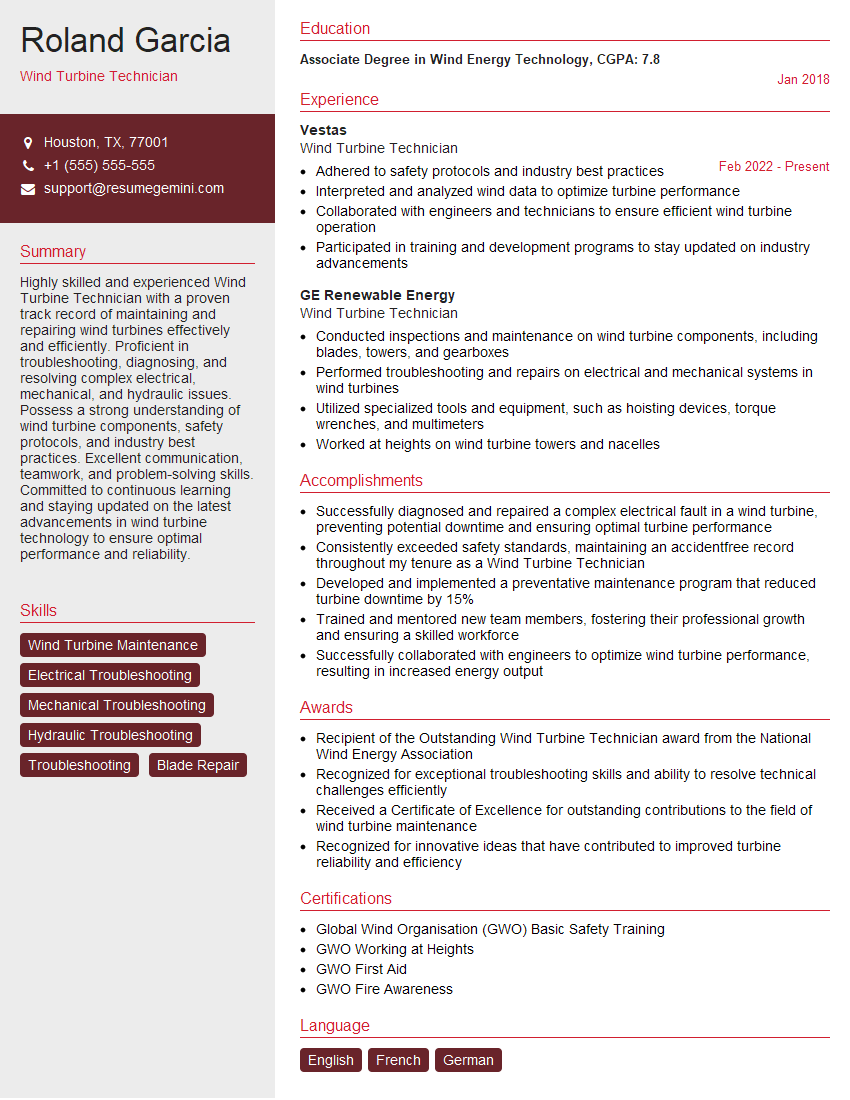
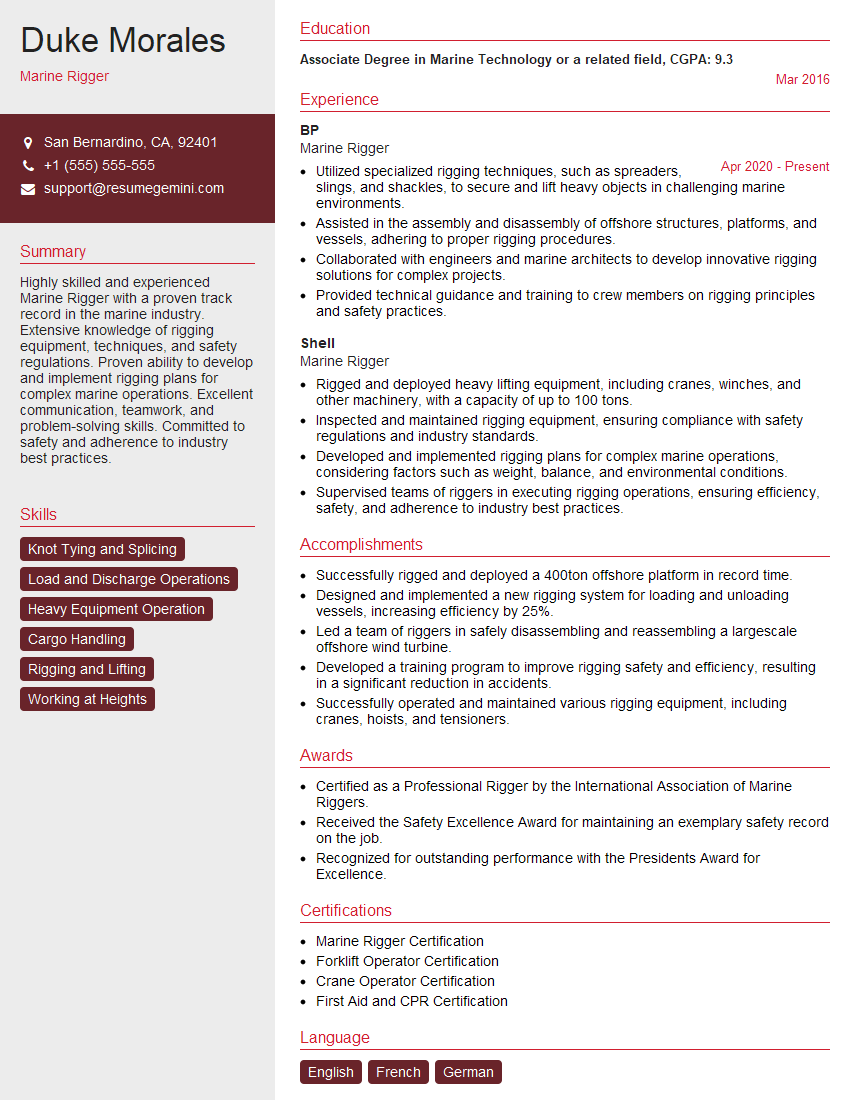
Mastering rigging and climbing techniques opens doors to exciting and rewarding career opportunities in various industries. A strong understanding of these skills demonstrates competence, commitment to safety, and problem-solving abilities – all highly sought-after qualities by employers. To maximize your job prospects, creating an ATS-friendly resume is crucial. ResumeGemini is a trusted resource that can help you craft a professional and effective resume that highlights your unique skills and experience. ResumeGemini provides examples of resumes tailored to rigging and climbing techniques to guide you through the process. Invest the time to build a compelling resume – it’s your first impression on potential employers.
Explore more articles
Users Rating of Our Blogs
Share Your Experience
We value your feedback! Please rate our content and share your thoughts (optional).
What Readers Say About Our Blog
Very informative content, great job.
good