Interviews are more than just a Q&A session—they’re a chance to prove your worth. This blog dives into essential HF/UHF/VHF Communications interview questions and expert tips to help you align your answers with what hiring managers are looking for. Start preparing to shine!
Questions Asked in HF/UHF/VHF Communications Interview
Q 1. Explain the differences between HF, UHF, and VHF frequencies and their typical applications.
HF (High Frequency), VHF (Very High Frequency), and UHF (Ultra High Frequency) represent different bands within the radio frequency spectrum, each with distinct properties and applications. Think of it like different lanes on a highway – each designed for vehicles (signals) with different capabilities.
- HF (3-30 MHz): HF frequencies are characterized by their ability to propagate long distances via ionospheric reflection. This means the signals bounce off the ionosphere (a layer of charged particles in the Earth’s atmosphere), enabling communication over thousands of kilometers. Typical applications include long-range communication, amateur radio, shortwave broadcasting, and some military and maritime operations. Imagine a signal bouncing off a giant mirror in the sky!
- VHF (30-300 MHz): VHF signals generally exhibit line-of-sight propagation, meaning they travel in a straight line and are blocked by obstacles like hills or buildings. However, they can travel considerable distances over open water or flat terrain. Common uses include FM radio broadcasting, marine radio, aircraft communications, and some land mobile radio systems. Think of it like shining a flashlight – you can see only what’s directly in front of you.
- UHF (300 MHz-3 GHz): UHF signals, also predominantly line-of-sight, offer better penetration through foliage and buildings compared to VHF. They are frequently used in mobile phones, cellular networks, satellite communications, cordless phones, and television broadcasting. It’s like using a more powerful flashlight that can cut through some obstacles.
Q 2. Describe the propagation characteristics of HF, UHF, and VHF signals.
The propagation of HF, VHF, and UHF signals differs significantly due to their interaction with the Earth’s atmosphere and terrain.
- HF Propagation: Relies on ionospheric reflection, which is highly variable depending on solar activity and time of day. This leads to unpredictable signal strength and fading. Longer wavelengths (lower frequencies) can penetrate the ionosphere more effectively, allowing for longer ranges.
- VHF Propagation: Primarily line-of-sight, with signal strength decaying rapidly with distance. Signal strength is also affected by terrain features and atmospheric conditions such as temperature inversions and atmospheric ducting, which can cause unexpected signal propagation beyond the line-of-sight.
- UHF Propagation: Similar to VHF, predominantly line-of-sight but with slightly better penetration through obstacles due to the shorter wavelength. Multipath propagation (signals arriving via multiple paths) can be more significant at UHF, leading to signal distortion and fading.
Q 3. What are the advantages and disadvantages of using different modulation techniques in HF, UHF, and VHF communications?
Modulation techniques significantly impact the efficiency and quality of HF, VHF, and UHF communications. The choice depends on factors like bandwidth availability, noise levels, and power constraints.
- Amplitude Modulation (AM): Simple to implement but susceptible to noise. Often used in older broadcasting systems and some HF applications.
- Frequency Modulation (FM): More robust to noise than AM, but requires more bandwidth. Widely used in VHF and UHF broadcasting (FM radio).
- Phase Modulation (PM): Efficient use of bandwidth and noise immunity similar to FM. Used in some advanced communication systems.
- Digital Modulation (e.g., QAM, OFDM): Offers high data rates and efficient use of bandwidth. Becoming increasingly prevalent in modern VHF and UHF systems (e.g., digital cellular networks).
For example, HF communications often benefit from robust modulation schemes like SSB (Single Sideband) to minimize power consumption and improve signal clarity over long distances in the presence of atmospheric noise. In contrast, UHF cellular networks use complex digital modulation techniques to efficiently transmit large amounts of data.
Q 4. How do atmospheric conditions affect HF, UHF, and VHF signal propagation?
Atmospheric conditions significantly influence signal propagation, particularly for HF and, to a lesser extent, VHF.
- HF: Ionospheric conditions, strongly influenced by solar activity and time of day, determine the reflection characteristics. Solar flares can cause disruptions, while nighttime conditions often support longer-range propagation due to different ionospheric layer formations.
- VHF: Temperature inversions (where warmer air is above cooler air) can create ducts that guide signals beyond the normal line-of-sight, leading to unexpectedly long-range reception. Similarly, atmospheric ducting can occur at VHF and UHF, significantly altering the signal propagation path.
- UHF: Less susceptible to atmospheric effects than HF or VHF. However, rain, fog, and snow can attenuate (weaken) UHF signals, particularly at higher frequencies within the UHF band.
For instance, a sudden increase in solar activity can severely disrupt HF communication over long distances. Conversely, a temperature inversion can allow clear VHF communication beyond the horizon, sometimes unexpectedly connecting two far-off points.
Q 5. Explain the concept of frequency hopping spread spectrum (FHSS) and its applications in wireless communications.
Frequency Hopping Spread Spectrum (FHSS) is a digital modulation technique that spreads the transmitted signal across a wide range of frequencies by rapidly hopping between different frequencies. Imagine a conversation using several different walkie-talkies and changing channels very quickly. This makes it difficult for unintended receivers (or jammers) to intercept or disrupt the signal effectively.
It achieves this by employing a pseudo-random sequence to determine the hop pattern. The receiver needs to know this pattern to correctly decode the signal. FHSS offers several advantages:
- Improved security: Difficult for unauthorized users to intercept the complete signal.
- Resistance to jamming: A jammer needs to jam a wide range of frequencies simultaneously.
- Reduced multipath interference: Hopping frequencies can mitigate the effects of multipath fading.
FHSS is used in applications requiring a high degree of security and reliability, such as Bluetooth devices, some wireless microphones, and military communications.
Q 6. What is the purpose of an antenna matching network?
An antenna matching network is a crucial component that optimizes the transfer of power between a transmitter or receiver and an antenna. Think of it as a coupler that ensures a smooth flow of electrical energy from the device to the antenna, maximizing efficiency and signal quality.
Antennas have a characteristic impedance (typically 50 ohms), while transmission lines often have the same impedance. If there’s a mismatch between the antenna impedance and the transmission line impedance, a significant portion of the transmitted power is reflected back, leading to reduced efficiency and potential damage to equipment. The matching network compensates for this impedance mismatch, ensuring maximum power transfer to the antenna and minimizing signal loss.
Matching networks can employ various circuit elements like inductors and capacitors to achieve impedance matching, often using techniques such as L-networks, Pi-networks, or T-networks. The specific design depends on the antenna impedance, the frequency of operation, and other factors.
Q 7. Describe different types of antennas used in HF, UHF, and VHF communications and their characteristics.
Antenna selection depends heavily on the frequency band and application. Here are some examples:
- HF: Long-wire antennas (like dipoles or inverted-V’s), vertical antennas (like ground-mounted monopoles), and loaded antennas are commonly used for their ability to efficiently radiate and receive HF signals over long distances. The length of these antennas is typically a significant fraction of the wavelength at the operating frequency.
- VHF: Half-wave dipoles, Yagi-Uda antennas (directive antennas with high gain), and collinear antennas are often employed. Their physical size is manageable, and directivity can enhance signal strength in a particular direction. For mobile applications, whips or quarter-wave ground planes might be used.
- UHF: Patch antennas (planar antennas), helical antennas, and horn antennas are commonly used. Patch antennas are particularly popular in mobile devices due to their compact size, while helical antennas offer circular polarization properties suitable for satellite communication. Horn antennas provide high gain and directivity.
The choice is made based on factors such as desired gain, radiation pattern, physical size constraints, and the specific propagation conditions. A high-gain directional antenna might be preferable for long-distance point-to-point communication, while an omni-directional antenna would be suitable for broadcasting to a wide area. Each antenna has its unique characteristics to address different applications.
Q 8. Explain the concept of signal-to-noise ratio (SNR) and its importance in communications systems.
Signal-to-noise ratio (SNR) is a measure of the strength of a desired signal compared to the strength of background noise. It’s expressed as a ratio, often in decibels (dB). A higher SNR indicates a stronger signal relative to the noise, leading to better signal quality and less distortion. Think of it like trying to hear a conversation in a crowded room: a high SNR is like being close to the speaker, while a low SNR is like being far away and struggling to hear over the chatter.
In communication systems, SNR is crucial because it directly impacts the reliability and quality of transmitted data. A low SNR can lead to errors in data transmission, causing dropped calls, garbled messages, or corrupted files. For instance, in a VHF radio communication between two ships, a high SNR ensures clear communication, even with atmospheric interference. Conversely, a low SNR might result in unintelligible messages and necessitate the use of robust error correction techniques.
SNR is a key parameter in system design, influencing factors such as receiver sensitivity, transmitter power, and the choice of modulation scheme. Engineers carefully analyze the expected SNR in a given environment to determine the necessary power levels and error correction strategies to ensure reliable communication.
Q 9. What is the difference between simplex, half-duplex, and full-duplex communication?
These terms describe the directionality of communication between two or more devices:
- Simplex: Communication occurs in only one direction. A classic example is a television broadcast – the TV station transmits, but viewers cannot send signals back. Other examples include paging systems or some types of sensor networks sending data to a central receiver.
- Half-duplex: Communication can happen in both directions, but only one direction at a time. Think of a walkie-talkie: only one person can talk at a time; the other must listen before responding. This is common in CB radios and some satellite systems due to limitations on resource allocation.
- Full-duplex: Communication happens simultaneously in both directions. A typical telephone conversation is a perfect example, as both parties can talk and listen at the same time. This is also used in Ethernet networks, where multiple devices can communicate concurrently.
The choice of communication mode depends on factors like the application’s requirements, cost considerations, and the available technology. For high-throughput applications, full-duplex is preferred, but half-duplex might be sufficient for less demanding scenarios where simultaneous communication isn’t crucial.
Q 10. Explain the concept of multiplexing and describe different multiplexing techniques.
Multiplexing is the process of combining multiple signals into a single transmission medium. This is essential for efficient use of bandwidth, especially in wireless communications where spectrum is a scarce resource. Imagine a highway with multiple lanes – each lane carries a different car (signal), but they all share the same road (medium).
Different multiplexing techniques include:
- Frequency-Division Multiplexing (FDM): Signals are transmitted at different frequency bands within the same medium. Think of radio stations – each broadcasts at a unique frequency, allowing you to select different stations without interference. This is widely used in cable television and satellite communications.
- Time-Division Multiplexing (TDM): Signals share the same frequency band but are transmitted at different time slots. A good analogy is a round-robin tournament – each player (signal) gets a turn (time slot) to use the court (frequency band). This is common in digital telephone systems and some types of data networks.
- Code-Division Multiplexing (CDM): Signals share the same frequency and time slots, but are distinguished by unique codes. This is like assigning each person in a crowded room a specific password (code) so they can receive targeted information even when everyone is talking at once. This is particularly useful in cellular communication systems.
The selection of multiplexing technique depends on factors like bandwidth requirements, signal characteristics, and the overall system design. FDM is simple but less efficient at higher frequencies, TDM is well-suited for digital signals, while CDM offers better security and robustness against interference.
Q 11. How does a repeater work and what are its advantages and disadvantages?
A repeater is a device that receives a weak radio signal, amplifies it, and retransmits it at a higher power. It extends the range of a communication system by overcoming signal attenuation and boosting the signal for longer distances.
Advantages:
- Extended Range: Repeaters significantly increase the coverage area of a communication system.
- Improved Signal Quality: By amplifying the signal, repeaters can overcome fading and interference, resulting in clearer communication.
- Cost-Effective Solution: Repeaters are often a more economical solution than installing multiple base stations.
Disadvantages:
- Increased Complexity: Adding repeaters increases the complexity of the communication system and requires careful site selection and configuration.
- Potential for Signal Degradation: Improperly configured repeaters can introduce noise and distortion into the signal.
- Security Concerns: Repeaters can be susceptible to interception and jamming, raising security concerns.
In mountainous regions, for example, repeaters are often deployed to overcome the signal blockage caused by terrain, ensuring reliable communication between remote locations. Careful planning and precise placement of repeaters are essential for optimal performance. The use of specialized antennas and filtering techniques helps minimize unwanted signals and maximize the benefits of a repeater.
Q 12. Describe different types of modulation schemes and their suitability for various communication environments.
Modulation is the process of encoding information onto a carrier signal, allowing it to be transmitted over a communication channel. Different modulation schemes offer different trade-offs in terms of bandwidth efficiency, power efficiency, and robustness against noise.
Some common modulation schemes include:
- Amplitude Shift Keying (ASK): Information is encoded by varying the amplitude of the carrier signal. Simple but susceptible to noise.
- Frequency Shift Keying (FSK): Information is encoded by varying the frequency of the carrier signal. More robust to noise than ASK.
- Phase Shift Keying (PSK): Information is encoded by varying the phase of the carrier signal. Efficient and widely used, with variations like BPSK (Binary PSK) and QPSK (Quadrature PSK).
- Quadrature Amplitude Modulation (QAM): Combines both amplitude and phase modulation, offering high data rates but is more susceptible to noise.
The choice of modulation scheme depends on the specific application requirements and environmental factors. For example, in a noisy environment, FSK or PSK might be preferred for their robustness. In applications where high data rates are critical, QAM is often used, while in situations with power constraints, ASK or simpler forms of PSK might be better choices.
Q 13. What is the purpose of error correction coding in digital communication systems?
Error correction coding (ECC) is a technique used in digital communication systems to detect and correct errors that can occur during transmission. These errors are caused by noise, interference, or other impairments in the communication channel.
ECC works by adding redundant information to the data before transmission. This redundant information enables the receiver to detect and correct errors, ensuring reliable data reception. Think of it as sending a message with multiple copies, so even if some copies are damaged, the receiver can reconstruct the original message.
Different ECC schemes offer varying levels of error correction capability. Some popular techniques include:
- Parity checks: Simple method to detect single-bit errors.
- Hamming codes: More sophisticated method to detect and correct multiple-bit errors.
- Reed-Solomon codes: Robust technique that can correct burst errors (consecutive errors).
The choice of ECC scheme depends on the characteristics of the communication channel and the required reliability. In channels with high error rates, a more powerful ECC scheme will be needed to ensure reliable data transmission. ECC is critical in applications like satellite communication, deep space exploration, and data storage, where reliable data transmission and storage are paramount.
Q 14. Explain the concept of link budget analysis and its importance in system design.
Link budget analysis is a crucial step in designing a communication system. It’s a systematic calculation of all the gains and losses that a signal experiences from the transmitter to the receiver. The goal is to ensure that the received signal strength is sufficient to achieve the desired signal-to-noise ratio (SNR) and maintain reliable communication.
The analysis considers various factors, including:
- Transmitter power: The power output of the transmitting antenna.
- Antenna gains: The gain of both the transmitting and receiving antennas.
- Path loss: The signal attenuation due to distance and atmospheric conditions.
- Cable losses: Signal attenuation in the cables connecting the antennas to the transceivers.
- Receiver noise figure: A measure of the noise generated by the receiver.
A positive link budget indicates that the received signal power exceeds the minimum required power, while a negative link budget indicates that the signal is too weak for reliable communication. A thorough link budget analysis is essential to determine the feasibility of a communication system design, and enables engineers to make informed decisions regarding transmitter power, antenna selection, and other system parameters.
For example, when designing a UHF link for a remote sensing project, link budget analysis would help determine the required transmitter power, antenna gains, and the type of modulation to ensure that the data from the remote sensor can be successfully received at the base station, considering the distance and potential atmospheric attenuation.
Q 15. Describe your experience with RF test equipment (e.g., spectrum analyzers, signal generators).
My experience with RF test equipment is extensive, encompassing both theoretical understanding and hands-on proficiency. I’ve worked extensively with spectrum analyzers, using them to identify and characterize signals within a specific frequency range, measure signal strength (power levels), and analyze signal modulation techniques. This is crucial for identifying interference sources and verifying the performance of communication systems. For example, I once used a spectrum analyzer to pinpoint a narrowband interference source affecting a critical VHF communication link, ultimately tracing it to a malfunctioning industrial heating unit. Signal generators, on the other hand, allow for precise generation of RF signals with controlled parameters such as frequency, amplitude, and modulation type. I’ve used them extensively for testing the sensitivity and linearity of receivers, as well as verifying the performance of transmitters under various operating conditions. In one project, I used a signal generator to simulate various interference scenarios to test the robustness of a newly designed UHF transceiver.
Beyond spectrum analyzers and signal generators, I am also proficient with network analyzers (for characterizing impedance matching and transmission line performance), power meters (for accurate power measurements), and oscilloscopes (for detailed signal waveform analysis). My expertise extends to using these instruments in both laboratory and field settings.
Career Expert Tips:
- Ace those interviews! Prepare effectively by reviewing the Top 50 Most Common Interview Questions on ResumeGemini.
- Navigate your job search with confidence! Explore a wide range of Career Tips on ResumeGemini. Learn about common challenges and recommendations to overcome them.
- Craft the perfect resume! Master the Art of Resume Writing with ResumeGemini’s guide. Showcase your unique qualifications and achievements effectively.
- Don’t miss out on holiday savings! Build your dream resume with ResumeGemini’s ATS optimized templates.
Q 16. Explain your understanding of RF interference and mitigation techniques.
RF interference (RFI) is any unwanted energy that interferes with the intended signal. Think of it like shouting over someone else at a crowded party – your message is hard to understand. RFI can manifest in various forms, including narrowband interference (from a single source), broadband interference (from multiple sources across a wide frequency band), and impulsive noise (short bursts of high-power interference). Sources range from other radio transmitters, electrical equipment (motors, switch-mode power supplies), and even natural phenomena like lightning.
Mitigation techniques depend on the source and severity of the interference. They include:
- Frequency selection: Choosing a less congested frequency band.
- Shielding: Using metal enclosures to block electromagnetic radiation.
- Filtering: Employing filters to attenuate unwanted frequencies. This could be a band-pass filter to allow only the desired signal to pass through, or a notch filter to specifically remove an interfering frequency.
- Directional antennas: Focusing the signal in a specific direction to minimize interference from other sources. A Yagi antenna, for example, has high directivity.
- Signal processing techniques: Using equalization or other digital signal processing methods to improve signal quality. Techniques such as error correction coding can help overcome the effects of some types of interference.
- Improved grounding and bonding: Minimizing ground loops and preventing current from flowing where it shouldn’t.
For instance, I once resolved interference on a VHF marine radio system by installing a high-pass filter to remove low-frequency noise generated by nearby power lines. In another situation, careful antenna placement, including orienting a directional antenna away from known sources of interference, proved crucial to restoring reliable communication.
Q 17. How do you troubleshoot RF communication problems?
Troubleshooting RF communication problems follows a systematic approach. It starts with understanding the system: What components are involved? What are the expected signal levels? What’s the modulation scheme used?
My approach involves these steps:
- Identify the symptom: What exactly is wrong? No signal? Low signal strength? High bit error rate? Intermittent connection?
- Gather information: Check signal levels, check antenna connections, verify power levels at the transmitter and receiver, note environmental factors, and check the logs.
- Isolating the problem: This might involve measuring signal strength at various points in the system, checking cable connections and connectors (for impedance matching issues), swapping out components to pinpoint a faulty component.
- Testing and verification: Use test equipment (spectrum analyzer, signal generator, power meter) to verify signal quality, check for interference, and confirm the fix.
- Documenting the solution: Thorough documentation is crucial to prevent future problems.
For example, in one instance, a weak signal was initially attributed to antenna issues. Through systematic testing, we discovered it was due to a faulty connector, resulting in significant signal loss. Replacing the connector resolved the issue immediately.
Q 18. What are your experiences with different antenna types (e.g., dipole, yagi, patch)?
I have extensive experience with various antenna types, each with its strengths and weaknesses. A dipole antenna is a simple, resonant antenna that’s inexpensive and relatively easy to build. Its omnidirectional radiation pattern is suited for applications requiring coverage in all directions. A classic example is the television antenna found in many homes.
Yagi antennas are highly directional, offering high gain and improved signal strength in a specific direction. They are commonly used in point-to-point communication systems where a focused beam is desired, such as wireless internet service providers. The gain comes at the cost of a reduced coverage area in other directions.
Patch antennas are compact, planar antennas often integrated into devices or mounted on surfaces. They are commonly used in mobile devices and satellite communication systems. They are also relatively inexpensive to manufacture and their size can be adjusted to tune to specific frequencies.
My experience includes selecting the appropriate antenna for a given application, designing and tuning custom antennas, and analyzing antenna performance characteristics such as gain, impedance, and radiation patterns using simulation software and measurement equipment.
Q 19. Describe your experience with different types of RF transmitters and receivers.
My experience encompasses a range of RF transmitters and receivers, spanning different frequency bands and modulation techniques. I’ve worked with both narrowband and wideband systems, from simple amplitude modulation (AM) to sophisticated digital modulation schemes like quadrature amplitude modulation (QAM) and orthogonal frequency-division multiplexing (OFDM) which are used in many modern wireless systems.
Transmitters I’ve worked with include everything from low-power devices (such as those used in Bluetooth or WiFi) to high-power transmitters used in broadcasting and satellite communications. These involve different levels of complexity in terms of power amplification, frequency synthesis, and modulation techniques.
Receivers similarly range from simple superheterodyne designs to sophisticated software-defined radios (SDRs), which offer flexibility and adaptability by performing much of their signal processing digitally. The selection of a transmitter or receiver depends greatly on the specific requirements of the application, including power budget, data rate, range, and interference environment.
For example, I was involved in a project that required a low-power, long-range UHF transmitter using spread spectrum techniques to minimize interference and maximize transmission range.
Q 20. Explain your familiarity with various communication protocols (e.g., TCP/IP, UDP).
While my primary expertise lies in the physical layer of RF communication, I’m familiar with various communication protocols operating above the physical layer. TCP/IP (Transmission Control Protocol/Internet Protocol) is a widely used suite of protocols providing reliable, ordered data delivery across networks. It is a connection-oriented protocol; before data transmission, both communicating devices establish a connection. This makes it suitable for applications requiring error-free data transmission, such as web browsing or file transfer.
UDP (User Datagram Protocol), in contrast, is a connectionless protocol that offers faster, less reliable data transmission. There’s no connection setup before data transmission, making it suitable for real-time applications like online gaming or video streaming where a slight delay is acceptable, but reliable transmission of every single packet is less critical. The choice between TCP/IP and UDP depends on the application’s requirements for speed and reliability.
My understanding of these protocols extends to how they interact with the underlying RF communication layer, including how to configure network settings, manage network addresses (IP addresses), and troubleshoot network connectivity problems. In several projects, I’ve been involved in integrating RF systems with existing IP-based networks.
Q 21. What is your experience with RF safety procedures and regulations?
RF safety is paramount, and I’m deeply familiar with relevant procedures and regulations (such as those from OSHA and FCC). RF exposure can be harmful, so understanding the potential risks and adhering to safety guidelines is crucial. This involves understanding RF exposure limits (SAR – Specific Absorption Rate), and using appropriate safety measures such as:
- Power level control: Minimizing transmitter power levels to what’s necessary.
- Distance: Maintaining a safe distance from RF sources.
- Shielding: Using shielded enclosures to contain RF energy.
- Personal protective equipment (PPE): Utilizing PPE such as RF safety glasses in specific situations.
- Proper antenna grounding: Preventing the build-up of static electricity that can damage equipment.
I always prioritize safety during all phases of RF system design, installation, and operation. This includes conducting RF exposure assessments, ensuring compliance with regulations, and training personnel on safe operating procedures. In one instance, we had to re-design an antenna system to reduce RF exposure in a populated area, which involved adjusting the antenna orientation and decreasing transmission power.
Q 22. Describe your experience with spectrum management and licensing procedures.
Spectrum management involves the careful allocation and regulation of radio frequencies to ensure efficient and non-interfering use. Licensing procedures are the formal processes through which organizations and individuals obtain permission to operate within specific frequency bands. My experience spans over a decade, encompassing both the theoretical understanding of spectrum allocation principles and hands-on involvement in securing licenses for various HF, VHF, and UHF applications. This includes working with regulatory bodies like the FCC (in the US) and Ofcom (in the UK), submitting detailed technical proposals, understanding frequency coordination requirements, and navigating the licensing processes for different types of services, from amateur radio to professional point-to-point links. For example, I successfully obtained a license for a 2.4 GHz link used for high-speed data transmission between two remote sites, meticulously documenting the technical specifications and ensuring compliance with all regulations. In another project, I helped a client navigate the complexities of obtaining a license for a narrowband VHF system in a congested urban environment, demonstrating effective frequency coordination strategies to minimize interference.
I’m proficient in using spectrum analysis tools to identify available frequencies and to assess potential interference issues. I understand the importance of considering factors such as frequency band availability, propagation characteristics, and the potential for interference from adjacent channels or other services. The process isn’t just about filling out forms; it requires a deep understanding of RF propagation, antenna design, and the overall RF environment.
Q 23. How familiar are you with different types of amplifiers (e.g., class A, class B, class C)?
Amplifier classes (A, B, and C) are categorized primarily by their conduction angle, which determines how long the transistor conducts current during each input cycle. This impacts efficiency, linearity, and output power.
- Class A: Conducts for the entire input cycle. Highly linear, meaning it accurately amplifies the input signal shape, but relatively inefficient. Think of it like a faucet that’s always slightly open; it’s ready to respond instantly but wastes water (power) when not in use. Used in high-fidelity audio and applications needing low distortion.
- Class B: Conducts for half the input cycle. More efficient than Class A but introduces even-order harmonics that can distort the signal. It’s like a faucet that only opens half the time; it’s efficient, but less responsive to rapid changes. Often used in push-pull amplifier configurations to minimize distortion.
- Class C: Conducts for less than half the input cycle. The most efficient but highly non-linear. It’s like a faucet that only opens briefly with each request. This high efficiency comes at the cost of significant distortion. Ideal for high-power, narrowband applications like radio transmitters.
My experience includes designing and testing amplifiers across all three classes, selecting the appropriate class based on the specific requirements of the application. For instance, in a low-power, high-fidelity UHF receiver, we used a Class A amplifier for its low-distortion characteristics; whereas in a high-power VHF transmitter, a Class C amplifier was selected to maximize efficiency and output power.
Q 24. Explain your understanding of impedance matching and its importance in RF systems.
Impedance matching is the process of optimizing power transfer between two components in an RF system by ensuring their impedances are matched. Think of it like trying to fill a bucket with a hose: if the hose diameter (impedance) doesn’t match the bucket opening (load impedance), you won’t get efficient filling (power transfer). Mismatched impedance leads to reflections, power loss, and signal distortion. In RF systems, this is crucial for efficient signal transmission and reception.
The goal is to achieve maximum power transfer, typically by using matching networks (LC circuits, transformers, etc.) to transform the source impedance to match the load impedance (usually 50 ohms in many RF systems). My experience includes designing matching networks using Smith charts and simulation software (like ADS or AWR Microwave Office) to optimize power transfer and minimize signal reflections. For example, in a project involving a VHF antenna and a transmitter, I designed a matching network to maximize power delivery to the antenna, significantly improving the signal strength. Understanding impedance matching concepts is critical for proper antenna design, circuit design, and overall system performance.
Q 25. What is your experience with software-defined radios (SDRs)?
Software-defined radios (SDRs) are highly flexible and programmable radios where much of the signal processing is done in software. My experience with SDRs encompasses their use in various applications, including spectrum monitoring, software-defined radio communication, and receiver design. I’ve worked extensively with platforms like GNU Radio and USRP (Universal Software Radio Peripheral) hardware, building and testing custom SDR applications. For instance, I developed a prototype SDR-based receiver for detecting weak signals in a congested spectrum, implementing advanced digital signal processing techniques in software to filter noise and extract the desired signal.
Using SDRs allows for great flexibility and adaptability. It simplifies the prototyping phase, allowing engineers to easily change parameters and test different algorithms without requiring a complete hardware redesign. This is a significant advantage over traditional hardware-defined radios. I am also familiar with their potential limitations, such as the challenges presented by demanding real-time processing requirements and the trade-off between flexibility and processing efficiency compared to dedicated hardware solutions.
Q 26. Describe your experience with different types of filters (e.g., bandpass, low-pass, high-pass).
Filters are essential components in RF systems, used to select desired frequencies and reject unwanted ones. There are many types, but some of the most common are:
- Bandpass Filters: Allow a specific range of frequencies to pass through while attenuating frequencies outside that range. Imagine it as a gate that only allows people within a specific height range to pass.
- Low-pass Filters: Allow frequencies below a certain cutoff frequency to pass through, blocking higher frequencies. This is like a sieve allowing small particles through but blocking large ones.
- High-pass Filters: Allow frequencies above a certain cutoff frequency to pass through, blocking lower frequencies. This is the opposite of a low-pass filter.
My experience includes designing and selecting filters for various applications, using both passive components (like inductors and capacitors) and active filters (incorporating operational amplifiers). For instance, in a narrowband communication system, we utilized a bandpass filter to isolate the desired channel and eliminate adjacent channel interference. In other instances, we’ve integrated filters into receivers and transmitters to ensure the signal integrity and compliance with regulatory standards. The choice of filter type depends heavily on factors like the desired frequency response, the level of attenuation needed, and the overall cost and size constraints of the system.
Q 27. Explain your understanding of electromagnetic compatibility (EMC) and its importance in RF systems.
Electromagnetic compatibility (EMC) refers to the ability of electronic equipment to operate in its intended electromagnetic environment without causing unacceptable electromagnetic interference (EMI) to other equipment or systems. Essentially, it’s about ensuring that your device doesn’t cause problems for others, and that others don’t cause problems for it. In RF systems, EMI can cause malfunctions, signal degradation, and even safety hazards. The importance of EMC cannot be overstated.
My experience covers all aspects of EMC, from designing for EMC compliance to performing EMC testing and troubleshooting. This includes understanding emission limits and susceptibility levels defined in standards like CISPR and FCC regulations. I’ve employed various EMC design techniques, such as shielding, grounding, filtering, and proper layout design, to minimize EMI and improve the system’s resistance to external interference. For example, in one project, we identified and mitigated EMI issues in a VHF radio system by carefully designing the grounding system and adding filters to suppress unwanted emissions. Proper EMC design is crucial not only for regulatory compliance but also for ensuring reliable and robust system performance.
Q 28. Describe your experience with digital signal processing (DSP) techniques applied to RF communication.
Digital signal processing (DSP) techniques are fundamental to modern RF communications. They enable efficient and sophisticated signal processing functions which are difficult or impossible to implement with purely analog methods. My experience involves using DSP algorithms for various purposes in RF communication systems.
These techniques include modulation/demodulation (e.g., OFDM, QAM), equalization (to compensate for channel impairments), filtering (to remove noise and interference), and error correction coding. I have practical experience implementing these algorithms using tools like MATLAB and specialized DSP processors. For example, I developed a DSP algorithm for channel equalization in a high-speed data transmission system, significantly improving the data throughput and reliability. In another project, I implemented advanced digital filtering techniques to remove interference and noise from a weak VHF signal, significantly enhancing the signal-to-noise ratio. DSP is critical for extracting information from noisy signals, increasing data rates, and optimizing the overall performance and reliability of RF communication systems.
Key Topics to Learn for HF/UHF/VHF Communications Interview
- Propagation Characteristics: Understanding how HF, UHF, and VHF signals propagate, including factors affecting range, signal strength, and interference (e.g., ionospheric effects for HF, atmospheric attenuation for UHF/VHF).
- Antenna Systems: Knowledge of different antenna types (e.g., dipoles, yagis, patch antennas) and their applications in HF, UHF, and VHF systems. This includes impedance matching, gain, and radiation patterns.
- Modulation Techniques: Familiarity with various modulation schemes (AM, FM, digital modulation) and their suitability for different frequency bands and applications. Understanding the trade-offs between bandwidth, power efficiency, and robustness.
- Receiver and Transmitter Design: Basic understanding of the components and functionality of receivers and transmitters, including mixing, filtering, amplification, and signal processing techniques.
- Troubleshooting and Problem Solving: Ability to diagnose and troubleshoot common communication problems, including signal interference, fading, and equipment malfunctions. Practical experience with test equipment is valuable.
- Networking and Protocols: Understanding of networking concepts relevant to HF/UHF/VHF communication systems, such as packet radio, data protocols, and network security.
- Regulations and Licensing: Awareness of relevant regulations and licensing requirements for operating in HF, UHF, and VHF frequency bands.
- System Integration: Experience with integrating various components into a complete communication system, including antennas, transmitters, receivers, and control systems.
- Security Considerations: Understanding of security vulnerabilities and mitigation strategies for HF/UHF/VHF communication systems.
Next Steps
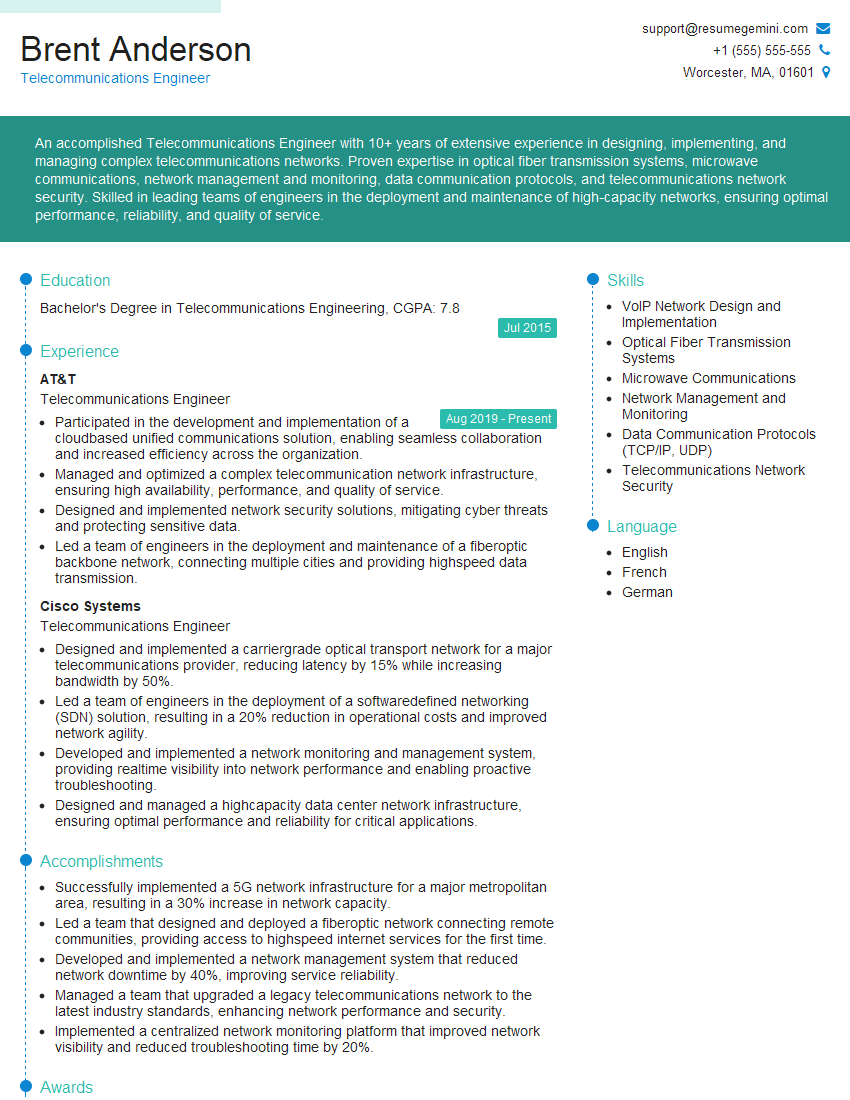
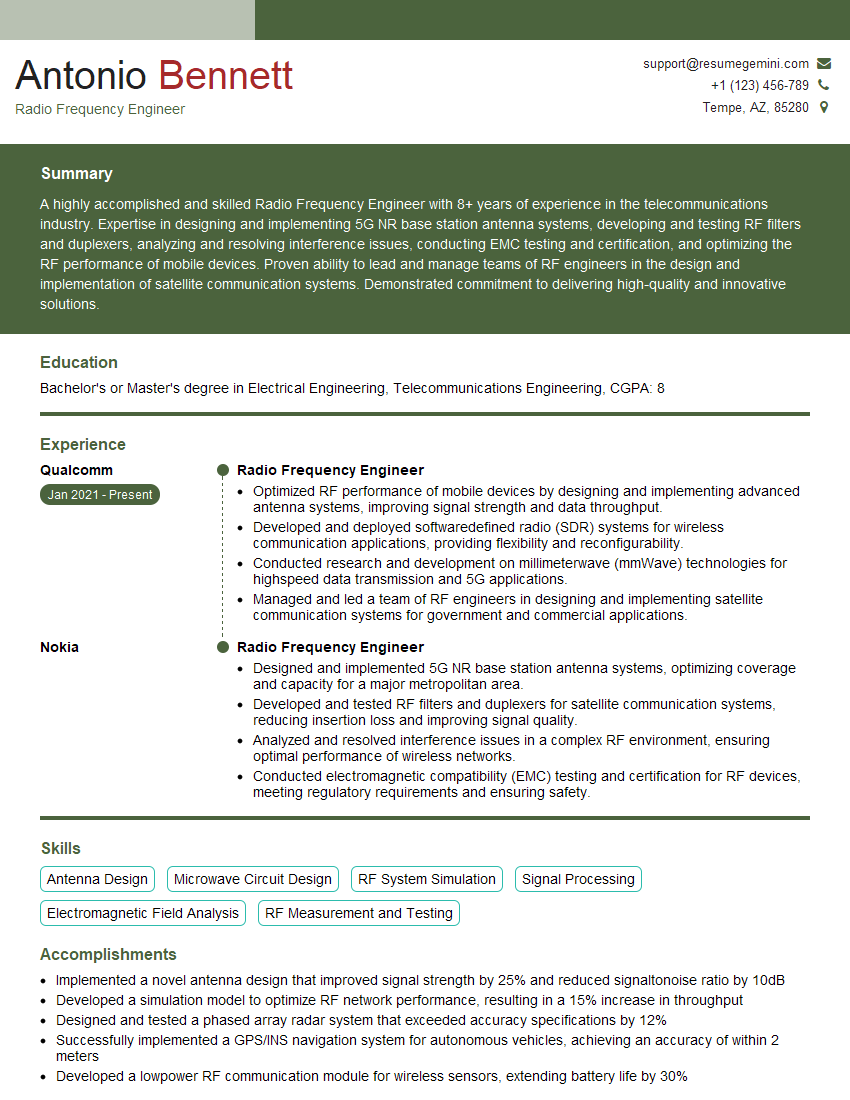
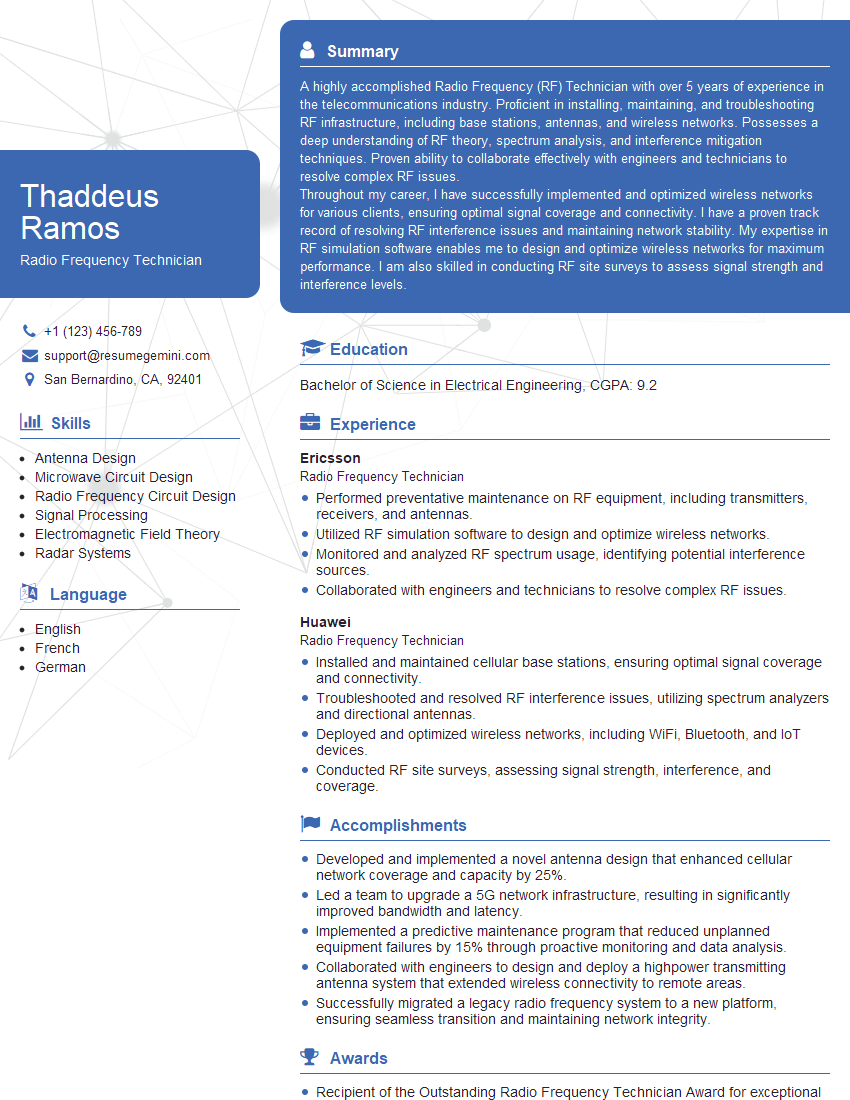
Mastering HF/UHF/VHF communications opens doors to exciting career opportunities in diverse fields like aerospace, telecommunications, and defense. To stand out, a strong and ATS-friendly resume is crucial. ResumeGemini can help you craft a compelling resume that highlights your skills and experience effectively, maximizing your chances of landing your dream job. ResumeGemini offers examples of resumes tailored to the HF/UHF/VHF Communications field, providing a valuable template to guide your creation.

Explore more articles
Users Rating of Our Blogs
Share Your Experience
We value your feedback! Please rate our content and share your thoughts (optional).
What Readers Say About Our Blog
Very informative content, great job.
good