Preparation is the key to success in any interview. In this post, we’ll explore crucial Experience with advanced manufacturing interview questions and equip you with strategies to craft impactful answers. Whether you’re a beginner or a pro, these tips will elevate your preparation.
Questions Asked in Experience with advanced manufacturing Interview
Q 1. Describe your experience with Lean Manufacturing principles.
Lean Manufacturing is a philosophy focused on eliminating waste and maximizing value for the customer. It’s not just about cutting costs; it’s about streamlining processes to improve efficiency, quality, and delivery. My experience involves implementing Lean principles across several projects, focusing on the 5S methodology (Sort, Set in Order, Shine, Standardize, Sustain), value stream mapping, and Kaizen events.
For example, in a previous role, we used value stream mapping to identify bottlenecks in our assembly line. This involved visually representing the entire process, from raw materials to finished product, highlighting areas where time and resources were wasted. We discovered that a particular inspection step was unnecessarily time-consuming. By simplifying the inspection process and implementing a new fixture, we reduced lead time by 15% and improved overall efficiency.
Another key aspect of my Lean experience is facilitating Kaizen events – short, focused workshops where teams collaboratively identify and solve process improvement opportunities. One successful Kaizen event resulted in a 20% reduction in defect rates by simply reorganizing the workspace and improving the flow of materials.
Q 2. Explain your understanding of Six Sigma methodologies in a manufacturing context.
Six Sigma is a data-driven methodology aimed at minimizing defects and variability in processes. It uses statistical tools and techniques to identify and eliminate the root causes of defects, ultimately improving quality and reducing costs. My understanding extends to applying DMAIC (Define, Measure, Analyze, Improve, Control) and DMADV (Define, Measure, Analyze, Design, Verify) methodologies.
In a previous project involving injection molding, we used Six Sigma to reduce the number of defective parts. The Define phase identified the high defect rate as our problem. The Measure phase involved collecting data on the types and frequency of defects. The Analyze phase utilized statistical process control (SPC) charts to identify the root causes, which turned out to be inconsistent material temperature and injection pressure. The Improve phase involved implementing process controls and adjustments to stabilize these parameters. Finally, the Control phase put in place monitoring systems to prevent future issues. This resulted in a 75% reduction in defective parts.
Q 3. How would you troubleshoot a production line bottleneck?
Troubleshooting a production line bottleneck requires a systematic approach. I typically follow these steps:
- Identify the bottleneck: This often involves analyzing production data, observing the line, and talking to operators to pinpoint the area with the lowest throughput.
- Gather data: Collect detailed data on the bottleneck area, including cycle times, defect rates, machine downtime, and material availability.
- Analyze the root cause: Use tools like fishbone diagrams (Ishikawa diagrams) and Pareto charts to identify the primary cause of the bottleneck. Is it a machine malfunction, inadequate staffing, material shortages, or poor process design?
- Implement countermeasures: Develop and implement solutions based on the root cause analysis. This might involve repairing a machine, optimizing the process flow, improving worker training, or investing in new equipment.
- Monitor and evaluate: After implementing solutions, closely monitor the bottleneck area to ensure the implemented changes have the desired effect. Regularly assess the effectiveness of the countermeasures and adjust as needed.
For example, if the bottleneck is due to a slow machine, solutions might involve repairing the machine, upgrading it, or implementing preventive maintenance to reduce downtime. If it’s due to material shortages, improvements might include optimizing the supply chain or adjusting inventory levels.
Q 4. What experience do you have with implementing automation in a manufacturing setting?
I have extensive experience with implementing automation in manufacturing, ranging from simple automated guided vehicles (AGVs) to complex robotic systems. My approach always starts with a thorough needs assessment, considering factors such as production volume, cost-benefit analysis, and the potential impact on workers. I also prioritize safety and ensure proper training for personnel working alongside automated systems.
In one project, we automated a palletizing process using robotic arms. This involved selecting appropriate robots, designing custom end-effectors, and integrating the robots with the existing conveyor system and warehouse management system (WMS). This automation significantly increased throughput, reduced labor costs, and improved workplace safety by eliminating repetitive manual tasks.
Another project involved implementing a vision system for quality inspection, which automated the detection of defects in the products, significantly improving quality control and reducing the need for manual inspection.
Q 5. Describe your experience with different types of manufacturing processes (e.g., injection molding, machining, etc.).
My experience encompasses a broad range of manufacturing processes, including injection molding, machining (milling, turning, drilling), stamping, and assembly. I understand the principles behind each process, the associated equipment, and the challenges involved in optimizing their performance.
For instance, in injection molding, I’ve worked extensively on optimizing mold design, injection parameters, and material selection to improve part quality and reduce cycle times. In machining, I’ve implemented techniques like high-speed machining and computer numerical control (CNC) programming to improve efficiency and precision. My understanding extends to selecting appropriate tooling and cutting parameters based on material properties and desired surface finish.
In assembly, I’ve focused on streamlining workflows, reducing manual handling, and improving ergonomics to enhance productivity and employee well-being. A thorough understanding of these diverse processes allows me to identify synergies and optimize the overall manufacturing system.
Q 6. How familiar are you with Programmable Logic Controllers (PLCs)?
I’m highly familiar with Programmable Logic Controllers (PLCs) and their application in industrial automation. I have experience programming PLCs using various languages like Ladder Logic and Structured Text. My knowledge includes designing PLC programs for controlling machines, managing input/output signals, implementing safety protocols, and integrating PLCs with other industrial control systems such as supervisory control and data acquisition (SCADA) systems.
In a past project, I developed a PLC program to control a complex automated assembly line. This involved coordinating the movement of robots, conveyor systems, and other equipment to ensure smooth and efficient operation. The program also incorporated safety features to prevent accidents and protect personnel.
I understand the importance of proper PLC programming, including documentation, testing, and debugging, to ensure reliable and maintainable systems.
Q 7. What are your experiences with robotics and robotic automation in manufacturing?
My experience with robotics and robotic automation in manufacturing encompasses various applications, from simple pick-and-place robots to sophisticated collaborative robots (cobots). I have practical experience in robot programming, integration, and maintenance. I’m proficient in using robot simulation software for offline programming and optimizing robot trajectories.
In one project, I integrated a robotic arm into an existing production line to perform a repetitive welding task. This involved selecting an appropriate robot model, developing a robot program to execute the welding process, and integrating the robot with the existing PLC control system. This automation increased welding speed, improved weld quality, and reduced labor costs.
My expertise extends to understanding the safety implications of robotic systems and implementing safety measures to mitigate risks to personnel. I’m aware of various robot safety standards and best practices.
Q 8. Explain your understanding of preventative maintenance strategies.
Preventative maintenance (PM) is a proactive approach to equipment upkeep, aiming to minimize unexpected breakdowns and maximize equipment lifespan. Instead of reacting to failures, PM involves scheduled inspections, lubrication, cleaning, and part replacements to prevent issues before they arise.
A robust PM strategy typically includes:
- Developing a PM schedule: This involves analyzing equipment criticality, failure modes, and manufacturer recommendations to create a tailored maintenance plan. For example, a critical machine might require daily checks, while less critical equipment might only need monthly inspections.
- Implementing a Computerized Maintenance Management System (CMMS): A CMMS is software that helps manage and track all maintenance activities, including scheduling, work orders, parts inventory, and technician assignments. This ensures nothing is overlooked and provides valuable data for continuous improvement.
- Training technicians: Properly trained technicians are crucial for effective PM. They need to understand the equipment’s operation, potential failure points, and the procedures for performing the necessary maintenance tasks.
- Regularly reviewing and updating the PM schedule: Maintenance schedules should be reviewed periodically based on equipment performance, failure history, and changes in operating conditions. For instance, if a machine starts experiencing more frequent issues, the PM schedule might need to be adjusted to include more frequent checks or preventative measures.
In my previous role at Acme Manufacturing, we implemented a new CMMS and revised our PM schedule, which resulted in a 25% reduction in equipment downtime and a 15% decrease in maintenance costs over two years. This demonstrates the significant return on investment that can be achieved through a well-executed PM strategy.
Q 9. How would you improve the efficiency of a specific manufacturing process?
Improving manufacturing process efficiency requires a systematic approach. Let’s say we’re looking at a bottling line. To enhance its efficiency, I’d use a DMAIC (Define, Measure, Analyze, Improve, Control) methodology, a structured approach widely used in Six Sigma.
- Define: Clearly define the current process and its inefficiencies. This might involve measuring cycle times, identifying bottlenecks (e.g., slow filling machine), and quantifying defects.
- Measure: Collect detailed data on the current performance. This could involve tracking production rates, downtime, and material waste.
- Analyze: Analyze the collected data to identify the root causes of inefficiencies. For example, a root cause analysis might reveal that the filling machine’s slow speed is due to worn-out parts.
- Improve: Implement solutions to address the identified root causes. This could involve replacing the worn-out parts, optimizing the machine settings, or implementing a new automated system. Maybe we explore a faster filling machine or redesign the bottle handling system to reduce bottlenecks.
- Control: Establish monitoring and control mechanisms to ensure the improvements are sustained. This might involve regularly tracking key performance indicators (KPIs) and making adjustments as needed. This could involve regular calibration of equipment or implementing a preventative maintenance schedule for the critical filling machine.
For instance, in a previous project, we used this methodology to improve a similar bottling line, leading to a 10% increase in production output and a 5% reduction in material waste. The key was focusing on data-driven decision-making and a collaborative approach involving operators, engineers, and management.
Q 10. What software packages are you proficient in for manufacturing applications?
I’m proficient in several software packages commonly used in advanced manufacturing. My experience includes:
- MES (Manufacturing Execution Systems) software: Such as Siemens Opcenter Execution, Rockwell Automation FactoryTalk ProductionCenter, and Infor SyteLine. These systems provide real-time visibility into production processes, enabling better monitoring, control, and optimization.
- PLM (Product Lifecycle Management) software: Such as PTC Windchill and Autodesk Vault. These systems manage the entire product lifecycle, from design and development to manufacturing and disposal.
- CAD/CAM software: I have experience with SolidWorks, AutoCAD, and Mastercam for designing and manufacturing parts.
- Data analytics and visualization tools: I’m proficient in tools such as Tableau and Power BI for analyzing manufacturing data and generating insightful reports.
- Programming Languages (relevant to automation): I have working knowledge of Python and experience in using it for scripting and automation tasks in manufacturing environments.
I can confidently use these tools to streamline processes, improve data analysis capabilities, and enhance decision-making across the manufacturing value chain.
Q 11. Describe your experience with quality control and assurance in manufacturing.
Quality control and assurance (QA/QC) is paramount in manufacturing. My experience encompasses various aspects, from initial design verification to final product inspection. I’ve been involved in implementing and managing quality systems in accordance with ISO 9001 standards.
My experience includes:
- Developing and implementing quality plans: Defining clear quality objectives, procedures, and responsibilities.
- Conducting inspections and tests: Using statistical process control (SPC) techniques to monitor and control process variation. This included developing control charts and analyzing data to identify trends and potential issues.
- Performing root cause analysis: Investigating defects and implementing corrective actions to prevent recurrence. For example, using tools like the 5 Whys to drill down to the root cause of a recurring defect in a production process.
- Managing non-conforming material: Establishing processes for handling defective products and ensuring appropriate actions are taken.
- Working with suppliers to ensure quality: Collaborating with suppliers to establish quality standards and conduct audits to ensure compliance.
In my previous role, I successfully implemented a new QA/QC system that reduced the defect rate by 18% and improved customer satisfaction scores significantly. This involved training staff on new quality procedures and implementing a more rigorous inspection process.
Q 12. How do you manage and resolve conflicts within a manufacturing team?
Conflict resolution within a manufacturing team is crucial for maintaining productivity and morale. My approach is based on open communication, active listening, and collaborative problem-solving.
I typically follow these steps:
- Identify the source of the conflict: Understand the underlying issues driving the disagreement. This often involves speaking to all involved parties separately to get a complete understanding of the situation.
- Facilitate open communication: Create a safe space for all parties to express their perspectives without interruption. Focus on listening empathetically to understand their concerns.
- Identify common ground: Find shared goals and values to build a collaborative foundation for resolving the conflict.
- Develop a mutually acceptable solution: Work with all parties to find a resolution that addresses everyone’s concerns. This often requires compromise from all involved.
- Implement and monitor the solution: Ensure the agreed-upon solution is implemented and monitor its effectiveness. Follow up to ensure the conflict has been resolved and doesn’t reoccur.
One example involved a conflict between two teams regarding the allocation of resources. By facilitating a discussion where each team explained their needs and challenges, we were able to develop a compromise that ensured both teams could meet their production targets. This involved a temporary reallocation of resources, carefully monitored, and a plan to address the root issue of limited resources long-term.
Q 13. What is your experience with supply chain management in a manufacturing environment?
Supply chain management (SCM) is critical for manufacturing success. My experience involves managing the flow of materials, information, and finances across the entire supply chain, from raw material sourcing to finished product delivery. This includes working closely with suppliers, logistics providers, and internal departments.
My experience encompasses:
- Supplier relationship management: Building strong relationships with suppliers to ensure timely delivery of high-quality materials.
- Inventory management: Optimizing inventory levels to minimize costs while ensuring sufficient stock to meet production demands. This involved implementing inventory management systems and using techniques like Just-in-Time (JIT) inventory management.
- Logistics and transportation: Managing the movement of materials throughout the supply chain to minimize lead times and transportation costs. This includes negotiating with logistics providers and optimizing shipping routes.
- Demand forecasting: Analyzing market trends and sales data to predict future demand and adjust production accordingly. This involves using forecasting techniques and collaborating with sales and marketing teams.
- Risk management: Identifying and mitigating potential risks throughout the supply chain, such as disruptions due to natural disasters or geopolitical instability.
In a previous project, I successfully implemented a new SCM system that reduced lead times by 15% and improved inventory turnover rate by 20%, resulting in significant cost savings and improved customer service.
Q 14. How familiar are you with Industry 4.0 concepts?
Industry 4.0, or the Fourth Industrial Revolution, represents a paradigm shift in manufacturing, characterized by the integration of cyber-physical systems, the Internet of Things (IoT), cloud computing, and big data analytics. I’m very familiar with its key concepts.
My understanding includes:
- IoT and Smart Manufacturing: Connecting machines and equipment to collect real-time data for monitoring and optimization. This data is used for predictive maintenance, process optimization and improved decision-making.
- Cyber-Physical Systems (CPS): Integrating computational capabilities into physical processes for greater automation, flexibility, and control. This is core to smart factories and advanced automation.
- Big Data and Analytics: Utilizing the vast amounts of data generated by smart factories to improve efficiency, quality, and decision-making. This often includes using machine learning algorithms to identify patterns and predict outcomes.
- Cloud Computing: Utilizing cloud platforms for data storage, processing, and analysis. This offers scalability and flexibility while reducing IT infrastructure costs.
- Additive Manufacturing (3D Printing): Implementing 3D printing technologies for rapid prototyping, customized production, and on-demand manufacturing.
I’ve worked on projects involving the implementation of IoT sensors on production equipment to monitor performance in real time and reduce downtime. I believe Industry 4.0 principles are essential for creating flexible, resilient, and efficient manufacturing operations.
Q 15. Describe your experience with data analysis and reporting in a manufacturing context.
Data analysis and reporting in manufacturing are crucial for optimizing processes and identifying areas for improvement. My experience involves leveraging various tools and techniques to extract insights from diverse data sources, including machine sensor data, production logs, inventory management systems, and quality control records.
For instance, in a previous role, we utilized statistical process control (SPC) charts to monitor key performance indicators (KPIs) like cycle time, defect rates, and overall equipment effectiveness (OEE). By analyzing trends and patterns, we proactively identified potential issues before they escalated into major problems. We also employed predictive analytics, using machine learning algorithms to forecast demand and optimize inventory levels, minimizing storage costs and preventing stockouts.
Furthermore, I’m proficient in using business intelligence (BI) tools such as Tableau and Power BI to create interactive dashboards and reports that visualize key findings for stakeholders across different departments. These reports facilitate data-driven decision-making, helping to improve efficiency, reduce waste, and ultimately enhance profitability.
A specific example involved identifying a bottleneck in the assembly line by analyzing cycle time data. This analysis revealed a specific workstation consistently lagging, leading to an investigation that uncovered a poorly designed work process. By redesigning the workstation layout and streamlining the workflow, we were able to reduce cycle time by 15%, significantly increasing production output.
Career Expert Tips:
- Ace those interviews! Prepare effectively by reviewing the Top 50 Most Common Interview Questions on ResumeGemini.
- Navigate your job search with confidence! Explore a wide range of Career Tips on ResumeGemini. Learn about common challenges and recommendations to overcome them.
- Craft the perfect resume! Master the Art of Resume Writing with ResumeGemini’s guide. Showcase your unique qualifications and achievements effectively.
- Don’t miss out on holiday savings! Build your dream resume with ResumeGemini’s ATS optimized templates.
Q 16. How would you handle a sudden equipment failure on the production line?
Handling sudden equipment failure requires a swift and systematic approach. My first step would be to ensure the safety of personnel involved, immediately shutting down the affected section of the production line and activating emergency procedures.
Following this, I would initiate a rapid assessment to determine the extent of the damage and identify the root cause of the failure. This often involves reviewing machine logs, conducting visual inspections, and consulting with maintenance personnel. Based on this assessment, we would determine the most effective course of action, which could involve making temporary repairs to restore partial functionality or implementing a complete replacement.
Simultaneously, I would activate our established emergency response plan, which includes contacting relevant personnel, notifying management, and potentially engaging external support if necessary. Communication is key; we’d transparently update all affected parties on the progress of repairs and the potential impact on production schedules.
To minimize future occurrences, a thorough root cause analysis (RCA) is conducted post-repair, investigating underlying causes and implementing corrective actions to prevent recurrence. This might include upgrades to equipment, changes in maintenance schedules, or improvements to operator training procedures. The data gathered during this process would contribute towards predictive maintenance strategies, utilizing machine learning to foresee potential failures and schedule maintenance proactively.
Q 17. What is your experience with implementing and managing change within a manufacturing facility?
Implementing and managing change in a manufacturing environment requires careful planning, effective communication, and strong leadership. My approach focuses on understanding the reasons behind the change, ensuring buy-in from all stakeholders, and providing the necessary support for a smooth transition.
I typically employ a structured change management methodology, such as Kotter’s 8-step model, which emphasizes creating a sense of urgency, building a guiding coalition, developing a clear vision, communicating the vision effectively, empowering action, generating short-term wins, consolidating gains, and anchoring the changes in the culture.
In one instance, we implemented a new enterprise resource planning (ERP) system. The process started by clearly articulating the benefits of the new system to all employees and providing training and support. We conducted pilot programs to identify and resolve potential issues before the full-scale rollout. Regular communication updates, addressing concerns, and celebrating successes ensured a smoother transition and maximized employee engagement.
Managing resistance to change is a crucial aspect. This is achieved by fostering open communication, actively listening to employee concerns, and involving employees in the change process whenever possible. By demonstrating empathy and addressing concerns, resistance is often reduced, and adoption is improved.
Q 18. Describe your experience with different manufacturing scheduling techniques.
Manufacturing scheduling is essential for optimizing production flow and meeting customer demand. I have extensive experience with various scheduling techniques, each with its own strengths and weaknesses.
First-In, First-Out (FIFO): This simple method prioritizes jobs based on their arrival time. It’s easy to implement but can lead to inefficient resource utilization if jobs have varying processing times.
Shortest Processing Time (SPT): This prioritizes jobs with the shortest processing time, minimizing overall completion time but potentially delaying longer jobs.
Critical Ratio (CR): This technique prioritizes jobs based on their due date and remaining processing time, effectively balancing due date adherence and resource utilization.
Material Requirements Planning (MRP): This system schedules production based on the required materials, ensuring timely availability of components and avoiding shortages.
Capacity Requirements Planning (CRP): CRP integrates with MRP to check whether the planned production is feasible, given the available resources. This helps to avoid over-scheduling and ensures realistic production plans.
My experience involves using software tools like ERP systems and specialized scheduling software to implement and manage these techniques, adapting them to specific production contexts and optimizing schedules based on real-time data and adjustments.
Q 19. How familiar are you with different types of manufacturing layouts (e.g., product layout, process layout)?
Manufacturing layouts significantly impact efficiency and productivity. I’m familiar with several layouts, including:
- Product Layout (Assembly Line): This is ideal for high-volume, standardized products. Workstations are arranged sequentially, following the production flow. Example: Automobile assembly line.
- Process Layout (Functional Layout): This groups similar machines or equipment together, suitable for low-volume, customized products. Material handling can be more complex. Example: Machine shop.
- Cellular Layout (Group Technology): This groups machines to process families of parts with similar characteristics, balancing the benefits of product and process layouts. Example: Fabrication of similar product variations.
- Fixed-Position Layout: This layout is used when the product remains stationary, and resources are moved to it. Example: Shipbuilding.
Choosing the optimal layout depends on factors like production volume, product variety, and the degree of customization. I’ve been involved in layout design and optimization projects, employing techniques like simulation modeling to evaluate different layouts and determine the most efficient configuration before implementing physical changes.
Q 20. Explain your understanding of capacity planning in manufacturing.
Capacity planning in manufacturing focuses on determining the production capacity needed to meet anticipated demand, considering both current and future requirements. This involves analyzing production processes, equipment capabilities, and labor resources.
The process typically begins with forecasting future demand, which can be done using statistical methods or market research. Once demand is projected, capacity requirements are determined based on production rates and lead times. This might involve analyzing bottleneck processes and identifying opportunities for improvement.
Capacity planning often involves considering different scenarios: expanding existing capacity through equipment upgrades or additional shifts, outsourcing some production, or even strategically managing demand to align with available capacity.
A key aspect of capacity planning is considering the financial implications of different strategies. Expansion costs, outsourcing costs, and the potential cost of lost sales due to capacity constraints are all important factors to consider. Utilizing simulation and modeling tools can help in determining the optimal capacity level, minimizing costs and maximizing profitability.
Q 21. What is your experience with cost reduction strategies in manufacturing?
Cost reduction in manufacturing is a continuous effort aimed at improving efficiency and profitability. My experience includes implementing a variety of strategies, categorized as follows:
- Lean Manufacturing: Eliminating waste in all aspects of production, including reducing inventory, improving workflow, and eliminating defects. This often involves implementing tools like 5S, Kaizen, and value stream mapping.
- Process Optimization: Analyzing and improving individual processes to reduce cycle times, improve resource utilization, and minimize errors. This might involve using data analysis to identify bottlenecks and implementing automation to streamline processes.
- Supply Chain Management: Optimizing the procurement process to negotiate better prices with suppliers, improve inventory management, and reduce transportation costs.
- Technology Adoption: Implementing advanced technologies such as robotics, automation, and AI-powered systems to enhance productivity and reduce labor costs. This might also involve investing in improved data analytics tools for better decision-making.
- Energy Efficiency: Implementing measures to reduce energy consumption, which lowers operational costs and reduces the environmental impact. This could involve upgrading to more energy-efficient equipment or optimizing energy usage through better process controls.
Successful cost reduction requires a holistic approach that considers all aspects of the manufacturing process. It’s essential to continuously monitor progress, track cost savings, and adapt strategies as needed. Regular cost analysis and benchmarking against industry best practices are vital for ensuring ongoing improvement.
Q 22. How do you ensure compliance with safety regulations in a manufacturing environment?
Ensuring safety compliance in advanced manufacturing is paramount. It’s not just about ticking boxes; it’s about fostering a safety-first culture. My approach is multi-faceted and starts with a robust risk assessment program. This involves identifying all potential hazards, from machine malfunctions to chemical exposures, and then implementing control measures. This might include things like implementing lock-out/tag-out procedures for machinery, providing comprehensive personal protective equipment (PPE) training and access, and establishing clear emergency procedures.
Beyond this initial assessment, regular safety audits are crucial. These audits aren’t just about finding violations; they are opportunities to identify areas for improvement and to reinforce safe work practices. I also strongly advocate for employee participation in safety programs. They’re the ones on the front lines, and their insights are invaluable in identifying potential hazards and suggesting solutions. Finally, consistent training and refresher courses, coupled with a system for reporting near misses and accidents, create a continuous feedback loop, driving improvements in safety performance.
For instance, in a previous role, we implemented a new color-coded system for identifying hazardous materials, simplifying identification and improving response times. This led to a 15% reduction in minor accidents related to chemical handling within the first six months.
Q 23. Describe your experience with managing inventory levels.
Managing inventory is about achieving the delicate balance between having enough materials to meet production demands without tying up excessive capital in storage. My experience relies heavily on utilizing advanced inventory management systems (IMS) which leverage data analytics to predict demand and optimize stock levels. I’ve worked extensively with systems like ERP (Enterprise Resource Planning) software to track inventory in real time, generating reports and automating reorder points. This allows for proactive identification of potential shortages and prevents costly production delays.
Beyond the software, I emphasize accurate forecasting. This involves analyzing historical data, considering seasonality, and accounting for external factors such as economic trends and material availability. Lean manufacturing principles, such as Just-in-Time (JIT) inventory, play a crucial role. JIT focuses on minimizing waste by receiving materials only when needed, reducing storage costs and minimizing the risk of obsolescence. However, a robust safety stock is always considered to account for unexpected disruptions in the supply chain.
For example, I once successfully implemented a Kanban system (a visual signaling method) in a manufacturing plant, which reduced inventory holding costs by 18% and significantly improved production flow by reducing lead times.
Q 24. How would you design a new manufacturing process from scratch?
Designing a new manufacturing process is a systematic undertaking. It begins with a thorough understanding of the product’s specifications, including its functionality, quality requirements, and target production volume. Next comes process mapping, where I visually chart out the steps involved in production, from raw material acquisition to final product delivery. This allows for identifying potential bottlenecks and areas of improvement early on.
Then, I select the appropriate manufacturing technology. This depends on factors like production scale, desired precision, material properties, and budgetary constraints. This might involve considering different types of machinery, automation levels, and the incorporation of advanced technologies like robotics or 3D printing. Simultaneously, I develop a detailed layout for the manufacturing facility to optimize workflow and minimize material handling distances.
Once the process is designed, a pilot run is essential to identify and address any unforeseen issues. This iterative process of testing, analyzing, and refining ensures the final process is efficient, reliable, and cost-effective. For example, while designing a new assembly line for a medical device, I utilized simulation software to optimize the layout and identify potential bottlenecks before investing in the physical infrastructure. This saved considerable time and money.
Q 25. Explain your experience with material handling and logistics in manufacturing.
Material handling and logistics are the veins and arteries of a manufacturing operation, impacting efficiency and cost significantly. My experience encompasses optimizing the movement of materials throughout the entire production process. This includes selecting the right material handling equipment, such as conveyor belts, automated guided vehicles (AGVs), or forklifts, based on factors like material type, weight, and distance of transportation.
Logistics management involves planning the flow of materials from suppliers to the factory floor and then to the distribution centers. This entails working closely with suppliers to ensure timely delivery, managing warehousing and storage, and coordinating transportation effectively. Implementing a Warehouse Management System (WMS) and tracking technologies, like RFID (Radio-Frequency Identification), can automate these processes and enhance visibility across the supply chain.
For example, in a past project, we integrated a new AGV system into the manufacturing plant, which reduced material handling time by 30% and minimized the risk of workplace accidents associated with manual material handling.
Q 26. What metrics do you use to measure the success of manufacturing processes?
Measuring the success of manufacturing processes requires a balanced scorecard approach, combining both quantitative and qualitative metrics. Key Performance Indicators (KPIs) I frequently use include:
- Production Output: Units produced per hour/day/week, reflecting efficiency and capacity.
- Quality Rate: Percentage of defect-free products, indicating process control and quality assurance effectiveness.
- Lead Time: Time taken to complete the production process, demonstrating process optimization.
- Inventory Turnover: Number of times inventory is sold or used in a period, signifying inventory management efficiency.
- Overall Equipment Effectiveness (OEE): Measures the effectiveness of equipment utilization, considering availability, performance, and quality.
- Cost per Unit: Tracks production costs, allowing cost optimization strategies.
- Safety Incidents: Number of accidents and near misses, measuring the effectiveness of safety programs.
Regularly monitoring these KPIs, analyzing trends, and identifying deviations from targets allows for prompt adjustments to processes and resource allocation. This data-driven approach enables continuous improvement initiatives.
Q 27. Describe a time you had to solve a complex manufacturing problem.
In a previous role, we faced a significant challenge with a new automated assembly line. Despite rigorous testing, the line experienced frequent stoppages due to sensor malfunctions, resulting in production delays and increased costs. The problem was not immediately apparent, as initial diagnostics pointed to various individual sensor issues.
My approach involved a structured problem-solving methodology. First, I gathered data from the line’s sensors, documenting the frequency and timing of malfunctions. I then collaborated with the engineering team to review the system’s design and identify potential root causes. We discovered the issue wasn’t isolated sensor failures, but rather a recurring power surge affecting a cluster of sensors. This wasn’t obvious from individual sensor diagnostics.
The solution involved installing a surge protector in the power supply line dedicated to those sensors. This simple yet effective solution reduced line stoppages by 85% within a week, significantly improving production efficiency and reducing costs. This experience highlighted the importance of holistic analysis when troubleshooting complex systems. A simple issue can often manifest in complex ways.
Q 28. How do you stay up-to-date with the latest advancements in advanced manufacturing technologies?
Staying current in advanced manufacturing requires a proactive approach. I regularly attend industry conferences and workshops, connecting with professionals and learning about emerging trends firsthand. Trade publications like Industry Week and publications from organizations like the National Association of Manufacturers provide valuable insights into new technologies and best practices.
Moreover, online resources play a critical role. I actively follow reputable websites, journals, and online courses focused on areas like robotics, automation, AI in manufacturing, and additive manufacturing. Participating in online forums and professional networking groups provides access to a wealth of information and expert opinions. I also encourage continuous learning for my team, sponsoring training programs and workshops to upskill them and ensure our manufacturing facility remains at the forefront of industry advancements.
For example, recently, I completed an online course on the application of AI in predictive maintenance, leading to the implementation of a predictive maintenance program which reduced equipment downtime by 10% and optimized maintenance schedules.
Key Topics to Learn for Advanced Manufacturing Interviews
- Lean Manufacturing Principles: Understand concepts like Kaizen, 5S, Value Stream Mapping, and their practical application in optimizing production processes. Be prepared to discuss how you’ve implemented or improved these principles in past roles.
- Automation and Robotics: Familiarize yourself with various automation technologies (e.g., CNC machining, industrial robots, automated guided vehicles (AGVs)). Discuss your experience with programming, troubleshooting, or integrating these systems into manufacturing workflows. Consider examples of how you’ve improved efficiency or reduced errors through automation.
- Quality Control and Assurance: Understand statistical process control (SPC), Six Sigma methodologies, and quality management systems (e.g., ISO 9001). Be ready to discuss your experience with implementing quality control measures, analyzing data to identify process improvements, and reducing defects.
- Supply Chain Management in Advanced Manufacturing: Discuss your understanding of supply chain dynamics, including procurement, logistics, and inventory management within a technologically advanced manufacturing environment. Be prepared to discuss challenges and solutions related to optimizing these processes.
- Advanced Materials and Manufacturing Processes: Develop a basic understanding of emerging materials (e.g., composites, nanomaterials) and advanced manufacturing techniques (e.g., 3D printing, additive manufacturing). Be ready to discuss how these technologies are transforming the industry and their potential impact on efficiency and product innovation.
- Data Analytics in Manufacturing: Demonstrate your understanding of how data analytics is used to monitor and improve manufacturing processes. Discuss your experience with using data to identify trends, predict failures, and optimize resource allocation.
- Safety and Compliance Regulations: Highlight your awareness of relevant safety regulations and compliance standards within the advanced manufacturing sector. Discuss your experience with implementing and maintaining safe working practices.
Next Steps
Mastering these advanced manufacturing concepts significantly enhances your career prospects, opening doors to higher-paying roles and leadership opportunities. To maximize your chances of landing your dream job, crafting an ATS-friendly resume is crucial. ResumeGemini is a trusted resource to help you build a professional and impactful resume that will get noticed by recruiters. ResumeGemini provides examples of resumes tailored to advanced manufacturing roles, helping you showcase your skills and experience effectively. Invest the time in creating a compelling resume—it’s your first impression and a vital step in your job search.
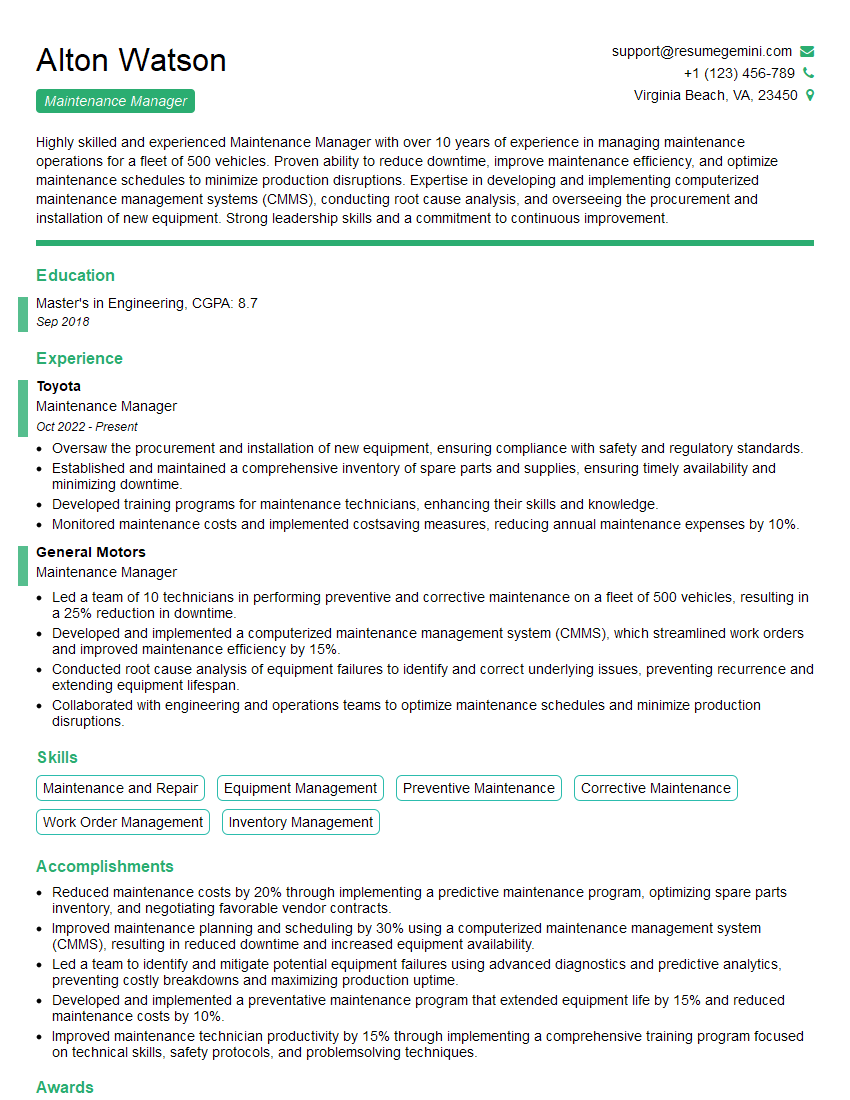
Maintenance Manager Resume Sample
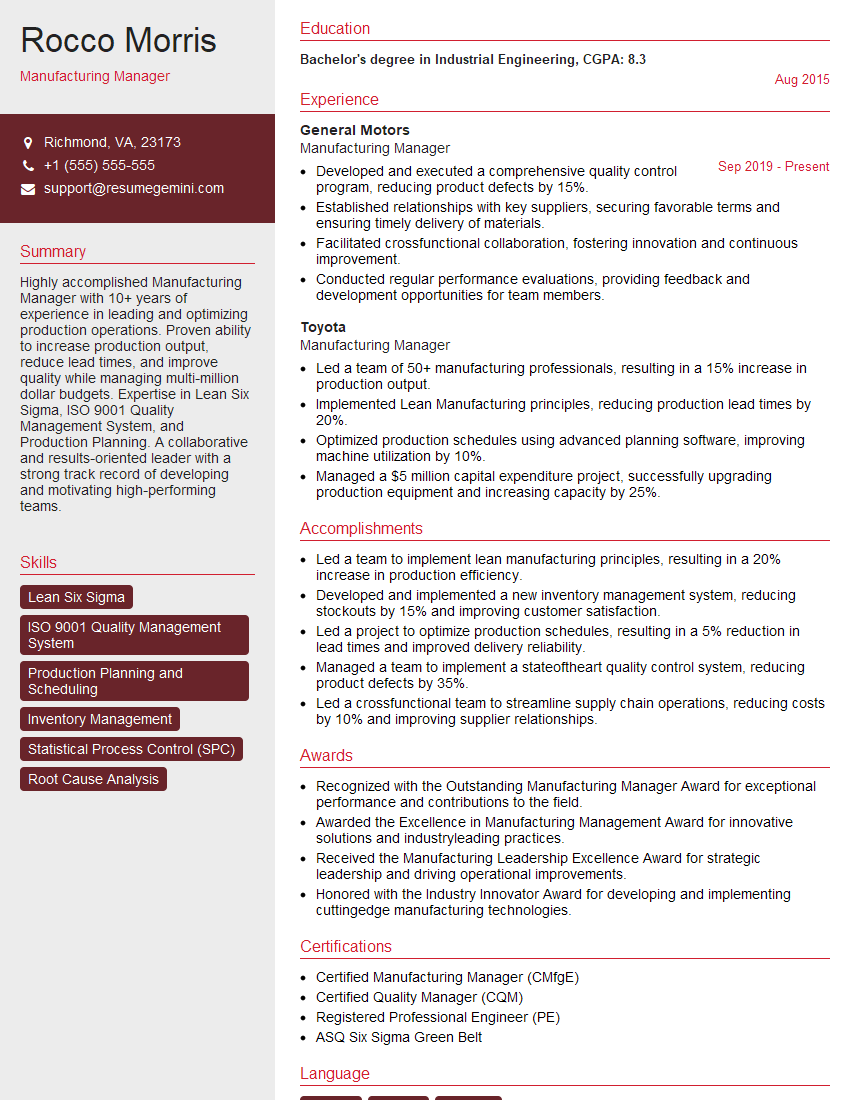
Manufacturing Manager Resume Sample
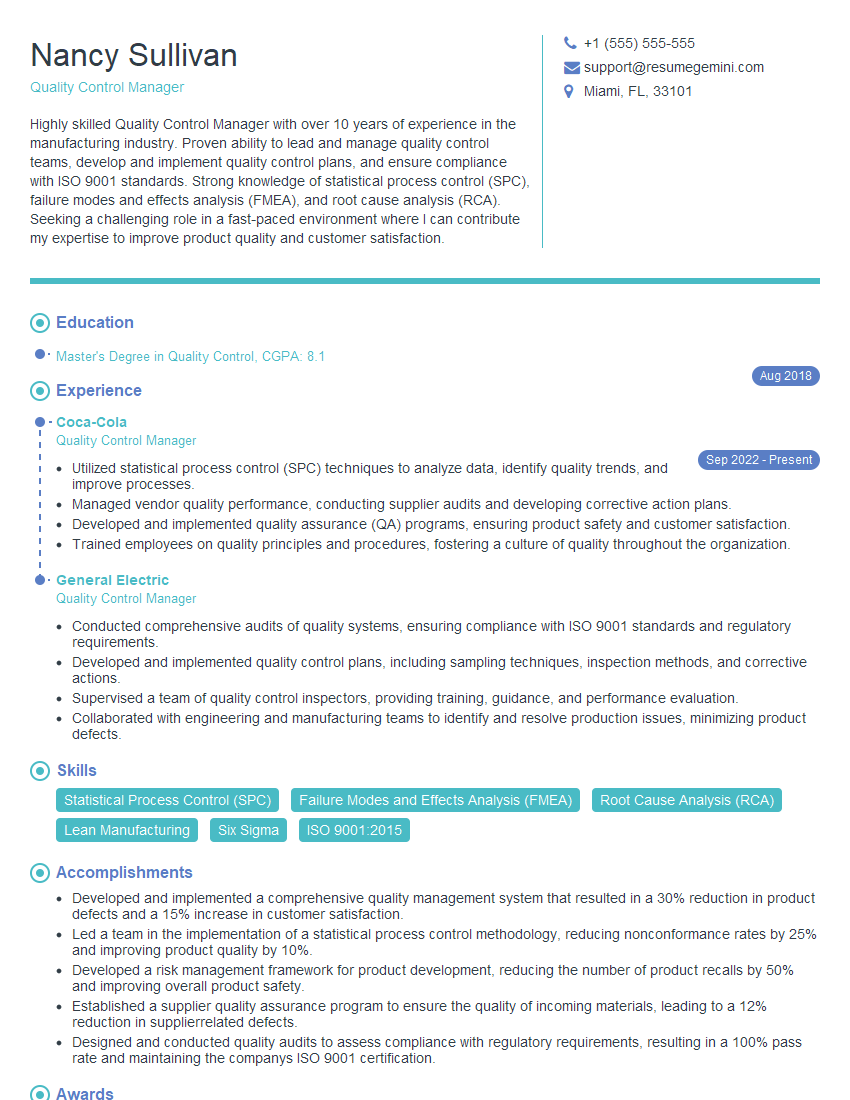
Quality Control Manager Resume Sample
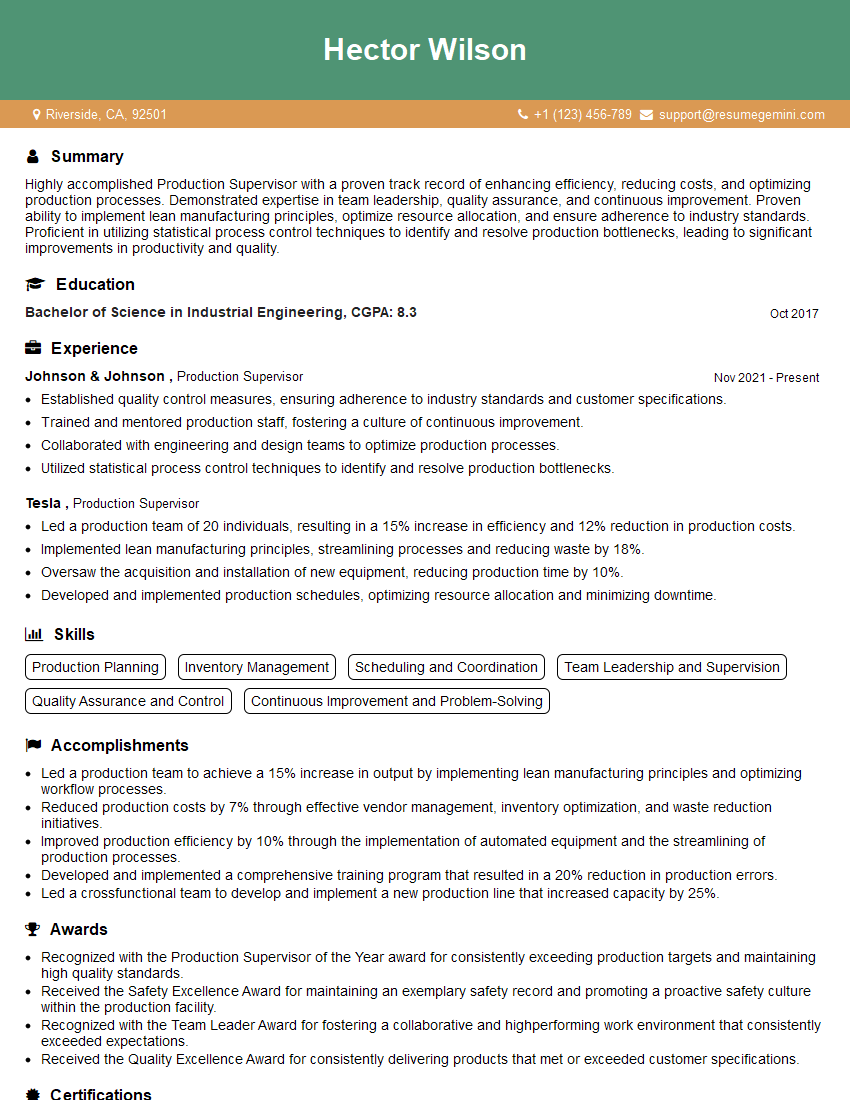
Production Supervisor Resume Sample
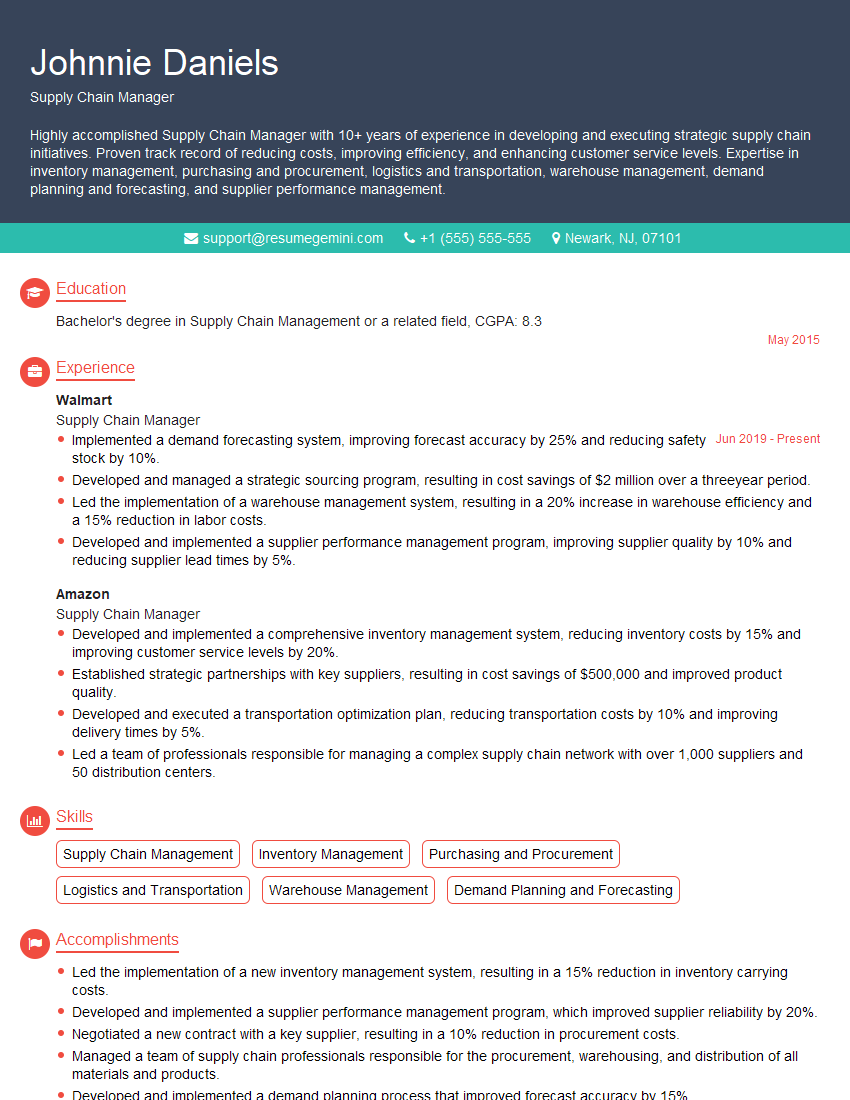
Supply Chain Manager Resume Sample
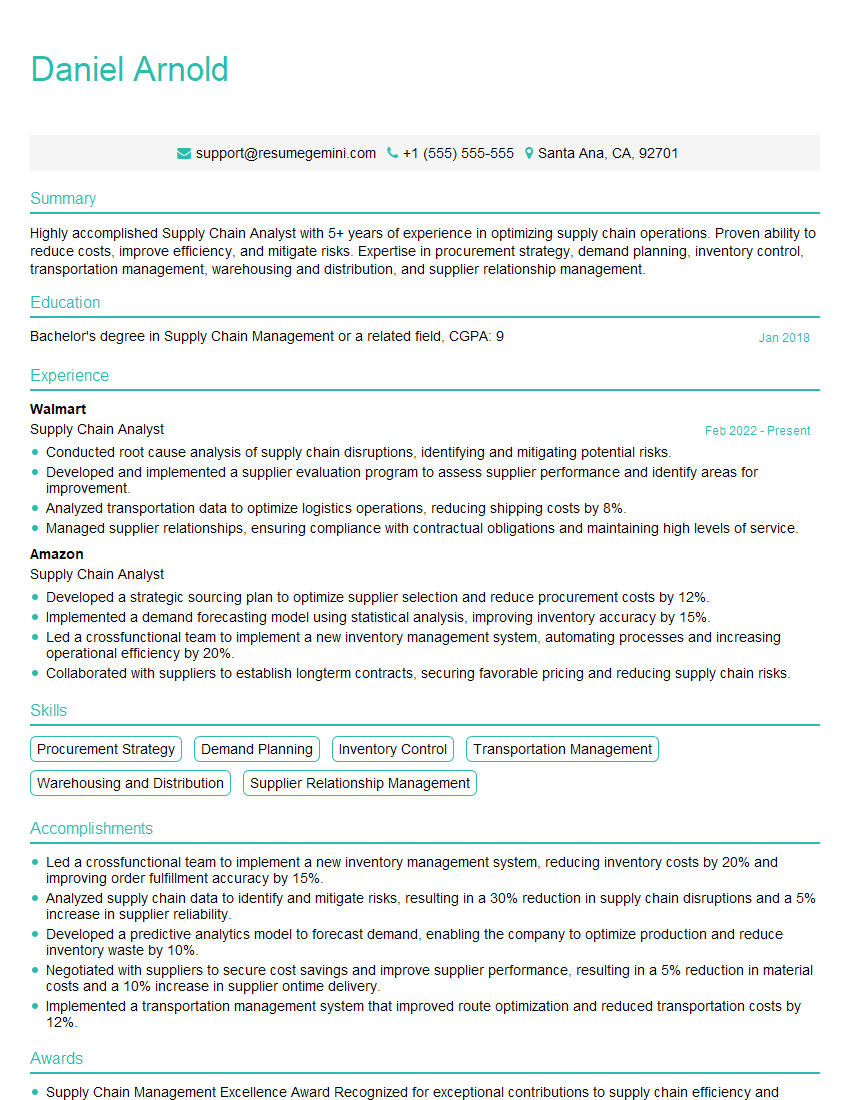
Supply Chain Analyst Resume Sample
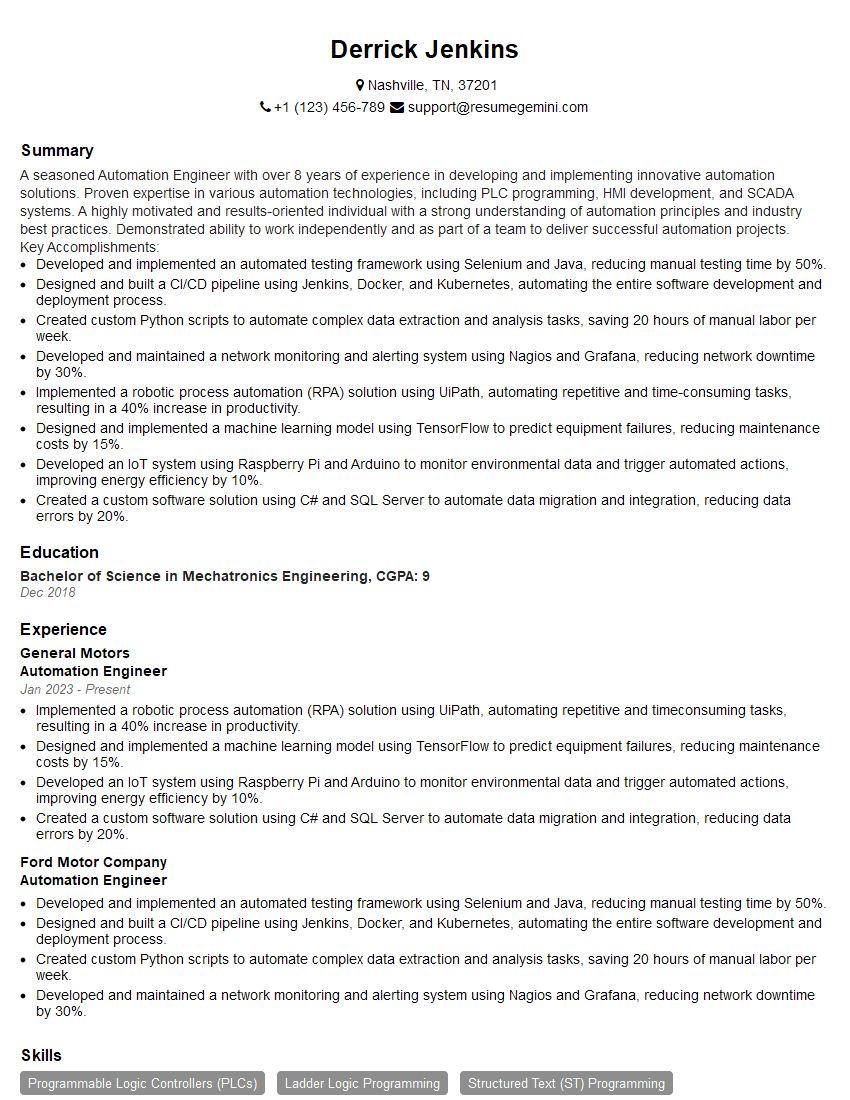
Automation Engineer Resume Sample
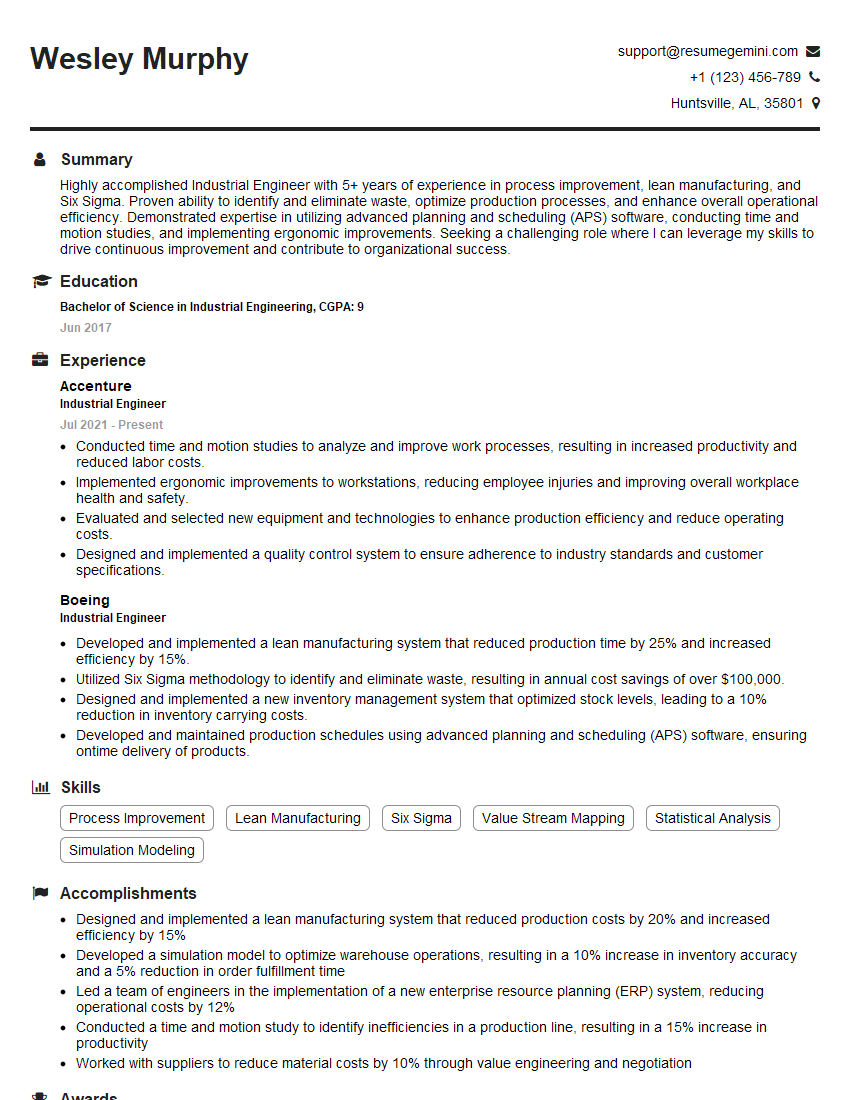
Industrial Engineer Resume Sample
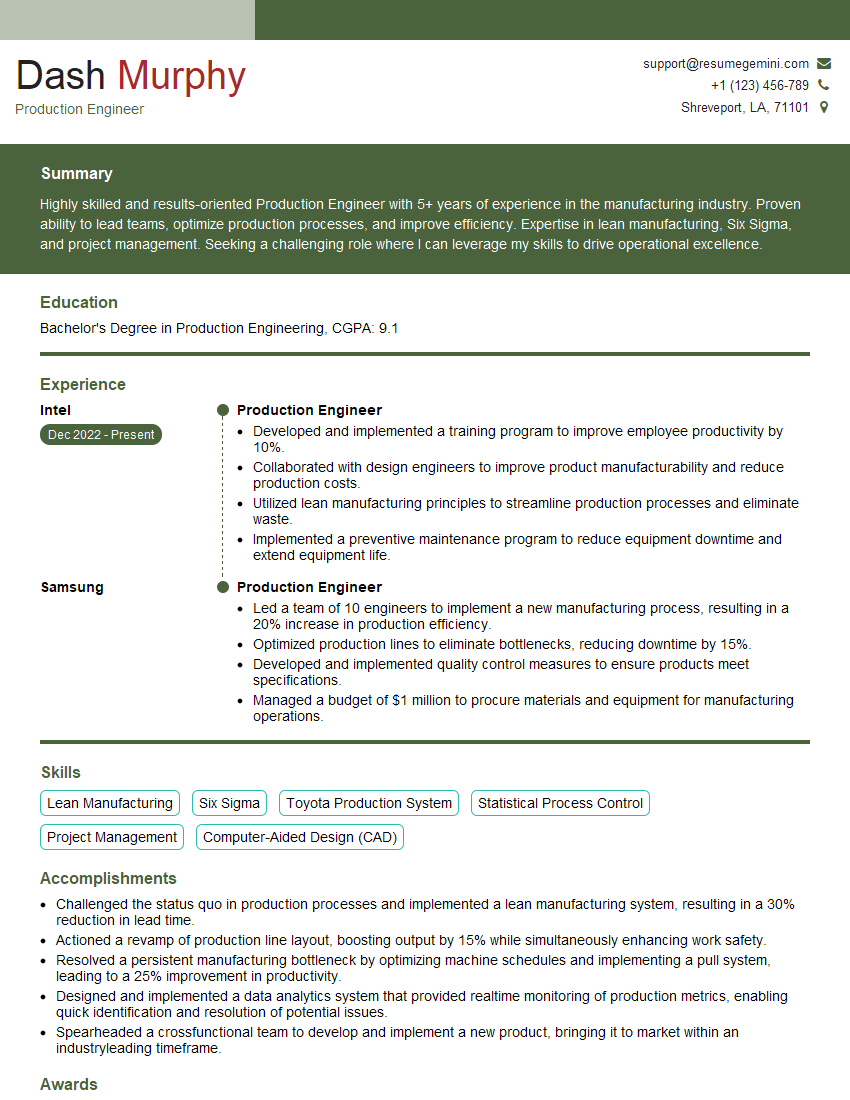
Production Engineer Resume Sample
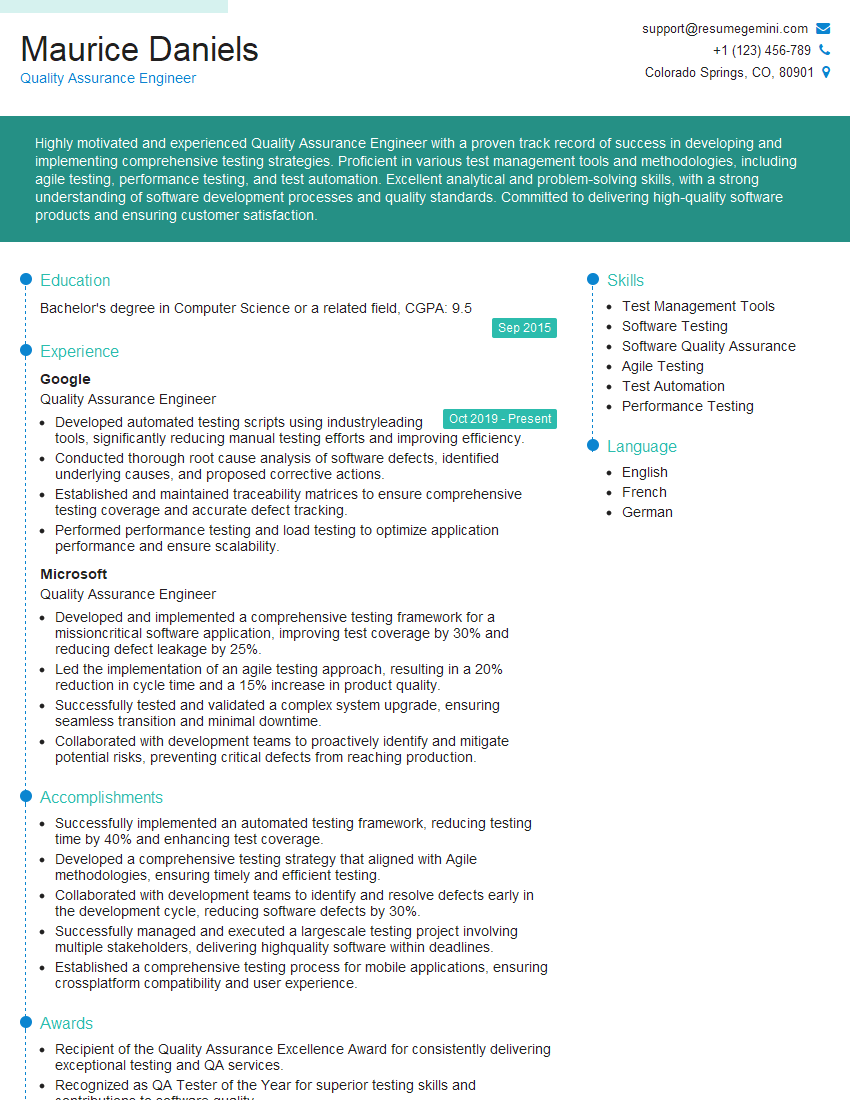
Quality Assurance Engineer Resume Sample
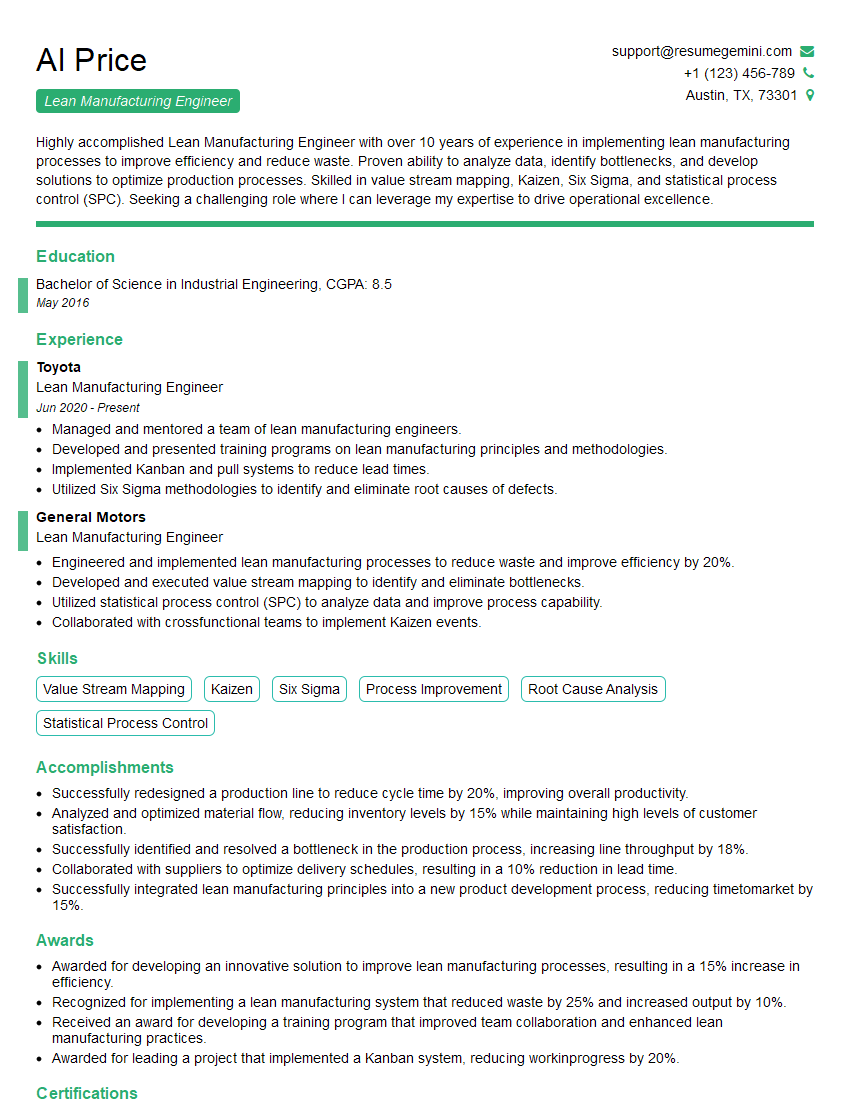
Lean Manufacturing Engineer Resume Sample
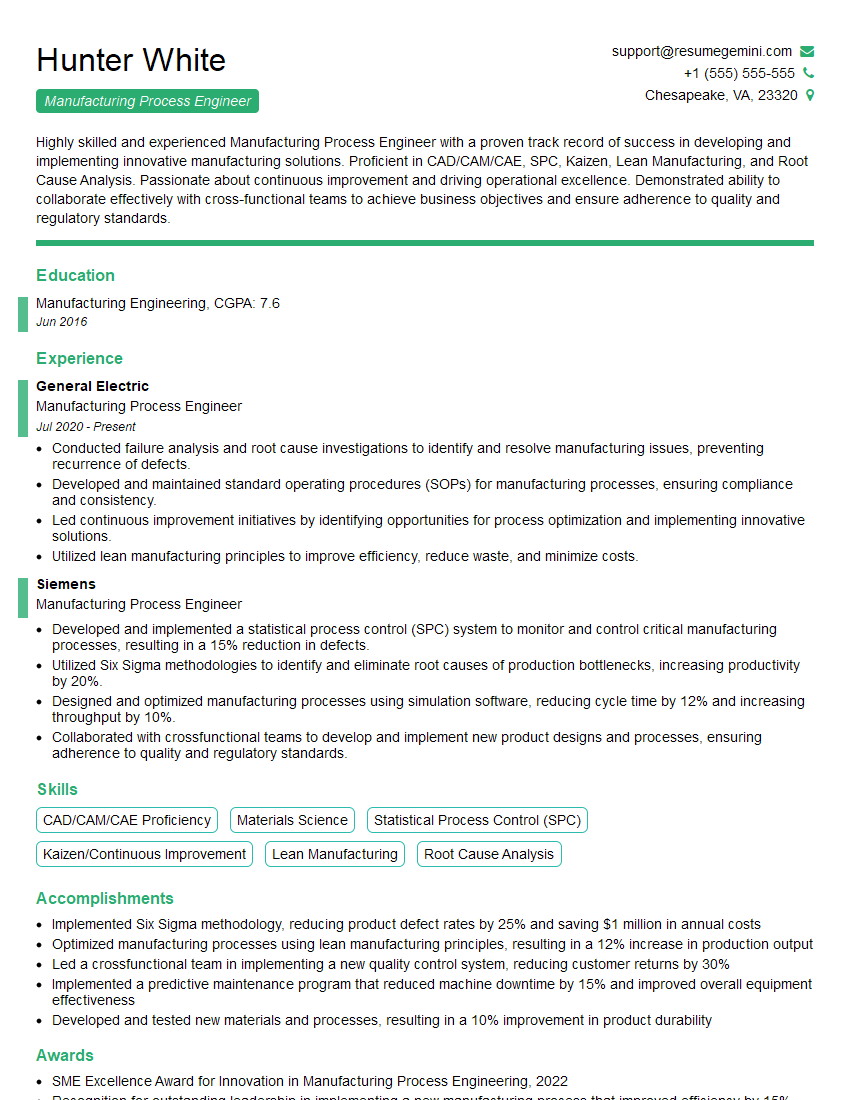
Manufacturing Process Engineer Resume Sample
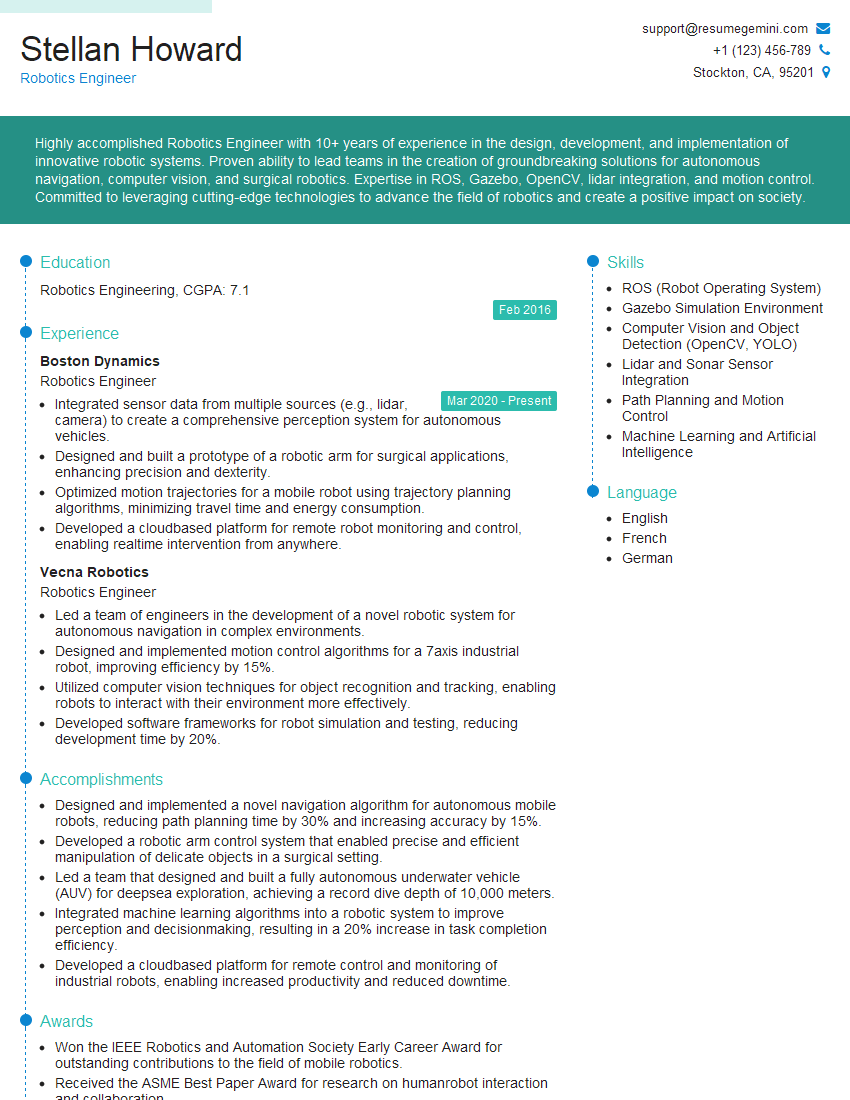
Robotics Engineer Resume Sample
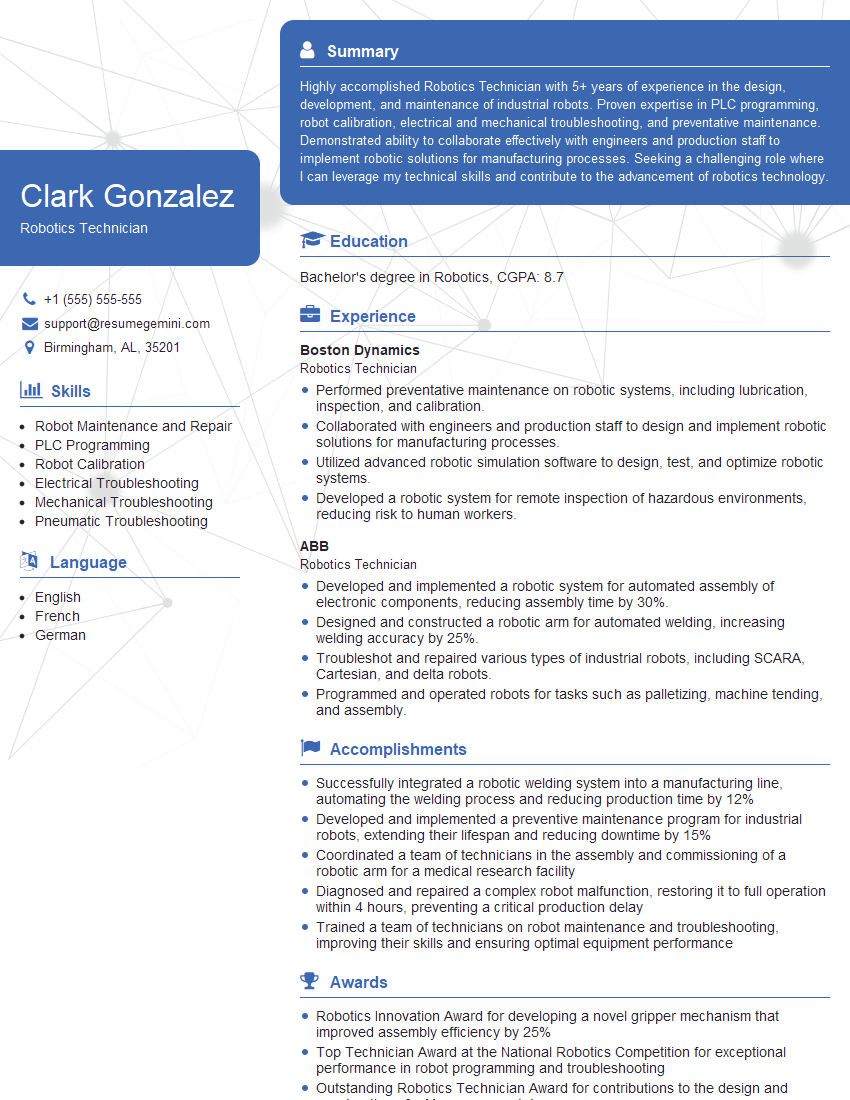
Robotics Technician Resume Sample
- Maintenance Manager
- Manufacturing Manager
- Quality Control Manager
- Production Supervisor
- Supply Chain Manager
- Supply Chain Analyst
- Automation Engineer
- Industrial Engineer
- Production Engineer
- Quality Assurance Engineer
- Lean Manufacturing Engineer
- Manufacturing Process Engineer
- Robotics Engineer
- Robotics Technician
Explore more articles
Users Rating of Our Blogs
Share Your Experience
We value your feedback! Please rate our content and share your thoughts (optional).
What Readers Say About Our Blog
Very informative content, great job.
good