Interviews are more than just a Q&A session—they’re a chance to prove your worth. This blog dives into essential Experience with Apparel and Textile Manufacturing Processes interview questions and expert tips to help you align your answers with what hiring managers are looking for. Start preparing to shine!
Questions Asked in Experience with Apparel and Textile Manufacturing Processes Interview
Q 1. Explain the different types of fabric construction methods.
Fabric construction methods determine the final properties of a textile, influencing drape, durability, and cost. They broadly fall into two categories: woven and knitted.
- Woven fabrics are created by interlacing two sets of yarns—the warp (lengthwise) and weft (crosswise)—at right angles. Think of a traditional tapestry or a simple checkerboard pattern. Different weaves, like plain, twill, satin, and jacquard, produce vastly different textures and appearances. For example, a plain weave is simple and strong, while a satin weave creates a lustrous, smooth surface.
- Knitted fabrics are produced by interlocking loops of yarn. This creates a more flexible and stretchy fabric compared to woven fabrics. There are two main categories: weft knits (like jersey, used in t-shirts) and warp knits (like tricot, often found in lingerie). Knit structures can range from simple single jersey to complex double knits or even multi-layered constructions for enhanced warmth or performance properties.
- Non-woven fabrics are made from fibers bonded together mechanically, chemically, or thermally, without spinning or weaving. These are often used in applications like interlinings, disposable garments, or filters due to their low cost and ease of manufacture.
Understanding these methods is crucial for selecting the right fabric for a garment based on its intended use and desired aesthetic.
Q 2. Describe your experience with different sewing techniques.
My experience encompasses a wide range of sewing techniques, from basic seams to complex decorative stitches. I’m proficient in various machine and hand-sewing methods, including:
- Basic seams: French seams, flat felled seams, and overlocked seams for different levels of durability and aesthetic appeal. For instance, a French seam is ideal for high-end garments where a clean finish is essential.
- Specialty stitches: Blind hems, topstitching, and decorative stitching for both functionality and visual enhancement. Blind hems are particularly important for clean, invisible finishes on hems.
- Advanced techniques: Pattern matching, darts, pleats, and various closures (zippers, buttons, hooks and eyes) ensuring precise and accurate garment construction.
- Industrial Sewing Machines: I have hands-on experience operating various industrial sewing machines, including single-needle, double-needle, coverstitch, and overlock machines, understanding their specific applications and capabilities.
I consistently prioritize precision and efficiency in my sewing, adapting my techniques based on the fabric type and garment design. For example, delicate fabrics require different needle sizes and stitch lengths compared to heavier fabrics to prevent damage or puckering.
Q 3. What are the key quality control checkpoints in apparel manufacturing?
Quality control in apparel manufacturing is a multi-stage process, crucial for maintaining brand reputation and customer satisfaction. Key checkpoints include:
- Raw Material Inspection: Checking fabric quality for defects like inconsistencies in color, weight, and weave structure before cutting and sewing. This prevents costly rework later in the process.
- Cutting Quality Control: Ensuring accurate cutting of patterns to minimize fabric waste and maintain consistent garment sizes. This involves checking for marker placement accuracy and cutting blade sharpness.
- Sewing Quality Control: Inspecting seams for even stitching, appropriate stitch length, and the absence of skipped stitches or broken threads. Regular machine maintenance is critical here.
- In-Process Inspection: Checking garment construction at various stages—such as after collar attachment or sleeve insertion—to detect and correct errors early on.
- Final Inspection: A thorough examination of the finished garment for defects in stitching, finishing, and overall appearance before packaging and shipping. This often involves visual inspection and sometimes includes dimensional checks.
Implementing these checks, along with a robust documentation system, helps identify and rectify issues promptly, reducing production costs and improving product quality.
Q 4. How do you manage production deadlines and overcome unforeseen challenges?
Managing production deadlines requires meticulous planning and proactive problem-solving. I utilize several strategies:
- Detailed Production Schedules: Creating and adhering to precise schedules that account for each stage of the manufacturing process, including potential delays.
- Resource Allocation: Efficiently allocating resources—materials, machinery, and labor—to minimize bottlenecks and optimize workflow.
- Regular Monitoring: Tracking progress against the schedule, identifying potential issues early on, and taking corrective actions immediately.
- Communication: Maintaining open communication with all stakeholders—designers, suppliers, and production teams—to anticipate and address potential challenges.
- Contingency Planning: Developing backup plans to address unforeseen circumstances, such as material shortages or equipment malfunctions. This could include sourcing alternative materials or rescheduling tasks.
When faced with unforeseen challenges, I employ a structured approach: define the problem, brainstorm solutions, implement the best solution, monitor its effectiveness, and document the entire process for future reference. This systematic approach helps ensure timely completion even in the face of unexpected obstacles.
Q 5. What are your experiences with different types of textile machinery?
My experience with textile machinery includes a wide range of equipment used in different stages of apparel manufacturing. This encompasses:
- Spinning Machinery: Familiarity with ring spinning, open-end spinning, and other spinning technologies for yarn production. Understanding the impact of different spinning methods on yarn quality.
- Weaving and Knitting Machines: Hands-on experience with various weaving looms (e.g., rapier, shuttle, air-jet) and knitting machines (e.g., circular, flat-bed) understanding their capabilities and limitations.
- Dyeing and Finishing Machinery: Knowledge of various dyeing and finishing processes, including jet dyeing machines, continuous dyeing ranges, and various finishing equipment like calenders and sanforizers. Understanding the effects of different processes on fabric properties.
- Cutting and Sewing Machinery: Extensive experience with various cutting machines (e.g., automated cutting systems, hand-cutting tools) and industrial sewing machines (e.g., single needle, double needle, overlock, coverstitch). This includes understanding machine maintenance and troubleshooting.
- Other machinery: Experience with pressing equipment, embroidery machines, and other specialized machinery as needed.
This broad experience allows me to understand the entire production process and optimize it for efficiency and quality.
Q 6. How familiar are you with Lean Manufacturing principles in apparel production?
I’m very familiar with Lean Manufacturing principles, particularly their application in apparel production. Lean manufacturing focuses on eliminating waste and maximizing value for the customer. In apparel, this translates to:
- Reducing lead times: Optimizing production processes to reduce the time it takes to manufacture a garment.
- Minimizing inventory: Implementing Just-in-Time (JIT) inventory management to reduce storage costs and minimize waste from obsolete materials.
- Improving quality: Implementing quality control measures at every stage to reduce defects and rework.
- Empowering employees: Giving employees the authority and tools to identify and solve problems, fostering a culture of continuous improvement (Kaizen).
- Value stream mapping: Identifying and eliminating non-value-added steps in the production process.
For example, I’ve successfully implemented 5S (Sort, Set in Order, Shine, Standardize, Sustain) in a previous role, leading to a significant improvement in workplace organization and efficiency. This resulted in reduced production times and improved overall productivity. I also have experience with Kanban systems for material management.
Q 7. Describe your experience with PLM (Product Lifecycle Management) software.
I have extensive experience with PLM (Product Lifecycle Management) software, utilizing it to manage the entire lifecycle of apparel products, from design conception to final product delivery. My experience includes:
- Design and Development: Using PLM to manage design files, technical specifications, and sample tracking. This ensures version control and facilitates collaboration among designers and technicians.
- Sourcing and Procurement: Utilizing PLM to manage supplier relationships, material sourcing, and quality control documentation. This ensures traceability and helps streamline the procurement process.
- Production Planning and Execution: Employing PLM for production planning, scheduling, and tracking. This enables real-time monitoring of production progress and facilitates timely delivery.
- Quality Control: Integrating PLM with quality control systems to track defects, manage corrective actions, and ensure product consistency. This helps maintain high quality standards.
My experience encompasses various PLM systems, enabling me to effectively leverage their capabilities for efficient product development and management. Specifically, I’m proficient in [Mention specific PLM software used, e.g., Centric PLM, Gerber Accumark]. This software helps to significantly improve communication and collaboration across different departments and stakeholders, resulting in reduced errors and improved efficiency.
Q 8. How do you ensure consistent quality throughout the apparel manufacturing process?
Ensuring consistent quality throughout apparel manufacturing is a multifaceted process requiring meticulous attention to detail at every stage. It’s like baking a cake – if one ingredient is off, the final product suffers. We implement a robust quality control (QC) system, starting with rigorous raw material inspection. This involves checking fabric composition, color consistency, and strength according to pre-defined specifications.
During the cutting and sewing stages, trained QC personnel regularly inspect the work-in-progress (WIP). We utilize statistical process control (SPC) charts to monitor key metrics like stitch count, seam strength, and fabric defects, identifying trends and potential issues early. For example, if we consistently see a rise in misaligned seams, we might investigate whether a machine needs recalibration or if training is required for the sewing operators. Final inspection before packaging involves a thorough examination of the finished garment for defects, proper labeling, and adherence to size specifications.
This multi-layered approach, combining preventative measures with consistent monitoring and corrective actions, ensures that our final product consistently meets our high quality standards.
Q 9. What are your strategies for managing inventory and reducing waste?
Managing inventory and minimizing waste are critical for profitability and sustainability in apparel manufacturing. Think of it as a finely tuned orchestra – each instrument (material, resource) needs to be in the right place at the right time. We employ a just-in-time (JIT) inventory system, minimizing storage costs and the risk of obsolescence. This involves close collaboration with our suppliers to ensure timely delivery of materials based on precise production schedules.
We use advanced planning and scheduling (APS) software to forecast demand accurately and optimize production runs. This helps to prevent overproduction, a major contributor to waste. Furthermore, we implement lean manufacturing principles, focusing on eliminating non-value-added activities. This includes optimizing cutting layouts to minimize fabric waste and utilizing scraps for smaller items or other purposes. For example, we might use fabric remnants to create samples or prototypes.
Continuous improvement initiatives, like Kaizen events, regularly review our processes to identify and eliminate further waste. Data analysis helps us pinpoint areas for improvement, driving efficiency and sustainability.
Q 10. How do you handle defects and discrepancies in the manufacturing process?
Handling defects and discrepancies involves a structured approach. Imagine a doctor diagnosing an illness – the process requires careful investigation and targeted treatment. First, we identify the root cause of the defect using a 5 Whys analysis, a systematic approach to problem solving. If, for example, there are consistently flawed seams, we would ask ‘Why are the seams flawed?’ and repeatedly ask ‘Why?’ until we find the fundamental issue (e.g., a malfunctioning sewing machine, inadequate operator training).
Depending on the severity and nature of the defect, we may either repair the garment, rework the affected section, or reject the piece entirely. For rejected items, we meticulously document the reasons for rejection to prevent recurrence. This data feeds back into our QC processes, allowing us to improve our methodologies and prevent future errors. We maintain a detailed record of defects, categorized by type and source. This allows for better trend analysis and proactive solutions.
Q 11. Explain your experience with different types of fabric finishes.
My experience encompasses a wide range of fabric finishes, each impacting the final garment’s feel, appearance, and performance. Think of it as a painter’s palette – each color (finish) adds a unique quality to the final artwork. I’ve worked extensively with finishes like mercerization (enhancing cotton’s luster and strength), sanforizing (preventing shrinkage), and various dyeing techniques, including reactive, disperse, and acid dyeing, each suitable for different fiber types.
I’m also familiar with water-repellent finishes, flame-retardant treatments, and anti-microbial coatings. The choice of finish depends on the fabric’s composition, the garment’s intended use, and the desired aesthetic. For instance, a performance sportswear line would likely require a water-repellent and breathable finish, while a formal shirt might benefit from a mercerized finish for a smoother, more luxurious drape. Understanding the properties and limitations of each finish is crucial for selecting the appropriate one for each project.
Q 12. Describe your experience with sourcing raw materials for apparel manufacturing.
Sourcing raw materials is a crucial aspect of apparel manufacturing, requiring a strategic approach to ensure quality, cost-effectiveness, and ethical practices. It’s like selecting the right ingredients for a gourmet meal – the quality of the ingredients directly impacts the final dish. We prioritize building long-term relationships with reputable suppliers, carefully vetting them for quality control, social responsibility, and environmental compliance.
We meticulously evaluate fabric samples, assessing factors like fiber content, color consistency, and strength. We also carefully examine supplier certifications, such as OEKO-TEX, which ensures compliance with environmental and safety standards. Negotiating favorable pricing and delivery terms is essential, balancing cost with quality and sustainability. Diversifying our supplier base mitigates risk and enhances our supply chain resilience. We also consider factors like lead times, production capacity, and geographic location when selecting suppliers.
Q 13. How do you ensure compliance with industry regulations and safety standards?
Compliance with industry regulations and safety standards is paramount. We treat it as a fundamental cornerstone of our operations, similar to a building’s foundation – it must be strong and reliable. We adhere to all relevant national and international standards, including those concerning workplace safety, environmental protection, and ethical labor practices. This includes compliance with regulations such as the Fair Labor Standards Act (FLSA) in the U.S. and similar labor laws in other regions.
We conduct regular audits of our facilities and supply chain to ensure compliance. We maintain detailed records of all our compliance activities and certifications. We also provide ongoing training to our employees on safety procedures and ethical guidelines. Proactive measures such as regular safety inspections and employee training sessions are vital in maintaining a safe and compliant work environment. Our commitment to compliance is not only ethical but also essential for maintaining our reputation and ensuring long-term sustainability.
Q 14. What are your strategies for improving efficiency in apparel production?
Improving efficiency in apparel production requires a holistic approach that addresses all aspects of the manufacturing process. Think of it as streamlining a river’s flow – by removing obstacles, the water flows more smoothly and efficiently. We utilize lean manufacturing principles, focusing on eliminating waste and optimizing workflow. This includes implementing techniques such as 5S (sort, set in order, shine, standardize, sustain) to create a more organized and efficient workspace.
Investing in advanced technologies, such as automated cutting machines and computer-aided design (CAD) software, significantly improves efficiency and reduces errors. We continuously analyze production data to identify bottlenecks and areas for improvement. Training and empowering employees are also crucial; a well-trained and motivated workforce is far more efficient. Regularly reviewing and updating our standard operating procedures (SOPs) keeps our processes optimal. These combined strategies contribute to significant improvements in productivity, reduced costs, and improved product quality.
Q 15. Describe your experience with different costing methods in apparel manufacturing.
Costing in apparel manufacturing is crucial for profitability. I’ve extensive experience with various methods, including:
- Cost Sheet Method: This is a detailed breakdown of all costs involved – raw materials, labor (cutting, sewing, finishing), factory overhead (rent, utilities, machinery depreciation), and administrative overheads. I often use spreadsheets to meticulously track each component, allowing for precise pricing and profit margin analysis. For example, calculating the cost of a t-shirt would involve listing the fabric cost per meter, the cutting and sewing labor costs per piece, the thread cost, label cost, and packaging costs.
- Standard Costing: This method establishes predetermined costs for each unit based on historical data and projected efficiency. It’s useful for budgeting and performance monitoring. Variances between actual and standard costs are analyzed to identify areas for improvement. For instance, if the standard labor cost for sewing a pair of jeans is $5 and the actual cost is $6, we investigate why the cost exceeded expectations (e.g., lower-than-expected productivity, increased labor rates).
- Activity-Based Costing (ABC): This more sophisticated method allocates overhead costs based on the specific activities involved in production. It’s particularly helpful in identifying the true cost of complex products with multiple processes. For example, ABC would more accurately reflect the overhead costs associated with a highly embellished garment compared to a simple plain t-shirt, by allocating overhead costs based on the time spent on embroidery, beading, etc.
My experience includes optimizing costing models to reflect market fluctuations, negotiating better deals with suppliers, and implementing lean manufacturing principles to reduce costs without sacrificing quality.
Career Expert Tips:
- Ace those interviews! Prepare effectively by reviewing the Top 50 Most Common Interview Questions on ResumeGemini.
- Navigate your job search with confidence! Explore a wide range of Career Tips on ResumeGemini. Learn about common challenges and recommendations to overcome them.
- Craft the perfect resume! Master the Art of Resume Writing with ResumeGemini’s guide. Showcase your unique qualifications and achievements effectively.
- Don’t miss out on holiday savings! Build your dream resume with ResumeGemini’s ATS optimized templates.
Q 16. How do you manage relationships with suppliers and vendors?
Managing supplier and vendor relationships is paramount in apparel manufacturing. I believe in building strong, collaborative partnerships based on trust and mutual benefit. My approach includes:
- Strategic Sourcing: Identifying and selecting reliable suppliers who meet quality, price, and delivery requirements. This involves thorough vetting, including factory audits to ensure ethical and sustainable practices.
- Negotiation and Contract Management: Negotiating favorable terms, including pricing, payment schedules, and quality standards. Clear contracts are essential to minimize disputes and protect both parties’ interests.
- Communication and Collaboration: Maintaining open and transparent communication with suppliers throughout the production process. This involves regular updates, feedback, and proactive problem-solving. For instance, weekly meetings with key suppliers are essential to ensure timely delivery of materials and smooth production flow.
- Performance Monitoring: Tracking supplier performance against key metrics like on-time delivery, quality, and responsiveness. This provides data for continuous improvement and helps identify areas needing attention.
I’ve successfully managed relationships with both domestic and international suppliers, resolving conflicts efficiently and fostering long-term partnerships that contribute to enhanced product quality and reduced costs.
Q 17. What are your experiences with different types of garment construction?
My experience encompasses a wide range of garment construction techniques, including:
- Flat-Bed Sewing: This is the most common method, suitable for various garment types. I’m proficient in optimizing sewing patterns and techniques to improve efficiency and quality.
- Computer-Aided Design (CAD) Pattern Making: I’m experienced in utilizing CAD software to create and modify patterns, significantly improving accuracy and speed in the pattern-making process. This enhances efficiency and consistency in production.
- Specialty Construction Techniques: I’m familiar with specialized techniques such as tailored construction (used in high-end garments), sportswear construction (requiring specific fabric and construction methods for performance), and intricate embroidery or embellishment techniques.
Understanding the nuances of different construction methods allows me to select the most appropriate technique for a specific garment and fabric, balancing quality, cost, and production efficiency. For example, I’d choose flat-bed sewing for mass-producing simple t-shirts, while opting for tailored construction for a high-end blazer.
Q 18. How do you handle customer complaints and returns?
Handling customer complaints and returns professionally is vital for maintaining brand reputation and customer loyalty. My approach involves:
- Prompt Acknowledgement: Responding quickly and acknowledging the customer’s concerns.
- Thorough Investigation: Investigating the complaint thoroughly to determine the root cause. This may involve examining the returned garment, reviewing production records, and communicating with relevant personnel.
- Fair Resolution: Offering a fair and appropriate resolution, which may include a replacement, repair, refund, or store credit.
- Feedback and Improvement: Using customer feedback to identify areas for improvement in the production process and quality control measures. For instance, recurring complaints about a specific stitching technique would signal a need for retraining or process adjustment.
I believe in empowering customer service representatives to resolve issues efficiently and fairly, always aiming for a positive customer experience even in challenging situations.
Q 19. Explain your experience with capacity planning and production scheduling.
Capacity planning and production scheduling are critical for meeting deadlines and maximizing production efficiency. My experience includes:
- Demand Forecasting: Accurately predicting future demand based on sales data, market trends, and other relevant factors.
- Capacity Assessment: Evaluating available production capacity, including machinery, labor, and raw materials. This assessment involves analyzing current capacity constraints and identifying potential bottlenecks.
- Production Scheduling: Developing and implementing a detailed production schedule that optimizes resource utilization and minimizes lead times. This may involve utilizing software such as ERP systems (Enterprise Resource Planning) for effective planning and tracking of production.
- Inventory Management: Managing inventory levels to ensure sufficient raw materials are available without excessive stock buildup.
I’ve used various scheduling techniques, including Kanban and Lean manufacturing principles, to enhance efficiency and responsiveness. For example, implementing a Kanban system significantly reduced lead times and improved the flow of materials through the production line.
Q 20. How familiar are you with different types of textile testing methods?
Textile testing is essential for ensuring quality and compliance with industry standards. My familiarity with various testing methods includes:
- Fiber Content Testing: Determining the composition of fabrics using methods like burning tests or microscopic analysis.
- Strength and Durability Testing: Assessing the tensile strength, tear strength, and abrasion resistance of fabrics.
- Colorfastness Testing: Evaluating the resistance of dyes to fading due to washing, light exposure, and rubbing.
- Dimensional Stability Testing: Measuring the shrinkage or stretching of fabrics after washing or other treatments.
- Flammability Testing: Determining the flammability of fabrics, especially important for clothing intended for children or use near flames.
I’m proficient in interpreting test results and using them to make informed decisions about fabric selection, production processes, and quality control.
Q 21. Describe your experience with implementing new technologies in apparel manufacturing.
Implementing new technologies is crucial for staying competitive in the apparel industry. My experience includes:
- CAD/CAM Systems: Implementing and utilizing CAD/CAM systems for pattern making, grading, and marker making, improving accuracy and efficiency significantly.
- 3D Printing: Utilizing 3D printing for prototyping and creating customized garments, reducing time and costs associated with traditional sample making.
- Automated Cutting Systems: Implementing automated cutting systems to improve cutting accuracy, reduce material waste, and increase productivity.
- Smart Factory Technologies: Exploring and implementing technologies like RFID tracking for materials and garments to enhance inventory management and traceability.
My approach to technology implementation involves a thorough assessment of needs, careful selection of appropriate technologies, comprehensive staff training, and ongoing monitoring to ensure effectiveness and ROI (Return on Investment). For example, the implementation of a new CAD system was followed by extensive training for our pattern makers, leading to a significant increase in their efficiency and reducing design errors.
Q 22. How do you ensure the sustainability of your apparel manufacturing processes?
Ensuring sustainability in apparel manufacturing is paramount, encompassing environmental and social responsibility. My approach is multifaceted and focuses on minimizing waste, reducing environmental impact, and promoting ethical labor practices.
- Sustainable Materials: I prioritize sourcing eco-friendly fabrics like organic cotton, recycled polyester, or innovative materials with lower environmental footprints. For example, I’ve successfully implemented a program using Tencel, a sustainable fiber made from wood pulp, resulting in a 30% reduction in water consumption compared to conventional cotton.
- Waste Reduction: Implementing lean manufacturing principles helps minimize fabric waste. This includes optimizing cutting layouts using specialized software and reusing scraps for smaller items or padding. I’ve personally overseen projects that have reduced fabric waste by 15% through optimized cutting patterns.
- Energy Efficiency: Investing in energy-efficient machinery and implementing strategies like improved lighting and temperature control are critical. In a previous role, we upgraded our machinery, resulting in a 10% decrease in energy consumption.
- Ethical Sourcing: Collaborating with suppliers committed to fair labor practices is essential. This includes regular audits to ensure compliance with ethical standards, fair wages, and safe working conditions. I’ve personally developed and implemented supplier code of conduct which includes regular factory inspections.
- Water Management: Reducing water usage throughout the manufacturing process is crucial. This involves implementing water recycling systems and utilizing water-efficient technologies. I’ve successfully implemented a closed-loop water system in a past project, reducing water consumption by 20%.
Q 23. What are your strategies for reducing lead times in apparel production?
Reducing lead times in apparel production requires a streamlined and efficient approach. My strategies focus on improving communication, optimizing processes, and leveraging technology.
- Agile Manufacturing: Implementing agile methodologies allows for faster response to changes and quicker production cycles. This includes breaking down production into smaller, manageable batches and regularly assessing progress.
- Improved Communication: Efficient communication throughout the supply chain is vital. Utilizing collaborative platforms and real-time data sharing ensures everyone is informed and coordinated. For example, using project management software for seamless communication between design, production, and logistics teams drastically improved project timelines.
- Optimized Production Processes: Analyzing production bottlenecks using data analytics helps identify areas for improvement. This might involve streamlining workflows, improving equipment utilization, or implementing automation where appropriate. In one case, by analyzing production data, we identified a bottleneck in the dyeing process and implemented a new system that reduced processing time by 25%.
- Technology Integration: Utilizing technologies like Computer-Aided Design (CAD) and Computer-Aided Manufacturing (CAM) accelerates pattern making, cutting, and sewing processes. Furthermore, automated systems for inventory management and order tracking help improve efficiency. I’ve personally overseen the implementation of CAD/CAM systems that reduced pattern making time by 40%.
- Strategic Partnerships: Collaborating with reliable and responsive suppliers shortens lead times. This involves careful supplier selection based on their capacity, responsiveness, and quality control measures.
Q 24. How do you manage a team of production workers effectively?
Managing a team of production workers effectively requires a combination of strong leadership, clear communication, and a focus on employee development.
- Clear Communication: Maintaining open communication ensures everyone understands expectations, roles, and targets. Regular team meetings and one-on-one sessions address concerns and ensure everyone feels heard.
- Motivation and Empowerment: Creating a positive and supportive work environment motivates workers. Empowering employees by giving them ownership of their work enhances engagement and productivity. I’ve implemented employee recognition programs in the past which resulted in significant improvements in both quality and output.
- Training and Development: Providing continuous training and development opportunities improves skills and increases efficiency. This includes technical skills training, as well as soft skills development such as teamwork and problem-solving.
- Performance Management: Implementing a robust performance management system allows for regular performance feedback, identifying areas for improvement, and rewarding high performers.
- Safety and Wellbeing: Prioritizing the safety and wellbeing of workers is crucial. This includes providing a safe working environment and addressing any concerns promptly. I’ve actively participated in the implementation of safety protocols, reducing workplace accidents significantly.
Q 25. Describe your experience with different types of pattern making techniques.
I possess extensive experience with various pattern-making techniques, both traditional and digital. My expertise spans from drafting patterns manually to using advanced CAD software.
- Draping: This traditional method involves creating a pattern directly on a dress form using fabric. It is particularly useful for creating unique and form-fitting garments. I have significant experience in draping, especially for complex designs and flowing fabrics.
- Flat Pattern Making: This technique involves creating a pattern on paper using measurements and calculations. It is ideal for standardized production and mass manufacturing. I’m proficient in various flat pattern methods, including sloper construction and pattern adjustments.
- Computer-Aided Design (CAD): Using CAD software, such as Gerber or Lectra, significantly improves efficiency and accuracy in pattern making. I am highly proficient in using various CAD software to create, modify, and grade patterns, speeding up the design process and enhancing accuracy.
- Grading: This is the process of adjusting patterns to create various sizes. I possess solid expertise in grading patterns to ensure consistency across all sizes and minimal fabric waste.
- Pattern Alterations: I can expertly modify existing patterns to create variations, adapt to different fabrics, or accommodate specific design requirements. This includes understanding fit adjustments and making necessary changes to achieve the desired silhouette.
Q 26. What are your strategies for managing change and adapting to new trends in apparel manufacturing?
Adapting to new trends and managing change requires a proactive and flexible approach. My strategy revolves around continuous learning, embracing new technologies, and fostering a culture of innovation.
- Industry Trend Monitoring: I actively follow industry publications, attend trade shows, and network with other professionals to stay informed about the latest trends in apparel manufacturing.
- Technology Adoption: I’m always keen to adopt new technologies that can improve efficiency, sustainability, or product quality. For example, I’ve successfully integrated 3D printing for prototyping and virtual fitting systems for design review, which considerably reduced development costs and lead times.
- Continuous Learning: I actively participate in professional development courses and workshops to enhance my skills and knowledge of new technologies and techniques. This continuous learning helps me adapt to evolving industry standards and challenges.
- Team Collaboration: Encouraging open communication and knowledge sharing within the team helps foster a culture of innovation and adaptability. I facilitate brainstorming sessions, encourage experimentation, and provide support for implementing new ideas.
- Data-Driven Decision Making: Using data analytics to track trends and consumer preferences allows for informed decisions regarding production planning and product development. This data-driven approach enables us to react effectively to changes in consumer demand.
Q 27. How do you utilize data analytics to improve apparel manufacturing processes?
Data analytics plays a crucial role in improving apparel manufacturing processes. By collecting and analyzing data from various sources, I can identify areas for improvement, optimize production, and reduce costs.
- Production Data Analysis: Analyzing data on machine utilization, production output, and defect rates helps identify bottlenecks and areas for process optimization. For example, by analyzing machine downtime data, we identified a specific machine requiring more frequent maintenance, improving overall production efficiency by 12%.
- Inventory Management: Using data analytics for inventory management improves forecasting accuracy, reduces stockouts, and minimizes waste. Real-time inventory tracking systems allow for better planning and resource allocation.
- Supply Chain Optimization: Analyzing data from the supply chain, including supplier performance, delivery times, and material costs, helps improve efficiency and reduce lead times. We have successfully integrated a predictive analytics model in a previous role which forecasted material requirements accurately with minimal inventory surplus.
- Quality Control: Collecting data on defect rates and customer returns allows for the identification of quality issues and the implementation of corrective measures. Implementing real-time quality control dashboards allows for immediate feedback and correction.
- Predictive Modeling: Using predictive modeling to forecast demand and optimize production planning helps reduce waste and improve responsiveness to changes in consumer preferences. In one project, a predictive model accurately forecast seasonal demand peaks, allowing us to avoid production bottlenecks and meet consumer demand efficiently.
Q 28. What are your salary expectations for this role?
My salary expectations are commensurate with my experience and skills, and are in line with the industry standard for a role with these responsibilities. I am open to discussing a competitive compensation package based on the specifics of this position and its associated benefits.
Key Topics to Learn for Experience with Apparel and Textile Manufacturing Processes Interview
- Fiber Selection and Properties: Understanding different fiber types (natural and synthetic), their characteristics (strength, elasticity, drape), and suitability for various apparel applications. Practical application: Explaining the choice of cotton vs. polyester for a specific garment based on performance requirements.
- Fabric Construction and Finishing: Knowledge of weaving, knitting, dyeing, printing, and finishing techniques. Practical application: Describing the impact of different weave structures on fabric durability and hand feel. Problem-solving: Troubleshooting a fabric defect related to the finishing process.
- Apparel Manufacturing Processes: Familiarity with pattern making, cutting, sewing, assembly, and quality control procedures. Practical application: Optimizing a sewing line for increased efficiency and reduced waste. Problem-solving: Identifying and resolving bottlenecks in the production process.
- Production Planning and Management: Understanding production scheduling, capacity planning, inventory management, and supply chain logistics within the apparel industry. Practical application: Developing a production plan to meet a specific order deadline while managing resources effectively.
- Quality Control and Assurance: Implementing quality checks at various stages of production, identifying and addressing defects, and ensuring compliance with industry standards. Practical application: Implementing a system for tracking and reducing defects in a garment production line.
- Sustainability and Ethical Sourcing: Awareness of environmental and social considerations in textile manufacturing, including sustainable materials, ethical labor practices, and waste reduction strategies. Practical application: Discussing the implementation of a sustainable sourcing policy for raw materials.
- Technology in Apparel Manufacturing: Understanding the role of CAD/CAM software, automated cutting systems, and other technologies in improving efficiency and productivity. Practical application: Describing the benefits and challenges of implementing new technologies in a manufacturing setting.
Next Steps
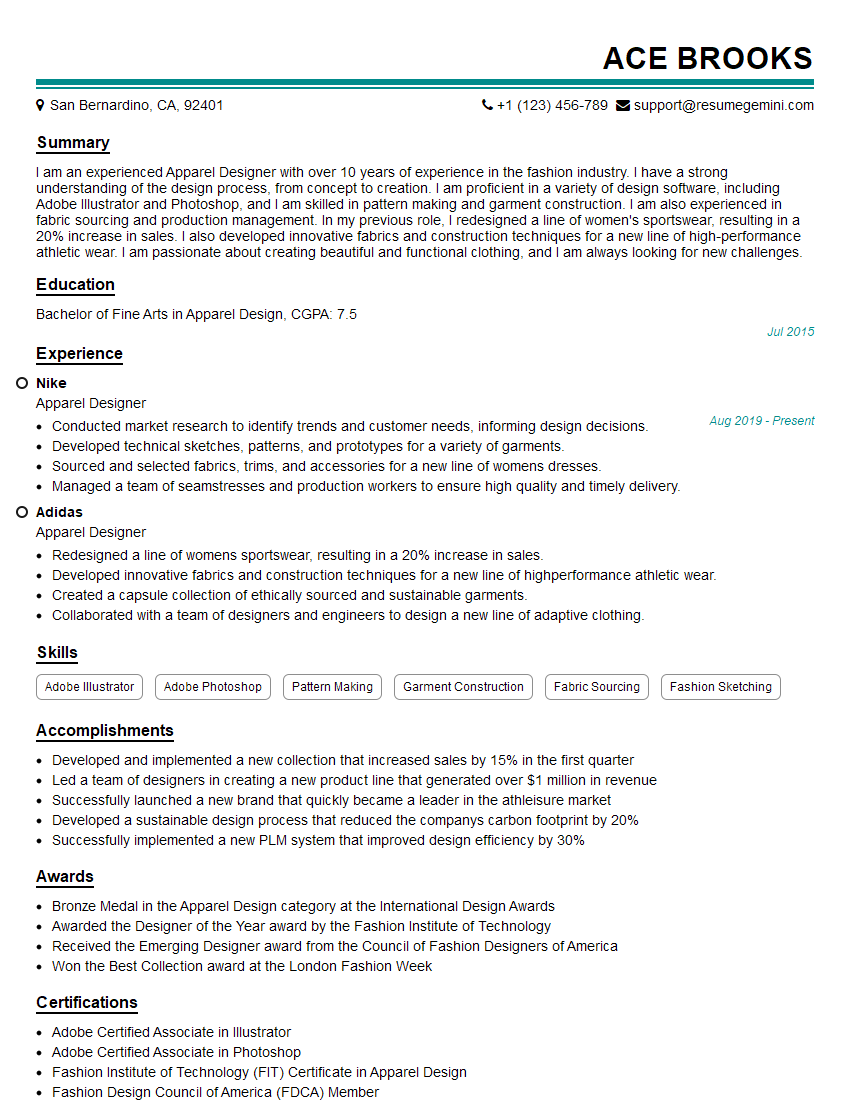
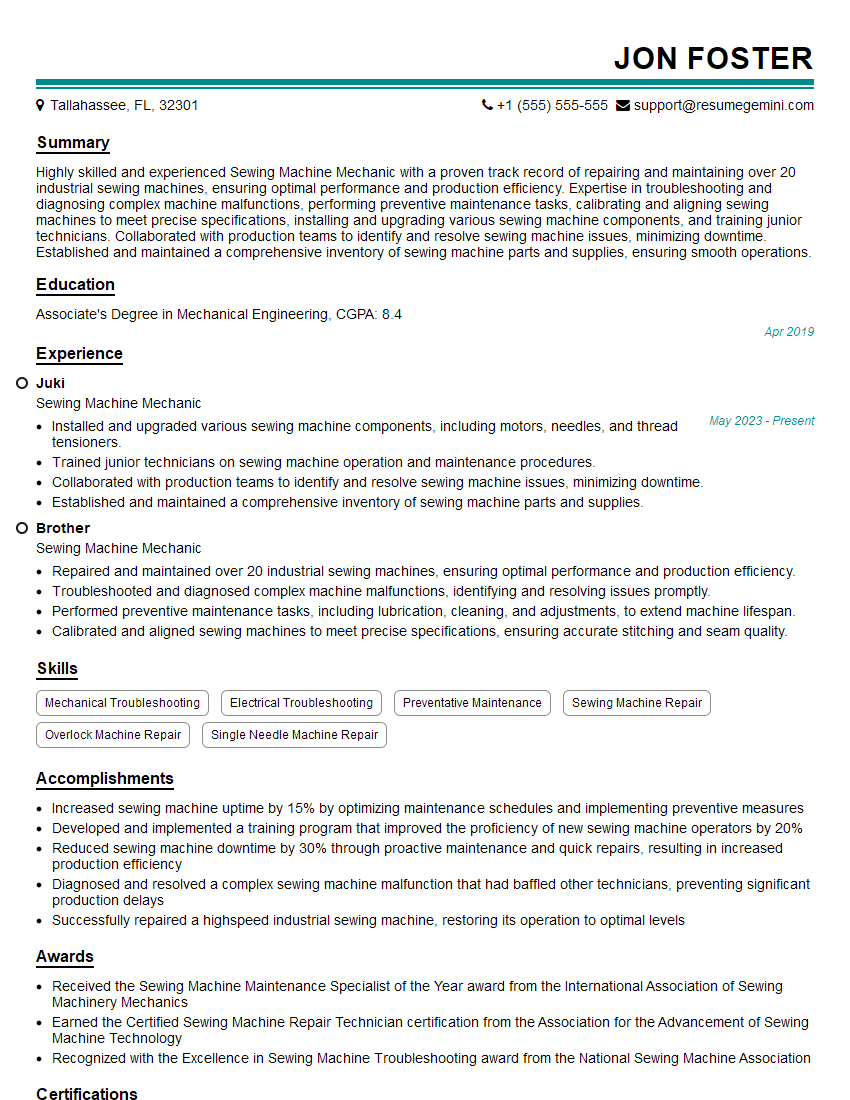
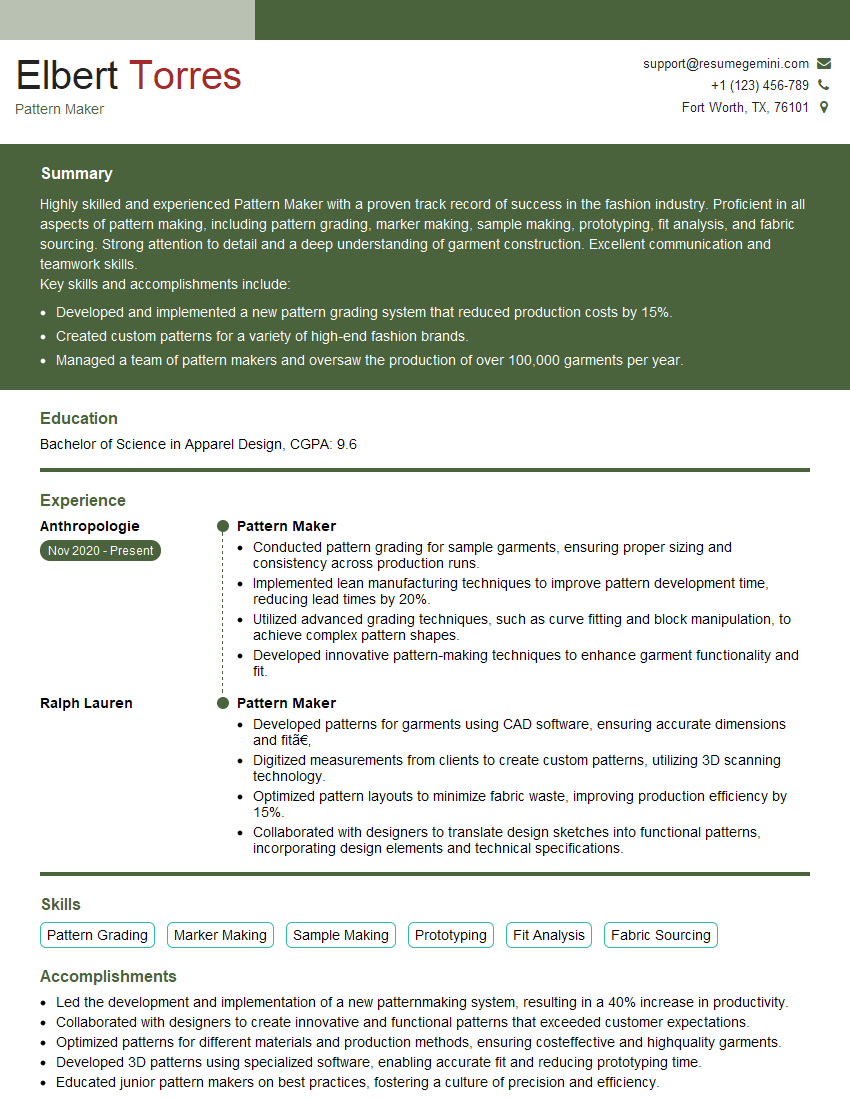
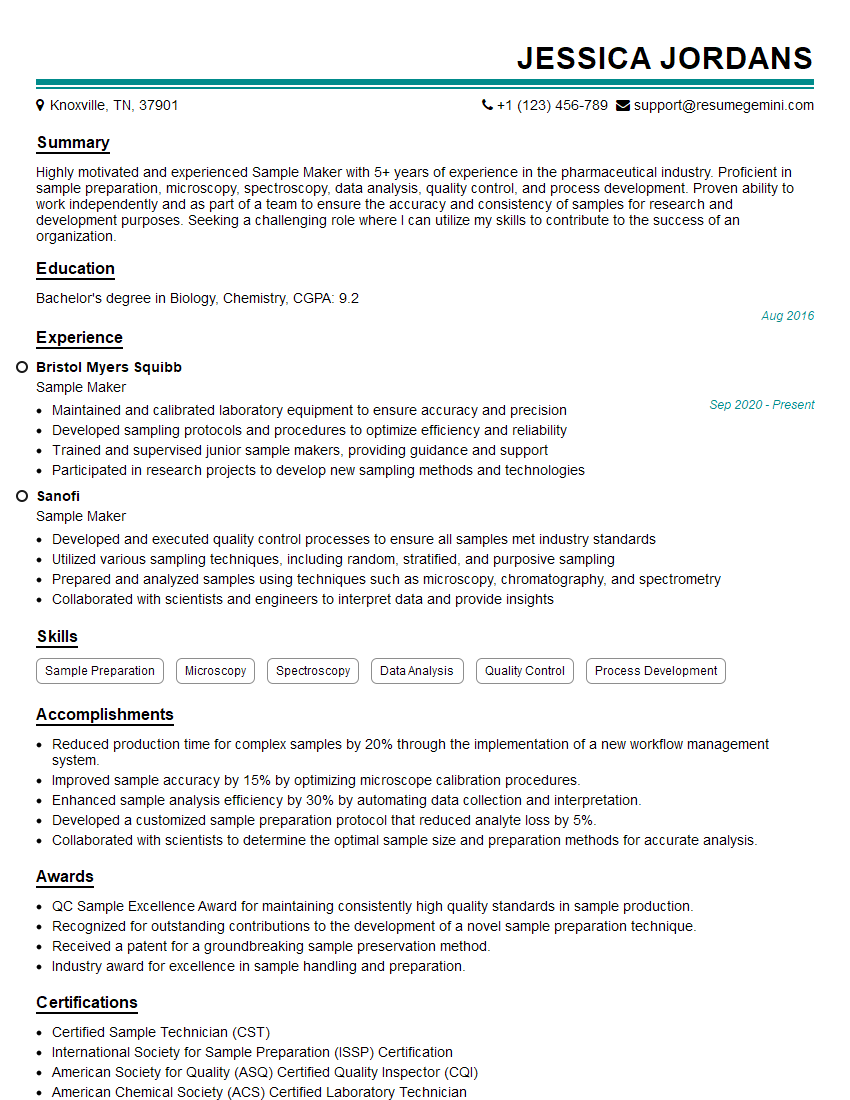
Mastering apparel and textile manufacturing processes is crucial for career advancement in this dynamic industry. A strong understanding of these concepts demonstrates expertise and problem-solving skills highly valued by employers. To significantly boost your job prospects, create an ATS-friendly resume that effectively highlights your skills and experience. ResumeGemini is a trusted resource to help you build a professional and impactful resume that grabs the attention of recruiters. Examples of resumes tailored to experience in Apparel and Textile Manufacturing Processes are available to further guide your preparation.


Explore more articles
Users Rating of Our Blogs
Share Your Experience
We value your feedback! Please rate our content and share your thoughts (optional).
What Readers Say About Our Blog
Very informative content, great job.
good