Unlock your full potential by mastering the most common Ultrasound Pregnancy Diagnostics interview questions. This blog offers a deep dive into the critical topics, ensuring you’re not only prepared to answer but to excel. With these insights, you’ll approach your interview with clarity and confidence.
Questions Asked in Ultrasound Pregnancy Diagnostics Interview
Q 1. Describe the different types of ultrasound transducers used in obstetric imaging.
Obstetric ultrasound utilizes various transducers, each designed for specific applications and stages of pregnancy. The choice depends on factors like gestational age, the information sought, and the patient’s anatomy.
- Transabdominal Transducers: These are the most common, used for external imaging. They emit lower-frequency sound waves (2-5 MHz) that penetrate deeper into the abdomen, allowing visualization of the fetus throughout pregnancy. The lower frequency means slightly less image resolution but greater penetration depth. Think of it like a wide-angle lens – you get a broader view, even if the details aren’t as sharp.
- Transvaginal Transducers: Used primarily in early pregnancy (first trimester), these high-frequency transducers (5-10 MHz) are inserted into the vagina for clearer, more detailed images of the uterus and developing embryo. The closer proximity to the target provides superior resolution, revealing finer structures like the embryo’s early development. It’s like using a macro lens on a camera – much sharper detail but a smaller field of view.
- Endovaginal Transducers: These are similar to transvaginal transducers but provide even higher resolution. They are often used for specialized procedures like early pregnancy dating and assessment of ectopic pregnancies.
- 3D/4D Transducers: These advanced transducers create three-dimensional or four-dimensional images (with the addition of real-time movement). They offer a more comprehensive view of fetal anatomy and can be beneficial for diagnosing certain anomalies or providing parents with a clearer picture of their baby. Think of this as switching from a standard photo to a detailed 3D model, and then watching that model move in real-time.
Q 2. Explain the process of obtaining informed consent before performing a pregnancy ultrasound.
Obtaining informed consent is a crucial ethical and legal step before any ultrasound procedure. It ensures the patient understands the procedure’s purpose, benefits, risks, and alternatives. The process should be patient-centered and conducted in a language the patient understands.
- Explanation of the Procedure: Clearly explain the type of ultrasound, its purpose (e.g., dating, anomaly screening, growth assessment), how it’s performed, and the expected duration.
- Discussion of Benefits: Discuss the potential benefits of the ultrasound, such as early detection of fetal abnormalities or monitoring fetal growth and wellbeing.
- Description of Risks: While generally safe, explain any potential risks, however minimal, such as discomfort during the exam or extremely rare instances of complications. For example, mention the extremely rare possibility of heating effects at high intensities, although this is mitigated by appropriate safety protocols.
- Alternative Options: Discuss alternative methods if available, and explain why the ultrasound is the recommended option in this particular case.
- Answering Questions: Allow ample time for the patient to ask questions and ensure all concerns are addressed. This open communication builds trust and ensures the patient feels comfortable and empowered to make an informed decision.
- Documentation: Thoroughly document the consent process, including the patient’s signature indicating their understanding and agreement.
A patient’s autonomy must be respected throughout the process. If a patient refuses the procedure, their decision must be honored.
Q 3. How do you identify fetal abnormalities during an ultrasound exam?
Identifying fetal abnormalities during an ultrasound exam requires a systematic approach and expertise. It involves careful assessment of various fetal structures and measurements, comparing findings to established norms.
- Anatomic Survey: A thorough examination of all major fetal organs (brain, heart, spine, abdomen, limbs) is performed. Any deviation from the expected anatomy is noted.
- Biometric Measurements: Key measurements, such as head circumference (HC), abdominal circumference (AC), femur length (FL), and biparietal diameter (BPD) are obtained and compared to gestational age-specific charts. Significant deviations might indicate growth restriction or other problems.
- Assessment of Fetal Movement and Tone: Observation of fetal movement and tone helps evaluate fetal wellbeing. Reduced or absent movement can be a sign of distress.
- Doppler Assessment: Doppler ultrasound assesses blood flow in various fetal vessels, providing insights into placental function and fetal circulation. Abnormal blood flow patterns can indicate placental insufficiency or other issues.
- Soft Markers: These are subtle ultrasound findings that may be associated with an increased risk of chromosomal abnormalities or other conditions. Examples include increased nuchal translucency, shortened femur length, echogenic intracardiac foci, and pyelectasis (dilation of the renal pelvis). The presence of soft markers doesn’t confirm a diagnosis but warrants further investigation.
The findings are interpreted in the context of the patient’s history, family history, and other diagnostic tests. If any abnormalities are suspected, further investigations, such as genetic testing or fetal echocardiography, might be recommended.
Q 4. What are the key measurements taken during a first-trimester ultrasound scan?
First-trimester ultrasound scans are crucial for early pregnancy assessment. Key measurements obtained include:
- Crown-Rump Length (CRL): This is the most accurate method for determining gestational age in early pregnancy (up to 14 weeks). It’s the distance from the top of the baby’s head to the bottom of its buttocks.
- Gestational Sac Size: The size of the gestational sac (the fluid-filled sac surrounding the embryo) can help estimate gestational age and assess early pregnancy viability.
- Yolk Sac Size and Visualization: The yolk sac provides nourishment to the embryo in early development. Its presence and size are essential for assessing pregnancy progression.
- Cardiac Activity: Detection of a fetal heartbeat is a strong indicator of viability and a reassuring sign.
- Number of Fetuses: The ultrasound can identify the presence of twins or multiple pregnancies.
- Placental Location: The position of the placenta is checked to rule out conditions like placenta previa (placenta lying over the cervix).
These measurements are crucial for dating the pregnancy accurately, assessing fetal viability, and detecting early pregnancy complications.
Q 5. How do you differentiate between a normal and abnormal fetal heart rate?
Fetal heart rate (FHR) is a vital indicator of fetal well-being. Normal FHR varies throughout gestation, but generally falls within a specific range. Interpretation requires considering gestational age and the clinical context.
- Normal Fetal Heart Rate: A normal FHR typically ranges from 110 to 160 beats per minute (bpm) after the first trimester. The exact range can vary slightly depending on the gestational age and the equipment used.
- Abnormal Fetal Heart Rate: An abnormal FHR can indicate fetal distress or compromise. This might manifest as a rate outside the normal range (bradycardia <110 bpm or tachycardia >160 bpm), variability (lack of change in the heart rate), or the presence of decelerations (temporary drops in the heart rate).
A single abnormal reading doesn’t automatically indicate a problem; the entire clinical picture must be considered. Further investigation, like continuous fetal monitoring, may be necessary if concerns arise.
For example, a consistently low heart rate (bradycardia) may suggest a problem with the fetal oxygen supply, while a consistently high heart rate (tachycardia) could be related to infection or other medical conditions. A lack of variability in the fetal heart rate could also indicate that the baby is not responding well to changes in its environment.
Q 6. Explain the concept of biophysical profile (BPP) and its significance.
The biophysical profile (BPP) is a comprehensive assessment of fetal well-being that combines ultrasound and fetal heart rate monitoring. It’s typically performed in pregnancies at higher risk, like those with suspected fetal growth restriction or reduced fetal movement.
The BPP evaluates five parameters:
- Fetal Breathing Movements (FBM): The presence of breathing movements suggests adequate central nervous system function.
- Fetal Movements (FM): The number of gross body movements observed within a 30-minute period.
- Fetal Tone (FT): Assessment of the flexion and extension of fetal limbs and joints.
- Amniotic Fluid Volume (AFV): Measurement of the amniotic fluid index (AFI) assesses placental function and hydration. An abnormally low AFI suggests oligohydramnios, indicating potential fetal compromise.
- Non-Stress Test (NST): A non-invasive method that records the fetal heart rate and its response to fetal movements. A reactive NST is associated with a normal fetal heart rate pattern.
Each parameter is scored (2 points for normal, 0 for abnormal), and the total score ranges from 0 to 10. A score of 8-10 is considered normal, while a lower score might indicate fetal compromise and necessitate further intervention, possibly including delivery.
The BPP is crucial for making timely decisions regarding fetal management, potentially preventing adverse outcomes.
Q 7. Describe the procedure for performing a nuchal translucency scan.
Nuchal translucency (NT) screening is a first-trimester ultrasound examination performed between 11 and 14 weeks of gestation to assess the thickness of the fluid-filled space at the back of the fetal neck.
- Patient Preparation: The patient typically needs a full bladder to elevate the uterus for better visualization. This is important for optimal imaging of the fetal neck area.
- Transducer Selection: A high-frequency transvaginal transducer is used to obtain optimal visualization of the fetal neck and surrounding structures.
- Image Acquisition: The sonographer carefully positions the transducer to obtain a midsagittal view of the fetal head and neck. Measurements of the nuchal translucency are taken at the thickest area.
- Measurement Recording: The NT measurement is recorded in millimeters. It is essential to ensure proper measurements and to minimize artifacts that can lead to inaccurate results.
- Biometric Measurements: CRL and other biometric measurements are also obtained to accurately determine gestational age and assess fetal growth.
- Result Interpretation: The NT measurement is interpreted in conjunction with maternal age and biochemical markers (e.g., PAPP-A and free β-hCG) to calculate the risk for chromosomal abnormalities, particularly Down syndrome.
It is crucial to emphasize that NT screening is a screening test, not a diagnostic test. An increased NT measurement indicates a higher risk, necessitating further investigation through more comprehensive diagnostic tests such as amniocentesis or chorionic villus sampling (CVS).
Q 8. How do you assess fetal growth and development using ultrasound?
Assessing fetal growth and development using ultrasound involves measuring various parameters throughout the pregnancy. We utilize several key measurements to track growth and identify potential issues. Think of it like charting a child’s height and weight – we’re looking for patterns and deviations from the expected.
- Biparietal Diameter (BPD): This measures the widest part of the fetal head. It helps us estimate gestational age and identify microcephaly (small head) or macrocephaly (large head).
- Head Circumference (HC): This measurement complements the BPD and provides a more comprehensive assessment of head growth.
- Femur Length (FL): The length of the fetal thigh bone provides another indication of growth and can be compared to other measurements to assess proportionality.
- Abdominal Circumference (AC): Measuring the circumference of the fetal abdomen helps assess the growth of the organs and identify potential issues like intrauterine growth restriction (IUGR).
- Estimated Fetal Weight (EFW): Combining BPD, HC, AC, and FL allows us to estimate the baby’s weight. Significant deviations from the expected weight for gestational age can signal problems.
We compare these measurements to established normative data specific to gestational age. Software within the ultrasound machine helps automate these calculations and provides visual representations of the fetal growth trajectory. For instance, if the abdominal circumference consistently falls below the expected percentiles, it might indicate a need for further investigation for potential IUGR, and we may then order additional tests like Doppler studies.
Q 9. Explain the different types of placental abnormalities detectable via ultrasound.
Ultrasound allows us to detect a range of placental abnormalities that can impact fetal development and well-being. These abnormalities can vary significantly in severity.
- Placenta Previa: This occurs when the placenta partially or completely covers the cervix. Ultrasound clearly shows the placenta’s position relative to the cervix. This condition often necessitates close monitoring and potentially a C-section delivery to prevent hemorrhage during labor.
- Placental Abruption: This is the premature detachment of the placenta from the uterine wall. Ultrasound may reveal a retroplacental hematoma (blood collection behind the placenta). This is a serious complication that often requires immediate medical attention.
- Placenta Accreta/Increta/Percreta: These represent increasingly severe forms of placental invasion into the uterine wall. Ultrasound helps in the diagnosis, although the assessment can sometimes be challenging and needs confirmation with other imaging modalities like MRI.
- Succenturiate Lobe: This refers to the presence of an accessory lobe of the placenta, which is usually not problematic but requires careful monitoring to ensure adequate blood supply to the fetus.
- Placental Calcifications: These are deposits of calcium within the placenta. The amount and location of these calcifications can be an indicator of placental aging and potential function compromise. This is often evaluated through a placental maturity grading system.
Identifying these placental abnormalities early through ultrasound allows for timely intervention and appropriate management strategies to optimize maternal and fetal outcomes. Remember, the appearance of the placenta on ultrasound is highly dependent on gestational age, and a thorough interpretation considers many factors.
Q 10. What are the limitations of ultrasound in assessing fetal anomalies?
While ultrasound is an incredibly valuable tool, it does have limitations in assessing fetal anomalies. It’s not a perfect diagnostic test. Think of it as a window – we can see a lot, but not everything.
- Operator Dependence: The quality of the image and the interpretation of the findings are greatly influenced by the skill and experience of the sonographer. Different sonographers may reach slightly different conclusions.
- Fetal Position and Maternal Body Habit: A baby’s position in the uterus, or a mother’s BMI, can obstruct the view and limit the visibility of certain structures. Sometimes we might need to reschedule the exam for better visualization.
- Resolution Limitations: Ultrasound has limitations in resolving very small structures. Some subtle anomalies might be missed, particularly in early pregnancy.
- Inability to Assess Certain Anomalies: Ultrasound may not be able to detect all types of fetal anomalies, especially those affecting the internal organs at certain gestational stages. Other imaging techniques such as MRI or fetal echocardiography might be necessary for more detailed assessment.
- False Positives and False Negatives: Like any medical test, ultrasound can produce false positive (finding a problem that doesn’t exist) or false negative (missing a problem) results. Therefore, we carefully weigh the findings and use other tests to confirm or rule out potential concerns.
It’s crucial to remember that ultrasound is a part of a broader diagnostic process, often integrating other clinical findings and potential further investigations.
Q 11. How do you manage a patient who is anxious or claustrophobic during an ultrasound exam?
Managing anxious or claustrophobic patients during an ultrasound exam requires empathy, patience, and a tailored approach. We create a comfortable and safe environment to minimize their discomfort.
- Open Communication: Begin by acknowledging their anxiety and validating their feelings. Ask about their concerns and address them directly. A simple conversation can go a long way.
- Relaxation Techniques: Encourage deep breathing exercises, or offer to play calming music. A quiet, comfortable room helps.
- Positioning: Allow the patient to choose the position that they find most comfortable, and ensure that their neck, back, and legs are well supported to minimize discomfort. We might try a variety of positions throughout the exam.
- Frequent Breaks: If necessary, allow for short breaks to minimize feelings of claustrophobia. Explain each stage of the exam, so they know what to expect.
- Support Person: If comfortable, allow a support person to remain with the patient throughout the procedure. A familiar face can help to reduce anxiety.
- Sedation (if necessary): In severe cases, a physician may recommend light sedation, but this requires careful assessment and management.
We use a combination of these techniques, always prioritizing the patient’s comfort and well-being. The goal is to make the exam as stress-free as possible.
Q 12. Describe the process of documenting ultrasound findings in a patient’s chart.
Documenting ultrasound findings requires a structured and detailed approach to ensure clarity and accuracy. We use a standardized reporting format to avoid ambiguity and ensure efficient communication amongst the healthcare team.
- Patient Demographics: The report begins with the patient’s name, date of birth, medical record number, and gestational age.
- Technical Specifications: We document the type of ultrasound machine used, transducers employed, and the examination settings.
- Ultrasound Findings: This section is the core of the report. It provides detailed descriptions of the findings, including measurements (e.g., BPD, HC, AC, FL, EFW), placental position, amniotic fluid volume, and any observed anomalies. We use standardized terminology to avoid misinterpretations.
- Images: Relevant ultrasound images are included as part of the report, allowing for visual confirmation of the findings and easy future reference.
- Interpretation and Impression: This section summarizes the findings and provides a concise interpretation of their clinical significance. It explains what the findings mean for the patient’s care and management.
- Recommendations: The report includes recommendations for further testing, follow-up, or any necessary interventions based on the findings.
- Sonographer and Physician Sign-off: The report is signed and dated by both the sonographer and the interpreting physician.
This comprehensive documentation serves as a critical part of the patient’s medical record, providing valuable information for ongoing care and facilitating effective communication amongst healthcare professionals.
Q 13. How do you ensure the safety and well-being of the patient during an ultrasound procedure?
Ensuring patient safety and well-being during an ultrasound procedure is paramount. We follow established protocols and guidelines to minimize any potential risks. It’s like a checklist to ensure we’re always doing what’s best for our patient.
- ALARA Principle: We adhere to the ALARA principle (As Low As Reasonably Achievable), minimizing the ultrasound exposure time and intensity to the levels necessary for obtaining diagnostically useful images. We understand that although ultrasound is considered safe, unnecessary exposure should be avoided.
- Appropriate Transducer Selection: We choose the appropriate transducer for the specific application and gestational age. Higher frequencies are generally used for early pregnancy scans to improve image resolution, while lower frequencies are typically used in later pregnancy when better penetration is needed.
- Gel Use and Hygiene: We use a generous amount of ultrasound gel to ensure good acoustic coupling and reduce the risk of skin irritation. We maintain strict hygiene protocols, using fresh gel and cleaning the transducer between patients.
- Patient Comfort: We take steps to ensure the patient is comfortable throughout the procedure. This includes appropriate positioning and breaks when needed, ensuring patient privacy and dignity.
- Adverse Effects Monitoring: Although rare, we monitor for any potential adverse effects, such as overheating or discomfort. We promptly address any concerns.
The safety of our patient is always the top priority, and we follow the latest guidelines and best practices to minimize risks.
Q 14. What are the ethical considerations involved in performing and interpreting ultrasound exams during pregnancy?
Ethical considerations are central to performing and interpreting ultrasound exams during pregnancy. Our decisions have significant implications for the patient and the fetus.
- Informed Consent: Before any exam, we obtain informed consent, ensuring the patient understands the procedure, its benefits, risks, and alternatives. We use clear and understandable language.
- Confidentiality: We maintain patient confidentiality, protecting sensitive medical information as mandated by regulations.
- Appropriate Indications: We perform ultrasound exams only when clinically indicated, avoiding unnecessary tests. We justify each test and ensure it aligns with clinical need.
- Non-Directive Counseling: When presenting findings, we avoid imposing our own values or biases. We provide factual information, enabling the patient to make autonomous decisions about their care.
- Emotional Support: We provide emotional support to the patient, acknowledging the emotional weight of pregnancy and potential anxieties associated with medical testing. We offer empathy and understanding.
- Image Sharing and Use: We carefully consider the implications of image sharing and ensure that the use of ultrasound images adheres to ethical guidelines and complies with legal regulations.
In conclusion, the ethical practice of ultrasound in pregnancy involves a balance between providing quality care, respecting patient autonomy, and upholding professional standards. We prioritize the best interests of both the mother and the fetus, treating each patient with respect, empathy, and dignity.
Q 15. Explain the difference between 2D, 3D, and 4D ultrasound imaging.
The difference between 2D, 3D, and 4D ultrasound lies in the way they display the image of the fetus and the information they provide. Think of it like taking pictures: 2D is a standard photograph, 3D adds depth and volume, and 4D brings movement and real-time viewing.
- 2D Ultrasound: This is the most common type, displaying a two-dimensional, black and white image. It’s like looking at a flat, cross-sectional slice of the fetus. We use this routinely to assess fetal anatomy, growth, and placental position. For example, we’d use 2D to measure the fetal head circumference or assess the position of the placenta.
- 3D Ultrasound: This technique combines multiple 2D images to create a three-dimensional, static image. It’s like viewing a miniature model of the fetus. This gives a more comprehensive view of fetal features, particularly facial features and body structure, helpful in diagnosing certain congenital anomalies. Imagine seeing a clear representation of the baby’s profile or the shape of its hands and feet.
- 4D Ultrasound: This is a real-time, moving 3D image. It’s like watching a short video of the baby moving and interacting. This is particularly engaging for parents-to-be and helps to visualize fetal movements and facial expressions, but importantly, does not add more diagnostic value than a comprehensive 2D scan performed by a trained sonographer.
Career Expert Tips:
- Ace those interviews! Prepare effectively by reviewing the Top 50 Most Common Interview Questions on ResumeGemini.
- Navigate your job search with confidence! Explore a wide range of Career Tips on ResumeGemini. Learn about common challenges and recommendations to overcome them.
- Craft the perfect resume! Master the Art of Resume Writing with ResumeGemini’s guide. Showcase your unique qualifications and achievements effectively.
- Don’t miss out on holiday savings! Build your dream resume with ResumeGemini’s ATS optimized templates.
Q 16. What are the common artifacts encountered in obstetric ultrasound?
Obstetric ultrasound, while incredibly valuable, is prone to several artifacts – essentially, misleading echoes or visual distortions. These can hinder accurate interpretation. Some common examples include:
- Shadowing: A dark area behind a highly reflective structure (like bone) which can obscure structures behind it. Think of it like a shadow cast by a very bright object.
- Enhancement: The opposite of shadowing, a brighter area behind a fluid-filled structure. This can make a structure look bigger or different than it actually is.
- Refraction: Bending of the ultrasound beam as it passes through different tissue densities. This can distort the image and make a structure appear in a different location than it actually is. Imagine a straw appearing bent in a glass of water – a similar principle applies here.
- Acoustic shadowing from gas: Gas in the intestines can significantly affect the ultrasound image, causing obscuring shadows and making visualization challenging. This is especially true in the early stages of pregnancy or if the patient is suffering from bloating.
- Multiple reflections: These occur when the sound wave bounces back and forth between two strongly reflective surfaces. This can produce confusing mirror images.
Recognizing and understanding these artifacts is crucial for accurate interpretation. We use our experience and knowledge of fetal anatomy to differentiate between artifacts and actual pathology.
Q 17. Describe your experience with ultrasound-guided procedures during pregnancy.
I have extensive experience with ultrasound-guided procedures during pregnancy. These procedures use real-time ultrasound imaging to guide the placement of needles or catheters during various interventions.
- Amniocentesis: This involves inserting a needle into the amniotic sac to collect amniotic fluid for genetic testing. Ultrasound guidance ensures the needle avoids the fetus and the placenta.
- Chorionic villus sampling (CVS): Similar to amniocentesis, this procedure collects tissue from the placenta for genetic testing. Ultrasound is essential for accurate needle placement.
- Cordocentesis (percutaneous umbilical blood sampling): A needle is inserted into the umbilical cord to obtain fetal blood for testing. Ultrasound guidance is crucial for safety and accuracy.
In each case, precision is paramount. Real-time ultrasound visualization allows me to monitor the needle’s progress, ensuring safe and effective sample acquisition while minimizing risks to the mother and fetus. For instance, during amniocentesis, I use ultrasound to carefully identify the location of the placenta and the fetus’ position, ensuring the needle is placed in the appropriate pocket of amniotic fluid and avoids any fetal structures.
Q 18. How do you handle a situation where the ultrasound findings are inconclusive?
Inconclusive ultrasound findings are a common challenge. My approach involves a systematic process:
- Careful Review: I meticulously review the ultrasound images, paying close attention to any ambiguous areas. This often involves manipulating the ultrasound machine’s settings to optimize visualization and try different imaging planes.
- Correlation with Clinical Data: I compare the ultrasound findings with the patient’s medical history, symptoms, and other test results. This contextual information can often help clarify ambiguous findings.
- Repeat Ultrasound: If uncertainty remains, I recommend a repeat ultrasound, often at a later gestational age when fetal structures are better developed and easier to visualize.
- Referral to Specialist: For complex cases or if there are concerns about a specific organ system, referring the patient to a specialist, such as a maternal-fetal medicine specialist or geneticist, is essential.
- Additional Tests: Depending on the specific clinical scenario, additional tests may be necessary to clarify the ultrasound findings. This might include MRI, further blood tests, or other diagnostic procedures.
The key is to adopt a cautious approach, avoiding premature diagnoses or conclusions. Clear communication with the patient is critical, explaining the uncertainty and outlining the next steps.
Q 19. Explain your experience with different ultrasound machines and software.
Throughout my career, I’ve gained experience with a wide range of ultrasound machines and software, from older analog systems to the latest high-resolution digital platforms. This includes machines from various manufacturers, each with its unique features and capabilities. My expertise covers various functionalities like Doppler imaging, 3D/4D reconstruction, and specialized software for fetal biometry and anomaly detection. For example, I am proficient in using GE Voluson E10, Philips Epiq 7 and Siemens ACUSON X300 ultrasound machines; each has different strengths regarding image quality, processing speed, and software applications.
Familiarity with different systems enhances my ability to adapt to various clinical settings and interpret images from diverse machines. This also means I’m adept at navigating different software interfaces, making adjustments and optimizing settings to achieve the clearest and most informative images possible. I’m always updating my skills to keep current with technological advancements in the field.
Q 20. How do you maintain the quality assurance of ultrasound equipment?
Maintaining the quality assurance of ultrasound equipment is critical for accurate diagnoses and patient safety. This involves a multifaceted approach:
- Regular Quality Control Tests: We perform daily, weekly, and monthly quality control tests according to manufacturer recommendations. These tests check for things like image resolution, accuracy of measurements, and proper functioning of the system. For instance, we use phantoms (test objects) to evaluate the accuracy of measurements and image quality. These are standardized objects with known dimensions which allow us to assess the accuracy of our measurements.
- Calibration: Periodic calibration of the equipment is crucial to ensure accuracy. This involves specialized service engineers who can accurately calibrate the machine and ensure it remains within accepted performance standards.
- Preventive Maintenance: Regular maintenance by qualified technicians is essential to prevent breakdowns and ensure optimal performance. This includes cleaning, inspections, and necessary repairs.
- Documentation: We maintain meticulous records of all quality control tests, calibration procedures, and maintenance activities. This documentation is essential for regulatory compliance and tracking equipment performance.
- Staff Training: Ensuring that all ultrasound technicians are properly trained and proficient in the operation and maintenance of the equipment is crucial for reliable outcomes. Ongoing training helps them use the machine to its full potential and recognize any deviations from its optimal performance.
A robust QA program minimizes equipment errors and ensures patient safety, ultimately improving the quality of care provided.
Q 21. What is your experience with fetal echocardiography?
Fetal echocardiography, or fetal cardiac ultrasound, is a specialized ultrasound technique used to assess the structure and function of the fetal heart. I have significant experience in performing and interpreting fetal echocardiograms. This expertise includes visualizing the four chambers of the heart, the great vessels, and assessing for the presence of any congenital heart defects.
My experience encompasses a range of clinical scenarios, including evaluating fetuses at risk for heart defects due to family history, maternal conditions, or abnormal findings on routine ultrasound. I use specialized ultrasound equipment and techniques optimized for evaluating the complex anatomy of the fetal heart, recognizing subtle signs indicative of congenital heart disease. Detailed reporting and collaboration with cardiologists specializing in congenital heart defects are crucial for guiding appropriate follow-up and management. My work in this area has contributed to early detection and optimal treatment planning for several fetuses with critical cardiac anomalies.
Q 22. Describe your experience with Doppler ultrasound in obstetrics.
Doppler ultrasound is an invaluable tool in obstetrics, allowing us to assess blood flow within the maternal and fetal circulations. It uses sound waves to detect the movement of blood cells, providing information about the velocity and direction of blood flow. This is crucial for detecting potential complications.
- Uterine artery Doppler: We use this to assess placental perfusion. High resistance flow can be indicative of placental insufficiency, potentially leading to fetal growth restriction. Imagine the placenta as a highway – high resistance means traffic is jammed, and the baby isn’t getting enough ‘supplies’.
- Umbilical artery Doppler: This helps us assess blood flow in the umbilical cord, which is the baby’s lifeline. Abnormal flow patterns, such as increased resistance, can signal fetal distress or impending problems.
- Fetal middle cerebral artery Doppler: In cases of suspected fetal anemia or growth restriction, we can assess blood flow in the brain. This helps us understand how well the fetus is compensating for any underlying issues.
For example, I recently used Doppler ultrasound to identify a case of severe fetal growth restriction. The umbilical artery Doppler showed significantly elevated resistance, indicating reduced blood flow to the fetus. This led to immediate intervention, including close monitoring and adjustments to the mother’s care, improving the outcome for both mother and baby.
Q 23. How do you interpret amniotic fluid indices (AFI)?
Amniotic fluid index (AFI) is a measurement of the volume of amniotic fluid surrounding the fetus. We assess it by dividing the ultrasound image into four quadrants and summing the deepest vertical pocket of fluid in each quadrant. The total is expressed in centimeters. This is crucial because amniotic fluid plays a vital role in fetal development and well-being.
- Normal AFI: Typically ranges from 8-24 cm. This signifies sufficient cushioning and protection for the baby.
- Oligohydramnios (low AFI): AFI less than 5 cm indicates reduced amniotic fluid, potentially linked to placental insufficiency, fetal kidney abnormalities, or premature rupture of membranes. This can restrict fetal growth and movement, potentially causing lung problems.
- Polyhydramnios (high AFI): AFI greater than 24 cm indicates excessive amniotic fluid. Causes include gestational diabetes, fetal anomalies, or multiple gestations. This can lead to premature labor or cord prolapse.
Think of the amniotic fluid as a protective cushion and a medium for fetal development. Deviations from the normal range trigger further investigations and intervention to protect the baby.
Q 24. Describe your understanding of fetal anatomy and development.
My understanding of fetal anatomy and development spans the entire gestational period, from the very early stages of embryonic development to term. I am proficient in visualizing and assessing fetal structures, including the brain, heart, spine, limbs, and organs. I know the typical developmental milestones and can recognize deviations from normal development.
- Early pregnancy: I can identify the gestational sac, yolk sac, and fetal pole to confirm pregnancy and determine gestational age accurately.
- Second trimester: Detailed fetal anatomy scan is performed during this period, where we evaluate the anatomy of all major fetal organs. This helps us detect anomalies early on.
- Third trimester: We assess fetal growth, amniotic fluid volume, placental location, and umbilical cord insertion.
For instance, I recently identified a case of anencephaly (absence of a major portion of the brain) during a routine anomaly scan. This allowed for early counseling and medical management for the parents.
Q 25. How do you communicate ultrasound findings to patients and physicians?
Communicating ultrasound findings is a critical aspect of my role. I strive to deliver information clearly, accurately, and sensitively to both patients and physicians. I tailor my communication style to suit the individual, using plain language and avoiding medical jargon whenever possible.
- To patients: I explain findings in simple terms, answer questions patiently, and offer emotional support. I provide them with copies of the reports and images to help them understand.
- To physicians: I present findings concisely and professionally, providing detailed measurements and observations along with high-quality images and reports. This facilitates collaboration and informed decision-making.
I always prioritize empathy and understanding. For example, when delivering difficult news, I ensure a supportive environment and offer referrals to genetic counselors or other specialists as needed.
Q 26. Describe your experience working in a team environment.
I thrive in team environments and have a proven track record of successful collaboration with obstetricians, nurses, midwives, and other healthcare professionals. Effective communication and mutual respect are crucial for providing optimal patient care. I value diverse perspectives and believe that collaborative decision-making leads to the best outcomes.
In my previous role, I worked closely with a team of obstetricians to manage a high-risk pregnancy with several complications. Our combined expertise and efficient communication ensured the safe delivery of a healthy baby.
Q 27. What are your professional development goals related to ultrasound technology?
My professional development goals focus on expanding my expertise in advanced ultrasound techniques and enhancing my diagnostic skills. I aim to:
- Become proficient in 3D/4D ultrasound: This allows for enhanced visualization of fetal anatomy and improved diagnostic accuracy.
- Expand my knowledge of advanced Doppler applications: This will further enhance my ability to detect and manage high-risk pregnancies.
- Stay updated with the latest advancements in ultrasound technology: Continuous learning is crucial in this rapidly evolving field.
By pursuing these goals, I aim to provide the highest quality of care to my patients and contribute to advancements in the field of obstetric ultrasound.
Key Topics to Learn for Ultrasound Pregnancy Diagnostics Interview
- Fundamentals of Ultrasound Physics: Understanding sound wave propagation, transducer principles, and image formation processes is crucial. This forms the basis for interpreting ultrasound images.
- Gestational Age Assessment: Mastering techniques for accurately determining gestational age using biometric measurements (e.g., biparietal diameter, femur length) is essential for proper prenatal care.
- Fetal Anatomy Scan: Thorough knowledge of normal fetal anatomy and the ability to identify potential abnormalities during routine scans is paramount. Practice visualizing and describing various fetal structures.
- Placental Assessment: Learn to identify placental location, maturity, and any potential complications such as placenta previa or abruption.
- Amniotic Fluid Assessment: Understand the significance of amniotic fluid volume and its relation to fetal well-being. Learn to identify polyhydramnios and oligohydramnios.
- Doppler Ultrasound in Pregnancy: Familiarize yourself with the principles of Doppler ultrasound and its application in assessing fetal blood flow (umbilical artery, ductus venosus) and uterine blood flow.
- Common Fetal Anomalies: Develop a strong understanding of common fetal abnormalities detectable by ultrasound and their implications. Practice describing findings clearly and concisely.
- Safety Precautions and Protocols: Understand ALARA principles (As Low As Reasonably Achievable) regarding radiation exposure and adhere to safety guidelines for both patient and sonographer.
- Image Optimization and Artifacts: Learn to recognize and mitigate common artifacts affecting ultrasound image quality and their impact on diagnosis.
- Report Writing and Communication: Practice structuring concise and informative ultrasound reports for clinicians. Strong communication skills are key to effectively conveying findings.
Next Steps
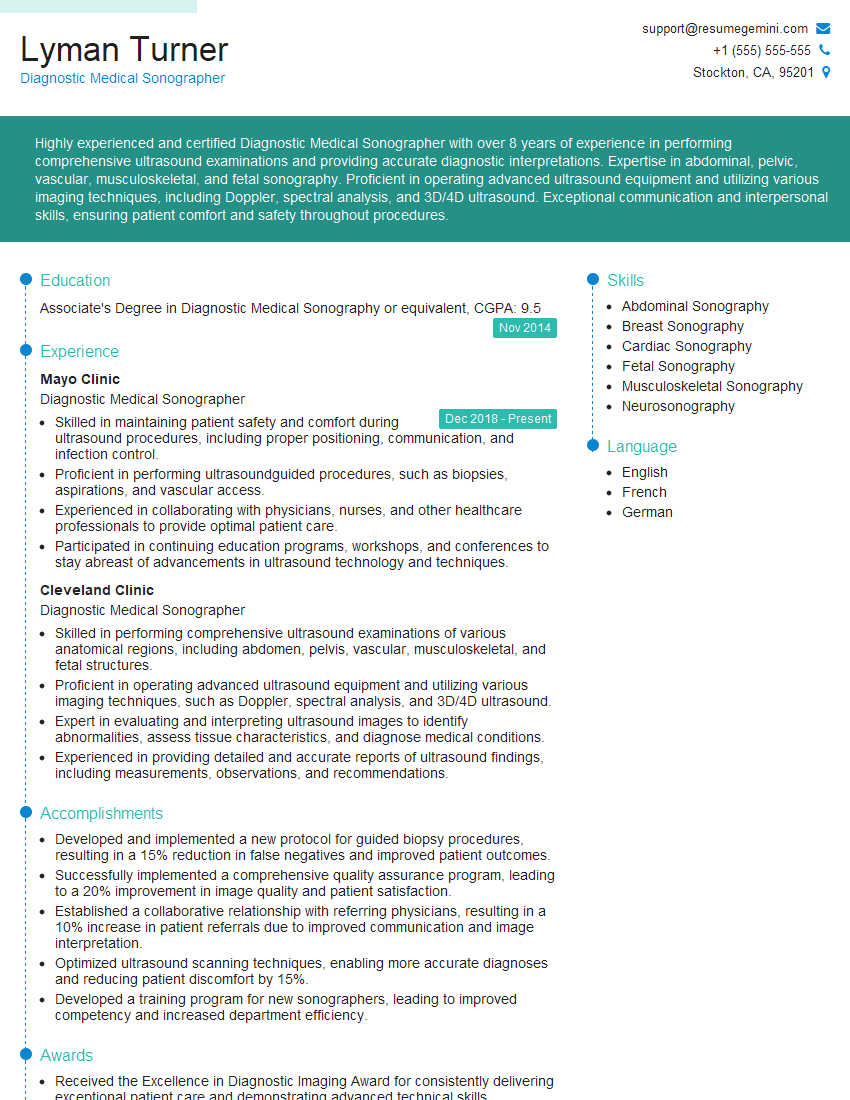
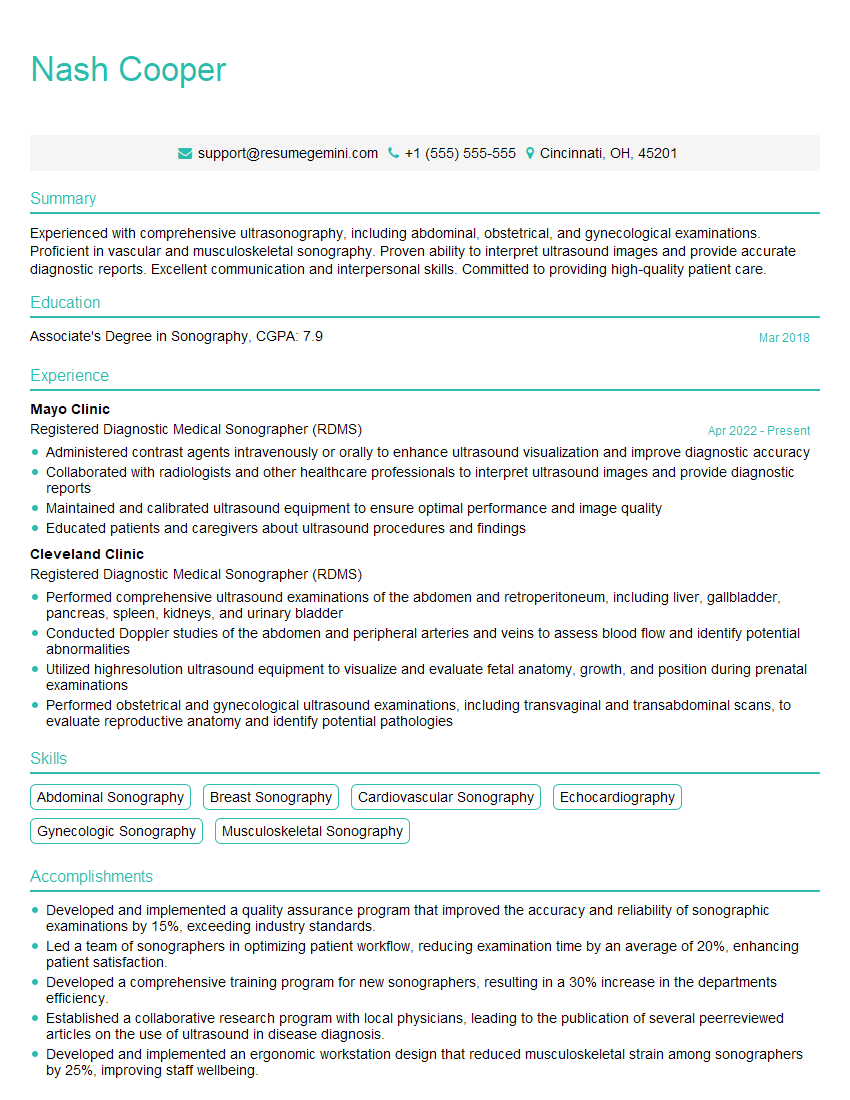
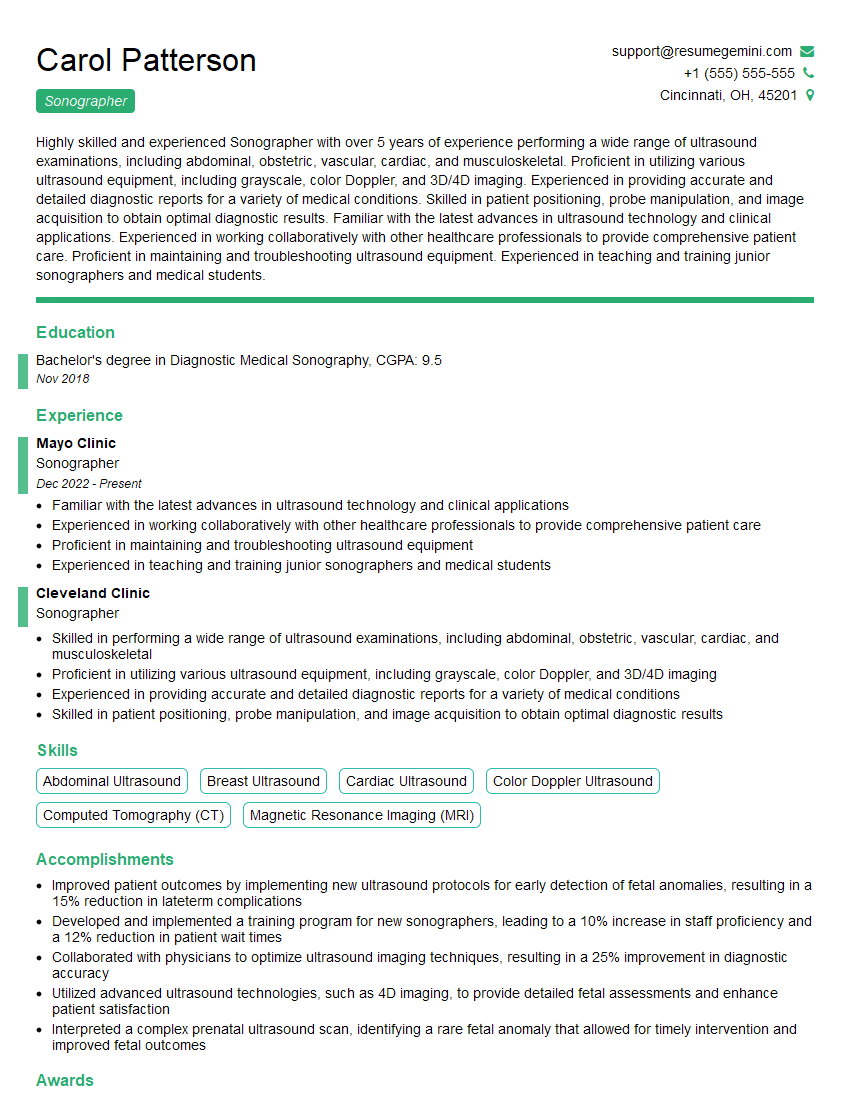
Mastering Ultrasound Pregnancy Diagnostics significantly enhances your career prospects in the rapidly growing field of obstetrics and gynecology. A strong foundation in this area opens doors to specialized roles and leadership opportunities. To maximize your chances of securing your dream position, creating an ATS-friendly resume is vital. ResumeGemini is a trusted resource that can help you build a professional and impactful resume tailored to highlight your skills and experience. Examples of resumes specifically tailored to Ultrasound Pregnancy Diagnostics are available to help you create a winning application.
Explore more articles
Users Rating of Our Blogs
Share Your Experience
We value your feedback! Please rate our content and share your thoughts (optional).
What Readers Say About Our Blog
Very informative content, great job.
good