Interviews are opportunities to demonstrate your expertise, and this guide is here to help you shine. Explore the essential Experience with directing and producing short films interview questions that employers frequently ask, paired with strategies for crafting responses that set you apart from the competition.
Questions Asked in Experience with directing and producing short films Interview
Q 1. Describe your experience in pre-production planning for short films.
Pre-production planning for a short film is the foundation upon which the entire project rests. It’s akin to meticulously designing a blueprint before constructing a house. Without thorough planning, even the best ideas can crumble. My process begins with a detailed breakdown of the script, identifying key scenes, locations, and potential challenges. This leads to the creation of a comprehensive shot list, outlining each shot’s purpose, angle, and required equipment. Next, I develop a detailed schedule, allocating time for each shooting day, accounting for potential delays. Crucially, I build a budget, meticulously accounting for all expenses, from crew salaries to location permits. Finally, I create a comprehensive production plan documenting every aspect of the pre-production phase, acting as a guide for the whole team. For example, on my short film ‘Ephemeral,’ meticulous pre-production, including storyboarding every scene, allowed us to finish shooting on schedule and within budget, despite some unexpected weather challenges.
- Script breakdown and analysis
- Shot list creation
- Scheduling and time allocation
- Budget development and tracking
- Production plan documentation
Q 2. Explain your process for selecting a crew for a short film.
Crew selection is paramount. I look for individuals not only skilled in their respective roles but also possessing a collaborative spirit and a shared passion for the project. My approach is multi-faceted. First, I leverage my network of trusted professionals. Then, I utilize online platforms and industry databases to identify potential candidates based on their experience and demonstrated skills. Finally, I conduct interviews to assess their compatibility with the team and their understanding of the film’s vision. I always prioritize communication and clear expectations. For instance, on my film ‘Silent Echoes,’ my DP’s experience with low-light cinematography was essential in capturing the film’s nocturnal setting. Clear communication throughout the process ensured the entire crew worked harmoniously.
- Networking and referrals
- Online platforms and databases
- Interviews and skills assessments
- Emphasis on communication and collaboration
Q 3. How do you manage a film’s budget effectively?
Effective budget management is crucial for successful filmmaking. It’s not just about tracking expenses, but about strategic planning and resource allocation. I start by creating a detailed budget breakdown that categorizes every anticipated expense—crew, equipment, location, permits, post-production, and contingency. I then prioritize essential elements while creatively finding cost-effective solutions. This might involve leveraging free or low-cost resources, negotiating deals with vendors, or seeking sponsorships. Regular monitoring and tracking of expenses throughout production are vital to stay on track. For ‘Ephemeral,’ securing a sponsorship from a local camera equipment company significantly reduced our equipment rental costs.
- Detailed budget breakdown
- Prioritization of essential elements
- Cost-effective solutions and resource allocation
- Regular monitoring and tracking
- Contingency planning for unexpected costs
Q 4. What is your approach to casting actors for your short films?
Casting involves finding actors who can authentically embody the characters and bring the script to life. I typically begin by defining the desired characteristics for each role—personality, physical attributes, and acting style. Then, I conduct auditions, observing actors’ performances and assessing their understanding of the character and the story. Chemistry between actors is also crucial, so I sometimes arrange chemistry reads. Ultimately, the best actor for the role is someone who understands the character’s motivations and can convey them effectively on screen. For my film ‘Lost Signals,’ extensive auditions allowed us to discover a young, talented actor who brought depth and nuance to a complex character, exceeding even my expectations.
- Character profile development
- Auditions and performance assessments
- Chemistry reads
- Understanding of character motivations
Q 5. Describe your experience with location scouting and securing permits.
Location scouting is crucial for capturing the right atmosphere. It’s like finding the perfect backdrop for a painting. I begin by identifying potential locations that match the film’s aesthetic and narrative requirements. Then, I visit these locations to assess their suitability, considering factors like accessibility, lighting, sound, and overall atmosphere. Securing permits involves navigating local regulations and obtaining necessary approvals. This includes contacting the relevant authorities, submitting applications, and paying any required fees. Thorough planning and proactive communication are crucial in this phase. For example, on ‘Silent Echoes,’ finding a derelict building required extensive scouting and negotiation with property owners to secure the permits, but the resulting atmosphere enhanced the film’s impact.
- Identifying potential locations
- Location visits and assessments
- Permit application and approvals
- Negotiation with property owners
Q 6. How do you handle unexpected challenges during filming?
Unexpected challenges are inevitable in filmmaking. It’s a dynamic process, and the ability to adapt quickly is key. My approach is proactive and solution-oriented. I always have a contingency plan to address potential issues, such as equipment malfunctions or bad weather. Open communication within the team is paramount; every crew member is encouraged to voice concerns and propose solutions. Flexibility and problem-solving skills are crucial, enabling us to creatively overcome obstacles. For example, during the shooting of ‘Lost Signals,’ a sudden rainstorm forced us to improvise a scene, utilizing the unexpected downpour to enhance the emotional impact of the scene. Adaptability is vital for any director.
- Contingency planning
- Open communication and teamwork
- Problem-solving and creative solutions
- Adaptability and flexibility
Q 7. Detail your post-production workflow.
Post-production is where the raw footage transforms into a finished film. My workflow begins with the organization and logging of the footage, followed by editing. I use industry-standard editing software to assemble the scenes, adjust pacing, and refine the narrative. Then comes sound design, where I add music, sound effects, and dialogue editing, which is essential to set the film’s emotional tone. Color grading enhances the visual aesthetic, ensuring consistency and mood. Finally, the film is exported in various formats for distribution. Each stage requires meticulous attention to detail. For ‘Ephemeral,’ a collaborative approach with the editor and composer ensured a cohesive final product, seamlessly blending visuals, sound, and music.
- Footage organization and logging
- Editing and assembly
- Sound design (music, sound effects, dialogue)
- Color grading
- Export and distribution
Q 8. How do you ensure the final product aligns with the initial vision?
Ensuring the final product aligns with the initial vision is paramount. It’s a process that begins long before the first shot is filmed and continues through post-production. It involves meticulous pre-production planning, clear communication, and consistent monitoring throughout the filmmaking process.
Detailed Pre-Production Planning: This includes a comprehensive script breakdown, storyboarding, shot lists, and a detailed production schedule. These documents serve as a roadmap, ensuring everyone understands the creative goals.
Regular Communication: Open and honest communication with the entire team – from cinematographer to actors to editors – is essential. Daily meetings or regular check-ins help identify and address potential deviations from the initial vision early on.
Version Control and Feedback Loops: Utilizing collaborative editing platforms and incorporating regular feedback sessions throughout the editing process allows for adjustments and refinements based on the initial vision and the evolving narrative.
Test Screenings: Conducting test screenings with a target audience allows for objective feedback that helps refine the film before finalizing the cut.
For example, on my short film “Ephemeral Echoes,” we had a detailed mood board that guided every aspect of the production, from color palettes to set design. Regular screenings with the core team ensured that the melancholic tone and visual style remained consistent throughout the filmmaking process.
Q 9. What editing software are you proficient in?
I’m proficient in several industry-standard editing software packages. My go-to choices are Adobe Premiere Pro and DaVinci Resolve. Premiere Pro offers excellent tools for streamlined editing, particularly for collaborative workflows, while DaVinci Resolve provides superior color grading and visual effects capabilities, essential for achieving the desired look.
My experience with both allows me to choose the best software for each project based on its specific needs and budget. For instance, if a project requires extensive color grading and VFX work, DaVinci Resolve would be my preference, whereas a project with a simpler edit and quicker turnaround would benefit from the efficiency of Premiere Pro.
Q 10. What is your preferred shooting style?
My preferred shooting style is a blend of naturalism and deliberate composition. I believe in capturing authentic performances while carefully crafting each shot to enhance the narrative’s impact. This often involves a mix of handheld shots for a sense of immediacy and carefully planned static shots for dramatic impact.
I adapt my style to suit each project. A documentary might require a more naturalistic approach, while a dramatic short might benefit from more stylized cinematography. Ultimately, the shooting style is chosen to serve the story.
Think of it like this: a thriller might benefit from rapid, dynamic camera movements, while a romantic drama might call for more static, contemplative shots. The key is selecting a style that complements the story’s mood and pacing.
Q 11. Explain your understanding of shot composition and framing.
Shot composition and framing are fundamental to storytelling in film. They dictate the viewer’s focus, mood, and understanding of the scene. Effective composition uses elements like the rule of thirds, leading lines, and negative space to create visually engaging and narratively significant shots.
Rule of Thirds: Instead of placing the subject in the center, I often place it at one of the intersections of imaginary lines dividing the frame into thirds both horizontally and vertically. This creates a more dynamic and visually pleasing composition.
Leading Lines: Using lines within the frame (roads, fences, etc.) to draw the viewer’s eye towards the subject is a powerful compositional tool. It creates depth and guides the viewer’s attention.
Negative Space: The empty space around the subject can be just as important as the subject itself. It creates breathing room, adds emphasis to the subject, and contributes to the overall mood.
Framing: Using doorways, windows, or other elements to frame the subject adds depth and context to the scene. It can also create a sense of isolation or confinement, depending on the context.
For example, in a scene depicting loneliness, I might use a wide shot with the character positioned small in the frame, surrounded by vast, empty space.
Q 12. How do you work with cinematographers to achieve the desired visual style?
Collaboration with the cinematographer is crucial for achieving the desired visual style. It’s a partnership, not a dictatorship. We begin with thorough pre-production discussions, reviewing storyboards, shot lists, and establishing a shared understanding of the film’s visual aesthetic.
Mood Boards and Reference Images: Sharing mood boards and reference images helps visualize the desired look and feel, ensuring both of us are on the same page concerning lighting, color palettes, and camera movements.
Technical Discussions: We discuss the technical aspects of the shoot, including camera choices, lenses, and lighting setups, to ensure they align with the artistic vision.
On-Set Collaboration: During filming, we remain in constant communication, adjusting lighting, camera angles, and other elements as needed to capture the best possible shots.
For instance, on my last project, the cinematographer and I spent significant time discussing the use of natural light and specific lens choices to create a dreamlike atmosphere in several crucial scenes. The open dialogue allowed us to creatively solve technical challenges and achieve a visually stunning result.
Q 13. How do you manage the creative differences between team members?
Creative differences are inevitable in filmmaking. My approach is to foster a collaborative environment where everyone feels comfortable expressing their ideas. Respectful dialogue and compromise are key to resolving conflicts.
Open Communication: Encourage open and honest communication from the start. Create a safe space where team members feel comfortable sharing their concerns and ideas.
Active Listening: Truly listen to and understand each person’s perspective before offering your own. This shows respect and facilitates finding common ground.
Compromise and Collaboration: Find solutions that incorporate elements from different perspectives. Often, the best solutions arise from a blend of various viewpoints. Remember that the goal is a shared vision, not individual dominance.
Mediation (if necessary): If differences are difficult to reconcile, consider bringing in a neutral third party to mediate the discussion.
It’s about finding creative solutions that work for everyone, always keeping the story and the overall vision at the forefront.
Q 14. Describe a time you had to resolve a conflict on set.
During the production of my short film “The Silent Symphony,” a conflict arose between the art director and the cinematographer concerning the lighting setup for a crucial scene. The art director wanted a more dramatic, chiaroscuro style, while the cinematographer favored a more naturalistic approach. This created tension on set, threatening the schedule.
I addressed the conflict by facilitating a calm discussion, emphasizing the importance of both perspectives. We carefully examined the storyboard and script together, discussing how different lighting styles would affect the mood and storytelling of the scene. Through this discussion, we found a compromise: using a blend of both styles, incorporating dramatic shadows while maintaining a sense of realism. This compromise not only resolved the conflict but also resulted in a scene that was more compelling than originally envisioned.
Q 15. How do you handle feedback from clients or producers?
Handling feedback is crucial in filmmaking. I approach it as a collaborative process, valuing diverse perspectives to strengthen the final product. I actively listen, asking clarifying questions to fully understand the feedback. I then assess its validity, considering the source’s expertise and the film’s overall goals. Constructive criticism is welcomed and incorporated where appropriate. For instance, if a producer suggests a change to the pacing, I’d analyze the scene, potentially using storyboards or editing techniques to address the issue. If the feedback seems misguided or detrimental to the artistic vision, I engage in a respectful dialogue, explaining my creative choices and exploring compromises that satisfy both artistic integrity and production needs. Ultimately, the goal is to refine the film while maintaining a positive working relationship.
Career Expert Tips:
- Ace those interviews! Prepare effectively by reviewing the Top 50 Most Common Interview Questions on ResumeGemini.
- Navigate your job search with confidence! Explore a wide range of Career Tips on ResumeGemini. Learn about common challenges and recommendations to overcome them.
- Craft the perfect resume! Master the Art of Resume Writing with ResumeGemini’s guide. Showcase your unique qualifications and achievements effectively.
- Don’t miss out on holiday savings! Build your dream resume with ResumeGemini’s ATS optimized templates.
Q 16. Explain your experience with marketing and distributing short films.
Marketing and distribution are integral parts of filmmaking, often overlooked but just as crucial as production. For short films, I leverage social media platforms like Instagram, Vimeo, and YouTube, creating engaging trailers and behind-the-scenes content to build anticipation. I also participate in film festivals – crucial for exposure and networking with distributors. For example, with my short ‘Ephemeral Echoes,’ we strategically targeted film festivals known for showcasing experimental narratives, resulting in several official selections and awards, significantly boosting online visibility. Building an email list allows direct engagement with potential viewers. Furthermore, collaborating with other filmmakers or film organizations to cross-promote works expands reach. Post-festival screenings and online releases on streaming platforms are also effective strategies, carefully timed to maximize impact.
Q 17. What are your strengths as a director/producer?
My strengths lie in my collaborative spirit, creative vision, and problem-solving abilities. I excel at creating a positive and productive environment on set, motivating the team to achieve shared goals. My creative vision enables me to translate complex ideas into compelling visuals. For example, in my film ‘Silent Symphony,’ I translated an abstract concept – the internal struggle of a musician – into a visually stunning piece through innovative camera angles and editing techniques. My ability to solve problems efficiently, whether it’s a last-minute logistical issue or a creative roadblock, keeps projects on track and within budget. This has proven especially valuable in the resource-constrained environment of short film production.
Q 18. What are your weaknesses as a director/producer?
Like any filmmaker, I’m always striving for improvement. One area I’m actively developing is delegation. While I’m passionate about every aspect of production, effectively delegating tasks to team members is crucial for efficiency, especially on larger projects. Another area is saying ‘no’ to projects that don’t align with my creative vision or resources. Overcommitting can lead to compromised quality. I’m actively working on refining my project selection process to ensure I dedicate my energy and expertise to projects I’m truly passionate about and capable of delivering to the highest standard.
Q 19. Describe a successful short film you’ve worked on.
My short film, ‘The Cartographer’s Dream,’ was a resounding success. The film, a whimsical fantasy about a mapmaker who discovers a hidden world, was well-received at several festivals, winning awards for best cinematography and best original score. Its success stemmed from a strong script, a talented cast and crew, and a meticulous post-production process. The visual storytelling was highly effective, employing a unique color palette and surreal imagery to enhance the fantastical elements. Positive audience reactions, both during screenings and online, demonstrated that the film’s blend of fantasy, adventure, and emotional resonance effectively captivated viewers. Its success highlights the importance of cohesive storytelling, a strong artistic vision, and strategic distribution.
Q 20. Describe a challenging short film project and how you overcame the challenges.
Producing ‘Beneath the Surface,’ a low-budget underwater drama, presented several challenges. Our initial location was deemed unsuitable due to unforeseen environmental factors. We had to find a replacement location with similar characteristics, severely impacting our schedule and budget. Furthermore, filming underwater required specialized equipment and expertise. To overcome these challenges, I proactively researched alternative locations, collaborating with local dive shops to find a suitable replacement. I also secured collaborations with equipment rental companies, negotiating favorable rates and securing the necessary permits. This problem-solving process, coupled with the team’s adaptability and creative solutions, ultimately resulted in a successful shoot despite the setbacks. This experience taught me the importance of thorough pre-production planning and the value of collaborative problem-solving in overcoming unforeseen obstacles.
Q 21. What is your experience with fundraising or securing grants for short films?
My experience with fundraising includes successfully applying for grants from several arts organizations. This involved crafting compelling grant proposals outlining the film’s artistic merit, target audience, and budget. I’ve also leveraged crowdfunding platforms, such as Kickstarter, creating engaging campaign videos and outlining clear reward tiers to incentivize backers. Success in securing funding hinges on a well-defined project, a strong narrative describing the film’s impact, and a persuasive proposal demonstrating how the funds will be used effectively and responsibly. Building relationships with potential funders and tailoring the proposal to each organization’s specific guidelines are key elements. Understanding the application process and having a clearly articulated vision for the film are essential for securing the necessary resources.
Q 22. How do you use storyboards in your filmmaking process?
Storyboards are my visual roadmap for a film. They’re not just pretty pictures; they’re a crucial pre-production tool that helps me plan every shot, ensuring consistency and efficiency during filming. I use them to communicate my vision to the entire crew – cinematographer, actors, gaffer – so everyone’s on the same page.
- Scene Breakdown: Each storyboard panel represents a single shot, including camera angle, character positioning, and key action. For example, a scene with a character walking into a room might have several panels: wide shot establishing the room, medium shot of the character entering, close-up on their facial expression.
- Camera Angles & Movement: I detail the camera’s perspective and movement (e.g., pan, tilt, zoom) in the storyboard, along with any special effects or transitions planned. This helps the cinematographer understand my aesthetic choices.
- Collaboration Tool: I often use digital storyboarding software that allows for easy collaboration and revision. This facilitates communication with my team and allows for real-time feedback and adjustments before filming begins.
- Time & Budget Savings: A well-planned storyboard dramatically reduces time spent on set figuring out shots, which translates into significant cost savings.
Q 23. What’s your approach to working with actors during filming?
Working with actors is a collaborative process built on trust and clear communication. My approach emphasizes building rapport, understanding their interpretations of the character, and creating a safe space for exploration and improvisation.
- Character Development: Before filming, I spend time with the actors discussing their understanding of the character’s background, motivations, and relationships. I encourage them to bring their own creative input, helping them develop a nuanced portrayal.
- Rehearsals: I believe in thorough rehearsals, both individually with each actor and as a group. This allows us to explore different approaches to scenes, refine blocking, and build chemistry among the cast.
- On-Set Direction: During filming, I provide clear direction and feedback, focusing on performance choices that best serve the story. I’m always open to suggestions and will work with the actor to adjust their performance based on what’s happening on set.
- Positive Reinforcement: Creating a positive and supportive environment is key. I focus on praising good work and offering constructive criticism. This approach creates a safe space for the actors to take risks and perform at their best.
For example, in one short film, I had an actor who was initially struggling with a particular emotional scene. Through patience, open communication, and collaborative exploration, we worked together to find a performance that was both authentic and compelling.
Q 24. How do you ensure continuity throughout the filming process?
Maintaining continuity is paramount to a film’s believability. It’s about the consistent details that build a cohesive world. I ensure continuity through meticulous planning, detailed shot lists, and clear communication with the crew.
- Shot Lists & Continuity Reports: A comprehensive shot list and continuity reports, meticulously tracked by the script supervisor, are essential. They detail camera angles, character positions, props, costumes, and any other elements that must remain consistent from shot to shot.
- Careful Staging & Blocking: Precise blocking and staging of actors and props during rehearsals ensure consistency. This means precisely marking where actors should stand and the precise placement of any props.
- Costume & Hair/Makeup: Regular checks on costumes, hair, and makeup throughout the shoot are vital. Any changes must be carefully noted and considered for their impact on continuity.
- Environmental Consistency: Maintaining consistency in the environment between shots can involve controlling factors like lighting, weather, and set dressing. This involves planning ahead and careful management of the set.
For instance, if an actor is holding a coffee mug in one shot, they must be holding it in the next shot, unless the script explicitly states otherwise. Any change needs to be intentional and reflected in the continuity report.
Q 25. What is your understanding of different film genres and styles?
Understanding film genres and styles is fundamental to effective filmmaking. It dictates not only the narrative structure but also the visual language, tone, and audience expectations.
- Genre Conventions: Each genre—from horror to romantic comedy to documentary—has its own established conventions: horror films often utilize dark lighting and suspenseful music, while romantic comedies rely on witty dialogue and lighthearted visuals. I’m familiar with all of these conventions and utilize them as a base for exploration and subversion.
- Visual Styles: Different styles, like neo-noir or Italian neorealism, bring distinct visual aesthetics. I’m knowledgeable about various cinematic techniques, including lighting, camera angles, and editing styles, and can adapt my approach to complement the chosen genre and style.
- Narrative Structures: I understand various narrative structures, including linear, non-linear, and episodic, and know how to employ them to create engaging and impactful storytelling. A thriller might employ a non-linear narrative to heighten suspense, while a documentary might use an episodic structure to build a compelling narrative over time.
For example, my recent short film project was a neo-noir thriller. I employed low-key lighting, stark visuals, and a non-linear narrative structure, all classic elements of this style, to heighten the tension and mystery of the story.
Q 26. Describe your experience with working under tight deadlines.
Working under tight deadlines is a common reality in short filmmaking. My approach involves meticulous planning, prioritization, and a highly collaborative team spirit.
- Pre-Production Efficiency: I focus on efficient pre-production, ensuring that all planning, casting, location scouting, and budgeting are completed well ahead of the shooting schedule. This leaves minimal room for unexpected delays.
- Prioritization: I prioritize tasks based on their criticality to the overall project. We focus on essential scenes and shots first, ensuring we achieve the core narrative elements within the time constraints.
- Flexibility & Adaptability: I cultivate a flexible mindset and adapt to unexpected challenges or setbacks. This is crucial when working with limited resources and time.
- Team Communication: Open communication and collaboration with my team are vital. This allows for quick problem-solving and effective task delegation.
In one instance, we had to complete a short film within a week. Through careful pre-production, effective team communication, and a willingness to adapt to unforeseen challenges, we not only finished on time but also delivered a high-quality product.
Q 27. How familiar are you with different camera equipment and their capabilities?
I’m proficient with a wide range of camera equipment, understanding their capabilities and limitations. This includes various film cameras, digital cinema cameras, and even smartphone cameras when appropriate. I can make informed decisions based on the specific requirements of a project.
- Digital Cinema Cameras: I’m experienced with cameras like the Arri Alexa and RED cameras, understanding their high dynamic range, image quality, and various lens options.
- Film Cameras: I have experience working with film cameras, understanding the unique aesthetic and workflow associated with this medium.
- Lenses: I possess a detailed understanding of various lenses and their effects on image composition, depth of field, and focal length. I know when to use a wide-angle lens for establishing shots or a telephoto lens for tighter framing.
- Camera Support: I’m familiar with tripods, steadicams, and other camera support equipment, knowing how to utilize them effectively to achieve desired shots.
My understanding goes beyond mere technical proficiency; I leverage the capabilities of the equipment to enhance the storytelling, creating visually compelling narratives that align with the film’s style and genre.
Q 28. How do you utilize feedback to improve your directing/producing skills?
Feedback is essential for growth, and I actively seek it out in various forms. I utilize feedback to refine my directing and producing skills, leading to better projects.
- Peer Reviews: I value feedback from fellow filmmakers and industry professionals, using their perspectives to identify areas for improvement in my approach to storytelling, technical aspects, and team management.
- Audience Feedback: I actively seek feedback from test screenings and online platforms, understanding how my work resonates with my target audience. This helps me fine-tune the narrative and pacing to better connect with the viewers.
- Self-Reflection: After each project, I engage in self-reflection, analyzing both the successes and shortcomings. I identify areas where I could have improved my communication, technical execution, and problem-solving skills.
- Continuous Learning: I embrace continuous learning, attending workshops, attending film festivals, and engaging in online courses to expand my skill set and stay updated on industry best practices.
For instance, feedback from a recent project highlighted the need to better communicate my vision to the crew early in pre-production. I’ve since incorporated more detailed pre-production meetings and improved my communication methods, resulting in smoother productions.
Key Topics to Learn for Experience with Directing and Producing Short Films Interview
- Vision & Storytelling: Developing a compelling narrative, understanding the power of visual storytelling, and translating your vision into a script and shooting plan.
- Pre-Production: Budgeting, scheduling, location scouting, casting, crew selection, and securing necessary permits and equipment.
- Production: Directing actors, managing the set, ensuring smooth workflow, problem-solving on-site technical challenges, and maintaining creative control.
- Post-Production: Collaborating with editors, sound designers, and composers; overseeing the editing process; color correction; and final delivery of the film.
- Collaboration & Communication: Effectively communicating your vision to the crew, fostering a positive and productive work environment, and managing expectations.
- Technical Proficiency: Demonstrating understanding of camera operation, lighting techniques, sound recording, and editing software (e.g., Adobe Premiere Pro, DaVinci Resolve).
- Problem-Solving & Adaptability: Describing instances where you overcame unexpected challenges during production, showcasing your resourcefulness and ability to adapt to changing circumstances.
- Self-Promotion & Portfolio: Articulating your strengths as a director and producer, highlighting your unique style and approach, and effectively showcasing your work through a strong portfolio.
Next Steps
Mastering the art of directing and producing short films is crucial for career advancement in filmmaking and related creative industries. It demonstrates a range of essential skills including creative vision, technical proficiency, leadership, and problem-solving. To significantly enhance your job prospects, it’s vital to present these skills clearly and effectively through an ATS-friendly resume. ResumeGemini is a trusted resource that can help you build a professional resume tailored to highlight your unique experiences and qualifications. Examples of resumes tailored to experience with directing and producing short films are provided to further guide your resume creation process. Invest the time to craft a compelling resume – it’s your key to unlocking exciting opportunities.
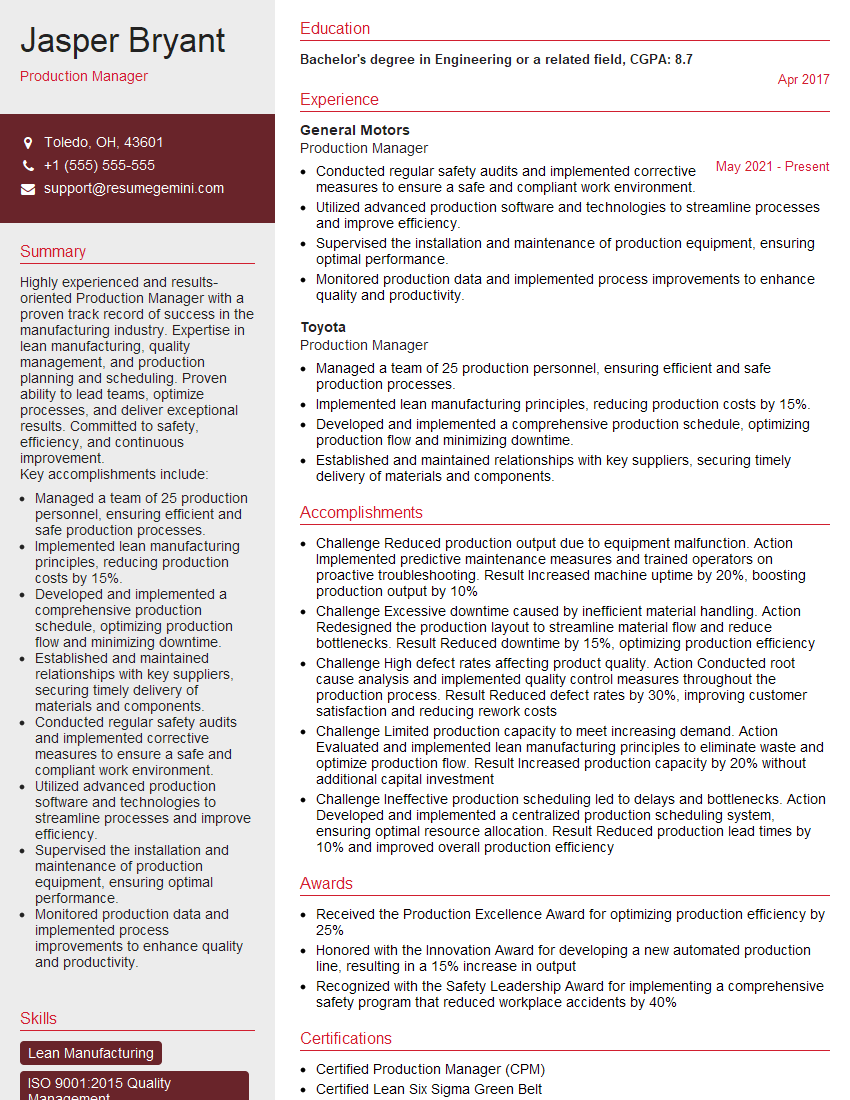
Production Manager Resume Sample
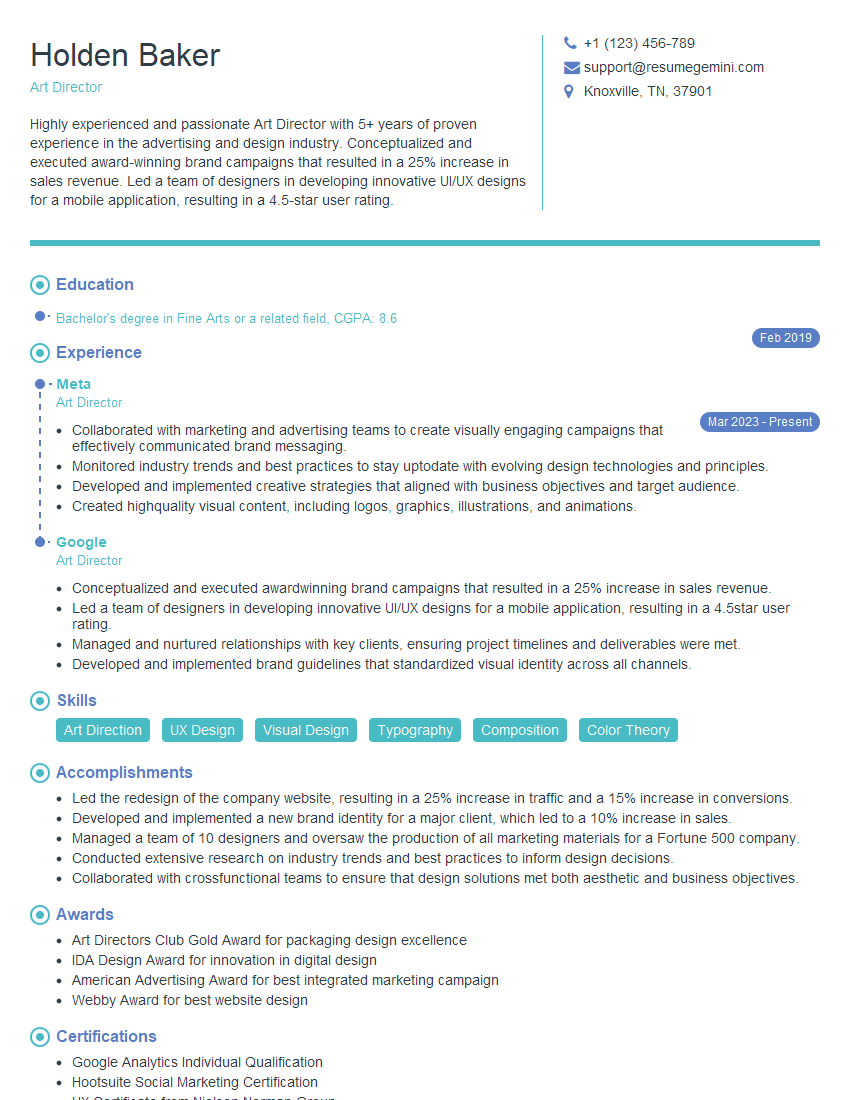
Art Director Resume Sample
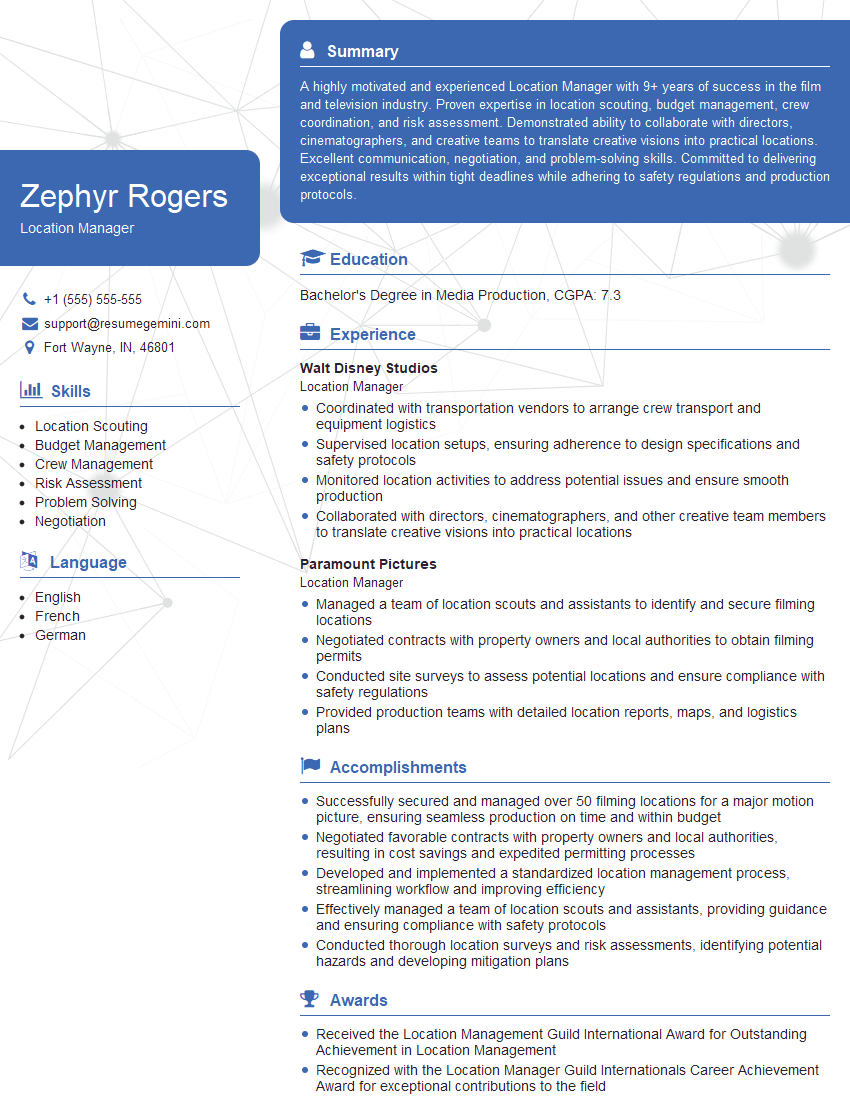
Location Manager Resume Sample
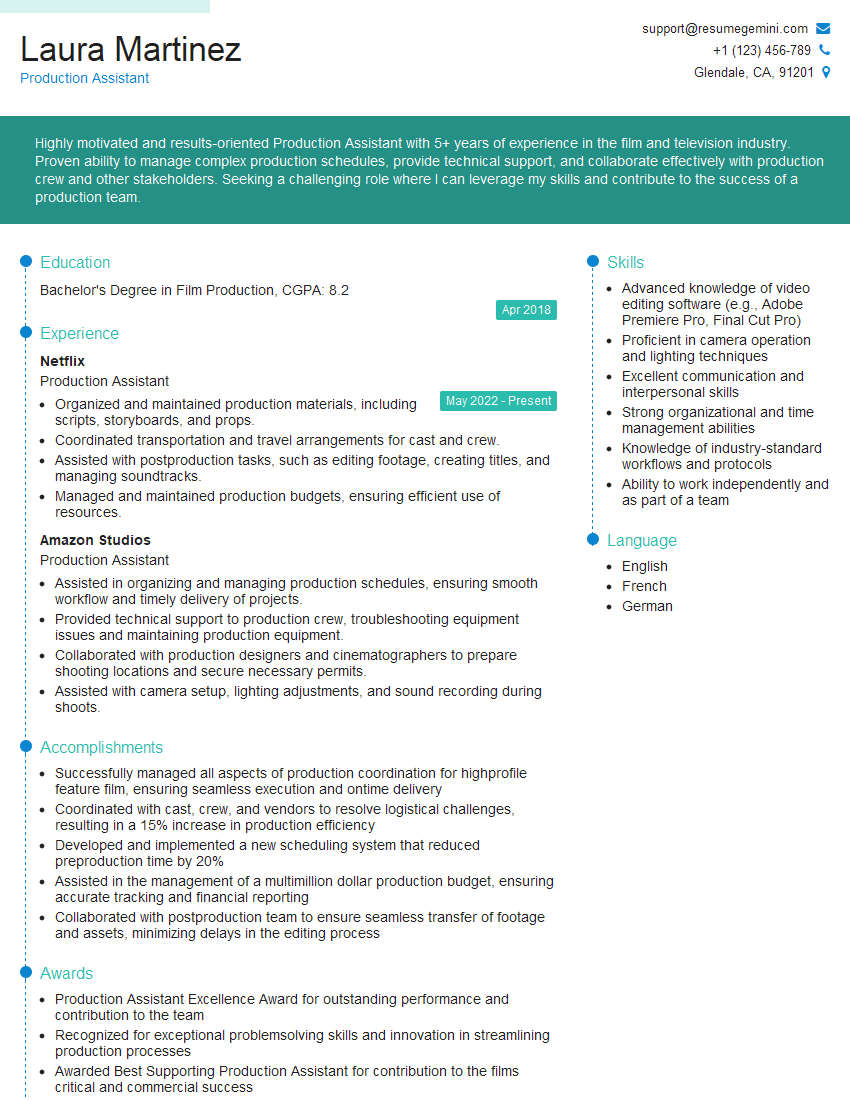
Production Assistant Resume Sample
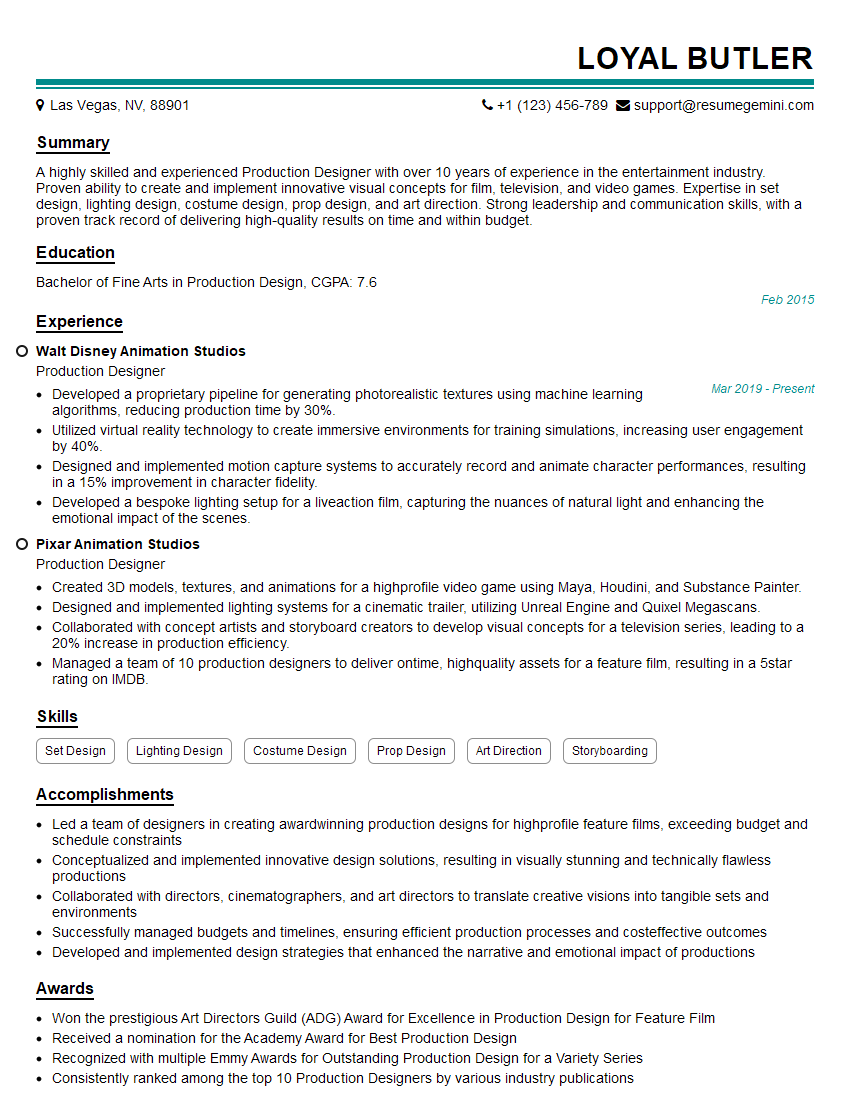
Production Designer Resume Sample
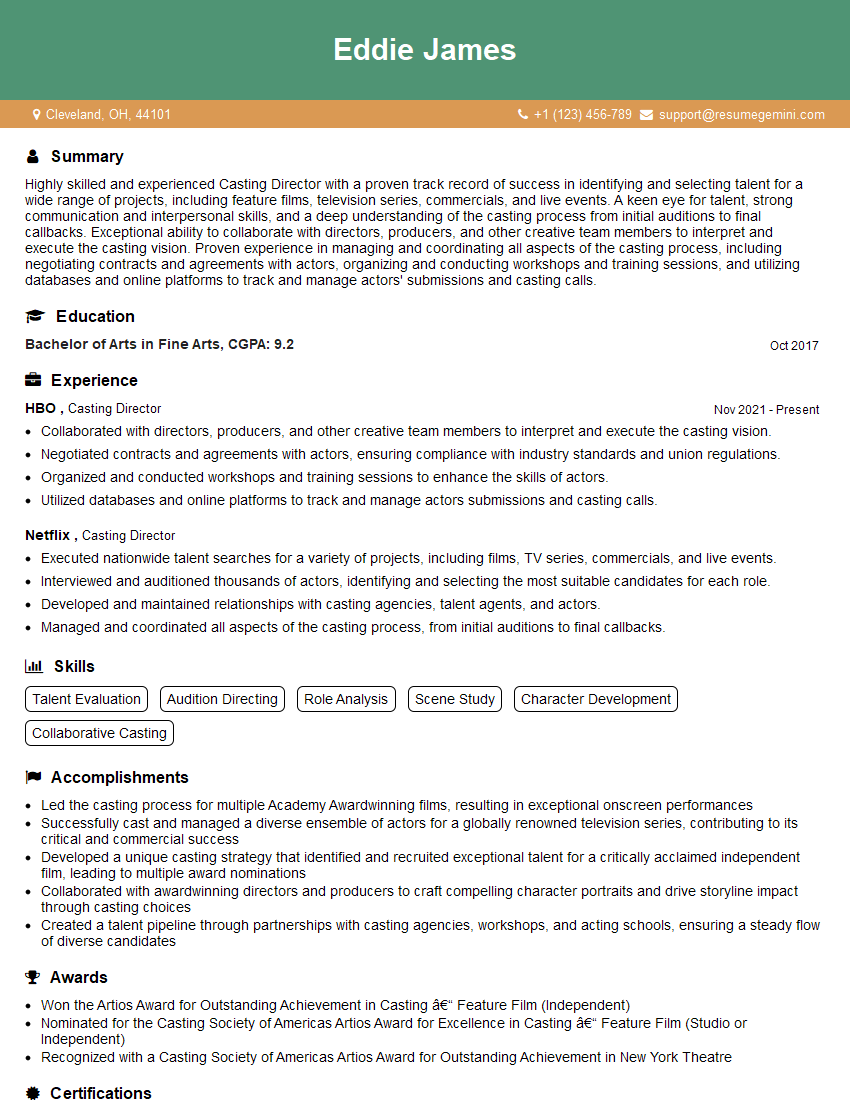
Casting Director Resume Sample
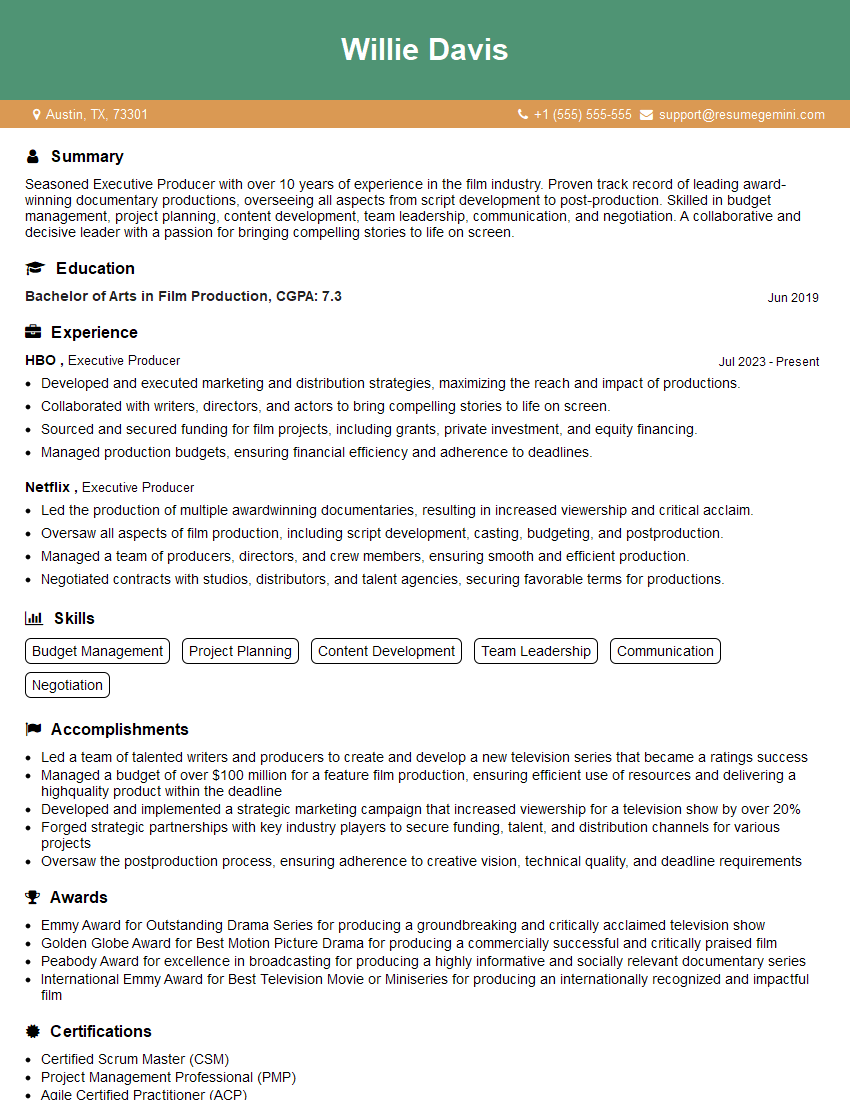
Executive Producer Resume Sample
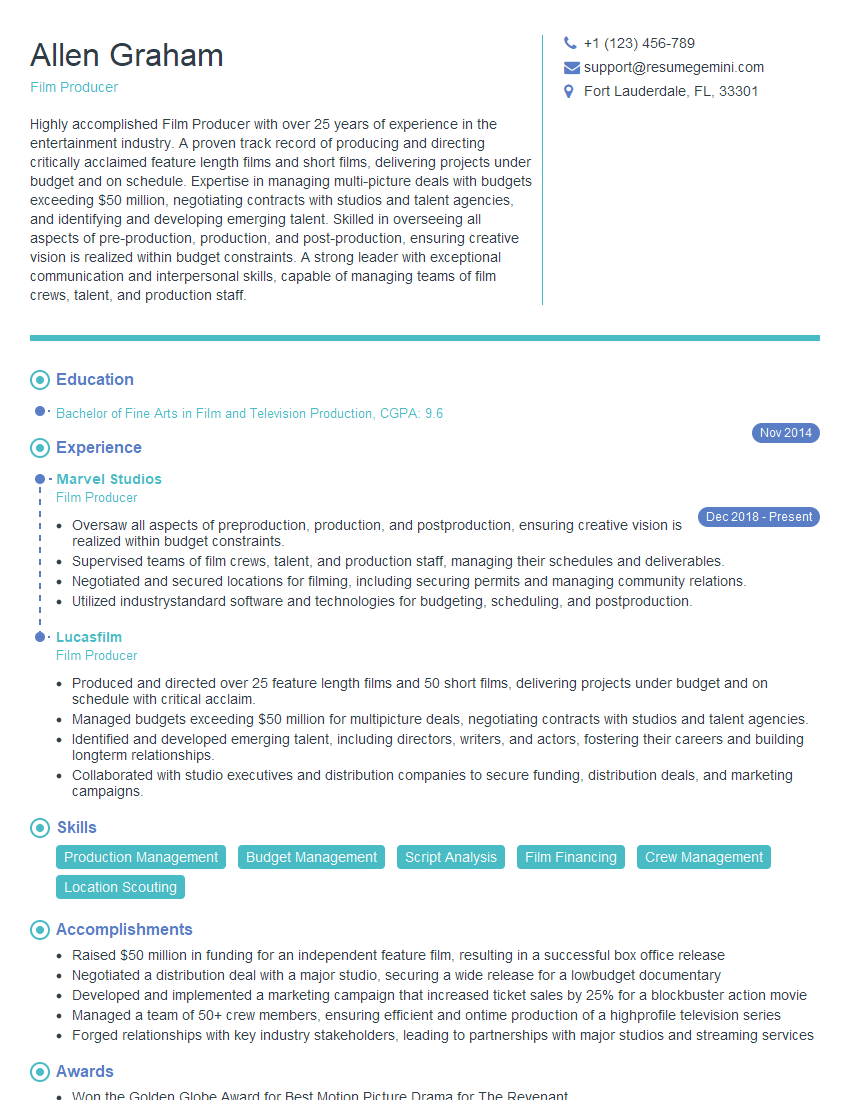
Film Producer Resume Sample
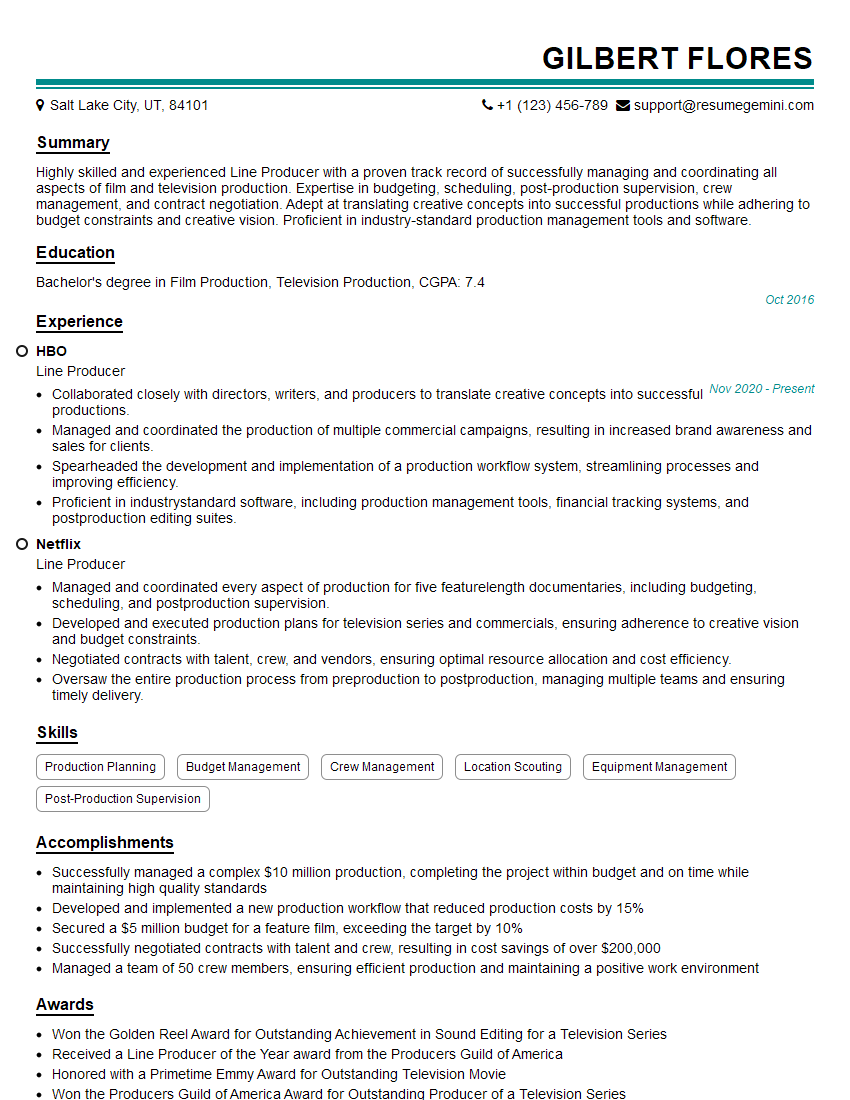
Line Producer Resume Sample
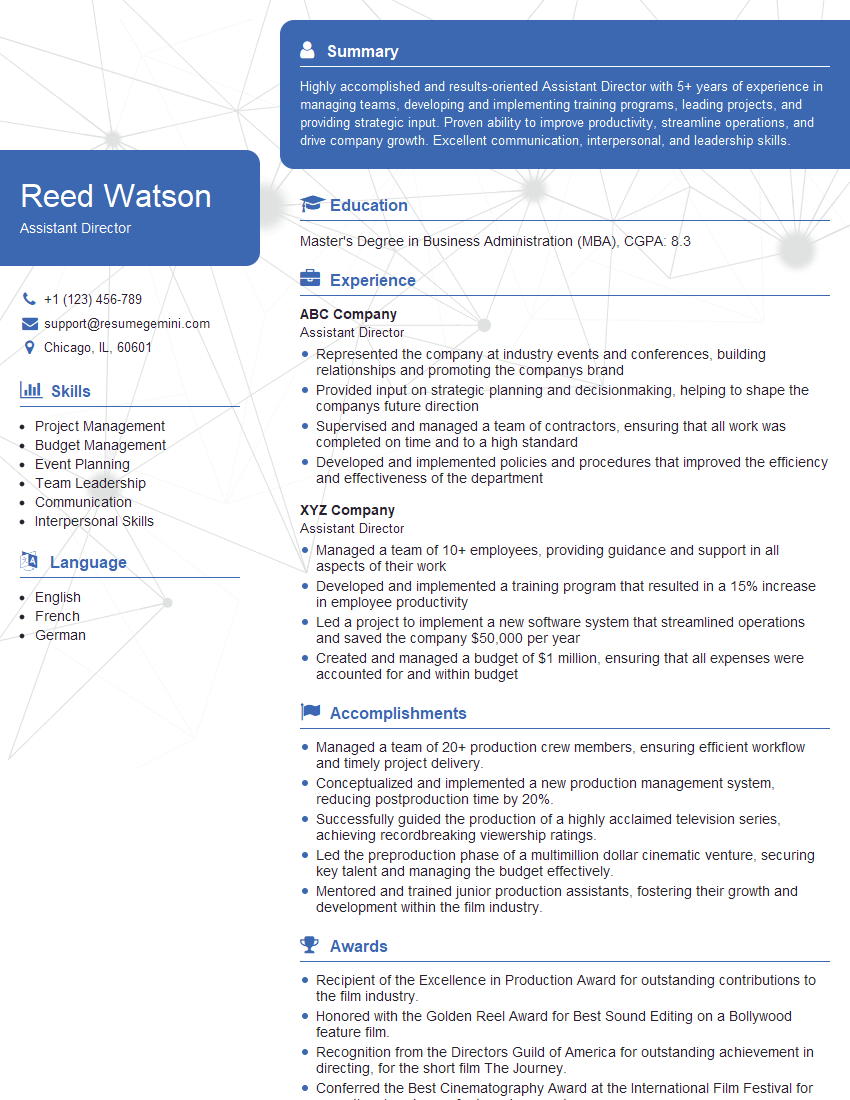
Assistant Director Resume Sample
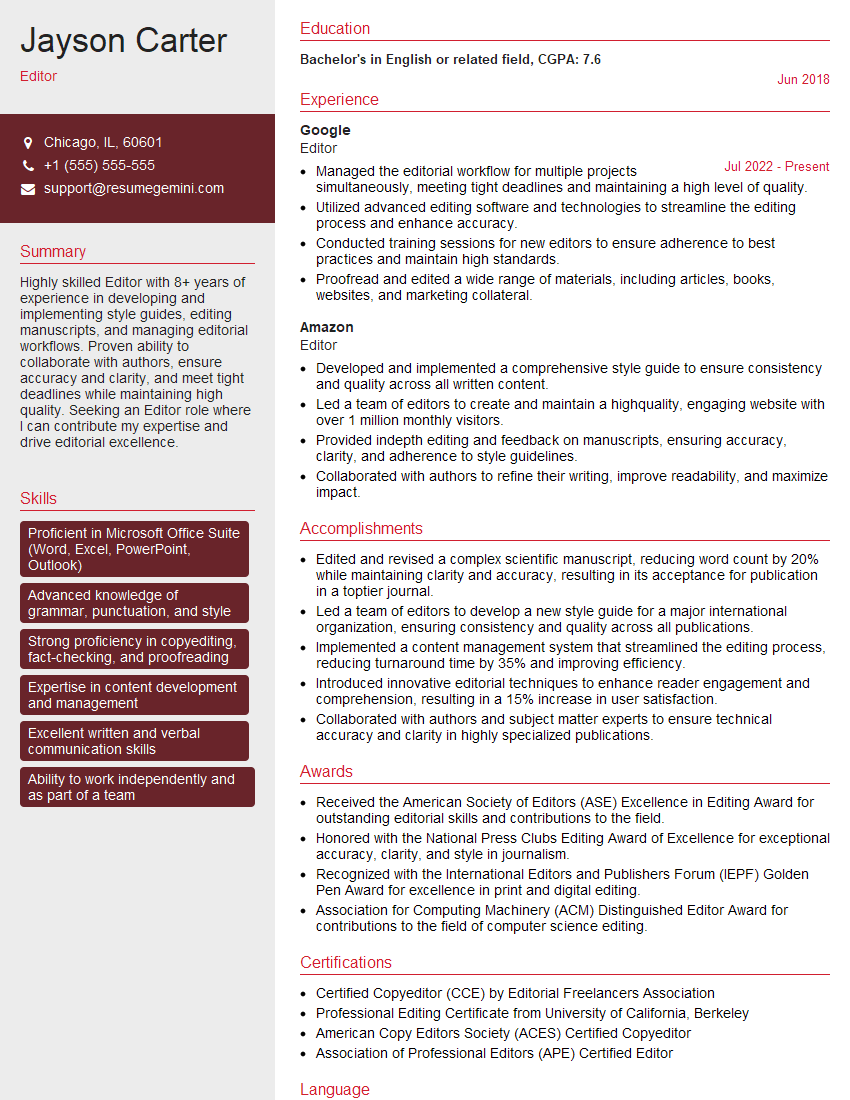
Editor Resume Sample
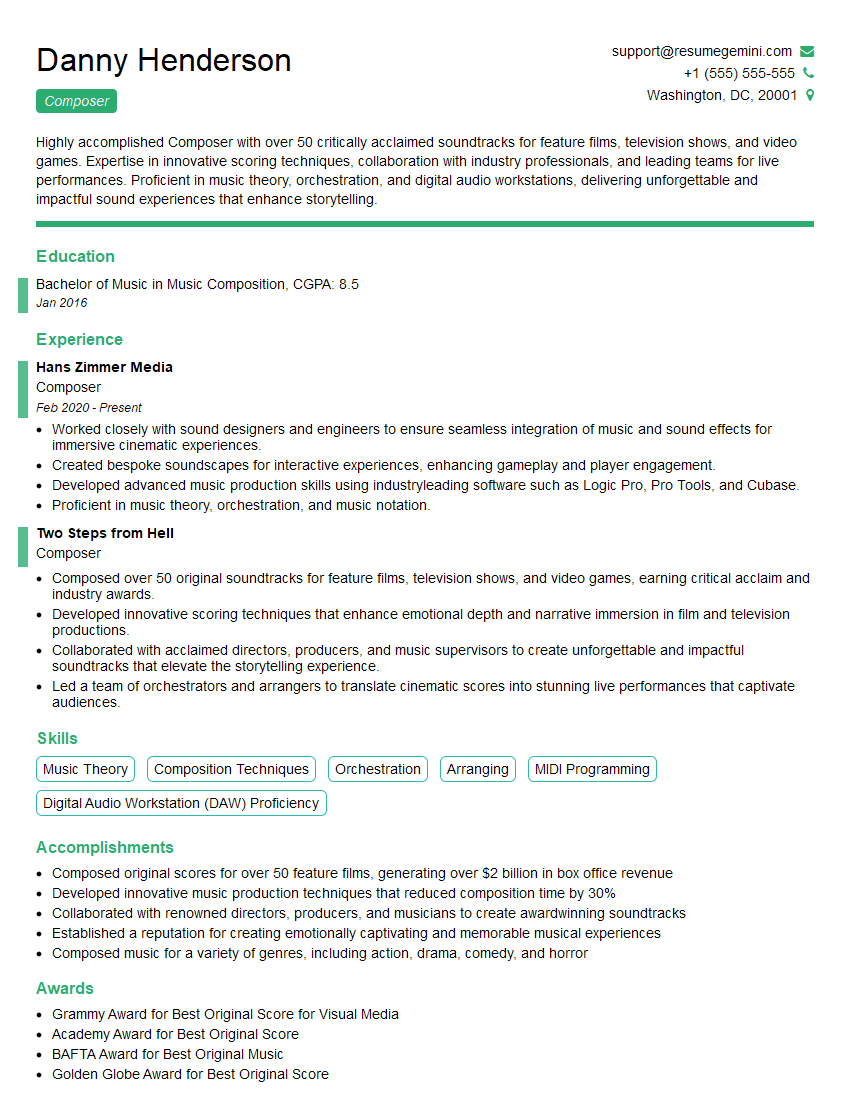
Composer Resume Sample
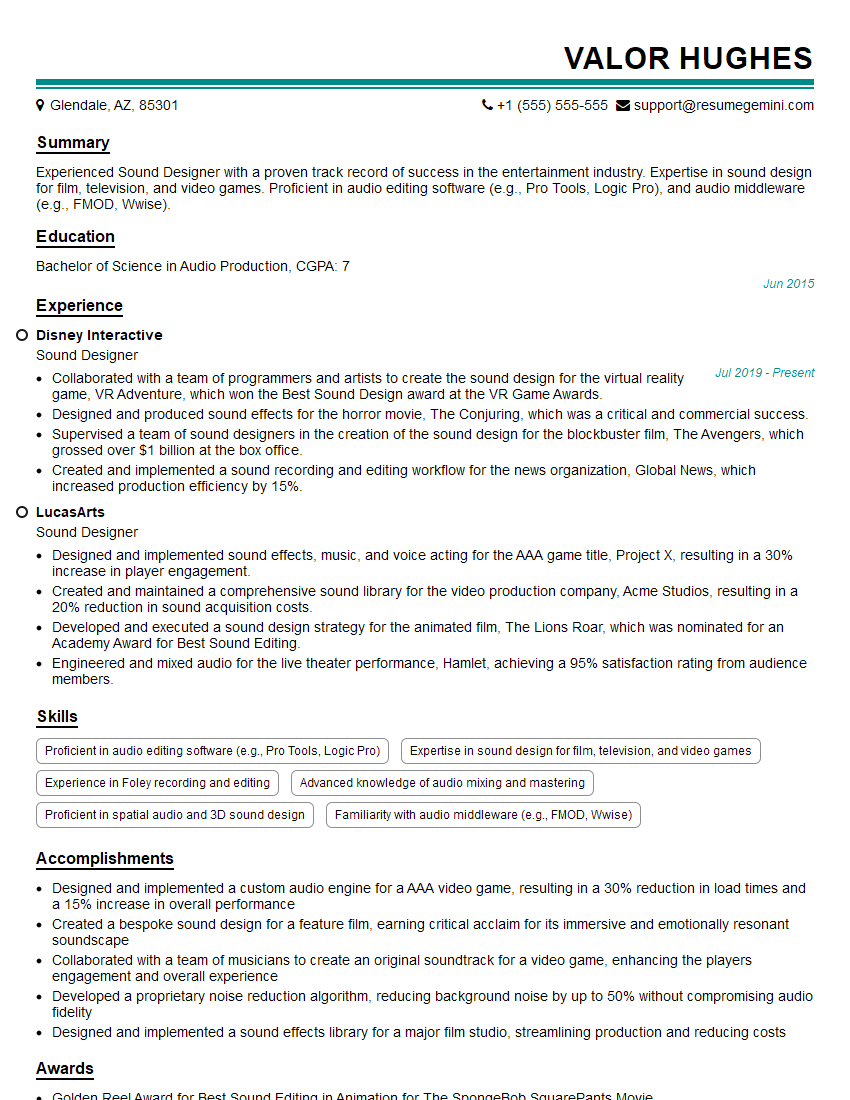
Sound Designer Resume Sample
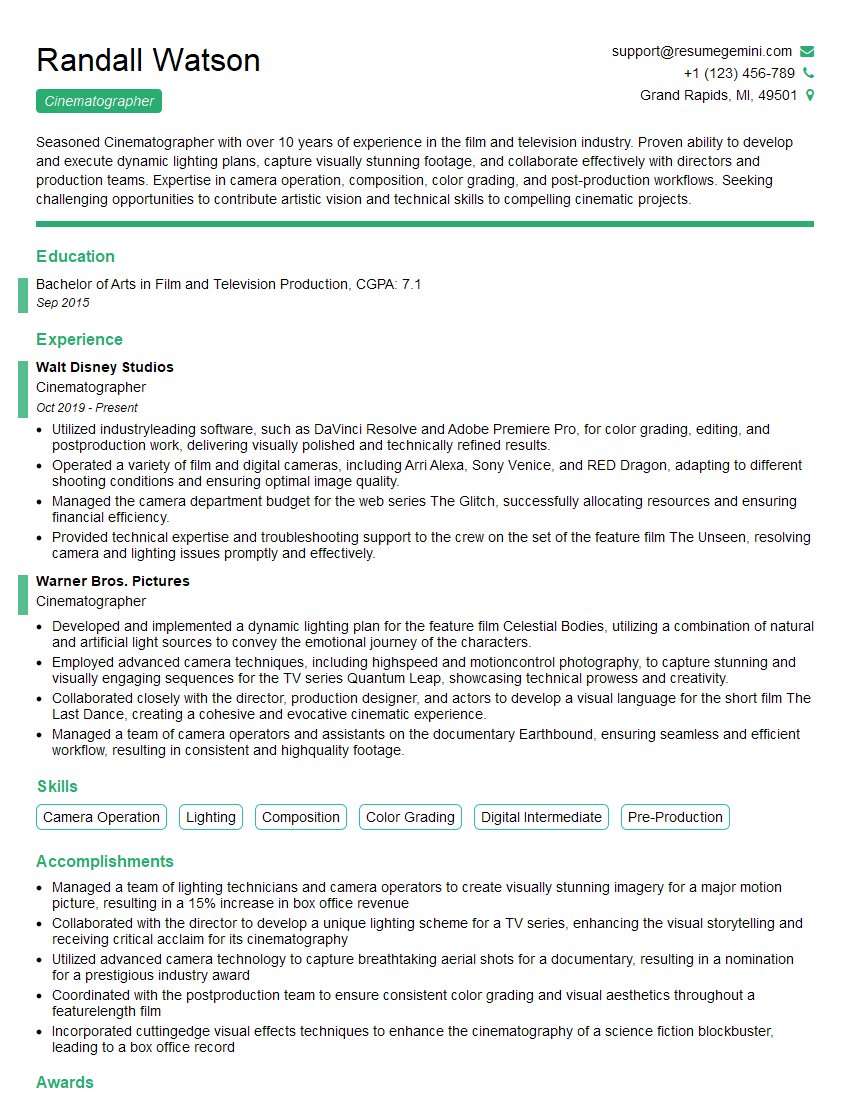
Cinematographer Resume Sample
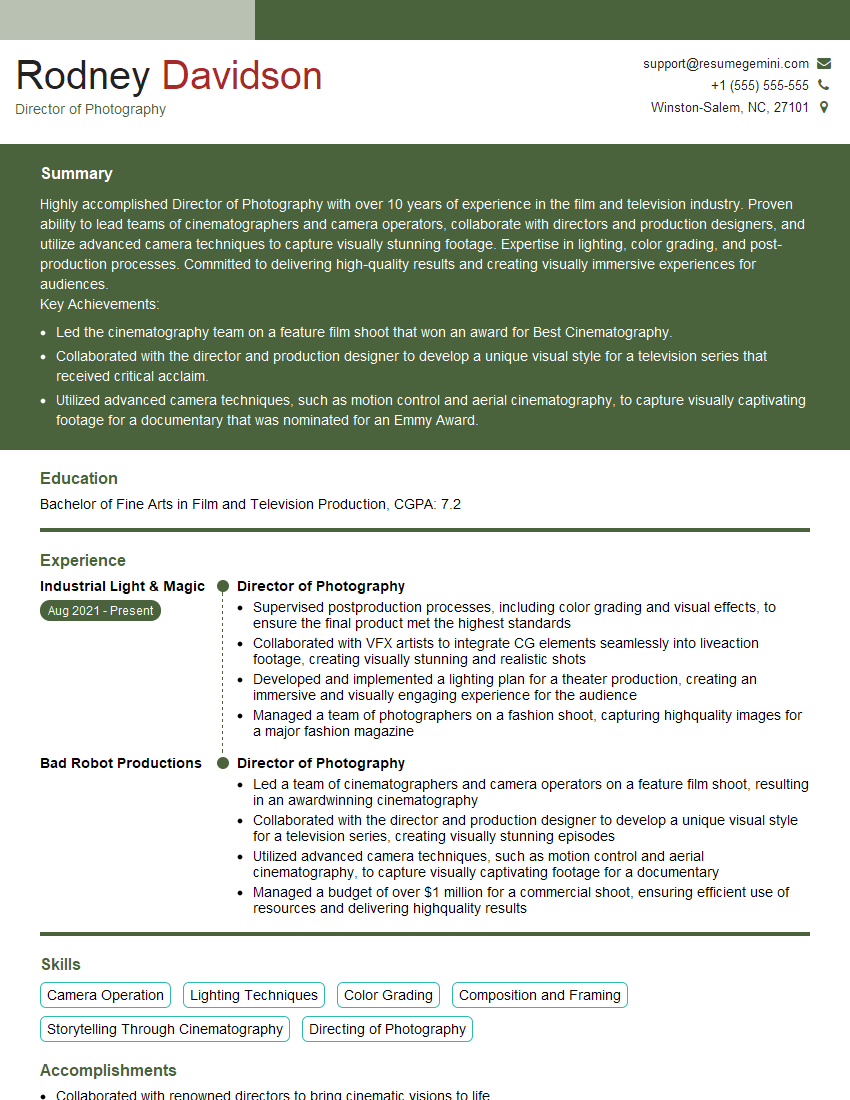
Director of Photography Resume Sample
Explore more articles
Users Rating of Our Blogs
Share Your Experience
We value your feedback! Please rate our content and share your thoughts (optional).
What Readers Say About Our Blog
Very informative content, great job.
good