The right preparation can turn an interview into an opportunity to showcase your expertise. This guide to Experience with electronic health records interview questions is your ultimate resource, providing key insights and tips to help you ace your responses and stand out as a top candidate.
Questions Asked in Experience with electronic health records Interview
Q 1. What EHR systems are you familiar with?
Throughout my career, I’ve gained extensive experience with several leading Electronic Health Record (EHR) systems. This includes working with Epic, Cerner, and Allscripts. My familiarity extends beyond basic user proficiency; I possess a deep understanding of their respective architectures, functionalities, and limitations. For instance, I’ve worked extensively with Epic’s integrated scheduling and billing modules, Cerner’s robust reporting tools, and Allscripts’ user interface customization options. This diverse experience allows me to approach EHR challenges from multiple perspectives and adapt quickly to new systems.
Q 2. Describe your experience with EHR implementation.
My experience with EHR implementation is multifaceted, spanning various roles from project management to end-user training. One significant project involved implementing Epic at a large multi-specialty clinic. This was a complex undertaking involving careful planning, data migration, rigorous testing, and extensive staff training. We employed a phased rollout approach, starting with a pilot group to identify and address potential issues before full system-wide deployment. This iterative approach proved crucial in mitigating risks and ensuring a smooth transition. Key aspects included configuring the system to meet specific workflow requirements, mapping existing data to the new EHR structure, and developing comprehensive training materials to support staff adaptation. Post-implementation, we continuously monitored system performance and addressed user feedback to optimize workflow efficiency.
Q 3. Explain the importance of data integrity in EHRs.
Data integrity in EHRs is paramount for accurate patient care, effective research, and regulatory compliance. Maintaining data integrity means ensuring that the information stored is accurate, consistent, reliable, and valid. Imagine a scenario where a patient’s allergy information is incorrect; this could have potentially life-threatening consequences. Data integrity issues arise from various sources, including data entry errors, system glitches, or improper data migration. Ensuring data integrity involves multiple strategies, including data validation rules (e.g., ensuring date formats are correct), regular data audits, and employing robust data backup and recovery mechanisms. Furthermore, implementing clear data governance policies and providing comprehensive training to staff on data entry protocols are essential for maintaining high levels of data integrity.
Q 4. How do you ensure patient data privacy and security within an EHR system?
Protecting patient data privacy and security is non-negotiable in the EHR environment. This requires a multi-layered approach encompassing technical, administrative, and physical safeguards. Technically, this involves implementing strong access controls (role-based access, password policies), encryption of data both at rest and in transit, and regular security audits and penetration testing. Administratively, we need robust policies and procedures for data access, disclosure, and disposal. Compliance with regulations like HIPAA (in the US) is crucial, demanding strict adherence to privacy rules and breach notification protocols. Physically, this involves secure server rooms and controlled access to physical infrastructure. Employee training on security awareness and phishing prevention is equally important. Regularly reviewing and updating these security measures is essential, as threats constantly evolve.
Q 5. What are the key features of a well-designed EHR system?
A well-designed EHR system is more than just a database; it’s a comprehensive tool supporting efficient and safe patient care. Key features include:
- Intuitive User Interface: Easy navigation and quick access to essential information are crucial for efficient workflow.
- Interoperability: Seamless data exchange with other healthcare systems (labs, pharmacies, etc.) minimizes errors and streamlines information flow.
- Comprehensive Clinical Decision Support: Alert systems for drug interactions, allergies, and other critical information improve patient safety.
- Robust Reporting and Analytics Capabilities: Allows for data-driven decision-making, quality improvement initiatives, and research.
- Scalability and Flexibility: The system should be adaptable to changing needs and accommodate growth.
- Strong Security Features: Robust security measures protecting patient data are vital.
Ultimately, the best EHR system seamlessly integrates into the existing workflow and improves both efficiency and patient care.
Q 6. How do you handle data migration in EHR systems?
Data migration in EHR systems is a critical and complex process requiring meticulous planning and execution. It involves transferring patient data from an old system to a new one. A key initial step is thorough data cleansing and validation to ensure data accuracy and completeness. This might involve identifying and correcting inconsistencies or missing data. Next, we define a clear mapping between the old and new systems’ data structures, ensuring accurate translation of information. This process often involves specialized software tools and expertise. Testing the migration process rigorously before full-scale implementation is essential to identifying potential errors. This often involves parallel running the old and new systems for a period to verify data integrity. Post-migration, comprehensive validation is needed to ensure all data has been transferred accurately and completely. Finally, a robust post-migration support plan addresses any issues that might arise during the transition period.
Q 7. Describe your experience with EHR reporting and analytics.
My experience with EHR reporting and analytics involves extracting meaningful insights from patient data to support clinical decision-making, quality improvement, and research. I’m proficient in using various reporting tools within different EHR systems, creating custom reports, and analyzing data trends. For example, I’ve developed reports tracking key performance indicators (KPIs) like medication adherence rates, readmission rates, and patient satisfaction scores. This data has been instrumental in identifying areas for process improvement and developing targeted interventions. I’m also experienced in using data visualization techniques to effectively communicate complex data insights to stakeholders. My ability to translate raw data into actionable intelligence has been crucial in driving improvements in patient care and operational efficiency.
Q 8. How do you troubleshoot common EHR issues?
Troubleshooting EHR issues requires a systematic approach. It starts with understanding the nature of the problem: Is it a system-wide issue, a user error, or a data problem? I typically follow these steps:
- Identify the problem: What exactly isn’t working? Get specific details from the user, including error messages (if any), the steps taken leading to the issue, and the time of occurrence.
- Isolate the source: Is the issue confined to a specific user, computer, department, or is it affecting the entire system? This helps determine if it’s a user-specific configuration, a network problem, a software glitch, or a database issue.
- Check common causes: Common issues include network connectivity problems, browser compatibility issues, incorrect user credentials, or software updates causing conflicts. I start by addressing these first.
- Consult resources: I utilize the EHR vendor’s help documentation, knowledge base articles, and online communities for troubleshooting guides and known issues. Contacting the vendor’s support team is essential for complex or persistent problems.
- Test solutions: After identifying a potential solution, I test it thoroughly to ensure it resolves the problem without causing new issues. This might involve resetting user settings, clearing browser cache, or restarting system services.
- Document the resolution: Detailed documentation of the problem, steps taken, and the final solution is crucial for future reference and to prevent similar issues from recurring. This includes the date, time, affected users or systems, and the solution implemented.
For example, I once resolved a widespread login issue by identifying a recent software update that had inadvertently changed the default password policy. After contacting the vendor and receiving a patch, the problem was quickly resolved.
Q 9. What is your experience with EHR training and support?
My EHR training and support experience encompasses both providing training and receiving it. I’ve delivered both introductory and advanced training to clinicians, administrative staff, and other healthcare professionals. This included customized training sessions tailored to specific roles and workflows, covering everything from basic data entry to advanced functionalities like reporting and order management. I also developed and maintained training materials, including manuals, videos, and online tutorials.
Furthermore, I’ve received extensive training on various EHR systems myself, including on-site training, online modules, and vendor-provided webinars. I’m adept at quickly learning new systems and troubleshooting user issues. I believe a strong understanding of the user perspective is essential for providing effective training and support.
One successful training program I implemented was a phased rollout of a new EHR module, incorporating regular feedback sessions to address any challenges or confusion. This approach ensured a smooth transition and minimized disruption to clinical workflow.
Q 10. Explain your understanding of HL7 standards.
HL7 (Health Level Seven) is a set of international standards for the exchange, integration, sharing, and retrieval of electronic health information. These standards ensure interoperability between different healthcare systems. They define messages and data structures, allowing various systems (EHRs, lab systems, pharmacy systems, etc.) to communicate effectively without needing custom integrations for each pair.
My understanding of HL7 encompasses various versions and message types, including:
- HL7 v2: An older but still widely used version, primarily using text-based messages.
- HL7 v3: A more complex, XML-based standard aiming for improved interoperability and semantic clarity.
- FHIR (Fast Healthcare Interoperability Resources): A newer, RESTful API-based standard designed for improved flexibility and ease of implementation.
I’m familiar with common message types like ADT (Admission, Discharge, Transfer), ORM (Order), and ORU (Observation Result). Understanding these standards helps in implementing effective data exchange solutions and ensuring data accuracy and consistency across different healthcare systems.
For instance, I’ve worked on projects integrating an EHR with a hospital’s laboratory information system (LIS) using HL7 v2 messages to automatically transmit patient lab results into the EHR.
Q 11. How do you ensure compliance with HIPAA regulations within an EHR environment?
Ensuring HIPAA compliance within an EHR environment involves a multi-faceted approach, focusing on protecting the privacy and security of Protected Health Information (PHI). This includes:
- Access control: Implementing robust access control measures, ensuring that only authorized personnel can access PHI. This involves assigning roles and permissions based on the principle of least privilege.
- Data encryption: Encrypting PHI both in transit and at rest to prevent unauthorized access, even if a breach occurs.
- Audit trails: Maintaining detailed audit trails to track all access to PHI, facilitating investigations and accountability.
- Security awareness training: Providing regular security awareness training to all staff members to educate them on HIPAA regulations and best practices for protecting PHI.
- Data breach response plan: Developing and regularly testing a comprehensive data breach response plan to address potential security incidents quickly and effectively.
- Physical security: Protecting the physical environment where EHR servers and data are stored.
- Vendor management: Carefully vetting and managing vendors who access PHI to ensure they also meet HIPAA compliance requirements.
Regular audits and assessments are crucial to ensure ongoing compliance. I’ve been involved in multiple HIPAA compliance audits and have a strong understanding of the requirements and best practices.
Q 12. Describe your experience with EHR workflow optimization.
EHR workflow optimization focuses on improving efficiency and effectiveness of clinical processes within the EHR system. My experience in this area involves analyzing existing workflows, identifying bottlenecks, and implementing changes to streamline processes. This often involves:
- Process mapping: Creating visual representations of current workflows to pinpoint areas for improvement.
- Template customization: Developing and customizing templates to reduce data entry time and improve data consistency.
- Automation: Automating repetitive tasks, such as appointment scheduling or prescription refills, to free up staff time for more complex tasks.
- Integration with other systems: Integrating the EHR with other systems (e.g., pharmacy, lab) to reduce manual data entry and improve data flow.
- Training and support: Providing adequate training and support to staff to ensure they effectively utilize the optimized workflows.
- Data analysis and reporting: Tracking key performance indicators (KPIs) to monitor the impact of workflow changes and identify further areas for improvement.
For example, in a previous role, I optimized the medication reconciliation process by implementing an automated system that integrated with the pharmacy system, reducing errors and improving efficiency by 25%.
Q 13. What is your experience with EHR interoperability?
EHR interoperability refers to the ability of different EHR systems to exchange and use data seamlessly. My experience includes working with various interoperability solutions, such as:
- HL7 interfaces: Using HL7 standards to exchange data between different systems.
- Direct messaging: Securely exchanging messages between healthcare providers using a standards-based infrastructure.
- Health information exchanges (HIEs): Participating in regional or national HIEs to share data with other healthcare organizations.
- APIs (Application Programming Interfaces): Using APIs to integrate EHR systems with other applications and services.
I understand the challenges associated with interoperability, including data standardization, security concerns, and the complexity of integrating different systems. I have experience resolving interoperability issues and implementing solutions to facilitate data exchange.
For instance, I once helped establish an interoperability solution between our EHR system and a local HIE, enabling seamless sharing of patient records with other providers in the region. This improved care coordination and reduced duplicate testing.
Q 14. How do you identify and resolve data inconsistencies in an EHR?
Identifying and resolving data inconsistencies in an EHR requires a thorough investigation and a combination of technical and analytical skills. Here’s how I approach it:
- Data profiling: Analyzing the data to identify patterns, anomalies, and inconsistencies. This may involve using data quality tools to check for missing values, invalid data types, and duplicate records.
- Root cause analysis: Determining the source of the inconsistency. This often involves reviewing data entry processes, system logs, and interfaces.
- Data cleansing: Correcting or removing inconsistent data. This may involve manual correction of errors or using automated data cleansing tools.
- Data validation: Implementing data validation rules to prevent future inconsistencies from occurring. This could involve setting up data entry constraints or using automated checks during data import.
- Reconciliation: Comparing data from different sources to identify discrepancies. This is particularly important when integrating data from external systems.
- Workflow adjustments: Making adjustments to workflows to prevent the reoccurrence of inconsistencies.
One example involved identifying a significant number of inconsistencies in patient addresses. By analyzing data entry patterns and interviewing staff, we found that a poorly designed address field was the root cause. We then redesigned the field, implemented data validation rules, and provided training to staff on proper address entry. This led to a significant reduction in address inconsistencies.
Q 15. Describe your experience with EHR system upgrades and maintenance.
EHR system upgrades and maintenance are crucial for ensuring data integrity, security, and optimal functionality. My experience encompasses the entire lifecycle, from initial planning and testing to post-implementation support. This includes participating in vendor meetings to understand upgrade features, meticulously reviewing release notes to identify potential conflicts with existing workflows, and developing comprehensive test plans to validate the upgrade’s performance.
For instance, during a recent Epic upgrade, we simulated various clinical scenarios in our testing environment to identify and resolve potential issues before deploying the update to our production system. This proactive approach minimized downtime and ensured a smooth transition for our clinicians. Post-upgrade, we monitor system performance closely, addressing any bugs or unexpected behavior promptly. We also provide ongoing training to staff on new features and functionality.
Maintenance involves regular system checks, applying patches, and proactive performance tuning. This includes addressing minor bugs, resolving hardware issues, and implementing security updates to protect patient data. Think of it like regularly servicing a car – preventative maintenance prevents larger, more costly problems down the line.
Career Expert Tips:
- Ace those interviews! Prepare effectively by reviewing the Top 50 Most Common Interview Questions on ResumeGemini.
- Navigate your job search with confidence! Explore a wide range of Career Tips on ResumeGemini. Learn about common challenges and recommendations to overcome them.
- Craft the perfect resume! Master the Art of Resume Writing with ResumeGemini’s guide. Showcase your unique qualifications and achievements effectively.
- Don’t miss out on holiday savings! Build your dream resume with ResumeGemini’s ATS optimized templates.
Q 16. How do you manage user access and permissions in an EHR system?
Managing user access and permissions in an EHR is paramount for maintaining data security and ensuring compliance with regulations like HIPAA. We utilize role-based access control (RBAC), assigning permissions based on an individual’s job role and responsibilities. This ensures that users only have access to the information they need to perform their duties.
For example, a nurse might have access to patient charts, medication administration records, and progress notes, but not to billing information or administrative settings. A physician might have broader access, including the ability to order tests and prescribe medications. We regularly review and update access permissions, removing access for employees who have left the organization and adjusting permissions as roles evolve.
Our system uses a robust authentication process, including multi-factor authentication (MFA) where appropriate, to further enhance security. We also regularly audit access logs to monitor for suspicious activity and address any potential security breaches immediately. Think of it as having a sophisticated key system for your building, with different keys granting access to different areas.
Q 17. What is your experience with EHR system audits?
EHR system audits are critical for ensuring data integrity, compliance with regulations, and maintaining the security of patient information. My experience includes both internal and external audits, covering areas such as data security, access controls, and system performance.
During an audit, we meticulously document our processes, demonstrating compliance with relevant regulations and industry best practices. This includes providing evidence of regular security checks, access control reviews, and system backups. We also maintain comprehensive audit logs, allowing us to trace any changes made to the system or patient data.
For example, we recently underwent a HIPAA compliance audit. We successfully demonstrated compliance by providing documentation related to our security protocols, access controls, and employee training programs. The audit process helped to identify areas for improvement, leading to enhancements in our security measures.
Q 18. Explain your experience with creating and modifying EHR templates.
Creating and modifying EHR templates is a key aspect of optimizing workflow efficiency and improving the quality of documentation. I have extensive experience designing and implementing templates for various clinical specialties, focusing on usability and data standardization.
The process involves understanding the specific needs of each clinical department, gathering input from clinicians, and designing templates that are intuitive and efficient to use. This includes selecting appropriate data fields, defining data entry rules, and ensuring consistency across the system.
For instance, I helped develop a new template for documenting patient encounters in the cardiology department. This involved collaborating with cardiologists to identify the essential data points for each visit, creating a user-friendly interface, and incorporating features such as drop-down menus and auto-population of fields to streamline the documentation process. Regular review and updates are crucial to keep templates relevant and accurate.
Q 19. How do you handle conflicting data entries in an EHR?
Conflicting data entries in an EHR can lead to inaccuracies and potentially harm patient care. My approach to handling these conflicts involves a systematic investigation and resolution process.
First, we identify the conflicting data points and determine the source of the discrepancy. This might involve reviewing multiple entries from different clinicians or checking for inconsistencies between the EHR and other systems.
Next, we determine which entry is the most accurate based on clinical evidence and documentation. If the conflict cannot be resolved internally, we consult with the clinicians involved to clarify the information. In cases where the conflict remains unresolved, we document the discrepancy clearly, along with our rationale for choosing a particular entry. Finally, we implement measures to prevent similar conflicts in the future, which might include enhancing data validation rules or providing additional training to staff.
Q 20. Describe your approach to problem-solving in an EHR environment.
Problem-solving in an EHR environment requires a systematic and methodical approach. My strategy often follows a structured process:
- Identify the Problem: Clearly define the issue, gathering all relevant information.
- Analyze the Root Cause: Investigate the underlying reasons for the problem, considering factors such as system configurations, user error, or data integrity issues.
- Develop Solutions: Brainstorm potential solutions, prioritizing those that are feasible and effective.
- Implement the Solution: Test the solution thoroughly before deploying it to the production environment.
- Monitor and Evaluate: Track the effectiveness of the solution, making adjustments as needed.
For instance, if clinicians are reporting slow response times, we would investigate the system’s performance, checking for network bottlenecks, hardware issues, or database problems. We might then implement solutions such as optimizing database queries, upgrading hardware, or adjusting network settings. We would then monitor the system’s performance after implementing the solution to ensure it resolves the issue effectively.
Q 21. What is your experience with different EHR vendors?
I have experience with several major EHR vendors, including Epic, Cerner, and Meditech. My experience with each vendor encompasses different aspects of the system, including implementation, training, support, and system optimization.
Each vendor has its own strengths and weaknesses; understanding these nuances is crucial for effective implementation and utilization. For example, Epic is known for its robust functionality and extensive customization options, while Cerner is recognized for its comprehensive reporting capabilities.
My experience allows me to adapt to different systems and approaches, leveraging the best features of each vendor to meet the specific needs of the healthcare organization. This includes understanding the vendor’s support infrastructure and escalation processes, ensuring timely resolution of technical issues.
Q 22. How do you stay current with the latest EHR technology and regulations?
Staying current in the rapidly evolving field of EHR technology and regulations requires a multi-pronged approach. It’s not enough to simply rely on occasional training sessions; continuous learning is key.
- Professional Organizations: I actively participate in organizations like HIMSS (Healthcare Information and Management Systems Society) and AMIA (American Medical Informatics Association). Their conferences, webinars, and publications provide up-to-date information on the latest advancements and regulatory changes. For example, HIMSS regularly publishes articles on interoperability standards, a crucial aspect of EHR modernization.
- Industry Publications and Journals: I regularly read journals like the Journal of the American Medical Informatics Association and publications from vendors like Epic and Cerner to stay informed about new features, best practices, and emerging trends. This allows me to anticipate future needs and challenges.
- Continuing Education: I actively pursue continuing education credits through online courses and workshops focused on EHR functionality, data analytics, and regulatory compliance (e.g., HIPAA, Meaningful Use). This keeps my skills sharp and ensures I’m well-versed in the latest guidelines.
- Networking: I attend industry events and engage with other professionals in the field to share experiences and learn from their perspectives. This informal exchange of knowledge is incredibly valuable.
By combining these methods, I ensure I remain at the forefront of EHR technology and regulatory compliance, which is crucial for effective and compliant healthcare delivery.
Q 23. Describe your experience with using EHR data for performance improvement initiatives.
I have extensive experience using EHR data for performance improvement initiatives. In my previous role, we used EHR data to identify areas for improvement in patient care, operational efficiency, and resource allocation. Think of it like using a powerful microscope to examine the details of how our healthcare system functions.
- Readmission Rates: We analyzed discharge summaries and post-discharge follow-up notes to identify patients at high risk for readmission. This allowed us to develop targeted interventions, such as enhanced patient education and improved communication with primary care providers, leading to a 15% reduction in 30-day readmission rates.
- Medication Reconciliation: By comparing medication lists from various sources within the EHR (patient portals, physician orders, pharmacy records), we reduced medication errors significantly. This involved building customized reports to flag potential discrepancies and developing workflows to ensure accurate medication reconciliation at every transition of care.
- Length of Stay: We analyzed length-of-stay data to identify bottlenecks in the patient flow. We pinpointed areas where process improvements could expedite discharges, leading to a 10% reduction in average length of stay, freeing up beds and resources.
These initiatives involved extracting data from the EHR, performing statistical analysis, developing tailored interventions, and then tracking the impact of those interventions using the same EHR data. The iterative nature of this process is crucial for ongoing improvement.
Q 24. What are the key challenges you anticipate in implementing a new EHR system?
Implementing a new EHR system presents numerous challenges. It’s a complex undertaking that requires careful planning and execution. Think of it as moving an entire city – a huge undertaking with potential disruption.
- Data Migration: Transferring existing patient data to the new system accurately and securely is paramount. This requires meticulous planning, validation, and testing to avoid data loss or corruption. We need to ensure data integrity throughout the process.
- Workflow Redesign: The new EHR system may necessitate changes to existing clinical workflows. This requires extensive training and support for staff, as well as potentially redesigning processes to optimize efficiency and usability. Resistance to change can be a significant hurdle.
- Integration with Existing Systems: The new EHR needs to seamlessly integrate with other healthcare systems, such as laboratory information systems and pharmacy systems. Failure to do so can lead to data silos and inefficiencies.
- Training and Support: Providing comprehensive training to staff on the new system is essential for successful adoption. Ongoing support and troubleshooting are vital, as staff will encounter challenges and need assistance. Adequate resources must be allocated for training and ongoing support.
- Cost: The financial implications of purchasing, implementing, and maintaining a new EHR system can be substantial. Careful budget planning and resource allocation are critical.
Addressing these challenges proactively through detailed planning, robust testing, and ongoing communication with staff is essential for a smooth and successful implementation.
Q 25. Explain your experience with using clinical decision support tools within an EHR.
Clinical Decision Support (CDS) tools embedded within EHRs are invaluable for improving patient care and reducing errors. They essentially act as intelligent assistants within the system, providing real-time guidance to clinicians.
My experience includes working with CDS tools for:
- Medication Alerts: These alerts flag potential drug interactions, contraindications, and dosage errors, reducing the likelihood of adverse events. For example, an alert might warn a physician against prescribing a specific antibiotic to a patient with a known allergy.
- Order Sets: Pre-designed order sets streamline the ordering process for common conditions or procedures, ensuring consistency and completeness of care while decreasing the risk of human error. For example, an order set for managing post-operative pain might include specific medication orders, laboratory tests, and follow-up instructions.
- Care Guidelines: These tools provide evidence-based recommendations for managing specific conditions, prompting clinicians to follow best practices. This ensures that patients receive optimal care based on the latest clinical evidence.
- Decision Support for Diagnostic Imaging: Certain EHRs allow the automatic suggestion of imaging orders based on the patient’s symptoms and clinical findings, improving the efficiency of diagnostic testing.
Effective utilization of CDS tools requires careful configuration to avoid alert fatigue and ensure that alerts are relevant and actionable. Regular review and updating of these tools are crucial to maintain their accuracy and effectiveness.
Q 26. How do you ensure data accuracy and completeness in the EHR?
Ensuring data accuracy and completeness in the EHR is paramount for high-quality patient care and effective healthcare operations. This is achieved through a combination of strategies.
- Data Validation Rules: Implementing data validation rules within the EHR prevents the entry of inaccurate or incomplete data. For example, a rule might prevent the entry of an age that is biologically impossible, or a weight that’s exceptionally inconsistent with the patient’s height.
- Data Entry Standards and Guidelines: Establishing clear data entry standards and guidelines for all users ensures consistency in data capture. This involves regular training and reinforcement of these guidelines.
- Regular Data Audits: Performing regular audits of the EHR data helps to identify and correct inaccuracies. These audits should cover a representative sample of patient records and focus on critical data elements, such as medication lists and allergy information.
- Automated Reconciliation: Automated systems for reconciling data from multiple sources, such as laboratory results or medication dispensing systems, help to ensure completeness and accuracy.
- Clinical Staff Training: Proper training of clinical staff on accurate and complete data entry is essential. This includes emphasizing the importance of documentation and providing resources to support correct data entry practices.
A culture of accuracy and attention to detail needs to be fostered within the organization to ensure data integrity. This is not merely a technical challenge but also a cultural one.
Q 27. Describe your experience with using EHRs for telehealth or remote patient monitoring.
EHRs have become increasingly important in supporting telehealth and remote patient monitoring (RPM). They provide a centralized platform for managing patient information, regardless of the setting of care.
- Secure Messaging: EHR systems often include secure messaging functionalities, enabling real-time communication between patients and providers, regardless of their physical location. This improves access to care and reduces the need for in-person visits.
- Remote Patient Monitoring Data Integration: EHRs can integrate with RPM devices, such as wearable sensors or home blood pressure monitors, allowing providers to remotely track patient vital signs and other health metrics. This facilitates timely interventions and proactive management of chronic conditions.
- Video Conferencing: Many EHRs offer integrated video conferencing capabilities, enabling virtual consultations between patients and providers. This is particularly valuable for patients in remote areas or those with mobility challenges.
- Patient Portals: Secure patient portals allow patients to access their health records, schedule appointments, communicate with their providers, and even access educational materials, all remotely.
The ability to integrate data from remote sources into the EHR is crucial for creating a comprehensive view of the patient’s health status, enabling more effective and proactive care management.
Q 28. What is your experience with EHR data extraction and analysis for research purposes?
My experience with EHR data extraction and analysis for research purposes is substantial. It involves a combination of technical skills and an understanding of data privacy regulations.
- Data Extraction Techniques: I am proficient in using various methods for extracting data from EHRs, including structured query language (SQL) and other data extraction tools provided by EHR vendors. This involves understanding the database structure of the EHR system to efficiently retrieve relevant information.
- Data Cleaning and Transformation: Raw data from EHRs often require cleaning and transformation before analysis. This involves handling missing values, correcting inconsistencies, and converting data into a suitable format for analysis. I am skilled in using various statistical software packages for this purpose.
- Data Security and Privacy: I understand the importance of protecting patient privacy and adhere to all relevant regulations, such as HIPAA, when accessing and analyzing EHR data. This involves de-identification techniques and obtaining appropriate approvals from Institutional Review Boards (IRBs).
- Statistical Analysis: I am experienced in using statistical software (e.g., R, SAS, Stata) to analyze extracted EHR data, answering research questions and generating meaningful insights. This might involve analyzing disease prevalence, risk factors, or treatment outcomes.
My work in this area has contributed to various research projects focusing on improving patient outcomes and healthcare efficiency. The ethical considerations associated with handling patient data are always paramount.
Key Topics to Learn for Electronic Health Record (EHR) Interviews
- EHR Software Proficiency: Understanding the functionalities of major EHR systems (e.g., Epic, Cerner, Meditech) including patient charting, order entry, results review, and reporting. Consider focusing on specific systems relevant to your target roles.
- Data Integrity and Security: Discuss best practices for maintaining accurate and secure patient data within the EHR, including HIPAA compliance and data privacy regulations. Be prepared to explain your approach to identifying and resolving data discrepancies.
- Workflow Optimization: Describe your experience streamlining EHR processes to improve efficiency and reduce errors. Highlight instances where you’ve identified bottlenecks and implemented solutions to enhance team productivity.
- Clinical Documentation: Demonstrate your understanding of proper documentation practices within an EHR, including accurate coding, use of standardized terminologies (e.g., SNOMED CT, LOINC), and compliance with regulatory guidelines.
- Reporting and Analytics: Explain your experience extracting data from EHRs for reporting and analysis. Discuss your knowledge of generating reports for quality improvement, clinical research, or administrative purposes.
- Problem-Solving and Troubleshooting: Be ready to discuss situations where you encountered technical issues or data inconsistencies within the EHR and how you effectively resolved them. Highlight your analytical and problem-solving skills.
- Interoperability and Data Exchange: Understand the principles of EHR interoperability and the challenges associated with exchanging data between different systems. Discuss your experience with HL7 messaging or other data exchange standards (if applicable).
Next Steps
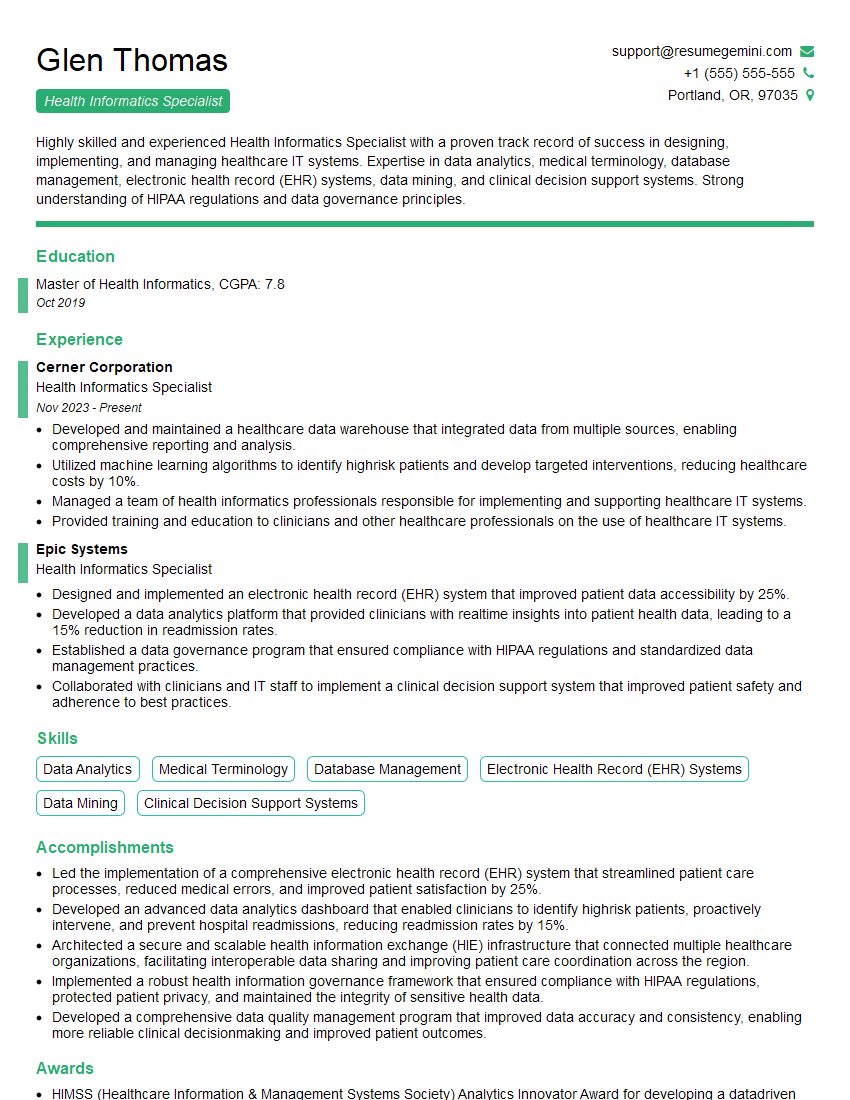
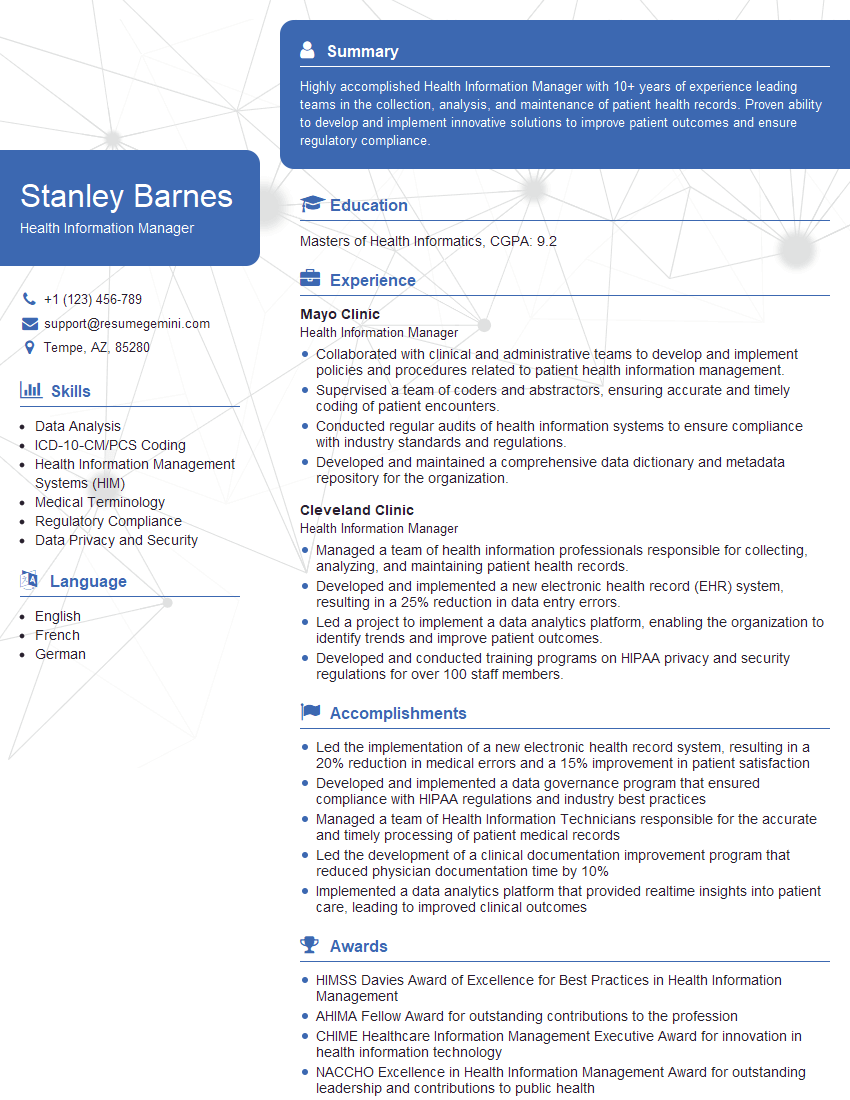
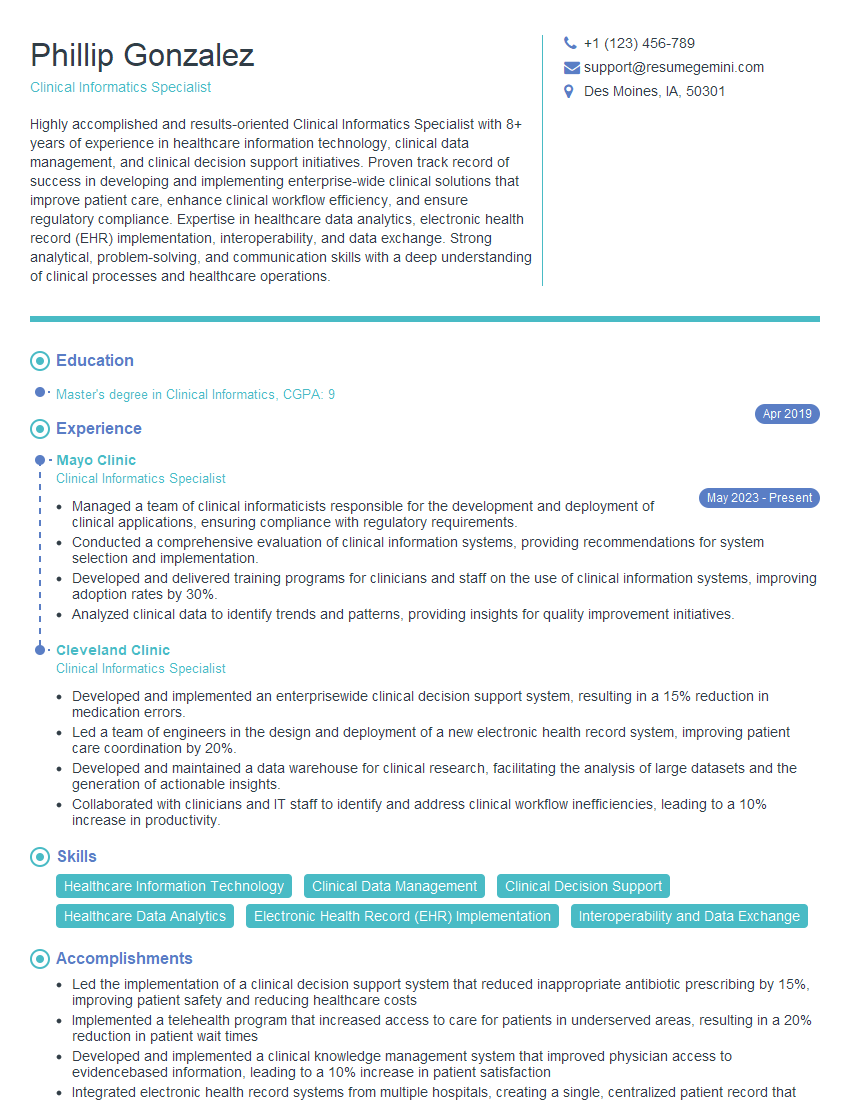
Mastering electronic health records is crucial for career advancement in today’s healthcare landscape. Proficiency in EHR systems demonstrates valuable technical skills and a commitment to efficient and compliant patient care. To significantly improve your job prospects, creating an ATS-friendly resume is essential. ResumeGemini is a trusted resource that can help you build a professional and impactful resume, ensuring your skills and experience are highlighted effectively. Examples of resumes tailored to Electronic Health Record experience are available through ResumeGemini, allowing you to showcase your expertise and land your dream job.
Explore more articles
Users Rating of Our Blogs
Share Your Experience
We value your feedback! Please rate our content and share your thoughts (optional).
What Readers Say About Our Blog
Very informative content, great job.
good