Feeling uncertain about what to expect in your upcoming interview? We’ve got you covered! This blog highlights the most important Gaging and Measuring Equipment Calibration interview questions and provides actionable advice to help you stand out as the ideal candidate. Let’s pave the way for your success.
Questions Asked in Gaging and Measuring Equipment Calibration Interview
Q 1. Explain the difference between accuracy and precision in measurement.
Accuracy and precision are crucial aspects of measurement, often confused but distinctly different. Accuracy refers to how close a measurement is to the true or accepted value. Think of it like aiming for the bullseye on a dartboard – a high accuracy means your darts are clustered near the center. Precision, on the other hand, refers to how close repeated measurements are to each other. This is like how tightly clustered your darts are, regardless of whether they’re near the bullseye. You can be very precise (all darts in a small group) but inaccurate (the group is far from the bullseye), or accurate (the darts are scattered but the average is near the bullseye) but imprecise.
Example: Imagine you’re measuring a 10cm block. An accurate measurement might be 10.01cm, while a precise measurement might be 9.98cm, 9.99cm, and 10.00cm consecutively – though the average (9.99cm) is accurate, each measurement isn’t perfectly accurate.
Q 2. Describe the process of calibrating a micrometer.
Calibrating a micrometer involves verifying its accuracy against a known standard. This usually involves a set of gauge blocks, which are highly precise and accurately manufactured blocks of known dimensions. The process typically follows these steps:
- Clean the micrometer: Remove any dirt or debris that could affect the measurement.
- Zero the micrometer: Close the micrometer jaws and ensure the reading is zero. If not, adjust using the appropriate mechanism.
- Measure gauge blocks: Using gauge blocks of known dimensions (e.g., 1mm, 2mm, 5mm, etc.), measure each block with the micrometer multiple times. Record each reading.
- Compare to standard: Compare the measured values to the known dimensions of the gauge blocks. Calculate the difference (error) for each measurement.
- Analyze and adjust (if necessary): Analyze the errors. If the errors are within the acceptable tolerance, the micrometer is calibrated. If not, the micrometer may need adjustment by a qualified technician, usually by changing internal settings. This requires special tools and expertise.
- Record results: Document all measurements, errors, and any adjustments made. This forms part of the micrometer’s calibration certificate.
Proper calibration ensures that the micrometer provides accurate and reliable measurements within its specified tolerance.
Q 3. What are the common types of calibration standards used?
Calibration standards are the reference points against which measuring instruments are checked for accuracy. Common types include:
- Gauge Blocks (Jo Blocks): Highly precise blocks of known dimensions, used for calibrating length measuring instruments like micrometers and calipers.
- Master Weights: Precisely calibrated weights used for checking the accuracy of scales and balances.
- Thermometers (Standard or Reference): Used to check and calibrate other thermometers across various temperature ranges.
- Pressure Gauges (Master): Used for calibrating other pressure gauges and ensuring accurate pressure readings.
- Digital Multimeters (Reference): High-accuracy multimeters used for checking the accuracy of other multimeters.
The choice of standard depends on the type of instrument being calibrated. The standard should always be traceable to a national or international standard to ensure comparability and accuracy.
Q 4. How do you identify and handle measurement uncertainty?
Measurement uncertainty is the inherent variability in any measurement process. It reflects the doubt surrounding a measured value. Identifying and handling it involves several steps:
- Identify Sources of Uncertainty: Analyze the measurement process to pinpoint factors like instrument resolution, environmental conditions (temperature, humidity), operator skill, and calibration uncertainty of the instrument.
- Quantify Uncertainty: Use statistical methods (e.g., standard deviation) to determine the magnitude of uncertainty in the measurement.
- Express Uncertainty: The uncertainty should be expressed with the measured value, for instance, “25.00 ± 0.05 mm”. This shows the range within which the true value likely lies.
- Reduce Uncertainty: Implement measures to reduce uncertainty where possible, such as improving instrument quality, controlling environmental conditions, and providing operator training. This can be done by using better equipment, performing more repetitions, or using a more stable environment.
Proper uncertainty analysis is crucial for ensuring reliable and trustworthy measurement results.
Q 5. Explain the concept of traceability in calibration.
Traceability in calibration is the ability to link a measurement result to national or international standards through an unbroken chain of calibrations. It ensures that a measurement made in one location can be reliably compared to measurements made elsewhere. Imagine a family tree; traceability establishes the lineage of the measurement from the instrument to the national standard, demonstrating its validity and reliability.
Example: Your micrometer is calibrated against a set of gauge blocks, which are themselves calibrated against a master set of gauge blocks at a national metrology institute. This unbroken chain of calibrations provides the traceability to the national standard, ensuring the reliability of measurements made with the micrometer.
Q 6. What are some common sources of error in measurement?
Many factors can introduce errors into measurements. Common sources include:
- Instrument Error: Errors due to the instrument itself, such as miscalibration, wear and tear, or inherent limitations.
- Environmental Error: Errors caused by variations in temperature, humidity, pressure, or other environmental factors.
- Operator Error: Errors due to incorrect handling, reading, or recording of measurements by the operator.
- Method Error: Errors due to the measurement method itself, such as an inappropriate technique or incorrect procedure.
- Systematic Error: A consistent error that affects all measurements in the same way (e.g., a consistently biased scale).
- Random Error: Unpredictable errors that vary from measurement to measurement.
Understanding these sources of error is crucial for minimizing errors and improving the accuracy and reliability of measurements.
Q 7. How do you determine the appropriate calibration interval for a specific instrument?
Determining the appropriate calibration interval for an instrument depends on several factors:
- Instrument type and criticality: Highly critical instruments used for safety-critical applications require more frequent calibration.
- Usage frequency and severity: Instruments used frequently or in harsh conditions may require more frequent calibration.
- Instrument stability: Instruments known to be stable may have longer calibration intervals.
- Manufacturer recommendations: Manufacturers usually provide recommendations for calibration intervals.
- Past calibration history: Reviewing previous calibration results can provide insights into the instrument’s stability and inform calibration intervals.
- Regulatory requirements: Some industries have regulations mandating specific calibration intervals.
A calibration schedule should be developed that balances the cost of calibration with the need for accurate and reliable measurements. Often this is determined by risk assessment, considering the potential impact of inaccurate measurements.
Q 8. Describe your experience with different types of measuring instruments (e.g., calipers, CMMs, dial indicators).
My experience encompasses a wide range of measuring instruments, from basic hand tools to sophisticated computer-controlled systems. With calipers, I’m proficient in using both vernier and digital types for precise linear measurements, understanding the limitations of each and ensuring proper zeroing and jaw alignment for accurate readings. I’ve extensively used dial indicators for checking surface flatness, runout, and other dimensional variations, paying close attention to indicator sensitivity and proper mounting techniques to avoid measurement errors. My experience with Coordinate Measuring Machines (CMMs) includes programming and operating various types, from bridge-type to articulated-arm CMMs, performing complex 3D measurements on parts of varying geometries and materials. I’m familiar with different probing techniques and software packages for data acquisition and analysis. In each case, I’ve always prioritized proper instrument handling, maintenance, and understanding the instrument’s inherent uncertainties to achieve reliable and repeatable measurements.
For example, when using a CMM to measure a complex aerospace component, I would carefully select the appropriate probe, develop a detailed measurement plan, and employ statistical methods to assess the accuracy and precision of the results. Similarly, when using calipers, I always ensure they are clean, properly maintained, and correctly zeroed before taking measurements to minimize systematic errors.
Q 9. How do you interpret a calibration certificate?
A calibration certificate is a crucial document that provides evidence that a measuring instrument has been compared to a traceable standard and found to be within acceptable tolerances. Interpreting it requires understanding several key elements. First, the certificate should clearly identify the instrument being calibrated, including its serial number and type. Next, it should state the calibration date and the methods used. The core of the certificate lies in the calibration results, presented as deviations from the reference standard for each measurement point. These deviations are often expressed in units of measurement (e.g., micrometers, millimeters) or as percentages of the reading. Crucially, the certificate should indicate the uncertainty associated with each measurement – this represents the range within which the true value likely lies. Finally, the certificate will specify the calibration interval, indicating when the instrument needs recalibration. A valid certificate will also include the accreditation details of the calibration laboratory, ensuring traceability to national or international standards.
For instance, if a certificate shows a deviation of +2 µm for a specific measurement on a caliper with an uncertainty of ±1 µm, this indicates that the caliper’s reading is likely within the range of +1 µm to +3 µm. It’s important to note that exceeding the tolerance limits specified in the certificate indicates the instrument requires adjustment or repair before further use.
Q 10. What are the different types of calibration methods?
Calibration methods can be broadly classified into direct and indirect comparison methods. Direct comparison involves directly comparing the measuring instrument to a known standard, often using a higher-accuracy instrument. For instance, a micrometer might be calibrated by comparing its readings to those of a more accurate gauge block set. This is the most straightforward and often preferred approach for many instruments.
Indirect comparison involves using a series of instruments to indirectly compare the measuring instrument to a standard. This is often used for instruments that are difficult or impossible to directly compare to a standard. For example, calibrating a complex CMM might involve calibrating its individual components (probes, axes, etc.) and then combining these calibrations to determine the overall accuracy of the system.
Other calibration techniques include:
- Substitution Calibration: The standard is substituted for the item being measured to indirectly assess measurement accuracy.
- Comparison Calibration: The instrument being calibrated is compared with a master instrument of known accuracy.
- Functional Calibration: The instrument’s overall performance is checked through functionality tests, not just individual measurement points.
The choice of method depends on the type of instrument, its accuracy requirements, and available resources.
Q 11. Explain the importance of proper documentation in calibration.
Proper documentation is paramount in calibration because it ensures traceability, accountability, and compliance with industry standards and regulations. Detailed records are essential to demonstrate that measuring instruments are accurate and reliable, ultimately impacting product quality and safety. Documentation should include the instrument’s identification, calibration date, results, and the used equipment. Furthermore, the identity of the calibrator and the calibration procedure should be recorded. Any deviations from established procedures and their resolution should also be meticulously documented. Finally, any repairs or adjustments performed on the instrument should be clearly noted along with the technician’s information. This comprehensive record is crucial for audits and ensures continuous improvement in calibration processes.
Think of it as a chain of custody for the measurement – if an issue arises, these records allow one to trace back to the source of any potential error, improve the process, and ensure customer confidence.
Q 12. How do you handle discrepancies found during calibration?
Handling discrepancies requires a systematic approach. When a discrepancy is found during calibration, the first step is to verify the results by repeating the measurements. If the discrepancy persists, the next step involves investigating potential sources of error. This could involve checking for instrument damage, improper handling, environmental factors (temperature, humidity), or errors in the calibration procedure itself. Once the source is identified, corrective actions are taken, which may include adjusting the instrument, repairing it, or replacing it. All actions taken, including the investigation and resolution, must be meticulously documented. If the instrument cannot be repaired to meet specifications, it should be taken out of service and clearly labeled as such.
For example, if a micrometer shows a consistent deviation beyond its tolerance limit, I would first re-check my measurement technique and then inspect the micrometer for any damage to its anvils or threads. Depending on the cause, I’d either adjust it (if within allowable adjustment range), repair it, or replace it. I would record every step in the calibration log to show that all steps were taken to address the discrepancy.
Q 13. Describe your experience with statistical process control (SPC) in calibration.
Statistical Process Control (SPC) plays a vital role in ensuring the ongoing accuracy and reliability of the calibration process itself. By applying SPC techniques, we can monitor the performance of our calibration equipment and methods over time and identify trends that indicate potential problems before they affect the accuracy of measurements taken with the instruments we calibrate. Control charts, such as X-bar and R charts, are valuable tools for tracking calibration results and identifying patterns of variation. If control limits are exceeded, it may indicate a systemic issue in the calibration process requiring investigation and correction. SPC provides a data-driven approach to continuous improvement in calibration procedures and helps maintain a high level of confidence in the calibration process.
For example, by plotting the results of calibrating a specific type of instrument over time, we can see if the process is stable or if there are any systematic drifts or shifts that need to be addressed. This allows for proactive adjustments to our calibration procedures to improve accuracy and efficiency.
Q 14. How do you maintain the integrity of calibration standards?
Maintaining the integrity of calibration standards is crucial for the reliability of the entire calibration process. This involves storing standards in a controlled environment that minimizes the effects of environmental factors such as temperature, humidity, and vibration. Regular inspections and handling are essential to prevent damage or contamination. Standards should be handled with care to prevent scratching, dropping, or other forms of damage. Periodic recalibration of the standards themselves is also necessary, using higher-order standards traceable to national or international standards. This ensures that the standards used to calibrate measuring instruments remain accurate and reliable. A comprehensive log of handling, inspection, and recalibration is essential to maintain a chain of traceability.
Consider a set of gauge blocks – improper handling can lead to scratches or damage, affecting their dimensional accuracy. Therefore, storing them in a climate-controlled environment and handling them with appropriate tools is vital to maintain their precision over time. Regular calibration of the gauge blocks themselves against even more precise standards ensures their reliability for use in subsequent calibrations.
Q 15. What is the difference between internal and external calibration?
Internal and external calibration differ fundamentally in who performs the calibration and the scope of the verification. Internal calibration is performed by a company’s own accredited calibration laboratory on their own measuring equipment. This usually involves comparing the equipment to a known standard traceable to a national metrology institute (NMI), within the organization. External calibration, on the other hand, involves sending your equipment to an independent, accredited calibration laboratory. This external lab provides a completely independent verification of the equipment’s accuracy and issues a formal calibration certificate.
Think of it like this: Internal calibration is like a self-check, whereas external calibration is like a professional health check from an independent doctor. Internal calibration is often more cost-effective and quicker for routine checks, but external calibration provides greater impartiality and traceability to a higher level of authority, frequently required by regulatory bodies or for critical measurements.
Career Expert Tips:
- Ace those interviews! Prepare effectively by reviewing the Top 50 Most Common Interview Questions on ResumeGemini.
- Navigate your job search with confidence! Explore a wide range of Career Tips on ResumeGemini. Learn about common challenges and recommendations to overcome them.
- Craft the perfect resume! Master the Art of Resume Writing with ResumeGemini’s guide. Showcase your unique qualifications and achievements effectively.
- Don’t miss out on holiday savings! Build your dream resume with ResumeGemini’s ATS optimized templates.
Q 16. What are your experiences with various calibration software?
Throughout my career, I’ve gained extensive experience with various calibration software packages. These range from simple, spreadsheet-based systems for tracking calibration schedules and results to sophisticated, enterprise-level systems that manage the entire calibration process, including instrument management, automated reminders, and reporting. I’m proficient in using software like Fluke Calibration MET/CAL, which is widely used in the industry for its comprehensive functionality, as well as more specialized software tailored to specific equipment types, such as those used in the calibration of high-precision balances or dimensional measuring equipment. My experience extends to both the implementation and configuration of these systems, and I’m comfortable training users on their effective use. I’ve also worked with custom database solutions to manage calibration data for unique requirements. My experience helps me select the most appropriate software for any given situation, based on budget, scale, and specific needs.
Q 17. Explain your understanding of ISO 17025.
ISO 17025 is an internationally recognized standard that specifies the general requirements for the competence of testing and calibration laboratories. It’s essentially a blueprint for ensuring high-quality results and providing credibility to a laboratory’s findings. Understanding ISO 17025 means grasping its core principles, including:
- Traceability: Calibration results must be traceable to national or international standards.
- Uncertainty: Laboratories must quantify the uncertainty associated with their measurements.
- Quality management system (QMS): A robust QMS must be in place to control all aspects of the laboratory’s operations.
- Personnel competence: Staff must be qualified and competent in their roles.
- Equipment maintenance and calibration: Equipment used for calibration must be properly maintained and calibrated.
- Method validation: Calibration methods must be validated to ensure their accuracy and reliability.
Compliance with ISO 17025 signifies that a calibration laboratory operates at a high level of professionalism and integrity, ensuring the reliability of its calibration services. In my work, adherence to ISO 17025 principles is paramount. This ensures that our calibration results are credible, reliable, and defensible.
Q 18. How do you troubleshoot common problems encountered during calibration?
Troubleshooting calibration issues often involves a systematic approach. First, I meticulously examine the equipment for any visible damage or signs of misuse. Then, I check the calibration procedure to ensure it was followed correctly. Common issues include:
- Drift: If the equipment shows a consistent drift over time, it might require adjustment or repair.
- Readability issues: Problems with the display or readability of the instrument can be due to power supply issues or faults in the display unit itself.
- Environmental factors: Temperature, humidity, and even vibrations can significantly affect the accuracy of certain measurements. Proper environmental control is crucial.
- Standard problems: It’s crucial to ensure that our standards themselves are valid and traceable. Regular calibration of the standards is a must.
My troubleshooting process involves carefully documenting all findings, testing different components, and consulting manufacturer specifications or relevant technical literature. If the problem persists, I escalate it to a senior technician or engineer for further investigation. I strongly believe in a proactive approach to problem-solving, employing preventative maintenance to minimize issues before they arise.
Q 19. Describe your experience with different calibration techniques (e.g., comparison, substitution).
I have extensive experience with various calibration techniques. Comparison calibration involves directly comparing the output of the device under test (DUT) to a calibrated standard of known accuracy. For example, I frequently use this method when calibrating thermometers, directly comparing the readings of the DUT against a traceable thermometer. Substitution calibration involves substituting the DUT with the calibrated standard, observing the difference, and using that difference to correct the DUT’s readings. This is useful for instruments where direct comparison is difficult.
Other techniques I utilize include:
- Functional Calibration: testing the equipment’s overall performance to meet specified requirements
- In-situ Calibration: calibrating equipment in its normal operating environment.
The choice of technique depends heavily on the type of equipment and the required accuracy. Understanding the strengths and limitations of each method is essential for accurate and reliable calibration.
Q 20. What are the safety precautions you take when working with measuring equipment?
Safety is always paramount. When handling measuring equipment, I strictly adhere to all manufacturer’s instructions and relevant safety regulations. This includes:
- Proper grounding: Ensuring equipment is properly grounded to prevent electrical shocks.
- Eye protection: Wearing safety glasses or goggles when working with lasers or other potentially hazardous light sources.
- Handling precautions: Using appropriate lifting techniques to prevent injury when handling heavy equipment.
- Environmental awareness: Being mindful of environmental hazards, such as spills or electrical hazards.
- Following lockout/tagout procedures: Adhering to the correct lockout/tagout procedures when working on energized equipment.
Safety is not an option; it’s an integrated part of my daily work habits, minimizing risk and ensuring a safe work environment for myself and colleagues.
Q 21. How do you ensure the proper maintenance of calibration equipment?
Proper maintenance of calibration equipment is crucial for maintaining its accuracy and reliability. My approach involves a combination of preventative maintenance and scheduled calibration checks. Preventative maintenance includes regular cleaning, inspecting for damage, and ensuring the equipment is stored properly in a controlled environment. Scheduled calibration checks are based on the manufacturer’s recommendations or relevant standards and involve verifying the equipment’s accuracy against traceable standards.
I utilize a computerized maintenance management system (CMMS) to track maintenance activities and calibration schedules, ensuring that all tasks are performed timely. We also maintain comprehensive records of all maintenance and calibration procedures, including any adjustments or repairs made. This documented approach facilitates continuous improvement and allows for analysis of maintenance needs over time, enabling further refinement of our processes.
Q 22. Describe your experience with different types of Gage R&R studies.
Gage Repeatability and Reproducibility (Gage R&R) studies assess the variation in measurements from a measurement system. There are several types, primarily categorized by the study design.
- Cross-Appraiser, Cross-Part: This is the most comprehensive. Multiple appraisers measure multiple parts multiple times. This design identifies variation due to appraisers, parts, and the interaction between them. It’s crucial when many people use the same gage.
- Nested: Used when parts are nested within appraisers (e.g., each appraiser measures a unique set of parts). This design is simpler than the cross design but less statistically powerful.
- Within-Appraiser: One appraiser measures multiple parts multiple times. This focuses solely on repeatability (the variation in measurements from the same appraiser on the same part).
- Between-Appraiser: Multiple appraisers measure the same part once. This isolates reproducibility (the variation between different appraisers). This is useful for quick checks of consistency among inspectors, but lacks a complete picture of measurement error.
The choice of study depends on the resources available (time, parts, appraisers) and the specific information needed. For example, if a new gauge is introduced, a cross-appraiser, cross-part study is ideal. If a quick check on a single inspector’s consistency is needed, a within-appraiser study would suffice.
Q 23. How do you handle out-of-tolerance measurements?
Handling out-of-tolerance measurements requires a systematic approach to ensure data integrity and identify root causes.
- Verification: First, double-check the measurement. Ensure the equipment is correctly calibrated and functioning, and that the measurement procedure was followed accurately. Human error is a frequent culprit.
- Investigation: If the measurement remains out-of-tolerance after verification, investigate the root cause. This might involve checking the part itself for defects, examining the process that created the part, or assessing environmental factors.
- Documentation: Meticulously document all findings. Record the original measurement, the verification measurement, the root cause investigation, and any corrective actions taken. This is crucial for traceability and continuous improvement.
- Corrective Action: Implement appropriate corrective actions to prevent recurrence. This might involve retraining personnel, adjusting the process, replacing faulty equipment, or revising measurement procedures.
- Re-measurement: After corrective action, re-measure the part to confirm it now meets specifications. If it doesn’t, further investigation is needed.
For example, if a micrometer repeatedly gives out-of-tolerance readings, I might first check its calibration certificate, then visually inspect for damage, and finally, compare its readings against a known standard. If the problem persists, the micrometer would be sent for recalibration or replacement.
Q 24. Explain your understanding of measurement system analysis (MSA).
Measurement System Analysis (MSA) is a crucial process to assess the accuracy and precision of a measurement system. It determines whether the system is capable of measuring accurately and consistently enough for its intended use. MSA studies quantify the variability within the measurement system itself, distinguishing it from the true part-to-part variation. This is critical to making sound decisions based on measurements.
Key aspects of MSA include:
- Accuracy (Bias): The difference between the average measurement and the true value.
- Precision (Repeatability & Reproducibility): Repeatability refers to the variation in measurements taken by the same appraiser using the same equipment on the same part. Reproducibility represents the variation between different appraisers using the same equipment on the same part.
- Linearity: How consistent the measurement system’s accuracy is across its entire range.
- Stability: The consistency of the measurement system over time.
Various statistical tools like Gage R&R studies (as mentioned earlier), linearity and bias studies, and stability studies are used in MSA. The results guide decisions on whether the measurement system is adequate for its application or requires improvement (e.g., recalibration, operator training, or system replacement). Without MSA, you risk making incorrect decisions based on unreliable measurement data.
Q 25. How do you prioritize calibration tasks in a busy environment?
Prioritizing calibration tasks in a busy environment requires a structured approach. I use a combination of methods:
- Calibration Schedule: Maintain a detailed schedule based on equipment criticality, manufacturer recommendations, and regulatory requirements. Equipment critical to safety or impacting product quality will always be prioritized.
- Risk Assessment: A risk-based approach assigns priorities based on the potential consequences of equipment failure. High-risk equipment gets preferential treatment.
- Due Dates: Prioritize by upcoming due dates to avoid exceeding calibration intervals.
- Equipment Usage: Consider how frequently equipment is used. Frequently used equipment may require more frequent calibration.
- Calibration Management Software: Software solutions automate scheduling, tracking, and generating reports, greatly improving efficiency.
Imagine a scenario where we have a critical component measuring machine with a due date next week and a less critical one with a due date a month away. Due to the higher risk and imminent deadline, I will definitely prioritize the critical machine. The software helps in managing and visualizing this.
Q 26. Describe a time you had to troubleshoot a complex calibration issue.
Once, a coordinate measuring machine (CMM) started producing inconsistent results. Initial checks ruled out simple issues like operator error or loose components.
The troubleshooting involved:
- Systematic Testing: I ran a series of tests using certified standards, varying parameters like probe type and temperature.
- Data Analysis: I analyzed the data to identify patterns, noticing higher deviations at specific points in the machine’s measurement range.
- Environmental Checks: I checked environmental conditions such as temperature and humidity fluctuations that could impact precision.
- Calibration Verification: I meticulously checked the CMM’s internal calibration and compared it to its previous calibration records.
- Manufacturer Consultation: Finally, I contacted the CMM manufacturer for support, based on findings that suggested a potential internal mechanical issue. The manufacturer confirmed the problem was a slightly worn linear encoder, and repairs were carried out.
The whole process taught me the importance of patience, systematic testing, careful data analysis, and the value of manufacturer support when tackling complex calibration problems. The key was a methodical approach to isolate the issue rather than jumping to conclusions.
Q 27. What are some best practices for managing a calibration laboratory?
Managing a calibration laboratory effectively necessitates adherence to best practices to ensure accuracy, traceability, and compliance. Key aspects include:
- ISO/IEC 17025 Accreditation (or equivalent): Pursuing accreditation demonstrates a commitment to quality and provides credibility. This provides a framework for efficient calibration processes.
- Standard Operating Procedures (SOPs): Establish clear, documented procedures for all calibration activities, reducing variations in results and ensuring consistency.
- Traceability: Maintain an unbroken chain of traceability to national or international standards.
- Environmental Control: Control environmental factors like temperature and humidity to ensure stability and accuracy.
- Equipment Maintenance: Implement a preventive maintenance program for calibration equipment to extend its lifespan and maintain its accuracy.
- Personnel Training: Provide comprehensive training to laboratory personnel on calibration techniques and procedures.
- Quality Management System (QMS): Implement a robust QMS to manage the laboratory’s operations, including documentation control, internal audits, and corrective actions.
- Inventory Management: Maintain a well-organized inventory of calibration equipment and standards.
The use of a calibration management software further enhances the effectiveness of managing laboratory operations.
Q 28. How do you stay up-to-date on the latest advancements in calibration technology?
Staying current in the calibration field demands continuous learning. I employ several strategies:
- Professional Organizations: Active membership in organizations like the American Society for Quality (ASQ) provides access to publications, conferences, and networking opportunities.
- Conferences and Workshops: Attending conferences and workshops allows me to learn about the latest advancements and best practices from industry experts.
- Publications and Journals: I regularly read calibration-related publications and journals to stay informed on new technologies and techniques.
- Manufacturer Websites and Training: Many equipment manufacturers offer training and resources on their latest calibration equipment and methods.
- Online Courses and Webinars: Various online platforms provide courses and webinars on specialized topics in calibration.
- Networking: Connecting with other professionals in the field through conferences, online forums, and professional organizations shares experiences and insights.
Keeping updated is not just about technology; it’s also about changes in standards and best practices, and maintaining a sharp perspective on how we can improve our calibration processes and technologies.
Key Topics to Learn for Gaging and Measuring Equipment Calibration Interview
- Measurement Uncertainty and Traceability: Understanding the sources of error in measurement and how to trace measurements back to national standards. This includes exploring concepts like calibration intervals and tolerance limits.
- Calibration Methods and Techniques: Familiarize yourself with various calibration methods for different types of equipment (e.g., micrometers, calipers, pressure gauges, temperature sensors). Practice describing specific procedures and the rationale behind them.
- Calibration Standards and Equipment: Know the types of standards used in calibration (e.g., master gauges, reference standards) and how to select appropriate standards for specific measurement tasks. Understand the importance of proper maintenance and handling of calibration equipment.
- Data Analysis and Reporting: Mastering the analysis of calibration data, including identifying trends, outliers, and potential issues. Practice creating clear and concise calibration reports that comply with industry standards.
- Statistical Process Control (SPC): Understanding how SPC techniques are applied to monitor and control the calibration process, ensuring consistent accuracy and reliability.
- Calibration Software and Databases: Familiarity with common calibration software packages and database management systems used to track and manage calibration data effectively.
- Troubleshooting and Problem-Solving: Develop your ability to diagnose and resolve common issues encountered during the calibration process, including identifying equipment malfunctions and addressing measurement discrepancies.
- Safety Procedures and Regulations: Demonstrate knowledge of relevant safety regulations and best practices for handling and using calibration equipment.
Next Steps
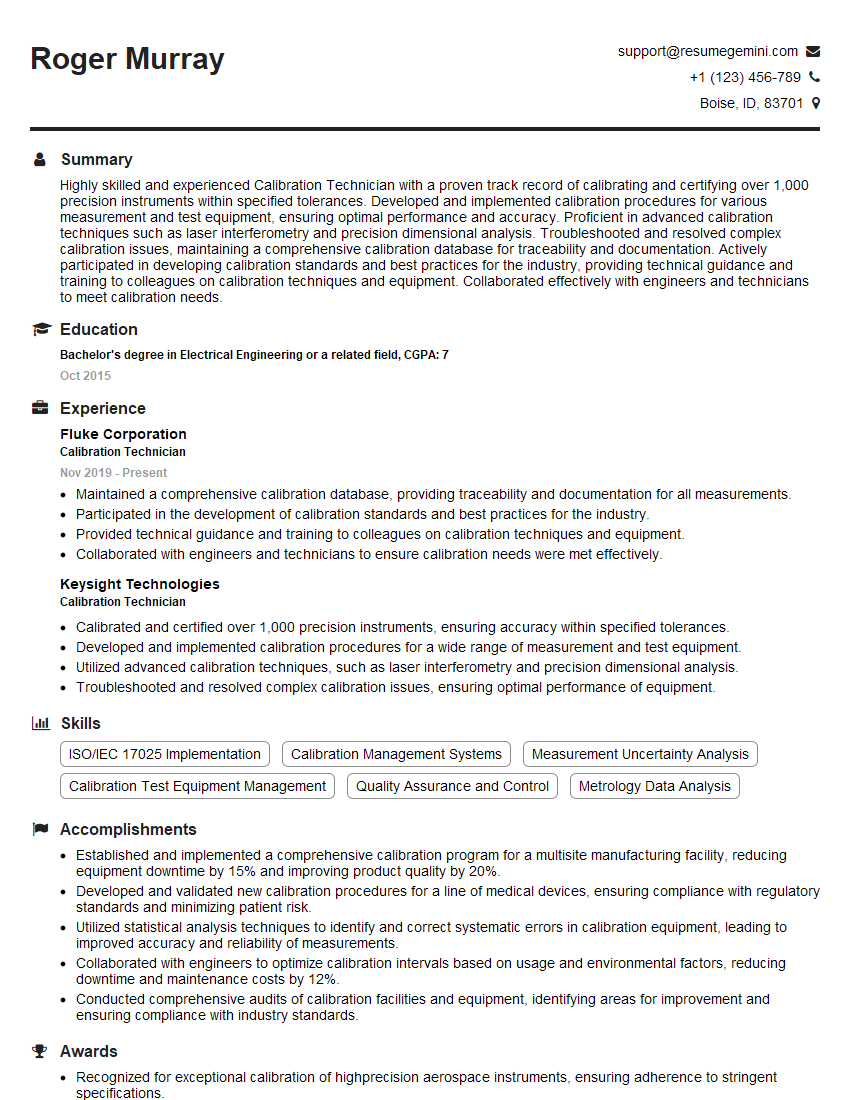
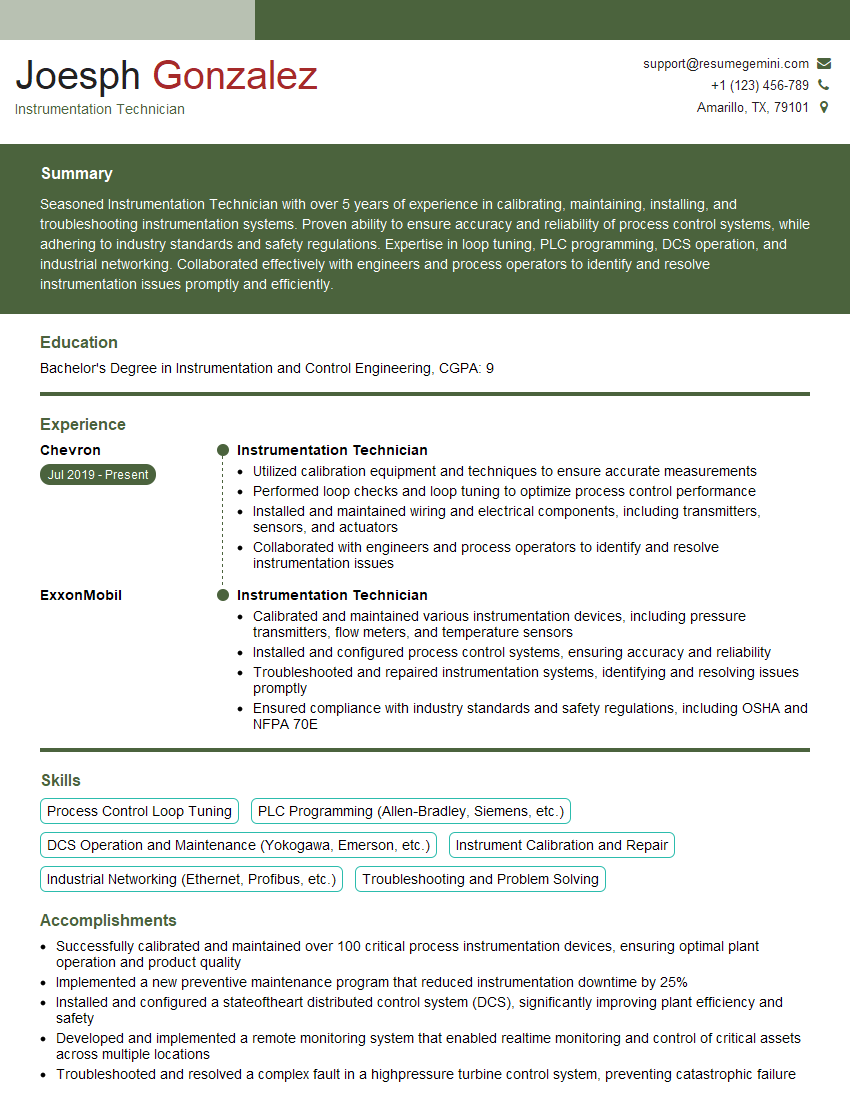
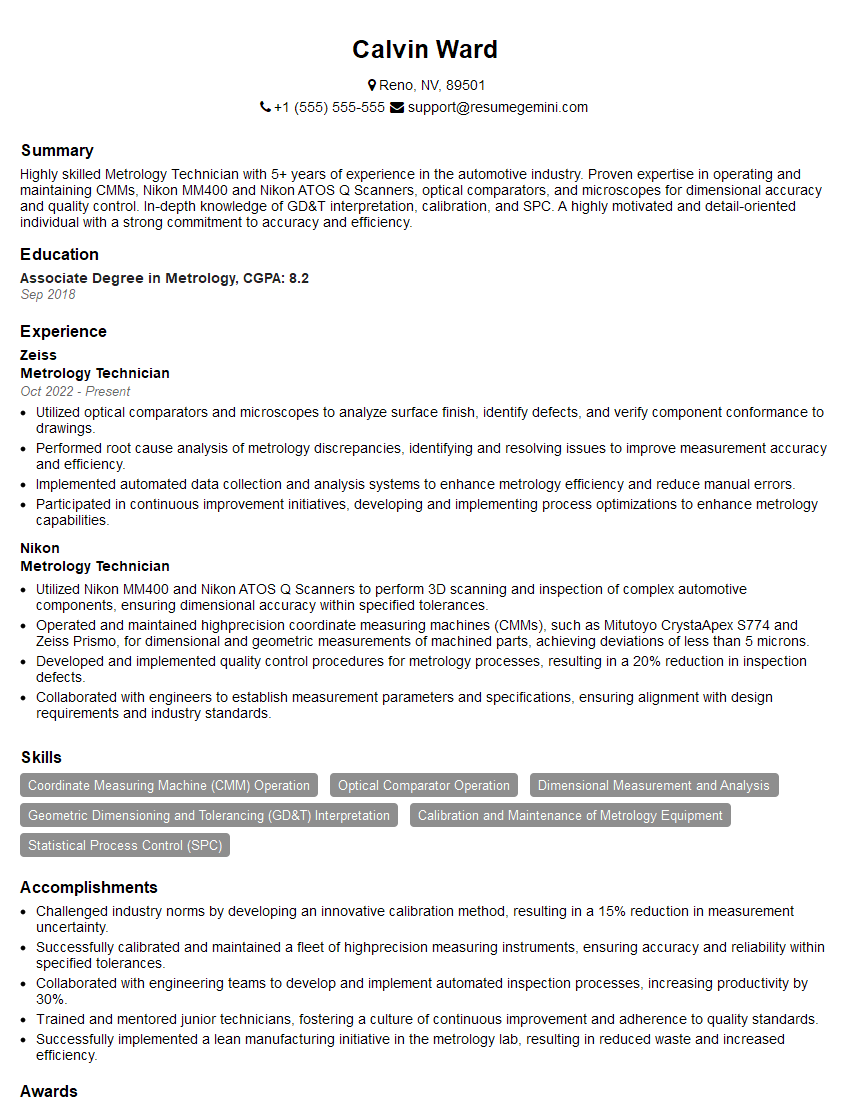
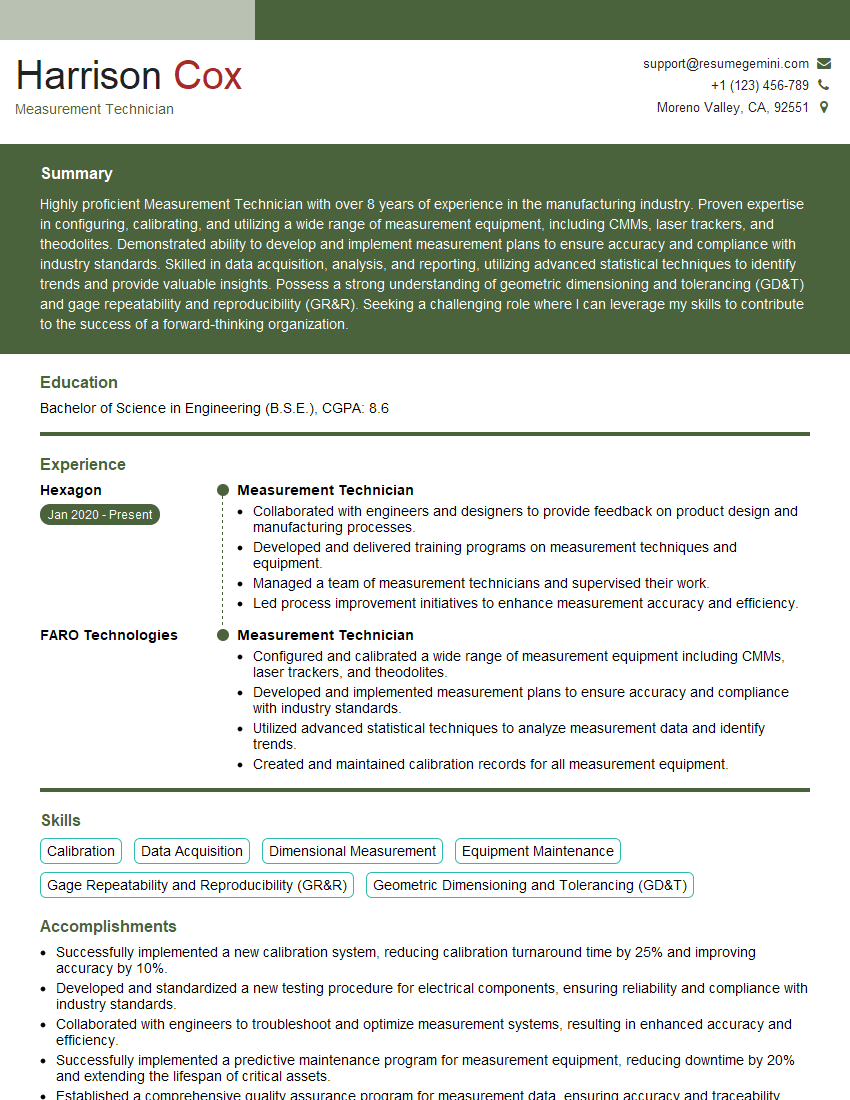
Mastering Gaging and Measuring Equipment Calibration opens doors to exciting career opportunities and showcases your commitment to precision and quality. A strong understanding of these principles is highly valued across various industries. To maximize your job prospects, it’s crucial to create an ATS-friendly resume that highlights your skills and experience effectively. ResumeGemini is a trusted resource to help you build a professional and impactful resume that grabs recruiters’ attention. Examples of resumes tailored to Gaging and Measuring Equipment Calibration are available to help guide you through this process.



Explore more articles
Users Rating of Our Blogs
Share Your Experience
We value your feedback! Please rate our content and share your thoughts (optional).
What Readers Say About Our Blog
Very informative content, great job.
good