Every successful interview starts with knowing what to expect. In this blog, we’ll take you through the top Fire Department Radio Communication interview questions, breaking them down with expert tips to help you deliver impactful answers. Step into your next interview fully prepared and ready to succeed.
Questions Asked in Fire Department Radio Communication Interview
Q 1. Explain the importance of clear and concise radio communication in emergency situations.
In emergency situations, clear and concise radio communication is paramount; it’s the lifeblood of effective firefighting. Ambiguity can lead to delays, misinterpretations, and ultimately, endanger lives. Think of it like this: every second counts. A garbled message about a trapped child could mean the difference between life and death.
Clear communication ensures everyone understands the situation, their roles, and the necessary actions. Concise communication prevents unnecessary chatter that can clog the channels and delay critical information. For example, instead of saying “There’s a lot of smoke coming from the building and it looks really bad,” a more effective message would be: “Structure fire, heavy smoke showing, 123 Main Street.” This clear, concise message provides the essential information immediately.
Using plain language, avoiding jargon, and sticking to the facts are key. We utilize standardized codes and procedures to enhance clarity and efficiency. This approach minimizes miscommunication, ensuring a coordinated response, and creating a safe and effective operation.
Q 2. Describe the different types of radio systems used in fire departments.
Fire departments utilize a variety of radio systems, chosen based on factors like coverage area, budget, and interoperability needs. These systems generally fall under a few categories:
- Conventional Radio Systems: These are the most basic systems, using a single frequency channel. They’re simpler and cheaper but have limited capacity and can easily become congested during large-scale incidents. Imagine a single phone line for an entire city – it simply won’t suffice.
- Trunked Radio Systems: These systems utilize a pool of frequencies, allowing for more efficient use of the radio spectrum. Think of it like having multiple phone lines; if one is busy, the call is routed to another available line. This is far more robust and better handles high call volumes. We commonly use systems like Motorola’s APCO Project 25 (P25) system.
- Digital Radio Systems: These offer improved audio quality, enhanced security (encryption), and the ability to transmit data alongside voice communications. For instance, we can send location data or pre-planned incident information digitally, saving valuable time and improving situational awareness.
Many departments are moving towards integrated systems that combine these technologies for optimal performance and interoperability. Interoperability, the ability for different departments and agencies to communicate seamlessly, is increasingly critical in managing large-scale incidents.
Q 3. How do you prioritize calls during high-volume situations?
During high-volume situations, prioritizing calls is crucial. We rely on a system that usually involves a combination of factors, including call classification, location, and the nature of the emergency.
The Computer-Aided Dispatch (CAD) system plays a vital role. It automatically prioritizes calls based on pre-programmed algorithms, assigning different response levels (e.g., emergency, urgent, non-emergency) based on keyword recognition (like ‘fire,’ ‘heart attack,’ ‘traffic accident’) and location.
Dispatchers then use their professional judgment to further refine priorities. For example, multiple structure fires will be prioritized based on factors like the size of the building, number of occupants, and the extent of the fire. A simultaneous medical emergency close to the station might be prioritized over a less urgent incident further away.
Clear communication among dispatchers and responding units ensures everyone understands the prioritized calls and the overall incident strategy. This coordinated effort ensures resources are directed effectively to the most critical situations first.
Q 4. What are the standard radio protocols and procedures you are familiar with?
Standard radio protocols and procedures are essential for safe and effective communication. These often include:
- Clear Identification: Each transmission begins with the unit’s identification (e.g., “Engine 3 to Dispatch”).
- Precise Location: Always provide precise location information, using established landmarks or addresses.
- Concise Reporting: Use clear, concise language to describe the situation.
- 10-Codes (or other standardized codes): Many departments use 10-codes or other standardized codes to convey common messages quickly (e.g., 10-4 for “acknowledged”).
- Emergency Traffic Precedence: Interrupting other communications for emergencies, using phrases like “Emergency Traffic.”
- Proper Sign-Off: End each transmission with a clear sign-off (e.g., “Engine 3, out”).
Adherence to these protocols prevents confusion and ensures a coordinated response. We regularly practice these procedures during training exercises to maintain proficiency and consistency.
Q 5. Explain the use of CAD (Computer-Aided Dispatch) systems.
Computer-Aided Dispatch (CAD) systems are the backbone of modern emergency response. They are sophisticated software systems that receive, process, and dispatch emergency calls. The system maps the location of the emergency and instantly routes it to the closest and most appropriate units.
CAD systems record all call details, including the time, location, nature of the emergency, and the caller’s information. This data is used for tracking response times, analyzing trends, and improving emergency response strategies. Imagine a real-time map showing the location of all calls, units, and the status of the incidents—that’s the power of CAD.
Furthermore, CAD systems integrate with other systems, like mapping software and mobile data terminals (MDTs) in fire trucks, providing real-time information to responding units, thereby enhancing situational awareness and operational efficiency.
Q 6. How do you handle conflicting information received over the radio?
Conflicting information over the radio is a serious challenge that requires careful handling. The first step is to verify the information from multiple sources if possible. If there’s a discrepancy between reports, I would immediately request clarification from the units providing the conflicting information. For instance, if one unit reports heavy fire on the first floor while another reports only light smoke, I would ask both units for a more detailed description of their observations.
Once clarification is obtained, I would relay the most reliable information to the command staff and other responding units. It’s crucial to maintain calm and avoid making assumptions. This situation demands a methodical approach to confirm the most accurate information before proceeding with any actions, preventing potentially hazardous decisions based on incorrect reports.
The dispatcher’s role is critical here, ensuring accuracy and consistency in information relayed to all parties. Documenting all communications and discrepancies is vital for post-incident analysis and improving future responses.
Q 7. Describe your experience with radio frequency management.
Radio frequency management is crucial for efficient and reliable communications. My experience involves understanding the available frequencies, obtaining and maintaining necessary licenses, and ensuring proper coordination with other agencies to avoid interference. This involves knowing which frequencies are allocated for different uses, understanding the limitations of each frequency, and establishing clear communication protocols to manage potential conflicts.
For example, coordinating with neighboring fire departments to avoid using the same frequencies simultaneously is a key aspect. We use frequency coordination protocols and established procedures to prevent signal interference or overlapping transmissions, thereby ensuring reliable communications even in challenging environments or during mass-casualty incidents.
Regular testing and maintenance of radio equipment are vital to guarantee optimal performance. This proactive approach helps identify and fix any potential issues before they affect emergency responses.
Q 8. How do you maintain radio discipline and professionalism during stressful calls?
Maintaining radio discipline and professionalism during high-stress situations is paramount for effective firefighting. It’s about clear, concise communication, even under pressure. Think of it like a surgeon performing a delicate operation – every word must be precise. We achieve this through rigorous training and practice.
- Clear and concise transmissions: We use standardized phrases and avoid unnecessary words. For instance, instead of saying “I think there might be a fire in the building,” we say “Confirmed structure fire at 123 Main Street.”
- Prioritizing critical information: We focus on conveying essential information – location, type of incident, hazards, and the status of personnel – first. Less important details can wait.
- Active listening: We carefully listen to each transmission to understand the situation completely and to avoid repeated requests for information. This ensures we’re all on the same page.
- Controlled breathing and tone: We control our breathing and maintain a calm and professional tone of voice, even if we’re experiencing adrenaline. This prevents misunderstandings and panic from spreading.
- Following established protocols: We strictly adhere to our department’s radio communication protocols, which ensure clarity and order during emergencies.
For example, during a large-scale warehouse fire, I’ve personally experienced the importance of concise communication. Accurate location updates, relayed calmly and efficiently, ensured our crews reached the correct areas swiftly, minimizing risks and maximizing rescue efforts.
Q 9. What are the common radio communication challenges faced by fire departments?
Fire departments face several challenges in radio communication. These can significantly impact operational efficiency and firefighter safety.
- Interference: Other emergency services, commercial radio users, and even natural phenomena can cause interference, making it difficult to hear or understand transmissions. Think of it like trying to have a conversation in a crowded, noisy room.
- Range limitations: Radio signals have limited range, particularly in urban environments with tall buildings. This can lead to communication gaps, especially in remote areas or during large incidents.
- Dead zones: Certain areas may experience poor or no radio coverage, creating blind spots where communication breaks down entirely. This often happens in basements or underground structures.
- Radio congestion: High levels of radio traffic during major incidents can overload the system, causing delays or preventing transmissions from getting through. This is like a traffic jam on the radio waves.
- Equipment malfunction: Handheld radios and base stations can fail due to damage, battery depletion, or software glitches. This can leave crews isolated or unable to receive critical information.
For example, I recall an incident where a significant amount of radio congestion during a multi-alarm fire hampered our ability to coordinate effectively. We had to implement alternative methods of communication using text messages and visual signals.
Q 10. How do you ensure the accuracy and reliability of information relayed via radio?
Accuracy and reliability are the cornerstones of fire department radio communication. Lives depend on it. We ensure this through several strategies.
- Standard operating procedures (SOPs): We adhere to strict SOPs for reporting, using standardized terminology and formats for incident reports. This ensures everyone understands the message.
- Clear and concise language: Using plain language, avoiding slang or jargon, is crucial. We also repeat and confirm essential information to eliminate misunderstandings.
- Confirmation of messages: We always request acknowledgment of key messages to verify that the information was received and understood correctly. This is a simple, but highly effective method.
- Regular equipment checks: We regularly inspect and maintain radio equipment to prevent malfunctions. This includes battery checks, antenna inspections, and software updates.
- Training and drills: Regular training and drills help firefighters develop skills in efficient and accurate radio communication. This reinforces good practices and builds proficiency under pressure.
Imagine relaying critical information about a building collapse. A slight error in description could lead to firefighters entering a hazardous area. Our protocols are designed to prevent such errors.
Q 11. Describe your experience with different radio frequencies and their applications.
My experience encompasses a variety of radio frequencies used in fire service operations.
- High-band VHF (Very High Frequency): Commonly used for local communications, offering good range and penetration in urban areas.
- UHF (Ultra High Frequency): Provides longer range and better penetration in areas with obstructions, often used for regional and inter-agency communications.
- 800 MHz systems: Widely used for trunking systems, allowing multiple agencies and departments to share frequencies, which enhances interoperability.
- 700/800 MHz systems: These are used for digital communication, providing improved clarity, better security, and advanced features such as GPS tracking.
For instance, we use high-band VHF for immediate communications within our company during a structure fire, while UHF might be used for communications with other agencies during a large-scale emergency involving multiple jurisdictions. Understanding the applications of each frequency is crucial for seamless coordination.
Q 12. How would you handle a situation where radio communication fails?
Radio failure is a serious event that requires immediate action. Our training focuses on contingency plans.
- Alternative communication methods: We shift to alternative methods, such as personal cell phones, text messages, or visual signals (e.g., hand signals, flares) to maintain communication. This keeps our crew connected and safe.
- Pre-designated meeting points: We have pre-arranged meeting points where crews can regroup and coordinate if communication breaks down. This reduces confusion and ensures everyone stays accounted for.
- Relaying messages through unaffected channels: If one area experiences communication failure, we utilize alternative communication channels or ask a nearby unit to relay messages. It’s about finding a working path.
- Establishing physical contact: As a last resort, we establish physical contact through running lines or using designated runners to pass along information.
I recall an instance where a sudden electrical surge knocked out our radio system during a rescue operation. We immediately switched to cell phones, coordinating safely through those channels until the radio systems were restored.
Q 13. What are the legal and ethical considerations of fire department radio communication?
Fire department radio communication involves significant legal and ethical considerations.
- Privacy: We must protect the privacy of individuals involved in incidents. Unnecessary or unauthorized disclosure of personal information is a violation of privacy laws.
- Confidentiality: Information shared over the radio is often confidential and sensitive. We are bound by duty and law to maintain the confidentiality of this information.
- Accuracy and honesty: Providing false or misleading information is unethical and potentially illegal. Our reporting must be factual and truthful.
- Obscene or offensive language: Using profane or inappropriate language is strictly prohibited on fire department radio channels. It’s unprofessional and can create confusion.
- Compliance with regulations: We must comply with all relevant federal, state, and local regulations governing radio communication, including licensing and frequency usage.
For example, releasing details of a victim’s identity before notifying their family could have serious ethical and legal consequences. Strict adherence to privacy protocols is critical.
Q 14. Describe your familiarity with various radio equipment, including handhelds and base stations.
My familiarity with various radio equipment is extensive. I’m proficient with both handheld and base station radios.
- Handheld radios: These are portable, battery-powered devices used by firefighters on the scene. I’m experienced with various models and their features, including emergency alerts, GPS capabilities, and text messaging functionalities.
- Base stations: These are stationary radios located at fire stations, dispatch centers, or command posts, providing broader coverage and enhanced communication capabilities. I’m familiar with operating procedures and maintaining these systems.
- Mobile radios: These are mounted in fire engines and other emergency vehicles, providing reliable communication while en route to an incident. I understand their integration with the overall communication system.
- Repeater systems: These extend the range of radio communication by receiving and retransmitting signals, boosting coverage in challenging areas.
I’m comfortable troubleshooting minor malfunctions, such as dead batteries or antenna issues, in both handheld and base station units. I know when to seek assistance from a trained technician for more complex problems. Regular maintenance and familiarization with this equipment is vital.
Q 15. How do you maintain situational awareness while managing radio communications?
Maintaining situational awareness while managing radio communications is paramount for effective incident response. It’s like being the conductor of an orchestra – you need to hear every instrument (unit) and understand the overall harmony (incident progression). I achieve this through a multi-pronged approach:
Active Listening: I meticulously listen to all transmissions, not just those directly addressed to me. This allows me to pick up on subtle cues, changing conditions, and potential problems before they escalate. For example, a firefighter mentioning difficulty accessing a hydrant, even if not a direct distress call, alerts me to a potential issue needing attention.
Information Synthesis: I continuously synthesize information from multiple sources – radio transmissions, mapping systems, and incident reports – to create a comprehensive picture of the unfolding event. Think of it like piecing together a puzzle; each piece of information contributes to the bigger picture of the emergency.
Clear Communication: I ensure clear and concise communication, using plain language and avoiding jargon. This prevents confusion and helps everyone stay on the same page. I use standardized terminology and frequently confirm information received to eliminate misunderstandings.
Prioritization: I prioritize critical information and tasks based on urgency and impact. Emergency traffic always supersedes routine communications. This keeps the response focused on the most immediate needs.
Career Expert Tips:
- Ace those interviews! Prepare effectively by reviewing the Top 50 Most Common Interview Questions on ResumeGemini.
- Navigate your job search with confidence! Explore a wide range of Career Tips on ResumeGemini. Learn about common challenges and recommendations to overcome them.
- Craft the perfect resume! Master the Art of Resume Writing with ResumeGemini’s guide. Showcase your unique qualifications and achievements effectively.
- Don’t miss out on holiday savings! Build your dream resume with ResumeGemini’s ATS optimized templates.
Q 16. What steps do you take to ensure the privacy and security of radio communications?
Privacy and security of radio communications are vital for protecting sensitive information and maintaining operational effectiveness. We employ several key strategies:
Encryption: Our radios utilize encryption technology to scramble transmissions, preventing unauthorized interception of sensitive information, such as victim identities or tactical strategies. This is akin to using a secret code to keep information confidential.
Access Control: Access to radio channels and frequencies is strictly controlled and limited to authorized personnel only. Only those with a legitimate need-to-know have access. This prevents unauthorized individuals from listening in or interfering with operations.
Data Security: Digital records of radio transmissions are stored securely with access limitations to prevent unauthorized access. This includes fire incident reports, dispatch logs, and other sensitive data.
Training and Awareness: All personnel receive regular training on secure communication practices, including proper use of codes, avoiding sensitive information in open communication, and reporting any suspected security breaches immediately.
Q 17. Explain your experience with different types of emergency calls (e.g., structure fire, medical emergency).
My experience encompasses a broad range of emergency calls. Each type requires a distinct approach to radio communication:
Structure Fire: These calls demand rapid, concise, and accurate information transfer. I focus on relaying critical information like location, building type, number of occupants, and fire spread rapidly and accurately. Clear instructions to arriving units regarding entry points and resource allocation are also vital. For example, I’d relay information such as: “Engine 1, report to the east side of the building, primary search the second floor.”
Medical Emergency: During medical emergencies, I prioritize gathering patient information from callers (age, symptoms, level of consciousness) to relay to responding units. Clear, calm communication with both the caller and responders is vital to facilitate a successful outcome. For example, I’d guide a caller on administering CPR while relaying vital information such as the patient’s condition to paramedics en route.
Hazardous Materials Incidents: These incidents require the use of specialized codes and procedures to ensure the safety of responders and the public. Accurate communication of the type of material, its potential dangers, and appropriate safety measures are critical.
Each incident requires adapting my communication style to meet the specific needs and demands of the situation. Effective communication is the backbone of successful emergency response in all scenarios.
Q 18. How do you effectively communicate with diverse groups of people over the radio?
Effective communication with diverse groups requires sensitivity, clear language, and an understanding of potential communication barriers. I use the following strategies:
Plain Language: I avoid jargon and technical terms, opting for plain, easily understandable language. I confirm that all parties understand instructions.
Multilingual Support: Where appropriate, I utilize translation services or personnel proficient in multiple languages. This ensures clear communication with individuals who may not speak English.
Cultural Sensitivity: I am mindful of cultural differences in communication styles and adapt my approach accordingly. This includes being respectful of different communication preferences and avoiding language or tone that might be offensive.
For example, I’d take extra care to confirm understanding and speak slowly and clearly when communicating with someone who is stressed or has language barriers. Building rapport and trust is key in these situations.
Q 19. Describe your experience with using mapping and location technology in dispatch.
Mapping and location technology has revolutionized dispatch operations. Our system integrates with GPS, CAD (Computer-Aided Dispatch), and mapping software, providing real-time location data for all units. This integration enhances situational awareness and allows for efficient resource allocation.
Incident Location: The system automatically pinpoints the location of emergency calls using GPS data from caller’s phones, or addresses, providing immediate location information to responding units.
Unit Tracking: We can track the real-time location of fire engines, ambulances, and other emergency vehicles, ensuring they reach the scene efficiently.
Resource Allocation: Mapping software allows us to visually assess the location of available resources and direct them to the most appropriate location based on the incident’s location and needs.
Pre-incident Planning: The system can be used to store building plans, hydrant locations, and other pre-incident data, helping responders prepare more effectively.
For example, during a multi-alarm fire, the mapping system displays the location of all responding units, allowing me to coordinate their deployment and avoid overlaps while ensuring coverage. It also helps in identifying potential hazards such as nearby hazardous materials storage.
Q 20. How do you manage multiple radio channels and calls simultaneously?
Managing multiple channels and calls simultaneously demands exceptional organizational skills and prioritization. It’s like juggling several balls – each call has its own urgency, requiring focused attention.
Channel Prioritization: I prioritize channels based on the urgency of the calls. Emergency calls always take precedence over routine communications.
Organized Note-Taking: I maintain detailed notes on each call, including key information, updates, and actions taken. This ensures consistent situational awareness, especially during busy periods.
Clear Communication: Even with multiple calls, I maintain clear and concise communication with all parties, avoiding confusion and ensuring everyone receives the information they need.
Effective Delegation: When necessary, I delegate tasks to other dispatchers to ensure efficient call handling. This keeps the workload balanced and prevents delays in critical responses.
For example, if I receive a simultaneous report of a structure fire and a medical emergency, I immediately prioritize the structure fire, dispatching units and resources, before then focusing on the medical emergency, while still keeping abreast of the fire situation’s progression.
Q 21. What training have you received in fire department radio communication protocols?
My training in fire department radio communication protocols is extensive and ongoing. It includes:
Basic and Advanced Dispatch Training: This covers the fundamentals of radio operation, emergency procedures, call prioritization, and clear communication techniques.
Radio Procedures and Terminology: I am proficient in all agency-specific radio protocols and terminology. This ensures consistent and effective communication across all units.
Emergency Medical Dispatch (EMD) Certification: My certification enables me to provide pre-arrival instructions to callers in medical emergencies, improving patient outcomes.
Hazardous Materials (Hazmat) Communication Protocols: Training in specialized communication procedures for hazardous materials incidents ensures effective communication and safety during such events.
Ongoing Professional Development: I participate in regular refresher training and workshops to stay abreast of technological advancements and updated protocols.
This comprehensive training ensures I possess the knowledge and skills necessary to efficiently and safely handle all types of radio communications in emergency and non-emergency situations.
Q 22. Explain your troubleshooting skills related to radio equipment malfunctions.
Troubleshooting fire department radio equipment requires a systematic approach. I begin by identifying the problem: Is the radio completely dead? Is it transmitting but not receiving? Is there static or distortion? Is the problem isolated to one radio or affecting multiple units?
My troubleshooting process typically involves these steps:
- Visual Inspection: Checking for obvious physical damage, loose connections, or low battery levels.
- Power Cycle: A simple power cycle (turning the radio off and back on) often resolves temporary glitches.
- Antenna Check: Ensuring the antenna is properly attached and not damaged. A bent or broken antenna can severely impact transmission and reception.
- Channel Verification: Confirming the radio is set to the correct channel and that the repeater system is functioning.
- Battery Test: Using a multimeter to test battery voltage to rule out low power as a cause.
- Signal Strength Check: Using a signal strength meter to assess the quality of the signal. Weak signals often indicate interference or distance issues.
- Software Check (if applicable): For more advanced radios with programmable settings, checking the software and firmware for any updates or errors.
- Component Replacement (if necessary): If the problem persists, replacing suspected faulty components such as the battery or antenna.
For example, during a recent incident, a firefighter reported their radio was only receiving static. After a quick visual inspection revealing a slightly bent antenna, I straightened it, and the issue was immediately resolved. In another case, systematic testing revealed a faulty battery in multiple radios, prompting immediate replacement and prevention of further communication failures.
Q 23. How do you stay updated with changes and advancements in fire department radio technology?
Staying current in fire department radio technology requires proactive engagement with several resources. I actively participate in:
- Professional Development Courses and Seminars: Attending workshops and training sessions focused on the latest radio systems, protocols, and technologies.
- Industry Publications and Journals: Reading industry publications like Public Safety Communications to stay abreast of advancements and best practices.
- Manufacturer Websites and Training Materials: Engaging with the manufacturer’s websites and documentation to understand system specifications and troubleshooting techniques.
- Networking with Colleagues: Sharing experiences and insights with other professionals in the field at conferences and through professional organizations.
- Online Forums and Communities: Participating in online forums dedicated to emergency services communications for knowledge sharing and problem-solving.
For instance, I recently attended a workshop on the implementation of new P25 digital radio systems, learning about their improved security, capacity, and interoperability features.
Q 24. Describe your experience with record-keeping and documentation related to radio communications.
Accurate record-keeping is critical for efficient radio communication management. My experience includes:
- Maintaining Radio Logs: Documenting all significant radio communications, including time stamps, units involved, messages, and any anomalies.
- Troubleshooting Reports: Creating detailed reports documenting radio equipment malfunctions, troubleshooting steps taken, and resolutions.
- Radio Maintenance Records: Tracking routine maintenance, repairs, and calibrations of radio equipment.
- Inventory Management: Maintaining a precise inventory of all radio equipment, including serial numbers, condition, and assigned users.
- Compliance Reporting: Ensuring that all radio communication activities comply with relevant regulations and department protocols.
I utilize both physical and digital record-keeping systems, ensuring data accessibility and security. This meticulous documentation is crucial for audits, equipment maintenance scheduling, and incident reconstruction.
Q 25. How do you handle stressful situations and maintain composure during high-pressure radio communication scenarios?
High-pressure situations require calm, clear communication. My approach involves:
- Deep Breathing Techniques: Practicing controlled breathing to manage stress and maintain focus during emergencies.
- Clear and Concise Communication: Using standardized terminology and concise messages to avoid confusion.
- Prioritization of Information: Focusing on essential information and avoiding unnecessary details.
- Active Listening: Carefully listening to the incoming messages to fully understand the situation.
- Repetition and Confirmation: Repeating critical information and asking for confirmation to prevent misunderstandings.
I’ve found that effective training and practice are key to developing the ability to remain composed under pressure. Regular drills and simulations help reinforce these skills, simulating real-world scenarios.
Q 26. What are some common mistakes to avoid during fire department radio communication?
Several common mistakes can hinder effective fire department radio communication:
- Unclear or Rambling Messages: Using jargon, slang, or excessive detail makes messages difficult to understand.
- Improper Radio Etiquette: Interrupting other transmissions or using inappropriate language.
- Failing to Identify Yourself and Your Location: Making it difficult to track units and coordinate responses.
- Using Incorrect Channels: Leading to delays and missed communications.
- Neglecting to Repeat and Confirm: Failing to ensure messages are understood accurately.
- Insufficient Situational Awareness: Failing to provide accurate and relevant information about the incident.
For example, using slang like ‘ten-four’ instead of clear statements, or failing to identify your location can be dangerous in chaotic events. Consistent training and adherence to protocols are essential to avoid these errors.
Q 27. How would you handle a situation where a responder is not responding to radio calls?
If a responder isn’t responding to radio calls, a systematic approach is crucial. I would:
- Attempt Multiple Calls: Trying to contact the responder multiple times using different call signs or frequencies.
- Check Signal Strength and Radio Function: Verifying the radio’s functionality and signal strength for any technical issues.
- Contact Other Units in the Vicinity: Asking nearby units to check on the unresponsive responder’s location and well-being.
- Dispatch Emergency Personnel: If contact cannot be established, dispatching a team to the responder’s last known location to verify their safety.
- Review Radio Logs and Communications: Tracing recent communications with the responder to pinpoint potential issues.
In a recent incident, a firefighter was unresponsive. After attempting repeated calls, we contacted nearby units, who located him trapped under debris. Quick action, based on a thorough response strategy, prevented a more serious outcome.
Q 28. Describe your experience with inter-agency radio communication.
Inter-agency radio communication requires understanding different protocols and frequencies used by various agencies, such as police, EMS, and utility companies. My experience involves:
- Familiarization with Various Radio Systems: Understanding the protocols and frequencies used by different agencies and adapting communication accordingly.
- Use of Interoperability Systems: Utilizing systems designed to link different radio systems to facilitate seamless communication between agencies.
- Clear and Concise Cross-Agency Communication: Using standardized terminology and clear communication to avoid misunderstandings.
- Coordination with Dispatch and Communication Centers: Working closely with dispatch to manage communications between agencies.
- Documenting Cross-Agency Communications: Maintaining detailed records of inter-agency communications for incident reports and future reference.
During a large-scale incident, I’ve effectively coordinated communication between multiple agencies, including police directing traffic, EMS providing medical assistance, and utility companies securing gas lines. This seamless communication, leveraging different communication methods, was key to effective disaster management.
Key Topics to Learn for Fire Department Radio Communication Interview
- Radio Terminology and Procedures: Understanding common terms, codes, and protocols used in fire department communications. This includes learning the difference between tactical and strategic communications.
- Effective Communication Techniques: Mastering clear, concise, and accurate reporting under pressure. Practice conveying critical information quickly and efficiently, even in stressful situations. This includes active listening and confirming received information.
- Emergency Response Procedures: Knowing how radio communication integrates with incident command systems and emergency response protocols. Understand your role in relaying critical information during various emergency scenarios.
- Radio Equipment Operation and Maintenance: Familiarize yourself with different types of radio equipment, their functionalities, and basic troubleshooting techniques. Knowing how to handle malfunctions effectively is crucial.
- Dispatch Procedures and Prioritization: Understanding the prioritization of calls and the importance of accurate information relay to dispatchers. This includes understanding different call types and appropriate responses.
- Legal and Ethical Considerations: Being aware of the legal and ethical implications of fire department radio communications, including confidentiality and information accuracy.
- Troubleshooting and Problem Solving: Developing your ability to quickly identify and resolve communication issues, such as radio interference or equipment malfunctions. Practice thinking critically and adapting your communication style.
Next Steps
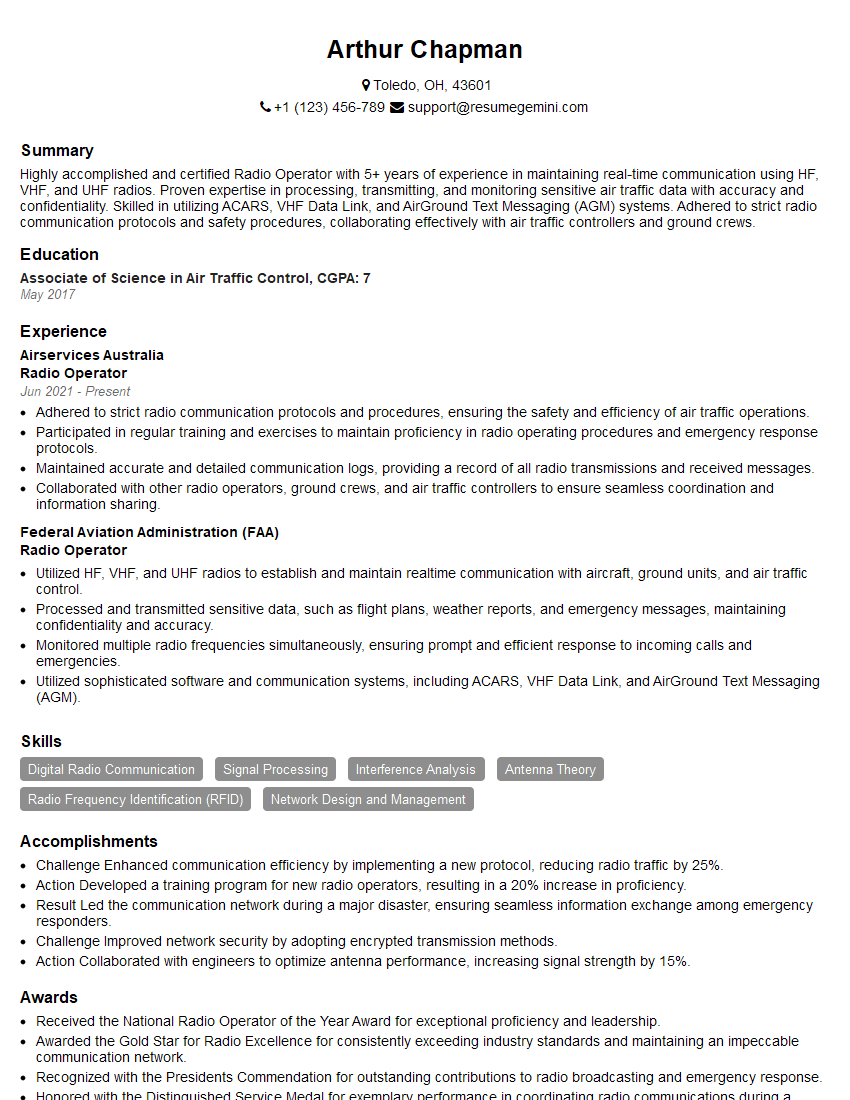
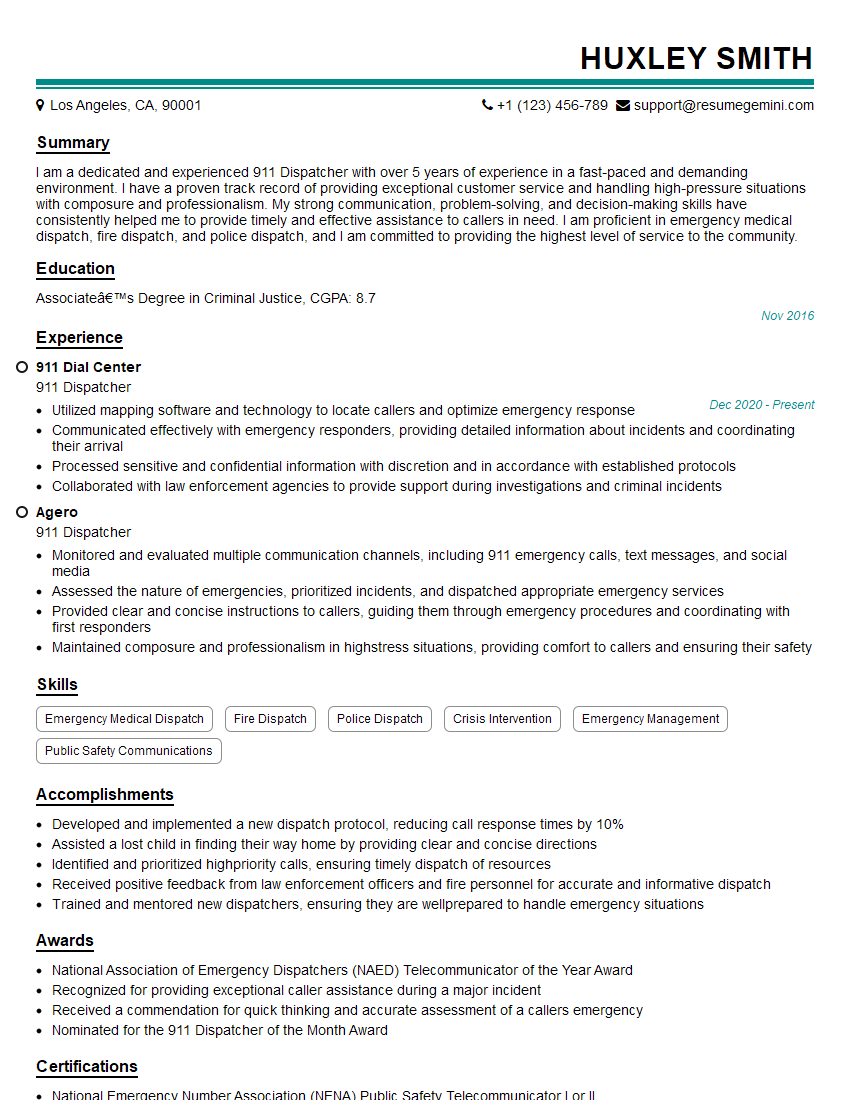
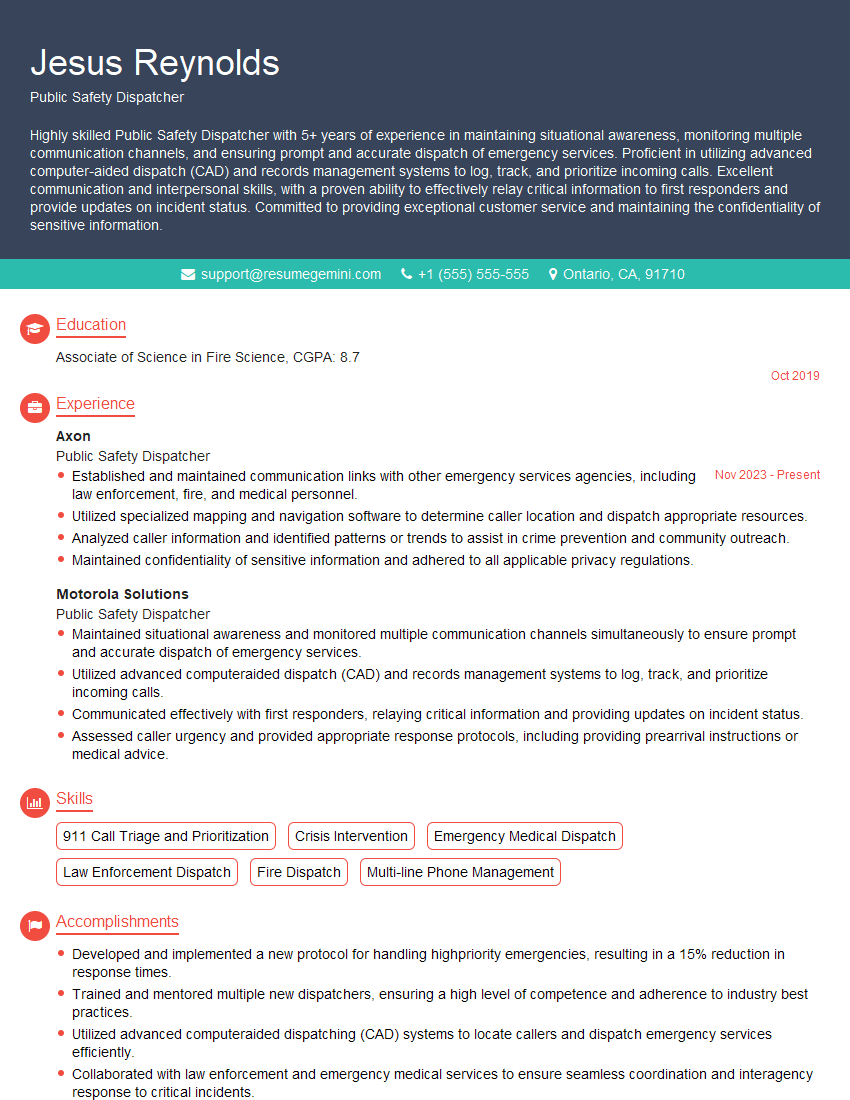
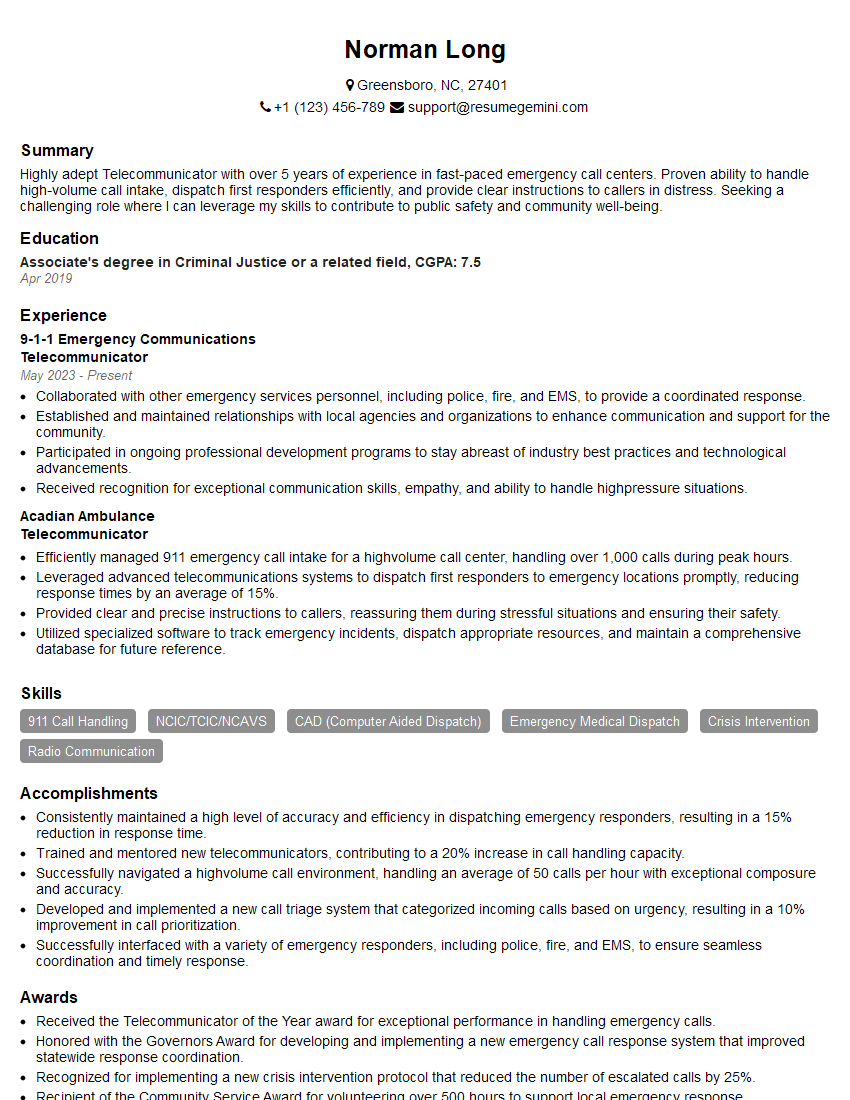
Mastering Fire Department Radio Communication is vital for career advancement, showcasing your ability to function effectively within a high-pressure environment and contribute critically to team success. A strong resume is your first step towards securing your dream role. To maximize your job prospects, create an ATS-friendly resume that highlights your skills and experience effectively. ResumeGemini is a trusted resource to help you build a professional, impactful resume that gets noticed. We provide examples of resumes tailored to Fire Department Radio Communication roles to guide you. Take the next step towards your career goals today.
Explore more articles
Users Rating of Our Blogs
Share Your Experience
We value your feedback! Please rate our content and share your thoughts (optional).
What Readers Say About Our Blog
Very informative content, great job.
good