The right preparation can turn an interview into an opportunity to showcase your expertise. This guide to Experience with inventory management and control systems interview questions is your ultimate resource, providing key insights and tips to help you ace your responses and stand out as a top candidate.
Questions Asked in Experience with inventory management and control systems Interview
Q 1. Describe your experience with different inventory management systems (e.g., FIFO, LIFO, JIT).
Inventory management systems dictate how we account for the cost of goods sold (COGS) and the value of remaining inventory. Different methods impact financial reporting and tax liabilities. I’ve extensive experience with FIFO (First-In, First-Out), LIFO (Last-In, First-Out), and JIT (Just-In-Time) systems.
FIFO: This assumes the oldest inventory is sold first. Imagine a bakery – the croissants baked first are the ones sold first. In accounting, this leads to a higher net income during periods of inflation, as the cost of goods sold reflects older, lower prices. It’s straightforward to understand and manage.
LIFO: This assumes the newest inventory is sold first. Think of a stack of pancakes – you eat the top one first. During inflation, LIFO results in a lower net income as the cost of goods sold reflects current, higher prices. This can reduce tax burden but is not permitted under IFRS (International Financial Reporting Standards).
JIT: This focuses on minimizing inventory holding costs by receiving goods only when needed for production or sale. Think of a sushi restaurant – they receive their fresh fish only as needed to ensure maximum freshness and minimal waste. This requires precise forecasting and reliable supply chains.
In my previous role, we used FIFO for most products due to its simplicity and compliance with IFRS. However, for certain perishable items, we adapted elements of JIT to reduce spoilage.
Q 2. How do you handle inventory discrepancies?
Inventory discrepancies, the difference between the recorded inventory and the physical count, are a common challenge. My approach is systematic and involves these steps:
Identify the Discrepancy: Conduct a thorough physical inventory count, comparing it against the system’s records. Any difference needs investigation.
Investigate the Cause: Common causes include data entry errors, theft, damage, or inaccurate stock transfers. I’d analyze transaction logs, review security footage, and interview staff involved in handling inventory.
Reconcile the Discrepancy: Once the cause is identified, I adjust the inventory records to match the physical count, documenting the reasons for the adjustments. This might involve writing off damaged or obsolete goods.
Implement Preventative Measures: To avoid future discrepancies, I’d review and improve processes. This could include implementing stricter inventory control procedures, upgrading the inventory management system, enhancing security measures, or providing additional staff training.
For example, at my previous company, we identified a significant discrepancy due to a faulty barcode scanner. By replacing the scanner and retraining staff on proper scanning procedures, we significantly reduced discrepancies.
Q 3. Explain your process for forecasting inventory needs.
Forecasting inventory needs is crucial for efficient inventory management. My process involves a combination of quantitative and qualitative methods:
Historical Data Analysis: I analyze past sales data, considering seasonality, trends, and promotional periods. This provides a baseline forecast.
Market Research & Trend Analysis: I stay updated on market trends, economic conditions, and competitor activities. This helps anticipate potential changes in demand.
Sales Forecasts: Collaboration with the sales team is essential. Their input on expected sales and marketing campaigns greatly enhances accuracy.
Lead Time Consideration: The time it takes to receive inventory from suppliers must be factored in. Longer lead times require higher safety stock levels.
Statistical Forecasting Methods: Techniques like exponential smoothing or ARIMA models can be used to refine the forecast, particularly for items with predictable demand patterns.
I’ve used these techniques in previous roles to successfully predict inventory requirements, minimizing both stockouts and excessive inventory.
Q 4. What metrics do you use to track inventory performance?
Several key metrics are used to monitor inventory performance. These include:
Inventory Turnover Rate: This measures how efficiently inventory is sold. A higher rate suggests effective inventory management.
Inventory Turnover = Cost of Goods Sold / Average InventoryDays Sales of Inventory (DSI): This indicates the number of days it takes to sell the average inventory. A lower DSI is desirable.
DSI = Average Inventory / (Cost of Goods Sold / 365)Stockout Rate: This shows the percentage of times an item is out of stock when needed. A lower rate is better.
Holding Cost Percentage: This measures the percentage of inventory value tied up in holding costs (storage, insurance, etc.). Lower percentages are preferable.
Inventory Accuracy: This reflects the accuracy of inventory records compared to physical counts. High accuracy (typically above 95%) is crucial.
By regularly tracking these metrics, I can identify areas for improvement and make data-driven decisions.
Q 5. How do you optimize inventory levels to minimize holding costs?
Minimizing holding costs requires a balanced approach. Strategies include:
Demand Forecasting Accuracy: Accurate forecasting reduces the need for excessive safety stock.
Efficient Warehouse Management: Optimizing warehouse layout, using efficient storage methods, and adopting warehouse management systems (WMS) can reduce storage costs.
Negotiating Better Supplier Terms: Negotiating shorter lead times and flexible order quantities can reduce the amount of inventory needed.
Inventory Optimization Software: Utilizing software that employs advanced algorithms can provide insights into optimal inventory levels.
Regular Inventory Reviews: Regularly reviewing inventory levels and identifying slow-moving items allows for timely adjustments.
For instance, in a previous role, implementing a WMS resulted in a 15% reduction in warehousing costs by optimizing space utilization.
Q 6. What strategies do you employ to prevent stockouts?
Preventing stockouts requires a proactive approach, including:
Accurate Demand Forecasting: This is the foundation. Overestimating demand leads to excessive inventory, while underestimating leads to stockouts.
Safety Stock: Maintaining a buffer stock helps absorb unexpected demand fluctuations.
Supplier Relationship Management: Strong relationships ensure reliable supply and prompt order fulfillment.
Regular Inventory Monitoring: Closely monitoring inventory levels allows for timely replenishment before stockouts occur.
Multiple Sourcing: Diversifying suppliers reduces reliance on a single source, mitigating risks associated with supply disruptions.
In my experience, proactively monitoring key indicators and maintaining open communication with suppliers has been crucial in avoiding stockouts.
Q 7. How do you manage obsolete or slow-moving inventory?
Managing obsolete or slow-moving inventory requires a strategic approach:
Identify Obsolete Items: Regularly review inventory to identify items that haven’t moved in a specific period (e.g., 6 months or a year).
Analyze the Cause: Determine why the items are slow-moving. Is it due to changes in market demand, poor product design, or ineffective marketing?
Price Reduction Strategies: Consider offering discounts or promotions to boost sales. If this is ineffective…
Liquidation: Sell off the excess inventory through online marketplaces, auction sites, or liquidators.
Donation or Disposal: If the items are unusable, consider donating them to charity or disposing of them responsibly.
Preventative Measures: To reduce the risk of future obsolescence, improve forecasting accuracy, strengthen demand planning, and optimize product lifecycles.
In a past role, we successfully liquidated a large amount of slow-moving inventory through an online auction, recovering a significant portion of the original cost.
Q 8. Describe your experience with cycle counting and its importance.
Cycle counting is a crucial inventory management technique where a small portion of your inventory is counted regularly, rather than conducting a full inventory count infrequently. This prevents large discrepancies from building up and allows for more timely correction. It’s like regularly checking your bank balance – you catch small errors before they become significant issues.
Importance: Cycle counting improves data accuracy, reduces the time and resources needed for a full physical inventory, helps identify and correct errors promptly, improves overall inventory control, and enables a more efficient inventory process. In a previous role at a large distribution center, we implemented a cycle counting schedule that reduced inventory discrepancies by 40% within six months.
- Frequency: The frequency depends on the item’s ABC classification (discussed later). High-value (A) items get counted more frequently.
- Randomization: Counting should be randomized to avoid predictable patterns that might miss errors.
- Documentation: Discrepancies are meticulously recorded and investigated; root causes are analyzed and addressed.
Q 9. How do you ensure inventory data accuracy?
Ensuring inventory data accuracy is paramount. It involves a multi-pronged approach that combines technology, process improvements, and employee training.
- Regular Cycle Counting: As mentioned, this identifies and corrects discrepancies early.
- Inventory Software/WMS: Utilizing robust inventory management software with real-time tracking capabilities helps maintain accurate records. Integrating with point-of-sale (POS) systems is key for automated updates.
- Physical Verification: Regular physical checks against system records are essential to ensure data integrity. This could be through spot checks or full audits.
- Barcoding/RFID: Utilizing barcode or RFID technology improves the speed and accuracy of data collection during receiving, put-away, and picking processes.
- Employee Training: Properly training staff on inventory procedures, accurate data entry, and using inventory scanning technology is crucial.
- Regular Reconciliation: Comparing physical counts to system records at regular intervals helps detect and correct any errors.
In one instance, we implemented a barcode scanning system, which significantly reduced data entry errors and improved the accuracy of our inventory records by over 65%.
Q 10. What is your experience with inventory software and WMS (Warehouse Management Systems)?
I have extensive experience with various inventory software and WMS (Warehouse Management Systems). I’ve worked with solutions like Fishbowl Inventory, NetSuite, and SAP. My experience includes implementing, configuring, and troubleshooting these systems. I understand the nuances of different software functionalities such as inventory tracking, demand forecasting, order management, and reporting.
A WMS system is crucial for larger warehouses, offering features like automated picking, optimized storage, and real-time inventory visibility. For example, in a previous role, we migrated from a legacy system to a cloud-based WMS, resulting in a 20% reduction in order fulfillment time and a significant improvement in overall warehouse efficiency. The key is selecting a system that aligns with your company’s specific needs and scale, and having a clear implementation plan.
Q 11. Explain your understanding of ABC analysis in inventory management.
ABC analysis is a crucial inventory management technique that categorizes inventory items based on their value and consumption. Items are ranked from A to C, with A representing the highest-value items, B being mid-range, and C the lowest.
Understanding:
- A-items: These represent a small percentage of total items (typically 10-20%) but account for a significant portion (70-80%) of the total inventory value. They require close monitoring and tight control.
- B-items: These are medium-value items that constitute a moderate percentage of both the total number of items and total inventory value.
- C-items: These are low-value items that make up a large percentage of the total number of items but a small portion of the total inventory value. They require less stringent control.
Practical Application: ABC analysis allows for the efficient allocation of resources. More attention is given to high-value A-items, while lower-value C-items can be managed with simpler methods. This optimization ensures that resources are used effectively.
Q 12. How do you handle returns and damaged goods?
Handling returns and damaged goods requires a structured process to minimize losses and maintain data accuracy. This includes:
- Clear Return Policy: Having a clear and well-communicated return policy is crucial to manage expectations.
- Inspection Process: All returned goods must undergo a thorough inspection to determine their condition and eligibility for restocking.
- Segregation: Damaged and returned goods need to be segregated from sellable inventory to prevent accidental sale.
- Data Updating: The inventory system must be updated to reflect the return or disposal of goods. This may involve adjusting stock levels, creating new inventory statuses (e.g., ‘returned’, ‘damaged’), and recording disposal reasons.
- Disposal/Repair: Damaged goods may be repaired, disposed of, or salvaged depending on their condition and value.
- Tracking: Maintaining accurate records of returns and damaged goods helps identify potential issues with products or the supply chain.
We once implemented a streamlined returns process that reduced the time spent processing returns by 30% and minimized losses from inaccurate recording.
Q 13. How do you collaborate with other departments (e.g., purchasing, sales) regarding inventory?
Collaboration with other departments, such as purchasing and sales, is vital for effective inventory management. This requires open communication and data sharing.
- Purchasing: Close collaboration with purchasing ensures sufficient stock levels are maintained. Forecasting demand and sharing inventory data helps anticipate shortages or overstocking.
- Sales: Sales data is crucial for demand forecasting and inventory planning. Regular communication helps identify potential inventory issues related to high-demand items or product backorders.
- Data Sharing: Using a shared inventory system or regular data exchange ensures everyone has access to the latest information. This could be through regular meetings, reports, or shared dashboards.
For example, by integrating our inventory system with the sales platform, we could predict demand more accurately, reducing stockouts and increasing customer satisfaction.
Q 14. Describe a time you had to improve an inefficient inventory process.
In a previous role, we had an inefficient inventory process primarily due to manual data entry and a lack of real-time inventory tracking. This resulted in frequent stockouts, overstocking, and inaccurate inventory records.
Improvement Strategy:
- Implemented a barcode scanning system: This eliminated manual data entry errors and significantly sped up the inventory process.
- Integrated the system with our POS: This provided real-time inventory updates and prevented selling items that were not actually in stock.
- Trained staff on the new system: This ensured consistent and accurate data entry.
- Implemented a cycle counting program: This helped identify and address inventory discrepancies regularly.
The result was a significant reduction in inventory discrepancies, improved order fulfillment time, decreased stockouts, and an overall increase in inventory accuracy and efficiency.
Q 15. What is your experience with RFID or barcode technology in inventory tracking?
RFID (Radio-Frequency Identification) and barcode technology are essential tools for efficient inventory tracking. Barcodes, using optical scanners, provide a relatively inexpensive way to identify individual items. RFID, however, offers a more robust solution, capable of tracking multiple items simultaneously without line-of-sight.
In my experience, I’ve implemented both systems. In a retail setting, barcodes are ideal for scanning individual products at checkout. However, in a warehouse environment managing pallets of goods, RFID tags attached to each pallet allow for quicker, more accurate inventory counts. For example, imagine a warehouse with thousands of pallets. Instead of manually counting each pallet, RFID readers can scan the entire warehouse in a fraction of the time, providing near real-time inventory data. This significantly reduces the likelihood of stockouts or overstocking.
The choice between RFID and barcode depends on factors like budget, volume of items, required accuracy, and the nature of the inventory (e.g., fragile items, temperature sensitive).
Career Expert Tips:
- Ace those interviews! Prepare effectively by reviewing the Top 50 Most Common Interview Questions on ResumeGemini.
- Navigate your job search with confidence! Explore a wide range of Career Tips on ResumeGemini. Learn about common challenges and recommendations to overcome them.
- Craft the perfect resume! Master the Art of Resume Writing with ResumeGemini’s guide. Showcase your unique qualifications and achievements effectively.
- Don’t miss out on holiday savings! Build your dream resume with ResumeGemini’s ATS optimized templates.
Q 16. How do you manage seasonal inventory fluctuations?
Managing seasonal inventory fluctuations requires careful forecasting and proactive planning. The key is to anticipate demand surges and accurately predict periods of low sales. For instance, a retailer selling swimwear will experience peak demand during summer months. To manage this, we would begin forecasting several months in advance, analyzing past sales data, considering any marketing campaigns, and taking into account any external factors like weather patterns.
This allows us to adjust our ordering schedules accordingly, potentially procuring a larger volume of inventory in advance of the high season. We also leverage strategic warehousing, allowing for the cost-effective storage of seasonal inventory during periods of low demand. Additionally, promotional pricing and strategic inventory allocation can help clear out seasonal inventory before the next season arrives, reducing storage costs and potential losses due to obsolescence.
Q 17. How do you determine the optimal reorder point for inventory items?
Determining the optimal reorder point (ROP) is crucial to avoid stockouts while minimizing excess inventory. The ROP formula considers several key factors:
- Lead time demand: The average demand during the time it takes to receive an order.
- Lead time: The time between placing an order and receiving it.
- Safety stock: A buffer to account for unexpected variations in demand or lead time.
A simple ROP calculation is: ROP = (Lead Time Demand) + (Safety Stock)
For example, if the average daily demand is 10 units, the lead time is 5 days, and we want a safety stock of 20 units, the ROP would be (10 units/day * 5 days) + 20 units = 70 units. When inventory levels reach 70 units, it’s time to place a new order. This calculation can be further refined using statistical methods like forecasting to account for variations in demand.
Q 18. Explain your understanding of lead time and its impact on inventory management.
Lead time is the period between placing an order for inventory and receiving it. It’s a critical factor influencing inventory management because it directly impacts the amount of safety stock required and the overall inventory levels. A longer lead time necessitates higher safety stock to protect against potential stockouts during that extended period.
For example, if lead time for a particular item is very short (e.g., 1 day), we can maintain a lower safety stock, as it’s easier to replenish the inventory quickly. However, if lead time is very long (e.g., 6 months), we need a much larger safety stock to buffer against demand variability during that extended period. Therefore, optimizing lead time through efficient supplier relationships is a crucial aspect of inventory management.
Q 19. How do you handle emergency inventory situations (e.g., unexpected surge in demand)?
Handling emergency inventory situations requires a swift and coordinated response. Unexpected surges in demand can quickly deplete stock, resulting in lost sales and potential customer dissatisfaction.
My approach involves:
- Immediate assessment: Quickly determine the extent of the surge and the affected products.
- Prioritization: Focus on fulfilling orders for the most critical or high-demand items.
- Resource allocation: Shifting resources like staff and transportation to meet the increased demand.
- Supplier communication: Contacting suppliers to expedite orders and explore possibilities for expedited shipping.
- Demand management: Implementing temporary price adjustments or rationing to manage demand if necessary.
In one instance, a sudden weather event led to an unexpected surge in demand for emergency supplies. By coordinating with suppliers for expedited delivery and reallocating resources within our distribution network, we were able to meet the majority of the demand within a reasonable timeframe, minimizing customer disruption.
Q 20. What are the key performance indicators (KPIs) you monitor in inventory management?
Several key performance indicators (KPIs) are essential for monitoring the effectiveness of inventory management. These include:
- Inventory Turnover Ratio: Measures how efficiently inventory is sold and replenished (Cost of Goods Sold / Average Inventory).
- Days Inventory Outstanding (DIO): Indicates the average time inventory spends in storage (Average Inventory / Cost of Goods Sold per day).
- Stockout Rate: The percentage of demand not met due to insufficient stock.
- Inventory Accuracy: The level of agreement between the physical inventory count and the system records.
- Holding Costs: The expenses associated with storing inventory (storage space, insurance, etc.).
By regularly tracking these KPIs, we can identify areas of improvement and make data-driven decisions to optimize inventory processes.
Q 21. How do you identify and resolve inventory shrinkage?
Inventory shrinkage refers to the loss of inventory due to theft, damage, obsolescence, or errors. Identifying and resolving shrinkage requires a multi-pronged approach.
Identification:
- Regular cycle counting: Frequently verifying physical inventory against system records.
- Variance analysis: Comparing expected inventory levels with actual levels to pinpoint discrepancies.
- Security measures: Implementing security systems like CCTV cameras and access controls to deter theft.
- Damage assessment: Regularly inspecting inventory for damage and implementing proper storage practices.
Resolution:
- Improved processes: Streamlining receiving, storage, and picking processes to minimize errors.
- Employee training: Educating staff on proper inventory handling and security procedures.
- Technological solutions: Implementing RFID or barcode technology to enhance tracking accuracy.
- Supplier relationship management: Working closely with suppliers to reduce damaged goods received.
Addressing shrinkage requires a combination of preventative measures and corrective actions, continuously improving processes to minimize losses.
Q 22. Describe your experience with implementing new inventory management systems.
Implementing a new inventory management system is a multifaceted process requiring careful planning and execution. It begins with a thorough needs assessment – understanding the current system’s shortcomings, identifying business requirements, and defining key performance indicators (KPIs) like inventory turnover rate and order fulfillment time. Then comes the selection process, where we evaluate various systems based on functionality, scalability, integration capabilities, and cost.
For example, in my previous role at a logistics company, we transitioned from a legacy system to a cloud-based solution. This involved several phases: data migration (a critical step requiring meticulous data cleansing and validation), user training (ensuring a smooth transition and adoption), and system integration with existing ERP and CRM systems. We also established a robust change management process to address user concerns and ensure a seamless workflow.
Post-implementation, ongoing monitoring and optimization are essential. We use key performance indicators (KPIs) to track progress and make adjustments as needed. This iterative approach ensures the system’s long-term effectiveness and aligns with evolving business needs.
Q 23. How do you ensure compliance with inventory regulations?
Compliance with inventory regulations is paramount, involving adherence to various standards depending on industry and location. This might include regulations surrounding product traceability (e.g., for food and pharmaceuticals), hazardous materials handling, and environmental regulations. My approach involves:
- Staying informed: Regularly reviewing and updating knowledge of relevant regulations and industry best practices.
- Implementing robust tracking systems: Using barcodes, RFID tags, or other technologies to ensure accurate tracking of inventory throughout its lifecycle.
- Maintaining detailed documentation: Meticulously documenting all inventory transactions, including receipts, shipments, and adjustments.
- Regular internal audits: Conducting periodic audits to verify compliance and identify areas for improvement.
- Employee training: Educating employees on proper inventory handling procedures and regulatory compliance.
For instance, when working with a food manufacturer, we implemented a rigorous FIFO (First-In, First-Out) system to manage perishable goods, complying with food safety regulations and minimizing waste.
Q 24. What is your experience with inventory audits?
Inventory audits are crucial for validating the accuracy of inventory records and identifying discrepancies. My experience encompasses both physical and cycle counting methods. Physical counts involve a complete inventory check, while cycle counting involves smaller, more frequent counts of specific inventory items.
I typically lead audits by developing a detailed audit plan, including a schedule, team assignments, and documentation templates. During the audit, we compare physical counts against system records, identify discrepancies, and investigate their root causes. We then document findings, implement corrective actions, and report on the audit’s outcome. The goal is not only to identify errors but also to pinpoint weaknesses in the inventory management process that contribute to inaccuracies. For example, I once discovered a significant discrepancy during an audit that led us to implement improved receiving procedures, resulting in a 15% reduction in inventory errors.
Q 25. How do you prioritize inventory tasks in a high-pressure environment?
Prioritizing tasks in a high-pressure inventory environment requires a structured approach. I utilize a combination of methods, including:
- Urgency/Importance Matrix: Categorizing tasks based on their urgency and importance (e.g., urgent and important, important but not urgent, etc.). This helps focus efforts on the most critical tasks first.
- FIFO/FEFO principles: Applying the First-In, First-Out or First-Expired, First-Out principles to prioritize inventory items nearing expiration or with high demand.
- ABC analysis: Classifying inventory items based on their value and usage (A, B, and C classes). This allows for more focused attention on high-value items.
- Collaboration and Communication: Maintaining open communication with the team and stakeholders to ensure everyone is aligned on priorities and potential roadblocks are addressed proactively.
Imagine a scenario where we face a sudden surge in demand for a particular product. Using this matrix and understanding the value of the product, we would quickly prioritize replenishment, allocating resources accordingly, while simultaneously re-evaluating other tasks.
Q 26. Explain your understanding of the relationship between inventory and cash flow.
Inventory and cash flow are inextricably linked. Holding excessive inventory ties up capital, reducing cash flow, while insufficient inventory can lead to lost sales and potential revenue shortfalls. The ideal inventory level balances the cost of carrying inventory with the risk of stockouts.
Think of it like this: Every dollar invested in inventory is a dollar that isn’t available for other business activities, such as marketing, R&D, or paying bills. Accurate forecasting, efficient purchasing, and effective inventory control are vital to optimize this relationship, ensuring sufficient inventory to meet demand while minimizing unnecessary capital investment.
Q 27. How do you use data analytics to improve inventory management decisions?
Data analytics plays a transformative role in improving inventory management decisions. By analyzing historical sales data, demand patterns, lead times, and other relevant factors, we can gain valuable insights into inventory behavior and optimize various aspects of the process.
For instance, we can use time series analysis to forecast future demand, enabling proactive inventory replenishment and reducing stockouts. Regression analysis helps identify factors influencing demand fluctuations, allowing for better planning and resource allocation. Furthermore, ABC analysis, mentioned earlier, is a data-driven approach to prioritize inventory management efforts. By visualizing data through dashboards and reports, we can quickly identify trends, anomalies, and areas for improvement, enabling data-driven decision-making.
Q 28. Describe a time you had to make a difficult decision regarding inventory allocation.
In a previous role, we faced a critical shortage of a key component due to an unexpected supplier delay. We had a limited quantity of the component in stock and competing orders with tight deadlines. The decision was to allocate the limited inventory strategically, prioritizing orders with the highest profit margins and those with the most severe consequences of delay.
This wasn’t an easy decision, as it meant delaying some orders, which potentially impacted customer relationships. However, by carefully analyzing the financial impact of each order and considering the long-term implications, we made a rational, data-driven decision that minimized overall losses and maintained the highest possible profit. Open communication with the affected customers was key to mitigating any negative consequences. Following this experience, we implemented a more robust risk management plan, diversifying suppliers and enhancing our forecasting capabilities to mitigate similar situations in the future.
Key Topics to Learn for Inventory Management and Control Systems Interviews
- Inventory Control Methods: Understanding FIFO, LIFO, and weighted-average costing methods, their implications, and when to apply each. Consider practical scenarios where one method is more beneficial than others.
- Inventory Management Software: Familiarity with common inventory management systems (e.g., ERP systems, dedicated inventory software). Be prepared to discuss your experience using specific systems or your ability to quickly learn new ones. Highlight your proficiency in data entry, reporting, and analysis within these systems.
- Demand Forecasting and Planning: Discuss your experience with forecasting techniques and how you’ve used them to optimize inventory levels. Prepare examples demonstrating how you’ve addressed discrepancies between forecast and actual demand.
- Inventory Accuracy and Cycle Counting: Explain your experience with cycle counting procedures and how you’ve ensured inventory accuracy. Be ready to describe methods for identifying and resolving discrepancies. Showcase your understanding of the importance of accurate inventory data for effective decision-making.
- Inventory Optimization Techniques: Discuss strategies for minimizing inventory holding costs, reducing stockouts, and improving overall efficiency. This might include techniques like just-in-time (JIT) inventory management or vendor-managed inventory (VMI).
- Warehouse Management and Logistics: Demonstrate understanding of warehouse layout, storage methods, and material handling processes. Explain how these impact inventory control and efficiency. Be ready to discuss your experience with warehouse organization and optimization.
- Data Analysis and Reporting: Discuss your experience analyzing inventory data to identify trends, potential problems, and areas for improvement. Prepare examples of reports you’ve created and the insights you’ve gained from them.
- Problem-Solving and Decision-Making: Be prepared to discuss situations where you had to solve inventory-related problems, such as stockouts, overstocking, or discrepancies. Highlight your analytical skills and ability to make data-driven decisions.
Next Steps
Mastering inventory management and control systems is crucial for career advancement in logistics, supply chain, and operations management. These skills demonstrate your ability to optimize processes, reduce costs, and improve overall business efficiency. To significantly improve your job prospects, focus on creating an ATS-friendly resume that highlights your key accomplishments and quantifiable results. ResumeGemini is a trusted resource to help you build a professional and impactful resume. We provide examples of resumes tailored to inventory management and control systems experience to guide you through the process.
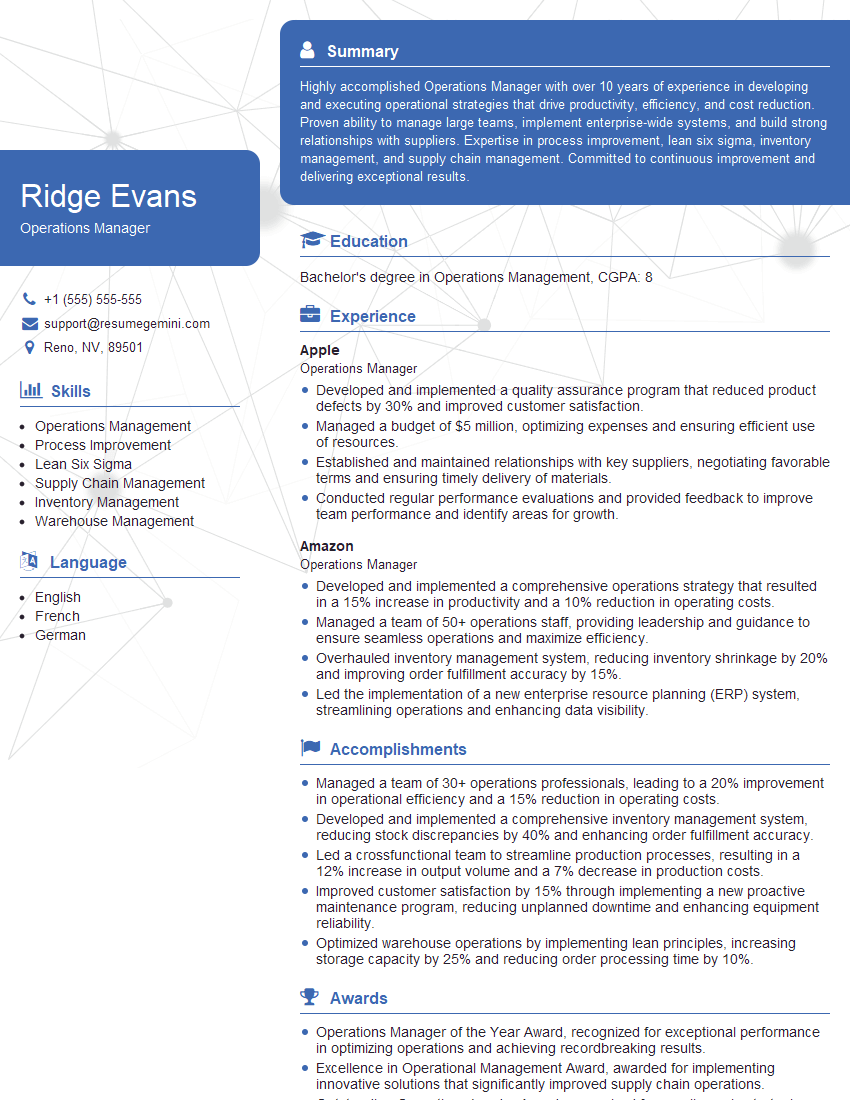
Operations Manager Resume Sample
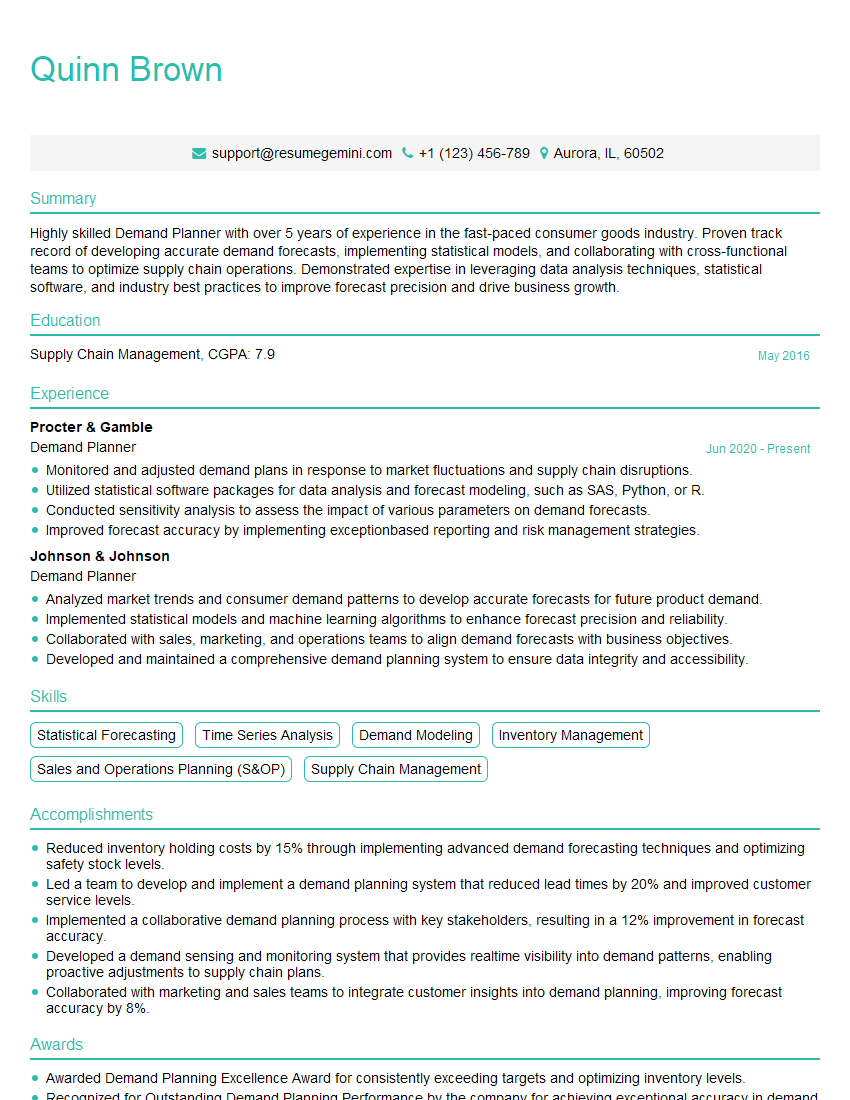
Demand Planner Resume Sample
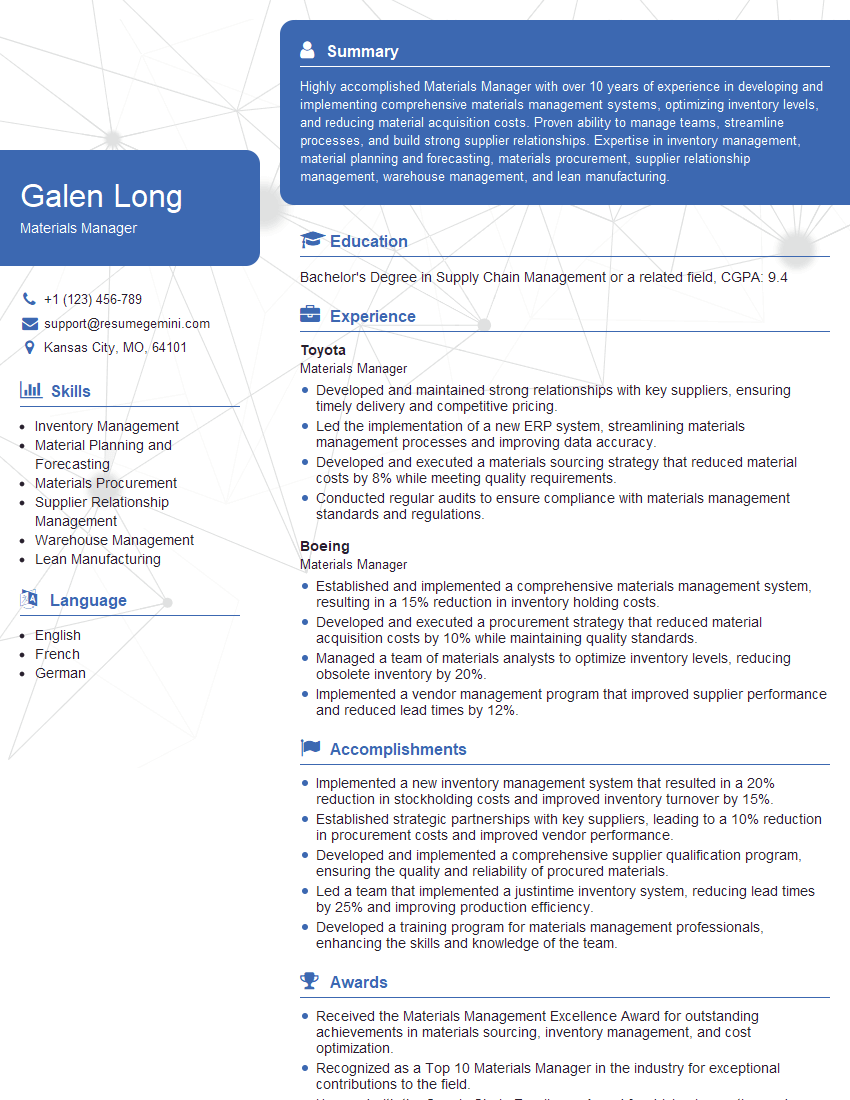
Materials Manager Resume Sample

Procurement Manager Resume Sample
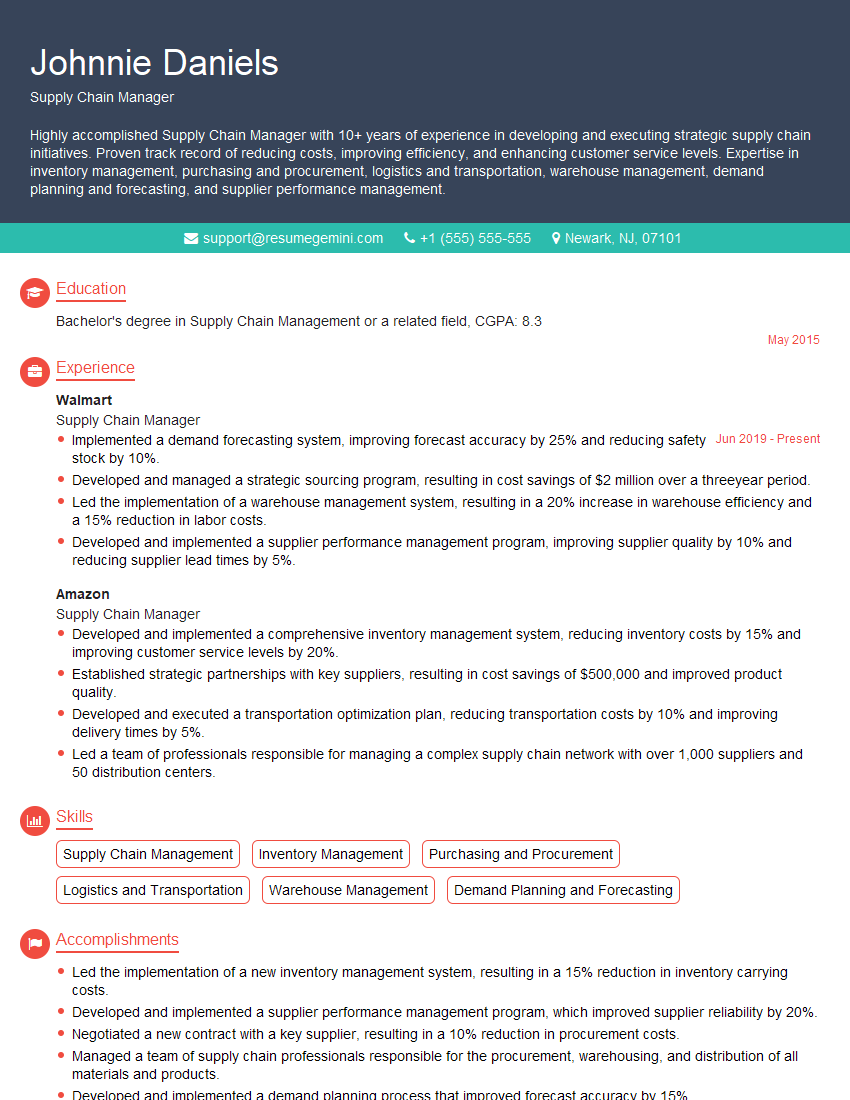
Supply Chain Manager Resume Sample
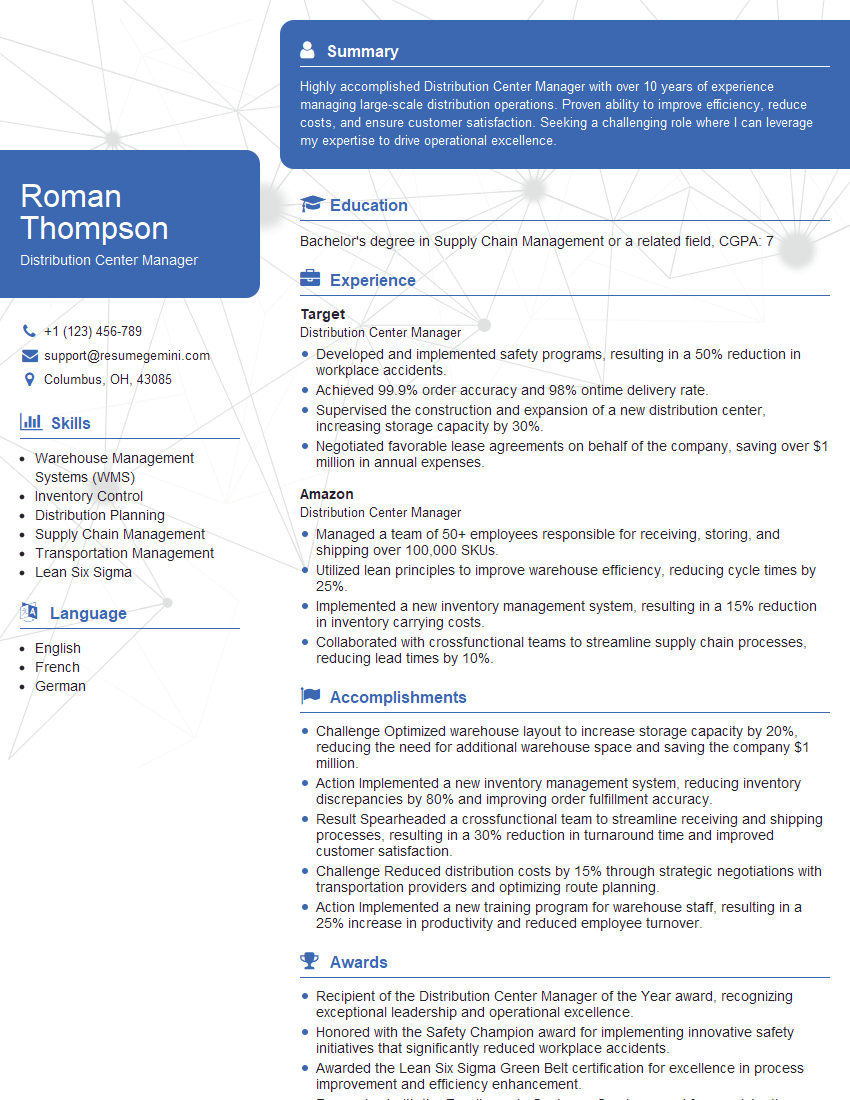
Distribution Center Manager Resume Sample
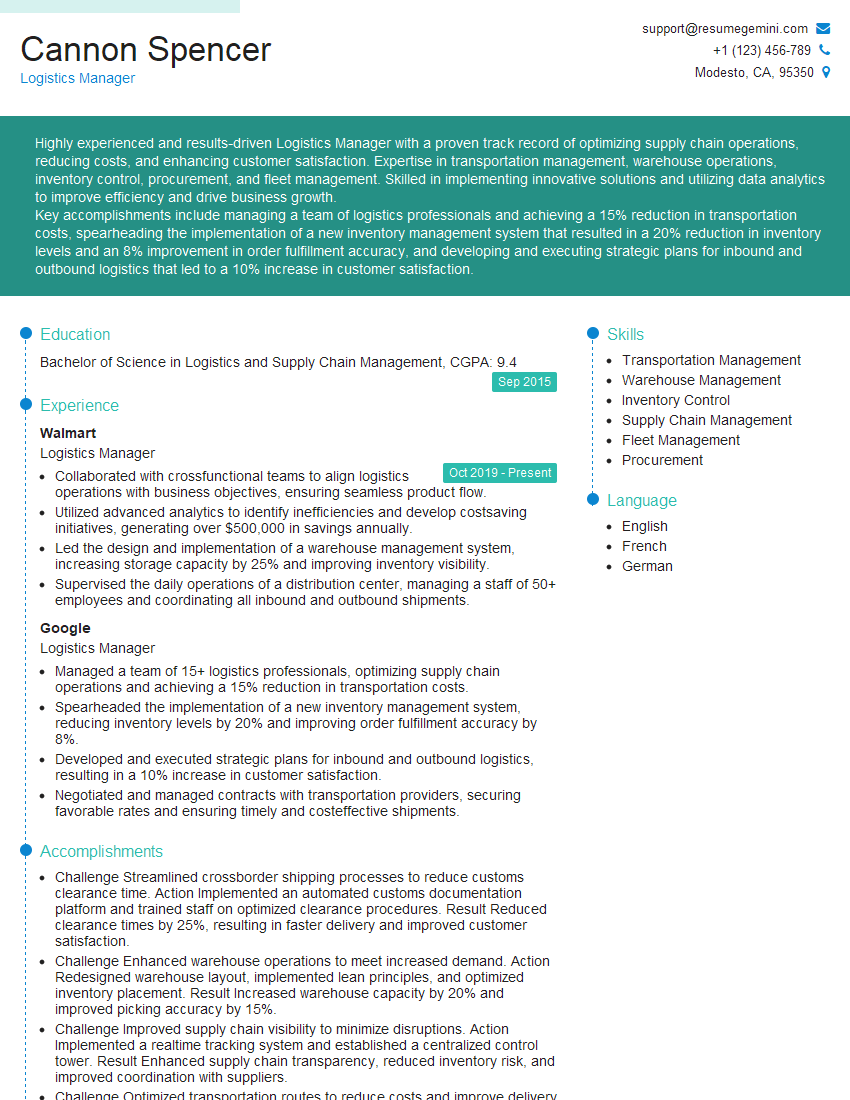
Logistics Manager Resume Sample
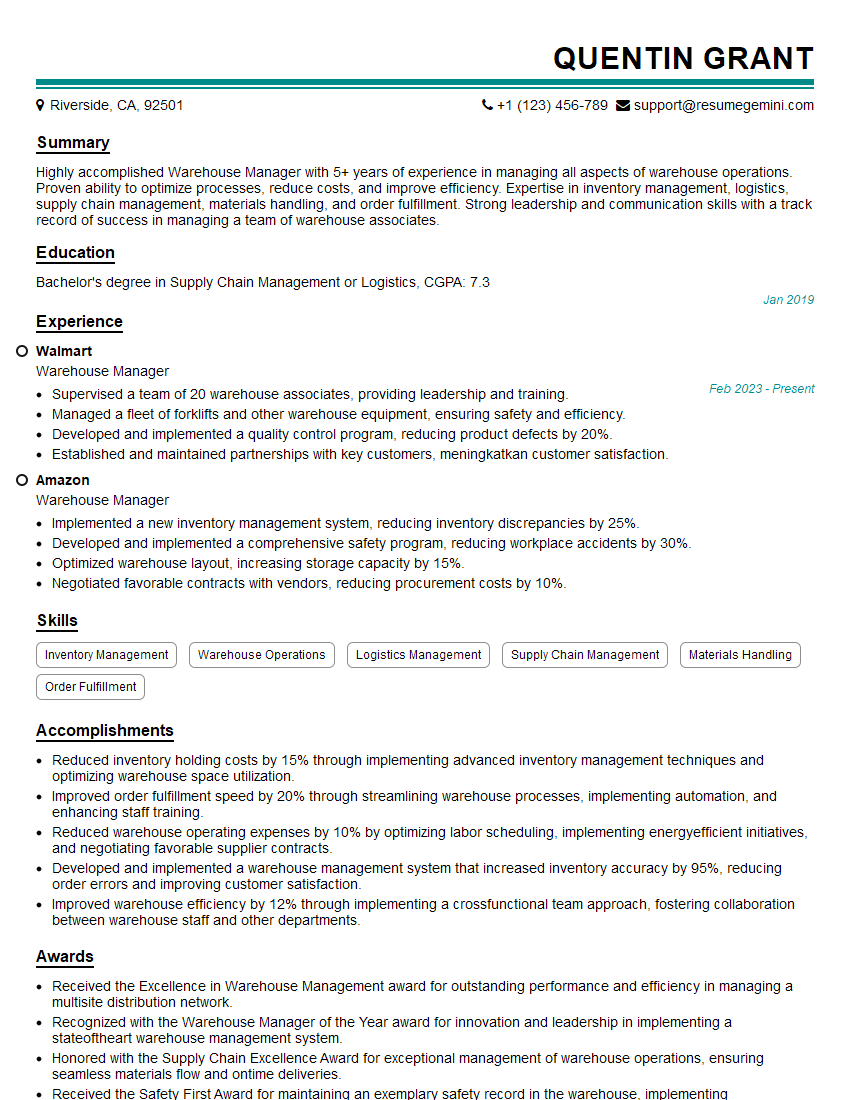
Warehouse Manager Resume Sample
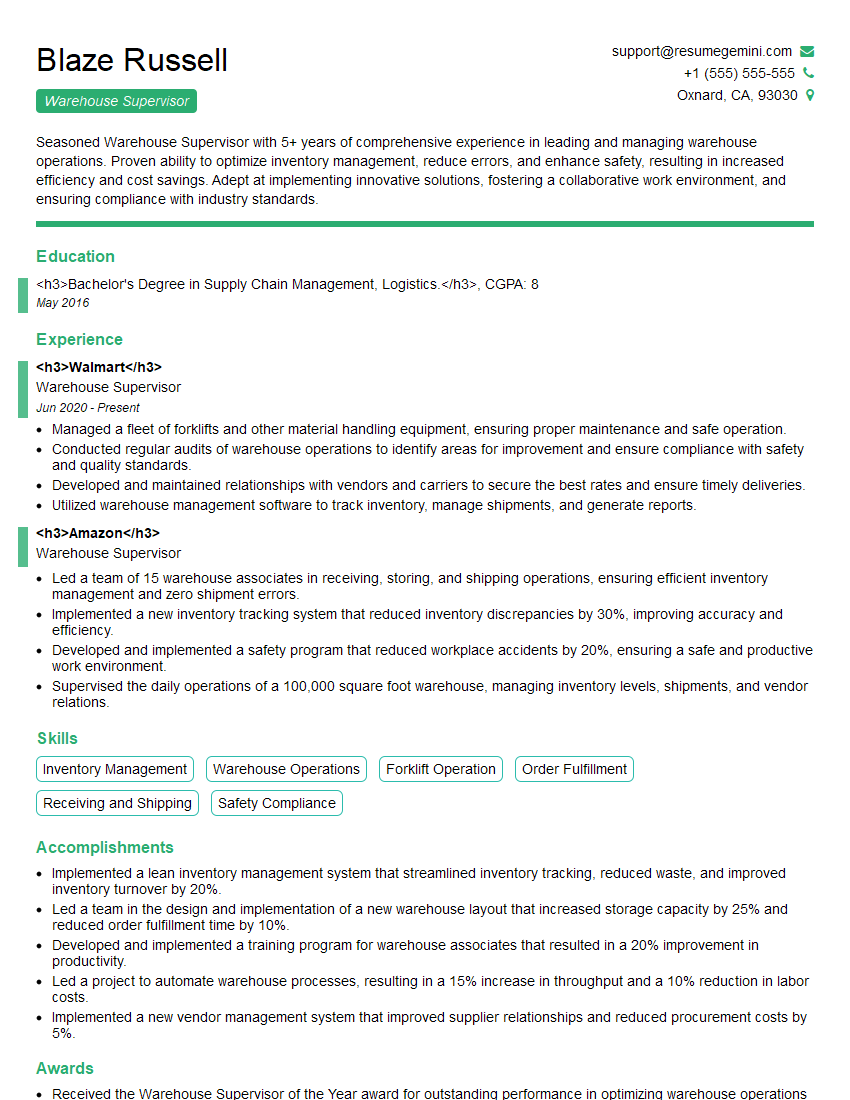
Warehouse Supervisor Resume Sample
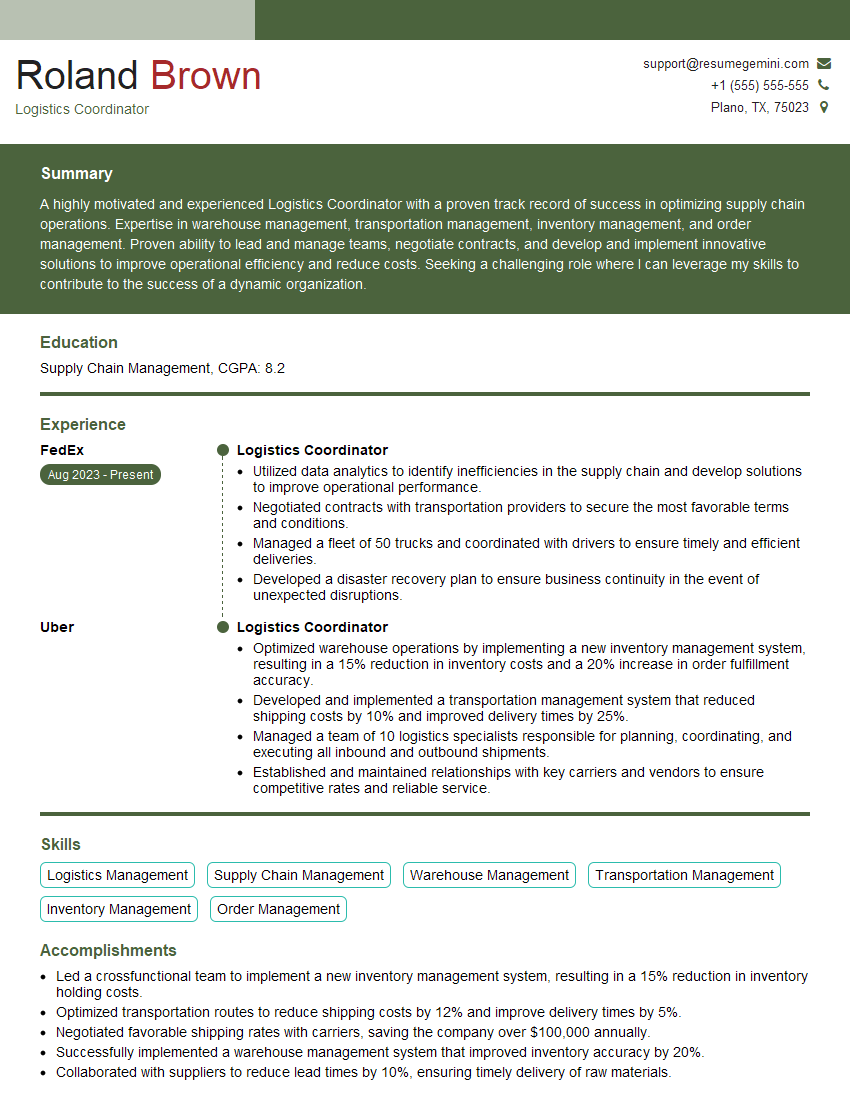
Logistics Coordinator Resume Sample
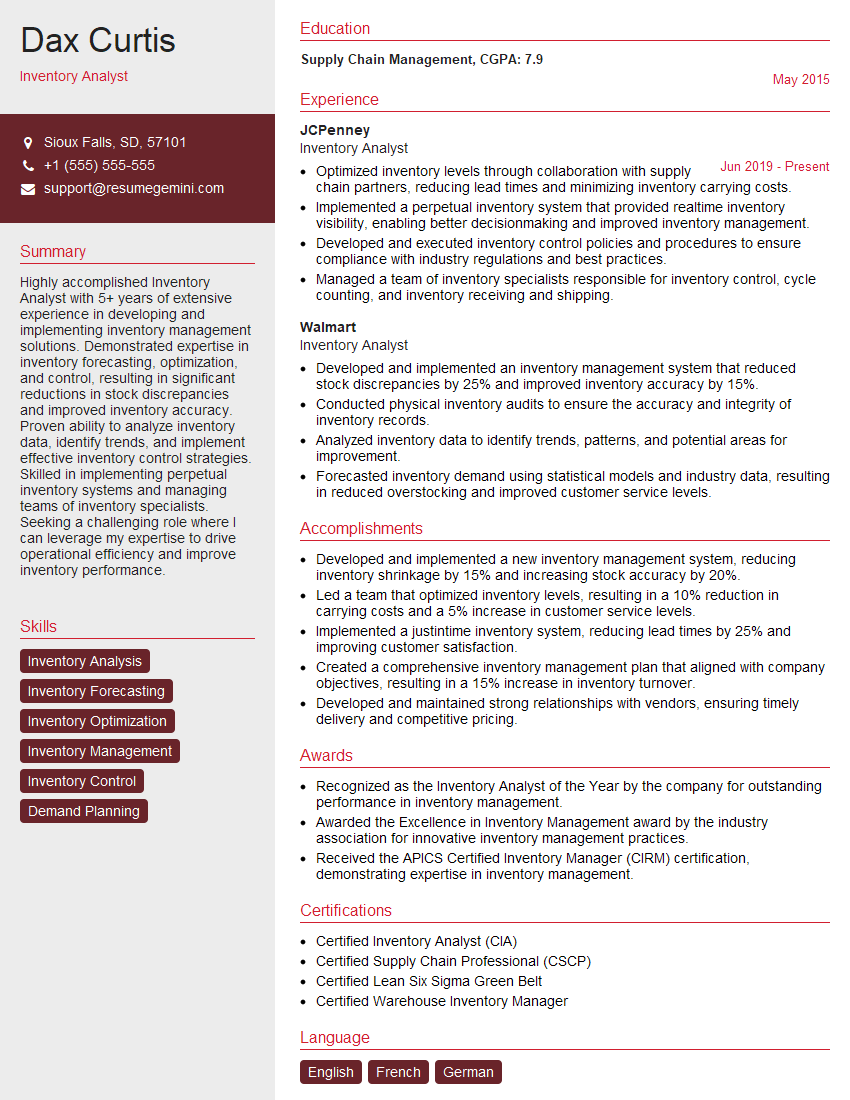
Inventory Analyst Resume Sample
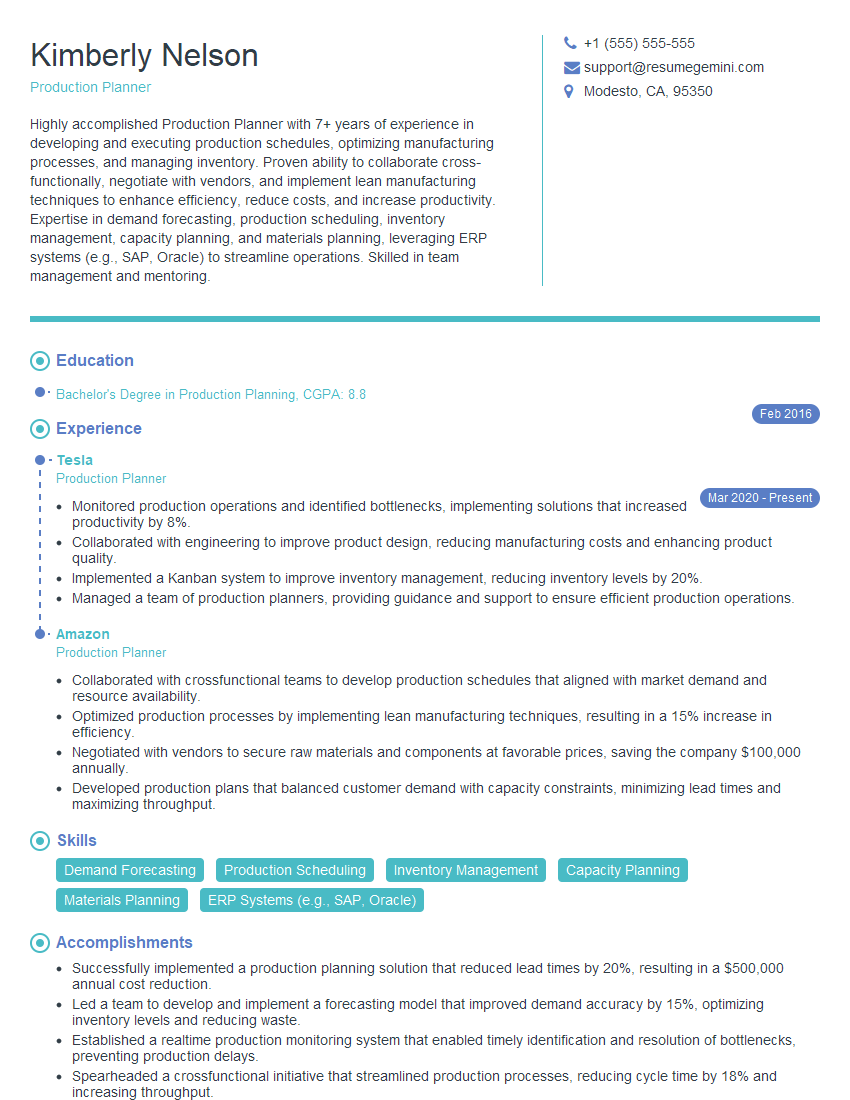
Production Planner Resume Sample
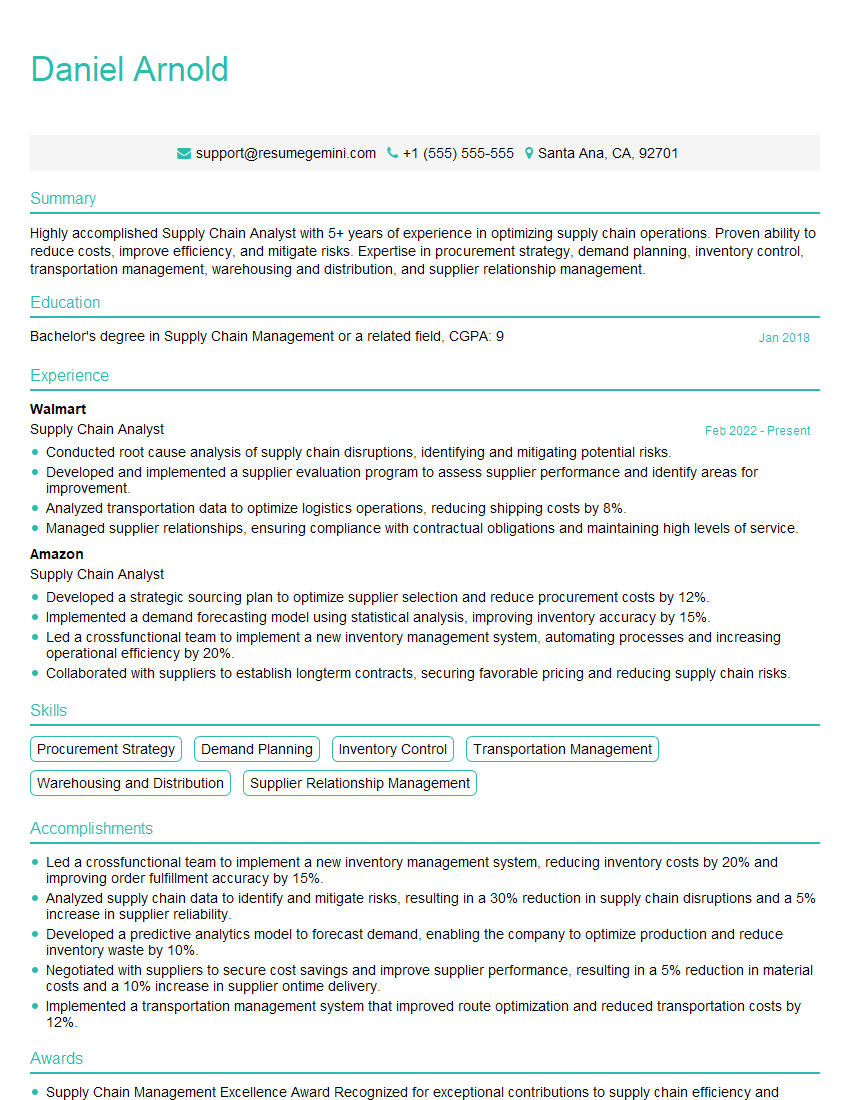
Supply Chain Analyst Resume Sample
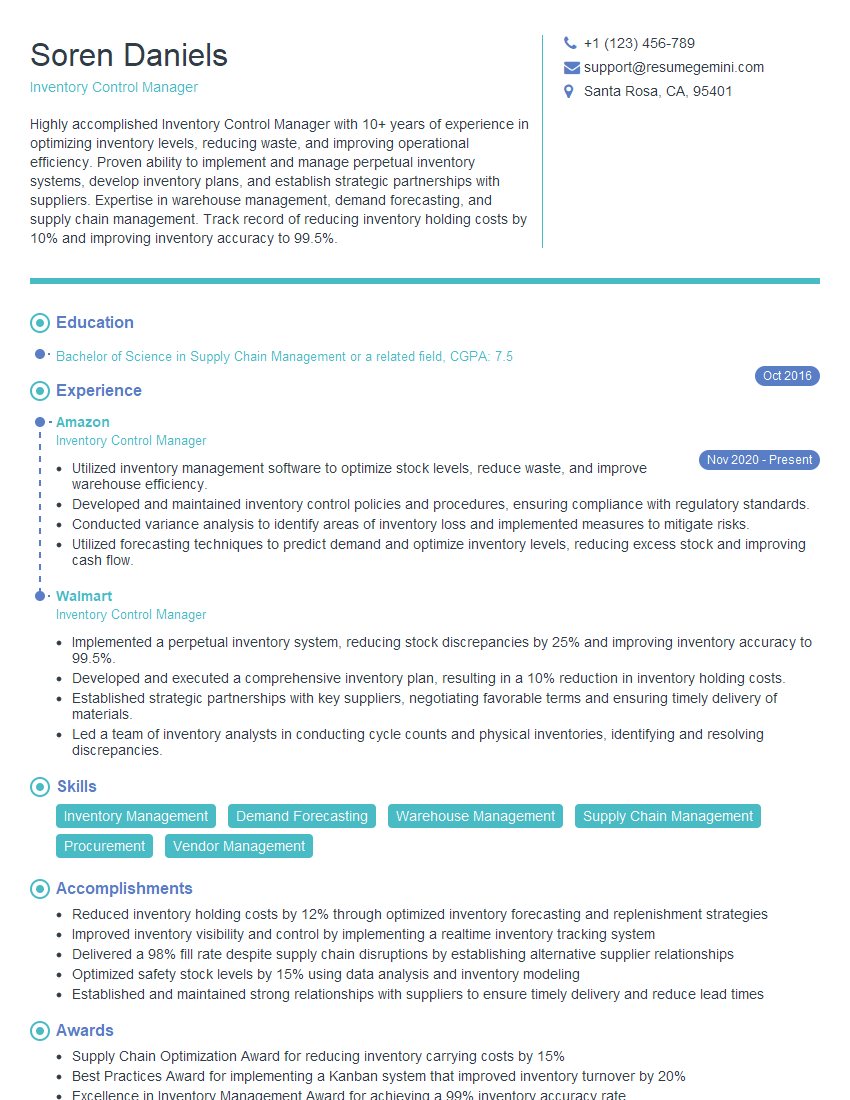
Inventory Control Manager Resume Sample
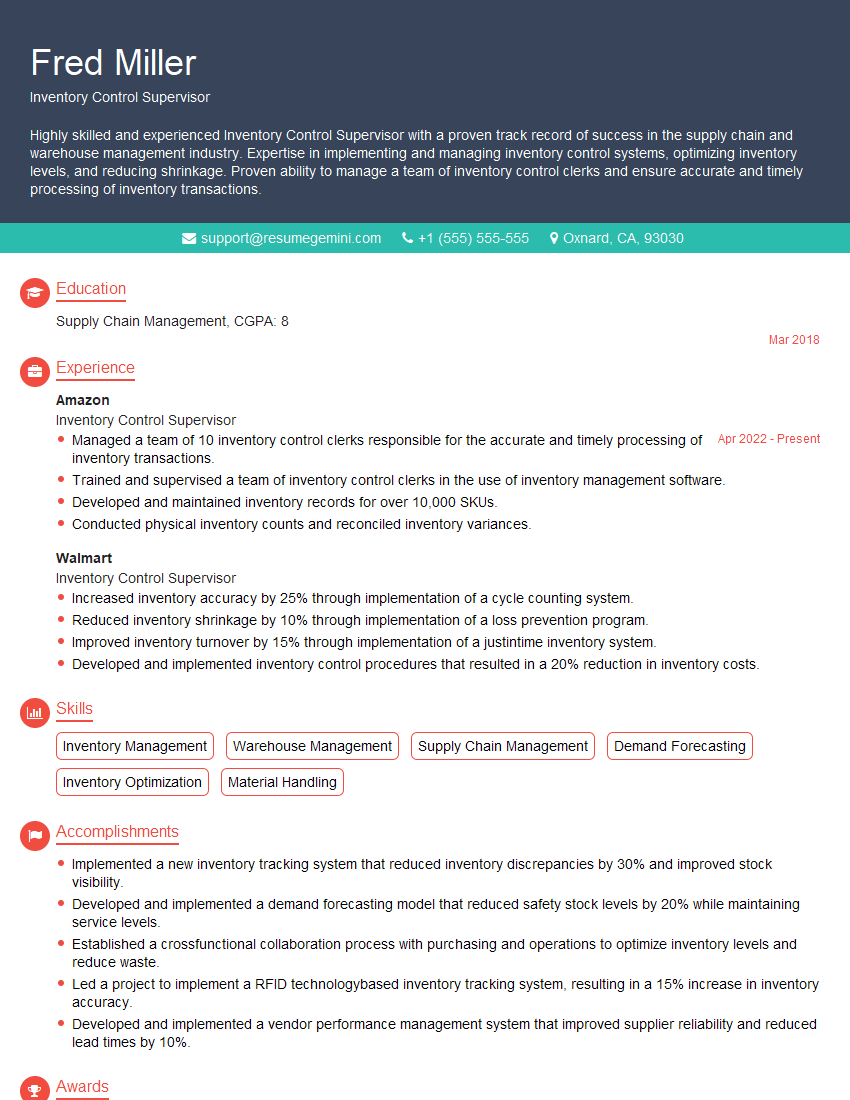
Inventory Control Supervisor Resume Sample
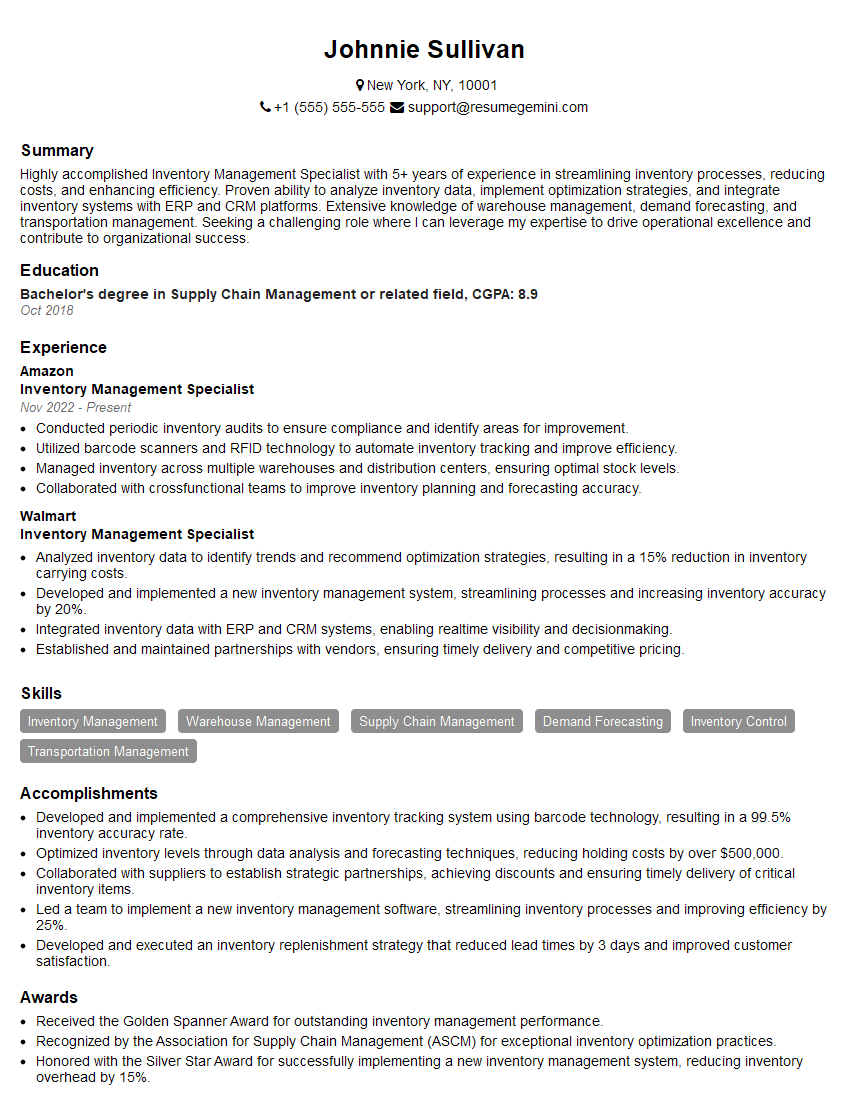
Inventory Management Specialist Resume Sample
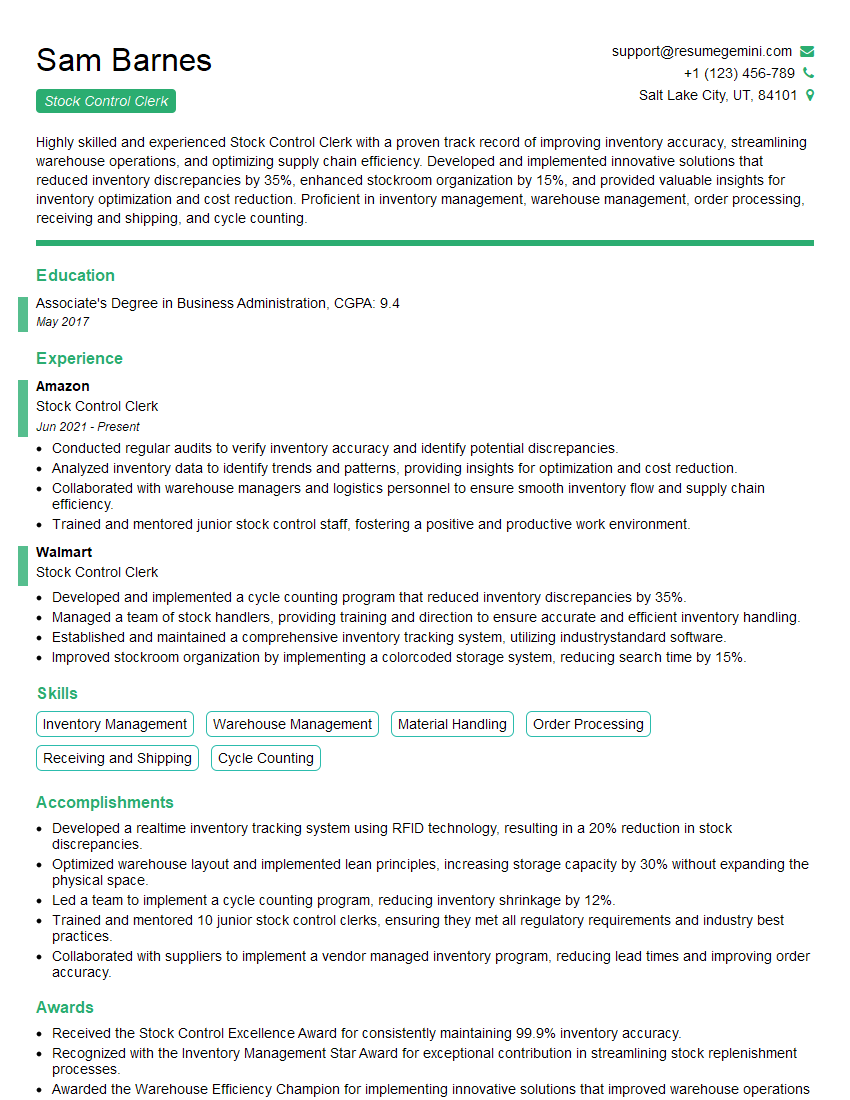
Stock Control Clerk Resume Sample
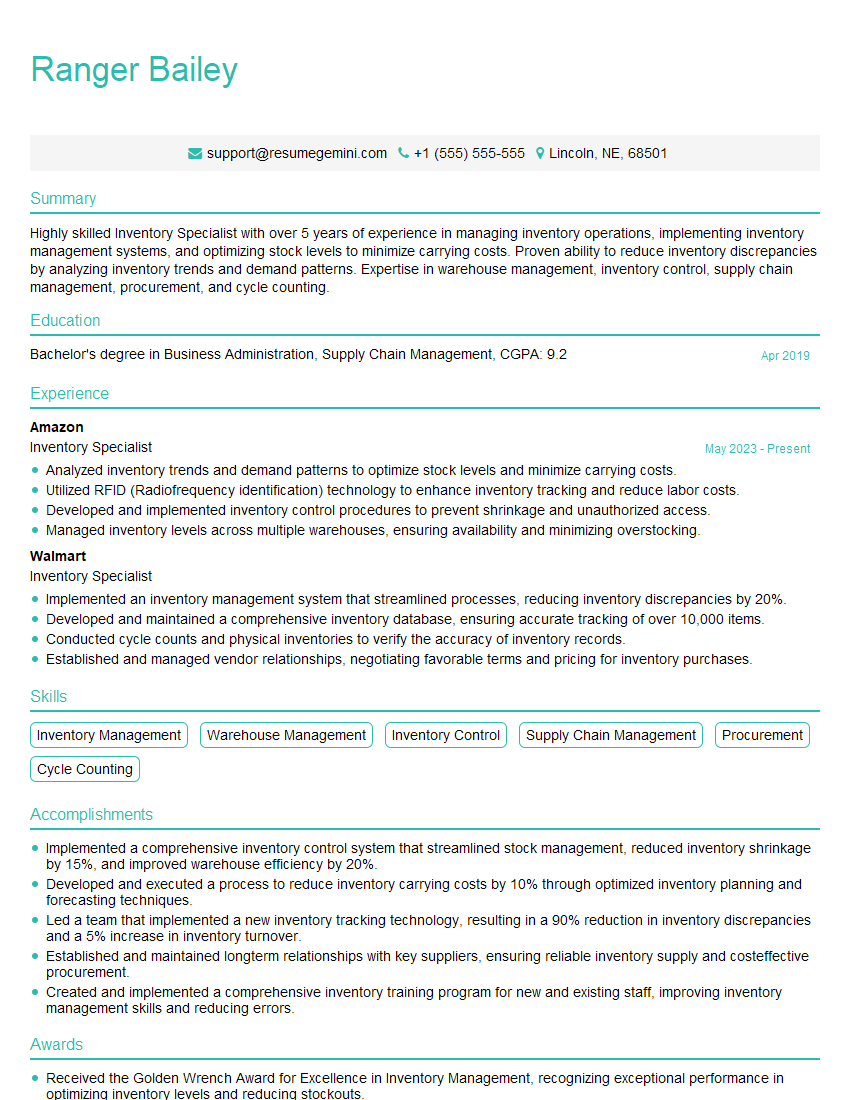
Inventory Specialist Resume Sample
- Operations Manager
- Demand Planner
- Materials Manager
- Procurement Manager
- Supply Chain Manager
- Distribution Center Manager
- Logistics Manager
- Warehouse Manager
- Warehouse Supervisor
- Logistics Coordinator
- Inventory Analyst
- Production Planner
- Supply Chain Analyst
- Inventory Control Manager
- Inventory Control Supervisor
- Inventory Management Specialist
- Stock Control Clerk
- Inventory Specialist
Explore more articles
Users Rating of Our Blogs
Share Your Experience
We value your feedback! Please rate our content and share your thoughts (optional).
What Readers Say About Our Blog
Very informative content, great job.
good