The thought of an interview can be nerve-wracking, but the right preparation can make all the difference. Explore this comprehensive guide to Experience with inventory management software interview questions and gain the confidence you need to showcase your abilities and secure the role.
Questions Asked in Experience with inventory management software Interview
Q 1. Explain your experience with different inventory management software systems.
My experience spans several inventory management software systems, from large enterprise resource planning (ERP) solutions like SAP and Oracle to smaller, specialized inventory management systems like Fishbowl Inventory and Cin7. I’ve worked with cloud-based solutions and on-premise systems, each offering unique functionalities and complexities. For instance, with SAP, I managed the configuration and customization of the inventory module, ensuring accurate tracking of materials across multiple warehouses and production facilities. In contrast, my experience with Cin7 involved optimizing its use for e-commerce businesses, integrating it with various sales channels and automating order fulfillment processes. This diversity of experience has given me a deep understanding of the various features and capabilities offered by different systems and how to tailor them to specific business needs.
I’m also familiar with the challenges inherent in different systems – for instance, the steep learning curve of some ERP systems versus the potentially limited scalability of smaller, specialized solutions. This experience allows me to assess the optimal solution based on an organization’s size, complexity, and future growth plans.
Q 2. Describe your experience implementing or migrating to a new inventory management system.
Implementing or migrating to a new inventory management system is a complex undertaking requiring meticulous planning and execution. My experience with this process involves several key steps:
- Needs Assessment: Thoroughly analyzing existing processes, pain points, and future requirements to select the most suitable system.
- Data Migration: Developing a robust strategy for migrating existing inventory data to the new system, ensuring data integrity and accuracy. This often involves data cleansing, validation, and transformation processes.
- System Configuration: Configuring the new system to align with the business’s specific needs, including defining item categories, locations, and workflows.
- User Training: Providing comprehensive training to users on the new system’s functionalities and best practices.
- Go-Live and Post-Implementation Support: Overseeing the launch of the new system and providing ongoing support to address any issues or challenges.
For example, during a migration from a legacy on-premise system to a cloud-based solution, we employed a phased rollout approach, migrating data and training users in stages to minimize disruption to operations. This involved rigorous testing and validation at each stage to ensure data accuracy and system stability.
Q 3. How do you ensure data accuracy in an inventory management system?
Data accuracy is paramount in inventory management. My approach involves a multi-faceted strategy:
- Regular Cycle Counting: Implementing a cycle counting program to regularly verify physical inventory against system records. This allows for the timely identification and correction of discrepancies.
- Barcode/RFID Scanning: Utilizing barcode or RFID technology for accurate item tracking and minimizing manual data entry errors.
- Data Validation Rules: Implementing data validation rules within the system to prevent the entry of invalid or inconsistent data.
- Regular Reconciliation: Conducting regular reconciliations between physical inventory, system records, and financial statements.
- Automated Data Entry: Leveraging automated data entry processes whenever possible to reduce manual errors.
For example, in one scenario, we identified a systematic error in our data entry process leading to significant discrepancies. By implementing barcode scanning and data validation rules, we were able to eliminate this error and significantly improve data accuracy.
Q 4. What are the key performance indicators (KPIs) you track in inventory management?
The key performance indicators (KPIs) I track in inventory management include:
- Inventory Turnover Rate: Measures how quickly inventory is sold or used. A high turnover rate indicates efficient inventory management.
- Inventory Accuracy: Represents the percentage of inventory items with accurate counts. Ideally, this should be close to 100%.
- Stockout Rate: Measures the percentage of times an item is out of stock when demanded. A lower rate indicates efficient demand forecasting and inventory replenishment.
- Carrying Costs: Represents the costs associated with holding inventory, including storage, insurance, and obsolescence. These costs should be minimized.
- Order Fulfillment Rate: Indicates the percentage of orders fulfilled on time and in full. This KPI reflects the efficiency of the entire order-to-delivery process.
By regularly monitoring these KPIs, I can identify areas for improvement and optimize inventory management processes.
Q 5. How do you handle discrepancies between physical inventory and system records?
Discrepancies between physical inventory and system records require a systematic investigation and resolution. My approach involves:
- Identifying the Discrepancy: Pinpointing the specific items with discrepancies and the magnitude of the difference.
- Investigating the Cause: Determining the root cause of the discrepancy. Possible causes include data entry errors, theft, damage, or inaccurate physical counts.
- Adjusting Inventory Records: Correcting the system records to reflect the actual physical inventory. This might involve adjusting quantities, creating inventory adjustments, or investigating potential inventory shrinkage.
- Implementing Corrective Actions: Addressing the root cause of the discrepancy to prevent future occurrences. This could involve improving data entry processes, enhancing security measures, or refining cycle counting procedures.
- Documenting the Process: Maintaining detailed records of the discrepancy, investigation, and resolution process.
For example, a significant discrepancy might lead to a full physical inventory count to identify and reconcile all discrepancies. This process often involves using root cause analysis to identify systemic issues that need to be addressed.
Q 6. What methods do you use to forecast inventory demand?
Forecasting inventory demand is crucial for efficient inventory management. I use a combination of methods, including:
- Historical Data Analysis: Analyzing past sales data to identify trends and patterns in demand.
- Statistical Forecasting Models: Employing statistical models like moving averages or exponential smoothing to predict future demand.
- Market Research and Analysis: Gathering information on market trends, competitor activities, and economic factors to refine forecasts.
- Sales and Marketing Input: Collaborating with sales and marketing teams to incorporate their insights and projections into the forecast.
- Seasonality and Trend Adjustments: Adjusting forecasts to account for seasonal variations and other relevant trends.
The choice of forecasting method depends on various factors, including data availability, forecast horizon, and the complexity of demand patterns. For example, for a product with stable demand, a simple moving average might suffice; however, for a product with significant seasonality, a more sophisticated model incorporating seasonal adjustments would be necessary.
Q 7. Describe your experience with cycle counting and its importance.
Cycle counting is a crucial inventory management technique that involves counting a small portion of inventory on a regular basis, rather than performing a full physical inventory count. This allows for the continuous verification of inventory accuracy and the timely identification and correction of discrepancies.
My experience includes designing and implementing cycle counting programs, including determining the frequency and scope of counts based on item criticality and turnover rates. I’ve also trained staff on proper cycle counting procedures and utilized inventory management software to track and manage the cycle counting process. The importance of cycle counting lies in its ability to maintain accurate inventory records, reduce the risk of stockouts, improve inventory turnover, and minimize the disruption of a full physical inventory count.
For instance, I implemented a system where high-value and fast-moving items were counted more frequently, while lower-value, slow-moving items were counted less often. This optimized the cycle counting process, ensuring the most critical items were verified regularly, without overburdening the team.
Q 8. How do you optimize inventory levels to minimize holding costs?
Optimizing inventory levels to minimize holding costs is a balancing act between ensuring sufficient stock to meet demand and avoiding excessive storage expenses. It involves a multifaceted approach focusing on accurate forecasting, efficient ordering, and strategic inventory management techniques.
One key strategy is implementing a robust demand forecasting system. This involves analyzing historical sales data, considering seasonal variations, and incorporating market trends. Accurate forecasts allow for more precise ordering, reducing the risk of overstocking. For example, if we predict a surge in demand for a particular product during the holiday season, we can order accordingly, avoiding unnecessary warehousing costs associated with excess inventory.
Another crucial element is employing techniques like the Economic Order Quantity (EOQ) model. EOQ helps determine the optimal order size that minimizes the total inventory costs, which include ordering costs and holding costs. This model takes into account factors such as demand rate, ordering cost, and holding cost per unit. By applying EOQ, businesses can identify the perfect balance between frequent small orders (higher ordering costs) and infrequent large orders (higher holding costs).
Furthermore, effective inventory management software plays a crucial role. The software provides real-time visibility into inventory levels, allowing for timely adjustments to purchase orders and preventing stockouts or overstocking. Real-time data enables quicker responses to unexpected changes in demand, preventing unnecessary holding costs.
Q 9. Explain your understanding of ABC analysis in inventory management.
ABC analysis is a vital inventory management technique that categorizes inventory items based on their consumption value. It helps prioritize management efforts by focusing resources on the most critical items. The classification is typically based on the Pareto principle (80/20 rule), where approximately 80% of the total inventory value comes from only 20% of the items.
- A-items: These are high-value items that account for a significant portion of the total inventory cost. They require close monitoring, tight control, and frequent review of their inventory levels. Think of high-end electronics or specialized components.
- B-items: These are moderate-value items that represent a smaller portion of the total inventory cost compared to A-items. They require moderate monitoring and control.
- C-items: These are low-value items, which constitute a large number of items but account for a small portion of the total inventory cost. These items can often be managed with simpler inventory control techniques.
By categorizing items using ABC analysis, businesses can allocate resources efficiently. For instance, more stringent inventory control measures are implemented for A-items to minimize stockouts and prevent losses, while simpler methods suffice for C-items. This targeted approach optimizes inventory management and reduces costs associated with managing the entire inventory.
Q 10. How do you manage obsolete or slow-moving inventory?
Managing obsolete or slow-moving inventory is crucial for maintaining profitability and efficient warehouse space utilization. A proactive approach is vital to minimizing losses.
One strategy is regularly reviewing inventory levels and identifying items that haven’t moved in a predetermined period. This could involve setting up automated reports within the inventory management software to flag slow-moving items. For example, if an item hasn’t sold in six months, it might be flagged for review.
Once identified, several options can be explored:
- Price Reduction/Sales Promotions: Offering discounts or running promotions can stimulate demand for slow-moving items. Marking down the price can help clear out the inventory quickly, minimizing losses.
- Repurposing or Modification: If possible, these items could be repurposed or modified to create new products. This approach can add value and potentially sell them at a higher price.
- Donation or Recycling: If the items can’t be sold, donating them to charity or recycling them can still offer some value recovery, even if it’s a tax write-off.
- Liquidation: Selling off the obsolete inventory at a significant discount to liquidators or wholesalers can help clear warehouse space and recover some capital. Often a last resort when other options fail.
Regularly reviewing and implementing these strategies prevents slow-moving inventory from accumulating and tying up valuable resources and capital.
Q 11. What is your experience with different inventory costing methods (FIFO, LIFO, weighted average)?
Inventory costing methods affect the value of inventory on hand and the cost of goods sold (COGS), impacting financial statements and profitability calculations. I have extensive experience with FIFO, LIFO, and weighted average methods.
- FIFO (First-In, First-Out): This method assumes that the oldest items in inventory are sold first. This reflects the natural flow of inventory in many businesses. During periods of inflation, FIFO results in a lower COGS and higher net income, as older, cheaper items are being sold first.
- LIFO (Last-In, First-Out): This method assumes that the newest items are sold first. It’s less commonly used due to tax implications and less applicability for certain industries. During inflation, LIFO results in a higher COGS and lower net income, as newer, more expensive items are being sold first.
- Weighted Average Cost: This method calculates the average cost of all items in inventory and uses this average cost to determine the cost of goods sold. It provides a smoother representation of inventory cost compared to FIFO and LIFO, particularly during periods of fluctuating prices.
The choice of method depends on various factors including industry regulations, company accounting policies, and the specific inventory characteristics. For example, perishable goods are often valued using FIFO due to their limited shelf life.
Q 12. Describe your experience with inventory reporting and analysis.
Inventory reporting and analysis are critical for making informed business decisions. My experience involves generating and interpreting a wide range of reports to monitor inventory performance, identify trends, and improve operational efficiency.
I routinely work with reports such as:
- Inventory Turnover Reports: These reports measure how efficiently inventory is managed by calculating the number of times inventory is sold and replaced over a specific period. Low turnover suggests potential overstocking or obsolete inventory.
- Stock Status Reports: These reports provide a snapshot of current inventory levels, highlighting items approaching critical levels or showing potential stockouts.
- ABC Analysis Reports: As previously discussed, these reports segment inventory based on value, guiding resource allocation.
- Sales Analysis Reports: These reports correlate sales data with inventory levels, identifying best-selling items and potential opportunities for optimization.
- Cost of Goods Sold (COGS) Reports: These reports track the cost associated with producing and selling inventory, assisting in pricing strategies and profitability analysis.
By analyzing these reports, we can identify inefficiencies in the inventory process, predict future demand more accurately, and adjust purchasing strategies to minimize costs and maximize profits. The key is using data-driven insights to make well-informed decisions.
Q 13. How do you use inventory management software to support decision-making?
Inventory management software is indispensable for supporting data-driven decision-making in inventory management. It provides real-time visibility into inventory levels, facilitates forecasting, streamlines ordering processes, and offers comprehensive reporting and analytical capabilities.
For instance, the software enables us to:
- Track inventory in real-time: This allows immediate responses to unexpected changes in demand, preventing stockouts or overstocking.
- Generate accurate demand forecasts: Using historical sales data and predictive algorithms, the software provides forecasts that help optimize order quantities.
- Automate reordering processes: The software can trigger automatic purchase orders when inventory levels fall below predefined thresholds, reducing manual effort and ensuring timely replenishment.
- Analyze inventory performance: The software provides various reports and dashboards that allow for the in-depth analysis of inventory metrics, revealing areas for improvement.
- Improve decision making: Combining real-time data, forecasting capabilities, and comprehensive reporting, the software empowers strategic inventory management decisions, which ultimately drive efficiency and profitability.
Ultimately, the software moves decision-making from gut feelings to a more data-driven and precise approach.
Q 14. What are your experiences with integrating inventory management systems with other business systems (e.g., ERP, CRM)?
Integrating inventory management systems with other business systems like ERP (Enterprise Resource Planning) and CRM (Customer Relationship Management) is essential for creating a unified and efficient business operation. I have significant experience in this area.
Integrating with an ERP system provides a seamless flow of data between inventory management and other business functions, such as production planning, finance, and accounting. This integration ensures that inventory data is accurate and consistent across all departments, improving decision-making and operational efficiency. For example, accurate inventory information can automatically update financial records, eliminating discrepancies and improving financial reporting.
Integration with a CRM system improves customer service and sales forecasting by linking customer orders directly to inventory levels. This allows for real-time tracking of order fulfillment and provides valuable data for forecasting future demand. For example, knowing which products are frequently ordered by specific customer segments can inform purchasing decisions and inventory optimization.
These integrations often involve using APIs (Application Programming Interfaces) to facilitate data exchange between different systems. The integration process necessitates careful planning, testing, and ongoing maintenance to ensure data integrity and optimal performance. The result is a much smoother and more efficient business operation.
Q 15. Explain your experience with warehouse management systems (WMS).
Warehouse Management Systems (WMS) are the backbone of efficient inventory management. They are software solutions designed to optimize the movement and storage of goods within a warehouse. My experience encompasses implementing, configuring, and managing various WMS platforms, from cloud-based solutions like NetSuite and SAP Business ByDesign to on-premise systems. I’ve worked with WMS to streamline receiving, putaway, picking, packing, and shipping processes. For instance, in my previous role, we implemented a new WMS that reduced our picking time by 25% by optimizing picking routes and utilizing directed putaway strategies. This resulted in significant cost savings and faster order fulfillment.
My expertise extends beyond basic functionality. I’m proficient in configuring advanced WMS features like slotting optimization (maximizing space utilization), wave picking (grouping orders for efficient processing), and cycle counting (regularly verifying inventory accuracy). I understand the importance of integrating WMS with other enterprise resource planning (ERP) systems to ensure seamless data flow between different departments, like accounting and sales.
- Experience with different WMS vendors: I’ve worked with various WMS vendors, allowing me to adapt quickly to different systems and functionalities.
- Integration with ERP systems: I have extensive experience integrating WMS with ERP systems, ensuring data accuracy and consistency.
- Process optimization: I’ve consistently identified and implemented process improvements that have resulted in significant efficiency gains.
Career Expert Tips:
- Ace those interviews! Prepare effectively by reviewing the Top 50 Most Common Interview Questions on ResumeGemini.
- Navigate your job search with confidence! Explore a wide range of Career Tips on ResumeGemini. Learn about common challenges and recommendations to overcome them.
- Craft the perfect resume! Master the Art of Resume Writing with ResumeGemini’s guide. Showcase your unique qualifications and achievements effectively.
- Don’t miss out on holiday savings! Build your dream resume with ResumeGemini’s ATS optimized templates.
Q 16. Describe your experience with RFID or barcode technology in inventory management.
RFID (Radio-Frequency Identification) and barcode technology are crucial for accurate and efficient inventory tracking. I have extensive experience deploying and managing both technologies. Barcodes, being a more mature and cost-effective technology, have been essential in streamlining basic inventory management processes, like tracking items during receiving and shipping. I’ve implemented barcode scanners at various points in the warehouse to improve data entry speed and accuracy, reducing manual errors. For example, during a stocktaking process, using barcode scanners increased efficiency by 40% compared to manual counting.
RFID, on the other hand, provides more advanced capabilities, particularly in high-volume or fast-moving inventory environments. I’ve worked with RFID systems to track items in real-time, providing visibility into their location and movement throughout the warehouse. This is especially useful in managing high-value items or those requiring stringent security. For instance, in a previous project involving pharmaceutical products, we used RFID to ensure complete traceability and prevent counterfeiting, reducing losses and increasing customer trust.
My experience encompasses both the technical aspects of implementing these technologies (hardware and software integration) and the operational aspects (training staff, establishing processes, and monitoring performance).
Q 17. How do you ensure the security and integrity of inventory data?
Ensuring the security and integrity of inventory data is paramount. My approach involves a multi-layered strategy:
- Access control: Implementing robust access control measures to restrict access to sensitive inventory data based on roles and responsibilities. This includes using strong passwords and multi-factor authentication where appropriate.
- Data validation: Implementing data validation rules to prevent invalid data from entering the system. This includes checks for data types, ranges, and consistency.
- Data backups and recovery: Regularly backing up inventory data to ensure quick recovery in case of data loss or corruption. This involves both on-site and off-site backups.
- Regular audits: Conducting regular audits of inventory data to identify and correct any discrepancies or anomalies. This might include comparing physical inventory counts with system records.
- Encryption: Encrypting sensitive inventory data both in transit and at rest to protect it from unauthorized access.
- User training: Providing thorough training to all users on proper data entry procedures and security protocols. This includes understanding the consequences of data breaches.
By combining these measures, we create a robust system that protects the integrity and security of inventory data, minimizing the risk of errors and fraud.
Q 18. What are the challenges you have faced in inventory management, and how did you overcome them?
One significant challenge I faced involved integrating a legacy inventory system with a new ERP. The data migration process was complex, requiring careful data cleansing and mapping to ensure data accuracy. We overcame this by developing a phased migration approach, starting with a pilot program to test the process before a full-scale rollout. We also implemented rigorous data validation checks at each stage to identify and correct any discrepancies.
Another challenge was dealing with inaccurate inventory data due to manual errors. We addressed this by implementing barcode scanning technology and improving staff training on inventory procedures. We also introduced regular cycle counting to proactively identify and correct discrepancies. This resulted in a significant reduction in inventory discrepancies and improved overall inventory accuracy.
Q 19. How do you handle inventory shrinkage?
Inventory shrinkage, the difference between recorded inventory and physical inventory, is a common issue. My approach to handling it is multi-pronged:
- Identifying causes: We begin by investigating the root causes of shrinkage, such as theft, damage, obsolescence, or errors in recording. This might involve analyzing inventory data, reviewing security footage, and conducting staff interviews.
- Implementing preventative measures: Once the causes are identified, we implement preventative measures. This might include improved security measures, better inventory control procedures, and enhanced staff training. For example, implementing stricter access controls and improving warehouse security systems have significantly helped reduce theft.
- Regular cycle counting: Frequent cycle counting allows for early detection of shrinkage, enabling faster corrective actions. This helps minimize losses by identifying discrepancies early on.
- Regular stocktaking: Conducting a full inventory count periodically provides a comprehensive overview of inventory levels and identifies any significant discrepancies.
By addressing both the causes and symptoms of shrinkage, we can effectively minimize losses and improve inventory accuracy.
Q 20. How familiar are you with different inventory management software features (e.g., demand forecasting, order management, reporting)?
I’m very familiar with a wide range of inventory management software features. My experience includes:
- Demand forecasting: Utilizing various forecasting methods (e.g., moving average, exponential smoothing) to predict future demand and optimize inventory levels. This helps avoid stockouts and overstocking.
- Order management: Managing the entire order lifecycle, from order placement to fulfillment, including features like order tracking, backorder management, and automated order processing.
- Reporting and analytics: Generating various reports to analyze inventory performance, including inventory turnover, stock levels, and shrinkage rates. These reports are crucial for making data-driven decisions.
- Lot and serial number tracking: Managing inventory items with lot and serial numbers to ensure traceability and quality control, particularly important in industries like pharmaceuticals and food.
- Integration with other systems: Seamlessly integrating inventory management software with other systems, such as ERP, CRM, and e-commerce platforms.
I’m adept at using these features to gain insights into inventory performance and improve operational efficiency.
Q 21. Explain your process for identifying and resolving inventory discrepancies.
My process for identifying and resolving inventory discrepancies involves a structured approach:
- Identifying discrepancies: Discrepancies are typically identified through cycle counting, physical inventory counts, or system reports. These discrepancies are usually flagged as alerts within the system.
- Investigating the cause: Once a discrepancy is identified, we investigate the root cause. This might involve reviewing picking slips, shipping documents, and warehouse transactions to pinpoint the source of the error.
- Reconciling the inventory: We reconcile the physical inventory with the system records. This might involve adjusting inventory levels in the system to reflect the actual physical count.
- Implementing corrective actions: Once the discrepancy is resolved, we implement corrective actions to prevent similar discrepancies from occurring in the future. This might include improving inventory procedures, retraining staff, or upgrading equipment.
- Documentation: Maintaining thorough documentation of all discrepancies, investigations, and corrective actions. This helps track patterns and identify areas for improvement.
This systematic approach helps ensure that inventory data remains accurate and reliable.
Q 22. How do you prioritize tasks and manage your workload in an inventory management role?
Prioritizing tasks in inventory management requires a strategic approach. I typically use a combination of methods, starting with a clear understanding of the company’s Key Performance Indicators (KPIs). For example, if minimizing stockouts is critical, tasks related to replenishment and forecasting will take precedence. I use tools like Eisenhower Matrix (urgent/important) to categorize tasks and prioritize accordingly. I also leverage inventory management software’s reporting features to identify critical areas needing immediate attention. For instance, if a low-stock alert triggers for a high-demand item, that task becomes top priority. Finally, I regularly review and adjust my task list based on real-time data and unexpected events, ensuring agility and responsiveness.
Imagine a scenario where we have a seasonal surge in demand for a particular product. My prioritization would shift dramatically to focus on securing sufficient stock, optimizing the supply chain, and potentially adjusting safety stock levels. This agile approach is crucial for maintaining optimal inventory levels and avoiding stockouts or excessive surplus.
Q 23. Describe your experience with auditing inventory data.
Auditing inventory data is crucial for maintaining accuracy and trust in the system. My experience encompasses both physical and cycle counting methods. Physical counts involve a complete inventory check, usually done annually or less frequently. Cycle counting, on the other hand, involves smaller, more frequent counts of specific sections or item types. This approach is more efficient and allows for quicker identification of discrepancies. In both cases, I meticulously compare the physical count with the system’s recorded data, investigating any discrepancies. This often involves reviewing purchase orders, sales records, and potentially even investigating potential issues like theft or data entry errors. I meticulously document all findings and discrepancies, often using spreadsheets or dedicated audit software, which assists in pinpointing the source of any inaccuracies and proposing corrective actions. A thorough audit also includes verifying the accuracy of location codes, lot numbers, and expiration dates, especially critical in industries dealing with perishable goods or serialized items.
For example, during an audit, I discovered a significant discrepancy in the recorded quantity of a particular component. By tracing the data back to the source, I found a data entry error during a recent stock transfer. This not only corrected the inventory count but also highlighted a need for improved data entry procedures.
Q 24. What is your understanding of inventory turnover and how to improve it?
Inventory turnover is a key metric reflecting how efficiently a company manages its inventory. It’s calculated by dividing the Cost of Goods Sold (COGS) by the average inventory value over a given period. A higher turnover rate generally indicates efficient inventory management, while a low rate might suggest overstocking or slow-moving inventory. Improving inventory turnover involves several strategies:
- Accurate Forecasting: Implementing robust demand forecasting methods to predict future sales and optimize ordering quantities.
- Efficient Replenishment: Utilizing inventory management software with automated reorder points to prevent stockouts and minimize excess inventory.
- Vendor Management: Establishing strong relationships with reliable suppliers to ensure timely delivery and minimize lead times.
- Regular Sales Promotions: Moving slow-moving items by offering discounts or promotions to stimulate sales.
- Obsolete Stock Management: Identifying and clearing out obsolete or damaged items to prevent further losses.
Let’s say a company has a low inventory turnover. By implementing accurate forecasting and just-in-time inventory management, they can reduce excess inventory, freeing up capital and reducing storage costs while ensuring sufficient stock to meet demand.
Q 25. How do you handle returns and damaged goods in the inventory management process?
Handling returns and damaged goods is a crucial aspect of inventory management. The process begins with a clear return policy and procedures. Upon receiving a return, the item’s condition is carefully assessed. If the item is in resalable condition, it’s inspected, cleaned (if needed), and returned to the active inventory. If the item is damaged beyond repair, it’s categorized as scrap or waste and disposed of appropriately, in compliance with relevant regulations. Damaged goods that can be repaired are sent to a designated area for repair. Throughout this process, meticulous record-keeping is essential to accurately reflect changes in inventory levels and track the reason for returns or damages. This data is valuable for identifying trends and potential improvements in product quality or handling procedures.
For instance, a high return rate for a specific product might indicate a flaw in the product design or inadequate packaging, prompting corrective actions to mitigate future returns and losses.
Q 26. What strategies do you use to improve inventory visibility?
Improving inventory visibility requires a multi-faceted approach. Firstly, implementing a robust inventory management system (IMS) is crucial. This system should provide real-time tracking of inventory levels, locations, and movement. Using barcode or RFID technology enhances accuracy and speed in tracking items. Furthermore, integrating the IMS with other business systems such as Point of Sale (POS) and Enterprise Resource Planning (ERP) systems ensures data consistency and provides a holistic view of inventory across different channels. Regular reconciliation of physical inventory with system records through cycle counting also helps maintain data integrity. Finally, providing users with accessible dashboards and reports tailored to their roles allows them to access the relevant inventory information they need when they need it.
Imagine a retail store with multiple locations. By integrating their POS system with their IMS, they can track inventory in real-time across all locations, preventing stockouts and optimizing replenishment efforts.
Q 27. How would you approach implementing a new inventory management system in a company?
Implementing a new inventory management system requires a well-defined plan. The process starts with a thorough needs assessment to understand the company’s specific requirements and challenges. This includes gathering input from stakeholders across different departments to ensure the new system meets their needs. Next, I would evaluate different software options, considering factors like cost, scalability, functionality, and integration capabilities with existing systems. Once a system is selected, a detailed implementation plan should be developed, encompassing phases like data migration, user training, and system testing. A phased rollout might be preferred, starting with a pilot program in one area before expanding company-wide. Post-implementation, ongoing monitoring and support are essential to ensure the system’s effectiveness and address any issues that arise. Effective communication throughout the process is critical to keep stakeholders informed and manage expectations.
For example, a phased rollout allows for iterative improvements based on feedback from early adopters before the full deployment, minimizing disruptions and maximizing success.
Q 28. Describe your experience with using data analytics to improve inventory management.
Data analytics plays a vital role in enhancing inventory management. By analyzing historical sales data, demand patterns, and lead times, we can develop more accurate demand forecasts, optimizing inventory levels and reducing costs. We can identify slow-moving or obsolete items through analyzing sales velocity and turnover rates, allowing for proactive strategies like discounts or clearance sales. Analyzing data on stockouts and overstocking helps pinpoint areas for improvement in forecasting and replenishment processes. Furthermore, data analytics can help identify trends and patterns, enabling proactive adjustments to inventory strategies. Tools like descriptive, predictive, and prescriptive analytics can provide valuable insights and support data-driven decision-making.
For instance, by analyzing historical sales data, we identified a seasonal surge in demand for a specific product. This allowed us to proactively increase our inventory levels before the peak season, ensuring sufficient stock to meet demand and avoid potential stockouts.
Key Topics to Learn for Experience with Inventory Management Software Interviews
- Understanding Inventory Management Principles: Grasp core concepts like inventory control, cycle counting, and demand forecasting. Be prepared to discuss the different inventory costing methods (FIFO, LIFO, weighted average).
- Software Functionality & Features: Familiarize yourself with common features like stock tracking, order management, reporting and analytics dashboards, and integration with other systems (e.g., POS, ERP). Be ready to discuss specific software you’ve used (e.g., SAP, Oracle, NetSuite) and your experience with its features.
- Data Analysis and Reporting: Practice interpreting inventory data to identify trends, potential issues (e.g., overstocking, stockouts), and opportunities for improvement. Understand key performance indicators (KPIs) related to inventory management and how to use data to support decision-making.
- Process Optimization and Problem-Solving: Prepare examples demonstrating how you’ve improved inventory processes, resolved discrepancies, or implemented new strategies to enhance efficiency and accuracy. Be ready to discuss challenges encountered and solutions implemented.
- Implementation and Training: If applicable, discuss your experience with the implementation of new inventory management systems, including user training and ongoing support.
- Security and Compliance: Understand the importance of data security within inventory management systems and any relevant compliance regulations (e.g., industry-specific standards).
Next Steps
Mastering inventory management software is crucial for career advancement in logistics, supply chain, and operations roles. A strong understanding of these systems showcases your efficiency, analytical skills, and ability to contribute significantly to a company’s bottom line. To maximize your job prospects, it’s essential to create an ATS-friendly resume that highlights your key skills and experiences. ResumeGemini is a trusted resource for building professional and impactful resumes. Use ResumeGemini to create a resume that effectively showcases your inventory management expertise. Examples of resumes tailored to inventory management software experience are available to guide you.

Operations Manager Resume Sample
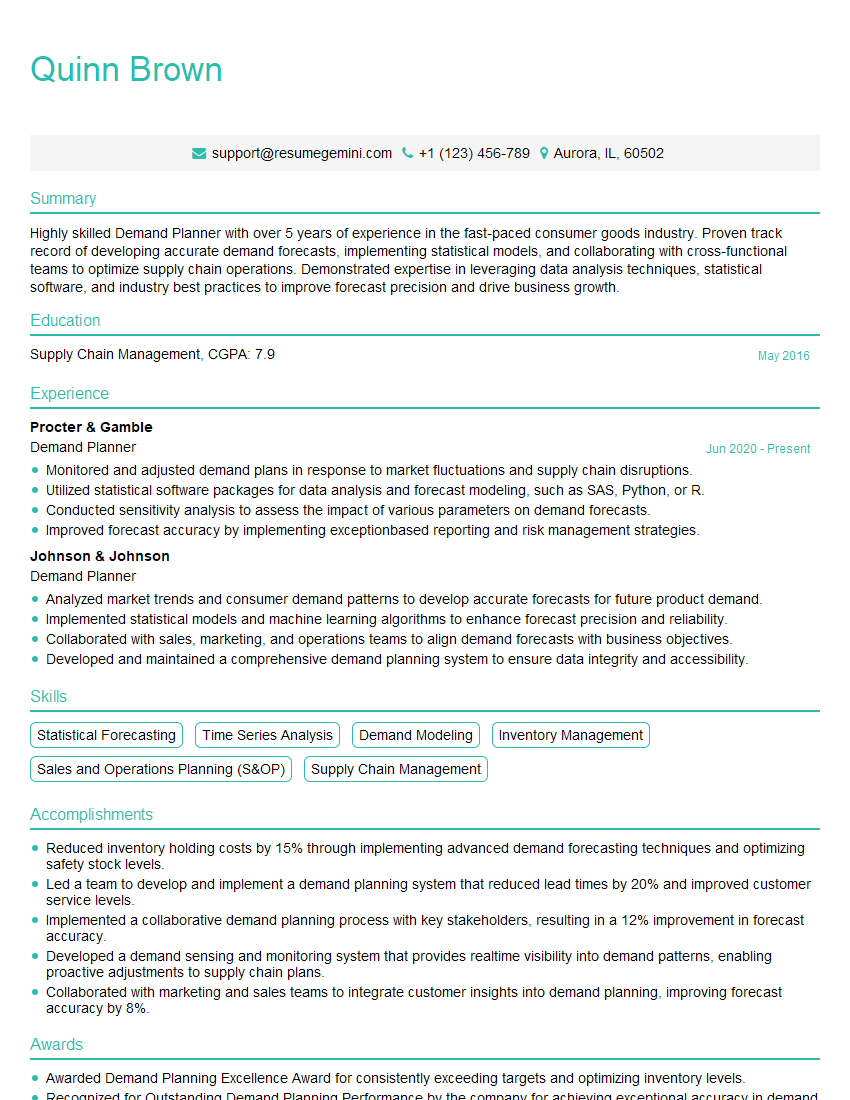
Demand Planner Resume Sample
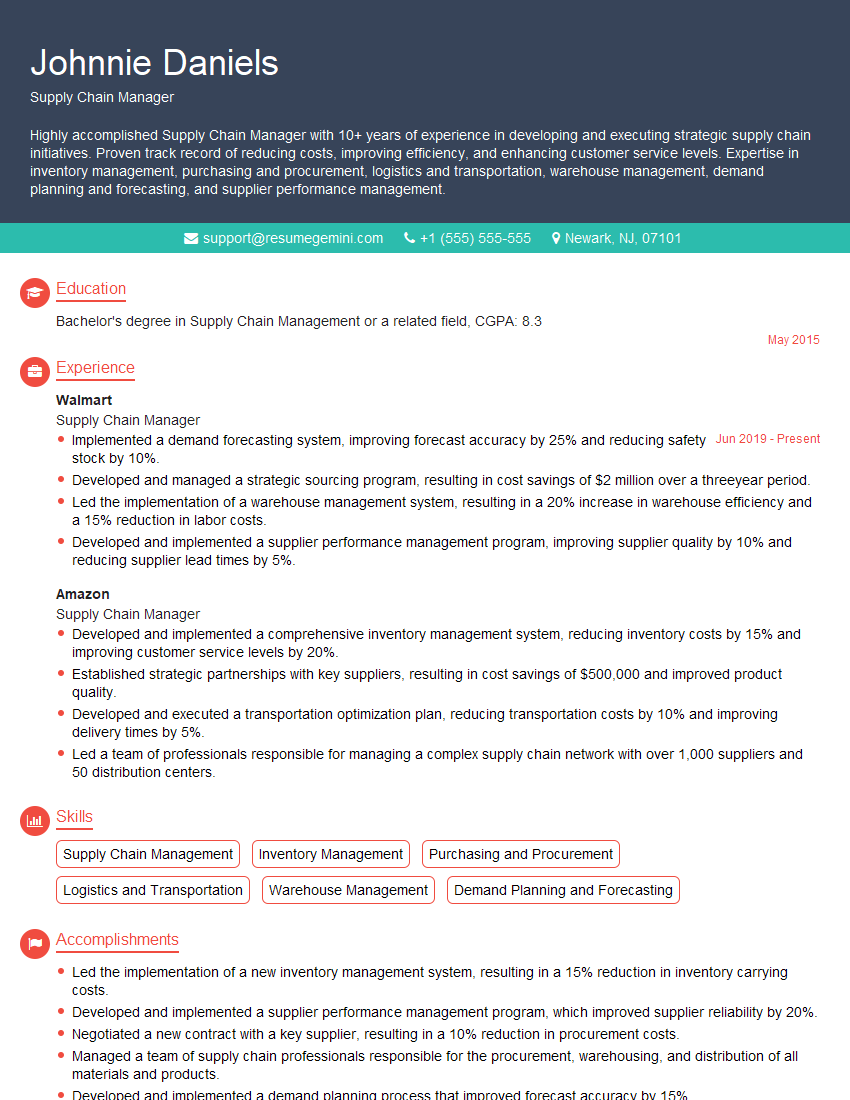
Supply Chain Manager Resume Sample
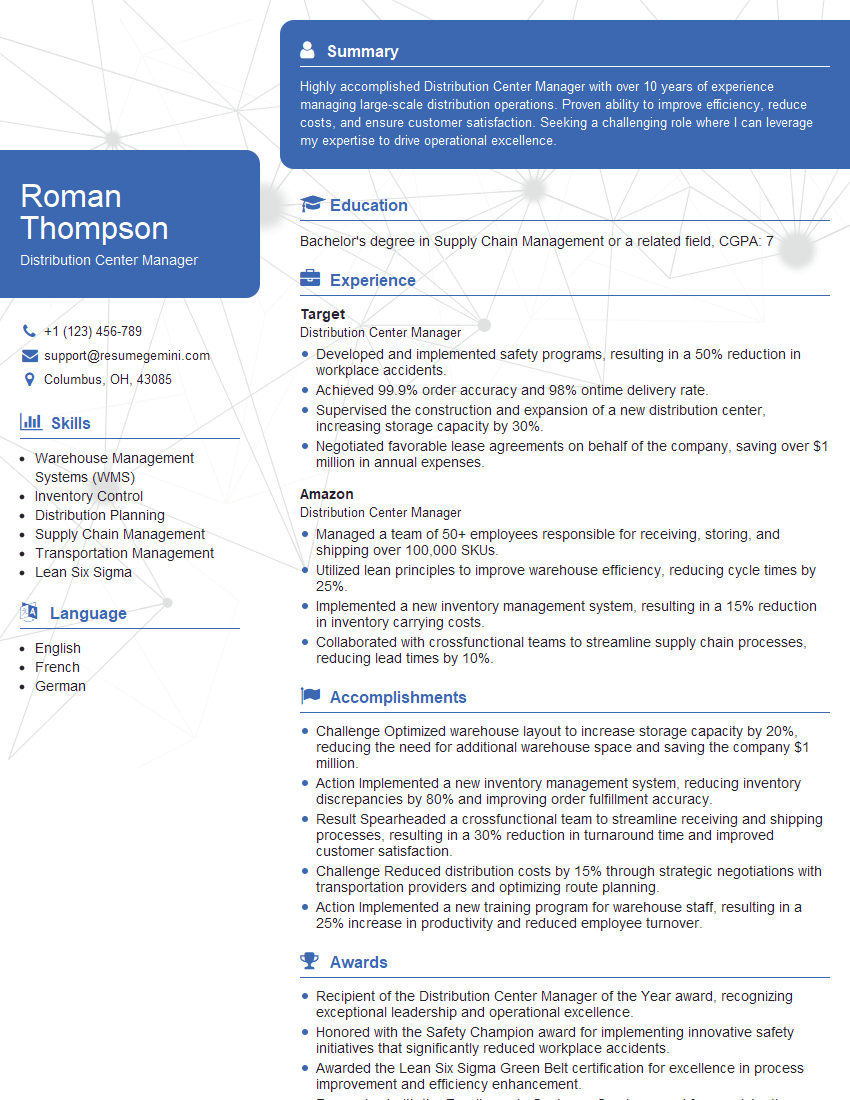
Distribution Center Manager Resume Sample
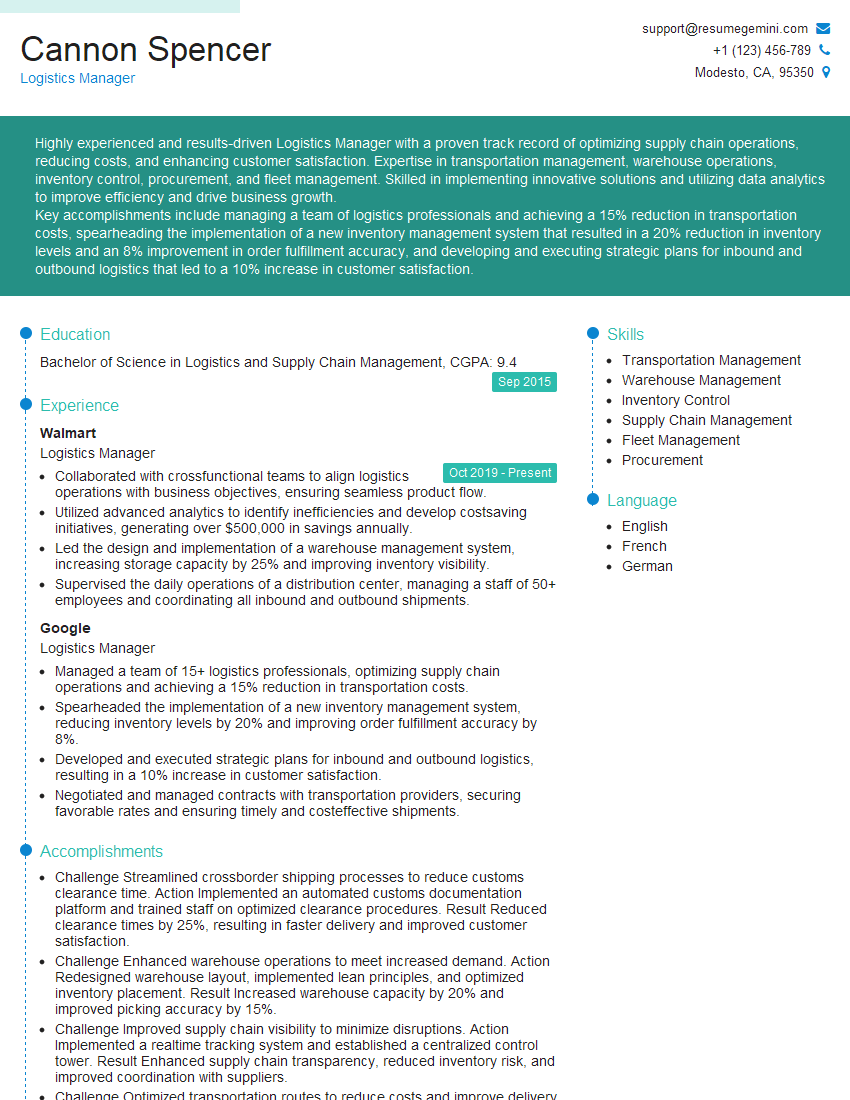
Logistics Manager Resume Sample
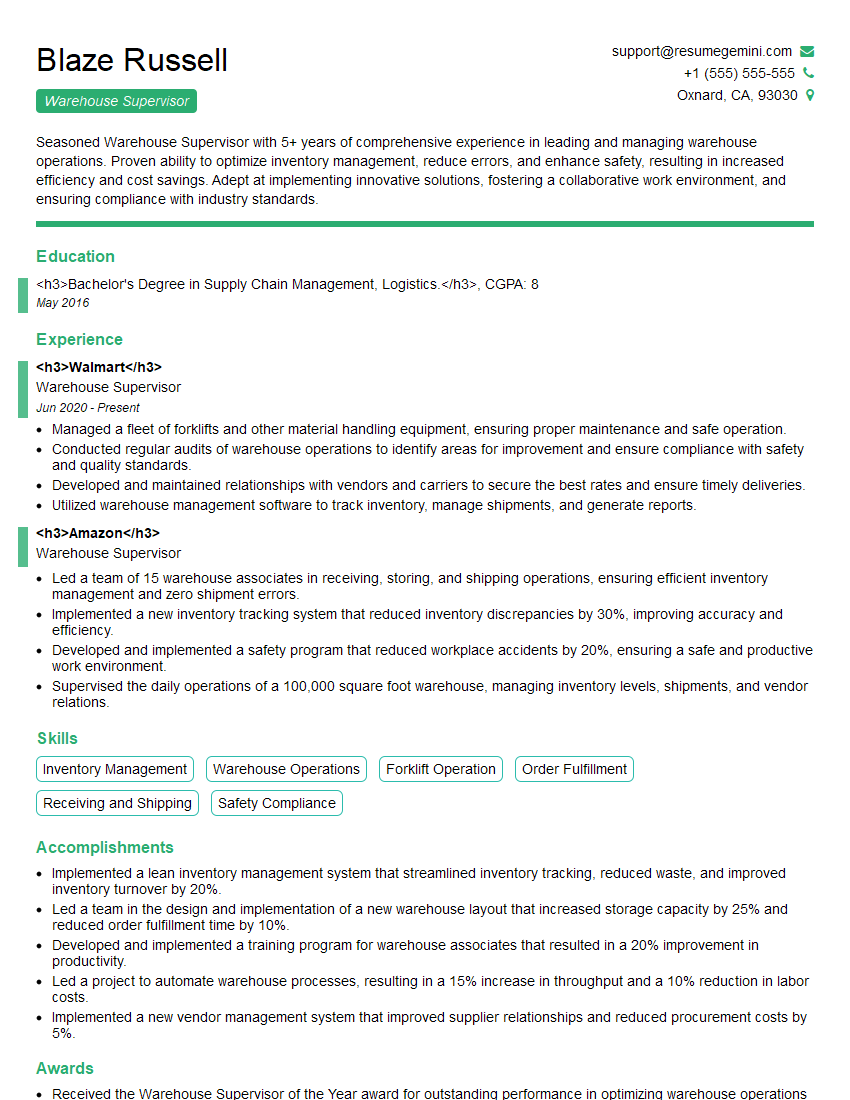
Warehouse Supervisor Resume Sample
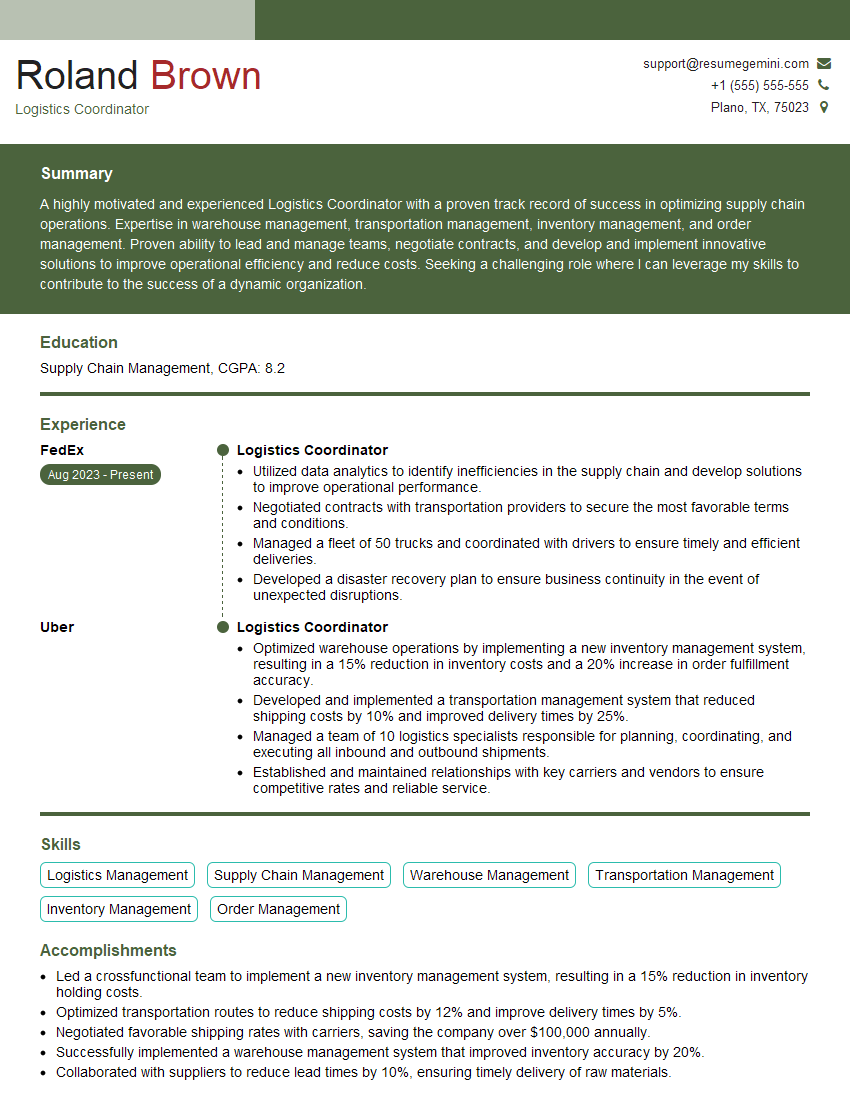
Logistics Coordinator Resume Sample
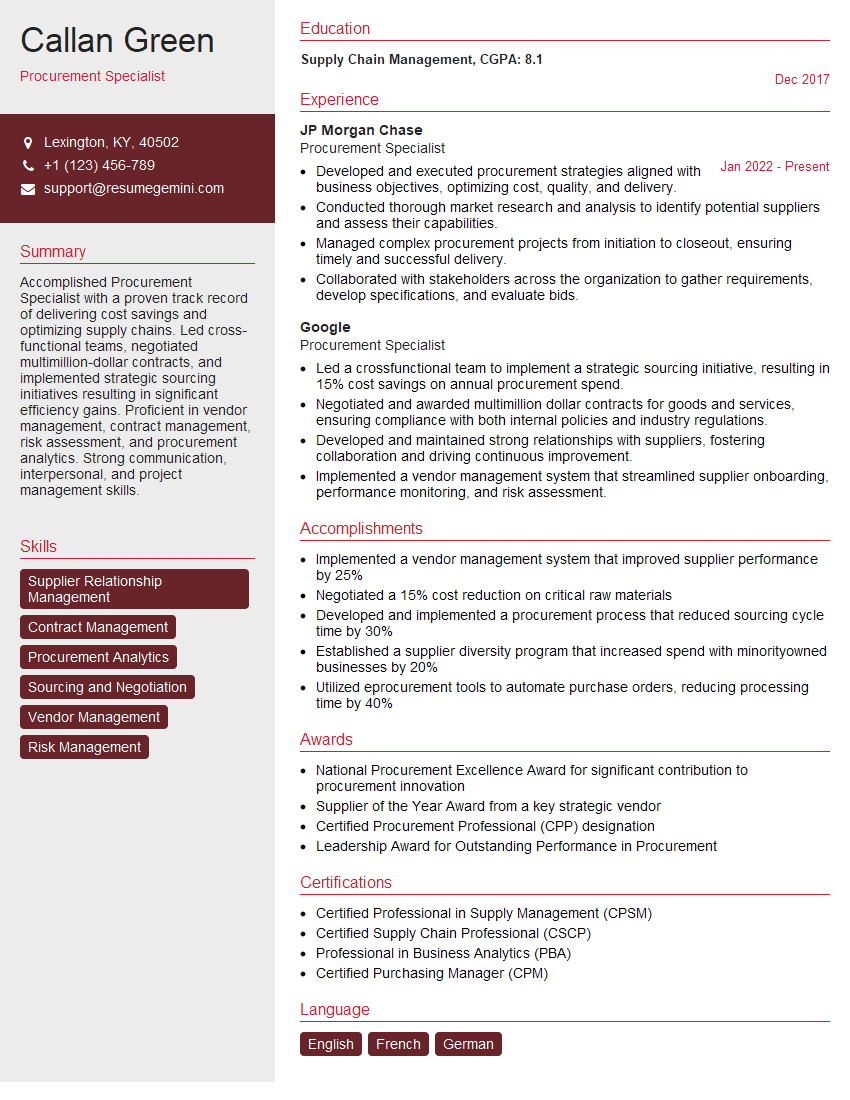
Procurement Specialist Resume Sample
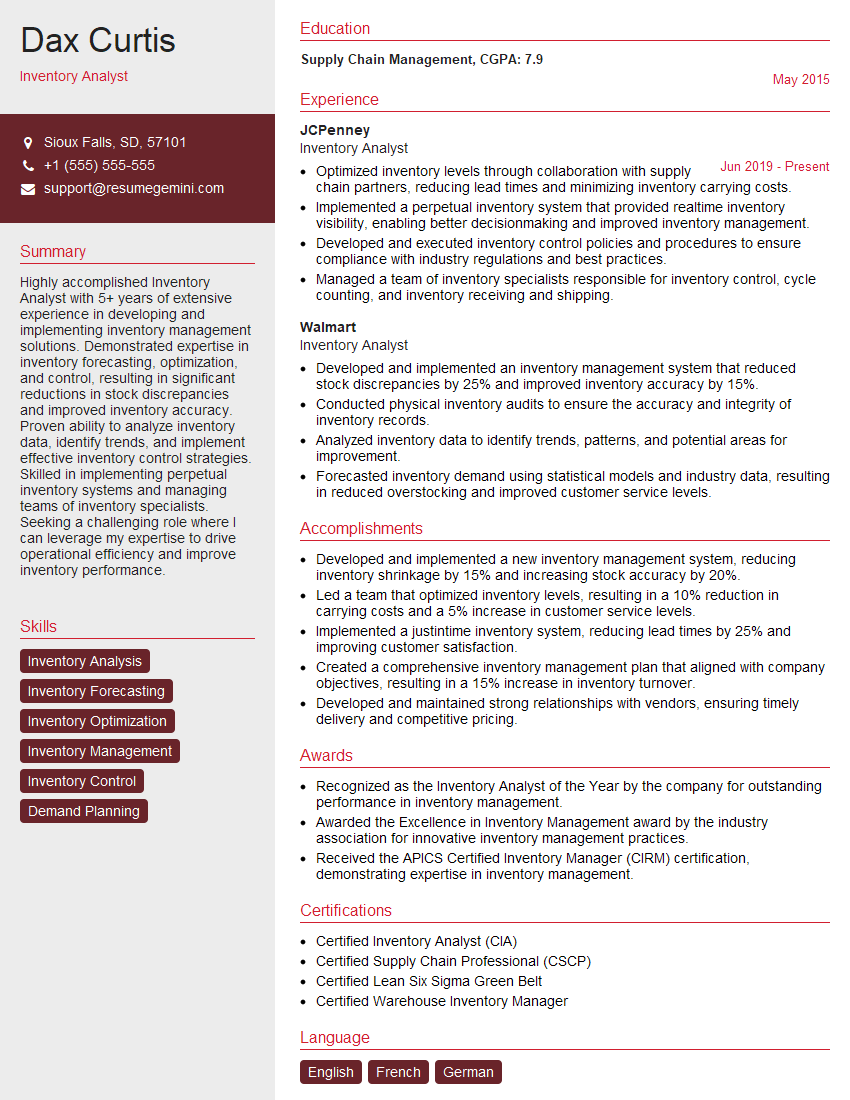
Inventory Analyst Resume Sample
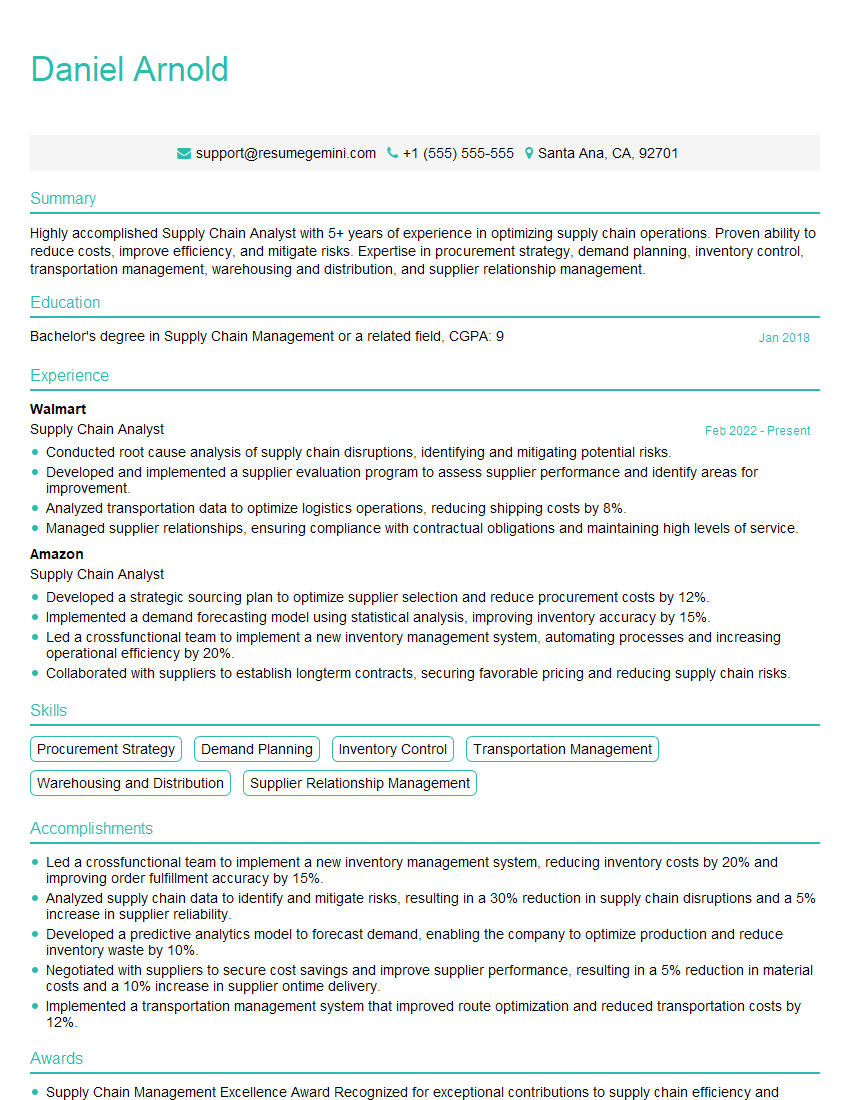
Supply Chain Analyst Resume Sample
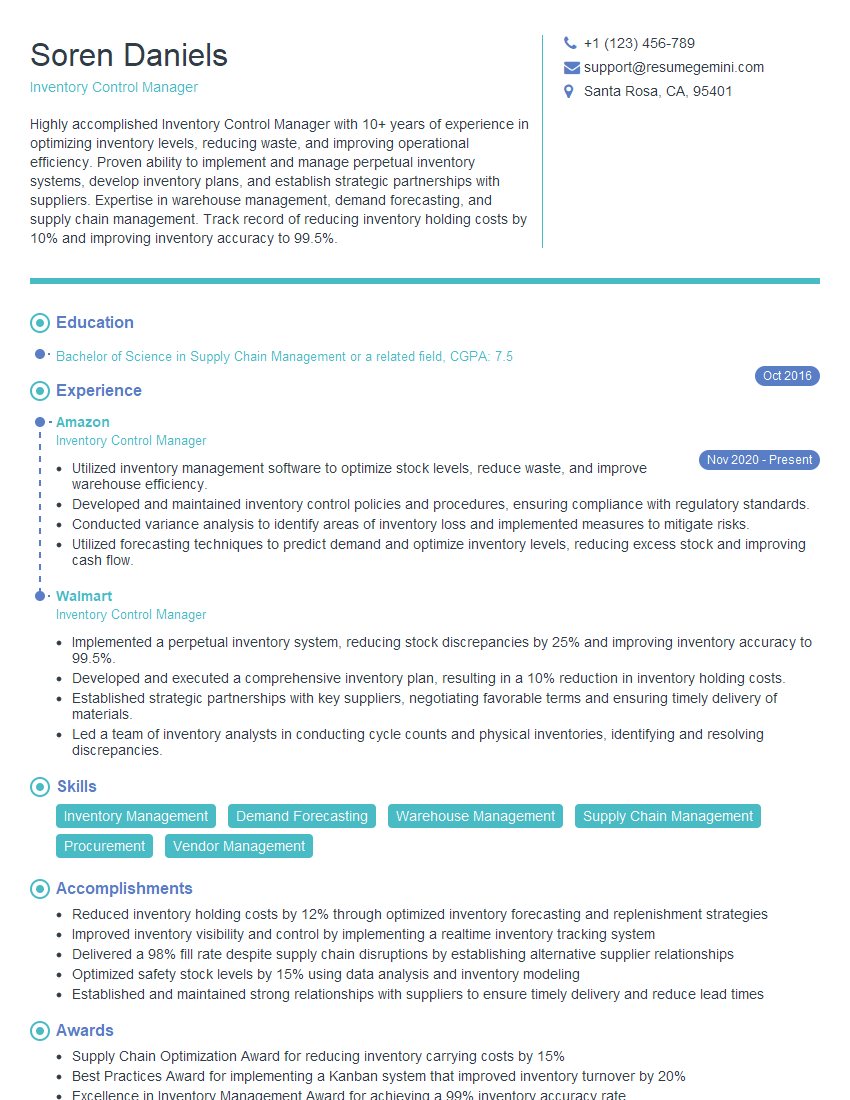
Inventory Control Manager Resume Sample
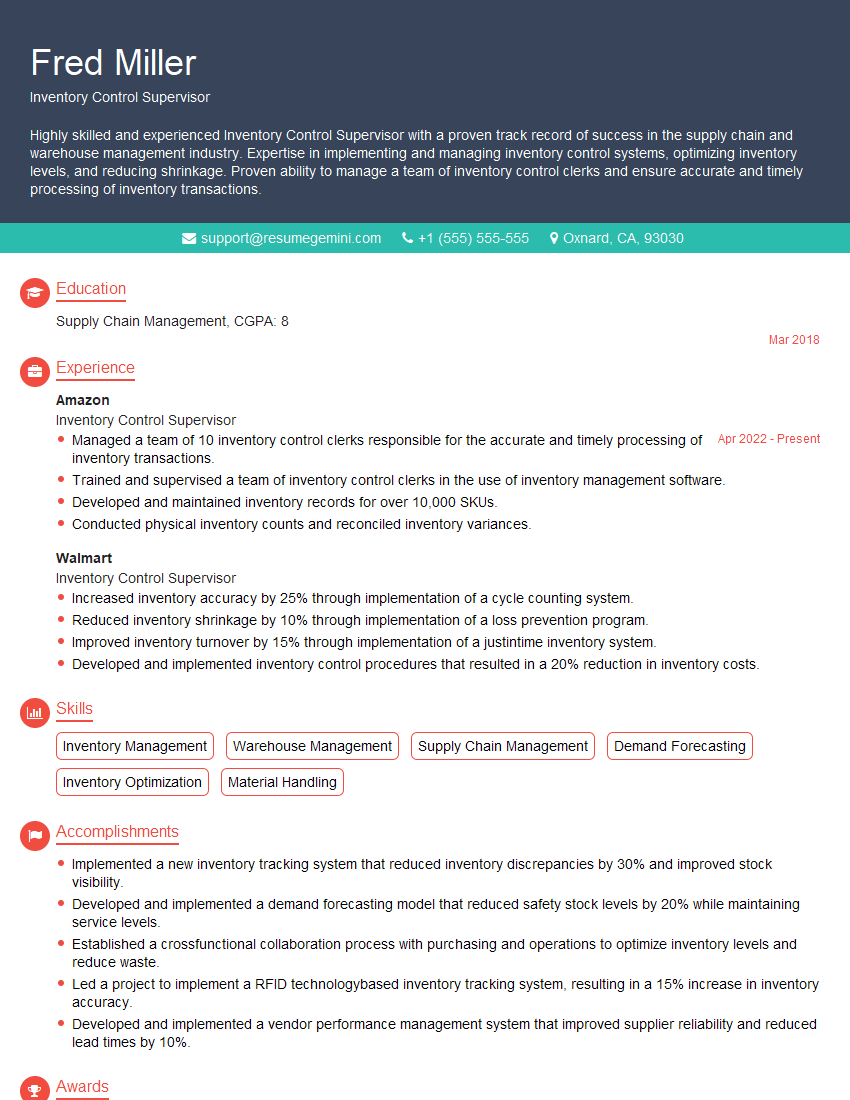
Inventory Control Supervisor Resume Sample
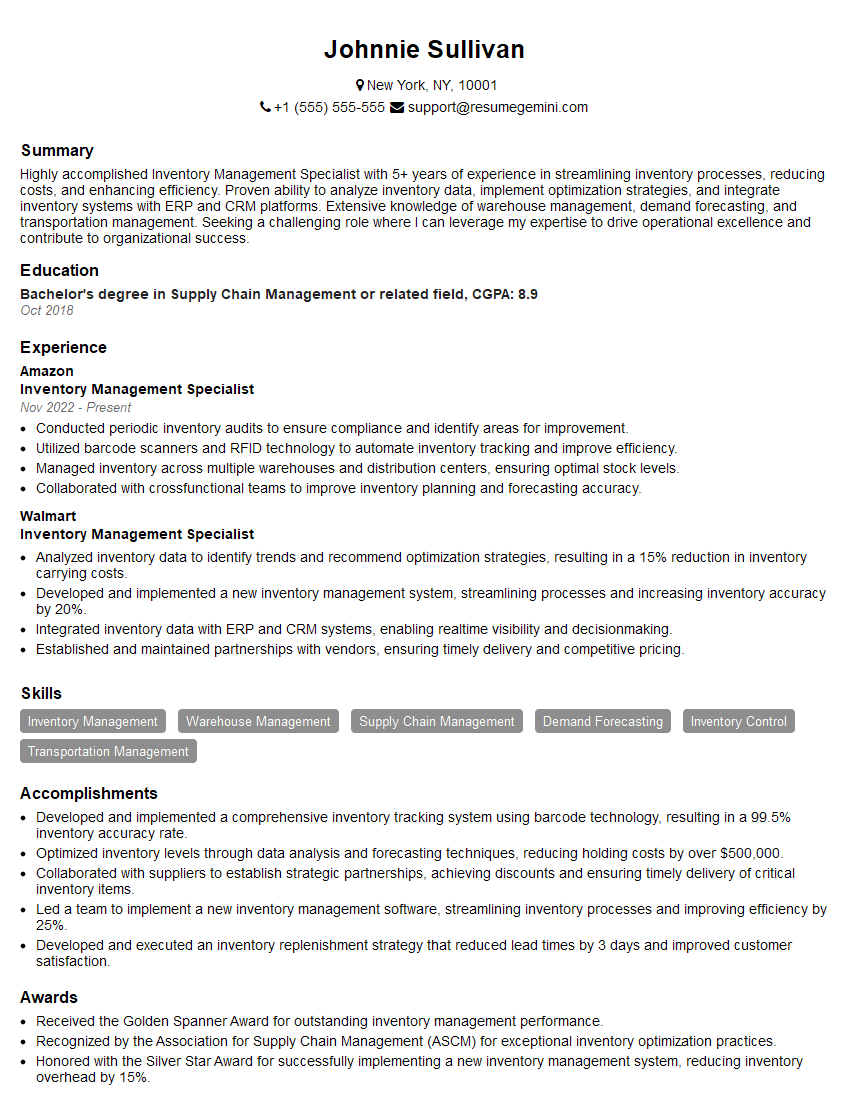
Inventory Management Specialist Resume Sample
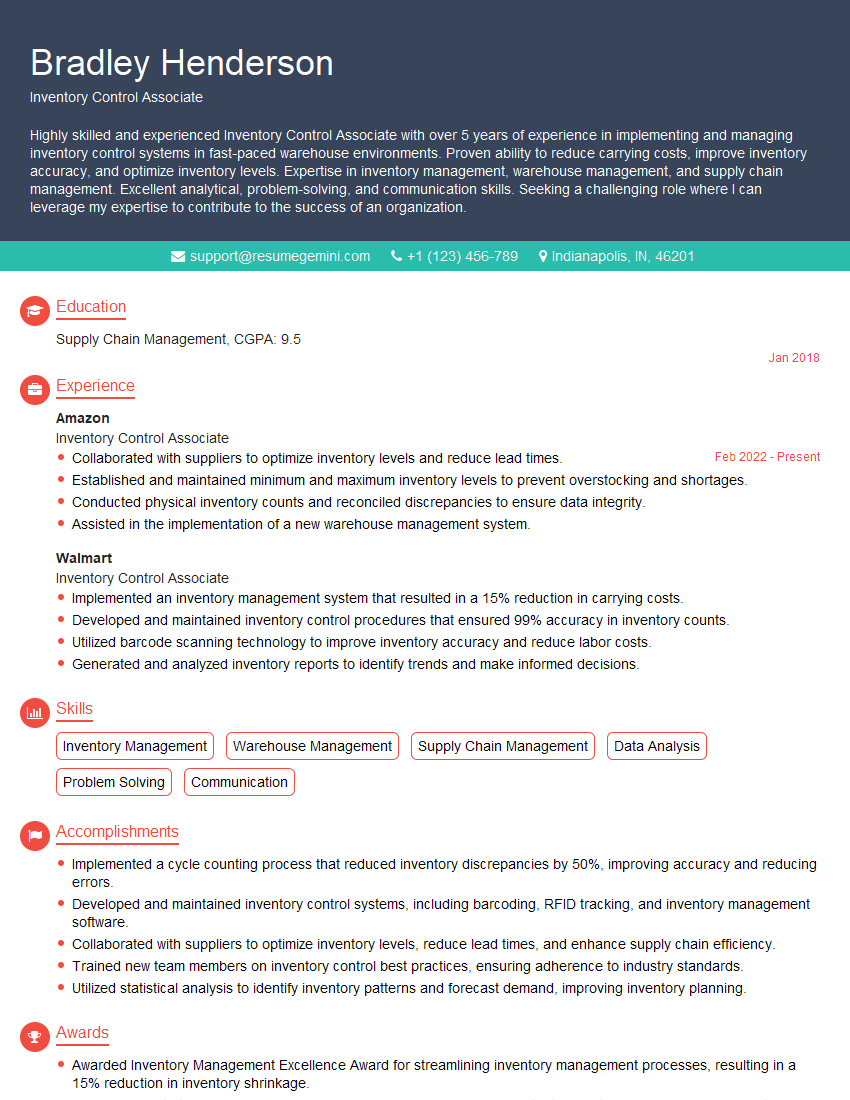
Inventory Control Associate Resume Sample
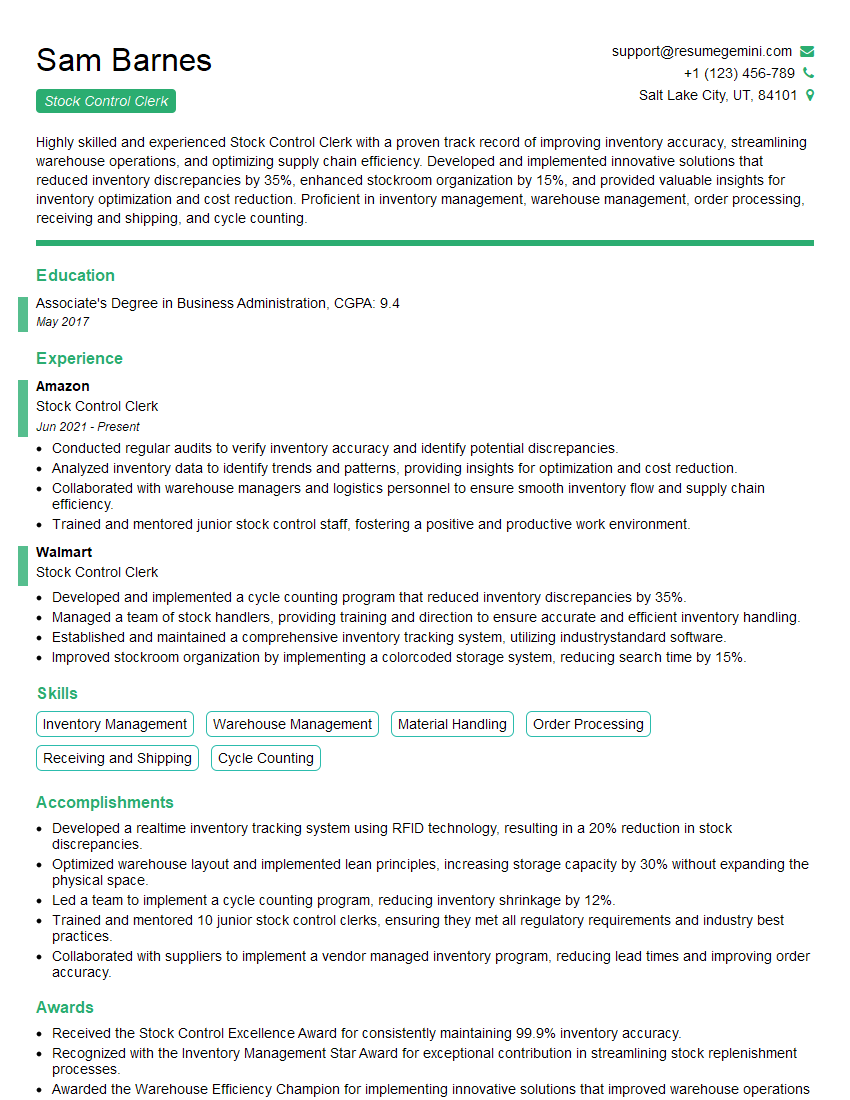
Stock Control Clerk Resume Sample
- Operations Manager
- Demand Planner
- Supply Chain Manager
- Distribution Center Manager
- Logistics Manager
- Warehouse Supervisor
- Logistics Coordinator
- Procurement Specialist
- Inventory Analyst
- Supply Chain Analyst
- Inventory Control Manager
- Inventory Control Supervisor
- Inventory Management Specialist
- Inventory Control Associate
- Stock Control Clerk
Explore more articles
Users Rating of Our Blogs
Share Your Experience
We value your feedback! Please rate our content and share your thoughts (optional).
What Readers Say About Our Blog
Very informative content, great job.
good