The right preparation can turn an interview into an opportunity to showcase your expertise. This guide to Experience with solar project operations and maintenance interview questions is your ultimate resource, providing key insights and tips to help you ace your responses and stand out as a top candidate.
Questions Asked in Experience with solar project operations and maintenance Interview
Q 1. Describe your experience with preventative maintenance on solar PV systems.
Preventative maintenance on solar PV systems is crucial for maximizing energy production and extending the lifespan of the system. It’s like regular servicing for your car – you catch small issues before they become major problems. My approach involves a structured schedule combining visual inspections and data analysis.
- Visual Inspections: I meticulously examine every component, including panels, inverters, wiring, mounting structures, and grounding. I look for signs of damage like cracks, corrosion, loose connections, bird droppings, or shading issues. Think of it like a thorough once-over, looking for any anomalies.
- Data Analysis: I review performance data from the solar monitoring system to identify trends or anomalies indicative of potential problems. For example, a sudden drop in energy production from a specific string of panels might indicate a faulty panel or connection.
- Cleaning: Regular cleaning of solar panels is a key preventative measure. Dust and debris significantly reduce energy output. We use specialized equipment and techniques to ensure efficient and safe cleaning without damaging the panels.
- Scheduled Maintenance: I follow a strict schedule, typically including quarterly inspections and annual more thorough checks, depending on the specific system and environmental conditions. This proactive approach prevents minor issues from escalating into costly repairs.
For example, during a recent inspection, I discovered a loose connection on a string of panels which, if left unchecked, could have led to overheating and potential fire hazard. By addressing this early, we prevented a significant production loss and avoided a potentially dangerous situation.
Q 2. How do you troubleshoot a solar inverter malfunction?
Troubleshooting a malfunctioning solar inverter requires a systematic approach, much like solving a puzzle. First, you need to accurately identify the problem, and then use your knowledge to trace it to its source.
- Safety First: Always disconnect the inverter from the grid before attempting any repair or troubleshooting. This is paramount for your safety.
- Check for Obvious Issues: Start by looking for easy-to-spot problems such as tripped breakers, blown fuses, or loose connections. These are often the culprits.
- Review Error Codes and Alarms: Most modern inverters display error codes that provide clues about the malfunction. Consult the inverter’s manual to understand the meaning of the codes.
- Check DC and AC Voltages: Use a multimeter to measure DC voltage at the input of the inverter and AC voltage at the output. Deviations from the expected values can pinpoint problems with the panel array or inverter itself.
- Inspect the Cooling System: Overheating is a frequent cause of inverter failure. Make sure the cooling fans are working correctly and that there’s adequate ventilation.
- Contact Manufacturer Support: If the problem persists, contacting the inverter manufacturer’s technical support can be helpful. They often have specialized diagnostic tools and expertise to assist with more complex issues.
For instance, I once encountered an inverter that was showing an overheating error. While checking the cooling system, I discovered a blockage preventing proper airflow. Simple cleaning resolved the issue, highlighting the importance of thorough inspections.
Q 3. Explain the process of performing a performance test on a solar array.
A performance test on a solar array measures its efficiency in converting sunlight into electricity. It’s similar to taking your car for a performance check-up to see how well it’s running. The process typically involves several steps:
- Data Acquisition: Gather data from the solar monitoring system (if available), recording parameters like voltage, current, power, and energy production over a specific period. This provides a baseline.
- I-V Curve Tracing: Use a specialized I-V curve tracer to measure the current and voltage characteristics of individual panels and strings. This identifies any inconsistencies or underperforming panels.
- Visual Inspection: A thorough visual inspection is performed to check for shading, debris, or any physical damage to the panels or wiring.
- Infrared Thermography: This technique uses infrared cameras to detect hotspots on the panels, which can indicate cell damage, bad connections, or shading issues.
- Performance Ratio Calculation: Calculate the performance ratio (PR) of the system, which is a key indicator of overall system efficiency. A low PR suggests areas for improvement or potential problems.
- Comparison with Expected Output: Compare the measured output with the expected output based on the system’s design and solar irradiance data. Any significant deviation needs further investigation.
Recently, we used I-V curve tracing to detect a small amount of mismatch within a string, leading to a small loss in overall energy production. By identifying and replacing the underperforming panel, we restored the system’s optimal performance.
Q 4. What are the common causes of solar panel degradation and how can they be mitigated?
Solar panel degradation is a natural process, but it can be accelerated by several factors. Think of it like the gradual wear and tear on any piece of equipment.
- LID (Light-Induced Degradation): This is a common phenomenon where panel efficiency decreases due to exposure to sunlight. It’s usually most pronounced in the first few months of operation.
- PID (Potential-Induced Degradation): This degradation is caused by voltage differences between the panels and the grounding system, which can lead to current leakage and reduced efficiency.
- Soiling and Shading: Dust, dirt, bird droppings, and shading from trees or buildings significantly reduce energy production.
- Environmental Factors: Extreme weather conditions like hailstorms, strong winds, and high temperatures can damage panels and reduce their lifespan.
- Manufacturing Defects: Faulty panels from the manufacturing process can lead to premature degradation.
Mitigation Strategies:
- Regular Cleaning: Keep the panels clean to maximize light absorption.
- Proper Grounding: Ensure a proper grounding system to prevent PID.
- Site Selection: Choose a location with minimal shading and appropriate environmental conditions.
- Quality Panels: Use high-quality panels from reputable manufacturers.
- Regular Monitoring: Monitor the system’s performance to detect early signs of degradation.
For example, in a project, we implemented proper grounding techniques to address potential PID issues, resulting in a significant reduction in degradation rates.
Q 5. Describe your experience with solar panel cleaning and maintenance procedures.
Solar panel cleaning is an essential part of maintenance that directly impacts energy production. It’s like washing your windows – cleaner panels means more sunlight can reach the cells and generate electricity.
Our cleaning procedures are designed to be both efficient and safe:
- Safety First: We always prioritize safety by using appropriate safety equipment like harnesses and fall protection systems, especially when cleaning elevated panels.
- Water and Cleaning Agents: We use deionized water or specialized cleaning solutions to avoid leaving any residue that could harm the panels.
- Cleaning Techniques: We use soft brushes, microfiber cloths, or specialized cleaning tools to avoid scratching the panels. High-pressure water jets are avoided due to the risk of damage.
- Regularity: The frequency of cleaning depends on the environmental conditions. In dusty or arid climates, more frequent cleaning may be necessary.
- Documentation: We meticulously document all cleaning activities, including the date, time, and methods used.
In a recent large-scale project, we implemented a scheduled cleaning program, leading to an increase in energy production by approximately 5%, proving the significant impact of regular cleaning.
Q 6. How do you interpret data from a solar monitoring system?
Interpreting data from a solar monitoring system is key to understanding the health and performance of a solar PV system. It’s like having a dashboard for your power plant, providing real-time insights into its operation.
I look for several key indicators:
- Energy Production: Daily, weekly, and monthly energy production data helps to track the overall performance of the system and identify any significant drops.
- Voltage and Current: Monitoring voltage and current at different points in the system helps to identify issues like faulty panels, connections, or shading.
- Inverter Performance: The monitoring system provides information about the status and performance of inverters, including error codes and efficiency levels.
- Environmental Data: Data such as solar irradiance, ambient temperature, and wind speed can help to contextualize the performance of the system.
- Performance Ratios: Key performance indicators (KPIs) like performance ratio (PR) provide a comprehensive overview of system efficiency.
Recently, by analyzing the monitoring system’s data, I was able to pinpoint a malfunctioning inverter on a specific string before it caused a major power outage, preventing downtime and potential damage.
Q 7. What safety precautions do you follow when working on a solar system?
Safety is paramount when working on solar systems. High voltages, sharp edges, and heights are all potential hazards. My safety procedures are meticulously followed.
- Lockout/Tagout Procedures: Always perform lockout/tagout procedures to isolate the system from the grid before working on any components. This prevents accidental energization.
- Personal Protective Equipment (PPE): Wear appropriate PPE, including safety glasses, gloves, and insulated tools. When working at heights, harnesses and fall protection are essential.
- Arc Flash Protection: Wear appropriate arc flash protection clothing when working on high-voltage systems to mitigate the risk of electric arc burns.
- Awareness of Surroundings: Be aware of surroundings, especially overhead power lines and other potential hazards. Never approach energized equipment without proper safety measures.
- Proper Training and Certification: Ensure you have the necessary training and certifications before undertaking any work on a solar system.
One time, a colleague almost had an accident due to not following lockout/tagout procedures. This incident reinforced the critical importance of strict adherence to safety protocols and provided a valuable lesson on the potential consequences of complacency.
Q 8. Explain your experience with different types of solar inverters.
My experience encompasses a wide range of solar inverters, from string inverters to microinverters and central inverters. String inverters are the most common; they’re cost-effective and relatively simple to maintain, handling energy from a string of panels. However, a single faulty panel in a string can affect the entire string’s output. Microinverters, on the other hand, optimize each panel individually, maximizing energy harvest even with shading or panel issues. This is more reliable but increases initial costs. Central inverters are typically used in large-scale utility plants and offer high efficiency at a large scale, but a failure significantly impacts the entire plant. I’ve worked extensively with SMA, SolarEdge, and Enphase inverters, troubleshooting issues such as communication errors, overheating, and AC/DC output problems. For example, I once diagnosed a problem with an SMA inverter that appeared to be a general failure, but through systematic testing, I discovered a faulty connection in the communication cable, not an internal inverter fault, leading to a quicker, more cost-effective solution.
Q 9. How familiar are you with solar SCADA systems?
I’m highly proficient with solar SCADA (Supervisory Control and Data Acquisition) systems. My experience includes using various platforms to monitor real-time performance data, such as energy generation, inverter efficiency, and environmental conditions. I use this data for proactive maintenance, identifying potential problems before they lead to major failures. For instance, a sudden drop in the performance ratio (PR) of a specific string of panels might indicate shading, a faulty panel, or a problem with the associated string inverter – a prompt investigation via SCADA data helps prioritize the corrective action. I’m familiar with remote diagnostics and troubleshooting capabilities offered by many SCADA systems; I can identify and address issues remotely, minimizing downtime. I’m experienced with platforms like PVsyst, Aurora, and customized SCADA solutions developed for specific projects.
Q 10. Describe your experience with troubleshooting electrical faults in solar systems.
Troubleshooting electrical faults requires a systematic approach, combining safety procedures with diagnostic skills. I always begin by ensuring the system is safely de-energized using proper lockout/tagout procedures. Then, I utilize multimeters, clamp meters, and infrared cameras to pinpoint the source of the fault. Common issues include faulty wiring, ground faults, blown fuses or breakers, and problems within inverters or combiner boxes. For example, I once tracked down a ground fault using a clamp meter to identify excessive leakage current, tracing it back to a damaged cable connector. Understanding electrical schematics and safety standards (NEC, IEC) is crucial, as is the ability to interpret error codes displayed by inverters. My methodical approach combines visual inspections, electrical measurements, and analysis of SCADA data to quickly isolate and resolve the issue, minimizing downtime.
Q 11. What are the key performance indicators (KPIs) you monitor in solar plant operations?
Several KPIs are paramount to monitoring solar plant operations. These include: Performance Ratio (PR) – a key indicator of overall system efficiency; Capacity Factor – representing the actual energy output compared to the maximum possible output; Specific Yield – energy produced per kWp; Availability – uptime percentage of the system; and Yield Loss Analysis – understanding reasons for underperformance. I use data analysis tools to track these KPIs over time, identifying trends and anomalies. For instance, a declining PR over several months might indicate a gradual degradation of panel performance due to soiling or aging. Regular reporting and comparison against predicted performance helps identify areas for improvement and proactive maintenance.
Q 12. How do you manage a team of solar maintenance technicians?
Managing a team of solar maintenance technicians involves clear communication, delegation, and ongoing training. I foster a collaborative environment, ensuring that every team member understands their roles and responsibilities. Clear work orders and safety protocols are essential. Regular team meetings are conducted to discuss ongoing projects, address challenges, and share best practices. I also focus on developing the technical skills of my team through both on-the-job training and external courses to keep up with the latest technologies and safety standards. Providing regular feedback, recognizing achievements, and addressing issues promptly helps in building a high-performing and motivated team. For example, I implemented a peer review system to encourage knowledge sharing and improve diagnostic skills among my technicians.
Q 13. What is your experience with using thermal imaging cameras for solar panel inspections?
Thermal imaging cameras are invaluable tools for solar panel inspections. They allow for non-invasive detection of hot spots, which often indicate cell-level failures, bypass diode issues, or shading problems. A hot spot detected by a thermal image could point to a broken cell within a panel that needs to be replaced or a shadowed panel that needs cleaning or repositioning. I’ve used FLIR cameras extensively to quickly identify these problems before they lead to larger issues. Thermal imaging is particularly useful in identifying potentially dangerous situations that might not be apparent through visual inspection alone, ensuring early detection and preventative maintenance. The thermal images are documented and integrated with other maintenance records for analysis and tracking trends in panel performance over time.
Q 14. Describe your experience with repairing or replacing damaged solar panels.
Repairing or replacing damaged solar panels depends on the nature and extent of the damage. Minor damage, like cracks in the frame, can often be repaired; however, cell-level damage typically requires panel replacement. I ensure all work follows the manufacturer’s guidelines and safety standards. Before replacing a panel, I document its location, serial number, and any other relevant information. When replacing a panel, I carefully remove the damaged one, ensuring no additional damage is incurred, install the new panel securely, and check for proper electrical connections. I also perform thorough testing after installation to confirm the new panel is functioning correctly and that the entire system is operating at peak efficiency. Proper documentation and accurate records are kept throughout the entire process, reflecting parts used, labor hours, and any relevant observations.
Q 15. How do you handle emergency situations, such as a fire or equipment failure?
Emergency response in solar projects hinges on swift action and well-defined protocols. Our team follows a strict emergency response plan, which starts with immediate safety measures. For example, if a fire breaks out, our first priority is to ensure the safety of personnel, immediately contacting emergency services and following established evacuation procedures. We also have designated fire extinguishers strategically placed throughout the site, and all personnel are trained in their use. In case of equipment failure, such as an inverter malfunction, we have a layered approach. We first isolate the affected equipment to prevent cascading failures. This might involve switching to backup systems if available, then initiate troubleshooting based on pre-defined diagnostic steps, often consulting our remote monitoring system for data analysis. We maintain a detailed inventory of spare parts and have established relationships with suppliers for quick replacements. If the issue is beyond our immediate capabilities, we contact qualified specialists to get the system back online.
A recent incident involved a faulty inverter causing a minor fire. Following our protocol, we immediately evacuated the area, contacted the fire department, and isolated the power to the affected section. The fire was quickly extinguished with minimal damage, showcasing the efficacy of our emergency response plan and the effectiveness of our training program.
Career Expert Tips:
- Ace those interviews! Prepare effectively by reviewing the Top 50 Most Common Interview Questions on ResumeGemini.
- Navigate your job search with confidence! Explore a wide range of Career Tips on ResumeGemini. Learn about common challenges and recommendations to overcome them.
- Craft the perfect resume! Master the Art of Resume Writing with ResumeGemini’s guide. Showcase your unique qualifications and achievements effectively.
- Don’t miss out on holiday savings! Build your dream resume with ResumeGemini’s ATS optimized templates.
Q 16. What is your experience with different types of racking systems?
My experience encompasses a wide range of racking systems, including fixed-tilt, single-axis trackers, and dual-axis trackers. I’ve worked extensively with ground-mounted systems utilizing various foundation types – from concrete piles to helical piles. I’m also familiar with rooftop mounting systems, including ballasted, penetrative, and integrated solutions. Each system presents unique challenges and considerations regarding installation, maintenance, and structural integrity. For example, I’ve encountered instances of ground settlement affecting the performance of ground-mounted systems, requiring adjustments to the racking to maintain optimal panel alignment.
One project involved the retrofitting of a failing ballasted rooftop system. We assessed the system’s structural integrity and evaluated potential failure points. We then implemented a phased replacement approach, ensuring the site’s safety and minimal disruption to the system’s production. This highlighted the importance of regular inspections and proactive maintenance in ensuring the long-term performance and safety of solar racking systems.
Q 17. Explain your knowledge of the National Electrical Code (NEC) as it relates to solar installations.
My understanding of the National Electrical Code (NEC) as it pertains to solar installations is comprehensive. I’m proficient in applying the relevant articles, particularly those concerning grounding, overcurrent protection, wiring methods, and system interconnection. This includes understanding the requirements for rapid shutdown systems, arc flash mitigation, and the safe handling of high-voltage DC circuits. The NEC’s emphasis on safety is paramount, and I ensure that every installation and maintenance procedure strictly adheres to these regulations.
For instance, I’ve been involved in multiple projects where we meticulously documented our compliance with the NEC, including detailed drawings, calculations, and test results. This detailed documentation ensures that our installations meet all safety requirements and provides a valuable record for future maintenance and upgrades. We also conduct regular inspections to maintain compliance. Failure to comply with the NEC can lead to significant safety hazards, system failures, and legal liabilities. Strict adherence to the code is essential.
Q 18. Describe your experience with documenting maintenance activities.
Detailed and accurate documentation is critical for effective O&M of solar projects. We utilize a Computerized Maintenance Management System (CMMS) to track all maintenance activities. This includes preventative maintenance schedules, corrective maintenance records, parts inventory, and any relevant observations. Each task is documented with date, time, personnel involved, procedures followed, and any parts used. We also use photographs and videos to document the condition of equipment before and after maintenance procedures. This ensures traceability and facilitates future troubleshooting.
For instance, a recent project involved the replacement of several damaged solar panels. Our CMMS logged the details of the faulty panels, the replacement procedure, the parts used, and included photos showing the damage and the completed repair. This detailed record not only helps in future maintenance but also serves as valuable data for performance analysis and potential warranty claims.
Q 19. How familiar are you with different types of solar trackers?
I have extensive experience with various solar trackers, including single-axis and dual-axis trackers. I understand the mechanical and electrical components, the control systems, and the impact they have on energy yield. Single-axis trackers, which typically rotate east-west, offer a significant improvement over fixed-tilt systems, particularly in regions with high solar irradiance. Dual-axis trackers, offering greater precision by tracking the sun across both axes, can maximize energy production in regions with significant variations in sun angle throughout the day. However, they are more complex and require more sophisticated control systems.
I’ve worked on projects that utilized both types of trackers and have firsthand experience with their installation, commissioning, and maintenance requirements. One specific challenge involved troubleshooting a malfunctioning dual-axis tracker control system. Through systematic analysis of system logs and sensor data, we pinpointed the cause and implemented the necessary corrective actions. Understanding the nuances of different tracker systems is crucial for maximizing their efficiency and ensuring their reliability.
Q 20. Explain your experience with battery storage systems in solar applications.
My experience with battery storage systems in solar applications includes installation, commissioning, and maintenance of various battery chemistries, including Lithium-ion and Lead-Acid batteries. I’m familiar with their operational parameters, safety precautions, and the integration of battery storage systems with inverters and other balance-of-system components. This includes understanding the importance of battery management systems (BMS) and their role in optimizing battery life and performance. The addition of storage increases the complexity of the system, necessitating careful consideration of safety aspects, such as thermal management and fire prevention.
One project involved the integration of a large Lithium-ion battery storage system into an existing solar plant. This required careful planning and coordination to ensure the seamless integration of the new system with the existing infrastructure. We meticulously documented the installation and commissioning process, and developed detailed maintenance procedures to ensure the long-term safety and efficiency of the battery system, emphasizing compliance with all relevant safety standards.
Q 21. What is your experience with using drones or aerial imagery for solar panel inspections?
I’m proficient in utilizing drones and aerial imagery for solar panel inspections. This technology provides a safe and efficient way to inspect large-scale solar arrays, identifying potential issues such as shading, soiling, hotspots, and module defects from a bird’s-eye perspective. The high-resolution images and thermal imagery allow for early detection of potential problems, facilitating proactive maintenance and reducing the risk of system downtime. We use specialized software to process the imagery, identifying anomalies and creating detailed reports.
For example, in a recent project, drone inspection revealed several modules with significant shading caused by tree growth near the array. This allowed us to schedule tree trimming before the shading significantly impacted energy production. The use of drones saves time and resources compared to traditional manual inspections, and helps us to identify potential issues that may be missed with ground-level observations, ultimately enhancing the operational efficiency and cost-effectiveness of the solar power plant.
Q 22. How do you ensure compliance with safety regulations and industry standards?
Ensuring compliance with safety regulations and industry standards in solar project operations and maintenance is paramount. It’s not just about avoiding fines; it’s about protecting lives and the environment. My approach is multi-faceted.
- Comprehensive Safety Training: All my team members undergo rigorous training on OSHA standards, electrical safety, fall protection, and specific equipment operation. We conduct regular refresher courses to maintain proficiency and address emerging risks.
- Strict Adherence to Codes and Standards: We meticulously follow the National Electrical Code (NEC), IEEE standards, and any relevant local regulations. Before any work begins, a thorough risk assessment is performed to identify potential hazards and mitigate them proactively. For example, we always use lockout/tagout procedures when working on energized equipment.
- Regular Inspections and Audits: We conduct routine inspections of our projects, checking for things like grounding, insulation, and proper equipment function. Third-party audits are scheduled periodically to ensure objective evaluation and compliance. These help identify areas for improvement and proactively address potential problems.
- Documentation and Record-Keeping: Meticulous record-keeping is crucial. We maintain detailed logs of inspections, maintenance activities, and safety incidents. This documentation not only proves compliance but also helps identify trends and prevent future issues.
For instance, during a recent project, a team member spotted a loose connection during a routine inspection. Our documented procedures enabled us to swiftly address the issue before it led to a larger problem or a safety hazard. This demonstrates the proactive approach we take to safety.
Q 23. Describe your experience with managing spare parts inventory for solar systems.
Managing spare parts inventory effectively is critical for minimizing downtime and ensuring efficient operations. My experience involves a blend of strategic planning and hands-on execution.
- Predictive Maintenance and Data Analysis: I use historical data on equipment failures and component lifespans to predict future needs. This enables us to proactively order parts before they are needed, minimizing delays caused by supply chain issues.
- Just-in-Time (JIT) Inventory System: To optimize inventory costs, we implement a JIT system. We stock fast-moving, critical components, while slower-moving parts are ordered only when needed. This helps reduce storage costs and minimizes obsolescence.
- Centralized Inventory Management System: We utilize a dedicated software system to track inventory levels, manage orders, and monitor the location of parts across different projects. This provides real-time visibility into our stock, allowing for better decision-making.
- Vendor Relationship Management: Maintaining strong relationships with reliable suppliers is critical. Negotiating favorable pricing and ensuring timely delivery are crucial aspects of this process. We work with multiple vendors to mitigate supply chain risks.
For example, during a recent inverter failure, we were able to replace it within hours thanks to our well-managed spare parts inventory and strong vendor relationships, minimizing any production losses.
Q 24. What is your experience with remote monitoring and diagnostics of solar systems?
Remote monitoring and diagnostics are indispensable for optimizing solar system performance and reducing operational costs. My experience includes utilizing various technologies and strategies to effectively monitor and troubleshoot issues remotely.
- SCADA Systems: We extensively use Supervisory Control and Data Acquisition (SCADA) systems to collect real-time data from inverters, weather stations, and other system components. These systems provide critical insights into energy production, system health, and potential problems.
- Data Analytics and Predictive Modeling: We use advanced analytics to identify trends and anomalies in performance data. This allows us to predict potential failures, schedule preventative maintenance, and optimize system performance. For example, a sudden drop in energy production might indicate a shading issue or a malfunctioning component, which can be diagnosed remotely.
- Remote Troubleshooting and Diagnostics: The SCADA system allows for remote troubleshooting. We can often diagnose and resolve issues remotely, minimizing the need for costly on-site visits. This can include identifying problems such as faulty sensors, communication errors, or performance degradation.
- Alerting and Notifications: The system is configured to automatically alert us to critical events such as system failures, power outages, or unusual energy production patterns. This ensures rapid response times and minimizes downtime.
In one instance, our remote monitoring system detected a significant drop in voltage at a remote solar farm. This early warning enabled us to quickly identify a faulty string of panels and schedule a technician to resolve the issue before it impacted a larger part of the system.
Q 25. How do you handle communication with clients or project stakeholders?
Effective communication is crucial for successful solar project operations. I prioritize transparency, clear reporting, and proactive engagement with clients and stakeholders.
- Regular Reporting and Updates: We provide clients with regular reports on system performance, energy production, and any maintenance activities. These reports are tailored to their specific needs and presented in a clear and understandable manner.
- Open and Honest Communication: I maintain open communication channels with clients, promptly addressing any concerns or issues they might have. Transparency is key to building trust and fostering strong relationships.
- Multiple Communication Channels: We utilize various communication channels, including email, phone calls, video conferencing, and project management software, to ensure timely and efficient communication.
- Proactive Problem-Solving: Rather than waiting for problems to escalate, we proactively communicate potential challenges or risks to stakeholders, enabling collaborative problem-solving.
For instance, when a client experienced unexpected downtime due to a weather-related event, we promptly informed them about the situation, the steps being taken to address it, and provided regular updates on the restoration process, which helped mitigate their concerns.
Q 26. Explain your understanding of solar system warranties and service agreements.
Understanding solar system warranties and service agreements is essential for effective project management and client satisfaction. My experience involves a thorough understanding of different warranty types and service contracts.
- Warranty Types: I am familiar with various warranty types, including manufacturer warranties on individual components (e.g., inverters, panels), system performance warranties, and labor warranties. I understand the specific terms and conditions of each warranty type.
- Warranty Claims Management: I am experienced in processing warranty claims, coordinating with manufacturers, and ensuring timely resolution of issues covered under warranty.
- Service Agreements: I’m adept at negotiating and managing service agreements that cover preventive maintenance, corrective maintenance, and other support services. These agreements often include options for different service levels and response times.
- Contractual Obligations: I carefully review and understand the contractual obligations associated with warranties and service agreements, ensuring that both the client’s and our responsibilities are clearly defined.
For example, I recently successfully navigated a complex warranty claim for a faulty inverter, ensuring that the replacement was made swiftly and minimizing downtime for the client.
Q 27. Describe your experience with budget management and cost control in solar projects.
Budget management and cost control are vital in solar projects. My experience encompasses various techniques and strategies for optimizing project costs and staying within budget constraints.
- Detailed Budgeting and Forecasting: I meticulously develop detailed budgets, incorporating all relevant costs, from equipment and labor to permits and insurance. Regular forecasting helps in identifying potential cost overruns early on.
- Cost Tracking and Monitoring: I continuously monitor actual costs against the budgeted amounts, using project management software to track expenses and identify variances. This enables timely corrective actions.
- Value Engineering and Optimization: I proactively seek opportunities to optimize project costs without compromising quality or performance. This might involve exploring alternative technologies, negotiating favorable contracts, or streamlining processes.
- Risk Management and Contingency Planning: I identify potential cost risks and develop contingency plans to mitigate them. This might involve setting aside funds for unexpected expenses or negotiating favorable terms with suppliers.
In a recent project, by implementing value engineering techniques and negotiating better pricing with suppliers, we managed to reduce the overall project cost by 10% while maintaining the same high quality of work.
Q 28. How do you stay updated on the latest advancements and technologies in the solar industry?
Staying abreast of the latest advancements in the solar industry is crucial for maintaining a competitive edge and delivering optimal solutions. My approach to continuous learning includes various methods.
- Industry Publications and Journals: I regularly read industry publications, journals, and research papers to stay informed about new technologies, best practices, and emerging trends.
- Conferences and Trade Shows: I attend industry conferences and trade shows to network with peers, learn about new innovations, and participate in workshops.
- Online Courses and Webinars: I take advantage of online courses and webinars offered by reputable organizations to enhance my knowledge in specific areas like energy storage, smart grids, and advanced monitoring technologies.
- Professional Organizations: I actively participate in professional organizations such as the Solar Energy Industries Association (SEIA) to stay connected with industry experts and access valuable resources.
For example, recently I attended a webinar on the latest advancements in solar panel technology, which helped me incorporate more efficient panels into a current project, improving system performance and return on investment for the client.
Key Topics to Learn for Solar Project Operations & Maintenance Interviews
- Safety Protocols and Procedures: Understanding and adhering to OSHA regulations, lockout/tagout procedures, and safe work practices in various solar environments (rooftop, ground-mount, etc.). Practical application: Describe your experience with implementing and enforcing safety protocols on a project.
- Performance Monitoring and Optimization: Utilizing SCADA systems, analyzing performance data (energy production, inverter efficiency, etc.), and identifying areas for improvement. Practical application: Explain a situation where you identified and resolved a performance issue, quantifying the positive impact.
- Preventive and Corrective Maintenance: Knowledge of routine maintenance tasks (cleaning, inspections, module replacements), troubleshooting common issues, and performing repairs. Practical application: Detail your experience with specific maintenance procedures and the tools/techniques used.
- Troubleshooting and Diagnostics: Identifying and resolving faults in solar arrays, inverters, and other system components. Practical application: Describe your approach to diagnosing a complex system failure and the steps taken to restore functionality.
- O&M Scheduling and Budgeting: Developing and managing O&M schedules, budgeting for maintenance activities, and optimizing resource allocation. Practical application: Explain how you prioritized maintenance tasks based on cost-benefit analysis and urgency.
- Data Analysis and Reporting: Collecting, analyzing, and reporting on key performance indicators (KPIs) to track system performance and identify trends. Practical application: Describe a time you presented performance data to stakeholders and the insights you shared.
- Understanding of Solar Technology: Solid grasp of photovoltaic (PV) technology, solar inverters, balance-of-system (BOS) components, and their functionalities. Practical application: Explain the different types of solar panels and their characteristics.
Next Steps
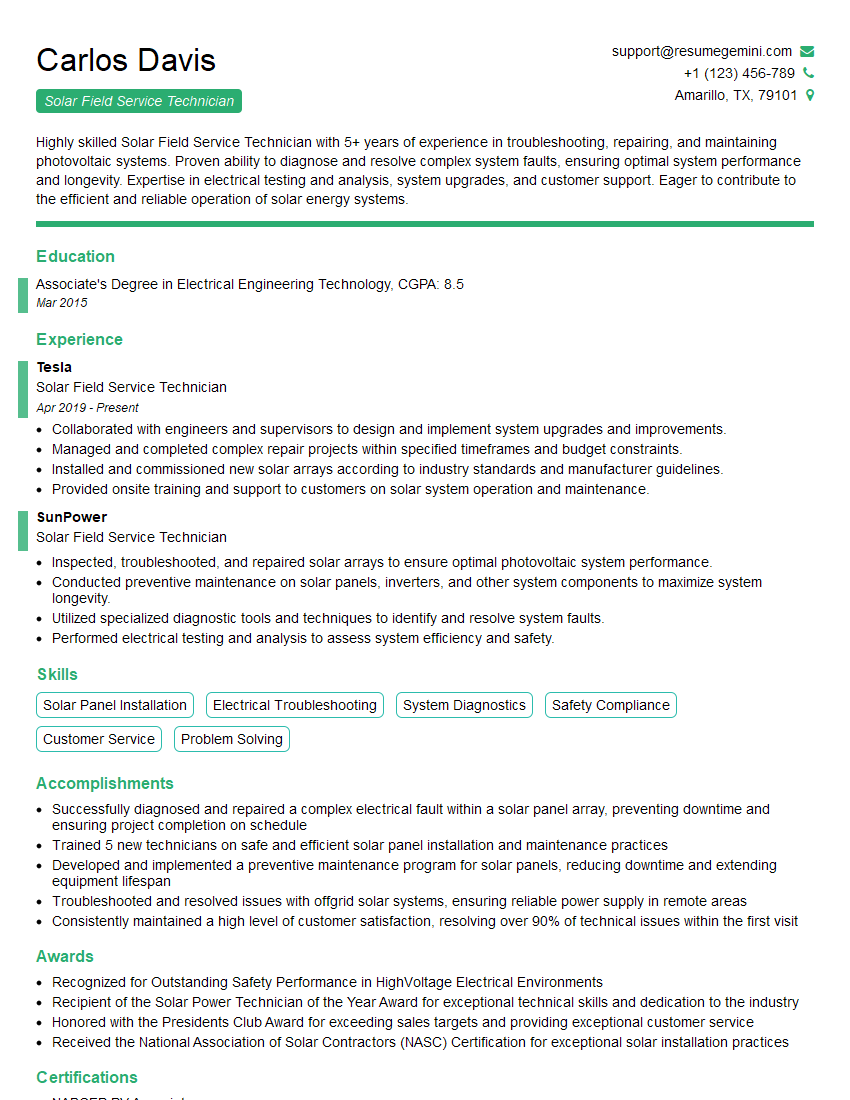
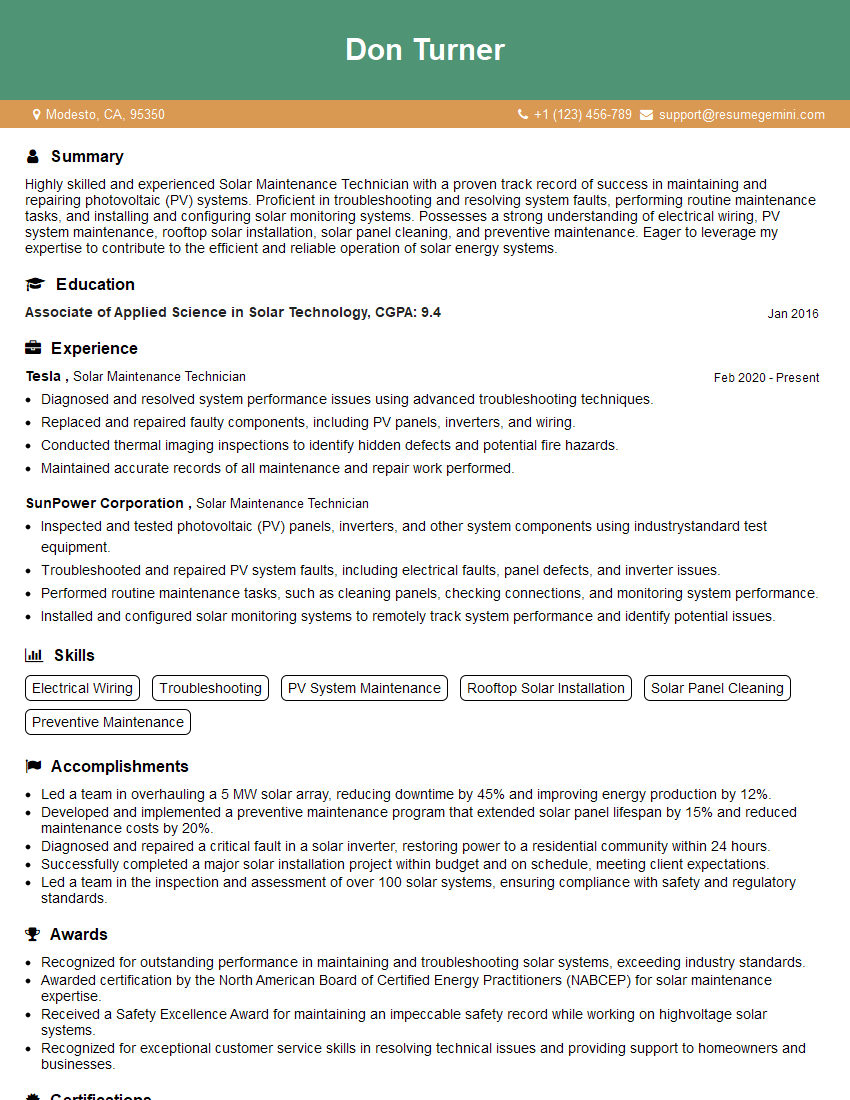
Mastering solar project operations and maintenance is crucial for advancing your career in the rapidly growing renewable energy sector. Demonstrating your expertise through a strong, ATS-friendly resume is essential for securing interviews. To help you create a compelling resume that highlights your skills and experience, we strongly encourage you to use ResumeGemini. ResumeGemini provides tools and resources to build a professional resume that stands out to potential employers. Examples of resumes tailored to solar project operations and maintenance experience are available to help you get started.

Explore more articles
Users Rating of Our Blogs
Share Your Experience
We value your feedback! Please rate our content and share your thoughts (optional).
What Readers Say About Our Blog
Very informative content, great job.
good