Preparation is the key to success in any interview. In this post, we’ll explore crucial Experience with Steel Fabrication and Construction interview questions and equip you with strategies to craft impactful answers. Whether you’re a beginner or a pro, these tips will elevate your preparation.
Questions Asked in Experience with Steel Fabrication and Construction Interview
Q 1. Describe your experience with different steel grades and their applications.
Steel grades are categorized by their chemical composition and mechanical properties, influencing their suitability for various applications. Understanding these differences is crucial for successful project outcomes.
- Mild Steel (A36): This is a common, versatile grade used in general construction due to its good weldability and moderate strength. Think of the framework for a typical office building or a simple bridge.
- High-Strength Low-Alloy (HSLA) Steel: Offering higher strength-to-weight ratios than mild steel, HSLA grades are ideal for applications where weight reduction is important, like tall buildings or long-span bridges. Imagine the support columns in a modern skyscraper.
- Stainless Steel (304, 316): Known for its corrosion resistance, stainless steel is employed in applications exposed to harsh environments, such as coastal structures or chemical plants. Picture the intricate stainless steel framework of a seaside restaurant.
- Weathering Steel (Corten): This steel develops a protective oxide layer, reducing the need for painting and maintenance. You might find this in outdoor sculptures or architectural features, as the natural patina adds a unique aesthetic.
Selecting the appropriate steel grade involves careful consideration of factors such as strength requirements, corrosion resistance, weldability, and budget constraints. A cost-benefit analysis is typically performed to optimize material selection.
Q 2. Explain the process of steel fabrication from design to installation.
Steel fabrication is a multi-stage process, starting with design and culminating in installation. Think of it as a carefully orchestrated symphony of engineering, precision, and teamwork.
- Design: Engineers create detailed drawings specifying dimensions, material grades, and connection details. This phase often involves sophisticated software for structural analysis.
- Fabrication: Steel is cut, shaped, and welded according to the design specifications. This involves advanced machinery like CNC plasma cutters, press brakes, and various welding equipment.
- Quality Control: Rigorous inspections are performed at each stage to ensure dimensional accuracy, weld quality, and adherence to standards. Non-destructive testing (NDT) might be employed to detect hidden flaws.
- Surface Treatment: Depending on the application, steel may undergo processes like painting, galvanizing (zinc coating), or powder coating for corrosion protection.
- Assembly: Individual fabricated components are assembled into larger sub-assemblies and finally into the complete structure. This often requires heavy lifting equipment and skilled riggers.
- Installation: The completed structure is erected at the project site. This is a critical stage requiring precise planning, coordination, and adherence to safety protocols.
Each step is crucial; a flaw in the early stages can have cascading consequences later on. Imagine a slightly misaligned beam – it might seem insignificant initially, but could lead to instability in the final structure.
Q 3. What are the common welding processes used in steel construction?
Several welding processes are commonly used in steel construction, each with its strengths and limitations. The choice depends on factors like material thickness, joint design, and access.
- Shielded Metal Arc Welding (SMAW): Also known as stick welding, this is a versatile and relatively inexpensive process suitable for various steel grades. It’s often used in field applications where portability is key.
- Gas Metal Arc Welding (GMAW): Also called MIG welding, this process utilizes a continuous wire feed, enabling faster welding speeds and producing good quality welds. This is a popular choice for shop fabrication.
- Gas Tungsten Arc Welding (GTAW): Also known as TIG welding, this is a precise process producing high-quality welds with excellent appearance. It’s often used for critical welds requiring superior aesthetics or in situations where minimal heat input is necessary.
- Flux-Cored Arc Welding (FCAW): This process utilizes a tubular electrode containing flux, which protects the weld from atmospheric contamination. It’s useful for outdoor welding where shielding gas might be impractical.
Each process requires skilled welders who understand the nuances of the technique and can produce strong, sound, and visually acceptable welds.
Q 4. How do you ensure the quality and safety of your work during steel fabrication?
Quality and safety are paramount in steel fabrication. We employ a multi-layered approach to ensure both.
- Material Certification: We verify the steel grade and quality through mill certificates and rigorous material testing.
- Weld Inspection: Visual inspections, as well as non-destructive testing methods such as radiography and ultrasonic testing, are employed to ensure weld integrity.
- Dimensional Control: Precise measurements and tolerances are maintained throughout the fabrication process, minimizing errors.
- Safety Training: All personnel receive comprehensive safety training, including hazard identification, risk assessment, and the proper use of personal protective equipment (PPE).
- Regular Audits: We conduct internal and external audits to monitor compliance with safety regulations and quality standards.
- Documentation: Detailed records are maintained throughout the project, tracking materials, processes, and inspections.
A proactive approach to safety and quality is not just about compliance—it’s a commitment to preventing accidents and delivering superior projects.
Q 5. Describe your experience with blueprint reading and interpretation for steel structures.
Blueprint reading is fundamental to steel fabrication. It’s like reading a map for a complex structure.
My experience involves interpreting various types of drawings, including:
- General Arrangement Drawings: These provide an overall view of the structure, showing the placement of major components.
- Detail Drawings: These show individual components with precise dimensions, connection details, and material specifications.
- Erection Drawings: These provide guidance on the assembly sequence and lifting points during installation.
I’m proficient in understanding symbols, dimensions, tolerances, and material specifications, ensuring accurate interpretation and fabrication. I’ve worked with both 2D and 3D models and can easily translate design intentions into reality.
Q 6. What safety precautions do you take when working at heights during steel erection?
Working at heights during steel erection necessitates stringent safety measures. It’s not just about following rules; it’s about protecting lives.
- Fall Protection: Harnesses, lanyards, and safety nets are mandatory, ensuring that workers are secured and protected from falls.
- Scaffolding: Properly erected and inspected scaffolding provides a safe working platform.
- Trained Personnel: Only trained and certified personnel are allowed to work at heights, ensuring they understand the risks and safety procedures.
- Equipment Inspection: Regular inspection and maintenance of all lifting equipment and fall protection systems are crucial.
- Weather Conditions: Work is suspended in hazardous weather conditions such as strong winds or storms.
- Communication: Clear communication is essential between workers and supervisors, ensuring coordination and avoiding accidents.
Safety at height is not a suggestion; it’s a non-negotiable requirement that prioritizes the well-being of all involved.
Q 7. Explain your understanding of different types of steel connections.
Steel connections are crucial for structural integrity. Understanding their types is essential for choosing the right one for a particular application.
- Bolted Connections: These use high-strength bolts to join steel members. They offer flexibility and can be easily inspected. Think of the numerous bolts holding together the steel framework of a bridge.
- Welded Connections: These join steel members using welding processes. They offer high strength and stiffness, ideal for applications requiring high load-bearing capacity. Imagine the welds holding together the large beams in a high-rise building.
- Riveted Connections: While less common now, riveted connections involve joining steel members using rivets. They are durable but require specialized equipment and expertise.
- Shear Connections: Designed to transmit shear forces between steel members. These are often seen in the connection of beams to columns.
- Moment Connections: Designed to transfer both shear and bending moments between steel members, often found in rigid frame structures.
The choice of connection type depends on factors such as the type of load, the required strength, and the ease of fabrication and erection. Careful design and selection ensure structural stability and safety.
Q 8. How do you handle discrepancies between shop drawings and field conditions?
Discrepancies between shop drawings and field conditions are unfortunately common in steel fabrication and construction. My approach involves a systematic process to ensure accuracy and minimize delays. First, I conduct a thorough site survey before fabrication to identify any potential clashes or inconsistencies. This proactive step helps prevent costly rework later. If discrepancies are discovered during erection, I meticulously document them using photos and detailed sketches. Then, I collaborate with the engineers, architects, and project managers to determine the best course of action. This might involve issuing revised shop drawings, implementing field modifications (with proper approvals), or proposing alternative solutions that maintain structural integrity and safety. For instance, on a recent high-rise project, we discovered a slight misalignment of a column base plate. Instead of scrapping the entire piece, we collaborated with the structural engineer to adjust the base plate using shims and verified the structural integrity through additional calculations and site inspections.
- Document Discrepancies: Photographs, sketches, and written descriptions are crucial for record-keeping and communication.
- Collaborative Problem Solving: Involve all relevant stakeholders to find a mutually agreed-upon solution.
- Prioritize Safety: Any modifications must comply with all safety regulations and structural requirements.
- Formal Change Order Management: Changes must be formally documented and approved through the appropriate change order process to prevent disputes.
Q 9. What are the common challenges faced during steel erection, and how do you overcome them?
Steel erection presents numerous challenges. Weather conditions are a major factor, with wind, rain, and snow impacting safety and efficiency. Precise lifting and placement of steel members require careful planning and execution. Difficulties can arise from site access constraints, especially in congested urban areas or on complex terrain. Coordination with other trades, such as concrete workers and electricians, is also critical for avoiding conflicts. I address these challenges by implementing robust project planning, employing experienced crews, and leveraging technology. This includes utilizing advanced lifting equipment, implementing stringent safety protocols, and employing 3D modeling for pre-construction planning. For example, on a recent bridge project, we used 3D modeling to virtually assemble the steel structure, identifying potential interference problems before the actual erection began. This significantly reduced on-site delays and enhanced safety.
- Detailed Site Planning: Anticipate potential challenges and develop mitigation strategies.
- Rigorous Safety Procedures: Prioritize worker safety and comply with all relevant regulations.
- Effective Communication: Maintain open communication among the entire project team.
- Technological Advancements: Employ advanced technology like 3D modeling, GPS tracking for equipment, and advanced lifting equipment to improve efficiency and accuracy.
Q 10. Describe your experience with using different types of welding equipment.
My experience encompasses a wide range of welding equipment, including Shielded Metal Arc Welding (SMAW), Gas Metal Arc Welding (GMAW), Gas Tungsten Arc Welding (GTAW), and Flux-Cored Arc Welding (FCAW). I am proficient in selecting the appropriate equipment for various applications based on factors like material thickness, joint type, and accessibility. For example, I’d use SMAW for field welds in tight spaces where GMAW might be less practical. GTAW is preferred for high-quality welds on thinner materials, particularly stainless steel. My experience also extends to understanding and maintaining these machines. This includes troubleshooting malfunctions, conducting regular maintenance checks, and ensuring the equipment meets safety standards. I am also familiar with robotic welding systems and their programming. On a large-scale project, we used robotic welding for repetitive tasks which ensured consistency and increased productivity.
Q 11. What are your skills in using CAD software for steel detailing?
I possess strong skills in using CAD software for steel detailing, particularly Tekla Structures and AutoCAD. I am capable of creating detailed drawings, including connection designs, fabrication drawings, and erection plans. My proficiency extends to using these tools for clash detection, quantity take-offs, and generating fabrication reports. I can model complex steel structures, optimize designs for efficiency, and ensure the drawings comply with industry standards and project specifications. For example, on a recent project, I used Tekla Structures to model a complex curved steel roof structure. The 3D model allowed for thorough clash detection, identifying and resolving interference issues early in the design phase, significantly reducing on-site problems and rework.
Q 12. How do you manage a team of steel fabricators or erectors?
Managing a team of steel fabricators or erectors requires strong leadership, communication, and organizational skills. I foster a collaborative and safe work environment by clearly defining roles and responsibilities, providing regular training and feedback, and ensuring that safety procedures are meticulously followed. I use a combination of delegation, mentoring, and motivational techniques to empower my team and achieve project goals. Open communication channels are vital; I regularly hold team meetings, conduct one-on-one sessions, and encourage open dialogue to address concerns or challenges promptly. Conflict resolution is a crucial skill; I strive to resolve any interpersonal conflicts fairly and efficiently, focusing on teamwork and collaboration. On one project, I successfully guided a team through a particularly challenging erection phase by establishing clear communication channels, providing additional training on specific techniques, and proactively addressing potential problems before they escalated.
Q 13. Explain your experience with quality control procedures for steel fabrication.
Quality control is paramount in steel fabrication. My experience involves implementing and overseeing a rigorous quality control (QC) program, encompassing inspections at each stage of the process – from material selection and receiving to fabrication, welding, and erection. This involves visual inspections, dimensional checks using precise measuring tools, and destructive and non-destructive testing (NDT) methods such as ultrasonic testing (UT) and radiographic testing (RT) to ensure welds meet the required standards. We maintain detailed records of all inspections and testing, including photographic documentation and test reports. Any non-conformances are immediately documented, analyzed, and corrective actions implemented. The process involves regular audits to ensure the effectiveness of the QC program and compliance with industry standards. For example, we employed a rigorous quality control system on a recent project, which included a third-party inspection of all critical welds, ensuring complete adherence to project specifications and relevant codes. This proactive approach minimized rework and ensured structural integrity.
Q 14. Describe your knowledge of relevant building codes and standards.
My knowledge of building codes and standards is comprehensive, encompassing AISC (American Institute of Steel Construction) specifications, AWS (American Welding Society) codes, and relevant local building codes. I understand the requirements for material specifications, structural design, fabrication, and erection. I can interpret and apply these codes to ensure compliance and structural integrity. I stay current with changes and updates to these codes through professional development and industry publications. This ensures that our projects meet the highest safety and quality standards. For example, I ensured compliance with AISC 360 and AWS D1.1 standards in a recent project, carefully reviewing calculations, shop drawings, and welding procedures to guarantee the structural safety and durability of the finished structure.
Q 15. How do you estimate material costs and project timelines for steel construction?
Accurately estimating material costs and project timelines in steel construction is crucial for successful project delivery. It involves a multi-step process combining detailed design review, market analysis, and experienced judgment.
First, we meticulously review the structural drawings and specifications to determine the exact quantities of different steel sections (beams, columns, plates), fasteners (bolts, welds), and other materials like concrete for foundations. We then obtain current market prices for these materials from reliable suppliers, factoring in potential price fluctuations and lead times. For example, if we’re working with a high-strength steel that’s in high demand, we’ll account for potential premium costs and longer delivery periods. Software tools are often used to calculate material quantities automatically and generate detailed cost estimates.
Next, we develop a detailed work breakdown structure (WBS) that outlines all project tasks, including fabrication, transportation, erection, and quality control. Each task is assigned a duration based on past project experience, crew size, and potential challenges. Contingency time is added to account for unforeseen delays, such as weather disruptions or equipment malfunction. Tools like critical path method (CPM) scheduling help us visualize the project timeline and identify potential bottlenecks. For instance, if the foundation work is delayed, it can impact the entire project schedule. We use these tools to understand where we need extra resources or careful planning.
Finally, we compile the material costs and labor costs (based on the project timeline and crew needs) to create a comprehensive project estimate. This is regularly reviewed and updated as the project progresses, incorporating any changes in design or material costs. Regular communication with the client throughout this process is key to managing expectations and avoiding costly surprises. For example, if a design change increases the steel quantity by 10%, we immediately update the estimate and discuss it with the client.
Career Expert Tips:
- Ace those interviews! Prepare effectively by reviewing the Top 50 Most Common Interview Questions on ResumeGemini.
- Navigate your job search with confidence! Explore a wide range of Career Tips on ResumeGemini. Learn about common challenges and recommendations to overcome them.
- Craft the perfect resume! Master the Art of Resume Writing with ResumeGemini’s guide. Showcase your unique qualifications and achievements effectively.
- Don’t miss out on holiday savings! Build your dream resume with ResumeGemini’s ATS optimized templates.
Q 16. What are the different types of steel coatings and their applications?
Steel coatings are essential for protecting steel structures from corrosion, extending their lifespan, and enhancing their aesthetic appeal. Various coating types cater to different environmental conditions and project requirements.
- Galvanizing: This involves dipping steel into molten zinc, creating a protective zinc layer that sacrificially corrodes instead of the underlying steel. It’s highly effective in harsh environments and widely used in bridges, transmission towers, and fencing. The thickness of the zinc coating dictates the longevity.
- Painting: A versatile option offering various colors and finishes. Paint coatings provide a barrier against moisture and UV radiation. Careful surface preparation is crucial for proper adhesion. The paint’s quality (e.g., epoxy, polyurethane) determines its durability.
- Powder Coating: An environmentally friendly process applying a dry powder coating electrostatically. It’s durable, resistant to chipping, and offers a wide range of colors and textures. Often used in architectural and industrial applications.
- Metallic Coatings: Such as zinc-aluminum alloys (Galvalume), provide a combination of the benefits of galvanizing and aluminum’s corrosion resistance. These are particularly suitable for coastal areas or environments with high humidity.
The choice of coating depends on factors like budget, environmental exposure, and aesthetic preferences. A detailed corrosion analysis is often conducted to select the appropriate coating system.
Q 17. Explain your experience with working with different types of cranes and lifting equipment.
My experience encompasses a wide range of cranes and lifting equipment used in steel construction, from tower cranes to mobile cranes, and specialized lifting devices. Understanding their capabilities, limitations, and safe operating procedures is paramount.
I’ve worked with various types of tower cranes – including luffing jib cranes and hammerhead cranes – on high-rise building projects. We always plan crane locations strategically to optimize reach and avoid obstacles. Pre-erection inspections are mandatory to ensure the crane’s stability and functionality. I’m familiar with the necessary certifications and documentation for crane operators and riggers.
My experience with mobile cranes involves planning safe lifting operations, including load calculations and slinging techniques. I know how to coordinate crane movements with other site activities to prevent collisions or interferences. I also have hands-on experience with specialized equipment such as crawler cranes for heavy lifting in challenging terrain. For example, in one project involving the installation of massive pre-fabricated steel modules, a crawler crane was essential due to its superior stability and maneuverability on uneven ground.
Safety is always the top priority. We use proper lifting plans, conduct thorough risk assessments, and ensure that all personnel involved are properly trained and certified. The selection of the appropriate equipment is based on load capacity, reach, and site conditions. We avoid overloading equipment and always use safety measures like outriggers, ground mats and lifting beams.
Q 18. How do you ensure the proper alignment and stability of steel structures during erection?
Ensuring proper alignment and stability during steel structure erection is crucial for structural integrity and safety. It relies on meticulous planning, precise measurements, and the use of appropriate equipment.
Before erection, we perform a thorough review of the shop drawings to verify the dimensions and connections of all steel members. This ensures that everything fits according to plan. On-site, we use laser alignment systems and surveying instruments to establish precise reference points. We verify the plumbness and level of erected members using these instruments throughout the process. The use of temporary bracing, scaffolding, and shoring is vital to maintain stability as the structure is assembled. For example, during high-rise building construction, temporary bracing systems are crucial to resist wind loads and prevent sway.
We frequently employ methods like plumb bobs and levels to check vertical alignment. Temporary bracing is connected strategically to minimize the risk of misalignment or collapse. As erection proceeds, regular inspection of the structure ensures that the members are in correct position and adequately braced. Welders use jigs and fixtures to hold members firmly in place before welding. Accurate welding is crucial for strength and stability.
We adhere strictly to the manufacturer’s specifications for bolts and connections. Proper torqueing of bolts is critical to ensure that they bear the intended load. Finally, once a section of the structure is complete, the temporary bracing may be removed after assessing its stability.
Q 19. Describe your troubleshooting skills related to welding defects.
Troubleshooting welding defects requires a combination of visual inspection, non-destructive testing (NDT), and an understanding of welding metallurgy. My experience encompasses identifying and rectifying a range of defects.
Visual Inspection: This is the first step, identifying surface defects like porosity (small holes), undercut (a groove at the edge of the weld), or cracks. I have extensive experience interpreting weld appearance based on welding codes and standards. For example, excessive spatter indicates potential problems with the welding parameters (current, speed).
NDT Methods: If surface inspection is insufficient, I use non-destructive testing methods like magnetic particle inspection (MPI) and radiographic testing (RT) to detect internal flaws such as lack of fusion (incomplete bonding between weld and base metal) or slag inclusions (non-metallic impurities in the weld). MPI is particularly effective for detecting surface and near-surface cracks in ferromagnetic materials, while RT uses X-rays or gamma rays to reveal internal defects.
Corrective Actions: Depending on the severity and location of the defect, the corrective actions vary. Small surface defects might be repaired through grinding and re-welding. More severe defects necessitate removal and replacement of the flawed weld. We always document the defect, the corrective actions taken, and the results of any subsequent inspections. Following established quality control procedures, including proper documentation and record-keeping, is critical. This ensures traceability and compliance with relevant standards.
Q 20. How do you manage project deadlines and budgets effectively?
Managing project deadlines and budgets effectively requires a proactive and organized approach. This involves careful planning, regular monitoring, and efficient communication.
Planning: From the outset, we develop a realistic project schedule using tools like CPM scheduling, identifying critical tasks and potential bottlenecks. A detailed budget is created, allocating funds to each phase of the project. This budget takes into account material costs, labor costs, equipment rentals, and contingency for unforeseen expenses.
Monitoring: Regular progress meetings are held with the project team to track progress against the schedule and budget. Any deviations are identified promptly, and corrective actions are implemented to keep the project on track. For instance, if we find material deliveries are delayed, we immediately explore alternative suppliers and re-evaluate the schedule.
Communication: Open communication with clients, subcontractors, and suppliers is crucial. We maintain a clear communication channel to address any issues, report on progress, and manage expectations. This proactive communication prevents misunderstandings and ensures everyone is working towards the same goals. Regular updates on project status and budget are provided to the client to foster transparency and manage expectations.
Risk Management: We identify and assess potential risks, developing mitigation strategies for issues such as weather delays, material shortages, or equipment failures. Contingency funds are built into the budget to handle unforeseen circumstances.
Q 21. Explain your experience with using project management software.
I have extensive experience using various project management software, including Primavera P6, MS Project, and various cloud-based solutions. These tools are essential for effective project planning, scheduling, cost control, and resource management.
Primavera P6: I use P6 for large-scale projects involving complex scheduling and resource allocation. Its capabilities for critical path analysis, resource leveling, and cost control are invaluable. For instance, we use it to identify tasks that impact the project’s critical path, allowing us to prioritize resources and mitigate potential delays.
MS Project: This software is useful for smaller projects or for creating simpler project schedules and tracking progress. Its user-friendly interface makes it easy to manage tasks, assign resources, and monitor timelines.
Cloud-Based Solutions: I’ve used cloud-based platforms like Asana and Monday.com for collaboration and communication within the project team. These tools facilitate real-time updates, task assignments, and document sharing, streamlining workflows and improving team efficiency.
My proficiency in these software applications allows me to create accurate project plans, track progress effectively, and manage resources efficiently, ultimately contributing to on-time and within-budget project completion.
Q 22. Describe your experience with site surveying and layout for steel structures.
Site surveying and layout for steel structures is the cornerstone of a successful project. It involves meticulously measuring the site, verifying existing conditions, and accurately transferring design plans onto the ground. This process ensures that the steel structure is built precisely to specifications and integrates seamlessly with its surroundings.
- Initial Site Visit & Data Collection: This includes using total stations and GPS technology for precise measurements of the site’s topography, existing utilities (power lines, water pipes, etc.), and any potential obstructions. Photographs and detailed sketches are crucial.
- Establishing Control Points: We establish a network of precisely located points on the ground, serving as reference points for all subsequent measurements and layouts. This ensures accuracy and consistency throughout the project.
- Layout Transfer: Using the control points, we transfer the structural design, including column locations, beam positions, and connection points, onto the site using laser levels, string lines, and other surveying equipment. This involves carefully checking and double-checking measurements to minimize errors.
- Quality Control: Regular checks and comparisons against the design plans are performed throughout the layout process. Any discrepancies are immediately addressed to prevent costly rework later in the project. For example, on a recent high-rise project, we discovered a slight discrepancy in the foundation’s alignment during the layout stage. Addressing it promptly prevented significant delays and cost overruns.
Q 23. How do you handle unexpected problems or delays during a steel construction project?
Unexpected problems and delays are inevitable in construction. My approach involves proactive risk assessment, meticulous planning, and a flexible problem-solving strategy.
- Proactive Risk Management: Before the project begins, we identify potential risks – material delays, weather conditions, equipment malfunctions, etc. – and develop contingency plans to mitigate their impact. This could involve securing multiple suppliers for critical materials or having backup equipment readily available.
- Open Communication: Maintaining transparent and consistent communication with the project team, subcontractors, and clients is paramount. This enables early identification of problems and faster collaboration on solutions. A daily log is maintained to keep a record of progress, issues encountered and decisions made.
- Problem-Solving Framework: When a problem arises, I follow a structured approach: 1) Identify the problem; 2) Analyze the cause; 3) Develop potential solutions; 4) Evaluate the impact of each solution; 5) Implement the best solution; 6) Monitor the results. For instance, during a recent project, a supplier failed to deliver materials on time. By immediately contacting alternative suppliers and re-sequencing tasks, we minimized the project delay to just a couple of days.
- Adaptability: Construction is dynamic. Flexibility is essential. We adapt our plans and methods as needed, always keeping the project’s overall goals in mind. Using BIM modeling helps in visualizing solutions and adapting our work accordingly.
Q 24. What is your experience with different types of cutting and shaping techniques for steel?
My experience encompasses a wide range of steel cutting and shaping techniques, each suited to different applications and project requirements.
- Thermal Cutting: This includes oxy-fuel cutting, plasma arc cutting, and laser cutting. Oxy-fuel cutting is cost-effective for thicker sections, but results in a wider kerf (cut width) and a rougher surface finish. Plasma arc cutting offers greater precision and speed, while laser cutting delivers the highest accuracy and quality, ideal for intricate designs. I have experience using all three for various projects, selecting the most appropriate method based on material thickness, accuracy requirements, and budget constraints.
- Mechanical Cutting: This involves shearing, sawing (abrasive and band), and punching. Shearing is efficient for straight cuts in sheet metal, while sawing is more versatile for curved or complex shapes. Punching is excellent for creating holes in plate steel. The selection depends on the shape and size of the cuts required.
- Cold Forming: Techniques like bending, rolling, and press braking are used to shape steel without applying heat. These are commonly used for forming angles, channels, and other structural members. I am adept at using different types of bending machines and ensuring dimensional accuracy through proper tooling selection and process parameters.
Choosing the right technique depends on several factors including material thickness, required accuracy, and surface finish.
Q 25. Explain your understanding of structural analysis principles related to steel.
My understanding of structural analysis principles related to steel is fundamental to my work. It involves applying engineering principles to ensure that steel structures are safe, stable, and meet design specifications. I am proficient in using both hand calculations and software packages for analysis.
- Load Calculations: This involves determining all loads acting on the structure – dead loads (weight of the structure itself), live loads (occupancy loads, snow loads, wind loads), and other environmental loads. Understanding these loads is critical for sizing structural members appropriately.
- Stress and Strain Analysis: Using software such as RISA or STAAD, I analyze the stresses and strains within the steel members under different loading conditions. This ensures that the members are adequately sized to withstand the forces they’ll experience and remain within their allowable stress limits.
- Connection Design: Connections are critical for the integrity of the entire structure. I analyze connection details to ensure they possess sufficient strength and stiffness to transfer loads effectively. This requires understanding various connection types, such as bolted, welded, or a combination of both.
- Stability Analysis: I perform stability analyses to assess the structure’s resistance to buckling under compressive loads. This is especially crucial for slender members like columns.
I always ensure that my analyses comply with relevant building codes and standards to guarantee structural safety and compliance.
Q 26. Describe your experience with working with subcontractors and suppliers.
Effective collaboration with subcontractors and suppliers is critical for project success. My experience involves building strong relationships based on trust, clear communication, and mutual respect.
- Selection Process: We carefully select subcontractors and suppliers based on their experience, reputation, qualifications, and capacity. References are checked and their previous work is reviewed.
- Clear Contracts and Specifications: Detailed contracts are established outlining scope of work, payment schedules, and quality requirements. This prevents misunderstandings and disputes later.
- Regular Communication and Meetings: Regular meetings and site visits are conducted to monitor progress, address any challenges, and maintain open communication. This ensures everyone is on the same page and working towards the same goals. For instance, during a recent project, a subcontractor faced a delay. By working closely with them, we adjusted the project schedule to accommodate the delay without impacting the overall timeline significantly.
- Conflict Resolution: Should disagreements arise, a collaborative approach is used to find mutually acceptable solutions, often involving mediation if necessary. Maintaining a positive relationship is prioritized to facilitate ongoing cooperation.
Q 27. How do you maintain accurate records and documentation throughout a steel fabrication project?
Maintaining accurate records and documentation is crucial for efficient project management, quality control, and legal compliance. I employ a robust system that combines digital and physical documentation.
- Digital Records: We utilize project management software to track materials, progress, and any changes to the design. Drawings, specifications, and inspection reports are stored digitally and easily accessible to the entire team. This software also helps in creating reports to monitor progress against the planned schedule and budget.
- Physical Records: Important documents, such as material certificates and inspection reports, are maintained in physical files. A well-organized filing system ensures easy retrieval. Each file is labeled appropriately with the project name, date and description.
- Version Control: A system for managing revisions of drawings and documents is used to ensure that everyone works from the latest version. This minimizes errors and confusion.
- Quality Control Inspections: Regular inspections are carried out at different stages of the project, and all inspection results are recorded and documented meticulously, including photographs and non-conformances.
This comprehensive documentation system ensures traceability and accountability, crucial for compliance with industry standards and regulations.
Q 28. What are your future career goals in the steel fabrication and construction industry?
My future career goals are focused on continued growth and leadership within the steel fabrication and construction industry. I aspire to utilize my expertise in a role that combines technical expertise with project management and leadership responsibilities.
- Advanced Skills Development: I aim to expand my knowledge in areas like BIM (Building Information Modeling) and advanced steel analysis techniques. This will allow me to contribute even more effectively to complex projects.
- Leadership and Project Management: I plan to further develop my leadership skills, progressing to project management roles where I can oversee and mentor teams. This would involve leading projects that push the boundaries of design and innovation.
- Industry Contribution: I am committed to staying abreast of the latest industry advancements and contributing to the profession through participation in professional organizations and mentoring young engineers.
Ultimately, my aim is to contribute to the construction of safer, more efficient, and sustainable steel structures.
Key Topics to Learn for Your Steel Fabrication and Construction Interview
- Blueprint Reading and Interpretation: Understanding technical drawings, specifications, and tolerances. Practical application: Explain how you’ve translated blueprints into fabrication plans.
- Welding Techniques and Processes: Familiarity with various welding methods (e.g., MIG, TIG, stick) and their appropriate applications. Practical application: Describe your experience with different welding techniques and materials, highlighting problem-solving scenarios where you had to adapt your approach.
- Material Selection and Properties: Knowledge of different steel grades, their strengths, weaknesses, and suitability for specific projects. Practical application: Explain how you’ve selected materials based on project requirements and budget constraints.
- Fabrication Processes: Understanding cutting, bending, forming, and assembling techniques. Practical application: Detail your experience with different fabrication equipment and processes, including safety procedures.
- Quality Control and Inspection: Implementing quality control measures throughout the fabrication process. Practical application: Describe your experience with quality control checks and how you ensured compliance with industry standards and building codes.
- Safety Procedures and Regulations: Adherence to safety regulations and best practices in a construction environment. Practical application: Provide examples of how you have ensured a safe working environment for yourself and your team.
- Project Management Fundamentals (if applicable): Understanding project scheduling, resource allocation, and budget management. Practical application: If relevant to your experience, discuss your involvement in managing aspects of a steel fabrication or construction project.
- Problem-Solving and Troubleshooting: Ability to identify and resolve issues during the fabrication and construction process. Practical application: Share specific instances where you identified and solved a problem efficiently and effectively.
Next Steps
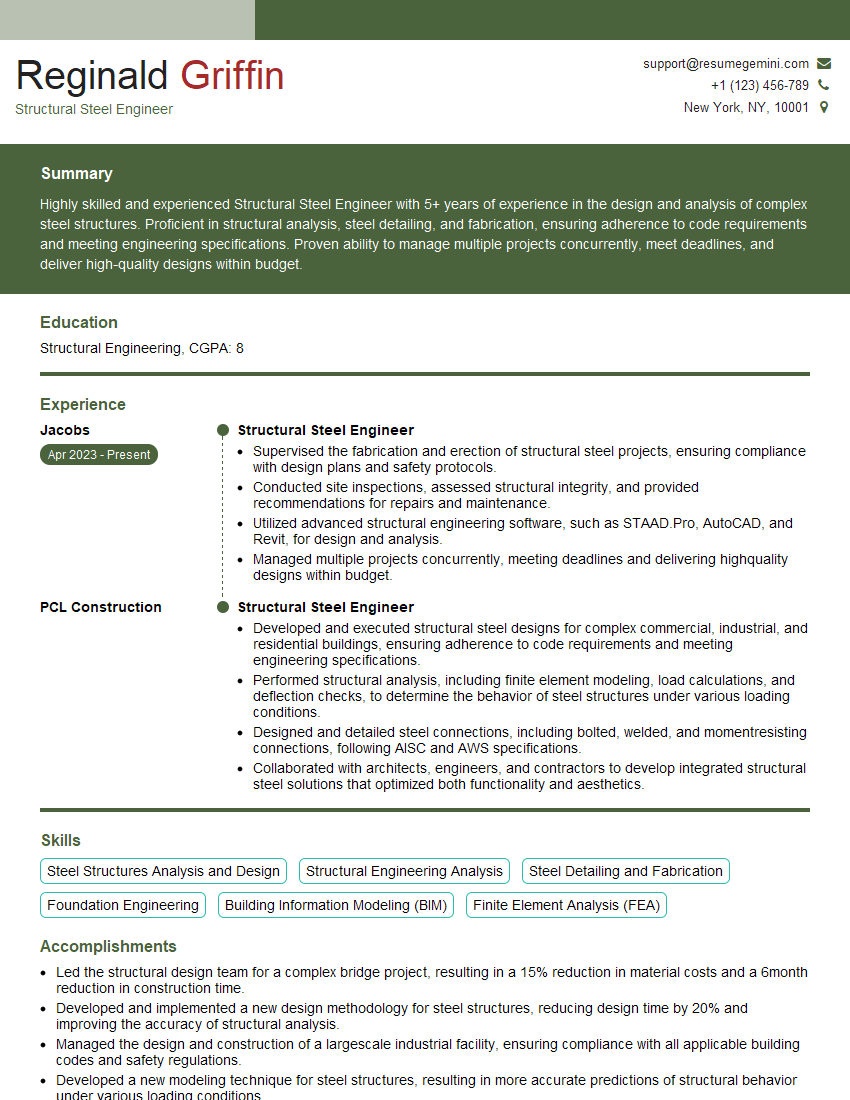
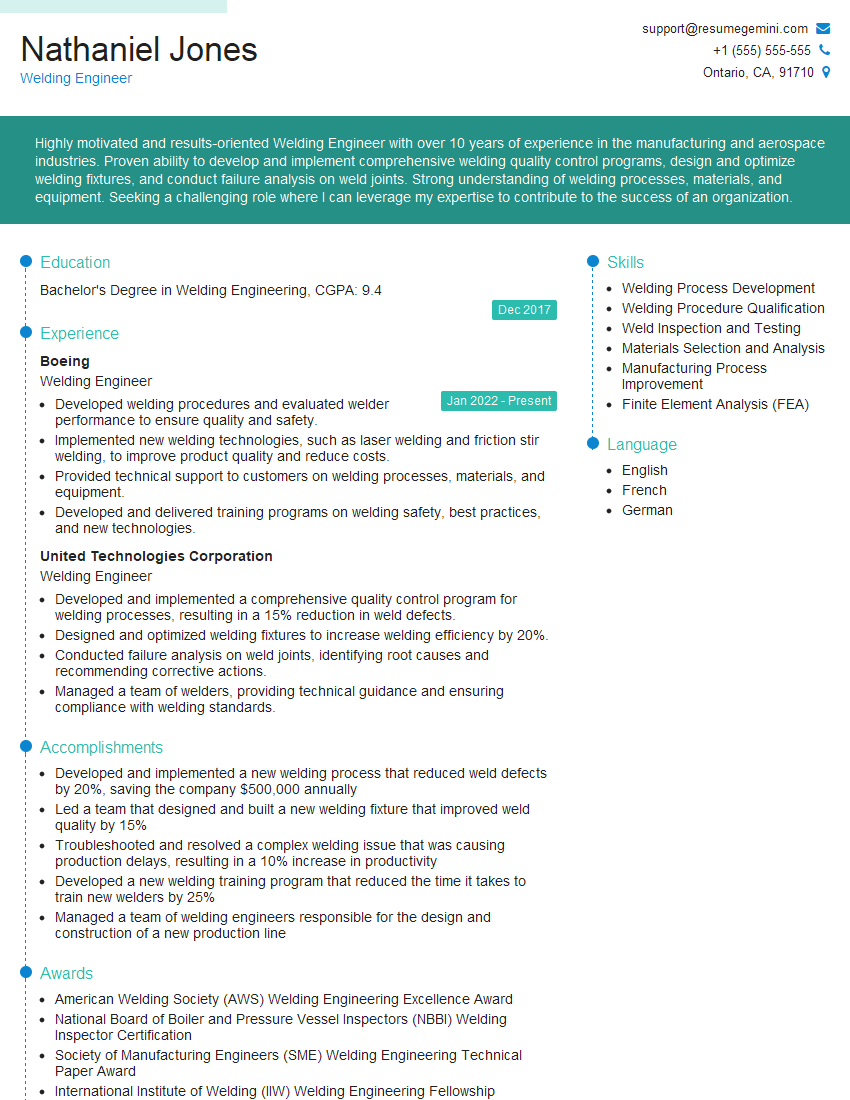
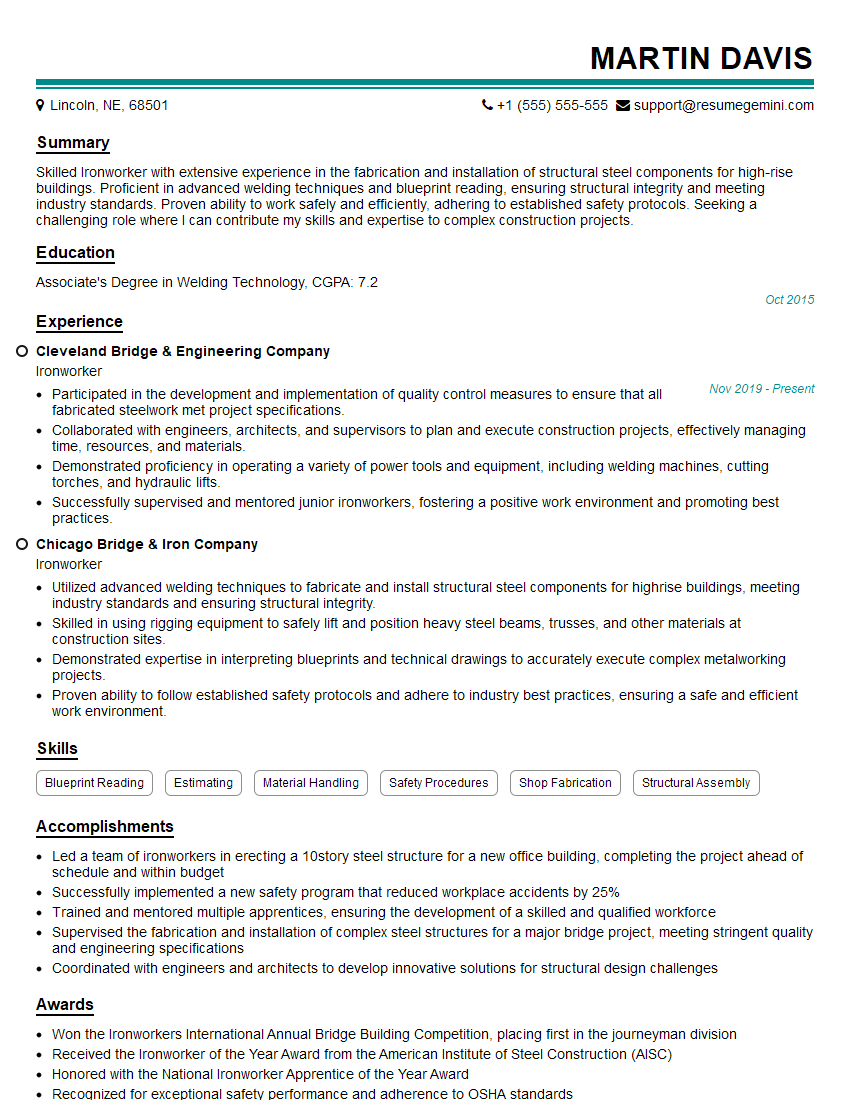
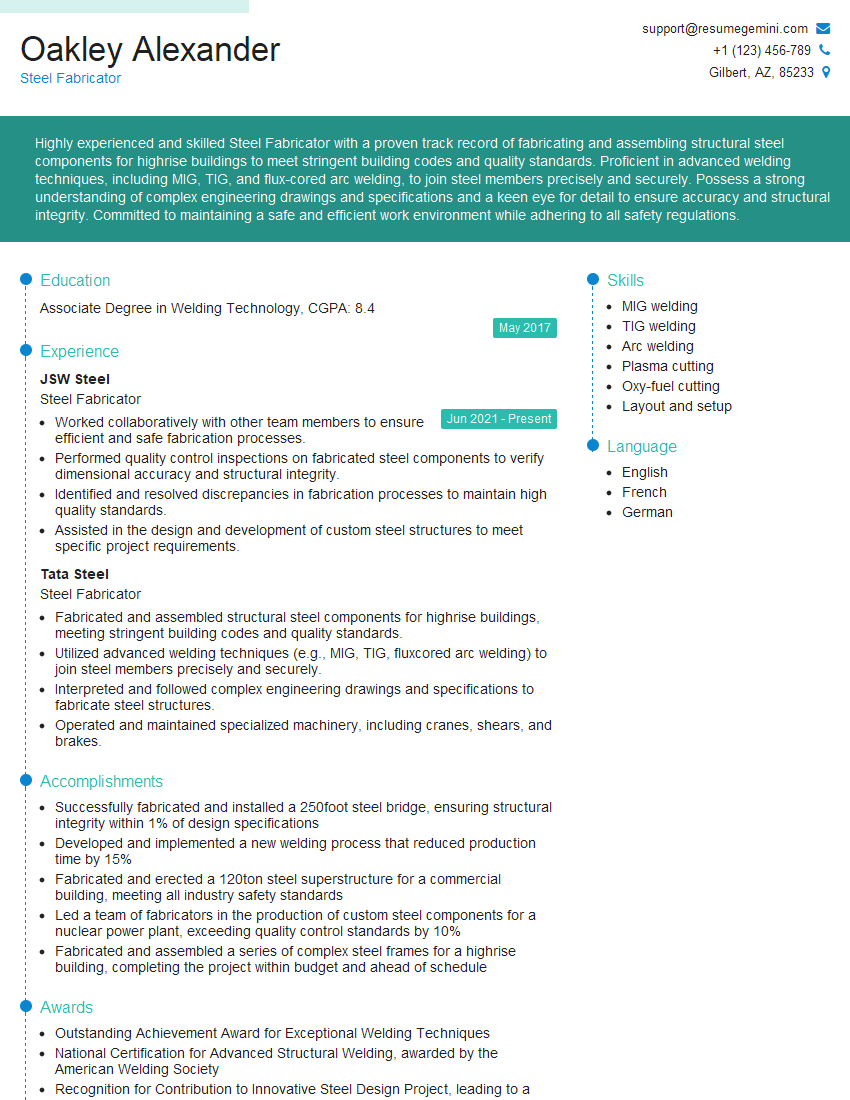
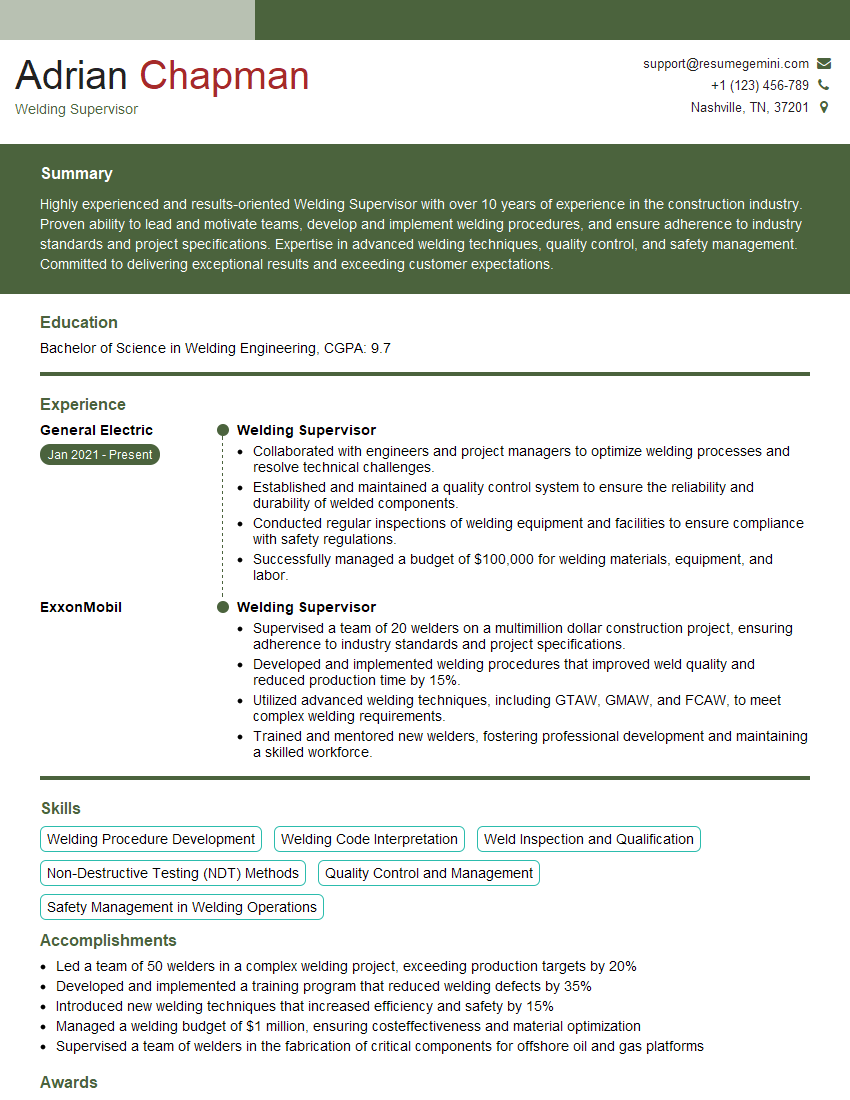
Mastering steel fabrication and construction knowledge is crucial for career advancement in this demanding and rewarding field. A strong understanding of these principles will significantly increase your interview success rate and open doors to exciting opportunities. To further enhance your job prospects, creating an ATS-friendly resume is essential. ResumeGemini can help you build a professional, impactful resume tailored to the specific requirements of your target roles. We provide examples of resumes tailored to Experience with Steel Fabrication and Construction to help you get started. Invest the time to craft a compelling resume that showcases your skills and experience – it’s your first impression with potential employers.

Explore more articles
Users Rating of Our Blogs
Share Your Experience
We value your feedback! Please rate our content and share your thoughts (optional).
What Readers Say About Our Blog
Very informative content, great job.
good