The thought of an interview can be nerve-wracking, but the right preparation can make all the difference. Explore this comprehensive guide to Granite Installation interview questions and gain the confidence you need to showcase your abilities and secure the role.
Questions Asked in Granite Installation Interview
Q 1. Describe your experience with various granite types and their unique installation challenges.
My experience spans a wide range of granite types, each presenting unique installation challenges. For instance, Brazilian granite, known for its stunning veining, can be more prone to cracking during fabrication if not handled with precision. This requires extra care during cutting and polishing. Conversely, lighter-colored granites like Kashmir White are often less dense and can be more susceptible to staining if not properly sealed. This necessitates meticulous attention to detail during sealing and post-installation maintenance. I’ve also worked extensively with darker granites like Black Galaxy, which can be more challenging to clean due to their ability to show dust and smudges more prominently. Each type requires a tailored approach—from choosing the right adhesives to understanding its unique susceptibility to damage—to ensure a flawless, long-lasting installation.
- Brazilian Granite: Requires precise cutting and polishing to prevent cracking.
- Kashmir White Granite: Needs thorough sealing to prevent staining.
- Black Galaxy Granite: Demands careful cleaning to avoid smudging and showing dust.
Q 2. Explain the process of templating granite countertops.
Templating is the crucial first step, creating the exact blueprint for the granite countertops. It involves meticulously measuring and marking the countertop’s dimensions and shape directly onto the existing cabinetry or surface. I use high-precision tools like a laser level and a digital measuring tape to ensure accuracy down to the millimeter. We create a paper template to transfer measurements to the granite slab. It’s like making a paper doll cut-out of your countertop which is then applied to the granite. We then mark the template with cut lines. This paper template is incredibly important as it’s then used to guide the precise cutting of the granite slab to the exact specifications, preventing errors and ensuring a perfect fit. Any discrepancies at this stage can lead to significant problems later. I always double-check my measurements and compare them to the client’s specifications before proceeding to the cutting phase.
Q 3. What safety measures do you employ during granite installation?
Safety is paramount. Granite is heavy and sharp, demanding rigorous safety protocols. I always wear safety glasses, gloves, and dust masks to protect against flying debris and silica dust, a known respiratory hazard. We use proper lifting techniques to prevent injuries during handling of heavy slabs, and I ensure the work area is clear of obstructions to prevent tripping hazards. Additionally, I regularly inspect equipment before use to make sure it’s in good working order and complies with safety standards. The use of safety equipment isn’t just a rule to follow but an essential practice for preventing potential accidents and protecting the wellbeing of both myself and my clients.
Q 4. How do you handle granite edge profiling and finishing?
Edge profiling transforms the raw granite slab into a beautiful and functional countertop. I use specialized machinery, including a variety of routers and grinders, to achieve precise edges. Popular profiles include bullnose, ogee, eased, and bevel. Each style requires specific tooling and techniques. After profiling, the edges are meticulously polished using diamond pads to achieve a smooth, flawless finish, enhancing both the aesthetics and durability of the countertop. The final polish must be consistently applied and checked to prevent inconsistencies.
Q 5. What tools and equipment are essential for efficient granite installation?
Efficient granite installation requires a range of specialized tools and equipment. Essential tools include:
- Measuring tools: Laser level, measuring tape, and square.
- Cutting tools: Granite saw with diamond blades (wet saw is preferred for reduced dust), angle grinder with diamond grinding wheels.
- Finishing tools: Various diamond polishing pads, edge profiling routers.
- Lifting equipment: Suction cups, granite slab lifters (depending on slab size and weight).
- Safety equipment: Safety glasses, gloves, dust mask, hearing protection.
- Adhesives and Sealants: High-quality granite adhesive and sealant.
The right tools ensure precision, speed, and, crucially, safety.
Q 6. Describe your experience with different types of granite adhesives and sealants.
I have experience with various granite adhesives and sealants, each with its own strengths and weaknesses. Epoxy-based adhesives are known for their superior strength and bonding capabilities, especially on porous surfaces. However, they require precise application and careful mixing. Modified silane sealers provide excellent stain resistance, creating a protective barrier that prevents water and other liquids from penetrating the granite’s pores. I always choose sealants that comply with relevant industry standards and are specifically designed for granite surfaces. The selection depends heavily on the specific granite type and the overall project requirements.
Q 7. How do you ensure accurate measurements and cuts during installation?
Accuracy is non-negotiable. I employ multiple strategies to ensure precise measurements and cuts. First, I use a combination of laser levels and digital measuring tapes for initial measurements. Templates are created twice, allowing verification between the two. I always double-check my measurements against the initial template and the customer’s specifications to mitigate errors. The use of a wet saw, minimizing dust and allowing for precise cuts, also contributes to the accuracy of the final product. Finally, I always conduct a thorough final check before installation to prevent any issues that may arise after it is already installed.
Q 8. What are the common issues encountered during granite installation, and how do you resolve them?
Common issues during granite installation often stem from improper planning, material handling, or execution. For example, uneven surfaces can lead to a wobbly countertop, while incorrect measurements result in gaps or overhangs. Another frequent problem is chipping or cracking during transport or installation due to mishandling. Additionally, improper sealing can lead to staining and discoloration.
- Uneven Surfaces: This is addressed by ensuring a perfectly level substrate before installation. We use shims and leveling compounds to achieve a smooth, flat surface. Think of it like building a perfect foundation for a house – you can’t have a stable structure without one.
- Incorrect Measurements: Precise measurements and templating are crucial. We double-check our measurements multiple times and always use a professional templating service for complex layouts. Mistakes here mean costly re-fabrication.
- Chipping/Cracking: We use appropriate padding and handling techniques throughout transportation and installation to prevent damage. Granite is a strong material but it’s not invincible.
- Improper Sealing: Applying a high-quality sealant after installation is vital. This protects the granite from stains and water damage. We typically use a penetrating sealant to protect the stone’s porosity.
Q 9. Explain your process for installing granite backsplashes.
Installing granite backsplashes involves meticulous precision and attention to detail. The process begins with accurate measurements and templating of the area. We then cut the granite to size, ensuring precise fitting around outlets and other features. The backsplash is then adhered to the wall using a high-quality adhesive suitable for granite and the chosen substrate (tile, drywall, etc.). Finally, the seams are meticulously grouted and sealed to create a seamless, elegant look. We take extra care to ensure a clean finish around corners and edges. Think of it like assembling a jigsaw puzzle – every piece needs to fit perfectly.
We always pre-drill holes for any screws or fasteners to prevent chipping the stone. And we use backer boards for added support, especially on large backsplashes. This prevents stress cracks and offers long term stability.
Q 10. Describe your experience with granite sink installation.
Granite sink installation requires careful planning and execution to ensure a perfect fit and watertight seal. We start by ensuring the cutout in the countertop is perfectly sized for the sink. The sink is then carefully lowered into place, ensuring it sits flush with the countertop. A high-quality silicone sealant is used to create a watertight seal between the sink and the countertop. Proper sealant application is key; leaving gaps would lead to leaks. I’ve encountered issues in the past where the sink wasn’t properly supported which could result in cracks so I use additional bracing for larger or heavier sinks.
One particularly memorable project involved a large, under-mount granite sink in a kitchen remodel. The sink was quite heavy, and we had to coordinate our efforts to avoid damaging the delicate granite. We used extra support during the installation process and took our time to ensure everything was precisely aligned.
Q 11. How do you handle unexpected issues, such as damage or mismeasurements?
Handling unexpected issues is part and parcel of granite installation. If damage occurs, the first step is assessment. A small chip might be repairable with a resin filler and polishing, while more extensive damage may require replacement of the affected piece. Mismeasurements are more serious; we may need to re-template and refabricate the piece. The best way to mitigate such issues is to have a contingency plan. This often includes having extra material on hand for possible repairs or replacements.
For example, if a piece gets chipped during transport, I would immediately assess the extent of the damage. A small chip could be professionally repaired, but a larger crack would necessitate a replacement piece, carefully matching the original slab.
Q 12. How do you ensure the proper support and weight distribution of granite countertops?
Proper support and weight distribution are critical for granite countertops. Granite is a heavy material; inadequate support can lead to cracking or sagging. We achieve this by using appropriate cabinet construction and bracing. Cabinets should be sturdy, with solid wood framing to distribute the weight evenly across the surface. For overhangs, we utilize special supports or brackets to prevent stress on the countertop.
Imagine a bridge – it requires strong supports to distribute the weight of traffic. Similarly, granite countertops need robust support to avoid damage over time.
Q 13. What is your experience with polishing and maintaining granite surfaces?
Polishing and maintaining granite surfaces is essential for preserving their beauty and longevity. Regular cleaning with a mild detergent and water is sufficient for daily maintenance. More thorough cleaning can be done with a granite-specific cleaner. Periodically, a professional polishing can restore the shine and address minor scratches. For deep cleaning and stain removal, we have access to professional-grade products. This can sometimes involve specialized diamond pads for polishing.
Regular sealing is also a crucial part of maintaining granite. This prevents water and oil penetration, which could cause staining or discoloration. I usually recommend resealing every 1-2 years, depending on the usage.
Q 14. Explain the process of repairing minor chips or cracks in granite.
Repairing minor chips or cracks in granite often involves using a resin filler that matches the granite’s color. The process starts by cleaning the damaged area thoroughly. Then, the resin filler is carefully applied and allowed to cure completely. Once cured, the area is sanded and polished to blend seamlessly with the surrounding granite. For deeper cracks, it might require more advanced techniques such as epoxy injection and careful pressure to fill it fully.
The key to successful repair is choosing a high-quality resin filler and matching the color as accurately as possible. A poorly matched filler is immediately noticeable and ruins the aesthetics.
Q 15. How do you manage multiple projects simultaneously?
Managing multiple granite installation projects simultaneously requires meticulous organization and effective time management. I utilize project management software to track deadlines, resource allocation, and individual project progress. This allows me to prioritize tasks based on urgency and dependencies, ensuring efficient workflow across all projects. For example, I might schedule material delivery for one project while the team focuses on the final polishing stage of another. This prevents bottlenecks and keeps all projects moving forward at optimal speed. Regular team meetings are crucial for communication and problem-solving, allowing us to adapt to unexpected issues in a timely manner and prevent delays.
Furthermore, I break down larger projects into smaller, manageable tasks, assigning specific responsibilities to team members based on their expertise. This modular approach allows us to track progress effectively and address potential roadblocks promptly. I also maintain open communication with clients, keeping them informed about the progress of their projects and addressing any concerns proactively. This proactive approach to communication helps maintain client satisfaction and prevents misunderstandings.
Career Expert Tips:
- Ace those interviews! Prepare effectively by reviewing the Top 50 Most Common Interview Questions on ResumeGemini.
- Navigate your job search with confidence! Explore a wide range of Career Tips on ResumeGemini. Learn about common challenges and recommendations to overcome them.
- Craft the perfect resume! Master the Art of Resume Writing with ResumeGemini’s guide. Showcase your unique qualifications and achievements effectively.
- Don’t miss out on holiday savings! Build your dream resume with ResumeGemini’s ATS optimized templates.
Q 16. How do you communicate effectively with clients and colleagues?
Effective communication is paramount in granite installation. With clients, I prioritize clear, concise explanations of the process, materials, and timelines. I use visual aids like samples and sketches to ensure understanding, and I actively encourage questions and feedback. This creates transparency and builds trust. For example, before starting a project, I’ll thoroughly discuss the client’s vision, their budget, and any potential challenges, ensuring we’re all on the same page. Regular updates on progress, both verbally and through photos, keep them engaged and informed.
With colleagues, communication is equally vital. I foster a collaborative environment where open dialogue is encouraged. I use a combination of daily briefings, project management software updates, and direct communication to address concerns or provide support. This promotes a strong team dynamic and ensures every team member feels heard and understood. For example, if a particular cut requires a unique approach, I’ll discuss the best technique with the team before proceeding, ensuring everyone’s input and safety.
Q 17. Describe your experience working with different types of undermount sinks.
My experience encompasses a wide range of undermount sinks, from simple single-basin designs to complex double-basin configurations with intricate features. The installation process varies depending on the sink material (stainless steel, ceramic, composite), its shape, and the precise specifications of the countertop. Precise measurements and careful template creation are critical for a perfect fit. I’ve worked with various installation methods, including using silicone sealant, specialized clips, and epoxy adhesive to achieve a watertight and aesthetically pleasing result. I’ve encountered situations requiring creative solutions, such as adapting the template to accommodate minor imperfections in the sink or countertop. Every project presents a unique set of challenges, and my ability to adapt and find solutions is a key part of my success.
For instance, installing a large, heavy composite sink requires careful handling and precise positioning to avoid cracking or damage to the countertop. Conversely, a smaller, lighter stainless steel sink often requires more attention to sealant application to prevent water leakage.
Q 18. What are the different types of granite finishes, and which is best for which application?
Granite finishes significantly impact the countertop’s appearance and functionality. Common finishes include:
- Polished: High-gloss, reflective surface; ideal for modern kitchens where visual appeal is paramount.
- Honed: Matte, low-sheen finish; less prone to showing fingerprints and scratches than polished granite; suitable for contemporary or traditional settings.
- Leathered: Textured, non-reflective surface; hides scratches well, excellent for busy kitchens.
- Flamed: Rough, textured surface; provides a rustic or antique look; less common in residential settings.
The best finish depends on the client’s preferences and the intended use of the kitchen. A polished finish might be chosen for a formal dining area, while a leathered finish might be preferred for a family-friendly kitchen where durability and ease of maintenance are crucial. I always discuss the pros and cons of each finish with clients to help them make an informed decision.
Q 19. Explain your experience with different types of countertop seams and how to minimize their visibility.
Seams are inevitable in many granite countertop installations, especially with larger slabs. Minimizing their visibility requires careful planning and precise execution. I’ve worked with various seam types, including:
- Butt Joint: Two edges butted together; requires precise cutting and strong adhesive for minimal gap.
- Scribing: One edge is shaped to precisely fit the other, often used for irregular shapes.
- Beveled Edge Seam: A beveled edge on each piece creates a more subtle seam.
To minimize visibility, I use high-quality epoxy resin specifically designed for granite. The color of the resin is matched meticulously to the granite’s shade for a seamless blend. Accurate measurements and skillful cutting are vital to ensuring a tight fit before applying the adhesive. After the adhesive has cured, the seam is thoroughly polished and buffed to match the rest of the countertop’s surface. This process requires patience and precision to achieve an almost invisible seam.
Q 20. How do you ensure a seamless transition between granite countertops and other materials?
Seamless transitions between granite countertops and other materials, such as backsplashes or wood cabinetry, require meticulous planning and execution. The key is to ensure consistent height and a flush fit. I utilize various techniques, including carefully measuring and cutting the granite to fit precisely against the adjacent material. For example, when joining granite with a tile backsplash, we might use a thin, color-matched caulk to fill any minor gaps and create a clean finish. Similarly, when meeting granite with wooden cabinetry, proper measurements are crucial to avoid gaps and maintain a professional look. I always discuss the planned transition with clients beforehand, ensuring they’re happy with the design and the planned method of installation.
The choice of transition method depends on the materials involved and the client’s aesthetic preferences. Some clients may prefer a more visible transition, while others want a seamless, virtually invisible joint. My role is to advise on the most appropriate technique, considering both functionality and aesthetics.
Q 21. Describe your understanding of the relevant building codes and safety regulations.
Understanding and adhering to building codes and safety regulations are paramount in granite installation. This includes, but is not limited to, following local guidelines on countertop heights, proper ventilation during cutting and polishing (to avoid silica dust inhalation), safe disposal of waste materials, and the use of appropriate personal protective equipment (PPE) such as eye protection, dust masks, and gloves. I am familiar with OSHA regulations and local building codes pertaining to countertop installation, and I ensure that all work is conducted in compliance with these standards. Safety is always my top priority, both for my team and for the client. Before each project, I review the relevant codes and ensure our team is well-trained and equipped to work safely and efficiently. Furthermore, I maintain accurate records of all work completed and materials used to meet any compliance and record-keeping requirements.
Q 22. What is your experience with using CNC machinery for granite fabrication?
My experience with CNC machinery in granite fabrication is extensive. I’ve worked with various CNC routers and waterjet cutters for over 10 years, mastering their operation and programming for precise cuts, intricate designs, and complex shapes. This includes programming CAM software to generate toolpaths for different granite types, optimizing cutting parameters for speed and precision, and troubleshooting any machine malfunctions. For example, I once used a CNC router to create a highly detailed, customized countertop featuring a complex mosaic pattern – a project requiring precise control and a deep understanding of the machine’s capabilities. I’m proficient in maintaining and calibrating these machines to ensure consistent, high-quality outputs. I’m also familiar with different tooling options and their application, depending on the material and desired finish.
Q 23. How do you handle customer complaints or concerns?
Handling customer complaints is crucial in this business. My approach is always one of empathy and proactive problem-solving. I first actively listen to the customer, ensuring I fully understand their concern. Then, I clearly explain the situation from a technical perspective, identifying the potential cause of the issue. I always offer a sincere apology, regardless of fault. I firmly believe in finding a mutually agreeable solution, whether it’s a repair, replacement, or a fair compromise. For instance, I once had a customer complain about a minor chip on a newly installed countertop. While it was a minor imperfection, I understood their disappointment and arranged for a quick and seamless replacement piece, maintaining a positive relationship with the client. Documentation and clear communication throughout the process are key to avoiding misunderstandings.
Q 24. Describe your experience with different types of granite cutting equipment.
My experience encompasses a wide range of granite cutting equipment. I’m highly proficient with diamond blade saws (both bridge saws and gang saws), which are essential for cutting large slabs into manageable pieces. I’m also skilled in using waterjet cutters for precise cuts, especially in complex designs, and CNC routers for shaping and detailing. I understand the differences in cutting techniques and the specific applications of each machine; for example, a bridge saw is excellent for rough cutting, while a waterjet is better suited for intricate designs or thin cuts. I also have experience with various hand tools, such as angle grinders and polishers, to achieve the final finish. Understanding the strengths and limitations of each tool is crucial for efficient and high-quality fabrication.
Q 25. How do you maintain the quality and consistency of your work?
Maintaining quality and consistency is paramount. I achieve this through a meticulous approach encompassing several key areas. First, careful slab selection is critical. I meticulously inspect each slab for imperfections and structural weaknesses before fabrication. Second, I use precise measurement and cutting techniques, employing the most appropriate equipment for the job. Third, quality control checks are performed at each stage of the process, from cutting and shaping to polishing and finishing. Finally, I maintain and regularly calibrate all equipment to ensure optimal performance and consistent results. This methodical approach, combined with attention to detail, is how I ensure every project meets our stringent quality standards.
Q 26. What is your experience working with large format granite slabs?
I possess significant experience working with large format granite slabs. This involves specialized handling techniques to prevent breakage and damage, using appropriate lifting equipment and employing safety precautions. Careful planning is crucial for cutting and fabrication, often requiring precise measurements and strategic cutting patterns to maximize material yield and minimize waste. I am adept at using large-scale cutting equipment, such as bridge saws and gang saws, to efficiently process these slabs. For instance, I recently completed a project involving several extra-large slabs for a commercial kitchen installation. Safe and efficient handling of these slabs was paramount to project success.
Q 27. What are your salary expectations for this role?
My salary expectations for this role are in the range of $X to $Y annually, depending on the comprehensive benefits package and the specific responsibilities of the position. This range reflects my extensive experience, proven skills, and consistent record of delivering high-quality results in granite installation and fabrication.
Q 28. Are you comfortable working at heights or in confined spaces?
Yes, I am comfortable working at heights and in confined spaces, provided appropriate safety measures are in place. I always prioritize safety and follow all relevant regulations and procedures. I have a valid certification for working at heights (if applicable and replace with actual certification) and always use appropriate safety equipment, such as harnesses and fall protection systems, when working at heights. In confined spaces, I’m familiar with the risks and necessary precautions, ensuring proper ventilation and utilizing appropriate personal protective equipment.
Key Topics to Learn for Granite Installation Interview
- Understanding Granite Properties: Learn about different granite types, their characteristics (hardness, porosity, etc.), and how these properties impact installation techniques.
- Measurement and Template Creation: Master accurate measurement techniques, including accounting for irregularities and creating precise templates for countertops, backsplashes, and other surfaces.
- Cutting and Fabrication: Understand the use of various cutting tools (e.g., diamond saws, routers) and techniques for precise cutting and shaping of granite slabs.
- Installation Techniques: Familiarize yourself with different installation methods, including the use of adhesives, sealants, and mechanical fasteners. Understand best practices for achieving a seamless and secure installation.
- Edge Profiling and Finishing: Learn about various edge profiles and the techniques for achieving a polished, smooth finish on the granite edges.
- Troubleshooting and Problem Solving: Develop your ability to identify and resolve common installation issues, such as cracks, chips, and uneven surfaces. Practice explaining your problem-solving approach.
- Safety Procedures and Regulations: Demonstrate a strong understanding of safety protocols related to using power tools, handling heavy materials, and adhering to industry regulations.
- Quality Control and Inspection: Know how to perform a thorough quality check of your work and identify potential defects before final client approval.
Next Steps
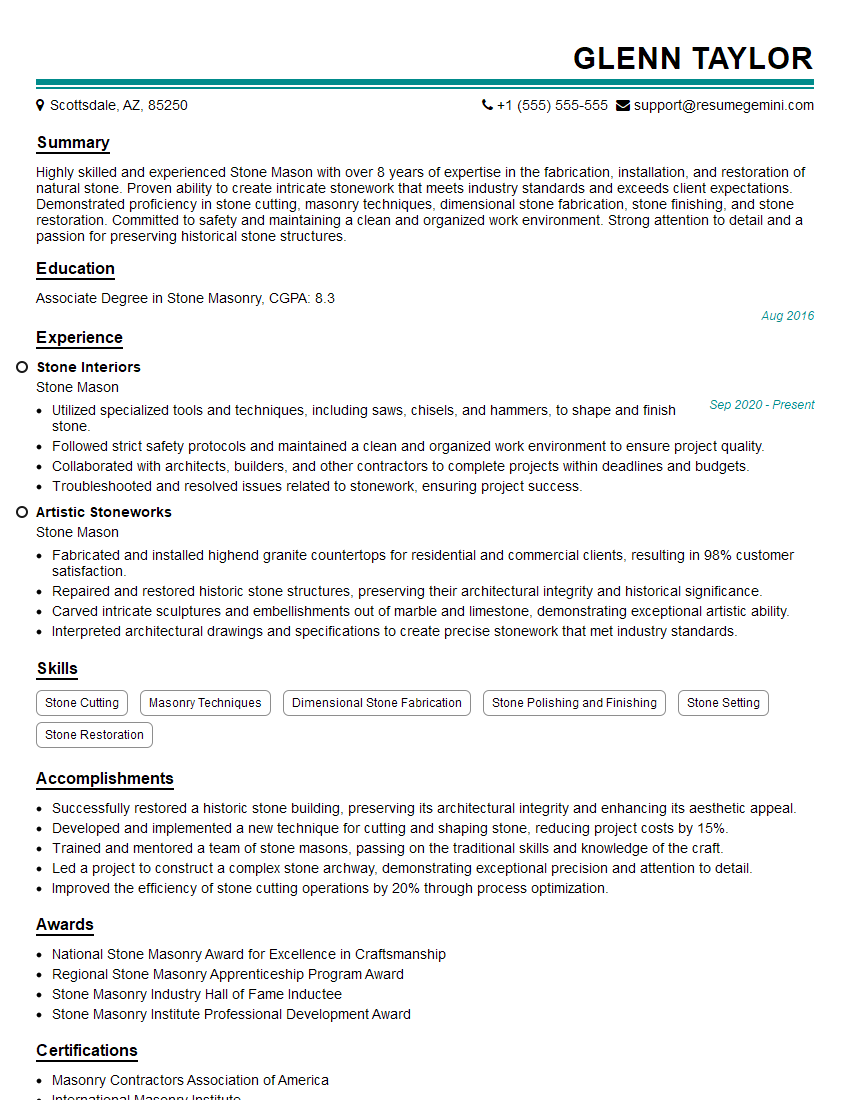
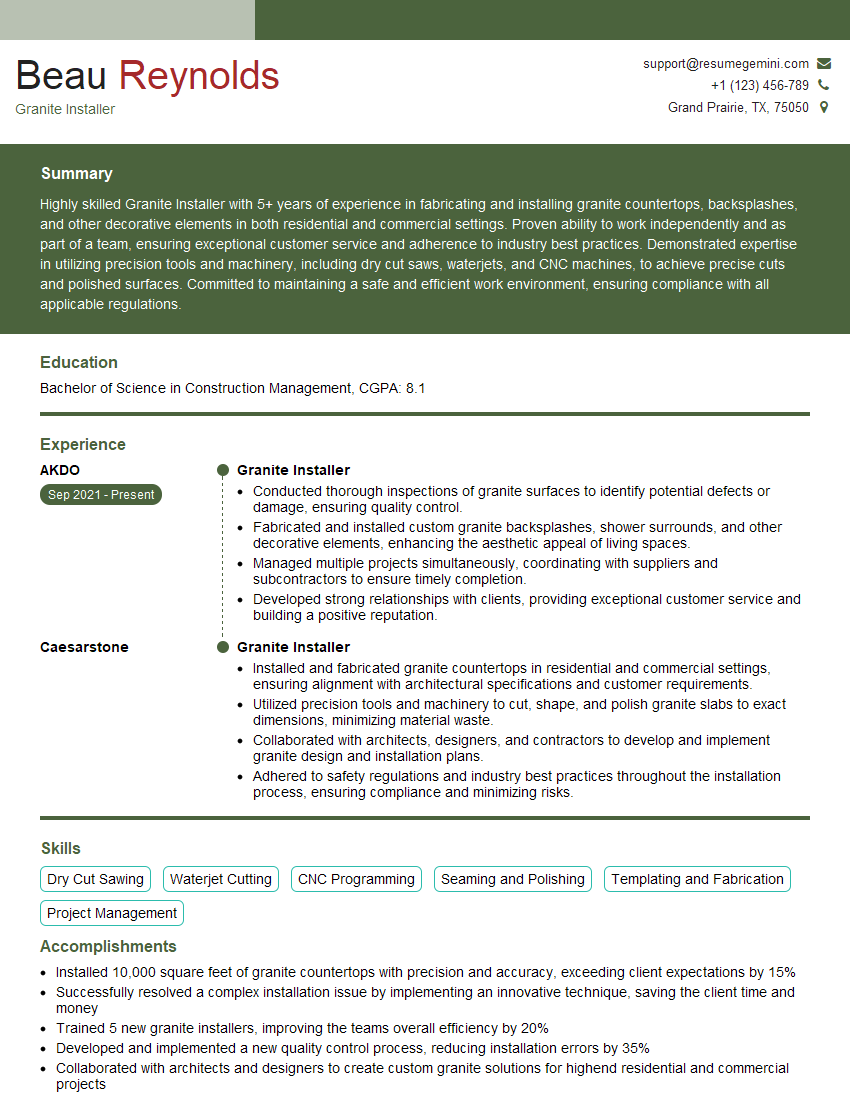
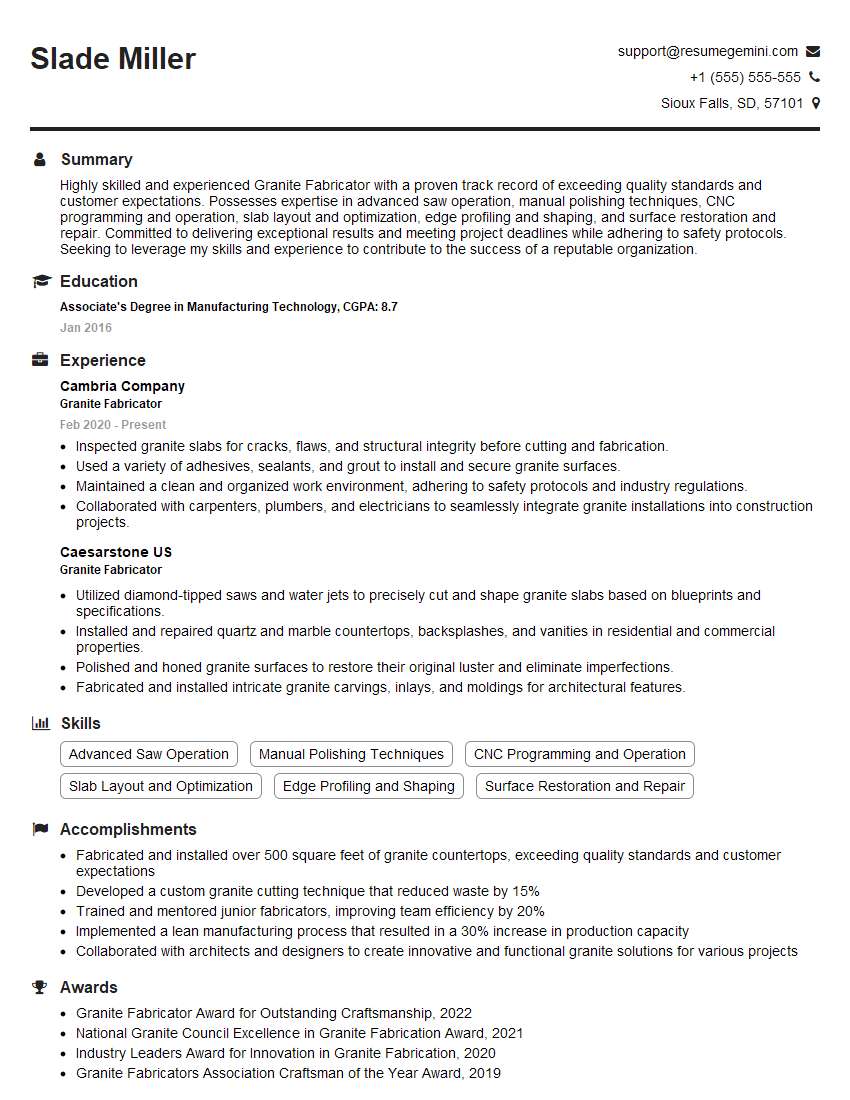
Mastering granite installation opens doors to rewarding career opportunities in a growing industry. The demand for skilled installers continues to rise, offering excellent potential for career advancement and higher earning potential. To maximize your job prospects, creating a strong, ATS-friendly resume is crucial. ResumeGemini is a trusted resource that can help you build a professional resume that highlights your skills and experience effectively. ResumeGemini provides examples of resumes tailored to Granite Installation, allowing you to craft a compelling application that showcases your expertise. Take the next step towards your dream job today!

Explore more articles
Users Rating of Our Blogs
Share Your Experience
We value your feedback! Please rate our content and share your thoughts (optional).
What Readers Say About Our Blog
Very informative content, great job.
good