Unlock your full potential by mastering the most common Expertise in platemaking for different printing applications interview questions. This blog offers a deep dive into the critical topics, ensuring you’re not only prepared to answer but to excel. With these insights, you’ll approach your interview with clarity and confidence.
Questions Asked in Expertise in platemaking for different printing applications Interview
Q 1. Explain the difference between offset, flexographic, and screen printing plates.
The main differences between offset, flexographic, and screen printing plates lie in their material composition, image creation method, and the printing process they’re designed for. Think of it like choosing the right tool for a job: each plate type excels in specific applications.
- Offset Printing Plates: Typically made of aluminum, these plates utilize a chemical process (often computer-to-plate, or CTP) to create a hydrophobic image area that repels ink, and a hydrophilic non-image area that attracts water. This water-ink balance is crucial for the offset printing process, where ink transfers indirectly from the plate to a blanket cylinder, then to the substrate. They are known for their high print quality and fine detail capabilities, perfect for high-volume jobs like magazines and books.
- Flexographic Printing Plates: These plates are usually made from photopolymer, a flexible material that allows for printing on a variety of substrates, including flexible packaging. The image is created photochemically, hardening the exposed areas of the photopolymer to form the raised printing surface. Flexo plates are known for their durability and ability to handle high speeds, ideal for printing on plastic films, labels, and flexible packaging. The image is raised, unlike offset which is essentially planar.
- Screen Printing Plates: These aren’t plates in the traditional sense but rather stencils created on a mesh screen. The image is created by blocking certain areas of the mesh, usually using emulsion, allowing ink to pass through only the open areas onto the substrate. Screen printing is versatile, capable of printing on a wide array of materials with thick ink layers, resulting in vibrant colors and tactile effects, commonly used for t-shirts, posters, and specialized applications.
Q 2. Describe the process of creating a CTP plate.
Creating a Computer-to-Plate (CTP) offset plate is a highly automated process that eliminates the need for film. It starts with a digital file of the artwork, processed by specialized software for image adjustments and plate optimization. This digital file is then sent to a CTP imager, a sophisticated device that exposes the plate to a laser or other light source.
The CTP imager uses a precise beam to expose the photosensitive plate material, hardening or softening specific areas depending on the plate type (positive or negative working). This creates the image on the plate. After imaging, the plate is processed to remove unexposed areas and enhance the image’s quality, often involving washing and baking stages to fix the image. Finally, the plate is inspected for any defects before being mounted on the printing press. The whole process, from digital file to finished plate, is often completed within minutes, significantly faster and more efficient than traditional film-based platemaking.
Q 3. What are the common types of printing plates used in the industry?
The printing industry employs a variety of plate types, each suited to different printing processes and requirements:
- Offset Printing Plates: Aluminum plates (various thicknesses and surface treatments) are dominant, including surface-treated plates for higher resolutions.
- Flexographic Plates: Photopolymer plates, available in different durometers (hardness) and thicknesses, are standard, offering varying flexibility and durability depending on the application.
- Screen Printing Screens: These are made from various mesh materials (nylon, polyester), with different mesh counts (threads per inch) affecting the ink deposit and detail resolution.
- Gravure Cylinders: These are etched cylinders used in gravure printing, a specialized process that produces exceptionally high-quality images, particularly for packaging and high-volume publication work.
The choice of plate type depends heavily on factors like print run length, substrate type, desired print quality, and the printing press itself.
Q 4. How do you troubleshoot a platemaking issue resulting in poor print quality?
Troubleshooting poor print quality stemming from platemaking requires a systematic approach. It’s a process of elimination.
- Visual Inspection: Begin by carefully examining the plate for obvious defects like scratches, blemishes, or pinholes. These can lead to ink inconsistencies.
- Plate Preparation Check: Verify that the plate was properly processed according to manufacturer specifications. Incorrect processing times or chemical concentrations can result in poor image definition and ink transfer issues.
- Imager Settings Review: If using CTP, review the imager settings. Incorrect laser power, resolution, or exposure time will impact image quality. Printing test plates with varying exposure levels helps dial this in.
- Printing Press Settings: Confirm the printing press setup is correct, including proper ink and water balance in offset printing. Incorrect pressure can lead to distorted images. Even a seemingly small change in paper can greatly influence the results.
- Substrate Compatibility: Ensure the chosen plate material is compatible with the printing substrate (e.g., paper, film, etc.). Incorrect pairings can lead to plate damage or poor ink adhesion.
- Ink and Chemicals: Consider the inks and processing chemicals used. Outdated or incompatible materials can have a negative impact on print quality.
Often, it’s a combination of factors, and meticulous record-keeping during platemaking is vital for effective troubleshooting. Addressing each step systematically increases your chances of finding the root cause of the printing problem.
Q 5. What are the key quality control checks performed during platemaking?
Quality control in platemaking is crucial for consistent and high-quality prints. Key checks include:
- Pre-press Inspection: Verify the digital artwork for resolution, color accuracy, and any potential defects before plate creation.
- Plate Examination: After imaging and processing, inspect the plate for physical imperfections such as scratches, pinholes, or incomplete imaging. Magnification is often helpful.
- Proofing: Before running a full print job, create a proof using the newly made plate. This allows for the evaluation of color accuracy, registration, and overall print quality. Proofing should ideally occur on the same substrate the press will be running.
- Densitometry: Measurement of the dot gain (the increase in dot size during printing) and solid ink density helps ensure consistent ink coverage and color reproduction.
- Image Registration: In multi-color printing, verifying accurate registration (alignment) between different color plates is paramount. Misregistration leads to blurry or inaccurate color reproduction.
Regular calibration of platemaking equipment and adherence to standardized procedures are essential for maintaining consistent quality.
Q 6. Explain the importance of proper plate storage and handling.
Proper plate storage and handling are critical for preserving plate quality and preventing print defects. Think of it like storing fine art – delicate care is crucial.
- Cleanliness: Keep plates clean and free from dust, fingerprints, and other contaminants. Dust can easily lead to defects.
- Storage Environment: Store plates in a cool, dry, and dark place. Excessive humidity or temperature fluctuations can damage the plate material, especially photopolymer plates.
- Protection: Protect plates from physical damage using appropriate packaging or sleeves. Avoid stacking plates too heavily, as this can cause warping or scratching.
- Shelf Life: Be aware of the shelf life of the plates and use them within the recommended time frame. Photopolymer plates, for instance, are sensitive to light and age with time.
- Handling: Handle plates carefully, avoiding bending or scratching them. Always use clean gloves when handling to prevent contamination.
Following these guidelines extends the usable life of your plates and enhances print consistency.
Q 7. What are the different types of plate materials and their applications?
Various plate materials are available, each with its specific properties and applications:
- Aluminum (Offset): A common choice for offset printing because of its durability, ability to hold fine details, and ease of processing. Different surface treatments (e.g., anodized, grained) optimize its performance.
- Photopolymer (Flexo): A versatile material for flexographic printing, offering flexibility and good durability. Durometer (hardness) variations cater to different printing requirements and substrate materials. This is the most common plate material for flexible packaging.
- Polyester Mesh (Screen): Used in screen printing, the mesh count (threads per inch) dictates the ink deposit, detail, and print quality. Different mesh types have different strengths and are suitable for varied applications.
- Steel (Gravure): Used for gravure cylinders, steel’s robustness and ability to withstand the etching process are crucial for high-volume printing with fine detail.
Material selection is a key decision point in platemaking, as it directly affects print quality, run length, and production cost.
Q 8. Describe the process of plate mounting and its importance.
Plate mounting is the crucial process of securely attaching a printing plate to a printing cylinder or substrate. Think of it like setting a gemstone in a ring – it needs to be perfectly positioned and firmly held to function correctly. Its importance lies in ensuring consistent, high-quality prints throughout the entire run. An improperly mounted plate can lead to misregistration (images not aligning correctly), poor ink transfer, and ultimately, wasted materials and time.
The process typically involves carefully cleaning the plate and the mounting surface, applying adhesive (often double-sided tape or specialized mounting systems), aligning the plate precisely, and then firmly pressing it onto the cylinder or substrate to ensure a secure bond. The exact method depends on the type of plate (flexographic, offset, etc.) and the printing press.
For example, in flexographic printing, we often use a vacuum system to ensure perfect contact and remove air bubbles, preventing imperfections in the final print. In offset printing, the process might involve using a specialized mounting tape and careful alignment using registration pins.
Q 9. How do you ensure accurate plate registration?
Accurate plate registration is paramount for ensuring that different colors or elements in a print align perfectly. Imagine trying to create a multi-colored image; if the colors are misaligned, the image will be blurry and unprofessional. We achieve this through a combination of techniques.
- Precise Prepress Workflow: This begins with careful design and imposition in the prepress stage, where the position of each plate is precisely defined. We use specialized software to create imposition sheets that accurately place the different color separations to ensure optimal registration.
- Registration Marks: These marks are printed on the plate itself and used by the press operator for precise alignment. We use different types of registration marks, including crosshairs and color bars, to allow for quick and accurate alignment.
- Press Calibration: The printing press itself needs to be meticulously calibrated to ensure accurate registration. This includes checking the cylinder alignment, gripper bars, and other mechanical components of the press that influence registration.
- Automated Registration Systems: Many modern presses incorporate automated registration systems that use sensors to detect and correct minor misregistrations on the fly. This ensures consistent alignment throughout the print run.
If the registration is off, even slightly, the result could be significant banding, misaligned images and colors, and ultimately, an unacceptable print job. Therefore, rigorous attention to detail during all these steps is crucial.
Q 10. What are the safety precautions involved in handling platemaking chemicals?
Platemaking involves the use of various chemicals, many of which are hazardous. Safety is our utmost priority, and we employ a range of protocols to protect our team.
- Personal Protective Equipment (PPE): This includes gloves, eye protection, respirators, and aprons. The specific PPE required depends on the chemical being handled. For example, when working with chromic acid, a respirator and acid-resistant gloves are essential.
- Proper Ventilation: We ensure adequate ventilation to minimize exposure to fumes. This can involve working in dedicated, ventilated platemaking rooms or using local exhaust ventilation systems near specific processes.
- Chemical Handling Procedures: We adhere to strict procedures for handling, storing, and disposing of chemicals. This includes proper labeling, storage in designated areas, and using designated spill kits in case of accidents.
- Emergency Procedures: We have clearly defined emergency procedures, including eye wash stations, safety showers, and readily accessible first-aid kits, coupled with comprehensive training programs for our team members to handle emergencies effectively. We conduct regular safety drills to ensure proficiency.
- Waste Management: Proper disposal of chemical waste is crucial, and we comply strictly with environmental regulations by working with licensed waste disposal companies to ensure ethical and environmental compliance.
Neglecting these precautions can result in serious health consequences for our team, so we maintain a rigorous, safety-first approach.
Q 11. Explain the concept of dot gain and how it affects platemaking.
Dot gain refers to the increase in the size of printed dots compared to their size on the plate or film. Imagine a halftone dot – a tiny dot of ink that, when viewed from a distance, creates an image. Dot gain causes these dots to spread, which affects the final image quality. Too much dot gain results in dark, muddy images while too little results in a light, thin image.
In platemaking, dot gain is influenced by several factors, including:
- Plate type: Different plate materials exhibit different levels of dot gain. For example, thermal plates might have higher dot gain than photopolymer plates.
- Printing process: The printing pressure, ink viscosity, and substrate all affect the extent of dot gain.
- Platemaking process: The exposure time and development process for the plate can also influence dot gain.
We control dot gain by adjusting parameters like exposure time, ink characteristics, and printing pressure, and we use specialized software to compensate for dot gain during prepress to achieve the desired color and tone reproduction.
For example, we might use a specific curve in our RIP software to reduce the size of dots during platemaking to compensate for the expected dot gain in the printing process. This ensures that the final print accurately reflects the design intent.
Q 12. How do you manage and maintain platemaking equipment?
Maintaining platemaking equipment is crucial for producing high-quality plates consistently. Regular maintenance not only prevents breakdowns but also ensures the precision needed for accurate registration and consistent dot gain.
- Preventive Maintenance Schedule: We follow a strict schedule for preventative maintenance, including regular cleaning, lubrication, and calibration of the equipment. This might involve daily cleaning of plate processors and weekly checks on the exposure unit.
- Calibration and Testing: Regular calibration is vital to ensure the accuracy of the equipment. We use test plates to verify the exposure and processing parameters and make adjustments as needed.
- Operator Training: Properly trained operators are crucial. They understand how to properly use and maintain equipment, recognizing early signs of problems that could lead to breakdowns or inferior plates. Regular training on the operation and maintenance of the machinery is included in our employee development plan.
- Spare Parts Inventory: Maintaining a readily available inventory of spare parts reduces downtime due to equipment failures. For example, we keep essential parts for our plate processors and exposure units in stock.
- Regular Servicing: We contract with specialized service providers for regular servicing and maintenance of the equipment, which ensures that any potential issues are quickly addressed by experts.
By proactively managing our equipment, we prevent costly downtime and ensure the consistent production of high-quality plates.
Q 13. Describe your experience with different RIP software.
My experience with RIP (Raster Image Processor) software is extensive. I’ve worked with various industry-leading RIPs, including but not limited to Harlequin, Kodak Prinergy, and Agfa Apogee. Each has its strengths and weaknesses depending on the specific application and requirements of the print job.
For example, Harlequin is known for its excellent color management capabilities and its ability to handle complex jobs efficiently. Kodak Prinergy is well-regarded for its workflow automation features, which streamline the entire platemaking process. Agfa Apogee excels in high-volume production environments due to its speed and robustness. My expertise lies in configuring these RIPs for optimal performance. This includes setting up color profiles, managing screen angles, adjusting dot gain compensation curves and fine-tuning other parameters to achieve consistent and accurate output. I’m also proficient in troubleshooting and resolving errors that might arise during the RIP process, which could include color mismatches or file errors.
The choice of RIP depends on factors like the complexity of the job, the type of printing press, and the overall workflow efficiency required. My experience allows me to select and optimize the most suitable RIP for any given project.
Q 14. What are the common causes of plate defects and how are they resolved?
Plate defects can significantly impact print quality, leading to wasted materials and customer dissatisfaction. Common causes include:
- Improper Exposure: Insufficient or excessive exposure during platemaking leads to either underexposed or overexposed plates, resulting in poor ink transfer or ghosting effects.
- Processing Issues: Problems with the plate processor, such as incorrect temperature or chemical concentrations, lead to uneven development and defects like scumming or pinholes.
- Plate Damage: Physical damage to the plate, such as scratches or dents, causes image irregularities.
- Chemical Contamination: Contamination of processing chemicals results in unpredictable plate development and defects.
- Poor Plate Storage: Improper storage conditions such as excessive heat and humidity can degrade plate quality, leading to various defects.
Troubleshooting and resolving these defects often involves a systematic approach:
- Identify the Defect: Closely examine the faulty plate to identify the type and location of the defect.
- Review the Platemaking Process: Analyze the entire platemaking process, from prepress to plate development. Check for inconsistencies in exposure times, processing temperatures and chemical concentrations.
- Check Equipment Calibration: Verify the calibration of the platemaking equipment to ensure proper operation.
- Test Plates: Make test plates with varied parameters to isolate the root cause.
- Adjust Parameters: Based on the test results, adjust the exposure time, processing parameters or other relevant factors to optimize the platemaking process.
By using this methodology, we can effectively diagnose and remedy most plate defects, ensuring that we consistently deliver high-quality plates for our clients.
Q 15. How do you calibrate a CTP imager?
Calibrating a Computer-to-Plate (CTP) imager is crucial for consistent and high-quality plate production. It involves ensuring the imager’s laser output, imaging drum, and overall system are precisely aligned and functioning optimally. Think of it like tuning a musical instrument – you need precise adjustments to produce the perfect sound. The process typically involves several steps:
- Densitometer Calibration: A densitometer measures the density of the exposed plate. This needs regular calibration using standardized density patches to ensure accurate readings. Any deviation indicates a problem with the laser power or plate processing.
- Laser Power Calibration: The laser’s power needs precise control to achieve the desired exposure level on the plate. CTP imagers often have built-in calibration routines to adjust laser power based on pre-defined test patterns. Variations here can lead to uneven exposure and poor print quality.
- Registration Calibration: This checks the alignment of the imaging process with the plate’s physical dimensions. Misregistration leads to images being slightly off-register on the printed sheet. This involves using specific test targets to measure the precision of the imager’s positioning system.
- Image Quality Calibration: This step utilizes test prints and image analysis software to check for sharpness, dot consistency, and other image quality metrics. We check for issues like moiré patterns or graininess, indicating potential problems with the imaging head or plate material.
These calibrations aren’t one-time events; they require regular maintenance and checks, often daily or weekly, to maintain optimum performance and prevent costly errors down the line. Ignoring calibration leads to inconsistencies in print quality, wasted plates, and dissatisfied clients.
Career Expert Tips:
- Ace those interviews! Prepare effectively by reviewing the Top 50 Most Common Interview Questions on ResumeGemini.
- Navigate your job search with confidence! Explore a wide range of Career Tips on ResumeGemini. Learn about common challenges and recommendations to overcome them.
- Craft the perfect resume! Master the Art of Resume Writing with ResumeGemini’s guide. Showcase your unique qualifications and achievements effectively.
- Don’t miss out on holiday savings! Build your dream resume with ResumeGemini’s ATS optimized templates.
Q 16. What is the role of color management in platemaking?
Color management is absolutely fundamental in platemaking. It ensures the colors on the digital file accurately translate to the printed product. Without it, you risk significant color discrepancies, making your prints inaccurate and potentially unusable. It involves a series of steps and considerations:
- Profile Creation: Creating color profiles for the entire workflow – from the monitor to the CTP imager and finally the printing press – is essential. Each device has its own characteristics that can affect color reproduction. These profiles act as translators, converting color data from one device to another to maintain consistency.
- Color Space Conversion: Digital files often use different color spaces (e.g., sRGB, Adobe RGB, CMYK). Color management software transforms these into a standardized space for processing and then back to the press’s color space for accurate output. This is like converting between different languages; you need a translator to ensure the message is correctly delivered.
- Proofing: Soft proofs and hard proofs provide visual representations of how the final product will look. Soft proofs are on-screen mock-ups, while hard proofs are physical prints using a proofing system. These allow for color adjustments before platemaking to avoid costly mistakes.
- Quality Control: Regular checks throughout the process are essential to maintain color accuracy. This involves using spectrophotometers to measure color values and comparing them against the target values.
In essence, color management in platemaking is the bridge between the digital world and the physical print, ensuring visual accuracy. Failing to implement a robust color management system leads to inconsistent color reproduction, wasted materials, and client dissatisfaction.
Q 17. Explain your experience with different platemaking workflows.
My experience encompasses a range of platemaking workflows, from traditional methods to the latest digital technologies. I’ve worked with:
- Conventional Film-based workflows: In this process, images are first created as film positives, using a filmscanner and then used to expose the printing plate. While older technology, understanding this is crucial for troubleshooting legacy systems or in situations where digital alternatives are unavailable.
- CTP workflows: I have extensive experience with various CTP technologies, including thermal, violet laser, and UV laser imagers. Each has its own strengths and weaknesses regarding speed, resolution, and plate type compatibility. I am proficient in operating and maintaining these machines, including regular cleaning and calibration procedures.
- Workflow automation: I’m adept at utilizing different workflow automation software, which streamline the entire platemaking process. These systems integrate different components, including prepress software, CTP imagers, and plate processing equipment, optimizing efficiency and reducing errors. I’ve worked with various software packages and can troubleshoot and integrate them with our current infrastructure.
- Hybrid workflows: In some cases, a combination of film and digital technologies is necessary. I can manage these workflows effectively, ensuring consistency and quality throughout the process.
This broad experience allows me to adapt to different client needs and technological advancements, ensuring the delivery of high-quality plates regardless of the chosen workflow.
Q 18. How do you handle different file formats used in platemaking?
Platemaking utilizes various file formats, each with its strengths and weaknesses. My experience covers:
- PDF (Portable Document Format): This is a ubiquitous format for prepress files, offering compatibility and reliability. I’m experienced in handling high-resolution PDFs, ensuring proper color profiles and image data are intact before plate creation.
- PostScript (.ps): While less common now, I understand how to work with PostScript files, which are commonly used in older prepress systems. This expertise helps to support legacy systems and troubleshoot compatibility issues.
- TIFF (Tagged Image File Format): This raster image format is often used for high-resolution images in platemaking. I’m proficient in handling TIFF files with various color profiles and resolutions, ensuring accurate color reproduction.
- JPEG (Joint Photographic Experts Group): While not ideal for prepress due to compression artifacts, I can still work with JPEGs, especially in situations where the quality loss is acceptable.
Regardless of the format, I ensure proper file validation to avoid inconsistencies or errors that could lead to print defects. This includes checking for embedded profiles, resolution, and overall file integrity. My experience spans various software and ensures a smooth transition from digital design to a physical plate.
Q 19. Describe your experience with plate exposure and processing.
Plate exposure and processing are crucial steps in platemaking. My experience spans various plate types and technologies:
- Plate Exposure: I am proficient in operating and maintaining various CTP imagers, ensuring accurate exposure and consistent results. This includes adjusting laser power, focus, and other parameters to optimize the plate exposure process for different plate types and printing applications.
- Plate Processing: I have extensive experience processing various plate types, including thermal, UV, and violet plates, each requiring specific processing chemicals and equipment. This includes the proper use of plate processors, ensuring consistent and effective processing for optimal print quality. I also understand the importance of proper chemical management, disposal, and maintaining equipment cleanliness.
- Quality Control: After processing, plates are inspected for defects such as scratches, pinholes, or uneven exposure. I am skilled at identifying and rectifying these issues. I also use densitometers to measure density and ensure it is within acceptable parameters for the specific application.
My experience extends to troubleshooting issues related to plate exposure and processing, ensuring efficiency and high-quality output. I am familiar with safety protocols and environmental considerations related to chemical handling.
Q 20. How do you troubleshoot issues related to plate resolution and sharpness?
Troubleshooting resolution and sharpness issues requires a systematic approach. It often involves identifying the source of the problem: the digital file, the CTP imager, the plate, or even the printing press.
- Digital File Inspection: The first step is to check the original digital file for resolution and sharpness. Low-resolution files will inevitably lead to poor print quality. We use image editing software to assess the file and to ensure that it is appropriately sharpened for the printing method.
- CTP Imager Check: The imager’s settings, especially the resolution and focus, need to be checked. Misalignment or improper focus can reduce sharpness significantly. Calibration and maintenance routines are essential to prevent these issues.
- Plate Assessment: Inspect the plate for any physical defects, such as scratches or damage, that might affect print quality. Improper handling or processing can also degrade resolution.
- Press Check: The printing press itself also plays a role. Poor press registration or improper ink settings can negatively impact sharpness. Collaboration with the press operator is crucial to rule out any press-related issues.
Troubleshooting involves systematic elimination of possible causes, ensuring that the problem is addressed accurately and efficiently. A combination of technical skills and experience is required for effective troubleshooting in this area.
Q 21. What are the environmental considerations in platemaking?
Environmental considerations are paramount in platemaking, particularly concerning chemical usage and waste disposal. Sustainability and responsible environmental practices are vital for long-term operation.
- Chemical Usage: Plate processing involves chemicals that can be harmful to the environment and human health. We use environmentally friendly processing solutions and implement strict control over chemical usage to minimize waste. This also includes proper ventilation and safety procedures for handling the chemicals.
- Waste Management: Proper waste disposal is crucial. We follow all local and national regulations concerning waste disposal, recycling used chemicals and plates to the maximum extent possible. We work with specialized waste disposal companies to ensure responsible disposal of any hazardous materials.
- Energy Consumption: CTP imagers and plate processing equipment consume significant energy. We regularly maintain the equipment, ensuring its efficiency and reducing energy consumption. We also explore energy-efficient technologies and practices to reduce our overall environmental impact.
- Water Usage: Water is used during plate processing. We minimize water usage through efficient equipment and processes. We also utilize water filtration and recycling systems wherever possible.
We believe in continuous improvement, regularly evaluating and implementing new techniques and technologies to enhance our environmental performance and contribute to a more sustainable future.
Q 22. Explain your understanding of different plate screening techniques.
Plate screening techniques are crucial for controlling the dot shape and size on a printing plate, ultimately impacting the image quality. Different techniques cater to various printing processes and desired effects. The most common are Amplitude Modulated (AM) and Frequency Modulated (FM) screening.
Amplitude Modulated (AM) Screening: This traditional method varies the size of the dots to represent tonal values. Think of it like a grayscale image – darker areas have larger dots, lighter areas have smaller dots. AM screening is simpler and often faster but can lead to visible dot patterns, especially at lower resolutions. It’s commonly used in offset lithography for its speed and compatibility with existing equipment.
Frequency Modulated (FM) Screening: This newer method varies the number of dots per area to represent tonal values. The dot size remains relatively constant, but the density changes. This results in a smoother tonal reproduction with less visible dot pattern, often referred to as ‘stochastic’ screening. FM is ideal for high-quality applications like fine art printing or packaging where smoother gradations are essential, although it typically requires more processing power.
Hybrid Screening: This approach combines elements of both AM and FM to leverage the benefits of each. For example, it might use FM screening for smooth gradations in important areas and AM screening in less critical parts to optimize speed and quality.
The choice of screening technique depends on factors like the printing press, paper type, ink, and desired image quality. Often, a careful balance between print quality and production efficiency is needed.
Q 23. How do you manage plate inventory and optimize stock levels?
Managing plate inventory effectively requires a structured approach that balances cost savings with production demands. This involves implementing a robust inventory management system, typically software-based, which tracks plate usage, predicts future needs based on past data and current print jobs, and manages stock levels. The system should be able to:
Track plate consumption: Monitoring which plates are used, when, and for what projects provides vital data for forecasting future requirements.
Forecast demand: Utilizing historical data and planned print runs allows for accurate predictions of future plate needs.
Set reorder points: Defining minimum stock levels ensures timely reordering to avoid production delays. This will need to consider lead times for ordering new plates.
Implement FIFO (First-In, First-Out): This inventory method helps prevent plates from expiring and ensures optimal utilization of older plates.
Regular stock audits: Physical checks confirm the accuracy of the inventory system, accounting for any discrepancies.
Optimizing stock levels is a delicate balance. Overstocking leads to increased storage costs and the risk of plate degradation (especially with certain plate types), while understocking risks production downtime. Regular analysis of usage patterns and economic order quantities (EOQs) can help fine-tune the system for maximum efficiency.
Q 24. Describe your experience with automated platemaking systems.
My experience with automated platemaking systems spans several years, working with both CTP (Computer-to-Plate) and CtP workflow solutions from various manufacturers. These systems have revolutionized plate production, significantly improving efficiency and consistency. I’m familiar with the operation and maintenance of various automated components including:
Plate setters: These high-precision machines expose imaging plates with laser technology, offering precise image reproduction and significantly reducing errors compared to manual methods.
Plate processors: These automatically process the exposed plates, including development, washing, and drying, minimizing manual handling and ensuring consistent processing.
Automated plate handling systems: These robotic systems automate plate storage, retrieval, and delivery to the printing press, maximizing efficiency and minimizing human intervention.
I’m proficient in troubleshooting common issues within these systems, such as laser alignment problems, chemical imbalances, and mechanical malfunctions. My skills include preventative maintenance and optimizing the system parameters to achieve maximum throughput and plate quality.
Q 25. How do you ensure consistent plate quality across different printing runs?
Maintaining consistent plate quality across different print runs requires attention to detail throughout the entire platemaking process. This starts with a focus on:
Image quality control: Ensuring high-resolution, color-accurate digital files are used for plate creation. This may include color profiles, proofing, and rigorous quality checks before exposing the plates.
Plate material consistency: Utilizing plates from the same batch and carefully managing storage conditions to maintain consistent characteristics. Different plate types require different storage conditions.
Process control: Rigorous adherence to pre-defined platemaking parameters. Calibrating the exposure system and chemical concentrations regularly to ensure optimal results.
Environmental control: Maintaining a clean and consistent environment in the platemaking area. This includes temperature and humidity control, as these can affect plate quality.
Regular maintenance: Implementing preventative maintenance schedules for platemaking equipment ensures optimal performance and prevents unexpected issues that could compromise consistency.
Regular quality checks on printed samples after each print run help identify deviations and make necessary adjustments to maintain consistent color and image quality.
Q 26. What are the latest advancements in platemaking technology?
Recent advancements in platemaking technology are focused on increasing efficiency, sustainability, and print quality. Key developments include:
Higher resolution plates: Allowing for finer detail and smoother tonal reproduction. This is especially beneficial for high-quality applications such as packaging and fine art printing.
UV-curable plates: Reducing processing time and chemical waste. These plates utilize UV light for curing, eliminating the need for traditional processing chemicals.
Waterless plates: Further enhancing sustainability by eliminating the need for fountain solutions in the printing process. This significantly reduces water and chemical usage.
Process-less plates: These plates eliminate the development process altogether, further improving efficiency and reducing environmental impact. They only need a short exposure and post-exposure baking.
Improved automation: Continued advancements in automation lead to increased throughput and reduced manual intervention, minimizing the risk of human error.
These advancements are making platemaking more efficient, environmentally friendly, and capable of producing higher-quality prints, pushing the boundaries of what’s achievable in print media.
Q 27. Describe your problem-solving skills in relation to a challenging platemaking issue.
One challenging platemaking issue I encountered involved a sudden increase in plate defects, specifically pinholes, during a large-scale print job. Initial troubleshooting pointed towards several potential causes: plate material degradation, incorrect processing parameters, or contamination.
My systematic approach involved:
Data analysis: I reviewed all relevant data including plate batch numbers, processing parameters, environmental conditions, and defect location on the plates.
Visual inspection: I carefully inspected the plates, identifying patterns or specific locations of the defects. This revealed that the pinholes were clustered in specific areas, indicating a potential issue with a specific component of the plate processing equipment.
Equipment maintenance: I checked the plate processor, discovering a malfunctioning spray nozzle responsible for washing chemicals, resulting in an uneven distribution of washing agents and ultimately leading to the formation of pinholes.
Corrective action: The malfunctioning nozzle was repaired, and a thorough cleaning of the system was undertaken.
Verification: Once the repair was complete, we produced a test plate run to confirm the resolution of the issue. A post-production quality check of the final print run confirmed consistent results.
This experience reinforced the importance of methodical troubleshooting and the value of a combination of data analysis, visual inspection, and targeted maintenance actions to efficiently resolve complex platemaking issues.
Q 28. How do you stay updated with the latest industry trends and best practices in platemaking?
Staying updated with industry trends and best practices is crucial in the fast-paced world of platemaking. My approach involves several strategies:
Industry publications: I regularly read trade journals and online publications focused on printing and prepress technologies to stay abreast of new developments.
Industry events: Attending trade shows, conferences, and workshops allows for direct interaction with industry experts and exposure to the latest technologies.
Manufacturer training: Participating in training programs provided by plate and equipment manufacturers keeps me up-to-date on the latest equipment and best practices.
Professional networks: Engaging with professional organizations and online communities dedicated to platemaking enables the exchange of knowledge and best practices with peers.
Online resources: Utilizing online databases, technical articles, and webinars to expand my knowledge.
By consistently employing these methods, I ensure that my knowledge and skills remain current and relevant, allowing me to optimize platemaking processes and stay at the forefront of industry advancements.
Key Topics to Learn for Expertise in Platemaking for Different Printing Applications Interview
- Platemaking Processes: Understanding various platemaking technologies (e.g., CTP, analog platemaking), their strengths, weaknesses, and suitability for different printing methods (offset, flexo, gravure).
- Prepress Workflow: Familiarity with the entire prepress workflow, from file preparation and proofing to plate imaging and output, including color management and quality control procedures.
- Plate Materials and Chemistry: Knowledge of different plate materials (aluminum, polymer), their properties, and the chemical processes involved in platemaking (exposure, processing, developing).
- Troubleshooting and Problem-Solving: Ability to identify and resolve common platemaking issues, such as dot gain, slurring, and plate defects. Practical experience in diagnosing and correcting these problems is crucial.
- Image Setting and Screening Techniques: Understanding different screening technologies (AM, FM, hybrid) and their impact on print quality. Knowledge of halftone angles and dot shapes.
- Digital Workflow and Automation: Experience with automated platemaking systems, including RIP software and workflow management solutions. Understanding of JDF/JMF standards.
- Press Considerations: Knowledge of how platemaking choices impact the printing press (e.g., plate thickness, material compatibility, ink transfer). Understanding press limitations related to plate specifications.
- Sustainability and Environmental Impact: Awareness of environmentally friendly platemaking processes and materials, and best practices for minimizing waste and chemical usage.
- Quality Control and Metrics: Understanding key quality metrics related to platemaking and their impact on the final print product. Experience with quality control procedures and documentation.
Next Steps
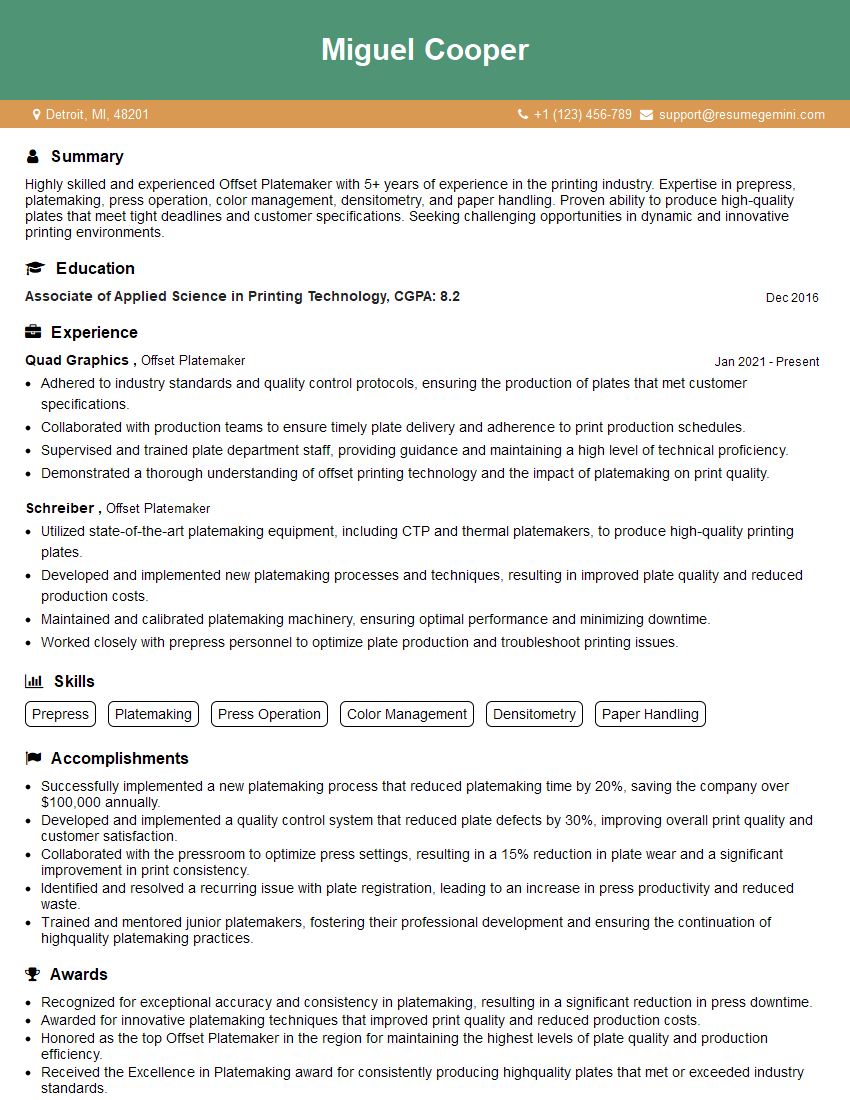
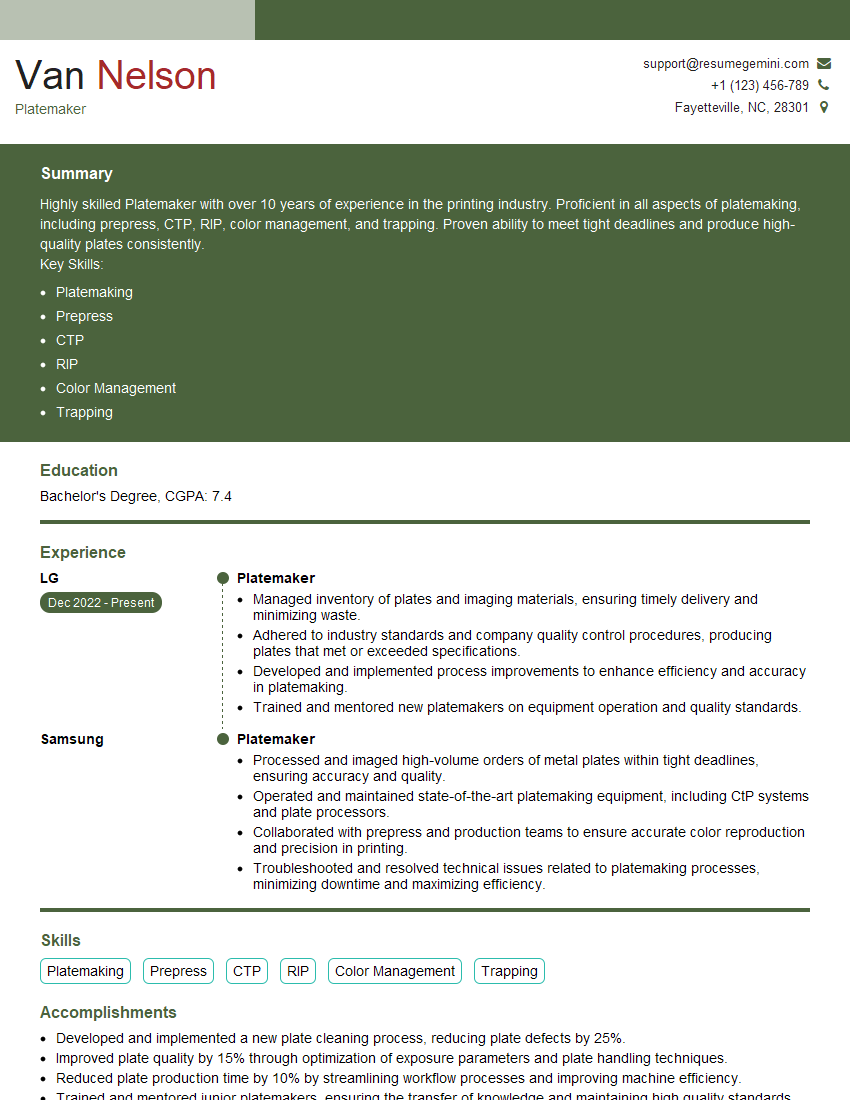
Mastering expertise in platemaking for different printing applications significantly enhances your career prospects in the printing industry, opening doors to advanced roles and higher earning potential. A well-crafted, ATS-friendly resume is your key to unlocking these opportunities. Focus on showcasing your technical skills, practical experience, and problem-solving abilities. To build a professional resume that highlights your unique qualifications, we highly recommend using ResumeGemini. ResumeGemini provides a user-friendly platform and offers examples of resumes tailored to Expertise in platemaking for different printing applications, helping you present your qualifications effectively and stand out from the competition.

Explore more articles
Users Rating of Our Blogs
Share Your Experience
We value your feedback! Please rate our content and share your thoughts (optional).
What Readers Say About Our Blog
Very informative content, great job.
good