Preparation is the key to success in any interview. In this post, we’ll explore crucial Expertise in statistical process control interview questions and equip you with strategies to craft impactful answers. Whether you’re a beginner or a pro, these tips will elevate your preparation.
Questions Asked in Expertise in statistical process control Interview
Q 1. Explain the purpose of Statistical Process Control (SPC).
Statistical Process Control (SPC) is a powerful collection of statistical methods used to monitor and control a process’s variability. Its primary purpose is to identify and address sources of variation that lead to defects or inconsistencies in a process’s output. Think of it as a proactive quality management system that prevents problems rather than simply reacting to them. By continuously monitoring key process variables, SPC helps maintain consistent quality, reduce waste, and improve overall efficiency.
For example, imagine a bottling plant. SPC can be used to monitor the fill level of bottles. If the fill level consistently deviates from the target, SPC techniques can pinpoint the source of the problem (e.g., a faulty filling machine) before a significant number of defective bottles are produced.
Q 2. What are control charts and how are they used in SPC?
Control charts are the heart of SPC. They are graphical tools that display data collected over time, allowing us to visually monitor process variation. Each point on the chart represents a sample of data taken from the process. Control charts have a central line representing the process average, and upper and lower control limits (UCL and LCL) that define the acceptable range of variation. If data points fall within these limits, the process is considered to be in control, meaning only common cause variation is present.
They are used to:
- Monitor process stability over time.
- Detect shifts in the process mean or variation.
- Identify special causes of variation that require investigation and correction.
- Provide evidence of process improvement initiatives.
Q 3. Describe the different types of control charts (e.g., X-bar and R, p-chart, c-chart).
Several types of control charts exist, each tailored to a specific type of data:
- X-bar and R chart: Used for continuous data (e.g., weight, length, temperature). The X-bar chart tracks the average of subgroups, while the R chart tracks the range (difference between the highest and lowest values) within each subgroup. This combination helps monitor both the central tendency and dispersion of the process.
- p-chart: Used for attribute data representing the proportion of nonconforming units in a sample (e.g., percentage of defective parts). It monitors the proportion of defects over time.
- c-chart: Used for attribute data representing the number of defects per unit (e.g., number of scratches on a painted surface). It tracks the number of defects per item or sample.
- u-chart: Similar to the c-chart but used when the sample size varies. It tracks the average number of defects per unit.
The choice of control chart depends on the type of data being collected and the specific quality characteristic being monitored.
Q 4. Explain the concept of common cause and special cause variation.
Understanding common cause and special cause variation is crucial in SPC. Common cause variation is inherent to the process; it’s the background noise of natural variation. It’s the variation you’d expect to see even in a stable, well-controlled process. Think of it as the predictable, consistent variation within a system.
Special cause variation, on the other hand, is due to assignable causes—identifiable factors that disrupt the normal process behavior. These are outliers, sudden shifts, or unusual patterns that indicate a problem needs attention. This could be a machine malfunction, a change in raw materials, or a human error.
The goal of SPC is to identify and eliminate special cause variation while managing common cause variation through process improvement.
Q 5. How do you interpret control charts to identify out-of-control points?
Interpreting control charts involves looking for patterns and deviations that signal out-of-control points. Points outside the control limits (UCL and LCL) are strong indicators of special cause variation and require immediate investigation. However, other patterns can also indicate a problem even if all points are within the limits. These include:
- Trends: A series of consecutive points consistently increasing or decreasing.
- Cycles: A repeating pattern of high and low points.
- Stratification: Data points clustering in distinct areas above or below the central line.
- Runs: A sequence of points all above or all below the central line.
When an out-of-control condition is detected, the underlying causes should be investigated and corrective actions implemented to restore the process to a state of control.
Q 6. What are the key assumptions underlying control charts?
Several key assumptions underlie the effective use of control charts:
- Data independence: Data points should be independent of each other. This means that one data point should not influence the value of another.
- Process stability (at least initially): The process being monitored should be in a state of statistical control (only common cause variation) before the control chart can be effectively used.
- Data normality (in some cases): While some charts are robust to non-normality, the assumption of normality is often made, particularly for X-bar and R charts. Data transformations or alternative charts might be needed for non-normal data.
- Random sampling: Samples should be randomly selected to ensure representativeness.
- Constant process parameters: The process mean and standard deviation should remain relatively constant over time (except for intentional process improvements).
Violations of these assumptions can lead to inaccurate interpretations and ineffective process control.
Q 7. Explain the process capability indices Cp and Cpk. What do they measure?
Process capability indices, Cp and Cpk, measure how well a process meets predefined specifications. They quantify the relationship between the process variation and the tolerance limits set by the customer or design requirements. These indices are dimensionless and provide a numerical value to assess process capability.
Cp (Process Capability Index) measures the potential capability of a process assuming the process is centered on the target value. It shows how much variation the process has relative to the specification limits.
Cpk (Process Capability Index) is a more realistic index because it considers both the process variation and the process centering. It shows how well the process is capable of meeting specifications, considering potential offset from the target.
A Cp or Cpk value greater than 1.33 generally indicates a capable process, implying that the process is producing output within the specification limits with a small percentage of defects. Values less than 1 indicate that the process is incapable of meeting the specifications consistently.
Q 8. How do you calculate Cp and Cpk?
Cp and Cpk are process capability indices that measure how well a process performs relative to its specifications. Cp assesses the potential capability of a process, assuming the process is centered, while Cpk considers both the process capability and its centering.
Calculating Cp:
- Find the process spread (6σ): This is six times the standard deviation (σ) of your process data. The standard deviation measures the dispersion of your data points around the mean.
- Find the tolerance (USL – LSL): This is the difference between the Upper Specification Limit (USL) and the Lower Specification Limit (LSL) – the acceptable range for your product or process output.
- Calculate Cp: Cp = (USL – LSL) / (6σ)
Calculating Cpk:
- Calculate the process mean (x̄): This is the average of your process data.
- Calculate the distance from the mean to the nearest specification limit: This is either (USL – x̄) or (x̄ – LSL), whichever is smaller.
- Calculate Cpk: Cpk = min[(USL – x̄) / (3σ), (x̄ – LSL) / (3σ)]
Example: Let’s say you’re manufacturing bolts with a specified length of 10cm ± 0.1cm. Your process data has a mean of 10cm and a standard deviation of 0.02cm. Then:
- USL = 10.1cm
- LSL = 9.9cm
- σ = 0.02cm
- Cp = (10.1 – 9.9) / (6 * 0.02) = 1.67
- Cpk = min[(10.1 – 10) / (3 * 0.02), (10 – 9.9) / (3 * 0.02)] = min[1.67, 1.67] = 1.67
In this case, both Cp and Cpk are greater than 1, indicating a capable process.
Q 9. What are the implications of Cp and Cpk values less than 1?
Cp and Cpk values less than 1 indicate that your process is not capable of meeting the specified requirements. This means that a significant portion of your output will fall outside the acceptable limits, leading to defects and potentially significant costs.
- Cp < 1: Suggests insufficient process precision. Even if the process is centered, the inherent variability is too high to consistently meet specifications.
- Cpk < 1: Implies either insufficient precision (like Cp < 1) or poor centering (the process mean is not in the middle of the specification range). This is a more serious issue as it indicates a combination of problems.
Imagine you’re baking cookies. If Cp < 1, your cookies might be consistently uneven in size, even if the average size is correct. If Cpk < 1, they might be consistently too big or too small, indicating a problem with your oven temperature or baking time.
Implications: Cp and Cpk values less than 1 demand immediate action. You need to identify and eliminate the sources of variation in your process to improve capability. This might involve process adjustments, improved equipment maintenance, operator training, or a complete process redesign.
Q 10. Describe the process of establishing control limits for a control chart.
Establishing control limits on a control chart involves determining the upper control limit (UCL) and the lower control limit (LCL) within which the process should operate consistently. These limits are calculated from your process data and represent the natural variation of your process when it’s stable.
The process typically follows these steps:
- Gather data: Collect a sufficient number of data points (usually at least 20-25) from your process. These should be representative of the process’s typical performance under stable conditions.
- Calculate the mean (x̄) and standard deviation (σ): Use statistical software or a calculator to determine the average and standard deviation of your data.
- Choose the appropriate control chart: Select the chart suitable for your data type (e.g., X-bar and R chart for continuous data, p-chart for proportions, c-chart for counts).
- Calculate control limits: The method varies slightly depending on the control chart used. A common approach for X-bar charts uses three times the standard deviation (3σ) of the sample means.
- Plot the data: Plot the data points on the control chart along with the calculated UCL and LCL.
Example for X-bar and R chart: For subgroups of size ‘n’, the UCL and LCL are usually calculated using the average range (R̄) and the average of the sample means (x̄̄). Tables are used to find the appropriate factors (A2, D3, D4) based on subgroup size ‘n’.
UCL_x̄ = x̄̄ + A2 * R̄LCL_x̄ = x̄̄ - A2 * R̄
It’s crucial to ensure that the data used to establish the control limits comes from a stable process to avoid skewed limits.
Q 11. How do you handle out-of-control points on a control chart?
Out-of-control points on a control chart indicate potential problems in the process, such as assignable causes of variation (special causes) that disrupt the natural variability.
Handling out-of-control points involves a systematic investigation:
- Investigate the cause: Don’t simply dismiss the out-of-control points. Actively seek to understand what factors might have caused the process to deviate from its usual performance. This could involve checking machine settings, raw material quality, environmental conditions, or operator skill.
- Verify the data: Ensure that there were no recording errors or data entry mistakes in obtaining the data that resulted in the out-of-control points.
- Take corrective actions: Once the cause is identified, implement corrective measures to eliminate the source of variation and bring the process back under control. This might involve adjustments to machinery, operator retraining, or changes in the process itself.
- Update the control limits: If significant changes are made to the process, it might be necessary to collect new data and recalculate the control limits to reflect the improved (or changed) performance.
- Document everything: Maintain detailed records of the investigation, the actions taken, and the results obtained. This will assist in future process improvements and troubleshooting.
Rules for Out-of-Control Points: Various rules exist for identifying out-of-control points, such as one point outside 3σ limits, two out of three consecutive points outside 2σ limits, etc. These rules provide guidance, but the investigation is key.
Q 12. Explain the concept of process capability analysis.
Process capability analysis assesses whether a process is capable of consistently producing output that meets customer specifications. It determines if the natural variation of the process is sufficiently small compared to the tolerance allowed by the specifications. This is crucial for ensuring product quality and customer satisfaction.
Key aspects of process capability analysis include:
- Process capability indices (Cp, Cpk): These indices, as discussed previously, quantify the process capability relative to the specifications.
- Process performance indices (Pp, Ppk): These indices are similar to Cp and Cpk, but they are based on the actual historical data, which might include some out-of-control points, rather than only stable process data.
- Histogram analysis: A histogram visually displays the distribution of the process output, revealing the spread and centering of the process relative to specifications. It helps identify the potential impact of variability.
- Capability studies: These involve collecting data from a stable process to calculate the capability indices and assess whether the process meets the specified requirements. Properly designed capability studies are usually based on relatively large samples.
By performing process capability analysis, manufacturers can identify areas where improvements are needed, predict the potential number of defects, and make informed decisions regarding process control and improvement strategies.
Q 13. What are some common sources of variation in a manufacturing process?
Common sources of variation in a manufacturing process can be categorized into:
- Material Variation: Differences in raw material properties (e.g., impurities, density, composition) can lead to inconsistencies in the final product.
- Machine Variation: Wear and tear, improper calibration, or machine malfunction can create variations in the output.
- Method Variation: Inconsistencies in the process instructions, operator procedures, or work instructions can lead to variations.
- Measurement Variation: Inaccurate or imprecise measurement tools can introduce errors into the data used for process control.
- Manpower Variation: Differences in operator skill, experience, or training can affect process consistency. For instance, experienced operators might execute processes in a more efficient and standardized manner compared to new operators.
- Environment Variation: Changes in temperature, humidity, or other environmental factors can influence the process output. This is common in the food industry, where temperature can dramatically influence product characteristics.
Identifying these sources of variation is crucial for implementing effective control measures to reduce process variability and improve product quality.
Q 14. How can SPC be used to improve process efficiency and reduce waste?
Statistical Process Control (SPC) is a powerful tool for improving process efficiency and reducing waste. It does so by providing a structured approach to monitoring, analyzing, and improving processes.
Here’s how SPC helps achieve efficiency and waste reduction:
- Early detection of problems: SPC charts highlight deviations from the normal process behavior, enabling early detection of problems before they lead to significant defects or losses. The earlier you catch a problem, the less expensive and disruptive the correction is likely to be.
- Reduced defects: By identifying and eliminating sources of variation, SPC helps reduce the number of defective products and rework, leading to cost savings and improved customer satisfaction.
- Optimized processes: SPC facilitates data-driven decision-making to optimize process parameters and achieve better performance. For example, it might show the impact of a change in processing temperature on the output’s uniformity, allowing informed adjustments to the process parameters.
- Improved resource utilization: By reducing downtime caused by unexpected failures and optimizing process parameters, SPC improves the utilization of resources, such as materials, machines, and labor.
- Reduced waste: SPC leads to significant reductions in scrap, rework, and other forms of waste, increasing overall process efficiency.
Imagine a bottling plant using SPC. By monitoring fill levels, they can identify if a machine is malfunctioning, preventing the production of underfilled bottles (waste) and overfilled bottles (increased costs). This proactive approach reduces waste, improves efficiency and meets quality standards.
Q 15. Describe your experience with different SPC software packages (e.g., Minitab, JMP).
My experience with SPC software spans several years and includes extensive use of Minitab and JMP, as well as exposure to other packages like Statistica and R. Minitab, with its user-friendly interface and comprehensive statistical tools, has been my primary tool for creating control charts, performing capability analysis, and generating reports. I’ve leveraged its features extensively for analyzing various datasets, from manufacturing processes to customer satisfaction surveys. JMP, known for its powerful visualization capabilities and interactive exploration tools, has been invaluable for identifying patterns and trends in complex datasets. For instance, I used JMP’s powerful graphing tools to visualize the relationship between different process parameters and product quality in a recent project. The choice of software depends on the specific project needs and the dataset’s characteristics, but my proficiency in these leading packages ensures I can effectively analyze and interpret data regardless of the software used.
Career Expert Tips:
- Ace those interviews! Prepare effectively by reviewing the Top 50 Most Common Interview Questions on ResumeGemini.
- Navigate your job search with confidence! Explore a wide range of Career Tips on ResumeGemini. Learn about common challenges and recommendations to overcome them.
- Craft the perfect resume! Master the Art of Resume Writing with ResumeGemini’s guide. Showcase your unique qualifications and achievements effectively.
- Don’t miss out on holiday savings! Build your dream resume with ResumeGemini’s ATS optimized templates.
Q 16. Explain the relationship between SPC and Six Sigma methodology.
SPC and Six Sigma are deeply intertwined. Six Sigma is a comprehensive business strategy aimed at minimizing defects and maximizing efficiency. SPC is a crucial tool within the Six Sigma framework, providing the data-driven insights needed to achieve Six Sigma’s goals. Think of Six Sigma as the overall objective, and SPC as the microscope used to examine the process and identify areas for improvement. Specifically, SPC helps in the Measure and Control phases of DMAIC (Define, Measure, Analyze, Improve, Control), the most common Six Sigma methodology. Control charts, a cornerstone of SPC, help monitor process stability and identify assignable causes of variation. By pinpointing sources of variation, we can implement targeted improvements to reduce defects and achieve the Six Sigma goal of 3.4 defects per million opportunities.
Q 17. How do you determine the appropriate sample size for SPC?
Determining the appropriate sample size for SPC is crucial for obtaining meaningful results. It’s not a one-size-fits-all answer, and several factors influence the decision. These include:
- Process Variability: Highly variable processes require larger sample sizes to accurately estimate the process parameters.
- Acceptable Risk: The level of risk tolerance in making incorrect conclusions affects sample size. Lower risk necessitates larger samples.
- Cost of Sampling: The cost of collecting data dictates a balance between accuracy and resources. A more expensive sampling process might require a smaller, more targeted sample.
- Historical Data: If historical data on process variability exists, it can be used to estimate the required sample size using statistical methods like power analysis.
In practice, I often start by using a pilot study to collect preliminary data and estimate the process variability. This data then informs a more precise calculation of the sample size using statistical software or formulas, ensuring that we have enough data for reliable analysis without unnecessary costs.
Q 18. What are some common mistakes made when implementing SPC?
Common mistakes in SPC implementation often stem from a lack of understanding or proper application of the methodology. Some frequent errors include:
- Ignoring the assumptions of control charts: Control charts are based on assumptions about the data’s distribution. Misapplying control charts to data that violates these assumptions (e.g., non-normal distribution) leads to inaccurate conclusions.
- Insufficient training and understanding: Implementing SPC requires proper training to interpret charts correctly and take appropriate actions. Misinterpretation of signals can lead to unnecessary adjustments or missed opportunities for improvement.
- Over-reliance on charts without root cause analysis: A point outside the control limits is a signal, not a diagnosis. A thorough investigation is needed to identify the root cause of the variation.
- Failing to consider common cause and special cause variation: The ability to differentiate between these types of variation is key. Correctly attributing causes is vital for effective process improvement.
- Lack of management support: Successful SPC implementation relies on strong management support, commitment to data-driven decision-making, and resources allocated for training and improvement initiatives.
Q 19. How do you ensure the accuracy and reliability of data used in SPC?
Data accuracy and reliability are paramount in SPC. Here’s how I ensure this:
- Measurement System Analysis (MSA): Before starting any SPC project, I conduct an MSA to evaluate the accuracy and precision of the measurement system. This involves techniques like gauge R&R studies to quantify measurement error and ensure it’s within acceptable limits.
- Data Validation: Rigorous data validation protocols are crucial. This involves checks for completeness, consistency, and accuracy. Outliers and anomalies are investigated thoroughly to understand their origin and impact.
- Calibration of equipment: All measuring equipment used should be regularly calibrated and maintained according to established standards. This ensures consistency and minimizes measurement error.
- Operator Training: Properly trained operators are essential for consistent data collection. They should be proficient in using measurement tools and following established procedures.
- Documentation: Thorough documentation of data collection procedures, calibration records, and any anomalies is vital for traceability and auditability.
For instance, in a recent project involving the measurement of component dimensions, we conducted a gauge R&R study which showed excessive variability in the measurement system. We then took corrective action to improve the measurement process, ensuring the data used in SPC reflected the true variation in the component dimensions.
Q 20. Explain the difference between variables and attributes data in SPC.
Variables data and attributes data are two fundamental types of data used in SPC, representing different ways to measure quality characteristics.
- Variables data: This data type represents continuous measurements, typically on a scale. Examples include length, weight, temperature, or diameter. It uses metrics like mean and standard deviation to characterize the process. Variables data allows for a more precise understanding of the process because it captures the magnitude of the variation.
- Attributes data: This data type represents counts or classifications. Examples include the number of defects, the percentage of conforming units, or whether a part is acceptable or defective. Attributes data is often easier and faster to collect than variables data but provides less detailed information about the process variation.
Choosing between variables and attributes data depends on the nature of the quality characteristic and the resources available for data collection. For example, measuring the weight of a product would use variables data, while counting the number of scratches on a surface would use attributes data.
Q 21. What is the role of process monitoring in SPC?
Process monitoring in SPC is the ongoing systematic observation and tracking of a process to identify and address any deviations from its expected behavior. This involves collecting data, plotting it on control charts, and interpreting the resulting patterns. The main goal is to ensure that the process remains stable and predictable, producing consistent outputs within specified limits.
Effective process monitoring enables timely detection of problems before they significantly impact product quality or customer satisfaction. For instance, a sudden shift in the mean of a critical dimension could be identified early, enabling prompt investigation and correction of the underlying cause. This prevents producing a large batch of non-conforming products, saving time, resources, and potential customer issues. Furthermore, by continuously monitoring the process, we gather valuable data to understand its behavior, which aids in identifying opportunities for improvement and implementing robust control measures.
Q 22. How do you address non-normality in your data when using SPC techniques?
Many SPC techniques assume data normality, meaning it follows a bell-shaped curve. However, real-world data is often non-normal. Addressing this is crucial for accurate analysis. There are several approaches:
Transformations: Apply mathematical transformations like logarithmic, square root, or Box-Cox transformations to the data to make it closer to normal. This changes the scale of the data but preserves the rank order, allowing for the use of standard SPC charts.
Non-parametric methods: Use non-parametric methods like the median chart or the runs test, which don’t assume normality. These are particularly useful for small sample sizes or highly skewed data. For example, instead of using the mean and standard deviation in a control chart, the median and median absolute deviation could be used.
Robust methods: Utilize robust statistical methods that are less sensitive to outliers and deviations from normality. These methods often use trimmed means or Winsorized means to reduce the influence of extreme values.
Large sample sizes: The Central Limit Theorem states that even if the underlying data is not normally distributed, the distribution of the sample means will tend toward normality as the sample size increases. If you have a large enough sample, the assumption of normality becomes less critical.
The choice of method depends on the nature and extent of non-normality, the sample size, and the specific SPC chart being used. It’s often a good idea to check the normality of the data using statistical tests like the Shapiro-Wilk test before applying any methods. If transformations fail to achieve normality, non-parametric methods are a robust alternative.
Q 23. Explain how you would design and implement an SPC system for a new manufacturing process.
Designing and implementing an SPC system for a new manufacturing process involves a structured approach:
Define critical quality characteristics (CTQs): Identify the key process parameters and product characteristics that directly impact customer satisfaction. This involves careful consideration of the product’s intended use and customer expectations.
Establish measurement systems: Develop accurate and reliable methods for collecting data on the CTQs. This may include using calibrated measuring instruments and ensuring consistent procedures across operators. Gauge R&R studies (Gauge Repeatability and Reproducibility) should be conducted to assess the measurement system’s variability.
Collect baseline data: Gather sufficient data to establish the process’s natural variability before the process is fully optimized. This helps define the initial control limits.
Select appropriate control charts: Choose the right chart type based on the type of data (e.g., X-bar and R charts for continuous data, p-charts for proportions, c-charts for counts). The choice should be made in conjunction with the type of CTQ data being analyzed.
Establish control limits: Calculate the control limits based on the baseline data using standard statistical methods. These limits define the acceptable range of variation for the process.
Implement the SPC system: Train operators on data collection, chart interpretation, and corrective actions. Establish a system for timely data entry, chart review, and process adjustments.
Monitor and maintain: Continuously monitor the process, review control charts regularly, and take corrective actions when needed. Periodically review the system to ensure its effectiveness and adapt it as needed.
For example, in a new bottling plant, we might monitor fill volume (continuous data using X-bar and R charts), the percentage of bottles with defects (proportion data using a p-chart), and the number of defective caps per hour (count data using a c-chart).
Q 24. How do you communicate SPC results to non-technical audiences?
Communicating SPC results to non-technical audiences requires simplifying the technical details without sacrificing accuracy. I’d use the following strategies:
Visual aids: Use charts and graphs, particularly control charts themselves, to show the process’s performance visually. Color-coding can highlight areas needing attention.
Simple language: Avoid jargon and technical terms. Replace ‘standard deviation’ with ‘typical variation,’ and ‘out-of-control points’ with ‘unusual occurrences’.
Focus on key metrics: Highlight the most important findings – e.g., ‘We’ve reduced defects by 20%’ instead of delving into detailed statistical analysis. Focus on the ‘so what?’ and the impact to the business.
Storytelling: Present the data as a story. Start with the problem, explain how SPC helped to identify and solve it, and end with the positive results. Emphasize the success story and business benefits.
Analogies: Use analogies to explain complex concepts. For example, I might compare a control chart to a speedometer in a car – it shows if the process is running smoothly or if something needs attention.
Ultimately, the goal is to ensure everyone understands the implications of the SPC data and its relevance to achieving business objectives.
Q 25. Describe a time you used SPC to solve a real-world problem.
In a previous role at a food processing plant, we experienced high levels of variability in the weight of packaged products. This resulted in customer complaints and potential non-compliance with regulatory requirements. We implemented X-bar and R charts to monitor the packaging process. Initially, the charts showed significant variability and many out-of-control points.
Through careful analysis of the charts and investigation of the process, we identified that inconsistent filling of the packaging machinery was a major contributor. This was confirmed through detailed data analysis coupled with visual inspection of the filling process. By adjusting the machinery settings and implementing better operator training, we were able to significantly reduce the variability and bring the process under control. The improved process resulted in fewer customer complaints, reduced waste, and greater efficiency. The SPC charts provided the irrefutable evidence of improvement in weight consistency – a key metric for success.
Q 26. What are some limitations of SPC?
While SPC is a powerful tool, it does have limitations:
Assumes stable processes: SPC is most effective for processes that are in a state of statistical control. If the process is undergoing significant changes or improvements, the control charts might not be as informative.
Only detects common cause variation: SPC primarily detects common cause variation (random, inherent variability in the process). It may not always effectively detect special cause variation (assignable causes, such as equipment malfunction) which requires other methods to diagnose and resolve.
Requires accurate data: The effectiveness of SPC depends on accurate and reliable data collection. Inaccurate or incomplete data can lead to misleading conclusions.
Can be time-consuming: Implementing and maintaining an effective SPC system requires time and resources. The setup may involve initial data gathering and the training of personnel on data gathering procedures and chart interpretation.
Doesn’t inherently suggest solutions: SPC identifies problems; it doesn’t automatically provide solutions. Further investigation is needed to determine root causes and implement corrective actions. The use of ‘5 Whys’, Fishbone diagrams, or Pareto charts can further assist in finding root causes of the variation.
It is important to be aware of these limitations and use SPC in conjunction with other quality improvement tools for a comprehensive approach.
Q 27. How would you justify the investment in an SPC system to management?
Justifying the investment in an SPC system requires demonstrating its value to management in terms of quantifiable benefits. I would present a business case highlighting the following:
Reduced waste and scrap: SPC helps identify and prevent defects early on, minimizing material and labor waste.
Improved product quality: Consistent monitoring ensures that products meet specifications and customer expectations leading to improved customer satisfaction and brand reputation.
Increased efficiency: By reducing variation and improving process stability, SPC contributes to increased efficiency and productivity.
Reduced rework and repair costs: Fewer defects mean less rework and lower repair costs, translating to direct cost savings.
Improved compliance: SPC assists in meeting regulatory and industry standards, reducing the risk of non-compliance penalties.
Data-driven decision making: SPC provides data-driven insights for process improvement, leading to better resource allocation and strategic decision-making. These business decisions can result in direct cost savings for the company.
I would use a cost-benefit analysis to quantify the projected savings and compare them to the implementation costs, demonstrating a clear return on investment (ROI). Examples of quantifiable costs to include are cost of waste, rework, and customer complaints.
Q 28. What are your strengths and weaknesses in applying SPC principles?
My strengths in applying SPC principles include:
Strong analytical skills: I can effectively analyze data, identify trends, and interpret control charts.
Practical experience: I have hands-on experience implementing and using SPC in various manufacturing and process settings. This has provided a strong foundation in using SPC to improve processes.
Problem-solving abilities: I’m adept at using SPC to identify root causes of process variation and developing solutions for improvement. This includes using various problem-solving techniques such as Pareto charts, 5 Whys, and Fishbone diagrams.
Communication skills: I can effectively communicate technical information to both technical and non-technical audiences.
My weaknesses include:
Limited experience with advanced statistical methods: While proficient in standard SPC techniques, I am always eager to expand my expertise in more sophisticated statistical process control methods.
Staying abreast of new developments: The field of SPC is constantly evolving, and keeping current with the latest advancements requires continual study and professional development.
I am actively working to address these weaknesses through continuous learning and professional development. I’m particularly focused on expanding my experience with advanced statistical process control techniques and staying current with the latest software and analytical methods.
Key Topics to Learn for Expertise in Statistical Process Control Interview
- Control Charts: Understanding the principles behind various control charts (e.g., Shewhart, CUSUM, EWMA), their construction, interpretation, and application in different scenarios. Consider the limitations of each chart type.
- Process Capability Analysis: Mastering Cp, Cpk, Pp, and Ppk calculations and their interpretation in assessing process performance relative to specifications. Be prepared to discuss the implications of different capability indices.
- Statistical Distributions: Demonstrate a strong grasp of relevant statistical distributions (e.g., normal, exponential, Poisson) and their applications in SPC. Understand how distribution assumptions impact the analysis.
- Hypothesis Testing: Be prepared to discuss hypothesis testing in the context of SPC, including understanding Type I and Type II errors and their implications for process improvement.
- Design of Experiments (DOE): Familiarity with basic DOE principles and how they relate to process optimization and improvement through SPC. This could include understanding factorial designs or other experimental methodologies.
- Data Analysis Techniques: Showcase your skills in analyzing process data, identifying trends, patterns, and anomalies. Discuss techniques for data cleaning, transformation, and visualization to support SPC initiatives.
- Problem-Solving Methodologies: Demonstrate your ability to apply SPC principles to solve real-world process problems. Discuss your experience using tools like root cause analysis (e.g., Fishbone diagrams, 5 Whys) and corrective actions.
- Software Proficiency: Be ready to discuss your experience with statistical software packages commonly used for SPC (e.g., Minitab, JMP). Highlight your ability to use the software for data analysis, chart creation, and report generation.
Next Steps
Mastering Statistical Process Control opens doors to exciting career opportunities in quality management, manufacturing, and data analysis. A strong understanding of SPC principles is highly sought after by employers and demonstrates your analytical skills and problem-solving abilities. To maximize your job prospects, it’s crucial to create an ATS-friendly resume that showcases your expertise effectively. ResumeGemini is a trusted resource to help you build a professional resume that highlights your skills and experience in a way that catches the attention of recruiters. We offer examples of resumes tailored to Statistical Process Control expertise to help guide you.

Quality Assurance Manager Resume Sample

Quality Control Manager Resume Sample
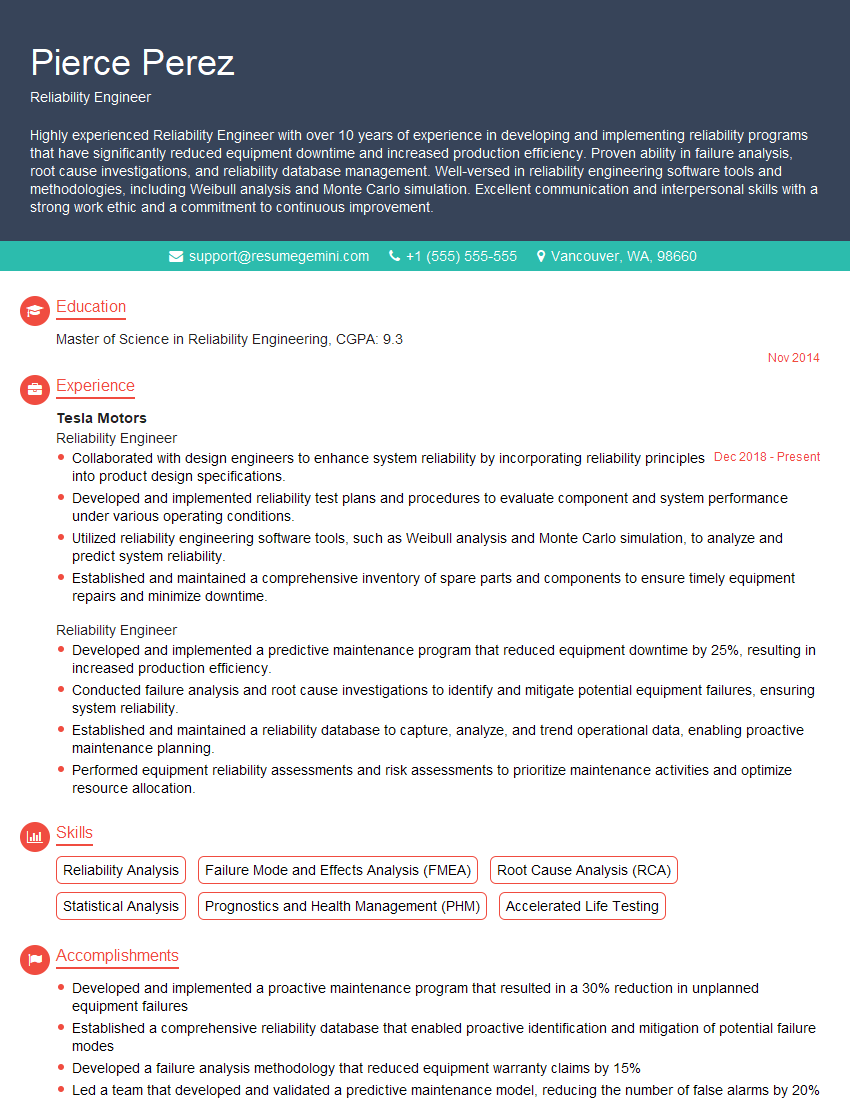
Reliability Engineer Resume Sample
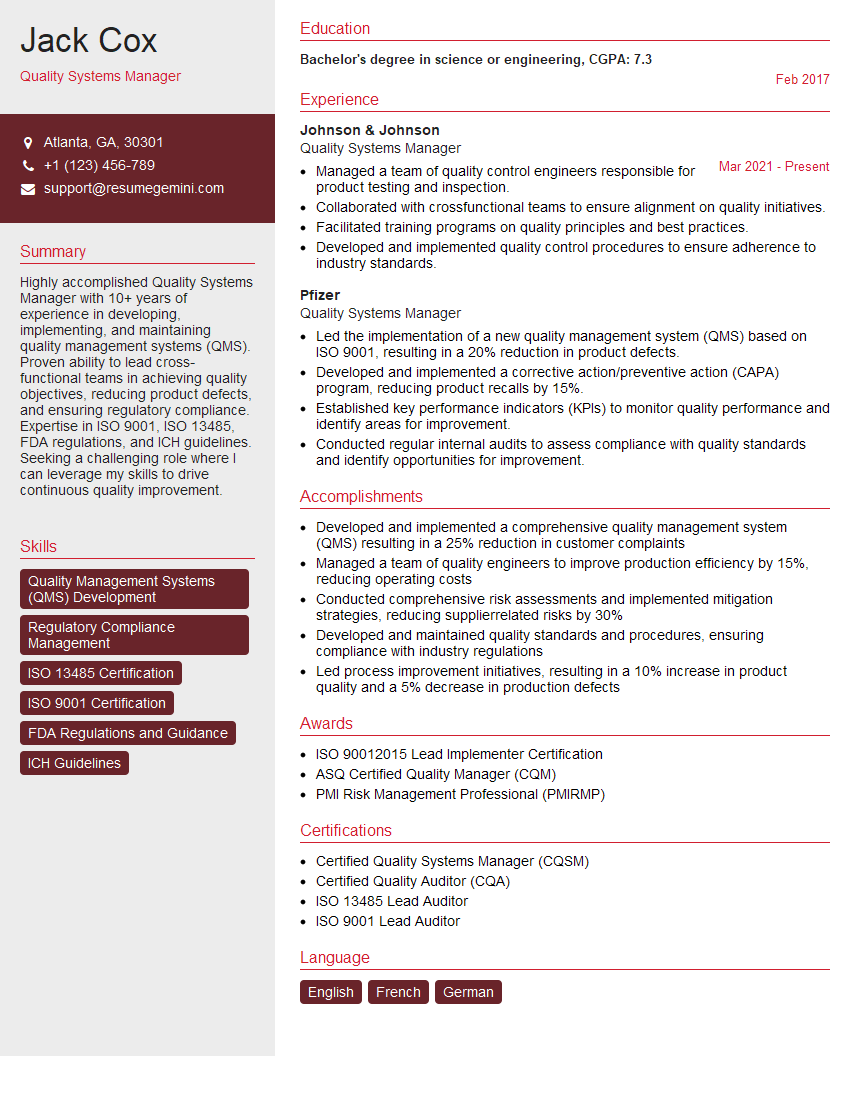
Quality Systems Manager Resume Sample
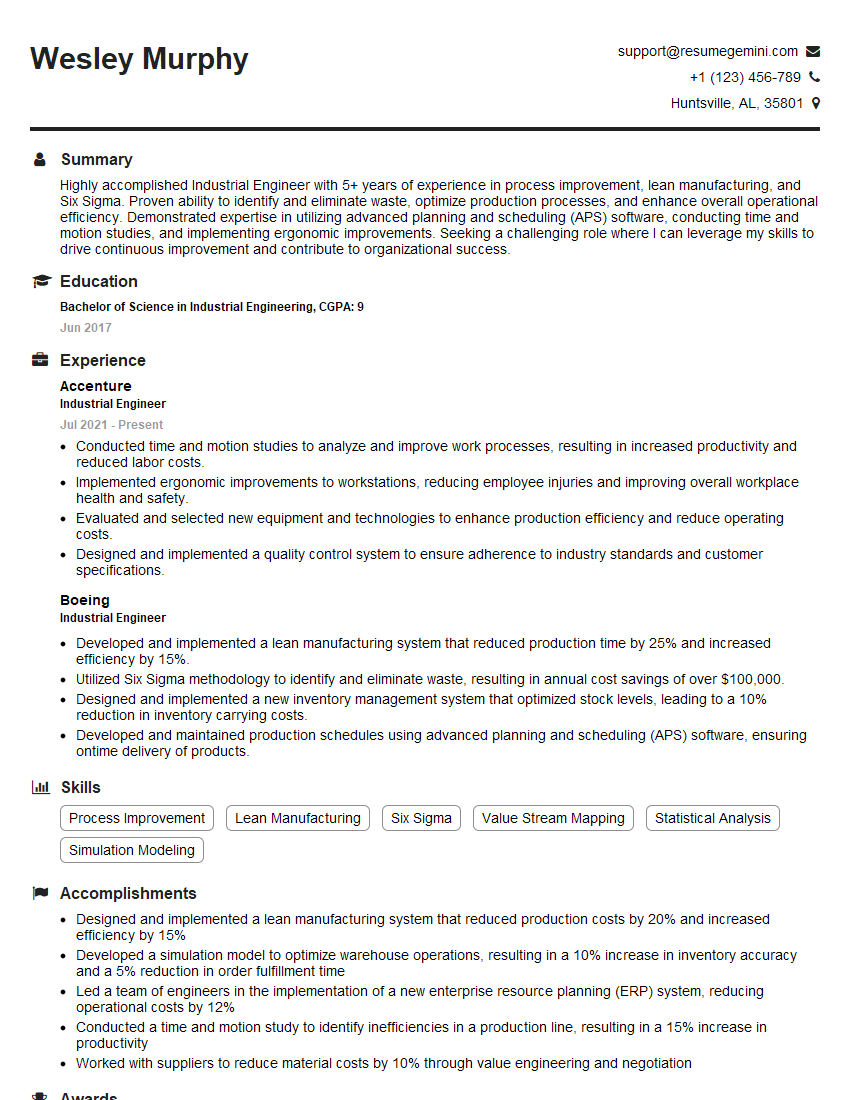
Industrial Engineer Resume Sample
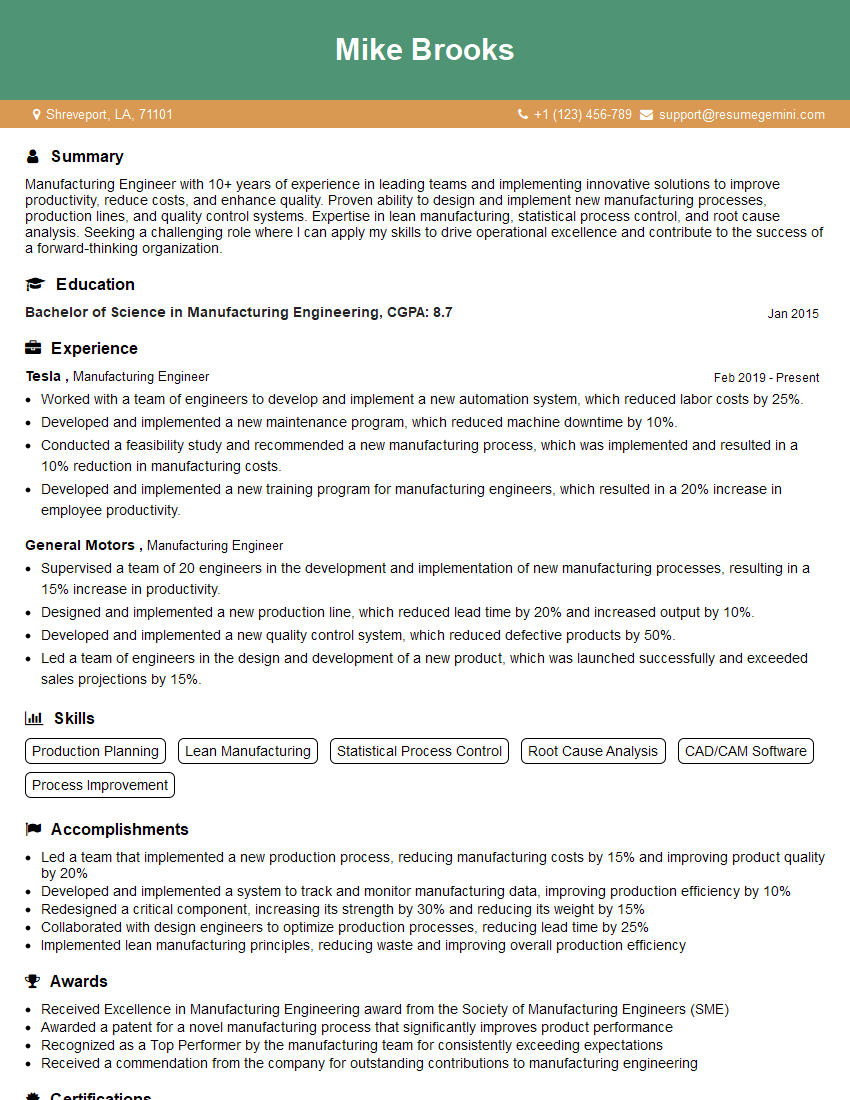
Manufacturing Engineer Resume Sample
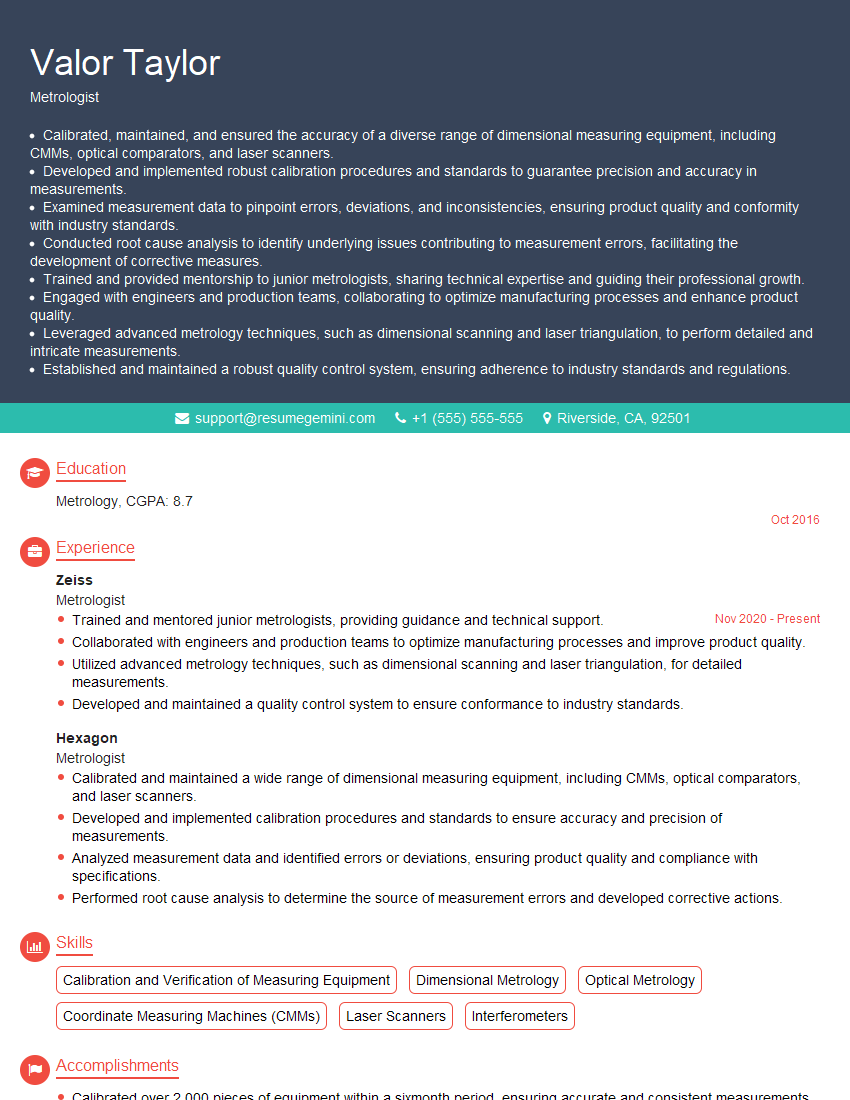
Metrologist Resume Sample
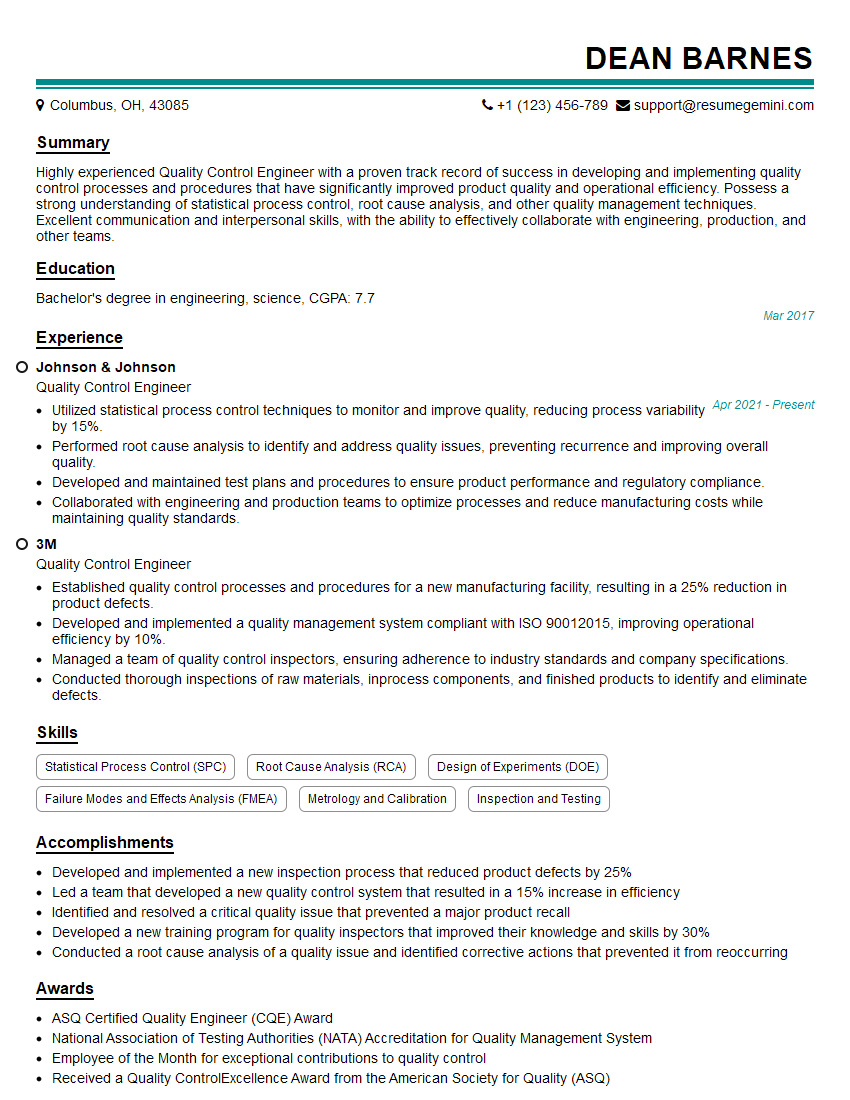
Quality Control Engineer Resume Sample
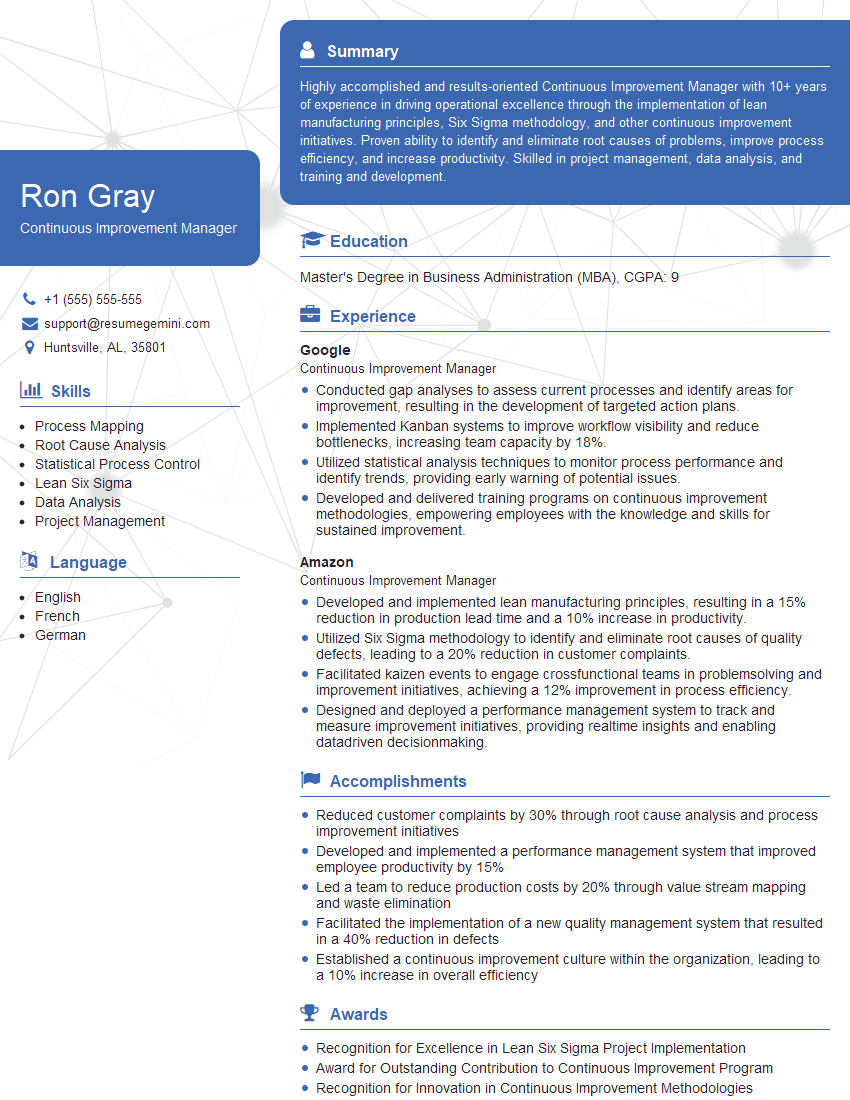
Continuous Improvement Manager Resume Sample
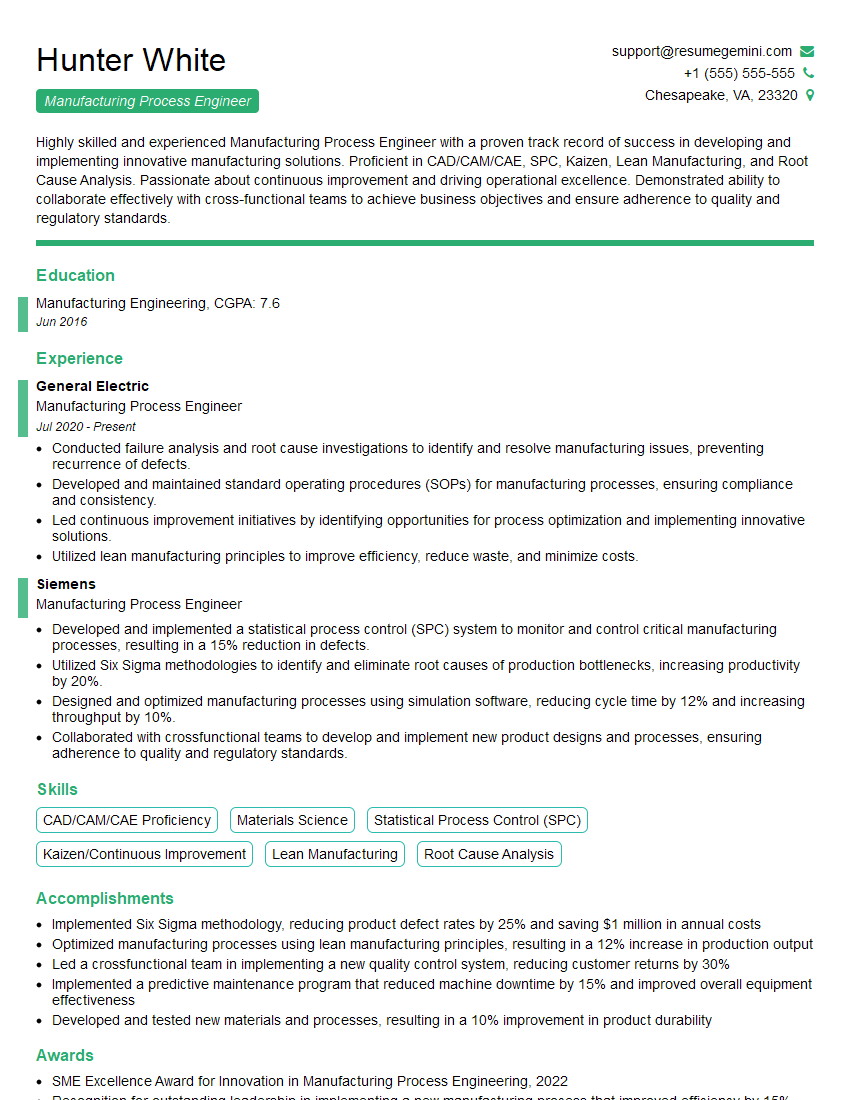
Manufacturing Process Engineer Resume Sample
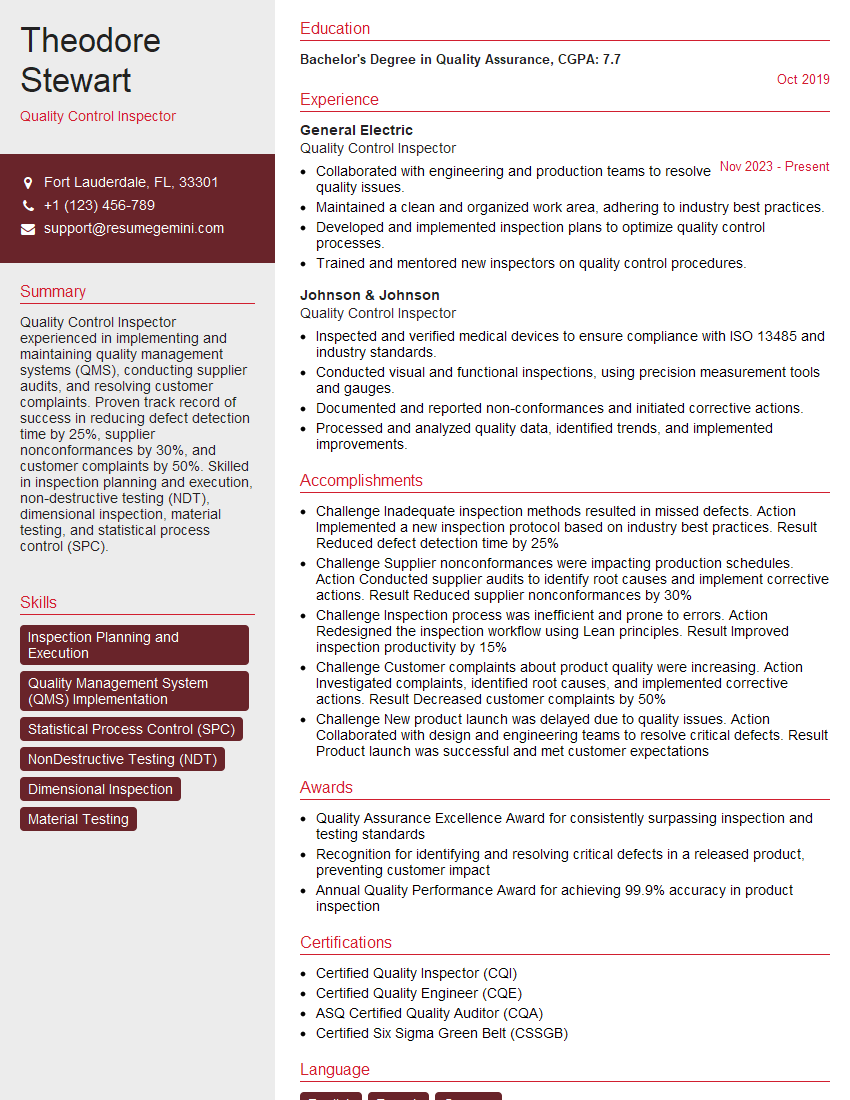
Quality Control Inspector Resume Sample
Explore more articles
Users Rating of Our Blogs
Share Your Experience
We value your feedback! Please rate our content and share your thoughts (optional).
What Readers Say About Our Blog
Very informative content, great job.
good