Every successful interview starts with knowing what to expect. In this blog, we’ll take you through the top Explosive Ordnance Disposal (EOD) Awareness interview questions, breaking them down with expert tips to help you deliver impactful answers. Step into your next interview fully prepared and ready to succeed.
Questions Asked in Explosive Ordnance Disposal (EOD) Awareness Interview
Q 1. Define Explosive Ordnance Disposal (EOD) and its key objectives.
Explosive Ordnance Disposal (EOD) is the action of rendering safe or disposing of explosive ordnance. Its key objectives are to neutralize the threat posed by explosive devices, preventing injury or death to personnel and damage to property. This involves a multi-faceted approach encompassing detection, identification, assessment, rendering safe, and disposal of explosive ordnance – ranging from unexploded military munitions to improvised explosive devices (IEDs).
In essence, EOD technicians work to eliminate the immediate and long-term hazards associated with explosive devices, safeguarding communities and the environment. This includes not only immediate neutralization but also the secure handling and disposal of the ordnance following safe procedures to prevent secondary explosions or environmental contamination.
Q 2. What are the different types of explosive devices you are familiar with?
The types of explosive devices I’m familiar with are incredibly diverse. They range from conventional military ordnance like bombs, grenades, rockets, landmines, and cluster munitions to improvised explosive devices (IEDs). IEDs themselves vary enormously, from simple pipe bombs to sophisticated devices incorporating pressure plates, timers, and remote detonators.
- Military Ordnance: This encompasses items left over from past conflicts, training exercises, or even accidental mishaps, often posing a significant risk for years after their intended use.
- Improvised Explosive Devices (IEDs): These are homemade devices using readily available materials, demonstrating extreme variability in design, construction, and triggering mechanisms.
- Chemical Explosives: These are used in the construction of both military and improvised devices. Examples include dynamite, C4, and homemade explosives like ANFO (Ammonium Nitrate/Fuel Oil).
Understanding the vast spectrum of devices is critical for effective EOD response, as each requires a unique approach.
Q 3. Explain the process of responding to an unexploded ordnance (UXO) discovery.
Responding to an unexploded ordnance (UXO) discovery is a methodical process that prioritizes safety above all else. The process typically involves:
- Securing the Area: Establishing a perimeter to prevent unauthorized access. This involves evacuating people and controlling traffic.
- Initial Assessment: A preliminary visual inspection to determine the type of UXO, its condition, and the potential hazards.
- Detailed Examination: This may include using specialized tools and equipment like X-ray machines or ground-penetrating radar for a deeper analysis, especially if the device is buried.
- Risk Assessment: Evaluating the risks associated with the UXO, considering factors such as its type, location, stability, and environmental conditions.
- Disposal or Render Safe Procedures: Choosing the appropriate disposal or rendering safe method depending on the risk assessment. This may involve on-site disposal, controlled detonation, or transportation to a specialized disposal facility.
- Post-Incident Report: Detailed documentation of the entire process, including the findings, actions taken, and any lessons learned.
Every step adheres strictly to safety protocols to mitigate risks to personnel and the environment.
Q 4. Describe the safety procedures followed during an EOD operation.
Safety procedures during an EOD operation are paramount and form the cornerstone of every action. They include:
- Risk Assessment: A thorough evaluation of all potential hazards before any action is taken.
- Personal Protective Equipment (PPE): Wearing specialized protective gear, including bomb suits, helmets, eye protection, and respiratory equipment.
- Controlled Access: Strict control of access to the hazardous area to prevent accidental exposure.
- Communication: Maintaining clear and constant communication among team members.
- Emergency Procedures: Having pre-planned emergency procedures in place in case of unforeseen circumstances.
- Standard Operating Procedures (SOPs): Following established and meticulously documented procedures to guarantee a consistent and safe approach.
The emphasis on safety throughout the entire operation is non-negotiable. A single error can have devastating consequences.
Q 5. What are the common types of IEDs and their typical construction methods?
Improvised explosive devices (IEDs) come in countless variations, but some common types include:
- Pipe Bombs: Simple devices constructed from readily available materials, such as pipes filled with explosives and shrapnel.
- Vehicle-Borne IEDs (VBIEDs): Explosives concealed within vehicles, often used in large-scale attacks.
- Suicide IEDs: Devices worn or carried by individuals intending to detonate them, often resulting in significant casualties.
Construction methods depend on the available resources and the sophistication of the maker. Common components might include commercial explosives, homemade explosives, readily available detonators, timers, switches, and pressure plates. The ingenuity of IED constructors is often alarming, leading to a constant need for adaptation in EOD techniques.
Q 6. How do you identify and assess the potential hazards of an explosive device?
Identifying and assessing the potential hazards of an explosive device involves a multi-step process:
- Visual Inspection: Careful observation of the device’s physical characteristics, including its size, shape, and any visible components.
- Technical Examination: Utilizing tools like X-ray machines, fiber optic scopes, and other specialized equipment to obtain a more detailed understanding of the device’s internal structure and composition.
- Chemical Analysis: Testing samples of the device’s components to identify the type of explosives used.
- Threat Assessment: Considering the device’s potential destructive power, its intended target, and the surrounding environment.
This comprehensive evaluation helps determine the safest and most effective approach for rendering the device safe or disposing of it. Experience and specialized training are crucial for accurate assessment.
Q 7. Outline the steps involved in the safe disposal of an explosive device.
Safe disposal of an explosive device depends greatly on its type and the surrounding circumstances. However, general steps include:
- Neutralization: This may involve disabling the device’s firing mechanism, carefully removing explosive components, or using specialized tools to render it inert.
- Controlled Detonation: In some cases, a controlled detonation in a secure location is the safest option. This necessitates careful planning and execution to minimize collateral damage and environmental impact.
- Disposal: The device or its inert components are disposed of according to regulations and safety standards in designated areas.
- Post-Disposal Procedures: Cleaning the site, ensuring the area is safe, and documenting the entire process thoroughly.
The choice of method depends heavily on the specific circumstances and the risk assessment carried out earlier. The process always prioritizes safety, environmental protection, and adherence to all relevant regulations and guidelines.
Q 8. What are the different techniques used in rendering an explosive device safe?
Rendering an explosive device safe is a complex process that depends heavily on the specific device encountered. There’s no one-size-fits-all approach. However, common techniques broadly fall under these categories:
- Disruption: This involves using controlled explosions or mechanical means to render the device inert. This might include using a water cannon to disrupt the explosive train, or a small controlled explosion to sever critical wiring. For example, we might use a shaped charge to cut through a detonator cord.
- Neutralization: This focuses on disabling the device’s firing mechanism without causing an explosion. This could be achieved by carefully removing the detonator or by shorting out the electrical circuitry. We meticulously analyze the device’s construction to determine the safest method.
- Disposal: In some cases, the safest course of action is controlled disposal – often by detonation in a controlled environment like a bomb disposal range. This is often a last resort, only undertaken after careful risk assessment and planning. We might use a robot to transport the device to a safe location for disposal.
- Removal: If possible and deemed safe, the entire device might be carefully removed and transported to a secure location for later analysis and disposal. This requires precise handling and specialized tools.
The choice of technique depends on numerous factors, including the type of explosive, the device’s construction, the environment, and the potential risks to personnel and property.
Q 9. What is your understanding of risk assessment in EOD operations?
Risk assessment in EOD is paramount. It’s a continuous, iterative process that begins long before we reach the scene. We consider all potential hazards, including:
- Type and quantity of explosives: Identifying the explosive type informs us of its sensitivity and potential destructive power.
- Device construction and mechanism: Understanding the device’s design and how it’s triggered helps us predict its behavior.
- Environment: The surrounding area, including structures, population density, and potential ignition sources, influences risk levels. A device in a crowded marketplace presents vastly different challenges than one in an isolated field.
- Weather conditions: Rain, wind, and extreme temperatures can affect the stability and behavior of explosives.
- Personnel safety: We must constantly assess the risk to our team and any bystanders.
We use a systematic approach, often involving checklists and pre-planned procedures. This process is documented thoroughly, ensuring accountability and enabling lessons learned from each operation. A thorough risk assessment allows us to tailor our response to the specific circumstances and minimize the danger.
Q 10. Explain the importance of communication and teamwork in EOD situations.
Communication and teamwork are absolutely critical in EOD. It’s not a solo act; it’s a high-stakes collaborative effort. Clear, concise communication is essential for coordinating actions and ensuring everyone understands the plan and potential risks. We use established communication protocols, often involving hand signals, radio communication, and pre-agreed terminology to minimize ambiguity.
Teamwork is vital because each member brings specialized skills and knowledge. The bomb technician might be responsible for the device’s technical analysis, while other team members handle security, crowd control, and medical support. Every member needs to trust their colleagues implicitly, as even a small miscommunication can have catastrophic consequences. Trust, clear roles and responsibilities, and effective communication are the foundations of a successful EOD operation. For example, a single wrong radio command could lead to unintended detonation.
Q 11. How do you handle unexpected challenges or complications during an EOD operation?
Unexpected challenges are practically guaranteed in EOD. It’s a field where things rarely go exactly as planned. Our training emphasizes adaptability and problem-solving under pressure. When facing unexpected complications, we follow a structured approach:
- Immediate assessment: We quickly analyze the new situation, identifying the nature of the problem and its potential impact.
- Risk reassessment: We re-evaluate the risks based on the new information.
- Consultation: We may consult with senior colleagues or experts for advice and guidance.
- Revision of plan: Based on the reassessment, we adapt our plan to address the challenge safely and effectively. This may involve utilizing different techniques or equipment.
- Documentation: We meticulously document all changes and decisions made, including any lessons learned from the unexpected event.
In essence, we remain flexible, rely on our training and experience, and embrace a cautious, iterative approach to overcome challenges, always prioritizing safety.
Q 12. What safety equipment and tools are commonly used in EOD work?
EOD work demands specialized equipment and tools to ensure both safety and effectiveness. Common items include:
- Robotic systems: These allow for safe inspection and manipulation of suspicious devices from a safe distance. Different robots have various capabilities, from simple observation to precise tool manipulation.
- X-ray systems: These provide non-destructive imaging of devices, allowing us to analyze internal components without triggering an explosion.
- Specialized tools: These include wire cutters, screwdrivers, and other tools specifically designed for delicate work on explosive devices. These tools are often non-sparking to prevent accidental detonation.
- Protective gear: This comprises bomb suits, helmets, and other protective equipment to minimize exposure to blast and fragments.
- Water cannons: These are used to disrupt the explosive train of some devices.
- Disruption devices: These are carefully controlled explosives used for rendering devices inert.
The specific tools and equipment used vary depending on the type of device and the operational environment. Regular maintenance and rigorous testing are crucial to ensure that the equipment is in optimal condition and functions reliably when needed.
Q 13. Describe your experience with different types of explosive materials.
My experience encompasses a wide range of explosive materials, including:
- Military explosives: Such as C4, TNT, Semtex, and various plastic explosives. These are often used in improvised explosive devices (IEDs).
- Commercial explosives: These include dynamite, blasting agents, and other materials used in mining and construction. Improper handling or misuse can lead to dangerous situations.
- Improvised explosive devices (IEDs): These can incorporate a wide variety of materials and components, making identification and disposal challenging and requiring extensive knowledge of different chemical compounds and their reactions.
Understanding the properties, sensitivities, and potential hazards of different explosives is paramount. Each material presents unique challenges and demands specific handling procedures. This knowledge is constantly updated through training and experience, as new explosive compounds and configurations continuously emerge.
Q 14. What are the legal and regulatory frameworks governing EOD operations in your region?
(Note: Specific legal and regulatory frameworks vary significantly by region. The following is a general overview and should not be considered legal advice.) EOD operations are typically governed by a complex interplay of laws and regulations related to:
- National security: Laws concerning the handling, storage, and transportation of explosives are strictly enforced.
- Public safety: Regulations ensure the protection of the public from the hazards of explosives and ensure safe disposal practices.
- Environmental protection: Regulations are in place to minimize environmental damage during disposal operations.
- International treaties: Various international agreements address the control and prohibition of certain types of explosives and weaponry. Compliance with these international instruments is vital.
Specific agencies and departments within a region typically oversee these regulations and enforce their adherence. These agencies often work in collaboration to establish safe operating procedures and best practices for EOD operations. Strict adherence to these regulations is critical for both the safety of EOD personnel and the broader public.
Q 15. How do you maintain your knowledge and skills in the field of EOD?
Maintaining proficiency in EOD requires a multifaceted approach. It’s not a static field; new explosive types, tactics, and technologies constantly emerge. My approach involves a combination of formal training, practical exercises, and continuous self-study.
- Formal Training: I regularly participate in advanced EOD courses and workshops offered by reputable organizations like the military or specialized civilian agencies. These courses cover the latest techniques and advancements in ordnance identification, disposal procedures, and safety protocols.
- Practical Exercises: Regular hands-on training is crucial. This involves simulated scenarios where I can practice procedures, hone my skills, and identify areas needing improvement. These exercises often involve working with different types of ordnance under various conditions to enhance my adaptability.
- Continuous Self-Study: The field is constantly evolving. I stay current through professional journals, industry publications, and online resources focusing on new explosive devices, counter-IED measures, and technological advancements in detection equipment. This includes independent study and research on emerging threats and innovative disposal methodologies.
For example, recently I completed a specialized course on Improvised Explosive Devices (IEDs), which included practical sessions on dismantling complex booby traps. This continuous learning process allows me to remain at the forefront of this dynamic and ever-changing field.
Career Expert Tips:
- Ace those interviews! Prepare effectively by reviewing the Top 50 Most Common Interview Questions on ResumeGemini.
- Navigate your job search with confidence! Explore a wide range of Career Tips on ResumeGemini. Learn about common challenges and recommendations to overcome them.
- Craft the perfect resume! Master the Art of Resume Writing with ResumeGemini’s guide. Showcase your unique qualifications and achievements effectively.
- Don’t miss out on holiday savings! Build your dream resume with ResumeGemini’s ATS optimized templates.
Q 16. What are the ethical considerations in EOD work?
Ethical considerations in EOD are paramount. Our primary responsibility is the safety and well-being of the public and our team. This means:
- Prioritizing Human Life: All actions must minimize risk to life and property. This may involve delaying an operation to develop a safer approach.
- Adherence to Regulations: Strict adherence to safety protocols and legal regulations is crucial. This includes proper authorization for operations and handling of ordnance.
- Transparency and Communication: Maintaining open communication with relevant authorities and stakeholders ensures appropriate risk assessment and action.
- Environmental Responsibility: EOD operations necessitate awareness of potential environmental impacts. Safe disposal and mitigation of contamination are critical factors.
- Integrity and Objectivity: Maintaining impartiality and avoiding conflicts of interest ensures that decisions are made based solely on safety and best practices.
For instance, if a device is located in a densely populated area, prioritizing evacuation and minimizing collateral damage is crucial, even if it means a more extended operation.
Q 17. Describe your experience with post-blast investigations.
Post-blast investigations are crucial for understanding the type of explosive used, the construction of the device, and the circumstances surrounding the detonation. This information is vital for preventing future incidents. My experience includes:
- Evidence Collection: This involves carefully collecting and documenting physical evidence like explosive remnants, fragments of the device, and witness statements. Proper chain of custody is critical.
- Crater Analysis: Examining the crater created by the blast provides insights into the type of explosive and the amount used. This includes assessing crater depth, width, and the surrounding debris pattern.
- Residue Analysis: Laboratory analysis of collected samples helps identify the specific explosive type and any associated components.
- Reconstruction: Based on the evidence, we attempt to reconstruct the device and understand its construction method and triggering mechanism.
In one case, I analyzed the remnants of a blast and was able to identify a unique signature in the explosive residue, which led to the identification of a specific supplier and helped to prevent future attacks.
Q 18. What are the key differences between military and civilian EOD operations?
Military and civilian EOD operations share a common goal – safe disposal of explosive ordnance – but differ significantly in their scope, resources, and operational environments.
- Scope: Military EOD often focuses on battlefield threats like unexploded ordnance (UXO) and IEDs, while civilian EOD encompasses a broader range, including bomb threats, suspicious packages, and accidental discoveries of explosives.
- Resources: Military EOD typically has access to more advanced equipment and technological resources due to larger budgets and established military supply chains.
- Operational Environments: Military EOD teams operate in high-risk, dynamic environments, often under combat conditions. Civilian EOD works in a variety of settings, from urban areas to industrial sites, often requiring more collaboration with law enforcement and emergency response teams.
- Legal Frameworks: Military EOD operates under military law and regulations, while civilian EOD adheres to civilian laws, regulations, and legal processes.
For example, a military EOD team might be clearing a battlefield littered with UXOs, while a civilian team might be responding to a bomb threat at a school. Both scenarios require specialized skills, but the context, legal frameworks, and available resources are very different.
Q 19. How do you deal with stressful situations during an EOD operation?
EOD is inherently high-stress. Effective stress management is crucial for safety and performance. My approach involves:
- Thorough Preparation: Careful planning and risk assessment helps reduce uncertainty and improve confidence. This includes meticulous pre-operation briefing and thorough understanding of the situation.
- Teamwork and Communication: Working as part of a well-trained team provides support and enhances situational awareness. Clear communication is key during all phases of the operation.
- Focus on Procedures: Following established procedures systematically minimizes errors and helps maintain composure under pressure. Staying calm and methodical is essential.
- Post-Incident Debriefing: Critical analysis of the operation helps to identify areas for improvement and facilitate emotional processing. This includes individual and team debriefings to address both operational successes and challenges.
- Self-Care: Maintaining physical and mental well-being through exercise, proper sleep, and stress-management techniques is paramount. Regular wellness checks are critical.
Remember, even experienced EOD technicians can feel stress. The key is having strategies in place to manage it effectively and safely.
Q 20. Explain your understanding of counter-IED strategies.
Counter-IED strategies aim to prevent IED attacks through a multi-layered approach. This involves:
- Intelligence Gathering: Gathering intelligence on potential threats, including identifying patterns, methods, and potential targets.
- Detection Technologies: Utilizing advanced detection technologies like X-ray machines, metal detectors, and ground-penetrating radar to locate IEDs.
- Protective Measures: Implementing physical and procedural safeguards, such as vehicle protection systems, barriers, and checkpoints.
- Training and Education: Educating the public and security forces on IED awareness and recognition.
- Operational Techniques: Utilizing specialized techniques for disabling and disposing of IEDs safely.
- International Cooperation: Sharing intelligence and best practices with international partners to combat the global threat of IEDs.
An effective counter-IED strategy requires a holistic approach, combining technological advancements, intelligence gathering, and robust training to mitigate the risk posed by IEDs.
Q 21. Describe your experience with using X-ray or other detection equipment.
I have extensive experience using various detection equipment, including X-ray machines and other advanced technologies. The choice of equipment depends on the specific context and the type of ordnance suspected.
- X-ray Machines: Used to provide non-destructive internal imaging of suspicious packages and objects to identify potential explosive components. This allows for a detailed examination without physically opening the item.
- Metal Detectors: Commonly used for initial screening and detecting metallic components of devices, which can be indicative of explosives or detonators.
- Ground Penetrating Radar (GPR): Used to scan the ground for buried devices or ordnance, particularly in scenarios involving unexploded ordnance (UXO).
- Chemical Detectors: Used to identify traces of explosive residues or components through chemical analysis, which can help in post-blast investigations.
The interpretation of data from these devices requires specialized training and expertise. It is crucial to understand the limitations of each technology and to use them in conjunction with other investigative methods for comprehensive assessments.
For example, in one instance, we used GPR to locate a buried IED which was subsequently safely removed, preventing potential harm. In another case, X-ray analysis of a suspicious package allowed us to confirm the presence of explosives without requiring a potentially dangerous manual inspection.
Q 22. What are the common causes of accidental explosions?
Accidental explosions are tragically common and often stem from a combination of factors, most frequently human error and a lack of proper safety protocols.
- Improper Handling of Explosives: This encompasses mishandling of fireworks, accidental detonation of homemade explosives due to lack of understanding of chemical reactions, and negligence during the transportation or storage of explosives.
- Unforeseen Chemical Reactions: Certain chemical combinations can unexpectedly react violently, generating heat and pressure leading to an explosion. For example, mixing certain fertilizers with fuels can create a dangerous situation.
- Equipment Malfunction: Faulty equipment, such as damaged detonators or compromised blasting caps, can easily trigger unintended explosions, especially in industrial or mining settings. Regular maintenance and rigorous inspection are crucial.
- Lack of Training and Awareness: Insufficient training on safe explosive handling procedures directly increases the risk of accidents. A simple misunderstanding of safety procedures can have devastating consequences.
Imagine a scenario where someone attempting to make their own fireworks unintentionally creates an unstable mixture; the slightest spark or friction could trigger a devastating blast. This underscores the critical role of education and safe practices in preventing accidents.
Q 23. How do you manage the psychological impact of working with explosives?
The psychological toll of working with explosives is significant and often underestimated. EOD technicians face constant exposure to life-threatening situations, potentially witnessing horrific events and dealing with the aftermath of explosions. Managing this requires a multifaceted approach.
- Peer Support: A strong team dynamic and open communication amongst colleagues are vital. Sharing experiences and offering mutual support can significantly mitigate the stress.
- Professional Counseling: Access to mental health professionals specializing in trauma is crucial. They provide tools and techniques to cope with stress, anxiety, and PTSD.
- Debriefing Sessions: Structured debriefing sessions after particularly challenging operations allow team members to process their experiences, address emotional responses, and learn from incidents.
- Self-Care: Encouraging healthy lifestyle choices like exercise, proper nutrition, and sufficient rest are essential for long-term mental well-being.
In my experience, maintaining open communication and actively seeking support are paramount. The work is inherently stressful; acknowledging this and providing the necessary resources is crucial for the health and safety of the team.
Q 24. Explain your understanding of different demolition techniques.
Demolition techniques vary greatly depending on the target, the environment, and the desired outcome. The goal is always controlled destruction with minimal collateral damage.
- Controlled Demolition: This involves carefully placing explosives at strategic points to achieve a precise and predictable collapse. It is commonly used in building demolitions and involves detailed planning, including structural analysis and precise explosive placement.
- Blasting: This is employed for large-scale demolition projects like mining or road construction. It uses a larger amount of explosives to fracture rock or other materials.
- Shaped Charges: These utilize specially shaped explosive charges to focus the energy of the blast in a specific direction, creating a high-velocity jet capable of cutting through thick steel. They are useful in breaching operations or dismantling hazardous devices.
- Detonation Methods: Several methods exist, including electrical, non-electrical (fuse), and pyrotechnic detonators. The choice depends on the specific application and safety considerations.
For instance, in controlled building demolition, meticulous planning is crucial; incorrect placement of explosives could lead to an uncontrolled collapse causing harm and damage. Precision and safety are always the top priorities.
Q 25. What is your experience with robotic systems used in EOD?
Robotic systems have revolutionized EOD, significantly reducing risk to human personnel. My experience includes extensive use of various robots ranging from small, maneuverable units for close-quarters inspections to larger, more robust platforms capable of handling heavier payloads and more challenging terrains.
- Disruptor Robots: These are equipped with various tools, including cutting devices, grapples, and water cannons, allowing for safe manipulation or neutralization of explosive devices.
- Observation Robots: These primarily focus on providing real-time visual and sensor data to EOD technicians, allowing for remote assessment of threats without direct exposure.
- Bomb Disposal Robots: These highly specialized robots are designed for delicate handling of explosives. They often incorporate advanced sensors and manipulators for precise operations.
In one specific operation, a small, highly maneuverable robot was instrumental in inspecting a suspicious package in a crowded area. Its ability to navigate tight spaces allowed us to safely examine and disarm the device without causing panic or potential harm to bystanders.
Q 26. Describe your proficiency in using specialized EOD tools.
Proficiency in using specialized EOD tools is paramount. My training encompasses a wide array of equipment, including:
- X-ray and other imaging systems: For non-invasive inspection of suspicious packages.
- Metal detectors and other sensors: To locate and identify potential explosives.
- Disruption tools: Including water cannons, cutting tools, and grappling hooks, for controlled neutralization of explosives.
- Specialized suits and protective gear: To mitigate risks of exposure during operations.
Regular training and maintenance are essential to ensure the safe and effective use of these tools. Each tool has its specific application and limitations, requiring a thorough understanding of its capabilities and potential risks.
Q 27. How do you ensure the safety of yourself and others during an EOD operation?
Ensuring the safety of myself and others during an EOD operation is the absolute top priority. This is achieved through a rigorous adherence to established procedures and a layered safety approach.
- Risk Assessment: A thorough risk assessment is conducted before any operation to identify potential hazards and develop a mitigation plan.
- Standard Operating Procedures (SOPs): All operations adhere to established SOPs to ensure consistency and minimize errors.
- Protective Equipment: The use of appropriate personal protective equipment (PPE) is mandatory, including bomb suits, helmets, and specialized gloves.
- Controlled Environment: The perimeter of the operation is secured to prevent unauthorized access and ensure public safety.
- Communication: Clear and constant communication within the team is vital, especially during critical phases of the operation.
A real-world example highlights this: during a recent operation involving a suspicious device, we established a secure perimeter, conducted a thorough risk assessment, and used a robot to neutralize the threat. Clear communication ensured a safe and successful resolution.
Q 28. What are some common mistakes to avoid in EOD operations?
Several common mistakes can have devastating consequences in EOD operations. Avoiding these errors is critical for safety and success.
- Rushing the Process: Taking shortcuts or rushing through procedures due to time pressure or other factors is extremely dangerous. Every step must be performed methodically and carefully.
- Improper Tool Usage: Incorrect or careless use of specialized tools can easily lead to accidental detonation or other hazardous situations. Proper training and understanding of equipment limitations are vital.
- Poor Communication: A breakdown in communication among team members can result in confusion and potentially fatal errors. Clear and consistent communication protocols are essential.
- Neglecting Safety Protocols: Disregarding established safety procedures, even minor ones, can have severe consequences. A strict adherence to safety protocols is non-negotiable.
- Overconfidence: Experience is valuable, but overconfidence can be incredibly dangerous. Each operation should be approached with the utmost caution and respect for the inherent risks.
Remember, in EOD, even a small mistake can have catastrophic results. Humility, meticulousness, and unwavering adherence to safety protocols are the cornerstones of safe and effective operations.
Key Topics to Learn for Explosive Ordnance Disposal (EOD) Awareness Interview
- Understanding Explosive Hazards: Types of explosives, their characteristics (e.g., detonation velocity, sensitivity), and potential hazards associated with each.
- Safety Procedures and Protocols: Review standard operating procedures (SOPs) for approaching, assessing, and handling potentially explosive devices. This includes understanding scene security, personal protective equipment (PPE), and communication protocols.
- Risk Assessment and Mitigation: Learn how to conduct thorough risk assessments of potentially explosive situations, identifying potential hazards and implementing effective mitigation strategies.
- Improvised Explosive Devices (IEDs): Familiarize yourself with common IED components, construction techniques, and triggering mechanisms. Understand the challenges in identifying and neutralizing these devices.
- Disposal Techniques and Procedures: Gain a general understanding of different disposal methods (e.g., controlled detonation, rendering safe) and the factors influencing the selection of a particular technique.
- Legal and Ethical Considerations: Understand the legal frameworks and ethical considerations surrounding EOD operations, including chain of custody and evidence preservation.
- Post-Blast Investigation: Learn the basics of post-blast investigation, including evidence collection and analysis techniques.
- Technological Advancements: Stay updated on the latest technologies and equipment used in EOD, such as robotics and detection devices.
- Teamwork and Communication: Highlight your understanding of the importance of effective teamwork and communication in high-pressure EOD situations.
- Problem-Solving and Critical Thinking: Emphasize your ability to think critically, analyze complex situations, and develop effective solutions under pressure.
Next Steps
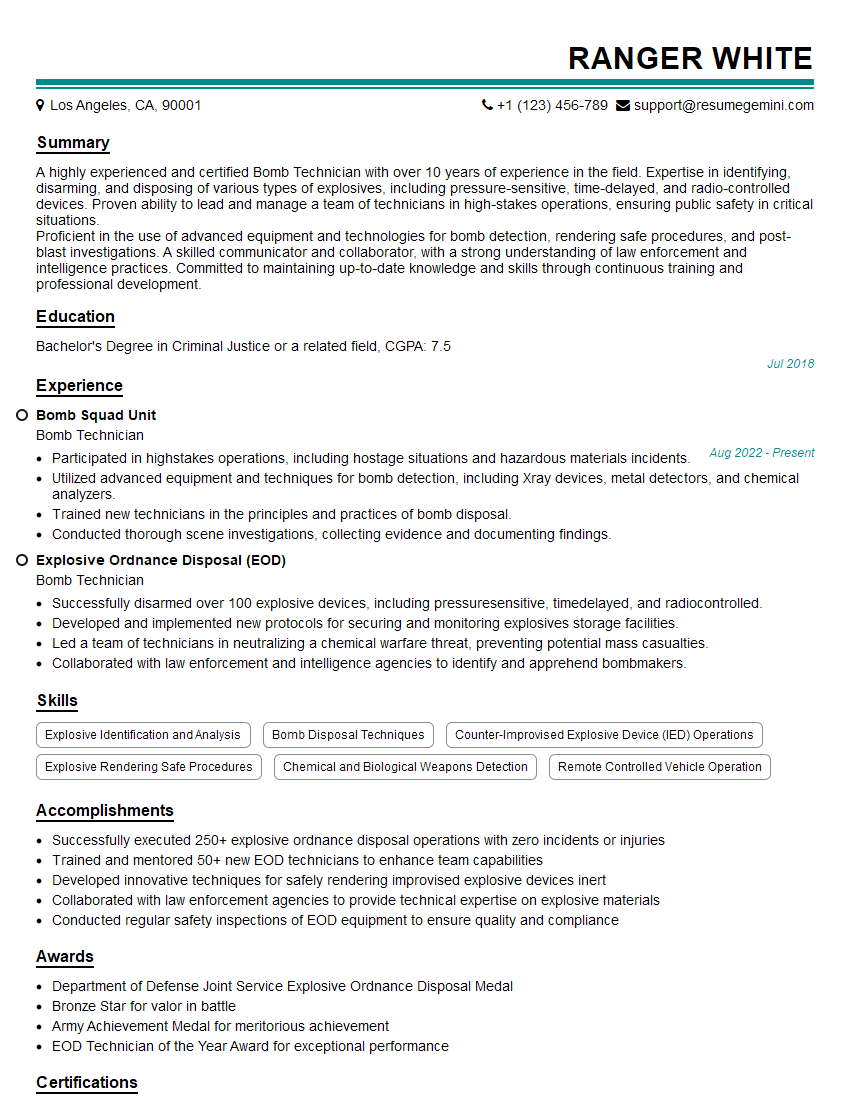
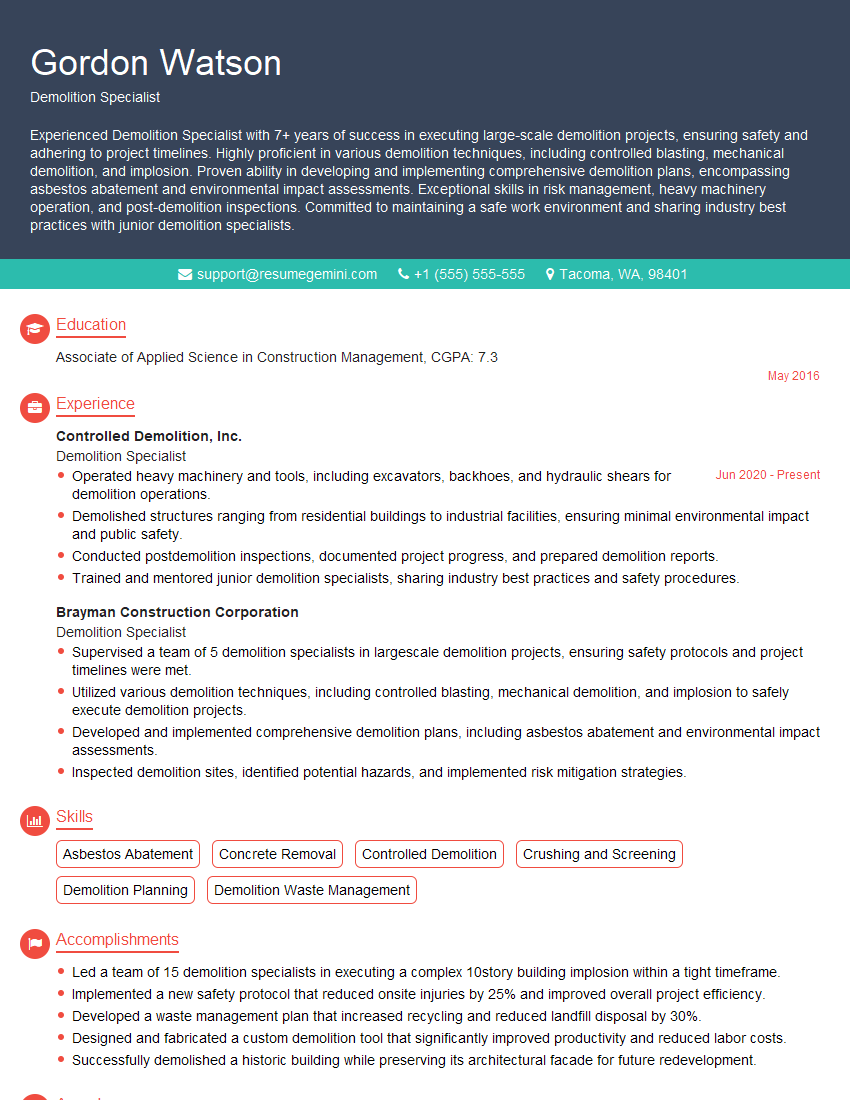
Mastering Explosive Ordnance Disposal (EOD) Awareness is crucial for career advancement in this specialized field. A strong understanding of these concepts demonstrates your commitment to safety and expertise, making you a highly desirable candidate. To enhance your job prospects, focus on building an ATS-friendly resume that clearly highlights your skills and experience. ResumeGemini is a trusted resource to help you create a professional and impactful resume that stands out. Examples of resumes tailored to Explosive Ordnance Disposal (EOD) Awareness are available to guide you.
Explore more articles
Users Rating of Our Blogs
Share Your Experience
We value your feedback! Please rate our content and share your thoughts (optional).
What Readers Say About Our Blog
Very informative content, great job.
good