Interviews are more than just a Q&A session—they’re a chance to prove your worth. This blog dives into essential Expressive Vocal Delivery interview questions and expert tips to help you align your answers with what hiring managers are looking for. Start preparing to shine!
Questions Asked in Expressive Vocal Delivery Interview
Q 1. Define ‘expressive vocal delivery’ and its key components.
Expressive vocal delivery is the art of using your voice to effectively communicate meaning, emotion, and engagement. It’s more than just speaking; it’s about crafting a vocal performance that resonates with your audience. Key components include:
- Articulation: Clear and precise pronunciation of words.
- Pronunciation: Correct sounds and stress patterns within words.
- Pitch Variation: Changing the highness or lowness of your voice to add interest and emphasis.
- Volume Control: Adjusting the loudness of your voice to suit the context and maintain listener interest. Think of a whisper for a secret versus a strong voice for a powerful announcement.
- Pace and Pausing: Strategic use of speed and silence for emphasis and comprehension. A slow, deliberate pace conveys importance, while pauses allow for reflection.
- Tone and Inflection: The emotional coloring of your voice, conveying feelings like excitement, sadness, or confidence. Inflection is the rise and fall of pitch within a sentence.
- Resonance: The richness and fullness of your voice, achieved by using your breath and body effectively.
Q 2. Explain the importance of vocal variety in effective communication.
Vocal variety is absolutely crucial for effective communication. A monotone voice is quickly fatiguing and fails to capture attention. By varying your pitch, pace, volume, and tone, you create a dynamic and engaging experience for your audience. Think about a captivating storyteller – their voice rises and falls, speeds up and slows down, creating a rollercoaster of emotions that keeps the listener hooked. Without this variety, the story would be flat and unmemorable. In a professional setting, a presentation delivered with vocal variety will be far more persuasive and memorable than one lacking it.
Q 3. How do you adjust your vocal delivery for different audiences?
Adapting vocal delivery to different audiences is key to successful communication. Consider these factors:
- Age: Younger audiences may respond better to a more energetic and faster pace, while older audiences might appreciate a slower, more deliberate delivery.
- Culture: Be mindful of cultural norms regarding volume, directness, and personal space. What’s acceptable in one culture might be inappropriate in another.
- Setting: A formal setting like a boardroom demands a different approach than a casual gathering with friends. The volume and formality of your language will adjust accordingly.
- Size of Audience: You’ll need to project your voice more for a larger audience. You might also adjust your style to be more engaging, since you’re less likely to have individual interaction.
For example, presenting to a group of children requires a more playful and animated approach compared to addressing a panel of executives. Observation and adaptation are vital for effective cross-audience communication.
Q 4. Describe your approach to managing vocal fatigue during extended speaking engagements.
Managing vocal fatigue during extended speaking engagements requires a proactive strategy. Here’s my approach:
- Hydration: Drink plenty of water throughout the day, especially before and during your speaking event.
- Vocal Warm-ups: Before speaking, gently warm up your vocal cords with humming, lip trills, and tongue stretches.
- Breathing Techniques: Practice diaphragmatic breathing to support your voice and prevent strain. This involves deep, controlled breathing from your abdomen.
- Strategic Pauses: Use pauses not just for emphasis but also to give your voice a rest. This helps prevent strain.
- Posture: Maintain good posture to allow for optimal breath support and reduce strain on your vocal cords.
- Vocal Rest: Take breaks whenever possible, even short ones, to allow your voice to recover.
- Voice Therapy (if needed): If you experience persistent vocal fatigue or strain, consult a speech-language pathologist for professional guidance.
Q 5. How do you use vocal tone to convey different emotions?
Vocal tone is a powerful tool for conveying emotions. For instance:
- Anger: A lower pitch, increased volume, and a harsher tone convey anger.
- Sadness: A softer volume, lower pitch, and slower pace often express sadness.
- Joy: Higher pitch, faster pace, and lighter tone often communicate joy.
- Fear: Higher pitch, faster pace, trembling voice, and a breathy quality often represent fear.
The subtle interplay of these elements creates a rich tapestry of emotional expression. Practice is key to mastering this aspect of vocal delivery.
Q 6. How do you ensure clarity and projection while maintaining a natural vocal quality?
Achieving clarity and projection while maintaining a natural vocal quality requires a balance of technique and awareness:
- Proper Breathing: Diaphragmatic breathing provides the support needed for projection without straining your voice. It’s the foundation of clear, resonant speech.
- Articulation Exercises: Regular tongue twisters and articulation drills improve clarity and precision.
- Resonance: Using your chest and head cavities to amplify your voice enhances projection without yelling.
- Vocal Placement: Focus on projecting your voice forward, rather than down or up, for optimal clarity.
- Microphone Technique (if applicable): Learn proper microphone technique to ensure your voice is amplified effectively without distortion.
Imagine a singer; they project their voice beautifully to fill a hall, but it still sounds natural and not forced.
Q 7. Explain how pacing and pausing enhance expressive vocal delivery.
Pacing and pausing are essential for expressive vocal delivery. Varying your pace keeps your audience engaged and helps emphasize key points. Pauses create anticipation, allow for reflection, and give your audience time to process information. A well-placed pause can be far more impactful than any single word.
Consider this example: Instead of saying, “The deadline is tomorrow,” try, “The deadline… is tomorrow.” The pause creates a sense of urgency and emphasizes the importance of the deadline. Conversely, a slower pace can convey solemnity or importance, while a faster pace can build excitement or urgency. Mastering pacing and pausing transforms a simple speech into a compelling performance.
Q 8. How do you handle unexpected interruptions or technical difficulties during a presentation?
Unexpected interruptions and technical glitches are inevitable. My approach is threefold: grace, flexibility, and audience connection.
First, I acknowledge the interruption with a calm and reassuring demeanor. A simple, ‘Let me address this quickly,’ or ‘Apologies for the technical hiccup,’ goes a long way in maintaining audience engagement. I avoid panicking or showing frustration; composure is key. Secondly, I adapt my delivery. If the interruption is minor, I seamlessly integrate it into my flow. For instance, if the projector malfunctions, I might switch to a more interactive segment, using the time to engage with the audience through a question-and-answer session. If the problem is more substantial, I don’t hesitate to take a brief pause, clearly stating what’s happening and what the next steps are. Finally, and most importantly, I emphasize re-establishing connection with the audience. A brief moment of eye contact, a reassuring smile, and a clear restatement of the main point help to regain momentum.
For example, during a conference presentation, the internet unexpectedly went down mid-presentation. Instead of panicking, I used the time to tell a relevant anecdote related to my topic, making it a spontaneous storytelling moment that surprisingly enhanced audience engagement. When the internet returned, I smoothly transitioned back to my slideshow, with the audience actively engaged despite the interruption.
Q 9. Describe a time you had to adapt your vocal delivery due to a challenging environment.
I once presented a workshop in a bustling, noisy marketplace. The background noise significantly challenged traditional presentation techniques. Instead of trying to shout over the noise, I adapted my vocal delivery to match the environment. I spoke with more deliberate pauses, emphasized key words with intentional changes in volume and tone, and incorporated more physical movement to keep the audience’s attention. I also used humor to connect with the audience, making light of the environment. Think of it like a seasoned street performer adjusting their act to captivate an audience amid a lively and distracting atmosphere. Instead of fighting the noise, I used it as a context, ensuring that my message was delivered clearly.
Q 10. How do you incorporate nonverbal cues to complement your vocal delivery?
Nonverbal cues are crucial for complementing vocal delivery; they’re not just additions but integral parts of a cohesive communication style. I use them strategically to amplify my message and enhance engagement. Think of it like a musical score; the vocals are the melody, and the nonverbal cues are the orchestration. They work together to create a richer, more compelling performance.
- Gestures: I use natural hand gestures to emphasize points, create visual imagery, and add dynamism to my presentations. Overly dramatic or repetitive gestures are avoided, focusing instead on meaningful movements.
- Eye Contact: I connect with individual audience members to create a sense of intimacy and shared understanding. This keeps them involved and prevents them from feeling disconnected.
- Posture and Movement: Confident posture and intentional movement helps to communicate energy, authority, and enthusiasm. I avoid fidgeting or remaining static to prevent the audience from becoming disengaged.
- Facial Expressions: Appropriate facial expressions convey emotions and emphasize the meaning of the words, creating a more impactful presentation.
For example, when discussing a complex technical concept, I might use diagrams or drawings in the air with my hands to guide the audience’s understanding, simultaneously narrating my explanation. The combination of precise language and clear, illustrative gestures significantly boosts comprehension.
Q 11. What techniques do you use to improve your vocal resonance and projection?
Improving vocal resonance and projection involves a combination of physical exercises and mindful practices. It’s about harnessing the natural power of your voice, not simply forcing it.
- Breathing Exercises: Diaphragmatic breathing is essential for proper vocal support. Exercises like deep inhalation and controlled exhalation strengthen the diaphragm and improve breath control, leading to increased projection and resonance.
- Vocal Warm-ups: Humming, lip trills, and tongue trills loosen vocal cords and improve flexibility, allowing for clearer and more resonant tones. These warm-ups are akin to stretching muscles before physical activity.
- Posture: Good posture is critical for optimal resonance. Standing tall with relaxed shoulders and an open chest allows the sound to resonate more fully.
- Articulation Exercises: Tongue twisters and other articulation drills enhance clarity and precision, which aids in projection.
- Vocal Coaching: Professional vocal coaching provides personalized feedback and guidance, helping identify and address any vocal limitations.
For instance, regularly practicing humming scales helps improve breath control and allows me to develop a fuller, richer tone. This practice, combined with conscious attention to posture and breathing, has noticeably increased my projection capabilities.
Q 12. How do you practice and maintain your vocal health?
Maintaining vocal health is paramount. It’s a continuous process, much like maintaining physical fitness. My routine includes:
- Hydration: Drinking plenty of water keeps the vocal cords lubricated and prevents dryness and strain.
- Vocal Rest: Avoiding excessive talking or shouting, particularly when fatigued, is vital. Allowing the vocal cords to rest prevents damage.
- Healthy Diet: A balanced diet, rich in fruits and vegetables, supports overall health, including vocal health.
- Sleep: Sufficient sleep is essential for vocal recovery and optimal performance. A well-rested voice is a stronger voice.
- Avoid Irritants: Smoking and excessive alcohol consumption negatively affect vocal health. Minimizing exposure to such irritants is crucial.
- Professional Checkups: Regular check-ups with an ENT specialist, especially for those who frequently use their voice, can identify potential issues early on.
Think of it like caring for a valuable instrument: regular maintenance ensures its longevity and peak performance.
Q 13. Describe your experience using a microphone and recording equipment.
I’m comfortable and proficient in using a variety of microphones and recording equipment. My experience spans both wired and wireless microphones, including lavalier, headset, and handheld types. I understand the importance of microphone technique – proper placement, distance, and angling to optimize sound quality. I also possess familiarity with recording software and audio editing tools, enabling me to produce high-quality recordings for presentations, podcasts, or voiceovers.
In a recent podcast recording, I effectively used a cardioid dynamic microphone to minimize background noise while maintaining a clear and engaging vocal presence. My experience with audio editing software allowed me to polish the recording, ensuring optimal sound quality for the listeners.
Q 14. How do you evaluate the effectiveness of your vocal delivery?
Evaluating the effectiveness of my vocal delivery is an ongoing process involving both objective and subjective measures. It’s not just about speaking well, but about connecting and conveying meaning powerfully.
- Audience Feedback: Post-presentation surveys and informal feedback from the audience provide valuable insights into clarity, engagement, and impact. I actively seek out this feedback.
- Self-Reflection: I review recordings of my presentations, paying attention to pace, tone, clarity, and nonverbal cues. This allows for identification of areas for improvement.
- Data Analysis: Where applicable, I track metrics such as audience engagement (e.g., participation rates, questions asked) to gauge the success of my delivery.
- Peer Review: Seeking feedback from trusted colleagues or mentors offers a fresh perspective and identifies blind spots.
For example, after a presentation, I might analyze viewer comments online or conduct a short post-session survey to better understand the overall audience reception. If the feedback suggests a lack of clarity on a particular point, I can refine that section in future presentations.
Q 15. What strategies do you employ to connect with an audience on an emotional level?
Connecting with an audience on an emotional level requires a multifaceted approach that goes beyond simply delivering words. It’s about conveying genuine feeling and creating a shared experience. I achieve this through several key strategies:
Vulnerability and Authenticity: Sharing personal anecdotes or experiences relevant to the message can create a strong connection. For instance, if speaking about overcoming challenges, revealing a personal struggle, while maintaining professionalism, fosters empathy and relatability.
Storytelling: Weaving narratives into my delivery allows the audience to engage with the content on a deeper, emotional level. Stories are inherently engaging and memorable, making the message more impactful.
Vocal Variety: Utilizing dynamic changes in pace, pitch, and volume mirrors emotional shifts and keeps the audience captivated. A softer tone for vulnerable moments contrasts with a stronger, more assertive tone for powerful statements, adding depth and meaning.
Eye Contact and Body Language: Making genuine eye contact and using expressive body language reinforces the emotional tone and creates a sense of personal connection. This non-verbal communication is as crucial as the spoken word.
Empathy and Understanding: Demonstrating an understanding of the audience’s emotions and concerns enables me to tailor the message to their needs and resonate with their feelings. Active listening before the presentation helps in gauging the audience’s mindset.
Career Expert Tips:
- Ace those interviews! Prepare effectively by reviewing the Top 50 Most Common Interview Questions on ResumeGemini.
- Navigate your job search with confidence! Explore a wide range of Career Tips on ResumeGemini. Learn about common challenges and recommendations to overcome them.
- Craft the perfect resume! Master the Art of Resume Writing with ResumeGemini’s guide. Showcase your unique qualifications and achievements effectively.
- Don’t miss out on holiday savings! Build your dream resume with ResumeGemini’s ATS optimized templates.
Q 16. How do you tailor your delivery to resonate with specific demographics?
Tailoring my delivery to specific demographics involves careful consideration of their cultural background, age, and interests. I achieve this by:
Research: Before addressing a particular demographic, I thoroughly research their values, concerns, and communication styles. This informs my choice of language, examples, and overall presentation style.
Language and Tone: Adjusting my vocabulary and tone to match the audience’s familiarity and comfort level is crucial. A presentation to a group of young adults might employ informal language, while addressing a professional conference demands a more formal approach.
Examples and Analogies: Using relatable examples and analogies specific to the audience’s experience creates immediate engagement and fosters understanding. For example, when speaking to students, I might use relatable academic experiences as analogies, while speaking to business professionals would involve business examples.
Visual Aids: Choosing appropriate visual aids (images, videos) that cater to the audience’s interests helps sustain attention and improve comprehension. Younger audiences might respond better to dynamic visuals, whereas older audiences may appreciate more concise and clear presentations.
Q 17. Describe your experience with different microphone techniques.
My experience with microphone techniques spans various types, from handheld and lavalier microphones to studio condenser microphones. Each requires a unique approach:
Handheld Microphones: Maintaining consistent distance and avoiding sudden movements are vital. Breathing techniques need to be controlled to prevent pops and plosives.
Lavalier Microphones: Placement is crucial to minimize background noise and ensure clear audio. Awareness of cable management and potential interference is essential.
Studio Condenser Microphones: These are highly sensitive and require precise technique; proper distance and angle to avoid distortion are important. Additionally, I am mindful of background noise control and sound dampening techniques.
I’ve adapted my vocal projection and articulation for each type, ensuring optimal audio quality and audience clarity. My experience includes live performances, recording sessions, and presentations in a variety of settings. I regularly practice and refine my technique based on the specific requirements of each setting.
Q 18. How do you control vocal pitch and inflection to maintain audience engagement?
Controlling vocal pitch and inflection is vital for maintaining audience engagement. Monotony is the enemy of captivating delivery! I employ several techniques:
Varied Pitch: I consciously change my pitch to emphasize key points and convey emotion. A higher pitch can express excitement, while a lower pitch can create a sense of seriousness or authority.
Inflection: Intonation, the rise and fall of the voice, is key to expressing meaning and emotion. Inflection adds emphasis, interest and emotion to a presentation, keeping the audience from becoming disinterested.
Pauses: Strategic pauses create emphasis, allow for reflection, and prevent the delivery from feeling rushed or overwhelming. Pauses also let the audience process information and anticipate the next point.
Emphasis: By subtly changing pitch and volume on specific words or phrases, I emphasize key points and guide the audience’s attention.
Practice and Feedback: Regular practice, combined with receiving feedback from others, is vital for refining my control over pitch and inflection. Recording and analyzing my delivery helps pinpoint areas needing improvement.
Q 19. What strategies do you use to improve your breath control?
Improving breath control is foundational to effective vocal delivery. It directly impacts volume, stamina, and overall vocal health. My strategies include:
Diaphragmatic Breathing: I focus on breathing deeply from my diaphragm, expanding my belly rather than just my chest. This allows for a fuller, richer sound and prevents strain.
Breath Support Exercises: I regularly practice exercises like hissing, sustained notes, and controlled breathing to strengthen my diaphragm and improve breath control.
Posture: Maintaining good posture allows for optimal lung expansion and efficient breath support. Slouching restricts breath capacity and can lead to vocal strain.
Hydration: Staying well-hydrated is essential for vocal health and breath control. Dehydration can lead to dryness and strain, making it difficult to project your voice effectively.
Vocal Rest: Giving my voice adequate rest is crucial to prevent fatigue and strain. This is especially important before and after significant speaking engagements.
Q 20. How do you ensure your vocal delivery aligns with the overall message?
Aligning vocal delivery with the overall message requires a holistic approach. It’s not just about what you say, but how you say it. Here’s how I ensure alignment:
Message Analysis: I carefully analyze the message to understand its tone, purpose, and intended emotional impact. This shapes the overall delivery style.
Tone Matching: My vocal tone mirrors the message’s intended tone. A serious message necessitates a serious tone, while a celebratory message requires enthusiasm and vibrancy.
Pace and Rhythm: The pace and rhythm of my delivery reflect the message’s flow and emphasis. Important points are emphasized with slight pauses and varied pace.
Vocal Dynamics: I use vocal dynamics (volume, pitch, pace) to emphasize key elements and guide the audience’s understanding of the message’s structure and flow.
Rehearsal and Feedback: Thorough rehearsal allows me to fine-tune my delivery and ensure a cohesive message. Seeking feedback from trusted colleagues helps identify any misalignment between my delivery and the intended message.
Q 21. Explain the role of articulation in effective vocal delivery.
Articulation is the clear and precise pronunciation of words. It’s the bridge between your thoughts and the audience’s understanding. Poor articulation can lead to miscommunication and audience confusion. Effective articulation involves:
Enunciation: Clearly pronouncing each syllable and sound is essential. Mumbling or slurring words obscures the message.
Pronunciation: Knowing and using the correct pronunciation of words is paramount to ensure clarity.
Tongue and Mouth Positioning: Correct positioning of the tongue and mouth muscles contributes to crisp and clear speech.
Practice: Tongue twisters and vocal exercises can improve articulation, strength and flexibility.
Awareness: Regularly recording and reviewing your speech helps identify and address articulation issues. Seeking feedback from others can be insightful.
In essence, articulation ensures the audience understands every word and nuance of the message, maximizing the impact of the vocal delivery.
Q 22. How do you use vocal emphasis to highlight key information?
Vocal emphasis is the art of using your voice to draw attention to crucial information. It’s not just about shouting; it’s about strategic use of pitch, pace, volume, and pauses to make certain words or phrases stand out. Think of it like highlighting text in a document – you want the reader (listener) to immediately focus on the most important parts.
- Pitch Variation: Raising your pitch slightly on a key word or phrase naturally emphasizes it. For example, in the sentence “The
project deadlineis tomorrow,” raising the pitch on “project deadline” makes it the focal point. - Increased Volume: A subtle increase in volume on a critical element can also be effective. But be careful not to overuse this; abrupt, jarring volume changes can be distracting.
- Pauses: Strategically placed pauses before or after important information allow the listener time to process and absorb the information. For instance, a pause before the word “success” in the phrase “Our hard work resulted in
success” creates dramatic impact. - Pace Control: Slowing down slightly on a significant point emphasizes its importance. Conversely, speeding up slightly on less crucial information can create a contrast that highlights the key elements.
In a presentation about a new product launch, emphasizing the features that solve a key customer problem would ensure the audience understands the product’s value proposition. Similarly, in a negotiation, emphasizing the benefits you’re offering can help secure a favorable outcome.
Q 23. How would you adapt your vocal delivery for a virtual presentation?
Adapting vocal delivery for a virtual presentation requires a heightened awareness of the technical limitations and the different dynamics of the virtual environment. The key is to maintain engagement despite the lack of immediate, in-person connection.
- Clear and Concise Language: Avoid jargon or overly complex sentence structures. Virtual audiences can easily get lost if the message is not clear.
- Enthusiasm and Energy: Virtual presentations can feel less engaging. You need to compensate for this by injecting extra energy into your voice. Speak with conviction and enthusiasm to keep your audience captivated.
- Optimize Audio: Use a high-quality microphone to ensure your voice is crisp and clear. Avoid background noise and distractions.
- Visual Cues: While your voice is key, use engaging visuals to complement your message and reduce reliance on just your voice to convey information. Think of slides as visual support for your vocal emphasis, not the primary form of communication.
- Engage with the Audience: Utilize the chat function or Q&A sections to create interaction and maintain audience engagement. Responding to questions shows you’re actively involved and responsive to their needs.
- Vary Your Vocal Dynamics: Just as in an in-person presentation, utilize changes in your pace, pitch and volume to keep your audience focused. This will prevent the presentation from sounding monotone.
For example, I once presented a complex data analysis virtually. By slowing my pace during key findings, increasing my volume slightly when emphasizing a particularly significant insight and using short, concise sentences, I ensured the audience grasped the complex information. The visuals also acted as visual anchors for each key point.
Q 24. What are some common vocal delivery mistakes and how do you avoid them?
Common vocal delivery mistakes often stem from a lack of awareness or control. Addressing these is crucial for effective communication.
- Monotone Delivery: Speaking in a flat, unchanging tone makes it difficult for the audience to stay engaged.
Solution:Consciously practice varying your pitch, pace, and volume. - Mumbling or Speaking Too Quietly: This makes it difficult to understand your message.
Solution:Practice projecting your voice and enunciating clearly. - Speaking Too Fast or Too Slow: Either extreme can hinder comprehension.
Solution:Practice pacing your speech at a natural, comfortable rhythm, adjusting based on the context. - Using Filler Words (e.g., “um,” “like,” “you know”): These weaken your message and make you sound less confident.
Solution:Become aware of these habits and consciously replace them with pauses. Practice speaking concisely. - Lack of Breath Control: Running out of breath mid-sentence disrupts the flow of your speech.
Solution:Practice diaphragmatic breathing to improve breath support and control. - Inappropriate Tone: Using a tone that doesn’t match the context (e.g., using a playful tone for a serious topic) can confuse or alienate the audience.
Solution:Carefully consider the context and adjust your tone accordingly.
I’ve seen many instances where speakers lose their audience due to these issues. Addressing these points through conscious practice and self-awareness significantly improves delivery.
Q 25. Describe your experience with providing vocal feedback to others.
Providing vocal feedback involves a delicate balance of constructive criticism and encouragement. My approach emphasizes creating a safe and supportive environment where individuals feel comfortable receiving feedback.
- Active Listening: I begin by carefully listening to the speaker, noting both strengths and areas for improvement.
- Specific and Actionable Feedback: Instead of general comments, I provide specific examples and suggest actionable steps for improvement. For example, instead of saying “Your voice is monotonous,” I might say, “In the second paragraph, your pitch remained consistent. Try varying your pitch on key words like ‘innovation’ and ‘results’ to emphasize them.”
- Focus on Strengths: I always begin by acknowledging the speaker’s strengths before addressing areas for improvement. This sets a positive and encouraging tone.
- Collaborative Approach: I encourage a dialogue rather than a lecture. I ask questions and elicit their thoughts on their performance to foster self-awareness and ownership of the improvement process.
- Positive Reinforcement: I always offer positive reinforcement and encouragement to motivate the speaker to work on identified areas.
For instance, I helped a colleague improve their public speaking by focusing on their breath control and pausing for emphasis. By pointing out specific examples and providing actionable suggestions, they improved noticeably.
Q 26. How do you handle criticism regarding your vocal delivery?
I view criticism as an opportunity for growth and refinement. My approach to handling criticism regarding my vocal delivery involves careful consideration and self-reflection.
- Active Listening and Seeking Clarification: I listen carefully to the criticism, seeking clarification if needed. Understanding the specific concerns is essential.
- Self-Reflection: I reflect on the feedback, considering whether it aligns with my own self-assessment. I analyze recordings of my presentations or speeches to identify areas for potential improvement.
- Identify Areas for Improvement: Based on the feedback and self-reflection, I identify specific areas where I can improve.
- Develop a Plan of Action: I create a plan to address the areas for improvement, including specific exercises or techniques to enhance my vocal delivery.
- Seek Further Guidance: If needed, I might seek additional guidance from vocal coaches or mentors.
- Implement Changes and Monitor Progress: I implement the changes and monitor my progress by recording and evaluating my performance over time.
Constructive criticism helped me refine my use of pauses to create dramatic effect. It showed me that while I thought I was using pauses effectively, they were sometimes too long or placed improperly. Adjusting this significantly improved my delivery.
Q 27. How do you maintain vocal consistency over extended periods?
Maintaining vocal consistency over extended periods requires a holistic approach that addresses physical and mental well-being.
- Hydration: Staying adequately hydrated is crucial for maintaining vocal health. Dehydration can lead to vocal fatigue and strain.
- Vocal Warm-ups: Regular vocal warm-ups prepare your vocal cords for extended use, reducing the risk of strain or injury.
- Rest and Recovery: Allowing your voice adequate rest is essential, particularly after periods of extended speaking or singing. Avoid excessive talking or shouting.
- Healthy Lifestyle: A healthy lifestyle encompassing proper diet, exercise, and sufficient sleep contributes to overall vocal health.
- Vocal Technique: Maintaining proper vocal technique is critical. This involves proper breathing, posture, and resonance to prevent strain.
- Professional Guidance: For extended periods of demanding vocal use, consulting with a vocal coach or speech therapist can provide personalized guidance and techniques to maintain consistency and prevent vocal issues.
I’ve found that incorporating these practices ensures my vocal delivery remains consistent and effective, even during long conferences or multi-day workshops. Proper vocal care is as important as practicing my presentations themselves.
Q 28. What are your preferred methods for analyzing and improving your vocal delivery?
Analyzing and improving vocal delivery is an iterative process that relies on both self-assessment and external feedback.
- Self-Recording and Analysis: Recording myself during presentations or speeches allows me to objectively assess my performance, identifying areas for improvement in pitch, pace, volume, and clarity.
- Seeking Feedback from Others: Soliciting feedback from trusted colleagues or mentors provides valuable external perspectives that I might miss in self-assessment.
- Vocal Coaching: A vocal coach can provide expert guidance, identify specific vocal techniques to improve, and create a personalized plan for development.
- Analyzing Successful Speakers: Observing and analyzing the vocal delivery of accomplished speakers provides valuable insights and inspiration.
- Practice and Refinement: Consistent practice is essential for refining vocal delivery skills and embedding improved techniques into my communication style.
For example, analyzing my recorded presentations allowed me to identify instances where I used filler words excessively. By consciously focusing on this aspect during practice, I’ve significantly reduced their use. This continual cycle of analysis, feedback, and practice is vital for consistent improvement.
Key Topics to Learn for Expressive Vocal Delivery Interview
- Vocal Projection and Articulation: Understanding how to project your voice clearly and articulately in various settings, including techniques for managing vocal resonance and eliminating distracting vocal habits.
- Pace, Pause, and Emphasis: Mastering the art of using pace, pauses, and emphasis to convey meaning, emotion, and engagement. Practical application involves practicing speeches and presentations to refine these skills.
- Vocal Tone and Inflection: Exploring the impact of vocal tone and inflection on audience perception. This includes understanding how to adjust your tone to suit different contexts and audiences and how to use inflection to highlight key points.
- Nonverbal Communication (Body Language Integration): Recognizing the synergy between vocal delivery and body language. This involves practicing techniques to ensure your body language complements and enhances your vocal delivery.
- Storytelling and Narrative Techniques: Learning to use vocal delivery to enhance storytelling and create a compelling narrative. This involves understanding how to use pacing, tone, and emphasis to build suspense, create emotional connection, and maintain audience interest.
- Responding to Questions with Confidence: Practicing techniques for maintaining composure and delivering thoughtful responses during question-and-answer sessions. This involves preparing for potential questions related to your experience and skills and practicing confident and clear articulation.
- Understanding Audience Engagement: Developing strategies to assess and adjust your delivery based on audience reactions and feedback. This includes understanding nonverbal cues from the audience and adapting your delivery accordingly.
Next Steps
Mastering expressive vocal delivery is crucial for career advancement in numerous fields, allowing you to communicate effectively, build rapport, and command attention. A strong resume is your first impression, so crafting an ATS-friendly document is essential to maximizing your job prospects. ResumeGemini is a trusted resource that can significantly enhance your resume-building experience. To help you present your skills effectively, examples of resumes tailored to Expressive Vocal Delivery are provided, showcasing how to highlight your capabilities in a compelling manner.
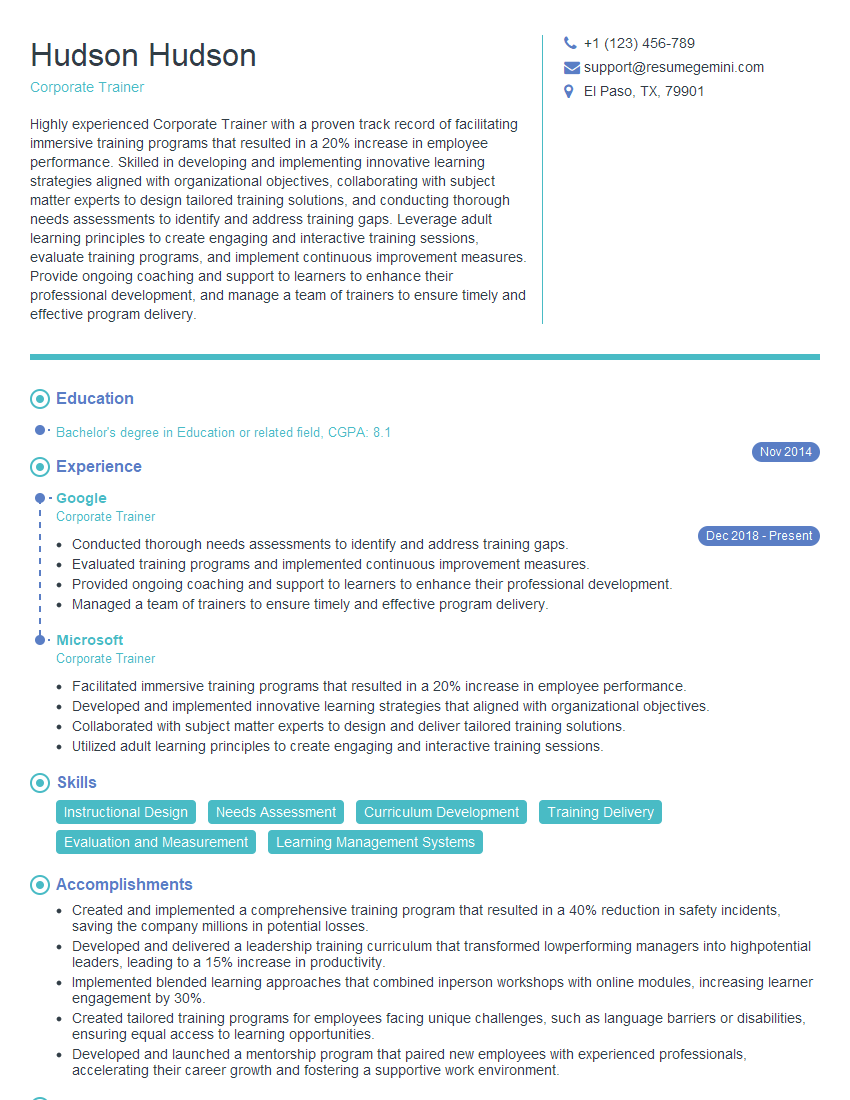
Corporate Trainer Resume Sample

Communications Consultant Resume Sample
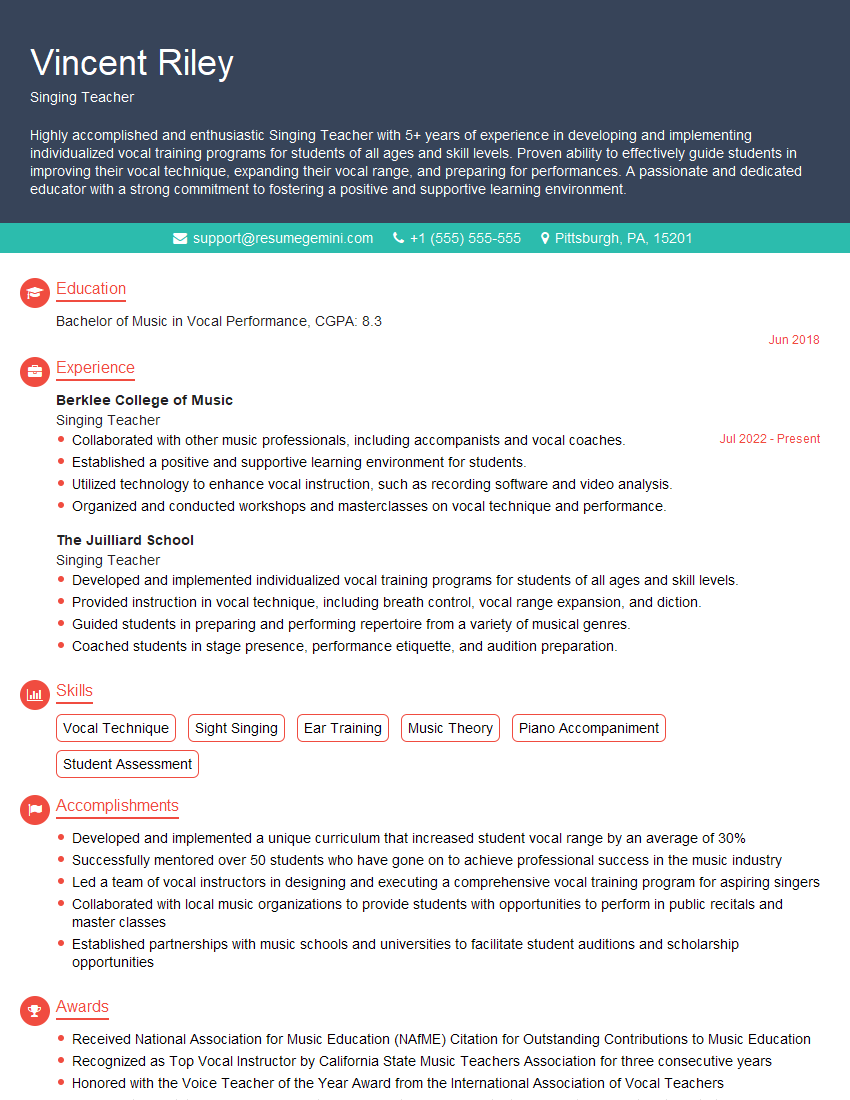
Singing Teacher Resume Sample
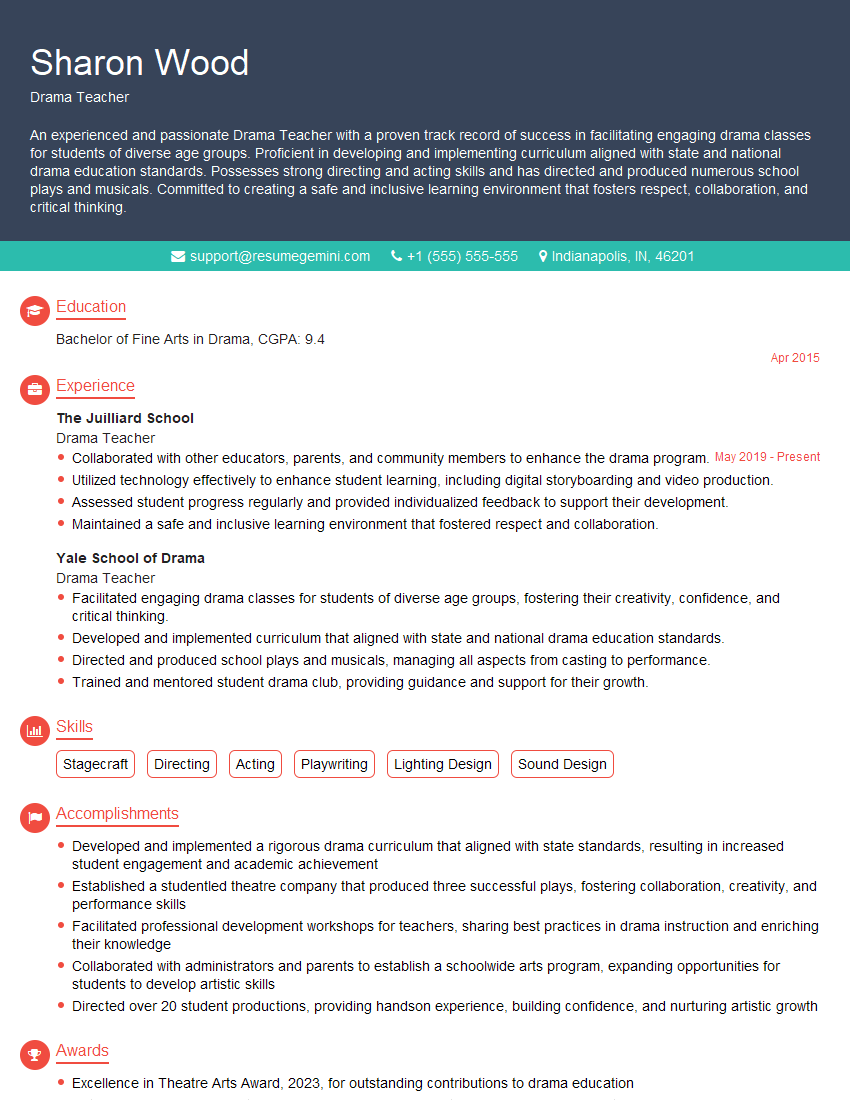
Drama Teacher Resume Sample
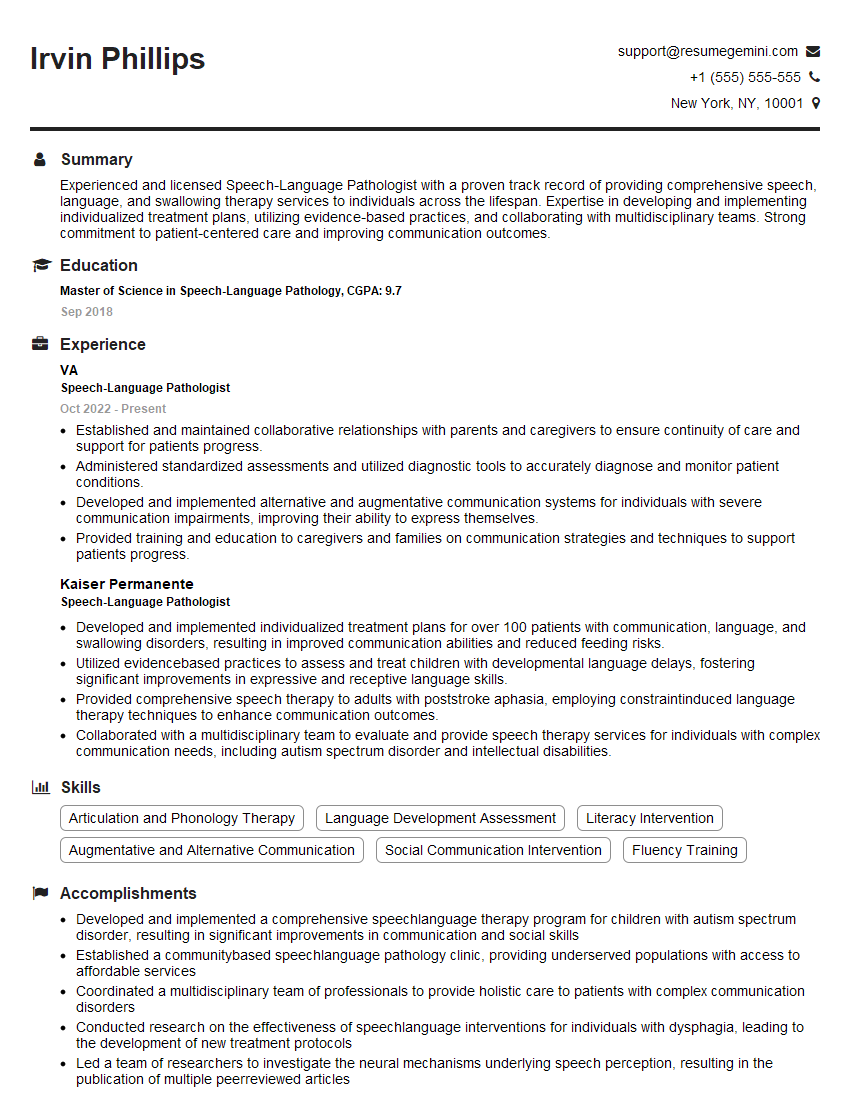
Speech-Language Pathologist Resume Sample
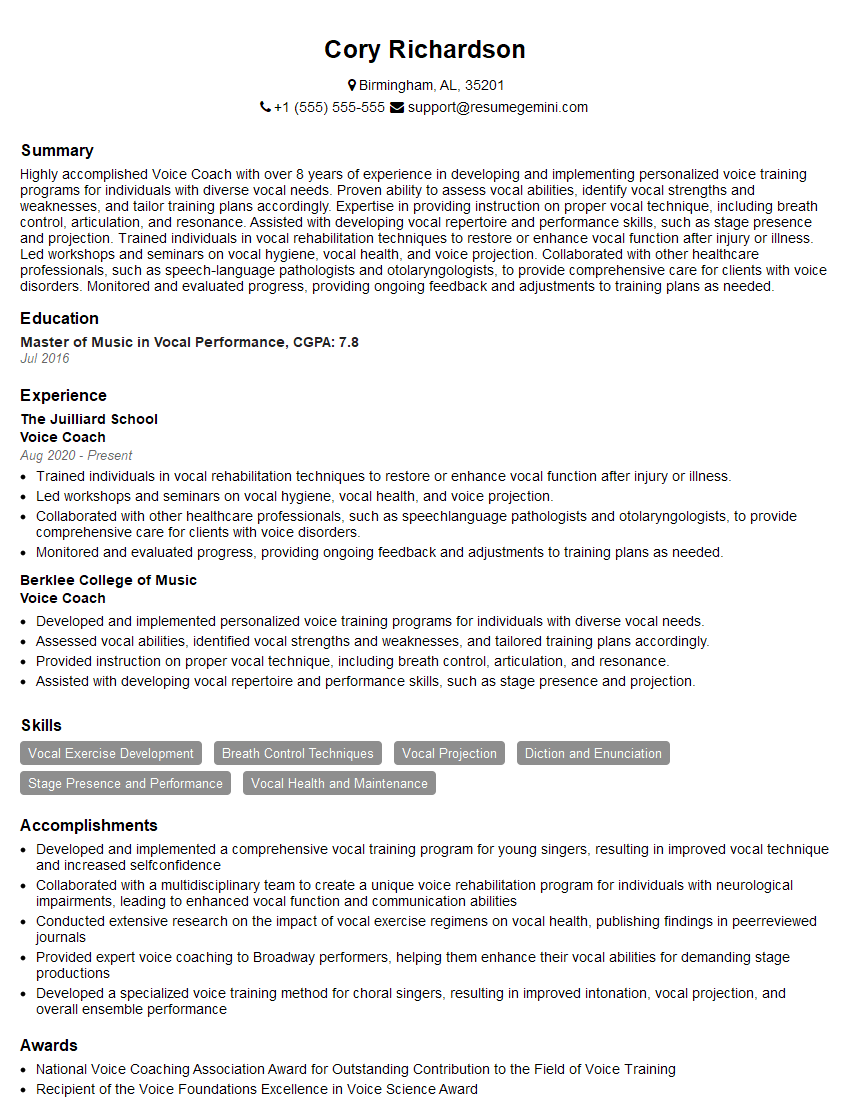
Voice Coach Resume Sample
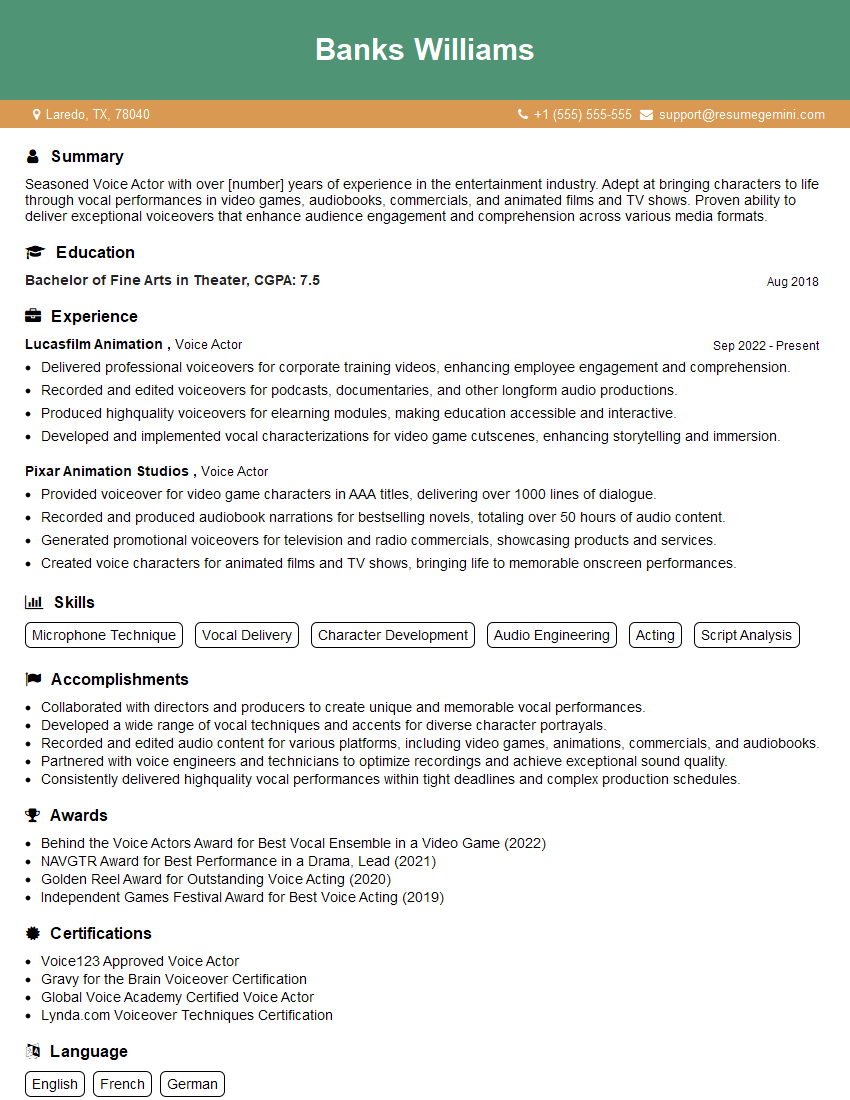
Voice Actor Resume Sample
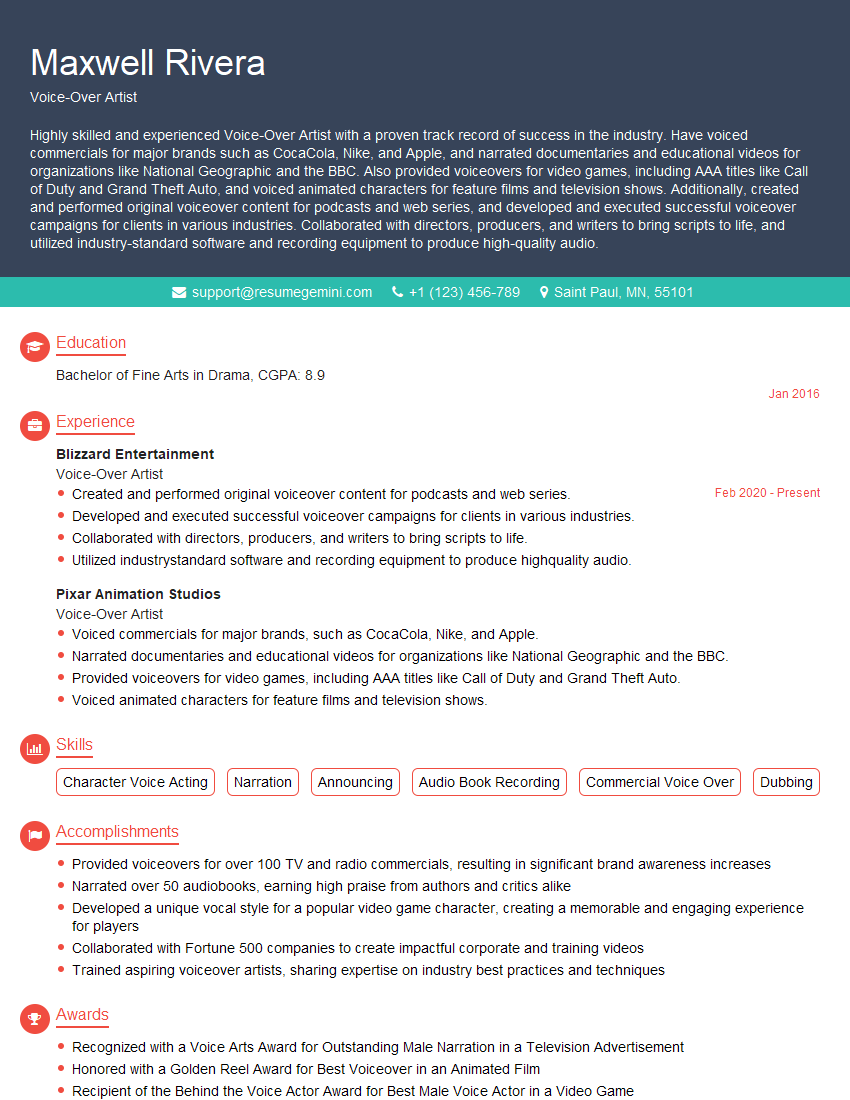
Voice-Over Artist Resume Sample
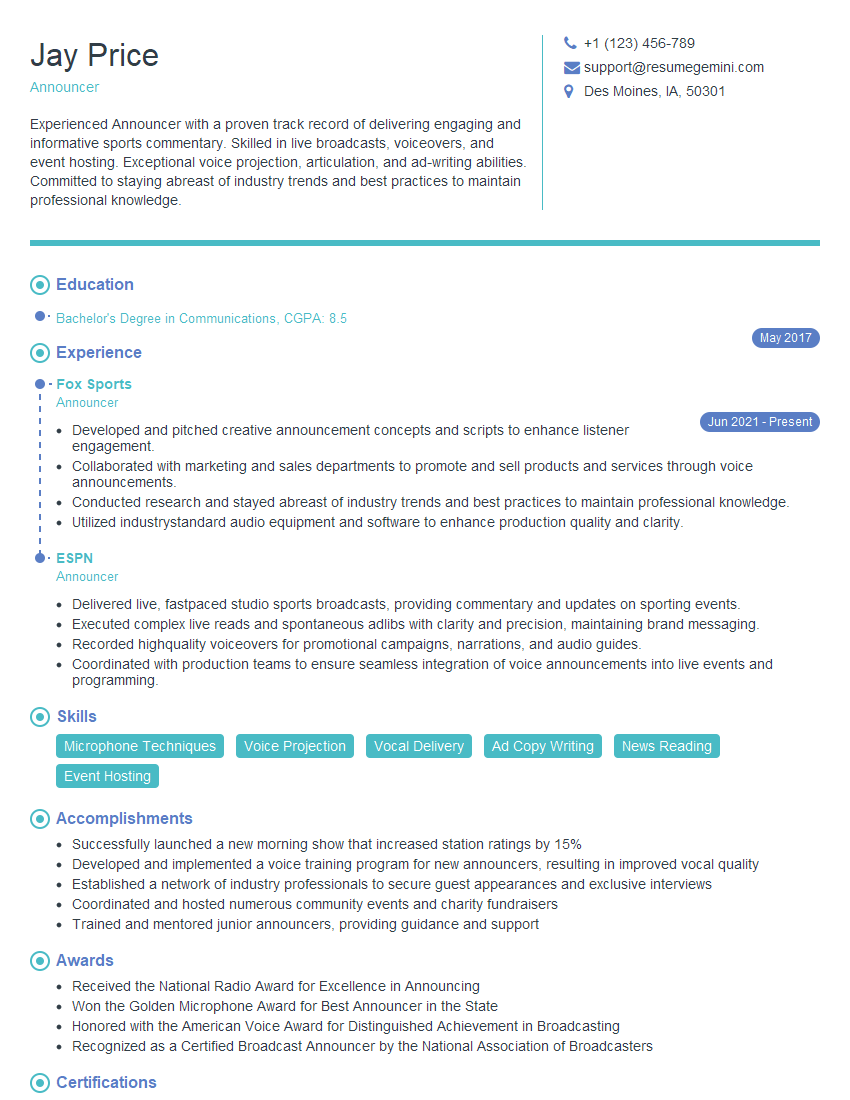
Announcer Resume Sample

Radio Host Resume Sample
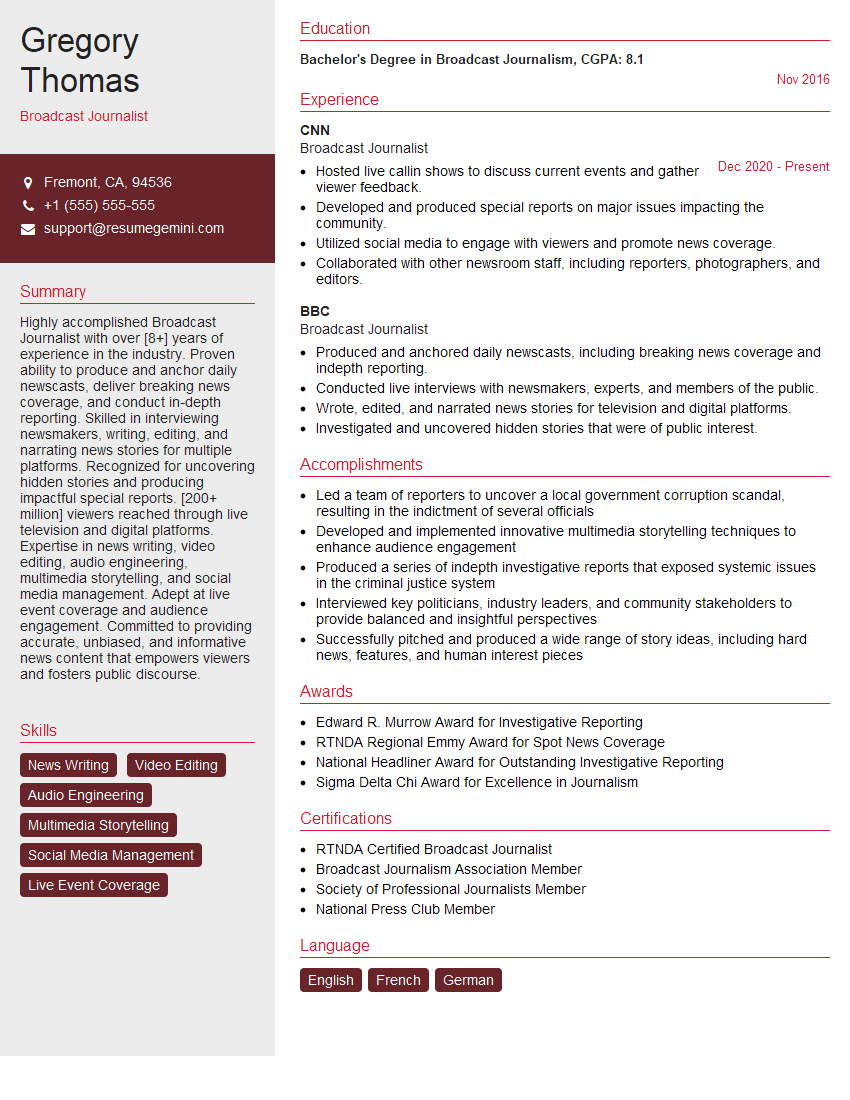
Broadcast Journalist Resume Sample
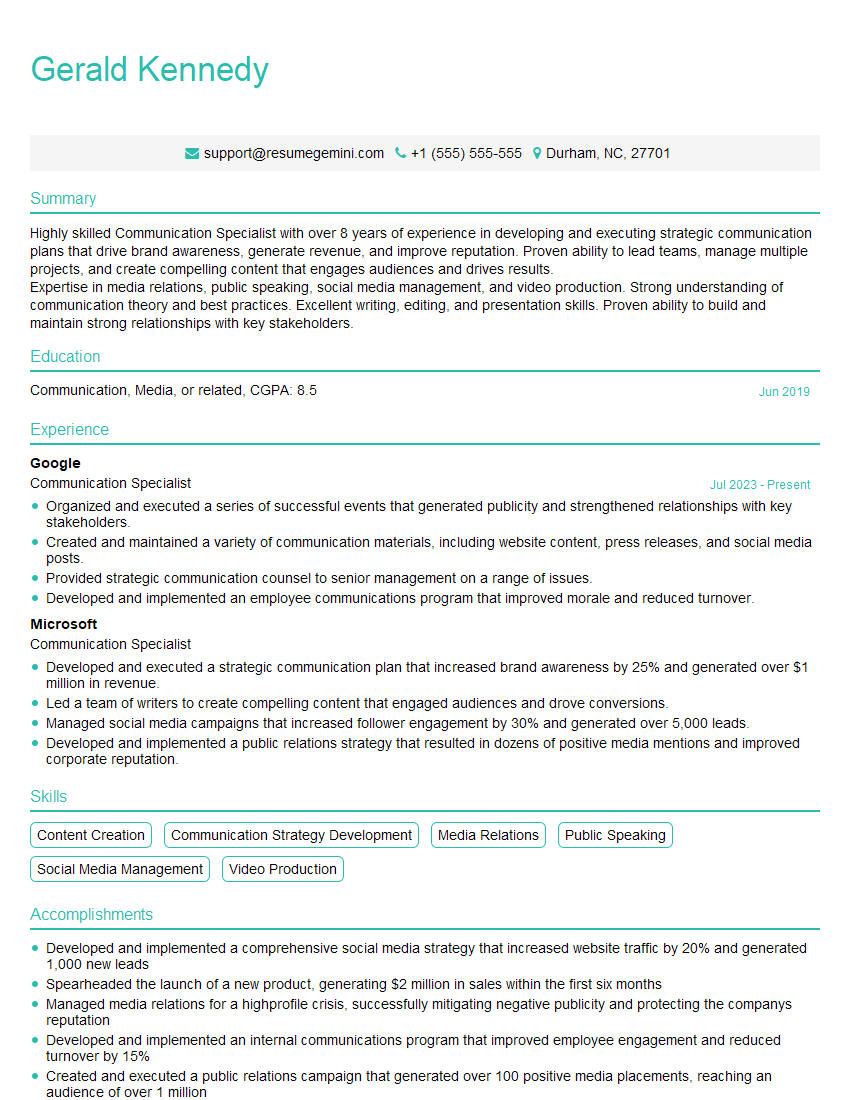
Communication Specialist Resume Sample
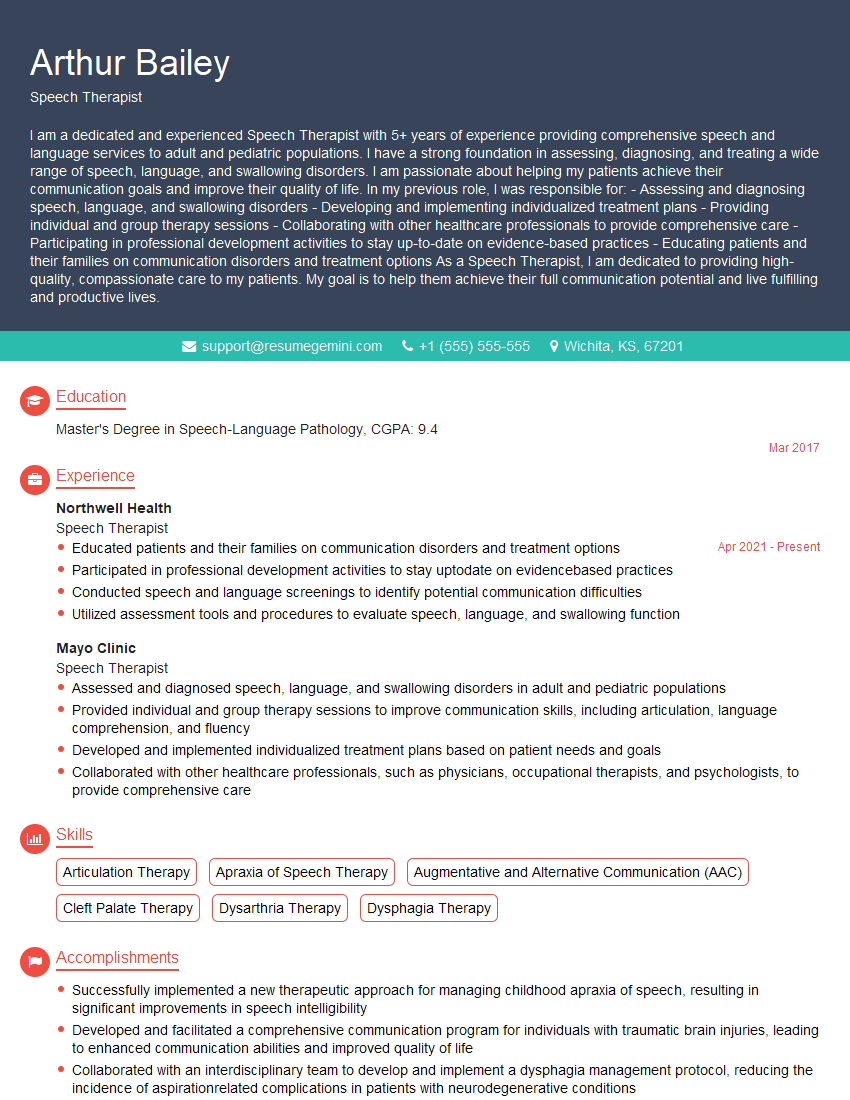
Speech Therapist Resume Sample
Explore more articles
Users Rating of Our Blogs
Share Your Experience
We value your feedback! Please rate our content and share your thoughts (optional).
What Readers Say About Our Blog
Very informative content, great job.
good