Are you ready to stand out in your next interview? Understanding and preparing for Fabric Machine Operation interview questions is a game-changer. In this blog, we’ve compiled key questions and expert advice to help you showcase your skills with confidence and precision. Let’s get started on your journey to acing the interview.
Questions Asked in Fabric Machine Operation Interview
Q 1. Describe your experience operating different types of fabric machines.
Throughout my career, I’ve gained extensive experience operating a wide range of fabric machines, including knitting machines (both weft and warp knitting), weaving machines (projectile, rapier, air-jet), dyeing machines (continuous and batch), and finishing machines (calenders, stenters). My expertise extends to both traditional and modern, computer-controlled machinery. For example, I’ve worked extensively with Shima Seiki whole garment knitting machines, mastering their intricate programming and troubleshooting capabilities. I also have hands-on experience with Sulzer projectile weaving machines, adjusting their settings for various fabric structures and yarn counts. My experience isn’t limited to operation; it includes routine maintenance and minor repairs, ensuring optimal machine performance.
- Knitting: Proficient in operating various gauge and stitch types.
- Weaving: Skilled in setting up different reed and heddle arrangements.
- Dyeing & Finishing: Experienced in controlling temperature, pressure, and chemical application for optimal results.
Q 2. Explain the process of setting up a fabric machine for a specific job.
Setting up a fabric machine for a specific job is a meticulous process that requires careful attention to detail and a thorough understanding of the fabric’s properties and the desired outcome. Think of it like preparing a recipe – the right ingredients and steps are crucial for a successful final product. First, I consult the job order, noting the fabric type (e.g., cotton, polyester, silk), its weight, desired weave or knit structure, and finishing requirements. Then, I select the appropriate machine and begin the setup:
- Machine Selection: Choosing the correct machine based on fabric type and desired outcome.
- Yarn/Fabric Loading: Carefully loading the yarn or fabric onto the machine, ensuring proper tension and alignment. Improper loading can lead to defects like broken yarns or uneven fabric.
- Parameter Input: Programming the machine with the correct settings based on the job order. This includes parameters such as stitch density, yarn tension, weaving pattern, dyeing temperature and time, or finishing parameters like heat and pressure. For example, I would adjust the weft density on a weaving machine to control fabric weight and drape. Modern machines often use computer-aided design (CAD) systems for complex patterns.
- Test Run: Before full production, a short test run is conducted to check for any issues with the settings or yarn feed. This helps prevent significant waste and ensures a quality product.
- Quality Check: Inspecting the initial output to verify conformity to specifications.
Q 3. How do you troubleshoot common malfunctions in fabric machines?
Troubleshooting is a vital skill in fabric machine operation. Common malfunctions can range from simple yarn breaks to complex mechanical issues. My approach is systematic, starting with the most obvious causes and progressing to more complex diagnostics. For example, if a weaving machine stops unexpectedly, I first check for simple things such as yarn breakage or a full bobbin.
- Visual Inspection: Begin by carefully examining the machine for any visible problems like broken parts, loose connections, or tangled yarn.
- Listen for Unusual Sounds: Unusual noises often indicate a mechanical problem, allowing for early detection.
- Check Control Panels: Monitor error codes displayed on the control panel. These codes provide valuable clues to pinpoint specific malfunctions.
- Systematic Elimination: If the problem persists, I systematically check different components (e.g., sensors, motors, gears), eliminating possibilities one by one. This ensures that I address the root cause, not just the symptom.
- Consult Manuals/Experts: When the issue is beyond my immediate expertise, I utilize machine manuals and consult with experienced colleagues or technicians.
For instance, if the fabric from a knitting machine shows consistent laddering, I would investigate the needle selection, yarn tension, or cam settings. Similarly, inconsistent dyeing could point towards a faulty temperature sensor or pump malfunction within the dyeing machine.
Q 4. What safety procedures do you follow when operating fabric machinery?
Safety is paramount in fabric machine operation. I strictly adhere to all safety regulations and company protocols. My commitment to safety extends to all aspects of my work.
- Personal Protective Equipment (PPE): Always wear appropriate PPE, including safety glasses, hearing protection, gloves, and closed-toe shoes. This minimizes the risk of injury from flying debris, loud noises, or chemical exposure.
- Machine Guards: Ensuring all machine guards are in place before starting any operation. Guards prevent accidental contact with moving parts.
- Lockout/Tagout Procedures: Strictly following lockout/tagout procedures when performing maintenance or repairs, preventing accidental machine start-up.
- Proper Machine Handling: Handling and operating machinery carefully, avoiding rushing or unsafe practices.
- Emergency Procedures: Being familiar with emergency procedures and knowing where to find emergency shut-off switches and safety equipment.
- Housekeeping: Maintaining a clean and organized work area to reduce the risk of trips and falls.
For example, before cleaning a machine, I ensure it’s completely turned off and locked out to prevent any accidents. I also regularly check the safety devices on all machines to make sure they are functioning correctly.
Q 5. How do you maintain the quality of fabric during the production process?
Maintaining fabric quality throughout the production process requires consistent monitoring and proactive intervention. It involves a combination of machine settings, process control, and vigilant quality checks.
- Consistent Machine Settings: Precise adjustment and maintenance of machine settings to ensure uniform yarn tension, stitch density (in knitting), or weave structure (in weaving). Fluctuations in these settings can lead to fabric defects.
- Regular Inspection: Frequent inspection of the fabric during processing to identify any imperfections early on. Early detection allows for timely intervention and prevents significant waste.
- Proper Pre-treatment: Ensuring the fabric receives the correct pre-treatments (e.g., scouring, bleaching) to prepare it for subsequent processes, like dyeing.
- Appropriate Finishing Techniques: Employing suitable finishing techniques, including calendering or stentering, to achieve the desired fabric hand and appearance.
- Environmental Control: Maintaining optimal environmental conditions (temperature, humidity) within the processing facility. Extreme temperatures or humidity can negatively affect fabric quality.
For instance, during dyeing, I consistently monitor the temperature and dye concentration to ensure even color penetration throughout the fabric. Any irregularities are addressed immediately.
Q 6. Explain your experience with different types of fabrics and their processing requirements.
My experience encompasses a diverse range of fabrics, each with unique processing requirements. Understanding these requirements is key to producing high-quality goods.
- Natural Fibers (Cotton, Linen, Silk, Wool): These fibers require careful handling to avoid damage. They might need specific pre-treatments and gentler processing conditions compared to synthetics.
- Synthetic Fibers (Polyester, Nylon, Acrylic): Synthetic fibers often require different dyeing temperatures and finishing techniques. Their resilience allows for more aggressive processing.
- Blends: Fabric blends present their own set of challenges, as the processing must cater to the properties of each component fiber.
- Speciality Fabrics: I’ve worked with speciality fabrics such as technical textiles and performance fabrics requiring specialized knowledge and equipment for optimal processing.
For example, silk, being delicate, requires lower temperatures and gentler agitation during dyeing compared to a robust polyester fabric. Understanding these nuances is crucial for avoiding fabric damage and producing quality goods.
Q 7. How do you monitor and adjust machine settings to ensure consistent output?
Consistent output relies on precise monitoring and adjustment of machine settings. Think of it like tuning a musical instrument; slight adjustments significantly impact the final result. I use a multi-pronged approach:
- Regular Monitoring: Continuously monitor machine parameters (e.g., speed, tension, temperature) using the machine’s control panel and visual inspection of the fabric. Modern machines often have sophisticated sensors for real-time feedback.
- Data Logging and Analysis: Recording key machine parameters and fabric quality metrics enables identification of trends and potential problems. This allows for predictive maintenance and optimization of settings.
- Statistical Process Control (SPC): Applying SPC techniques to monitor variations and identify sources of inconsistencies. This can reveal subtle problems that might not be apparent through visual inspection alone.
- Calibration and Adjustment: Periodically calibrating and adjusting machine settings based on monitoring data and feedback from quality control checks. Slight adjustments are frequently needed to maintain consistent quality.
For example, during the knitting process, if I notice a gradual decrease in stitch density, I will investigate and adjust the machine’s cam settings or yarn tension accordingly. Regular calibration of the tensioning system is essential to maintain consistent fabric quality.
Q 8. Describe your experience with preventative maintenance on fabric machines.
Preventative maintenance is crucial for maximizing the lifespan and efficiency of fabric machines. My approach is proactive, focusing on scheduled inspections and lubrication to prevent major breakdowns.
- Regular Lubrication: I meticulously lubricate all moving parts according to the manufacturer’s specifications, using the correct type of lubricant to minimize friction and wear. This is like oiling the hinges of a door – it keeps them moving smoothly and prevents squeaking or seizing.
- Scheduled Inspections: I follow a detailed checklist to inspect components for wear and tear, checking for things like loose screws, frayed belts, or damaged needles. For example, on a knitting machine, I’d carefully check the condition of the needles, ensuring they’re properly aligned and free from burrs.
- Cleaning: Regular cleaning of lint, dust, and fabric scraps is paramount to prevent build-up which can hinder machine function and even lead to fires. Think of it as spring cleaning for your machine, ensuring it operates at peak performance.
- Component Replacement: I proactively replace parts showing signs of wear before they fail, minimizing downtime. This is like changing your car’s oil before it gets too dirty – it’s preventative, rather than reactive.
This proactive approach minimizes costly repairs and unexpected downtime, ensuring consistent production and high-quality output.
Q 9. How do you identify and resolve issues related to fabric tension and alignment?
Fabric tension and alignment are critical for producing high-quality fabric. Issues can arise from various sources, including incorrect machine settings, worn components, or improper material handling.
- Identifying Issues: I identify issues by visually inspecting the fabric for unevenness, wrinkles, or broken threads. I also use measuring tools to check the tension at various points in the process. For instance, on a weaving machine, uneven tension can cause broken warp or weft yarns resulting in a visibly flawed fabric.
- Resolving Tension Issues: Tension problems are often resolved by adjusting the machine’s tension settings. This might involve calibrating tension control devices, replacing worn parts like tension rollers or replacing the yarn itself if its quality is questionable.
- Resolving Alignment Issues: Alignment problems are often addressed by carefully adjusting the machine’s guides and rollers. This requires precision and often involves making minute adjustments to ensure the fabric runs smoothly through the machine. For example, misaligned rollers on a printing machine could result in uneven ink application, impacting the fabric’s appearance.
Troubleshooting these issues involves a combination of technical knowledge, careful observation, and systematic problem-solving. Experience plays a vital role in quickly identifying and resolving problems, minimizing production delays.
Q 10. What are the key performance indicators (KPIs) you track when operating fabric machines?
Key Performance Indicators (KPIs) are essential for monitoring the efficiency and productivity of fabric machines. The specific KPIs will vary depending on the type of machine and the production goals, but some key metrics include:
- Production Rate (Meters/hour or Pieces/hour): This measures the output of the machine within a given time frame. A decrease in this KPI can signal a machine malfunction or other issues.
- Fabric Defects: The number of defects per meter or per unit of fabric produced. High defect rates indicate problems with machine settings, material quality, or operator skill.
- Downtime: The percentage of time the machine is not in operation due to breakdowns or maintenance. Minimizing downtime is key to maximizing productivity.
- Material Waste: The amount of material wasted during the production process. This can be due to machine malfunctions or operator errors.
- Machine Efficiency: The percentage of time the machine is actively producing good quality fabric. It is a good indicator of the overall effectiveness of the process.
Tracking these KPIs allows for proactive adjustments to improve machine performance and prevent potential problems before they lead to significant production losses.
Q 11. How do you handle unexpected downtime or machine failures?
Unexpected downtime can be disruptive, so I approach it systematically:
- Immediate Assessment: First, I assess the situation to identify the source of the problem. This may involve checking safety mechanisms, power supply, and visual inspection of the machine itself. For instance, a loud grinding sound might indicate a mechanical problem requiring immediate attention.
- Troubleshooting: Based on my assessment, I attempt to troubleshoot the issue using my knowledge of the machine and its components. This could involve checking electrical connections, replacing faulty parts (if readily available), or resetting the machine’s controls.
- Reporting and Communication: I promptly report the issue to my supervisor, providing details of the problem and the steps I’ve taken. This ensures appropriate support and prevents further delays.
- Preventative Measures: Once the problem is resolved, I review the situation to identify potential preventative measures to avoid similar occurrences. This is crucial to minimizing future downtime.
- Documentation: I thoroughly document the downtime event, including the cause, the time taken for repair, and any preventative actions taken. This helps in continuous improvement and proactive maintenance planning.
A proactive and methodical approach to handling downtime minimizes its impact on production and maintains high standards of efficiency.
Q 12. Describe your experience with different types of fabric machine controls.
My experience encompasses a variety of fabric machine controls, ranging from simple mechanical levers and dials to sophisticated computer-numerical control (CNC) systems.
- Mechanical Controls: I’m proficient with older machines relying on manual adjustments of levers, gears, and dials to control speed, tension, and other parameters. This requires a strong understanding of the mechanical workings of the machine.
- PLC-based Controls: I’m comfortable working with Programmable Logic Controllers (PLCs), which provide more precise control over various machine functions. This often involves using HMIs (Human Machine Interfaces) to monitor and adjust machine parameters.
- CNC Controls: I’ve worked with CNC-controlled machines, offering advanced automation and precision. This requires a good understanding of programming and operating such systems. This kind of control often allows for pre-programmed patterns and intricate designs.
Regardless of the control system, my focus is on safe and efficient operation, adhering to all safety procedures and ensuring the machine is producing quality fabric.
Q 13. Explain your understanding of fabric quality control procedures.
Fabric quality control is a critical aspect of the production process. It ensures that the finished product meets the required specifications. My experience includes:
- Visual Inspection: I routinely conduct visual inspections of the fabric throughout the production process. This involves looking for defects like broken yarns, holes, stains, or inconsistencies in the weave or knit.
- Measurement and Testing: I use various measuring instruments to check fabric dimensions, weight, and other physical properties to ensure they conform to standards. This could involve measuring things like fabric width, length, and weight per unit area.
- Defect Analysis: When defects are detected, I analyze their cause to identify the root problem and implement corrective measures. This could involve analyzing the type of defect to determine if it is a machine, material or process-related issue.
- Documentation: I meticulously document all quality control checks and findings, maintaining records to track trends and identify areas for improvement.
- Continuous Improvement: Through continuous monitoring and analysis, I actively contribute to improving the quality control processes and reducing defects.
A robust quality control process is essential to deliver consistent high-quality fabric that meets customer requirements.
Q 14. How familiar are you with different types of fabric finishes?
I’m familiar with a wide range of fabric finishes, each affecting the fabric’s properties and appearance. These finishes can be broadly categorized as:
- Mechanical Finishes: These involve mechanical processes such as calendaring, embossing, or shearing, which alter the fabric’s texture or surface appearance. Calendaring, for example, gives the fabric a smooth and glossy finish.
- Chemical Finishes: These use chemicals to modify the fabric’s properties, like water repellency, wrinkle resistance, or flame retardancy. Think of water-resistant jackets—they receive a chemical finish for this property.
- Dyeing and Printing: These add color and patterns to the fabric using various dyeing or printing techniques, transforming plain fabrics into vividly colored and patterned ones.
Understanding different fabric finishes is crucial for selecting the appropriate finishing process to achieve the desired properties and aesthetics for a particular fabric.
Q 15. What is your experience with fabric inspection and defect detection?
Fabric inspection is crucial for maintaining quality and identifying defects early in the production process. My experience encompasses visual inspection for flaws like broken yarns, holes, mispicks, and slubs, as well as using automated systems for detecting subtle imperfections. I’m proficient in using various tools like magnifying glasses, light boxes, and digital imaging systems to thoroughly examine fabrics for both weaving and knitting defects. For example, during my time at Textile Solutions, I developed a checklist for our inspection team, standardizing the process and resulting in a 15% reduction in defects reaching the final product.
- Visual Inspection: This involves carefully examining the fabric for any irregularities using good lighting. I’m skilled at identifying different types of defects and their causes.
- Automated Inspection: I’ve worked with computerized systems that use optical sensors and image analysis to quickly and accurately detect defects that may be too small to spot with the naked eye. This significantly improves efficiency and consistency.
- Defect Classification: I’m trained to categorize defects based on their severity and impact on the final product, enabling prioritization of corrective actions.
Career Expert Tips:
- Ace those interviews! Prepare effectively by reviewing the Top 50 Most Common Interview Questions on ResumeGemini.
- Navigate your job search with confidence! Explore a wide range of Career Tips on ResumeGemini. Learn about common challenges and recommendations to overcome them.
- Craft the perfect resume! Master the Art of Resume Writing with ResumeGemini’s guide. Showcase your unique qualifications and achievements effectively.
- Don’t miss out on holiday savings! Build your dream resume with ResumeGemini’s ATS optimized templates.
Q 16. How do you ensure the efficiency and productivity of the fabric machine operation?
Ensuring efficient and productive fabric machine operation involves a multi-pronged approach. It starts with preventative maintenance, including regular cleaning, lubrication, and timely replacement of worn parts. This minimizes downtime and prolongs the lifespan of the equipment. Secondly, optimizing machine settings based on the fabric type and desired quality is crucial. Finally, operator training and skill development are key factors. A well-trained operator can identify and address potential problems quickly, further boosting efficiency.
For instance, at my previous role, we implemented a system for tracking machine performance data. This allowed us to identify bottlenecks and implement targeted improvements, leading to a 10% increase in overall productivity. We also adopted a standardized operating procedure (SOP) for each machine type which greatly reduced errors and inconsistencies.
- Preventative Maintenance: Regularly scheduled maintenance prevents major breakdowns.
- Machine Optimization: Adjusting settings for optimal speed, tension, and weft insertion.
- Operator Training: Equipping operators with the skills to operate machines effectively and troubleshoot issues.
- Data Analysis: Tracking key performance indicators (KPIs) to identify areas for improvement.
Q 17. Describe your experience with using computerized fabric machines.
I have extensive experience working with computerized fabric machines, from basic electronically controlled looms to advanced, digitally driven systems. My expertise covers programming, troubleshooting, and optimizing settings on these machines. I’m comfortable navigating their interfaces, interpreting error codes, and making adjustments to parameters such as weft density, pick spacing, and shed timing. For example, in one instance, our computerized weaving machine was producing inconsistent fabric due to a minor software glitch. I diagnosed the issue through analysis of the machine’s logs and resolved it by implementing a simple code correction, avoiding significant downtime.
Example Code Snippet (Illustrative - actual code varies greatly by machine):
// Hypothetical code snippet illustrating a parameter adjustment
setWeftDensity(12); // Adjusting weft density parameter
- Programming: Inputting and modifying parameters in machine control systems.
- Troubleshooting: Diagnosing and resolving mechanical and software-related issues.
- Optimization: Adjusting parameters for improved speed, quality, and efficiency.
- Data Monitoring: Interpreting machine data to identify trends and potential problems.
Q 18. What is your understanding of the different types of fabric weaving techniques?
My understanding of fabric weaving techniques encompasses various methods, each yielding unique fabric characteristics. These include plain weave (simple over-under pattern), twill weave (diagonal lines), satin weave (smooth, lustrous surface), jacquard weave (intricate patterns), and double cloth weave (two layers of fabric interwoven). The choice of technique significantly impacts the final fabric’s drape, texture, durability, and aesthetic appeal.
For instance, a plain weave is ideal for sturdy fabrics like denim, while a satin weave is preferred for luxurious materials such as silk charmeuse. Jacquard weaving allows for complex and detailed designs, often used in upholstery or high-end apparel.
- Plain Weave: Simple, strong, and versatile.
- Twill Weave: Diagonal lines, durable, and often used in denim.
- Satin Weave: Smooth, lustrous surface, often used in high-end fabrics.
- Jacquard Weave: Complex patterns, used in decorative or high-end fabrics.
- Double Cloth Weave: Two layers interwoven, creating warmth and structure.
Q 19. How do you manage and interpret technical documentation for fabric machines?
Technical documentation for fabric machines is essential for efficient operation and maintenance. My experience involves interpreting schematics, operational manuals, and troubleshooting guides. I’m adept at using these documents to understand the machine’s components, their functions, and how to diagnose and resolve problems. I can confidently cross-reference different sections of the documentation to pinpoint solutions quickly.
For example, recently, while working on a loom, I encountered a problem with the shedding mechanism. By referring to the machine’s schematic and the troubleshooting guide, I was able to isolate the faulty component and replace it, minimizing downtime.
- Schematic Reading: Understanding the machine’s layout and the function of individual components.
- Manual Interpretation: Following instructions for operation, maintenance, and troubleshooting.
- Troubleshooting Guides: Using guides to diagnose and fix problems based on error codes or symptoms.
- Parts Catalogs: Identifying and ordering replacement parts.
Q 20. Explain your experience working within a team environment in a textile manufacturing setting.
My experience working in team environments within textile manufacturing has been consistently positive. I believe in open communication, collaboration, and mutual support. I’ve worked effectively with operators, supervisors, maintenance personnel, and quality control teams. We’ve shared knowledge, tackled challenges collaboratively, and celebrated successes together. This collaborative spirit is crucial for maintaining smooth operations and achieving high-quality output.
One instance where teamwork was critical involved a production slowdown due to a recurring machine malfunction. By working closely with the maintenance team and operators, we systematically investigated the issue, identified the root cause (a worn gear), and implemented a solution, ensuring production resumed with minimal disruption.
- Communication: Sharing information and updates effectively within the team.
- Collaboration: Working together to solve problems and achieve shared goals.
- Mutual Support: Helping team members and offering assistance when needed.
- Problem Solving: Collaboratively identifying and resolving issues.
Q 21. Describe a time you had to solve a complex problem related to fabric machine operation.
One of the most challenging problems I faced involved a recurring warp breakage on a high-speed loom. The issue was intermittent and difficult to pinpoint. Initially, we suspected several potential causes, including yarn quality, machine settings, and even environmental factors. My approach involved a systematic investigation. We started by meticulously examining the yarn for any inconsistencies. We then analyzed the loom’s performance data, focusing on parameters like tension and shedding timing.
We also systematically checked each component of the warp let-off mechanism. Finally, we discovered the problem was due to slight vibrations in the machine’s foundation, causing added stress on the warp yarns. We addressed this by reinforcing the machine’s base, and the warp breakage issue was completely resolved. This experience highlighted the importance of methodical troubleshooting, attention to detail, and the ability to consider a range of potential causes when confronted with complex problems.
- Systematic Investigation: Following a structured approach to identify the root cause.
- Data Analysis: Using performance data to pinpoint potential problem areas.
- Component Testing: Checking individual components for malfunctions.
- Creative Problem Solving: Identifying and implementing an effective solution.
Q 22. How do you stay updated with the latest advancements in fabric machine technology?
Staying current in the dynamic field of fabric machine technology requires a multi-pronged approach. I regularly subscribe to industry-leading journals like Textile Technology International and International Textile Bulletin, which provide in-depth articles on the latest innovations in machinery, processes, and materials. I also actively participate in online forums and communities dedicated to textile engineering and manufacturing, engaging in discussions and learning from the experiences of other professionals. Attending industry trade shows, such as ITMA and Techtextil, is crucial for seeing new machinery in action and networking with manufacturers and experts. Finally, I dedicate time to online courses and webinars offered by organizations like the Institute of Textile Technology of North Carolina, allowing me to deepen my understanding of specific areas like advanced automation or sustainable manufacturing practices.
Q 23. Explain your understanding of the health and safety regulations related to fabric machine operation.
Health and safety are paramount in fabric machine operation. My understanding encompasses a wide range of regulations, including OSHA guidelines (in the US) or equivalent regulations in other countries. This includes the proper use of Personal Protective Equipment (PPE), such as safety glasses, hearing protection, and gloves, depending on the specific machine and process. Regular machine inspections are crucial to identify and mitigate potential hazards, like frayed belts, exposed wiring, or malfunctioning safety mechanisms. Lockout/Tagout procedures are strictly followed before any maintenance or repair work is undertaken, ensuring the machine is completely de-energized. Furthermore, I am trained to recognize and respond appropriately to emergency situations, including fire hazards, chemical spills, or machine malfunctions. I’m also well-versed in the proper handling and disposal of chemicals used in dyeing and finishing processes, adhering to all environmental regulations.
Q 24. Describe your experience with different types of fabric dyeing and printing techniques.
My experience encompasses a variety of fabric dyeing and printing techniques, both traditional and modern. In dyeing, I’m proficient with methods like jet dyeing, which is highly efficient for large-scale production, and garment dyeing, which allows for unique, varied looks. I also have experience with continuous dyeing processes, where fabric moves continuously through the dye bath, ensuring consistent coloration. In printing, I’ve worked with rotary screen printing, a high-speed method ideal for repetitive patterns, and digital printing, which offers unparalleled design flexibility and reduced waste. I’m also familiar with techniques like heat transfer printing and pigment printing, each with its own unique applications and advantages. For instance, during my time at [Previous Company Name], I was responsible for optimizing our rotary screen printing process, resulting in a 15% increase in production efficiency while maintaining high quality standards.
Q 25. How do you ensure the compliance with quality standards during fabric machine operation?
Ensuring compliance with quality standards is a continuous process. It begins with understanding the specific requirements of the order, whether it’s a customer-specified standard like AATCC or an internal quality control protocol. Throughout the process, regular quality checks are performed at various stages – from the initial inspection of raw materials to the final inspection of the finished product. This involves using calibrated instruments to measure color consistency, fabric strength, and other relevant parameters. Data is meticulously recorded and analyzed to identify trends and address any inconsistencies. If deviations from the standard are identified, corrective actions are implemented immediately, and root cause analysis is conducted to prevent future occurrences. This commitment to quality control ensures consistent output and customer satisfaction. For example, I once identified a slight variation in dye concentration that was affecting the color consistency of a large batch. By quickly adjusting the dye concentration and retesting, I prevented a major quality issue and saved significant costs.
Q 26. What is your experience with different types of fabric cutting and preparation techniques?
My experience in fabric cutting and preparation is extensive, covering a range of techniques. I am highly proficient with automated cutting systems, using CAD software to optimize fabric utilization and minimize waste. I understand the nuances of different cutting methods, including die cutting, laser cutting, and water jet cutting, each best suited for particular fabric types and designs. Prior to cutting, I am skilled in preparing the fabric, which may involve pre-washing, heat setting, or other treatments to ensure the fabric is ready for the cutting process. Proper fabric handling, including the prevention of stretching or distortion, is crucial to maintain accuracy and precision during the cutting phase. My expertise ensures minimal material waste and maximizes efficiency in the cutting room. In a previous role, I implemented a new nesting algorithm in our automated cutting system, which resulted in a 10% reduction in fabric waste.
Q 27. Explain your understanding of the importance of proper lubrication and maintenance for fabric machines.
Proper lubrication and maintenance are absolutely critical for extending the lifespan of fabric machines and ensuring their optimal performance. Regular lubrication reduces friction and wear on moving parts, minimizing downtime due to mechanical failures. This involves using the correct type and amount of lubricant, as specified by the manufacturer’s recommendations. Preventive maintenance, which includes regular inspections, cleaning, and adjustments, is vital in catching minor issues before they escalate into major problems. A comprehensive maintenance schedule, often based on machine usage and manufacturer guidelines, is implemented to ensure all components receive the necessary attention. Detailed records of maintenance activities are kept to track machine performance and to help predict potential future needs. Neglecting lubrication and maintenance can lead to costly repairs, increased downtime, and safety hazards. I firmly believe a proactive maintenance approach is far more efficient and cost-effective than reactive repairs.
Q 28. How do you prioritize tasks and manage your time effectively when operating fabric machines?
Effective time management and task prioritization are essential in a fast-paced fabric machine operation environment. I utilize several techniques to manage my workload effectively. I start by creating a prioritized to-do list based on deadlines, urgency, and importance. This may involve breaking down large tasks into smaller, more manageable steps. I also regularly review my schedule to ensure I’m on track and to adjust priorities as needed. Time blocking helps me allocate specific time slots for particular tasks, minimizing distractions and interruptions. Proactive communication with colleagues and supervisors helps to anticipate potential delays or bottlenecks. Furthermore, I focus on optimizing workflows and eliminating any unnecessary steps to increase overall efficiency. Continuous improvement is a key focus, and I’m always looking for ways to streamline processes and improve my time management skills. This methodical approach ensures that I consistently meet deadlines while maintaining high quality in my work.
Key Topics to Learn for Fabric Machine Operation Interview
- Machine Setup and Maintenance: Understanding the pre-operational checks, lubrication procedures, and routine maintenance tasks crucial for optimal machine performance and safety.
- Fabric Handling and Feeding: Mastering techniques for efficient fabric feeding, preventing jams, and maintaining consistent fabric flow to ensure quality output.
- Troubleshooting and Problem-Solving: Developing the ability to identify common machine malfunctions, diagnose issues through systematic analysis, and implement effective solutions quickly and efficiently. This includes understanding error codes and preventative maintenance.
- Quality Control and Inspection: Learning to identify fabric defects, understand quality standards, and perform thorough inspections to ensure consistent high-quality output. This also includes familiarity with relevant quality control documentation.
- Safety Procedures and Regulations: Demonstrating a thorough understanding of safety protocols, machine guarding, and relevant industry regulations to ensure a safe working environment.
- Production Processes and Efficiency: Understanding the overall production workflow, optimizing machine settings for maximum efficiency, and contributing to overall team productivity.
- Different Fabric Types and their Processing: Knowledge of various fabric types, their properties, and how machine settings need to be adjusted for optimal processing of each type.
- Basic Sewing Machine Mechanics: A fundamental understanding of the inner workings of sewing machines, including needle systems, stitch formation, and tension adjustments.
Next Steps
Mastering Fabric Machine Operation opens doors to rewarding careers with excellent growth potential within the textile and apparel industries. To maximize your job prospects, creating a strong, ATS-friendly resume is crucial. ResumeGemini is a trusted resource that can help you build a professional resume tailored to highlight your skills and experience. We provide examples of resumes specifically designed for Fabric Machine Operators to help guide you in creating a compelling application that stands out from the competition.
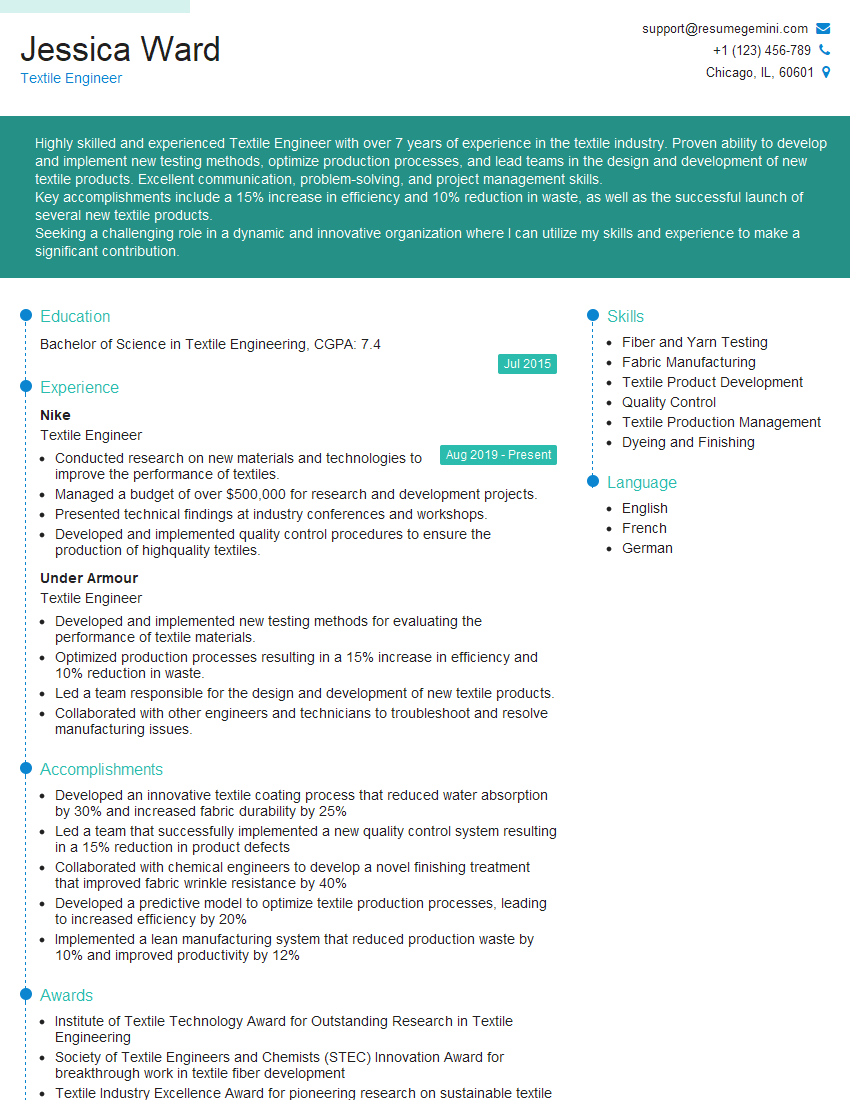
Textile Engineer Resume Sample

Textile Technologist Resume Sample
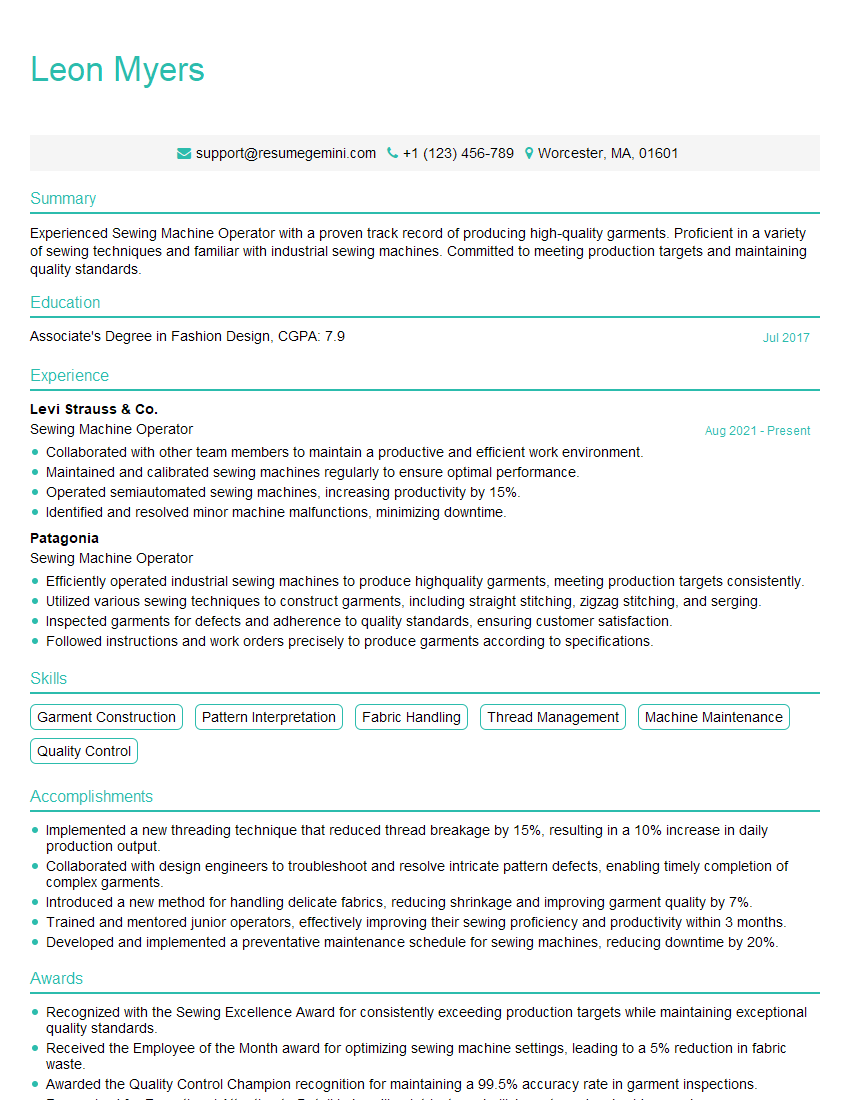
Sewing Machine Operator Resume Sample

Fabric Machine Operator Resume Sample

Finishing Machine Operator Resume Sample
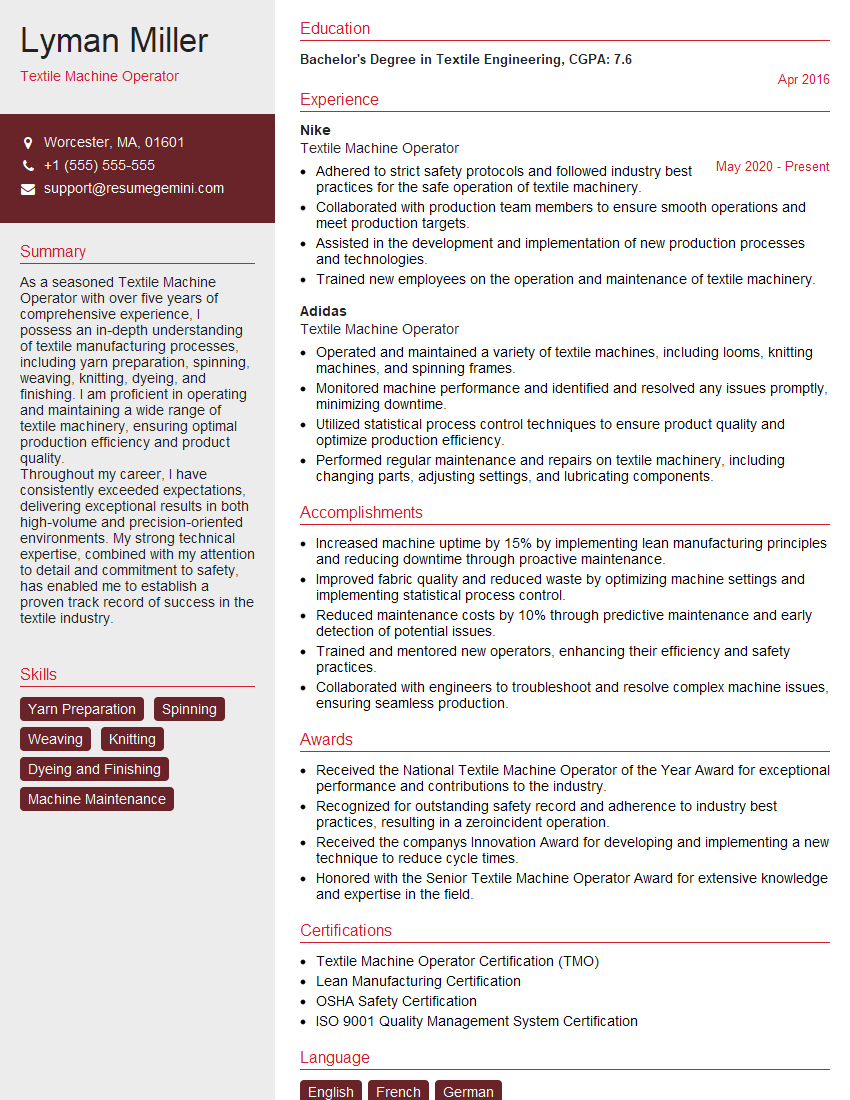
Textile Machine Operator Resume Sample

Knitting Machine Operator Resume Sample

Fabric Inspector Resume Sample
Explore more articles
Users Rating of Our Blogs
Share Your Experience
We value your feedback! Please rate our content and share your thoughts (optional).
What Readers Say About Our Blog
Very informative content, great job.
good