Unlock your full potential by mastering the most common Operating Safety Equipment interview questions. This blog offers a deep dive into the critical topics, ensuring you’re not only prepared to answer but to excel. With these insights, you’ll approach your interview with clarity and confidence.
Questions Asked in Operating Safety Equipment Interview
Q 1. Explain the difference between inherent safety and safety instrumented systems (SIS).
Inherent safety and Safety Instrumented Systems (SIS) are both crucial for process safety, but they approach risk reduction from different angles. Inherent safety focuses on designing hazards out of a process, minimizing the potential for accidents in the first place. Think of it as preventative medicine. SIS, on the other hand, is a reactive measure, designed to detect and mitigate hazards that do occur. It’s like having an emergency response team ready to act.
Inherent Safety involves using simpler designs, less hazardous materials, and operating processes at lower pressures and temperatures. For example, replacing a flammable solvent with a water-based alternative is an inherent safety measure. It removes the ignition source entirely.
Safety Instrumented Systems (SIS) utilize independent safety-related instrumentation to detect abnormal conditions and initiate actions to prevent or mitigate the consequences. This might involve automatically shutting down a process if pressure exceeds a certain limit or diverting a hazardous stream to a safe location. They are essential for processes where inherent safety alone is insufficient.
In essence, inherent safety aims for accident prevention, while SIS focuses on accident mitigation. Ideally, both approaches are implemented for optimal safety.
Q 2. Describe your experience with various types of Personal Protective Equipment (PPE).
My experience with Personal Protective Equipment (PPE) is extensive, encompassing various types used across diverse industries. I’ve worked with everything from standard safety glasses and high-visibility clothing to more specialized equipment like respirators, fall protection harnesses, and chemical-resistant suits.
- Respiratory Protection: I’ve been involved in selecting and fitting various respirators, including N95 masks, half-face respirators, and supplied-air respirators, ensuring proper training and fit testing for workers in environments with airborne hazards.
- Fall Protection: I’ve inspected and maintained fall arrest systems, including harnesses, lanyards, and anchor points, and I am familiar with various standards and regulations governing their use.
- Hand Protection: I’ve assessed the need for different types of gloves, including cut-resistant, chemical-resistant, and heat-resistant gloves, matching them to specific tasks and hazards.
- Head Protection: I’ve ensured the availability and proper use of hard hats in construction and industrial settings, emphasizing the importance of choosing the right type for the specific hazard.
Beyond the physical equipment, a critical aspect of my experience involves training employees on proper PPE selection, use, and maintenance. Understanding the limitations of each type of PPE and its proper application is essential for ensuring effectiveness.
Q 3. What are the key components of a risk assessment for operating safety equipment?
A comprehensive risk assessment for operating safety equipment involves a systematic process of identifying, analyzing, and evaluating hazards and risks associated with its use. Key components include:
- Hazard Identification: This step involves identifying all potential hazards related to the equipment, considering both operational and maintenance activities. Examples include electrical hazards, mechanical hazards (pinch points, rotating parts), chemical hazards, and ergonomic hazards.
- Risk Analysis: This step involves evaluating the likelihood and severity of each identified hazard. Techniques such as Failure Modes and Effects Analysis (FMEA) or HAZOP (Hazard and Operability Study) can be employed.
- Risk Evaluation: This involves determining the level of risk associated with each hazard, often using a risk matrix that considers the likelihood and severity. This helps prioritize risk mitigation efforts.
- Risk Control Measures: This step outlines specific measures to control or mitigate the identified risks. These measures can range from engineering controls (e.g., guarding machinery) to administrative controls (e.g., training and procedures) and PPE.
- Monitoring and Review: Regular monitoring and review are essential to ensure the effectiveness of the risk control measures and update the risk assessment as needed.
A well-structured risk assessment provides a framework for making informed decisions about safety and ensures that appropriate measures are in place to protect personnel and equipment.
Q 4. How do you identify and mitigate hazards associated with operating safety equipment?
Identifying and mitigating hazards associated with operating safety equipment requires a proactive and multi-faceted approach. It starts with a thorough understanding of the equipment and its operational environment.
Hazard Identification: This involves using checklists, hazard surveys, and job hazard analyses to identify potential hazards. For example, a review of maintenance records might reveal recurring problems that indicate a design flaw or inadequate training.
Hazard Mitigation: This involves implementing control measures based on a hierarchy of controls:
- Elimination: Removing the hazard entirely (e.g., replacing a dangerous chemical with a safer alternative).
- Substitution: Replacing the hazard with a less hazardous alternative (e.g., using a robotic arm to perform a dangerous task).
- Engineering Controls: Modifying the equipment or workplace to reduce the hazard (e.g., installing guards on machinery).
- Administrative Controls: Implementing procedures and training to reduce risk (e.g., lockout/tagout procedures, safety training).
- PPE: Providing personal protective equipment as a last resort (e.g., safety glasses, gloves).
Regular inspections, maintenance, and operator training are crucial for ensuring the effectiveness of these mitigation measures. Ongoing monitoring and evaluation allow for adjustments as needed and help prevent future incidents.
Q 5. Explain your understanding of lockout/tagout procedures.
Lockout/Tagout (LOTO) procedures are critical safety protocols designed to prevent the unexpected energization or startup of machinery or equipment during maintenance or repair. They involve physically isolating energy sources and preventing accidental release.
The process typically involves these steps:
- Preparation: Identifying all energy sources (electrical, mechanical, hydraulic, pneumatic, etc.) that need to be isolated.
- Lockout: Using a lock to secure the energy isolating device (e.g., circuit breaker, valve). Each worker involved must use their own lock.
- Tagout: Attaching a tag to the energy isolating device clearly identifying the worker, the date, and the reason for the lockout.
- Verification: Verifying that the equipment is de-energized and safe to work on.
- Release: Only the person who applied the lockout can remove it, after ensuring the equipment is safe and all personnel are clear.
LOTO procedures are legally mandated in many industries and are essential for preventing serious injuries or fatalities. Proper training and adherence to these procedures are paramount.
Q 6. Describe your experience with safety audits and inspections.
My experience with safety audits and inspections spans numerous industrial settings. I’ve conducted both planned and unplanned audits, focusing on compliance with regulations, standards, and best practices. The process typically involves:
- Planning: Defining the scope of the audit, identifying the areas to be inspected, and establishing a timeline.
- Inspection: Visually inspecting equipment and work areas, reviewing documentation (e.g., permits, training records, maintenance logs), and interviewing personnel.
- Documentation: Thoroughly documenting all findings, including observations, deviations from standards, and recommendations for corrective actions.
- Reporting: Preparing a detailed report summarizing the findings, assessing the overall level of safety compliance, and providing recommendations for improvement.
- Follow-up: Following up on corrective actions to ensure they have been implemented effectively.
I’ve used various checklists and industry-specific standards to guide my inspections, ensuring thoroughness and consistency. My goal is not just to identify problems, but also to understand their root causes and recommend sustainable solutions to prevent recurrence.
Q 7. How do you ensure compliance with relevant safety regulations and standards?
Ensuring compliance with relevant safety regulations and standards is a continuous process that requires diligence and expertise. My approach involves:
- Staying Updated: Keeping abreast of current regulations, standards, and best practices through professional development, industry publications, and participation in relevant organizations. For example, I regularly review updates to OSHA standards and relevant industry-specific codes.
- Implementing Standards: Applying relevant standards and regulations to all aspects of equipment selection, design, installation, operation, and maintenance. This includes documenting compliance and conducting regular internal audits.
- Training and Communication: Providing regular training to employees on safety procedures, regulations, and the proper use of equipment. Maintaining open communication to address safety concerns and foster a positive safety culture.
- Record Keeping: Maintaining accurate and up-to-date records of inspections, training, maintenance, and incident investigations. This documentation is critical for demonstrating compliance and for continuous improvement.
- Proactive Approach: Implementing a proactive approach to safety by identifying potential hazards before they lead to incidents. This involves regular risk assessments, safety audits, and a strong emphasis on safety management systems.
Ultimately, safety compliance isn’t just about checking boxes; it’s about creating a culture of safety where everyone is empowered to identify and address hazards.
Q 8. What is your experience with emergency shutdown systems (ESD)?
Emergency Shutdown Systems (ESD) are crucial safety systems designed to automatically shut down processes in hazardous situations, preventing potential accidents. My experience encompasses the entire lifecycle of ESD systems, from initial hazard identification and risk assessment through design, implementation, testing, and maintenance. I’ve worked on projects involving various industries, including oil and gas, chemical processing, and pharmaceuticals. This includes specifying the necessary hardware (sensors, logic solvers, final control elements), developing the safety instrumented functions (SIFs), and ensuring compliance with relevant safety standards like IEC 61511. For example, I was involved in a project where we upgraded an aging ESD system in a petrochemical plant, improving its reliability and response time by implementing a modern programmable logic controller (PLC) and advanced diagnostics. This project involved detailed simulations to ensure system performance under various failure scenarios.
I am proficient in using software tools for ESD system design, simulation, and documentation, and possess a deep understanding of safety lifecycle management, including regular testing, verification, and validation procedures. I have also participated in several HAZOP studies to identify potential hazards and ensure that the ESD system adequately mitigates those risks.
Q 9. Explain the principles of HAZOP (Hazard and Operability) studies.
HAZOP (Hazard and Operability) studies are systematic and proactive techniques used to identify potential hazards and operability problems in process plants or other industrial facilities. The core principle lies in systematically reviewing the process, equipment, and procedures, considering deviations from the intended operational parameters. Think of it as a structured brainstorming session, but with a rigorous methodology. We use ‘guide words’ – such as ‘no,’ ‘more,’ ‘less,’ ‘part of,’ ‘reverse,’ ‘other than’ – to challenge the design and operation of the system, exploring what might go wrong and the potential consequences.
A typical HAZOP study involves a multidisciplinary team examining process flow diagrams (PFDs) and piping and instrumentation diagrams (P&IDs) in a step-by-step fashion. For each process element, the team considers various deviations from the normal operating parameters using the guide words. Each identified deviation is then evaluated in terms of its potential consequences, the likelihood of occurrence, and the adequacy of existing safeguards. This leads to the identification of potential hazards and recommendations for mitigating the identified risks.
For example, in a chemical reactor, a HAZOP study might consider the deviation ‘no flow’ in the cooling water line. The team would then discuss the consequences (reactor overheat), the likelihood of this happening (e.g., due to pump failure), and existing or needed safeguards (e.g., a high-temperature alarm and automatic shutdown). The output is a HAZOP report documenting all identified hazards, potential consequences, recommendations, and assigned responsibilities for implementing the recommendations.
Q 10. Describe your experience with different types of safety interlocks.
Safety interlocks are crucial devices that prevent hazardous situations by physically or electrically blocking unsafe operations. My experience includes a wide range of interlocks, from simple mechanical interlocks to sophisticated electrical and electronic systems. I’ve worked with various types, including:
- Mechanical Interlocks: These use physical mechanisms to prevent simultaneous operation of incompatible equipment. A classic example is an interlock preventing access to a machine until the power is switched off.
- Electrical Interlocks: These utilize electrical circuits to prevent unsafe operations. For instance, a machine might be interlocked so that it won’t start unless a safety guard is in place.
- Electronic Interlocks: These advanced interlocks use programmable logic controllers (PLCs) or other electronic systems to implement complex interlock logic. They offer greater flexibility and the ability to monitor multiple parameters.
- Software Interlocks: In modern automated systems, software interlocks play a vital role, often integrated into the overall process control system. These require rigorous software development and testing processes to ensure safety.
The choice of interlock type depends on the specific application and the level of risk involved. For example, in high-risk situations, redundant interlocks might be used to provide additional layers of protection. A critical aspect of my work is ensuring the proper design, implementation, testing, and documentation of interlocks to meet the required safety integrity level (SIL).
Q 11. How do you investigate and report safety incidents involving operating equipment?
Investigating safety incidents involving operating equipment requires a systematic and thorough approach. My methodology follows a structured process:
- Secure the Scene: Prioritize ensuring the safety of personnel and preventing further damage.
- Gather Information: Collect data through interviews with witnesses, review of operating records, inspection of the equipment, and analysis of any available video footage.
- Analyze the Evidence: Identify contributing factors, using root cause analysis techniques like the ‘5 Whys’ method to determine the underlying causes of the incident.
- Develop Corrective Actions: Propose and implement solutions to prevent similar incidents from recurring. This may involve design modifications, procedural changes, or operator training.
- Prepare a Report: Document the entire investigation process, findings, conclusions, and corrective actions in a comprehensive report. This report often includes safety recommendations and lessons learned.
I’ve handled investigations involving equipment failures, human error, and process deviations. For instance, one incident involved a malfunctioning pressure relief valve. The investigation uncovered inadequate maintenance procedures as a root cause, leading to revised maintenance protocols and operator training programs.
The goal of a safety incident investigation is not simply to assign blame, but to learn from the incident to improve safety performance. Transparency and thoroughness are essential throughout the process.
Q 12. Explain your understanding of functional safety and SIL ratings.
Functional safety is the part of the overall safety relating to the correct functioning of equipment and protective systems. It aims to prevent hazardous events or reduce their severity. Safety Integrity Levels (SILs) are a quantitative measure of the risk reduction provided by a safety function. SILs are defined on a scale of 1 to 4, with SIL 4 representing the highest level of safety and SIL 1 the lowest. The higher the SIL, the more stringent the requirements for the safety system’s design, implementation, and testing.
The assignment of a SIL involves a risk assessment that considers the severity, probability, and frequency of potential hazardous events. This risk assessment is used to determine the necessary safety integrity level required to reduce the risk to an acceptable level. My experience includes performing safety integrity level (SIL) assessments, selecting appropriate safety instrumentation, and developing safety requirements specifications. I understand the criticality of demonstrating that the chosen safety systems meet the required SIL, which typically involves performing safety lifecycle assessments and demonstrating compliance with international standards like IEC 61508 and IEC 61511.
For example, a safety instrumented function (SIF) designed to shut down a process in case of high pressure might be assigned a SIL 3 rating, requiring a higher level of redundancy and stricter testing protocols than a SIF with a SIL 1 rating.
Q 13. What are your experiences with different types of safety instrumented functions (SIF)?
Safety Instrumented Functions (SIFs) are the independent safety functions designed to reduce risks to an acceptable level. My experience covers a wide range of SIFs, including those based on:
- Pressure sensors and relief valves: Protecting against overpressure conditions.
- Temperature sensors and control systems: Preventing overheating or undercooling.
- Flow sensors and shutoff valves: Managing flow rates and preventing leaks.
- Level sensors and pumps: Maintaining appropriate liquid levels.
- Gas detectors and ventilation systems: Protecting against hazardous gas concentrations.
The design and implementation of SIFs is a critical aspect of functional safety, and my work involves selecting appropriate components, developing the control logic, ensuring adequate redundancy to maintain safety integrity, and conducting rigorous testing and verification to confirm the system meets the required SIL. This includes consideration of various failure modes and their impact on the overall safety integrity. For example, I have experience with using advanced diagnostic techniques to increase the reliability of SIFs and reduce the probability of spurious trips or undetected failures. This involves incorporating self-diagnostic checks and implementing strategies for fault tolerance.
Q 14. Describe your experience with safety management systems (SMS).
Safety Management Systems (SMS) are formal, documented processes designed to proactively manage safety risks. My experience encompasses the implementation and maintenance of SMS across diverse industrial settings. A robust SMS typically includes elements such as:
- Safety Policy: A statement of commitment to safety from top management.
- Hazard Identification and Risk Assessment: Regular processes for identifying hazards and assessing the associated risks.
- Risk Mitigation: Implementing strategies to control or reduce identified risks.
- Incident Reporting and Investigation: Procedures for reporting and thoroughly investigating safety incidents.
- Emergency Preparedness and Response: Planning for and responding to emergencies.
- Training and Competence: Ensuring personnel have the necessary training and skills.
- Auditing and Review: Regular audits and reviews to ensure the effectiveness of the SMS.
I’ve been involved in implementing and improving SMSs, ensuring they comply with relevant regulations and standards, such as ISO 31000 (risk management) and the relevant industry-specific standards. A key aspect of my role is helping organizations establish a safety culture where safety is seen as everyone’s responsibility. This includes working with all levels of personnel to promote safe working practices and continuous improvement in safety performance. For example, in one project I facilitated a company-wide safety training program and assisted in establishing a system for reporting near misses, allowing for proactive identification and mitigation of potential hazards before they resulted in actual incidents.
Q 15. How do you develop and implement safety training programs?
Developing and implementing effective safety training programs requires a systematic approach that goes beyond simply delivering information. It’s about fostering a safety culture where employees actively participate in identifying and mitigating risks.
My approach begins with a thorough needs assessment, identifying the specific hazards and risks associated with different roles and tasks. This involves analyzing job descriptions, reviewing accident reports, and conducting interviews with employees and supervisors. Once the needs are identified, I design a training program that addresses those specific needs, utilizing various learning methods like interactive workshops, hands-on simulations, and online modules tailored to different learning styles.
For example, in a chemical processing plant, training might include detailed instruction on handling hazardous materials, emergency procedures, and the proper use of personal protective equipment (PPE). For construction workers, it might focus on fall protection, safe equipment operation, and hazard recognition.
Beyond initial training, ongoing reinforcement is crucial. This includes regular refresher courses, toolbox talks, and job-specific safety audits. Effective evaluation is equally important, using methods such as pre- and post-training assessments, practical demonstrations, and regular performance reviews to ensure knowledge retention and behavioral changes.
- Needs Assessment: Identify training gaps.
- Curriculum Design: Develop engaging and relevant content.
- Delivery Methods: Employ diverse training approaches.
- Evaluation and Feedback: Measure effectiveness and improve future programs.
- Ongoing Reinforcement: Ensure continued competency and safety awareness.
Career Expert Tips:
- Ace those interviews! Prepare effectively by reviewing the Top 50 Most Common Interview Questions on ResumeGemini.
- Navigate your job search with confidence! Explore a wide range of Career Tips on ResumeGemini. Learn about common challenges and recommendations to overcome them.
- Craft the perfect resume! Master the Art of Resume Writing with ResumeGemini’s guide. Showcase your unique qualifications and achievements effectively.
- Don’t miss out on holiday savings! Build your dream resume with ResumeGemini’s ATS optimized templates.
Q 16. What are your experiences with different types of safety monitoring systems?
My experience encompasses a range of safety monitoring systems, from basic manual checks to sophisticated automated systems. I’ve worked with:
- Manual Inspection Systems: These involve regular visual inspections of equipment and work areas to identify potential hazards, often using checklists and reporting systems. While simple, they are effective for identifying obvious issues and maintaining a consistent awareness of safety conditions.
- Real-time Monitoring Systems: These utilize sensors and data acquisition systems to continuously monitor critical parameters such as temperature, pressure, and flow rates. Alerts are triggered if parameters exceed predefined thresholds, allowing for immediate intervention. For example, I’ve worked with systems monitoring pressure in high-pressure vessels, preventing catastrophic failures.
- CCTV and Video Surveillance: Video monitoring systems provide visual oversight of operations, particularly in remote or hazardous areas. This enables immediate response to unexpected events and can be used for post-incident analysis.
- Data Acquisition and Analysis Systems: These systems collect and analyze data from various sources to identify trends and predict potential failures. This proactive approach allows for preventative maintenance and helps to minimize the risk of accidents. For example, statistical process control (SPC) charts can be used to monitor equipment performance and detect deviations from normal operation.
The choice of system depends greatly on the specific hazards and the complexity of the operation. A simple process might only require manual inspections, while a complex chemical plant would necessitate a combination of real-time monitoring, data acquisition, and video surveillance.
Q 17. Explain your understanding of human factors in safety.
Human factors are critical in safety, acknowledging that human error is often the root cause of incidents. Understanding human limitations, cognitive biases, and behavioral tendencies is paramount to designing safe systems and procedures.
This involves considering:
- Ergonomics: Designing workspaces and equipment to fit the physical capabilities of workers, reducing fatigue and strain, and minimizing the risk of musculoskeletal injuries.
- Cognitive Psychology: Recognizing cognitive limitations, like attention spans and information processing capacity, to design clear instructions, intuitive interfaces, and effective alarm systems.
- Human Error Management: Acknowledging that errors are inevitable and developing systems that anticipate and mitigate their consequences. This includes designing robust safety systems with multiple layers of protection (defense-in-depth).
- Team Dynamics: Understanding how team communication, leadership, and workload affect safety performance. Effective team training and communication protocols are vital.
For example, poor lighting or complex controls can contribute to errors. By improving the design of the workspace and using simplified controls, error rates can significantly decrease. Implementing checklists and standardized procedures can also help prevent errors resulting from forgetfulness or distraction. Training programs should also include content on human factors to increase awareness and promote safer work practices.
Q 18. How do you ensure the effective maintenance of operating safety equipment?
Effective maintenance of operating safety equipment is crucial for preventing accidents and ensuring reliable operation. My approach involves a comprehensive preventative maintenance (PM) program that combines scheduled inspections, repairs, and replacements.
This includes:
- Developing a PM schedule: This schedule is based on the manufacturer’s recommendations, operational experience, and risk assessment. Critical equipment receives more frequent maintenance.
- Implementing a robust inspection process: This involves regular visual inspections, functional testing, and non-destructive testing (NDT) techniques as necessary.
- Maintaining detailed records: All maintenance activities are meticulously documented, including repairs, replacements, and inspection findings. This data is used to track equipment performance and identify potential maintenance needs.
- Utilizing computerized maintenance management systems (CMMS): Software programs such as CMMS help manage maintenance schedules, track parts inventory, and generate reports.
- Training technicians: Properly trained maintenance technicians are essential for the effective implementation of the PM program.
For example, in a refinery, regular inspections of pressure relief valves are crucial to ensure they function correctly in case of an overpressure event. Failure to maintain these valves could lead to a catastrophic release of hazardous materials.
Q 19. Describe your experience with root cause analysis techniques.
Root cause analysis (RCA) is a systematic approach to investigating incidents and identifying the underlying causes, not just the immediate symptoms. I’m experienced in several RCA techniques, including:
- 5 Whys: A simple yet effective method that involves repeatedly asking “Why?” to uncover the root cause. While easy to understand and use, it can sometimes miss complex interactions.
- Fishbone Diagram (Ishikawa Diagram): A visual tool that helps brainstorm potential causes categorized by categories such as people, materials, equipment, and environment. This aids in identifying potential causes more comprehensively than the 5 Whys.
- Fault Tree Analysis (FTA): A deductive technique that starts with an undesired event (top event) and works backward to identify contributing factors and their probabilities. This is very effective for complex systems but requires specialized training.
- Event Tree Analysis (ETA): A probabilistic method that begins with an initiating event and analyzes the sequence of events that could follow, leading to various outcomes.
The choice of technique depends on the complexity of the incident and the available data. Regardless of the method used, the key is to objectively gather information, analyze the findings, and develop effective corrective actions to prevent recurrence.
For instance, in an incident involving a worker’s injury, the 5 Whys might reveal a lack of proper training, inadequate safety procedures, or a deficient safety culture as the ultimate root cause rather than merely focusing on the immediate causes like the worker’s unsafe action.
Q 20. What are your experiences with different types of pressure relief devices?
Pressure relief devices are critical safety components designed to protect equipment and personnel from overpressure. My experience includes working with a variety of these devices, including:
- Safety Relief Valves (SRVs): These automatically open when the pressure exceeds a set point, releasing the excess pressure to a safe location. They are widely used in process industries to protect pressure vessels, pipelines, and reactors.
- Rupture Disks: These are disposable pressure relief devices that rupture at a predetermined pressure, releasing the contained material. They are often used in applications where a precise opening pressure is required or where reseating is not feasible.
- Pressure Safety Valves (PSVs): Similar to SRVs but often employed for specific applications, such as those involving hazardous materials.
- Vacuum Relief Valves: These prevent the formation of a vacuum within a vessel, which could cause equipment damage or implosion.
Selecting the appropriate pressure relief device depends on the specific application, fluid properties, required pressure settings, and environmental factors. Proper sizing, installation, and maintenance of these devices are crucial for their effectiveness and safety.
For example, in a chemical reactor, a safety relief valve would be designed to release pressure if the reaction goes out of control, preventing a potential explosion. The valve’s design and sizing are critical to ensure it can handle the expected flow rate and pressure while providing effective protection.
Q 21. Explain your understanding of process safety management (PSM).
Process Safety Management (PSM) is a systematic approach to identifying, evaluating, and controlling hazards associated with the design, operation, and maintenance of chemical processes. It aims to prevent catastrophic releases of hazardous materials that could result in injury, death, or environmental damage.
Key elements of PSM include:
- Hazard Identification and Risk Assessment: This involves identifying potential hazards and evaluating the associated risks. Techniques such as hazard and operability studies (HAZOP) and what-if analysis are commonly used.
- Process Safety Information (PSI): Collecting and maintaining comprehensive information about the process, including process chemistry, equipment specifications, and safety procedures.
- Operating Procedures: Developing and implementing clear, concise, and effective operating procedures that outline safe work practices.
- Training: Providing comprehensive training to personnel on safe operating procedures, emergency response, and hazard recognition.
- Mechanical Integrity: Implementing a robust program for inspecting, maintaining, and testing equipment to ensure its mechanical integrity.
- Emergency Planning and Response: Developing and practicing emergency plans to effectively respond to incidents.
- Management of Change (MOC): Establishing a formal procedure for reviewing and approving changes to processes, equipment, or operating procedures.
PSM is not merely a checklist; it’s a continuous improvement process that requires active engagement from all levels of management and employees. Effective implementation of PSM requires a strong safety culture and commitment to preventing accidents.
For example, a refinery implementing PSM would have detailed procedures for handling hazardous materials, conducting regular equipment inspections, and responding to potential emergencies. They would also have a well-defined process for approving any changes to the facility or operating procedures, ensuring that these changes do not increase the risk of accidents.
Q 22. How do you perform a safety review of a process or equipment design?
A safety review of a process or equipment design is a systematic evaluation to identify and mitigate potential hazards. It’s like a thorough health check for your operation, ensuring it’s safe and efficient. The process involves several steps:
- Hazard Identification: This involves brainstorming potential hazards using methods like HAZOP (Hazard and Operability Study), what-if analysis, or fault tree analysis. For example, in a chemical plant, we’d consider the risks of leaks, explosions, or fires.
- Risk Assessment: We evaluate the likelihood and severity of each identified hazard. This often involves using a risk matrix that considers the probability of the hazard occurring and the potential consequences (e.g., injury, environmental damage, equipment failure). A higher risk score signifies a greater need for mitigation.
- Mitigation Strategies: Once risks are assessed, we develop strategies to eliminate, reduce, or control them. This might involve implementing engineering controls (e.g., installing safety interlocks, pressure relief valves), administrative controls (e.g., developing safe operating procedures, providing training), or personal protective equipment (PPE).
- Verification and Validation: After implementing the mitigation strategies, we verify that they are effective and validate the overall safety of the design. This can involve simulations, testing, and inspections.
- Documentation: The entire process is meticulously documented, including identified hazards, risk assessments, mitigation strategies, and verification results. This documentation is crucial for ongoing safety management and regulatory compliance.
For instance, during the review of a new robotic welding cell, we identified the risk of electric shock. Our mitigation strategy included installing emergency stop buttons, grounding the equipment properly, and requiring the operator to wear insulated gloves. This layered approach minimizes risk significantly.
Q 23. What are your experiences with different types of fire protection systems?
My experience encompasses various fire protection systems, each with its strengths and limitations. Think of them as different tools in a firefighter’s toolbox, each suited to a specific situation.
- Water-based systems: These are common and effective for many types of fires, using sprinklers, deluge systems, or fire hoses. However, they aren’t ideal for flammable liquids or electrical fires.
- Foam systems: These are particularly effective for flammable liquid fires, creating a barrier to oxygen and suppressing the combustion. Different types of foam are used depending on the specific liquid involved.
- Gas-based systems: These systems use inert gases like CO2 or Argon to displace oxygen and extinguish fires. They are clean and leave minimal residue, making them suitable for sensitive equipment or environments.
- Dry chemical systems: These use dry chemical agents to interrupt the chemical chain reaction of fire. They are versatile and can be used on various fire classes, but they can leave a mess and require more extensive cleanup.
In a recent project involving a server room, we opted for a gas-based fire suppression system due to the sensitivity of the electronic equipment. Water damage would have caused far greater financial and operational losses than the cost of the gas suppression system.
Q 24. Explain your understanding of emergency response planning.
Emergency response planning is crucial for ensuring the safety of personnel and the environment during an incident. It’s like having a well-rehearsed play ready for any unexpected emergency. A robust plan involves:
- Hazard Identification and Risk Assessment: Identifying potential emergencies (e.g., fires, chemical spills, equipment failures) and evaluating their likelihood and severity.
- Emergency Procedures: Establishing clear procedures for various emergencies, including evacuation plans, shutdown procedures, and first aid response. These should be easily accessible and regularly practiced.
- Communication Systems: Implementing effective communication systems to alert personnel during an emergency, including alarms, sirens, and communication channels.
- Training and Drills: Regularly training personnel on emergency procedures and conducting drills to ensure preparedness and familiarity with the plan.
- Emergency Response Team: Establishing an emergency response team with clearly defined roles and responsibilities.
- Post-Incident Review: After an incident, conducting a thorough review to identify areas for improvement in the emergency response plan and procedures. This iterative process ensures constant improvement and refinement.
For example, in a chemical plant, our emergency response plan detailed procedures for handling chemical spills, including containment, evacuation, and cleanup, along with communication protocols for notifying emergency services.
Q 25. Describe your experience with safety data sheets (SDS).
Safety Data Sheets (SDSs) are essential documents that provide detailed information about hazardous chemicals. They are like the instruction manuals for handling potentially dangerous substances. My experience includes:
- SDS Review: Thoroughly reviewing SDSs to understand the hazards associated with specific chemicals, including health effects, flammability, reactivity, and proper handling procedures.
- SDS Access and Distribution: Ensuring that SDSs are readily available to all personnel who handle hazardous chemicals. This often involves a centralized system for easy access.
- SDS Training: Training personnel on how to understand and interpret SDS information, emphasizing proper usage, storage, and emergency response protocols.
- SDS Updates: Staying current on SDS updates from suppliers and ensuring that our records reflect the latest information.
In one instance, we prevented a serious incident by reviewing the SDS for a newly introduced solvent. The SDS highlighted its flammability and incompatibility with certain materials, allowing us to implement proper storage and handling procedures to avoid a potential fire hazard.
Q 26. How do you manage contractor safety on a project?
Managing contractor safety is crucial for ensuring a safe work environment for everyone on a project. It’s about establishing shared responsibility and trust, not just enforcing rules.
- Pre-qualification: We rigorously pre-qualify contractors, evaluating their safety records, insurance coverage, and safety management systems. This helps to identify and mitigate potential risks before they start work.
- Site-Specific Safety Plans: We require contractors to develop site-specific safety plans that address potential hazards unique to our project. This ensures alignment with our overall safety goals.
- Orientation and Training: We provide contractors with orientation on our site-specific safety rules and procedures. This ensures they’re aware of the expectations and potential risks.
- Regular Inspections: We conduct regular inspections to monitor contractors’ compliance with safety rules and procedures, addressing any deficiencies promptly.
- Incident Reporting and Investigation: We have clear procedures for reporting and investigating any incidents involving contractors, learning from mistakes to prevent future occurrences.
For instance, we required a contractor working on scaffolding to provide evidence of their workers’ fall protection training and use specific types of fall arrest equipment that met our rigorous standards.
Q 27. Explain your experience with different types of gas detection equipment.
My experience with gas detection equipment is extensive, encompassing various technologies and applications. Think of these detectors as the ‘canaries in the coal mine,’ providing early warning of dangerous gas levels.
- Fixed Gas Detectors: These are permanently installed in areas where hazardous gases might accumulate, providing continuous monitoring. They often trigger alarms and shutdowns if gas levels exceed pre-set thresholds.
- Portable Gas Detectors: These hand-held devices are used for spot checks and confined space entry, allowing workers to assess gas concentrations in specific locations before entering potentially hazardous areas.
- Multi-Gas Detectors: These can detect several gases simultaneously, crucial for environments where multiple hazardous gases might be present.
- Calibration and Maintenance: Regular calibration and maintenance are essential to ensure the accuracy and reliability of gas detectors. Neglecting this could lead to false readings or missed warnings.
In a refinery setting, we used a combination of fixed and portable multi-gas detectors to monitor for flammable and toxic gases, ensuring the safety of personnel working in potentially hazardous areas. Regular calibration was crucial to maintain the accuracy of these critical safety devices.
Q 28. Describe your familiarity with relevant safety legislation and codes
My familiarity with safety legislation and codes is comprehensive, ensuring all our operations meet or exceed legal and industry standards. This knowledge is not just about compliance; it’s about fostering a proactive safety culture.
I’m knowledgeable about regulations such as OSHA (Occupational Safety and Health Administration) in the US, and their equivalents in other countries. This includes understanding requirements for:
- Permit-to-Work Systems: Implementing procedures for authorizing high-risk activities.
- Lockout/Tagout Procedures: Ensuring equipment is properly de-energized and locked out before maintenance or repairs.
- Confined Space Entry: Following strict procedures for safely entering and working in confined spaces.
- Personal Protective Equipment (PPE): Selecting and providing appropriate PPE to protect workers from hazards.
- Emergency Response Planning: Developing and implementing emergency response plans according to regulations.
Staying current on these regulations is an ongoing process, requiring continuous learning and adaptation to changes in legislation and best practices. Failure to comply can result in significant fines, legal issues, and most importantly, endanger the safety of personnel.
Key Topics to Learn for Operating Safety Equipment Interview
- Safety Regulations and Standards: Understand relevant OSHA, ANSI, and industry-specific regulations governing the operation and maintenance of safety equipment. This includes knowing how to interpret and apply these regulations in practical scenarios.
- Equipment Operation and Maintenance: Demonstrate a thorough understanding of the practical operation of various safety equipment, including proper start-up procedures, shutdown protocols, and routine maintenance checks. Be prepared to discuss troubleshooting common malfunctions.
- Personal Protective Equipment (PPE): Showcase your knowledge of different types of PPE, their appropriate applications, limitations, and proper usage. This includes understanding when specific PPE is required and how to select the right equipment for a given task.
- Risk Assessment and Mitigation: Explain your approach to identifying potential hazards related to operating safety equipment and implementing effective control measures to mitigate those risks. Be prepared to discuss different risk assessment methodologies.
- Emergency Response Procedures: Demonstrate familiarity with emergency protocols in relation to safety equipment malfunctions or accidents. This includes understanding emergency shutdown procedures and knowing how to react appropriately in various scenarios.
- Inspection and Testing Procedures: Explain your understanding of regular inspection and testing procedures for safety equipment to ensure functionality and compliance. Be ready to discuss different testing methods and their importance.
- Communication and Teamwork: Highlight your ability to effectively communicate safety procedures and collaborate with colleagues to maintain a safe working environment. This includes clear communication during emergencies and proactive safety discussions.
Next Steps
Mastering Operating Safety Equipment is crucial for career advancement in many industries, demonstrating your commitment to safety and operational efficiency. A strong resume is essential for showcasing your skills and experience to potential employers. Building an ATS-friendly resume significantly increases your chances of getting noticed by Applicant Tracking Systems. We strongly recommend using ResumeGemini to craft a compelling and effective resume. ResumeGemini provides tools and resources to help you create a professional document, and we even offer examples of resumes tailored specifically to the Operating Safety Equipment field.
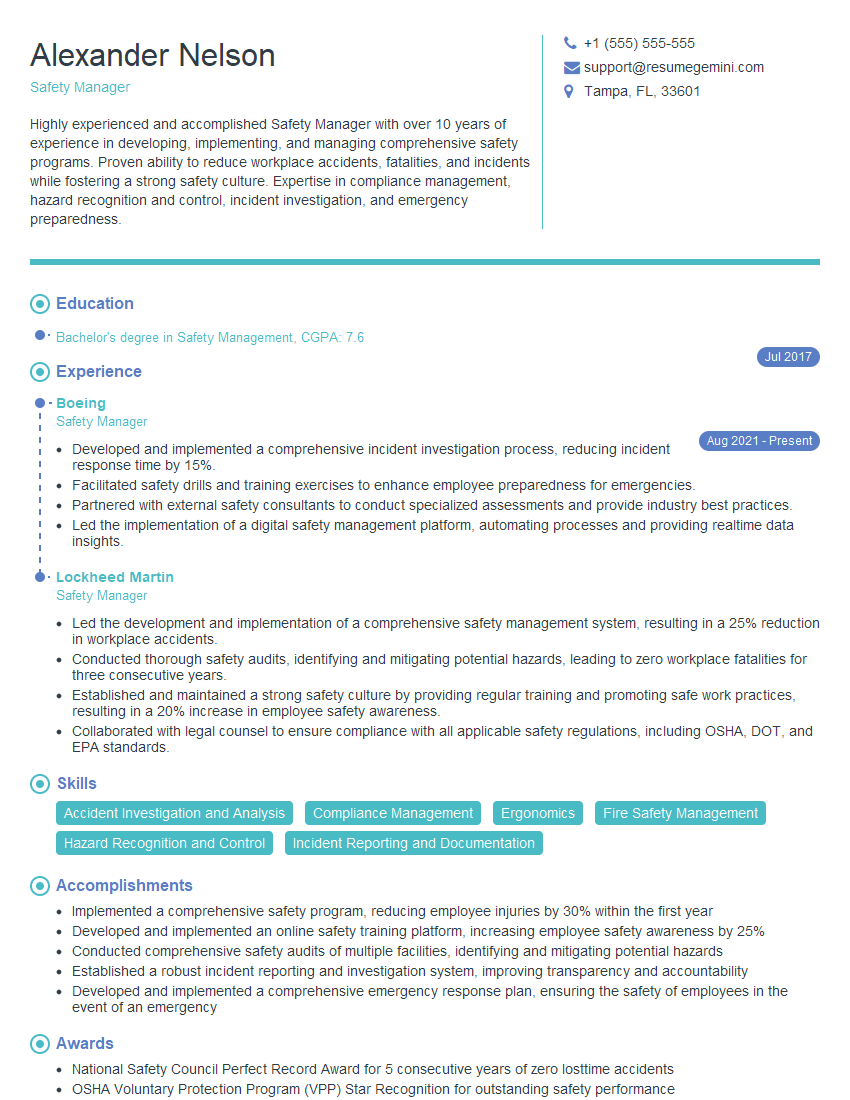
Safety Manager Resume Sample
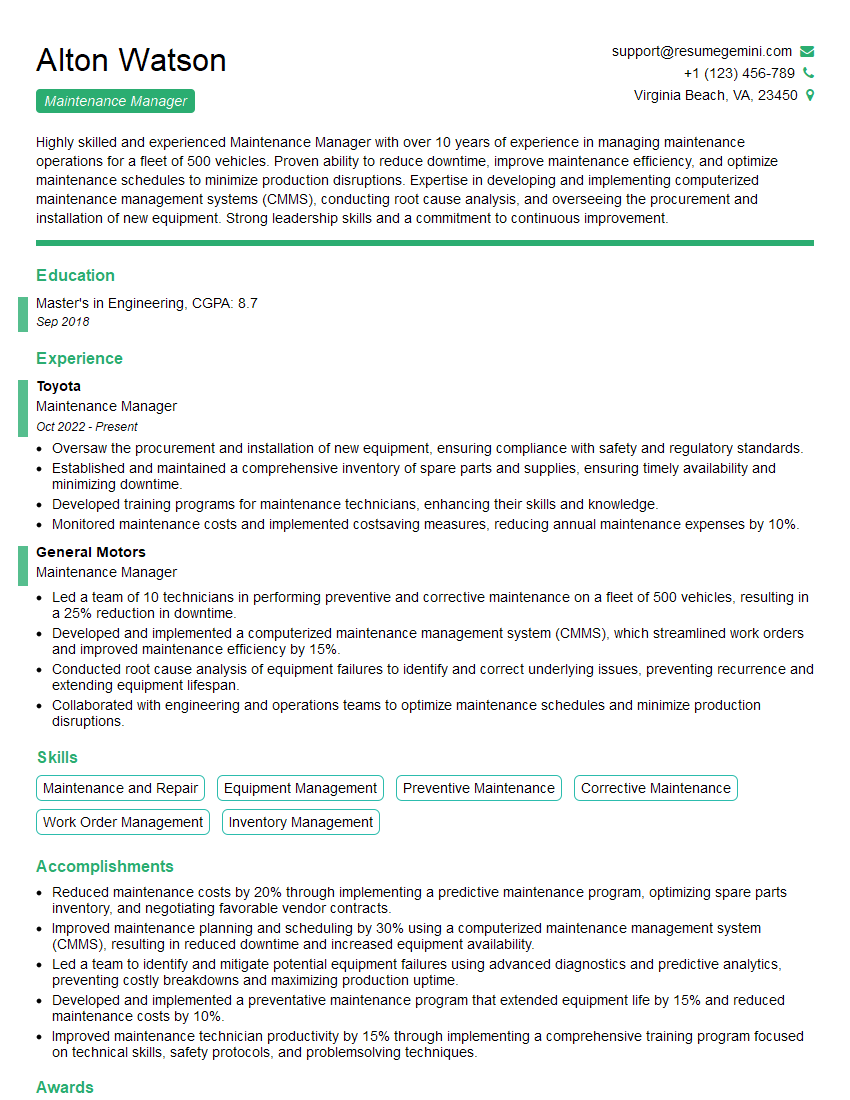
Maintenance Manager Resume Sample
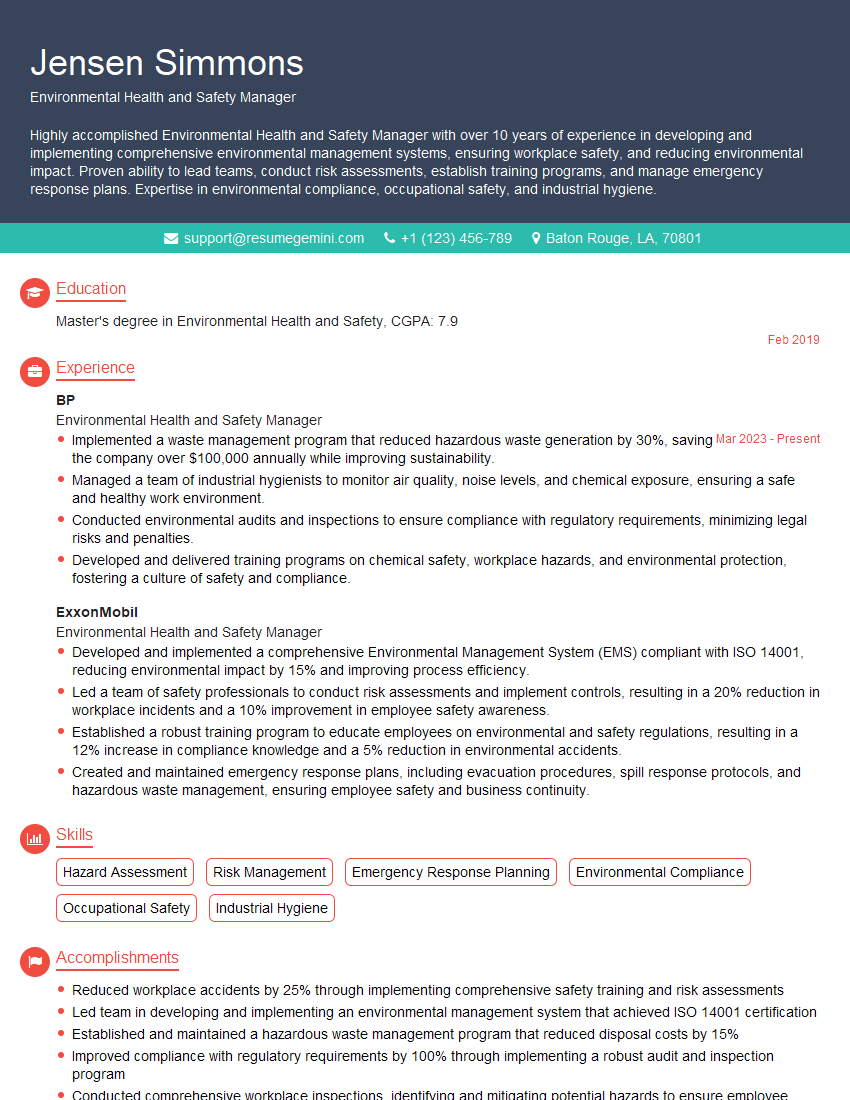
Environmental Health and Safety Manager Resume Sample
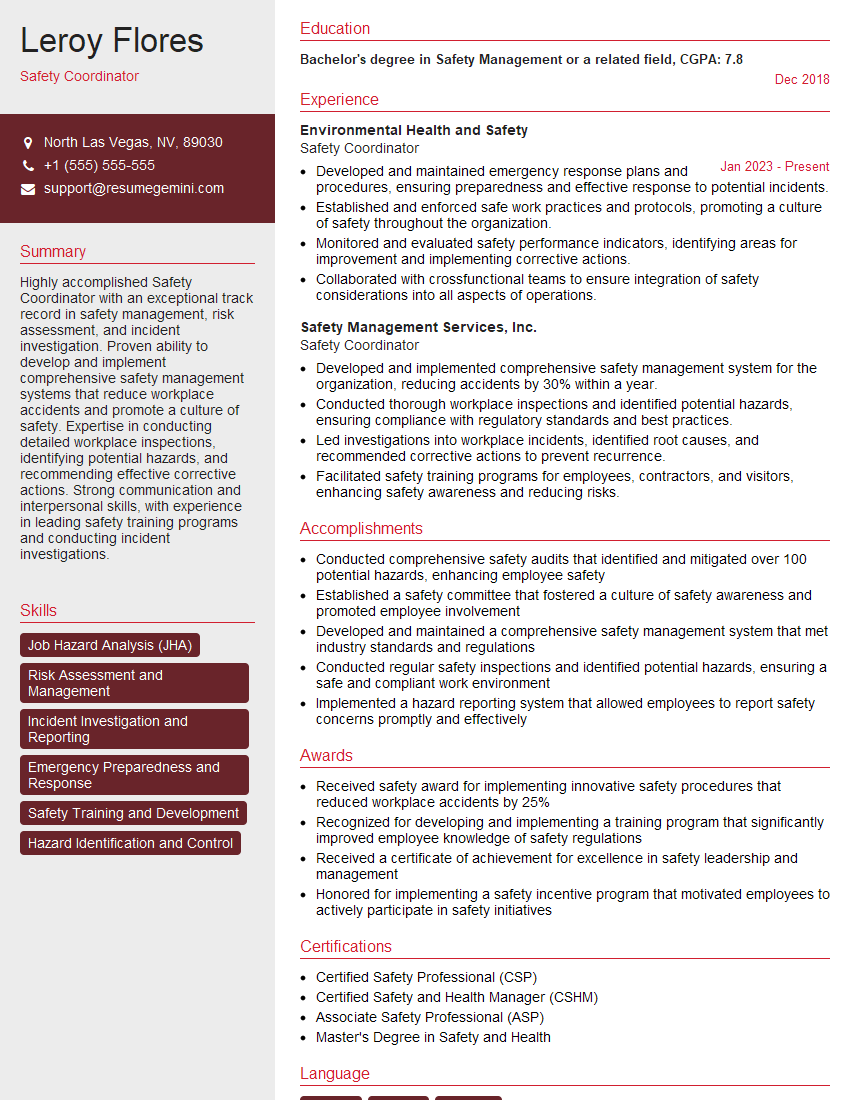
Safety Coordinator Resume Sample

Compliance Officer Resume Sample
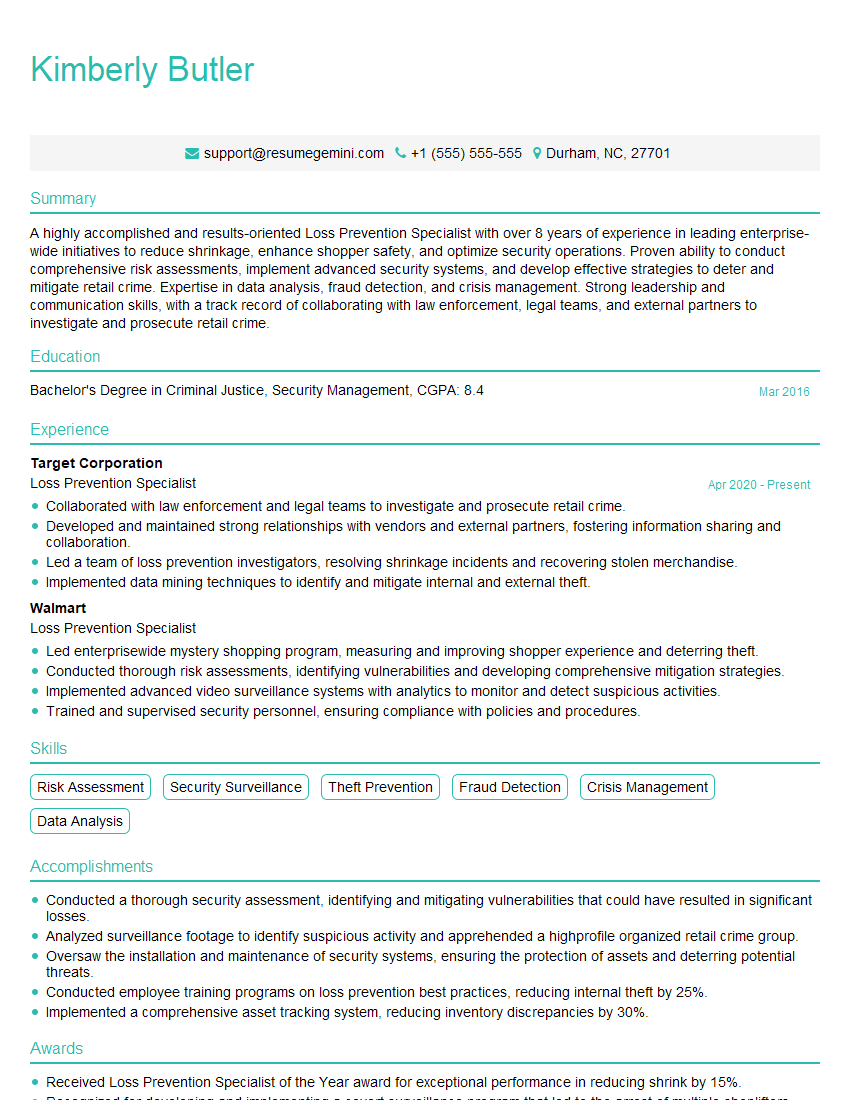
Loss Prevention Specialist Resume Sample
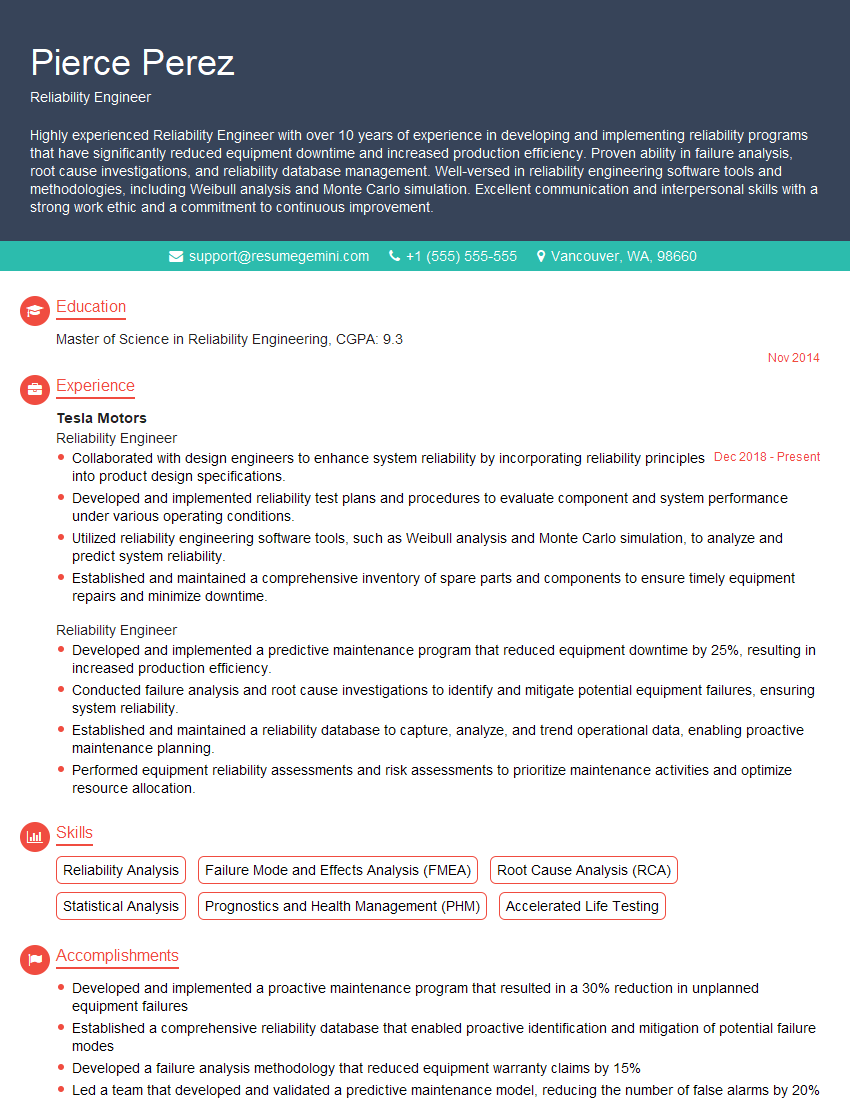
Reliability Engineer Resume Sample
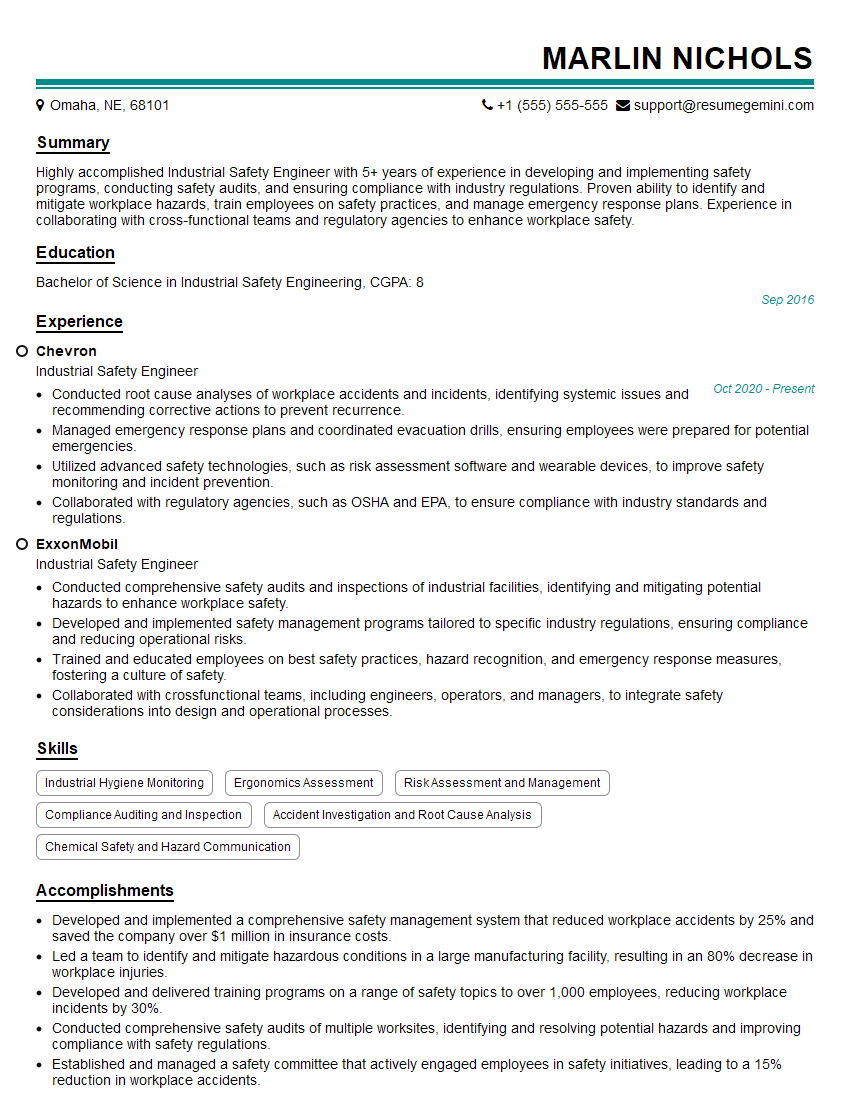
Industrial Safety Engineer Resume Sample
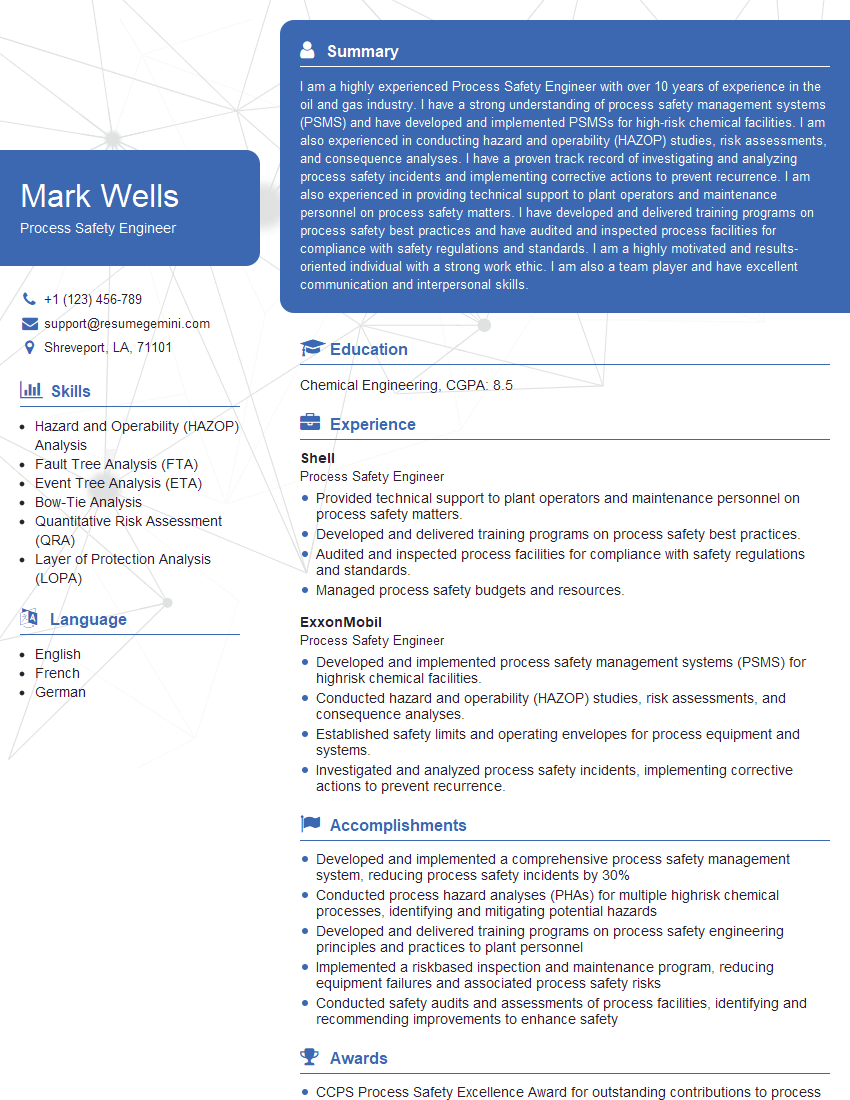
Process Safety Engineer Resume Sample
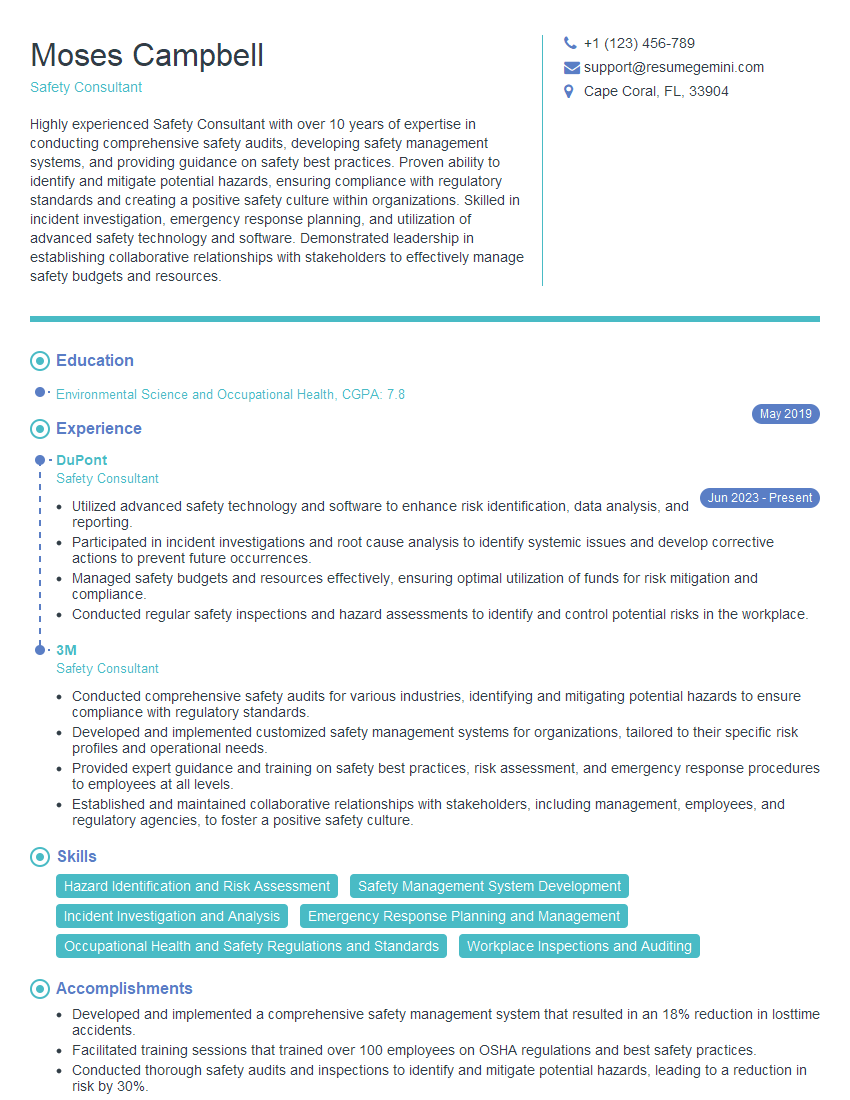
Safety Consultant Resume Sample
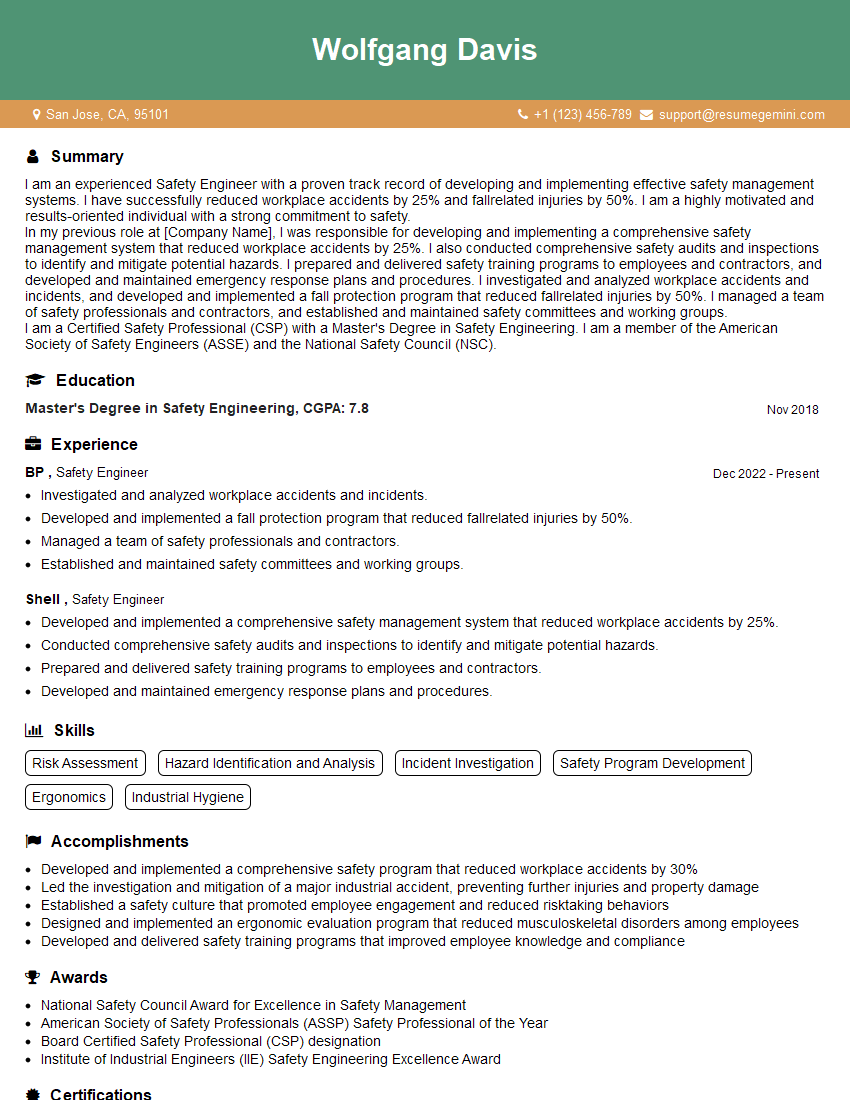
Safety Engineer Resume Sample
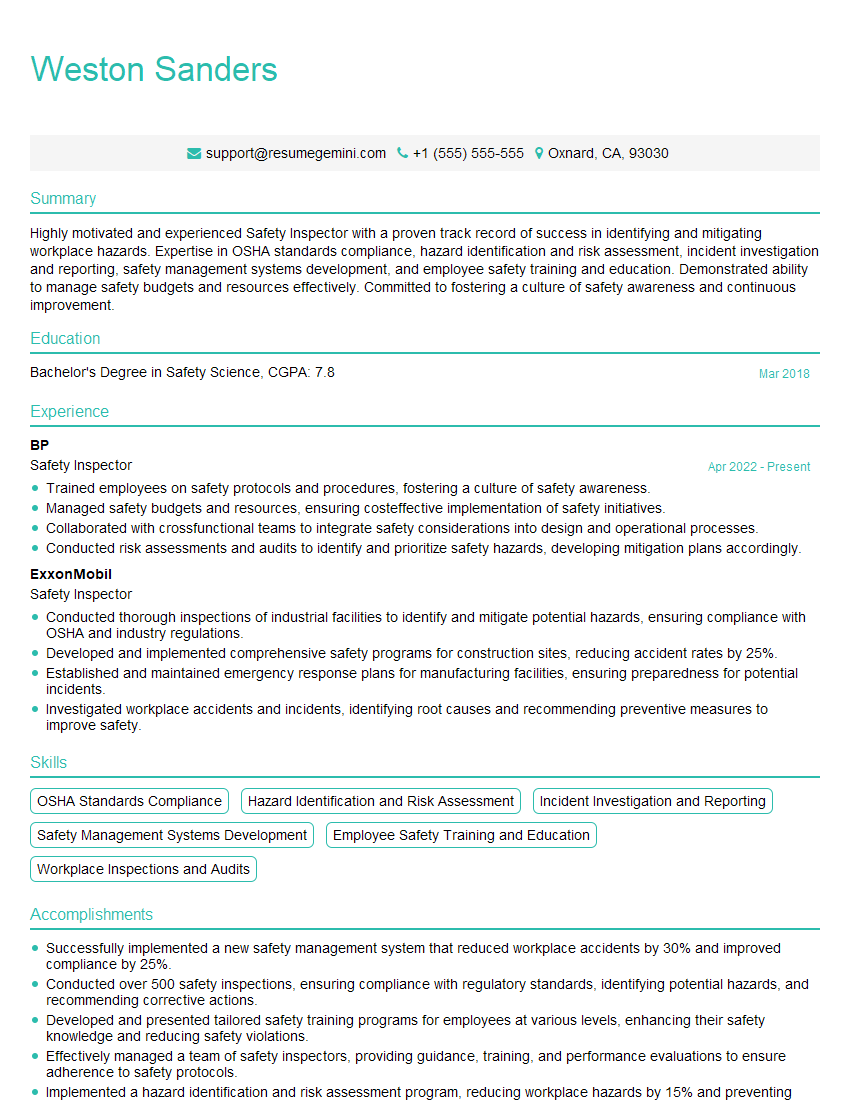
Safety Inspector Resume Sample
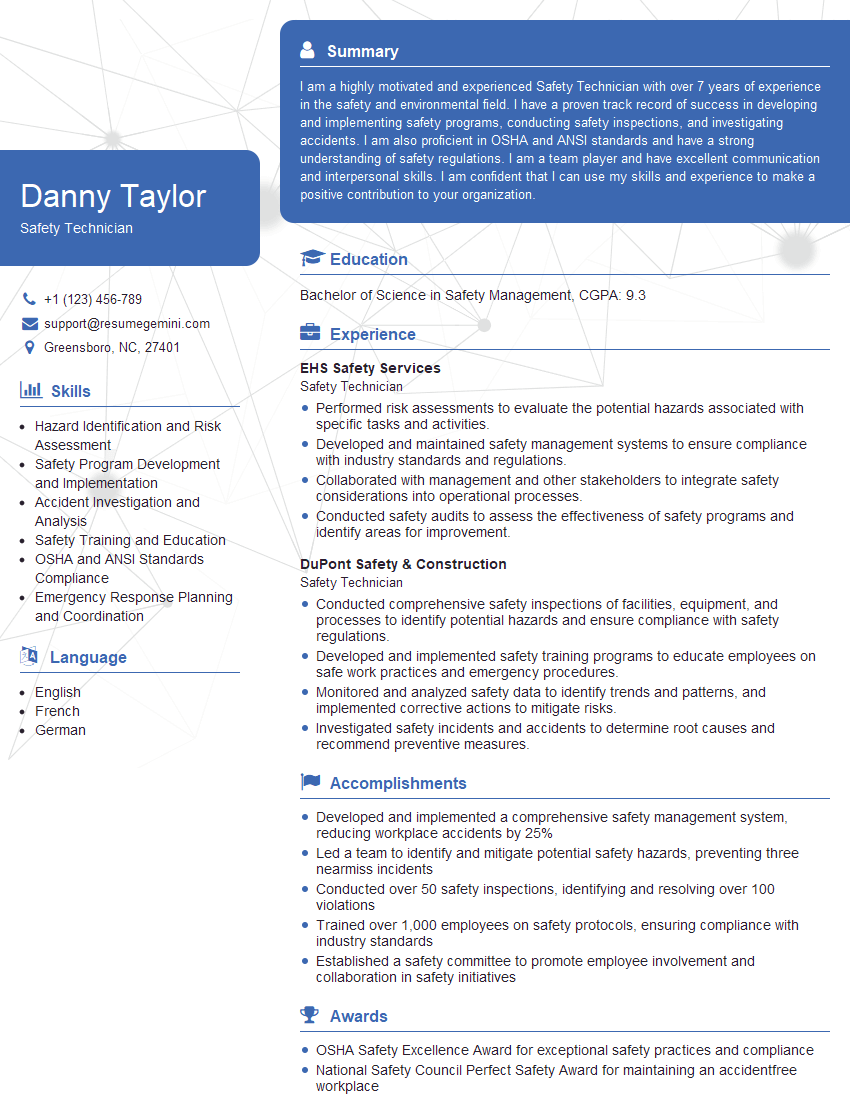
Safety Technician Resume Sample
Explore more articles
Users Rating of Our Blogs
Share Your Experience
We value your feedback! Please rate our content and share your thoughts (optional).
What Readers Say About Our Blog
Very informative content, great job.
good