The right preparation can turn an interview into an opportunity to showcase your expertise. This guide to Facility Design and Layout interview questions is your ultimate resource, providing key insights and tips to help you ace your responses and stand out as a top candidate.
Questions Asked in Facility Design and Layout Interview
Q 1. Explain your experience with different facility design software (AutoCAD, Revit, etc.).
My experience with facility design software is extensive, encompassing both 2D and 3D modeling platforms. I’m highly proficient in AutoCAD, utilizing its precision drafting capabilities for detailed floor plans, elevations, and sections. I create precise drawings for construction documents, utilizing features like layers, blocks, and xrefs for efficient management of complex projects. Beyond AutoCAD, I’m equally adept at using Revit, a Building Information Modeling (BIM) software. Revit’s strength lies in its ability to create a comprehensive, intelligent 3D model. This allows for better coordination between different disciplines (MEP, structural, architectural), improved clash detection, and more accurate cost estimations. I’ve used Revit to model everything from small office renovations to large-scale industrial facilities, leveraging its parametric modeling capabilities for design exploration and optimization. For example, on a recent hospital project, Revit’s ability to link different systems, like plumbing and electrical, allowed us to identify and resolve potential conflicts early in the design phase, saving significant time and resources. My skills also extend to other specialized software for rendering and visualization, helping to effectively communicate design intent to clients.
Q 2. Describe your process for space planning in a high-density office environment.
Space planning in a high-density office environment requires a strategic approach that prioritizes both efficiency and employee well-being. My process begins with a thorough understanding of the client’s needs and workflow analysis. This involves interviews with employees and stakeholders to determine their space requirements, collaborative needs, and preferred working styles. I then analyze the available space, considering factors like building codes, accessibility requirements, and existing infrastructure. I utilize software like AutoCAD and Revit to create various space planning options, optimizing for density while maintaining adequate circulation space. Key considerations include:
- Modular furniture: Implementing flexible, adaptable furniture systems allows for quick reconfiguration based on changing needs.
- Activity-based working: Designing dedicated zones for focused work, collaboration, and informal meetings improves workflow and efficiency.
- Shared resources: Optimizing shared spaces like meeting rooms and printers reduces individual space requirements.
- Circulation paths: Efficiently designed pathways prevent congestion and bottlenecks.
Finally, I present multiple options to the client, highlighting the pros and cons of each approach, enabling an informed decision. For instance, in a recent project for a tech startup, we utilized a hoteling system with flexible workstations, combined with dedicated quiet zones and collaborative hubs, to accommodate their dynamic work style and maximize space utilization.
Q 3. How do you incorporate ergonomic principles into your facility designs?
Ergonomics plays a crucial role in creating healthy and productive workspaces. I integrate ergonomic principles throughout the design process, considering factors like posture, reach, lighting, and environmental conditions. This involves specifying ergonomic chairs, adjustable desks, and proper monitor placement. Adequate lighting, both natural and artificial, is incorporated to reduce eye strain and improve visual comfort. I also consider factors like noise levels, temperature control, and air quality to create a comfortable and healthy environment. For instance, in the design of a call center, I would ensure that workstations are positioned to minimize noise distractions and that lighting is optimized to reduce glare on computer screens. We’d also provide readily available areas for employees to take short breaks and move around to prevent prolonged static postures. Furthermore, I incorporate user feedback throughout the design process to ensure the final design meets ergonomic standards.
Q 4. Explain your understanding of building codes and regulations.
A strong understanding of building codes and regulations is paramount to successful facility design. I’m familiar with various codes, including the International Building Code (IBC), ADA Accessibility Guidelines, fire safety regulations, and local ordinances. I ensure that all designs adhere to these regulations, considering factors like occupancy load, egress planning, accessibility requirements, and fire protection systems. I work closely with engineers and consultants to ensure compliance throughout the project lifecycle. For example, during the design phase, I meticulously review building codes to determine appropriate means of egress, ensuring sufficient pathways and exit signs to meet occupancy requirements. Any deviations from code need to be justified through the proper permitting process and adherence to specific exceptions.
Q 5. How do you balance aesthetics with functionality in facility design?
Balancing aesthetics and functionality is crucial for creating successful facilities. It’s not about choosing one over the other, but rather integrating them seamlessly. Functionality drives the core layout and planning, addressing workflow, space needs, and technical requirements. Aesthetics enhance the user experience by creating a visually appealing and comfortable environment. I achieve this balance through thoughtful material selection, color palettes, lighting design, and the incorporation of natural elements like plants and natural light whenever possible. For instance, I might choose sustainable materials with appealing textures and colors for walls and flooring, while simultaneously ensuring they are durable and easy to maintain. The integration of natural light not only enhances aesthetics but also improves occupant well-being and reduces energy consumption. The goal is to create a space that is both efficient and inspiring.
Q 6. Describe your experience with sustainable design principles.
Sustainable design principles are integral to my approach. I incorporate strategies that minimize environmental impact throughout the project lifecycle, from material selection to energy efficiency. This includes using sustainable building materials, optimizing natural light, implementing energy-efficient HVAC systems, and incorporating water conservation measures. For example, selecting materials with recycled content reduces reliance on virgin resources, while incorporating high-performance windows and insulation minimizes energy loss. I also consider the building’s lifecycle cost, aiming to design for longevity and adaptability. Furthermore, I work with LEED (Leadership in Energy and Environmental Design) certification in mind, understanding the criteria for achieving different certification levels. It’s about creating buildings that are both environmentally responsible and economically viable.
Q 7. How do you handle unexpected challenges or changes during a project?
Unexpected challenges are inevitable in any project. My approach involves proactive planning and open communication. This starts with thorough risk assessment during the initial project phases. We identify potential challenges, such as unforeseen site conditions or changes in client requirements, and develop contingency plans to address them. When unexpected issues arise, I address them through a collaborative approach, involving all stakeholders to find the best solution. This often involves open communication, creative problem-solving, and a willingness to adapt the design as needed. For instance, if a budget constraint necessitates a redesign, I might explore alternative, cost-effective materials or construction methods without compromising the project’s core functionality or aesthetic goals. The key is flexibility and adaptability, alongside a commitment to maintaining quality and meeting client expectations.
Q 8. How do you prioritize projects with competing deadlines?
Prioritizing competing deadlines in facility design requires a systematic approach. I typically use a combination of techniques, starting with a clear understanding of project dependencies and critical paths. I employ a project management tool (like MS Project or similar) to visually represent tasks and their interdependencies, allowing me to identify which projects must be tackled first to avoid cascading delays. A crucial element is risk assessment – identifying potential bottlenecks and proactively planning mitigation strategies. For example, if one project requires specialized equipment that’s also needed for another, I’d prioritize the one with the most critical deadline and explore options such as renting extra equipment or adjusting the schedule of the less critical project. This proactive approach minimizes delays and keeps the entire portfolio on track.
I also regularly communicate with stakeholders, keeping them informed of potential conflicts and working collaboratively to adjust priorities as needed. Transparency is key; involving everyone in decision-making fosters understanding and buy-in, even when difficult choices must be made.
Q 9. How do you manage a team of designers or contractors?
Managing a team of designers and contractors demands strong leadership, communication, and organization skills. I foster a collaborative environment where team members feel valued and empowered. Clear roles and responsibilities are established from the outset, avoiding confusion and duplicated efforts. Regular team meetings – both formal and informal – are crucial for communication, problem-solving, and progress tracking. I use project management software to track individual task progress and identify any potential roadblocks early on. Constructive feedback is a cornerstone of my management style; I provide regular support and guidance, focusing both on task completion and individual development.
In addition to internal team management, managing contractors involves robust contract management, meticulous progress monitoring, and proactive conflict resolution. Open communication channels and clearly defined expectations are critical to ensure projects are delivered on time and within budget. I believe in building strong working relationships with contractors based on mutual respect and trust, leading to better cooperation and project outcomes.
Q 10. Describe your experience with budget management in facility projects.
Budget management is an integral part of any successful facility project. I begin with a detailed budget breakdown, identifying all anticipated costs – from materials and labor to permits and contingencies. I use cost estimation software and leverage my experience to create accurate budgets. During the project lifecycle, I implement rigorous cost tracking and reporting, comparing actual spending against the budget on a regular basis. This allows me to quickly identify any cost overruns and take corrective action. Contingency planning is crucial; I always include a buffer to account for unforeseen expenses or changes in scope.
For example, on a recent hospital renovation project, we identified potential cost increases related to specialized medical equipment. We proactively explored alternative vendors and negotiated better pricing, resulting in significant cost savings without compromising quality. This proactive approach demonstrates the importance of close monitoring and strategic decision-making throughout the project.
Q 11. How do you ensure the safety of occupants throughout the design and construction process?
Ensuring occupant safety is paramount. My approach starts in the design phase, incorporating safety features from the outset. This includes adhering to relevant building codes and safety regulations (like OSHA and local fire codes), designing for easy egress and emergency access, and selecting safe and durable materials. Throughout the construction phase, I employ a robust safety program, incorporating regular site inspections, safety training for workers, and clearly marked hazard zones. Close collaboration with contractors and subcontractors is crucial for maintaining a safe working environment.
Beyond construction, I consider long-term safety in the design, incorporating elements like ample lighting, clear signage, and well-maintained emergency systems. Post-occupancy evaluations are also critical, gathering feedback to identify and address any safety concerns that might emerge after the building is in use.
Q 12. Explain your understanding of accessibility guidelines (ADA, etc.).
I have a comprehensive understanding of accessibility guidelines, primarily the Americans with Disabilities Act (ADA) Standards for Accessible Design. This includes knowledge of requirements for ramps, elevators, accessible restrooms, signage, and clear circulation paths. I understand the need for appropriate dimensions and clearances to accommodate individuals with disabilities. My experience includes designing projects that meet or exceed ADA standards, ensuring inclusivity and equal access for all occupants.
For instance, in a recent school design, we meticulously ensured that all classrooms, hallways, and restrooms met ADA compliance, including appropriate door widths, accessible countertops, and audio/visual aids for students with hearing impairments. It’s not just about meeting minimum requirements; it’s about creating a truly welcoming and inclusive environment for everyone.
Q 13. How do you incorporate flexibility and adaptability into your designs?
Incorporating flexibility and adaptability is essential for creating future-proof designs. I achieve this by employing modular design principles, allowing for easy reconfiguration of spaces to meet changing needs. This might involve using movable partitions, adaptable furniture, and flexible layouts that can accommodate different uses over time. I also consider the use of technology, including smart building systems that can be easily upgraded or adapted to new technologies. For example, I might design a building with a robust IT infrastructure that can support future technological advancements without requiring significant renovations.
Consider a large office space: designing it with movable partitions allows the company to easily adjust the layout as the team grows or its needs evolve, avoiding costly renovations in the future. This adaptability minimizes disruption and maximizes the building’s longevity and value.
Q 14. How do you measure the success of a facility design project?
Measuring the success of a facility design project goes beyond simply completing the project on time and within budget. I assess success using a multifaceted approach, evaluating factors such as occupant satisfaction, operational efficiency, and long-term sustainability. Post-occupancy evaluations are invaluable, gathering feedback from users to identify areas of success and areas for improvement. I also look at key performance indicators (KPIs) such as energy consumption, maintenance costs, and overall productivity within the facility. Sustainable design practices, aiming for LEED certification, for instance, are also key indicators of a successful and environmentally responsible project.
Ultimately, a successful project is one that meets the needs of its occupants, operates efficiently, and stands the test of time, both functionally and aesthetically.
Q 15. Describe your experience with different types of facility layouts (e.g., open office, cellular office).
My experience encompasses a wide range of facility layouts, each tailored to specific operational needs. For example, open office layouts prioritize collaboration and communication, often featuring shared workspaces and minimal partitions. This works well for companies fostering a creative and collaborative environment, but can be challenging for employees requiring focused work. I’ve designed several open offices, carefully incorporating sound-dampening features and private meeting rooms to mitigate noise issues. In contrast, cellular office layouts prioritize individual privacy and focus. Each employee or team has its own enclosed workspace, ideal for tasks requiring high concentration or confidential work. This layout is frequently used in industries demanding privacy, like finance or healthcare. I’ve worked on cellular office designs where we integrated flexible furniture and technology to maximize space utilization and maintain a modern aesthetic. Beyond these, I’m also familiar with process-oriented layouts (optimizing workflow for manufacturing), product-oriented layouts (grouping similar products together in a warehouse), and fixed-position layouts (like those used in shipbuilding or construction sites). The selection of the ideal layout always depends on a thorough analysis of the organization’s goals, workflow, and employee needs.
Career Expert Tips:
- Ace those interviews! Prepare effectively by reviewing the Top 50 Most Common Interview Questions on ResumeGemini.
- Navigate your job search with confidence! Explore a wide range of Career Tips on ResumeGemini. Learn about common challenges and recommendations to overcome them.
- Craft the perfect resume! Master the Art of Resume Writing with ResumeGemini’s guide. Showcase your unique qualifications and achievements effectively.
- Don’t miss out on holiday savings! Build your dream resume with ResumeGemini’s ATS optimized templates.
Q 16. How do you handle conflicting stakeholder requirements?
Handling conflicting stakeholder requirements is a crucial skill in facility design. It often involves navigating differing priorities between departments, budget constraints, and even regulatory compliance. My approach involves a structured process: First, I facilitate open communication and collaboration using workshops or meetings. This helps me fully understand each stakeholder’s needs and concerns. I then prioritize the requirements using a weighted scoring system, considering factors like impact on overall efficiency, cost implications, and alignment with the organization’s strategic goals. This process makes the decision-making transparent and justifies the final design choices. Sometimes, compromises are necessary. For example, in designing a new hospital, I had to balance the need for spacious patient rooms (requested by medical staff) with the limited budget and available space. We ultimately achieved this by optimizing the layout of supporting spaces, like nurses’ stations and utility rooms, while ensuring patient rooms met minimum space standards. Finally, thorough documentation of the decision-making process helps to manage expectations and prevent misunderstandings later on in the project.
Q 17. Describe your process for creating detailed drawings and specifications.
Creating detailed drawings and specifications is a multi-stage process. It begins with conceptual sketches and preliminary layouts, which are then refined based on stakeholder feedback and analysis. I utilize AutoCAD and Revit extensively to create precise 2D and 3D models. These models ensure accuracy in dimensions, material specifications, and equipment placement. The specifications document includes detailed descriptions of all materials, finishes, and equipment, adhering to industry standards and building codes. This document serves as a critical reference for contractors during the construction phase, minimizing ambiguities and potential errors. For instance, when designing a cleanroom facility, the specifications must be extremely precise, detailing air filtration systems, pressure differentials, and surface finishes to maintain sterility. Regular review and revision of both drawings and specifications are crucial throughout the design process to account for changes and maintain accuracy.
Q 18. How do you use data analysis to inform your facility design decisions?
Data analysis plays a vital role in optimizing facility design. I use data to inform decisions regarding space allocation, workflow efficiency, and resource utilization. For example, analyzing employee movement patterns using occupancy sensors can help optimize office layouts, reducing commute times and improving collaboration. Analyzing energy consumption data helps in designing energy-efficient buildings. In a recent project for a distribution center, we analyzed order fulfillment data to optimize warehouse layout, minimizing travel distances and maximizing throughput. We used this data to simulate different layout options and identify the most efficient design. Moreover, I leverage statistical techniques to analyze data and support design decisions with evidence. This rigorous approach ensures that the final design is data-driven and optimized for maximum efficiency and effectiveness.
Q 19. Explain your understanding of building systems (HVAC, electrical, plumbing).
My understanding of building systems (HVAC, electrical, plumbing) is comprehensive. I understand how these systems integrate to create a functional and efficient building. I’m familiar with various HVAC technologies, including VRF, chillers, and air handling units, and how they affect space design and energy efficiency. Understanding electrical systems, including power distribution, lighting design, and fire alarm systems, is crucial for safety and functionality. I collaborate closely with MEP engineers to ensure that building systems are appropriately sized and integrated into the facility layout. Plumbing systems, including water supply, drainage, and fire protection, also require careful consideration in the design process. In a recent project involving a pharmaceutical manufacturing facility, understanding these systems was crucial for designing areas with specialized cleanroom requirements, and adhering to rigorous safety protocols. This holistic approach ensures that the building is not only aesthetically pleasing but also safe, efficient, and compliant with all relevant regulations.
Q 20. How do you collaborate with architects, engineers, and contractors?
Collaboration is key in facility design. I work closely with architects, engineers, and contractors through regular meetings, design reviews, and shared platforms. Effective communication is crucial, and I utilize BIM (Building Information Modeling) software to facilitate seamless information sharing. Architects provide the overall aesthetic and structural design, while engineers handle the MEP and structural components. Contractors bring construction expertise and provide valuable input during the design development phase, highlighting constructability issues early on. I use a collaborative approach to ensure everyone is aligned on the design objectives and understand their respective roles. For example, in a recent project, regular meetings with the structural engineer allowed for early identification and resolution of potential conflicts between the building’s structural design and the desired layout of the manufacturing equipment.
Q 21. How do you ensure the efficient flow of people and materials within a facility?
Ensuring efficient flow of people and materials is paramount. This involves analyzing workflows, using tools like process mapping and simulation software to optimize movement patterns. For example, in a hospital, efficient patient and staff flow is critical. Analyzing the typical patient journey and staff workflows helps optimize the layout of departments, reducing travel times and improving overall efficiency. In a warehouse setting, optimizing the flow of goods is crucial for minimizing storage and handling costs. This involves strategic placement of receiving, storage, and shipping areas, utilizing appropriate material handling equipment, and implementing efficient inventory management systems. Analyzing the flow of materials and people helps to identify bottlenecks and areas for improvement. Applying lean principles, such as minimizing waste and maximizing efficiency, is crucial for a successful design.
Q 22. Describe your experience with the design of specific facility types (e.g., hospitals, schools, warehouses).
My experience in facility design spans a diverse range of facility types, including hospitals, schools, and warehouses. Each presents unique challenges and opportunities. In hospital design, for instance, I’ve focused on optimizing patient flow, ensuring infection control protocols are integrated into the layout, and maximizing the efficiency of medical equipment placement. This involved meticulous planning of sterile zones, emergency access points, and staff circulation pathways to minimize disruptions and maximize patient safety. For schools, the focus shifts to creating learning-conducive environments, incorporating elements like natural light maximization, flexible classroom layouts, and safe and accessible outdoor spaces. I’ve designed schools to facilitate collaborative learning and cater to diverse learning styles. Warehouse design, conversely, prioritizes efficient material handling, maximizing storage capacity, and minimizing travel distances for staff and equipment. This often involves sophisticated analysis of workflow processes and the utilization of space-saving techniques, such as high-bay racking systems and optimized picking routes. In all these projects, I’ve consistently applied principles of ergonomics, accessibility, and sustainability.
For example, in one hospital project, I implemented a color-coded wayfinding system, improving patient and staff navigation and reducing lost time by 15%. In a school project, I designed flexible learning spaces that could be easily reconfigured to accommodate different teaching methods and group sizes. Finally, in a warehouse project, I optimized the layout to reduce picking times by 10% through strategic placement of frequently accessed items.
Q 23. How do you manage risk in facility design projects?
Managing risk in facility design is paramount. My approach involves a multi-layered strategy encompassing proactive risk identification, mitigation planning, and ongoing monitoring. This begins with a thorough understanding of the project’s context, including site conditions, regulatory requirements, and potential hazards. We use detailed risk assessments, identifying potential issues like construction delays, budget overruns, and environmental concerns. For each identified risk, I develop specific mitigation strategies. This might involve selecting alternative materials to reduce cost volatility, incorporating robust safety protocols to minimize accidents, and creating contingency plans to handle unforeseen circumstances. During the design process, we conduct regular reviews and simulations to test the robustness of our solutions and ensure the design adequately addresses identified risks. We also engage in thorough communication with all stakeholders to ensure transparency and buy-in to the risk management plan.
For instance, in one project, we anticipated potential flooding issues due to the site’s proximity to a river. We mitigated this risk by incorporating elevated foundations and a robust drainage system into the design. This proactive measure prevented potential construction delays and significant cost overruns.
Q 24. Explain your experience with building information modeling (BIM).
Building Information Modeling (BIM) is an integral part of my workflow. I’m proficient in using BIM software such as Revit and ArchiCAD to create and manage 3D models of facilities. These models aren’t just visual representations; they contain detailed information about every aspect of the building, including geometry, materials, and systems. This data-rich environment allows for enhanced collaboration among stakeholders, facilitates accurate cost estimations, and enables clash detection early in the design process. The use of BIM facilitates superior coordination among various disciplines (structural, mechanical, electrical, plumbing) minimizing costly errors during construction. I’ve used BIM extensively for quantity take-offs, creating detailed schedules and facilitating better communication with contractors.
For example, in a recent project, BIM helped us identify a conflict between the HVAC ductwork and a structural beam, which we were able to resolve during the design phase, avoiding costly rework during construction. This saved both time and money. Further, BIM allowed us to create detailed 4D simulations visualizing the construction sequence leading to a more efficient and predictable construction timeline.
Q 25. How do you stay up-to-date with the latest trends in facility design?
Staying current in facility design requires a multifaceted approach. I actively participate in professional organizations like the American Institute of Architects (AIA) and attend industry conferences and workshops to learn about the latest technologies, design trends, and best practices. I regularly read industry publications, journals, and online resources to keep abreast of new materials, sustainable design principles, and innovative design solutions. Furthermore, I actively network with other professionals in the field, sharing knowledge and exchanging experiences, which provides invaluable insights into emerging trends and successful project strategies. I also actively pursue continuing education courses to expand my expertise in specialized areas like sustainable design, accessibility, and BIM.
For example, I recently completed a course on sustainable building materials and have since incorporated these into multiple projects, minimizing the environmental impact of the facilities.
Q 26. Describe a challenging facility design project and how you overcame the obstacles.
One particularly challenging project involved the renovation of a historic school building while adhering to strict preservation guidelines. The project presented several obstacles: limited budget, tight deadlines, and the need to preserve historical features while upgrading the building’s functionality and safety to meet modern standards. We overcame these challenges by adopting a phased approach to the renovation, prioritizing essential upgrades first while working closely with preservation experts to identify and protect historically significant elements. We used BIM to meticulously document and model the existing building, allowing us to assess the structural integrity and plan renovations effectively. Throughout the process, we maintained close communication with stakeholders, including the school administration, teachers, students, and historical preservation authorities. This collaboration ensured that everyone’s needs and concerns were addressed, leading to a successful and harmonious project completion.
The project’s success was a testament to our collaborative approach and the effective use of technology and preservation expertise. The school now has modern facilities without compromising its historical character.
Q 27. What are your salary expectations?
My salary expectations are commensurate with my experience and expertise in the field of facility design. Considering my background and proven track record, I am seeking a salary in the range of [Insert Salary Range]. I am open to discussing this further based on the specifics of the role and compensation package offered.
Q 28. What are your long-term career goals?
My long-term career goals involve continuing to advance my expertise in sustainable and resilient facility design, focusing on creating environmentally responsible and user-centered spaces. I aim to take on increasingly challenging leadership roles, mentoring junior designers and contributing to the development of innovative design strategies. Ultimately, I aspire to become a recognized leader in the field, making a significant contribution to creating high-performing and environmentally friendly built environments.
Key Topics to Learn for Facility Design and Layout Interview
- Space Planning & Optimization: Understanding principles of efficient space allocation, workflow analysis, and maximizing functionality within given constraints. Consider practical applications like designing a high-throughput warehouse or optimizing a hospital layout for patient flow.
- Ergonomics & Safety: Designing layouts that prioritize employee well-being and safety, minimizing risks of injury and maximizing productivity. Explore relevant regulations and best practices for different industries.
- Building Codes & Regulations: Familiarity with relevant building codes, zoning regulations, and accessibility standards impacting facility design and layout. This includes understanding how these regulations influence design choices and problem-solving during the design process.
- CAD Software & Design Tools: Proficiency in using industry-standard CAD software (AutoCAD, Revit, etc.) for creating and modifying facility layouts. Practice creating detailed drawings and presentations.
- Material Handling & Logistics: Designing efficient material flow systems within a facility, considering storage, transportation, and distribution aspects. This includes understanding different material handling equipment and optimizing their placement.
- Sustainability & Green Building Practices: Integrating sustainable design principles into facility layouts, considering energy efficiency, waste reduction, and environmental impact. Explore LEED certification and related concepts.
- Cost Estimation & Budgeting: Understanding the cost implications of different design choices and creating accurate budget projections for facility projects. This involves considering material costs, labor costs, and potential cost overruns.
- Communication & Collaboration: Effectively communicating design concepts and collaborating with stakeholders (clients, contractors, engineers). Prepare examples demonstrating your ability to present your work and incorporate feedback.
Next Steps
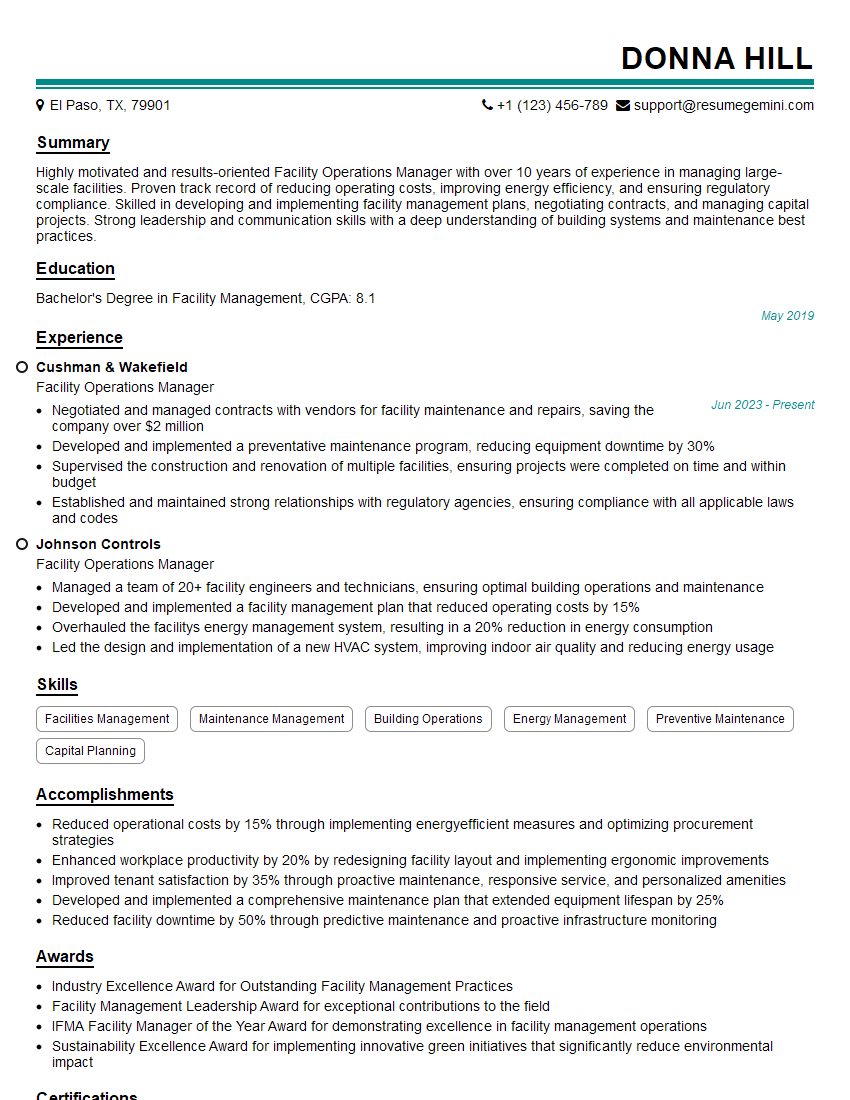
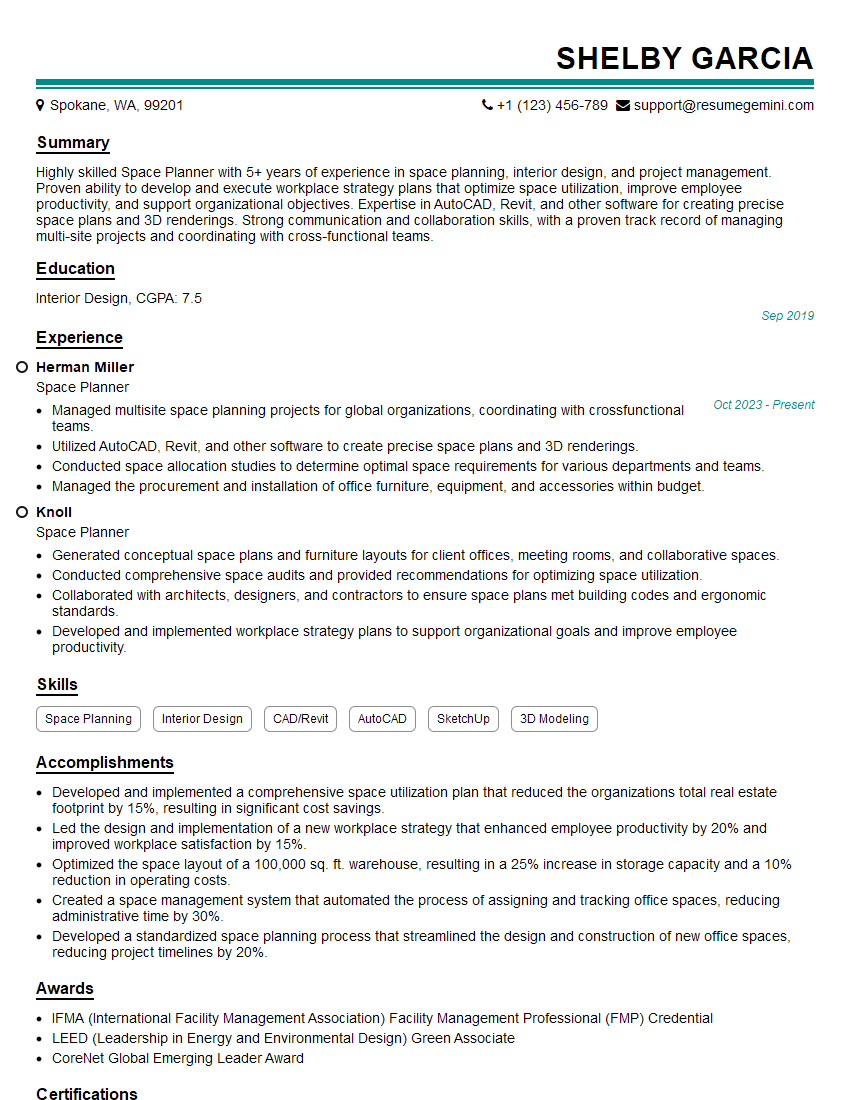
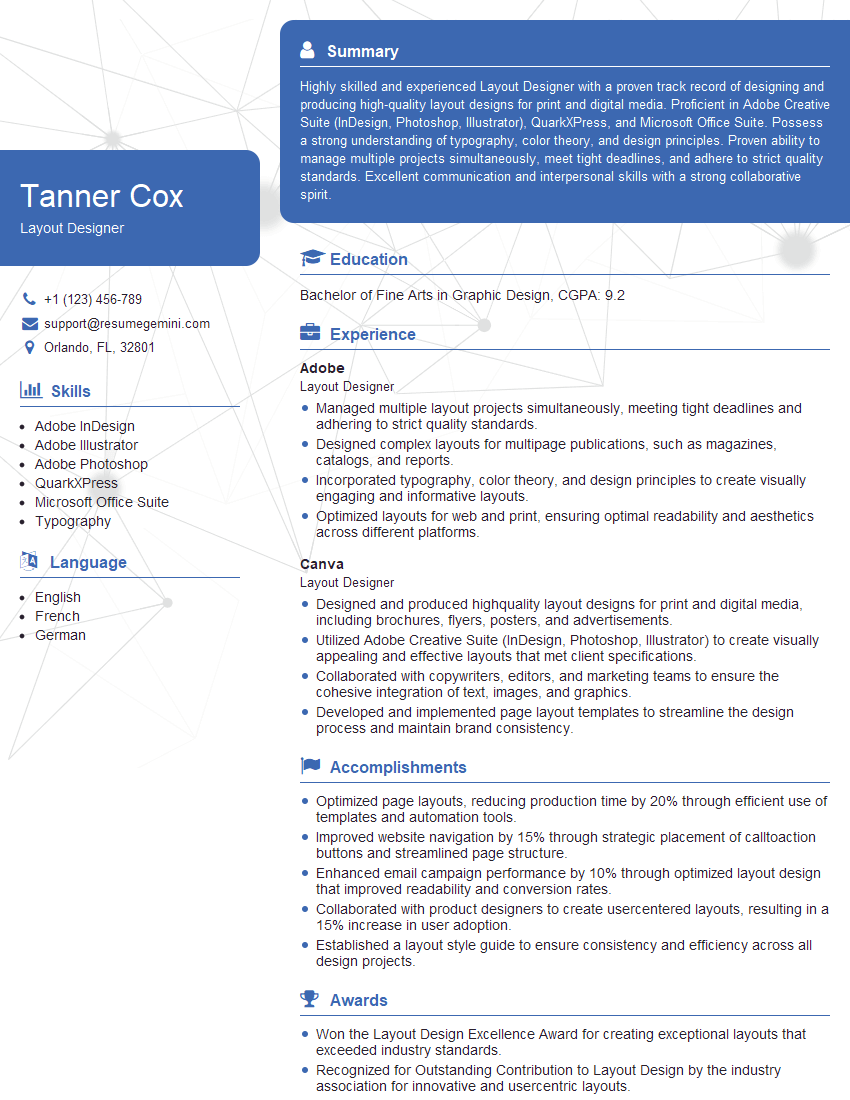
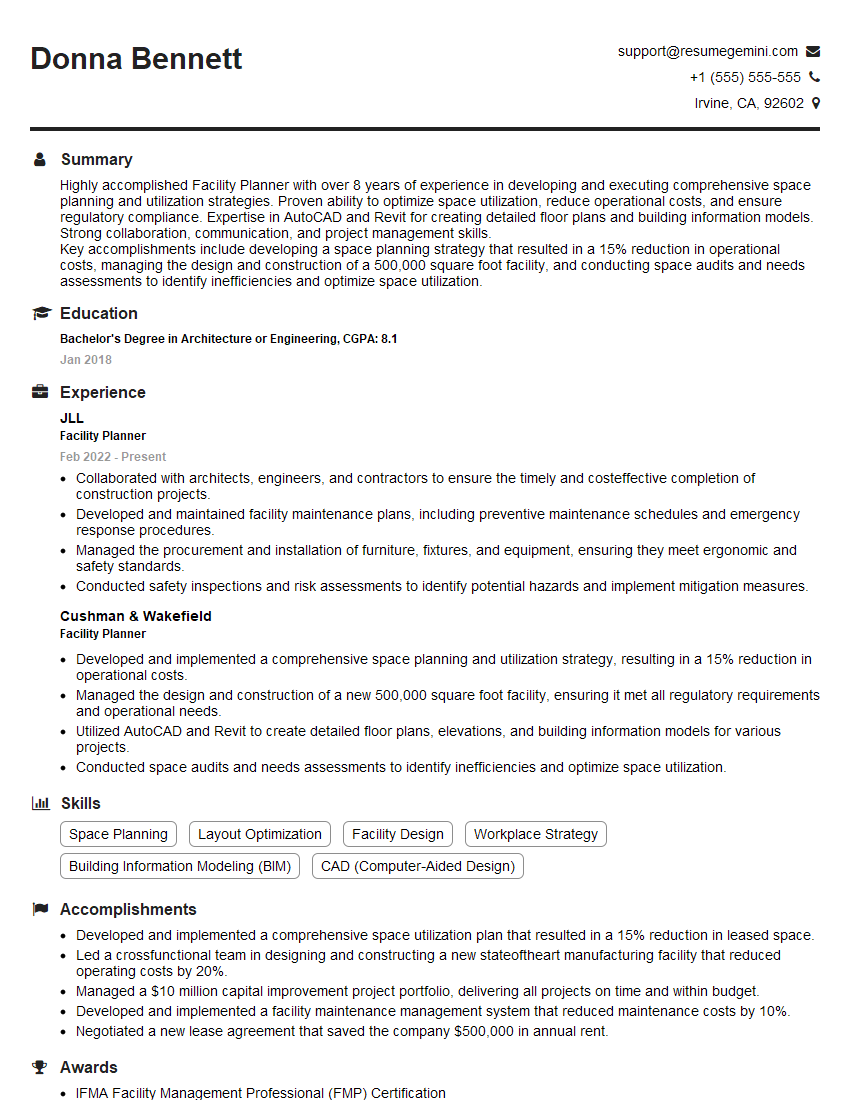
Mastering Facility Design and Layout opens doors to exciting career opportunities and significant professional growth. A strong understanding of these principles demonstrates valuable problem-solving skills and a commitment to efficiency and safety. To boost your job prospects, focus on creating an ATS-friendly resume that effectively showcases your skills and experience. ResumeGemini is a trusted resource that can help you build a professional and impactful resume. We provide examples of resumes tailored to Facility Design and Layout to help guide you in crafting a winning application. Take the next step towards your dream job – build a resume that gets noticed!
Explore more articles
Users Rating of Our Blogs
Share Your Experience
We value your feedback! Please rate our content and share your thoughts (optional).
What Readers Say About Our Blog
Very informative content, great job.
good