The thought of an interview can be nerve-wracking, but the right preparation can make all the difference. Explore this comprehensive guide to Failure Analysis Techniques (SEM, X-Ray) interview questions and gain the confidence you need to showcase your abilities and secure the role.
Questions Asked in Failure Analysis Techniques (SEM, X-Ray) Interview
Q 1. Explain the principles of scanning electron microscopy (SEM).
Scanning Electron Microscopy (SEM) is a powerful technique used to visualize the surface morphology of materials at a very high resolution. It works by scanning a focused beam of electrons across the sample’s surface. These electrons interact with the atoms in the sample, producing various signals that provide information about the sample’s composition, topography, and crystal structure. Think of it like using a super-powered flashlight to examine the surface of an object, but instead of light, we use electrons, and instead of just seeing the surface, we get detailed information about its properties.
The primary interaction is the scattering of electrons. Elastic scattering, where the electrons bounce off the sample with little energy loss, provides information about surface topography. Inelastic scattering, where electrons lose energy upon interaction, generates signals like secondary electrons (SE), backscattered electrons (BSE), and X-rays, which provide compositional and crystallographic information.
Q 2. Describe the different imaging modes available in SEM and their applications.
SEM offers several imaging modes, each revealing different aspects of the sample:
- Secondary Electron (SE) Imaging: This is the most common mode. SEs are low-energy electrons emitted from the sample’s surface due to inelastic scattering. SE imaging provides high-resolution images of surface topography, revealing surface features like cracks, roughness, and textures. Imagine it like taking a detailed photograph of the sample’s surface.
- Backscattered Electron (BSE) Imaging: BSEs are high-energy electrons that are elastically scattered back from the sample. BSE imaging provides information about the sample’s composition. Heavier elements scatter more electrons and appear brighter, creating contrast between different phases in the material. This is useful for identifying different components in an alloy, for instance.
- Electron Backscatter Diffraction (EBSD): This technique provides crystallographic information. BSEs diffract from the crystal lattice of the material, and the diffraction patterns reveal crystal orientation and phase identification. It’s like obtaining a fingerprint of the crystal structure.
Applications: SEM is widely used in diverse fields, including materials science (failure analysis, nanomaterials characterization), biology (cell imaging), semiconductor industry (defect analysis), and forensic science (trace evidence analysis). For example, in a failure analysis of a fractured component, SEM would reveal the fracture surface morphology, identifying the initiation site and the mode of fracture.
Q 3. What are the limitations of SEM?
Despite its power, SEM has some limitations:
- Vacuum requirement: SEM operates under high vacuum, which can be a challenge for the analysis of volatile or hydrated samples.
- Sample preparation: Samples often require extensive preparation, including mounting, coating, and sectioning, which can introduce artifacts.
- Charging effects: Non-conductive samples can charge up under the electron beam, leading to image distortion. Coating with a conductive material is often necessary to mitigate this.
- Beam damage: The electron beam can damage sensitive samples, especially biological specimens.
- Depth of field: While SEM offers high resolution, the depth of field can be limited, potentially obscuring details of a rough surface.
Q 4. How do you prepare samples for SEM analysis?
Sample preparation for SEM is crucial for obtaining high-quality images and accurate results. The specific preparation method depends on the nature of the sample and the information sought. General steps may include:
- Cleaning: Removing surface contaminants using appropriate solvents.
- Mounting: Embedding the sample in a resin for easier handling and support.
- Sectioning: Cutting the sample into thin sections using techniques like sawing or ion milling, to reveal internal structures.
- Polishing: Grinding and polishing the sample to create a smooth surface, especially important for BSE imaging.
- Coating: Coating the sample with a thin layer of conductive material (e.g., gold, platinum) to prevent charging, especially for non-conductive materials. This is done using sputtering.
For example, analyzing a fractured metal component would involve cleaning the fracture surface, mounting it, and then coating it with gold to prevent charging before SEM imaging to clearly see the fracture surface details.
Q 5. Explain the principles of X-ray diffraction (XRD).
X-ray Diffraction (XRD) is a technique that uses X-rays to determine the crystal structure of a material. It’s based on the principle of Bragg’s Law, which states that constructive interference of X-rays occurs when the path difference between X-rays reflected from parallel planes of atoms in a crystal is an integer multiple of the X-ray wavelength. Imagine shining a laser pointer at a precisely spaced set of mirrors; only at specific angles will you see constructive interference, giving you information on the spacing between the mirrors (in XRD this is the interplanar spacing in the crystal).
A monochromatic X-ray beam is directed onto a crystalline sample. The diffracted beams are detected by a detector, and the angles at which these beams are detected are used to calculate the interplanar spacing (d-spacing) of the crystal lattice, which is related to the unit cell dimensions and crystal structure.
Q 6. What information can be obtained from XRD analysis?
XRD analysis provides valuable information about a material’s crystalline structure, including:
- Phase identification: Each crystalline phase has a unique diffraction pattern, allowing for the identification of different phases present in a sample. This is particularly useful in identifying unknown materials or determining the composition of a mixture.
- Crystallite size and strain: The width of the diffraction peaks provides information about crystallite size and lattice strain.
- Preferred orientation (texture): XRD can detect if the crystallites in the sample are preferentially oriented in a specific direction. This is important in materials science, as it can affect the material’s properties.
- Qualitative and quantitative phase analysis: The intensity of the diffraction peaks can be used to determine the relative amounts of different phases present in a sample.
For example, in a cement analysis, XRD can identify the different crystalline phases (e.g., calcium silicate hydrate) present in the hardened cement paste, providing insights into its strength and durability.
Q 7. What are the limitations of XRD?
XRD also has limitations:
- Amorphous materials: XRD is primarily applicable to crystalline materials. Amorphous materials, lacking long-range order, produce only a broad diffuse scattering pattern, providing limited structural information.
- Small crystallite size: Very small crystallites (<10 nm) produce broad diffraction peaks, making accurate phase identification and crystallite size determination difficult.
- Overlapping peaks: In complex materials, diffraction peaks from different phases can overlap, making it challenging to resolve individual phases.
- Sample preparation: Proper sample preparation is necessary to obtain high-quality diffraction data; this may involve powdering or surface preparation.
Q 8. How do you interpret an XRD pattern?
Interpreting an XRD (X-ray Diffraction) pattern involves identifying the crystalline phases present in a material and determining their relative amounts. The pattern is essentially a plot of X-ray intensity versus diffraction angle (2θ). Each peak in the pattern corresponds to a specific set of crystallographic planes within the material, reflecting the X-rays according to Bragg’s Law (nλ = 2d sinθ, where n is an integer, λ is the X-ray wavelength, d is the interplanar spacing, and θ is the diffraction angle).
The process involves several steps:
- Peak Identification: We compare the observed peak positions (2θ values) and intensities with known diffraction patterns from databases like the International Centre for Diffraction Data (ICDD) PDF-2 database. Software like X’Pert HighScore Plus or JADE helps with this, performing peak matching and identifying potential phases.
- Phase Quantification: Once phases are identified, the software uses the peak intensities to estimate the relative amounts of each phase. This is often done using the Rietveld refinement method, a sophisticated least-squares approach that models the entire diffraction pattern.
- Crystallite Size and Strain Analysis: The width of the diffraction peaks can provide information about the average crystallite size (using the Scherrer equation) and the presence of strain within the material. Broader peaks indicate smaller crystallites or higher strain.
- Preferred Orientation Analysis: If the sample has a preferred orientation of crystallites (i.e., not randomly oriented), this will affect the peak intensities. The software can help correct for this effect to obtain more accurate phase quantification.
For example, in analyzing a failed metallic component, an XRD pattern might reveal the presence of unexpected phases like oxides or carbides, indicating corrosion or improper heat treatment. This helps determine the root cause of the failure.
Q 9. Explain the difference between SEM and XRD.
Scanning Electron Microscopy (SEM) and X-ray Diffraction (XRD) are complementary techniques used in materials characterization, but they provide different types of information. SEM is a surface imaging technique, providing high-resolution images of the sample’s morphology (surface structure, topography) and composition (using Energy Dispersive X-ray Spectroscopy, EDS). XRD, on the other hand, is a bulk technique that analyzes the crystalline structure of a material, providing information on the phases present, their crystallographic orientations, and crystallite size.
Think of it this way: SEM shows you what the material looks like at a microscopic level, while XRD tells you what the material is made of in terms of its crystalline structure.
Q 10. When would you choose SEM over XRD, and vice-versa?
The choice between SEM and XRD depends heavily on the specific question being asked.
- Choose SEM over XRD when: You need high-resolution images of the sample’s surface morphology (e.g., examining fracture surfaces for brittle failure modes, analyzing surface roughness, observing grain boundaries), or if you need elemental composition information from a small region of the sample (EDS).
- Choose XRD over SEM when: You need to identify crystalline phases present in the material, determine their relative amounts, obtain information about crystallite size and strain, or study preferred orientation. XRD is particularly useful for analyzing powdered samples or bulk materials.
In many cases, these techniques are used together to provide a comprehensive analysis. For example, SEM might reveal cracks in a ceramic material, while XRD could identify the phases causing the material’s brittleness, ultimately providing a more complete understanding of the failure mechanism.
Q 11. Describe your experience with SEM sample preparation techniques.
My experience with SEM sample preparation is extensive. The optimal preparation method depends heavily on the material and the information sought. I am proficient in techniques including:
- Polishing: For obtaining smooth, flat surfaces for high-resolution imaging and quantitative EDS analysis, I use various polishing methods from mechanical polishing (using diamond suspensions) to chemical-mechanical polishing (CMP), adapting the procedure to the specific material’s hardness and microstructure.
- Ion Milling: For preparing cross-sectional samples or creating very smooth surfaces for sensitive materials, ion milling is essential. This technique uses a focused ion beam to remove material layer by layer, enabling the preparation of extremely fine samples.
- Cutting and Mounting: Larger samples often require cutting to a manageable size and embedding in a resin for ease of handling and polishing. I have experience with various resin types and cutting tools adapted for specific materials.
- Conductive Coating: Non-conductive samples need to be coated with a conductive layer (e.g., gold, platinum) before SEM analysis to avoid charging artifacts. I’m experienced in using sputter coaters and controlling coating thickness to optimize image quality.
I meticulously document each preparation step to ensure reproducibility and avoid introducing artifacts that could misrepresent the material’s true state.
Q 12. How do you troubleshoot common issues encountered during SEM analysis?
Troubleshooting SEM analysis often involves systematically checking various aspects of the process. Common issues include:
- Charging artifacts: Non-conductive samples may charge under the electron beam, causing image distortion. The solution is to coat the sample with a conductive layer. If the coating is too thick, it may obscure surface details; therefore, careful control of coating thickness is crucial.
- Poor image resolution: This can be due to issues with the electron beam parameters (e.g., high beam current resulting in beam broadening), vacuum level in the SEM chamber, or sample contamination. Adjusting the beam parameters, improving the vacuum, or cleaning the sample can resolve this.
- Beam drift: Gradual shifting of the electron beam can blur the image. This can be caused by vibrations or changes in temperature within the SEM. Addressing these environmental factors is key.
- Contamination: Contamination can negatively impact both image quality and EDS analysis. Regular cleaning of the sample chamber and careful sample handling are crucial for mitigating this issue.
My approach is to systematically investigate each possible cause, starting with the most likely explanations based on my experience, and making adjustments accordingly until the problem is resolved. Proper documentation of the troubleshooting process is always maintained.
Q 13. Describe your experience with XRD data analysis software.
I have extensive experience with various XRD data analysis software packages, including X’Pert HighScore Plus, JADE, and Match!. My proficiency extends beyond basic peak identification and phase quantification. I’m adept at performing Rietveld refinement for accurate phase quantification and crystal structure determination, calculating crystallite size and strain from peak broadening using various methods, and correcting for preferred orientation. I also have experience with software for texture analysis.
For example, during a recent project involving the analysis of a failed turbine blade, I used Rietveld refinement in X’Pert HighScore Plus to quantify the different phases in the blade material and identify the presence of a previously undetected phase responsible for the failure. I then used this information to propose appropriate modifications to the manufacturing process.
Q 14. How do you determine the crystal structure of a material using XRD?
Determining the crystal structure of a material using XRD involves several steps, largely enabled by the software packages I mentioned before:
- Indexing the Pattern: The first step is to identify the peaks in the XRD pattern and assign Miller indices (hkl) to each peak. The software automatically indexes the pattern using various algorithms, matching the peak positions with known crystal structures in the database.
- Unit Cell Determination: Once the peaks are indexed, the software determines the unit cell parameters (a, b, c, α, β, γ) of the crystal structure. These parameters describe the size and shape of the unit cell, the basic repeating unit of the crystal lattice.
- Space Group Determination: The space group describes the symmetry of the crystal structure. The software helps determine this by analyzing the systematic absences (missing peaks) in the diffraction pattern and considering the unit cell parameters.
- Structure Refinement: Finally, a process of refinement (often Rietveld refinement) is performed to optimize the model of the crystal structure. This involves adjusting the atomic positions and other parameters to best fit the observed diffraction pattern. This leads to a crystallographic structure that matches the experimental diffraction data.
For instance, if an unknown material produced a pattern indicating a cubic structure with specific peak intensities, I would utilize software to refine the cell parameters and identify the material based on the match with known cubic crystal structures. This would be confirmed via database comparison of the refined parameters.
Q 15. Explain the concept of electron backscatter diffraction (EBSD).
Electron Backscatter Diffraction (EBSD) is a powerful microscopy technique used to determine the crystallographic orientation of individual grains within a polycrystalline material. Imagine a mosaic made of tiny tiles; each tile represents a crystal grain, and its orientation is how it’s positioned relative to its neighbors. EBSD uses a focused electron beam in a Scanning Electron Microscope (SEM) to bombard the sample’s surface. The backscattered electrons, which are electrons that bounce off the sample, are then analyzed. The pattern of these backscattered electrons reflects the crystal structure’s orientation. By analyzing these patterns, we can generate a crystallographic map of the sample, revealing the grain size, grain orientation, and grain boundary characteristics.
Essentially, EBSD gives us a detailed picture of the internal structure of the material at a microscopic level, showing how the individual crystal grains are arranged and oriented. This is invaluable information for understanding material properties and behavior.
Career Expert Tips:
- Ace those interviews! Prepare effectively by reviewing the Top 50 Most Common Interview Questions on ResumeGemini.
- Navigate your job search with confidence! Explore a wide range of Career Tips on ResumeGemini. Learn about common challenges and recommendations to overcome them.
- Craft the perfect resume! Master the Art of Resume Writing with ResumeGemini’s guide. Showcase your unique qualifications and achievements effectively.
- Don’t miss out on holiday savings! Build your dream resume with ResumeGemini’s ATS optimized templates.
Q 16. How is EBSD used in failure analysis?
In failure analysis, EBSD is crucial for identifying the root cause of material failure. For example, consider a fractured metal part. Analyzing the grain orientation near the fracture surface can reveal if the failure was due to stress concentration at specific grain boundaries, or perhaps a preferential orientation leading to weaker planes. EBSD can detect texture (preferred grain orientations), which can significantly influence material strength and ductility. In cases of fatigue failure, EBSD helps understand how microstructural features such as grain boundaries or precipitates affect crack initiation and propagation. We can see the evolution of deformation at the microscale providing detailed insights into the failure mechanism.
Another application is in identifying the type and extent of deformation in a material. For example, EBSD can quantify the degree of plastic deformation through measurements of lattice strain.
Q 17. What is energy-dispersive X-ray spectroscopy (EDS) and how is it used in conjunction with SEM?
Energy-Dispersive X-ray Spectroscopy (EDS) is an analytical technique used in conjunction with SEM to determine the elemental composition of a material. When the electron beam in the SEM hits the sample, it causes the atoms within the material to emit characteristic X-rays. Each element emits X-rays with unique energies. The EDS detector measures the energy and intensity of these X-rays, allowing us to identify the elements present and determine their relative abundances.
Think of it like a fingerprint for each element. Each element has a unique ‘fingerprint’ of X-ray energies, and EDS reads those fingerprints to tell us what elements are present. EDS is seamlessly integrated with SEM, allowing us to pinpoint the location of specific elements within the sample and correlate them to its microstructure.
Q 18. How do you quantify elemental composition using EDS?
EDS quantifies elemental composition by analyzing the intensity of the characteristic X-rays emitted by each element. The intensity is directly proportional to the concentration of that element in the analyzed volume. However, it’s not a simple linear relationship. Sophisticated software corrects for various factors, such as:
- Matrix effects: The presence of other elements can affect the X-ray emission of a given element.
- Detector efficiency: The detector doesn’t have uniform sensitivity across all X-ray energies.
- Beam penetration depth: The depth from which the X-rays originate depends on the beam energy and the sample’s composition.
Modern EDS software uses advanced algorithms, often employing standards or ZAF (atomic number, absorption, fluorescence) correction methods, to accurately determine the weight percentage or atomic percentage of each element in the analyzed area.
Q 19. Describe your experience with image analysis software used with SEM.
I have extensive experience with various image analysis software packages commonly used with SEM, including:
- ImageJ/Fiji: A versatile, open-source platform for image processing and analysis, excellent for basic measurements and image manipulation.
- Thermo Avizo/Amira: Powerful software for 3D image reconstruction and analysis, crucial for analyzing complex microstructures.
- TeamViewer software (for remote access and troubleshooting): Essential for remote collaborations and training.
- Various dedicated SEM software packages: Each SEM manufacturer often provides its own software suite with specific tools for EDS data analysis, image acquisition, and EBSD data processing.
My proficiency extends to quantitative image analysis, including particle size distribution analysis, phase identification, and measurement of distances, angles, and areas in micrographs.
Q 20. How do you identify different phases in a material using SEM and EDS?
Identifying different phases in a material using SEM and EDS is a combined approach. SEM provides the microstructure, showing the arrangement of different phases, while EDS provides the elemental composition of each phase. For example, imagine analyzing a steel sample that has different phases like ferrite and cementite. SEM would show the distinct morphologies of these phases (ferrite appears as lighter areas and cementite as darker). Then, EDS analysis is performed on specific regions corresponding to each morphology. Ferrite’s spectrum would reveal a high iron content with a small amount of carbon while cementite’s spectrum will show a higher carbon-to-iron ratio. This combined information allows unambiguous phase identification.
The process typically involves:
- Obtaining SEM images at various magnifications to visualize the microstructure.
- Selecting specific regions of interest corresponding to different phases.
- Performing EDS analysis on each region to obtain elemental composition data.
- Comparing the obtained data with known phase diagrams and databases to confirm phase identification.
Q 21. How would you use SEM and EDS to analyze a fractured component?
Analyzing a fractured component using SEM and EDS involves a systematic approach to understand the failure mechanism. First, we would obtain low-magnification SEM images to observe the overall fracture surface and identify any features like crack initiation sites, propagation paths, or evidence of secondary cracking. Higher-magnification images would focus on specific areas of interest. Then, EDS analysis would be used to determine the elemental composition at different locations on the fracture surface, including the crack initiation site and along the propagation path.
For instance, if we find evidence of intergranular fracture (fracture along grain boundaries), we might use EDS to determine if there is any segregation of specific elements at the grain boundaries – this might be a key to explaining the failure. We might also observe precipitates (small particles within the material) and analyze their composition with EDS to check for potential embrittlement effects. The combined SEM and EDS data provides a holistic picture of the microstructure and composition at the fracture surface, giving valuable insights to establish the root cause of failure.
Q 22. Explain how X-ray fluorescence (XRF) is used in failure analysis.
X-ray fluorescence (XRF) is a non-destructive analytical technique used in failure analysis to determine the elemental composition of a material’s surface. It works by bombarding the sample with high-energy X-rays. This causes the atoms in the sample to emit their own characteristic X-rays, which are then detected and analyzed. Each element emits X-rays at specific energies, acting like a fingerprint. By measuring these energies and intensities, we can identify the elements present and determine their relative concentrations.
In failure analysis, XRF is particularly useful for identifying contaminants, corrosion products, or variations in alloy composition that might contribute to a component’s failure. For example, if a metal part has experienced unexpected corrosion, XRF can quickly determine the presence of chlorine or sulfur, indicating potential exposure to corrosive environments.
Q 23. How do you interpret data obtained from XRF analysis?
Interpreting XRF data involves analyzing the spectrum generated by the instrument. This spectrum shows peaks corresponding to the elements present, with the peak’s height proportional to the element’s concentration. Qualitative analysis identifies the elements present by comparing the peak energies to known values in a spectral library. Quantitative analysis, often requiring calibration standards, provides the concentration of each element, typically expressed as weight percent or atomic percent. Software packages are commonly used to process the data, subtracting background noise and performing peak fitting for more accurate quantification.
It’s important to consider matrix effects, which can influence the intensity of emitted X-rays. These effects are due to differences in the material’s composition. Advanced techniques, such as fundamental parameters analysis, are used to compensate for these effects and obtain more accurate quantitative results.
Q 24. What is the difference between qualitative and quantitative analysis in SEM/EDS?
In SEM/EDS (Scanning Electron Microscopy/Energy Dispersive Spectroscopy), qualitative analysis identifies the elements present in a sample, while quantitative analysis determines their relative proportions. Think of it like this: qualitative analysis answers the question ‘What elements are here?’, while quantitative analysis answers ‘How much of each element is present?’.
Qualitative analysis in SEM/EDS is relatively straightforward; the EDS spectrum displays peaks corresponding to the elements detected. The position of the peak indicates the element, and its height gives an idea of the relative abundance. Quantitative analysis is more complex. It requires careful calibration using known standards, and the software accounts for factors such as background noise, peak overlaps, and matrix effects to provide accurate elemental concentrations, usually expressed in weight percent.
Q 25. What safety precautions are necessary when operating SEM and XRD equipment?
Operating SEM and XRD equipment requires strict adherence to safety protocols. For SEM, the primary concern is the high voltage used to generate the electron beam. This requires proper grounding and shielding to prevent electrical shocks. Additionally, the vacuum environment within the SEM chamber necessitates careful sample preparation to prevent outgassing, which can damage the instrument. Eye protection is crucial to prevent accidental exposure to high-intensity light emitted from the instrument.
For XRD, the main safety concern is the X-ray radiation. Appropriate shielding is essential to prevent exposure to harmful X-rays. The user must wear a radiation dosimeter to monitor exposure levels and follow specific safety procedures outlined in the instrument’s manual. Regular safety inspections and maintenance are paramount to ensure the equipment remains safe to operate. Proper training is mandatory before operating either instrument.
Q 26. Describe a challenging failure analysis project you worked on and how you overcame the challenges.
One challenging project involved analyzing the failure of a high-pressure hydraulic valve. The valve experienced catastrophic failure after only a few cycles, resulting in significant downtime and financial losses. Initial macroscopic examination revealed a fracture, but the root cause remained elusive. We used a multi-technique approach: SEM/EDS was used to examine the fracture surface, revealing tiny particles embedded in the fracture path. XRF analysis identified these particles as tungsten carbide, likely originating from wear in a related component. The SEM imaging also revealed micro-cracks originating from these embedded particles, which ultimately led to catastrophic failure. This finding led us to recommend a redesign of the hydraulic system to prevent wear debris from reaching the high-pressure valve, ultimately solving the problem.
The challenge was identifying such a tiny cause of failure, requiring careful attention to detail and utilizing the strengths of multiple techniques.
Q 27. What are the key considerations in selecting the appropriate failure analysis technique?
Selecting the appropriate failure analysis technique depends on several factors: the type of material being analyzed (metal, polymer, ceramic), the scale of the defect (macro, micro, nano), the nature of the suspected failure mechanism (corrosion, fatigue, fracture), and the information sought (elemental composition, microstructure, residual stress).
For example, if investigating a crack in a metal component, optical microscopy might provide initial insights into the crack morphology. SEM/EDS would provide higher-resolution imaging and elemental composition data at the fracture surface, helping to determine the failure mechanism. XRF would be useful for determining bulk elemental composition or identifying surface contaminants. XRD is ideal for examining crystal structure and phase identification. It’s often a combination of techniques that provides the most comprehensive analysis.
Q 28. How do you document and report your findings from failure analysis investigations?
Documenting and reporting failure analysis findings requires a systematic approach. This typically involves creating a detailed report including:
- Introduction: Describing the failed component, its function, and the nature of the failure.
- Methodology: Detailing the techniques used (SEM, XRF, etc.), sample preparation procedures, and experimental parameters.
- Results: Presenting data and observations in a clear and organized manner, including images, spectra, and graphs. High-quality images of the failure are crucial.
- Discussion: Analyzing the data and interpreting the results to draw conclusions about the root cause of failure. This is where expert knowledge plays a crucial role.
- Conclusions: Summarizing the key findings and providing recommendations for preventing future failures. This might involve design changes, material selection, or process modifications.
- Appendices: Including raw data, calibration curves, and other supplementary information.
The report should be written clearly and concisely, avoiding technical jargon when possible, ensuring all stakeholders can understand the findings and recommendations.
Key Topics to Learn for Failure Analysis Techniques (SEM, X-Ray) Interview
- Scanning Electron Microscopy (SEM): Understanding principles of electron beam interaction with matter, image formation mechanisms (secondary electrons, backscattered electrons), and sample preparation techniques for SEM analysis.
- SEM Applications in Failure Analysis: Analyzing fractured surfaces for crack propagation, identifying inclusions and defects, determining material composition using EDS (Energy Dispersive Spectroscopy), and conducting cross-sectional analysis.
- X-Ray Techniques in Failure Analysis: Understanding X-ray diffraction (XRD) for phase identification and crystal structure analysis, and X-ray computed tomography (CT) for non-destructive 3D imaging of internal defects.
- Practical Application of X-Ray: Using XRD to identify stress corrosion cracking in metallic components, and applying X-ray CT to visualize internal voids or delaminations in composite materials.
- Data Interpretation and Reporting: Analyzing SEM and X-ray images, interpreting results, and presenting findings in a clear and concise manner, including writing professional reports.
- Troubleshooting and Problem-Solving: Identifying potential sources of error in SEM and X-ray analysis, troubleshooting instrument malfunctions, and developing strategies for resolving analytical challenges.
- Advanced Techniques: Exploring advanced SEM techniques like electron backscatter diffraction (EBSD) for crystallographic orientation analysis and advanced X-ray techniques like micro-computed tomography (micro-CT) for higher resolution imaging.
- Safety Procedures: Understanding and adhering to safety protocols associated with operating SEM and X-ray equipment.
Next Steps
Mastering Failure Analysis Techniques using SEM and X-Ray is crucial for career advancement in materials science, engineering, and quality control. These skills are highly sought after, opening doors to challenging and rewarding roles. To maximize your job prospects, it’s vital to create an ATS-friendly resume that highlights your expertise effectively. ResumeGemini is a trusted resource to help you build a professional and impactful resume, ensuring your skills and experience shine. We provide examples of resumes tailored specifically to Failure Analysis Techniques (SEM, X-Ray) to guide you in crafting the perfect application.

Quality Assurance Manager Resume Sample

Engineering Manager Resume Sample

Reliability Engineer Resume Sample

Applications Engineer Resume Sample

Process Engineer Resume Sample

Research Scientist Resume Sample

Test Engineer Resume Sample

Failure Analysis Technician Resume Sample

Product Engineer Resume Sample

Manufacturing Engineer Resume Sample

Metrologist Resume Sample

Quality Control Engineer Resume Sample
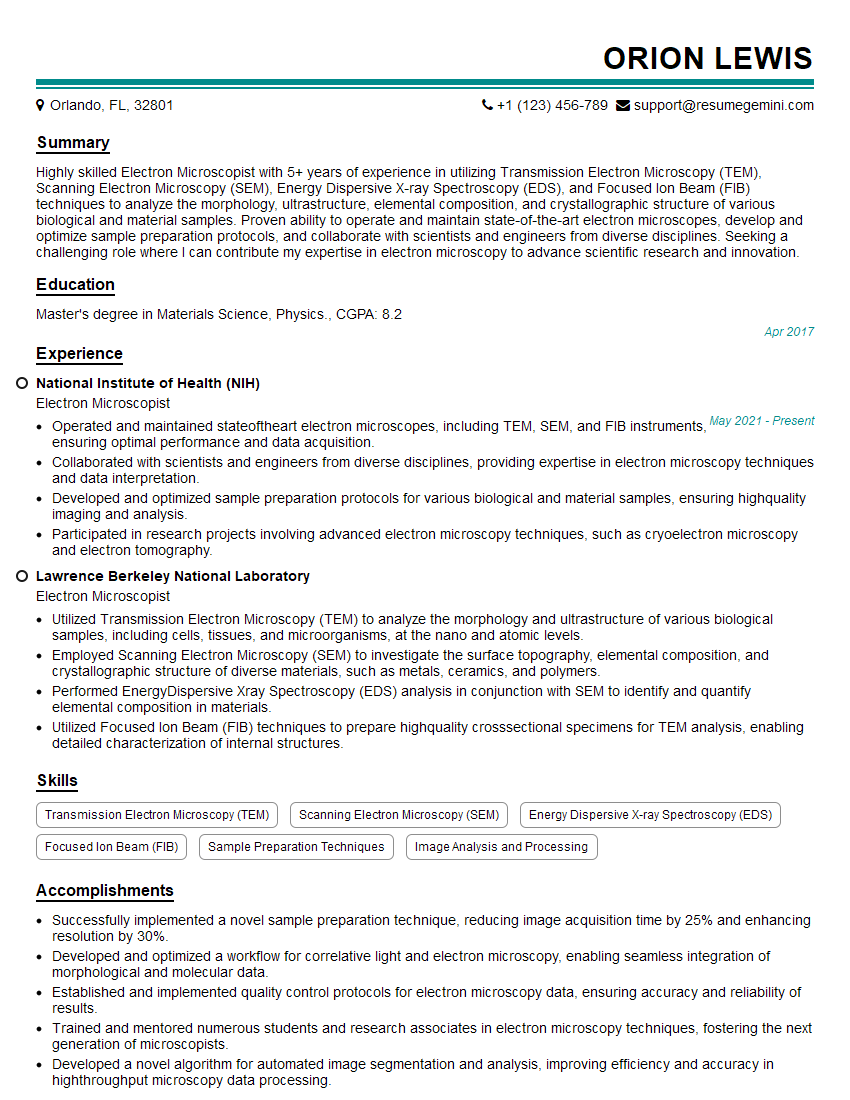
Electron Microscopist Resume Sample

Microscopist Resume Sample

Analytical Chemist Resume Sample

Materials Scientist Resume Sample

Senior Materials Scientist Resume Sample
- Quality Assurance Manager
- Engineering Manager
- Reliability Engineer
- Applications Engineer
- Process Engineer
- Research Scientist
- Test Engineer
- Failure Analysis Technician
- Product Engineer
- Manufacturing Engineer
- Metrologist
- Quality Control Engineer
- Electron Microscopist
- Microscopist
- Analytical Chemist
- Materials Scientist
- Senior Materials Scientist
Explore more articles
Users Rating of Our Blogs
Share Your Experience
We value your feedback! Please rate our content and share your thoughts (optional).
What Readers Say About Our Blog
Very informative content, great job.
good