Interviews are opportunities to demonstrate your expertise, and this guide is here to help you shine. Explore the essential Familiar with tree felling and trimming techniques interview questions that employers frequently ask, paired with strategies for crafting responses that set you apart from the competition.
Questions Asked in Familiar with tree felling and trimming techniques Interview
Q 1. Describe your experience with different tree felling techniques (e.g., directional felling, climbing techniques).
Tree felling employs various techniques, chosen based on factors like tree size, location, surrounding obstacles, and desired outcome. Directional felling is the most common, involving strategically cutting the tree to control its fall. This requires careful assessment of the tree’s lean, weight distribution, and potential obstructions. I have extensive experience in this, employing different notch and backcut combinations to achieve precise direction. For example, a Humboldt notch is ideal for larger trees leaning heavily in one direction. Climbing techniques are essential when dealing with trees too close to structures or in difficult-to-access locations. I’m proficient in various climbing and rigging methods, utilizing ropes, harnesses, and specialized equipment to safely access and fell these trees. For instance, I’ve used SRT (Single Rope Technique) extensively for intricate pruning and felling in confined spaces.
I’ve also employed other techniques including the ‘open-face’ method for smaller trees where quick and controlled felling is important and the ‘Humboldt’ notch for larger trees with significant lean, requiring precision to direct the fall away from potential hazards.
Q 2. Explain the safety precautions you take when felling trees.
Safety is paramount in tree felling. My approach begins with a thorough risk assessment, identifying potential hazards like power lines, buildings, or other obstructions. I always wear appropriate Personal Protective Equipment (PPE), including a helmet, eye protection, high-visibility clothing, chainsaw chaps, gloves, and sturdy boots. Before commencing felling, I establish a designated escape route and ensure everyone is outside the felling zone—a radius typically exceeding twice the tree’s height. I regularly inspect my tools for any damage or wear and tear before each operation. Communication is critical; on larger jobs, I work with a team, using hand signals to coordinate our actions and maintain awareness of each other’s positions. I also utilize fall protection systems like climbing gear where appropriate and ensure the work area is properly cleared of debris and obstacles. Weather conditions are a key consideration. High winds or rain will often postpone a job.
Q 3. How do you assess the risk of a tree falling?
Assessing the risk of a tree falling involves a multifaceted evaluation. I start by visually inspecting the tree, looking for signs of decay, disease, leaning, cracks in the trunk or branches, and any signs of insect infestation. I consider the tree’s species, size, and overall health. The surrounding environment plays a crucial role. Are there any obstructions in the potential fall path? Are there power lines, structures, or other trees nearby? Soil conditions are important; unstable or saturated soil can increase the risk of root failure. I also factor in weather conditions, as high winds significantly impact the likelihood of a tree falling. For large or complex jobs, I employ specialized equipment such as a dendrometer to measure stem diameter and assess the health of the wood and may consult with arborists to get additional expert analysis.
Q 4. What tools and equipment are essential for safe and efficient tree felling?
Essential tools and equipment for safe and efficient tree felling include:
- Chainsaws: Several sizes, maintained meticulously for optimal performance and safety.
- Safety equipment: Helmet, eye protection, chainsaw chaps, gloves, high-visibility clothing, sturdy boots.
- Climbing gear: For high-risk or difficult-to-access trees (harnesses, ropes, ascenders, etc.).
- Wedges and mauls: To help control the direction of the fall.
- Measuring tapes and dendrometers: To assess tree dimensions and health.
- Hand saws and axes: For precise cuts and limb removal.
- Rigging equipment: For lowering large sections (ropes, pulleys, shackles, etc.).
- First-aid kit: Essential for immediate response to injuries.
The specific tools needed vary depending on the job, but maintaining all equipment in top condition is crucial for safety and efficiency.
Q 5. How do you identify different tree species and their characteristics relevant to felling and trimming?
Identifying tree species is crucial for safe and efficient felling and trimming. I’m familiar with a wide range of species common to this region, recognizing their specific characteristics. For example, I know that certain species, such as redwoods, are brittle and prone to splitting, while others, like oaks, are stronger and more resistant. Understanding wood grain, density, and the presence of rot or decay is essential to determining the best felling technique. Different species have different branch structures which influence how you approach pruning. For instance, a pine’s lower branches might be brittle, while an elm’s can be extremely strong and require a different approach to removal. Knowing the specific characteristics of each species guides my planning and execution of every tree removal, ensuring the safest and most efficient outcome.
Q 6. Describe your experience with rigging and lowering large tree sections.
Rigging and lowering large tree sections is a specialized skill requiring precise planning and execution. I’ve extensive experience in this area, utilizing various rigging techniques based on the size, weight, and location of the section. I employ ropes, pulleys, shackles, and other equipment to safely control the descent of these large pieces. It is critical to ensure proper anchoring points to prevent accidents. I always follow strict safety protocols and use redundancy in rigging to ensure the system can handle unexpected stresses. For instance, when lowering a large trunk section, I might use multiple ropes and secure them to strong anchor points, with additional safety lines to prevent uncontrolled movement. Thorough planning, proper equipment selection, and the systematic application of rigging principles ensures the safe and controlled lowering of large tree sections, preventing injury and damage.
Q 7. How do you handle unforeseen challenges during a tree felling operation?
Unforeseen challenges are common in tree felling. For example, I once encountered an unexpected hidden cavity in a tree, compromising the structural integrity during felling. My immediate response was to halt operations and reassess the situation, using my experience and judgment to quickly develop a revised plan, often incorporating additional safety measures. This might involve changing the felling technique or utilizing additional rigging equipment. Effective communication with the team is vital in these situations, ensuring everyone understands the changes and remains vigilant. A flexible and adaptable approach is essential, involving calmly evaluating the new circumstances and adjusting accordingly. I always prioritize safety first, even if it means abandoning or significantly altering the initial plan. Documenting these challenges and their resolutions provides valuable lessons for future operations.
Q 8. What are the common hazards associated with tree felling and trimming, and how do you mitigate them?
Tree felling and trimming present numerous hazards, ranging from minor injuries to fatalities. The most common include falling trees or branches, striking objects (like power lines), chainsaw kickback, slips, trips and falls, and exposure to harmful substances like sap or chemicals.
Mitigation strategies are crucial and involve a multi-faceted approach. Firstly, a thorough risk assessment is paramount before any work begins. This involves carefully evaluating the tree’s condition, the surrounding environment (including terrain, obstacles, and weather conditions), and the appropriate techniques for the job. Secondly, utilizing Personal Protective Equipment (PPE) is non-negotiable. This includes safety helmets, high-visibility clothing, chainsaw chaps, safety glasses, gloves, and steel-toed boots. Thirdly, proper felling techniques, like using wedges to control the direction of fall and having a clear escape path, are essential. Finally, working with a qualified partner for larger or more complex jobs provides an extra layer of safety and allows for better communication and support.
- Example: When felling a large tree near a power line, I would first call the power company to de-energize the line or establish a safety zone significantly wider than the expected fall area. I’d also strategically place felling wedges to ensure a controlled fall away from the power line.
Q 9. Explain the importance of proper tree pruning techniques.
Proper tree pruning is vital for maintaining the tree’s health, structure, and aesthetic appeal. It removes dead, damaged, or diseased branches, preventing disease spread and structural weakness. Pruning can also improve light penetration to the interior of the tree, promote more vigorous growth, and enhance the tree’s overall shape and form. Improper pruning, however, can lead to decay, insect infestations, and even tree death.
Imagine a tree as a complex structure; removing parts without understanding its mechanics can lead to collapse. Proper pruning respects the tree’s natural growth patterns, reducing stress and enhancing its resilience.
Q 10. How do you determine the appropriate pruning cuts for different tree species and situations?
Determining the appropriate pruning cuts depends on several factors: the tree species, the branch’s size and position, the overall tree health, and the goals of the pruning (e.g., shaping, removal of deadwood). Different species have varying growth habits and branch structures that influence how you prune them.
For example, a mature oak tree will need a different approach than a young maple tree. In general, the ‘three-cut method’ is used to remove larger branches to prevent bark tearing. The first cut is an undercut on the underside of the branch, the second is a top cut slightly further out, and the third is a final cut close to the branch collar (the swollen area where the branch joins the trunk).
- Example: When removing a large, dead branch from an oak tree, I would use the three-cut method to minimize the risk of damaging the bark and underlying tissue. I’d assess the branch’s weight and position, planning the cuts to ensure a controlled drop.
Q 11. Describe your experience with crown reduction and crown thinning.
Crown reduction and crown thinning are two distinct pruning techniques. Crown reduction aims to reduce the overall size of the crown, usually to decrease the tree’s height or spread. This is typically done by shortening the main branches. Crown thinning involves selectively removing branches to reduce density within the crown, improving light penetration and air circulation.
I have extensive experience in both, and always prioritize the tree’s long-term health and safety. For instance, in crown reduction, I avoid excessive cuts to prevent stress on the remaining branches. Similarly, in crown thinning, I focus on removing smaller, weaker branches to maintain a natural and balanced crown structure. Often a combination of both techniques is used, depending on individual needs.
Example: In a recent project, a large oak tree was overhanging a house. We employed both crown reduction and thinning. Careful crown reduction lowered the overall height, reducing the risk of branches striking the roof during storms. Crown thinning improved air circulation, reducing the risk of disease.
Q 12. How do you prevent damage to surrounding property during tree felling and trimming?
Preventing property damage during tree felling and trimming is paramount. This necessitates careful planning and execution. Before starting any work, I conduct a thorough site assessment to identify potential hazards, including proximity to buildings, fences, power lines, and other structures. I use various techniques to protect property, such as strategically placing protective barriers (like tarps or mats) to shield vulnerable areas. I also employ directional felling techniques to guide the tree’s fall away from structures.
Furthermore, employing appropriate equipment, such as a climbing harness and ropes for precise branch removal, minimizes risks.
- Example: When removing a large tree near a client’s house, I used ropes to carefully lower sections of the tree to the ground, ensuring they didn’t hit the house. Prior to the work, I reviewed this process with the client to set clear expectations and address any concerns.
Q 13. What are your skills in using chainsaws, pole saws, and other related equipment?
I am highly proficient in using a variety of arboricultural equipment, including chainsaws (both gas and electric), pole saws, climbing gear (ropes, harnesses, ascenders), and various hand tools (pruning saws, loppers, axes). I possess all necessary certifications and licenses to operate these tools safely and effectively. My experience encompasses both ground-based and climbing techniques, enabling me to handle a wide range of tree care tasks.
I’m particularly skilled at utilizing chainsaw safety techniques, such as kickback prevention and proper sharpening. My proficiency in climbing techniques allows me to access and prune branches safely at various heights, providing comprehensive tree care.
Q 14. How do you maintain your equipment to ensure safety and efficiency?
Equipment maintenance is crucial for safety and efficiency. I follow a rigorous maintenance schedule for all my tools. Chainsaws require regular sharpening, chain lubrication, and air filter cleaning. Pole saws need inspection of their cables and cutting heads. Climbing gear undergoes regular checks for wear and tear. I meticulously document all maintenance activities, ensuring all equipment is in optimal working condition before each job. Ignoring this can lead to malfunctions, potentially resulting in accidents or incomplete work.
Safety is my utmost priority – a well-maintained tool is a safe tool, and contributes to efficient and productive work.
Q 15. Explain your understanding of tree biology and its impact on felling and trimming decisions.
Understanding tree biology is fundamental to safe and effective tree felling and trimming. Different species have varying growth patterns, wood density, branch structures, and susceptibility to diseases. For example, a brittle, fast-growing species like a willow requires different techniques than a slow-growing, strong hardwood like an oak. Knowing the species allows me to anticipate potential hazards, like hidden weaknesses or susceptibility to wind throw.
The tree’s overall health, indicated by factors like leaf color, bark condition, and presence of fungal growth, significantly influences how I approach a job. A diseased or weakened tree may require different safety precautions and felling strategies compared to a healthy one. The presence of significant decay or internal cavities necessitates more cautious techniques, possibly including the use of additional safety equipment.
Understanding root systems is crucial too. Knowing the extent and depth of the root system influences felling strategy. A shallow root system might make the tree more susceptible to windthrow, requiring more careful planning to prevent damage to surrounding property.
Career Expert Tips:
- Ace those interviews! Prepare effectively by reviewing the Top 50 Most Common Interview Questions on ResumeGemini.
- Navigate your job search with confidence! Explore a wide range of Career Tips on ResumeGemini. Learn about common challenges and recommendations to overcome them.
- Craft the perfect resume! Master the Art of Resume Writing with ResumeGemini’s guide. Showcase your unique qualifications and achievements effectively.
- Don’t miss out on holiday savings! Build your dream resume with ResumeGemini’s ATS optimized templates.
Q 16. Describe your experience with working at heights and using safety harnesses.
I have over 10 years of experience working at heights, regularly using safety harnesses and other fall protection equipment. My training includes certification in advanced arboricultural techniques and rope access. I’m proficient in various climbing techniques, including using saddles, ropes, ascenders, and descenders. I always inspect my harness and equipment before each job, adhering strictly to safety protocols. Regular maintenance and thorough inspections are paramount for ensuring equipment remains in optimal condition.
I’ve worked on trees exceeding 100 feet in height and in challenging environments such as steep slopes and confined spaces. Safety is my utmost priority, and I never compromise on procedures. This includes implementing rigorous risk assessments and having spotters for all elevated work. For example, in one situation involving a particularly tall and unstable pine, we established a comprehensive safety plan that included multiple anchor points and a dedicated spotter positioned strategically to communicate real-time observations.
Q 17. How do you assess the health of a tree and determine the need for trimming or removal?
Assessing tree health involves a visual inspection and sometimes, more detailed evaluations. I look for signs of disease, pests, decay, structural weaknesses (like cracks or codominant stems), and evidence of storm damage. I carefully examine the crown, trunk, and root flare. Visible signs include dead branches, thinning canopies, fungal growth (bracket fungi, for example), and changes in bark texture or color.
For example, excessive leaning, especially combined with other stress factors like decay, can indicate an increased risk of failure. If I find significant issues, I may recommend trimming to remove dead or hazardous branches or even complete removal if the tree is deemed unsafe. Sometimes, more invasive assessments, like using an arborist’s sonic tomograph to detect internal decay, are necessary to make a truly informed decision. The determination is always based on safety and the long-term health of the tree and the surrounding environment.
Q 18. What are the legal and regulatory requirements related to tree felling and trimming in your area?
Legal and regulatory requirements vary by location, but generally involve obtaining necessary permits before felling or significantly trimming trees, especially those on public land or within protected areas. In my area, this involves contacting the local council or relevant authority for inspection and approvals. This ensures compliance with environmental protection laws and guidelines, which are designed to prevent harm to protected species and habitats.
Specific requirements often involve protected trees, which may necessitate special permits and stringent working procedures. Furthermore, there are regulations concerning working at heights, waste disposal, and traffic management during tree work. I’m intimately familiar with these regulations and ensure all work complies with the law. A thorough understanding of these regulations is crucial to avoid penalties and ensure the safety of both my team and the public.
Q 19. Explain your experience with dealing with difficult or dangerous tree situations.
I have extensive experience with complex and dangerous tree situations. This includes dealing with trees leaning precariously over buildings, power lines, or roads; trees damaged by storms; and trees with significant internal decay. For instance, I once had to remove a large oak that was partially uprooted by a storm and posed a significant threat to a nearby house. This involved using specialized rigging techniques and a highly coordinated team effort to safely fell the tree in a controlled manner.
Safety is paramount in these situations. We employ risk assessments, establish safety zones, and use advanced equipment like cranes or specialized rigging systems. Clear communication within the team and continuous monitoring of the situation are critical. In such scenarios, detailed planning, flexibility, and calm judgment are vital, ensuring the safety of our team and the protection of property.
Q 20. How do you communicate effectively with clients and colleagues about tree care plans?
Effective communication is vital. I begin by actively listening to clients, understanding their needs and concerns. I explain technical aspects in clear, simple language, avoiding jargon. I provide visual aids, such as diagrams and photographs, to illustrate tree conditions and proposed solutions. Before commencing any work, I prepare a detailed written plan outlining the scope of work, safety measures, and potential impacts. This ensures everyone is on the same page.
With colleagues, clear and concise communication is equally important. I use established communication protocols for tasks like risk assessments, safety briefings, and updates on progress during complex jobs. This ensures everyone understands their responsibilities and any potential hazards. This collaborative approach fosters a safer and more efficient working environment.
Q 21. What is your experience with emergency tree removal situations?
I’ve responded to numerous emergency tree removal situations caused by storms, disease, or accidents. These situations demand immediate action, requiring swift assessment, strategic planning, and decisive execution. Safety remains the top priority, often necessitating the use of specialized equipment and techniques to address imminent threats. For example, I responded to a call regarding a tree that had fallen onto a road, partially blocking traffic. We quickly assessed the situation, implemented traffic control, and safely removed the obstruction minimizing disruption.
Dealing with emergencies involves quick thinking and resourcefulness. This includes coordinating with emergency services when necessary and communicating efficiently with all parties involved. The ability to act calmly under pressure and make rapid, informed decisions is essential for successful emergency tree removal.
Q 22. How do you manage waste and debris after a tree felling or trimming operation?
Waste management is a critical aspect of responsible tree care. After a felling or trimming operation, we meticulously sort and dispose of debris according to local regulations and best practices.
- Debris Sorting: We separate materials into categories like branches, leaves, wood chips, and potentially hazardous waste (e.g., diseased wood). This allows for efficient recycling and disposal.
- Chipping and Mulching: Larger branches are chipped into smaller pieces for mulch, reducing landfill waste and providing a valuable soil amendment. Smaller branches and leaves can be composted on-site or transported to a composting facility.
- Disposal: Any remaining waste that can’t be recycled is transported to a designated landfill or waste management facility, ensuring compliance with environmental regulations. We always strive to minimize landfill waste.
- Client Consultation: We often discuss waste management options with clients beforehand, offering choices like on-site mulching for their garden or removal of all debris. Transparency and client communication are key.
For example, during a recent large-scale tree removal project, we generated a significant amount of wood chips. We provided a portion to the client for landscaping use, while the rest was used for soil remediation at a nearby park, achieving a sustainable outcome.
Q 23. Describe your experience working with different types of soil and terrain.
My experience encompasses a wide range of soil types and terrains. This diversity is crucial for safe and effective tree work. Understanding soil properties—like drainage, compaction, and composition—is critical for determining the best techniques for felling, planting, and pruning.
- Clay Soils: These require extra care due to their density. We use specialized equipment and techniques to minimize soil compaction during operations. We might also need to adjust our felling strategy to prevent root damage.
- Sandy Soils: These soils can be unstable, posing risks of equipment sinking or unexpected tree movement. We use appropriate support systems and plan our work carefully.
- Rocky Terrain: Working on slopes or rocky areas requires a high level of skill and precision. We employ specialized rigging and anchoring techniques to ensure safety and prevent damage to the surrounding environment.
- Wet Conditions: Working in wet or muddy terrain necessitates the use of specialized equipment and increased safety precautions to avoid accidents. We may need to postpone work if conditions are excessively unsafe.
For instance, on a recent project involving a large oak tree on a steep hillside, we used advanced rigging techniques and multiple anchors to control the tree’s fall safely and prevent damage to the surrounding property.
Q 24. How do you adapt your techniques to different weather conditions?
Weather plays a significant role in tree work safety and efficiency. Our techniques must adapt to changing conditions to maintain safety and ensure the best possible outcome.
- High Winds: High winds are extremely dangerous. We postpone work if winds exceed safe levels to avoid accidents. Even light winds necessitate careful consideration of the tree’s lean and potential fall path.
- Rain and Snow: Wet conditions can make the ground slippery and impact equipment operation. We use safety measures like anti-slip boots, and adjust our techniques accordingly. Heavy snow accumulation could also necessitate different strategies for felling.
- Extreme Temperatures: Extreme heat or cold impact both the crew’s performance and the tree’s condition. We schedule work around extreme temperatures and take necessary precautions like hydration breaks and appropriate clothing.
- Lightning: In the event of a lightning storm, all operations cease immediately. The safety of the crew is paramount.
For example, during a heavy rainstorm, we were able to successfully complete a trimming job by using specialized equipment that minimized soil compaction, and by focusing on high-priority branches to reduce the duration of the work in the adverse conditions.
Q 25. What is your understanding of tree diseases and pests and how they relate to tree care?
Understanding tree diseases and pests is fundamental to effective tree care. Early detection and appropriate treatment can save a tree’s life and prevent the spread of disease or infestation to other trees.
- Disease Identification: We’re trained to identify common tree diseases through visual inspection, looking for symptoms like leaf discoloration, cankers, or unusual growth patterns.
- Pest Identification: Similarly, we can identify common pests like borers, aphids, or scale insects by their visible signs (e.g., insect activity, leaf damage, or presence of webbing).
- Treatment and Prevention: Depending on the severity and type of disease or infestation, we recommend treatments ranging from pruning infected branches to chemical applications, always using environmentally friendly methods when possible. Prevention strategies often include proper fertilization, watering, and overall tree health management.
- Collaboration with Experts: For complex cases or serious infestations, we consult with certified arborists or plant pathologists for diagnosis and treatment recommendations.
In one instance, I identified an early infestation of emerald ash borers in a client’s ash tree. We immediately implemented a treatment plan involving insecticide application to prevent the spread of the infestation, potentially saving the tree and protecting nearby trees.
Q 26. How do you ensure the long-term health of trees after pruning?
Proper pruning is crucial for long-term tree health. Our techniques focus on minimizing stress to the tree and promoting proper growth.
- Proper Pruning Cuts: We make clean cuts that avoid tearing or damaging the bark, minimizing the risk of disease or infection. This involves making cuts just outside the branch collar and using the three-cut method for larger branches.
- Minimizing Stress: We avoid removing too much foliage at once to prevent shock and allow the tree to adjust gradually.
- Wound Protection: While often debated, in certain situations we may use wound sealant to protect large cuts from pathogens, particularly if there is a high risk of disease.
- Post-Pruning Care: We may recommend post-pruning care, such as fertilization or watering, to aid the tree’s recovery and encourage healthy growth.
For instance, when pruning a fruit tree, we ensure to balance the structure and maintain an open canopy to promote good air circulation and sunlight penetration, which reduce the risk of disease and increase fruit production.
Q 27. Describe a time you had to make a difficult decision regarding tree removal or preservation.
I once faced a difficult decision regarding a large, mature oak tree located close to a client’s house. The tree was showing signs of decay in its upper branches, and there was a risk of limb failure. However, the tree had significant sentimental value to the client, and its removal would have been emotionally impactful.
After careful assessment and consultation with the client, we developed a compromise: We removed the damaged upper branches, reducing the immediate risk of limb failure while preserving as much of the tree’s structure and aesthetic value as possible. This required precision and advanced techniques to ensure safety and minimize damage to the remaining tree. Regular monitoring was also implemented to track the tree’s health and make further decisions as needed. This collaborative approach satisfied both safety and sentimental concerns.
Q 28. What are your career goals within the field of arboriculture?
My career goals involve continued growth and specialization within arboriculture. I aim to further develop my expertise in advanced tree care techniques, particularly in risk assessment and complex tree removal operations. I am also interested in pursuing opportunities for mentorship and training within the field. Ultimately, I strive to become a recognized leader in promoting safe and sustainable tree care practices within my community.
Key Topics to Learn for Familiar with Tree Felling and Trimming Techniques Interview
- Tree Anatomy and Physiology: Understanding tree structure, growth patterns, and the impact of different cuts on tree health is crucial for safe and effective felling and trimming.
- Felling Techniques: Mastering various felling techniques, including directional felling, undercutting, and backcutting, is essential for ensuring safety and minimizing damage.
- Trimming Techniques: Learn about different pruning methods (e.g., thinning, reduction, crown cleaning) and their applications in maintaining tree health and aesthetics. Understand the importance of proper branch collar preservation.
- Safety Procedures and Regulations: Familiarize yourself with relevant safety regulations, personal protective equipment (PPE), and risk assessment procedures. This demonstrates a commitment to safe working practices.
- Equipment Operation and Maintenance: Demonstrate knowledge of various tools and equipment used in tree felling and trimming (chainsaws, climbing gear, etc.) and their proper maintenance.
- Tree Identification and Assessment: Knowing how to identify different tree species and assess their health, condition, and potential hazards is key to making informed decisions.
- Problem-Solving and Decision-Making: Be prepared to discuss how you approach challenging situations, such as unforeseen circumstances during felling or dealing with difficult tree configurations.
- Environmental Considerations: Highlight your understanding of the environmental impact of tree work and best practices for minimizing disruption to the surrounding ecosystem.
Next Steps
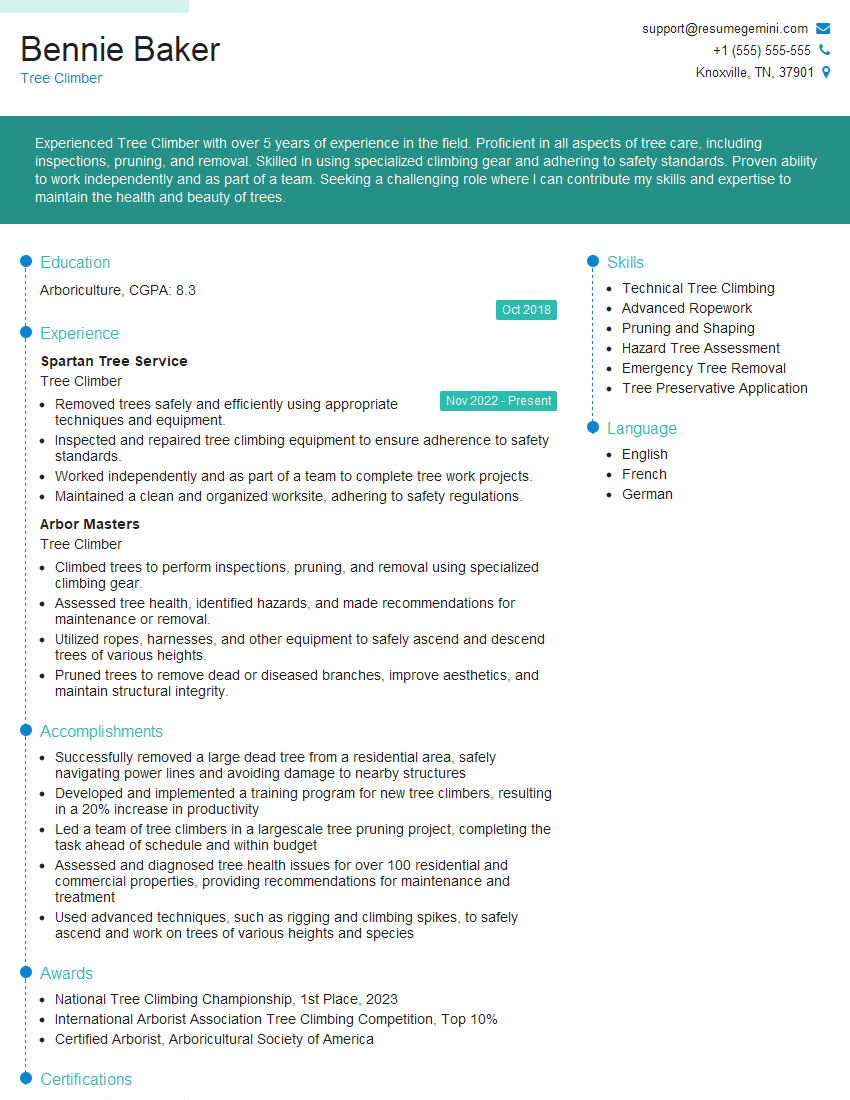
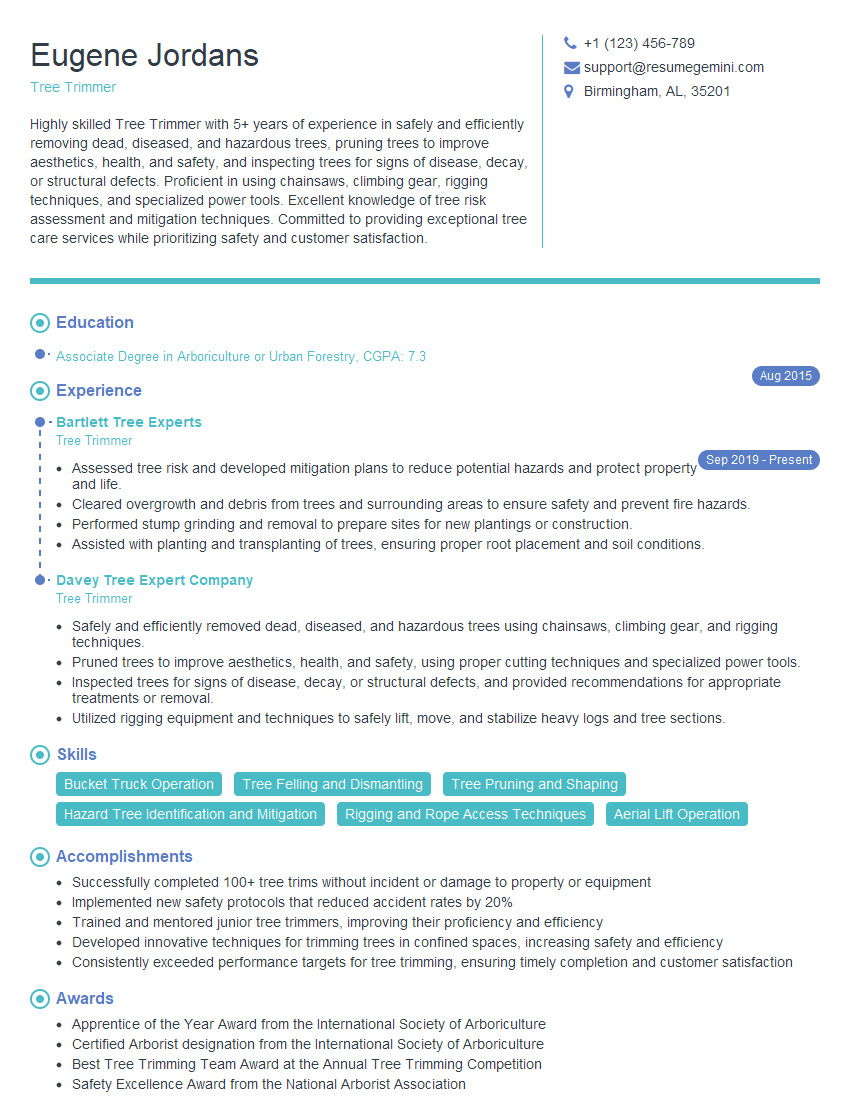
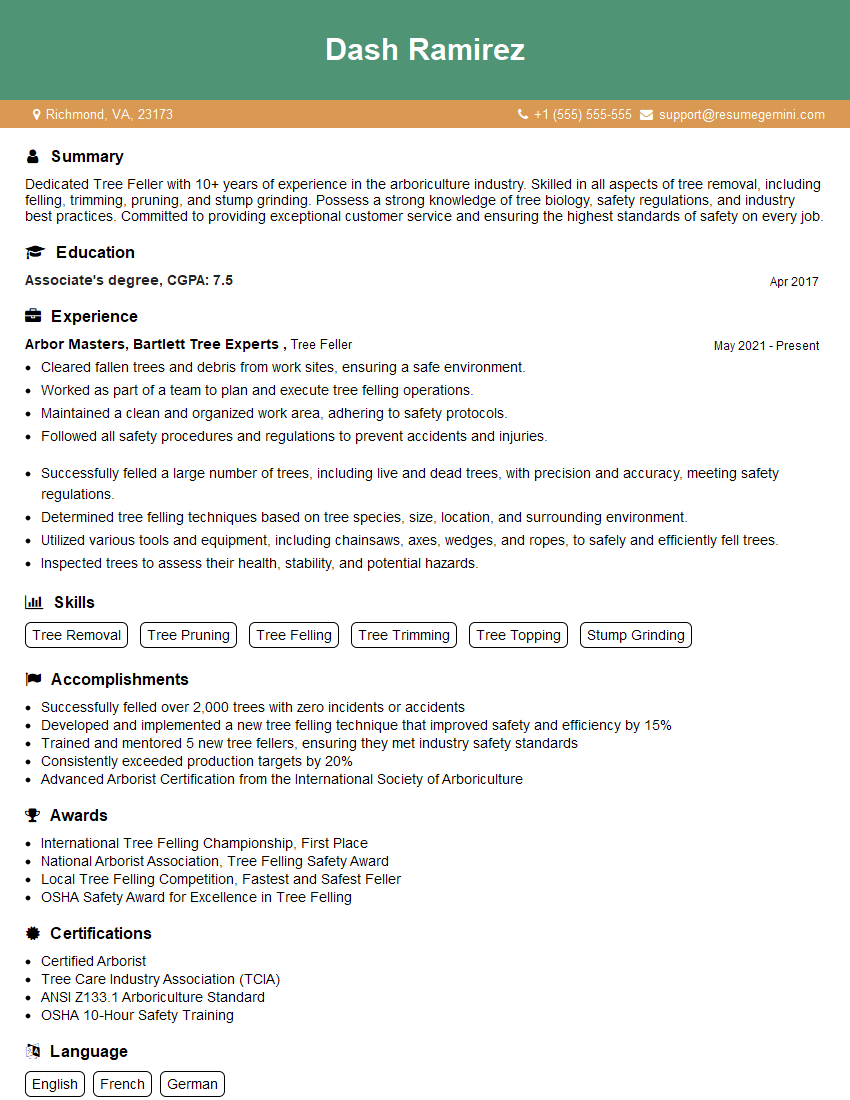
Mastering tree felling and trimming techniques opens doors to rewarding careers with excellent growth potential. To maximize your job prospects, creating a strong, ATS-friendly resume is vital. ResumeGemini is a trusted resource that can help you build a professional and effective resume that showcases your skills and experience. ResumeGemini provides examples of resumes tailored to professionals in tree felling and trimming, offering valuable templates and guidance to help you craft a compelling application.





Explore more articles
Users Rating of Our Blogs
Share Your Experience
We value your feedback! Please rate our content and share your thoughts (optional).
What Readers Say About Our Blog
Very informative content, great job.
good