Preparation is the key to success in any interview. In this post, we’ll explore crucial Familiarity with Statistical Analysis Tools interview questions and equip you with strategies to craft impactful answers. Whether you’re a beginner or a pro, these tips will elevate your preparation.
Questions Asked in Familiarity with Statistical Analysis Tools Interview
Q 1. Explain the difference between correlation and causation.
Correlation measures the strength and direction of a relationship between two variables. Causation, on the other hand, implies that one variable directly influences or causes a change in another. A correlation doesn’t necessarily mean causation. Think of it like this: ice cream sales and crime rates might be positively correlated (both increase during summer), but eating ice cream doesn’t cause crime. The underlying factor, summer heat, influences both.
A strong correlation can be a hint towards a possible causal relationship, but further investigation (like controlled experiments or longitudinal studies) is needed to establish causation. Statistical methods can reveal correlation, but they alone cannot prove causation.
Q 2. What is p-value and how do you interpret it?
The p-value is the probability of obtaining results as extreme as, or more extreme than, the observed results, assuming the null hypothesis is true. The null hypothesis is a statement that there is no effect or relationship between variables. A small p-value (typically below a significance level of 0.05) suggests that the observed results are unlikely to have occurred by chance alone, providing evidence against the null hypothesis. We then reject the null hypothesis and accept the alternative hypothesis.
For example, if we’re testing if a new drug lowers blood pressure and we get a p-value of 0.02, it means there’s only a 2% chance of observing such a significant blood pressure reduction if the drug had no effect. This suggests the drug is likely effective.
However, a large p-value doesn’t necessarily prove the null hypothesis is true; it simply means there isn’t enough evidence to reject it.
Q 3. What are Type I and Type II errors? Explain their implications.
Type I and Type II errors are errors in statistical hypothesis testing. A Type I error (false positive) occurs when we reject the null hypothesis when it’s actually true. Imagine a medical test diagnosing someone with a disease when they are actually healthy. A Type II error (false negative) occurs when we fail to reject the null hypothesis when it’s actually false. This would be like a medical test missing a disease in a person who actually has it.
The implications are significant. A Type I error can lead to unnecessary treatments, interventions, or changes based on a false finding. A Type II error can lead to missed opportunities, delayed treatments, or continued ineffective practices because a real effect wasn’t detected.
The balance between these two types of errors is carefully considered when setting the significance level (alpha) in hypothesis testing. Lowering the alpha reduces the chance of a Type I error but increases the chance of a Type II error.
Q 4. Describe different statistical distributions (Normal, Poisson, Binomial).
Several statistical distributions model different types of data.
- Normal Distribution: A bell-shaped, symmetrical distribution. Many natural phenomena follow a normal distribution (e.g., height, weight). It’s characterized by its mean and standard deviation.
- Poisson Distribution: Models the probability of a given number of events occurring in a fixed interval of time or space if these events occur with a known average rate and independently of the time since the last event. Examples include the number of cars passing a point on a highway in an hour or the number of customers arriving at a store in a day.
- Binomial Distribution: Describes the probability of getting a certain number of successes in a fixed number of independent Bernoulli trials (trials with only two possible outcomes, success or failure). For instance, the probability of getting 3 heads in 5 coin flips follows a binomial distribution.
Understanding the underlying distribution of your data is crucial for choosing the appropriate statistical tests and making valid inferences.
Q 5. Explain hypothesis testing and its steps.
Hypothesis testing is a formal procedure for testing claims about a population based on sample data. It involves formulating a null hypothesis (the status quo assumption) and an alternative hypothesis (the claim being tested), collecting data, and using statistical tests to determine whether there’s enough evidence to reject the null hypothesis in favor of the alternative.
- State the hypotheses: Define the null (H0) and alternative (H1) hypotheses.
- Set the significance level (alpha): Typically 0.05, representing the acceptable probability of making a Type I error.
- Collect data and calculate a test statistic: Apply an appropriate statistical test based on the data and hypotheses.
- Determine the p-value: The probability of observing the results if the null hypothesis were true.
- Make a decision: Reject or fail to reject the null hypothesis based on comparing the p-value to the significance level.
- Interpret the results: Draw conclusions based on the decision.
For example, if testing whether a new fertilizer increases crop yield, H0 might be ‘the fertilizer has no effect,’ and H1 might be ‘the fertilizer increases yield.’ We’d collect yield data, calculate a test statistic (e.g., t-test), find the p-value, and decide whether to reject H0 based on the p-value and alpha.
Q 6. What is regression analysis? Explain linear vs. logistic regression.
Regression analysis is a statistical method used to model the relationship between a dependent variable and one or more independent variables.
- Linear Regression: Models the relationship between a continuous dependent variable and one or more independent variables using a linear equation. It aims to find the best-fitting line that minimizes the difference between the observed and predicted values of the dependent variable. For example, predicting house prices based on size and location.
- Logistic Regression: Models the relationship between a binary (0 or 1) dependent variable and one or more independent variables. It predicts the probability of the dependent variable belonging to a particular category. For example, predicting whether a customer will click on an ad based on their demographics and browsing history.
The choice between linear and logistic regression depends on the nature of the dependent variable. Linear regression is for continuous variables, while logistic regression is for categorical variables.
Q 7. How do you handle missing data in a dataset?
Handling missing data is crucial for accurate analysis. Several strategies exist, each with its strengths and weaknesses:
- Deletion: Remove rows or columns with missing data. This is simple but can lead to significant information loss if many data points are missing. Listwise deletion removes entire rows.
- Imputation: Replace missing values with estimated values. Methods include:
- Mean/Median/Mode Imputation: Replace missing values with the mean, median, or mode of the respective variable. Simple but can distort the distribution.
- Regression Imputation: Predict missing values using a regression model based on other variables.
- Multiple Imputation: Creates multiple plausible imputed datasets and combines the results, accounting for uncertainty in the imputed values.
- Model-based techniques: Some statistical models (like multiple imputation) can handle missing data directly as part of the model fitting process.
The best approach depends on the amount of missing data, the pattern of missingness, and the nature of the data. Multiple imputation is often preferred for its ability to account for uncertainty in the imputed values and is generally more robust.
Q 8. What are outliers and how do you detect and treat them?
Outliers are data points that significantly deviate from the overall pattern in a dataset. They can be caused by errors in data collection, measurement errors, or simply represent genuinely unusual observations. Detecting outliers involves visual inspection (scatter plots, box plots), statistical methods (Z-scores, IQR), and understanding the context of the data. Treatment depends on the cause and the impact. If an outlier is due to an error, it should be corrected or removed. If it’s a genuine observation, consider using robust statistical methods less sensitive to outliers, such as median instead of mean, or transforming the data (e.g., logarithmic transformation). Ignoring outliers can significantly bias results.
Example: Imagine analyzing customer spending. One customer spent $10,000 while others spent between $10 and $100. This $10,000 expenditure might be an outlier, potentially due to a bulk purchase or data entry error. We’d investigate this before proceeding.
Q 9. What are the assumptions of linear regression?
Linear regression assumes a linear relationship between the dependent and independent variables. Crucially, it relies on several key assumptions:
- Linearity: The relationship between variables is linear.
- Independence: Observations are independent of each other.
- Homoscedasticity: The variance of errors is constant across all levels of the independent variable (no fanning out or in of residuals).
- Normality: The errors are normally distributed.
- No multicollinearity: Independent variables are not highly correlated with each other.
Violating these assumptions can lead to biased and inefficient estimates. Diagnostics like residual plots and tests for normality help assess assumption validity.
Q 10. Explain the concept of confidence intervals.
A confidence interval provides a range of values within which a population parameter (like the mean) is likely to fall, with a certain level of confidence. For instance, a 95% confidence interval for the average height of women means that if we repeated the study many times, 95% of the calculated intervals would contain the true population average height. The width of the interval reflects the uncertainty in the estimate; wider intervals indicate more uncertainty. Factors influencing the width include sample size (larger samples yield narrower intervals) and variability in the data (more variability results in wider intervals).
Example: A study finds a 95% confidence interval for average customer satisfaction is 80-85. We are 95% confident that the true population average satisfaction lies within this range.
Q 11. What is A/B testing and how is it used?
A/B testing (also known as split testing) is a randomized experiment used to compare two versions of something (e.g., a website, an email, an advertisement) to see which performs better. Users are randomly assigned to either group A (control) or group B (treatment), and key metrics (e.g., click-through rates, conversion rates) are compared. Statistical tests (like t-tests or chi-squared tests) determine if the difference in performance between A and B is statistically significant, ruling out chance variation. A/B testing is crucial for data-driven decision-making, allowing optimization based on empirical evidence.
Example: A company tests two versions of its website homepage – one with a different call-to-action button. They randomly split traffic and analyze which version leads to more conversions.
Q 12. Describe different methods for data visualization.
Data visualization uses visual representations to communicate insights from data. Methods include:
- Bar charts: Compare categories.
- Line charts: Show trends over time.
- Scatter plots: Explore relationships between two variables.
- Histograms: Display data distribution.
- Box plots: Summarize data distribution, including quartiles and outliers.
- Heatmaps: Visualize data density across two dimensions.
- Geographic maps: Show location-based data.
The choice depends on the data type and the message you want to convey. Effective visualizations are clear, concise, and avoid misleading interpretations.
Q 13. What are the strengths and weaknesses of different statistical tests (e.g., t-test, ANOVA, Chi-squared)?
T-test: Compares means of two groups. Strengths: simple, widely applicable. Weaknesses: assumes normality, only for two groups.
ANOVA (Analysis of Variance): Compares means of three or more groups. Strengths: handles multiple groups. Weaknesses: assumes normality, homogeneity of variance.
Chi-squared test: Analyzes the association between categorical variables. Strengths: versatile, handles categorical data. Weaknesses: sensitive to sample size, assumes expected frequencies are not too small.
The best test depends on the research question and data characteristics. Violating assumptions can lead to inaccurate conclusions.
Q 14. How do you evaluate the performance of a statistical model?
Model evaluation assesses how well a statistical model fits the data and generalizes to new data. Metrics depend on the model type. For regression models, common metrics include:
- R-squared: Proportion of variance explained by the model.
- Adjusted R-squared: Penalizes inclusion of unnecessary variables.
- Root Mean Squared Error (RMSE): Average prediction error.
For classification models:
- Accuracy: Proportion of correctly classified instances.
- Precision: Proportion of true positives among predicted positives.
- Recall (Sensitivity): Proportion of true positives identified by the model.
- F1-score: Harmonic mean of precision and recall.
Cross-validation techniques, such as k-fold cross-validation, help estimate model performance on unseen data, providing a more robust evaluation.
Q 15. Explain the concept of statistical significance.
Statistical significance refers to the likelihood that an observed effect is not due to chance alone. It’s essentially a measure of how confident we are that a relationship between variables isn’t just a random fluctuation. We use statistical tests to determine this likelihood, usually expressed as a p-value. A low p-value (typically below 0.05) indicates that the observed effect is statistically significant, meaning it’s unlikely to have occurred by chance.
Imagine you’re testing a new drug. You give it to one group and a placebo to another. You observe a significant difference in recovery rates. A statistically significant result suggests that this difference is unlikely to be due to random variation and that the drug might actually be effective. However, statistical significance doesn’t necessarily imply practical significance or clinical relevance; a small effect size can still be statistically significant with a large enough sample size.
Career Expert Tips:
- Ace those interviews! Prepare effectively by reviewing the Top 50 Most Common Interview Questions on ResumeGemini.
- Navigate your job search with confidence! Explore a wide range of Career Tips on ResumeGemini. Learn about common challenges and recommendations to overcome them.
- Craft the perfect resume! Master the Art of Resume Writing with ResumeGemini’s guide. Showcase your unique qualifications and achievements effectively.
- Don’t miss out on holiday savings! Build your dream resume with ResumeGemini’s ATS optimized templates.
Q 16. What is the difference between parametric and non-parametric tests?
Parametric and non-parametric tests are two broad categories of statistical tests. The key difference lies in their assumptions about the data. Parametric tests assume that the data is normally distributed and that the data has equal variance. They are generally more powerful, meaning they’re more likely to detect a true effect if one exists, but they can be unreliable if the assumptions are violated. Examples include t-tests, ANOVA, and linear regression.
Non-parametric tests, on the other hand, make fewer assumptions about the data distribution. They can be used when the data is not normally distributed or when the data is ordinal (ranked) rather than interval or ratio. They are less powerful than parametric tests but more robust. Examples include the Mann-Whitney U test, the Wilcoxon signed-rank test, and the Kruskal-Wallis test.
Choosing between parametric and non-parametric tests depends on the characteristics of your data and the research question. If your data meets the assumptions of parametric tests, those are generally preferred. Otherwise, non-parametric tests are a suitable alternative.
Q 17. What is a confounding variable?
A confounding variable is a third variable that influences both the independent and dependent variables, potentially distorting the relationship between them. It’s a hidden factor that can lead to spurious correlations or mask true relationships. Essentially, it makes it difficult to isolate the effect of the independent variable on the dependent variable.
For instance, let’s say you’re studying the relationship between ice cream sales (independent variable) and crime rates (dependent variable). You might find a positive correlation: as ice cream sales increase, so do crime rates. However, a confounding variable could be temperature. Higher temperatures lead to increased ice cream sales and also increased crime rates (perhaps due to more people being outside). The apparent relationship between ice cream sales and crime rates is actually due to the confounding effect of temperature.
Q 18. How do you handle multicollinearity in regression analysis?
Multicollinearity in regression analysis occurs when two or more predictor variables are highly correlated. This makes it difficult to isolate the individual effects of each predictor on the outcome variable, because they are essentially conveying similar information. It can lead to unstable regression coefficients, making it hard to interpret the results accurately.
Several strategies can be employed to address multicollinearity:
- Feature Selection: Remove one or more of the highly correlated predictors. This is often the simplest approach if the predictors are highly redundant.
- Principal Component Analysis (PCA): PCA transforms the original correlated predictors into a set of uncorrelated principal components. These components can then be used as predictors in the regression model.
- Ridge Regression or Lasso Regression: These are regularization techniques that shrink the regression coefficients, reducing the impact of multicollinearity. They are particularly useful when you cannot remove predictors due to potential loss of information.
- Combining Predictors: If the correlated variables represent different aspects of the same underlying concept, it may be appropriate to create a single composite variable representing this concept.
The best approach depends on the specific context and the nature of the multicollinearity. Examining correlation matrices and variance inflation factors (VIFs) can help identify the extent of multicollinearity and inform the choice of method.
Q 19. Explain the difference between descriptive and inferential statistics.
Descriptive statistics summarize and describe the main features of a dataset. They provide a concise overview of the data without making any inferences beyond the data itself. Common descriptive statistics include measures of central tendency (mean, median, mode), measures of dispersion (variance, standard deviation, range), and graphical representations (histograms, box plots).
Inferential statistics, on the other hand, involve drawing conclusions and making inferences about a population based on a sample of data. It goes beyond simply describing the sample; it uses the sample to make generalizations about the larger population from which the sample was drawn. This often involves hypothesis testing, confidence intervals, and regression analysis.
For example, if you collect data on the heights of 100 students (sample), descriptive statistics would tell you the average height, the standard deviation, and so on. Inferential statistics would allow you to estimate the average height of all students in the school (population) based on your sample data.
Q 20. What is the central limit theorem?
The central limit theorem (CLT) is a fundamental concept in statistics. It states that the distribution of the sample means of a large number of independent and identically distributed random variables, regardless of the shape of the original distribution, will approximate a normal distribution as the sample size increases. This is true even if the original population isn’t normally distributed.
The importance of the CLT lies in its implications for statistical inference. Many statistical tests assume that the data follows a normal distribution. Because the CLT ensures that sample means tend towards normality, we can apply these tests even if we don’t know the distribution of the population we are sampling from. This greatly simplifies many statistical procedures.
Imagine you’re repeatedly taking samples of student heights from a population. Even if student heights aren’t perfectly normally distributed, the average heights from these samples will increasingly resemble a normal distribution as you take more samples.
Q 21. What is Bayesian statistics?
Bayesian statistics is an approach to statistical inference that uses Bayes’ theorem to update our beliefs about a hypothesis in light of new evidence. It contrasts with frequentist statistics, which focuses on the frequency of events in repeated trials. In Bayesian statistics, we start with a prior distribution representing our initial beliefs about a parameter. Then, we observe data and use Bayes’ theorem to update our prior belief, resulting in a posterior distribution that reflects our updated belief after seeing the data.
Bayes’ theorem is expressed as: P(A|B) = [P(B|A) * P(A)] / P(B) where:
P(A|B)is the posterior probability of A given BP(B|A)is the likelihood of B given AP(A)is the prior probability of AP(B)is the prior probability of B
Bayesian methods are particularly useful in situations with limited data or when incorporating prior knowledge is important. For instance, in medical diagnosis, Bayesian methods can be used to update the probability of a patient having a disease based on test results and prior knowledge about the prevalence of that disease.
Q 22. Explain different sampling methods.
Sampling methods are crucial for collecting data that accurately represents a larger population. Choosing the right method is vital for drawing valid conclusions. There are several key methods, broadly categorized as probability and non-probability sampling.
- Probability Sampling: Every member of the population has a known, non-zero chance of being selected. This allows for generalizations to the population. Examples include:
- Simple Random Sampling: Each member has an equal chance of selection. Imagine drawing names from a hat.
- Stratified Sampling: The population is divided into subgroups (strata), and random samples are taken from each stratum. This ensures representation from all groups, for example, surveying people from different age groups or income brackets proportionally.
- Cluster Sampling: The population is divided into clusters (e.g., geographical areas), and some clusters are randomly selected for study. This is useful for large, geographically dispersed populations.
- Systematic Sampling: Every kth member is selected from a list. This is efficient but requires a well-ordered list.
- Non-Probability Sampling: The probability of selection for each member is unknown. This limits generalizability but is often used when probability sampling is difficult or impossible. Examples include:
- Convenience Sampling: Selecting readily available participants. For example, surveying students in a university cafeteria.
- Quota Sampling: Similar to stratified sampling but non-random selection within strata. This is often used in market research.
- Snowball Sampling: Participants refer other participants. Useful for studying hard-to-reach populations.
The choice of sampling method depends heavily on the research question, resources, and the nature of the population.
Q 23. How do you choose the appropriate statistical test for a given research question?
Selecting the appropriate statistical test is crucial for accurate analysis. The choice depends on several factors: the type of data (categorical, continuous, etc.), the number of groups being compared, the research question (e.g., comparing means, assessing relationships), and whether assumptions like normality are met.
A helpful framework is to consider these steps:
- Identify the type of data: Is your data nominal (categories, like colors), ordinal (ranked categories, like satisfaction levels), interval (equal intervals between values, like temperature in Celsius), or ratio (true zero point, like height)?
- Define the research question: Are you testing for differences between groups (e.g., is there a difference in average income between men and women)? Are you examining the relationship between variables (e.g., is there a correlation between age and income)?
- Determine the number of variables: Are you examining one variable (e.g., testing the average income), two variables (e.g., correlation between age and income), or more?
- Check assumptions: Many tests assume normality of data or equal variances. Violations might necessitate non-parametric tests.
- Select the appropriate test: Based on the above steps, choose the most suitable test. Examples include:
- t-test: Comparing means of two groups.
- ANOVA: Comparing means of three or more groups.
- Chi-square test: Analyzing frequencies in categorical data.
- Correlation analysis: Assessing the linear relationship between two variables.
- Regression analysis: Modeling the relationship between a dependent variable and one or more independent variables.
Using a flowchart or decision tree can be extremely helpful in navigating this process. Software packages like SPSS or R often provide tools to guide test selection.
Q 24. What experience do you have with statistical software packages (e.g., R, Python, SAS, SPSS)?
I have extensive experience with several statistical software packages, each with its strengths and weaknesses. My proficiency includes:
- R: I’m highly proficient in R, leveraging its powerful statistical capabilities and extensive libraries (like
ggplot2for visualization anddplyrfor data manipulation). I’ve used R for complex statistical modeling, including generalized linear models and survival analysis. For example, I recently used R to build a predictive model for customer churn, employing techniques like logistic regression and random forests. - Python (with Pandas, Scikit-learn, Statsmodels): I frequently use Python for data analysis, relying on Pandas for data manipulation, Scikit-learn for machine learning algorithms, and Statsmodels for statistical modeling. The flexibility and versatility of Python allow me to integrate statistical analysis seamlessly with other data science tasks.
- SPSS: I have experience with SPSS, particularly for its user-friendly interface and its strengths in conducting various statistical tests and generating comprehensive reports. I’ve employed SPSS for analyzing survey data and conducting hypothesis testing in past projects.
My experience spans data cleaning, exploratory data analysis (EDA), statistical modeling, and visualization, ensuring I can efficiently analyze data and effectively communicate findings using the most appropriate tool for the task.
Q 25. Describe a situation where you had to perform statistical analysis to solve a problem.
In a previous role, I was tasked with analyzing customer satisfaction data to identify factors contributing to low ratings. The dataset was large and contained missing values and inconsistencies.
My approach involved:
- Data Cleaning and Preparation: I cleaned the data by handling missing values (using imputation techniques based on the nature of the data), addressing inconsistencies (e.g., correcting typos in categorical variables), and transforming variables as needed.
- Exploratory Data Analysis (EDA): I performed EDA to understand the data’s structure and identify potential relationships. This involved creating descriptive statistics, visualizations (histograms, box plots, scatter plots), and correlation matrices.
- Statistical Modeling: Based on the EDA, I used regression analysis to model the relationship between customer satisfaction (dependent variable) and factors such as product quality, customer service, and pricing (independent variables). This helped identify the key drivers of satisfaction.
- Interpretation and Reporting: I interpreted the model’s coefficients to understand the impact of each factor on customer satisfaction and presented the findings in a clear and concise report, including actionable recommendations for improvement.
This analysis led to targeted improvements in customer service and product quality, ultimately resulting in a significant increase in customer satisfaction scores.
Q 26. Walk me through your process for cleaning and preparing data for analysis.
Data cleaning and preparation is a critical first step in any statistical analysis, ensuring the accuracy and reliability of the results. My process typically involves:
- Data Inspection: I begin by thoroughly inspecting the data using summary statistics, visualizations, and domain knowledge to identify potential issues like missing values, outliers, and inconsistencies.
- Handling Missing Data: Depending on the nature of the data and the extent of missingness, I use appropriate techniques such as imputation (replacing missing values with estimated values) or exclusion of incomplete cases. The choice of method depends on the mechanism of missingness (missing completely at random, missing at random, or missing not at random).
- Outlier Detection and Treatment: I identify outliers using box plots, scatter plots, or statistical methods like the z-score. Outliers may be removed, transformed (e.g., using logarithmic transformations), or retained depending on the context and potential impact on the analysis. Careful consideration is crucial as outliers may represent genuine extreme values or data entry errors.
- Data Transformation: I transform variables as necessary to meet the assumptions of statistical tests. This can include techniques such as standardization (centering and scaling), log transformations, or creating dummy variables for categorical data.
- Data Validation: Before proceeding with the analysis, I validate the cleaned and transformed data to ensure its accuracy and consistency. This might involve double-checking calculations and comparing data with original sources.
Throughout this process, I maintain a detailed record of all cleaning and preparation steps, ensuring reproducibility and transparency.
Q 27. What are some ethical considerations in statistical analysis?
Ethical considerations are paramount in statistical analysis. Maintaining integrity and avoiding bias is crucial for producing credible and trustworthy results. Key ethical considerations include:
- Data Privacy and Confidentiality: Protecting the privacy of individuals whose data is being analyzed is crucial, adhering to relevant regulations (like GDPR or HIPAA). Anonymization or de-identification techniques should be employed where possible.
- Transparency and Reproducibility: The entire analytical process should be transparent and reproducible. This involves documenting all steps, including data cleaning, transformation, and model selection, ensuring others can verify the results.
- Avoiding Bias: Bias can creep into all stages of the analysis, from sampling methods to data interpretation. Researchers should be aware of potential sources of bias and take steps to mitigate them.
- Appropriate Statistical Methods: Selecting appropriate statistical methods and interpreting results correctly is essential to avoid drawing misleading conclusions. Using techniques that are not suitable for the data or research question can lead to unethical interpretations.
- Accurate Reporting: Results should be reported accurately and honestly, avoiding selective reporting or exaggeration of findings. Any limitations of the analysis should be clearly stated.
Adherence to ethical guidelines ensures the integrity of research and fosters public trust in statistical findings.
Q 28. How do you stay updated with the latest advancements in statistical methods?
Staying updated in the rapidly evolving field of statistics requires a multi-faceted approach:
- Professional Journals and Publications: I regularly read journals like the Journal of the American Statistical Association and Biometrika to keep abreast of new methods and advancements.
- Conferences and Workshops: Attending statistical conferences and workshops provides opportunities to learn from leading experts and network with peers. I actively participate in relevant conferences and workshops to broaden my knowledge and explore new ideas.
- Online Courses and Resources: Online platforms like Coursera, edX, and DataCamp offer excellent courses on various statistical methods and software packages. These resources allow me to delve deeper into specific areas of interest and enhance my skills.
- Professional Organizations: Membership in professional organizations, such as the American Statistical Association, provides access to resources, publications, and networking opportunities that foster continued learning.
- Open-Source Software Communities: Actively participating in open-source software communities (e.g., the R community) allows me to learn from others, share knowledge, and stay updated on the latest software developments and packages.
This combination of formal and informal learning ensures I stay at the forefront of statistical methods and techniques.
Key Topics to Learn for Familiarity with Statistical Analysis Tools Interview
- Descriptive Statistics: Understanding measures of central tendency (mean, median, mode), dispersion (variance, standard deviation), and their interpretation in different contexts. Practical application: Summarizing large datasets to identify key trends and patterns.
- Inferential Statistics: Grasping concepts like hypothesis testing, confidence intervals, and p-values. Practical application: Drawing conclusions about a population based on sample data, assessing the significance of research findings.
- Regression Analysis: Familiarizing yourself with linear and multiple regression models, understanding assumptions, and interpreting regression coefficients. Practical application: Predicting outcomes based on predictor variables, understanding relationships between variables.
- Data Visualization: Mastering the creation and interpretation of various charts and graphs (histograms, scatter plots, box plots) to effectively communicate statistical findings. Practical application: Presenting data clearly and concisely to both technical and non-technical audiences.
- Statistical Software Proficiency: Demonstrating hands-on experience with at least one statistical software package (e.g., R, Python with relevant libraries like Pandas and Scikit-learn, SPSS, SAS). Practical application: Showcasing your ability to clean, analyze, and visualize data using chosen tools.
- Data Cleaning and Preprocessing: Understanding techniques for handling missing data, outliers, and transforming variables to meet the assumptions of statistical tests. Practical application: Ensuring the accuracy and reliability of your analyses.
- Common Statistical Distributions: Familiarity with normal, binomial, and Poisson distributions and their applications. Practical application: Choosing appropriate statistical tests based on the nature of the data.
Next Steps
Mastering statistical analysis tools is crucial for career advancement in many fields, opening doors to more challenging and rewarding roles. A well-crafted resume is your key to unlocking these opportunities. Creating an ATS-friendly resume significantly improves your chances of getting noticed by recruiters. ResumeGemini is a trusted resource that can help you build a professional and impactful resume tailored to your skills and experience. Examples of resumes tailored to demonstrate familiarity with statistical analysis tools are available to guide you. Invest the time to build a strong resume – it’s an investment in your future.
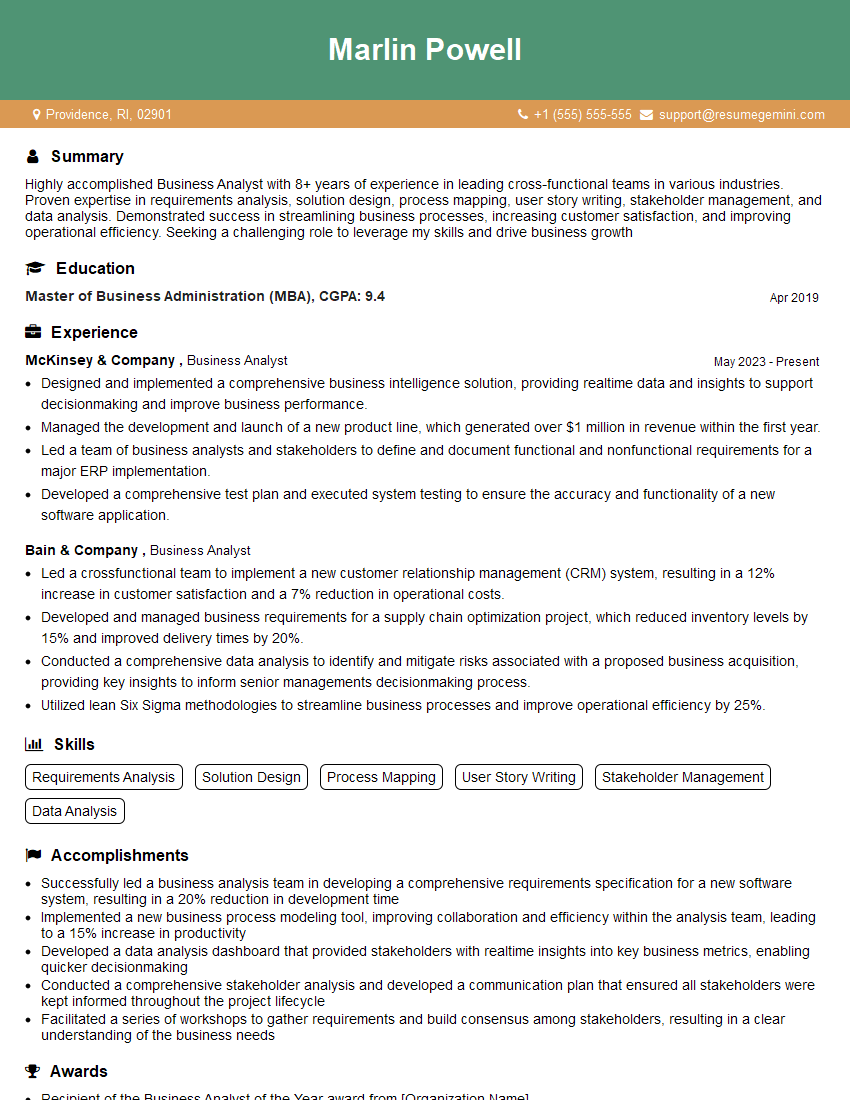
Business Analyst Resume Sample
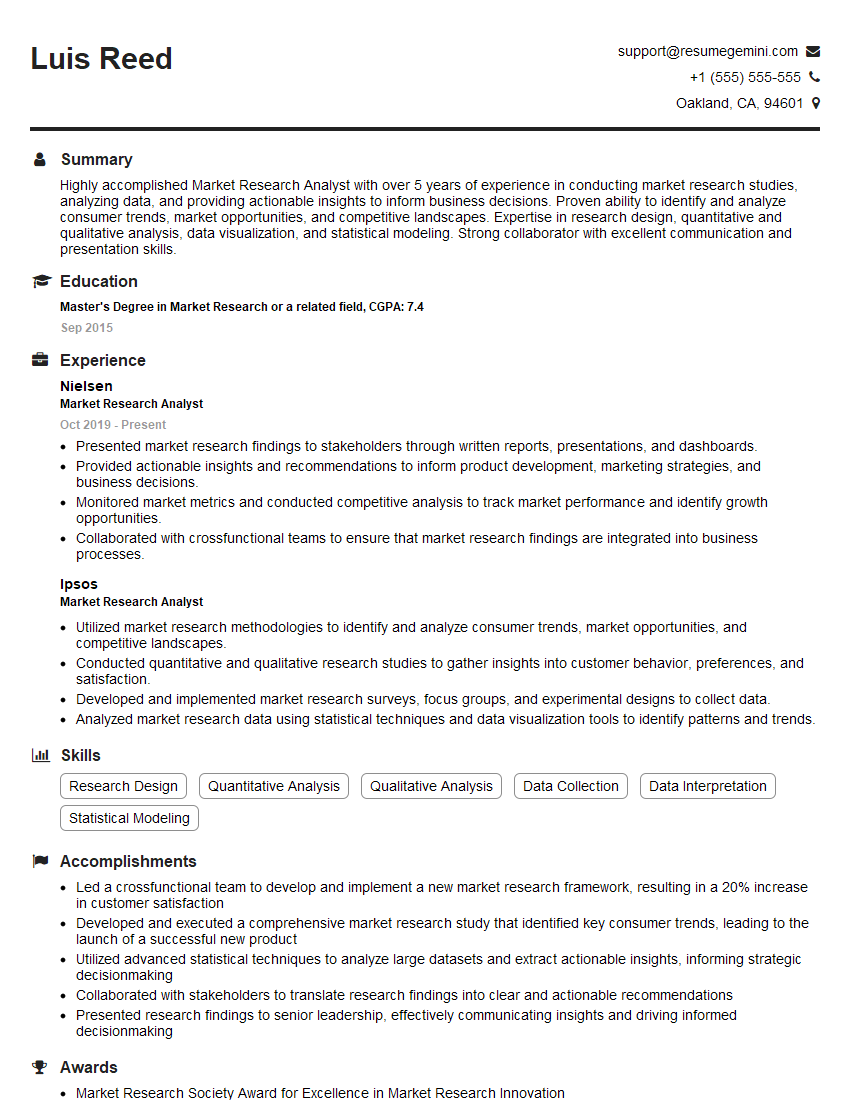
Market Research Analyst Resume Sample

Financial Analyst Resume Sample

Risk Analyst Resume Sample
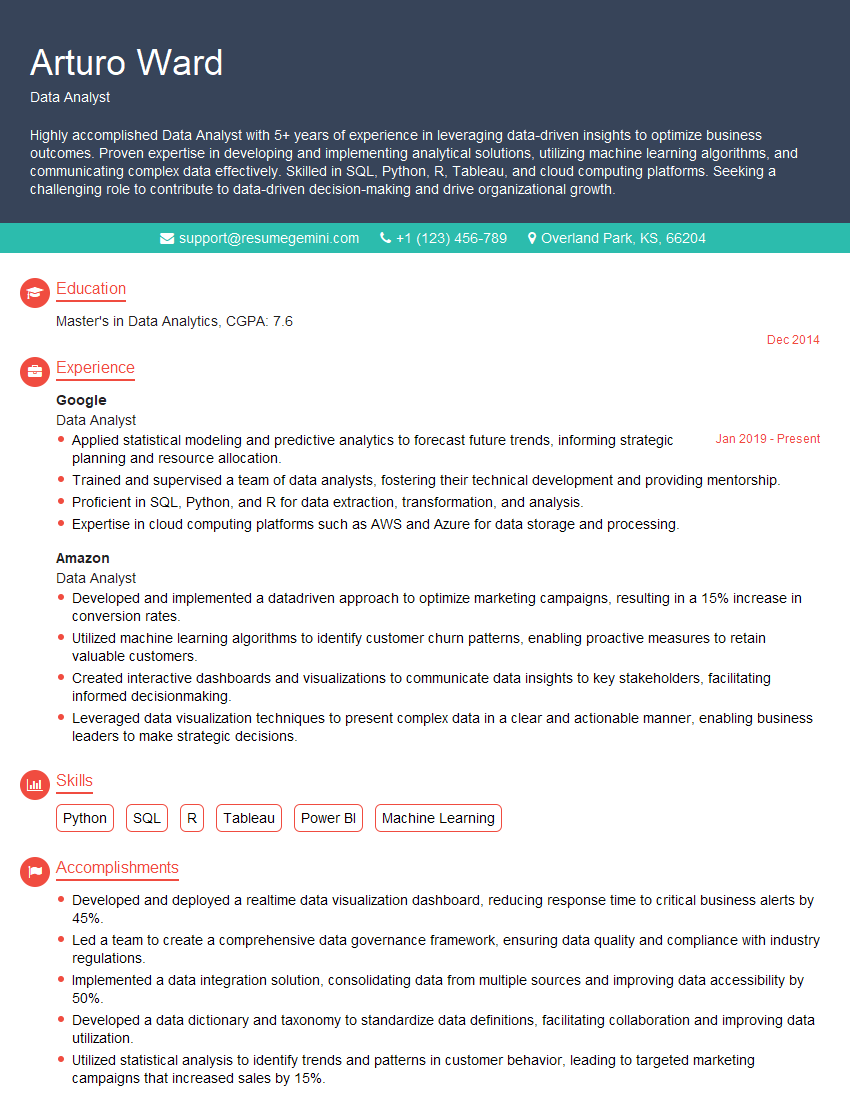
Data Analyst Resume Sample
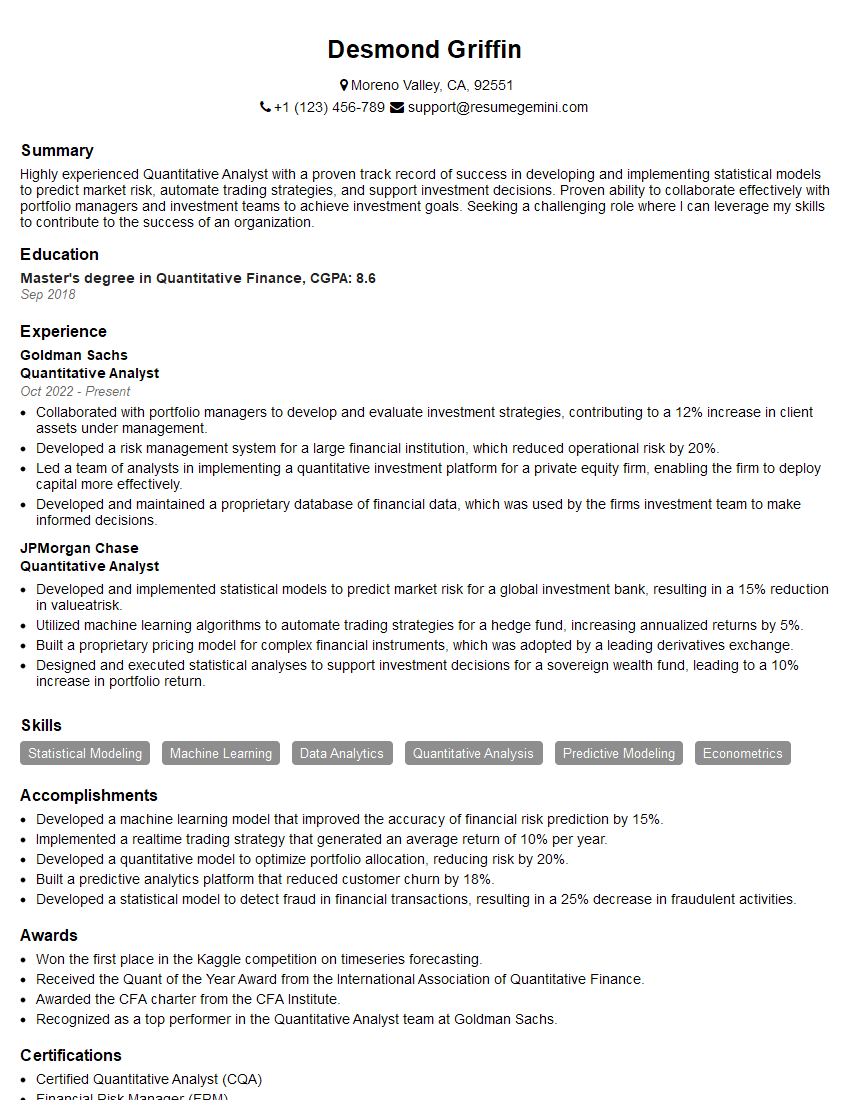
Quantitative Analyst Resume Sample
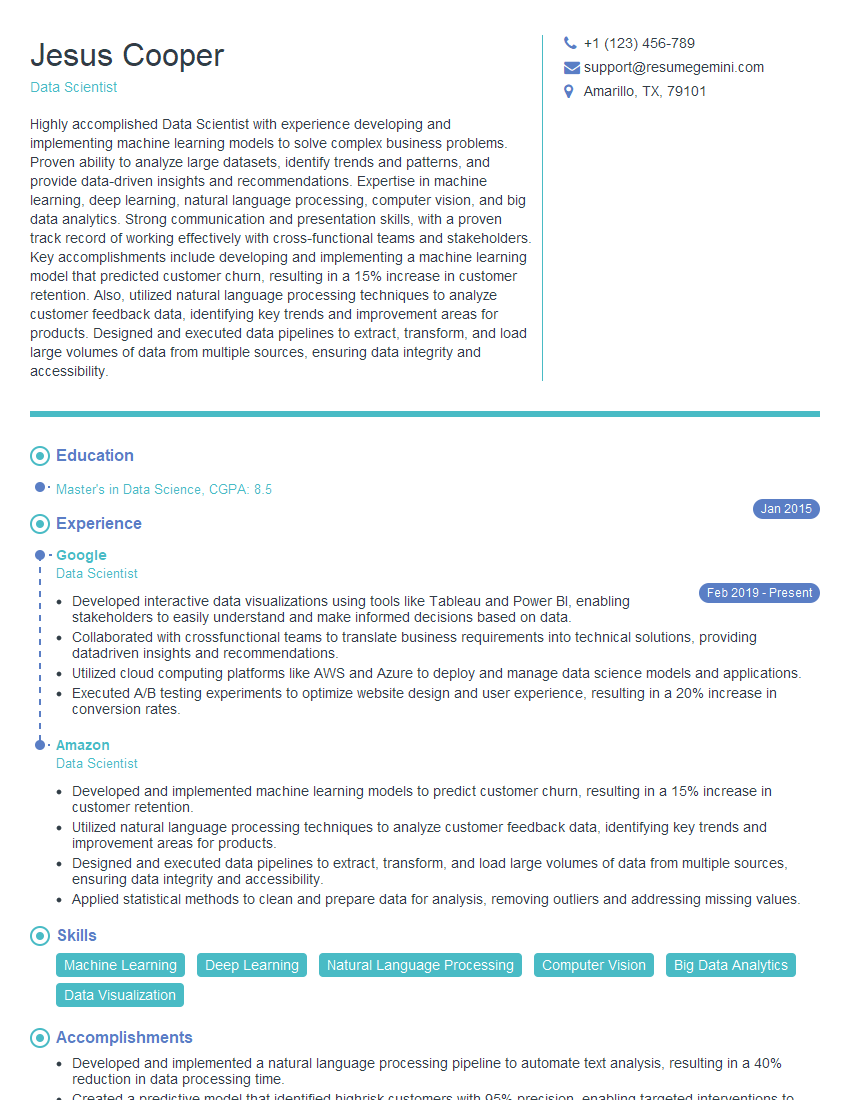
Data Scientist Resume Sample

Research Scientist Resume Sample
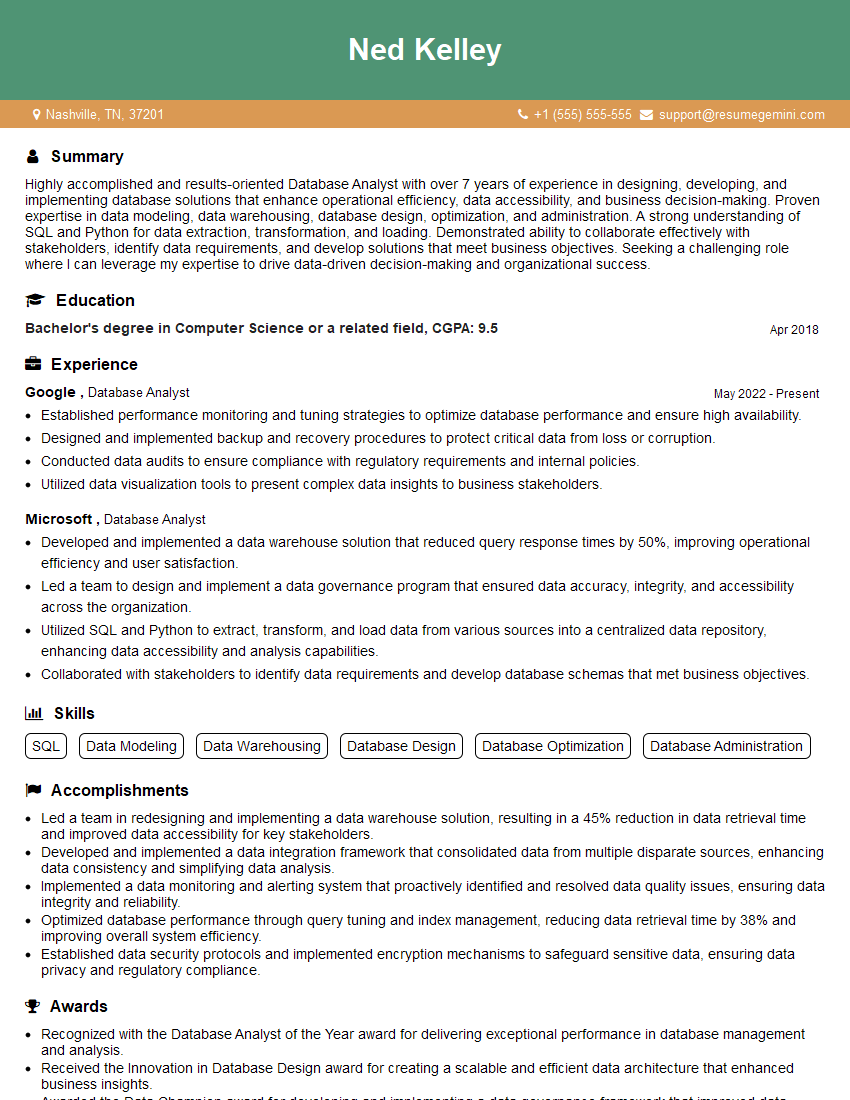
Database Analyst Resume Sample

Actuary Resume Sample

Operations Research Analyst Resume Sample
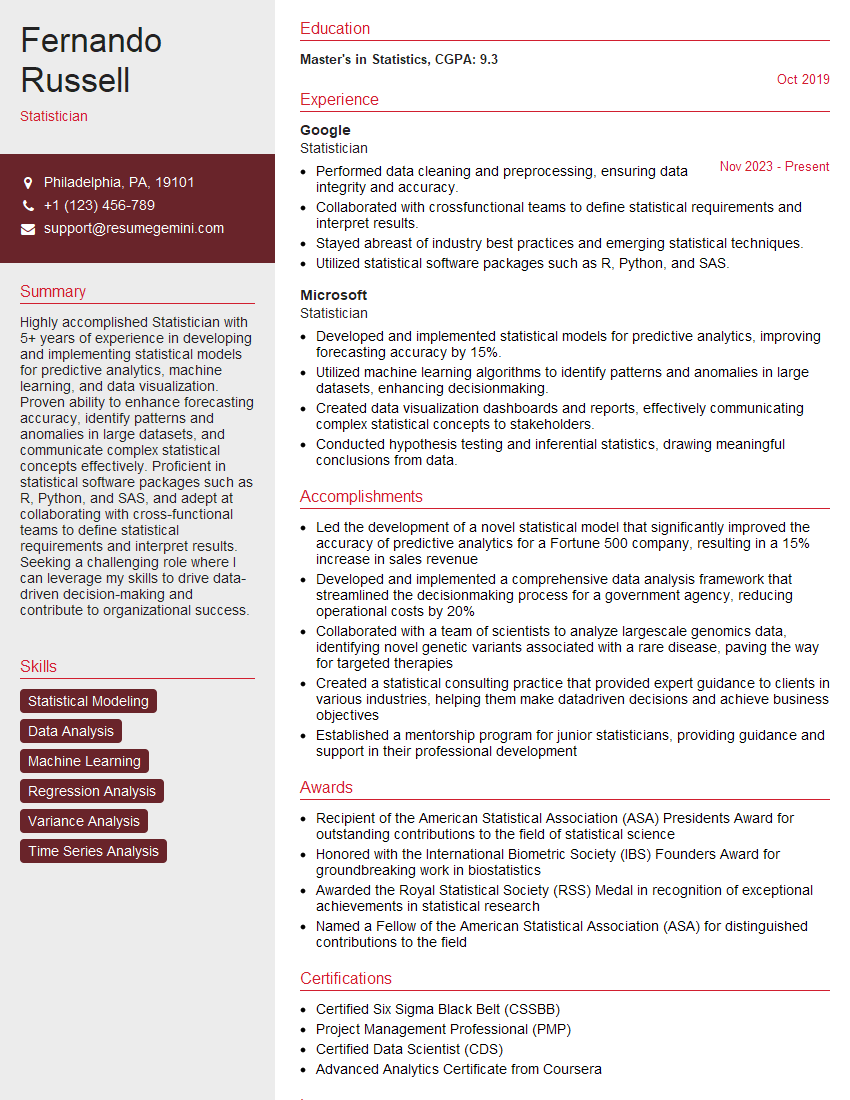
Statistician Resume Sample
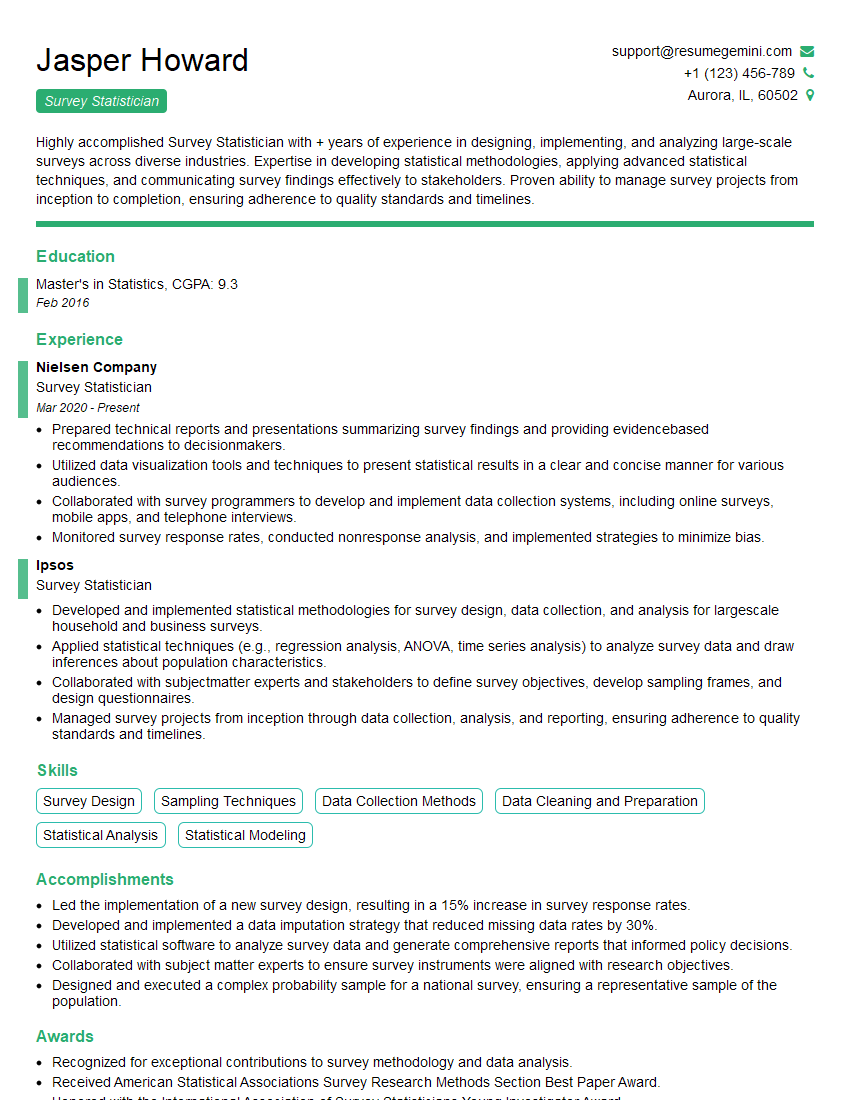
Survey Statistician Resume Sample
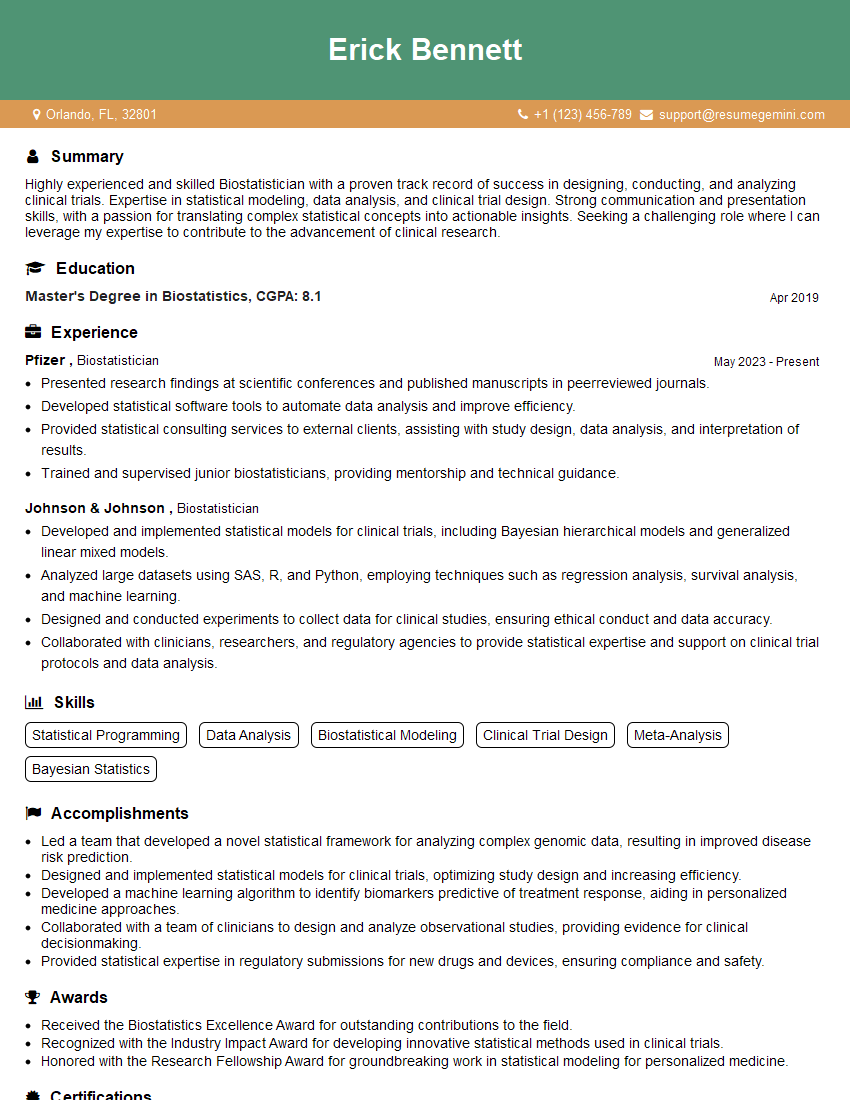
Biostatistician Resume Sample

Clinical Data Analyst Resume Sample
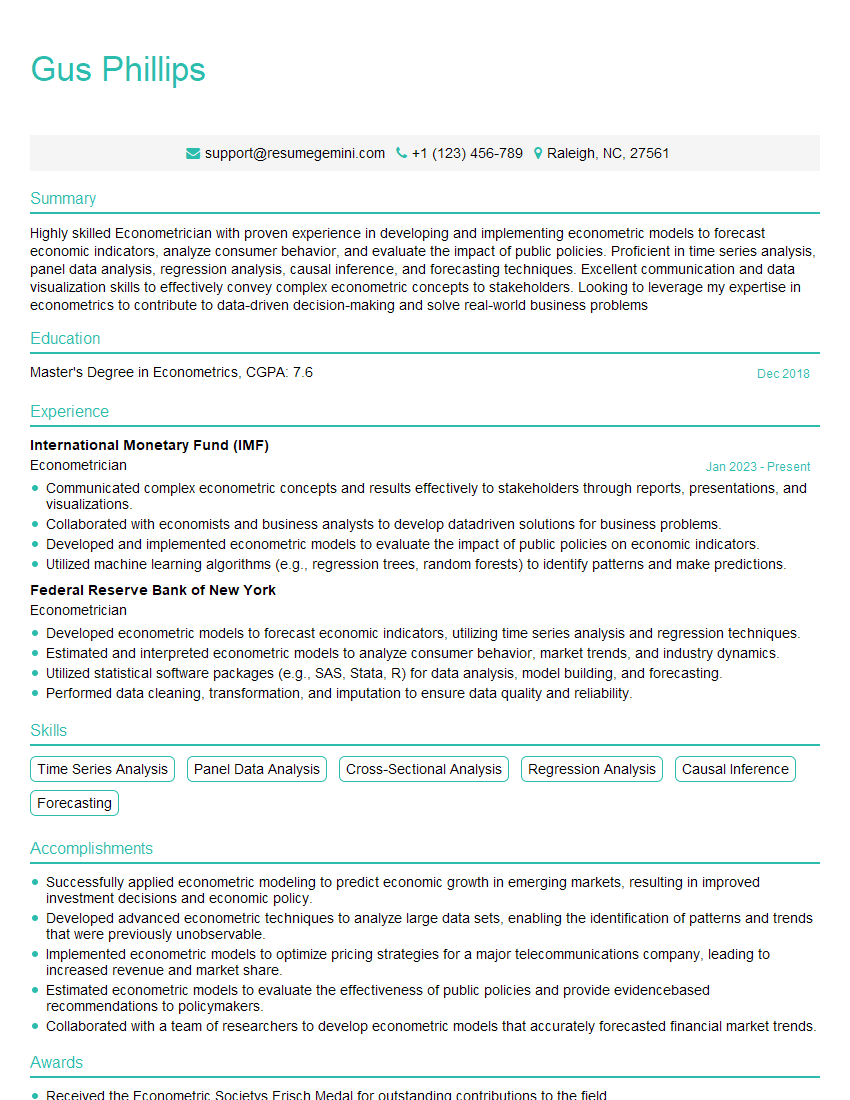
Econometrician Resume Sample

Survey Researcher Resume Sample
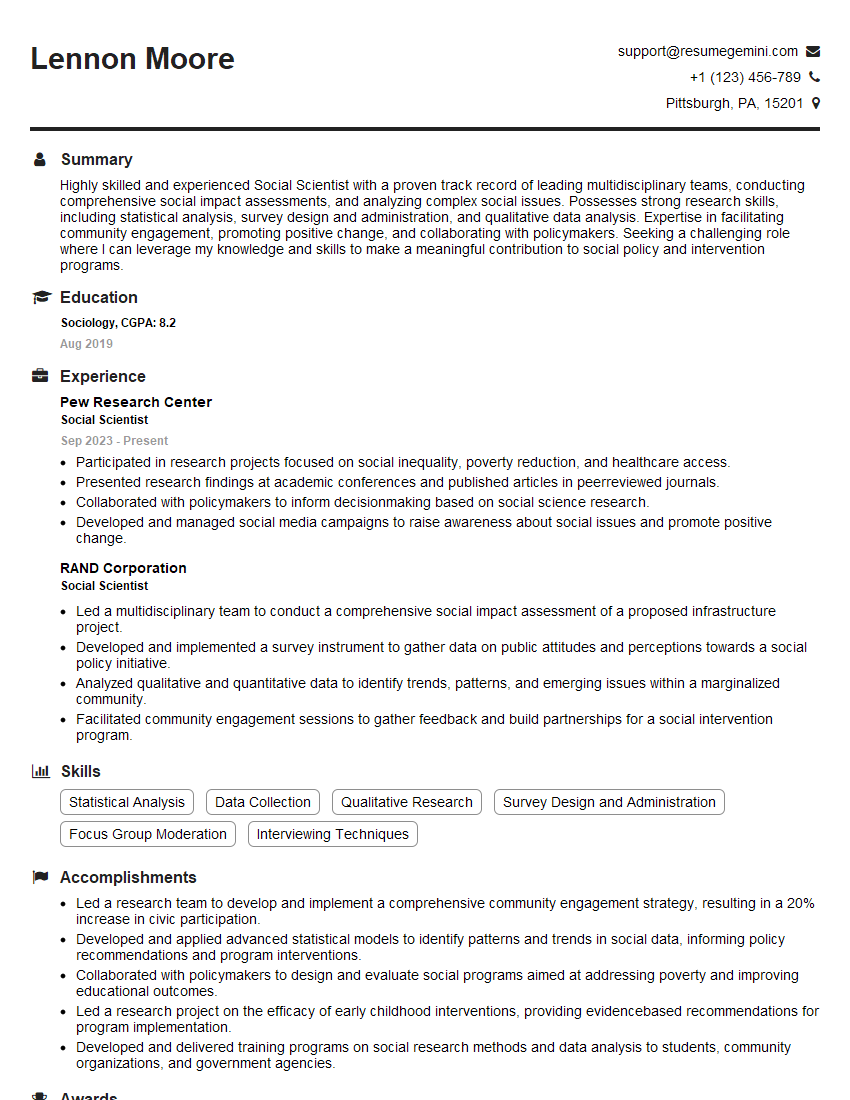
Social Scientist Resume Sample
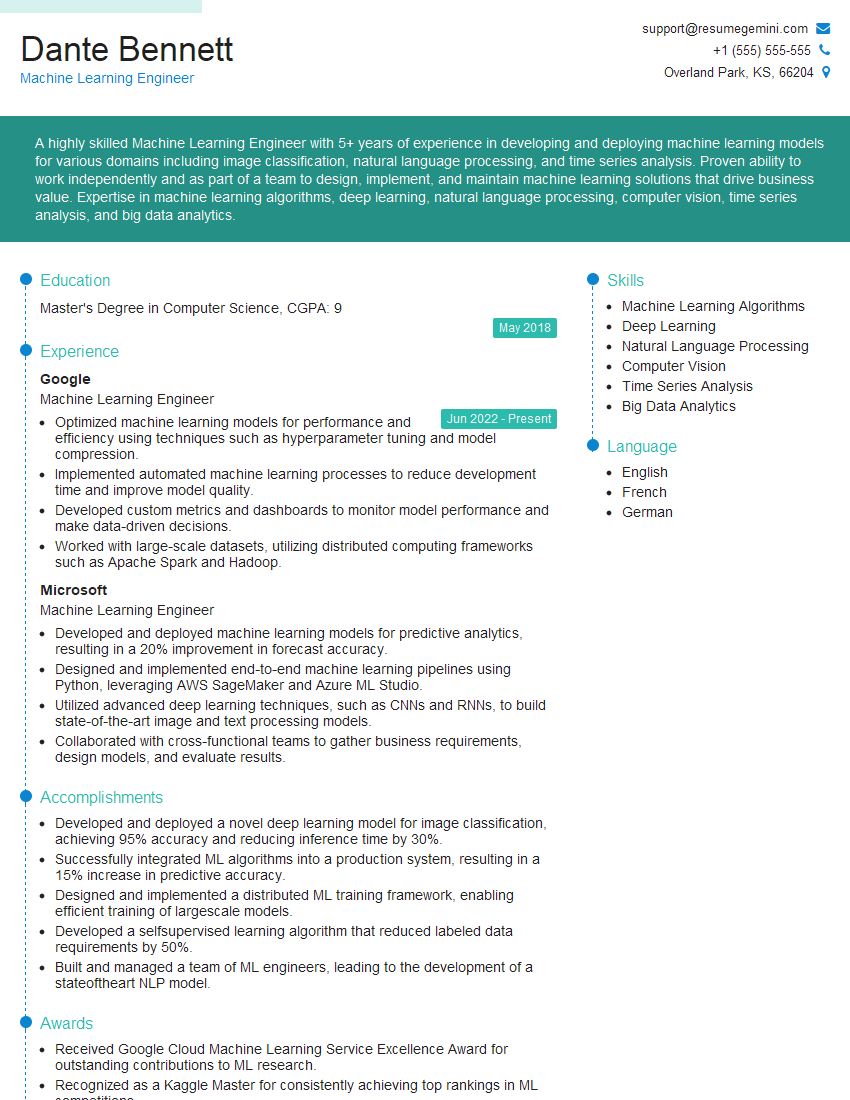
Machine Learning Engineer Resume Sample
- Business Analyst
- Market Research Analyst
- Financial Analyst
- Risk Analyst
- Data Analyst
- Quantitative Analyst
- Data Scientist
- Research Scientist
- Database Analyst
- Actuary
- Operations Research Analyst
- Statistician
- Survey Statistician
- Biostatistician
- Clinical Data Analyst
- Econometrician
- Survey Researcher
- Social Scientist
- Machine Learning Engineer
Explore more articles
Users Rating of Our Blogs
Share Your Experience
We value your feedback! Please rate our content and share your thoughts (optional).
What Readers Say About Our Blog
Very informative content, great job.
good