The right preparation can turn an interview into an opportunity to showcase your expertise. This guide to Farm Equipment and Technology Knowledge interview questions is your ultimate resource, providing key insights and tips to help you ace your responses and stand out as a top candidate.
Questions Asked in Farm Equipment and Technology Knowledge Interview
Q 1. Explain the principles of GPS-guided equipment operation.
GPS-guided equipment operation relies on the precise location data provided by a Global Positioning System to control farm machinery. Imagine a farmer wanting to plant seeds in perfectly straight lines – without GPS, this is difficult and time-consuming. With GPS, the system uses the coordinates from the GPS receiver to guide the tractor, planter, or sprayer along a pre-programmed path. This path is often created using farm management software and can be adjusted for field boundaries and obstacles.
The principle involves several components: a GPS receiver on the machine, a guidance controller, and actuators (hydraulic or electric systems) that respond to the guidance controller’s commands. The GPS receiver constantly updates its position, comparing it to the desired path. Any deviation triggers the controller to adjust the steering or other machinery functions to correct the course. This ensures accurate application of inputs, minimizing overlaps and gaps, resulting in improved efficiency and reduced input costs.
For example, in precision planting, GPS ensures seeds are placed at optimal spacing and depth, contributing to uniform crop growth and higher yields. In spraying, it prevents overlapping applications, saving pesticide and minimizing environmental impact.
Q 2. Describe your experience with variable rate technology (VRT).
My experience with Variable Rate Technology (VRT) spans several years, involving its implementation across various crops and soil types. VRT allows for the application of inputs—such as seeds, fertilizers, pesticides, and water—at variable rates based on the specific needs of the field. Instead of applying a uniform rate across the entire field, VRT uses data from sensors and mapping to tailor application rates to each zone or section. Think of it like giving each plant exactly what it needs, rather than a blanket approach.
I’ve worked extensively with VRT systems integrated with yield monitors and soil sensors to create precise application maps. For instance, a field might have variations in soil nutrient levels or existing weed pressures. By collecting data and generating zone maps, we can apply higher rates of fertilizer in areas with nutrient deficiencies and targeted herbicide treatments in high weed-pressure areas. This approach minimizes waste and optimizes input use for both economic and environmental benefits.
One particular project involved using VRT to optimize nitrogen application in corn production. By incorporating data from soil sensors and NDVI (Normalized Difference Vegetation Index) imagery, we reduced nitrogen use by 15% without compromising yield, resulting in significant cost savings and a smaller environmental footprint.
Q 3. What are the benefits and challenges of using farm management software?
Farm management software offers numerous benefits, revolutionizing how farming operations are managed. It consolidates data from various sources, including GPS systems, yield monitors, and weather stations, into a single platform. This allows for better decision-making and improved efficiency across all farm activities.
- Benefits: Improved record-keeping, enhanced data analysis for better decision making, streamlined operations, better inventory management, improved financial tracking and reporting, and increased efficiency in resource allocation.
- Challenges: The initial investment cost can be substantial, requiring significant upfront expenditure on software and hardware. It also requires a learning curve; farmers need training and support to use the software effectively. Data security and privacy are also critical considerations, as the software handles sensitive farm data. Integration with existing equipment and systems can be complex, requiring careful planning.
For example, farm management software can help farmers optimize planting schedules based on weather forecasts and soil conditions, enabling them to make more informed decisions to maximize yields and minimize risks.
Q 4. How do you troubleshoot common issues with agricultural machinery?
Troubleshooting agricultural machinery requires a systematic approach, beginning with a thorough understanding of the machine’s operation and potential points of failure. It often involves a combination of observation, diagnostic tools, and practical experience.
My troubleshooting process usually follows these steps:
- Identify the problem: What exactly is malfunctioning? Is it a complete shutdown, reduced performance, or unusual noises?
- Gather information: When did the problem start? Were there any preceding events (e.g., impact, unusual weather conditions)? Have any recent maintenance or repairs been performed?
- Visual inspection: Carefully examine the machine for obvious issues, such as loose connections, leaks, or damaged parts.
- Diagnostic tools: Utilize onboard diagnostics (if available), or specialized diagnostic equipment to identify fault codes and specific issues.
- Systematic checking: Isolate the problem by checking individual components, starting with the most likely causes. For example, if a planter isn’t dropping seeds, I’d first check the seed supply, then the metering mechanism, then the seed delivery system.
- Repair or replacement: Once the problem is identified, the necessary repairs or part replacements are carried out.
- Testing and verification: After repair, the machine is tested thoroughly to ensure the problem has been resolved.
For example, if a tractor engine is overheating, I might first check the coolant level, then the radiator for blockages, and finally the thermostat and water pump. This systematic approach avoids unnecessary repairs and ensures efficient problem solving.
Q 5. Explain your understanding of precision agriculture and its applications.
Precision agriculture involves using technology to optimize farm management practices for greater efficiency, productivity, and sustainability. It’s about moving beyond blanket applications of inputs and instead tailoring them to the specific needs of individual areas within a field. Think of it as providing tailored care to each plant, rather than a ‘one-size-fits-all’ approach.
Precision agriculture utilizes various technologies, including GPS, sensors, remote sensing, and data analysis tools. Some key applications include:
- Variable Rate Technology (VRT): Applying inputs at varying rates based on site-specific conditions.
- GPS guidance: Ensuring accurate and efficient machinery operation.
- Yield monitoring: Assessing the productivity of different areas to inform future management decisions.
- Remote sensing: Using aerial imagery and satellite data to monitor crop health and identify areas needing attention.
- Soil sensing: Determining soil properties to guide fertilizer application.
Precision agriculture allows for optimized resource use, reducing waste and improving profitability. It also contributes to environmental sustainability by minimizing the use of inputs such as fertilizers and pesticides, ultimately leading to healthier ecosystems.
Q 6. Describe your experience with yield monitoring systems.
My experience with yield monitoring systems involves their installation, calibration, and data analysis to optimize farming practices. These systems measure crop yields in real-time as the harvester operates, providing a detailed map of yields across the field. This information is invaluable for making data-driven decisions.
Typically, yield monitors use sensors to measure the volume and weight of harvested grain. This data, along with GPS coordinates, is used to create yield maps that show variations in crop performance across the field. These maps are subsequently analyzed to understand factors influencing yield variations such as soil fertility, pest pressure, or water availability.
In one instance, we used yield monitoring data to identify areas within a field consistently producing low yields. This led us to perform soil tests and discover nutrient deficiencies in the underperforming areas. By targeting these zones with tailored fertilizer applications in the following season, we achieved a substantial increase in yield in those specific areas.
Q 7. What are the different types of sensors used in precision farming?
A variety of sensors are employed in precision farming, each providing specific data to inform management decisions. These sensors can be broadly categorized as:
- Soil Sensors: These measure various soil properties like moisture content, temperature, nutrient levels (e.g., nitrogen, phosphorus, potassium), salinity, and pH. Examples include probes that measure soil moisture directly and sensors that analyze nutrient levels using spectral analysis.
- Plant Sensors: These sensors assess the health and vigor of plants. This can include chlorophyll meters that estimate plant chlorophyll content, indicating photosynthetic activity, and sensors measuring plant height and biomass.
- Environmental Sensors: These monitor environmental factors influencing crop growth, such as temperature, humidity, rainfall, solar radiation, and wind speed. Weather stations equipped with these sensors provide critical data for irrigation scheduling and pest management.
- Remote Sensing Technologies: These technologies gather data from a distance, using tools like multispectral or hyperspectral cameras mounted on drones or satellites to capture imagery and derive information about plant health, stress, and other key parameters.
The data collected from these sensors is then integrated with GPS data and analyzed using farm management software to guide precision farming practices.
Q 8. How does remote sensing contribute to efficient farm management?
Remote sensing, using technologies like satellites and drones, revolutionizes farm management by providing a bird’s-eye view of the entire field. Instead of relying on ground-level observations alone, farmers gain access to crucial data about crop health, soil conditions, and even water stress.
For example, multispectral imagery from satellites can detect variations in plant chlorophyll levels, indicating areas experiencing nutrient deficiencies or disease. This allows for precise application of fertilizers or pesticides, minimizing waste and maximizing yields. Similarly, thermal imaging can identify areas with uneven irrigation, enabling targeted adjustments to improve water use efficiency. Think of it like having a detailed health report for your entire farm, allowing proactive intervention instead of reactive problem-solving.
In a practical application, a farmer might use remote sensing data to identify a small patch of diseased crops within a large field. This allows them to treat only the affected area, preventing the disease from spreading and reducing the amount of pesticide needed. This leads to cost savings and reduced environmental impact.
Q 9. Discuss the role of IoT in modern agriculture.
The Internet of Things (IoT) is transforming agriculture by connecting various farm equipment and sensors to a network, enabling real-time data collection and analysis. Imagine a smart farm where sensors monitor soil moisture, temperature, and light levels, automatically adjusting irrigation and fertilization based on real-time needs.
IoT devices like smart sensors, weather stations, and GPS trackers continuously collect data, which is transmitted to a central system for analysis. This allows farmers to monitor their crops remotely, receive alerts about potential problems, and make data-driven decisions to optimize yields and reduce costs. For example, a smart irrigation system can automatically adjust watering schedules based on soil moisture levels, preventing overwatering and saving water.
Furthermore, IoT enables predictive maintenance by monitoring the status of machinery. Sensors in tractors can detect anomalies in engine performance or other critical systems, alerting farmers to potential failures before they occur. This proactive approach significantly reduces downtime and maintenance costs.
Q 10. Explain the advantages of using agricultural drones.
Agricultural drones offer a unique perspective for farm management, providing high-resolution imagery and data that are impossible to collect efficiently using traditional methods. Their advantages are numerous and impactful.
- Precise Crop Monitoring: Drones equipped with multispectral or hyperspectral cameras can identify stress in crops early on, allowing for timely interventions.
- Efficient Spraying: Drones can precisely apply pesticides and fertilizers, reducing waste and minimizing environmental impact. This targeted approach can save farmers significant money on inputs and also limit the use of harmful chemicals.
- Improved Surveying and Mapping: Drones create accurate maps of fields, including topography and variations in crop health, making precision farming easier.
- Faster Data Acquisition: Covering large fields is significantly faster with drones than manual ground surveys.
For instance, imagine a large vineyard. Using a drone with a multispectral camera, a farmer can easily detect early signs of disease affecting a specific vine or a section of the vineyard. This early detection enables targeted treatment, saving the entire crop from widespread damage.
Q 11. How do you ensure the accuracy of GPS-based data in farming operations?
Ensuring the accuracy of GPS-based data in farming is critical for precision agriculture. Several factors contribute to achieving this accuracy:
- High-Precision GPS Receivers: Using receivers with technologies like RTK (Real-Time Kinematic) or PPK (Post-Processed Kinematic) significantly improves accuracy to within centimeters. RTK uses real-time corrections from a base station, while PPK involves post-processing data to correct for errors.
- Regular Calibration: GPS receivers need regular calibration to maintain accuracy. This involves checking the receiver’s signal quality and adjusting settings as needed.
- Base Station Network: For RTK, a reliable network of base stations is crucial for accurate correction signals. The quality of the base station network influences the overall accuracy of the GPS data.
- Environmental Factors: Obstacles like trees and buildings can interfere with GPS signals, reducing accuracy. Understanding and mitigating the effects of these environmental factors is essential.
- Data Processing and Analysis: Accurate data processing techniques are necessary to minimize errors and interpret the data correctly. This often involves using specialized software to process and analyze GPS data.
Imagine using GPS for variable-rate fertilization. Inaccurate GPS data can lead to fertilizer being applied unevenly, resulting in reduced yields and wasted fertilizer. By utilizing high-precision GPS and careful calibration, farmers can ensure accurate application, maximizing yield and reducing costs.
Q 12. Describe your experience with data analysis in an agricultural context.
My experience with agricultural data analysis spans several projects involving yield optimization and resource management. In one project, we used sensor data from a large-scale corn farm to identify patterns in soil moisture and nutrient levels that correlated with yield variations across the field. Using statistical modeling and machine learning techniques, we developed a predictive model that helped the farmer optimize irrigation and fertilization strategies.
We utilized Python and R programming languages and libraries like Pandas, Scikit-learn, and ggplot2 for data manipulation, statistical analysis, and visualization. We explored various regression models to predict yield based on input variables like soil moisture, nitrogen levels, and rainfall. The results helped the farmer make data-driven decisions about resource allocation, leading to a significant increase in yield and a reduction in input costs. The key was identifying and interpreting subtle patterns in the data to uncover actionable insights.
In another project, we analyzed satellite imagery to assess crop health across different fields. We used image processing techniques to extract vegetation indices, which provided valuable insights into crop stress and disease. This allowed for early detection and targeted intervention, preventing further crop damage and reducing losses.
Q 13. What are the key components of a farm automation system?
A comprehensive farm automation system consists of several interconnected components:
- Sensors and Actuators: These are the eyes and hands of the system. Sensors collect data (soil moisture, temperature, etc.), while actuators (valves, pumps, etc.) respond to commands and carry out actions based on the data.
- Data Acquisition and Transmission: This involves hardware and software that collects data from sensors and transmits it to a central control system via wireless or wired networks.
- Central Control System: This is the brain of the automation system, processing data from sensors and making decisions based on pre-programmed rules or machine learning algorithms. This can be a cloud-based system or an on-farm computer.
- Automation Software: This software manages the entire system, controlling actuators based on sensor data and providing insights through dashboards and reports.
- Power Supply: A reliable power supply is crucial for the smooth functioning of the entire system. This might include solar panels, backup generators, or grid power.
- GPS and Field Mapping: Precise location data is essential for many automated processes. GPS and GIS systems help create field maps and guide automated equipment.
Imagine a fully automated irrigation system. Soil moisture sensors monitor water levels, the central control system analyzes the data, and automatically adjusts the irrigation system, ensuring optimal watering without human intervention. This reduces labor costs and improves water-use efficiency.
Q 14. How do you maintain and repair farm equipment effectively?
Effective maintenance and repair of farm equipment are crucial for maximizing uptime and minimizing costs. A proactive approach is key.
- Regular Inspections: Regular visual inspections are essential. Check for wear and tear, loose bolts, leaks, and other potential problems.
- Preventative Maintenance Schedule: Follow the manufacturer’s recommended maintenance schedule, including oil changes, filter replacements, and lubrication. This proactive approach prevents more significant problems later.
- Proper Storage: Storing equipment in a clean, dry environment protects it from damage and corrosion.
- Operator Training: Properly trained operators are less likely to misuse equipment, reducing the risk of damage.
- Record Keeping: Maintain accurate records of all maintenance and repairs. This helps track equipment performance and identify potential problems early.
- Professional Repairs: For complex repairs, consult with qualified mechanics and technicians. Improper repairs can lead to safety hazards and further damage.
For example, regularly changing the oil and filters in a tractor prevents engine damage and extends its lifespan. Investing time in preventative maintenance saves money in the long run by preventing costly repairs.
Q 15. What safety protocols do you follow when operating farm equipment?
Safety is paramount when operating farm equipment. My approach is built on a foundation of preventative measures, diligent operation, and emergency preparedness. Before starting any operation, I meticulously inspect the equipment for any mechanical faults, ensuring all safety features like PTO shields, lights, and brakes are functioning correctly. This pre-operational check is akin to a pilot’s pre-flight checklist – crucial for preventing accidents. During operation, I maintain a safe speed appropriate for the terrain and task, avoiding distractions and always adhering to the manufacturer’s instructions. I also wear appropriate personal protective equipment (PPE), including safety glasses, hearing protection, and sturdy work boots. For tasks involving close proximity to moving parts, I will use lockout/tagout procedures to prevent accidental startup. Finally, I’m always aware of my surroundings, keeping a safe distance from other people and livestock. Having a well-defined emergency plan, including knowing the location of first-aid kits and emergency contact numbers, is also a critical part of my safety protocol.
Career Expert Tips:
- Ace those interviews! Prepare effectively by reviewing the Top 50 Most Common Interview Questions on ResumeGemini.
- Navigate your job search with confidence! Explore a wide range of Career Tips on ResumeGemini. Learn about common challenges and recommendations to overcome them.
- Craft the perfect resume! Master the Art of Resume Writing with ResumeGemini’s guide. Showcase your unique qualifications and achievements effectively.
- Don’t miss out on holiday savings! Build your dream resume with ResumeGemini’s ATS optimized templates.
Q 16. Describe your experience with different types of agricultural machinery.
My experience spans a wide range of agricultural machinery. I’m proficient in operating tractors of various sizes and horsepower, from smaller utility tractors used for light tasks like spraying and mowing to larger, high-horsepower tractors for plowing and tilling. I’m also experienced with various implements, including disc harrows, planters, combines, balers, and sprayers. I have hands-on experience with GPS-guided equipment, allowing for precision application of fertilizers and pesticides. My experience also includes operating self-propelled equipment like sprayers and forage harvesters. I’m familiar with the maintenance procedures for all these machines, from routine lubrication to more complex repairs. For instance, I can troubleshoot common issues with hydraulic systems or perform basic engine maintenance. One specific example involved troubleshooting a planter’s seed metering mechanism – by systematically checking each component, I identified a worn part and corrected the problem, ensuring a successful planting season.
Q 17. How familiar are you with various agricultural software programs?
I’m highly familiar with various agricultural software programs. My experience includes using farm management software like Farm Management Information Systems (FMIS) for record-keeping, yield monitoring, and input management. These systems allow for detailed tracking of everything from planting dates and fertilizer application to harvest yields and operational costs. I’m proficient in using GIS (Geographic Information Systems) software for precision agriculture applications, such as creating field maps, analyzing soil samples, and optimizing machinery routes. I’m also experienced with data analysis software like R or Python, used for analyzing large agricultural datasets. For example, I’ve used R to analyze yield data from various fields to identify areas requiring soil improvement or other adjustments. Furthermore, my knowledge extends to precision farming software used to control automated steering systems on tractors and other machinery, optimizing their efficiency and reducing overlap. Understanding these tools is crucial for modern farming practices.
Q 18. Explain your understanding of agricultural data security.
Agricultural data security is critical for protecting sensitive information, including yield data, soil maps, and operational costs. This data is often valuable and can be vulnerable to cyberattacks or unauthorized access. My understanding of agricultural data security includes implementing strong passwords, using secure data storage methods, and regularly updating software to patch vulnerabilities. This is analogous to securing a bank vault – multiple layers of protection are needed. Data encryption is another key element, ensuring that even if data is intercepted, it remains unreadable without the correct decryption key. Access control protocols, limiting who can view and modify specific data points, are also crucial. Regular data backups are essential to prevent data loss in case of equipment failure or cyberattacks. Finally, staying informed about the latest security threats and best practices through continuous learning is paramount for maintaining data integrity and confidentiality.
Q 19. How do you manage and interpret large datasets from agricultural sensors?
Managing and interpreting large datasets from agricultural sensors requires a combination of technical skills and agricultural knowledge. The process begins with data cleaning and validation, where anomalies and errors are identified and corrected. This often involves scripting languages like Python, using libraries like Pandas to handle and clean large datasets. Then, I use data visualization techniques to identify trends and patterns in the data. This may involve creating graphs and charts to display information such as soil moisture levels, plant health indicators, and yield variations across the field. Statistical analysis is used to understand the relationships between different data points. For example, correlation analysis might reveal the relationship between fertilizer application and crop yield. I use this information to make data-driven decisions, optimizing resource allocation and improving farm efficiency. This might include adjusting irrigation schedules based on soil moisture data or modifying fertilizer application rates to match crop needs. Machine learning algorithms can be employed to predict future yields or identify areas needing attention, based on historical data.
Q 20. What are some common challenges in implementing precision farming technologies?
Implementing precision farming technologies presents several challenges. One major hurdle is the high initial investment cost. Precision farming requires specialized equipment, software, and infrastructure, which can be a significant financial burden for many farmers. Another challenge is the need for reliable infrastructure, including strong internet connectivity for data transmission and processing. In many rural areas, this access may be limited or unreliable. Data management and analysis can also be complex, requiring specialized skills and knowledge. Many farmers lack the necessary expertise to effectively utilize the data generated by precision farming technologies. The integration of different systems can also be difficult, as various pieces of equipment and software may not be compatible. This interoperability issue can hinder the seamless flow of information and reduce the overall effectiveness of the system. Finally, there is a learning curve involved for farmers in adopting new technologies and methodologies.
Q 21. How would you address equipment malfunctions during critical farming operations?
Addressing equipment malfunctions during critical farming operations requires a methodical and efficient approach. My first step is to prioritize safety and ensure no one is in danger. Then, I perform a preliminary assessment of the problem, trying to identify the source of the malfunction. If the problem is minor and I can fix it using available tools and knowledge, I’ll do so immediately. If the problem is beyond my immediate expertise, I’ll attempt to contact a qualified mechanic or repair technician for assistance, providing them with detailed information about the malfunction. In the meantime, I’ll try to minimize the impact of the downtime. For example, if the combine breaks down, I might relocate resources to a different area where work can continue until the repair is made. In situations where immediate repair is impossible and the issue impacts a time-sensitive operation, like harvesting during a crucial weather window, I would prioritize the salvage of the existing crop before attempting repair. Documenting the malfunction in detail, including photos or videos, is essential for insurance claims or future maintenance planning. A systematic approach, coupled with prompt communication, ensures timely resolution and minimizes production losses.
Q 22. Describe your experience with integrating different agricultural technologies.
My experience with integrating agricultural technologies spans several years and diverse projects. I’ve worked extensively on integrating GPS-guided machinery, precision spraying systems, variable rate technology (VRT) for fertilizer and seed application, and farm management software. For instance, on one project, we integrated a GPS-guided planter with a yield monitor and soil sensor data to optimize seed placement and density based on real-time soil conditions. This resulted in a 15% increase in yield compared to traditional farming methods. Another project involved integrating drone imagery with precision spraying systems, allowing for targeted pesticide application, reducing chemical usage by 20% and minimizing environmental impact. The key to successful integration lies in understanding the compatibility of various systems, ensuring seamless data flow, and selecting technologies appropriate to the specific farming context and goals.
Q 23. Explain your understanding of soil sensors and their applications.
Soil sensors are critical tools in precision farming. They provide real-time data on various soil properties, including moisture content, temperature, nutrient levels (e.g., nitrogen, phosphorus, potassium), pH, and electrical conductivity. These sensors come in various forms, including contact sensors (directly inserted into the soil) and non-contact sensors (e.g., electromagnetic induction sensors). Applications are wide-ranging. For example, soil moisture sensors guide irrigation scheduling, preventing water waste and optimizing crop water use. Nutrient sensors inform variable-rate fertilizer application, ensuring crops receive the precise nutrients they need, reducing fertilizer costs and minimizing environmental runoff. Temperature sensors can predict frost risk, allowing farmers to take preventative measures. Data from multiple sensors can be combined to create comprehensive soil maps, offering detailed insights into soil health and variability across a field. Imagine a farmer using a combination of sensors and data analysis to precisely determine which parts of a field require irrigation or fertilization, optimizing resource use and maximizing crop yield.
Q 24. How do you optimize fertilizer application using precision farming techniques?
Optimizing fertilizer application using precision farming techniques involves a multi-step process. First, we generate a detailed soil map using soil sensors, satellite imagery, and historical yield data. This map highlights areas of varying nutrient levels across the field. Next, we use variable-rate technology (VRT) integrated into fertilizer spreaders or applicators. VRT allows for precise control of fertilizer application rates based on the specific nutrient requirements of each area identified in the soil map. For example, an area deficient in nitrogen will receive a higher application rate compared to an area with sufficient nitrogen. Real-time data from sensors during application further refines the process. Finally, post-application monitoring with yield mapping helps evaluate the effectiveness of the strategy, allowing for adjustments in subsequent applications. This approach not only optimizes fertilizer use, resulting in cost savings, but also minimizes environmental impacts by reducing nutrient runoff and leaching.
Q 25. What are the environmental benefits of using precision farming technology?
Precision farming significantly contributes to environmental sustainability. By optimizing resource use, it reduces the environmental footprint of agriculture. For example, precise fertilizer application minimizes nutrient runoff, protecting water quality and reducing harmful algal blooms. Targeted pesticide spraying reduces pesticide use and limits exposure to beneficial insects and pollinators. Efficient irrigation scheduling conserves water resources, particularly valuable in arid and semi-arid regions. Reduced fuel consumption from optimized machinery operations lowers greenhouse gas emissions. Precision farming data can also help identify areas at risk of soil erosion, allowing for targeted interventions to protect soil health and prevent degradation. In essence, precision farming techniques allow for a more environmentally friendly approach to food production.
Q 26. Describe your experience with agricultural robotics.
My experience with agricultural robotics is centered around autonomous tractors and harvesting systems. I’ve worked on projects involving the integration of GPS, sensors, and computer vision systems to enable autonomous operation of these machines. For example, we integrated a computer vision system into a robotic harvester to identify and selectively harvest ripe fruits, minimizing damage to unripe produce. Autonomous tractors, guided by GPS and RTK (Real-Time Kinematic) systems, can perform tasks such as plowing, planting, and spraying with high precision and efficiency, reducing labor costs and improving operational efficiency. Challenges include ensuring robust operation in varied field conditions, managing sensor data effectively, and addressing safety concerns related to autonomous operations. Despite these challenges, the potential for agricultural robotics to transform farming practices is enormous.
Q 27. How do you stay updated on the latest advancements in farm equipment and technology?
Staying updated in this rapidly evolving field requires a multi-pronged approach. I regularly attend industry conferences and workshops, subscribe to leading agricultural publications and journals, and actively participate in online forums and communities. I also engage in continuous professional development through online courses and webinars offered by universities and industry leaders. Following key industry influencers and researchers on social media platforms provides a valuable window into emerging technologies and best practices. Networking with other professionals at conferences and through online platforms helps exchange knowledge and insights. Monitoring patents and research papers offers a glimpse into future innovations. This commitment to continuous learning ensures I remain at the forefront of advancements in farm equipment and technology.
Q 28. What are your salary expectations for this role?
My salary expectations for this role are in the range of $100,000 to $130,000 per year, depending on the specific responsibilities and benefits package. This is based on my extensive experience, proven track record of success in integrating and optimizing agricultural technologies, and my commitment to continuous learning and professional development within the industry.
Key Topics to Learn for Farm Equipment and Technology Knowledge Interview
- Precision Farming Technologies: Understand GPS-guided machinery, yield monitoring systems, variable rate technology (VRT), and their impact on farm efficiency and profitability. Explore practical applications like optimizing fertilizer and seed usage.
- Farm Management Software: Familiarize yourself with common software platforms used for farm record-keeping, data analysis, and decision-making. Practice interpreting data and identifying areas for improvement in farm operations.
- Agricultural Automation and Robotics: Learn about autonomous tractors, drones for crop monitoring, and robotic harvesting systems. Consider the challenges and opportunities presented by these advancements.
- Sensor Technologies in Agriculture: Explore the use of sensors to monitor soil conditions, weather patterns, and plant health. Understand how this data is used for informed decision-making and optimizing resource management.
- Data Analysis and Interpretation: Develop skills in analyzing large datasets generated by farm equipment and technology. Practice identifying trends, making predictions, and drawing actionable insights.
- Maintenance and Repair of Farm Equipment: Demonstrate understanding of preventative maintenance, troubleshooting common issues, and basic repair procedures for various types of farm machinery.
- Safety Procedures and Regulations: Be prepared to discuss safety protocols associated with operating and maintaining farm equipment and using agricultural technology.
- Emerging Technologies: Stay updated on the latest trends and innovations in agricultural technology, such as AI and machine learning applications in farming.
Next Steps
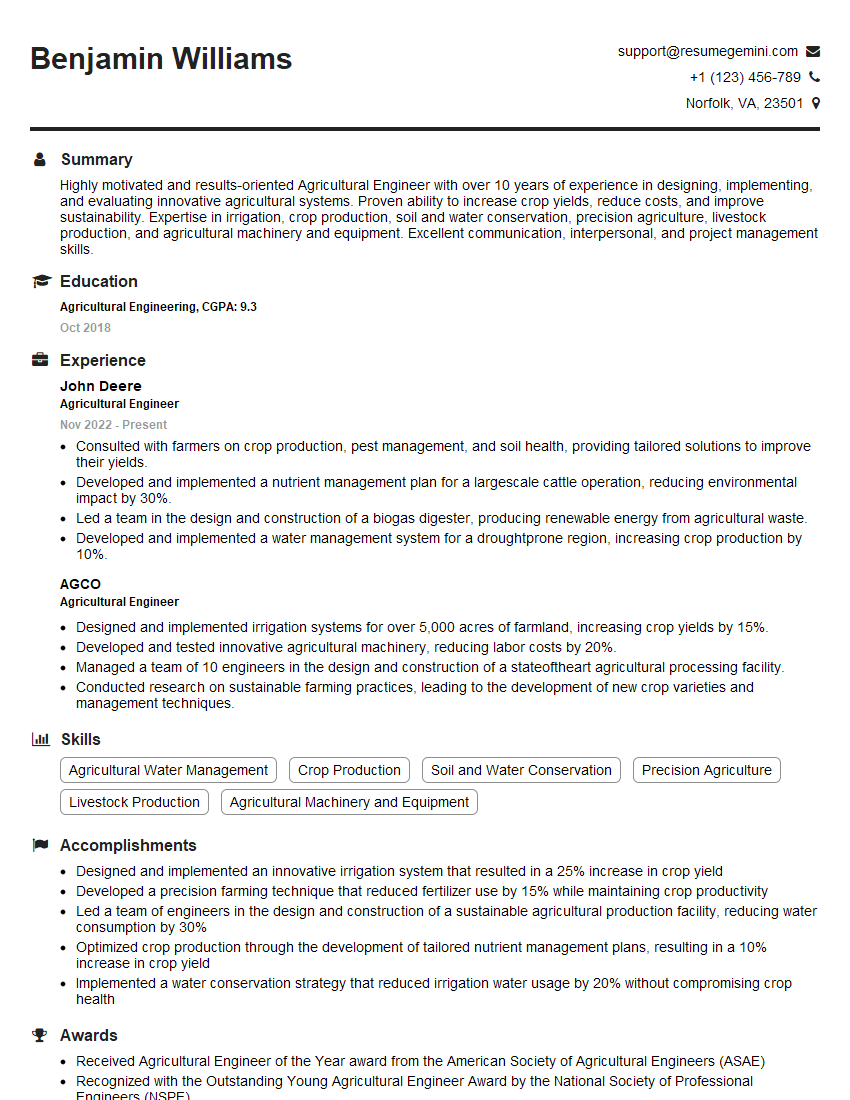
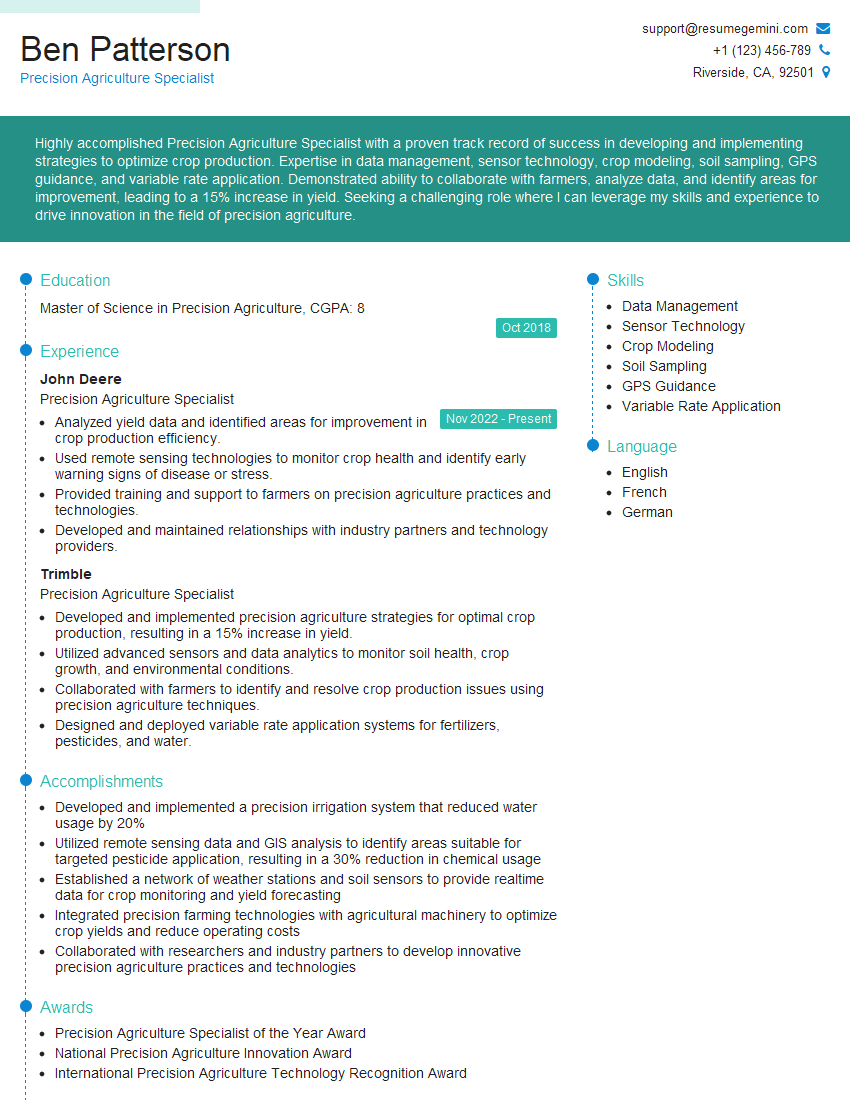
Mastering Farm Equipment and Technology Knowledge is crucial for career advancement in this rapidly evolving field. A strong understanding of these topics will significantly enhance your competitiveness and open doors to exciting opportunities. To increase your chances of landing your dream role, create an ATS-friendly resume that effectively highlights your skills and experience. ResumeGemini is a trusted resource that can help you build a professional and impactful resume. Examples of resumes tailored to Farm Equipment and Technology Knowledge are available to guide you through the process. Invest the time to craft a compelling resume – it’s your first impression!
Explore more articles
Users Rating of Our Blogs
Share Your Experience
We value your feedback! Please rate our content and share your thoughts (optional).
What Readers Say About Our Blog
Very informative content, great job.
good