Unlock your full potential by mastering the most common Power System Troubleshooting interview questions. This blog offers a deep dive into the critical topics, ensuring you’re not only prepared to answer but to excel. With these insights, you’ll approach your interview with clarity and confidence.
Questions Asked in Power System Troubleshooting Interview
Q 1. Explain the process of fault location in a power system.
Fault location in a power system is the process of pinpointing the exact location of a fault, like a short circuit or ground fault, that disrupts power flow. This is crucial for quick repairs and minimizing downtime. The process often involves a combination of techniques, leveraging both protective relay information and advanced analytical tools.
One common method involves analyzing the protective relaying system’s data. Protective relays, strategically placed throughout the system, detect faults and record various parameters like fault current magnitude, phase angle, and time of occurrence. This data, when analyzed using specialized software, helps triangulate the fault’s location. Think of it like using multiple witnesses to pinpoint the location of a crime. Each relay provides a piece of evidence, and by combining that evidence, we can determine the fault’s precise location.
Another approach utilizes distance relay measurements. Distance relays measure the impedance to the fault along transmission lines. By comparing measurements from multiple relays, the distance to the fault can be calculated. Sophisticated algorithms, often implemented in digital fault locators, automate this process. This approach works particularly well on transmission lines, where distance to faults is a significant factor.
Finally, advanced techniques like Traveling Wave Analysis (TWA) can provide highly accurate fault location, especially in long transmission lines. TWA relies on the analysis of high-frequency traveling waves generated during a fault. By measuring the time of arrival of these waves at different points, the fault location can be determined with very high precision.
Q 2. Describe different types of protective relays and their applications.
Protective relays are the first line of defense in power systems, instantly detecting faults and isolating the affected equipment. Different types of relays cater to various fault types and system configurations.
- Overcurrent Relays: These are the most common type, tripping a circuit breaker when the current exceeds a predefined threshold. They’re simple yet effective for detecting short circuits. Imagine a fuse in your household – that’s a basic form of overcurrent protection.
- Differential Relays: These compare the currents entering and leaving a protected zone (like a transformer or busbar). Any significant difference indicates an internal fault. This is highly sensitive and accurate for localized faults.
- Distance Relays: These measure the impedance to the fault along a transmission line, enabling them to locate faults along the line’s length. Their ability to measure impedance makes them exceptionally good at determining fault distances.
- Ground Fault Relays: These detect ground faults, where a current flows to ground. They’re crucial for safety and equipment protection.
- Pilot Relays: Used on transmission lines, pilot relays communicate between the two ends of a line to quickly detect and isolate faults anywhere along the line.
The application of a specific relay type depends on the equipment being protected and the type of fault anticipated. For example, a large power transformer would utilize differential and ground fault relays for comprehensive protection, while a long transmission line might benefit from distance and pilot relays.
Q 3. How do you troubleshoot a power system outage?
Troubleshooting a power system outage involves a systematic approach, focusing on safety first. The process typically starts with identifying the scope of the outage – which areas are affected? Then, one would carefully check available monitoring systems for any alerts or logged events. This might be through SCADA (Supervisory Control and Data Acquisition) systems or other monitoring dashboards.
Next, checking protective relay operation is vital. Relay logs provide valuable insights into the fault’s type, timing, and location. Did the correct relays operate? Was there an unexpected trip? Examining the relay logs is like reviewing a crime scene investigation report – it provides crucial clues.
Once the potential fault area is narrowed, visual inspections may be necessary. This could involve checking for physical damage to equipment, loose connections, or environmental factors like fallen trees causing lines to sag and short. Always exercise caution when approaching electrical equipment.
Advanced diagnostic tools like oscilloscopes and power quality analyzers might be used to examine waveforms and identify unusual events. Analyzing these waveforms can reveal harmonic distortion or other anomalies contributing to the outage. Finally, after the problem is identified and fixed, a comprehensive test of the repaired section is performed to ensure safe and reliable operation.
Q 4. What are the common causes of power system instability?
Power system instability is a condition where the system’s ability to maintain synchronism between generators is compromised. Several factors can contribute to this:
- Loss of Generation: Sudden loss of a large generator, due to a fault or outage, can cause a frequency drop and instability.
- Insufficient Reactive Power: Lack of reactive power (used for voltage control) can lead to voltage collapse, destabilizing the system.
- Line Tripping: Loss of transmission lines due to faults reduces the system’s ability to transfer power, potentially resulting in cascading outages.
- High Fault Levels: High fault currents can overload protection systems, leading to unnecessary tripping and instability.
- Load Changes: Rapid and unexpected changes in load can stress the system and lead to instability.
- Protection System Malfunctions: Incorrect operation of protective relays or circuit breakers can cause unnecessary outages or failing to isolate faults.
Imagine a large ship – if too much weight is shifted to one side, or if a large engine fails, the ship will lose balance and stability. Similarly, a power system needs a carefully managed balance between generation, transmission, and load to maintain stability.
Q 5. Explain the concept of power system harmonics and their effects.
Power system harmonics are multiples of the fundamental frequency (typically 50Hz or 60Hz). They’re caused by nonlinear loads, such as rectifiers, inverters, and variable speed drives. These loads draw non-sinusoidal currents, introducing harmonic distortion into the system’s voltage and current waveforms.
These harmonics can have several negative effects:
- Overheating of equipment: Harmonic currents can cause excessive heating in transformers and motors, reducing their lifespan.
- Malfunctioning of protection relays: Harmonics can interfere with the operation of protective relays, potentially leading to incorrect tripping.
- Increased power losses: Harmonics increase the losses in transformers and transmission lines.
- Voltage distortion: Harmonic distortion can affect the quality of power delivered to sensitive equipment.
- Resonance: In certain circumstances, harmonics can cause resonance, leading to large voltage and current swings.
Think of it like adding unwanted noise to a pure musical tone. The harmonics are the ‘noise’ that distort the clean power waveform, leading to various problems in the system.
Q 6. How do you analyze power system waveforms using oscilloscopes?
Oscilloscopes are essential tools for analyzing power system waveforms, providing a visual representation of voltage and current over time. Analyzing these waveforms helps in understanding system behavior during normal operation and fault conditions.
When analyzing waveforms, focus on several key parameters:
- Frequency: The frequency of the waveform should be consistent with the system’s nominal frequency (50Hz or 60Hz). Significant deviations might indicate frequency instability.
- Amplitude: The amplitude should be within the expected range. Excessive amplitude indicates overvoltage, while low amplitude might indicate undervoltage.
- Waveform Shape: The waveform should ideally be a perfect sine wave. Any distortion (e.g., flattening of peaks, notches) indicates harmonic distortion or other disturbances.
- Phase Angle: The phase angle between voltage and current is important for assessing power factor and load characteristics. Significant shifts might indicate system problems.
By comparing waveforms from different points in the system, one can isolate the source of anomalies. For example, observing harmonic distortion at a particular bus might indicate the presence of a problematic nonlinear load connected to that bus. The oscilloscope acts like a detective’s magnifying glass, allowing for close examination of the power system’s behavior.
Q 7. Describe different types of power system faults (e.g., single-line-to-ground, three-phase).
Power system faults can be classified into several categories based on the phases involved:
- Single-line-to-ground fault: This is the most common type, where one phase comes into contact with the ground. This usually involves a significant current flow to ground.
- Line-to-line fault: In this fault, two phases make contact with each other, causing a current to flow between the two phases.
- Double-line-to-ground fault: This involves two phases and the ground making contact, resulting in a high fault current.
- Three-phase fault: This is the most severe type, where all three phases short-circuit simultaneously. This results in the highest fault current magnitude and typically causes a complete system outage in the affected zone.
Understanding the different types of faults is crucial for selecting appropriate protective relays and developing effective protection schemes. For example, a single-line-to-ground fault would require ground fault relays for protection, while a three-phase fault would trigger overcurrent relays across all three phases.
Q 8. What are the safety precautions you take when troubleshooting power systems?
Safety is paramount when troubleshooting power systems. It’s not just about avoiding injury; it’s about preventing equipment damage and ensuring the continued reliable supply of electricity. My approach is based on a strict adherence to established safety protocols and a methodical, cautious approach.
- Lockout/Tagout (LOTO): Before working on any energized equipment, I always perform LOTO procedures. This ensures the power is physically isolated and cannot be accidentally re-energized. I meticulously verify the absence of voltage using appropriate test equipment before commencing any work.
- Personal Protective Equipment (PPE): Appropriate PPE is non-negotiable. This includes safety glasses, insulated gloves, arc flash protective clothing (depending on voltage level), and safety shoes. The choice of PPE depends on the specific task and the voltage levels involved.
- Proper Training and Certification: I possess the necessary training and certifications to safely work on power systems, including training on arc flash hazards and high-voltage safety.
- Working with a Team: Complex troubleshooting often involves a team. We coordinate our efforts, ensuring clear communication and mutual awareness of each other’s actions. A buddy system is employed, ensuring that someone is always monitoring and assisting.
- Emergency Procedures: I’m familiar with and prepared to follow emergency procedures, including knowing the location of emergency shut-off switches and the correct response to electrical emergencies. We conduct regular safety briefings and drills.
For instance, during a recent transformer fault investigation, my team and I rigorously followed LOTO procedures, donned appropriate PPE including arc flash suits, and performed voltage checks before accessing the transformer compartment. This careful adherence to safety protocols prevented a potential accident.
Q 9. Explain the importance of grounding in power systems.
Grounding in power systems is crucial for safety and reliable operation. It provides a low-impedance path for fault currents to flow back to the source, preventing dangerous voltage buildup on equipment and protecting personnel.
- Safety: Grounding prevents electrical shock by providing a path to earth for fault currents, diverting them away from human contact. Without proper grounding, a person touching a faulty piece of equipment could receive a potentially lethal shock.
- Equipment Protection: Grounding protects equipment from voltage surges and lightning strikes by providing a path for the surge currents to safely dissipate into the earth. This helps prevent damage to sensitive electronics and components.
- System Stability: Grounding helps maintain system stability by providing a reference point for voltage and facilitating the operation of protective relays. Good grounding reduces the likelihood of voltage imbalances that could cause system instability.
- Reducing Noise and Interference: Grounding minimizes electrical noise and interference, ensuring the reliable operation of communication and control systems. A proper ground helps prevent electromagnetic interference from causing malfunction of sensitive equipment.
Imagine a scenario where a power line falls to the ground. If there’s proper grounding, the fault current will flow safely to the ground, tripping the protective devices and preventing widespread damage. Without grounding, the voltage could spread across the ground, endangering anyone nearby.
Q 10. How do you interpret power system relay settings?
Interpreting power system relay settings requires a thorough understanding of relay types, their operating principles, and the specific protection scheme they are part of. It’s more than just reading numbers; it’s understanding the implications of those settings.
- Relay Type: Different relays (e.g., overcurrent, differential, distance) have different settings, each with its own meaning and impact on the system’s protection. I must understand the specific algorithm and characteristics of each relay type.
- Setting Values: The settings themselves define the relay’s response. For instance, an overcurrent relay’s settings include the pickup current (the current level at which the relay begins to operate), the time delay, and the operating characteristic curve. Misinterpretation of these settings could lead to incorrect or delayed operation, resulting in damage to equipment or even safety hazards.
- Coordination: Protective relays are often coordinated to ensure that the correct relay operates during a fault and that tripping occurs in a controlled sequence. Improper coordination can lead to cascading outages.
- Testing and Verification: Relay settings need to be verified through testing. This typically involves simulations using software or on-site testing with specialized equipment. Regular testing and verification are crucial to confirm the relays are functioning as intended and that the settings are accurate and up-to-date.
For example, a poorly set overcurrent relay might not trip fast enough during a fault, allowing the fault current to persist, leading to damage and potential safety concerns. I need to consider the characteristics of the faulted line (length, impedance) and the fault current magnitude to correctly set the relay.
Q 11. How do you use SCADA systems for power system troubleshooting?
Supervisory Control and Data Acquisition (SCADA) systems are invaluable tools for power system troubleshooting. They provide real-time monitoring and control capabilities, allowing for quick identification and response to problems.
- Real-time Monitoring: SCADA provides real-time data on voltage, current, power flow, and other key parameters throughout the power system. This real-time visibility allows for rapid detection of anomalies and potential problems. I can visually observe trends and patterns that might indicate developing issues.
- Alarm Management: SCADA systems generate alarms when predefined thresholds are exceeded. These alarms quickly alert operators to potential problems, enabling prompt action and minimizing the impact of any issues.
- Data Logging: SCADA systems record historical data, which can be extremely helpful in analyzing past events and identifying recurring patterns. Analyzing logged data is crucial for root cause analysis and preventive maintenance scheduling. For instance, I might investigate a sudden drop in voltage by reviewing the historical data to check the voltage values before, during, and after the event.
- Remote Control: In many cases, SCADA allows for remote control of certain aspects of the power system, enabling operators to take corrective action remotely. This is particularly valuable when responding to an emergency or when access to the equipment is restricted.
In a recent incident involving a sudden power outage, SCADA data pinpointed the location of the fault to a specific feeder within minutes. This allowed for quicker restoration of power to affected customers.
Q 12. Explain the concept of power system protection schemes.
Power system protection schemes are designed to detect and isolate faults within the system, minimizing the extent of damage and ensuring the safety of personnel and equipment. These schemes are crucial for reliable power system operation.
- Fault Detection: The primary function is to detect the occurrence of faults (e.g., short circuits, ground faults) within the system. This typically involves the use of protective relays that monitor various parameters such as current, voltage, and impedance.
- Fault Isolation: Once a fault is detected, the protection scheme isolates the faulty section of the system by tripping circuit breakers to prevent the fault from spreading and causing widespread outages.
- Coordination: Protection schemes are designed with careful coordination of relays and circuit breakers to ensure that the appropriate equipment trips to isolate the fault without causing unnecessary outages. Overlapping protective zones ensure seamless and reliable operation.
- Types of Protection: Various types of protection schemes are used, including overcurrent protection, differential protection, distance protection, and busbar protection, each suited for specific system components and fault types. The choice of protection depends on the specific application and the nature of potential faults.
For example, a differential protection scheme is often used for transformers. This type of protection measures the current entering and leaving the transformer. If there is a mismatch (indicating an internal fault), it will quickly trip the circuit breakers to isolate the faulty transformer, minimizing the impact of the fault.
Q 13. Describe your experience with power system simulation software (e.g., PSS/E, ETAP).
I have extensive experience using power system simulation software, primarily PSS/E and ETAP. These tools are invaluable for planning, analysis, and troubleshooting of power systems.
- System Modeling: I can create detailed models of power systems using these tools, incorporating various components such as generators, transformers, transmission lines, and loads. Accurate modeling is crucial for reliable simulation results.
- Steady-State Analysis: I utilize these tools for steady-state analysis, including power flow studies, to assess the system’s performance under normal operating conditions. This helps identify potential voltage problems, overloaded lines, and other issues.
- Transient Stability Analysis: I utilize these tools to perform transient stability studies, simulating the system’s response to disturbances such as faults and generator trips. This helps in assessing system stability and the effectiveness of protection schemes.
- Fault Analysis: I use the software for fault analysis to determine the fault currents, voltage dips, and relay operation during various fault scenarios. This analysis is crucial for determining relay settings and verifying the effectiveness of protection schemes.
- Contingency Analysis: I use these tools to perform contingency analysis, simulating the effects of various equipment outages on the system’s performance. This helps in identifying critical equipment and planning for contingencies.
For example, during the planning phase of a new substation, I used PSS/E to model the entire system, including the new substation, to ensure that the system’s stability and voltage profile would remain within acceptable limits. The software also helped in optimizing the placement of protective relays.
Q 14. How do you identify and troubleshoot problems related to power transformers?
Troubleshooting power transformers involves a systematic approach, combining diagnostic techniques and safety measures. The process often starts with a thorough assessment of the symptoms, followed by targeted investigations.
- Assessing Symptoms: I begin by carefully evaluating the symptoms, such as unusual noises (humming, buzzing), overheating, oil leaks, abnormal voltage levels, or reduced efficiency. The symptoms often point toward the potential source of the problem.
- Visual Inspection: A visual inspection is always the first step. I look for signs of damage, such as cracked bushings, loose connections, or signs of arcing. Safety is always paramount during this inspection.
- Oil Analysis: Analyzing the transformer oil provides crucial information about the transformer’s internal condition. I check for the presence of dissolved gases (which might indicate insulation breakdown), water content, and dielectric strength.
- Testing: Various tests can be performed, including winding resistance measurements, insulation resistance tests, and transformer ratio tests. These tests help identify problems in windings or insulation.
- Temperature Monitoring: I use temperature sensors and thermal imaging to check for excessive heating in various parts of the transformer, indicating potential hot spots or internal faults.
For instance, if I detect excessive dissolved gases in the oil, it suggests an internal fault such as partial discharges or overheating of the windings. Further investigations, such as frequency response analysis (FRA) might then be performed to pinpoint the exact location of the fault. In a recent case involving a transformer with excessive humming, oil analysis revealed dissolved gases, pointing to an internal fault that was subsequently identified and resolved through repair.
Q 15. Explain different types of power system stabilizers and their functions.
Power system stabilizers (PSS) are crucial for enhancing the stability of synchronous generators, particularly during large disturbances. They work by providing supplementary excitation control to damp out low-frequency oscillations that can lead to system instability. Different types exist, each tailored to specific needs:
- Lead-Lag PSS: This is the simplest type, using a lead-lag compensator to shape the response to frequency deviations. It’s effective for damping oscillations within a specific frequency range. Think of it like a shock absorber in a car, smoothing out the bumps.
- Power System Stabilizer with Automatic Voltage Regulator (AVR) integration: This integrates the PSS directly into the AVR, creating a more efficient and coordinated control system. This is like having a sophisticated suspension system that dynamically adjusts to road conditions.
- Washout PSS: This type includes a washout filter to prevent the PSS from reacting to steady-state errors. This avoids unnecessary adjustments that could disrupt normal operation. It’s like ignoring small pebbles on the road and only reacting to significant bumps.
- PSS with multiple inputs: More advanced PSS designs can incorporate multiple inputs, such as speed deviation, terminal voltage deviation, and power output deviation, for more robust damping across various operating conditions. This is akin to having a sophisticated all-terrain vehicle with various traction control systems.
The function of all these PSS types is fundamentally the same: to enhance the generator’s ability to maintain synchronism and prevent cascading failures during disturbances. Improperly tuned PSS can even worsen stability, highlighting the need for careful design and commissioning.
Career Expert Tips:
- Ace those interviews! Prepare effectively by reviewing the Top 50 Most Common Interview Questions on ResumeGemini.
- Navigate your job search with confidence! Explore a wide range of Career Tips on ResumeGemini. Learn about common challenges and recommendations to overcome them.
- Craft the perfect resume! Master the Art of Resume Writing with ResumeGemini’s guide. Showcase your unique qualifications and achievements effectively.
- Don’t miss out on holiday savings! Build your dream resume with ResumeGemini’s ATS optimized templates.
Q 16. How do you troubleshoot problems related to power system generators?
Troubleshooting generator problems involves a systematic approach. It begins with a thorough review of operational data, including alarms, logs, and performance indicators. I typically follow these steps:
- Data Acquisition: Gather all relevant data – generator output, voltage, current, frequency, temperature, vibration, and protection system logs. This is crucial for pinpointing the source of the issue.
- Visual Inspection: Visually inspect the generator and its associated equipment for any obvious problems, such as loose connections, damage to insulation, or signs of overheating.
- Testing: Perform necessary tests, including insulation resistance tests, winding resistance tests, and functional tests of the protection relays. These tests provide valuable quantitative data for diagnostics.
- Systematic Elimination: Once the data is gathered, I start systematically eliminating possible causes by focusing on the most probable areas based on my experience and the data collected. For instance, unusual vibrations might point to bearing issues, while high temperatures might indicate winding problems.
- Expert Consultation: If necessary, I involve specialized engineers or manufacturers for more advanced diagnostics or repairs, particularly for complex issues.
For example, in one instance, a generator experienced sudden shutdowns. After analyzing the data, we found consistent overcurrent trips. By carefully reviewing the relay settings and comparing them with the generator’s actual output, we discovered a misconfiguration that was causing unnecessary trips. This was corrected, resolving the problem.
Q 17. Describe your experience with power system communication protocols (e.g., IEC 61850).
I have extensive experience with IEC 61850, a crucial communication standard for power systems. It enables interoperability between different devices using a structured, object-oriented approach. My experience includes:
- Integration: I’ve worked on integrating various IEDs (Intelligent Electronic Devices), such as protection relays, circuit breakers, and measurement units, onto IEC 61850 networks. This involved configuring devices, testing communication links, and troubleshooting network-related problems. This ensured seamless data exchange between equipment and the control systems.
- Data Modeling: I am proficient in data modeling using the standard’s substation configuration language (SCL). SCL allows for the accurate and consistent description of devices and their data objects, which simplifies configuration and integration.
- Troubleshooting: I have effectively diagnosed and resolved a variety of communication issues within IEC 61850 networks, including network connectivity problems, data inconsistencies, and device configuration errors. This usually involves using network monitoring tools and protocol analyzers.
One memorable project involved migrating an aging SCADA system to an IEC 61850-based system. This involved careful planning, detailed configuration, and rigorous testing to ensure a smooth transition with minimal downtime. The new system improved system monitoring, control, and protection significantly.
Q 18. How do you analyze power system transient stability?
Transient stability analysis is crucial for evaluating the power system’s ability to withstand large disturbances, such as faults or sudden load changes. This involves assessing whether the generators can maintain synchronism during and after the disturbance. The analysis typically involves the following:
- System Modeling: The power system is modeled using simulation software like PSS/E or PowerWorld Simulator. The model includes generators, transmission lines, transformers, and loads, with detailed representation of generator dynamics.
- Fault Simulation: A fault is simulated at a specific location and duration. The software then solves the differential equations governing the system’s behavior during and after the fault.
- Stability Assessment: The software evaluates the system’s stability based on several criteria, such as generator rotor angles, frequency deviations, and voltage magnitudes. The time-domain response is thoroughly analyzed.
- Mitigation Strategies: If instability is detected, mitigation strategies are implemented and re-simulated to improve the system’s stability. This might include installing PSS, adding FACTS devices, or upgrading transmission lines.
For example, I once analyzed a system’s stability after the addition of a new large wind farm. The simulation showed that under certain fault scenarios, the system could lose synchronism due to insufficient inertia. By adding additional synchronous condensers and strategically adjusting PSS settings, we successfully mitigated this risk.
Q 19. Explain your experience with power quality analysis tools and techniques.
Power quality analysis involves identifying, measuring, and mitigating disturbances that affect the quality of electrical power. My experience includes using various tools and techniques:
- Power Quality Meters: These devices measure voltage and current waveforms, recording events like sags, swells, harmonics, and transients. I’ve used several leading brands, selecting the right meter based on the specific problem being investigated.
- Data Acquisition Systems (DAS): For comprehensive analysis, we use DAS to record power quality data continuously over extended periods. This data can be analyzed using specialized software to identify recurring problems or trends.
- Software Analysis: Specialized software packages allow for detailed analysis of power quality data, identifying harmonic distortion, flicker, and other power quality disturbances. These tools typically include waveform visualization and reporting functionalities.
- Signal Processing Techniques: Advanced techniques like Fast Fourier Transforms (FFT) are used to analyze frequency components of power quality signals. This helps to identify harmonic sources and their contributions to overall distortion.
One instance involved a factory experiencing frequent equipment malfunctions. Through detailed analysis of the power quality data, we identified excessive harmonic distortion caused by non-linear loads. This led to the implementation of harmonic filters, which successfully resolved the problem and prevented further equipment failures.
Q 20. How do you troubleshoot problems related to power system capacitors?
Troubleshooting power system capacitors involves identifying issues that can lead to premature failure or performance degradation. Here’s a systematic approach:
- Visual Inspection: Begin by inspecting capacitors for any physical damage, such as bulging cases, leaking fluids, or loose connections. These are clear signs of problems.
- Measurement of Capacitance and ESR: Use a capacitance meter and an ESR (Equivalent Series Resistance) meter to check the capacitor’s parameters against its rated values. Significant deviations indicate potential problems.
- Insulation Resistance Test: This test measures the insulation resistance of the capacitor. Low resistance indicates insulation degradation, possibly leading to failure.
- Partial Discharge Testing: This is an advanced test to detect partial discharges within the capacitor, a sign of internal deterioration. This is useful for preventive maintenance.
- Load Testing: If feasible, perform a load test to assess the capacitor’s performance under operating conditions. This involves checking for unusual heating or voltage fluctuations.
For instance, I once encountered a series of capacitor bank failures at a substation. Using a combination of visual inspection, capacitance measurement, and partial discharge testing, we identified a common issue with the capacitor’s internal insulation. Replacing the faulty capacitors with units that were better suited for the operating environment and incorporating improved protection schemes resolved the recurring problem.
Q 21. What are your experiences with different types of circuit breakers?
My experience encompasses several types of circuit breakers, each with its own strengths and weaknesses:
- Vacuum Circuit Breakers (VCBs): Excellent for high-voltage applications, VCBs are known for their compact design, low maintenance requirements, and fast breaking times. They are particularly suitable for applications requiring frequent switching operations.
- Air Circuit Breakers (ACBs): ACBs are widely used in low- to medium-voltage applications. They are relatively simple and cost-effective but require more maintenance than VCBs.
- SF6 Circuit Breakers: SF6 gas is an excellent insulating and arc-quenching medium, making these breakers suitable for high-voltage and high-current applications. However, SF6 is a potent greenhouse gas, raising environmental concerns.
- Solid-State Circuit Breakers (SSCBs): SSCBs utilize semiconductor switches to interrupt the current, offering very fast breaking times and precise control. They are commonly used in specific applications such as renewable energy integration and high-speed switching.
The choice of circuit breaker depends heavily on the specific application. When working on a project, I carefully consider factors such as voltage level, fault current, switching frequency, and environmental considerations to select the most appropriate type. For example, in a harsh industrial environment, a VCB might be preferred for its low maintenance, while in a high-voltage transmission substation, an SF6 circuit breaker might be necessary for its high interrupting capacity.
Q 22. Explain the process of commissioning new power system equipment.
Commissioning new power system equipment is a crucial process ensuring safe and reliable operation. It’s a multi-stage procedure involving rigorous testing and verification. Think of it like performing a thorough health check on a new car before driving it long distances.
Pre-commissioning: This involves verifying that the equipment arrives undamaged and meets specifications. We check documentation, inspect the physical condition, and possibly conduct initial tests like insulation resistance measurements. For example, verifying the correct winding resistance of a transformer against manufacturer data.
Inspection and Cleaning: Thorough cleaning of the equipment and surrounding area is crucial to remove any debris or contaminants that could affect performance or safety.
Installation and Wiring: This step follows engineering drawings and specifications. We ensure correct wiring, grounding, and connections are established, always adhering to safety protocols.
Testing and Calibration: This is the heart of commissioning. We perform a series of tests to verify that the equipment functions as designed. This might include protective relay testing, transformer ratio tests, and synchronization checks. We often use specialized testing equipment, such as high-voltage testers and oscilloscopes.
Functional Testing: We test the equipment under various operating conditions to ensure proper response and behavior. For example, we’d simulate different load conditions on a generator to check its response.
Performance Testing: This involves measuring the equipment’s actual performance against its design parameters to verify efficiency and compliance with standards.
Documentation and Handover: All test results, modifications, and observations are meticulously documented. This forms a crucial record for future maintenance and troubleshooting. The final step is the formal handover to the client/operator after successful completion of all tests and procedures.
Q 23. How do you perform load flow analysis for a power system?
Load flow analysis is like taking a snapshot of the power system’s operating state. It determines the voltage magnitude, voltage angle, and real and reactive power flow in each part of the system under a given load condition. Think of it as a detailed map showing the current flow of electricity through every power line, transformer, and generator.
This analysis is typically done using specialized software packages that employ iterative numerical methods to solve a system of non-linear equations. The process generally involves:
Defining the System: Creating a model of the power system, including generators, transformers, transmission lines, loads, and their respective parameters (impedances, admittances, etc.).
Specifying Load Conditions: Inputting the expected real and reactive power demands at each load bus.
Setting the Initial Values: Estimating the initial voltage magnitudes and angles.
Solving the Load Flow Equations: Using iterative methods (like Gauss-Seidel or Newton-Raphson) to solve the power flow equations and converge to a solution that accurately represents the system’s steady-state behavior. This process involves repeatedly refining the voltage estimations until they meet a pre-defined tolerance level.
Analyzing Results: Interpreting the results to determine voltage profiles, power flows, and system losses. This will highlight potential areas of concern, such as overloaded lines or voltage violations.
The results are crucial for planning, operation, and control of the power system. For example, it helps determine the need for new lines, transformers, or reactive power compensation devices.
Q 24. How do you interpret power system fault current calculations?
Power system fault current calculations are essential for selecting appropriate protective devices. They determine the magnitude of current that will flow during a short circuit. Think of it as calculating the potential flood from a burst pipe; you need to know its size to select the right-sized drain or shut-off valve.
The interpretation involves checking whether the calculated fault current is within the rating of the protective devices (fuses, circuit breakers, etc.). We use tools and software packages to calculate these values based on system impedance, network configuration and fault type (single-line-to-ground, three-phase, etc.). A typical calculation involves applying Ohm’s law and network analysis techniques to determine the current flow under fault conditions.
Key aspects of interpretation:
Fault Current Magnitude: A higher fault current indicates a greater stress on the system and equipment. Protective devices must have a capacity greater than this value to safely interrupt the fault.
Fault Current Duration: The duration the fault persists significantly influences the design and selection of protective devices. Devices must interrupt the fault within the specified time.
Coordination with Protection Devices: Ensuring that the protective devices operate in a coordinated manner to isolate the fault quickly without causing widespread system disturbances is critical.
A mismatch between fault current and protective device ratings can lead to equipment damage, fires, and system instability. Accurate interpretation guides effective system protection.
Q 25. Describe your experience with power system protection coordination studies.
Power system protection coordination studies ensure that protective relays and devices operate in a predetermined sequence to isolate faults quickly and effectively while minimizing service interruptions. It’s like orchestrating a well-rehearsed team of firefighters; each member must have a clear role and act in coordination to extinguish a fire efficiently.
My experience encompasses various aspects of coordination studies, including:
Developing Protection Schemes: I’ve designed and implemented protection schemes for various voltage levels and system configurations, utilizing both numerical and graphical methods to coordinate relay settings.
Relay Setting Calculation and Coordination: I’ve used specialized software to calculate appropriate relay settings, ensuring selective tripping and minimizing unnecessary outages. This involved considering fault current magnitudes, relay characteristics, and communication protocols.
Time-Current Curves: I’m proficient in analyzing time-current curves to ensure proper coordination between different protective devices. This visualization helps determine whether devices operate within their specified timeframes.
Testing and Verification: I’ve participated in testing and verification of protection schemes to validate their performance and ensure correct operation under different fault scenarios. This might involve simulations, as well as on-site testing.
A successful coordination study leads to a more reliable and robust power system, minimizing downtime and enhancing safety. For instance, in one project, coordinating protection relays prevented a major outage by isolating a faulty transformer section within milliseconds, preventing cascading failures.
Q 26. What is your experience with arc flash hazard analysis and mitigation?
Arc flash hazard analysis and mitigation are paramount to ensuring worker safety in electrical installations. An arc flash is a serious electrical hazard resulting from a short circuit that can cause burns, explosions, and other injuries. It’s like a sudden, intense burst of energy that is extremely dangerous.
My experience includes:
Performing Arc Flash Studies: Using specialized software to perform arc flash hazard analyses that determine incident energy levels at various points in the electrical system.
Developing Mitigation Plans: Creating plans to mitigate the arc flash hazard, such as installing arc flash protective equipment (PPE), implementing lockout/tagout procedures, and modifying equipment design. This might include upgrading electrical switchgear or installing improved safety devices.
Training Personnel: Providing training to personnel on arc flash hazards and safe work practices, emphasizing PPE use and safety procedures. This includes awareness of incident energy levels and proper response procedures.
Implementing Safety Measures: Overseeing the implementation of arc flash mitigation measures and ensuring that they are correctly installed and maintained.
A thorough arc flash study and mitigation program minimizes the risk of injury and protects workers from potentially fatal events. In a previous role, the implementation of arc flash mitigation measures, including PPE upgrades and improved safety protocols, significantly reduced the risk to personnel in a high-voltage substation.
Q 27. How do you handle emergency situations during power system failures?
Handling emergency situations during power system failures requires a calm, decisive approach. It’s like being the captain of a ship during a storm; quick thinking and effective communication are critical.
My approach involves:
Rapid Assessment: Quickly assessing the extent and nature of the failure using available monitoring systems and SCADA data. Understanding the affected area, the cause (if known) and the impact on the customers is paramount.
Emergency Response Plan Activation: Following established emergency response procedures, contacting relevant personnel, and coordinating the restoration process.
Fault Isolation and Restoration: Isolating the faulty section of the system to prevent further damage or cascading failures and implementing restoration procedures, which might include switching operations or bringing in backup generation.
Communication and Coordination: Maintaining clear and consistent communication with affected parties, including customers, operators, maintenance teams, and other stakeholders.
Post-Incident Analysis: After restoration, conducting a thorough post-incident analysis to determine the root cause of the failure, identify areas for improvement, and update emergency response plans. This analysis also helps prevent recurrence and improve the reliability of the power system.
In one instance, I led a team through the restoration of a major power outage after a severe storm. By quickly assessing the situation, activating our emergency response plan, and effectively coordinating with our crews, we restored power to the majority of our customers within a few hours, minimizing the impact of the storm.
Key Topics to Learn for Power System Troubleshooting Interview
- Power System Protection Schemes: Understanding various relaying principles (overcurrent, differential, distance), their applications, and limitations. Consider practical scenarios involving relay coordination and fault analysis.
- Fault Analysis and Location: Mastering techniques for identifying fault types (symmetrical, asymmetrical), utilizing symmetrical components, and applying fault location algorithms. Practice applying these concepts to real-world power system diagrams.
- Power System Stability: Grasping the concepts of transient and steady-state stability, and their impact on system operation. Explore the role of different control systems in maintaining stability and preventing cascading failures. Consider analyzing stability studies and their results.
- Power Quality Issues and Mitigation: Familiarize yourself with common power quality problems (harmonics, sags, swells, transients) and their impact on equipment. Explore various mitigation techniques and their practical applications.
- SCADA and Distribution Automation: Understanding the principles of Supervisory Control and Data Acquisition (SCADA) systems and their role in power system monitoring and control. Explore the applications of distribution automation systems in enhancing system reliability and efficiency. Consider different communication protocols involved.
- Transformer Troubleshooting: Develop expertise in diagnosing transformer faults (winding failures, insulation breakdown, tap changer issues) using various diagnostic techniques. Practice interpreting transformer test reports and determining appropriate remedial actions.
- Generator Protection and Control: Understand the protection schemes and control systems employed for generators. Consider scenarios involving generator tripping, synchronization, and voltage regulation.
- Substation Equipment Troubleshooting: Gain a working knowledge of common substation equipment (circuit breakers, transformers, busbars, insulators) and their typical failure modes and troubleshooting procedures.
Next Steps
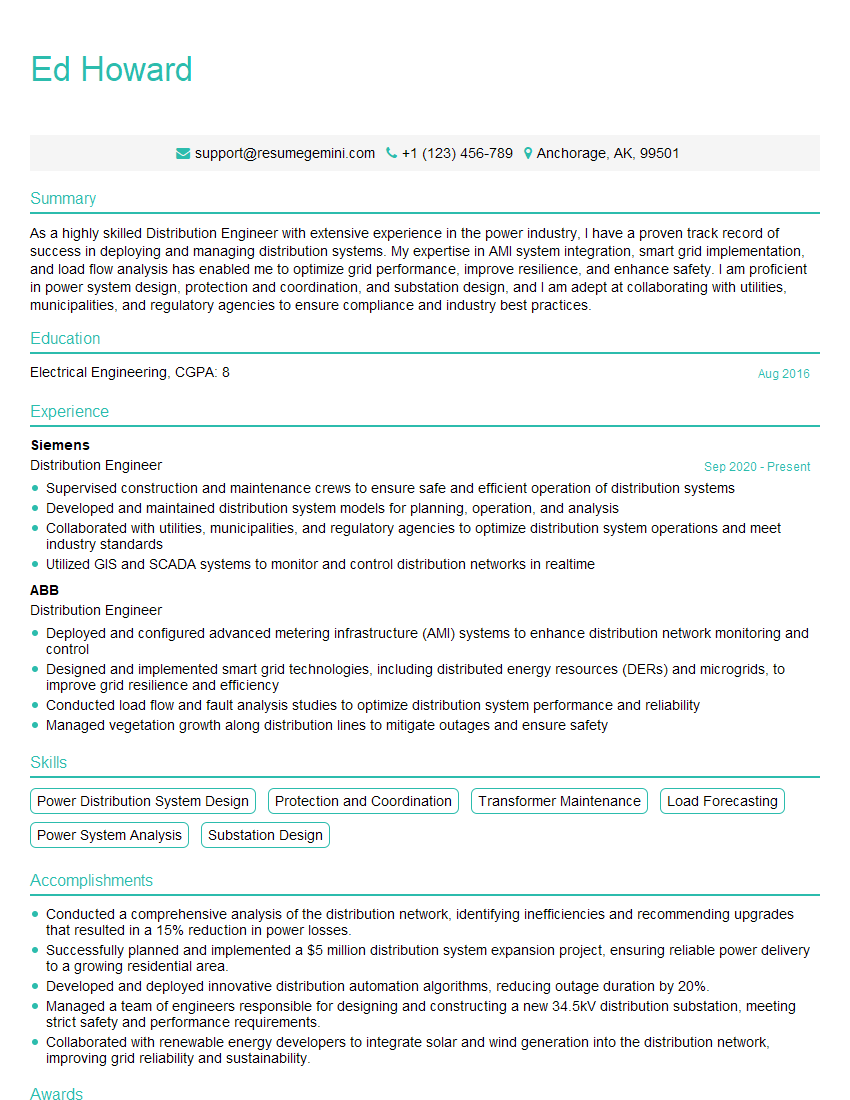
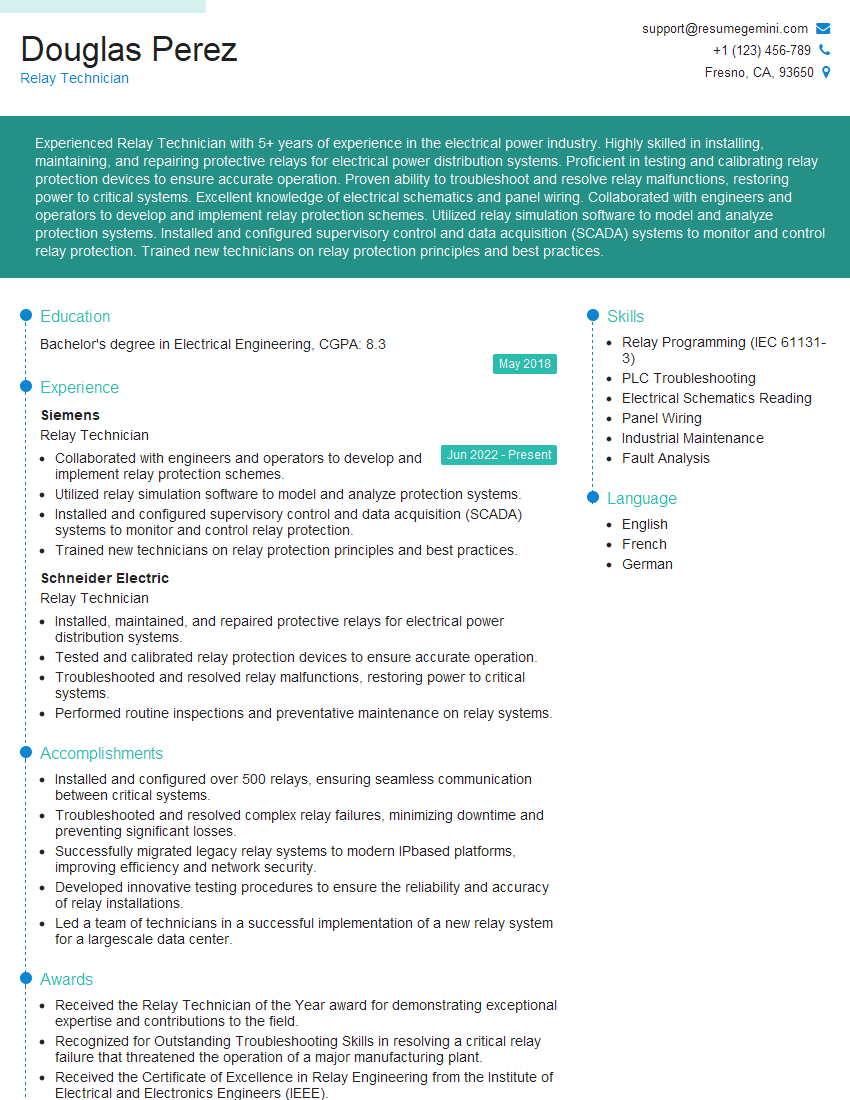
Mastering Power System Troubleshooting is crucial for career advancement in the energy sector, opening doors to specialized roles and higher earning potential. To maximize your job prospects, create a compelling and ATS-friendly resume that highlights your technical skills and experience. ResumeGemini is a trusted resource for building professional resumes, and we offer examples tailored specifically to Power System Troubleshooting professionals. Let ResumeGemini help you craft a resume that showcases your expertise and gets you noticed by prospective employers. Examples of resumes tailored to Power System Troubleshooting are available.
Explore more articles
Users Rating of Our Blogs
Share Your Experience
We value your feedback! Please rate our content and share your thoughts (optional).
What Readers Say About Our Blog
Very informative content, great job.
good