Interviews are more than just a Q&A session—they’re a chance to prove your worth. This blog dives into essential Farrowing and Neonatal Care interview questions and expert tips to help you align your answers with what hiring managers are looking for. Start preparing to shine!
Questions Asked in Farrowing and Neonatal Care Interview
Q 1. Describe your experience in managing farrowing crates and optimizing sow comfort.
Managing farrowing crates effectively is crucial for both sow comfort and piglet survival. My approach focuses on providing a safe, clean, and appropriately sized crate that allows the sow sufficient space to lie down comfortably without crushing her piglets. This includes ensuring adequate ventilation to prevent overheating or ammonia buildup. I prioritize crate design that minimizes stress on the sow, such as those with adjustable dividers allowing for space modification based on the sow’s size and the litter size. Furthermore, I regularly assess the crate’s cleanliness, removing manure and soiled bedding frequently to prevent bacterial growth and maintain a hygienic environment. A comfortable sow is less likely to be agitated, leading to reduced aggression and fewer piglet injuries. For example, in one instance, we switched from a standard crate to a farrowing crate with a built-in heating lamp and observed a significant decrease in pre-weaning mortality due to hypothermia. Regular assessment and adjustment of the crate’s temperature and bedding depth are also essential to optimize sow comfort and piglet survival.
Q 2. Explain your protocols for monitoring sow health during gestation and lactation.
My protocols for monitoring sow health during gestation and lactation are comprehensive and involve daily visual inspections and regular recording of key parameters. During gestation, I monitor weight gain, appetite, and overall behavior to identify any potential issues early on. I also pay close attention to signs of illness, such as lethargy, coughing, or discharge. Regular body condition scoring is conducted to ensure the sow is maintaining ideal weight. During lactation, the focus shifts to milk production, udder health, and signs of mastitis. We regularly check the sow’s udder for any abnormalities, such as swelling, discoloration, or hardened areas. Milk quality is indirectly assessed by observing piglet growth and vigor. Any deviation from established norms prompts further investigation, including blood testing or consultation with a veterinarian. For example, a sudden drop in appetite during gestation might indicate a digestive problem, requiring dietary adjustments. Similarly, a hard, swollen udder is a clear indication of mastitis, necessitating antibiotic treatment and supportive care.
Q 3. What are the key indicators of a healthy newborn piglet?
A healthy newborn piglet exhibits several key indicators. Firstly, it should be vigorous and alert, displaying strong reflexes. This includes a good suckling reflex, indicating its ability to nurse effectively. The piglet should have a strong heartbeat and good respiration, with a clear, pink complexion, free from cyanosis (bluish discoloration) which can indicate respiratory distress. The navel should be dry and uninfected, without any signs of swelling or discharge. A healthy piglet also maintains a normal body temperature, avoiding hypothermia. Finally, the piglet should have a normal birth weight and exhibit consistent weight gain throughout the neonatal period. Any deviation from these parameters warrants immediate attention, as it could signify underlying health issues.
Q 4. Detail your experience with administering iron injections to piglets.
Administering iron injections to piglets is a routine procedure to prevent iron deficiency anemia, a common problem in piglets, especially those raised indoors. We use an approved iron dextran solution, typically injecting 100-200 mg of iron intramuscularly, usually in the neck region. The injection site is prepared using aseptic techniques to prevent infection. We carefully select the injection site to avoid major blood vessels and nerves. Strict adherence to the correct dosage and injection technique is crucial to minimize discomfort and potential complications. For example, a shallow injection could result in local irritation, while a deep injection might cause damage to nerves or muscles. After injection, I always monitor the piglet for any signs of distress. Proper training and adherence to the injection protocol are essential for efficient and safe administration. Record-keeping accurately documents the iron injection administration for each piglet.
Q 5. How do you identify and address common neonatal piglet health issues (e.g., scours, hypothermia)?
Identifying and addressing common neonatal piglet health issues is a critical aspect of successful pig farming. Scours (diarrhea) is often caused by bacterial or viral infections, and early detection is crucial. We monitor piglets for signs of watery, often foul-smelling diarrhea, dehydration (sunken eyes, loss of skin elasticity), and lethargy. Treatment may involve supportive care (fluid therapy, oral electrolytes) and specific antimicrobial therapy if a bacterial cause is identified. Hypothermia, or low body temperature, is addressed by providing a warm environment, such as a heated farrowing crate or heat lamps. We also carefully monitor piglet body temperature using a thermometer. Piglets suffering from hypothermia may display lethargy, weakness, and shivering. Respiratory distress might require oxygen therapy and other supportive care. Careful observation, prompt identification of symptoms, and timely interventions are essential for managing these issues effectively. We also maintain detailed records of treatment, response, and outcomes.
Q 6. What are your strategies for preventing and treating umbilical infections in piglets?
Preventing and treating umbilical infections in piglets is crucial to avoid sepsis and mortality. Prevention starts with maintaining a clean and dry farrowing environment. After birth, we ensure the navel cord is properly dried, sometimes using a mild antiseptic solution like iodine. Regular monitoring for signs of inflammation, swelling, or discharge is vital. If an infection is suspected, we apply topical antimicrobial ointments and, if necessary, administer systemic antibiotics after consulting with a veterinarian. In severe cases, surgical intervention may be necessary. The key to successful management lies in prompt identification of the infection and appropriate treatment. In one instance, implementing a strict navel disinfection protocol reduced umbilical infections by over 50%.
Q 7. Describe your experience with artificial rearing of piglets.
Artificial rearing of piglets is sometimes necessary when sows are unable to adequately care for their litters. My experience involves using commercially available milk replacers that closely mimic sow’s milk in terms of composition and nutrient content. Piglets are fed using automated feeders or bottle feeding, maintaining appropriate hygiene to prevent infection. Temperature control is crucial for these piglets, and a heated environment is provided to mimic the warmth provided by the sow. Regular monitoring of weight gain and overall health is crucial, paying close attention to signs of dehydration, diarrhea, or respiratory problems. These piglets require frequent monitoring and careful attention to detail, with specific protocols followed to ensure their health and welfare. Proper record-keeping is essential in tracking their progress. Successful artificial rearing often involves dedicated care and close attention to their individual needs.
Q 8. How do you ensure proper colostrum intake in newborn piglets?
Ensuring adequate colostrum intake is critical for newborn piglets’ survival and health. Colostrum, the first milk produced by the sow, is rich in antibodies and nutrients vital for passive immunity and gut development. We employ several strategies to maximize colostrum consumption:
- Early suckling: Piglets should ideally nurse within the first hour of birth. We encourage this by assisting weak piglets to find a teat and ensuring they are positioned correctly.
- Checking for suckling: We carefully monitor each piglet to ensure it is actively nursing. Those that aren’t are assisted immediately. We might even use a colostrum supplement if necessary.
- Weighing piglets: Weighing piglets at birth and again after 24 hours helps us assess their colostrum intake. Significant weight loss indicates insufficient nursing and needs immediate intervention.
- Ensuring sufficient teats: Sows with insufficient teats or piglets outnumbering teats require careful management, often involving cross-fostering (discussed later).
- Colostrum quality assessment: While less common on a routine basis, some farms analyze colostrum quality through lab tests to ensure the antibodies are present at sufficient levels. This can inform decisions on managing low-quality colostrum.
For example, in one farm, we improved colostrum intake by implementing a system of visually monitoring piglet suckling and assisting those who were struggling within the first hour, resulting in a significant reduction in early mortality.
Q 9. Explain the importance of environmental control in farrowing facilities.
Environmental control is paramount in farrowing facilities as it directly impacts sow and piglet health, well-being, and productivity. Maintaining optimal temperature, humidity, and air quality minimizes stress and disease risk. Think of it like this: a comfortable environment for the sow promotes relaxation, which is essential for milk production and maternal care. For the piglets, it’s all about preventing hypothermia and reducing the risk of respiratory issues.
- Temperature: The ideal temperature range for newborn piglets is between 85-90°F (29-32°C). This is usually achieved through heating lamps or radiant heat systems. We carefully monitor temperatures and adjust heating as needed to ensure uniform heat distribution throughout the farrowing area.
- Humidity: Maintaining optimal humidity levels is important to prevent respiratory problems and reduce the risk of skin conditions. Excessive humidity can lead to bacterial growth, while low humidity can dry out the piglets’ skin.
- Air quality: Good ventilation is essential for removing ammonia and other harmful gases. This is done through well-designed ventilation systems that ensure a consistent exchange of fresh air. We monitor ammonia levels regularly to prevent build-up.
- Draft avoidance: Direct drafts can cause hypothermia in piglets. We ensure that all heating elements are properly placed and that the piglets are protected from drafts.
Poor environmental control can easily lead to increased mortality and reduced weaning weights. For instance, in one operation we implemented a new climate control system resulting in a noticeable improvement in piglet growth rates and a 15% reduction in mortality.
Q 10. How do you manage piglet mortality rates and implement improvements?
Managing piglet mortality requires a multifaceted approach focusing on prevention and prompt intervention. We thoroughly investigate each mortality incident to identify the underlying cause and implement corrective measures. This includes:
- Regular monitoring: Frequent checks of sows and piglets are crucial for early detection of problems, such as stillbirths, weak piglets, or signs of disease. We use daily records to document our observations.
- Cause of death investigation: Post-mortem examinations can help determine the cause of death in piglets. This information is used to refine management strategies.
- Disease prevention: Implementing strict biosecurity measures and vaccination programs is fundamental to preventing infectious diseases that are major contributors to mortality.
- Nutritional management: Ensuring sows receive proper nutrition before and during lactation is essential for milk production and piglet vitality.
- Data analysis: We use data analysis techniques to track mortality rates over time, identify trends, and measure the effectiveness of different interventions. For example, we may track mortality based on farrowing date, sow parity, or other relevant factors.
For example, one farm we worked with experienced high mortality due to E. coli. By implementing strict hygiene protocols, improving ventilation, and vaccinating the sows, they successfully reduced mortality rates by 30%.
Q 11. What is your approach to record-keeping and data analysis in farrowing operations?
Record-keeping and data analysis are indispensable for improving farrowing performance. We use a combination of physical records and electronic systems to collect and analyze data.
- Farm management software: We utilize software that tracks key performance indicators (KPIs) like stillbirth rates, mortality rates, weaning weights, and farrowing interval. This allows us to see trends and identify areas for improvement.
- Individual sow records: Each sow’s history is meticulously recorded, including details on previous farrowings, health status, and any relevant observations.
- Daily records: Daily observations on sow behaviour, piglet health, and environmental conditions are carefully documented. This information is used to create detailed reports and trends.
- Data analysis: The data is used to identify areas for improvement, for instance, understanding the relationship between temperature and piglet survival or identifying sows with consistent poor farrowing outcomes.
We use data visualization techniques (charts, graphs) to easily identify trends and patterns. This allows us to make data-driven decisions to improve overall farrowing efficiency. A good example is using the recorded data to optimize farrowing crate design in relation to heat distribution and piglet access to the sow.
Q 12. Describe your experience with cross-fostering piglets.
Cross-fostering is a common practice in pig farming where piglets from a large litter are moved to a sow with a smaller litter, or piglets from a weak sow are moved to a strong sow. It’s a carefully considered decision and is essential to ensure that all piglets receive adequate nutrition and care.
- Careful selection: We carefully select sows and piglets based on their health and vigor. We only cross-foster piglets from healthy sows to healthy sows.
- Hygiene: Strict hygiene is maintained to prevent the spread of disease. Piglets are cleaned before moving them to a new sow.
- Gradual introduction: We typically introduce piglets to the new sow gradually to reduce the risk of rejection. We may use scent-transfer techniques to help the sow acclimate.
- Monitoring: The piglets are closely monitored for several days after cross-fostering to ensure they are accepted by the new sow and are successfully suckling.
For example, we may transfer a couple of piglets from a litter of 14 to a litter of only 6, providing those smaller piglets access to more teats and a better chance of survival. It is important to consider the sows temperament and body condition, as this can impact acceptance of foster piglets.
Q 13. How do you manage aggressive sows during farrowing?
Managing aggressive sows during farrowing requires a combination of preventative measures and safe handling techniques. The priority is always to ensure the safety of both the sow and the piglets. Aggression can stem from various factors, including stress, pain, or previous negative experiences.
- Preventative measures: We aim to minimize stress during farrowing by ensuring a quiet, comfortable farrowing environment and employing experienced staff to handle the sows calmly and efficiently.
- Calm handling: Gentle and consistent handling from experienced staff is crucial. Avoid sudden movements or loud noises which can trigger aggression.
- Pain management: Prompt identification and treatment of any pain or discomfort in the sow can reduce aggressive behavior.
- Safe handling equipment: We utilize appropriate equipment, such as farrowing crates with built-in safety features and specialized handling tools, to protect ourselves and the sow.
- Early detection: Regular monitoring of the sow’s behavior allows for early detection of potential aggression and enables proactive intervention.
In cases of severe aggression, we may consult a veterinarian for advice on pain management or other interventions. Using calming pheromones or other behavioral modification techniques might also be used. Remember: Safety is the top priority. We always prioritize human safety and the well-being of the animals when managing aggression.
Q 14. Describe your knowledge of different farrowing crate designs and their advantages.
Farrowing crate designs vary, each with advantages and disadvantages. The choice depends on factors like sow size, management style, and available resources.
- Individual crates: These provide individual space for each sow, minimizing sow-to-sow interaction and reducing aggression. They are relatively easy to clean and manage, but they can be more expensive to build and require more space.
- Group crates: These house multiple sows, often resulting in reduced labor costs, but can lead to competition between sows for resources and increased aggression. They are suitable for less aggressive sows, usually under close monitoring.
- Crates with adjustable features: Modern designs include adjustable features like heated areas for piglets, adjustable side panels to create a safe nesting area for the sow, and easy access for cleaning. These adjustable crates offer greater flexibility in terms of managing the environment and the sows’ comfort.
- Elevated crates: These designs lift the sow slightly, improving piglet access to the teats and improving observation of the piglets underneath.
The ideal farrowing crate design is one that maximizes sow comfort and allows for ease of monitoring and management while minimizing the risk of injury to both sow and piglets. A well-designed crate promotes a less stressful farrowing environment resulting in increased productivity and improved animal welfare. We carefully assess the strengths and limitations of each design before deciding on implementation.
Q 15. What are the key nutritional considerations for sows during lactation?
Lactation is a highly demanding period for sows, requiring a significant increase in nutrient intake to support milk production and piglet growth. Key nutritional considerations center around energy, protein, and essential micronutrients.
Energy: Sows need significantly more energy during lactation than during gestation. Insufficient energy intake can lead to reduced milk production, smaller litters, and poorer piglet survival rates. We typically increase energy density through the diet, often with added fats.
Protein: High-quality protein is crucial for milk synthesis. A deficiency can result in low milk protein content, impacting piglet growth and immunity. We monitor the protein levels in the feed and make adjustments based on the sow’s weight and litter size.
Minerals and Vitamins: Minerals like calcium and phosphorus are essential for milk production and bone health in both sow and piglets. Vitamins, particularly the B vitamins, are also crucial for overall health and performance. We ensure adequate supplementation through balanced feed formulations.
Water Intake: Adequate water intake is paramount, as milk is largely water. Access to clean, fresh water should be consistently available.
For instance, in my previous role, we adjusted the sow’s diet based on their body condition score (BCS) and litter size, ensuring they received the optimal energy and protein levels throughout lactation. This resulted in a significant improvement in average daily gain (ADG) of the piglets.
Career Expert Tips:
- Ace those interviews! Prepare effectively by reviewing the Top 50 Most Common Interview Questions on ResumeGemini.
- Navigate your job search with confidence! Explore a wide range of Career Tips on ResumeGemini. Learn about common challenges and recommendations to overcome them.
- Craft the perfect resume! Master the Art of Resume Writing with ResumeGemini’s guide. Showcase your unique qualifications and achievements effectively.
- Don’t miss out on holiday savings! Build your dream resume with ResumeGemini’s ATS optimized templates.
Q 16. Explain the principles of biosecurity in a farrowing facility.
Biosecurity in a farrowing facility aims to prevent the introduction and spread of diseases. It’s a multi-faceted approach focusing on controlling external and internal factors. Think of it like a fortress defending against invaders!
Perimeter Security: This includes controlling access to the facility, using foot dips or hand sanitizers at entry points, and implementing vehicle washing protocols to prevent the introduction of pathogens from outside.
Hygiene Practices: Regular cleaning and disinfection of the facility are paramount. This includes proper cleaning of farrowing crates, equipment, and walkways, using effective disinfectants. We often follow a strict cleaning schedule and use a rotational system to prevent building up resistance to disinfectants.
Waste Management: Efficient manure removal and disposal helps reduce disease vectors. Proper storage and disposal methods prevent the accumulation of pathogens.
Pest Control: Rodents and insects can carry diseases, so a comprehensive pest control program is essential. This often includes regular inspections and use of appropriate traps and pesticides.
Isolation and Quarantine: Newly introduced sows should be quarantined to monitor for any potential diseases before introducing them to the main herd. Any sick animals should be isolated to prevent widespread infection.
A real-world example: We experienced a significant reduction in respiratory disease after implementing strict footbath protocols and a comprehensive rodent control program. The consistent application of biosecurity measures significantly impacts herd health and productivity.
Q 17. How do you handle and prevent the spread of disease in a farrowing unit?
Disease handling and prevention involve a combination of proactive and reactive measures.
Proactive Measures: This includes implementing robust biosecurity protocols (as discussed above), vaccination programs, and regular health checks to identify and address problems early.
Reactive Measures: If disease is detected, immediate action is crucial. This includes isolating affected animals, implementing strict hygiene protocols in the affected area, and contacting a veterinarian for diagnosis and treatment. Appropriate medications should be administered, and careful record-keeping is essential to track the course of the disease and its impact on the herd.
For example, we once experienced an outbreak of E. coli. By quickly isolating the affected piglets, providing appropriate antibiotic treatment (under veterinary guidance), and strengthening our hygiene protocols, we managed to contain the outbreak and minimize losses. Post-mortem examinations helped us understand the cause and refine our prevention strategies.
Q 18. Describe your experience with vaccination protocols for sows and piglets.
Vaccination is a cornerstone of preventing many common swine diseases. Protocols vary depending on the specific diseases prevalent in the region and the farm’s specific history. It is crucial to work closely with a veterinarian to establish the most effective program.
Sows: Common vaccinations include those against parvovirus, leptospirosis, and erysipelas. Vaccination protocols usually begin before breeding and are often repeated during pregnancy. The goal is to provide passive immunity to the piglets through colostrum.
Piglets: Piglets often receive vaccinations against diseases such as E. coli, Streptococcus suis, and various respiratory viruses. The timing of these vaccinations depends on factors like the maternal antibody levels, the prevalence of diseases in the area and the piglets’ age.
In my experience, we employed a comprehensive vaccination program tailored to our local epidemiology. We closely monitor the efficacy of the vaccines and make adjustments as needed, always adhering to the recommendations provided by our consulting veterinarian. This resulted in a substantial decrease in disease occurrences and improved overall herd health.
Q 19. What is your experience in performing routine health checks on sows and piglets?
Routine health checks are crucial for early detection and prevention of disease. They form the basis for proactive herd management.
Sows: We assess body condition score (BCS), observe for signs of lameness, respiratory distress, or reproductive problems, and monitor appetite and fecal consistency. Any abnormalities are carefully documented and addressed.
Piglets: Daily health checks focus on monitoring for signs of weakness, diarrhea, respiratory issues, and any injuries. Checking for proper nursing behavior and ensuring adequate weight gain are equally important.
We developed a standardized checklist for health checks to ensure consistency and thoroughness. This standardized approach helps us identify potential problems early, allowing for timely intervention and minimizing the negative impact on the herd. Regular weighing of piglets helps to track their growth and identify any individual animals that might be underperforming.
Q 20. How do you identify and manage dystocia in sows?
Dystocia, or difficult birth, is a serious complication that can lead to significant losses. Early recognition and appropriate management are vital. We use a structured approach:
Observation: Careful monitoring of the sow’s behavior during farrowing is crucial. Signs of dystocia include prolonged farrowing, excessive straining without progress, abnormal fetal presentation, or signs of distress in the sow.
Intervention: If dystocia is suspected, assistance should be given under hygienic conditions. This may involve manually adjusting the fetal presentation, providing lubrication to facilitate passage, or, in some cases, performing a Cesarean section. We also monitor vital signs to provide immediate intervention if necessary.
We never hesitate to seek veterinary assistance for complicated cases. Accurate record-keeping is crucial to identify contributing factors (e.g., large litter size, fetal abnormalities) and to improve future management strategies. Prevention includes selecting genetically superior sows with good reproductive traits and proper nutrition management.
Q 21. Explain your understanding of sow reproductive management.
Sow reproductive management is critical for maximizing farm productivity. It encompasses all aspects related to the sow’s reproductive cycle, from puberty to weaning.
Breeding Management: This includes estrus detection (heat), timing of insemination or mating, and careful record-keeping of breeding dates. We use various tools to improve estrus detection accuracy.
Gestation Management: Providing optimal nutrition and environment during pregnancy is essential for fetal development and litter size. We monitor sow weight and condition throughout gestation and make dietary adjustments as needed.
Farrowing Management: This involves careful monitoring of the sow during farrowing to identify and manage dystocia (as discussed earlier) and providing proper care for the newborn piglets.
Lactation Management: Optimizing milk production through proper nutrition and management is crucial for piglet growth and survival (as discussed in question 1).
Weaning Management: A smooth weaning transition minimizes stress for both sows and piglets. We use strategies to reduce the stress of weaning.
Successful reproductive management requires a holistic approach that considers all aspects of the sow’s life cycle. Regular monitoring, precise record-keeping, and the integration of advanced technologies greatly enhance the efficiency and productivity of the operation.
Q 22. Describe your experience with the use of farrowing equipment and technologies.
My experience with farrowing equipment encompasses a wide range of technologies, from traditional farrowing crates to more advanced systems incorporating automated sow feeders and environmental controls. I’m proficient in the use and maintenance of various crate types, including those with individual sow stalls, group housing systems, and those designed to promote natural behaviors. I’ve worked extensively with electronic sow feeding systems, which optimize feed delivery based on individual sow needs and help prevent feed wastage. Furthermore, I’m familiar with automated farrowing systems that monitor key parameters like temperature and humidity, providing real-time data to optimize the farrowing environment and minimize stress on the sows and piglets. For example, in one farm, we implemented a system that automatically adjusts the temperature based on the number of piglets and ambient conditions, significantly improving piglet survival rates. My experience also includes the use of gestation crates, although I always advocate for the use of group housing systems where feasible to promote sow welfare.
Q 23. How do you ensure the welfare of both sows and piglets?
Ensuring the welfare of both sows and piglets is paramount. For sows, this involves providing a comfortable and stress-free environment during gestation and lactation. This includes providing adequate space, proper nutrition, and minimizing stressors such as loud noises and sudden movements. We utilize enrichment strategies like providing chew toys and ample space for them to move around. For piglets, immediate attention after birth is crucial. This includes ensuring they receive colostrum within the first few hours of life, which is vital for their immune system development. We carefully monitor piglet body temperature, ensuring they remain warm and dry, and immediately intervene if any piglets are found to be weak or unwell. We routinely check for crushing by the sow, providing protective measures such as creep areas and heat lamps if necessary. Regularly checking and treating any umbilical cord issues, as well as providing assistance for weak piglets to nurse, are also critical parts of our protocol. We consistently monitor for signs of illness or injury in both sows and piglets and promptly address any issues. Implementing good biosecurity measures prevents disease introduction, while regular hygiene practices help control the spread of infections.
Q 24. What are your strategies for improving weaning weight in piglets?
Improving weaning weight is a key goal, as it directly impacts piglet survival and overall productivity. Our strategies focus on optimizing both pre-weaning and peri-weaning nutrition. Pre-weaning, this includes ensuring sows are adequately fed to produce high-quality milk, supplementing piglets with iron injections to prevent anemia, and providing creep feed with highly palatable and digestible ingredients, making it accessible for the piglets. Peri-weaning, we focus on a smooth transition to solid feed through gradual introduction of the creep feed and a suitable weaner diet. We ensure that the weaning environment is comfortable and stress-free to promote feed intake. We also actively monitor piglet health and administer any necessary treatments promptly. For instance, we might use oral electrolytes to combat dehydration and maintain hydration levels in the piglets. We use a step-wise weaning approach, allowing them to have more time to adapt to solid feed. Data collection and analysis are critical; we monitor weaning weights regularly and make adjustments to our feeding programs as needed, based on the data obtained.
Q 25. Describe your experience with different weaning methods.
My experience includes various weaning methods, each with its own advantages and disadvantages. Traditional abrupt weaning involves separating piglets from the sow at a specific age, typically around 3-4 weeks. This method is often straightforward but can cause stress to both the sow and piglets, potentially leading to reduced growth rates. Step-wise weaning involves a gradual reduction in suckling opportunities over several days, making the transition less stressful. This method often results in better piglet performance and less sow stress. Creep feeding, where piglets are gradually introduced to solid feed several days before weaning, helps them adjust to a solid-feed diet. It improves weanling weight and minimizes negative effects associated with abrupt weaning. In a recent project, we compared abrupt and step-wise weaning and found that step-wise weaning resulted in a 10% increase in weaning weight and significantly less sow aggression. The optimal method depends on various factors, including the sow’s condition, herd health status, and available resources. Each method requires careful monitoring of piglet health and growth parameters to achieve the best outcomes.
Q 26. What is your approach to training and supervising farrowing staff?
Training and supervising farrowing staff is a crucial aspect of successful pig farming. Our training program covers all aspects of farrowing management, from recognizing signs of labor to performing routine tasks such as piglet processing and hygiene protocols. We emphasize the importance of animal welfare and stress-free handling. Training includes both theoretical instruction and hands-on practice in a controlled environment. Experienced staff mentor newer employees to ensure a smooth transition and consistent adherence to best practices. We conduct regular refresher training sessions to update staff on the latest advancements in farrowing management and to reinforce key aspects of animal welfare and biosecurity. Supervision involves daily monitoring of the farrowing facility, ensuring adherence to protocols, and addressing any issues that may arise promptly. Regular feedback and open communication are encouraged to create a supportive and collaborative work environment. The success of this program is evident in improved animal welfare indicators and consistently high piglet survival rates.
Q 27. How do you identify and troubleshoot issues with farrowing equipment?
Identifying and troubleshooting issues with farrowing equipment requires a systematic approach. We regularly inspect equipment for wear and tear, ensuring proper functioning and addressing any potential problems before they escalate. Our troubleshooting process begins with a careful observation of the equipment’s behavior and any abnormal readings, comparing it to the expected parameters. We use a checklist for routine inspections. If the issue persists, we systematically investigate potential causes, starting with the simplest and most likely causes, such as power supply issues or faulty sensors. We leverage troubleshooting manuals and consult with equipment suppliers if necessary. For example, a malfunctioning temperature sensor in an automated climate control system might be causing uneven temperatures in the farrowing crates. Our troubleshooting steps might include checking the sensor’s connections, replacing the sensor, or checking the control system’s settings. Documenting all troubleshooting steps, repairs, and outcomes is crucial for maintaining equipment records and for future reference. This proactive approach minimizes downtime and ensures the consistent optimal functioning of farrowing equipment.
Q 28. Explain your understanding of relevant health and safety regulations in pig farming.
My understanding of health and safety regulations in pig farming is comprehensive. I am familiar with all relevant local, national and international regulations concerning animal welfare, biosecurity, and worker safety. These regulations cover various aspects, from the design and maintenance of facilities to the handling and transportation of animals. We adhere strictly to guidelines on ensuring proper ventilation, waste management, and pest control to maintain a hygienic environment. Specific regulations on the use of medications and the disposal of carcasses are strictly followed to prevent the spread of diseases. Regarding worker safety, we comply with regulations on the use of personal protective equipment (PPE) such as gloves and masks, and we provide regular safety training to all staff to minimize risks associated with handling animals and equipment. Regular inspections are carried out to ensure compliance with all regulations and to identify potential hazards. Failure to comply with health and safety regulations can lead to significant penalties, and more importantly, it compromises the welfare of animals and human workers. Therefore, adherence to these regulations is not only legally required but is also a moral obligation.
Key Topics to Learn for Farrowing and Neonatal Care Interview
- Sow Management and Farrowing Preparation: Understanding optimal pre-farrowing nutrition, housing conditions, and behavioral monitoring to minimize stress and maximize sow comfort.
- Farrowing Assistance and Intervention: Practical skills in assisting with natural farrowing, recognizing dystocia, and performing necessary interventions like manual repositioning or assisting with retained placentas. This includes understanding when to seek veterinary assistance.
- Neonatal Piglet Care: Techniques for processing newborn piglets, including weighing, ear notching, iron supplementation, and tail docking. Understanding the importance of proper hygiene and biosecurity protocols.
- Disease Prevention and Management: Identifying common neonatal diseases (e.g., scours, pneumonia), understanding their causes, and implementing preventive measures and treatment strategies. This includes knowledge of common vaccines and medications.
- Record Keeping and Data Analysis: Maintaining accurate records of farrowing events, piglet mortality, and health data to monitor productivity and identify areas for improvement. Ability to interpret data and make informed management decisions.
- Biosecurity and Hygiene Protocols: Implementing and maintaining strict biosecurity measures to prevent disease transmission and ensure a healthy herd. Understanding cleaning and disinfection procedures.
- Understanding Piglet Behavior and Development: Recognizing normal piglet behavior and identifying signs of illness or stress. This includes understanding the critical stages of piglet development and nutritional needs.
- Reproductive Technologies: Familiarity with common reproductive technologies used in swine production, such as artificial insemination and embryo transfer.
Next Steps
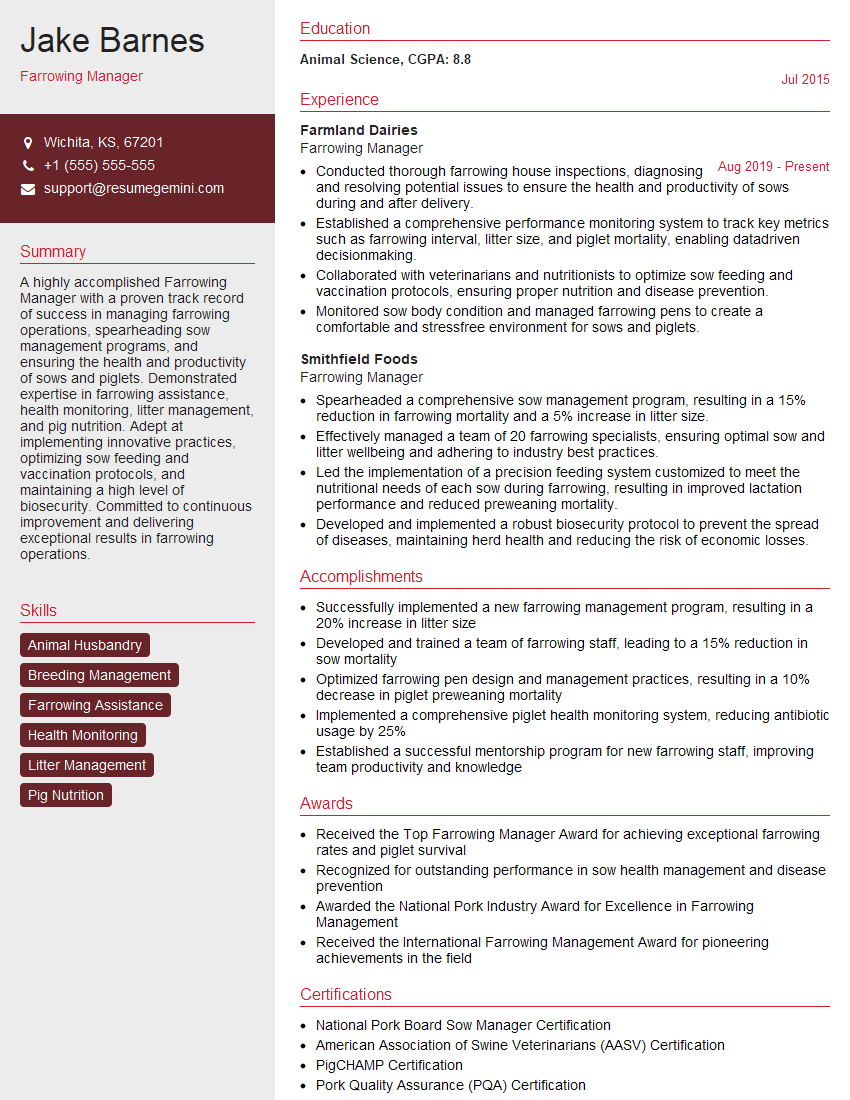
Mastering Farrowing and Neonatal Care is crucial for career advancement in the swine industry. These skills are highly sought after, leading to increased opportunities for leadership roles and higher earning potential. To maximize your job prospects, create an ATS-friendly resume that highlights your relevant skills and experience. ResumeGemini is a trusted resource to help you build a professional and impactful resume. Examples of resumes tailored to Farrowing and Neonatal Care are available to guide you, ensuring your application stands out.

Explore more articles
Users Rating of Our Blogs
Share Your Experience
We value your feedback! Please rate our content and share your thoughts (optional).
What Readers Say About Our Blog
Very informative content, great job.
good