Interviews are opportunities to demonstrate your expertise, and this guide is here to help you shine. Explore the essential Knowledge of Different Types of Fabrics and Their Properties interview questions that employers frequently ask, paired with strategies for crafting responses that set you apart from the competition.
Questions Asked in Knowledge of Different Types of Fabrics and Their Properties Interview
Q 1. What are the key differences between natural and synthetic fibers?
The key difference between natural and synthetic fibers lies in their origin. Natural fibers are derived from plants or animals, such as cotton (plant), wool (animal), silk (animal), and linen (plant). They are biodegradable and often possess unique characteristics related to their source. Synthetic fibers, on the other hand, are artificially created from chemical compounds like polymers. Examples include polyester, nylon, acrylic, and spandex. Synthetic fibers are generally more durable, less expensive, and easier to care for than natural fibers, but they are not biodegradable and may not be as breathable or comfortable against the skin.
- Natural Fibers: Generally softer, more breathable, often more expensive, biodegradable, but can be less durable and require more specialized care.
- Synthetic Fibers: Typically stronger, more wrinkle-resistant, less expensive, easy to care for, but less breathable, may not be as comfortable, and are not biodegradable.
Q 2. Explain the properties of cotton and its suitability for various apparel types.
Cotton is a natural fiber known for its softness, breathability, and absorbency. Its excellent absorbency makes it comfortable to wear in warm weather, as it wicks away moisture from the skin. Cotton is relatively inexpensive and readily available, making it a popular choice for a wide range of apparel. Different types of cotton, such as pima and Egyptian cotton, offer varying levels of softness and strength.
Suitability for various apparel types:
- T-shirts and underwear: Cotton’s breathability and absorbency make it ideal for garments worn close to the skin.
- Jeans and trousers: Durable cotton blends can be used for creating sturdy, long-lasting pants.
- Sheets and towels: Cotton’s absorbency is perfect for bedding and bath linens.
- Dresses and blouses: Lighter weight cotton fabrics create comfortable and stylish summer garments.
Q 3. Describe the characteristics of silk and its care requirements.
Silk is a luxurious natural fiber produced by silkworms. It’s renowned for its incredible softness, smoothness, and lustrous sheen. Silk is also remarkably strong for its thinness and possesses excellent drape and insulating properties, making it suitable for both warm and cold weather garments. However, it’s delicate and requires careful handling.
Care requirements:
- Hand washing or delicate cycle: Avoid harsh detergents and agitation.
- Cool water: Hot water can damage the delicate silk fibers.
- Air drying: Lay flat to dry to avoid stretching or damage.
- Professional cleaning: For valuable or intricate silk items, professional dry cleaning is recommended.
Q 4. Compare and contrast wool and cashmere.
Both wool and cashmere are natural animal fibers, but they differ significantly in their properties and origin. Wool comes from sheep and is readily available, making it a more affordable option. It’s known for its warmth, water resistance, and durability, though it can be itchy for some people. Cashmere, on the other hand, is obtained from the undercoat of the cashmere goat. It’s significantly softer, lighter, and more luxurious than wool, but also rarer and more expensive. Cashmere is known for its exceptional softness and warmth, making it a highly sought-after material for high-end garments.
- Wool: Durable, warm, water-resistant, relatively inexpensive, can be itchy.
- Cashmere: Extremely soft, lightweight, warm, luxurious, expensive, delicate.
Q 5. What are the advantages and disadvantages of using linen in clothing?
Linen is a natural fiber derived from the flax plant. It’s known for its strength, durability, and crisp texture. It’s also highly breathable and absorbent, making it a comfortable choice for warm weather clothing.
Advantages:
- Breathability: Keeps you cool and comfortable in warm weather.
- Durability: Linen garments tend to last a long time with proper care.
- Absorbency: Wicks away moisture.
- Naturally wrinkle-resistant (to some extent): Although it wrinkles easily, some find the wrinkles add to the linen’s character.
Disadvantages:
- Wrinkles easily: Requires ironing or careful handling.
- Can be stiff: May feel less comfortable against the skin when brand new.
- More expensive than some other fabrics: Due to its natural origin and processing.
Q 6. Explain the properties of polyester and its common uses.
Polyester is a synthetic fiber known for its strength, durability, and wrinkle resistance. It’s also water-resistant and relatively inexpensive to produce. Polyester is widely used in a variety of applications due to its versatile properties.
Properties:
- Durable: Resists stretching and tearing.
- Wrinkle-resistant: Requires minimal ironing.
- Water-resistant: Repels water and dries quickly.
- Inexpensive: Readily available and relatively low cost.
Common uses:
- Clothing: Used in sportswear, outerwear, and many other clothing items.
- Home furnishings: Found in upholstery, curtains, and carpets.
- Industrial applications: Used in ropes, safety equipment, and other technical textiles.
Q 7. What is the difference between a twill weave and a plain weave?
Both twill and plain weaves are fundamental fabric structures, but they differ in their appearance and properties. A plain weave is the simplest weave structure, where the warp (lengthwise) and weft (crosswise) yarns interlace in a simple over-under pattern. It creates a smooth, even surface and is relatively strong. Think of a standard cotton t-shirt – it’s likely a plain weave.
A twill weave features a more complex interlacing pattern, creating diagonal lines or ribs on the fabric’s surface. This diagonal structure makes twill weaves stronger and more durable than plain weaves, and often gives them a more textured look. Denim is a classic example of a twill weave, as is gabardine.
- Plain Weave: Simple over-under pattern, smooth surface, less durable.
- Twill Weave: Diagonal pattern, more durable, textured surface.
Q 8. Describe the properties of nylon and its applications.
Nylon is a synthetic fiber known for its exceptional strength, elasticity, and resilience. It’s created through a process called polymerization, resulting in long chains of molecules. These properties make it incredibly versatile.
- Strength: Nylon boasts high tensile strength, meaning it can withstand significant pulling forces without breaking. This makes it ideal for applications requiring durability, like ropes, parachutes, and even certain types of clothing.
- Elasticity: Nylon fibers can stretch and recover their original shape, contributing to its use in garments like hosiery and swimwear where a snug fit is desired.
- Resilience: Nylon resists wrinkles and creases, making it easy to care for. It’s also relatively resistant to abrasion and wear.
- Water Resistance: While not completely waterproof, nylon exhibits good water repellency, a property exploited in outdoor gear like raincoats.
Applications range from apparel (stockings, activewear, outerwear) and carpets to industrial uses (conveyor belts, tire cords, fishing nets). Think of your favorite pair of durable running tights – chances are, nylon is a key component.
Q 9. How does the fiber content affect the drape of a fabric?
Fiber content significantly impacts a fabric’s drape, which refers to the way the fabric hangs and falls. Imagine a waterfall – some fabrics cascade like a smooth waterfall (great drape), while others are more stiff and less flowing (poor drape).
- Long, Smooth Fibers: Fibers like silk, rayon, and modal, with their long, smooth structure, tend to create fabrics with an excellent drape. They flow easily and have a luxurious feel.
- Short, Stiff Fibers: Cotton, linen, and wool, especially those with shorter fibers, often produce stiffer fabrics with less drape. Their shorter fibers and sometimes inherent texture interfere with the smooth flow.
- Fiber Blends: Blending fibers allows for manipulating drape. Adding a percentage of elastane to cotton, for instance, allows for a softer, more draped cotton fabric than the pure cotton counterpart.
Understanding fiber content is crucial for designers. A designer choosing a fabric for a flowing evening gown would prefer a fiber that provides good drape, while a fabric for a structured blazer would need less drape and more body.
Q 10. Explain the concept of fabric weight and its importance in garment construction.
Fabric weight, usually measured in ounces per square yard (oz/sq yd) or grams per square meter (gsm), refers to the mass of fabric per unit area. It’s a critical factor in garment construction as it dictates the fabric’s hand (feel), drape, and suitability for different garments.
- Lightweight Fabrics: Fabrics like chiffon or voile (low gsm) are suitable for summer clothing like blouses or dresses, as they are breathable and comfortable.
- Medium-Weight Fabrics: Fabrics like cotton poplin or denim (mid-range gsm) are versatile and used for a wider range of garments, from shirts and skirts to jackets and trousers.
- Heavyweight Fabrics: Fabrics like wool coating or canvas (high gsm) are best suited for coats, jackets, or other garments requiring warmth and structure.
Incorrect fabric weight selection can lead to design flaws. For example, using a lightweight fabric for a coat will result in a flimsy, inadequate garment. Conversely, using a heavyweight fabric for a summer dress will make it heavy and uncomfortable.
Q 11. What is the difference between a knit and a woven fabric?
Knit and woven fabrics are fundamentally different in their construction methods, leading to distinct properties.
- Woven Fabrics: Woven fabrics are created by interlacing two sets of yarns at right angles – the warp (lengthwise) and weft (crosswise). Think of a traditional tapestry. They are often more structured and durable, with distinct lengthwise and crosswise grain.
- Knit Fabrics: Knit fabrics are made by interlocking loops of yarn. Think of a chain-like structure. Knit fabrics are typically more flexible, stretchy, and drape better than woven fabrics. They can have different structures, like jersey, rib, or purl.
Key Differences Summarized:
| Feature | Woven | Knit |
|---|---|---|
| Construction | Interlacing yarns | Interlocking loops |
| Structure | More structured, less stretchy | More flexible, stretchy |
| Drape | Generally less drape | Generally more drape |
| Durability | Often more durable | Can be less durable depending on type |
Choosing between knit and woven depends entirely on the intended garment. A T-shirt requires the flexibility of a knit, while a pair of tailored trousers requires the structure of a woven.
Q 12. Discuss the impact of dyeing processes on fabric properties.
Dyeing processes significantly influence fabric properties. Different dyeing methods impart color while simultaneously affecting the fabric’s hand, strength, and even its water resistance.
- Fiber Reactivity: Certain dyeing methods are specific to the fiber type. For example, reactive dyes bond chemically with cellulose fibers (cotton, linen), resulting in excellent colorfastness. Other dyes, like acid dyes, are designed for protein fibers (wool, silk).
- Colorfastness: The dye’s ability to resist fading or bleeding is paramount. Poor colorfastness leads to dull colors and can damage the fabric.
- Hand Feel: Some dyeing processes can alter the fabric’s hand, making it stiffer or softer. Certain treatments might create a more luxurious or less desirable feel.
- Water Resistance: The dyeing process can also affect water resistance, either enhancing it or diminishing it.
For instance, a garment requiring vibrant, long-lasting color needs to be dyed with a colorfast dye appropriate for its fiber type. Conversely, if a softer, more delicate hand is desired, a gentle dyeing technique is necessary to avoid damaging the fabric’s inherent properties.
Q 13. Explain the importance of fabric finishing treatments.
Fabric finishing treatments are crucial post-dyeing processes that modify fabric properties to enhance performance, aesthetics, and durability. They’re like the final touches that make a garment truly special.
- Calendering: This process presses the fabric to create a smooth surface, imparting sheen and improved drape.
- Mercerization: Treating cotton with alkali improves its strength, luster, and dye uptake.
- Water Repellency: Applying finishes like Teflon makes the fabric water-resistant, crucial for outerwear.
- Shrinkage Control: Pre-shrinking prevents garment shrinkage after washing.
- Anti-Wrinkle Treatments: These finishes reduce wrinkling, making garments easier to care for.
Without finishing treatments, fabrics may lack durability, wrinkle easily, or have a less desirable appearance. For example, a wrinkle-free shirt relies on specific finishing treatments to maintain its smooth, pressed look.
Q 14. How do you identify different types of fabric blends?
Identifying fabric blends requires a combination of techniques, as the fiber content isn’t always clearly labeled.
- Burn Test (Caution: Always do this in a safe, controlled environment): Carefully burn a small, hidden section of the fabric. Different fibers have distinct burning characteristics (smell, ash residue). This is a destructive test and must be done with extreme caution.
- Microscopic Examination: Observing the fibers under a microscope reveals their shape and cross-sectional characteristics, helping to identify the types of fibers present.
- Feel and Appearance: Experience plays a significant role; different fiber blends impart unique textures and visual qualities. Silk blends have a different feel from wool blends.
- Labeling: If a label is present, carefully read it for the fiber content breakdown. The label should list the fiber percentages. However, this is not foolproof.
Combining these methods improves the accuracy of identification. For example, a burn test reveals that the fabric is partially cotton (smell of burning paper and ash) and partially synthetic (melts, doesn’t leave ash). Microscopic examination then confirms the presence of specific synthetic fibers. Combining this information, you can accurately identify the fiber blend.
Q 15. What are some common fabric flaws and how are they identified?
Fabric flaws can significantly impact the quality and performance of a garment or textile product. Identifying these flaws early in the production process is crucial for quality control. Common flaws include:
- Weaving Defects: These arise during the weaving process and can include broken ends (where a yarn breaks), slubs (thickened areas in the yarn), knots, and mispicks (where the weft yarn is incorrectly interlaced with the warp yarn).
- Knitting Defects: Found in knitted fabrics, these might involve dropped stitches, holes, laddering (where stitches unravel in a line), and fabric distortion.
- Dyeing Defects: These include uneven dyeing, color bleeding (where the dye runs when washed), shading (subtle variations in color), and staining (unwanted marks).
- Finishing Defects: Flaws introduced during post-production processes like shrinkage, creasing, and pilling (the formation of small balls of fiber on the fabric surface).
Identifying these flaws typically involves visual inspection, often with magnification, coupled with touch and feel assessments. Advanced techniques include microscopic analysis to identify fiber damage or defects at a microscopic level. For example, a slight change in fabric weight or drape can signal uneven dyeing or weaving issues. Consistent quality control checks at different stages of production are essential to minimize the appearance of these flaws.
Career Expert Tips:
- Ace those interviews! Prepare effectively by reviewing the Top 50 Most Common Interview Questions on ResumeGemini.
- Navigate your job search with confidence! Explore a wide range of Career Tips on ResumeGemini. Learn about common challenges and recommendations to overcome them.
- Craft the perfect resume! Master the Art of Resume Writing with ResumeGemini’s guide. Showcase your unique qualifications and achievements effectively.
- Don’t miss out on holiday savings! Build your dream resume with ResumeGemini’s ATS optimized templates.
Q 16. Describe the process of testing fabric strength and durability.
Testing fabric strength and durability is paramount to ensure the longevity and performance of textile products. Several methods exist:
- Tensile Strength Test: This measures the force required to break a fabric sample. A standard testing machine clamps the fabric and applies a force until breakage, revealing the fabric’s tensile strength (measured in grams per denier or pounds per square inch). This indicates the fabric’s resistance to pulling forces.
- Bursting Strength Test: This evaluates the fabric’s resistance to pressure. A machine applies pressure to a circular area of the fabric until it bursts, providing an indication of its overall strength and resistance to pressure.
- Abrasion Resistance Test: This test determines a fabric’s ability to withstand friction. A sample is rubbed against an abrasive surface under controlled conditions, measuring how quickly it wears down. This is particularly important for fabrics used in high-wear applications like upholstery or workwear.
- Tear Strength Test: This assesses the force needed to propagate a tear already started in the fabric. This helps determine how easily a fabric will tear once a small tear is present.
The specific test used depends on the intended application of the fabric. For instance, a fabric for parachutes would require far more rigorous tensile and tear strength testing than a fabric for a dress. Testing data informs design choices and helps predict a fabric’s lifespan and performance.
Q 17. How does fabric shrinkage occur and how can it be prevented?
Fabric shrinkage occurs when the fibers in a fabric shorten or contract, often due to relaxation of tensions introduced during manufacturing or reaction to water or heat. Several factors contribute:
- Fiber Properties: Some fibers, like wool or cotton, are more prone to shrinkage than others (like polyester).
- Yarn Construction: Tightly twisted yarns are more likely to shrink.
- Fabric Construction: The weave or knit structure impacts shrinkage; loosely woven fabrics tend to shrink more.
- Finishing Processes: Sanforizing, a pre-shrinking treatment, significantly reduces shrinkage. Improper heat-setting during manufacturing can also cause shrinkage problems.
Preventing shrinkage involves pre-shrinking treatments (like sanforizing) and carefully controlled washing and drying. Always follow care instructions; using cold water and gentle drying cycles can significantly minimize shrinkage.
Q 18. Explain the concept of colorfastness and its importance.
Colorfastness refers to a fabric’s ability to retain its color despite exposure to various conditions such as washing, light, rubbing, and perspiration. It’s crucial because fading or bleeding colors can diminish the aesthetic appeal of a garment and potentially stain other materials.
Testing colorfastness involves subjecting fabric samples to standardized procedures and evaluating the change in color. For example, washing fastness tests involve repeatedly washing the fabric and assessing color loss. Lightfastness tests expose samples to controlled light exposure to measure fading. Rubbing fastness tests determine how easily the color can be transferred by rubbing.
The importance of colorfastness cannot be overstated, particularly in the textile industry. Consumers expect garments and textiles to maintain their color over time, and manufacturers must ensure their products meet these expectations to avoid customer complaints and returns.
Q 19. What is the difference between mercerized cotton and regular cotton?
Mercerized cotton and regular cotton are both made from cotton fibers, but the mercerization process significantly alters the properties of the fabric. Mercerization involves treating cotton fabric with a concentrated solution of sodium hydroxide (caustic soda). This treatment causes the cotton fibers to swell, becoming smoother, stronger, and more lustrous.
Here’s a comparison:
- Regular Cotton: Has a matte finish, is relatively absorbent, but can be prone to shrinkage and wrinkling.
- Mercerized Cotton: Possesses a more luxurious, silky sheen; it’s stronger, more absorbent, less prone to shrinking and wrinkling, and takes dye more readily, resulting in more vibrant colors. The increased luster is due to the alignment of the cellulose fibers during the mercerization process.
Mercerized cotton is often used in higher-quality garments and textiles where a smoother finish, increased strength, and enhanced color are desirable. The additional cost associated with the mercerization process reflects the improved properties.
Q 20. What are some sustainable fabric options and their properties?
Sustainable fabric options are increasingly important in the textile industry due to environmental concerns. Several sustainable options exist, each with its own properties:
- Organic Cotton: Grown without harmful pesticides or herbicides, reducing environmental impact. It’s softer, but can be more expensive and less durable than conventionally grown cotton.
- Hemp: A durable, strong, and naturally pest-resistant fiber requiring minimal water and pesticides. It’s known for its breathability and resistance to UV radiation.
- Tencel (Lyocell): A cellulose fiber made from sustainably sourced wood pulp using a closed-loop process, minimizing water and chemical waste. It’s soft, smooth, breathable, and highly absorbent.
- Recycled Polyester: Made from recycled plastic bottles, reducing landfill waste. It retains many of the properties of virgin polyester, such as durability and water resistance, but its sustainability depends on the recycling processes used.
The choice of sustainable fabric depends on the desired properties and the specific application. Each fiber has unique characteristics regarding durability, drape, and feel, impacting its suitability for various garments and textiles. The growing demand for sustainable materials drives innovation in this field.
Q 21. Discuss the properties of microfiber fabrics.
Microfiber fabrics are synthetic fabrics made from extremely fine fibers, typically polyester or nylon. These fibers are significantly thinner than human hair, resulting in unique properties:
- Softness and Smoothness: The fine fibers create a luxurious, soft feel.
- High Absorbency: Despite being synthetic, microfiber fabrics can be highly absorbent, often exceeding the absorbency of cotton.
- Durability: Generally durable and resistant to abrasion.
- Quick Drying: The fine fibers allow for rapid evaporation of moisture.
- Lightweight: Microfiber fabrics are lightweight and easy to care for.
Microfiber is frequently used in cleaning cloths, towels, clothing, and bedding. The high absorbency and quick-drying properties are particularly valuable in cleaning applications. In clothing, it offers a lightweight yet comfortable option. However, its synthetic nature may be a concern for some consumers focused on sustainable choices.
Q 22. How do you choose the right fabric for a specific garment?
Choosing the right fabric for a garment is a multifaceted process, requiring consideration of several key factors. It’s like choosing the right ingredients for a recipe – the wrong ones can ruin the final product!
- Garment type: A flowing summer dress needs a lightweight, breathable fabric like cotton or linen, while a winter coat requires a warm, durable fabric like wool or a synthetic blend.
- Intended use: A work shirt needs to be durable and wrinkle-resistant, while a yoga outfit needs to be stretchy and moisture-wicking.
- Climate: Fabrics appropriate for a hot, humid climate (linen, cotton) differ significantly from those suitable for cold, dry weather (wool, fleece).
- Aesthetic: The desired look and feel of the garment will dictate the fabric choice. A sleek, modern look might use silk or a synthetic microfiber, while a rustic look might call for linen or tweed.
- Budget: Different fabrics have different price points, influencing the final cost of the garment.
For instance, designing a formal evening gown, I’d consider luxurious fabrics like silk or velvet for their drape and sheen. Conversely, for a child’s play clothes, I would prioritize durability and washability, selecting a sturdy cotton blend or canvas.
Q 23. What are the considerations when selecting a fabric for outdoor apparel?
Selecting fabrics for outdoor apparel demands careful consideration of factors impacting comfort, performance, and durability in challenging conditions. Think of it as equipping an explorer for a challenging journey – the right gear is crucial for success.
- Water resistance/proof: For rain gear, a waterproof and breathable fabric like Gore-Tex or a similar laminate is essential.
- Wind resistance: Windproof fabrics, often with a tight weave or a windproof membrane, are vital for cold weather protection.
- Breathability: The fabric needs to allow moisture vapor to escape, preventing overheating and discomfort. Many modern outdoor fabrics incorporate technologies to enhance breathability.
- Durability: Outdoor apparel faces abrasion and wear, requiring durable fabrics capable of withstanding rough use. Ripstop nylon and reinforced fabrics are commonly used.
- Weight and packability: For backpacking or hiking, lightweight and packable fabrics are preferred.
- UV protection: Sun protection is important; some fabrics offer UPF (Ultraviolet Protection Factor) ratings.
For example, a high-performance hiking jacket might combine a waterproof, breathable outer shell with a fleece or synthetic insulation layer for optimal warmth and protection.
Q 24. Explain the difference between different types of denim.
Denim, a seemingly simple fabric, offers surprising variety. The differences primarily stem from variations in the weave, yarn weight, and finishing processes. It’s like comparing different types of bread – all bread, but with vastly different textures and flavors.
- Weight: Light denim (under 8 ounces) is soft and drapes well, suitable for warmer months. Heavyweight denim (over 14 ounces) is more durable and sturdy, ideal for jackets and workwear.
- Weave: The standard denim weave is a twill weave, creating a diagonal rib. Variations exist, impacting the fabric’s texture and drape.
- Yarn: Denim can be made from various fibers, including cotton (most common), linen, or even synthetic blends. The type of cotton significantly influences the fabric’s feel and durability.
- Finish: Treatments like washes (acid, stone, enzyme), dyes, and finishes (e.g., softener) create variations in color, texture, and feel. Stonewashed denim has a softer, more faded look.
For example, raw denim, untreated and rigid, offers a distinct texture and develops unique fades and character with wear, while stretch denim uses elastane for comfort and flexibility.
Q 25. Describe the properties of velvet and its applications.
Velvet is a luxurious fabric known for its soft, plush pile. Its unique texture comes from the dense, short fibers that create a velvety surface. Think of it as a very dense, soft carpet but for clothing.
- Properties: Velvet is soft, luxurious, and drapes beautifully. It can be warm (especially if made from wool) but can also be lightweight depending on the fiber content.
- Types: Different types exist, including cotton velvet, silk velvet, and crushed velvet (with a slightly textured surface).
- Applications: Velvet’s luxurious feel makes it ideal for evening wear, upholstery, and accessories. Its rich texture lends itself to sophisticated designs.
For example, a velvet evening gown would showcase the fabric’s rich texture and drape. Velvet’s luxurious feel makes it suitable for high-end applications where texture and aesthetics are prioritized.
Q 26. How does the weave affect the fabric’s breathability?
The weave of a fabric significantly impacts its breathability. Think of it like a window screen – a loosely woven screen allows more air to pass through.
- Loose weaves: Fabrics with loose weaves, such as linen or loosely woven cotton, allow for greater air circulation, making them more breathable.
- Tight weaves: Fabrics with tight weaves, like satin or densely woven wool, trap air and are less breathable.
- Types of weaves: Plain weave fabrics are generally more breathable than twill or satin weaves.
For example, a linen shirt will be much more breathable than a satin blouse because of the differences in their weaves. The looser weave of linen allows air to circulate more freely against the skin.
Q 27. Discuss the impact of fabric finish on wrinkle resistance.
Fabric finishes play a crucial role in determining a fabric’s wrinkle resistance. Imagine trying to iron a perfectly crisp shirt – some fabrics just resist wrinkling better than others.
- Resin finishes: These finishes add stiffness and reduce wrinkling but can also affect breathability and hand feel.
- Durable press finishes: These finishes are designed to maintain the fabric’s shape and reduce wrinkles after washing.
- Mechanical finishes: Techniques such as calendaring (pressing the fabric under high pressure) improve wrinkle resistance.
For example, a wrinkle-resistant shirt likely has a durable press finish applied, making it easy to maintain a neat appearance even without ironing. This finish changes the fabric’s properties, making it more resistant to creasing.
Q 28. What are some common fabric testing methods?
Several methods are used to test fabric properties in a lab setting, ensuring quality and performance. Think of it as a thorough checkup for the fabric before it’s used in a garment.
- Tensile strength test: Measures the fabric’s resistance to breaking under tension.
- Abrasion resistance test: Evaluates the fabric’s resistance to wear and tear.
- Bursting strength test: Determines the fabric’s ability to withstand pressure before tearing.
- Colorfastness test: Assesses the fabric’s resistance to fading and color bleeding during washing and exposure to light.
- Water resistance test: Measures the fabric’s ability to repel water.
- Breathability test: Evaluates the fabric’s ability to allow air and moisture vapor to pass through.
These tests are crucial for ensuring that the fabric meets the required standards for a specific application. For example, a fabric for a raincoat would require rigorous testing for water resistance and breathability.
Key Topics to Learn for Knowledge of Different Types of Fabrics and Their Properties Interview
- Natural Fibers vs. Synthetic Fibers: Understand the characteristics, properties (strength, durability, drape, absorbency), and applications of common natural fibers (cotton, wool, silk, linen) and synthetic fibers (polyester, nylon, acrylic, rayon).
- Fabric Weaves and Structures: Learn to identify and describe different weave types (plain, twill, satin, etc.) and their impact on fabric properties like texture, durability, and drape. Explore knit vs. woven structures and their applications.
- Fabric Finishes and Treatments: Familiarize yourself with common fabric finishes (e.g., mercerization, sanforizing, water-repellent treatments) and their effects on the fabric’s properties and performance.
- Fabric Testing and Quality Control: Understand basic fabric testing methods used to assess properties like strength, abrasion resistance, colorfastness, and shrinkage. Know how to interpret test results and identify quality issues.
- Sustainable and Eco-Friendly Fabrics: Explore the growing importance of sustainable textile production and the properties of eco-friendly fabrics (organic cotton, recycled materials, etc.).
- Practical Application: Be prepared to discuss how your knowledge of fabrics informs decisions related to garment construction, product design, quality control, or sourcing.
- Problem-Solving: Consider scenarios where a specific fabric’s properties might present challenges (e.g., shrinkage, pilling, color bleeding) and how you would approach solving them.
Next Steps
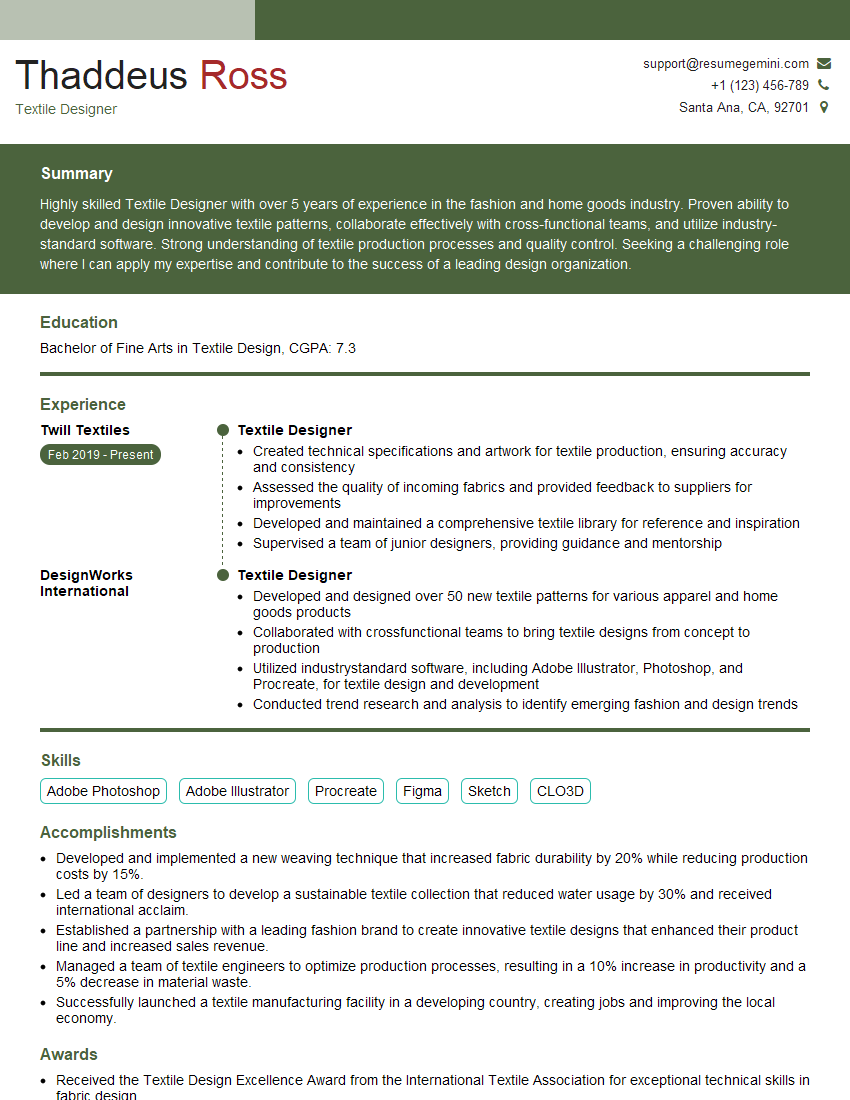
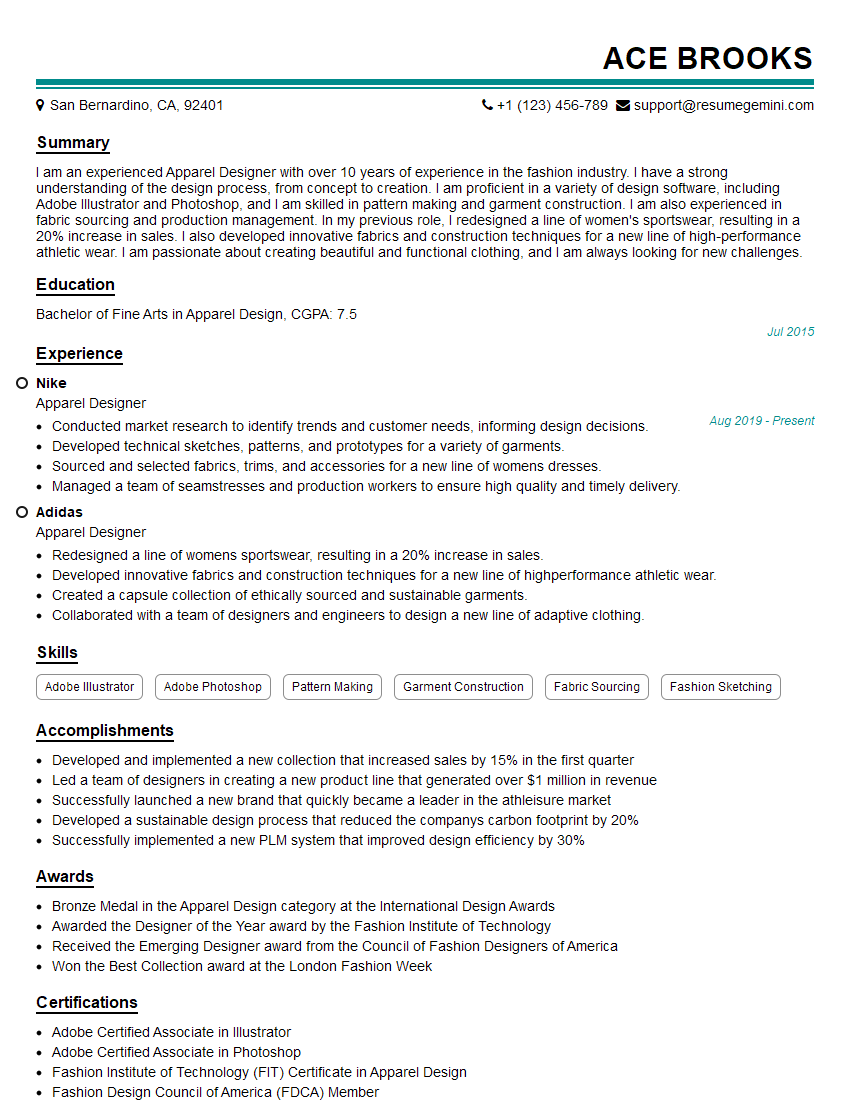
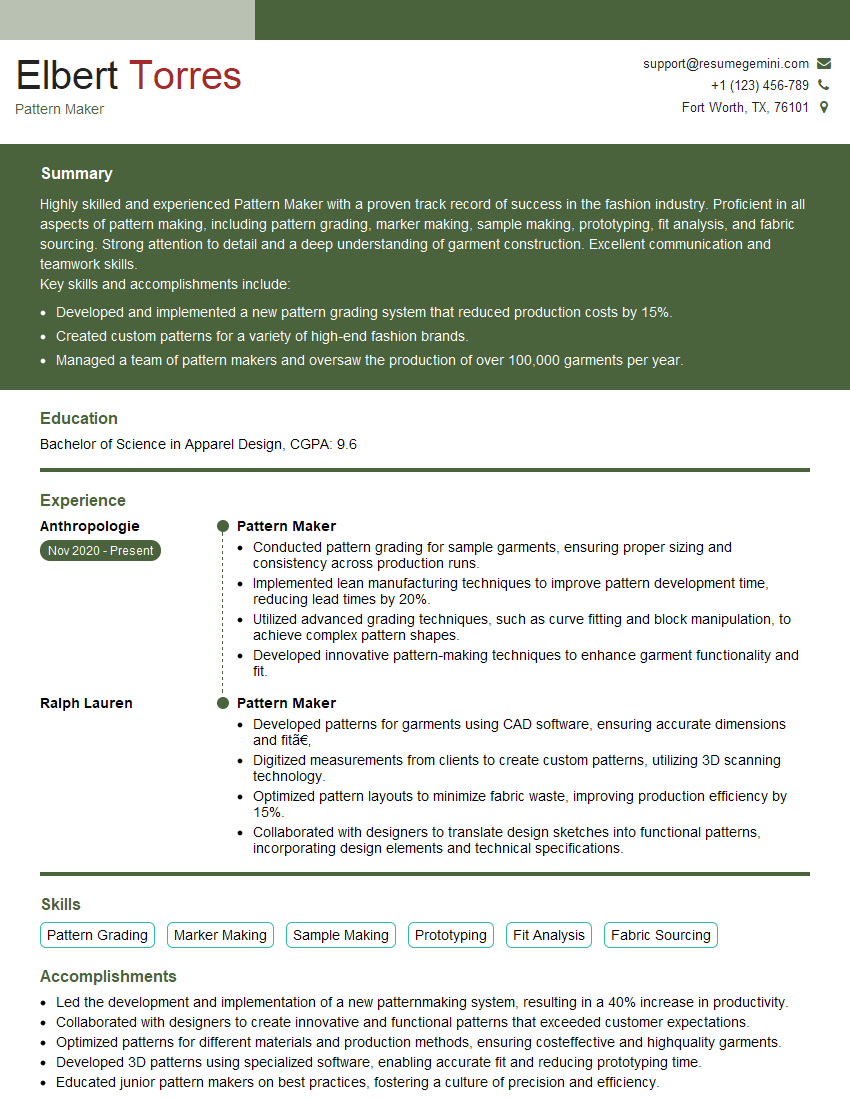
Mastering knowledge of different types of fabrics and their properties is crucial for career advancement in the textile, fashion, and design industries. A strong understanding of these concepts demonstrates technical expertise and problem-solving skills highly valued by employers. To increase your job prospects, creating an ATS-friendly resume is essential. ResumeGemini is a trusted resource to help you build a professional and effective resume that highlights your skills and experience. We provide examples of resumes tailored to roles requiring expertise in Knowledge of Different Types of Fabrics and Their Properties to guide you in creating your own compelling application.




Explore more articles
Users Rating of Our Blogs
Share Your Experience
We value your feedback! Please rate our content and share your thoughts (optional).
What Readers Say About Our Blog
Very informative content, great job.
good