The right preparation can turn an interview into an opportunity to showcase your expertise. This guide to Fashion Illustration Management interview questions is your ultimate resource, providing key insights and tips to help you ace your responses and stand out as a top candidate.
Questions Asked in Fashion Illustration Management Interview
Q 1. Describe your experience managing a team of fashion illustrators.
Managing a team of fashion illustrators requires a blend of artistic understanding, project management skills, and strong interpersonal abilities. My approach focuses on fostering a collaborative and creative environment while ensuring projects are delivered on time and to the client’s specifications. For example, in my previous role at ‘StyleHaus Illustrations,’ I managed a team of five illustrators, each with their unique style and strengths. I started by clearly defining individual roles and responsibilities, holding regular team meetings to discuss project updates, challenges, and brainstorm new ideas. We utilized project management software to track progress, deadlines, and individual workloads, ensuring transparency and accountability. I also actively encouraged open communication and feedback, creating a supportive atmosphere where illustrators felt comfortable sharing their ideas and concerns. This approach led to a significant increase in team morale and a 20% improvement in project delivery efficiency.
Q 2. What software are you proficient in for fashion illustration?
Proficiency in various software is crucial for a fashion illustration manager. I am highly proficient in Adobe Photoshop, Illustrator, and Procreate. Photoshop is my go-to for detailed rendering, photo manipulation, and color correction. Illustrator is essential for creating clean vector graphics, logos, and precise linework. Procreate allows for quick sketching and digital painting, particularly beneficial for initial concepts and client presentations. My skills extend to other industry-standard tools, such as Adobe InDesign for layout and publishing, and Clip Studio Paint for its unique brush capabilities. I’m always open to learning new software as the industry evolves.
Q 3. How do you ensure consistency of style across multiple illustrators?
Maintaining stylistic consistency across multiple illustrators is paramount. I achieve this through a combination of strategies. First, a comprehensive style guide is created at the project outset, outlining specific elements like color palettes, line weights, character proportions, and overall aesthetic. This guide serves as a visual reference for all illustrators. Second, I provide clear briefing documents for each project, detailing specific requirements and referencing the style guide. Third, I conduct regular quality checks during the project lifecycle, providing constructive feedback and making necessary adjustments to maintain consistency. For instance, if we’re working on a series of illustrations for a clothing brand, I might use a mood board and provide specific examples of desired poses, clothing folds, and overall mood to guide the illustrators. This multi-faceted approach ensures a cohesive and professional final output.
Q 4. Explain your process for providing constructive feedback to illustrators.
Providing constructive feedback is a key component of my management style. I believe in a collaborative approach, focusing on improving skills rather than simply criticizing mistakes. My feedback process typically involves a one-on-one meeting where I first commend the positive aspects of the illustrator’s work. Then, I address areas for improvement by focusing on specific elements, rather than making sweeping generalizations. For example, instead of saying ‘the drawing is messy,’ I might say, ‘the linework in the sleeve area could benefit from being more refined, focusing on smoother transitions between curves.’ I offer specific suggestions and demonstrate techniques to improve the problematic areas, using the illustrator’s work as a starting point for a collaborative refinement process. This approach fosters a positive learning environment and motivates illustrators to continuously improve their skills.
Q 5. How do you manage deadlines and prioritize tasks in a fast-paced environment?
Managing deadlines and prioritizing tasks in a fast-paced environment requires efficient project management skills. I utilize a combination of tools and techniques. Firstly, I use project management software, such as Asana or Trello, to track deadlines, assign tasks, and monitor progress. Secondly, I break down larger projects into smaller, manageable tasks with clear deadlines. This approach helps maintain focus and prevents feeling overwhelmed. Thirdly, I prioritize tasks based on their urgency and importance, employing methods like the Eisenhower Matrix (urgent/important). Finally, I maintain open communication with the team, proactively addressing any potential roadblocks and adjusting plans as needed. This proactive and organized approach ensures timely project delivery even under pressure.
Q 6. Describe your experience with client communication regarding illustration projects.
Client communication is crucial for project success. I maintain open and transparent communication throughout the entire project lifecycle. Initial consultations involve understanding the client’s vision, discussing their requirements, clarifying expectations, and providing a detailed project proposal. Regular updates, often including visuals, are shared with clients throughout the process, keeping them informed about progress and addressing any concerns promptly. I also encourage client feedback at key milestones, ensuring the final product aligns with their vision. This proactive communication fosters trust and builds strong client relationships, leading to repeat business and positive referrals. I often utilize video conferencing, email, and project management platforms to keep the lines of communication open and transparent.
Q 7. How do you handle conflicts between illustrators or with clients?
Conflict resolution is an essential skill for a fashion illustration manager. My approach prioritizes open communication, active listening, and finding mutually beneficial solutions. If a conflict arises between illustrators, I facilitate a meeting where each person can express their perspective. I guide the conversation towards identifying the root cause of the conflict and collaborate on a solution that addresses everyone’s concerns. Similarly, if a conflict arises with a client, I listen to their concerns, empathize with their perspective, and try to find a compromise that meets both the client’s needs and the project’s feasibility. Mediation and clear communication are crucial; ensuring everyone feels heard and understood is key to a positive resolution. My goal is always to maintain professional relationships and deliver successful outcomes.
Q 8. How do you ensure the quality and accuracy of illustrations?
Ensuring quality and accuracy in fashion illustrations is paramount. It’s a multi-step process starting with a clear brief and meticulous planning. I begin by thoroughly understanding the client’s vision, reviewing detailed specifications like garment construction, fabric texture, and desired mood. This ensures the illustrator understands the requirements before they start. Then, I implement a robust review process. This involves multiple checkpoints: a preliminary sketch review to catch any early errors; a mid-process review to adjust details like proportion and color; and a final review to ensure the illustration matches the client’s expectations and adheres to brand guidelines. For complex projects, I might even incorporate 3D modeling as a pre-visualization step to finalize the garment design before the illustrator begins work. Finally, I always employ a skilled illustrator with a proven track record, who understands the importance of accuracy and detail in fashion illustration.
For example, on a recent project for a high-end womenswear brand, a preliminary sketch review identified a minor inaccuracy in the sleeve length, which was quickly rectified, preventing costly revisions later. This proactive approach helps to significantly minimize errors and streamline production.
Q 9. What are your strategies for staying current with fashion trends and illustration techniques?
Staying abreast of current trends and techniques in fashion illustration is crucial for remaining competitive. I utilize several strategies: Firstly, I actively follow key fashion publications like Vogue, Harper’s Bazaar, and WWD, not only for the designs but also to understand the evolving styles and illustration approaches they showcase. Secondly, I attend industry conferences and workshops to learn about new technologies and techniques. Recently, I attended a workshop on digital painting and learned new techniques using Procreate, allowing for more textured and painterly illustrations. Thirdly, I actively engage with online communities and platforms like Instagram, Pinterest, and Behance, which provide constant exposure to new trends and emerging talent. I also dedicate time to exploring different illustration styles and experimenting with new digital tools to broaden my artistic capabilities and remain at the forefront of innovative techniques.
Q 10. How do you manage the budget for illustration projects?
Budget management is a critical aspect of successful fashion illustration projects. My approach is based on transparency and careful planning. I begin by creating a detailed budget breakdown, which includes illustrator fees (considering experience and project complexity), software licensing, potential stock image costs (if required), and any other project-related expenses. This breakdown is presented to the client for approval before commencing the project. To manage costs effectively, I explore different pricing models— hourly rates, project-based fees, or a combination of both—and select the most suitable option based on the project scope and client requirements. I also negotiate favorable contracts with illustrators, ensuring fair compensation while maintaining a budget-friendly approach. For example, for smaller projects, I often leverage the talent of freelance illustrators, providing cost-effective solutions without compromising quality.
Q 11. What are your methods for tracking the progress of illustration projects?
Tracking project progress is crucial for ensuring timely delivery and maintaining client communication. I utilize project management software, such as Asana or Trello, to create detailed timelines, assign tasks, and monitor progress. These platforms allow for clear visualization of project phases— from initial briefing and sketching to final artwork and delivery. Each phase has milestones and deadlines, and I regularly update the client with progress reports, showcasing completed stages and any potential challenges. I encourage open communication and incorporate regular check-in calls to address questions and ensure everyone remains aligned. This transparent approach fosters trust and keeps the project on track. In addition to project management software, I also maintain detailed records of communication, revisions, and approvals in a dedicated project folder for easy access and reference.
Q 12. How do you ensure illustrations align with the brand’s aesthetic and style guide?
Aligning illustrations with a brand’s aesthetic is essential for maintaining brand consistency and creating a cohesive visual identity. I begin by thoroughly reviewing the brand’s style guide, which should include information on color palettes, typography, imagery style, and overall brand personality. This guide informs all creative decisions. I then discuss these guidelines with the illustrator, ensuring they understand the brand’s unique visual language. I share examples of existing brand collateral to provide a clear reference point. During the review process, I pay close attention to details such as color accuracy, line weight, style of rendering, and overall composition. This ensures that the illustrations not only meet technical requirements but also perfectly capture the brand’s spirit and values. For instance, a brand with a minimalist approach would require a more streamlined illustration style than a brand with a bold, maximalist aesthetic.
Q 13. Explain your experience with digital illustration workflows.
My experience with digital illustration workflows is extensive. I’m proficient in managing projects from initial concept to final delivery, utilizing various digital tools and techniques. My typical workflow begins with conceptual sketches, often created digitally using a drawing tablet and software like Adobe Photoshop or Procreate. These sketches are then refined and finalized using vector-based software such as Adobe Illustrator, ensuring scalability and crispness for print and digital applications. I utilize layers effectively to maintain organization and allow for easy edits and revisions. Color palettes are meticulously selected and applied, ensuring consistency and brand alignment. I frequently leverage the power of digital tools to create textures, patterns, and special effects, enhancing the richness and complexity of the illustrations. For example, I recently incorporated 3D model rendering into my workflow for a clothing line. The 3D model served as a base for generating realistic garment textures and folds within the digital illustration, making the final artwork even more photorealistic. Post-production, I ensure proper file formats (e.g., AI, EPS, PNG, JPG) are used for various applications like website banners, print ads, and social media posts. I also work closely with the client during the entire process, providing regular updates and incorporating feedback seamlessly.
Q 14. Describe your proficiency in Adobe Creative Suite (Illustrator, Photoshop, etc.)
I possess a high level of proficiency in the Adobe Creative Suite, particularly Adobe Illustrator and Photoshop. In Illustrator, I’m adept at creating vector-based illustrations, ensuring scalability and crisp lines for print and digital applications. My skills include utilizing the Pen tool for precise line work, mastering color palettes and gradients, and working effectively with layers and groups for efficient workflow. In Photoshop, I excel at raster-based illustration, employing techniques such as digital painting, adding textures, and creating realistic effects. I’m proficient in using various brushes, layer masks, and adjustment layers to refine images and achieve the desired aesthetic. I also utilize other Adobe Creative Suite applications like InDesign for layout and presentation of final artwork. I’m constantly expanding my knowledge through online tutorials and self-directed projects, ensuring my skills remain current and relevant within the ever-evolving landscape of digital illustration. For example, I’ve recently been experimenting with Adobe Fresco for a more natural painting feel on a project involving textile designs.
Q 15. How do you select appropriate illustration styles for different projects?
Selecting the right illustration style is crucial for a project’s success. It’s like choosing the perfect outfit – the style must complement the message and target audience. I consider several factors: the brand’s aesthetic, the target demographic, the product’s features, and the overall campaign objectives. For example, a luxury handbag campaign might call for elegant, realistic renderings, while a children’s clothing line would benefit from a playful, whimsical style. A bold, graphic style might suit a streetwear brand, whereas a softer, painterly approach could be better for a romantic clothing line. I always present clients with a mood board showcasing several style options, ensuring transparency and collaborative decision-making.
- Brand Identity: Does the brand have an established visual language? The illustration style should align with that.
- Target Audience: Who are we trying to reach? The style should resonate with their preferences and sensibilities.
- Project Goals: Is the illustration meant to be eye-catching, informative, or evocative? This influences the style selection.
Career Expert Tips:
- Ace those interviews! Prepare effectively by reviewing the Top 50 Most Common Interview Questions on ResumeGemini.
- Navigate your job search with confidence! Explore a wide range of Career Tips on ResumeGemini. Learn about common challenges and recommendations to overcome them.
- Craft the perfect resume! Master the Art of Resume Writing with ResumeGemini’s guide. Showcase your unique qualifications and achievements effectively.
- Don’t miss out on holiday savings! Build your dream resume with ResumeGemini’s ATS optimized templates.
Q 16. Explain your process for managing the workflow from initial concept to final delivery.
My workflow is a carefully orchestrated process. It begins with a thorough briefing with the client, where we solidify the project’s scope, objectives, and deadlines. Next, I create detailed mood boards and style guides, which are then presented for approval. Following client sign-off, the illustrators begin work. I use project management software to track progress, manage revisions, and ensure that deadlines are met. Regular check-ins with the team maintain open communication, identify potential challenges early on, and keep everyone on track. The final stage involves quality assurance checks before delivering the completed illustrations to the client in the agreed-upon format. Think of it as a relay race—each step is vital, and smooth handoffs are crucial to reaching the finish line.
Q 17. How do you incorporate client feedback into the illustration process?
Incorporating client feedback is a vital part of the process. I encourage open communication and regular check-ins throughout the project. We utilize digital proofing tools that allow for easy annotation and comment tracking. Client feedback is not simply received; it’s actively sought and considered collaboratively. We discuss the rationale behind the feedback, ensuring everyone understands the changes required. Sometimes, it’s about making a minor tweak; other times, it might require a more substantial revision. The key is transparency and proactive communication, ensuring everyone is on the same page.
Q 18. How do you handle revisions and changes to illustration projects?
Handling revisions is all about efficiency and clear communication. We use a version control system to track changes, which allows clients to compare different iterations easily. Each revision is documented, with notes detailing the changes implemented. Revisions are treated as opportunities for improvement, ensuring the final product perfectly aligns with the client’s vision. We discuss revision requests thoroughly with the illustrators, ensuring they understand the objectives and have the resources to execute them effectively. Clear timelines and communication are key to managing the revision process without affecting the project’s overall timeline.
Q 19. What strategies do you use for maintaining a positive and productive team environment?
Maintaining a positive and productive team environment is paramount. I foster open communication through regular team meetings and encourage feedback. I celebrate successes both big and small, recognizing individual contributions and team achievements. We prioritize work-life balance and encourage a healthy creative atmosphere where experimentation and collaboration are welcomed. Regular social events and team-building activities help strengthen relationships and boost morale, turning the team into a cohesive unit. Think of it as cultivating a garden – providing the right environment and nourishment for everyone to flourish.
Q 20. How do you assess the talent and skill level of prospective illustrators?
Assessing the talent of prospective illustrators involves a multi-faceted approach. I review their portfolios, looking for technical skills, stylistic consistency, and a grasp of different mediums. I look for a strong understanding of design principles like composition, color theory, and form. Then, I conduct interviews to evaluate communication skills, problem-solving abilities, and their passion for the work. A trial project or test assignment is sometimes given to assess their work ethic and responsiveness. Essentially, I’m looking for a blend of talent, professionalism, and a good fit for our team’s collaborative style.
Q 21. How do you delegate tasks effectively within your team?
Effective task delegation involves understanding the strengths and weaknesses of each team member. I assign tasks based on individual skill sets, ensuring that everyone is working on projects that match their abilities and interests. This includes clear task assignments with deadlines and expectations. I regularly check in to offer support and address any challenges. Open communication channels ensure that problems are identified and addressed promptly, maintaining project flow and team cohesion. This ensures that tasks are completed efficiently and to a high standard while also enhancing individual skill development.
Q 22. Describe your experience with different illustration techniques (e.g., watercolor, digital painting).
My experience spans a wide range of illustration techniques, both traditional and digital. In the realm of traditional media, I’m proficient in watercolor, achieving delicate washes for ethereal fabric rendering and crisp lines for detailed embellishments. I often use watercolor to create mood boards and initial concept sketches, capturing a spontaneous and expressive energy. For example, I used watercolor to create a series of mood boards for a recent spring collection, experimenting with different color palettes and textures to convey the desired feeling of airy lightness.
Digitally, I’m highly skilled in Adobe Photoshop and Illustrator. Photoshop allows for meticulous detail work, ideal for creating hyperrealistic textile patterns or rendering intricate embroidery. I’ve leveraged Photoshop’s layering capabilities extensively to develop complex illustrations with subtle shading and texture. For instance, I used Photoshop’s digital painting tools to create a detailed illustration of a silk gown, meticulously rendering the folds and shimmer of the fabric. Illustrator is my go-to for vector-based work, enabling clean lines, precise scaling, and effortless modification. This is particularly useful for creating technical flats and line art, ensuring consistent sizing and clarity across different applications. I used Illustrator to create technical flats for a recent swimwear line, ensuring that the illustrations could be easily scaled and used for pattern cutting.
Q 23. How do you maintain organizational standards for illustration files and projects?
Maintaining organizational standards is paramount for efficient workflow and project delivery. I employ a meticulous system involving clearly defined file-naming conventions (e.g., ClientName_ProjectName_Date_Version.ext), a structured folder system organized by client, project, and file type (e.g., sketches, final artwork, technical drawings), and the use of version control within design software. This allows for easy tracking of changes and prevents confusion. I utilize cloud-based storage (such as Dropbox or Google Drive) for efficient collaboration and backup, ensuring easy access for myself and clients.
For larger projects, I utilize project management software, tracking progress, deadlines, and client feedback. This central hub ensures transparency and facilitates effective communication throughout the illustration process. A clear and consistent system is crucial for maintaining a professional and efficient workflow and prevents the loss of work or confusion down the line.
Q 24. How do you address and resolve issues with illustration quality or accuracy?
Addressing quality or accuracy issues requires a proactive and methodical approach. I begin by carefully reviewing the illustration against the initial brief and any established style guides. If discrepancies exist, I identify the root cause – whether it’s a technical flaw (e.g., incorrect proportions), a stylistic inconsistency, or a misunderstanding of the brief.
I then communicate clearly with the client regarding the identified issue, presenting potential solutions and seeking their input before proceeding with revisions. Open communication is crucial. For instance, if a client feels the colors aren’t quite right, I might adjust the palette based on their feedback, ensuring the revised illustration perfectly aligns with their vision. My process emphasizes collaborative problem-solving to ensure the final product meets or exceeds expectations.
Q 25. How do you ensure illustrations meet industry standards and legal requirements?
Adherence to industry standards and legal requirements is non-negotiable. This includes understanding copyright laws, ensuring proper sourcing of reference images (using only royalty-free or images with clear permission), and adhering to ethical design practices. I always obtain written consent before using any copyrighted material. For example, if a client requests an illustration inspired by a particular artwork, I ensure I secure the rights to use it as inspiration before commencing the project.
Furthermore, I ensure that all final files are delivered in the appropriate format and resolution as specified by the client or industry standard. Understanding the technical aspects of file preparation – such as color profiles and resolution – is vital in producing high-quality, publication-ready artwork.
Q 26. What is your experience in managing the intellectual property rights of illustrations?
Managing intellectual property rights is a critical aspect of fashion illustration management. I clearly define ownership of rights in contracts with clients, specifying who retains the copyright (typically the illustrator unless otherwise agreed). This protects both the client and myself. I always maintain thorough records of all projects, including contracts, correspondence, and usage agreements. This documentation is invaluable in resolving any potential disputes.
For instance, I clearly state in my contracts whether the client is purchasing a license for specific use of the illustration or if they are purchasing the full copyright. This transparency minimizes misunderstandings and potential conflicts later on.
Q 27. Describe your understanding of color theory and its application in fashion illustration.
A strong understanding of color theory is fundamental to effective fashion illustration. I leverage color psychology to evoke specific moods and emotions – for example, using warm colors to convey comfort and cool colors to project sophistication. Understanding color harmonies (complementary, analogous, triadic) enables me to create visually appealing and balanced illustrations.
In fashion, understanding color trends and how they relate to seasonal collections is important. I use color swatches and mood boards to maintain consistency in my illustrations, ensuring that the color palette reflects the overall aesthetic of the collection. I also consider the impact of color on different fabrics and how the interplay of light and shadow influences the perception of color in the final illustration.
Q 28. How do you balance creative freedom with adherence to project briefs?
Balancing creative freedom with project briefs requires a delicate but crucial balance. I begin by thoroughly understanding the client’s vision, analyzing the brief to identify key elements such as target audience, desired aesthetic, and specific requirements. I then use my creative expertise to develop unique and compelling illustrations that align with these parameters.
Creative freedom is explored within these boundaries. For instance, if a client requests a series of illustrations in a minimalist style, I can still inject my personal style and creativity through subtle details, line weight variations, or color choices within the defined constraints. Open communication with the client is key to ensuring that both creative vision and project objectives are satisfied.
Key Topics to Learn for Fashion Illustration Management Interview
- Understanding the Fashion Illustration Landscape: Explore the evolution of fashion illustration, its current trends, and its role in the broader fashion industry. Consider the influence of digital tools and traditional techniques.
- Client Management & Communication: Practice articulating project briefs, managing client expectations, and delivering projects on time and within budget. Consider how to handle creative differences and feedback effectively.
- Teamwork & Collaboration: Discuss your experience working with designers, photographers, stylists, and other creative professionals. Highlight your ability to contribute to a team and effectively communicate your ideas.
- Project Management & Workflow: Outline your approach to project planning, organization, and execution. Showcase your understanding of deadlines, resource allocation, and problem-solving in a fast-paced environment.
- Legal and Ethical Considerations: Familiarize yourself with copyright laws, image usage rights, and ethical practices within the fashion industry. Understanding these aspects demonstrates professionalism and responsibility.
- Digital Asset Management & Technology: Demonstrate familiarity with relevant software (e.g., Adobe Creative Suite, digital illustration platforms) and your ability to manage and organize digital assets efficiently.
- Market Analysis & Trend Forecasting: Discuss your ability to analyze market trends, identify emerging styles, and advise clients on current and future design directions.
- Budgeting and Resource Allocation: Explain your experience in creating and managing budgets for illustration projects, considering costs associated with materials, software, and labor.
Next Steps
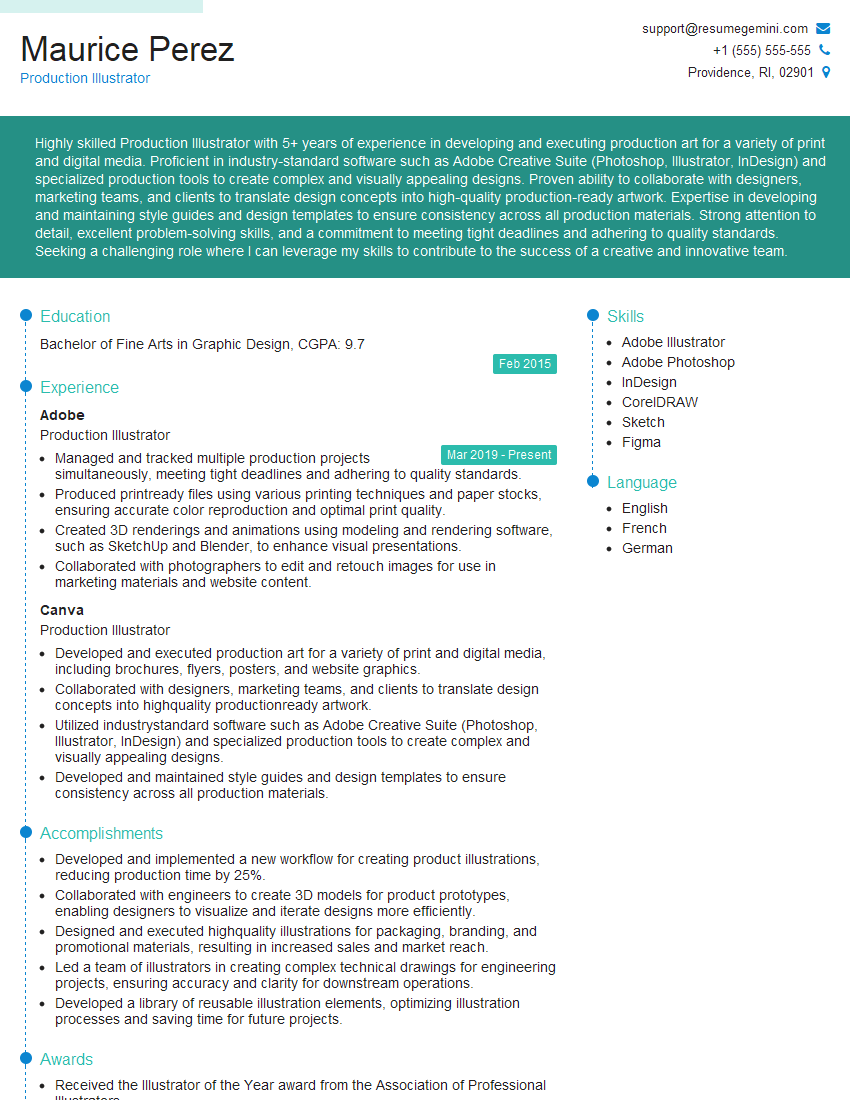
Mastering Fashion Illustration Management is crucial for career advancement, opening doors to exciting opportunities in the dynamic fashion world. A strong resume is your first impression; therefore, crafting an ATS-friendly resume is essential to maximizing your job prospects. ResumeGemini is a trusted resource that can help you build a professional and impactful resume tailored to your skills and experience. We provide examples of resumes specifically designed for Fashion Illustration Management professionals to help you get started. Take the next step towards your dream career by leveraging the tools and resources available to you.
Explore more articles
Users Rating of Our Blogs
Share Your Experience
We value your feedback! Please rate our content and share your thoughts (optional).
What Readers Say About Our Blog
Very informative content, great job.
good