Every successful interview starts with knowing what to expect. In this blog, we’ll take you through the top Plywood LayUp interview questions, breaking them down with expert tips to help you deliver impactful answers. Step into your next interview fully prepared and ready to succeed.
Questions Asked in Plywood LayUp Interview
Q 1. Explain the different types of plywood and their applications in layup.
Plywood comes in various types, each suited for different layup applications. The selection depends on factors like strength requirements, environmental exposure, and cost.
- Softwood Plywood: Typically made from pine, fir, or spruce, offering good strength-to-weight ratio and cost-effectiveness. Common in less demanding applications like furniture or general construction layups.
- Hardwood Plywood: Manufactured from hardwoods like oak or maple, providing greater strength and durability. Ideal for demanding layups where high impact resistance is crucial, such as marine applications or high-stress structural components.
- Marine Plywood: Specifically treated to resist moisture and rot, making it suitable for exterior projects and marine constructions. The glue used is completely waterproof, unlike standard plywood.
- Exterior-Grade Plywood: Resists moisture but may not be as durable as marine plywood. Suitable for applications exposed to weather but not submerged in water. The glue used offers good moisture resistance.
- Phenolic Plywood: Uses phenolic resin as the binder, offering exceptional strength and heat resistance. Often used in high-temperature applications or situations requiring high chemical resistance. This is a premium option.
For example, in building a boat, marine plywood would be the preferred choice due to its water resistance. For a less demanding shelving unit, softwood plywood might suffice.
Q 2. Describe the process of preparing a plywood substrate for layup.
Preparing the plywood substrate is critical for a successful layup. Improper preparation can lead to poor adhesion and structural weaknesses. The process typically involves:
- Cleaning: Remove any dust, dirt, grease, or debris from the plywood surface. This can be achieved using a solvent, a brush, compressed air, or a combination.
- Inspection: Carefully examine the plywood for any defects like knots, voids, or delamination. Repair or replace damaged areas before proceeding. Filling imperfections with a suitable filler is crucial for a smooth surface.
- Surface Treatment (Optional): Depending on the adhesive and application, you might need to apply a primer or sanding sealer to improve adhesion. This step often improves the bond strength for some glues.
- Sanding: Smooth the surface to achieve uniform roughness. The level of sanding depends on the adhesive used and desired finish; however, generally, a fine grit sandpaper is used to avoid deep scratches.
Imagine trying to glue two pieces of wood together that are covered in dirt – the bond wouldn’t be strong. The same principle applies to plywood layup; a clean, prepared surface is essential.
Q 3. What are the common adhesives used in plywood layup and their properties?
Various adhesives are used in plywood layup, each with unique properties:
- Epoxy Resins: Offer excellent strength, durability, and chemical resistance. They are versatile and can be tailored to specific needs using different hardeners. They are commonly used in high-performance applications, offering a high-strength bond.
- Polyurethane Adhesives: Provide good strength and water resistance. Often chosen for exterior applications due to their ability to withstand moisture. They offer good gap-filling properties, but it is crucial to use the correct type.
- Polyvinyl Acetate (PVA) Adhesives: These are commonly used wood glues, offering good strength but generally lower water resistance than epoxy or polyurethane. They are cost-effective and readily available, making them suitable for indoor applications.
- Phenolic Resins: High strength, heat resistance, and chemical resistance makes these ideal for high-performance applications. They are particularly common in marine or aerospace contexts.
The choice of adhesive depends on the intended application and the required properties of the final product. For instance, epoxy resin would be the preferred choice for a boat hull due to its excellent water resistance, while PVA glue might suffice for a simple cabinet.
Q 4. Explain the importance of proper surface preparation before layup.
Proper surface preparation is paramount for achieving a strong and reliable bond in plywood layup. A clean, smooth, and properly treated surface ensures maximum contact between the adhesive and the plywood, leading to optimal adhesion. Insufficient preparation can result in:
- Poor adhesion: leading to delamination and structural failure.
- Void formation: creating weak spots in the layup.
- Reduced durability: making the final product susceptible to damage.
Think of it like painting a wall; you wouldn’t expect good results if you painted directly onto a dirty or uneven surface. Similarly, proper surface preparation is essential for a successful plywood layup.
Q 5. How do you ensure proper alignment and bonding of plywood layers?
Ensuring proper alignment and bonding of plywood layers requires careful attention to detail. Several techniques help achieve this:
- Use of Alignment Tools: Jigs, clamps, and straight edges help maintain the precise alignment of the layers during the bonding process.
- Application of Adhesive: Even and consistent adhesive distribution is crucial. Too little adhesive will lead to poor bonding, while too much can cause squeeze-out and affect the final product’s appearance and strength.
- Pressure Application: Appropriate pressure ensures full contact between the layers and helps to remove air pockets. This can involve weights, vacuum bags, or specialized presses.
- Staggering Joints: To avoid weak spots, the joints of consecutive layers should not align. This distributes stress more evenly across the layup.
Precise alignment and bonding are crucial for structural integrity. Improper alignment can lead to weak points and potentially catastrophic failure in high-stress applications.
Q 6. What are the different methods for applying pressure during plywood layup?
Several methods apply pressure during plywood layup, each with advantages and limitations:
- Cauls and Weights: Simple and readily available, but can be less effective for large or complex shapes. Heavy, flat objects are placed on top of the glued-up plywood stack to ensure even pressure.
- Clamps: Provide localized pressure, useful for smaller areas or intricate shapes. Clamps need to be carefully positioned to avoid uneven pressure.
- Vacuum Bagging: A versatile technique offering even pressure distribution over large areas, removing air pockets and ensuring a strong bond. Suitable for complex shapes and achieving a high-quality finish.
- Hydraulic Presses: Provide high and uniform pressure, ideal for large-scale production and specialized applications, but require specialized equipment.
The selection of the pressure method depends on factors like the size and shape of the layup, the available equipment, and the desired quality of the final product.
Q 7. Describe the process of vacuum bagging in plywood layup.
Vacuum bagging is a sophisticated technique for applying even pressure during plywood layup. It’s particularly advantageous for complex shapes and large projects. The process involves:
- Preparation: The plywood layers with adhesive are carefully arranged on a suitable substrate (e.g., a smooth, rigid surface).
- Breather Cloth: A permeable fabric is placed over the layup to allow air to escape during vacuuming. This prevents the bag from sticking to the workpiece.
- Release Film: A non-stick film is placed on top of the breather cloth to prevent the vacuum bag from adhering to the layup. This allows for easy removal of the finished product.
- Vacuum Bag: A flexible, airtight bag is sealed around the entire layup, enclosing the breather cloth, release film, and plywood. This creates a sealed environment.
- Vacuum Application: A vacuum pump is used to remove the air from inside the bag, creating even pressure across the entire surface of the layup. This pressure ensures a strong and uniform bond between the layers of plywood.
- Cure Time: The layup is left under vacuum for the specified cure time, allowing the adhesive to set completely. The duration depends on the adhesive used and ambient temperature.
- Removal: Once the adhesive is cured, the vacuum is released, and the bag is carefully removed to reveal the finished layup.
Vacuum bagging ensures a high-quality, defect-free layup, eliminating air pockets and producing a strong, durable final product. It is commonly used in industries such as boat building and aerospace, where high-quality results are crucial.
Q 8. Explain the role of release film in plywood layup.
Release film plays a crucial role in plywood layup by preventing the adhesive from sticking to the mold or caul plates. Think of it like a nonstick cooking spray for your plywood; it allows for easy removal of the finished panel once cured. It’s typically a thin, flexible sheet of plastic or silicone-coated paper. The type of release film used depends on the adhesive system and the curing process. For example, a high-temperature phenolic adhesive might require a higher temperature-resistant release film compared to a lower-temperature urea-formaldehyde adhesive. Using the wrong film can lead to delamination or sticking, resulting in significant waste and rework.
In practice, the release film is carefully placed on the mold surface before the first ply is laid down, ensuring a smooth, wrinkle-free application. Any air bubbles or wrinkles in the film can cause imperfections in the final panel. The film must also be properly cleaned before use to remove any dust or debris that might compromise its release properties.
Q 9. How do you handle different ply orientations in complex layups?
Handling different ply orientations in complex layups is essential for achieving the desired strength and stability properties in the final plywood panel. The most common orientation pattern is a balanced cross-grain layup, alternating the grain direction of adjacent plies (e.g., 0°/90°/0°/90°). This minimizes warping and maximizes strength in both directions. More complex layups might involve additional angles (e.g., 45°) to optimize strength for specific applications, like curved panels or those subject to significant shear forces.
Imagine building a house – you wouldn’t use only vertical beams, right? Similarly, balanced ply orientations give plywood equal strength across different stresses. In practice, we use detailed layup plans, often created with CAD software, that specify the exact orientation and position of each ply. Precise alignment is crucial; even small misalignments can lead to stress concentrations and weaken the panel. We use tools like alignment pins, jigs, and sometimes robotic systems to ensure precise placement.
Q 10. What are the common defects found in plywood layups and their causes?
Common defects in plywood layups can be broadly categorized into adhesive-related issues and ply-related issues. Adhesive-related defects include voids (air pockets within the adhesive bond), insufficient glue line (too little adhesive), and glue squeeze-out (excess adhesive on the surface). These can occur due to improper adhesive mixing, incorrect application techniques, insufficient pressure during pressing, or contaminated surfaces. Ply-related defects include delamination (separation of plies), surface imperfections (scratches or dents), and improper alignment (plies not correctly aligned). These often result from handling damage to plies, poor quality of the veneer, or inaccurate layup techniques.
For example, voids can significantly reduce the panel’s strength and can happen if the adhesive is not properly de-aired before pressing. Insufficient glue line will lead to weak bonds, and excess glue leads to a messy finish and may interfere with the surface finish of the final product. Delamination might occur if the adhesive is old, improperly stored or mixed, or if sufficient pressure wasn’t applied during curing. Identifying the root cause is key to preventing these defects in future layups.
Q 11. How do you inspect a completed plywood layup for quality?
Inspecting a completed plywood layup involves a multi-step process, starting with a visual inspection for surface imperfections, followed by a more detailed assessment. The visual inspection checks for things like glue squeeze-out, voids, delamination, and alignment issues. This is often done with the aid of good lighting to highlight any subtle imperfections. Then, we might use non-destructive testing methods like ultrasonic testing to detect internal defects such as voids or delamination. This method uses sound waves to assess the integrity of the glue line. Sometimes, we even do destructive testing on a small sample to confirm bond strength or material integrity.
In a practical setting, we create checklists to ensure consistency and thoroughness. Photographs are often taken to document the inspection findings. The acceptance criteria for the inspection are determined based on the application requirements of the plywood. A panel intended for structural applications would require a more rigorous inspection than one used for less demanding applications like furniture.
Q 12. Describe the importance of curing time and temperature in plywood layup.
Curing time and temperature are critical parameters in plywood layup, directly influencing the final quality and properties of the panel. The adhesive needs sufficient time and heat to properly cure, forming strong bonds between the plies. Insufficient curing time or temperature leads to weak bonds, increased susceptibility to delamination, and reduced overall panel strength. Conversely, excessive heat or time can degrade the adhesive or the wood veneers.
The specific curing parameters depend on the type of adhesive used. Phenolic adhesives typically require higher temperatures and longer curing times compared to urea-formaldehyde adhesives. These parameters are often specified by the adhesive manufacturer and are critical to follow. Variations can have disastrous effects, impacting product quality and leading to costly rework. In a factory setting, precisely controlled presses and monitoring systems ensure consistent curing conditions across all panels.
Q 13. Explain the safety procedures involved in plywood layup.
Safety procedures in plywood layup are paramount to prevent injuries. This includes personal protective equipment (PPE), such as safety glasses, gloves, and respirators (especially when handling adhesives or working with dust). Proper handling of heavy materials is essential to avoid back injuries or dropped objects. Appropriate lifting techniques and the use of material handling equipment should always be implemented. The workspace should be kept clean and organized to prevent trips and falls. Adhesives should be stored and handled according to the manufacturer’s instructions. Emergency procedures should be in place and personnel trained in the handling of chemical spills or other emergencies.
For example, appropriate ventilation is crucial when working with adhesives because of potential volatile organic compounds. Regular maintenance of equipment and machinery reduces risks of mechanical injury. Clear and concise safety protocols, coupled with regular training and audits, are critical to ensure a safe working environment.
Q 14. What are the environmental concerns related to plywood layup?
Environmental concerns associated with plywood layup are mainly related to adhesive emissions and wood sourcing. Many adhesives release volatile organic compounds (VOCs) during curing, contributing to air pollution. Therefore, using low-VOC or VOC-free adhesives is crucial for reducing the environmental impact. Responsible sourcing of wood is also critical, ensuring that the wood is harvested from sustainably managed forests to prevent deforestation. Proper disposal of waste materials, including scraps and used release film, is also vital. The industry is increasingly adopting strategies like closed-loop recycling systems and waste reduction programs to minimize its environmental footprint.
In the future, we are likely to see more use of bio-based adhesives and more efficient manufacturing processes that prioritize resource efficiency and waste minimization. Companies are also adopting stricter environmental management systems, such as ISO 14001, to demonstrate their commitment to environmental stewardship.
Q 15. How do you calculate the amount of adhesive needed for a specific layup?
Calculating adhesive amount for plywood layup requires precision to ensure proper bonding and avoid excess. It’s not a simple calculation based on area alone, but rather depends on several factors. We need to consider the type of adhesive, the surface area of the veneers, the adhesive’s spread rate (usually provided by the manufacturer), and the desired bond line thickness.
Here’s a step-by-step approach:
- Determine the total surface area of veneers to be bonded. This involves calculating the area of each veneer layer and summing them up. Remember to account for any overlaps or offsets in your layup design.
- Check the adhesive’s spread rate. The manufacturer’s data sheet will specify this, usually expressed as square meters per kilogram or liters.
- Calculate the required adhesive volume. Multiply the total surface area of the veneers by the spread rate. This provides the minimum adhesive quantity. It’s often wise to add a small percentage (5-10%) as a safety margin to account for variations in spread rate or veneer surface inconsistencies.
- Consider the bond line thickness. Some high-performance layups require a specific bond line thickness, impacting adhesive volume. Consult industry standards and best practices relevant to your project.
Example: Let’s say we have a layup with a total veneer surface area of 10 square meters and the adhesive spread rate is 0.2 kg/m². The minimum adhesive needed is 10 m² * 0.2 kg/m² = 2 kg. Adding a 10% safety margin, we’d use 2.2 kg of adhesive.
Career Expert Tips:
- Ace those interviews! Prepare effectively by reviewing the Top 50 Most Common Interview Questions on ResumeGemini.
- Navigate your job search with confidence! Explore a wide range of Career Tips on ResumeGemini. Learn about common challenges and recommendations to overcome them.
- Craft the perfect resume! Master the Art of Resume Writing with ResumeGemini’s guide. Showcase your unique qualifications and achievements effectively.
- Don’t miss out on holiday savings! Build your dream resume with ResumeGemini’s ATS optimized templates.
Q 16. What are the different types of presses used in plywood layup?
Plywood layup utilizes various presses, each suited for different production scales and plywood types. The choice depends on factors like throughput, desired pressure, and the complexity of the layup. Some common press types include:
- Hot presses: These are commonly used for large-scale production, employing heat and pressure to cure the adhesive quickly and efficiently. They are robust and capable of handling high volumes.
- Cold presses: These apply pressure without heat, suitable for certain adhesives and veneers that might be sensitive to high temperatures. They are often more compact and are used for smaller scale operations or specialty applications.
- Hydraulic presses: These offer precise control over the applied pressure, essential for consistent results. They’re versatile and suitable for various plywoods, allowing adjustments for different thicknesses and types of veneers.
- Membrane presses: Using flexible membranes to apply uniform pressure across the entire layup, particularly useful for producing large panels with complex shapes. This technology minimizes edge effects compared to traditional platens.
- Automated presses: Integrated with automation systems for increased efficiency. These usually consist of programmable hydraulic or other press types to automate processes.
Each press type has its own strengths and limitations, requiring consideration of factors such as cost, energy consumption, and required maintenance.
Q 17. Describe the maintenance required for plywood layup equipment.
Regular maintenance is critical for the longevity and consistent performance of plywood layup equipment. This extends the equipment’s lifespan and prevents costly repairs or production delays. Maintenance procedures depend on the specific equipment, but generally include:
- Daily inspection: Check for any loose parts, leaks, or unusual noises. Clean any spills or debris to maintain a clean workspace and prevent malfunctions.
- Regular lubrication: Moving parts, such as hydraulic cylinders and bearings, require regular lubrication to prevent wear and friction. This minimizes noise and extends the working life.
- Calibration: Regularly calibrate pressure gauges and temperature sensors to ensure that measurements are accurate and consistent. Pressure and temperature are extremely critical in the curing process, ensuring bond strength.
- Preventive maintenance: Following a scheduled maintenance program is crucial. This might include replacing worn-out components (seals, belts, etc.) before they cause major issues.
- Cleaning: Regularly clean the press platens and any other surfaces that come into contact with the adhesive. This prevents adhesive build-up which can impact the quality of future layups.
Comprehensive maintenance logs should be maintained, documenting all inspections, repairs, and maintenance activities. This aids in predicting potential issues and scheduling timely interventions.
Q 18. How do you handle variations in wood density during layup?
Variations in wood density pose a significant challenge in plywood layup because it affects the adhesive distribution and the final product’s properties. Denser wood requires more adhesive to ensure proper bonding, and uneven density can lead to inconsistencies in the final product. We can handle this through several strategies:
- Careful veneer selection: Using veneers with consistent density minimizes this issue. Sorting and grading of veneers based on density is done. Pre-selection ensures consistent performance.
- Adaptive adhesive application: Advanced adhesive application systems can adjust the amount of adhesive applied based on the density of the wood. Sensors can measure the density during the process.
- Pressing techniques: Optimizing the pressing time and pressure can compensate for density variations. Increased pressure is helpful with denser wood.
- Quality control: Employing rigorous quality checks throughout the process helps detect and address density-related issues early on. This includes testing the bond strength of samples.
Understanding the properties of the wood species used is crucial. Some species are naturally more prone to density variations than others. This knowledge is useful when selecting the appropriate adhesive and pressing techniques.
Q 19. What are the challenges of layup with high-performance plywood?
Layup with high-performance plywood presents unique challenges due to the stringent requirements for strength, durability, and dimensional stability. These plywoods often use specialized veneers and adhesives, demanding more precision and control during the layup process.
- Adhesive selection: Choosing an adhesive that delivers the required bond strength, durability, and resistance to environmental factors (like moisture and temperature) is crucial. This is often a more expensive adhesive with stringent quality requirements.
- Precise alignment and pressure: Maintaining precise alignment of veneers and applying uniform pressure is critical to avoid voids or weak spots in the bond. Precise control is needed to manage the high strength requirements.
- Temperature control: High-performance layups often require precise temperature control during the pressing process to optimize the curing of the adhesive. Incorrect temperatures can severely impact the final product.
- Quality control and testing: Rigorous quality checks throughout the process are important to ensure the final product meets the required specifications. Strict quality standards often include destructive testing to ensure the bond strength and properties meet expectations.
Working with high-performance plywoods typically involves more stringent quality control procedures, more specialized equipment, and a higher level of expertise compared to standard plywood layups.
Q 20. Explain the process of troubleshooting common layup problems.
Troubleshooting common layup problems requires a systematic approach. Identifying the root cause is critical for effective problem-solving. A common framework involves:
- Visual inspection: Carefully examine the finished plywood for any obvious defects, such as voids, delamination, or uneven bonding. Photographs are useful for documenting the issue.
- Analysis of process parameters: Review the pressing cycle, including temperature, pressure, and time. Were there any deviations from the standard operating procedure?
- Material analysis: Check the quality of the veneers and adhesive. Are the veneers properly prepared? Is the adhesive within its shelf life and properly mixed? Laboratory testing may be needed.
- Equipment evaluation: Inspect the equipment for malfunctions such as leaks, uneven pressure distribution, or faulty temperature control. Check the calibration of instruments.
- Corrective actions: Based on the identified root cause, implement corrective actions. This might involve adjusting process parameters, replacing faulty equipment, or changing materials. Documentation is essential in tracking changes made.
Example: If delamination is observed, it might indicate insufficient adhesive, uneven pressure application, or the use of an unsuitable adhesive. By systematically analyzing the process and materials, the problem can be effectively addressed.
Q 21. How do you ensure dimensional accuracy in plywood layups?
Ensuring dimensional accuracy in plywood layups is essential for consistent quality and to meet customer specifications. Several factors contribute to maintaining dimensional accuracy:
- Precise veneer sizing: Using accurately sized veneers is the foundation. High-precision cutting equipment and quality control checks are necessary.
- Controlled moisture content: Maintaining consistent moisture content in the veneers prevents shrinkage or expansion during the layup and pressing processes. Veneers are often conditioned to reach a stable moisture content before processing.
- Proper alignment and clamping: Careful alignment of veneers and use of appropriate clamping techniques help avoid distortions or warpage during pressing. Precise and uniform clamping pressure is needed.
- Press calibration and control: Accurate calibration and control of the press, especially pressure and temperature, are critical for preventing dimensional changes. Press calibration must be done regularly to maintain accuracy.
- Post-press conditioning: Allowing the plywood to acclimatize to a stable environment after pressing can further minimize dimensional changes. This is especially important in high-precision work.
Monitoring and controlling these aspects throughout the layup process is key to producing plywood that meets the required dimensional tolerances.
Q 22. Describe your experience with different types of plywood (e.g., marine-grade, hardwood).
My experience encompasses a wide range of plywood types, each suited for specific applications. Marine-grade plywood, for instance, is prized for its exceptional durability and resistance to rot and moisture. This is achieved through the use of completely waterproof exterior-grade glues and often more durable wood species like Okoume. I’ve extensively used it in boat building and exterior projects where longevity and water resistance are paramount. In contrast, hardwood plywood, such as those made from oak or maple, offers superior strength, aesthetic appeal, and often a more refined finish. I’ve utilized this in high-end furniture construction and interior projects demanding both strength and visual elegance. I also have experience with softwood plywood, like pine plywood, which is more cost-effective for less demanding applications and offers good value for projects such as shelving or simple cabinetry. Choosing the right plywood is crucial; the wrong choice can lead to structural failure or aesthetic compromises.
For example, using softwood plywood in a boat would be a disastrous choice due to its susceptibility to water damage, whereas using marine-grade plywood for interior furniture would be unnecessarily expensive.
Q 23. What are the advantages and disadvantages of different layup techniques?
Plywood layup techniques significantly impact the final product’s strength, stability, and durability. Different techniques offer various advantages and disadvantages. For example, a balanced layup, where plies are oriented in alternating directions (e.g., 0°/90°/0°/90°), provides excellent strength and stability in both directions. This is ideal for applications requiring strength across multiple planes. However, it can be more time-consuming and complex to construct. A unidirectional layup, with all plies running in the same direction, offers maximum strength in that single direction but limited strength perpendicular to it. This is efficient but only suitable for specific applications where load is primarily applied in one direction, such as a beam.
- Balanced Layup: Advantages – High strength in multiple directions, superior stability. Disadvantages – More complex, potentially higher material cost.
- Unidirectional Layup: Advantages – Maximum strength in one direction, simpler construction. Disadvantages – Weak perpendicular to the grain direction.
- Cross-Ply Layup: Advantages – Strength and stability across multiple directions, cost-effective. Disadvantages – May not be as strong as balanced layups.
The choice depends entirely on the intended use and the expected stress on the final product. A poorly chosen layup can easily lead to cracking, warping, or even complete failure. Proper design considering the stress and application is essential.
Q 24. How do you determine the optimal layup schedule for a given application?
Determining the optimal layup schedule involves a thorough understanding of the application’s demands and the properties of the chosen plywood. It’s a multi-step process. First, I would carefully analyze the intended use and the anticipated stresses: load type, magnitude, and direction. Then, I would consider the environmental conditions, such as humidity and temperature, which might affect the plywood’s performance. Finally, I would select the most appropriate plywood type and thickness based on my analysis. I then use engineering principles, such as calculating shear strength and bending moment to determine the optimal layup (ply orientations and number of plies). Software simulations, including Finite Element Analysis (FEA), can be immensely helpful in refining the design.
For example, for a highly stressed boat hull, a balanced layup with multiple layers of marine-grade plywood might be necessary, whereas a simpler cross-ply layup might suffice for a less demanding application like shelving units.
Q 25. Explain the importance of documenting the layup process.
Documentation is absolutely critical in plywood layup. It ensures consistency, traceability, and facilitates troubleshooting. A well-maintained documentation process includes detailed drawings showcasing the layup sequence, layer orientations, ply type and thickness specifications, adhesive type, and curing parameters. It also records any deviations from the planned schedule, explaining the reasons for changes. This documentation is invaluable for quality control, reproduction of successful designs, and investigation of failures, allowing others to accurately repeat the process and aiding in future improvements.
Think of it like a recipe – without detailed instructions, replicating the process accurately is nearly impossible. In a manufacturing environment, clear documentation ensures that each part produced is consistent, meeting the design specifications and quality standards.
Q 26. Describe your experience with using CAD/CAM software for layup planning.
I have extensive experience using CAD/CAM software for layup planning, which streamlines the entire process significantly. Software allows for creating detailed 3D models of the plywood components, defining the layup sequence virtually, and generating precise cutting patterns for optimal material utilization. This software calculates the ply orientation, number of layers, and material quantities needed, minimizing waste and ensuring accuracy. The software generates NC code for automated cutting machines, enhancing efficiency and precision. This reduces manual effort, eliminates human error and significantly improves the overall quality and consistency of the final product.
For instance, I’ve used software like AutoCAD and specialized CAM programs to design complex curved components for boat building, optimizing material usage and minimizing cutting time.
Q 27. How do you manage material waste in plywood layup?
Managing material waste in plywood layup is crucial both economically and environmentally. Efficient nesting algorithms within the CAD/CAM software help optimize cutting patterns, minimizing the amount of scrap material produced. Careful planning of the layup schedule, considering the size and shape of the available plywood sheets, further minimizes waste. Employing techniques like maximizing the utilization of smaller pieces for less critical parts or even repurposing offcuts for smaller components helps too. Finally, adopting a zero-waste approach with careful planning and recycling of any unavoidable scrap whenever possible is a key factor.
For example, we can often use scrap pieces as filler in less visible areas, decreasing the amount of material going to waste. This demonstrates a commitment to sustainability and cost-efficiency.
Q 28. How do you adapt your layup techniques to meet specific project requirements?
Adapting layup techniques to meet specific project requirements is a core aspect of my expertise. This involves understanding the project’s unique constraints and customizing the layup accordingly. Factors like material availability, budget, aesthetic preferences, and performance needs all influence the final design. This often requires creative problem-solving. For example, if a specific wood type is unavailable, I might need to explore alternative materials with similar properties and adjust the layup to compensate for any differences in strength or density. Budget constraints might require using a less expensive plywood type and adjusting the layup schedule to maintain the required strength and stability. If aesthetics is a key requirement, I might need to carefully choose the face veneer and adjust the ply orientation for an optimal surface finish.
For instance, a project with stringent weight restrictions might necessitate using thinner plies, requiring a more complex and potentially more time consuming layup schedule. Understanding this constraint upfront and developing a plan to satisfy it is essential.
Key Topics to Learn for Plywood LayUp Interview
- Understanding Plywood Types and Grades: Learn the properties of different plywood types (e.g., softwood, hardwood, marine-grade) and their appropriate applications. Understand the grading systems and how they relate to strength and durability.
- Layup Design and Engineering Principles: Explore the theoretical aspects of designing efficient and strong plywood layups. This includes understanding grain orientation, ply thickness, and the effects of adhesive selection on overall performance.
- Practical Applications and Case Studies: Familiarize yourself with real-world applications of plywood layups, such as in construction, marine applications, and furniture manufacturing. Analyze case studies to understand how design choices impact the final product.
- Manufacturing Processes and Quality Control: Gain an understanding of the manufacturing process involved in creating plywood panels and the quality control measures implemented to ensure consistent product quality. This includes understanding pressing techniques and adhesive curing.
- Troubleshooting and Problem-Solving: Develop your ability to identify and troubleshoot common problems associated with plywood layups, such as delamination, voids, or inconsistencies in strength. Practice using analytical and problem-solving techniques to address such issues.
- Health and Safety Regulations: Understand relevant health and safety regulations and best practices related to handling plywood and working with adhesives and manufacturing equipment.
- Sustainable Practices and Material Selection: Familiarize yourself with environmentally friendly plywood options and sustainable manufacturing processes.
Next Steps
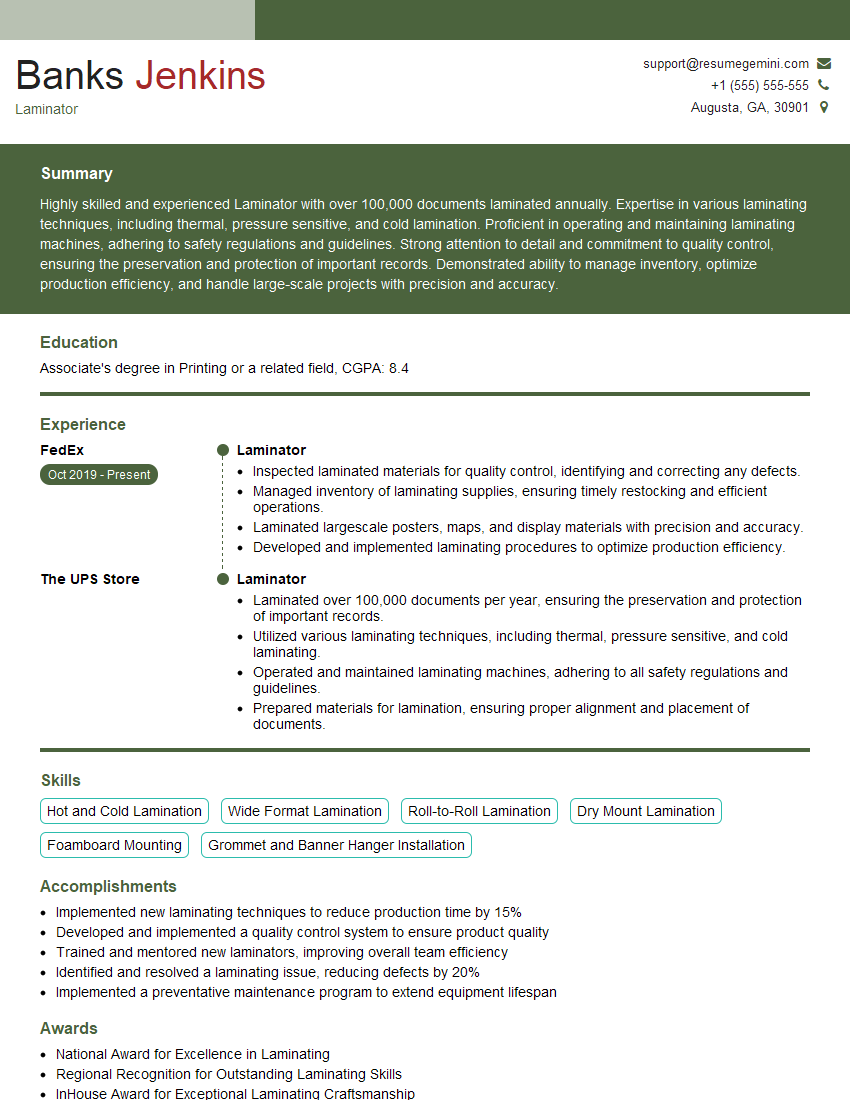
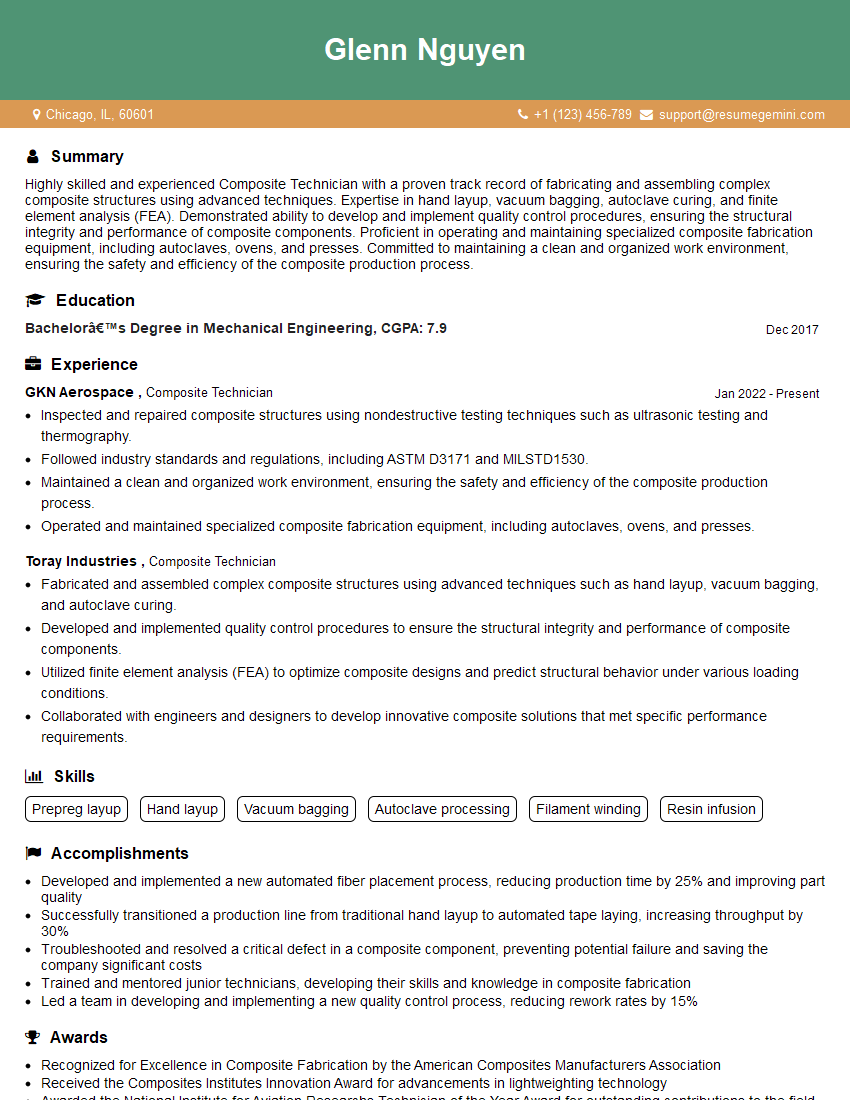
Mastering the intricacies of Plywood LayUp opens doors to exciting career opportunities in manufacturing, engineering, and construction. A strong understanding of this field significantly enhances your marketability and positions you for advancement. To maximize your job prospects, it’s crucial to create an ATS-friendly resume that highlights your skills and experience effectively. We highly recommend leveraging ResumeGemini, a trusted resource for building professional resumes that get noticed. Examples of resumes tailored to Plywood LayUp are available to help you craft a compelling application that showcases your expertise.
Explore more articles
Users Rating of Our Blogs
Share Your Experience
We value your feedback! Please rate our content and share your thoughts (optional).
What Readers Say About Our Blog
Very informative content, great job.
good