Are you ready to stand out in your next interview? Understanding and preparing for FCC Part 15 Radio Frequency Devices interview questions is a game-changer. In this blog, we’ve compiled key questions and expert advice to help you showcase your skills with confidence and precision. Let’s get started on your journey to acing the interview.
Questions Asked in FCC Part 15 Radio Frequency Devices Interview
Q 1. Explain the differences between FCC Part 15 Class A and Class B devices.
FCC Part 15 Class A and Class B devices are both intentional radiators, meaning they deliberately emit radio frequencies, but they differ significantly in their intended use environment and emission limits. Class A devices are designed for use in commercial, industrial, or business environments. They’re allowed to generate slightly higher levels of radio frequency emissions because it’s assumed that the surrounding environment is less sensitive to interference. Think of a high-powered industrial machine using radio for internal communications. Class B devices, on the other hand, are designed for residential use. Because homes and apartments typically have more sensitive electronic equipment, Class B devices must meet stricter emission limits to prevent interference with things like televisions, radios, and computers. For example, your Wi-Fi router is likely a Class B device.
- Class A: Higher emission limits, suitable for commercial/industrial settings.
- Class B: Lower emission limits, suitable for residential settings.
The difference boils down to the anticipated level of surrounding RF noise. A factory floor will naturally have a higher background noise level than a quiet living room.
Q 2. Describe the process for obtaining FCC Part 15 certification.
The process for obtaining FCC Part 15 certification involves several key steps. First, you must determine which Part 15 subpart applies to your device based on its operational characteristics (e.g., intentional radiator, unintentional radiator, etc.). Then, you need to have your device tested by an FCC-recognized testing laboratory (also known as a TCB, Telecommunications Certification Body). These labs perform tests to verify compliance with the applicable emission limits. The lab will provide you with a test report documenting the results. Once you have a successful test report, you’ll prepare a Declaration of Conformity (DoC), which is a formal statement affirming that your device complies with all applicable FCC rules. The DoC is typically included in your device’s user manual or packaging. You don’t submit the DoC to the FCC; however, maintaining records of the test reports and DoC is crucial for demonstrating compliance. Finally, while not mandatory for most Part 15 devices, applying for an FCC ID is recommended for efficient tracking and identification. It adds an official label to your device, reducing any potential issues later on.
- Product Testing: By an accredited lab.
- Declaration of Conformity (DoC): Internal documentation declaring compliance.
- (Optional) FCC ID Application: Formal identification for easier tracking.
This whole process needs careful planning and execution, as non-compliance can lead to significant legal and financial penalties.
Q 3. What are the key requirements for radiated emissions testing under FCC Part 15?
Radiated emissions testing under FCC Part 15 measures the electromagnetic fields emitted by your device. The goal is to ensure that these emissions don’t cause harmful interference to other devices. Key requirements include specifying the test frequencies (typically from 30MHz to the highest operating frequency of your device), using a calibrated antenna, and measuring the field strength at a defined distance (usually 3 meters for Class B). The measurements must be taken across different antenna polarizations (vertical and horizontal). Furthermore, the testing needs to be conducted in a shielded anechoic chamber (a specially designed room that minimizes reflections) to obtain accurate results. The device must also be tested in different operating modes and configurations to account for potential variations in emission levels. The emission levels are compared to the limits specified in the relevant Part 15 subpart. Failing to meet these limits necessitates design modifications to reduce emissions.
- Frequency Range: 30MHz to highest operating frequency.
- Test Distance: Typically 3 meters.
- Antenna Polarization: Both vertical and horizontal.
- Shielded Anechoic Chamber: Controlled testing environment.
- Operating Modes: Testing across all modes.
Q 4. How do you determine the required conducted emissions testing for a Part 15 device?
Conducted emissions testing assesses the electromagnetic interference (EMI) conducted through the power lines. It’s important because unwanted noise can travel through power cords and affect other devices connected to the same power circuit. The testing is typically done with a Line Impedance Stabilization Network (LISN), which helps simulate the impedance of a typical power line. The LISN measures the emissions from your device’s power cords, both the Neutral and Hot wires. The device under test is then run in various operating modes, and the EMI levels are recorded. You’ll use an EMI receiver to detect the emissions from 150 kHz to 30 MHz. The specific test procedures and limits are outlined in FCC Part 15. The required testing depends heavily on the device’s power source (AC or DC) and classification under Part 15. If your device is connected to the power grid via a power supply, conducted emission testing is crucial. Battery-powered devices might have less stringent requirements but still need to be checked for conducted emissions from potentially connected peripherals. For example, a Bluetooth speaker with a USB charging port would need to undergo this testing.
- LISN: Line Impedance Stabilization Network.
- Frequency Range: 150 kHz to 30 MHz.
- Power Source: Determines extent of testing.
Q 5. What is the significance of the ‘peak’ and ‘average’ power limits in FCC Part 15?
In FCC Part 15, both peak and average power limits are critical for ensuring that a device’s emissions don’t exceed acceptable levels. Peak power represents the highest instantaneous power level emitted by the device, while average power represents the average power emitted over a specific time period. Both are important because different types of emissions have different characteristics. A device might produce infrequent but very high-power bursts (peak), while its average power may be relatively low. This difference is often crucial when evaluating pulse-based transmission such as a radar or remote control. The FCC uses both measurements to create limits that cover both types of emissions, preventing interference from both high-intensity short bursts and persistently high average emissions. For instance, a device with high peak power but a low duty cycle (a low percentage of time it is transmitting) might still comply with regulations if the average power remains within acceptable limits. Therefore, manufacturers must carefully analyze both peak and average power output to ensure compliance.
- Peak Power: Highest instantaneous power level.
- Average Power: Average power over a specific time period.
Q 6. Explain the concept of duty cycle and its relevance to Part 15 compliance.
Duty cycle refers to the percentage of time a device is actively transmitting or generating emissions. It’s expressed as the ratio of active transmission time to the total time period. For example, a device that transmits for 1 millisecond and is idle for 9 milliseconds has a duty cycle of 10% (1ms / 10ms). Duty cycle is highly relevant to FCC Part 15 compliance because it directly affects the average power level. A device with a low duty cycle can generate higher peak power levels and still comply with average power limits. The FCC considers duty cycle when establishing emission limits. Devices with high duty cycles require more stringent limits than those with lower duty cycles. Accurate measurement of duty cycle is essential for ensuring compliance, as underestimating it could lead to non-compliance even if peak power seems acceptable. The duty cycle is an important factor in determining the acceptable average power level, ensuring compliance even with high peak power outputs. This is especially critical for devices using burst transmission techniques.
Duty Cycle = (Transmission Time) / (Transmission Time + Idle Time)
Q 7. What are the specific requirements for unintentional radiators under Part 15?
Unintentional radiators, under FCC Part 15 Subpart B, are devices that produce radio frequency emissions as a byproduct of their operation, rather than intentionally. These emissions are not meant to be transmitted but can still cause interference if not properly controlled. Key requirements include measuring emissions across a broad frequency range and ensuring they meet the specified limits for unintentional radiators. The specific requirements vary depending on the type of device and its operating frequency. Manufacturers must take steps to minimize these unintended emissions, often through proper shielding and grounding techniques. These requirements are significantly different from intentional radiators that are designed to transmit. For example, a computer’s emissions from its clock signals or digital logic circuits are considered unintentional radiation. Meeting these requirements typically involves careful circuit design and the use of appropriate shielding and filtering techniques to keep emissions below FCC-specified levels. Thorough testing is necessary to confirm compliance.
- Broad Frequency Range Testing: Covering potentially emitted frequencies.
- Shielding and Grounding: Minimizing unintentional emissions.
- Compliance with Subpart B Limits: Specific limits for unintentional radiators.
Q 8. What are the different methods for measuring conducted emissions?
Measuring conducted emissions involves assessing the unwanted radio frequency energy that’s conducted along power lines and interface cables of your device. Think of it like checking for electrical ‘leakage’ from your device. This is crucial because these emissions can interfere with other devices connected to the same power grid or data network. We use specialized equipment for this.
Line Impedance Stabilization Network (LISN): This is the cornerstone of conducted emissions testing. The LISN provides a controlled impedance path for the conducted emissions to travel to the measurement equipment. It’s designed to prevent reflections and ensure accurate measurements. Imagine it as a carefully calibrated ‘filter’ allowing only the emissions to pass through, separating them from the normal power supply signals.
Spectrum Analyzer: This instrument displays the frequency spectrum of the conducted emissions, showing us the strength of the emissions at different frequencies. It’s essential for determining which frequencies are causing interference and by how much.
EMI Receiver: Similar to a spectrum analyzer, but often more sensitive for detecting very low-level emissions. EMI receivers can have features like pre-selection to reduce interference and improve measurement accuracy.
The process usually involves connecting the LISN to both the AC power line of the device under test (DUT) and the spectrum analyzer, then powering on the DUT and analyzing the measured emissions against the FCC Part 15 limits. Any emissions exceeding these limits would require design modifications for compliance.
Q 9. Describe the different types of antennas commonly used in Part 15 devices.
The choice of antenna for a Part 15 device heavily depends on the application and frequency range. The antenna’s job is to efficiently radiate or receive radio waves. Here are a few common types:
Dipole Antenna: This is a basic, yet versatile antenna, often used in simple applications. It consists of two conductors of equal length, often half a wavelength long at the operating frequency. Think of a simple ‘V’ shape.
Monopole Antenna: A monopole is a single conductor, usually grounded at one end. Often used in applications where a ground plane is available, such as a cell phone antenna on a metal chassis. They’re half the size of a dipole for the same frequency.
Patch Antenna: These antennas are planar, meaning they’re flat and can be integrated into printed circuit boards (PCBs). They’re popular in compact devices like wireless mice and keyboards.
Spiral Antenna: Useful for their broad bandwidth capabilities, often found in RFID readers or UWB devices. These antennas are excellent for handling a wider range of frequencies.
Helical Antenna: Circularly polarized, it offers advantages in applications like satellite communications, though less common in typical Part 15 devices.
Selecting the appropriate antenna is critical for ensuring efficient transmission and reception, contributing to both the performance and regulatory compliance of the device.
Q 10. How does antenna gain affect compliance with FCC Part 15 limits?
Antenna gain directly impacts FCC Part 15 compliance. Gain refers to how efficiently an antenna focuses radio waves in a specific direction. A higher gain antenna concentrates the radiated power, potentially increasing the signal strength at certain angles. This can lead to exceeding the limits set by the FCC, even if the total transmitted power is within the limits.
For example, if a device transmits 10 mW with a low-gain antenna, it might comply. However, using a high-gain antenna to transmit the same 10mW could concentrate the power in a particular direction, resulting in exceeding the FCC’s limits in that specific area. Therefore, the antenna gain needs to be carefully considered during design and testing, often requiring measurements in an anechoic chamber to ensure uniform power distribution across the test sphere.
The FCC regulations account for antenna gain, and the permissible radiated power levels are adjusted accordingly. A higher-gain antenna might necessitate a lower transmitter power to achieve compliance. Careful selection and characterization are essential for successful certification.
Q 11. Explain the importance of proper grounding and shielding in meeting FCC Part 15 requirements.
Proper grounding and shielding are paramount in meeting FCC Part 15 requirements. They minimize unwanted emissions and reduce susceptibility to external interference. Think of it like this: grounding and shielding are the device’s ‘protective shell’.
Grounding: Provides a low-impedance path for unwanted currents and noise to flow to ground, preventing these currents from radiating as electromagnetic emissions. An effective ground plane minimizes common-mode currents. Imagine it like a drain for unwanted electrical energy.
Shielding: Encloses sensitive components and circuitry to prevent emissions from escaping and external interference from entering the device. A good shield acts as a barrier to prevent electromagnetic fields from penetrating or escaping. Think of it as a barrier protecting the internal circuitry.
Poor grounding and shielding can lead to excessive conducted and radiated emissions, making it difficult to achieve compliance. A well-designed system with a proper ground plane and shielded enclosures significantly reduces emissions and improves the chances of passing FCC Part 15 testing. Inadequate grounding can create ground loops, leading to noise and emission problems. Similarly, gaps and poor shielding effectiveness can significantly degrade compliance.
Q 12. What are some common causes of non-compliance with FCC Part 15 regulations?
Several factors can cause non-compliance with FCC Part 15 regulations. The most common include:
Poor PCB layout: Incorrect component placement, inadequate decoupling capacitors, and long traces can radiate unwanted emissions. It’s like having an unorganized workspace leading to unnecessary mess.
Insufficient shielding: Inadequate shielding allows emissions to escape, increasing the risk of non-compliance. This is like having a leaky container; you can’t keep things contained.
Improper grounding: Ground loops and high impedance ground connections allow noise to radiate. Think of it as a broken plumbing system where water (electrical noise) flows everywhere.
Inadequate filtering: Missing or insufficient filtering components fail to attenuate unwanted emissions, potentially leading to non-compliance. This is like having no filters on a water system, meaning all contaminants pass through.
High-gain antennas: Improper selection or usage of high-gain antennas can increase the emission levels in certain directions, exceeding FCC limits.
Unintentional radiators: Unexpected sources of emissions, such as switching power supplies or clock circuits, can exceed limits.
Addressing these issues through careful design, proper testing, and iterative design modifications are crucial to achieve compliance.
Q 13. How do you troubleshoot radiated emissions issues in a Part 15 device?
Troubleshooting radiated emissions issues requires a systematic approach. Here’s a typical workflow:
Initial Measurement: First, perform comprehensive radiated emissions testing in a controlled environment, such as an anechoic chamber, to identify the frequencies and levels of emissions exceeding the limits.
Emission Source Identification: Use various techniques like near-field probing, spectrum analysis, and current probes to pinpoint the sources of the excessive emissions. Near-field probes measure the electromagnetic fields close to the device, allowing for precise location of the problem areas.
Design Modifications: Based on the identified emission sources, implement design changes to mitigate the problem. This could include adding shielding, improving grounding, using filters, optimizing PCB layout, or changing component choices.
Re-testing: After implementing modifications, re-test the device to verify compliance. This iterative process might require multiple rounds of modification and testing until compliance is achieved.
Tools like spectrum analyzers, EMI receivers, near-field probes, and current probes are essential in this process. Effective troubleshooting often requires a combination of engineering expertise, methodical testing procedures, and a deep understanding of the device’s circuitry and design.
Q 14. Describe your experience with different EMC test equipment.
Throughout my career, I’ve extensively used various EMC test equipment, including:
Spectrum Analyzers: Keysight N9000A, Rohde & Schwarz FSW, and Anritsu MS2721A are among the spectrum analyzers I’ve used. These are essential for measuring the frequency and amplitude of emissions.
EMI Receivers: I’ve worked with Rohde & Schwarz ESVS and other EMI receivers for highly sensitive measurements.
LISNs: I have experience using various LISNs, always ensuring proper impedance matching for accurate conducted emission measurements. The choice often depends on the specific frequency range being tested.
Anechoic Chambers: I’ve conducted numerous radiated emission tests in various anechoic chambers, understanding the importance of proper calibration and measurement procedures.
Near-field probes: These tools helped me pinpoint the source of emissions during troubleshooting. The type and frequency range of probe was carefully selected for accuracy.
Current Probes: Essential for detecting unwanted currents and aiding in identifying problematic circuit paths.
My proficiency with this equipment extends beyond simple operation; I possess a deep understanding of the underlying principles and calibration procedures necessary for accurate and reliable measurements, ensuring the integrity of the testing process. This allows me to reliably and efficiently achieve compliance.
Q 15. What are some best practices for designing compliant Part 15 devices?
Designing compliant Part 15 devices requires a proactive approach starting from the initial design phase. It’s not just about testing at the end; it’s about building compliance in from the ground up. Key best practices include:
- Careful Component Selection: Choose components with known emission characteristics. Using components with pre-certified compliance greatly simplifies the process.
- Proper Shielding and Grounding: Effective shielding prevents unintended radiation. A well-designed grounding system minimizes noise coupling.
- PCB Layout Optimization: Strategic placement of components and use of ground planes significantly reduces emissions. Consider using differential signaling where appropriate.
- Filtering: Employ appropriate filters (e.g., LC filters, EMI filters) to attenuate unwanted frequencies. Placement and selection are critical for effectiveness.
- Antenna Design and Placement: Proper antenna design and placement is crucial for efficient transmission and minimizing unintentional radiation. Antenna selection depends on the application and frequency band.
- Power Supply Design: A well-designed power supply minimizes conducted emissions. Consider using switching regulators with appropriate filtering techniques.
- Documentation: Maintaining meticulous records throughout the design and testing process is critical. This includes schematics, BOMs, test plans, and test results.
For example, if you’re designing a Bluetooth device, carefully selecting a certified Bluetooth module significantly reduces the burden of demonstrating compliance. Failing to properly shield a high-speed digital circuit can lead to unwanted emissions far exceeding the FCC limits, causing significant redesign efforts later in the process.
Career Expert Tips:
- Ace those interviews! Prepare effectively by reviewing the Top 50 Most Common Interview Questions on ResumeGemini.
- Navigate your job search with confidence! Explore a wide range of Career Tips on ResumeGemini. Learn about common challenges and recommendations to overcome them.
- Craft the perfect resume! Master the Art of Resume Writing with ResumeGemini’s guide. Showcase your unique qualifications and achievements effectively.
- Don’t miss out on holiday savings! Build your dream resume with ResumeGemini’s ATS optimized templates.
Q 16. Explain the concept of spurious emissions and how to mitigate them.
Spurious emissions are unwanted electromagnetic signals emitted by a device at frequencies outside its intended operating frequency range. These emissions can interfere with other devices operating nearby. Think of it like a radio station accidentally broadcasting on a different frequency band – causing static on another channel. Mitigating spurious emissions requires a multi-pronged approach:
- Careful Component Selection: Components with low spurious emission levels are crucial.
- Effective Filtering: Properly placed and designed filters can significantly attenuate these emissions. This can include input, output, and RF filters.
- PCB Layout: A well-designed PCB layout minimizes the coupling of spurious signals.
- Shielding: Enclosing sensitive components within a metallic enclosure helps contain emissions.
- Software Design: In some cases, software adjustments can reduce the generation of spurious emissions. This might involve minimizing clock jitter or using low-noise algorithms.
A common example is a device operating at 2.4 GHz generating significant spurious emissions at 4.8 GHz. This often requires adding a high-pass filter at the antenna output to suppress the 4.8 GHz emission.
Q 17. What is the role of a pre-compliance test in the FCC Part 15 certification process?
A pre-compliance test is a crucial step before formal FCC Part 15 testing. It’s essentially a dry run, allowing you to identify potential compliance issues early in the development process. Think of it as a pre-flight check for your device before its ‘official’ flight. This significantly reduces the time and cost associated with potential redesign iterations and multiple test submissions.
During a pre-compliance test, the device undergoes testing under conditions that simulate the formal FCC test environment. This helps identify any potential issues with emissions, immunity, or other parameters. Finding and fixing problems early saves both time and money, compared to finding them only after costly formal testing has begun.
For instance, if a pre-compliance test reveals that the device’s radiated emissions exceed the limits at a particular frequency, then design changes can be made and verified before incurring the cost of official testing. This is far more cost-effective than failing official testing and needing to make corrections after the fact.
Q 18. How do you interpret an FCC Part 15 test report?
Interpreting an FCC Part 15 test report requires understanding the various sections and parameters. The report should clearly state whether the device passed or failed the tests. Key elements to focus on include:
- Test Results: Graphs showing measured emission levels compared to the FCC limits. Ensure that all measured values fall below the specified limits across all frequency ranges tested.
- Test Setup: Details on the testing equipment, chamber used, and conducted/radiated emissions measurements.
- Compliance Statement: A statement declaring whether the tested device meets all applicable FCC requirements.
- Deviation from Standards: Any deviations from standard test procedures should be clearly explained and justified.
- Test Limits: The report should clearly indicate the applicable FCC limits for the device’s class.
A key aspect is ensuring the test report accurately reflects the device’s configuration tested – the exact model and any unique specifications. Any discrepancies can lead to misinterpretations and possible issues with certification.
Q 19. What are some common misconceptions about FCC Part 15 compliance?
Some common misconceptions about FCC Part 15 compliance include:
- ‘It’s easy to pass’: Compliance requires rigorous testing and often substantial engineering effort. It’s not a simple checkbox exercise.
- ‘Self-testing is sufficient’: Formal testing by an accredited lab is required for official certification.
- ‘Only radiated emissions matter’: Conducted emissions are equally important and need to meet the specified limits.
- ‘One test is enough’: Depending on the device’s complexity, multiple tests might be necessary for different operating modes or configurations.
- ‘It’s a one-time process’: Changes to the design require further testing and potentially re-certification.
For example, many believe that merely meeting the emission standards is enough; however, the entire process also involves maintaining accurate documentation, following specific testing procedures, and demonstrating compliance to the standards in your submission to the FCC.
Q 20. Describe your experience working with different regulatory bodies besides the FCC.
Beyond the FCC, I have extensive experience working with regulatory bodies like the CE (Conformité Européenne) in the European Union, ISED (Innovation, Science and Economic Development Canada) in Canada, and the NCC (National Communications Commission) in Taiwan. While the specific requirements vary, the underlying principles of electromagnetic compatibility (EMC) and radio frequency (RF) compliance remain consistent. The key differences often lie in the specific test methods, limits, and documentation requirements.
For example, while the FCC uses CISPR standards for emissions, the CE marking generally follows EN standards. Understanding these subtle differences is critical for successfully navigating international compliance challenges. This necessitates a deep understanding of each region’s regulatory framework and the specific requirements they pose.
Q 21. How do you manage the documentation required for FCC Part 15 compliance?
Managing documentation for FCC Part 15 compliance requires a systematic approach. I utilize a combination of electronic and physical document management systems. This includes:
- Dedicated File System: A well-organized digital file system storing all relevant documents, organized by device model and test date.
- Version Control: Tracking document revisions using version control software to prevent confusion and ensure accurate records.
- Document Templates: Using standardized templates for test plans, reports, and other critical documents ensures consistency and completeness.
- Electronic Signature System: Utilizing secure electronic signatures simplifies the approval and verification process.
- Centralized Database: A central database tracks all important information relating to each device’s compliance status.
This approach ensures all documentation is readily available, organized, and easily auditable, a necessity should the FCC request a review of your compliance documentation. It is also crucial for maintaining a strong compliance history for future submissions.
Q 22. Explain your understanding of harmonic emissions and how to control them.
Harmonic emissions are unwanted signals that are integer multiples of the fundamental frequency of an intentional radiator. Think of it like this: if your device operates at 2.4 GHz (the fundamental frequency), harmonic emissions would appear at 4.8 GHz (2nd harmonic), 7.2 GHz (3rd harmonic), and so on. These harmonics can cause interference with other devices operating in those frequency bands, leading to non-compliance with FCC Part 15 regulations.
Controlling harmonic emissions involves several strategies:
- Careful circuit design: Minimizing the generation of harmonics at the source is crucial. This involves using components with low harmonic distortion and employing techniques like proper biasing and impedance matching.
- Filtering: This is the most common approach. Low-pass filters are placed at the output of the transmitter to attenuate frequencies above the desired fundamental frequency. The filter design is crucial; a poorly designed filter can even exacerbate the problem.
- Shielding: Proper shielding of the device minimizes the radiation of both fundamental and harmonic emissions.
- Spread-spectrum techniques: For some devices, using spread-spectrum modulation can reduce the peak power density at any specific harmonic frequency, improving compliance.
For example, in designing a Bluetooth device, I would carefully select low-noise amplifiers and carefully design a low-pass filter at the antenna port, ensuring sufficient attenuation of harmonics across the relevant frequency range, as specified by Part 15 rules for the specific class of device.
Q 23. What is your experience with different types of filtering techniques used in RF design?
My experience encompasses a wide range of filtering techniques, crucial for meeting FCC Part 15 emission limits. I’ve worked extensively with:
- LC filters: Simple and cost-effective, these use inductors (L) and capacitors (C) to create resonant circuits that attenuate specific frequencies. I’ve used these effectively for suppressing out-of-band emissions in many projects.
- Pi and T filters: These are more complex LC filter configurations offering steeper roll-off characteristics, better attenuation, and improved impedance matching. They’re essential for stricter emission requirements.
- Ceramic filters: These offer excellent performance in size and cost-effectiveness. Their characteristics are well-suited to specific frequency bands and I’ve used them frequently for high-frequency applications.
- Surface Acoustic Wave (SAW) filters: These provide very sharp rejection characteristics, ideal for isolating specific channels and reducing adjacent-channel interference. I’ve incorporated these in more demanding applications requiring precise frequency selection.
- EMI/RFI filters (common-mode and differential-mode): These are critical in preventing conducted emissions from entering the power line. I’ve designed circuits incorporating these filters to ensure compliance with FCC Part 15 conducted emission limits.
The choice of filter depends heavily on factors such as the frequency range, the required attenuation, size constraints, and cost considerations. I always use simulation tools (discussed in question 4) to optimize filter design before prototyping.
Q 24. How do you ensure your design meets the requirements for both conducted and radiated emissions?
Meeting both conducted and radiated emission limits is paramount for FCC Part 15 compliance. Conducted emissions are measured at the AC power line, while radiated emissions are measured in a radiated emissions test chamber (anechoic chamber).
For conducted emissions, my approach involves:
- Proper grounding and shielding: Minimizing ground loops and shielding sensitive circuits is key. This prevents noise from coupling into the power lines.
- EMI/RFI filters: Using appropriate filters to attenuate conducted interference. Careful selection and placement are crucial.
- PCB layout optimization: Careful routing of traces to minimize common-mode currents.
For radiated emissions, I focus on:
- Shielding: Effective enclosure design to contain electromagnetic radiation. Shielding effectiveness depends on material choice and construction.
- Filtering: Careful filter design at both input and output ports to prevent unwanted emissions from radiating.
- PCB layout: Optimized placement of components to minimize loop areas and minimize the radiation of electromagnetic fields. Careful attention to trace lengths and component placement is essential.
- Antenna considerations: Ensuring proper antenna placement and design to minimize unintentional radiation.
Throughout the design process, I use simulation tools to predict emission levels and identify potential problem areas, helping me to proactively address compliance issues before testing.
Q 25. Describe your experience in using simulation tools for RF design and compliance prediction.
I’m proficient in using several RF simulation tools, including ANSYS HFSS, Keysight ADS, and CST Microwave Studio. These tools are essential for predicting the performance of a design and ensuring compliance before building prototypes.
In a recent project involving a wireless sensor, I used ANSYS HFSS to simulate the radiated emissions from the antenna, optimizing the antenna design to minimize out-of-band radiation. This allowed us to avoid costly iterations during the prototyping phase and ensured efficient compliance testing. We achieved compliance on the first attempt, saving both time and resources.
These tools allow for:
- Accurate prediction of emission levels: Simulating different scenarios allows me to identify potential issues early on.
- Optimization of filter designs: Fine-tuning filter parameters to achieve the required attenuation.
- Analysis of PCB layout impact: Evaluating how different PCB layouts affect radiated and conducted emissions.
- Antenna design and optimization: Designing antennas that minimize unwanted emissions and maximize efficiency.
Simulation results guide me in making design decisions, reducing the number of prototypes needed and accelerating the time to market while improving the chances of passing FCC compliance testing.
Q 26. What are some strategies to reduce electromagnetic interference (EMI) in a Part 15 device?
Reducing EMI in a Part 15 device requires a multi-faceted approach. It’s about careful attention to detail throughout the design and manufacturing process.
- Shielding: A well-designed metallic enclosure is paramount, particularly for devices that generate significant emissions.
- Filtering: Employing appropriate filters at various points in the circuit to attenuate unwanted frequencies.
- Grounding and bonding: Establishing a solid ground plane on the PCB and ensuring proper bonding between different parts of the device.
- PCB layout: Careful routing of traces, placement of components, and use of ground planes to minimize loop areas and reduce radiated emissions.
- Component selection: Choosing components with low EMI characteristics.
- Spread spectrum techniques: Distributing the energy over a wider frequency range to reduce the peak power density at any particular frequency.
- Common-mode choke: Incorporating a common-mode choke in the power line to suppress common-mode currents.
In a real-world example, I worked on a project where high-frequency switching noise was causing problems. By implementing a combination of better PCB layout, a carefully selected common-mode choke, and improved shielding, we drastically reduced the EMI and met the FCC Part 15 requirements.
Q 27. How familiar are you with the FCC Part 15 rules related to intentional radiators?
I’m very familiar with the FCC Part 15 rules, specifically those concerning intentional radiators. My understanding covers various aspects, including:
- Different classes of devices: I understand the specific requirements for intentional radiators, such as those in Class A, B, and other specialized categories. Each class has different emission limits and testing requirements.
- Emission limits: I’m knowledgeable about the specific limits for both conducted and radiated emissions, including the frequency ranges and the allowed power levels. I know that these limits vary depending on the frequency and the type of device.
- Measurement procedures: I’m familiar with the standard measurement procedures, including the use of specific antennas, test equipment, and measurement methods specified in the FCC rules and ANSI C63.4 standards.
- Compliance documentation: I’m experienced in preparing and submitting the necessary documentation for FCC certification, including test reports, user manuals, and technical specifications.
- Labeling requirements: I understand the rules about correct FCC labeling on the device.
This knowledge allows me to design and test devices that comply with all relevant regulations, minimizing the risk of non-compliance and avoiding delays in product launch.
Q 28. Describe your experience with FCC Part 15 testing and troubleshooting.
My experience with FCC Part 15 testing and troubleshooting is extensive. I’ve conducted numerous tests, both in-house and at accredited testing labs. This includes both conducted and radiated emissions testing, and I am familiar with the equipment used such as spectrum analyzers, EMI receivers, and anechoic chambers.
When troubleshooting non-compliance, I follow a systematic approach:
- Reviewing the design: Analyzing the circuit schematics, PCB layout, and antenna design for potential sources of emissions.
- Performing simulations: Utilizing simulation software to identify potential problem areas.
- Conducting targeted measurements: Identifying specific frequencies and emission levels to isolate the problem areas.
- Implementing corrective actions: This might include adding filters, modifying the PCB layout, improving shielding, or even redesigning parts of the circuit.
- Retesting: Verifying that the corrective actions have resolved the issue and that the device now complies with FCC regulations.
A recent example involved a device failing radiated emissions testing. Through careful analysis of the test results, we identified that specific high-frequency noise was radiating from poorly terminated traces on the PCB. Re-routing these traces and incorporating additional filtering at the problem frequency quickly resolved the issue.
Key Topics to Learn for FCC Part 15 Radio Frequency Devices Interview
- Fundamentals of FCC Part 15: Understanding the regulations, classifications (intentional radiators, unintentional radiators), and the overall purpose of the rules.
- Emission Limits and Measurement Techniques: Familiarize yourself with the specific limits for different types of devices and the methods used to measure radiated and conducted emissions.
- Antenna Requirements: Understand the regulations concerning antenna types, gain, and the impact of antenna design on compliance.
- Power Limits and Duty Cycle: Grasp the concepts of peak and average power, and how duty cycle affects compliance with power limits.
- Harmonic Emissions and Spurious Emissions: Know how to identify and mitigate unwanted emissions outside the intended operating frequency.
- Testing and Certification Procedures: Understand the process of testing, obtaining reports, and the role of accredited testing laboratories.
- Practical Application: Analyze real-world scenarios involving troubleshooting emission issues in various RF devices (e.g., Bluetooth, Wi-Fi, etc.). Consider the impact of different design choices on compliance.
- Problem-Solving Approaches: Develop strategies for identifying the root cause of non-compliance and implementing effective solutions. This includes understanding the use of filters, shielding, and other mitigation techniques.
- Specific Sections of Part 15: Deep dive into sections relevant to your specific area of expertise (e.g., Part 15.247 for unintentional radiators, Part 15.209 for intentional radiators).
Next Steps
Mastering FCC Part 15 Radio Frequency Devices is crucial for career advancement in the wireless technology industry. A strong understanding of these regulations demonstrates your technical expertise and commitment to compliance, making you a highly desirable candidate. To maximize your job prospects, create an ATS-friendly resume that highlights your relevant skills and experience. ResumeGemini is a trusted resource to help you build a professional and impactful resume. They offer examples of resumes specifically tailored to FCC Part 15 Radio Frequency Devices expertise, providing you with a template to showcase your qualifications effectively.
Regulatory Compliance Specialist Resume Sample
Regulatory Affairs Specialist Resume Sample
Test Engineer Resume Sample
Wireless Engineer Resume Sample

Hardware Engineer Resume Sample
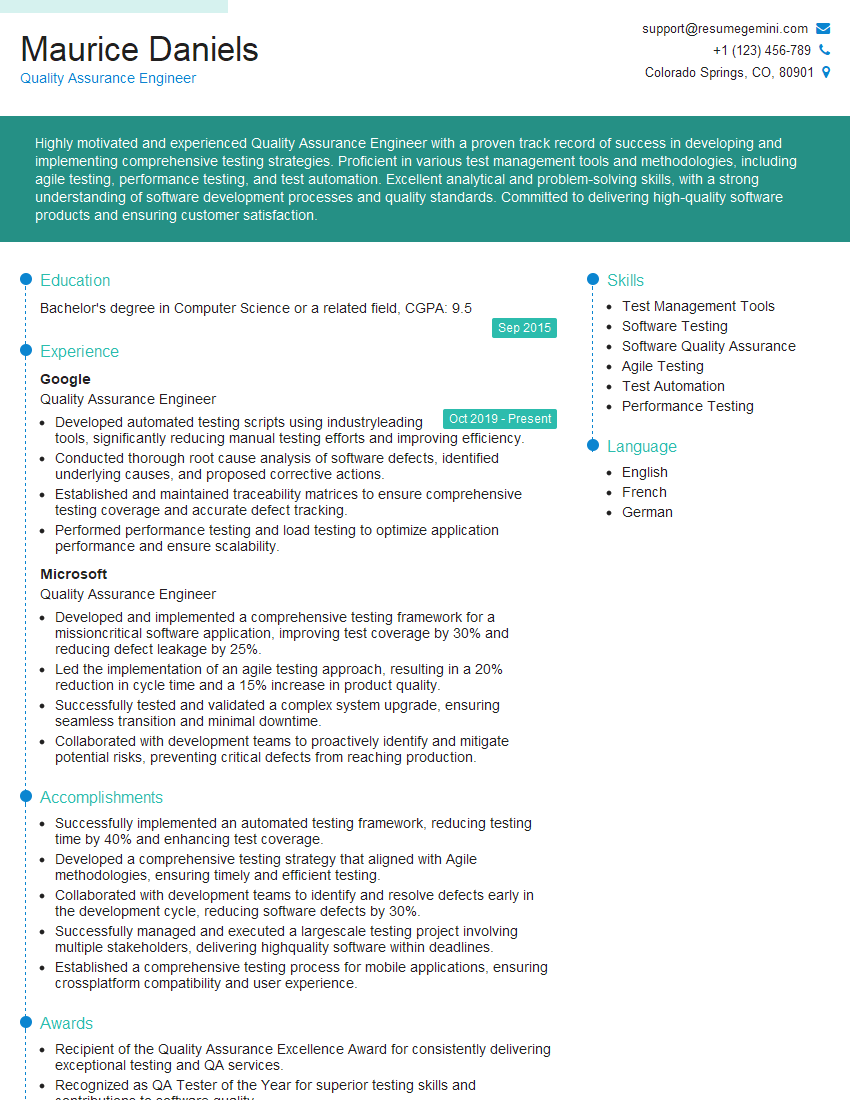
Quality Assurance Engineer Resume Sample
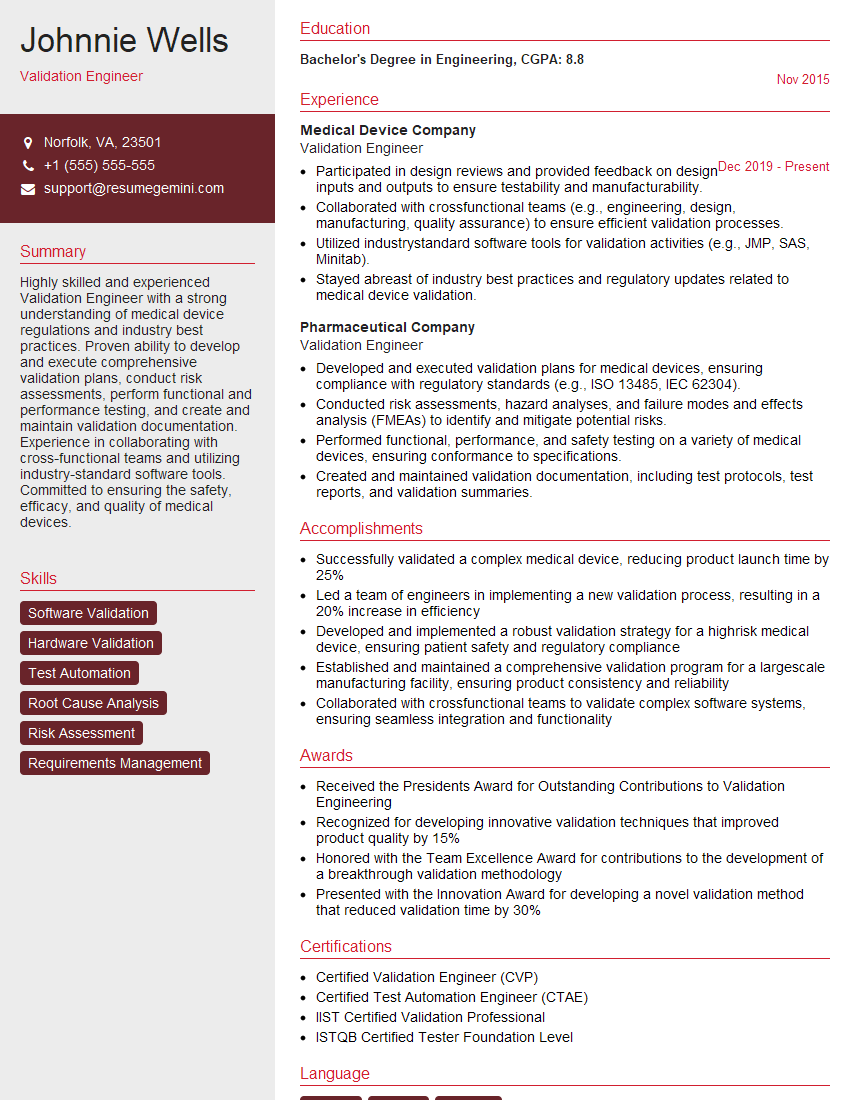
Validation Engineer Resume Sample
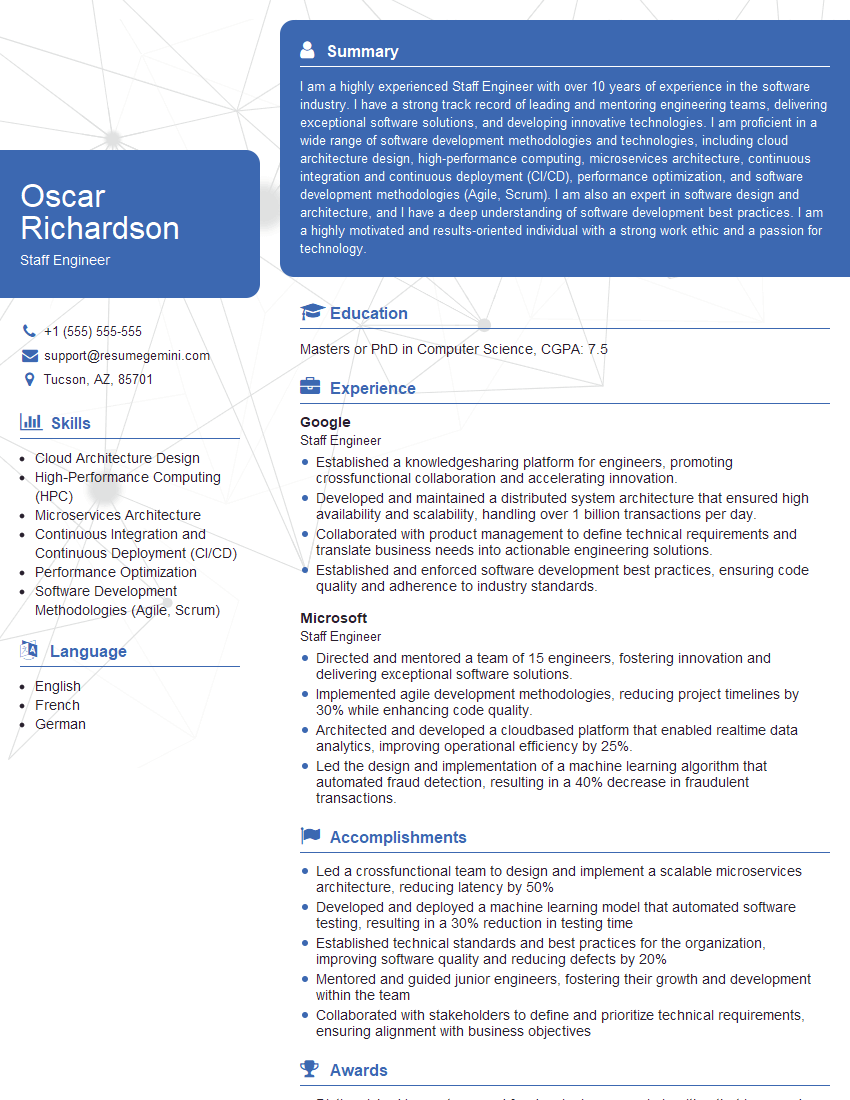
Staff Engineer Resume Sample
Explore more articles
Users Rating of Our Blogs
Share Your Experience
We value your feedback! Please rate our content and share your thoughts (optional).
What Readers Say About Our Blog
Very informative content, great job.
good