The right preparation can turn an interview into an opportunity to showcase your expertise. This guide to FCC Rule Compliance interview questions is your ultimate resource, providing key insights and tips to help you ace your responses and stand out as a top candidate.
Questions Asked in FCC Rule Compliance Interview
Q 1. Explain the difference between Part 15 and Part 90 of the FCC rules.
Parts 15 and 90 of the FCC rules govern radio frequency (RF) devices, but they target different types of devices and have distinct licensing requirements. Think of it like this: Part 15 is for everyday electronics, while Part 90 is for professional communication systems.
- Part 15: Unintentional Radiators This part covers devices that emit RF energy as a byproduct of their operation, not as their primary function. Examples include cell phones, Wi-Fi routers, and Bluetooth devices. These devices generally don’t require a license but must meet specific emission limits to avoid causing harmful interference. Compliance is achieved through testing and ensuring the device meets the technical specifications outlined in the rules.
- Part 90: Intentional Radiators This part governs licensed radio services used for intentional communication, such as land mobile radio (LMR) systems, CB radios, and amateur radio. Devices operating under Part 90 require a license from the FCC, which involves submitting an application demonstrating a need for the service and meeting specific technical requirements. These devices often have much higher power output than Part 15 devices and need stricter regulations to avoid interference.
The key difference lies in the intent of the RF emissions: unintentional (Part 15) versus intentional (Part 90). This fundamentally shapes the compliance requirements and licensing needs.
Q 2. Describe the process for obtaining an FCC license for a new radio service.
Obtaining an FCC license for a new radio service is a multi-step process that requires careful planning and documentation. It’s similar to getting a driver’s license, but instead of driving a car, you’re operating a radio frequency.
- Application Preparation: This involves thoroughly researching the available frequencies, determining the needed bandwidth, and preparing a detailed application outlining the proposed service’s technical specifications, operational parameters, and intended geographic coverage. You’ll need to demonstrate the need for the service and show how it won’t cause harmful interference to existing services.
- FCC Filing: The completed application, along with any necessary supporting documents (e.g., engineering studies, environmental impact assessments), is submitted electronically via the FCC’s Universal Licensing System (ULS).
- Review and Processing: The FCC reviews the application to ensure it meets all regulatory requirements. This process can take several weeks or even months depending on the complexity of the application and the FCC’s workload.
- Grant or Denial: If the application is approved, the FCC will issue a license granting authorization to operate the radio service under specified conditions. If denied, the applicant usually receives feedback explaining the reasons for denial.
- Compliance Monitoring: After license issuance, ongoing compliance with the terms and conditions of the license is required, including regular inspections and reporting.
Each step requires detailed technical knowledge and often involves the expertise of a qualified telecommunications engineer or FCC consultant.
Q 3. What are the key requirements for FCC compliance in the context of unintentional radiators?
Unintentional radiators, as defined under Part 15, must meet specific emission limits to avoid causing harmful interference to other radio services. Imagine a crowded street: everyone needs to respect certain rules to avoid collisions. These rules are the emission limits.
- Emission Limits: Devices must adhere to strict limits on the amount of RF energy they radiate at different frequencies. These limits are specified in Part 15 and vary depending on the device type and operating frequency.
- Testing and Verification: Manufacturers are responsible for demonstrating compliance through independent testing by an FCC-recognized laboratory. Test reports showing that the device meets the emission limits are required for marketing and distribution.
- Technical Documentation: Maintain thorough technical documentation illustrating design features and testing results to demonstrate ongoing compliance. This is crucial for responding to any potential FCC inquiries.
- Labeling Requirements: Proper FCC labeling on the device is mandatory to indicate its compliance status.
Failure to comply can result in significant fines, product recalls, and damage to brand reputation.
Q 4. How do you ensure compliance with FCC labeling requirements?
Ensuring compliance with FCC labeling requirements is critical for demonstrating compliance and avoiding potential legal issues. It’s like a traffic ticket: if your license plate isn’t visible, you’ll get a ticket. Same with FCC labeling.
The FCC mandates specific labeling requirements for compliant devices. This includes:
- FCC ID: A unique identifier assigned by the FCC during the equipment authorization process. This should be clearly visible on the device and packaging.
- Manufacturer’s Information: The manufacturer’s name and address must be clearly displayed.
- Compliance Statement: A statement indicating that the device complies with the relevant FCC rules, such as “This device complies with Part 15 of the FCC Rules.”
The location, size, and format of the labeling must adhere to specific guidelines outlined in the FCC regulations. Incorrect or missing labeling can lead to non-compliance and subsequent penalties.
Q 5. Explain the concept of electromagnetic compatibility (EMC) and its relevance to FCC compliance.
Electromagnetic Compatibility (EMC) is the ability of electronic equipment to function satisfactorily in its electromagnetic environment without introducing unacceptable electromagnetic disturbance to anything else. It’s like having well-mannered neighbors: they don’t interfere with each other’s lives.
EMC is crucial for FCC compliance because unintentional interference can cause significant problems. The FCC regulations aim to minimize this interference by setting emission limits and requiring devices to meet certain immunity levels (resistance to interference from other devices). The process involves:
- Emission Testing: Ensuring the device doesn’t radiate excessive electromagnetic energy that could interfere with other devices.
- Immunity Testing: Verifying the device can withstand electromagnetic interference without malfunctioning.
Demonstrating EMC compliance through rigorous testing is a fundamental aspect of meeting FCC requirements for both intentional and unintentional radiators.
Q 6. What is the significance of the FCC’s Declaration of Conformity (DoC)?
The Declaration of Conformity (DoC) is a formal statement by the manufacturer or importer stating that their product(s) meet the applicable technical standards and regulations. It’s like a certification of good conduct for your product. It’s a self-declaration of conformity.
Its significance lies in its role as a key piece of evidence demonstrating compliance. The DoC typically includes:
- Product identification information
- Details of applicable standards and regulations
- Reference to any testing performed
- Contact details of the responsible party
The DoC is not a certificate issued by the FCC, but rather a document the manufacturer must maintain and provide to the FCC upon request. It’s a crucial element in the overall compliance process and its absence can cause problems with product certification and distribution.
Q 7. Describe the process for filing an FCC application for equipment authorization.
Filing an FCC application for equipment authorization is a formal process required before marketing and selling a new radio device in the United States. Think of it as a product passport for your device.
- Choose the Appropriate Grant Type: Determine the correct type of grant based on the device’s functionality and features (e.g., Declaration of Conformity (DoC) for simpler devices, Certification for more complex devices).
- Prepare the Application: Gather all necessary documentation, including technical specifications, test reports from an FCC-recognized lab, and photos of the device’s labeling. This is often a detailed and technically demanding step.
- Online Submission: Use the FCC’s online filing system to submit the application and supporting documents. This requires careful attention to detail and adherence to the FCC’s instructions.
- FCC Review and Processing: The FCC reviews the application and supporting documents. This process can take several weeks or months, depending on the complexity of the device and the FCC’s current workload.
- Grant or Denial: If the application is approved, the FCC issues a grant of equipment authorization, assigning an FCC ID to the device. If denied, the applicant will typically receive feedback on the reasons for denial.
The process requires careful attention to detail, thorough testing, and compliance with all relevant FCC rules and regulations.
Q 8. How do you handle FCC violations or non-compliance issues?
Handling FCC violations starts with a proactive approach to compliance. If a potential violation is identified, the first step is to conduct a thorough internal investigation to determine the extent of the non-compliance. This includes reviewing all relevant documentation, testing equipment to verify performance, and interviewing personnel involved.
Once the issue is fully understood, a corrective action plan is developed and implemented. This plan details the steps necessary to bring the equipment or operation into compliance. It might involve software updates, hardware modifications, retraining employees, or even ceasing operation until the problem is rectified. Crucially, meticulous record-keeping of the entire process is essential for demonstrating good faith to the FCC.
If the violation has already been reported to the FCC, cooperation with their investigation is paramount. We provide all requested information promptly and accurately, engaging with the agency openly and transparently. We work to rectify the situation as efficiently as possible and learn from the experience to prevent future occurrences. This includes improving internal processes and strengthening the compliance program.
Q 9. What are the potential penalties for non-compliance with FCC regulations?
Penalties for FCC non-compliance vary widely depending on the severity and nature of the violation, as well as the company’s history of compliance. Penalties can range from warnings and notices of violation to significant financial fines, and even criminal charges in severe cases.
- Warnings: A first offense might result in a warning letter, giving the company an opportunity to correct the issue.
- Notices of Violation (NOVs): More serious violations may lead to an NOV, requiring a response outlining corrective actions.
- Forfeitures: These are monetary penalties that can range from a few hundred dollars to millions, depending on the severity and number of violations.
- Cease and Desist Orders: These orders force a company to stop a specific activity that is in violation of FCC rules.
- Criminal Charges: In cases involving intentional fraud or willful disregard for regulations, criminal charges can be filed, resulting in imprisonment and substantial fines.
The FCC also considers factors like the company’s size, revenue, and previous compliance history when determining appropriate penalties. The goal is not just to punish but to deter future violations and ensure public safety.
Q 10. Explain the role of the FCC in regulating telecommunications.
The Federal Communications Commission (FCC) plays a vital role in regulating the nation’s telecommunications industry, ensuring that communications services are available and accessible to all Americans. Their authority stems from the Communications Act of 1934. This regulation covers a wide spectrum, including:
- Licensing and spectrum allocation: The FCC allocates radio frequencies (spectrum) to various services such as broadcast television, radio, cellular phones, satellite communications, and Wi-Fi. They issue licenses and ensure efficient use of the limited spectrum resource.
- Technical standards: They set and enforce technical standards for equipment and services to ensure compatibility and interoperability across different systems. This ensures everyone can communicate effectively, regardless of the technology used.
- Consumer protection: The FCC protects consumers from unfair practices and billing issues related to telecommunication services.
- Competition and market structure: They promote competition in the telecommunications market to prevent monopolies and encourage innovation.
- Public safety and emergency communications: The FCC ensures the reliability of emergency communications systems, such as 911 services.
In essence, the FCC acts as a regulator, ensuring a fair, competitive, and efficient telecommunications environment that benefits both businesses and consumers.
Q 11. What are some common FCC compliance challenges faced by companies?
Companies face various challenges in maintaining FCC compliance. Some common issues include:
- Keeping up with evolving regulations: FCC rules and regulations are constantly updated, requiring companies to stay informed and adapt their practices accordingly. This is a continuous learning process.
- Testing and certification: Ensuring that equipment meets the FCC’s technical requirements can be complex and expensive, requiring specialized testing facilities and expertise.
- Documentation and record-keeping: Maintaining accurate and complete documentation of compliance efforts is crucial. Inadequate record-keeping can significantly hinder the ability to demonstrate compliance in case of an audit or investigation.
- Managing changes in technology: The rapid pace of technological advancements constantly introduces new compliance challenges. For example, the deployment of 5G technology necessitates new compliance strategies.
- International regulations: Companies operating internationally must navigate both US and international regulations, adding complexity to their compliance efforts.
Effective compliance requires a dedicated effort across multiple departments, from engineering and operations to legal and management.
Q 12. How do you stay up-to-date on changes and updates to FCC rules and regulations?
Staying current with FCC rule changes requires a multi-faceted approach.
- FCC website monitoring: Regularly checking the FCC website for updates, notices, and new rules is essential. We subscribe to email alerts for relevant rule changes affecting our operations.
- Industry publications and newsletters: Subscribing to industry publications and newsletters that cover FCC compliance issues helps stay informed about relevant developments and interpretations of rules.
- Industry conferences and workshops: Attending industry conferences and workshops provides opportunities to network with experts, learn about best practices, and gain insights into emerging compliance challenges.
- Legal counsel: Consulting with legal counsel specializing in telecommunications law ensures that our interpretations of the rules are accurate and up-to-date.
Proactive monitoring is key to identifying and addressing potential compliance gaps before they become problems.
Q 13. Describe your experience with FCC testing and certification procedures.
My experience with FCC testing and certification procedures is extensive. I’ve been directly involved in numerous projects, ranging from simple devices to complex systems. This includes:
- Selecting the appropriate testing laboratory: Choosing an FCC-recognized laboratory is crucial. The laboratory’s expertise, reputation, and turnaround time must be carefully considered.
- Preparing the equipment for testing: This includes ensuring the equipment is in proper working order and that all necessary documentation is prepared.
- Overseeing the testing process: Active participation in testing is vital to identify and resolve any issues that arise during the process.
- Reviewing test reports: A thorough review of test reports is necessary to ensure accuracy and compliance with FCC requirements.
- Submitting the application for certification: This involves completing all required forms and submitting all necessary documentation to the FCC.
Understanding the nuances of the certification process and employing a systematic approach minimizes delays and ensures a successful outcome. I have a strong track record of successfully navigating the FCC certification process across various technologies and product categories.
Q 14. How do you manage FCC compliance documentation?
Managing FCC compliance documentation requires a systematic and organized approach. We utilize a combination of electronic and physical record-keeping to ensure easy access and retrieval of information.
- Centralized database: We use a centralized database to store all relevant documents, including test reports, certification letters, licenses, and internal compliance reports. This ensures easy access and version control.
- Version control: Every document is version-controlled to maintain an audit trail and prevent confusion due to outdated information.
- Secure storage: Both electronic and physical documents are stored securely, complying with data privacy and security regulations.
- Regular audits: Regular internal audits of our compliance documentation are performed to verify its completeness, accuracy, and adherence to FCC requirements.
- Access control: Access to compliance documentation is restricted to authorized personnel, ensuring confidentiality and preventing unauthorized modification.
Our documentation management system ensures that we can quickly retrieve any required information during an audit or investigation, demonstrating our commitment to compliance.
Q 15. How would you address a situation where a product fails FCC testing?
When a product fails FCC testing, it’s crucial to systematically investigate the cause and implement corrective actions. This isn’t simply a matter of retesting; it requires a thorough understanding of the test failures.
- Identify the Specific Failure: Pinpoint the exact test(s) the product failed. Was it emission limits in a specific frequency range? Did it fail susceptibility testing? Knowing the precise failure mode guides the troubleshooting process.
- Review Test Setup and Procedures: Ensure the testing was conducted correctly and according to FCC rules. Errors in test setup, equipment calibration, or procedures can lead to false failures.
- Analyze the Product Design: Examine the product’s circuitry, shielding, and grounding for potential sources of emissions or susceptibility. This often involves using spectrum analyzers, near-field probes, and other specialized equipment to pinpoint problem areas. We might look for unexpected harmonic generation, poorly shielded components, or inadequate grounding.
- Implement Corrective Actions: Based on the analysis, implement appropriate changes: add shielding, improve grounding, modify circuitry, or use different components. Documentation of all changes is critical.
- Retesting and Verification: Once modifications are made, the product undergoes retesting to verify compliance. This rigorous process ensures the product meets all regulatory requirements before it’s released to the market.
For example, I once worked on a device that failed radiated emission testing due to an unexpected resonance in a specific frequency band. By carefully analyzing the PCB layout and adding a strategically placed ferrite bead, we eliminated the resonance and achieved compliance.
Career Expert Tips:
- Ace those interviews! Prepare effectively by reviewing the Top 50 Most Common Interview Questions on ResumeGemini.
- Navigate your job search with confidence! Explore a wide range of Career Tips on ResumeGemini. Learn about common challenges and recommendations to overcome them.
- Craft the perfect resume! Master the Art of Resume Writing with ResumeGemini’s guide. Showcase your unique qualifications and achievements effectively.
- Don’t miss out on holiday savings! Build your dream resume with ResumeGemini’s ATS optimized templates.
Q 16. What is your experience with the FCC’s equipment authorization process?
I have extensive experience with the FCC’s equipment authorization process, having successfully guided numerous products through various certifications, including Declaration of Conformity (DoC) and FCC ID applications. My experience spans multiple product categories, from consumer electronics to industrial devices. I’m familiar with the various testing requirements depending on the product’s functionality and operating frequencies.
This involves understanding the specific rules and regulations applicable to each product category, preparing the necessary documentation, selecting accredited testing labs, managing the testing process, addressing any discrepancies, and ultimately submitting the application to the FCC. I understand the intricacies of dealing with different FCC rules parts (e.g., Part 15 for unintentional radiators, Part 18 for industrial, scientific, and medical equipment). I am also familiar with the process of obtaining a grant of equipment authorization and maintaining compliance post-market launch.
For instance, in a recent project involving a new wireless IoT device, I orchestrated the entire process, including selecting the appropriate testing lab, managing the testing schedule, and successfully submitting the application, resulting in the timely issuance of an FCC ID.
Q 17. Explain your understanding of RF safety guidelines and their relation to FCC regulations.
RF safety guidelines, as defined by organizations like the FCC, are crucial for protecting users and the public from harmful exposure to radio frequency (RF) radiation. These guidelines are closely tied to FCC regulations, which often incorporate them directly into their rules and standards. The FCC sets limits on the amount of RF energy a device can emit, based on frequency and exposure time. These limits are based on scientific research into the potential biological effects of RF exposure.
Understanding RF safety means knowing how to calculate RF exposure levels, designing products to minimize radiation, and implementing appropriate labeling and warnings to inform users about safe operating procedures. These safety guidelines are not optional, but are legally binding requirements that must be strictly adhered to. Failure to comply can result in severe penalties, including product recalls and hefty fines.
For example, a cell phone manufacturer must ensure that its device’s RF output power and antenna design comply with the FCC’s specific absorption rate (SAR) limits. These limits dictate the maximum amount of RF energy that can be absorbed by the user’s body during typical phone usage. Regular testing and verification are essential to ensure ongoing compliance.
Q 18. How do you ensure that your company’s products meet all relevant FCC requirements?
Ensuring our company’s products consistently meet FCC requirements is a multifaceted process integrated into every stage of product development. It’s not something we do just once, before shipping; it’s continuous.
- Design for Compliance: We begin by incorporating FCC compliance considerations into the initial design phase. This involves selecting components that meet regulatory requirements and designing the product to minimize emissions and improve immunity to interference.
- Testing and Verification: Rigorous testing throughout the development lifecycle ensures that each stage aligns with FCC standards. We use accredited testing labs for crucial aspects, guaranteeing impartial evaluation.
- Documentation and Records: Meticulous documentation of all testing results, design modifications, and compliance evidence is crucial for demonstrating compliance and for addressing any potential future issues.
- Ongoing Monitoring and Updates: FCC rules can change. We establish a system to monitor updates and modify our designs or procedures as needed to maintain compliance.
- Internal Training: Regular training for our engineering and compliance teams is crucial. It keeps us updated on the latest regulations and best practices.
This proactive approach allows us to avoid costly delays and potential product recalls. It demonstrates our commitment to responsible manufacturing and customer safety.
Q 19. Describe your experience with different types of FCC licenses and permits.
My experience encompasses several FCC licenses and permits, each serving a distinct purpose within the regulatory landscape.
- FCC ID: This is the most common type of authorization, granted for equipment that intentionally generates or uses radio frequencies. It’s essential for most wireless devices.
- Equipment Authorization: This covers various forms of authorizations, often tied to specific FCC rules parts. It’s a broad term encompassing FCC IDs and other authorizations demonstrating compliance.
- Radio Station Licenses: These are required for stations that broadcast over radio frequencies, encompassing various categories, from AM and FM broadcast stations to specialized services.
- Experimental Licenses: These permits allow organizations to conduct research and development using radio frequencies in specific controlled environments and under specific conditions.
Understanding the nuances of each license type is critical for ensuring proper compliance. The application procedures, testing requirements, and operational limitations vary significantly. For example, obtaining a radio station license requires a far more extensive application process than obtaining an FCC ID for a consumer electronic device.
Q 20. What are the key considerations for FCC compliance in the design phase of a product?
Incorporating FCC compliance during the product design phase is paramount for efficiency and cost-effectiveness. Addressing compliance issues early on is significantly cheaper and easier than retroactively fixing them.
- Component Selection: Choosing components with certifications relevant to the product’s intended use. This includes selecting components that already meet emission and immunity requirements.
- Circuit Design: Careful consideration of circuit layout to minimize EMI (Electromagnetic Interference) and prevent unintended radiation. This often involves techniques like proper grounding and shielding.
- Shielding and Grounding: Designing the product’s enclosure to effectively shield sensitive components and provide adequate grounding to prevent interference.
- Antenna Design (if applicable): If the product uses an antenna, careful design is essential to meet radiation limits and ensure efficient operation.
- EMC Considerations: Integrating Electromagnetic Compatibility (EMC) principles to minimize both emissions and susceptibility to interference from external sources.
By addressing these factors upfront, we can drastically reduce the risk of later encountering costly and time-consuming compliance issues. A well-designed product that incorporates compliance is significantly less likely to fail testing and allows for smooth regulatory approval.
Q 21. How do you incorporate FCC compliance into the overall product development lifecycle?
FCC compliance is seamlessly integrated throughout our product development lifecycle (PDLC), ensuring a proactive and efficient approach.
- Concept and Design: Compliance considerations are part of the initial feasibility studies. We evaluate the applicable FCC rules early in the process.
- Prototyping and Testing: Pre-compliance testing is conducted throughout the prototyping phase, allowing for early identification and resolution of any potential issues.
- Design Verification and Validation: Formal testing by an accredited laboratory ensures that the final design meets all regulatory requirements.
- Manufacturing and Production: Manufacturing processes are designed to maintain the product’s compliance. This includes regular monitoring and quality control.
- Post-Market Surveillance: Even after product launch, we monitor for any potential compliance issues and implement necessary corrections immediately.
This continuous integration reduces the likelihood of encountering compliance issues during later stages, avoiding costly rework and delays. It’s a critical element of our quality assurance process, not a separate afterthought.
Q 22. What is your experience with different FCC reporting requirements?
My experience with FCC reporting requirements spans various parts of the electromagnetic spectrum and different device categories. I’ve handled reporting for intentional radiators, such as Wi-Fi devices and transmitters, as well as unintentional radiators like computers and peripherals. This includes experience with forms like FCC Form 731 (for broadcast stations), FCC Form 442 (for commercial radio stations), and the various declarations of conformity (DoCs) and certifications required for different equipment classes. I’m familiar with the nuances of reporting requirements for different frequency bands, power levels, and intended uses. For instance, devices operating in the unlicensed bands often require simpler declarations, while those in licensed bands necessitate more detailed filings and potentially ongoing operational reporting.
In my previous role, I was directly involved in the successful submission of over 100 DoCs, ensuring compliance with the relevant FCC rules. I also managed the annual reporting for a large network of wireless devices, accurately tracking emissions and ensuring complete and timely submissions. This involved meticulous record-keeping and coordination with internal and external stakeholders, including testing laboratories.
Q 23. Describe your approach to risk assessment related to FCC compliance.
My approach to FCC compliance risk assessment is systematic and proactive. It’s based on a three-pronged strategy: identification, analysis, and mitigation. First, I identify potential compliance risks by thoroughly reviewing the device’s design specifications, intended use, and operating frequency. This includes considering potential emissions, both intentional and unintentional. Secondly, I analyze the identified risks by comparing them against applicable FCC rules and regulations. This involves carefully examining technical specifications, documentation, and test results. Finally, I develop and implement a mitigation plan, focusing on preventative measures to minimize the likelihood of non-compliance and identifying contingency plans in case issues arise. This may involve design changes, additional testing, or enhanced operational procedures.
For example, when working with a new IoT device, I’d assess its potential for out-of-band emissions, its compliance with specific standards (e.g., Part 15 for unlicensed devices), and its potential for causing harmful interference. I would then design tests to verify compliance, ensuring the device remains within allowable emission limits and meets all applicable regulatory requirements. This is often done in conjunction with third-party testing labs to provide independent verification.
Q 24. How familiar are you with the FCC’s process for investigating and resolving complaints?
I have a comprehensive understanding of the FCC’s investigative and complaint resolution process. I know that complaints are usually investigated by FCC engineers who will examine the evidence and potentially conduct field testing. They will then determine if a violation has occurred and decide on appropriate action. This can range from issuing a warning letter to imposing significant fines or even initiating legal action. I understand the importance of cooperation during an investigation, including promptly responding to inquiries and providing complete and accurate information.
I’ve witnessed firsthand how a proactive and well-documented compliance program can minimize the impact of a potential investigation. In one instance, a client received a complaint regarding interference. Because of their robust documentation and proactive testing protocols, we were able to quickly and efficiently demonstrate compliance, resolving the issue swiftly and avoiding any penalties. This highlights the critical importance of thorough record-keeping and proactive risk management.
Q 25. What are some common mistakes companies make regarding FCC compliance?
Many companies make common mistakes regarding FCC compliance, often stemming from a lack of understanding or insufficient resources. These include:
- Inadequate testing: Failing to conduct thorough testing to verify compliance with applicable regulations. Testing needs to be performed by accredited labs and cover all relevant parameters.
- Incorrect labeling and documentation: Missing or incorrect labeling on devices, incomplete documentation, and inaccurate declarations of conformity. All labels must adhere strictly to FCC guidelines.
- Ignoring updates to regulations: Not staying abreast of changes in FCC rules and regulations, leading to unintentional non-compliance. Regular monitoring of the FCC website and industry updates is crucial.
- Insufficient record-keeping: Poor documentation of testing procedures, results, and other compliance-related activities, making it difficult to demonstrate compliance during an investigation.
- Lack of a comprehensive compliance program: Failing to establish a formal compliance program with defined roles, responsibilities, and procedures. This often leads to inconsistency and increases the risk of violations.
These mistakes can lead to significant consequences, including fines, product recalls, and reputational damage. A proactive approach to compliance is essential to mitigate these risks.
Q 26. How would you develop a comprehensive FCC compliance program for a new company?
Developing a comprehensive FCC compliance program for a new company requires a phased approach. It starts with a thorough assessment of all products and services to identify potential areas of non-compliance. Then, I’d create a documented compliance program, outlining responsibilities and procedures for each stage of the product lifecycle – design, testing, manufacturing, and distribution. This would include:
- Identifying applicable FCC rules and regulations: Determining which rules apply based on the company’s products and services.
- Establishing design guidelines: Incorporating FCC compliance requirements into the product design process.
- Developing a testing plan: Outlining the testing procedures to verify compliance, including the use of accredited testing laboratories.
- Implementing a documentation system: Establishing a system for maintaining accurate records of all testing and certification activities. This must include detailed documentation of test results, labels, and declarations of conformity.
- Developing training procedures: Providing training to employees on FCC compliance procedures and responsibilities.
- Establishing a continuous monitoring system: Putting in place a system for monitoring and updating the compliance program to reflect changes in FCC rules and industry best practices.
This approach ensures that the program is integrated into all aspects of the company’s operations, minimizing risks and maximizing compliance.
Q 27. Describe your experience with managing and mitigating FCC-related risks.
My experience in managing and mitigating FCC-related risks involves proactive risk identification, comprehensive testing, thorough documentation, and employee training. I utilize a risk matrix to prioritize potential issues and develop mitigation strategies. This matrix considers the likelihood and severity of different risks, allowing for focused attention on the most critical areas. For instance, a high-likelihood, high-severity risk (like potential out-of-band emissions from a high-power transmitter) would warrant significant resources for mitigation, including thorough testing and stringent design guidelines. A low-likelihood, low-severity risk might require less intensive measures.
In practice, this means actively monitoring the latest FCC regulations, regularly reviewing test results, ensuring proper labeling and documentation are in place, and maintaining open communication with regulatory bodies and testing labs. The goal is not only to achieve compliance but to demonstrate a commitment to robust and ongoing compliance management.
Q 28. How do you ensure that your company maintains its FCC compliance status over time?
Maintaining FCC compliance status requires a continuous and proactive approach, not a one-time effort. This involves several key strategies:
- Regular regulatory updates: Continuously monitor and stay informed about changes in FCC regulations and industry best practices. Subscribe to relevant newsletters and actively monitor the FCC’s website.
- Ongoing testing and verification: Conduct periodic testing to ensure that products continue to meet compliance requirements. This may involve both internal testing and external testing by accredited labs.
- Documentation maintenance: Keep records of all testing, certification, and compliance-related activities meticulously updated. This includes test reports, labels, and declarations of conformity.
- Employee training and awareness: Regularly train employees on FCC compliance requirements and responsibilities. This ensures everyone understands their role in maintaining compliance.
- Internal audits and reviews: Conduct periodic internal audits to assess the effectiveness of the compliance program and identify areas for improvement. This ensures the program’s ongoing efficacy.
- Proactive communication: Maintain open communication with the FCC and other relevant regulatory bodies. This demonstrates a commitment to compliance and facilitates quick resolution of any potential issues.
This holistic approach guarantees that the company remains compliant over time, avoiding potential penalties and reputational damage.
Key Topics to Learn for FCC Rule Compliance Interview
- Spectrum Allocation and Licensing: Understand the different frequency bands, licensing procedures (e.g., competitive bidding, lotteries), and the implications of operating outside allocated bands. Consider practical applications like analyzing license requirements for a specific device or service.
- Technical Standards and Equipment Authorization: Familiarize yourself with FCC certification processes (e.g., Part 15, Part 18), testing procedures, and the significance of complying with technical standards for radio frequency emissions. Explore case studies of devices that have failed to meet these standards and the resulting consequences.
- EIRP and Power Limits: Grasp the concepts of Effective Isotropic Radiated Power (EIRP) and how it relates to antenna gain and power restrictions. Practice calculating EIRP for different scenarios and understand the penalties for exceeding limits.
- Interference and Mitigation: Learn about different types of radio frequency interference (RFI) and strategies for mitigating interference. Explore practical examples of interference issues and their solutions.
- Compliance Reporting and Record Keeping: Understand the requirements for maintaining accurate records, preparing compliance reports, and responding to FCC inquiries. Consider the practical challenges of maintaining comprehensive documentation and the potential consequences of non-compliance.
- Specific Rules and Regulations (Parts 2, 15, 18, etc.): Deep dive into specific FCC rules and regulations relevant to your area of expertise. Focus on understanding the underlying principles and rationale behind these regulations.
Next Steps
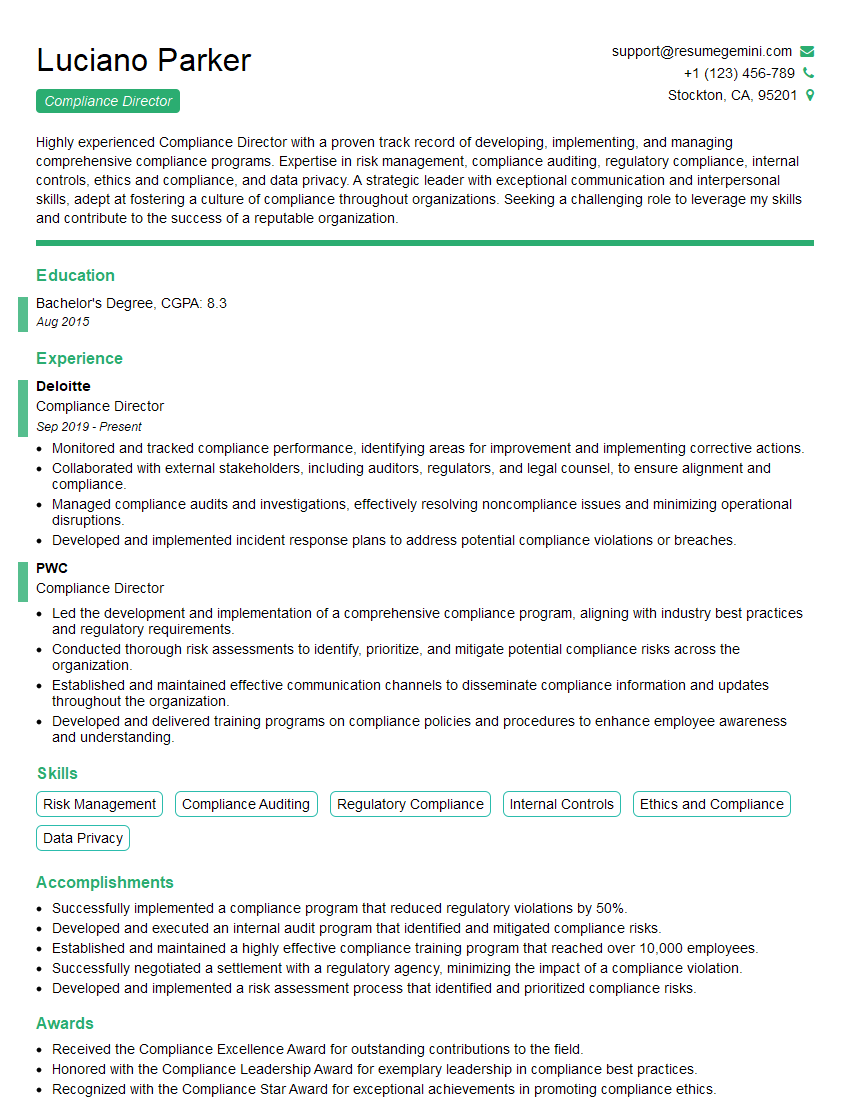
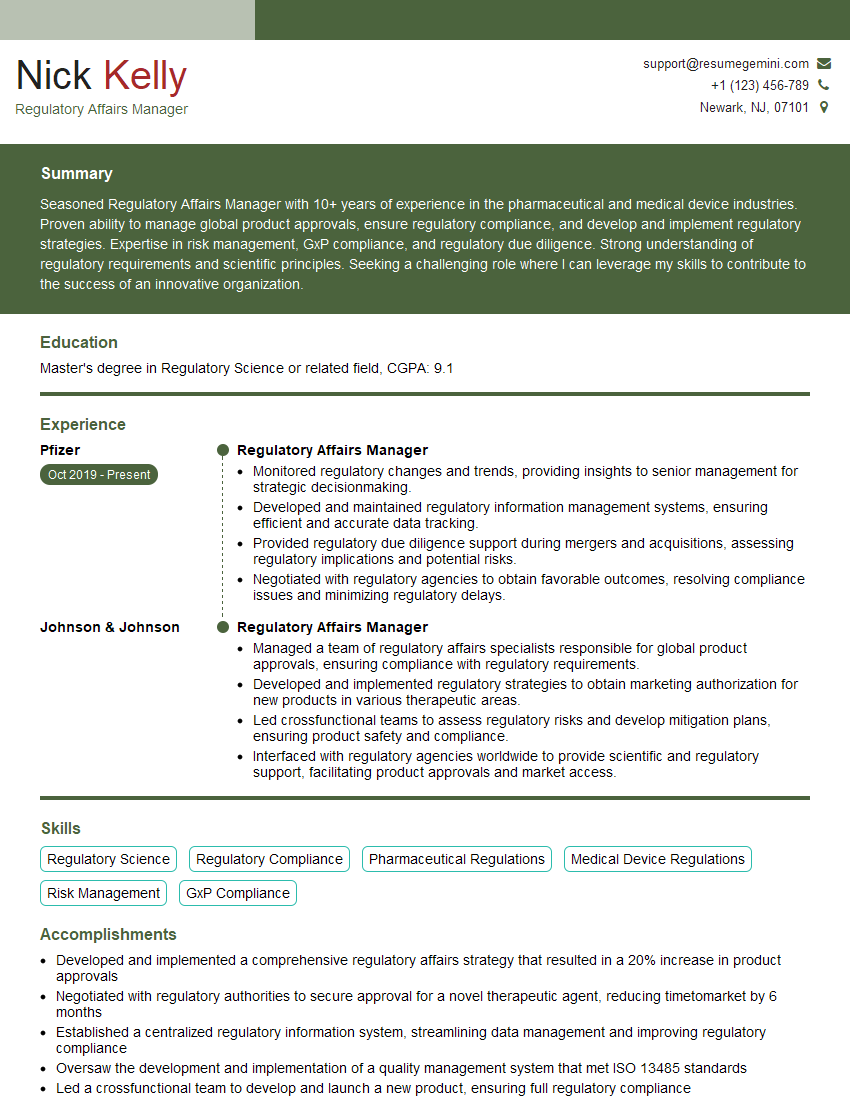
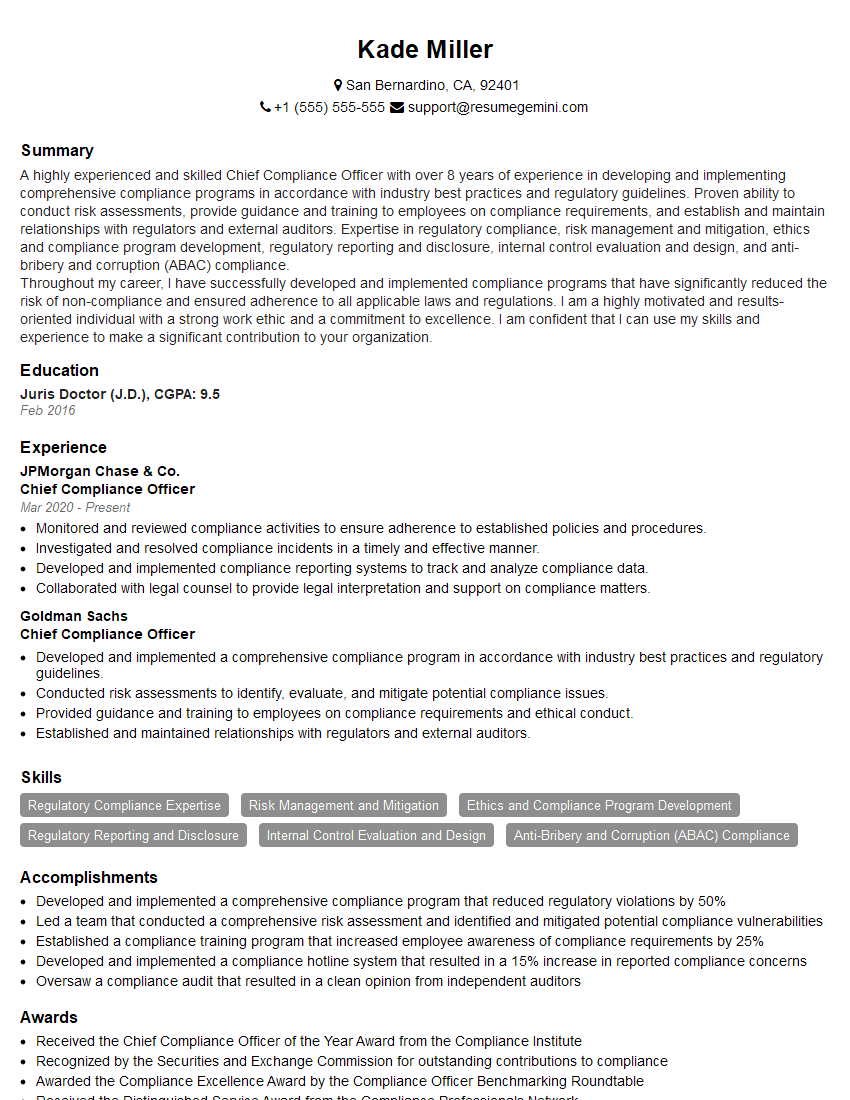
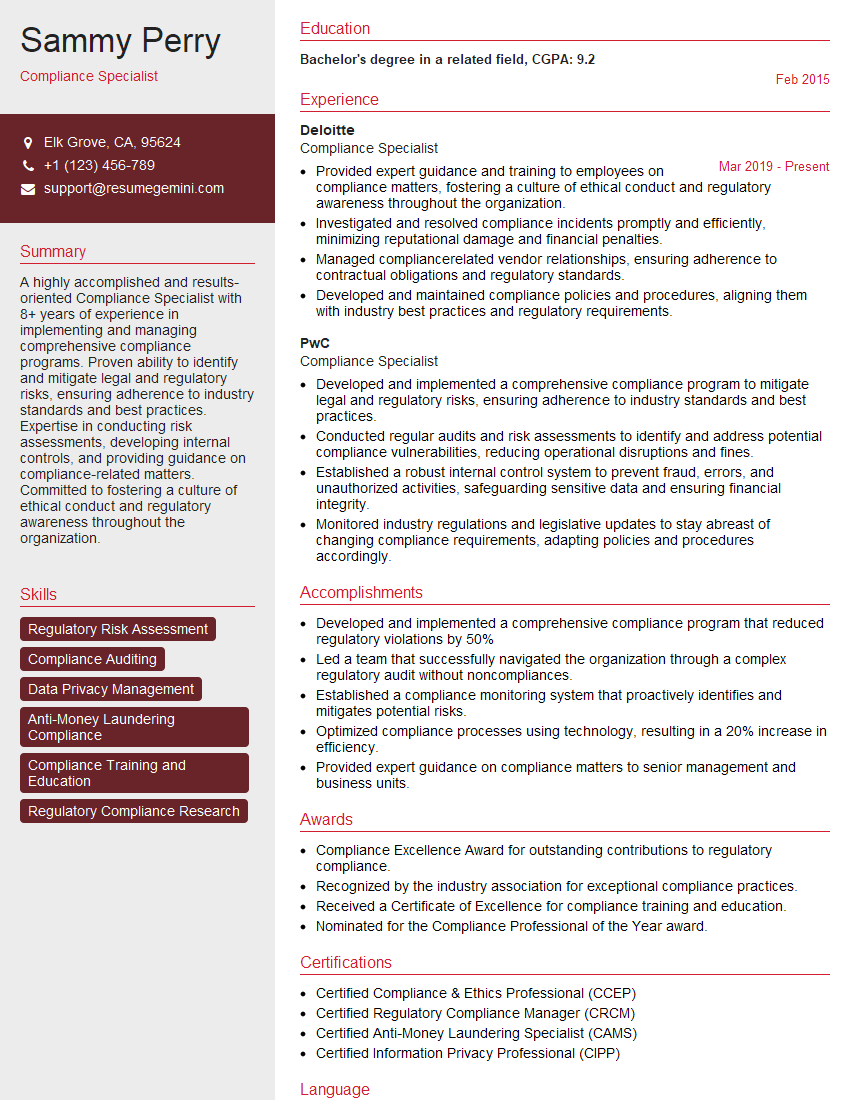
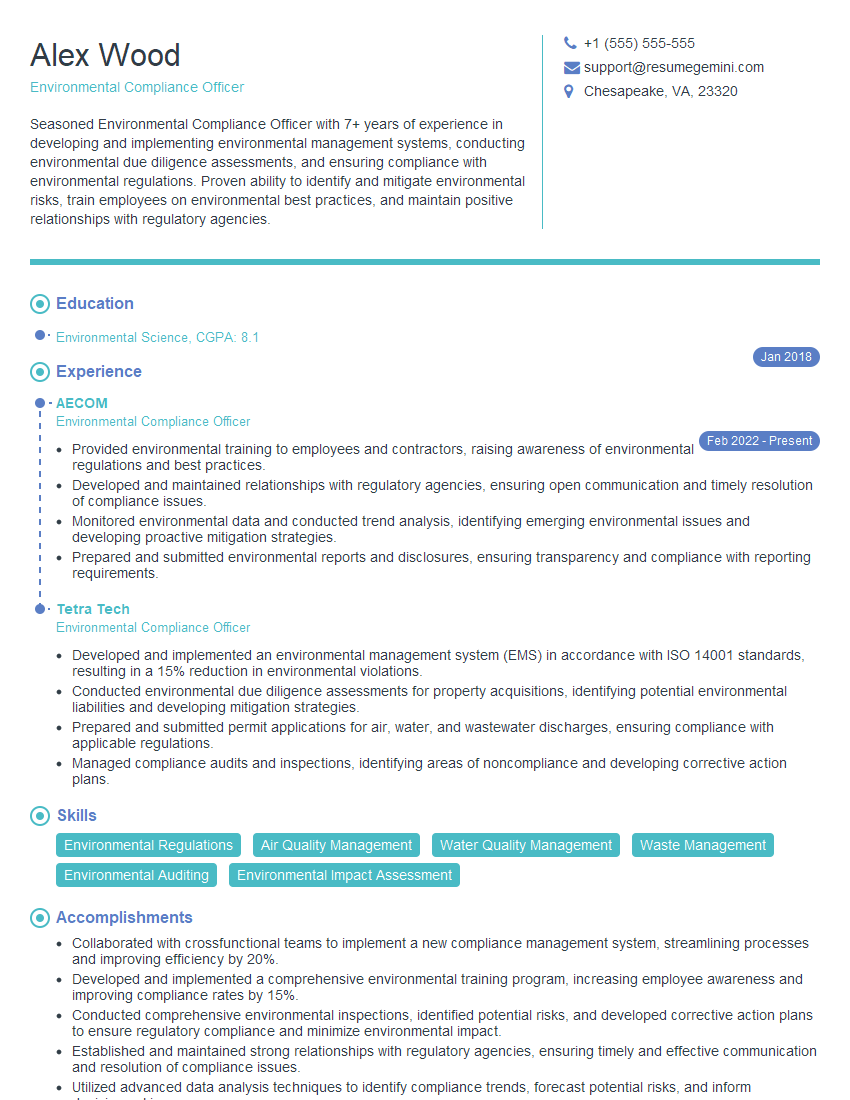
Mastering FCC Rule Compliance is crucial for a successful career in telecommunications, broadcasting, and related fields. A strong understanding of these regulations demonstrates your commitment to ethical and legal practices, significantly enhancing your value to any employer. To maximize your job prospects, invest time in crafting an ATS-friendly resume that highlights your skills and experience effectively. ResumeGemini is a trusted resource to help you build a professional and impactful resume. Examples of resumes tailored to FCC Rule Compliance are available to help you get started.
Explore more articles
Users Rating of Our Blogs
Share Your Experience
We value your feedback! Please rate our content and share your thoughts (optional).
What Readers Say About Our Blog
Very informative content, great job.
good