Unlock your full potential by mastering the most common Feed and Nutrition interview questions. This blog offers a deep dive into the critical topics, ensuring you’re not only prepared to answer but to excel. With these insights, you’ll approach your interview with clarity and confidence.
Questions Asked in Feed and Nutrition Interview
Q 1. Explain the concept of digestible energy and its importance in feed formulation.
Digestible energy (DE) represents the portion of energy in feed that’s actually absorbed and utilized by an animal after accounting for losses in feces. It’s crucial in feed formulation because it allows us to accurately assess the energy value of different feedstuffs and create balanced rations. Unlike gross energy (GE), which measures the total energy content, DE provides a more realistic picture of the energy available for the animal’s metabolic processes.
For example, a feedstuff with high GE might have a lower DE if a significant portion is undigested and excreted. This is often the case with fibrous feeds. In feed formulation, we use DE values to determine the appropriate quantities of different feed ingredients to meet an animal’s energy requirements for maintenance, growth, production (e.g., milk, eggs), or reproduction. We aim to minimize the amount of feed wasted as undigested material and maximize the efficient use of energy.
Consider a dairy cow: We’d use DE values of corn silage, alfalfa hay, and grain to calculate the right mix to support high milk production. A ration formulated with DE in mind ensures the cow receives the necessary energy without overfeeding, saving costs and reducing environmental impact.
Q 2. What are the key factors influencing feed palatability?
Feed palatability, or how appealing a feed is to an animal, is influenced by several key factors. These factors can be broadly categorized as sensory characteristics and nutritional factors.
- Sensory Characteristics: This includes the feed’s appearance (color, texture), odor (aroma), and taste. Animals, like humans, have preferences. For instance, a bright green alfalfa hay is generally more appealing than a dull, brown hay. The smell of fresh feed is often more attractive than stale feed. A palatable feed will encourage better feed intake.
- Nutritional Factors: The nutritional composition of the feed, specifically the balance of nutrients, plays a role. A feed lacking essential nutrients or containing excessive amounts of certain ingredients can impact palatability. For example, a diet too high in fiber might be less palatable than one with a better balance of fiber, protein, and carbohydrates. Also, the presence of toxins or spoiled feed significantly reduces palatability.
In practical terms, feed manufacturers use various strategies to enhance palatability, including adding flavoring agents, adjusting the physical form of the feed (e.g., pellets vs. meal), and ensuring good quality ingredients are used. Maintaining consistent feed quality across batches is critical for maintaining palatability and consistent animal performance.
Q 3. Describe the difference between concentrate and roughage feeds.
Concentrates and roughages are two major feed categories based on their fiber content and energy density. Concentrates are energy-rich feeds low in fiber, while roughages are high in fiber and lower in energy density.
- Concentrates: These feeds are primarily composed of grains, such as corn, wheat, barley, or soybeans. They are rich in digestible carbohydrates and protein, providing a readily available energy source for animals. Examples include corn, soybean meal, and wheat bran.
- Roughages: These feeds are high in fiber, providing essential bulk in the diet and aiding in digestion. Examples include hay (alfalfa, grass), silage (corn silage, grass silage), and straw. Roughage promotes healthy gut function and prevents digestive disorders.
The distinction is critical because different animals have different dietary requirements. For example, ruminant animals (cattle, sheep, goats) require a significant portion of their diet to consist of roughages to support their rumen microbial activity, whereas monogastric animals (pigs, poultry) rely more heavily on concentrates for energy and nutrients.
Q 4. How do you determine the appropriate protein levels in different animal diets?
Determining appropriate protein levels in animal diets depends on several factors, most importantly the animal’s species, age, physiological state, and production level. The protein requirement is expressed as the amount of digestible protein needed per day or as a percentage of the diet.
For growing animals, higher protein levels are needed to support tissue growth. Lactating or pregnant animals also require higher protein intake. Conversely, adult animals in maintenance require less protein. The protein level is often calculated based on the animal’s body weight, production goals (e.g., milk yield, egg production), and the amino acid profile of the feed. We often use standardized tables and prediction equations from the National Research Council (NRC) to determine the optimal protein levels.
For example, a growing piglet needs a higher protein percentage in its diet (around 20%) compared to a finishing pig (around 16%). A dairy cow in peak lactation requires considerably more protein than a dry cow. Feed formulation software is frequently used to ensure the correct protein level and amino acid balance are achieved.
Q 5. Explain the role of amino acids in animal nutrition.
Amino acids are the building blocks of proteins. They play a crucial role in animal nutrition because they are essential for various bodily functions, including:
- Protein synthesis: Amino acids are used to construct various proteins, including enzymes, hormones, antibodies, and structural proteins.
- Growth and development: Adequate amino acid supply is vital for the growth and development of young animals.
- Tissue repair: Amino acids are necessary for the repair and maintenance of body tissues.
- Immune function: Antibodies, which are proteins, are essential for immune defense, and their synthesis requires a sufficient supply of amino acids.
There are essential amino acids that animals cannot synthesize and must obtain from their diet, and non-essential amino acids that the body can produce. Feed formulation focuses on providing sufficient amounts of all essential amino acids in the right proportions, because a deficiency in even one essential amino acid can limit protein synthesis and affect the animal’s overall health and performance. For example, lysine is often the first limiting amino acid in swine diets, meaning it’s the one most likely to be deficient.
Q 6. Discuss the importance of mineral supplementation in animal feeds.
Mineral supplementation is essential because minerals are vital for various metabolic processes and overall animal health. Minerals are involved in enzyme function, bone formation, immune responses, and nerve transmission. Deficiencies can lead to a range of health problems, impacting growth, reproduction, and production.
The importance of mineral supplementation stems from the fact that mineral content in natural feedstuffs can vary significantly depending on soil conditions and plant growth. Supplementation ensures a consistent supply of essential minerals, such as calcium, phosphorus, magnesium, sodium, potassium, and trace minerals like iron, zinc, copper, manganese, selenium, and iodine. The type and amount of supplementation depend on the species, age, and physiological state of the animal, as well as the mineral content of the base diet.
For example, calcium and phosphorus are crucial for bone development and milk production in dairy cattle. A deficiency can lead to rickets or milk fever. Selenium deficiency can result in reduced fertility and immune function. Proper mineral supplementation ensures optimal animal health and productivity, often reducing health issues and improving overall profitability.
Q 7. What are the common challenges in feed manufacturing and how can they be addressed?
Feed manufacturing presents several challenges. Some common issues include:
- Ingredient quality and consistency: Variations in the quality and composition of raw materials can affect the nutritional value and consistency of the final product. Careful sourcing and quality control measures are essential.
- Storage and preservation: Preventing spoilage and maintaining feed quality during storage are crucial. Proper storage conditions, including temperature and humidity control, are necessary to minimize losses and prevent mycotoxin contamination.
- Pelleting and processing: Achieving the desired pellet quality (durability, size, and shape) requires precise control of processing parameters, such as moisture content, steam pressure, and die temperature. Problems like crumbling pellets or uneven pellet size can reduce feed efficiency and palatability.
- Mycotoxin contamination: Mycotoxins are toxic metabolites produced by fungi that can contaminate feed ingredients, causing various health issues in animals. Implementing strategies for preventing contamination, such as proper drying and storage, and using mycotoxin binders are crucial.
Addressing these challenges requires a multi-faceted approach. This includes implementing robust quality control procedures at all stages of production, utilizing appropriate storage facilities, employing effective processing techniques, and employing good manufacturing practices (GMPs). Regular testing for mycotoxins and nutrient analysis are essential for ensuring consistent feed quality and animal health.
Q 8. Describe different feed processing methods and their effects on nutrient availability.
Feed processing significantly impacts nutrient availability. Different methods alter the physical and chemical structure of feed ingredients, affecting digestibility and absorption.
- Grinding/Milling: Reduces particle size, increasing surface area for enzymatic action, improving digestibility, particularly for grains and other fibrous ingredients. Think of it like crushing a cookie – the smaller the pieces, the faster and easier it is to digest.
- Extrusion: Combines heat, moisture, and pressure to cook and shape the feed. This process gelatinizes starches, improves palatability, and can increase protein digestibility, but excessive heat can damage some nutrients. It’s like baking a cake – heat changes the ingredients, making them easier to digest and more appealing.
- Pelleting: Compresses processed feed into small pellets. This improves feed handling, reduces waste, and can increase feed intake in some species. It’s similar to making meatballs – compacting the ingredients makes them easier to handle and consume.
- Steam Flaking: Applies steam and pressure to grains, increasing their digestibility by gelatinizing starch and rupturing cell walls. It’s like softening a tough piece of meat – steam makes it easier to digest.
The choice of processing method depends on the specific feed ingredients, target animal species, and desired nutrient profile. For example, while pelleting is great for poultry, ruminants might benefit more from less processed forages.
Q 9. How do you ensure feed quality and safety throughout the production process?
Ensuring feed quality and safety is paramount. It requires a comprehensive approach spanning the entire production chain, from raw material sourcing to final product delivery.
- Raw Material Selection: We carefully select high-quality ingredients from reputable suppliers, verifying their origin and safety through testing for contaminants and mycotoxins (discussed later).
- Good Manufacturing Practices (GMP): Strict adherence to GMP guidelines ensures proper hygiene, sanitation, and pest control throughout the production process. This includes regular cleaning and disinfection of equipment to prevent cross-contamination.
- Quality Control (QC): Rigorous QC procedures involve regular testing of raw materials and finished products for nutrient content, moisture levels, mycotoxins, and bacterial contamination. We use both in-house analysis and external laboratories to ensure accurate and reliable results.
- Traceability: A robust traceability system enables us to track feed ingredients and products from origin to delivery. This is crucial for identifying the source of any potential problems and recalling affected batches, if necessary.
- Storage and Transportation: Proper storage conditions (temperature, humidity, etc.) prevent spoilage and protect feed from moisture, pest infestations, or other sources of contamination. Transportation in sealed vehicles also minimizes the risks of contamination or spoilage.
Our commitment to quality and safety is not just about compliance; it’s about producing consistently high-quality feed that supports animal health and productivity. Regular audits and internal reviews help us continually improve our processes.
Q 10. Explain the concept of nutrient bioavailability.
Nutrient bioavailability refers to the proportion of a nutrient that’s digested, absorbed, and utilized by the animal’s body. It’s not just about *how much* of a nutrient is present, but *how much* is actually available for the animal to use.
Several factors affect bioavailability:
- Digestibility: The ability of the animal’s digestive system to break down and release the nutrient from the feed matrix.
- Absorption: The process of transporting the nutrient from the digestive tract into the bloodstream.
- Metabolism: The body’s ability to process and utilize the absorbed nutrient.
- Interactions: The presence of other nutrients or antinutrients in the feed can affect the bioavailability of specific nutrients. For example, phytate in soybeans can bind to minerals, reducing their absorption.
Understanding bioavailability is critical for feed formulation. We need to ensure that the diet contains sufficient amounts of bioavailable nutrients to meet the animal’s requirements. For example, providing supplemental enzymes that break down phytate can increase mineral bioavailability.
Q 11. What are the common mycotoxins found in feed and their effects on animal health?
Mycotoxins are toxic secondary metabolites produced by fungi that can contaminate feed ingredients. They pose significant risks to animal health and productivity.
- Aflatoxins: Produced by Aspergillus species, these are potent carcinogens and hepatotoxins (liver toxins). They can suppress the immune system and reduce growth performance.
- Ochratoxins: Produced by Aspergillus and Penicillium species, they can damage the kidneys and impair immune function.
- Zearalenone: Produced by Fusarium species, it’s an estrogenic mycotoxin that can cause reproductive problems in animals.
- Trichothecenes (e.g., Deoxynivalenol, DON): Produced by Fusarium species, these toxins affect the gastrointestinal tract, causing reduced feed intake, vomiting, and immune suppression.
Mycotoxin contamination can lead to reduced growth rates, reproductive issues, weakened immune systems, and even death in animals. Regular testing of feed ingredients and finished products for mycotoxins is essential for prevention and mitigation. Effective strategies include careful selection of raw materials, proper storage conditions, and the use of mycotoxin binders in feed formulations.
Q 12. Describe the role of probiotics and prebiotics in animal nutrition.
Probiotics and prebiotics play important roles in improving gut health and animal performance.
- Probiotics: These are live microorganisms (typically bacteria or yeasts) that, when administered in adequate amounts, confer a health benefit to the host. They improve gut microbiota balance by competing with pathogenic bacteria for resources and producing beneficial substances. Think of them as the ‘good guys’ in the gut.
- Prebiotics: These are non-digestible food ingredients that selectively stimulate the growth and/or activity of beneficial bacteria in the gut. They act as ‘food’ for the probiotics, enhancing their effects. Common prebiotics include fructooligosaccharides (FOS) and mannanoligosaccharides (MOS).
The combined use of probiotics and prebiotics (synbiotics) can synergistically improve gut health, enhance nutrient digestibility, improve immune function, and increase animal productivity. For example, adding probiotics to the feed of young animals can help establish a healthy gut microbiota and reduce the incidence of diarrhea.
Q 13. What are the key regulations related to feed manufacturing and labeling in your region?
(Note: This answer will vary significantly depending on the region. The following is a generalized example and should not be considered legal advice. Always consult the specific regulations in your area.)
Feed manufacturing and labeling are subject to stringent regulations in many jurisdictions. These regulations aim to ensure feed safety, quality, and accurate labeling to protect animal and human health.
- Feed Composition Regulations: These specify minimum and maximum levels of various nutrients, additives, and contaminants in different types of feed. They also define permitted ingredients and additives.
- Labeling Requirements: Mandatory labeling information includes the guaranteed analysis (nutrient levels), ingredient list, net weight, manufacturer’s name and address, and specific claims (if any) regarding feed performance.
- Good Manufacturing Practices (GMP): Regulations often mandate adherence to GMP guidelines to ensure consistent feed quality and safety throughout the production process.
- Registration and Licensing: Feed manufacturers typically require registration and licensing to operate legally.
- Residue Monitoring: Regulations may include guidelines for monitoring residues of veterinary drugs and other substances in animal products.
Non-compliance can result in significant penalties. Regular updates on the latest regulations and guidelines are crucial for feed manufacturers.
Q 14. How do you interpret feed analysis reports and use them for formulation?
Feed analysis reports provide valuable information on the nutrient composition of raw materials and finished feeds. Interpreting these reports accurately is crucial for formulating balanced diets.
Interpretation: The report typically lists the percentages of various nutrients (crude protein, crude fat, crude fiber, ash, moisture), minerals, and vitamins. We also look for the presence of antinutrients (e.g., phytate) or contaminants (e.g., mycotoxins).
Formulation: We use this data in conjunction with animal nutrient requirements (which vary depending on the species, age, physiological state, and production level) to formulate balanced rations. We use specialized software and consider nutrient interactions and bioavailability when formulating diets.
Example: If a feed analysis reveals low levels of calcium, we can adjust the formulation by adding calcium supplements. If we discover high levels of mycotoxins, we may need to source alternative ingredients or use mycotoxin binders.
Accurate interpretation and utilization of feed analysis reports ensure animals receive the nutrients needed for optimal health and productivity.
Q 15. Explain the difference between crude protein and true protein.
Crude protein and true protein represent different measures of protein content in feedstuffs. Crude protein is a measure of the total nitrogen content multiplied by a factor of 6.25 (assuming that protein contains, on average, 16% nitrogen). This method is simple and widely used, but it overestimates the true protein content because it includes non-protein nitrogen (NPN) sources like nitrates, nitrites, and ammonia, which can be metabolized by some animals but not directly used as protein. True protein, on the other hand, represents only the amount of protein that is truly digestible and usable by the animal. It excludes the NPN compounds. Think of it like this: crude protein is the total amount of ingredients in a cake mix, while true protein is only the flour, eggs, and other components that actually make up the cake itself, excluding things like baking powder which help the process but aren’t part of the actual cake.
The difference between the two is significant for accurate feed formulation. For example, a feedstuff with a high crude protein value might seem protein-rich, but if a significant portion of that is NPN, the animal might not receive the actual protein it needs, leading to growth retardation or other nutritional deficiencies. Accurate determination of true protein requires more sophisticated analytical methods, often involving protein precipitation and nitrogen analysis.
Career Expert Tips:
- Ace those interviews! Prepare effectively by reviewing the Top 50 Most Common Interview Questions on ResumeGemini.
- Navigate your job search with confidence! Explore a wide range of Career Tips on ResumeGemini. Learn about common challenges and recommendations to overcome them.
- Craft the perfect resume! Master the Art of Resume Writing with ResumeGemini’s guide. Showcase your unique qualifications and achievements effectively.
- Don’t miss out on holiday savings! Build your dream resume with ResumeGemini’s ATS optimized templates.
Q 16. Discuss the importance of fiber in ruminant nutrition.
Fiber plays a crucial role in ruminant nutrition, primarily due to its effect on rumen function and microbial activity. Ruminants, like cows and sheep, possess a specialized digestive system with a rumen, a large fermentation vat where microbes break down fiber. This process relies heavily on fiber as the primary energy source for these microbes.
- Energy Source: The microbes ferment fiber (cellulose, hemicellulose) into volatile fatty acids (VFAs), which are the main energy source for the ruminant. These VFAs – acetate, propionate, and butyrate – are absorbed through the rumen wall and used for metabolic processes.
- Rumen Function: Fiber stimulates rumen motility, ensuring proper mixing and preventing the accumulation of undigested feed. This maintains a healthy rumen environment.
- Microbial Population: The type and amount of fiber influence the composition and activity of the rumen microbial population. A diverse and active microbial population is crucial for efficient feed digestion and nutrient synthesis.
- Chewing Stimulation: Fiber requires extensive chewing, which promotes saliva production. Saliva helps buffer the rumen pH, preventing acidosis.
Insufficient fiber can lead to rumen acidosis (low rumen pH), reduced feed intake, impaired digestion, and various health problems. The type of fiber (e.g., long vs. short, soluble vs. insoluble) also influences its effects on rumen function. Careful consideration of fiber sources and their characteristics is essential for formulating balanced diets for ruminants.
Q 17. How do you formulate a diet to meet the specific nutrient requirements of a growing pig?
Formulating a diet for a growing pig requires careful consideration of several factors, including the pig’s age, weight, and growth rate. The diet needs to meet specific nutrient requirements for optimal growth, health, and efficiency. The process typically involves these steps:
- Determine Nutrient Requirements: Consult established nutrient requirement tables (e.g., NRC) based on the pig’s weight and growth stage. This will provide the target values for energy, protein, amino acids, vitamins, and minerals.
- Select Feed Ingredients: Choose ingredients that meet the required nutrient profile cost-effectively. Common ingredients include cereals (corn, barley, wheat), soybean meal, fishmeal, and various supplements (vitamins, minerals, amino acids). You must consider the nutrient composition (analyzed via lab tests), availability, and cost of each ingredient.
- Formulate the Diet: Use a feed formulation software or a manual calculation approach to blend the chosen ingredients in proportions that meet the nutrient requirements while minimizing cost. This is an optimization problem where one strives for the optimal blend that satisfies the requirement at the lowest cost.
- Assess and Adjust: The formulated diet is not necessarily perfect. Monitoring the pig’s growth, feed intake, and feed conversion ratio (FCR) is essential for adjustments. Regular monitoring helps to fine-tune the formulation and ensure optimal performance.
Example: A growing pig might require 3.5 Mcal of ME (metabolizable energy)/kg of feed and 18% crude protein. The formulator would then choose and blend ingredients (e.g., corn, soybean meal) to meet this requirement. Adjustments will be made based on the pig’s performance. Specific amino acid needs (lysine, methionine, etc.) must also be considered to support muscle growth.
Q 18. What are the common nutritional deficiencies in poultry and their implications?
Poultry are susceptible to several nutritional deficiencies, leading to significant economic losses and compromised bird welfare. Here are some common ones:
- Vitamin A deficiency: This results in poor growth, reduced egg production (in layers), respiratory problems, and increased susceptibility to infections. It can manifest as eye problems and deformities.
- Vitamin D deficiency: Leads to rickets (bone deformities) in young birds, reduced shell quality (in layers), and impaired calcium absorption.
- Calcium deficiency: Crucial for bone formation and egg shell formation, deficiencies result in weak bones, reduced egg production, and soft-shelled eggs.
- Amino acid deficiencies (e.g., methionine, lysine): Limit growth, reduce feed efficiency, and negatively impact feathering and immune function. Protein synthesis is severely affected.
- Mineral deficiencies (e.g., zinc, manganese): Impair growth, bone development, feathering, and immune response. Zinc deficiency can cause skin lesions.
The implications of these deficiencies include reduced growth rate, decreased feed efficiency, lower egg production, poor egg quality, increased mortality, and increased susceptibility to diseases. Regular monitoring of birds and their diets, supplemented with blood and tissue analysis, is essential for early detection and prevention of nutritional deficiencies.
Q 19. How do you assess the nutritional value of a new feed ingredient?
Assessing the nutritional value of a new feed ingredient involves a multi-step process that combines laboratory analysis and feeding trials. It’s essential to fully understand the ingredient’s chemical composition and its bioavailability (how well the nutrients are absorbed and utilized by the animal).
- Proximate Analysis: This determines the basic composition of the ingredient, including moisture, crude protein, crude fat, crude fiber, ash, and nitrogen-free extract (NFE). This provides a general overview of the nutrient content.
- Amino Acid Profile: Essential amino acids are determined. This is critical, especially for protein sources, as the balance of amino acids affects protein synthesis and animal performance.
- Mineral and Vitamin Analysis: Specific mineral (calcium, phosphorus, zinc, etc.) and vitamin (A, D, E, K, etc.) contents are quantified.
- Anti-nutritional Factor Analysis: This identifies and quantifies any substances that may hinder nutrient absorption or have negative effects on animal health (e.g., trypsin inhibitors, phytates).
- Feeding Trials: These are crucial to assess the bioavailability of nutrients and the overall impact of the ingredient on animal performance. Animals are fed diets with varying levels of the new ingredient, and parameters like growth rate, feed efficiency, and health are monitored and compared to a control group.
The results from these analyses, combined with feeding trial data, provide a comprehensive assessment of the new ingredient’s nutritional value and suitability for inclusion in animal feeds.
Q 20. Explain the concept of feed efficiency and its economic implications.
Feed efficiency refers to the amount of feed required to produce a unit of animal product (e.g., 1 kg of weight gain, 1 dozen eggs, 1 liter of milk). It’s typically expressed as the feed conversion ratio (FCR), which is the ratio of feed consumed to the amount of product produced. For example, an FCR of 2 means that 2 kg of feed is required to produce 1 kg of weight gain in a broiler chicken. A lower FCR indicates higher efficiency.
The economic implications are significant. Feed is often the largest expense in animal production. Improved feed efficiency directly translates to lower feed costs, higher profitability, and improved sustainability. A reduction in FCR even by a small percentage can have a substantial impact on the overall profitability of a livestock operation. Think of it as increasing your return on investment in feeding, by better utilizing the feed.
Factors influencing feed efficiency include the animal’s genetics, health status, nutrition, and management practices. Improving feed efficiency is a key goal in animal nutrition research and management.
Q 21. Describe different methods for evaluating feed digestibility.
Evaluating feed digestibility involves determining the proportion of nutrients in a feed that are digested and absorbed by the animal. Several methods exist, each with its strengths and limitations:
- In vitro methods: These methods simulate digestion using enzymes and microorganisms outside of a live animal. Examples include enzymatic digestion methods and rumen simulation techniques (e.g., in sacco or in vitro gas production). In vitro methods are less expensive and faster than in vivo methods, but they might not fully replicate the complex processes of in vivo digestion.
- In vivo methods: These methods involve feeding the feed to animals and measuring nutrient digestibility in the animal’s digestive tract. Common techniques include total collection (measuring all feces) and indicator methods (using an indigestible marker to estimate digestibility). Total collection is the gold standard, but it is labor-intensive and can be costly. Indicator methods are simpler and less costly, but they can be prone to errors.
- Apparent digestibility: This method measures the difference between the nutrient intake and the nutrient excreted in feces. It doesn’t account for endogenous losses (nutrients secreted into the digestive tract). This is a common and relatively simple technique.
- True digestibility: This accounts for endogenous losses, providing a more accurate measure of the nutrient’s true digestibility. It’s more accurate but requires more complex procedures.
The choice of method depends on factors such as the resources available, the accuracy required, and the specific research question. In many practical settings, apparent digestibility is used due to its relative simplicity.
Q 22. What is the role of enzymes in feed processing and animal nutrition?
Enzymes play a crucial role in both feed processing and animal nutrition. In feed processing, they are used to break down complex carbohydrates, proteins, and fats into simpler, more digestible forms for animals. This improves nutrient availability and reduces the amount of undigested feed that passes through the animal’s gut.
For example, phytase is added to many animal feeds to break down phytate, a compound that binds to phosphorus, making it unavailable to the animal. By releasing phosphorus, phytase improves the overall nutritional value of the feed and reduces the need for phosphorus supplementation, minimizing environmental pollution from phosphorus excretion. Similarly, proteases break down proteins into amino acids, enhancing their digestibility. Amylases break down starches into simpler sugars, improving energy availability.
In animal nutrition, endogenous enzymes (those produced by the animal itself) play a vital role in the digestion process. However, supplementing feed with exogenous enzymes (those added externally) can be beneficial, especially when animals lack sufficient endogenous enzyme production or the feed contains ingredients that are difficult to digest. This leads to improved nutrient utilization, better growth rates, and reduced feed costs. For instance, adding xylanase to diets containing high levels of wheat or barley can improve the digestibility of these grains, leading to increased energy available to the animal.
Q 23. Discuss the importance of sustainable feed production practices.
Sustainable feed production is paramount for ensuring long-term food security and environmental health. It involves minimizing the environmental footprint of feed production while ensuring the efficient and ethical production of high-quality feed. Key aspects include:
- Reducing reliance on resource-intensive ingredients: Exploring alternative protein sources like insects, algae, and single-cell proteins, reducing dependence on traditional soy and fishmeal which have high environmental impact.
- Improving feed efficiency: Optimizing diets to improve nutrient utilization, minimizing feed waste, and reducing greenhouse gas emissions associated with feed production and transportation.
- Minimizing environmental pollution: Reducing nutrient runoff from feedlots by implementing strategies to minimize manure and wastewater pollution. This also includes employing responsible manure management.
- Promoting biodiversity: Utilizing diverse feed sources and production systems to reduce risks associated with monocultures and promoting ecological balance.
- Improving animal welfare: Ensuring ethical and humane treatment of animals throughout the production process.
For instance, a farm adopting sustainable practices might use locally sourced ingredients to reduce transportation costs and carbon emissions, incorporate crop rotation to improve soil health, and utilize precision feeding technologies to optimize feed allocation and minimize waste. This not only helps the environment but also leads to a more economically and socially resilient farming system.
Q 24. How do you handle feed ingredient price fluctuations in your formulation strategies?
Feed ingredient price fluctuations are a major challenge in feed formulation. To mitigate their impact, several strategies are employed:
- Ingredient substitution: Replacing expensive ingredients with readily available and cost-effective alternatives without compromising nutritional value. For example, if soybean meal price increases, substituting with sunflower meal or canola meal can be considered, provided the amino acid profile remains adequate.
- Developing flexible formulations: Creating formulations that can adapt to changing ingredient prices. These formulations use a range of ingredients that can be adjusted based on market conditions, utilizing linear programming to find optimal mixes.
- Utilizing futures contracts: Securing supplies of key ingredients at a fixed price for a future period, hedging against price increases.
- Negotiating contracts with suppliers: Establishing long-term relationships with suppliers to secure better prices and stable supply chains.
- Monitoring market trends: Continuously tracking market prices and making informed decisions on ingredient sourcing and formulation adjustments.
For example, a feed mill might use software that optimizes formulations based on current ingredient prices and nutritional requirements, ensuring they produce the most cost-effective feed while meeting animal needs. This dynamic approach minimizes the financial impact of ingredient price swings.
Q 25. Describe the challenges of formulating diets for animals with specific health conditions.
Formulating diets for animals with specific health conditions presents unique challenges. These diets must address the animal’s nutritional needs while simultaneously mitigating the effects of the disease or condition.
- Digestibility and nutrient absorption: Diets need to be highly digestible and promote efficient nutrient absorption to maximize the energy available for the body’s healing processes. For example, animals with digestive disorders might require diets with increased fiber or altered nutrient ratios.
- Immune function: The diet can influence immune system function. Supplementation with vitamins, minerals (like Zinc and Selenium), and antioxidants is often essential to support immune response.
- Specific nutrient requirements: Certain diseases necessitate the addition or restriction of specific nutrients. For example, animals with kidney disease require diets that restrict phosphorus and protein.
- Palatability: Ill animals might have reduced appetites. Therefore, palatability is crucial to ensure adequate feed intake, often requiring flavoring agents and textural adjustments.
- Disease-specific considerations: Certain diseases necessitate specific dietary modifications. For example, diets for animals with liver disease may need to restrict certain amino acids or fats.
For instance, a diet for dairy cows with mastitis might include added antioxidants and increased levels of certain amino acids, to combat inflammation and improve milk production while addressing nutritional deficits.
Q 26. Explain the impact of environmental factors on feed quality and animal performance.
Environmental factors significantly impact feed quality and animal performance. These factors can affect both the growing process of feed ingredients and the storage and feeding of finished feed.
- Temperature and humidity: High temperatures and humidity during storage can promote mold growth and reduce the nutritional value of feed, particularly the vitamins and proteins. This can lead to mycotoxin contamination and reduced digestibility.
- Light exposure: Excessive light exposure can degrade certain nutrients, particularly vitamins. Proper storage practices must be followed to minimize this effect.
- Rainfall and soil conditions: These factors directly affect the nutrient content of forages. Nutrient availability in plants is influenced by the rainfall and soil fertility. Deficiencies in essential nutrients can lead to poor animal performance.
- Contamination: Environmental pollutants like heavy metals can contaminate feed ingredients, negatively affecting animal health and performance.
- Storage conditions: Improper storage can lead to spoilage, insect infestation, and rodent contamination, reducing feed quality and increasing the risk of mycotoxin exposure.
For instance, prolonged exposure of hay bales to rain can reduce their nutritional value and potentially lead to mold growth. Similarly, feed stored in poorly ventilated areas can develop high humidity and heat, promoting spoilage and potentially producing mycotoxins, ultimately impacting animal health and productivity.
Q 27. How do you stay updated with the latest research and advancements in feed and nutrition?
Staying updated with the latest research and advancements in feed and nutrition is crucial for maintaining professional competence. I employ various strategies to achieve this:
- Reading scientific journals and publications: I regularly read peer-reviewed journals like the Journal of Animal Science, Poultry Science, and the Journal of Dairy Science to keep abreast of new research findings.
- Attending conferences and workshops: Participating in industry conferences and workshops allows me to network with colleagues and learn about the latest advancements in the field.
- Following industry news and publications: I track industry news and publications to stay informed about current trends and technologies.
- Engaging in continuous professional development: I actively participate in continuing education programs and online courses to enhance my expertise.
- Networking with colleagues and experts: I maintain connections with other professionals in the field to exchange knowledge and insights.
For example, I recently attended a workshop on precision feeding technologies and applied that knowledge to improve the efficiency of our feed formulation strategies, leading to better animal performance and reduced feed costs. The constant pursuit of knowledge is essential in this dynamic field.
Key Topics to Learn for Your Feed and Nutrition Interview
- Nutrient Requirements: Understand the nutritional needs of various animal species (poultry, swine, ruminants, etc.) across different life stages and production systems. Consider factors influencing nutrient requirements like genetics, environment, and health status.
- Feed Formulation and Ingredient Selection: Learn the principles of balanced feed formulation, including ingredient selection based on cost-effectiveness, nutrient content, and availability. Practice calculating rations using various software and techniques.
- Feed Processing and Technology: Explore different feed processing methods (pelleting, extrusion, etc.) and their impact on nutrient digestibility and feed palatability. Understand the role of technology in optimizing feed manufacturing and distribution.
- Feed Safety and Quality Control: Familiarize yourself with feed safety regulations and quality control measures to ensure the production of safe and high-quality animal feed. Understand mycotoxin contamination and its mitigation strategies.
- Digestion and Metabolism: Grasp the principles of animal digestion and nutrient metabolism, including the role of gut microbiota and its influence on nutrient utilization. Be prepared to discuss specific digestive processes in different animal species.
- Feed Efficiency and Animal Performance: Learn how to evaluate feed efficiency and its relationship to animal growth, reproduction, and overall productivity. Understand the factors impacting feed conversion ratios and strategies for improvement.
- Sustainable Feed Production: Explore the principles of sustainable feed production, including minimizing environmental impact, utilizing alternative feed resources, and promoting responsible sourcing.
- Data Analysis and Interpretation: Develop your skills in analyzing and interpreting data related to feed intake, nutrient digestibility, animal performance, and economic aspects of feed production.
Next Steps
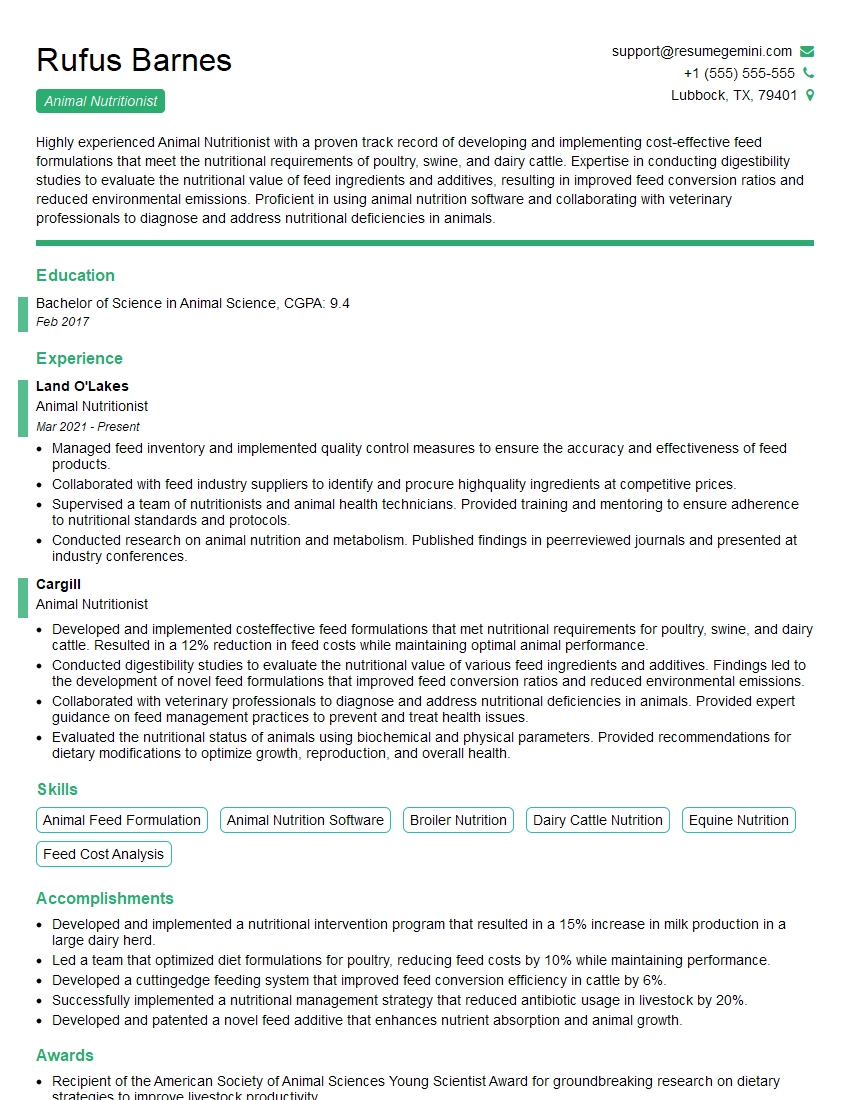
Mastering Feed and Nutrition is crucial for a successful and rewarding career in the animal agriculture industry. A strong understanding of these principles opens doors to diverse roles with increasing responsibility and higher earning potential. To maximize your job prospects, it’s essential to create a compelling and ATS-friendly resume that showcases your skills and experience effectively. We highly recommend using ResumeGemini, a trusted resource that can help you build a professional resume that stands out. ResumeGemini provides examples of resumes tailored specifically to the Feed and Nutrition industry, making your job search significantly easier and more effective.


Explore more articles
Users Rating of Our Blogs
Share Your Experience
We value your feedback! Please rate our content and share your thoughts (optional).
What Readers Say About Our Blog
Very informative content, great job.
good