Unlock your full potential by mastering the most common Feed and Water System Maintenance interview questions. This blog offers a deep dive into the critical topics, ensuring you’re not only prepared to answer but to excel. With these insights, you’ll approach your interview with clarity and confidence.
Questions Asked in Feed and Water System Maintenance Interview
Q 1. Explain the importance of maintaining proper water chemistry in a boiler system.
Maintaining proper water chemistry in a boiler system is crucial for preventing costly damage and ensuring efficient operation. Improper water chemistry can lead to scaling, corrosion, and foaming, all of which reduce boiler efficiency and can cause catastrophic equipment failure. Think of it like this: Your boiler is a high-pressure, high-temperature environment. If the water isn’t properly treated, impurities can build up, causing problems similar to the limescale you might see in a kettle at home, but on a much larger and more dangerous scale.
Specifically, maintaining optimal water chemistry prevents:
- Scaling: The formation of mineral deposits on boiler tubes, reducing heat transfer and potentially leading to tube failure.
- Corrosion: The deterioration of boiler metal due to chemical reactions, weakening the structure and leading to leaks.
- Foaming: The formation of stable foam in the boiler, leading to water carryover into the steam system and contaminating the steam.
By carefully controlling parameters like pH, alkalinity, dissolved oxygen, and silica levels, we ensure the boiler operates safely and efficiently, extending its lifespan and minimizing downtime.
Q 2. Describe the different types of water treatment methods used in industrial settings.
Industrial water treatment employs a variety of methods to purify water for various applications. The choice of method depends on the water source’s quality and the required purity level. Common methods include:
- Clarification: Removing suspended solids through sedimentation and filtration. Imagine a coffee filter – it removes the larger coffee grounds, leaving a clearer liquid.
- Chemical Treatment: Using chemicals like coagulants and flocculants to clump together and remove impurities. This is like adding a special ingredient to make dirt particles stick together, making them easier to remove.
- Ion Exchange: Using resin beds to remove dissolved ions like calcium and magnesium, which cause hardness. This is like a chemical sponge that selectively absorbs unwanted ions.
- Reverse Osmosis (RO): Using pressure to force water through a semi-permeable membrane, removing dissolved salts and other impurities. Think of it as a super fine filter that pushes out the unwanted stuff.
- Distillation: Boiling water and collecting the condensed steam, leaving behind impurities. This is the purest form of water purification, similar to the way nature purifies water through the water cycle.
- Ultrafiltration (UF) and Microfiltration (MF): Membrane filtration processes to remove bacteria, viruses and suspended solids. These are like increasingly finer filters, removing smaller and smaller particles.
Often, a combination of these methods is used to achieve the desired water quality.
Q 3. What are the common causes of scaling and corrosion in feedwater systems?
Scaling and corrosion in feedwater systems are primarily caused by the presence of dissolved minerals and dissolved gases in the water. Scaling is the formation of hard deposits on heat transfer surfaces, while corrosion is the deterioration of metal due to chemical reactions.
- Scaling: Hard water, rich in calcium and magnesium carbonates and sulfates, is the main culprit. As water is heated, these minerals precipitate out of solution and adhere to the surfaces, forming scale. The higher the temperature, the faster the scaling occurs.
- Corrosion: Dissolved oxygen and carbon dioxide in the water are major contributors. Oxygen reacts with metal to form oxides, leading to rust. Carbon dioxide forms carbonic acid, which is corrosive. Also, low pH levels can accelerate corrosion.
Other factors, such as water velocity and the material of the pipes and equipment, also influence the rate of scaling and corrosion.
Q 4. How do you troubleshoot a malfunctioning water softener?
Troubleshooting a malfunctioning water softener involves a systematic approach. First, you need to identify the symptoms: is the water still hard? Is the unit regenerating properly? Are there any visible leaks?
- Check the Salt Supply: Ensure there’s enough salt in the brine tank. A low salt level prevents proper regeneration.
- Inspect the Brine Tank: Look for any clogs or blockages in the brine lines. A restricted brine flow prevents proper salt dissolution.
- Verify Regeneration Cycle: Check if the unit is regenerating correctly. This often involves reviewing the timer settings and observing the water flow during regeneration.
- Test the Water Hardness: Use a water hardness test kit to measure the hardness of the treated water. High hardness indicates the softener isn’t working properly.
- Check the Resin Bed: If possible, inspect the resin bed for any signs of degradation or fouling. This might require professional assistance.
- Check for Leaks: Inspect all connections and seals for any leaks. Leaks can indicate a problem with the system’s plumbing.
If the problem persists after these steps, it may be necessary to call a qualified service technician.
Q 5. Explain the principles of reverse osmosis and its application in water treatment.
Reverse Osmosis (RO) is a water purification technology that uses pressure to force water through a semi-permeable membrane. This membrane allows water molecules to pass through while rejecting most dissolved salts, minerals, and other impurities. Think of it as a highly selective filter, only allowing the purest water to pass.
Principles of RO:
- Semi-permeable Membrane: The heart of the system, allowing water to pass but rejecting impurities.
- Pressure: High pressure is applied to the feed water, forcing water across the membrane.
- Concentration Gradient: The concentration of salts and other impurities is higher on the reject side (concentrate) of the membrane than on the permeate (pure water) side.
Application in Water Treatment:
RO is widely used in various industries for producing high-purity water for different purposes, including:
- Industrial Processes: Producing high-purity water for pharmaceuticals, electronics, and power generation.
- Drinking Water Purification: Removing contaminants from municipal water supplies or creating bottled water.
- Wastewater Treatment: Pre-treating wastewater before discharge or further treatment.
RO is a very effective treatment method, though it requires significant energy input and produces a wastewater stream that needs proper disposal.
Q 6. What are the safety precautions to be followed while handling chemicals used in water treatment?
Handling chemicals used in water treatment requires strict adherence to safety protocols to prevent accidents and protect personnel and the environment. Always remember that these chemicals can be hazardous if mishandled.
- Personal Protective Equipment (PPE): Always wear appropriate PPE, including gloves, eye protection, and protective clothing, depending on the specific chemical being handled.
- Material Safety Data Sheets (MSDS): Carefully review the MSDS for each chemical before handling it. The MSDS provides information on the chemical’s hazards, handling procedures, and emergency response.
- Proper Storage: Store chemicals in designated areas, away from incompatible materials, and in properly labeled containers.
- Spill Response Plan: Have a spill response plan in place for dealing with accidental spills. This includes having appropriate spill kits and training personnel on proper cleanup procedures.
- Ventilation: Ensure adequate ventilation when handling chemicals to minimize exposure to fumes.
- Waste Disposal: Dispose of chemical waste according to local regulations and guidelines.
- Training: All personnel handling chemicals should receive adequate training on safe handling procedures and emergency response.
Remember: Safety is paramount. Following these precautions is crucial for preventing accidents and protecting your health and the environment.
Q 7. How do you interpret water quality test results?
Interpreting water quality test results requires understanding the various parameters measured and their significance. Common parameters include pH, alkalinity, hardness, dissolved oxygen, conductivity, and various ion concentrations (e.g., calcium, magnesium, chloride, sulfate).
Steps for Interpretation:
- Compare Results to Standards: Compare the measured values to relevant water quality standards or guidelines (e.g., drinking water standards, boiler water guidelines). This helps to determine if the water quality is acceptable for its intended purpose.
- Analyze Trends: Track water quality parameters over time to identify trends and potential problems. Changes in parameters can indicate developing issues like scaling or corrosion.
- Identify Anomalies: Look for unusual or unexpected values that deviate significantly from the norm. These may indicate a problem with the water treatment system or contamination of the water source.
- Correlate Parameters: Consider the relationships between different parameters. For example, high hardness usually correlates with high calcium and magnesium concentrations.
- Consult Experts: If unsure about the interpretation of results, consult with a water treatment specialist or environmental engineer.
Accurate interpretation of water quality test results is critical for making informed decisions about water treatment and ensuring safe and efficient operation of water-using systems.
Q 8. Describe the process of performing a water quality analysis.
Water quality analysis is crucial for maintaining the health of a feed and water system. It involves a series of tests to determine the chemical composition and physical properties of the water. This ensures the water is suitable for its intended purpose, whether it’s for boilers, livestock, or other industrial applications. The process typically includes several steps.
Physical Tests: These assess aspects like temperature, turbidity (cloudiness), color, odor, and pH. Turbidity, for instance, indicates the presence of suspended solids and can be measured using a turbidimeter. A high level of turbidity can clog filters and pipes.
Chemical Tests: These identify the concentration of various chemicals in the water. Common tests include measuring the levels of dissolved solids (total dissolved solids or TDS), hardness (calcium and magnesium ions), alkalinity, chlorine, nitrates, and phosphates. For example, high levels of hardness can lead to scale buildup in pipes and boilers, reducing efficiency.
Microbiological Tests: These tests detect the presence of bacteria, viruses, and other microorganisms. Methods such as plate counts and coliform tests are used to determine the level of microbial contamination. High microbial counts can indicate health risks and potentially damage the system.
Analysis of Results: Once all the tests are complete, the results are analyzed against regulatory standards and the system’s requirements. This helps identify any potential problems and inform necessary corrective actions. For example, if the chlorine level is too low, it could be a sign of inadequate disinfection. Corrective action may include increasing chlorination.
Regular water quality analysis is preventative maintenance. By identifying and addressing issues early, you can prevent costly repairs and ensure the smooth operation of the entire system.
Q 9. What are the common types of pumps used in feedwater systems, and their maintenance requirements?
Several pump types are used in feedwater systems, each with its own maintenance needs. The choice depends on factors such as pressure, flow rate, and the fluid being pumped.
Centrifugal Pumps: These are the most common type, using a rotating impeller to increase the water’s velocity and pressure. Maintenance involves regular lubrication of bearings, checking for wear and tear on seals and impellers, and ensuring proper alignment to prevent vibrations. Failure to maintain alignment can lead to premature bearing failure.
Positive Displacement Pumps: These pumps move a fixed volume of water with each stroke. Examples include piston, diaphragm, and gear pumps. Maintenance includes checking for leaks in seals, ensuring proper valve operation, and regular lubrication. Ignoring lubrication can lead to increased wear and eventual pump failure.
Submersible Pumps: These are placed directly in the water source. Maintenance requires periodic inspection for wear and tear on the pump casing and motor, as well as checking the electrical connections for corrosion.
A comprehensive preventative maintenance schedule, including regular inspections, lubrication, and part replacements as needed, is crucial to extend the lifespan of any pump and avoid costly downtime.
Q 10. Explain the function of a deaerator and its importance in boiler feedwater systems.
A deaerator is a crucial component in boiler feedwater systems. Its primary function is to remove dissolved oxygen and other non-condensable gases from the feedwater before it enters the boiler. This is essential for several reasons.
Preventing Corrosion: Dissolved oxygen causes significant corrosion in boiler systems, leading to reduced efficiency and potential catastrophic failures. Deaerators reduce oxygen levels to a minimum, dramatically slowing down corrosion rates.
Improving Boiler Efficiency: Dissolved gases can form pockets in the boiler, hindering heat transfer and reducing overall efficiency. Deaeration improves heat transfer, enhancing boiler performance.
Preventing Carryover: Dissolved gases can be carried over with the steam, creating problems in downstream equipment. Deaeration minimizes this carryover, protecting turbines and other components.
Deaerators typically operate by heating the water under vacuum conditions, reducing the solubility of dissolved gases. Regular maintenance of deaerators includes inspecting and cleaning the trays or packing, ensuring proper vacuum levels, and monitoring the oxygen levels in the treated water. Ignoring these maintenance steps could lead to the failure of the deaerator and serious boiler damage.
Q 11. How do you prevent microbial growth in water systems?
Preventing microbial growth in water systems is vital for maintaining water quality and preventing damage to the system. Several strategies can be employed:
Chlorination: Adding chlorine to the water is a common and effective method of disinfection. The chlorine level must be carefully monitored to ensure adequate disinfection without causing excessive corrosion.
UV Disinfection: Ultraviolet (UV) light can effectively kill microorganisms in the water. UV systems require regular maintenance to ensure the lamps are functioning correctly. The effectiveness of UV disinfection is dependent on the water clarity; high turbidity can hinder its effectiveness.
Regular Cleaning and Flushing: Periodically cleaning and flushing the system helps remove accumulated biofilm and sediment, reducing the breeding grounds for microorganisms.
Maintaining Proper pH: An appropriate pH level helps control microbial growth. A slightly alkaline pH is usually preferred for most water systems.
Temperature Control: Maintaining water temperature above 60°C (140°F) or below 10°C (50°F) is often effective in controlling microbial growth, though other factors need consideration.
A combination of these strategies is usually the most effective way to prevent microbial growth. Regular monitoring of microbial counts is essential to ensure the effectiveness of these measures.
Q 12. Describe different types of water filters and their applications.
Various water filters are used to remove impurities from water, each with specific applications:
Sediment Filters: These remove suspended solids like sand, silt, and rust. They typically use layers of progressively finer filter media, such as sand, gravel, and cloth. Sediment filters are common pre-treatment for other filtration methods.
Carbon Filters: These are effective at removing chlorine, organic chemicals, and improving taste and odor. Activated carbon is highly porous, adsorbing many contaminants.
Membrane Filters: These use semi-permeable membranes to remove very small particles, including bacteria and viruses. Types include microfiltration, ultrafiltration, nanofiltration, and reverse osmosis, each with different pore sizes and applications.
Ion Exchange Filters: These remove dissolved minerals like calcium and magnesium, softening the water. Ion exchange resins replace these minerals with sodium or hydrogen ions.
The selection of appropriate filters depends on the specific water quality issues and the desired level of treatment. Regular maintenance of filters involves replacing or cleaning filter media to ensure their continued effectiveness.
Q 13. What are the common problems associated with feedwater heaters, and how do you troubleshoot them?
Feedwater heaters play a vital role in improving the efficiency of power plants and industrial processes by preheating the feedwater before it enters the boiler. However, several issues can arise:
Tube Leaks: Leaks in the tubes can lead to water loss, reduced heating efficiency, and potential damage to other components. Regular inspections are crucial to detect leaks promptly.
Scaling and Fouling: Mineral deposits and other impurities can build up on the tubes, reducing heat transfer efficiency. Regular cleaning and chemical treatment are needed to prevent scaling.
Corrosion: Corrosion can weaken the tubes over time, leading to leaks and failures. Using corrosion-resistant materials and proper water treatment is essential.
Vibration and Erosion: Vibration can loosen tubes or cause erosion, impacting the structural integrity of the heater. Proper alignment and support are essential.
Troubleshooting involves systematic checks. First, inspect for visible leaks. Then, test for pressure drops across the heater, and analyze the water for signs of scaling. Finally, consider thermal imaging to detect hidden leaks or hot spots. Corrective actions might include tube replacement, chemical cleaning, and addressing issues with vibration or support.
Q 14. How do you maintain the proper pH level in a water system?
Maintaining the proper pH level in a water system is critical for preventing corrosion, scaling, and microbial growth. The ideal pH range varies depending on the system and the materials used. Generally, a slightly alkaline pH (7.5-8.5) is preferred for most systems. To maintain the desired pH:
Monitoring: Regularly monitor the pH using a reliable meter or test kit. Frequent monitoring allows for early detection of deviations.
Acid or Alkali Addition: If the pH is too low (acidic), a base such as sodium hydroxide (caustic soda) can be carefully added to increase it. If the pH is too high (alkaline), an acid such as sulfuric acid or hydrochloric acid can be added to lower it. This requires precise dosing and careful monitoring to avoid drastic changes.
Water Treatment: Proper water treatment processes can help maintain pH within the desired range. This might involve ion exchange or other water softening techniques.
Corrosion Inhibitors: Corrosion inhibitors can be used to protect the system from corrosion even when the pH is slightly outside the ideal range, though this does not negate the need to control pH.
Remember, adding chemicals to adjust pH should always be done carefully and according to established procedures. Incorrect addition can lead to damage to the system or even create hazardous situations.
Q 15. Explain the principles of ion exchange in water treatment.
Ion exchange is a water treatment process that uses a resin bed containing charged particles to remove dissolved ions, like minerals and metals, from water. Imagine it like a magnet attracting specific impurities. These resins have active sites with positive or negative charges that attract and bind oppositely charged ions in the water.
For example, a cation exchange resin (negatively charged) attracts and removes positively charged ions like calcium (Ca2+) and magnesium (Mg2+), which cause hardness. Similarly, an anion exchange resin (positively charged) removes negatively charged ions like sulfate (SO42-) and chloride (Cl–). Once the resin is saturated with these ions, it needs to be regenerated using a solution of strong acid (for cation resins) or strong base (for anion resins) to release the captured ions and restore its ion exchange capacity. This process allows for the continuous purification of water.
In a typical water softening system, for example, the hard water is passed through a cation exchange column where calcium and magnesium ions are replaced by sodium ions, resulting in softened water. The process is essential for many industries and household applications where water hardness is undesirable.
Career Expert Tips:
- Ace those interviews! Prepare effectively by reviewing the Top 50 Most Common Interview Questions on ResumeGemini.
- Navigate your job search with confidence! Explore a wide range of Career Tips on ResumeGemini. Learn about common challenges and recommendations to overcome them.
- Craft the perfect resume! Master the Art of Resume Writing with ResumeGemini’s guide. Showcase your unique qualifications and achievements effectively.
- Don’t miss out on holiday savings! Build your dream resume with ResumeGemini’s ATS optimized templates.
Q 16. What is the role of a chemical feed system in water treatment?
A chemical feed system is crucial in water treatment, responsible for precisely introducing chemicals into the water to achieve a desired effect. Think of it as adding specific ingredients to a recipe for optimal results. These chemicals can be disinfectants (like chlorine or chloramine), coagulants (like alum or ferric chloride), pH adjusters (like lime or acid), or corrosion inhibitors. The system ensures the correct dosage and distribution of these chemicals for effective water treatment.
For instance, a chemical feed system might deliver chlorine to disinfect the water, killing harmful bacteria and viruses. Or it could add a coagulant to help remove suspended solids by clumping them together, making them easier to filter. The system typically consists of chemical storage tanks, pumps, metering devices, and injection points. Precise control over chemical feed is paramount to prevent overdosing or underdosing, which can compromise water quality or even cause environmental damage. Regular calibration and maintenance of the system are essential to ensure its accurate operation.
Q 17. Describe the process of cleaning and sanitizing a water storage tank.
Cleaning and sanitizing a water storage tank is a critical process to ensure the safety and quality of stored water. This procedure involves a thorough cleaning to remove sediment, algae, and other contaminants, followed by disinfection to eliminate harmful microorganisms.
The process typically begins with emptying the tank. Then, the interior is inspected for any damage. Next, a thorough cleaning is performed, often using high-pressure water jets and appropriate detergents. After cleaning, the tank is rinsed multiple times to remove all traces of cleaning agents. Finally, a sanitizer, such as chlorine solution, is added to disinfect the tank. The concentration and contact time of the sanitizer should adhere to regulatory guidelines. After the appropriate contact time, the tank is again rinsed thoroughly before refilling. Proper documentation of the entire process is crucial for regulatory compliance.
Safety precautions, such as proper ventilation and personal protective equipment, are essential throughout the process.
Q 18. How do you handle a water leak in a feedwater system?
Handling a water leak in a feedwater system requires a swift and methodical approach to minimize water loss and prevent further damage. The first step is to locate the leak precisely. This might involve visual inspection, listening for unusual sounds, or using leak detection tools. Once located, the affected section of the system must be isolated by shutting down appropriate valves. This prevents further water loss and allows for safe repair.
After isolation, the leak needs to be repaired. Minor leaks might require simple patching, while more significant leaks may necessitate replacing damaged pipes or fittings. After the repair, the system should be thoroughly checked for any remaining leaks before bringing it back online. It’s crucial to document the leak, the repair process, and any subsequent testing. This documentation is vital for maintenance records and for identifying potential recurring issues.
Q 19. What are the regulatory compliance requirements for water treatment systems?
Regulatory compliance for water treatment systems is crucial to ensure public health and environmental protection. The specific regulations vary depending on location and the type of system but generally involve adherence to standards set by agencies like the Environmental Protection Agency (EPA) or equivalent local bodies. These regulations cover various aspects, including:
- Water quality parameters: Standards for maximum contaminant levels (MCLs) for various substances (e.g., bacteria, heavy metals, chemicals).
- Treatment process requirements: Specific standards and guidelines for the design, operation, and maintenance of treatment units.
- Reporting and monitoring: Regular testing and reporting of water quality parameters to regulatory agencies.
- Operator certification: Requirements for operators to have specific licenses or certifications.
- Safety regulations: Requirements for safe handling and storage of chemicals.
Non-compliance can lead to significant penalties, including fines and legal action. Therefore, staying updated with the latest regulations and maintaining meticulous records is essential.
Q 20. Explain the importance of regular maintenance and inspection of water treatment equipment.
Regular maintenance and inspection of water treatment equipment are paramount for ensuring consistent water quality, preventing costly repairs, and complying with regulations. Think of it as regular servicing for your car; proactive maintenance prevents major breakdowns. Regular inspection allows for early detection of potential problems, such as corrosion, leaks, or equipment malfunctions. This proactive approach allows for timely repairs, preventing major disruptions to water supply.
A comprehensive maintenance program includes regular cleaning, lubrication, component checks, and functional testing of equipment. For example, filters need to be regularly cleaned or replaced, pumps need lubrication, and valves need to be checked for proper operation. Detailed records of maintenance activities are crucial for tracking performance, identifying trends, and demonstrating compliance with regulations. Proactive maintenance saves money in the long run by preventing larger, more expensive repairs down the line.
Q 21. Describe the different types of valves used in feedwater systems.
Feedwater systems employ various types of valves to control the flow and pressure of water. Each valve type serves a specific purpose:
- Gate valves: Used for on/off control, typically for larger pipelines, offering full flow when open.
- Globe valves: Used for flow regulation and on/off control, providing better flow throttling than gate valves but with higher pressure drop.
- Ball valves: Quick-opening and closing valves, offering compact design and good for on/off service.
- Butterfly valves: Used for on/off and throttling applications, suitable for larger pipelines.
- Check valves: Prevent backflow in the system, automatically closing when the flow reverses.
- Control valves: Used for precise flow regulation, often automated with actuators, allowing for precise control of water parameters.
The selection of valve types depends on factors like the size of the pipeline, the required flow control, pressure, and the specific application within the feedwater system. Proper valve selection and maintenance are critical for the safe and efficient operation of the entire system.
Q 22. How do you monitor and control the conductivity of water in a system?
Monitoring and controlling water conductivity is crucial in many systems, especially those involving boilers or sensitive equipment. Conductivity, measured in microSiemens per centimeter (µS/cm), indicates the water’s ability to conduct electricity, primarily due to dissolved salts and minerals. High conductivity can lead to scaling, corrosion, and equipment damage.
We monitor conductivity using a conductivity meter, regularly taking samples from various points in the system. These readings are compared against pre-determined acceptable ranges. Control is achieved through several methods:
- Reverse Osmosis (RO): RO systems effectively remove dissolved solids, lowering conductivity.
- Ion Exchange: Ion exchange resins replace dissolved ions with less conductive ones.
- Chemical Treatment: Adding chemicals like chelants can help to bind and remove minerals, reducing conductivity.
- Blowdown (for boilers): Regularly removing a portion of boiler water reduces the concentration of dissolved solids.
For example, in a power plant boiler, we might set a conductivity limit of 2 µS/cm. If the conductivity rises above this limit, the RO system’s flow rate is increased, or chemical treatment is adjusted to bring it back within the acceptable range. Regular monitoring and proactive adjustments prevent costly breakdowns and ensure efficient system operation.
Q 23. Explain the process of blowdown in a boiler system.
Blowdown is a crucial process in boiler systems to control the concentration of dissolved solids (TDS) in the boiler water. These solids, like salts and silica, accumulate over time and can lead to scaling, corrosion, and reduced boiler efficiency. Think of it as regularly cleaning your boiler’s ‘bloodstream’.
The process involves periodically removing a small amount of concentrated boiler water from the system. This is done through a blowdown valve, usually located at the lowest point of the boiler drum or mud drum. The removed water is replaced with fresh, treated water. The frequency and amount of blowdown depend on factors like boiler pressure, water quality, and the type of boiler. Continuous blowdown systems use a smaller, constant flow for gentler, ongoing removal of impurities. Intermittent blowdown is a more abrupt, larger removal done periodically.
Imagine a cup of tea constantly getting sweeter as you add sugar. Blowdown is like removing some of the sweet tea and replacing it with fresh water to maintain the desired sweetness (or TDS level) for optimal performance.
Q 24. What are the different types of corrosion inhibitors used in water treatment?
Corrosion inhibitors are essential in water treatment to protect metal components from degradation. Different inhibitors target different types of corrosion. Here are some common types:
- Oxygen Scavengers: These chemicals react with dissolved oxygen, reducing its concentration and preventing oxygen-related corrosion. Examples include sulfites and hydrazines.
- pH Adjusters: Maintaining the correct pH (acidity or alkalinity) of the water is critical. Alkaline substances like caustic soda (sodium hydroxide) or acidic substances can be used depending on the need. A slightly alkaline pH is often preferred.
- Filming Amines: These form a protective film on metal surfaces, acting as a barrier against corrosion. They are commonly used in steam systems.
- Zinc Anodes: These sacrificial anodes corrode preferentially, protecting the other metal components in the system. This is a form of cathodic protection.
- Phosphonates: These chemicals are scale inhibitors that prevent the formation of scale, and indirectly reduce corrosion by reducing the chance for scale to initiate corrosion.
The choice of inhibitor depends on the specific system, water chemistry, and the type of metal being protected. A thorough water analysis is necessary to determine the appropriate inhibitor and its concentration.
Q 25. How do you calculate water treatment chemical dosages?
Calculating chemical dosages for water treatment involves several factors and requires careful consideration. The basic formula is:
Dosage (ppm) = (Concentration needed - Existing concentration) * Total volume
Where:
- Dosage (ppm): Desired amount of chemical in parts per million.
- Concentration needed (ppm): The target concentration of the chemical in the treated water.
- Existing concentration (ppm): The initial concentration of the chemical in the untreated water.
- Total volume: The total volume of water being treated (usually in gallons or liters).
For example, if we need to raise the chlorine concentration in a 10,000-gallon pool from 1 ppm to 3 ppm, the calculation is:
Dosage (ppm) = (3 ppm - 1 ppm) * 10,000 gallons = 20,000 ppm-gallons
This number then needs to be converted to the amount of chemical needed based on the concentration of the chemical being used. Always refer to the chemical supplier’s instructions for accurate conversion and safety precautions.
This is a simplified calculation. In practice, factors like water flow rate, chemical feed pump calibration, and regular water testing are crucial for accurate dosage control.
Q 26. Describe the process of troubleshooting a high-pressure water pump.
Troubleshooting a high-pressure water pump involves a systematic approach. Let’s consider the common causes of problems and how to diagnose them:
- No Power: Check power supply, fuses, and circuit breakers.
- Low Water Pressure: Check for leaks in the suction line, clogged filters or screens, and worn-out pump seals. A pressure gauge helps pinpoint the problem location.
- Pump Cavitation: This occurs when the pump sucks air along with water. Check the suction line for leaks, ensure adequate water supply, and verify the suction lift is within the pump’s capabilities.
- Overheating: Check the lubrication system, ensure adequate cooling, and inspect for bearing wear.
- Unusual Noises: These can indicate bearing wear, impeller imbalance, or internal damage. Often requires professional inspection and potentially pump disassembly.
- High Amp Draw: This could be a sign of mechanical problems, binding, or an overloaded motor. It’s advisable to switch the pump off and contact a professional to prevent motor failure.
Systematic inspection and use of diagnostic tools such as pressure gauges, temperature sensors, and amp meters is crucial. A detailed logbook helps in identifying patterns and trends, simplifying the troubleshooting process.
Q 27. Explain the function of a pressure reducing valve in a water system.
A pressure reducing valve (PRV), also known as a pressure regulator, is a crucial component in water systems that maintains a constant downstream pressure regardless of fluctuations in upstream pressure. Imagine a water hose; you might need to use a nozzle to control the water flow’s pressure. PRVs perform a similar function for entire water systems.
It works by restricting the flow of water when the downstream pressure exceeds a set point. As upstream pressure increases, the PRV closes slightly, reducing the flow and maintaining the desired downstream pressure. Conversely, when upstream pressure decreases, the PRV opens slightly, increasing the flow to keep the downstream pressure constant.
PRVs are essential in many applications to protect sensitive equipment from over-pressure, ensure even water distribution, and reduce energy consumption. For instance, a PRV might be used to regulate the pressure in a residential sprinkler system, preventing damage to the pipes and sprinkler heads.
Q 28. What are the environmental considerations related to water treatment processes?
Water treatment processes have significant environmental implications, both positive and negative. Sustainable practices are essential.
- Wastewater Disposal: Treatment processes generate wastewater containing chemicals and byproducts. Responsible disposal, including proper neutralization and filtration, is crucial to avoid polluting waterways. This frequently involves permits and regulatory compliance.
- Chemical Usage: Many water treatment chemicals can be hazardous. Careful selection of environmentally friendly alternatives and minimizing chemical usage through optimization are necessary. Proper storage and handling of chemicals is also essential for worker and environmental safety.
- Energy Consumption: Processes like reverse osmosis and other water purification methods are energy-intensive. Optimizing energy efficiency through improved designs and operational practices can minimize environmental impact.
- Sludge Management: Water treatment generates sludge, a solid byproduct requiring proper disposal. Safe and environmentally sound methods, like land application (following strict regulations) or incineration, must be used.
- Water Conservation: Effective water treatment can contribute to conservation by reducing water losses and promoting water reuse.
Environmental regulations vary regionally, requiring operators to adhere to specific permits and guidelines. Continuous monitoring and optimization are essential to minimize negative impacts and ensure environmentally responsible water treatment.
Key Topics to Learn for Feed and Water System Maintenance Interview
- Water Treatment Principles: Understanding various water treatment methods (filtration, softening, disinfection) and their application in feedwater systems. Consider the chemical processes involved and their impact on system efficiency.
- Pump Operation and Maintenance: Diagnose and troubleshoot common pump issues, including leaks, cavitation, and performance degradation. Familiarize yourself with different pump types and their maintenance schedules.
- Piping Systems and Valves: Understand the principles of fluid dynamics in piping systems. Be prepared to discuss valve types, their functions, and troubleshooting techniques for leaks and blockages.
- Instrumentation and Control Systems: Explain your experience with pressure gauges, flow meters, level sensors, and control valves. Discuss troubleshooting methods for malfunctioning instrumentation.
- Boiler Systems (if applicable): If your role involves boiler maintenance, be ready to discuss water chemistry parameters, boiler blowdown procedures, and safety protocols.
- Preventative Maintenance Schedules and Reporting: Demonstrate understanding of creating and adhering to preventative maintenance schedules. Be prepared to discuss methods for tracking maintenance activities and generating reports.
- Troubleshooting and Problem-Solving: Prepare examples of how you’ve identified and resolved issues in feed and water systems. Highlight your analytical skills and systematic approach to problem-solving.
- Safety Regulations and Procedures: Demonstrate a strong understanding of relevant safety regulations and best practices for working with high-pressure systems and chemicals.
Next Steps
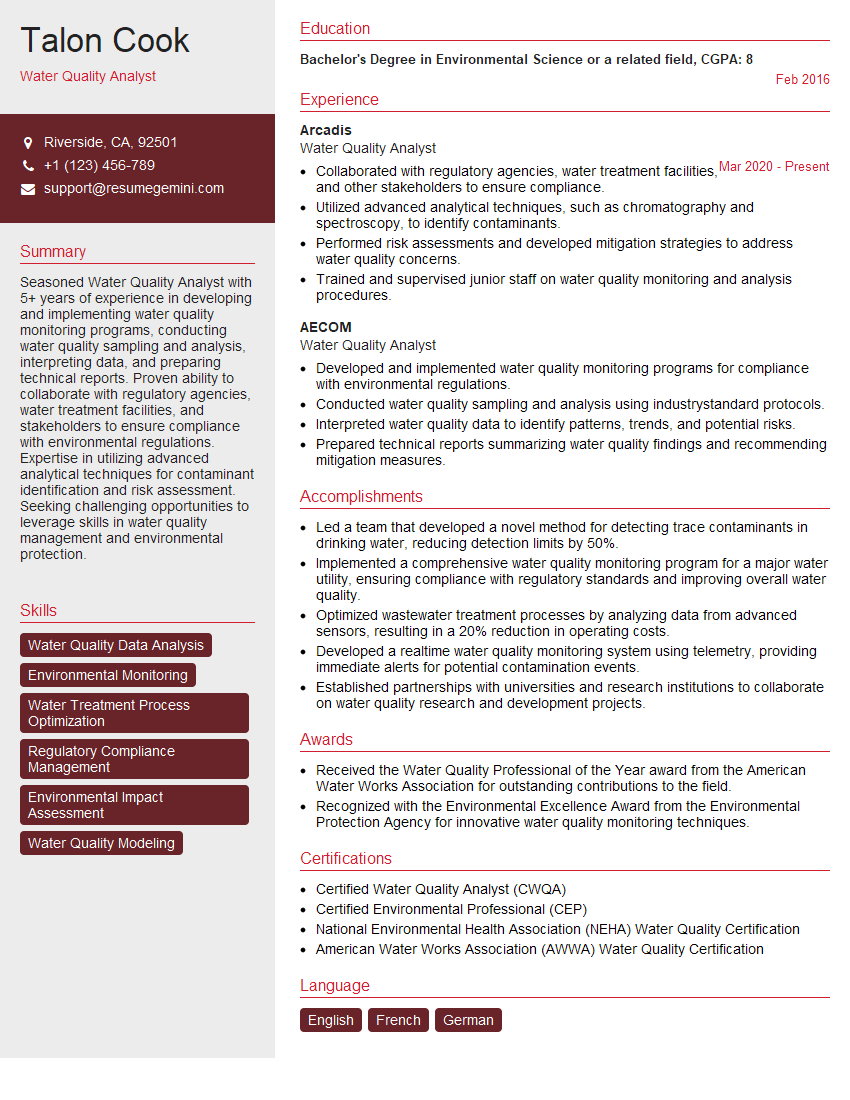
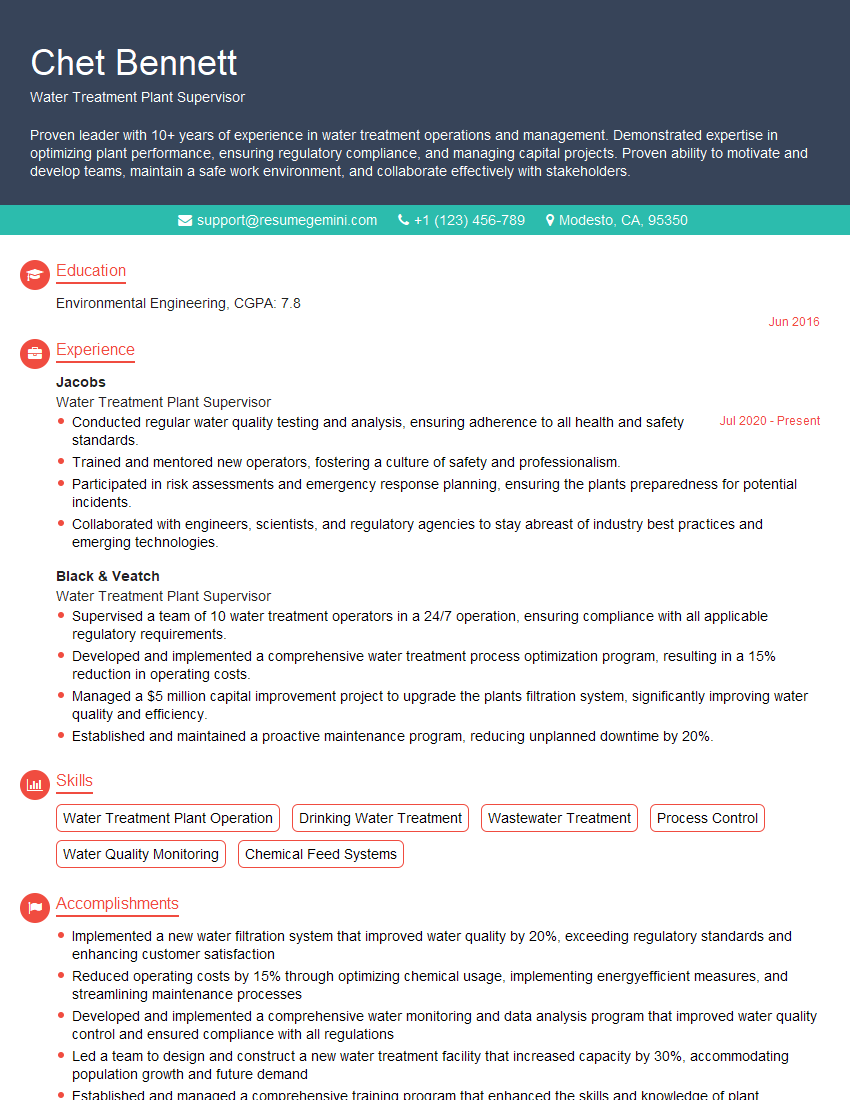
Mastering Feed and Water System Maintenance opens doors to exciting career advancements, offering opportunities for specialization, increased responsibility, and higher earning potential. To maximize your job prospects, it’s crucial to present your skills effectively. Creating an ATS-friendly resume is key – ensuring your qualifications are easily identified by applicant tracking systems. ResumeGemini is a trusted resource to help you build a professional and impactful resume that showcases your expertise. We provide examples of resumes tailored to Feed and Water System Maintenance to help you get started.
Explore more articles
Users Rating of Our Blogs
Share Your Experience
We value your feedback! Please rate our content and share your thoughts (optional).
What Readers Say About Our Blog
Very informative content, great job.
good