Preparation is the key to success in any interview. In this post, we’ll explore crucial Feed Mixing and Production interview questions and equip you with strategies to craft impactful answers. Whether you’re a beginner or a pro, these tips will elevate your preparation.
Questions Asked in Feed Mixing and Production Interview
Q 1. Explain the importance of accurate ingredient weighing in feed formulation.
Accurate ingredient weighing is the cornerstone of successful feed formulation. Think of it like baking a cake – if you don’t measure your ingredients precisely, you won’t get the desired result. In feed production, even small variations in ingredient proportions can significantly impact the nutritional value and palatability of the final product, affecting animal growth, health, and overall profitability.
For example, an insufficient amount of protein could lead to stunted growth in young animals, while an excess of certain minerals can be toxic. Modern feed mills utilize highly precise weighing scales, often integrated with sophisticated software for automated batching and recipe management. These systems ensure consistency across large production runs, minimizing errors and maximizing efficiency.
Regular calibration of weighing equipment and rigorous quality control checks are crucial for maintaining accuracy. This includes using certified weights for calibration and employing trained personnel to handle the weighing process.
Q 2. Describe the different types of feed mixers and their applications.
Feed mixers are categorized primarily by their mixing mechanism. There are three main types:
- Horizontal Drum Mixers: These are the most common type, employing a rotating drum to tumble and blend ingredients. They’re versatile and suitable for a wide range of ingredients, from dry to slightly moist. Think of them as a giant, industrial-scale cement mixer.
- Vertical Mixers: These utilize a vertical shaft with rotating paddles or augers to lift and mix ingredients. They are often preferred for higher-density ingredients or when rapid mixing is required. They’re excellent for materials that are prone to segregation.
- Ribbon Mixers: These employ a central ribbon-shaped auger to move ingredients both radially and axially. This design is particularly effective for achieving homogenous blends of ingredients with varying particle sizes and densities. They are great for achieving thorough mixing in shorter times.
The choice of mixer depends on factors such as the type of feed being produced, the volume of production, ingredient properties (particle size, density, moisture content), and the desired mixing uniformity. A poultry feed mill might prefer a high-capacity horizontal drum mixer, whereas a smaller operation focusing on specialized pet food might opt for a ribbon mixer.
Q 3. How do you ensure the quality and consistency of the final feed product?
Ensuring consistent, high-quality feed involves a multi-faceted approach starting with raw material quality control. We begin by rigorously inspecting incoming ingredients, testing them for nutritional value, contaminants (e.g., mycotoxins, pesticides), and moisture content. This is done through laboratory analysis and visual inspection.
Throughout the mixing process, continuous monitoring is vital. This might include sensors measuring temperature and moisture, ensuring optimal blending conditions. We meticulously sample the mixed feed at various stages, performing quality checks to confirm nutritional composition matches the formulated recipe. We also assess physical aspects such as particle size distribution and homogeneity.
Finally, rigorous testing of the final product ensures compliance with quality standards. This may involve analyzing the nutritional profile, checking for contaminants, and conducting palatability tests. Traceability is also crucial – we must be able to track each batch from raw material sourcing to final packaging to identify any issues and maintain records.
Q 4. What are the common challenges in feed mixing and how do you overcome them?
Common challenges include ingredient segregation (larger particles separating from smaller ones), uneven mixing leading to inconsistent nutritional content, and potential for cross-contamination between batches.
We overcome these challenges through various strategies: employing appropriate mixers, optimizing mixing times and speeds, using flow-improving additives (such as anti-caking agents), implementing strict cleaning protocols between batches to prevent cross-contamination, and continuous monitoring and quality control checks. Regular maintenance of the mixing equipment is also essential.
For instance, if we experience ingredient segregation, we might switch to a ribbon mixer, which is designed to minimize this problem. If inconsistencies persist, we would adjust the mixing time and speed, or explore additives that enhance flowability.
Q 5. Explain the concept of feed formulation and its impact on animal health.
Feed formulation is the science and art of designing feed rations to meet the specific nutritional requirements of different animal species and life stages. It’s a crucial process that directly impacts animal health, productivity, and profitability.
For example, a broiler chicken requires a high-energy, high-protein diet for optimal growth, whereas a dairy cow needs a balanced ration providing sufficient energy, protein, and minerals for milk production. A poorly formulated diet can lead to nutritional deficiencies, reduced growth rates, impaired immune function, and increased susceptibility to diseases. Conversely, a well-formulated diet promotes optimal health, maximizes productivity, and enhances the overall profitability of livestock operations.
We use specialized software and nutritional databases to determine the exact quantities of different ingredients required to meet the animal’s specific needs. These formulations are tailored based on factors such as age, breed, production stage, and environmental conditions.
Q 6. How do you maintain proper hygiene and sanitation in a feed mill?
Maintaining hygiene and sanitation in a feed mill is paramount to preventing contamination and ensuring feed safety. It’s a holistic approach involving multiple steps.
We implement a rigorous cleaning-in-place (CIP) system for equipment, involving automated cleaning cycles with detergents and sanitizers. Regular manual cleaning is also performed to reach hard-to-access areas. The facility itself is designed to minimize dust accumulation and pest infestation, with measures such as sealed storage areas and pest control programs. We enforce strict protocols for personnel hygiene, requiring protective clothing and regular handwashing. Comprehensive documentation of cleaning and sanitation procedures ensures accountability and compliance.
Imagine a hospital’s sterile environment – that same level of care and attention to detail is necessary in a feed mill to prevent contamination and maintain product integrity.
Q 7. What are the key safety procedures to follow in a feed mixing facility?
Safety is a top priority in feed mixing facilities. We employ multiple strategies to minimize risks:
- Lockout/Tagout Procedures: These procedures are followed whenever equipment is being maintained or repaired to prevent accidental start-ups.
- Personal Protective Equipment (PPE): Employees are required to wear appropriate PPE, including safety glasses, gloves, and hearing protection, depending on their tasks.
- Emergency Response Plans: Detailed emergency response plans are in place to handle incidents such as spills, fires, or equipment malfunctions.
- Regular Safety Training: Employees receive regular safety training to educate them about potential hazards and safe working practices.
- Proper Handling of Hazardous Materials: We adhere to strict protocols for the safe handling, storage, and disposal of hazardous materials such as chemicals and cleaning agents.
Regular safety inspections and audits help identify and address potential hazards before they lead to incidents. A culture of safety is instilled, empowering employees to report hazards and contribute to a safe working environment.
Q 8. Describe your experience with different feed ingredients and their properties.
My experience encompasses a wide range of feed ingredients, from basic grains like corn and soybeans to more specialized components such as protein concentrates, vitamins, and mineral premixes. Understanding the properties of each ingredient is crucial for successful feed formulation. For instance, corn provides energy, soybeans offer protein, and fishmeal contributes essential amino acids. Each ingredient has specific nutritional values, processing characteristics, and potential limitations. Corn, for example, varies in its starch content depending on the variety and growing conditions, influencing its energy contribution to the final feed. Similarly, the protein content and amino acid profile of soybean meal can fluctuate based on processing methods. I’m experienced in evaluating the quality of incoming ingredients through visual inspection, laboratory analysis, and using Near-Infrared Spectroscopy (NIRS) for rapid analysis of key parameters. This ensures that ingredients meet the required specifications and contribute to the overall quality and consistency of the finished feed.
- Energy sources: Corn, Sorghum, Barley, Wheat
- Protein sources: Soybean meal, Canola meal, Fishmeal, Meat and bone meal
- Mineral sources: Limestone, Dicalcium phosphate, Salt
- Vitamin sources: Premixes containing various vitamins
My work involves understanding how ingredient interactions impact the final product. For instance, the inclusion of high-fiber ingredients might require adjustments to particle size to ensure proper digestion. Or, the addition of certain minerals might necessitate consideration of their bioavailability and potential interactions with other ingredients. Managing these complexities ensures the formulation meets the nutritional needs of the target animal.
Q 9. How do you troubleshoot equipment malfunctions in a feed mill?
Troubleshooting equipment malfunctions in a feed mill requires a systematic approach. My strategy involves a combination of practical experience, diagnostic tools, and a thorough understanding of the milling process. I typically follow these steps:
- Identify the problem: This involves observing the malfunction, listening for unusual noises, and checking for any visible damage. For example, a reduction in throughput might indicate a blockage in the hammer mill, while unusual vibrations could point to a bearing failure.
- Gather information: Check the control panel for error codes, review production logs for any preceding events, and interview operators to understand the timeline of the event.
- Isolate the cause: Once the problem is identified, I systematically investigate potential causes. For instance, a clogged hammer mill might be due to oversized ingredients, improper hammer adjustments, or build-up of fines. I utilize tools such as pressure gauges, temperature sensors, and lubrication charts to diagnose the root cause.
- Implement the solution: Depending on the severity, repairs may involve simple adjustments, replacing worn parts, or more extensive repairs. This might require using specialized tools and following safety protocols.
- Document the repair: Thorough documentation is crucial for preventing future occurrences and for tracking maintenance history. This includes recording the problem, the cause, the solution, and any necessary preventative measures.
I also utilize preventative maintenance schedules to minimize equipment downtime and extend the lifespan of the equipment. This might involve regularly inspecting belts, checking lubrication levels, and performing routine cleaning to prevent blockages. This proactive approach is significantly more efficient than reacting to breakdowns.
Q 10. What is your experience with quality control testing in feed production?
Quality control testing is an integral part of feed production, ensuring the final product meets the specified nutritional and physical parameters. My experience includes implementing and overseeing various QC tests throughout the production process. This starts with incoming ingredient inspection, which involves checking for quality and safety using both visual inspection and laboratory analysis for moisture, protein, fat, fiber, and contaminants. During the production process, I use real-time monitoring of parameters like mixing uniformity and particle size distribution. Finally, we conduct finished feed testing for nutritional composition, microbiological analysis (checking for pathogens like Salmonella and E. coli), and physical attributes such as pellet durability. This often utilizes NIRS technology for rapid analysis of key parameters. The results of these tests are crucial for process optimization, identifying and rectifying any deviations, and ensuring product consistency. We maintain detailed records of all tests for traceability and compliance.
Deviations from specified parameters might trigger investigations into the causes (such as ingredient variability or equipment malfunction), leading to corrective actions and process adjustments. We also regularly participate in proficiency testing programs to ensure the accuracy and reliability of our testing methods.
Q 11. Explain your understanding of GMPs (Good Manufacturing Practices) in feed manufacturing.
Good Manufacturing Practices (GMPs) are a set of guidelines that ensure the production of safe and high-quality feed. In my experience, GMP implementation covers a wide spectrum of aspects, from facility design and hygiene to personnel training and record-keeping. Key elements include:
- Facility design and sanitation: Proper layout to prevent cross-contamination, regular cleaning and disinfection of equipment and premises, pest control measures.
- Raw material handling: Storage of ingredients in a manner that prevents spoilage, contamination, and cross-contamination; FIFO (First-In, First-Out) inventory management.
- Equipment maintenance: Regular servicing, calibration, and maintenance to prevent equipment malfunction and contamination.
- Personnel hygiene and training: Appropriate hygiene practices for all personnel involved in the production process, including hand washing and use of protective clothing; training on GMP procedures and safety protocols.
- Quality control and assurance: Implementing robust quality control testing procedures throughout the process; record keeping and documentation of all tests.
- Traceability: Maintaining detailed records of all ingredients, production processes, and finished products to enable accurate tracing of the product in case of any issues.
Adherence to GMPs is not merely a regulatory requirement; it’s a commitment to producing safe and high-quality feed that is beneficial to both the animals and the business. A rigorous GMP program minimizes risks associated with contamination, spoilage, and inconsistent product quality. Furthermore, it enhances brand reputation and builds customer confidence.
Q 12. How do you manage inventory and ensure efficient stock rotation?
Efficient inventory management is crucial for minimizing waste, ensuring timely production, and managing costs. I use a combination of methods to maintain optimal stock levels and efficient stock rotation. This starts with accurate forecasting of ingredient needs based on planned production volumes and sales projections. I use inventory management software to track stock levels, monitor expiration dates, and generate alerts for low-stock items. The FIFO (First-In, First-Out) method is strictly followed to ensure that older ingredients are used first, minimizing the risk of spoilage. Regular physical inventory checks are conducted to verify the accuracy of the software data. We also utilize a system of bin labeling with clear expiration dates and batch numbers to maintain traceability throughout the process.
To streamline stock rotation, I work closely with purchasing and logistics to optimize delivery schedules and minimize storage time. This includes negotiating contracts with suppliers to ensure timely delivery of ingredients and avoiding excessive storage. Analyzing past consumption patterns allows for more precise forecasting and minimizes overstocking or stockouts. This results in reduced storage costs, minimized waste, and a smoother production process.
Q 13. Describe your experience with feed formulation software and related technologies.
I have extensive experience with various feed formulation software packages, including [mention specific software names, e.g., Alltech’s NutraStart, or similar]. These software programs allow for efficient formulation of balanced diets based on animal requirements, ingredient availability, and cost constraints. The software incorporates databases containing the nutritional composition of various ingredients, enabling the creation of precise formulations. I use these tools to create multiple formulation options, optimize nutrient profiles, and conduct cost-benefit analyses to identify the most economically viable solutions. The software also helps in generating reports that track ingredient usage, production costs, and nutritional composition of the final product.
Beyond formulation software, I’m also familiar with various technologies supporting feed production, including automated weighing systems, online ingredient analyzers (such as NIRS), and process control systems. These technologies improve accuracy, efficiency, and quality control throughout the entire feed production process. For instance, automated weighing systems ensure accurate ingredient proportions, minimizing formulation errors. Online analyzers provide real-time data on ingredient composition, facilitating rapid adjustments to maintain consistent product quality. Process control systems monitor various parameters, such as temperature and moisture, enabling real-time adjustments and preventing production issues.
Q 14. What are the common causes of feed spoilage and how do you prevent it?
Feed spoilage is a significant concern in feed production, leading to reduced nutritional value, potential health risks to animals, and economic losses. Common causes include:
- Moisture: High moisture content provides an ideal environment for microbial growth, leading to mold and bacterial contamination.
- Temperature: Elevated temperatures accelerate spoilage and reduce the stability of certain nutrients.
- Oxygen: Oxidation can degrade fats and other nutrients, reducing feed quality and palatability.
- Insect infestation: Pests can contaminate feed and reduce its nutritional value.
- Microbial contamination: Bacteria, yeasts, and molds can produce mycotoxins, which are harmful to animals.
Preventing feed spoilage requires a multi-faceted approach:
- Proper storage: Maintaining a cool, dry, and well-ventilated storage area, using airtight containers or silos to minimize oxygen exposure, and implementing pest control measures.
- Moisture control: Ensuring ingredients have appropriate moisture content during harvesting and processing; employing drying techniques when necessary.
- Temperature control: Storing feed in controlled-temperature environments, especially during hot and humid periods.
- Good manufacturing practices (GMPs): Adhering to strict hygiene and sanitation protocols throughout the production process to minimize contamination risks.
- Use of preservatives: Incorporating appropriate preservatives, such as organic acids or antioxidants, to inhibit microbial growth.
Regular monitoring of feed quality through sensory evaluation and laboratory testing helps in detecting early signs of spoilage, allowing for prompt corrective action. A proactive approach to storage, handling, and processing is crucial for minimizing spoilage and ensuring the delivery of high-quality, safe feed.
Q 15. How do you ensure the accuracy of the feed formulation based on nutritional requirements?
Ensuring accurate feed formulation hinges on a meticulous process that starts with understanding the specific nutritional needs of the target animal. This involves analyzing the animal’s life stage (e.g., chick, broiler, layer), production goals (e.g., meat yield, egg production), and overall health. We use sophisticated feed formulation software that takes these requirements as input.
The software then works by creating a recipe – a blend of various ingredients that meet the animal’s dietary needs while considering cost-effectiveness. The software considers the nutrient profile of each ingredient (e.g., protein, energy, amino acids, vitamins, and minerals) and calculates the optimal quantities needed to achieve the target nutritional profile. We use several formulations considering different ingredient costs and availability. For example, if we are formulating feed for broiler chickens, we’d input the desired protein level, energy density, and amino acid profile. The software would then suggest different combinations of corn, soybean meal, wheat, and other ingredients to reach that target, while accounting for nutrient variability within the ingredients.
Regular quality control checks – both of raw ingredients and finished feed – are crucial. We employ near-infrared spectroscopy (NIRS) and wet chemistry methods to verify that the final product matches the formulation. Any discrepancies trigger an investigation and adjustment of the process to maintain accuracy and consistency.
Career Expert Tips:
- Ace those interviews! Prepare effectively by reviewing the Top 50 Most Common Interview Questions on ResumeGemini.
- Navigate your job search with confidence! Explore a wide range of Career Tips on ResumeGemini. Learn about common challenges and recommendations to overcome them.
- Craft the perfect resume! Master the Art of Resume Writing with ResumeGemini’s guide. Showcase your unique qualifications and achievements effectively.
- Don’t miss out on holiday savings! Build your dream resume with ResumeGemini’s ATS optimized templates.
Q 16. How do you handle ingredient shortages or supply chain disruptions?
Ingredient shortages and supply chain disruptions are a constant challenge in feed manufacturing. Our strategy involves a multi-pronged approach focusing on proactive planning, building strong relationships with multiple suppliers, and having robust contingency plans.
We maintain diverse supplier networks to avoid over-reliance on any single source. This means sourcing ingredients from various geographical locations and exploring alternative ingredients with similar nutritional profiles. For instance, if soybean meal becomes scarce or expensive, we might explore using other protein sources like canola meal or pea protein, adjusting the formulation accordingly.
We also employ sophisticated forecasting models to predict potential shortages. These models analyze historical data, market trends, and geopolitical factors to anticipate potential supply chain disruptions and make adjustments to our inventory management strategies and buying plans. Furthermore, we actively explore long-term contracts with reliable suppliers to secure a consistent supply of critical ingredients.
When shortages occur, we utilize our alternative formulations and prioritize the production of feeds that are most critical, potentially slightly adjusting nutrient profiles to reflect ingredient substitutions while ensuring that the animals’ nutritional needs are minimally impacted.
Q 17. Describe your experience with regulatory compliance in feed manufacturing.
Regulatory compliance is paramount in feed manufacturing. We adhere strictly to all relevant local, national, and international regulations concerning feed composition, labeling, and safety. This includes maintaining detailed records of all ingredients, formulations, production processes, and quality control tests.
Our team undergoes regular training on current regulations and best practices to ensure compliance. We work closely with regulatory agencies, promptly addressing any audits or inspections. We implement a robust traceability system to track ingredients from their origin to the finished product, facilitating quick responses to any issues that may arise.
For example, we meticulously document the presence of any prohibited substances or additives, ensuring that our feed meets the required standards for animal health and food safety. This also includes proper labeling of the feed, clearly indicating the nutritional content and any relevant warnings or precautions.
Q 18. How do you calculate the cost of feed production and maintain profitability?
Calculating the cost of feed production and maintaining profitability requires a thorough understanding of all costs involved, from raw materials to labor and energy. We use cost accounting principles to meticulously track all expenses. We break down our costs into direct costs (e.g., raw materials, packaging) and indirect costs (e.g., labor, utilities, overhead).
Our cost calculation includes the price of each ingredient, considering any discounts or fluctuations in market prices. We analyze labor costs, including wages, benefits, and overtime. Energy consumption is a major expense, and we meticulously track this to identify areas for improvement. We also factor in depreciation of equipment, maintenance costs, and administrative overhead.
Profitability is maintained by optimizing our ingredient choices, streamlining production processes, minimizing waste, and negotiating favorable contracts with suppliers. Regular cost analysis helps us identify areas where costs can be reduced without compromising quality or compliance. For example, we use statistical methods to analyze the historical prices of different ingredients and optimize our buying strategies to leverage favorable market conditions.
Q 19. How do you monitor and manage energy consumption in a feed mill?
Energy consumption in a feed mill is a significant operating cost. Managing energy effectively is crucial for profitability and environmental responsibility. Our approach combines energy-efficient technologies with operational best practices and data analysis.
We utilize energy-efficient equipment, such as high-efficiency motors, variable frequency drives, and automated control systems. For instance, our mixing systems have optimized designs to reduce power consumption, while our dryers utilize advanced heat recovery systems. We also implement regular maintenance on equipment to ensure optimal performance and minimize energy waste.
Data monitoring and analysis are key to energy management. We continuously monitor energy consumption patterns using smart meters and energy management systems. This data allows us to identify areas where energy savings can be realized, such as optimizing the operation of our dryers or improving the efficiency of our air handling systems. For example, we might analyze the relationship between energy use and production output to adjust processes for peak efficiency.
Q 20. What is your experience with preventive maintenance and equipment calibration?
Preventive maintenance and equipment calibration are essential for ensuring efficient and safe operation of a feed mill. We have a comprehensive preventive maintenance program that includes regular inspections, lubrication, and component replacements according to the manufacturer’s recommendations.
This program is based on a schedule for each piece of equipment, ranging from daily checks on smaller equipment to monthly or quarterly checks on larger, more complex machines. The maintenance includes cleaning, lubricating moving parts, and replacing worn components before they lead to equipment failure. We use computerized maintenance management systems (CMMS) to track maintenance activities, schedules, and repair histories.
Equipment calibration is crucial for ensuring the accuracy of measurements and avoiding errors in feed formulation. We have a designated calibration schedule for all critical measuring instruments, such as scales, flow meters, and moisture meters. We use certified standards to calibrate these instruments and maintain detailed calibration records to ensure compliance with quality standards.
Q 21. Describe your experience with managing a team in a feed production environment.
Managing a team in a feed production environment requires strong leadership, communication skills, and a focus on safety and efficiency. I emphasize teamwork, clear communication, and continuous improvement. My approach combines training, motivation, and clear performance expectations.
I conduct regular team meetings to discuss operational issues, safety protocols, and new technologies. Open communication is encouraged to ensure every team member feels valued and heard. I provide extensive training for my team, both in technical skills (e.g., equipment operation, quality control) and safety procedures. I emphasize the importance of following safety protocols diligently to maintain a safe working environment.
I foster a culture of continuous improvement by encouraging feedback and suggestions from my team members. I regularly assess individual and team performance and provide constructive feedback to promote skill development and improve productivity. For example, I would regularly meet with employees to discuss their progress, answer any questions they have, and brainstorm solutions to challenges.
Q 22. How do you ensure the safety and well-being of your team members?
Ensuring team safety is paramount in a feed mill environment. It’s not just about following regulations; it’s about fostering a culture of safety. We begin with comprehensive safety training, covering everything from lockout/tagout procedures on machinery to proper handling of potentially hazardous materials like dust and chemicals. This training isn’t a one-time event; it’s ongoing, incorporating regular refresher courses and updates on best practices. We utilize safety audits to identify potential hazards proactively and implement corrective actions immediately. Furthermore, we encourage a ‘speak up’ culture where employees feel comfortable reporting near misses or unsafe conditions without fear of reprisal. We track safety metrics meticulously, analyzing incident reports to pinpoint areas needing improvement. For example, a spike in minor hand injuries might highlight the need for better glove provision or additional training on machinery operation. We also invest in high-quality personal protective equipment (PPE) and regularly inspect it to maintain its effectiveness.
Beyond formal procedures, building strong teamwork and communication is crucial. A collaborative environment where employees feel valued and respected is more likely to prioritize safety. This involves regular team meetings to discuss safety concerns, celebrate safety milestones, and share lessons learned from incidents. We believe that a safe work environment leads to increased productivity and job satisfaction.
Q 23. What is your experience with data analysis and reporting in feed production?
Data analysis is the backbone of efficient feed production. My experience spans using various software tools to track and analyze key performance indicators (KPIs). This includes production yields, ingredient costs, energy consumption, and quality control metrics such as moisture content and nutrient levels. For example, I’ve used statistical software to model the relationship between ingredient composition and final feed quality, helping to optimize formulations and reduce waste. I’ve also developed dashboards to visualize key metrics, making it easy to identify trends and potential problems. This allows for proactive adjustments, such as addressing an increase in energy consumption before it leads to significant cost overruns. Furthermore, I’m adept at using data to demonstrate the return on investment (ROI) of various process improvements and technologies, which is crucial for securing funding and support for new initiatives. Reporting is crucial; I produce regular reports for management summarizing performance, highlighting areas for improvement, and proposing data-driven solutions.
Q 24. How do you improve efficiency and productivity in a feed mill operation?
Improving efficiency and productivity in a feed mill requires a multi-faceted approach. One key aspect is optimizing the production process. This involves streamlining workflows, reducing downtime through preventative maintenance, and implementing lean manufacturing principles to eliminate waste. For instance, I’ve helped implement automated systems for ingredient handling and mixing, significantly increasing throughput and reducing labor costs. Investing in advanced technologies like real-time monitoring systems and process control software can also significantly enhance efficiency by enabling precise control over various parameters and early detection of potential issues. Additionally, we focus on employee training and empowerment. A well-trained workforce is more efficient and less prone to errors. We also regularly analyze our production schedules to optimize batch sizes and delivery schedules, reducing storage costs and improving logistics.
Another important aspect is proactive maintenance, reducing costly downtime. Implementing a robust preventative maintenance program—including regular inspections, lubrication, and part replacements—can significantly increase equipment lifespan and reduce unexpected breakdowns. Finally, strong inventory management is crucial, preventing shortages and optimizing storage space.
Q 25. Describe your problem-solving skills in a scenario involving a feed production issue.
In one instance, we experienced unusually high levels of spoilage in our poultry feed. My approach involved a systematic investigation using the scientific method. First, we collected data on the affected batches, noting the specific ingredients used, production date, storage conditions, and any observable signs of spoilage. Then, we conducted laboratory analysis to determine the cause, identifying high levels of mycotoxins in a specific corn shipment. After identifying the contaminated corn, we traced the shipment back to the supplier to understand the source of the contamination and to prevent future issues. The solution involved immediately removing the contaminated feed from circulation and implementing stricter quality control measures, including more frequent mycotoxin testing of incoming ingredients. We also worked with our supplier to establish a stricter quality control protocol on their end. We communicated transparently with the customer, informing them of the situation and implementing a full replacement of affected feed batches. This situation highlighted the importance of thorough ingredient testing and the effectiveness of a proactive approach to quality control.
Q 26. How do you stay up-to-date with the latest advancements in feed technology?
Staying current in the rapidly evolving field of feed technology requires a proactive approach. I regularly attend industry conferences and workshops to learn about the latest research and innovations, such as advancements in feed formulation software, automated systems, and precision feeding techniques. I subscribe to relevant trade publications and online journals to stay updated on best practices and emerging trends. I also actively participate in professional organizations to network with other experts and share knowledge. Furthermore, I continuously explore online resources, such as university research databases and industry-specific websites, to learn about new technologies and research findings. Keeping abreast of these advances allows me to contribute towards creating innovative and sustainable feed production processes that optimize efficiency, animal health, and environmental sustainability.
Q 27. Describe your experience working with different types of animal feed (e.g., poultry, swine, cattle).
My experience encompasses a wide range of animal feed, including poultry, swine, and cattle. I understand the specific nutritional requirements of each species and how these requirements vary depending on factors like age, breed, and production stage. For poultry, my experience includes formulating feeds for broilers, layers, and breeders, optimizing for growth rate, egg production, and overall health. With swine, I’ve worked on formulating feeds for different growth phases, taking into account factors such as nutrient digestibility and minimizing environmental impact. In cattle feed production, I’ve focused on creating rations for both dairy and beef cattle, optimizing for milk yield, meat production, and overall herd health. Each type of animal feed requires a tailored approach, carefully considering the specific nutrient profile, palatability, and cost-effectiveness. Understanding the nuances of each species’ nutritional needs is key to creating successful feed formulations.
Q 28. How do you handle customer complaints or concerns regarding feed quality?
Handling customer complaints regarding feed quality is crucial for maintaining trust and reputation. Our approach prioritizes prompt and thorough investigation. We begin by acknowledging the complaint and showing empathy for the customer’s concerns. Then, we gather information, carefully documenting details of the complaint, such as batch number, date of purchase, and specific observations about the feed quality. We might request samples of the affected feed for laboratory analysis to determine the cause of the problem. This might include testing for nutrient levels, mycotoxins, or other contaminants. Based on the findings, we work collaboratively with the customer to find a resolution, which could involve replacing the feed, offering a discount, or providing technical assistance. Throughout the process, open communication is vital, keeping the customer updated on the progress of our investigation and proposed solutions. We also use customer feedback to improve our quality control processes and prevent similar issues from arising in the future. Documentation of these incidents and corrective actions are vital for continuous improvement.
Key Topics to Learn for Feed Mixing and Production Interview
- Feed Formulation and Nutrition: Understanding nutrient requirements of different livestock species, ingredient selection, and formulating balanced rations using feed formulation software.
- Ingredient Handling and Storage: Best practices for receiving, storing, and handling raw materials to maintain quality and prevent spoilage. This includes understanding FIFO (First-In, First-Out) systems and inventory management.
- Mixing Processes and Equipment: Familiarizing yourself with different types of mixers (e.g., horizontal, vertical, ribbon), their operational principles, and maintenance requirements. Understanding the factors affecting mixing efficiency and uniformity.
- Quality Control and Assurance: Implementing procedures to ensure the consistent quality of the final feed product, including sampling, analysis, and testing methods. Understanding regulatory compliance and safety protocols.
- Production Planning and Scheduling: Optimizing production schedules to meet customer demands while minimizing waste and maximizing efficiency. This includes understanding production capacity, lead times, and inventory control.
- Troubleshooting and Problem Solving: Developing skills to identify and resolve common issues related to feed mixing and production, such as ingredient inconsistencies, equipment malfunctions, and quality control failures. Understanding root cause analysis techniques.
- Safety and Hygiene: Understanding and adhering to strict safety and hygiene protocols within the feed production environment, including personal protective equipment (PPE) use and sanitation procedures.
- Waste Management and Sustainability: Exploring sustainable practices within feed production, including waste reduction strategies, responsible disposal of byproducts, and environmentally friendly processes.
Next Steps
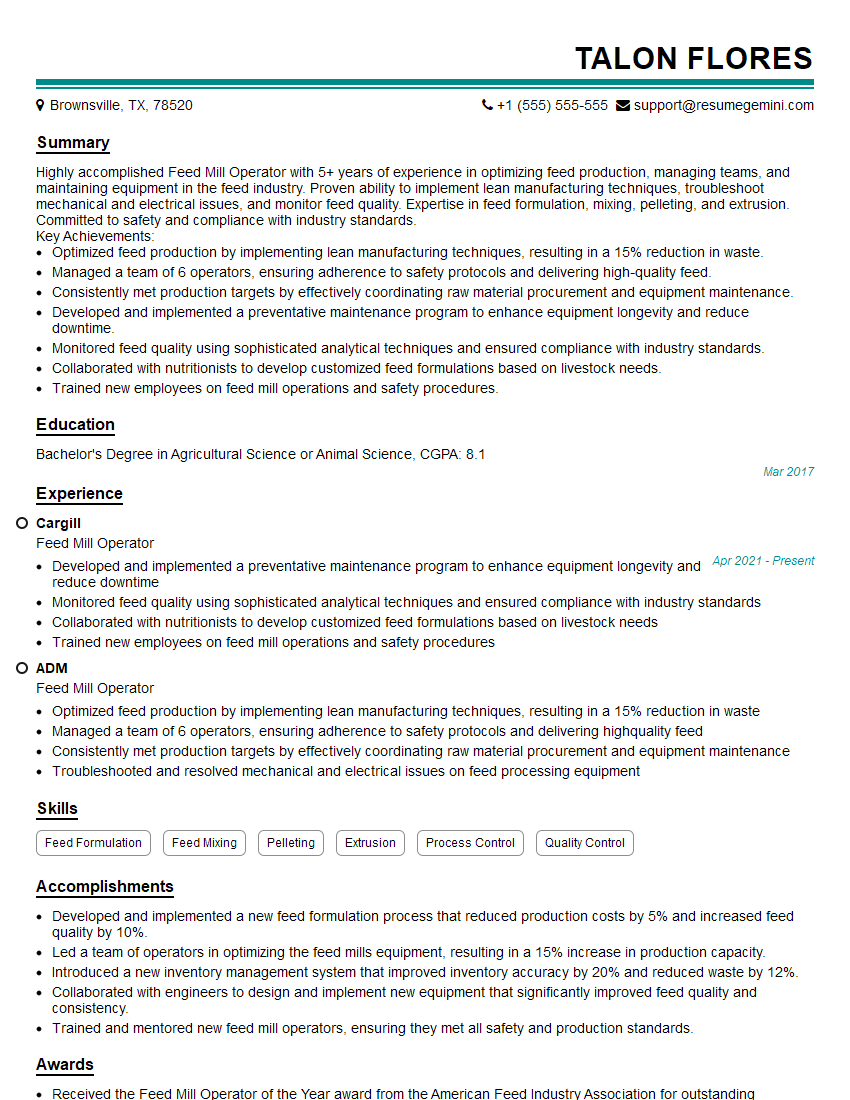
Mastering Feed Mixing and Production opens doors to exciting career opportunities with increasing responsibility and earning potential within the agriculture and animal feed industries. A strong resume is crucial for showcasing your skills and experience to potential employers. Creating an ATS-friendly resume increases your chances of getting noticed by Applicant Tracking Systems. ResumeGemini is a trusted resource to help you build a professional and impactful resume that highlights your qualifications. Examples of resumes tailored to Feed Mixing and Production are available to guide you in creating your own compelling application materials.
Explore more articles
Users Rating of Our Blogs
Share Your Experience
We value your feedback! Please rate our content and share your thoughts (optional).
What Readers Say About Our Blog
Very informative content, great job.
good