The thought of an interview can be nerve-wracking, but the right preparation can make all the difference. Explore this comprehensive guide to Feed Processing Equipment interview questions and gain the confidence you need to showcase your abilities and secure the role.
Questions Asked in Feed Processing Equipment Interview
Q 1. Describe your experience with hammer mills and their maintenance.
Hammer mills are workhorses in feed processing, reducing large feed materials into smaller particles. My experience spans over 15 years, encompassing installation, operation, and preventative maintenance of various hammer mill models. Maintenance is crucial for optimal performance and longevity. It centers around regular inspections, focusing on wear and tear on critical components.
- Hammer replacement: Hammers are consumable parts, subject to significant wear. Regular checks (frequency depending on feed type and mill usage) are vital. Dull or broken hammers reduce efficiency and increase energy consumption. We’d track hammer wear and develop a predictive maintenance schedule based on historical data.
- Screen maintenance: Screens determine the particle size. Clogged screens lead to reduced throughput and motor overload. Regular cleaning and replacement, based on screen wear, are essential. We’d examine the screen material for optimal durability against the specific feed.
- Bearing lubrication: Proper lubrication is vital for smooth operation and reduced wear. We adhere to manufacturer recommendations, often utilizing automated lubrication systems to ensure consistent lubrication.
- Rotor balance: An unbalanced rotor leads to vibrations, damaging the mill. Regular checks using vibration sensors or balancing equipment are crucial. We’d use spectrum analysis to identify unbalance problems early.
For instance, in one project, we implemented a predictive maintenance program using vibration analysis, leading to a 20% reduction in unplanned downtime and a 15% increase in overall mill efficiency. Understanding the specific feed characteristics is key to optimizing maintenance schedules.
Q 2. Explain the principles of pellet mill die selection and maintenance.
Pellet mill die selection is critical for pellet quality and production efficiency. The die’s diameter, length, and hole configuration directly influence pellet size, density, and production rate. Maintenance focuses on preventing wear and tear, maximizing die lifespan, and maintaining consistent pellet quality.
- Die selection: The choice depends on the feed material, desired pellet size, and production capacity. Factors like moisture content, hardness, and fibrousness of the feedstock all play a role. We would use specialized software to simulate various die configurations to optimize pellet quality and production.
- Die wear: Dies experience significant wear, particularly around the holes. Regular inspections are vital to detect wear patterns and assess die condition. We would routinely measure die hole diameter to assess wear and project remaining lifespan.
- Die cleaning: Clogged die holes reduce production efficiency. Regular cleaning, often using specialized tools and cleaning agents, is essential to maintain consistent pellet quality. High-pressure air or steam cleaning is also used.
- Die replacement: When die wear reaches a critical point, replacement is necessary. We’d use historical data to predict replacement times and minimize downtime. We always select dies of the correct material (e.g., hardened steel) for the specific feed.
Imagine trying to squeeze play-dough through a sieve: the sieve’s size and condition directly impact how smoothly and uniformly the dough is extruded. Similarly, the die’s condition influences pellet formation.
Q 3. What are the common causes of pellet breakage and how can they be addressed?
Pellet breakage can stem from various factors, impacting product quality and potentially feed efficiency. Addressing these issues requires a systematic approach.
- Moisture content: Incorrect moisture content is a major culprit. Too dry, and the pellets crumble; too wet, and they stick. Precise moisture control is critical. We’d use near-infrared (NIR) sensors to monitor moisture content real-time.
- Die condition: Worn or damaged dies create inconsistent pellets, prone to breakage. Regular inspection and timely replacement are essential.
- Binder quality and quantity: Insufficient binder or poor quality binders lead to weak pellets. Careful selection and precise addition of binders are crucial. We’d perform binder trials to optimize both type and quantity.
- Pellet mill operation: Incorrect operating parameters (e.g., roller pressure, die speed) can result in breakage. Optimizing these parameters through experimentation is key.
- Cooling process: Improper cooling can lead to cracks and breakage. Efficient cooling systems are crucial to solidify the pellets before packaging.
For example, we once resolved a significant pellet breakage issue by adjusting the moisture content of the feed based on real-time NIR analysis, coupled with a slight modification in the die speed. This resulted in a 10% reduction in breakage rate.
Q 4. How do you ensure consistent pellet quality and moisture content?
Consistent pellet quality and moisture content are paramount for animal health and feed efficiency. Achieving this requires a multi-faceted approach, incorporating precise control throughout the process.
- Ingredient quality control: Uniformity in raw material quality is vital. We employ rigorous quality control checks on all incoming ingredients, ensuring consistent properties such as moisture content, particle size, and chemical composition.
- Precise mixing: A homogeneous mix ensures uniform distribution of nutrients and binders. We carefully select and maintain feed mixers to achieve uniform blending.
- Moisture control: Accurate moisture addition and control are critical. We frequently use moisture meters and feedback loops to maintain desired moisture content. Steam injection or drying can be implemented.
- Pellet mill optimization: Correct parameters on the pellet mill (pressure, speed, temperature) influence pellet density and quality. We utilize data acquisition systems to monitor these parameters in real-time and optimize for best results.
- Cooling and conditioning: Proper cooling and conditioning help maintain pellet structural integrity. Efficient cooling systems ensure proper pellet setting.
Think of baking a cake: you need the right ingredients, mixed correctly, baked at the precise temperature, and cooled appropriately. Feed pellet production follows similar principles.
Q 5. Describe your experience with different types of feed mixers (e.g., horizontal, vertical).
My experience encompasses both horizontal and vertical feed mixers. Each type has its strengths and weaknesses.
- Horizontal mixers: These are typically ribbon or paddle mixers. They are cost-effective for many applications and relatively easy to maintain. They excel in blending large volumes of materials but may struggle with highly viscous materials or those with a wide range of particle sizes. We’ve used ribbon mixers extensively for large-scale feed production.
- Vertical mixers: These are often used for smaller batches or specific ingredient combinations. They are suitable for more delicate materials and have a smaller footprint compared to horizontal mixers. Their shorter mixing times are an advantage but they have limitations in scale-up.
The choice depends on the specific application. We consider factors such as batch size, feed characteristics (particle size, density, viscosity), and budget constraints when selecting the appropriate mixer. For instance, a poultry feed mill might opt for a high-capacity horizontal mixer, while a smaller-scale pet food producer might prefer a vertical mixer.
Q 6. How do you troubleshoot issues with feed mixing consistency?
Inconsistent feed mixing can lead to nutritional imbalances and reduced animal performance. Troubleshooting requires a systematic approach:
- Check mixer operation: Ensure the mixer is functioning correctly – checking motor operation, paddle/ribbon movement, and timer accuracy. Any mechanical issues must be addressed.
- Assess ingredient properties: Evaluate the properties of each ingredient: particle size, density, moisture content. Variations in these properties can affect mixing consistency. Sieving or pre-processing might be needed.
- Examine mixing time: Insufficient mixing time can result in poor blending. Extend the mixing time or adjust the mixer settings (e.g., paddle speed). We would monitor mixing uniformity using sensors in the mixer.
- Analyze the mix: Perform a thorough analysis of the mixed feed to identify any inconsistencies in nutrient distribution. Sampling at various points in the mixer is crucial.
- Evaluate mixer design: Determine whether the mixer design is appropriate for the feed ingredients. Some mixers are better suited for certain types of feed than others.
One case involved a client with inconsistent mineral distribution. Through detailed analysis, we identified a problem with the mixer’s flow pattern and recommended modifications to the impeller design, solving the issue.
Q 7. Explain the importance of proper ingredient handling and storage in feed processing.
Proper ingredient handling and storage are fundamental to feed quality and safety. Neglecting these aspects can lead to spoilage, contamination, and nutritional loss, ultimately impacting animal health and profitability.
- Storage conditions: Maintaining appropriate temperature, humidity, and ventilation is crucial to prevent spoilage and insect infestation. Proper storage facilities are essential, including climate control and pest control measures. We often advise on the construction of appropriate silos and storage areas.
- First-In, First-Out (FIFO) system: Implementing FIFO prevents older ingredients from remaining in storage for extended periods, reducing the risk of spoilage. Clear labeling and inventory management are key.
- Protection from contamination: Preventing contamination from rodents, birds, and other sources is vital. This necessitates clean and well-maintained storage facilities, as well as effective pest control.
- Handling practices: Avoid cross-contamination between ingredients. This may involve using designated equipment and transport methods for different ingredients. Strict sanitation protocols are crucial to minimize microbial growth.
- Regular inspection: Routine inspection of stored ingredients for quality, spoilage, or contamination is essential. This often involves visual checks and quality testing.
Think of it like a chef carefully handling and storing ingredients to ensure a delicious and safe meal. Similarly, proper ingredient handling and storage are fundamental to producing high-quality animal feed.
Q 8. Describe your experience with automated control systems in feed mills.
My experience with automated control systems in feed mills spans over 15 years, encompassing various roles from commissioning engineer to plant manager. I’ve worked extensively with Programmable Logic Controllers (PLCs) and Supervisory Control and Data Acquisition (SCADA) systems from various manufacturers like Rockwell Automation and Siemens. These systems are critical for optimizing feed production by automating processes like ingredient weighing, mixing, pelleting, and drying. For example, in one mill, we implemented a sophisticated SCADA system that integrated real-time data from various sensors across the plant, enabling us to monitor and adjust parameters like moisture content, temperature, and pressure, leading to a 10% increase in production efficiency and a significant reduction in waste. Another project involved migrating an older system to a modern, more robust PLC platform, improving uptime and reducing maintenance costs. This involved careful planning, thorough testing, and meticulous operator training.
I am proficient in using these systems to create custom control logic, troubleshoot malfunctions, and implement preventative maintenance schedules. My expertise extends to integrating various data analytics tools to monitor key performance indicators (KPIs) and identify areas for improvement, which often leads to significant cost savings.
Q 9. How do you ensure the safety and efficiency of feed processing operations?
Ensuring safety and efficiency in feed processing requires a multi-faceted approach. Safety protocols are paramount. This begins with rigorous adherence to Occupational Safety and Health Administration (OSHA) guidelines and implementation of Lockout/Tagout (LOTO) procedures for all maintenance and repair activities. Regular safety training for all personnel, encompassing hazard identification, safe operating procedures, and emergency response, is essential. Regular inspections of equipment, following established checklists, are vital to proactively identify potential hazards before they cause accidents. We utilize Personal Protective Equipment (PPE) like hearing protection, safety glasses, and steel-toed boots as standard practice.
On the efficiency side, preventative maintenance programs are crucial. By meticulously scheduling and performing routine inspections and servicing of equipment, we prevent unexpected breakdowns and downtime. This includes lubrication schedules, component replacements, and cleaning protocols. Data analytics also helps us identify trends and potential failures in equipment, enabling us to address issues proactively. Efficient material handling systems, optimized process parameters, and the use of quality control checkpoints throughout the process also contribute significantly to overall efficiency. Think of it like a well-oiled machine – each part contributing seamlessly to the larger process.
Q 10. What are your experiences with different types of dryers used in feed processing?
My experience encompasses various dryer types commonly used in feed processing, including rotary drum dryers, flash dryers, and fluidized bed dryers. Each has its advantages and disadvantages depending on the specific feed product and production requirements. Rotary drum dryers, for example, are versatile and well-suited for handling a wide range of materials, but they can be less energy-efficient compared to other types. Flash dryers, on the other hand, are very energy efficient and offer rapid drying times, ideal for heat-sensitive ingredients, but they are more expensive to install and require specialized expertise. Fluidized bed dryers provide excellent control over temperature and moisture content, making them suitable for high-quality products but may not be cost-effective for large-scale operations.
The selection process involves carefully considering factors like the type of feed, desired moisture content, production capacity, energy costs, and available space. I’ve been involved in the selection, installation, and optimization of dryers for various clients, tailoring the solution to meet their unique needs and budget constraints. For instance, in one project, we successfully replaced an inefficient rotary dryer with a high-efficiency fluidized bed dryer, resulting in significant energy savings and improved product quality.
Q 11. Describe your understanding of feed formulation and its impact on animal health.
Feed formulation is a complex science involving the precise blending of various ingredients to meet the specific nutritional needs of different animal species at various life stages. A well-formulated feed ensures optimal growth, health, and productivity. The formulation process takes into account factors like the animal’s age, breed, and production goals (e.g., meat production, milk production, egg production). Essential nutrients such as proteins, carbohydrates, fats, vitamins, and minerals must be included in the correct proportions. The quality and digestibility of the ingredients are also crucial considerations.
Inadequate formulation can lead to various health problems in animals, including malnutrition, digestive issues, weakened immune systems, and reduced productivity. For example, a deficiency in a specific vitamin could lead to bone deformities in young animals, while an imbalance in minerals could cause kidney problems. My expertise allows me to analyze the nutritional requirements of different animal species and create accurate feed formulations using specialized software and considering the cost-effectiveness of the ingredients.
Q 12. How do you monitor and control the particle size distribution of feed products?
Monitoring and controlling particle size distribution is crucial for feed quality. Incorrect particle size can negatively impact feed intake, digestibility, and overall animal performance. We utilize various techniques to monitor particle size, including sieving analysis, laser diffraction, and image analysis. Sieving is a simple but effective method, while laser diffraction offers greater precision and speed for detailed analysis. Image analysis allows for the visualization and classification of particles.
Controlling particle size distribution often involves adjusting the parameters of milling and pelleting equipment. For instance, adjusting the hammer mill screen size or the roller gap on a pellet mill will directly impact the final particle size. We use feedback loops and control systems to maintain a consistent particle size within defined specifications. This involves real-time monitoring of particle size data, automated adjustments to the equipment, and continuous quality checks. In practice, we continuously refine our process parameters based on the data obtained from these analytical methods to achieve the target particle size distribution while minimizing waste.
Q 13. What are the common safety hazards associated with feed processing equipment?
Feed processing equipment presents various safety hazards. Moving parts in machinery like hammer mills, pellet mills, and mixers pose significant risks of entanglement, crushing, and amputation. Rotating shafts and gears are particularly dangerous. Dust explosions are a serious concern, especially in facilities processing fine powders. The accumulation of combustible dust can create an explosive atmosphere if ignited by a spark or other ignition source. Electrical hazards exist from malfunctioning equipment and exposed wiring. Elevated temperatures from dryers and other heating elements can also pose burn risks. Finally, slips, trips, and falls are common hazards in industrial environments.
To mitigate these risks, we employ various safety measures, including machine guarding, emergency stop systems, regular equipment inspections, and a robust safety training program for all personnel. Proper ventilation and dust collection systems are crucial for preventing dust explosions. Regular safety audits and adherence to strict safety protocols are essential for maintaining a safe working environment.
Q 14. Describe your experience with preventative maintenance programs for feed processing equipment.
Preventative maintenance (PM) programs are critical for maximizing uptime and minimizing costly repairs in feed processing. Our programs are developed based on manufacturer recommendations, historical equipment data, and best practices. These programs include detailed checklists, maintenance schedules, and spare parts inventories. They are usually computerized and use a Computerized Maintenance Management System (CMMS). The CMMS allows us to track maintenance activities, monitor equipment performance, and predict potential failures using data analytics.
A typical PM program might involve daily inspections, weekly lubrication, monthly component checks, and quarterly overhauls. We utilize a combination of predictive and preventative maintenance techniques. Predictive maintenance involves monitoring equipment performance through sensors and data analytics to identify potential problems before they occur. This allows for timely interventions, preventing major breakdowns and reducing downtime. A well-structured and rigorously implemented PM program is essential for both safety and productivity in a feed mill. It’s not just about fixing things after they break; it’s about proactive management that minimizes interruptions and maintains consistent output.
Q 15. How do you troubleshoot problems with feed conveying systems?
Troubleshooting feed conveying systems requires a systematic approach. Think of it like diagnosing a car problem – you need to isolate the issue before fixing it. I start by visually inspecting the entire system, looking for obvious problems like blockages, belt damage, or misalignments. Then, I check the system’s controls and instrumentation. Are the motors running? Are the sensors reporting accurate data? If there are issues with the control system, I’ll check for programming errors or faulty sensors. Next, I’ll check the power supply, ensuring that there are no voltage drops or power fluctuations.
For example, if a conveyor belt stops unexpectedly, I might first check for a jammed belt. A quick visual inspection might reveal a clump of material causing the blockage. If not, I’d proceed to check the motor’s power supply and the motor itself for faults. If the problem persists, I would then consult the system’s schematics and diagnostic manuals to systematically rule out other possible causes such as sensor malfunctions or control system problems. Often, data loggers on the system can prove invaluable here, providing a timeline of events leading up to the failure.
Finally, proper preventative maintenance is crucial. Regular lubrication, inspections, and cleaning significantly reduce the chance of problems arising in the first place.
Career Expert Tips:
- Ace those interviews! Prepare effectively by reviewing the Top 50 Most Common Interview Questions on ResumeGemini.
- Navigate your job search with confidence! Explore a wide range of Career Tips on ResumeGemini. Learn about common challenges and recommendations to overcome them.
- Craft the perfect resume! Master the Art of Resume Writing with ResumeGemini’s guide. Showcase your unique qualifications and achievements effectively.
- Don’t miss out on holiday savings! Build your dream resume with ResumeGemini’s ATS optimized templates.
Q 16. Explain the importance of quality control in feed processing.
Quality control in feed processing is paramount; it ensures the safety and nutritional value of the final product for livestock. Think of it as baking a cake – if you don’t measure ingredients accurately, you won’t get the desired result. Similarly, inconsistencies in feed quality can lead to poor animal health, reduced growth rates, and ultimately, lower profits. Quality control involves numerous stages, from raw material inspection (checking for contaminants, mycotoxins, and moisture content) to finished product testing (analyzing nutrient composition and particle size distribution).
We use various techniques, including statistical process control (SPC) charts to monitor key parameters, regularly calibrate our equipment, and conduct regular sampling and testing across the whole production process. Any deviations from established standards are thoroughly investigated and corrected to maintain consistency and prevent issues from escalating.
For instance, we might use near-infrared (NIR) spectroscopy for rapid analysis of ingredient composition, ensuring consistent nutrient levels throughout the production. Strict adherence to established quality standards and procedures is not only about fulfilling regulatory requirements but also about optimizing operational efficiency and maintaining customer trust.
Q 17. What are your experiences with different types of screens used in feed processing?
My experience encompasses various screen types used in feed milling, each with its own strengths and weaknesses. These screens are crucial for size reduction and separation of ingredients. Common types include perforated plate screens, woven wire screens, and vibrating screens.
Perforated plate screens are robust and offer excellent durability, ideal for handling coarser materials, however, they may have a limited capacity for fine separations. Woven wire screens provide more precise sizing control, enabling finer separations, but they may be more prone to wear and tear. Vibrating screens, which use mechanical vibrations to enhance material flow and separation efficiency, are often preferred for larger-scale operations, increasing throughput and precision.
The choice of screen depends on factors such as the desired particle size, the type of material being processed, and the required throughput. I’ve worked with all these types, making optimal choices based on a thorough understanding of material properties and process requirements. For example, in one project involving fine milling of soybean meal, a woven wire screen with a smaller mesh size was more suitable to achieve the required particle size consistency.
Q 18. How do you interpret and utilize data from process control systems in a feed mill?
Process control systems in a feed mill generate a wealth of data regarding production parameters, such as temperature, pressure, flow rates, and moisture content. Interpreting this data is crucial for optimizing the process and ensuring product quality. I use this data to identify trends, predict potential problems, and adjust operating parameters to maintain efficiency.
For example, if I see a steady increase in motor current draw on a particular grinder, it might indicate increasing friction, potentially due to wear and tear or a buildup of material. By analyzing historical data, I can predict when maintenance might be required, preventing unexpected breakdowns. Similarly, monitoring moisture content throughout the process allows for timely adjustments to dryers, ensuring the final product meets quality standards.
Sophisticated data analysis techniques, including statistical process control (SPC) and predictive maintenance algorithms, are increasingly used to improve decision-making. I’m proficient in using these tools to not only react to problems but to proactively optimize the entire process and improve overall plant productivity.
Q 19. Describe your understanding of GMPs (Good Manufacturing Practices) in feed processing.
Good Manufacturing Practices (GMPs) in feed processing are a set of guidelines that ensure the safety and quality of feed products. They cover all aspects of production, from raw material handling to finished product storage. Think of it as a recipe for producing safe and high-quality feed – if you don’t follow the recipe precisely, the final product might be compromised.
GMPs encompass aspects such as hygiene (proper cleaning and sanitation procedures), pest control (prevention of insect and rodent infestation), traceability (accurate record-keeping throughout the production process), and personnel training (ensuring staff are adequately trained in safe practices). Compliance with GMPs is crucial for preventing contamination, minimizing risks to animal health, and meeting regulatory standards. Regular audits and inspections are vital to ensure ongoing compliance.
I have extensive experience in implementing and maintaining GMPs in various feed mill settings. This includes developing standard operating procedures (SOPs), conducting regular employee training, and performing routine inspections to ensure adherence to these critical guidelines.
Q 20. How do you handle emergency situations and equipment malfunctions in a feed mill?
Handling emergencies and equipment malfunctions requires a calm, decisive approach. My first priority is always safety – securing the area and ensuring the well-being of personnel. Then, I follow a structured problem-solving process.
First, I assess the situation, identifying the nature and extent of the problem. I will then quickly determine if the problem can be safely addressed immediately or requires the involvement of specialized personnel. This may involve shutting down affected equipment, isolating power sources, and alerting relevant personnel. Next, I’ll initiate corrective actions based on the nature of the malfunction – this could involve minor repairs, replacing a faulty component, or calling in specialized maintenance teams. Detailed records of the incident, including corrective actions and preventative measures, are meticulously documented to prevent recurrence. Regular training drills and emergency response plans are essential in preparing for such scenarios, ensuring a rapid and efficient response.
For example, a sudden power outage would trigger our emergency procedures. We’d switch to backup power sources to maintain critical operations while initiating a thorough investigation into the cause of the outage.
Q 21. What experience do you have with different types of pellet coolings systems?
Pellet cooling systems are crucial for reducing the temperature of newly formed pellets, preventing degradation and improving their durability. I have experience with several types, each with its own advantages and disadvantages. Counter-current cooling systems are efficient, using ambient air to cool the pellets as they move in the opposite direction of the airflow. These are cost-effective but can be less efficient in high-humidity environments.
Conversely, some systems employ vacuum cooling which is much faster and more efficient in lowering the pellet temperature than counter-current cooling, especially in humid climates; however, they have higher capital costs and require specialized equipment. I’ve also worked with other systems like fluidized bed coolers that utilize a fluidized bed of air to cool pellets gently, minimizing breakage. The choice of cooling system is influenced by factors such as pellet type, desired cooling rate, available resources and environmental conditions. For example, in a humid climate, a vacuum cooler may be the more efficient choice despite the higher initial investment. Careful consideration of these factors is essential for selecting the most appropriate system for a specific operation.
Q 22. Explain the different types of grinding systems used in feed production and their applications.
Grinding is a crucial step in feed production, ensuring ingredients are properly sized for optimal digestibility and nutrient utilization. Several grinding systems exist, each with specific strengths and weaknesses. The choice depends on factors like ingredient characteristics, desired particle size, and production capacity.
- Hammer mills: These are high-speed mills using swinging hammers to impact and shatter materials. They’re versatile, handling various ingredients but producing a relatively wide particle size distribution. Think of them like a very powerful blender. They are ideal for dry, brittle ingredients.
- Roller mills: These mills use rollers to crush and shear materials. They offer finer particle size control and less dust generation than hammer mills, making them suitable for delicate ingredients or situations requiring precise particle size distribution. Picture rolling pins, but on a much larger and more robust scale, creating a more uniform grind. They are best suited for materials like grains and oilseeds.
- Disc mills: These mills employ rotating discs with abrasive surfaces to grind materials. They provide fine and consistent particle size reduction, often used for creating very fine powders. Imagine two rough-surfaced plates spinning against each other, effectively grinding down the material between them. They are often used for mineral pre-mixing.
- Stone mills: These are older, slower-speed mills using rotating stones to grind. While gentler on the ingredients, they are less efficient and produce more heat. They are typically less common in modern large-scale operations but may still be used for specialized applications or niche markets.
The selection of a grinding system always involves a trade-off between capacity, particle size distribution, energy consumption, and maintenance costs. For example, a large-scale feed mill processing corn might use a roller mill for its efficiency and fine particle size control, while a smaller operation might opt for a hammer mill for its versatility and lower initial cost.
Q 23. How do you address issues related to dust control and explosion prevention in a feed mill?
Dust control and explosion prevention are paramount in feed mills due to the flammable nature of many ingredients. A multi-faceted approach is essential:
- Enclosure and Containment: All grinding, conveying, and mixing equipment should be fully enclosed to minimize dust release. Regular inspection and maintenance of seals and gaskets are critical.
- Dust Collection Systems: High-efficiency dust collectors, such as baghouses or cyclones, are necessary to capture dust particles. Regular filter cleaning and maintenance are vital to their effectiveness.
- Inerting Systems: These systems introduce inert gases (like nitrogen) into processing areas to displace oxygen, reducing the risk of explosions. They act as a safety net, minimizing the oxygen concentration to reduce the risk of fire or explosion.
- Explosion Venting: Pressure relief vents are installed in processing areas to allow pressure buildup during an explosion to safely vent outward, rather than causing catastrophic structural damage. Think of it as a controlled release valve.
- Regular Cleaning: Thorough cleaning of equipment and facilities is crucial to prevent dust buildup, which is a major contributor to explosions. This involves planned shutdowns and dedicated cleaning crews.
- Emergency Response Plan: A comprehensive emergency response plan should be in place, including training for employees on fire suppression techniques and evacuation procedures.
Implementing these measures requires a significant investment, but the safety of personnel and the protection of the facility far outweigh the costs. For example, a properly designed dust collection system can drastically reduce the risk of fires caused by dust accumulations, contributing to a safer working environment.
Q 24. Describe your familiarity with various types of feed ingredient handling systems (e.g., screw conveyors, bucket elevators).
Efficient ingredient handling is the backbone of a productive feed mill. Different systems are employed depending on the flow characteristics of the ingredient and the layout of the facility:
- Screw Conveyors: These are used for horizontal transportation of a wide variety of materials. They’re cost-effective and relatively low maintenance but might not be suitable for very long distances or materials that are prone to bridging (sticking together). Think of it like a giant auger, moving materials along a trough.
- Bucket Elevators: These vertical conveyors use buckets attached to a belt to lift materials to different levels. They are efficient for vertical transport but can be more expensive and complex than screw conveyors. It’s like a continuous bucket-chain system lifting ingredients vertically, ideal for multi-story feed mills.
- Pneumatic Conveyors: These systems use air pressure to transport materials through pipelines. They’re ideal for long distances and can handle a variety of materials. However, they require careful design to prevent material degradation and ensure efficient operation. Picture a powerful vacuum cleaner, transporting materials through pipes. Best for fine materials.
- Belt Conveyors: These are used for long-distance transport of materials, especially in bulk. They are very efficient and capable of handling large quantities, but require significant space. They are like an enormous moving walkway.
The choice of handling system often involves considering factors such as throughput, material characteristics (e.g., bulk density, flowability), distance to be covered, and available space. For instance, a large feed mill might use a combination of belt conveyors for long-distance transport and bucket elevators for vertical conveying.
Q 25. What are your experiences with different types of size reduction equipment?
My experience encompasses a wide range of size reduction equipment, each with specific characteristics and applications:
- Hammer mills: As mentioned before, excellent for high-capacity grinding of various materials but may produce a wide size distribution. I’ve worked extensively with these, optimizing hammer configurations for different feed ingredients to achieve desired particle size.
- Roller mills: These provide finer control over particle size, which is crucial for certain feed formulations. I’ve been involved in adjusting roller gap settings to fine-tune the grinding process and ensure consistent product quality.
- Knife mills: These are effective for cutting and shredding materials, often used for processing fibrous ingredients. I’ve utilized these for processing by-product materials which require a different cutting profile.
- Impact mills: These mills utilize high-speed impact to break down materials. I’ve worked with high speed impact mills for situations requiring high throughput and very small particle sizes.
Selecting the appropriate equipment often requires considering factors such as the hardness and fragility of the feed ingredient, the desired particle size distribution, and the required production capacity. For example, when dealing with delicate ingredients like certain oilseeds, a gentler roller mill would be preferred over a high-impact hammer mill to prevent excessive particle size reduction.
Q 26. How do you maintain accurate inventory control of feed ingredients and finished products?
Accurate inventory control is essential for efficient production and cost management in a feed mill. This is typically achieved through a combination of physical inventory checks and computerized inventory management systems:
- Weighing Systems: Precise weighing systems are installed at all crucial points, such as ingredient receiving, mixing, and finished product packaging, to accurately track material flow.
- Inventory Management Software: Sophisticated software is used to track inventory levels in real-time, generating reports on usage, stock levels, and potential shortages. This software often integrates with weighing scales and other equipment to automatically update inventory data.
- First-In, First-Out (FIFO) System: This inventory management approach ensures that older ingredients are used first, preventing spoilage and maintaining product freshness.
- Regular Physical Inventory Checks: Periodic physical inventory checks are carried out to verify the accuracy of the computerized system and identify any discrepancies.
- Quality Control: The system should also take into account ingredient quality parameters, noting expiration dates and ensuring that ingredients aren’t used past their recommended expiration.
A well-designed system minimizes waste, reduces storage costs, and enables efficient production planning. For instance, real-time inventory monitoring prevents costly production delays due to unexpected ingredient shortages, enhancing operational efficiency.
Q 27. Explain your understanding of the impact of different processing parameters on feed quality.
Processing parameters significantly influence feed quality. Even slight variations can impact nutrient availability, digestibility, and overall feed value. Key parameters include:
- Particle Size: The size of the ground ingredients directly impacts digestibility. Too coarse, and nutrients may not be fully accessible; too fine, and the feed may become dusty and prone to spoilage.
- Temperature: Excessive heat during processing can degrade heat-sensitive nutrients, reducing the nutritional value of the feed.
- Moisture Content: Maintaining optimal moisture content is vital for proper mixing and pelleting. Too much moisture can promote mold growth, while too little can negatively impact pellet quality.
- Mixing Time: Insufficient mixing time leads to uneven distribution of ingredients, resulting in inconsistent nutrient content throughout the feed.
- Pelleting Pressure and Temperature: These parameters are critical for pellet quality. Improper pelleting can lead to crumbling pellets, reduced durability, and nutrient loss.
Careful monitoring and control of these parameters ensure the production of high-quality feed that meets nutritional requirements and minimizes waste. For example, consistent monitoring of moisture content during the pelleting process ensures the creation of pellets with appropriate hardness and durability, preventing crumbling and nutrient loss.
Q 28. Describe your experience with the implementation and maintenance of a computerized maintenance management system (CMMS) in a feed mill.
A CMMS (Computerized Maintenance Management System) is crucial for optimizing maintenance activities and minimizing downtime in a feed mill. My experience includes the implementation and ongoing maintenance of CMMS software in several facilities. The process typically involves:
- System Selection: Choosing a CMMS tailored to the specific needs of the feed mill, considering factors like equipment database management, work order tracking, inventory management, and reporting capabilities.
- Data Input: Entering comprehensive data on all equipment, including specifications, maintenance schedules, and historical repair records. This is a time-intensive process that requires collaboration with maintenance personnel.
- Work Order Management: Utilizing the CMMS to generate and track work orders, ensuring timely completion of preventative and corrective maintenance tasks.
- Inventory Management: Managing spare parts inventory using the CMMS to optimize stock levels and minimize downtime due to missing parts. This often integrates with the overall inventory control system.
- Reporting and Analysis: Using CMMS reports to analyze maintenance trends, identify potential equipment failures, and optimize maintenance schedules. Data-driven decisions are key to reducing downtime and maintenance costs.
- Training: Providing thorough training to maintenance personnel on the use of the CMMS to ensure its effective utilization.
A well-implemented CMMS significantly improves maintenance efficiency, reduces downtime, and lowers maintenance costs. For example, by accurately predicting potential equipment failures based on historical data, we can proactively schedule maintenance, preventing costly emergency repairs and production disruptions.
Key Topics to Learn for Feed Processing Equipment Interview
- Feed Milling Fundamentals: Understanding hammer mills, roller mills, and their applications in different feed types. Explore the impact of particle size distribution on animal nutrition.
- Mixing and Blending Technologies: Analyze the principles of efficient feed mixing, including horizontal and vertical mixers. Discuss the challenges of achieving uniform blends and strategies for quality control.
- Pelleting and Extrusion: Learn the processes involved in feed pelleting and extrusion, including die design, conditioning, and the impact on feed quality and digestibility. Consider the advantages and disadvantages of each method.
- Material Handling and Storage: Understand the various systems for transporting and storing feed ingredients and finished products. Discuss the importance of preventing contamination and spoilage.
- Automation and Control Systems: Familiarize yourself with the role of PLC’s and SCADA systems in modern feed processing plants. Understand the importance of process monitoring and optimization.
- Safety and Maintenance: Explore the critical safety aspects of operating feed processing equipment, including lockout/tagout procedures and routine maintenance practices. Discuss preventative maintenance strategies.
- Quality Control and Assurance: Understand the importance of quality control in feed manufacturing, including methods for testing ingredient quality and finished product analysis. Discuss the role of regulations and compliance.
- Troubleshooting and Problem-Solving: Develop your ability to diagnose and solve common problems encountered in feed processing equipment. This includes recognizing symptoms and implementing effective solutions.
Next Steps
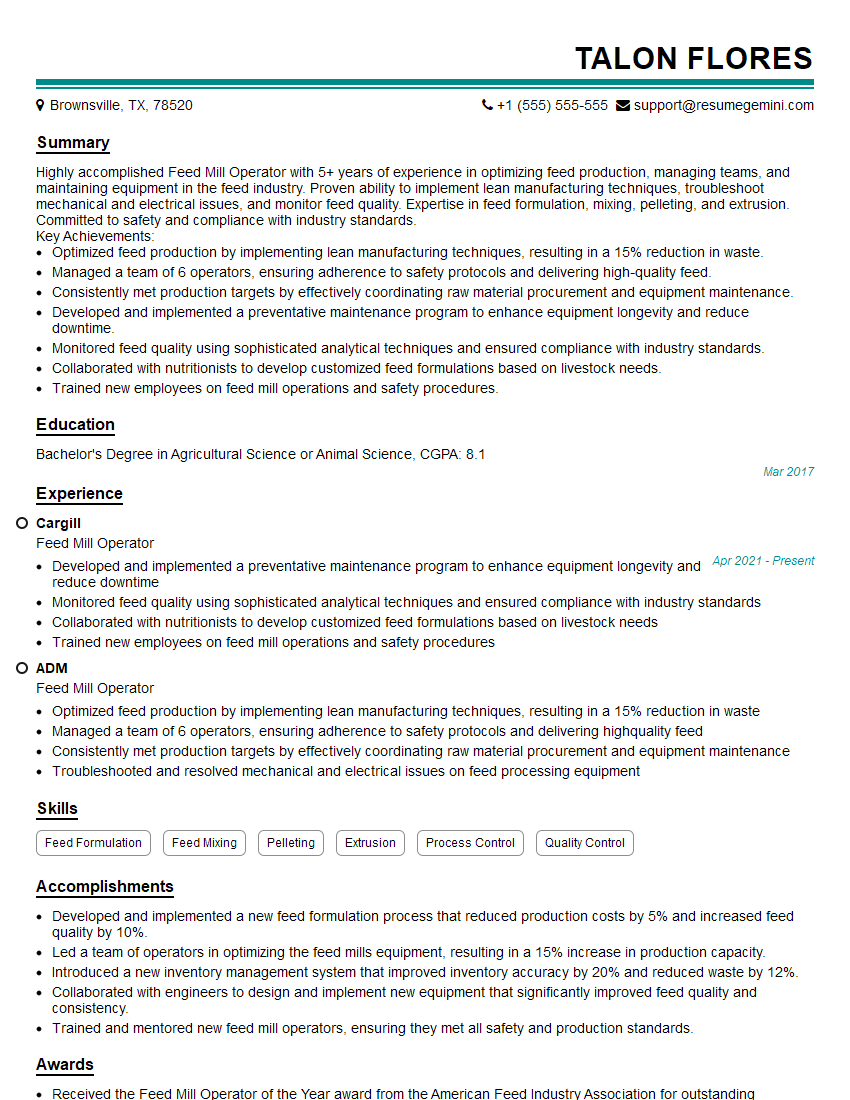
Mastering the intricacies of feed processing equipment opens doors to exciting career opportunities in the animal feed industry, offering diverse roles with excellent growth potential. A strong resume is key to securing your ideal position. Creating an ATS-friendly resume is crucial for maximizing your chances of getting noticed by recruiters. ResumeGemini can help you craft a professional and impactful resume tailored to highlight your skills and experience in this competitive field. Examples of resumes specifically designed for Feed Processing Equipment roles are available to help guide your preparation.
Explore more articles
Users Rating of Our Blogs
Share Your Experience
We value your feedback! Please rate our content and share your thoughts (optional).
What Readers Say About Our Blog
Attention music lovers!
Wow, All the best Sax Summer music !!!
Spotify: https://open.spotify.com/artist/6ShcdIT7rPVVaFEpgZQbUk
Apple Music: https://music.apple.com/fr/artist/jimmy-sax-black/1530501936
YouTube: https://music.youtube.com/browse/VLOLAK5uy_noClmC7abM6YpZsnySxRqt3LoalPf88No
Other Platforms and Free Downloads : https://fanlink.tv/jimmysaxblack
on google : https://www.google.com/search?q=22+AND+22+AND+22
on ChatGPT : https://chat.openai.com?q=who20jlJimmy20Black20Sax20Producer
Get back into the groove with Jimmy sax Black
Best regards,
Jimmy sax Black
www.jimmysaxblack.com
Hi I am a troller at The aquatic interview center and I suddenly went so fast in Roblox and it was gone when I reset.
Hi,
Business owners spend hours every week worrying about their website—or avoiding it because it feels overwhelming.
We’d like to take that off your plate:
$69/month. Everything handled.
Our team will:
Design a custom website—or completely overhaul your current one
Take care of hosting as an option
Handle edits and improvements—up to 60 minutes of work included every month
No setup fees, no annual commitments. Just a site that makes a strong first impression.
Find out if it’s right for you:
https://websolutionsgenius.com/awardwinningwebsites
Hello,
we currently offer a complimentary backlink and URL indexing test for search engine optimization professionals.
You can get complimentary indexing credits to test how link discovery works in practice.
No credit card is required and there is no recurring fee.
You can find details here:
https://wikipedia-backlinks.com/indexing/
Regards
NICE RESPONSE TO Q & A
hi
The aim of this message is regarding an unclaimed deposit of a deceased nationale that bears the same name as you. You are not relate to him as there are millions of people answering the names across around the world. But i will use my position to influence the release of the deposit to you for our mutual benefit.
Respond for full details and how to claim the deposit. This is 100% risk free. Send hello to my email id: [email protected]
Luka Chachibaialuka
Hey interviewgemini.com, just wanted to follow up on my last email.
We just launched Call the Monster, an parenting app that lets you summon friendly ‘monsters’ kids actually listen to.
We’re also running a giveaway for everyone who downloads the app. Since it’s brand new, there aren’t many users yet, which means you’ve got a much better chance of winning some great prizes.
You can check it out here: https://bit.ly/callamonsterapp
Or follow us on Instagram: https://www.instagram.com/callamonsterapp
Thanks,
Ryan
CEO – Call the Monster App
Hey interviewgemini.com, I saw your website and love your approach.
I just want this to look like spam email, but want to share something important to you. We just launched Call the Monster, a parenting app that lets you summon friendly ‘monsters’ kids actually listen to.
Parents are loving it for calming chaos before bedtime. Thought you might want to try it: https://bit.ly/callamonsterapp or just follow our fun monster lore on Instagram: https://www.instagram.com/callamonsterapp
Thanks,
Ryan
CEO – Call A Monster APP
To the interviewgemini.com Owner.
Dear interviewgemini.com Webmaster!
Hi interviewgemini.com Webmaster!
Dear interviewgemini.com Webmaster!
excellent
Hello,
We found issues with your domain’s email setup that may be sending your messages to spam or blocking them completely. InboxShield Mini shows you how to fix it in minutes — no tech skills required.
Scan your domain now for details: https://inboxshield-mini.com/
— Adam @ InboxShield Mini
Reply STOP to unsubscribe
Hi, are you owner of interviewgemini.com? What if I told you I could help you find extra time in your schedule, reconnect with leads you didn’t even realize you missed, and bring in more “I want to work with you” conversations, without increasing your ad spend or hiring a full-time employee?
All with a flexible, budget-friendly service that could easily pay for itself. Sounds good?
Would it be nice to jump on a quick 10-minute call so I can show you exactly how we make this work?
Best,
Hapei
Marketing Director
Hey, I know you’re the owner of interviewgemini.com. I’ll be quick.
Fundraising for your business is tough and time-consuming. We make it easier by guaranteeing two private investor meetings each month, for six months. No demos, no pitch events – just direct introductions to active investors matched to your startup.
If youR17;re raising, this could help you build real momentum. Want me to send more info?
Hi, I represent an SEO company that specialises in getting you AI citations and higher rankings on Google. I’d like to offer you a 100% free SEO audit for your website. Would you be interested?
Hi, I represent an SEO company that specialises in getting you AI citations and higher rankings on Google. I’d like to offer you a 100% free SEO audit for your website. Would you be interested?