Preparation is the key to success in any interview. In this post, we’ll explore crucial Fence Installation and Maintenance interview questions and equip you with strategies to craft impactful answers. Whether you’re a beginner or a pro, these tips will elevate your preparation.
Questions Asked in Fence Installation and Maintenance Interview
Q 1. What types of fence materials are you familiar with (e.g., wood, vinyl, chain link, metal)?
I’m highly familiar with a wide range of fence materials, each with its own strengths and weaknesses. This includes:
- Wood: A classic choice, offering aesthetic versatility and relative affordability. However, it requires regular maintenance (staining, sealing) and is susceptible to rot and insect damage. I’ve worked extensively with various wood types, from pressure-treated pine for durability to cedar for its natural resistance to decay.
- Vinyl: Low-maintenance and durable, vinyl fences are resistant to rot, insects, and fading. They are often a good choice for homeowners seeking a long-lasting, hassle-free option. I’ve installed many vinyl fences, appreciating their ease of installation and clean lines.
- Chain Link: A cost-effective and sturdy option, ideal for boundary demarcation and security. Chain link’s flexibility makes it suitable for uneven terrain, though it’s less aesthetically pleasing than other options. My experience includes installing both residential and commercial chain link fences.
- Metal (Aluminum, Steel, Wrought Iron): Metal fences offer high durability and security, with aluminum being low-maintenance and steel offering strength at a potentially lower cost. Wrought iron provides a more ornate, decorative look but often comes at a higher price point. I have experience working with all three, understanding the specific installation requirements of each.
Choosing the right material depends heavily on the client’s budget, aesthetic preferences, and the specific needs of the property.
Q 2. Describe your experience with post hole digging and setting.
Post hole digging and setting is fundamental to a successful fence installation. I’ve used a variety of methods, from manual post hole diggers for smaller projects to power augers for larger jobs. The depth and spacing of the holes are crucial for stability. For instance, in areas with heavy winds, deeper holes are necessary. I always ensure the holes are dug to the correct depth and width specified by the manufacturer for the type of post and the local soil conditions. Proper compaction of the soil around the post, often using gravel or concrete, prevents settling and ensures long-term stability. I’ve seen firsthand the problems that arise from poorly dug and set posts—leaning fences, sagging sections, and even collapsed sections. My approach emphasizes precision and attention to detail at this critical stage.
I also take into account things like underground utilities before digging – using a utility locating service is essential to avoid damage.
Q 3. Explain the process of installing a chain link fence.
Installing a chain link fence is a multi-step process requiring precision and teamwork. Here’s a breakdown:
- Site Preparation: This involves clearing the area, marking the fence line, and digging post holes according to the layout.
- Post Setting: Setting the posts plumb (perfectly vertical) and at the correct depth is crucial. I typically use a level and plumb bob to ensure accuracy.
- Wire Stretching: The process of stretching the wire is critical for a taut, straight fence. We use tensioning tools to achieve the correct tension while maintaining consistent alignment.
- Line Post Installation: Line posts are positioned between corner posts to provide support for the fence. They are equally important for ensuring proper alignment and tension.
- Fabric Attachment: The chain link fabric is attached to the posts using wire ties or clips.
- Gate Installation: Fence gates are installed and adjusted to ensure smooth operation. Often, gate hinges and latches need to be fine-tuned.
- Final Inspection: A thorough inspection is done to check for any sagging, misalignment, or loose connections. Properly tensioned and installed chain link fences should appear straight and taut.
I’ve found that careful planning and meticulous execution at each step are key to a successful and long-lasting chain link fence. I always emphasize teamwork and communication among the crew to ensure a smooth and efficient installation.
Q 4. How do you ensure proper fence alignment and leveling?
Maintaining proper fence alignment and leveling is essential for both aesthetics and structural integrity. I utilize several tools and techniques:
- String Lines: Stretching string lines along the fence line provides a visual guide for maintaining straightness. This helps ensure posts and sections remain aligned throughout the installation process.
- Levels: Levels are used consistently throughout the process, both during post setting and during the installation of each section of fencing. I often use both a line level and a bubble level for enhanced accuracy.
- Post Tamper: A post tamper, or similar compaction tool, is used to firmly settle the posts in the ground and reduce potential shifting later on. I always compact the soil around the post adequately.
- Measuring Tools: Accurate measurements are vital. I ensure consistent spacing between posts and sections to ensure a uniform look and structural integrity.
By employing these techniques, I ensure that the finished fence is both visually appealing and structurally sound, capable of withstanding the elements.
Q 5. What are the common causes of fence damage and how do you repair them?
Fence damage is common, often caused by weather, accidental impact, or simple wear and tear. Here are some common causes and their repairs:
- Weather Damage (Rot, Rust): Wood fences rot over time; metal fences rust. Repair involves replacing damaged sections or posts. For wood, applying a protective sealant or stain can prolong its lifespan. For metal, rust removal and repainting are necessary.
- Wind Damage: Strong winds can cause posts to lean or sections to bend. Repairs often involve straightening bent sections or replacing damaged posts and sections.
- Accidental Impact (Vehicle Collision): This can result in significant damage, requiring replacement of posts, sections, or even entire fence lengths.
- Pest Damage (Wood-boring insects): Insects can weaken wood fences. Treatment might involve insecticide application, followed by replacement of severely damaged sections.
Successful repairs require a careful assessment of the damage. Sometimes, simple fixes like tightening loose screws or replacing damaged pickets suffice; other times, more extensive repairs or replacements are needed. I always tailor my repair strategy to the specific nature and extent of the damage.
Q 6. Describe your experience with fence gate installation and repair.
Gate installation and repair is a specialized aspect of fence work requiring attention to detail and proper fitting. I’ve installed various types of gates, including swing gates and sliding gates. Swing gates require hinges that are properly aligned and secured to both the gate and the posts to ensure smooth and reliable operation. Sliding gates often involve rollers and tracks that need careful adjustment to ensure they slide effortlessly along the fence line.
Repairs typically involve fixing broken hinges, repairing or replacing damaged rollers, tightening loose screws or bolts, and readjusting the gate for proper alignment and smooth operation. In cases of significant damage, replacement of the entire gate assembly may be necessary. I have experience working with both residential and commercial gates, understanding various material types and installation techniques.
Q 7. What safety measures do you implement during fence installation?
Safety is paramount during fence installation. I always prioritize the following measures:
- Proper Personal Protective Equipment (PPE): This includes safety glasses, work gloves, steel-toed boots, and hearing protection when using power tools. I also ensure that all team members are equipped with appropriate PPE.
- Careful Tool Handling: Power tools require extra caution. I ensure that everyone on the crew understands proper tool operation and safety protocols. Regular tool maintenance is also key to preventing accidents.
- Awareness of Underground Utilities: Before digging, I always utilize a utility locating service to identify and mark underground utilities to avoid accidental damage.
- Proper Lifting Techniques: Heavy materials require proper lifting techniques to prevent injury. I emphasize proper body mechanics among my team to avoid strain and injury.
- Fall Protection: For elevated work, fall protection measures, like harnesses, are implemented to prevent falls from heights.
- Traffic Control: When working near roadways, I set up appropriate traffic control measures to ensure worker safety and prevent accidents.
By consistently adhering to these safety measures, I ensure a safe and productive work environment for my crew and minimize risks to both my team and the public.
Q 8. How do you handle challenging terrain during fence installation?
Challenging terrain requires careful planning and execution. Before I even think about digging a post hole, I thoroughly assess the site. This includes identifying slopes, rocky areas, and any potential obstacles like buried utilities.
For slopes, I might use steps or terraces to create a level base for each fence section. This ensures stability and prevents sagging. For rocky areas, specialized tools like rock augers are essential for efficient post hole digging. I always call 811 before starting any excavation to mark underground utility lines, preventing costly and dangerous accidents.
For example, on a recent project with a significant incline, we built retaining walls at intervals along the fence line to create level platforms for the fence posts. This provided a strong and aesthetically pleasing solution.
Q 9. How do you measure and calculate materials needed for a fence project?
Accurate material calculations are critical for a successful project. I start by meticulously measuring the perimeter of the area where the fence will be installed. I use a measuring wheel for long stretches and a tape measure for smaller sections, ensuring accuracy to within an inch. Next, I determine the desired height of the fence and the spacing between fence posts (typically 6-8 feet apart, depending on the fence type and local codes).
Let’s say the perimeter is 150 feet and I’m using 8-foot spacing between posts. Dividing 150 by 8, I need approximately 19 posts. I then calculate the amount of fencing material needed based on the perimeter and height, accounting for gate placement. I always add 10-15% extra material to account for waste or unforeseen issues.
For example, if the project requires 150 feet of fencing material, I would order around 165-173 feet to be sure I have enough. The same principle applies to concrete, fasteners, and other components.
Q 10. What are your preferred tools and equipment for fence installation?
My tool kit is comprehensive and tailored for various fence types and installations. It includes the essentials like post hole diggers (manual and auger), a level, a shovel, a tamper, a measuring wheel, tape measure, various saws (hand saws, circular saws for wood, and reciprocating saws for metal), and a variety of hammers and mallets.
Beyond the basics, I rely heavily on a post hole digger with a power auger for efficient excavation, especially in challenging soil. I also use a post driver or a hydraulic post pounder for setting posts quickly and accurately. I always ensure I have the correct safety equipment such as safety glasses, work gloves, and hearing protection.
For metal fences, I use a welding machine and grinder for creating custom adjustments or repairs.
Q 11. Explain your experience with using power tools relevant to fence installation.
I’m proficient in operating various power tools related to fence installation, including:
- Circular saws: For precise cutting of lumber for fence rails and posts.
- Reciprocating saws: Ideal for cutting metal fence posts and rails, or working in tight spaces.
- Power augers: Significantly increase the speed and efficiency of post hole digging, especially in challenging soil conditions.
- Angle grinders: Used for sharpening tools, cutting metal, and preparing surfaces.
- Post drivers/pounders: Ensure quick and precise setting of fence posts, reducing manual labor and improving efficiency.
Safety is paramount. I always follow manufacturer instructions, wear appropriate safety gear, and regularly inspect the tools for any damage or wear before use. Regular maintenance is crucial for optimal performance and safety.
Q 12. How do you handle customer concerns or complaints regarding fence work?
Customer satisfaction is my top priority. I approach concerns or complaints with empathy and professionalism. I listen attentively to their concerns, ask clarifying questions, and thoroughly investigate the issue.
My first step is always to understand the root cause of the problem. Is it a workmanship issue, a material defect, or something else? Once I’ve identified the issue, I clearly explain the situation to the customer, outlining the proposed solutions and timelines. I strive to resolve the issue quickly and effectively, often going above and beyond to ensure customer satisfaction.
Transparency is key. I believe in honest communication, even if it means admitting a mistake. Following through with my commitments builds trust and fosters long-term relationships.
Q 13. Describe your experience with different fence styles and designs.
My experience spans various fence styles and designs including:
- Wood fences: From classic picket fences to more elaborate designs using various types of wood (cedar, redwood, pine).
- Vinyl fences: Durable, low-maintenance options available in a wide range of styles and colors.
- Chain-link fences: A cost-effective solution for perimeter security, often used in commercial settings.
- Wrought iron fences: Elegant and durable, often chosen for their aesthetic appeal.
- Composite fences: Combining the benefits of wood and vinyl, offering durability and low maintenance.
I understand the nuances of each style, including material selection, construction techniques, and the overall aesthetic impact on the property.
Q 14. How do you ensure the longevity and durability of the fences you install?
The longevity of a fence depends heavily on proper installation and material selection. I focus on several key aspects to ensure durability:
- Proper post setting: Posts should be set deep enough to withstand various weather conditions and soil movement. I use concrete to secure them firmly.
- High-quality materials: I utilize materials that are treated or designed for outdoor use, resistant to rot, insects, and weathering.
- Accurate measurements and construction: Precision in cutting and assembling the fence ensures structural integrity and prevents sagging or warping over time.
- Proper drainage: Good drainage around the fence base prevents water accumulation that could lead to rot or damage.
- Regular maintenance: I advise customers on proper maintenance practices, such as staining or sealing wood fences and cleaning vinyl or metal fences regularly.
By taking these steps, I aim to provide fences that last for many years, requiring minimal repairs.
Q 15. What is your experience with working from blueprints or designs?
Blueprint reading is fundamental to successful fence installation. I’m proficient in interpreting various design elements, including property lines, gate placements, post locations, and material specifications. For example, I’ve worked with blueprints ranging from simple straight-line fences to complex designs incorporating curves, varying heights, and multiple gate entries. I can identify potential issues or discrepancies within the blueprints before commencing work, ensuring a smooth and accurate installation process. I’m accustomed to different blueprint styles and scales, and I always clarify any ambiguities with the client or designer before starting the project. This ensures the finished product precisely matches the client’s vision.
Career Expert Tips:
- Ace those interviews! Prepare effectively by reviewing the Top 50 Most Common Interview Questions on ResumeGemini.
- Navigate your job search with confidence! Explore a wide range of Career Tips on ResumeGemini. Learn about common challenges and recommendations to overcome them.
- Craft the perfect resume! Master the Art of Resume Writing with ResumeGemini’s guide. Showcase your unique qualifications and achievements effectively.
- Don’t miss out on holiday savings! Build your dream resume with ResumeGemini’s ATS optimized templates.
Q 16. How do you maintain your tools and equipment?
Proper tool maintenance is crucial for safety and efficiency. My routine includes regular cleaning of all tools after each job, removing debris and dirt to prevent corrosion. I lubricate moving parts like saw blades and post-hole diggers to ensure smooth operation and extend their lifespan. Damaged or worn tools are immediately repaired or replaced. For power tools, I adhere strictly to manufacturer’s maintenance schedules, which often involve cleaning, replacing worn brushes in drills or checking for loose wires. I store all tools in a designated, organized location to prevent damage and facilitate quick access when needed. This preventative maintenance approach minimizes downtime and enhances the longevity of my equipment. For example, sharpening my chainsaw blades regularly prevents kickbacks and improves cutting precision, increasing both safety and efficiency.
Q 17. What is your experience with working in various weather conditions?
Weather significantly impacts fence installation. I have extensive experience working in diverse conditions, from scorching summer heat to freezing winter temperatures and everything in between. For example, I’ve adjusted my work schedule to avoid peak heat during the summer months, utilizing early mornings or late afternoons to maximize productivity and worker comfort. In winter, I may need to use de-icing agents to keep the ground workable and adjust my techniques for working with frozen materials. Safety is always paramount. During strong winds or storms, work is halted to ensure the safety of the crew and prevent material damage. I always plan for contingencies based on the forecast and possess the necessary equipment and strategies for working effectively in various weather situations.
Q 18. Describe your experience with working independently and as part of a team.
I’m comfortable working both independently and as part of a team. When working independently, I’m self-motivated and able to manage my time and resources effectively to meet project deadlines. This includes handling tasks like site preparation, post installation, and smaller fence repairs. In team settings, I’m a collaborative and communicative team member, assisting my colleagues and ensuring seamless workflow. For example, on large projects, I may oversee a specific aspect of the installation, coordinating with other team members to ensure timely completion and maintain consistent quality throughout the process. I value open communication and actively contribute to problem-solving within the team.
Q 19. How do you manage your time effectively on a fence installation project?
Effective time management is vital in fence installation. I start by carefully reviewing the project specifications and creating a detailed schedule that breaks down the work into manageable tasks. This involves considering factors such as site preparation, material delivery, post-setting, and the installation of rails and fencing. I allocate specific timeframes for each stage, taking into account potential delays or unforeseen circumstances. I also prioritize tasks and focus on the most critical elements first. Regularly monitoring progress and making adjustments as needed keeps the project on track. Using checklists and regularly updating my schedule ensures the project is completed efficiently and on time.
Q 20. What are the common building codes and regulations related to fence installation?
Building codes and regulations related to fence installation vary by location but typically cover aspects like fence height, setbacks from property lines, materials, and structural integrity. For example, there may be restrictions on fence heights near airports or limitations on the type of materials used in certain areas. I’m familiar with the codes and regulations for this area and always obtain the necessary permits before starting any project. I ensure all aspects of the installation comply with these regulations, and I’m well-versed in addressing potential code conflicts during the planning and construction stages. Compliance with local building codes is crucial to avoid potential issues and ensure legal compliance.
Q 21. How do you identify and address potential safety hazards on a job site?
Safety is my top priority. I conduct a thorough job site assessment before starting any work, identifying potential hazards such as uneven terrain, underground utilities, and hazardous materials. I develop and implement appropriate safety measures, including using personal protective equipment (PPE), such as safety glasses, gloves, and hard hats. I ensure all tools and equipment are in good working order and regularly inspect the work area for potential risks. Safe work practices are communicated to the team, and I emphasize the importance of following safety protocols. For example, I would use appropriate signage to mark underground utilities before excavation and always provide necessary training for the team in safe usage of machinery.
Q 22. Explain your understanding of different fence foundation types.
Fence foundation types are crucial for a fence’s longevity and stability. The choice depends on factors like soil type, fence height, and local regulations. Common types include:
- Post-hole Setting in Concrete: This is a very common and reliable method, especially for taller fences or those in unstable soil. We dig holes, set the posts, and fill the holes with concrete, ensuring the posts are plumb (perfectly vertical) and stable. This resists movement and decay.
- Gravel/Rock Base: For lighter fences or areas with well-drained soil, a gravel base can provide adequate support. Gravel is placed at the bottom of the hole before setting the post, improving drainage and preventing settling.
- Metal Post Anchors: These are particularly helpful in rocky or hard-to-dig soils. The anchor is driven into the ground, and the post is attached, offering a secure, no-dig alternative. This method is often faster, but it might not be as long lasting.
- Surface Mounting: This method is primarily used for decorative fences or those attached to existing structures. Posts aren’t set directly into the ground, instead attaching to a wall, deck, or other surface. This is ideal for smaller, less load bearing structures.
Choosing the right foundation is critical; a poorly set foundation can lead to leaning posts, sagging fences, and eventual failure.
Q 23. What is your experience with fence repairs involving concrete or masonry work?
I have extensive experience with fence repairs involving concrete and masonry. This often includes:
- Repairing Cracked or Damaged Concrete Footings: I assess the extent of the damage, clean the area, and then use a high-quality concrete patching compound to restore the footing’s structural integrity. Sometimes, more extensive repairs involve removing and replacing sections of the concrete entirely.
- Repointing Masonry Walls: For stone or brick fences, I carefully remove deteriorated mortar (the material that holds the stones/bricks together) and repoint with fresh mortar, matching the color and texture as closely as possible to maintain the fence’s aesthetic appeal.
- Fixing Damaged Concrete or Masonry Caps: These caps protect the tops of fence posts from water damage. I repair or replace damaged caps to prevent rot and extend the life of the fence.
My approach always prioritizes structural soundness while maintaining the original aesthetic. I’ve worked on everything from minor repairs to significant restorations of historic fences.
Q 24. How do you troubleshoot issues with a fence that isn’t functioning properly?
Troubleshooting a malfunctioning fence involves a systematic approach. I start by visually inspecting the entire fence, noting any obvious problems. Then, I work through a process of elimination:
- Assess the Foundation: Check for settling, shifting posts, or damaged footings. This is often the root cause of many problems.
- Examine the Posts: Look for rot, insect damage, or cracks. Weak posts can lead to sagging or instability.
- Inspect the Rails and Pickets: Check for damage, loose connections, or warping. Loose screws, nails or damaged boards are common issues.
- Evaluate the Gate: Check hinges, latches, and the gate’s overall alignment. A misaligned or damaged gate can be a major source of frustration.
- Consider Environmental Factors: Strong winds, heavy snow, or ground movement can stress a fence. Assess the environmental conditions impacting the structure.
Once the problem is identified, I develop a repair plan focusing on safety and structural integrity. A simple visual check is not always sufficient; using a level to check for plumb posts can be a crucial step in diagnosing issues.
Q 25. What is your understanding of different types of fence hardware and their applications?
Fence hardware is critical for both aesthetics and functionality. The choice of hardware is dictated by the fence type and the desired level of durability:
- Post Caps: Protect posts from moisture damage.
- Brackets: Provide support for rails and pickets.
- Screws and Nails: Secure the fence components together; choosing the correct material (galvanized or stainless steel for longevity) is important.
- Hinges: Essential for gates; self-closing hinges add convenience.
- Latches and Locks: Secure the gate and ensure privacy and security.
- Tension Wires/Strands: Add stability and resist sagging, commonly used with chain-link fences.
- Wire Ties: Used to attach chain link to the fence posts.
I always choose high-quality, corrosion-resistant hardware to ensure the fence’s longevity. The wrong hardware can lead to premature failure and costly repairs. For example, using standard steel nails in a coastal setting will lead to quick rusting and weakening of the fence.
Q 26. Describe your experience with fence staining and sealing.
Staining and sealing are essential for preserving a fence’s appearance and protecting it from the elements. My experience encompasses various techniques and materials:
- Surface Preparation: Proper preparation is key. This includes cleaning the fence to remove dirt, debris, and old finish. Power washing is often utilized for this step.
- Stain Application: I use high-quality, weather-resistant stains to enhance the fence’s beauty and provide protection against UV rays and moisture. I ensure even coverage, using appropriate techniques to minimize streaking.
- Sealer Application: Sealer adds an extra layer of protection, sealing the wood and preventing water absorption. This prolongs the fence’s life and prevents rot.
- Choosing the Right Products: I select stains and sealers based on the wood type, the desired color, and the climate. Oil-based stains offer deep penetration, whereas water-based stains are easier to clean up.
I’ve worked with various wood types, including cedar, redwood, and treated lumber, adapting my techniques based on the specific wood’s characteristics. A professionally stained and sealed fence will look beautiful and last for many years.
Q 27. How do you handle unexpected problems or delays during a fence installation project?
Unexpected problems are inevitable in any construction project. My approach to handling them involves:
- Proactive Planning: Careful planning and site assessment minimizes unexpected issues. This includes verifying site access and surveying the land for potential obstacles.
- Open Communication: I maintain clear and consistent communication with the client, promptly informing them of any problems and potential delays. Transparency is key to managing expectations.
- Problem Solving: When problems arise, I assess the situation, identify the root cause, and develop a solution. This might involve sourcing alternative materials, adjusting the schedule, or collaborating with other trades if needed.
- Contingency Planning: I always build some flexibility into my schedule to accommodate unforeseen delays or challenges. This prevents project disruption.
For example, discovering unexpected underground utilities mid-project requires immediate communication with the client and potentially a delay to adjust the plan. Experience helps me quickly adapt to challenges and minimize their impact on the overall project.
Q 28. How do you prioritize tasks and manage your workload effectively on a fence job?
Efficient task prioritization and workload management are crucial for completing fence projects on time and within budget. My strategy involves:
- Detailed Project Breakdown: I start by breaking down the project into smaller, manageable tasks. This provides a clear roadmap.
- Prioritization Matrix: I prioritize tasks based on urgency and importance, focusing on critical tasks that affect other stages of the project.
- Scheduling and Time Management: I create a realistic schedule that accounts for potential delays. I use tools and methods to track progress and ensure adherence to the timeline.
- Resource Allocation: I effectively allocate resources (materials, tools, labor) to ensure efficient workflow. This helps to avoid delays and bottlenecks.
- Regular Progress Reviews: I regularly review the progress, adjusting the schedule as needed to ensure timely completion. This proactive approach keeps the project on track.
This systematic approach minimizes stress and ensures that the project proceeds smoothly and efficiently. For instance, completing the foundation work before starting on the framework prevents delays caused by waiting for the concrete to cure.
Key Topics to Learn for Fence Installation and Maintenance Interview
- Site Assessment and Planning: Understanding property lines, soil conditions, and client needs to create effective fence plans.
- Material Selection and Procurement: Knowing the properties of different fence materials (wood, vinyl, metal) and sourcing appropriate materials for various projects.
- Post Installation Techniques: Proper methods for setting posts, ensuring stability and longevity, and understanding different post-hole digging techniques.
- Fence Construction Methods: Practical application of various fence building techniques, including rail attachment, panel installation, and gate hanging.
- Safety Regulations and Procedures: Adherence to OSHA guidelines and best practices for safe fence installation and maintenance, including proper use of tools and PPE.
- Troubleshooting and Repair: Diagnosing common fence problems (leaning posts, damaged panels, gate malfunctions) and implementing effective repair strategies.
- Maintenance and Repair Techniques: Understanding routine maintenance procedures (staining, sealing, tightening fasteners) and addressing common issues like rot, rust, and weathering.
- Tools and Equipment Knowledge: Familiarity with essential tools (post hole diggers, levels, measuring tapes, saws) and their safe and efficient operation.
- Estimating and Budgeting: Calculating material costs, labor hours, and providing accurate project estimates to clients.
- Client Communication and Project Management: Effectively communicating with clients, managing expectations, and delivering projects on time and within budget.
Next Steps
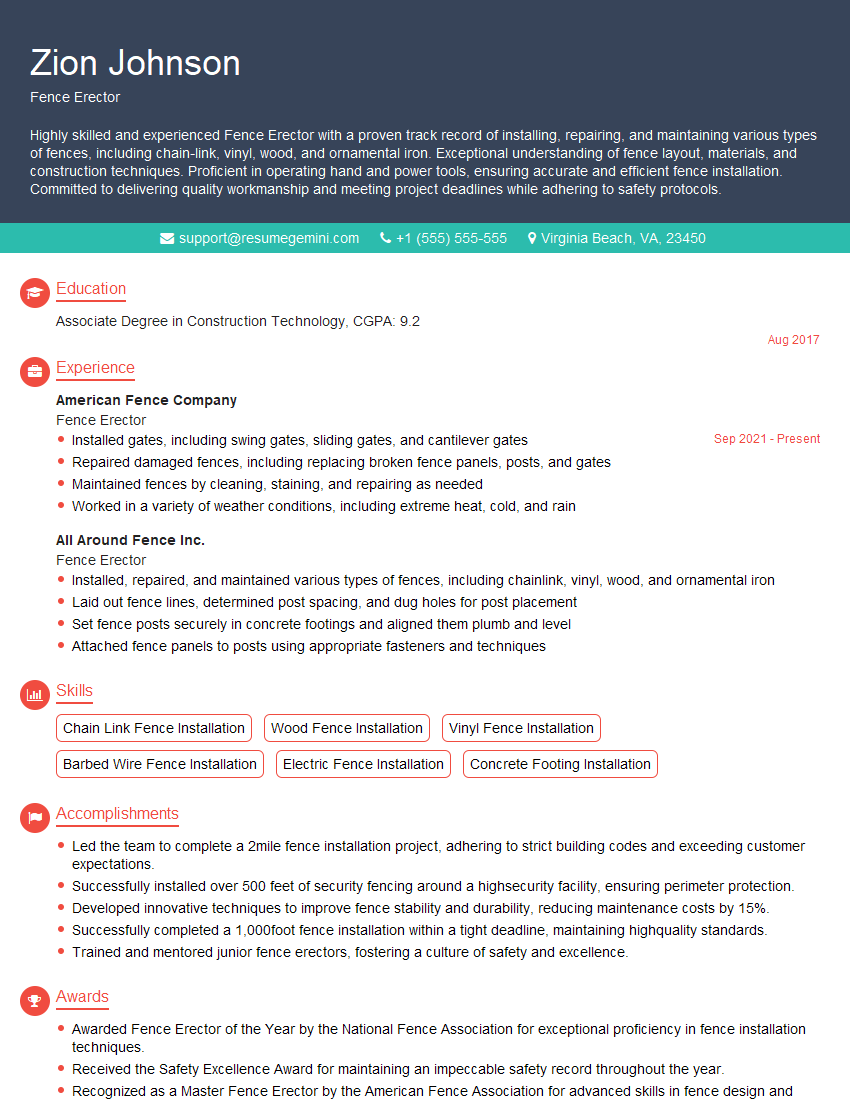
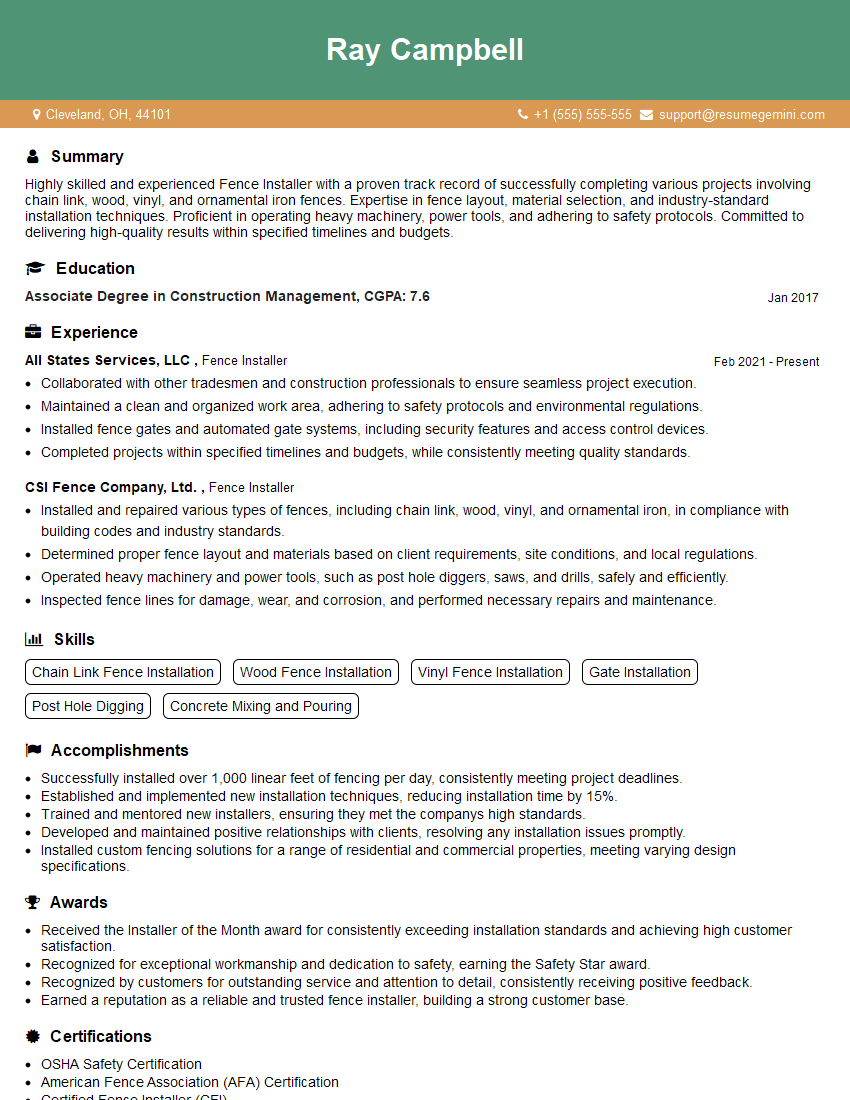
Mastering Fence Installation and Maintenance opens doors to a rewarding career with opportunities for growth, from crew member to foreman or even business owner. A strong resume is crucial for showcasing your skills and experience to potential employers. Creating an ATS-friendly resume is key to ensuring your application gets noticed. ResumeGemini is a trusted resource that can help you build a professional and effective resume, highlighting your expertise in Fence Installation and Maintenance. Examples of resumes tailored to this field are available to guide you.
Explore more articles
Users Rating of Our Blogs
Share Your Experience
We value your feedback! Please rate our content and share your thoughts (optional).
What Readers Say About Our Blog
Very informative content, great job.
good