Interviews are more than just a Q&A session—they’re a chance to prove your worth. This blog dives into essential Fence Line Surveying interview questions and expert tips to help you align your answers with what hiring managers are looking for. Start preparing to shine!
Questions Asked in Fence Line Surveying Interview
Q 1. What are the common methods used in fence line surveying?
Fence line surveying employs several methods, each chosen based on factors like accuracy requirements, terrain, and budget. Common techniques include:
- Traversing: This classic method uses a total station or theodolite to measure angles and distances between points along the fence line, creating a precise geometric representation. Imagine it like meticulously measuring each step along a path, recording both direction and distance. It’s highly accurate but can be time-consuming for long fences.
- GPS Surveying: Using GPS receivers, surveyors can obtain coordinates of points along the fence, enabling the creation of a digital map of the boundary. This is faster than traversing, particularly for large areas, but accuracy can be affected by atmospheric conditions and satellite geometry.
- Property Corner Determination: Often a crucial first step, identifying and locating existing property corners (monuments) using deeds and prior survey data is critical for establishing a baseline. These corners are like the anchors holding the fence line in place.
- Photogrammetry: Emerging technologies use aerial imagery and image processing to create detailed 3D models of the area, helping visualize the fence line within the broader landscape. This is particularly useful in difficult-to-access areas.
- Metes and Bounds Survey: This traditional method relies on written descriptions of boundary lines, often found in older deeds, using measurements, compass directions, and references to natural features. It’s often used in conjunction with other methods to verify boundaries described in historical documents.
The best method depends on the specifics of the job, but often a combination of these techniques provides the most reliable results.
Q 2. Explain the process of establishing a fence line using GPS technology.
Establishing a fence line using GPS involves several key steps:
- Planning & Reconnaissance: We begin by carefully reviewing the property deed and any existing survey data. This is crucial for understanding the intended fence location and potential challenges.
- Base Station Setup: A high-precision GPS receiver, known as a base station, is set up at a known location with accurate coordinates. This provides a reference point for all other measurements.
- Rover Setup: A second GPS receiver, called a rover, is used to collect data along the fence line. The rover continuously communicates with the base station to determine its precise position.
- Point Collection: The surveyor marks points along the proposed fence line, taking GPS readings at each point. We typically collect multiple readings per point for redundancy and improved accuracy.
- Post-Processing: The collected data is then post-processed using specialized software to account for atmospheric delays and other sources of error. This post-processing dramatically enhances the accuracy of the GPS measurements.
- Data Analysis & Mapping: The processed GPS data is used to create a digital map of the fence line, often integrated with GIS software. This map clearly shows the location of the fence relative to property boundaries.
- Staking the Fence Line: Finally, we use the digital map to precisely stake the location of the fence line on the ground. This allows the fence crew to accurately build the fence.
The accuracy of GPS surveying is affected by factors like atmospheric conditions (ionospheric and tropospheric delays), multipath errors (signals reflecting off buildings and other obstacles), and the number of satellites available. To mitigate this, we use high-precision equipment and techniques like Real-Time Kinematic (RTK) GPS, which provides centimeter-level accuracy.
Q 3. How do you handle discrepancies between deed descriptions and existing fence lines?
Discrepancies between deed descriptions and existing fence lines are common and require careful investigation. My approach involves:
- Thorough Review of Documentation: I meticulously examine the deed, previous surveys, and any relevant legal documents to identify the source and nature of the discrepancy.
- Field Investigation: On-site investigation is key. I use traditional survey methods and GPS to locate existing monuments, physical evidence of past boundary markings, and the current fence line.
- Evidence Gathering: I collect evidence to support different interpretations of the boundary. This may involve interviewing neighbors, researching historical maps, or examining adjacent property deeds.
- Analysis & Reconciliation: I compare all available evidence to determine the most likely location of the true property line. This often involves analyzing the strengths and weaknesses of different pieces of evidence.
- Legal Consultation (If Necessary): If the discrepancy cannot be resolved amicably, I advise consulting with a surveyor specializing in legal boundary determination or seeking legal counsel. Boundary disputes are sometimes resolved in court.
It’s crucial to remember that the legal description in the deed generally takes precedence, unless there is clear and convincing evidence of a long-standing, agreed-upon boundary that contradicts the deed.
Q 4. Describe your experience with different types of survey equipment.
Throughout my career, I have extensively used a range of survey equipment, including:
- Total Stations: These highly accurate instruments measure angles and distances, allowing for precise mapping of property lines. I’m proficient in using various brands like Leica and Trimble.
- GPS Receivers: I have experience with both RTK and precise point positioning (PPP) GPS systems, varying in accuracy depending on the project requirements. Different manufacturers like Topcon, Trimble, and Leica offer various models with different capabilities.
- Levels: For establishing elevations and ensuring accurate grading, I regularly use automatic levels and digital levels.
- EDM (Electronic Distance Measurement) Instruments: These are integrated into total stations and provide accurate distance measurements using laser technology.
- Data Collectors and Software: I am adept at using various data collectors and post-processing software to manage, analyze, and visualize survey data. This includes familiarity with software packages such as AutoCAD Civil 3D and other GIS systems.
My experience spans both traditional and modern survey techniques, allowing me to select the most appropriate tools for each project.
Q 5. What are the legal implications of inaccurate fence line surveys?
Inaccurate fence line surveys can have significant legal implications, leading to:
- Boundary Disputes: Incorrectly located fences can trigger disputes with neighbors, potentially leading to costly litigation.
- Property Line Encroachments: An inaccurate survey might result in a fence encroaching on a neighbor’s property, causing legal issues and potentially requiring fence relocation.
- Property Value Impacts: Errors in property boundaries can affect property assessments and market value.
- Legal Liability for Surveyors: Surveyors are legally responsible for the accuracy of their work. Inaccurate surveys can expose them to liability claims for damages.
- Title Issues: Incorrect boundary information in survey records can complicate future property transactions and create problems with land ownership.
It is crucial to use qualified and licensed surveyors to minimize these risks and ensure legal compliance.
Q 6. How do you ensure the accuracy of your measurements?
Accuracy is paramount in fence line surveying. I employ several strategies to ensure precise measurements:
- Calibration and Maintenance: I regularly calibrate my survey equipment according to manufacturer’s recommendations to guarantee accuracy.
- Redundant Measurements: I always take multiple measurements of angles and distances to detect and correct any errors. This often involves using different methodologies as checks and balances.
- Quality Control Checks: Throughout the survey process, I perform rigorous quality control checks to identify and correct potential mistakes.
- Proper Field Procedures: I meticulously follow established survey procedures and best practices to minimize errors during data acquisition.
- Post-Processing and Adjustment: I use advanced software to process and adjust the raw data to account for systematic errors and variations in atmospheric conditions.
- Peer Review (When Appropriate): For complex or high-stakes projects, I involve peer review to verify the accuracy and reliability of my results.
My commitment to accuracy extends to every aspect of the surveying process, from field work to data analysis.
Q 7. Explain your understanding of survey control points and their importance.
Survey control points are precisely located and documented points that serve as a reference framework for all other measurements within a survey. Think of them as the foundation of a building. They are essential for several reasons:
- Accuracy: They provide a stable and accurate basis for all other measurements, reducing the accumulation of errors.
- Coordinate System Reference: Control points define the coordinate system used in the survey, enabling accurate positioning of features within the larger geographic context.
- Consistency: Using control points ensures consistency throughout the survey, making it easier to tie together different parts of the project.
- Data Integration: They facilitate integration with other survey data and GIS systems.
- Future Use: Well-defined control points are crucial for future surveys and updates, providing a lasting reference framework for the property.
Control points are typically established using highly accurate methods such as GPS or precise traversing. Their locations are carefully documented and stored, allowing for easy retrieval and reuse in subsequent surveys. Without proper control points, survey accuracy is greatly compromised.
Q 8. Describe your experience with boundary disputes and their resolution.
Boundary disputes are unfortunately common in fence line surveying. They arise when neighboring property owners disagree on the exact location of their shared boundary. My experience involves a multifaceted approach, starting with a thorough review of all available documentation – deeds, prior surveys, and any relevant court records. I then conduct a meticulous on-site survey using advanced equipment to accurately establish the existing ground conditions and physical markers.
If discrepancies arise, I’ll carefully analyze the data, comparing it to the legal description of the property. This may involve researching historical records or consulting with legal professionals. Often, a collaborative approach is best, mediating between parties to reach a mutually agreeable solution. In situations where mediation fails, providing clear, concise, and legally defensible survey evidence is crucial for potential legal proceedings. For example, I recently resolved a dispute where a fence had been incorrectly placed for decades. My survey clearly showed the true boundary, and by presenting the evidence professionally, I helped the parties come to a settlement without the need for expensive litigation.
Q 9. How do you deal with difficult terrain or obstacles during a survey?
Difficult terrain and obstacles are a regular part of the job. My approach involves a combination of planning, specialized equipment, and problem-solving skills. For instance, dense vegetation might require clearing a path while ensuring minimal environmental impact. Steep slopes necessitate careful positioning of equipment and the use of advanced techniques to maintain accuracy. Obstructions like buildings or bodies of water necessitate creative solutions, sometimes involving indirect measurements or the use of specialized equipment like robotic total stations.
For example, when surveying a boundary that ran through a dense forest, we used a drone to capture high-resolution imagery, allowing us to map the terrain and identify property markers more efficiently. This avoided the need for extensive manual clearing, saving time and resources. Dealing with obstacles requires flexibility and ingenuity. The goal is always to find the most efficient and accurate way to collect data, while prioritizing safety and environmental considerations.
Q 10. What software programs are you proficient in for data processing and mapping?
I am proficient in several software programs vital to modern surveying. This includes AutoCAD for drafting, creating boundary maps, and generating legal descriptions. I utilize industry-standard software like Civil 3D for advanced data processing and 3D modeling of complex terrain. ArcGIS is used for geospatial analysis and managing geographic data. Furthermore, I’m experienced with data collector software used for field data acquisition and management which often integrates seamlessly with the processing software.
These programs allow me to not only process the raw data from our surveys but also to create comprehensive and visually appealing reports that are easily understood by both technical and non-technical audiences. This includes maps, cross-sections, and other visual aids that help to clearly communicate the survey results.
Q 11. Explain your understanding of legal descriptions and property lines.
Legal descriptions are crucial; they’re the written descriptions of a property’s boundaries, as defined by law. They form the basis of land ownership and are used to locate and define property lines. These descriptions can be complex, often employing metes and bounds, which use distances and bearings to define the perimeter. Other systems, like the rectangular survey system (used in much of the US), rely on a grid-based system of townships, ranges, and sections. Understanding these different systems is vital.
For instance, a metes and bounds description might read: “Beginning at the iron pin found at the northeast corner of the said lot; thence south 100 feet; thence west 150 feet; thence north 100 feet; thence east 150 feet, to the point of beginning.” I am experienced in interpreting these descriptions, correlating them with the physical evidence on the ground and resolving any ambiguities that arise. This includes carefully examining the language used, identifying potential inaccuracies, and incorporating any relevant historical context.
Q 12. How do you account for potential sources of error in your measurements?
Minimizing errors is paramount. We use various techniques to control and account for potential sources of error. This begins with the careful calibration and maintenance of our surveying equipment. Multiple measurements are taken at each point, and statistical analysis is used to identify and reduce outliers. Environmental factors like temperature and atmospheric pressure can affect measurements; these are accounted for through compensation techniques and data correction.
For example, we use total stations equipped with atmospheric pressure sensors to automatically adjust measurements based on current conditions. We also utilize rigorous quality control procedures, including independent checks and validation of our data, to ensure accuracy. Transparency regarding potential error margins is crucial; we always clearly communicate the limitations of our measurements and their potential impact on the final results in our reports.
Q 13. What is your experience with using total stations and data collectors?
Total stations and data collectors are essential tools. Total stations are electronic instruments that measure angles and distances with high precision. Data collectors are handheld devices that store and manage the data collected by the total station. My extensive experience involves using these instruments for various types of surveys, including boundary surveys, topographic surveys, and construction layout. I’m proficient in operating different models of total stations and data collectors, utilizing their various features like robotic tracking and data logging.
For example, in a recent project involving a large property, the robotic total station saved considerable time by automatically tracking the prism, allowing the surveyor to focus on accurately setting points without manually aiming the instrument. Efficient use of these tools is key to completing surveys efficiently and accurately.
Q 14. Describe your experience with different types of property boundaries (metes and bounds, etc.).
I have extensive experience with various types of property boundaries. Metes and bounds, as previously discussed, are common in areas with irregular property shapes. Rectangular surveys, with their grid system, are prevalent in many parts of the US, offering a simpler way to describe property locations. Other systems include lot and block surveys, often used in urban areas where properties are divided into numbered lots within a recorded subdivision. Understanding the nuances of each system is vital for accurate boundary determination.
For example, I recently worked on a project that involved a property described using a combination of metes and bounds and lot and block descriptions. This required a detailed understanding of both systems and the ability to reconcile any discrepancies between the two descriptions. Proper interpretation of these systems ensures accuracy and prevents costly errors down the line. In addition, I have experience with riparian boundaries (boundaries following natural watercourses) and other types of boundary descriptions found in unique geographical circumstances.
Q 15. Explain the process of preparing a survey report.
Preparing a fence line survey report is a meticulous process that ensures accuracy and clarity. It involves several key steps, starting with a thorough review of all field data collected. This includes the measurements, sketches, photographs, and any notes made during the on-site survey. Next, we process this raw data using appropriate software, ensuring the coordinates are correctly transformed to the specified datum and coordinate system (e.g., UTM, State Plane). Then, we create a detailed map illustrating the property boundaries, showing the fence line’s location in relation to these boundaries, along with any discrepancies or encroachments. The report itself should clearly state the survey’s purpose, methodology used, the location of the property, a description of the existing fence, and the precise location of the fence line relative to the property boundaries. Finally, a clear and concise conclusion summarizing the findings, including any recommendations or warnings (e.g., potential boundary disputes), is essential.
- Data Review: Checking for errors, inconsistencies, and omissions in field data.
- Data Processing: Using software like AutoCAD Civil 3D or similar to process coordinates and create maps.
- Map Creation: Generating a clear and accurate map showcasing property boundaries and the fence line.
- Report Writing: Summarizing the survey’s purpose, methodology, findings, and recommendations.
For example, a recent survey revealed a fence encroaching onto a neighbor’s property by 2 feet. The report clearly highlighted this discrepancy with supporting evidence (coordinates, photos) and recommended a course of action for resolving the issue.
Career Expert Tips:
- Ace those interviews! Prepare effectively by reviewing the Top 50 Most Common Interview Questions on ResumeGemini.
- Navigate your job search with confidence! Explore a wide range of Career Tips on ResumeGemini. Learn about common challenges and recommendations to overcome them.
- Craft the perfect resume! Master the Art of Resume Writing with ResumeGemini’s guide. Showcase your unique qualifications and achievements effectively.
- Don’t miss out on holiday savings! Build your dream resume with ResumeGemini’s ATS optimized templates.
Q 16. How do you communicate technical information to non-technical clients?
Communicating technical information to non-technical clients requires clear, concise language and visual aids. I avoid jargon whenever possible, using simple analogies to explain complex concepts. For instance, instead of saying ‘geodetic datum,’ I might say, ‘the reference point we use to accurately position the property on a map.’ I utilize visuals extensively – maps, diagrams, and photos – to illustrate findings and make them readily understandable. I also break down complex information into smaller, easily digestible chunks, ensuring each step is fully understood before moving on. Finally, I always encourage questions and ensure the client feels comfortable asking for clarifications. I make sure to explain the significance of the findings in terms of its impact on the client’s property or project. For example, if the survey reveals a boundary dispute, I’ll explain the potential legal implications in simple terms.
Q 17. What is your experience with using GIS software?
I have extensive experience utilizing GIS software, including ArcGIS and QGIS. My proficiency extends to data input, processing, analysis, and map creation. I routinely use GIS to integrate survey data with other spatial information, such as aerial photography or cadastral maps, creating comprehensive spatial analyses. I’m adept at using geoprocessing tools within GIS to perform tasks such as buffer analysis (for determining distances from the fence line to property boundaries), overlay analysis (for identifying potential conflicts), and spatial interpolation (to estimate boundary locations where data is sparse). I can also export data in various formats for use in other software applications.
For instance, I once used ArcGIS to analyze a series of fence line surveys for a large development project, identifying potential conflicts with existing easements and utility lines before construction began, saving the client significant time and money.
Q 18. Describe your experience with coordinate systems and datums.
Understanding coordinate systems and datums is fundamental to accurate surveying. A coordinate system defines how locations are represented numerically on a map (e.g., latitude and longitude, UTM). The datum, on the other hand, is a reference surface used for precise positioning, providing the basis for calculating coordinates. Different datums (like NAD83 and NAD27 in North America) represent slightly different shapes of the earth, leading to coordinate discrepancies. My experience encompasses working with various coordinate systems and datums, ensuring accurate transformations between them are performed to avoid errors. I carefully select the appropriate datum and coordinate system for each project, based on the project’s location and the required accuracy. Failure to do so can lead to significant errors in boundary location and can have costly implications.
For example, a project using the wrong datum could lead to a fence being constructed on the wrong property line.
Q 19. How do you ensure the safety of yourself and your crew during a survey?
Safety is paramount in our surveying operations. Before starting any survey, we conduct a thorough site assessment to identify and mitigate potential hazards – such as uneven terrain, traffic, and proximity to power lines. Our crew is fully trained in safe work practices, including the use of personal protective equipment (PPE) like high-visibility clothing, safety glasses, and hard hats. We use marked vehicles and communicate effectively using two-way radios to maintain awareness of each other’s location and safety. When working near roads, we implement traffic control measures like flaggers and warning signs. We regularly review and update our safety protocols to ensure they meet or exceed industry standards. We also maintain comprehensive insurance coverage to protect our team and clients.
Q 20. Explain your understanding of survey regulations and standards.
My understanding of survey regulations and standards is extensive. I adhere to all applicable local, state, and federal regulations related to land surveying. This includes understanding and applying the principles of boundary law, legal descriptions, and survey evidence. I am familiar with professional standards set by organizations like the National Society of Professional Surveyors (NSPS) and ensure all my work meets or exceeds those standards for accuracy and ethical conduct. I maintain a current understanding of legal precedents affecting boundary determination and constantly update my knowledge through professional development courses and continuing education.
For instance, understanding the importance of original survey records and the legal weight given to different types of evidence is crucial in resolving boundary disputes.
Q 21. How do you handle conflicting survey data from different sources?
Handling conflicting survey data requires a systematic approach. I first meticulously review all available data sources, noting the methods used, the date of the survey, and the qualifications of the surveyor. I then analyze the data using appropriate software, looking for inconsistencies and potential errors. I might perform a comparative analysis, overlaying different datasets to visually identify discrepancies. Where conflicts remain, I might need to consult additional records (e.g., deeds, historical maps) or conduct further fieldwork to resolve the ambiguities. Ultimately, my goal is to reach a reasoned conclusion based on the weight of evidence and the principles of boundary law. Documentation of the process and the rationale behind my decisions is meticulously maintained. If necessary, I’ll recommend a collaborative approach with other surveyors or legal professionals to find a resolution.
For example, if two surveys show conflicting property lines, I might need to research old deeds or consult historical maps to determine the most likely accurate boundary location.
Q 22. Describe your experience with using RTK GPS technology.
RTK GPS technology is indispensable in modern fence line surveying. It allows for highly accurate real-time positioning, crucial for establishing precise property boundaries. My experience spans over 8 years, encompassing various projects from small residential fences to extensive agricultural boundaries. I’m proficient in operating and troubleshooting different RTK GPS systems, including those from Trimble and Leica. This includes setting up base stations, configuring rovers, understanding error sources like multipath and atmospheric effects, and post-processing data for maximum accuracy. For example, on a recent project involving a complex boundary dispute, the sub-centimeter accuracy of RTK GPS was critical in resolving the issue and preventing costly litigation. The real-time feedback eliminated the need for extensive field checks, saving significant time and resources.
I regularly perform quality control checks on the data, verifying positional accuracy against control points and other survey data. Understanding the limitations of the technology, such as signal blockage from trees or buildings, is also a key part of my workflow. I’m adept at implementing strategies to mitigate these challenges, like using different antenna types or employing additional surveying techniques to complement the GPS data.
Q 23. What is your proficiency in using CAD software for drafting survey plans?
My proficiency in CAD software, specifically AutoCAD Civil 3D, is very high. I utilize it extensively for creating accurate and professional survey plans, including fence line alignments, property boundary maps, and detailed construction drawings. This involves creating accurate digital terrain models (DTMs) from survey data, designing fence lines to meet client specifications and legal requirements, and generating reports incorporating all relevant information. I’m comfortable working with various coordinate systems and projections, ensuring compatibility with different data sources and regulatory standards. I can also create 3D visualizations of the survey area, which are particularly helpful for client presentations and understanding complex terrain.
For example, I recently used AutoCAD Civil 3D to create a 3D model of a challenging hillside property to help the client visualize the optimal fence line placement and understand the grading requirements. This visual aid greatly improved communication and reduced misunderstandings. Furthermore, I’m proficient in data exchange using various formats such as DXF, DWG, and Shapefiles, enabling seamless integration with other software applications used by engineers, contractors, and other stakeholders.
Q 24. How do you manage project timelines and budgets in fence line surveying?
Managing project timelines and budgets effectively is vital in fence line surveying. My approach is based on a meticulous planning process. Before starting any project, I conduct a thorough site reconnaissance to understand the scope of work, potential challenges (terrain, vegetation, access), and identify necessary resources. Based on this assessment, I develop a detailed project schedule, breaking down tasks into manageable phases with realistic deadlines. This schedule accounts for potential delays due to weather, equipment malfunctions, or unforeseen circumstances.
Budget management involves meticulous cost estimation, including labor, equipment rental, materials, and other expenses. I regularly monitor expenses against the budget, employing project management software to track progress and identify potential cost overruns early on. Transparent communication with clients about potential cost changes and schedule adjustments is paramount to maintain trust and collaboration. For instance, if unexpected underground utilities are discovered during the survey, I immediately communicate the findings to the client, outlining the revised budget and timeline, ensuring they are well-informed and involved in decision-making.
Q 25. Explain your experience with working with clients and stakeholders.
Effective communication and collaboration are crucial when working with clients and stakeholders. I prioritize building strong relationships based on trust, transparency, and proactive communication. I make sure to clearly explain technical aspects of the project in layman’s terms, ensuring clients fully understand the process and deliverables. Active listening is key to understanding their needs and concerns, and I always make myself available to answer their questions.
I regularly provide progress updates, highlighting milestones achieved and addressing any potential issues proactively. This includes not just verbal communication but also detailed reports and visual presentations using CAD drawings and site photos. For example, in a recent project involving multiple landowners, I held regular meetings to discuss progress, address concerns, and keep everyone informed. This collaborative approach prevented conflicts and ensured a smooth project completion.
Q 26. Describe a challenging fence line surveying project you worked on and how you overcame the challenges.
One challenging project involved surveying a fence line through dense, uneven terrain in a mountainous region. The difficult access and steep slopes made traditional surveying methods difficult and time-consuming. The existing fence line was poorly defined, with discrepancies between the deeds and the on-the-ground reality. Furthermore, the weather conditions were unpredictable, frequently causing delays.
To overcome these challenges, we employed a combination of techniques. We used RTK GPS extensively, leveraging its precision and efficiency, even in the challenging terrain. Where GPS signals were obstructed, we used total station surveying techniques for accurate measurements. We also utilized drones with high-resolution cameras to create an orthomosaic map, which provided a valuable overview of the area and assisted in navigating the challenging terrain. Careful planning, efficient resource allocation, and the use of appropriate technologies allowed us to complete the project on time and within budget, resolving the boundary disputes with accurate and reliable data.
Q 27. How do you stay up-to-date on the latest technologies and advancements in land surveying?
Staying current with the latest technologies and advancements in land surveying is crucial for maintaining professional competence. I actively participate in industry conferences and workshops, attending seminars and webinars on new surveying techniques and software. I also subscribe to professional journals and online publications to keep abreast of emerging technologies and best practices.
Further, I invest time in self-learning through online courses and tutorials on new software and equipment. I’m also a member of professional organizations such as the [Insert Relevant Professional Organization Name], which provides access to industry updates, networking opportunities, and continuing education resources. This continuous learning ensures that I remain at the forefront of the field and can consistently provide the most efficient and accurate solutions to my clients.
Key Topics to Learn for Fence Line Surveying Interview
- Boundary Law and Regulations: Understanding property lines, easements, and relevant legal frameworks governing fence placement.
- Survey Equipment and Techniques: Proficiency in using total stations, GPS receivers, and other surveying instruments; mastering techniques like traversing and triangulation for accurate measurements.
- Data Collection and Analysis: Efficiently collecting and processing field data, including accurate measurements, sketches, and notes; experience with surveying software for data analysis and report generation.
- Mapping and Documentation: Creating accurate maps and detailed reports that clearly illustrate property boundaries and fence locations; familiarity with CAD software for creating professional deliverables.
- Stakeout and Construction: Understanding the process of transferring survey data to the field for fence construction; experience in setting stakes and guiding contractors to ensure accurate fence placement.
- Problem-Solving and Decision-Making: Analyzing complex property situations, identifying potential challenges, and devising solutions to ensure accurate and compliant fence installations; experience in resolving boundary disputes or inconsistencies.
- Health and Safety: Adherence to safety protocols on survey sites; understanding of relevant regulations and risk mitigation strategies.
- Professional Ethics and Conduct: Understanding ethical standards and professional responsibilities in surveying, including accurate data reporting and client communication.
Next Steps
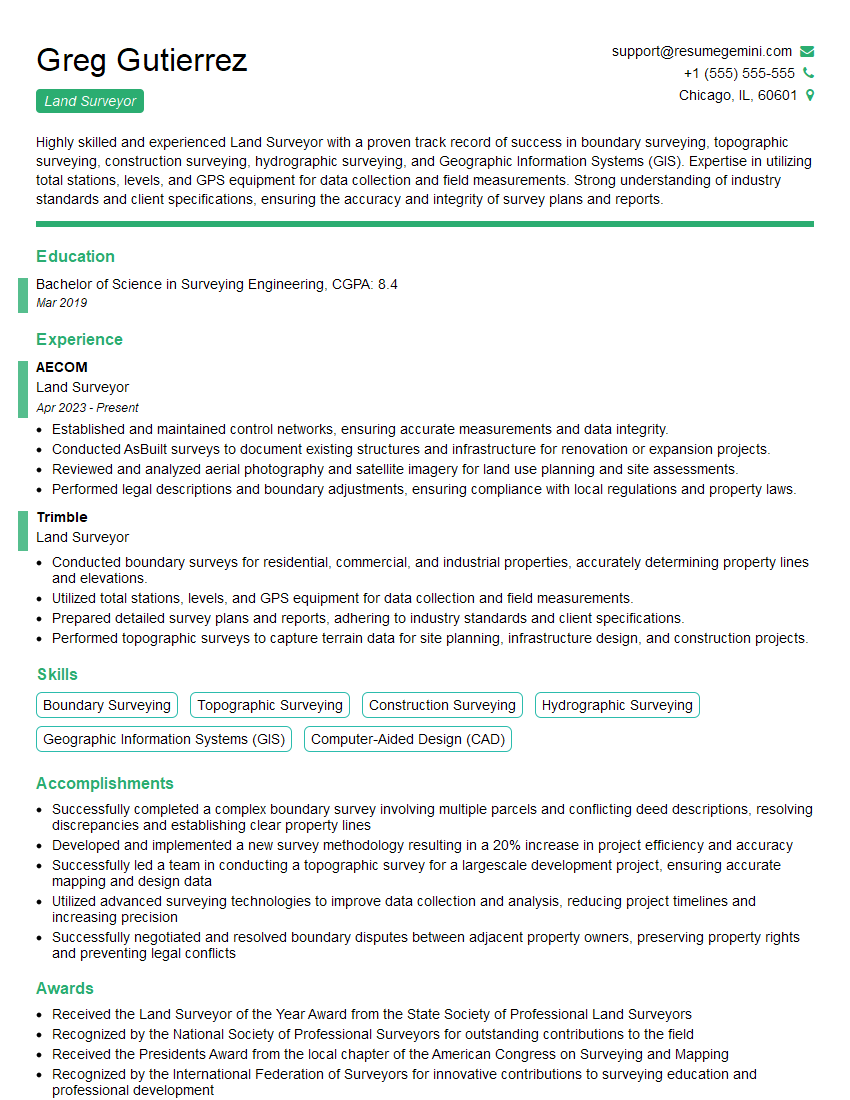
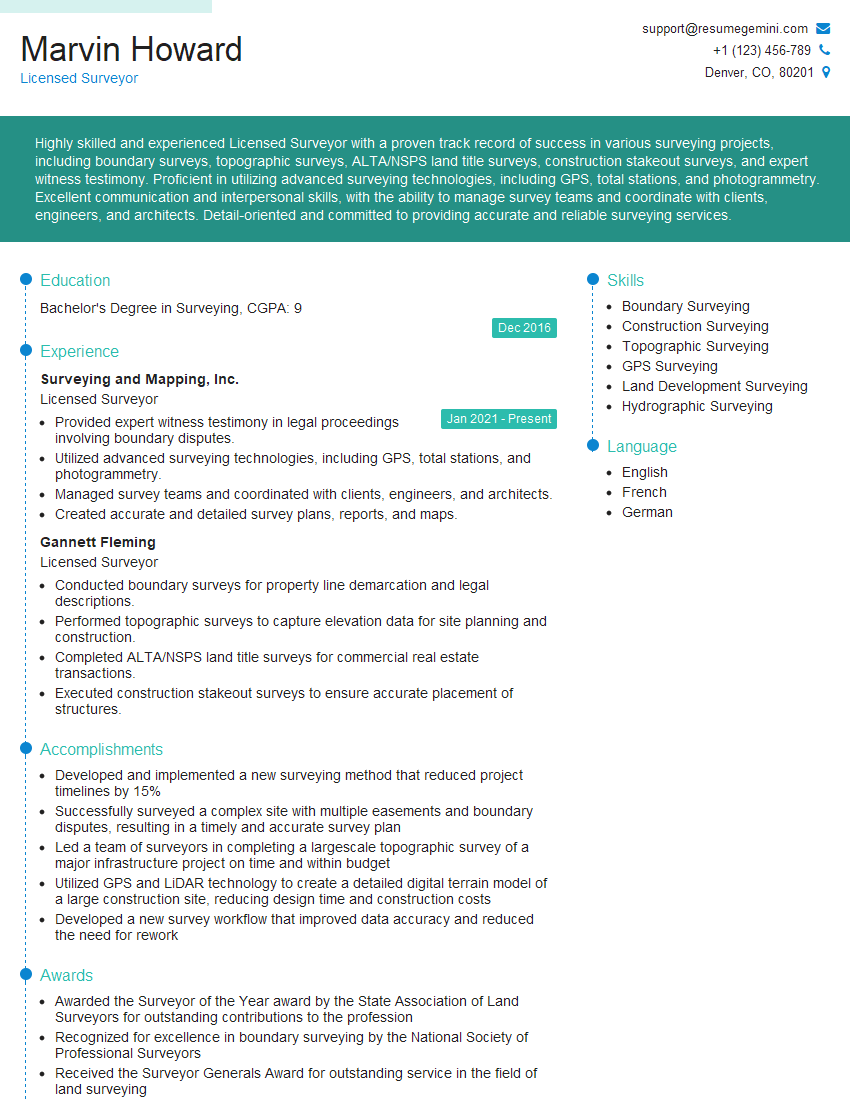
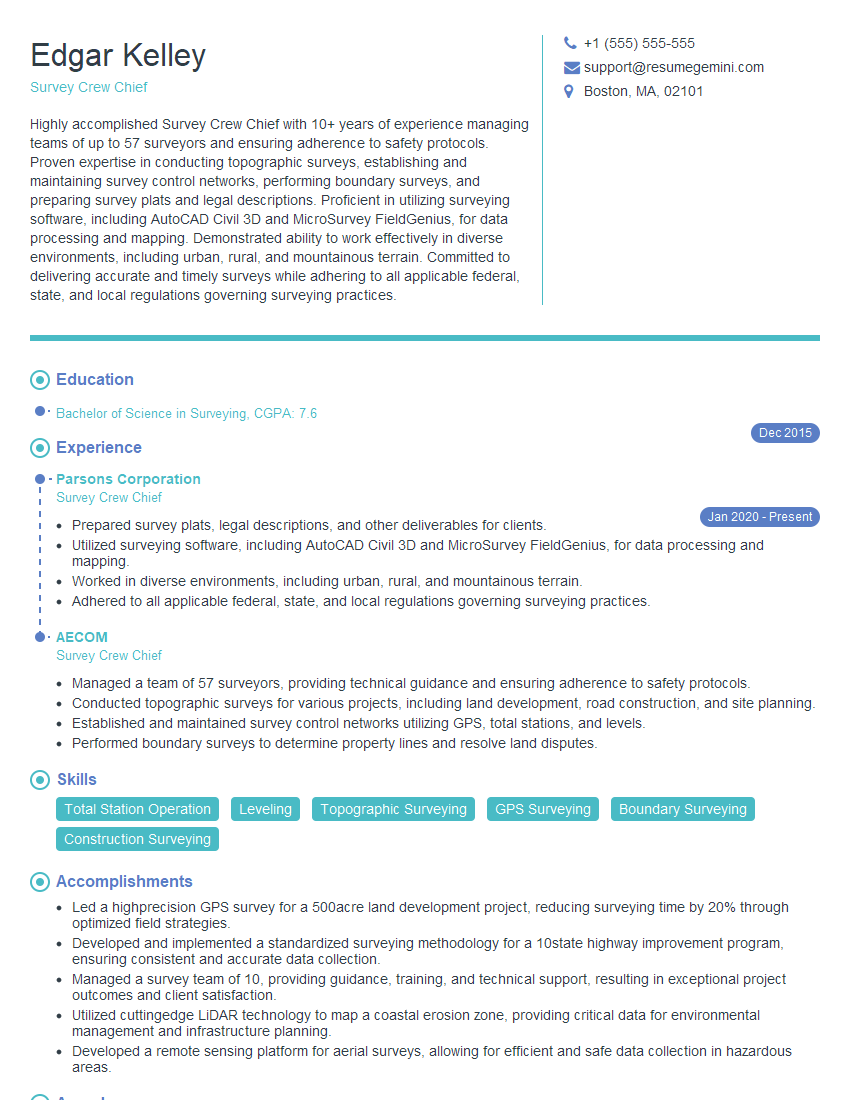
Mastering Fence Line Surveying opens doors to a rewarding career with excellent growth potential in the construction, land development, and legal sectors. A strong resume is crucial for showcasing your skills and experience to potential employers. Building an ATS-friendly resume increases your chances of getting noticed by recruiters and landing interviews. We highly recommend using ResumeGemini to create a compelling and effective resume that highlights your expertise. ResumeGemini provides examples of resumes tailored to Fence Line Surveying, giving you a head start in crafting a document that truly reflects your capabilities.



Explore more articles
Users Rating of Our Blogs
Share Your Experience
We value your feedback! Please rate our content and share your thoughts (optional).
What Readers Say About Our Blog
Very informative content, great job.
good