Preparation is the key to success in any interview. In this post, we’ll explore crucial Knowledge of Agricultural Machinery interview questions and equip you with strategies to craft impactful answers. Whether you’re a beginner or a pro, these tips will elevate your preparation.
Questions Asked in Knowledge of Agricultural Machinery Interview
Q 1. Describe your experience with different types of tractors and their applications.
My experience with tractors spans a wide range of models and applications. I’ve worked extensively with both conventional two-wheel-drive tractors, ideal for smaller farms and lighter tasks like cultivating and spraying, and larger four-wheel-drive tractors, essential for heavy-duty operations such as plowing extensive fields or pulling large implements. I’m also familiar with specialized tractors, such as orchard tractors with low-profile designs for navigating tight spaces between trees, and row-crop tractors designed for efficient planting and harvesting. The choice of tractor always depends on the specific needs of the operation; a small vineyard wouldn’t need the power of a large grain farm’s tractor.
- Conventional Tractors: Used for general-purpose fieldwork including plowing, harrowing, planting, and cultivating.
- Four-Wheel Drive Tractors: Provide superior traction and power for heavy workloads in challenging conditions.
- Orchard Tractors: Designed for narrow spaces, minimizing damage to trees and crops.
- Row-Crop Tractors: Optimized for efficient work between rows in crops like corn and soybeans.
For example, during my time at Green Valley Farms, I primarily used a four-wheel-drive tractor for plowing and seedbed preparation, but a smaller two-wheel-drive tractor was more suitable for spraying herbicide between rows of vines in the vineyard section.
Q 2. Explain the principles of GPS-guided machinery in agriculture.
GPS-guided machinery relies on a combination of GPS technology, an onboard computer, and actuators to control the machinery’s movement and operation with high accuracy. A GPS receiver on the machine receives signals from multiple satellites to determine its precise location. This location data is then fed into a sophisticated computer system that compares the machine’s current position to a pre-programmed path or map.
If the machine deviates from the planned path, the computer adjusts the steering, using hydraulic or electric actuators, to guide it back onto course. This ensures consistent and precise application of inputs like seeds, fertilizers, or pesticides. The system often incorporates correction signals to improve accuracy (e.g., RTK – Real Time Kinematic GPS).
Think of it like a sophisticated autopilot for a tractor. Instead of following a road, it’s following a precise line across a field, maximizing efficiency and minimizing overlap or skips.
Q 3. How do you troubleshoot common problems in agricultural machinery?
Troubleshooting agricultural machinery requires a systematic approach. It starts with identifying the symptoms of the malfunction. Is the machine not starting? Is it making unusual noises? Is it performing sub-optimally? Once the problem is defined, I usually follow these steps:
- Visual Inspection: Carefully examine all components for obvious damage, leaks, loose connections, or obstructions.
- Check Fluids and Levels: Inspect engine oil, transmission fluid, hydraulic fluid, and coolant levels. Low levels or contaminated fluids can indicate serious problems.
- Test Electrical Systems: Verify battery voltage, check fuses and wiring for damage or corrosion.
- Listen for Unusual Noises: Unusual knocking, grinding, or squealing sounds often point towards specific mechanical issues.
- Consult Manuals and Diagrams: Refer to the operator’s manual and wiring diagrams for detailed information on components and troubleshooting procedures.
- Systematic Component Checks: If the problem is not immediately apparent, systematically check each component related to the symptom, starting with the most likely culprits.
For instance, if a planter is not dropping seeds consistently, I would first check the seed hopper for obstructions, then examine the metering mechanism, followed by the seed tubes and the seed delivery system. This methodical process helps isolate the problem efficiently.
Q 4. What are the safety procedures you follow when operating agricultural equipment?
Safety is paramount when operating agricultural equipment. My procedures always begin with a thorough pre-operation check of the machine, including inspecting for any damage, leaks, or loose parts. I ensure all safety devices, such as shields, guards, and emergency stops, are in place and functioning correctly. I always wear appropriate personal protective equipment (PPE), including safety glasses, hearing protection, and sturdy work boots.
During operation, I maintain a safe speed and distance from others and am mindful of obstacles in the field. I pay close attention to the machine’s operation and promptly address any unusual sounds or vibrations. I never operate machinery while fatigued or under the influence of alcohol or drugs. After completing the work, I shut down the machine properly, engage the parking brake, and remove the key.
A specific example is always ensuring the PTO (Power Take-Off) is disengaged before making adjustments to any implement attached to the tractor. This prevents accidental engagement and injury.
Q 5. Describe your experience with maintenance and repair of harvesters.
My experience with harvester maintenance and repair includes both preventative maintenance and addressing breakdowns. Preventative maintenance involves regular inspections, cleaning, lubrication, and replacement of worn parts based on manufacturer recommendations. This helps to avoid costly repairs and downtime during the harvesting season. For instance, I regularly inspect the cutting mechanism, reel, and threshing components for wear and tear, ensuring that the machine is functioning at peak efficiency.
Repair work includes diagnosing mechanical or electrical faults, replacing damaged parts, and making necessary adjustments. I’m familiar with hydraulic systems, engine diagnostics, and troubleshooting electrical circuits within the harvester. I’ve dealt with issues ranging from minor adjustments to the combine’s cutting height to complete overhauls of worn threshing components. A practical example includes repairing a clogged sieve in a combine, preventing significant losses during harvest.
Q 6. Explain the differences between various tillage implements and their uses.
Tillage implements are used to prepare soil for planting. Different implements achieve this in varying ways, resulting in different soil conditions.
- Plows: These implements invert the soil, burying crop residue and weeds, and improving soil aeration. Different types of plows exist, including moldboard plows, chisel plows, and disk plows, each with unique capabilities and soil disturbance levels.
- Harrows: Used to level and smooth the soil surface after plowing, breaking up clods and creating a suitable seedbed. Types include disk harrows, spring-tooth harrows, and rotary harrows.
- Cultivators: These are used to loosen soil between rows of already established crops, controlling weeds and improving aeration without disturbing the main crop roots.
- Subsoilers: Used to break up compacted subsoil layers, improving water infiltration and root penetration deep into the soil profile.
The choice of tillage implement depends on soil type, desired seedbed conditions, and crop requirements. For example, a moldboard plow might be suitable for heavy clay soils requiring deep inversion, while a cultivator would be more appropriate for shallow tillage between crop rows to control weeds.
Q 7. How familiar are you with precision agriculture technologies like variable rate technology (VRT)?
I am very familiar with precision agriculture technologies, including Variable Rate Technology (VRT). VRT allows for the precise application of inputs such as seeds, fertilizers, and pesticides at varying rates across a field based on site-specific needs. This is achieved through GPS mapping and sensors that measure soil conditions, crop health, and other relevant parameters. The data is then used to create variable application maps, guiding the machinery to adjust the application rate accordingly.
For instance, a VRT system might apply more fertilizer to areas of the field with lower nutrient levels, optimizing fertilizer use and minimizing environmental impact. It might also apply more pesticide to areas with higher weed pressure. This targeted approach increases efficiency, reduces costs, and minimizes environmental damage compared to uniform application across the entire field.
My experience includes working with VRT systems on various machinery, including planters, sprayers, and spreaders, analyzing the resulting data to evaluate the effectiveness of the variable rate application and making adjustments for future applications.
Q 8. Describe your experience with different types of irrigation systems.
Irrigation systems are crucial for efficient and effective agriculture. My experience encompasses various types, each with its own advantages and disadvantages. I’ve worked extensively with surface irrigation, which includes methods like flood and furrow irrigation – simple and cost-effective but less efficient in terms of water usage. I’ve also worked with sprinkler irrigation, offering better water distribution and suitable for various terrains. This includes both center pivot and traveling gun systems which I’ve helped optimize for water pressure and coverage. Finally, my experience extends to drip irrigation, the most water-efficient method, delivering water directly to plant roots minimizing evaporation and runoff. This is especially valuable in arid and semi-arid regions, where I’ve helped farmers implement and maintain drip systems. I understand the importance of selecting the appropriate system based on factors like soil type, topography, crop type, and water availability.
For instance, while flood irrigation is suitable for level fields with less valuable crops, drip irrigation is the preferred choice for high-value crops like fruits and vegetables where water conservation is paramount. My experience includes system design, installation, maintenance, and troubleshooting across all these methods.
Q 9. How do you perform preventative maintenance on farm machinery?
Preventative maintenance is the cornerstone of ensuring long-term farm machinery performance and minimizing costly breakdowns. My approach follows a structured schedule tailored to the specific machine and its operating conditions. This includes regular visual inspections for leaks, wear, and tear, checking fluid levels (engine oil, hydraulic fluid, coolant), and lubricating moving parts. I meticulously follow the manufacturer’s recommended maintenance schedules, often adding extra checks based on local conditions and usage patterns.
For example, I always check tire pressure before and after each operation to prolong tire life and improve fuel efficiency. I also regularly clean and replace air filters to prevent engine contamination and ensure proper combustion. I strongly believe in keeping detailed records of all maintenance activities, including dates, parts replaced, and any observations, facilitating easier troubleshooting and forecasting potential issues.
Q 10. What are the common causes of engine malfunctions in agricultural machinery?
Engine malfunctions in agricultural machinery are often caused by a combination of factors. Some of the most common include: fuel system problems – clogged fuel filters, contaminated fuel, or malfunctioning injectors; lubrication issues – insufficient or contaminated engine oil leading to wear and tear; ignition problems – faulty spark plugs, ignition coils, or wiring; cooling system failures – insufficient coolant, clogged radiator, or malfunctioning water pump leading to overheating; and air intake restrictions – dirty or clogged air filters restricting airflow to the engine.
I’ve encountered situations where a seemingly simple clogged air filter caused significant engine performance issues, highlighting the importance of regular maintenance. My diagnostic approach often begins with a thorough inspection, checking vital fluid levels and visually inspecting components. I utilize diagnostic tools, such as engine diagnostic codes, to pinpoint the exact source of the malfunction, guiding me towards a targeted repair solution.
Q 11. Explain your understanding of hydraulic systems in agricultural equipment.
Hydraulic systems are the backbone of many modern agricultural machines, powering functions like lifting, steering, and implementing operation. My understanding of these systems includes the various components – hydraulic pumps, valves, cylinders, and hoses. I’m proficient in diagnosing and repairing leaks, identifying faulty components, and understanding the importance of proper fluid levels and cleanliness. Hydraulic systems utilize pressurized fluid to generate mechanical force. I understand the principles of hydraulic pressure, flow, and power, and how these factors interact to influence machine performance.
For example, I’ve repaired a faulty hydraulic cylinder on a tractor, tracing the leak back to a damaged seal, leading to a straightforward repair. In another case, I diagnosed a loss of lifting power by identifying a malfunctioning hydraulic valve, requiring its replacement. Understanding the schematic diagrams of hydraulic systems is crucial for effective troubleshooting and repair.
Q 12. How do you diagnose and repair electrical issues in agricultural machinery?
Diagnosing and repairing electrical issues in agricultural machinery requires a systematic approach. I begin by visually inspecting wiring harnesses, connectors, and components for damage or loose connections. I use multimeters to test voltage, current, and continuity in circuits. Identifying short circuits, open circuits, or faulty components often requires tracing wires and using schematics or wiring diagrams. I’m experienced in working with various electrical components, including sensors, switches, solenoids, and control modules.
For example, I recently diagnosed a faulty wiring harness causing intermittent operation of a combine harvester’s header. Through systematic testing, I pinpointed the damaged section and performed a splice repair. Another challenging case involved a malfunctioning engine control unit (ECU), requiring testing, diagnostics, and replacement to resolve the issue. My experience also involves working safely with high voltage systems, always prioritizing safety protocols.
Q 13. What is your experience with different types of planting equipment?
My experience with planting equipment includes a range of technologies, from conventional seed drills to precision planting systems. I’m familiar with different types of seed drills, including those suitable for various soil conditions and crop types. I understand the importance of proper seed depth, spacing, and seed placement for optimal germination and crop yield. My experience also extends to air seeders, which are more efficient for large-scale operations. Precision planting systems, which utilize GPS technology and sensors, allow for precise seed placement, reducing seed waste and optimizing resource utilization.
I’ve worked extensively on calibrating planting equipment, ensuring consistent seed spacing and depth, and performing regular maintenance to maintain planting accuracy. I also understand the importance of properly adjusting the planter to match specific seed types and soil conditions. My expertise spans troubleshooting mechanical issues, such as broken seed disks or faulty metering mechanisms, to ensure optimal planting operation.
Q 14. Describe your experience with data logging and analysis in agricultural operations.
Data logging and analysis play a vital role in optimizing agricultural operations. I’m experienced in using various data logging systems to collect information on machine performance, environmental conditions, and crop yields. This data can include fuel consumption, engine hours, GPS coordinates, yield maps, soil moisture levels, and other relevant parameters. I use software and analytical tools to analyze this data, identifying trends and patterns that can guide decision-making related to machinery management, irrigation scheduling, fertilizer application, and overall farm management.
For example, by analyzing yield maps, I can identify areas with low yields, potentially indicating issues with soil fertility or other environmental factors. Analysis of fuel consumption data helps optimize machinery usage and reduce operating costs. Ultimately, data-driven insights contribute to improved efficiency, reduced resource waste, and enhanced profitability. My experience encompasses the interpretation of this complex data to provide actionable recommendations for farmers.
Q 15. How do you ensure the efficient use of fuel in agricultural machinery?
Efficient fuel use in agricultural machinery is crucial for both economic and environmental reasons. It involves a multi-pronged approach focusing on operator skill, machine maintenance, and technological advancements.
Proper Machine Operation: Operators should be trained to avoid unnecessary idling, use appropriate gears for the task (avoiding lugging the engine), and maintain consistent speeds. For example, using the correct throttle setting for plowing prevents wasted fuel and reduces wear on the engine.
Regular Maintenance: A well-maintained machine runs more efficiently. This includes regular oil changes, air filter replacements, and fuel filter cleaning. Clogged filters restrict fuel flow, forcing the engine to work harder and consume more fuel. Think of it like trying to breathe through a clogged straw – it’s much harder!
Technological Advancements: Modern machinery often incorporates fuel-efficient technologies such as precision farming techniques, GPS guidance, and auto-steer systems. These features reduce overlap and optimize fuel consumption by ensuring the machine works only where needed. For instance, GPS guidance helps avoid redundant passes in the field, directly impacting fuel efficiency.
Tire Pressure: Maintaining correct tire pressure is often overlooked, but it significantly impacts fuel consumption. Under-inflated tires increase rolling resistance, requiring more power (and therefore fuel) from the engine.
Career Expert Tips:
- Ace those interviews! Prepare effectively by reviewing the Top 50 Most Common Interview Questions on ResumeGemini.
- Navigate your job search with confidence! Explore a wide range of Career Tips on ResumeGemini. Learn about common challenges and recommendations to overcome them.
- Craft the perfect resume! Master the Art of Resume Writing with ResumeGemini’s guide. Showcase your unique qualifications and achievements effectively.
- Don’t miss out on holiday savings! Build your dream resume with ResumeGemini’s ATS optimized templates.
Q 16. What are the environmental considerations when operating agricultural machinery?
Environmental considerations in agricultural machinery operation are paramount. We must minimize our impact on soil, water, and air quality.
Soil Erosion: Using appropriate tillage practices and avoiding excessive tilling minimizes soil erosion. No-till farming, for instance, helps preserve soil structure and reduce runoff. Choosing the right machinery for the soil type is also crucial – heavy machinery can compact soil, hindering water infiltration.
Water Pollution: Properly managing fertilizer and pesticide application, avoiding spills of fuel or lubricants, and ensuring proper disposal of waste are crucial for preventing water contamination. Using precision application technologies minimizes chemical use and runoff.
Air Quality: Modern machines are designed with emission controls to reduce greenhouse gas emissions and particulate matter. Regular maintenance of these systems and the use of low-emission fuels are crucial. Selecting machines with Tier 4 or equivalent emission standards is an important step.
Noise Pollution: Operating machinery at appropriate times and using noise reduction techniques can lessen the impact on wildlife and nearby communities. Regular maintenance and proper lubrication minimize noise levels.
Q 17. Explain your experience with managing machinery repairs and maintenance schedules.
My experience includes developing and implementing comprehensive maintenance schedules for diverse fleets of agricultural machinery, encompassing tractors, harvesters, sprayers, and tillage equipment. I use a computerized maintenance management system (CMMS) to track repairs, schedule preventative maintenance, and manage spare parts inventory. This system allows for efficient scheduling of repairs, minimizing downtime and ensuring optimal operational efficiency. For instance, we scheduled preventative maintenance on our combine harvesters during the off-season, preventing costly breakdowns during the crucial harvest period. We also developed a detailed repair log for each machine, documenting all work done, the parts replaced, and the associated costs, which helps identify recurring issues and improve maintenance practices.
Q 18. How do you prioritize maintenance tasks based on equipment criticality?
Prioritizing maintenance tasks depends on the criticality of the equipment and the potential impact of a failure. I use a risk-based approach, considering factors like the machine’s importance to overall operations, the potential cost of downtime, and the likelihood of failure.
Critical Equipment: Combines during harvest, tractors during planting, and irrigation systems during dry spells are prime examples of high-priority equipment that requires frequent inspection and preventative maintenance.
Less Critical Equipment: Equipment used less frequently or with less severe consequences for failure (e.g., a fertilizer spreader that doesn’t cause a significant delay) are assigned lower priorities.
Using a CMMS with a prioritization feature allows me to effectively allocate resources and schedule maintenance tasks based on these factors. This ensures that critical equipment receives timely attention and minimizes downtime.
Q 19. Describe your experience with different types of soil and their impact on machinery selection.
Soil type significantly impacts machinery selection. Different soils have varying compaction levels, moisture content, and consistency. Choosing the incorrect machinery can lead to reduced efficiency, damage to the soil, and increased wear on the equipment.
Heavy Clay Soils: Require higher horsepower tractors with wider tires to prevent compaction. Special tillage implements designed to handle heavy clay are also necessary.
Sandy Soils: Often require less powerful tractors and lighter tillage equipment. Special attention should be given to preventing erosion.
Loamy Soils: Generally easier to work with and allow for a wider range of machinery options.
Understanding soil characteristics and selecting appropriate machinery allows for optimal performance, soil health preservation, and reduced equipment wear.
Q 20. How do you ensure the safety of personnel operating agricultural machinery?
Ensuring personnel safety is paramount. This involves a combination of training, equipment maintenance, and adherence to safety protocols.
Operator Training: Comprehensive training on safe operating procedures, pre-operational checks, and emergency response is vital. This includes training on the specific machinery being operated and the potential hazards involved.
Equipment Safety Features: Regular inspection and maintenance of safety features like rollover protection structures (ROPS), seatbelts, and emergency shut-off switches are crucial. Ensuring these features are functioning correctly is a non-negotiable aspect of our safety practices.
Safe Operating Procedures: Clear communication, established procedures for working near machinery, and the enforcement of safety rules are critical. We regularly review and update our safety manuals and conduct refresher training sessions.
Personal Protective Equipment (PPE): Appropriate PPE such as safety glasses, hearing protection, and sturdy work boots must be worn at all times. We provide and regularly check the condition of the PPE for all personnel.
Q 21. What is your experience with different types of harvesting equipment?
My experience includes operating and maintaining a variety of harvesting equipment, including:
Combines: Experience with various models, including those with different header types (e.g., draper headers, corn heads) and capabilities (e.g., different grain tank sizes, various threshing and separating systems).
Forage Harvesters: Experience with different chopping systems, kernel processors, and various types of cutting heads to process different types of forage crops.
Cotton Pickers: Experience with different picking methods (e.g., spindle pickers, stripper pickers) and the importance of maintaining the equipment to minimize fiber damage and losses.
Potato and Vegetable Harvesters: Expertise in specific harvesting techniques for various crops, considering factors like soil conditions, root structure, and crop fragility.
This experience encompasses both the mechanical operation and maintenance of the equipment as well as the understanding of the optimal settings for different crop types and field conditions to maximize yield and minimize losses.
Q 22. Explain your understanding of agricultural machinery regulations and safety standards.
Agricultural machinery regulations and safety standards are crucial for ensuring the safe and efficient operation of farm equipment, protecting both operators and the environment. These regulations vary by country and region but generally cover aspects like machine design, operator training, and maintenance procedures.
For instance, regulations often mandate safety features such as emergency shut-off switches, rollover protection structures (ROPS) on tractors, and clear safety warnings on machinery. Standards also dictate noise emission levels, ensuring operator hearing protection, and the safe use and handling of hazardous materials like pesticides and fuels. Regular inspections and maintenance are often legally required to ensure compliance. Failure to adhere to these regulations can lead to hefty fines, legal liabilities, and, more importantly, serious injury or death.
Consider the example of the European Union’s Machinery Directive. It sets out essential health and safety requirements for all machinery placed on the market, encompassing design, manufacturing, and information for safe operation. Similar directives and standards exist in North America (e.g., OSHA regulations) and other parts of the world.
- Design Standards: These outline requirements for safeguarding moving parts, preventing unexpected starting, and ensuring stability.
- Operator Training: Regulations often mandate specific training for operators to handle machinery safely and competently.
- Maintenance Requirements: Regular inspections and maintenance are critical for preventing malfunctions and ensuring continuous safe operation.
Q 23. How familiar are you with the latest advancements in agricultural technology?
I’m very familiar with the latest advancements in agricultural technology. The field is rapidly evolving, driven by the need for increased efficiency, precision, and sustainability. Some key advancements include:
- Precision Agriculture: This involves using GPS, sensors, and data analytics to optimize inputs like fertilizer, seeds, and water, minimizing waste and maximizing yields. GPS-guided tractors and automated spraying systems are prime examples.
- Robotics and Automation: Autonomous tractors, robotic harvesting systems, and automated weed control technologies are reducing labor costs and improving efficiency. This allows for around-the-clock operation and improved precision.
- Data Analytics and IoT: Connected machinery transmits real-time data on performance, location, and maintenance needs, enabling proactive management and predictive maintenance.
- Sustainable Technologies: Innovations focused on reducing environmental impact, such as low-emission engines, efficient irrigation systems, and reduced-till farming practices, are gaining traction.
- AI and Machine Learning: AI is being incorporated into various agricultural machinery, for example, to analyze images for crop health or to optimize harvesting techniques in real time.
For example, I’ve worked with several farms that utilize variable-rate technology (VRT) for fertilizer application. This system uses sensors and GPS to map soil nutrient levels and apply fertilizer precisely where it’s needed, reducing environmental impact and maximizing crop yield.
Q 24. Describe a time you had to troubleshoot a complex machinery problem.
During harvest season, a combine harvester experienced a significant power loss. The machine would run for a short time, then stall. Initial checks of fuel and hydraulic levels yielded no immediate cause. This was a critical situation as the crop was ready to be harvested and any delay was impacting yield and profitability.
My troubleshooting process involved a systematic approach:
- Visual Inspection: I carefully examined the engine compartment, checking for any loose connections, leaks, or obvious damage.
- Diagnostic Checks: Using the machine’s onboard diagnostics system, I checked for any error codes or unusual readings. This pointed towards a potential issue with the engine’s cooling system.
- Component Testing: I systematically tested individual components of the cooling system—the radiator, fan, thermostat, and water pump—to isolate the problem. I found a blockage in the radiator, which was restricting coolant flow and causing the engine to overheat and shut down.
- Repair and Verification: The radiator was cleaned, and the coolant system was flushed. After completing the repairs, I ran the combine to ensure the power loss was resolved.
Through methodical troubleshooting, I quickly identified and fixed the problem, preventing significant delays and losses for the farm. This experience highlighted the importance of systematic diagnostic approaches, the value of onboard diagnostics, and quick access to service manuals for efficient problem-solving.
Q 25. What are the key performance indicators (KPIs) for agricultural machinery?
Key Performance Indicators (KPIs) for agricultural machinery are crucial for measuring efficiency, productivity, and overall operational success. They can be categorized into several areas:
- Productivity KPIs: These measure the output of the machine relative to time and resources used. Examples include hectares per hour (for tillage or harvesting), tons per hour (for harvesting), and bushels per acre (for planting or harvesting).
- Efficiency KPIs: These assess how effectively the machine utilizes resources like fuel, labor, and time. Examples include fuel consumption per hectare, maintenance costs per hectare, and machine utilization rate (percentage of time the machine is actively working).
- Quality KPIs: These measure the quality of the work performed by the machine. Examples include seed spacing uniformity (for planting), grain loss during harvesting, and weed control effectiveness (for spraying).
- Cost KPIs: These focus on the economic aspects of using the machine, including total cost of ownership, operating costs per hectare, and return on investment (ROI).
Regular monitoring of these KPIs allows farmers and agricultural businesses to identify areas for improvement, optimize machinery usage, and make data-driven decisions to enhance profitability and sustainability.
Q 26. How do you optimize machinery usage for maximum efficiency?
Optimizing machinery usage for maximum efficiency involves a multi-faceted approach. The goal is to minimize downtime, maximize output, and reduce costs. Key strategies include:
- Proper Maintenance: Regular maintenance schedules prevent breakdowns and prolong the life of machinery. This includes preventative maintenance checks, timely repairs, and lubrication.
- Operator Training: Well-trained operators can maximize machine productivity by using appropriate techniques and minimizing errors. Regular training sessions and feedback mechanisms can greatly improve efficiency.
- Matching Machinery to Task: Selecting the right equipment for each job is crucial. Using a large tractor for small tasks is inefficient. The right tool for the right job is key.
- Field Management: Proper field preparation, efficient field layouts, and appropriate working speeds can optimize machinery utilization.
- Data-Driven Decisions: Using data analytics and telematics systems to track machine performance and identify areas for improvement leads to better decision-making, like optimizing speed, depth, or timing.
- Preventive Maintenance: Scheduling regular maintenance helps prevent breakdowns and keeps the machine running efficiently.
For example, using GPS-guided machinery allows for precise application of inputs, minimizing overlaps and reducing wastage. Data analytics can identify patterns in machine performance, allowing for proactive adjustments to improve efficiency.
Q 27. Explain your experience with different types of fertilizer application equipment.
My experience encompasses various fertilizer application equipment, ranging from simple spreaders to advanced precision application systems. I’ve worked with:
- Centrifugal Spreaders: These are commonly used for broadcasting dry granular fertilizers. The key considerations are calibration for accurate application rates and appropriate spinner speed for uniform distribution. Maintenance focuses on ensuring even rotation of the spinner and preventing blockages.
- Pneumatic Spreaders: These use air pressure to distribute fertilizers, offering more precise application than centrifugal spreaders, especially for smaller fields. Calibration and airflow control are critical aspects.
- Liquid Fertilizer Applicators: These systems apply liquid fertilizers through nozzles, often integrated with sprayers for pesticides. Accurate calibration of flow rates and nozzle pressure is essential for uniform application. Maintenance includes checking nozzle condition and preventing clogging.
- Variable-Rate Application Systems (VRA): These advanced systems use GPS and sensors to map soil nutrient levels and apply fertilizer precisely where needed. This maximizes efficiency and reduces environmental impact by only applying fertilizer where it is required. VRA often uses a combination of GPS, sensors, and a computer control system for optimal operation.
Experience with each type includes calibration, maintenance, troubleshooting, and understanding their limitations and best-use scenarios. My expertise helps optimize fertilizer application, ensuring effective nutrient delivery while minimizing waste and environmental impact.
Q 28. Describe your experience with the use of telematics in agricultural machinery.
Telematics in agricultural machinery is revolutionizing farm management by providing real-time data on machine performance, location, and operational parameters. My experience with telematics involves utilizing various systems to monitor and manage equipment effectively.
Specifically, I’ve worked with systems that:
- Track machine location: This allows for real-time monitoring of equipment, ensuring timely intervention in case of theft or breakdowns. It’s also useful in planning field operations and optimizing logistics.
- Monitor fuel consumption: Telematics data provides insights into fuel efficiency, helping to identify areas for improvement and potentially reduce operating costs. Data may include instantaneous fuel rate and total consumption.
- Provide diagnostic information: Some systems transmit diagnostic data from the machine, enabling proactive maintenance and reducing downtime by indicating potential problems before they become major issues.
- Record operational parameters: Data on parameters such as speed, depth, and engine load can be used to optimize machine operation and enhance overall efficiency. Examples include monitoring working depth of a plow to ensure optimal soil conditions.
- Enable remote diagnostics: Advanced telematics systems allow technicians to diagnose problems remotely, potentially reducing repair time and costs.
The analysis of this data allows for data-driven decision-making, improved operational efficiency, reduced fuel consumption, preventative maintenance, and optimized field management. This technology is transforming how we manage and maintain agricultural machinery.
Key Topics to Learn for Knowledge of Agricultural Machinery Interview
- Tractor Mechanics and Operation: Understanding different tractor types (wheeled, tracked), power systems (diesel, gasoline), PTO operation, hydraulic systems, and common maintenance procedures.
- Planting and Seeding Equipment: Knowledge of various planters and seed drills, their functionalities, calibration techniques, and factors influencing planting precision (seed spacing, depth). Practical experience with different planting methods and soil conditions is valuable.
- Harvesting Equipment: Familiarity with combine harvesters, their components (cutter bar, threshing cylinder, cleaning system), operation, and adjustment for various crops. Understanding loss reduction strategies and grain quality preservation is crucial.
- Soil Tillage and Management: Knowledge of different tillage practices (conventional, conservation), their impact on soil health, and the operation of various tillage implements (plows, harrows, cultivators). Understanding soil types and their influence on equipment selection is key.
- Irrigation Systems: Understanding different irrigation methods (drip, sprinkler, furrow), their advantages and disadvantages, and the operation and maintenance of irrigation equipment. Knowledge of water management techniques is beneficial.
- Precision Agriculture Technologies: Familiarity with GPS-guided machinery, yield monitors, variable rate technology (VRT), and data analysis for optimizing agricultural operations. Understanding the benefits and limitations of these technologies is important.
- Safety Regulations and Procedures: Thorough knowledge of safety protocols related to operating and maintaining agricultural machinery, including pre-operational checks, personal protective equipment (PPE), and emergency procedures.
- Troubleshooting and Repair: Ability to diagnose common machinery problems, perform basic repairs, and understand the importance of preventative maintenance. Experience with troubleshooting hydraulic, electrical, and mechanical systems is advantageous.
Next Steps
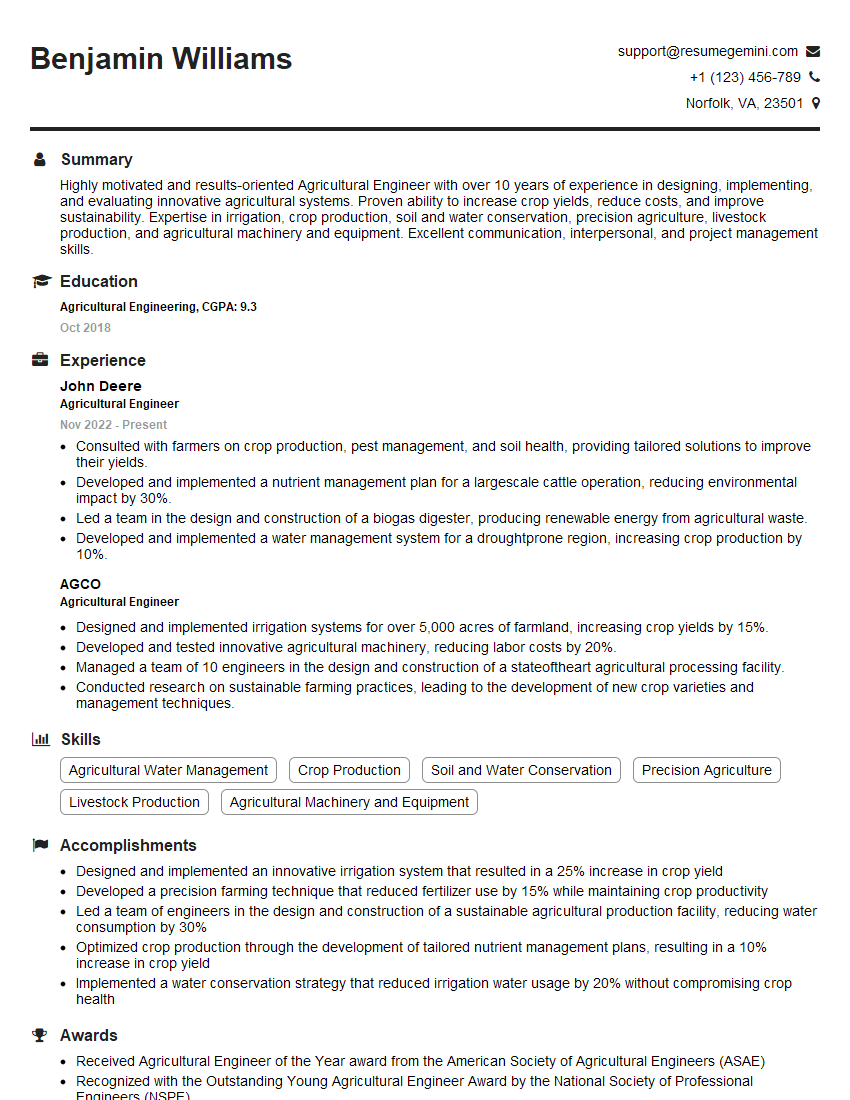
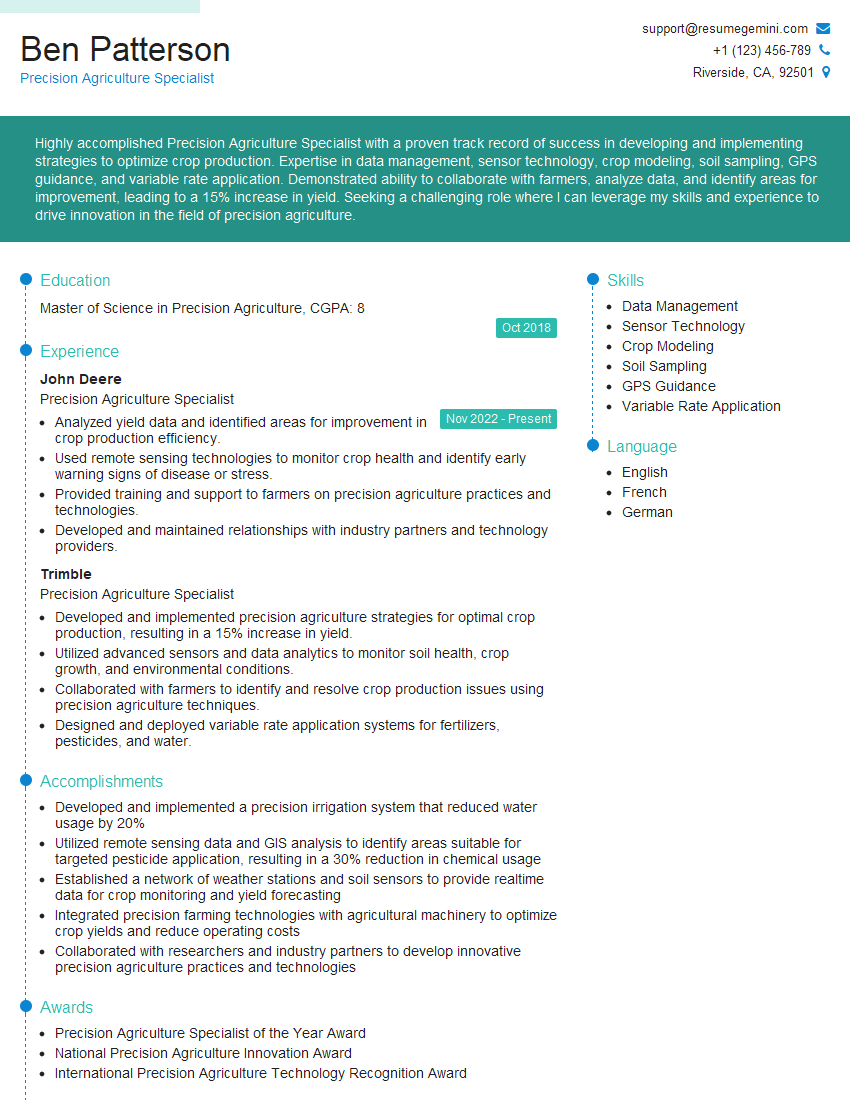
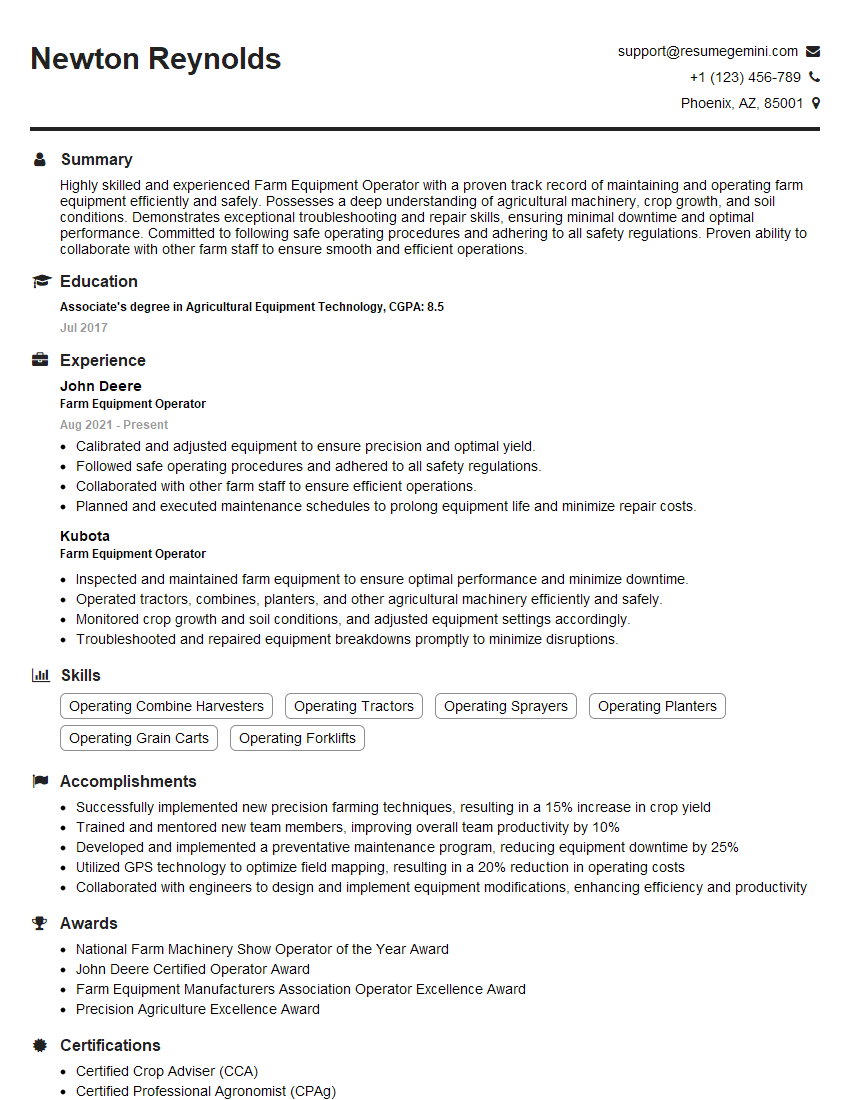
Mastering knowledge of agricultural machinery is paramount for career advancement in this dynamic field. A strong understanding of these technologies allows you to contribute significantly to farm efficiency, yield optimization, and sustainable agricultural practices. To enhance your job prospects, it’s crucial to present your skills effectively. Creating an ATS-friendly resume is essential for getting your application noticed by recruiters. ResumeGemini is a trusted resource that can help you build a professional and impactful resume. Examples of resumes tailored to Knowledge of Agricultural Machinery are provided to guide you in this process.

Explore more articles
Users Rating of Our Blogs
Share Your Experience
We value your feedback! Please rate our content and share your thoughts (optional).
What Readers Say About Our Blog
Very informative content, great job.
good